Sometimes becoming a designer begins by touching some beads. Or running a strand of pearls through your hand. Or the sight of something perfectly worn around the wrist, or upon the breast, or up near the neck. Or trying to accessorize an outfit. Or finding something for a special occasion.
Jewelry designers are extraordinarily blessed to do what they love for a living. For many, they have turned a hobby into an avocation into a lifestyle.
But it’s not like a regular job. There are many intangibles. Such as, what exactly is creativity and creative thinking? What are all the things that have to come together to recognize that creative spark when it hits you in your heart, gut or head? How do you translate that into something real, with beauty, with function, and with purpose? How do you mesh your views of and desires for aesthetics and functionality with those of your many audiences — wearer, viewer, buyer, seller, collector, exhibiter, teacher and student?
What exactly does it mean to design jewelry, and how do you know it is the right path for you? This is a tough question. You may love jewelry, but not know how to make it. You may get off on creative problem solving or be a color addict but not know what specific techniques and skills you need to learn, in what organized way, with what direction, leading you towards becoming that better jewelry designer. You may wonder what it means and what it takes to be successful as a designer. You may feel the motivation, but not know what the jewelry designer really has to do each day.
You may be taking classes and getting some training, but how do you know when you have arrived? How do you know when you have emerged as a successful professional jewelry designer? And what are your responsibilities and obligations, once you get there?
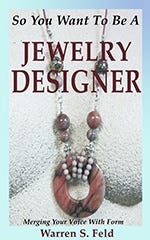
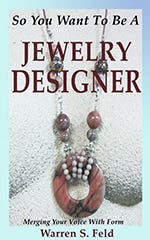
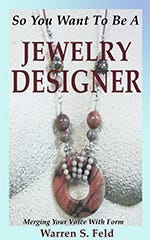
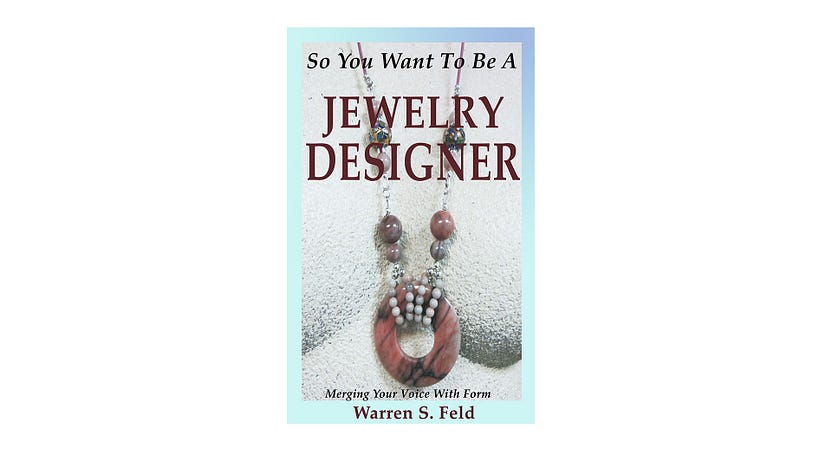
SO YOU WANT TO BE A JEWELRY DESIGNER Merging Your Voice With Form
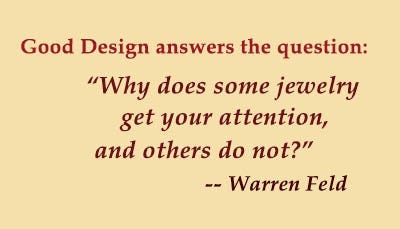
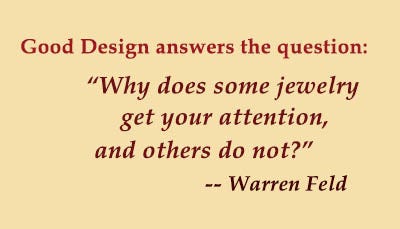
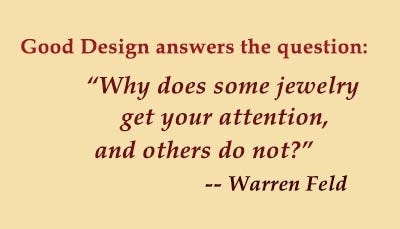
So You Want To Be A Jewelry Designer reinterprets how to apply techniques and modify art theories from the Jewelry Designer’s perspective. To go beyond craft, the jewelry designer needs to become literate in this discipline called Jewelry Design. Literacy means understanding how to answer the question: Why do some pieces of jewelry draw your attention, and others do not? How to develop the authentic, creative self, someone who is fluent, flexible and original. How to gain the necessary design skills and be able to apply them, whether the situation is familiar or not.
Some Updates and Things Happening. (Please share this newsletter)
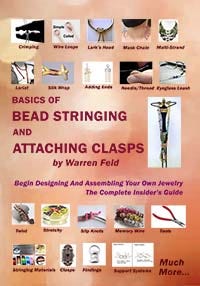
1. My most popular class was called BASICS OF BEAD STRINGING AND ATTACHING CLASPS. I turned this into a book, and expanded the chapters to include some related clinics and classes that I also taught.
In this Issue: 1. Basics of Bead Stringing and Attaching Clasps 2. Promoting Your Jewelry On Social Media: Some Tips 3. How To Market An Open Studios Event 4. Some suggestions about pricing when you have multiple audiences 5. Coreen Simpson Defined the Black Cameo by Black Women for Black Women 6. 2025 A’ Design Award, Jewelry Design Category 7. Latest question from our members — please share your comments 8. Getting that grant application to a Yes! Some articles you may have missed
I pay particular attention to architectural issues — that is, how you deal in your design with the inevitable stresses and strains placed on jewelry when worn.
Learning Bead Stringing Is More Than Putting Beads On A String And Tying On A Clasp
There is an art and skill to stringing beads. First, of course, is the selection of beads for a design, and the selection of the appropriate stringing material. Then is the selection of a clasp or closure, appropriate to the design and use of the piece.
You want your pieces to be appealing. You want them to wear well. You want someone to wear them or buy them. This means understanding the basic techniques, not only in terms of craft and art, but also with considerations about architecture, mechanics, and some sociology, anthropology and psychology.
In this book, I go into depth about: 1. Choosing stringing materials, and the pros and cons of each type 2. Choosing clasps, and the pros and cons of different clasps 3. All about the different jewelry findings and how you use them 4. Architectural considerations and how to build these into your pieces 5. How better designers use cable wires and crimp, as well as, use needle and thread to string beads 6. How best to make stretchy bracelets 7. How to make adjustable slip knots, coiled wire loops, and silk wraps 8. How to finish off the ends of thicker cords or ropes, so that you can attach a clasp 9. How to construct such projects as eyeglass leashes, mask chains, lariats, multi-strand pieces, twist multi-strand pieces, and memory wire bracelets 10. How different teaching paradigms — craft vs. art vs. design — might influence the types of choices you make
TABLE OF CONTENTS
ACKNOWLEDGEMENTS 1. INTRODUCTION 2. MATERIALS AND TOOLS 3. WORKSPACE 4. THREE TEACHING APPROACHES 5. THE DESIGN PROCESS 6. CHOOSING CLASPS 7. CHOOSING STRINGING MATERIALS 8. TWO COGNITIVE PHENOMENA 9. TYPES OF CLASPS 10. TYPES OF STRINGING MATERIALS 11. JEWELRY FINDINGS 12. HOW TO CRIMP 13. STRINGING WITH NEEDLE AND THREAD 14. ELASTIC STRING AND STRETCHY BRACELETS 15. MAKING SIMPLE AND COILED WIRE LOOPS 16. ATTACHING END PIECES TO THICKER CORDS 17. MAKING SIMPLE AND FANCY ADJUSTABLE SLIP KNOTS 18. SILK WRAP 19. EYEGLASS LEASH AND MASK CHAIN 20. LARIAT 21. MULTI-STRAND PIECES 22. TWIST MULTI-STRAND PIECES 23. MEMORY WIRE 24. FINAL WORDS OF ADVICE
2. Promoting your jewelry on social media: Some Tips
🎨 Create buzz on social media for your upcoming projects/shows:
Start sharing as soon as possible: use any existing footage in stories and reels.
Early sharing builds anticipation and allows you to experiment with what resonates.
Add voiceovers to explain why this project matters. Personal insights create emotional connections with viewers.
Natural light is best for recording. If unavailable, invest in an affordable $20 tripod (simple tools can yield beautiful videos).
Take risks with your content — when it goes well, it can go viral. When it doesn’t, you lose nothing. It’s the perfect way to learn and grow your online presence.
📱 If you wish your posts were performing better on IG, remember:
Algorithms prioritize engagement, not frequency — 1 viral post trumps 30 non-viral ones.
Use vertical/portrait format (9:16) for Reels. Avoid landscape; mobile users miss key visuals.
Short, engaging videos with multiple cuts show progression better than time-lapses.
Remove text overlapping artwork; instead, lead with finished work and show process in successive slides.
Use hooks (both visual and verbal) to draw viewers in (e.g., dramatic start or surprising technique).
Keep content dynamic — switch angles, zoom, and close-ups.
Simplify production. Think less like a filmmaker — focus on storytelling in short, direct clips.
📈 Boost your Instagram growth with storytelling…
As mentioned above, instead of polished posts or static images, show how you create your art and share the story behind it.
Process-focused content — like videos of you working on textures or unique techniques — grabs attention and keeps viewers engaged.
Pair this with storytelling or insights about your materials (like nontoxic pigments or unique inspirations) to turn informative content into mesmerizing reels.
This authentic approach will outperform paid promotions for long-term growth.
3. I have a friend who works from a studio he rents in a converted warehouse in Nashville, which also houses many other related artisan businesses. Some insights from him on how to market an open studios event.
🗣️How to market an open studios event and have successful sales conversations with collectors
Use storytelling to highlight the unique aspects of your process, such as working with invasive species leather.
Prepare materials that educate visitors about your mission and the significance of your medium.
Engage collectors with interactive displays showcasing your creative process.
Focus on conversational sales techniques — ask questions about their interests and share personalized recommendations.
Follow up with attendees post-event to nurture relationships and encourage repeat sales.
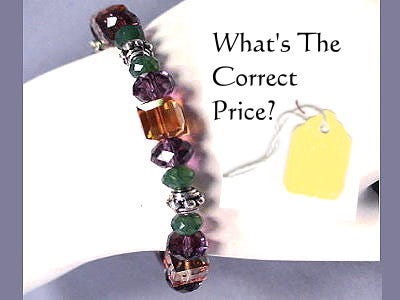
4. Some suggestions for pricing your jewelry if you are targeted multiple audiences at different income and interest points.
💰 How to price your jewelry for different buyer categories to increase overall sales
Offer a range of price points, including smaller, affordable pieces for new buyers.
Create limited edition prints to scale sales and increase accessibility without diluting exclusivity.
Price jewelry that is more “art” or uses unique materials (like leather or feathers or vintage materials and clasps) higher to reflect craftsmanship and rarity.
Consider bundling products or services (e.g., jewelry with donations to relevant causes) to appeal to conscious buyers.
Continuously evaluate pricing strategies based on collector feedback and sales data.
For some pieces, you might turn them into kits.
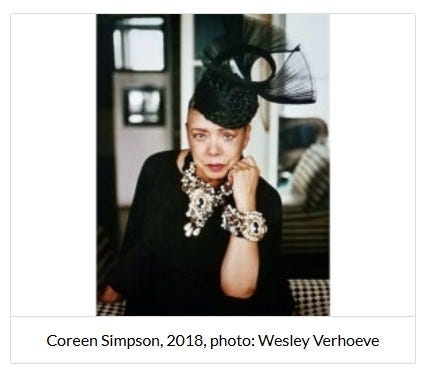
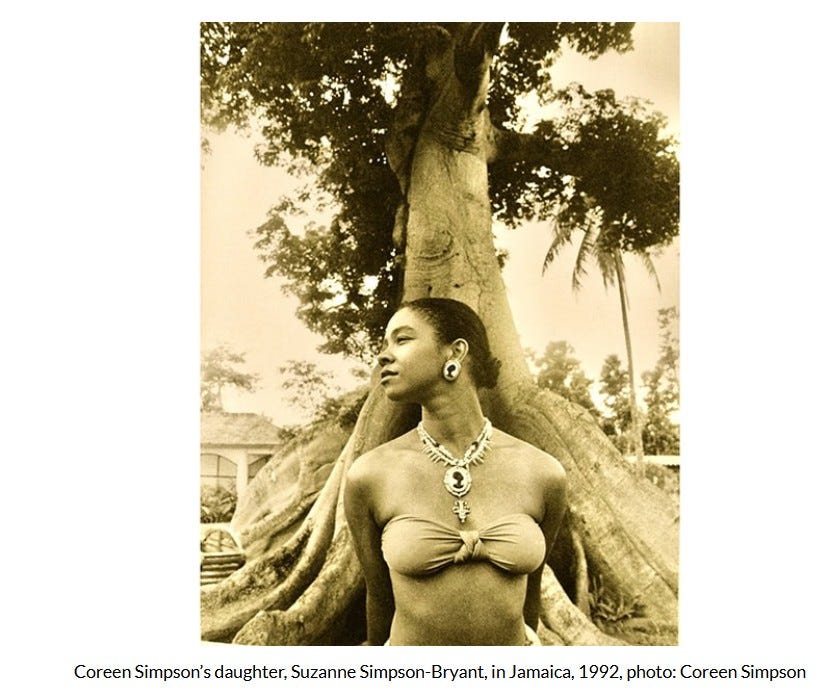
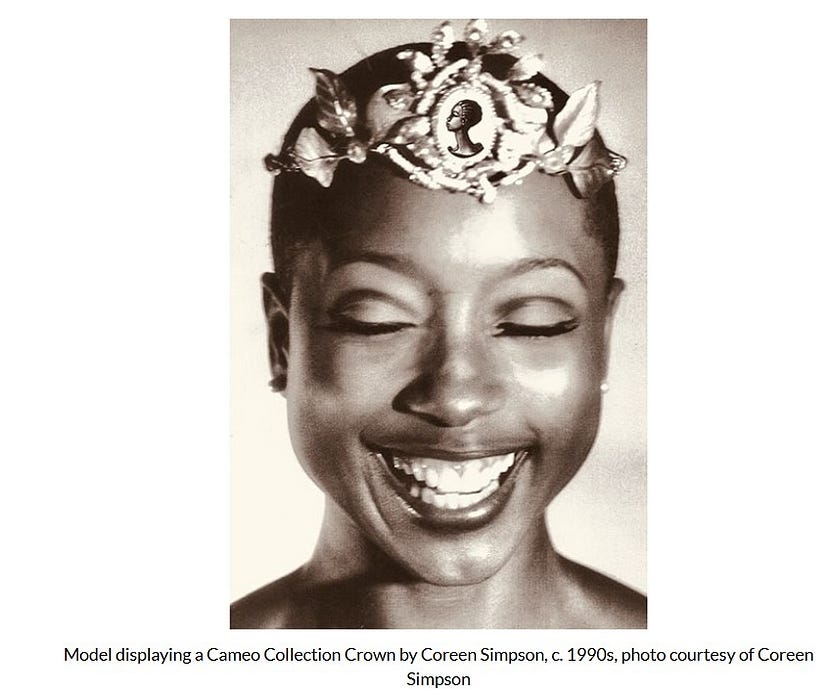
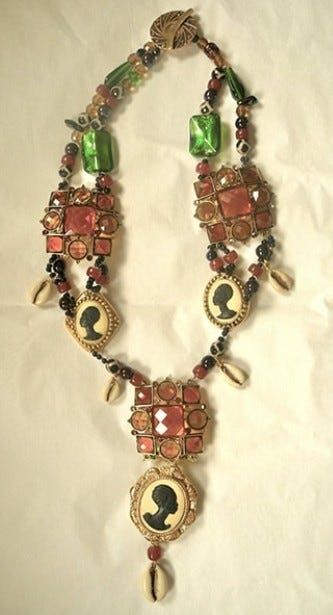
5. Coreen Simpson Defined the Black Cameo by Black Women for Black Women
Cameos have existed since ancient Egypt and play an essential role in the history of jewelry. In materials such as onyx, agate, or mother-of-pearl, which contrast with the color of the gemstone backing, the cameo acted as a miniature canvas to present carved portraits of kings, emperors, or scenes from mythology.
Yet despite the cameo’s ancient origins and its status as a classic jewelry item, the Black community has often had a complicated relationship with these pieces, especially due to a history of racist caricature in the imagery that also became associated with the cameo.
Artist Coreen Simpson wanted to explore this issue of representation by making her own American take on the cameo. In the 1990s, Simpson developed a cameo for modern Black consumers. In so doing, she built a successful company that subverted the negative historical narrative.
Her first foray into jewelry came as a product of necessity. When she tried to find the right pieces to accessorize her outfits in various stores in Paris, she was often disappointed. The jewelry just didn’t fit her aesthetic. Because of this lack of options, Simpson decided to create her own.
Simpson eventually opened a showroom in the Garment District, and she continued to experiment with “unique combinations of stones, metal, and unusual materials.” Simpson got her big break in the late 80s when, one day, as she was selling necklaces on 57th Street and Madison Avenue, close to the Henri Bendel department store, designer Carolina Herrera noticed her work and purchased 11 necklaces, which she featured in her 1988 resort collection. The journalist Renee White has also commented that publications such as Vogue described Simpson’s pieces as power necklaces, thereby cementing her position in fashion jewelry. The New York Times proclaimed her a “style maker.” Stars such as Diahann Carroll and Joan Collins were seen wearing her pieces publicly and privately.
In 1990, all of Simpson’s experimentation in jewelry culminated in the launch of the Black Cameo, her signature collection. Her first encounters with the cameo had started as she paged through fashion magazines. She saw pieces she found beautiful, but she also thought “no Black woman [was] going to wear” them. The cameos may have looked pretty, but they did not represent the cultural diversity of Black women in America.
A’ Design Award, recognizing the excellent and original design work from across the globe, is one of the highest achievements in design, a source of inspiration for award-winning designers, artists, architects, brands and design agencies. Entry and nomination is open to all from all countries. The A’ Jewelry Design Award is open to entries by Jewelry Designers, Jewelry Brands, Jewelers, Goldsmiths, Silversmiths, Gemologists, Lapidarists, Accessory Designers, Metalworkers, Artisan Jewelers, Craftspeople, Contemporary Jewelry Artists, Custom Jewelry Designers, Fine Art Jewelers, Jewelry Manufacturing Enterprises, Jewelry Brand Managers, Fashion Designers, Fashion Brands, Industrial Designers, Luxury Good Manufacturers, Jewelry Innovation, Consultancy, Research and Development Companies worldwide. Enter your work today to highlight Jewelry Excellence.
💰 If you are submitting an application for a public or private art grant…
Keep in mind that these are highly competitive: for you to stand out, you’ll have to be specific about how your work aligns with their criteria.
For your next submission:
Describe how audiences interact with your work — mention workshops, events, or participatory elements.
Clarify your concept: Use vivid language to make your vision tangible. Explain how your art fits into the public or private space your proposal is targeting
Titles and descriptions: Make them concise and impactful to quickly convey the project’s essence.
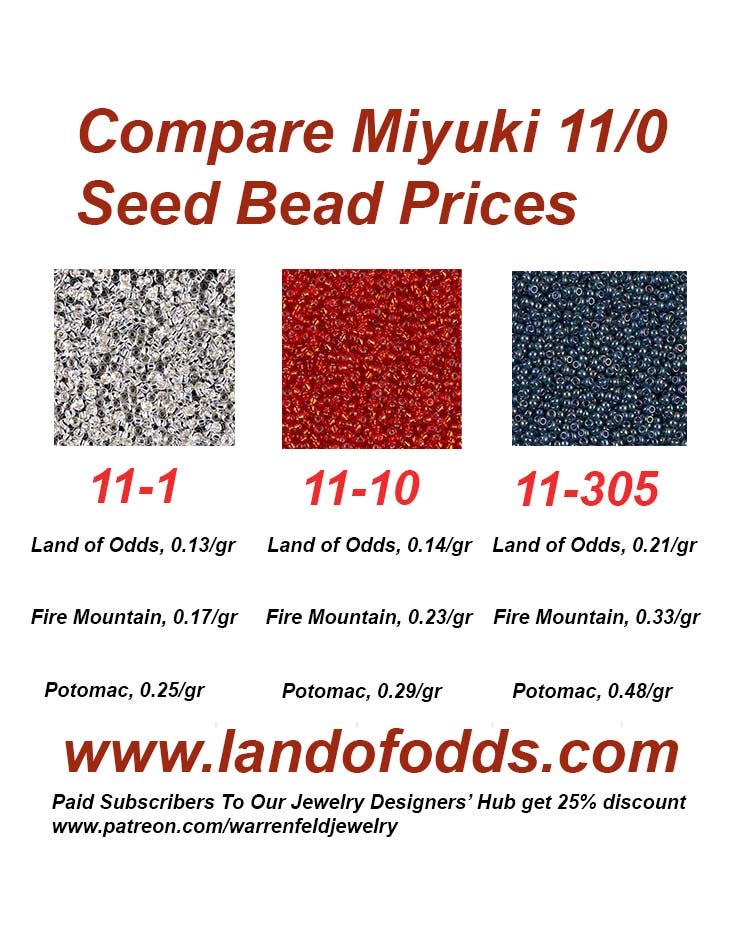
And don’t forget to use this 25% discount code throughout February at Land of Odds!! Use February’s Discount Code For Extra 25% Off @Land of Odds: FEBRUARY25 www.landofodds.com
WARREN FELD JEWELRY (www.warrenfeldjewelry.com) Custom Design, Workshops, Video Tutorials, Webinars, Coaching, Kits, Group Activities, Repairs ~~~~~~~~~~~~~~~~~~~~~~~ Join our community of jewelry designers on my Patreon hub Be part of a community of jewelry designers who recognize that we have a different way of thinking and doing than other types of crafters or artists. One free downloadable Mini-Lesson of your choice for all new members! ~~~~~~~~~~~~~~~~~~~~~~~
As a jewelry designer, you have a purpose. Your purpose is to figure out, untangle and solve, with each new piece of jewelry you make, how both you, as well as the wearer, will understand your inspirations and the design elements and forms you chose to express them, and why this piece of jewelry is right for them. Not as easy as it might first appear. There are no pre-set formulas here. There are artistic principles of composition, yes, but how you implement them is still up to you. Moreover, your pieces have to wear well, drape well, and connect with the desires of people who will want to wear or buy them. Jewelry design involves an ongoing effort, on many levels, to merge voice and inspiration with form. Often challenging, but very rewarding.
BECOMING THE BEAD ARTIST AND JEWELRY DESIGNER: The Ongoing Tensions Between Inspiration and Form
As a jewelry designer, you have a purpose. Your purpose is to figure out, untangle and solve, with each new piece of jewelry you make, how both you, as well as the wearer or buyer, will understand your inspirations and the design elements and forms you chose to express them, and why this particular piece of jewelry is right for them. Not as easy as it might first appear. There are no pre-set formulas here. There are artistic principles of composition, yes, but how you implement them is still up to you. Moreover, your pieces have to wear well, drape well, and connect with the desires of people who will want to wear or buy them.
You will want the piece to be beautiful and appealing. So you will be applying a lot of art theories about color, perspective, composition and the like. You will quickly discover that much about color use and the use of lines and planes and shapes and so forth in art is very subjective. People see things differently. They may bring with them some biases to the situation. Many of the physical materials you will use may not reflect or refract the color and other artistic effects more easily achieved with paints.
You want the piece to be durable. So you will be applying a lot of theories and practices of architects and engineers and mechanical physicists. You will need to intuitively and intrinsically understand what about your choices leads to the jewelry keeping its shape, and what about your choices allows the jewelry to move, drape and flow. You also will be attentive to issues of physical mechanics, particularly how jewelry responds to forces of stress, strain and movement. This may mean making tradeoffs between beauty and function, appeal and durability, desire and acceptance.
You want the piece to be satisfying and accepted by various viewing, wearing, buying and collecting audiences. So you will have to have some understanding of the role jewelry plays in different people’s lives. Jewelry is more than some object to them; jewelry is something they inhabit — reflective of soul, culture, status, aspiration. You will recognize that people ascribe the qualities of the jewelry to the qualities of the person wearing it. You will bring to the forefront ideas underlying psychology and anthropology and sociology, and even party planning, while designing your jewelry or introducing it publicly. You may find the necessity to compromise part of your vision for something socially acceptable, or in some degree of conformance with a client’s taste or style.
SO YOU WANT TO BE A JEWELRY DESIGNER Merging Your Voice With Form
So You Want To Be A Jewelry Designer reinterprets how to apply techniques and modify art theories from the Jewelry Designer’s perspective. To go beyond craft, the jewelry designer needs to become literate in this discipline called Jewelry Design. Literacy means understanding how to answer the question: Why do some pieces of jewelry draw your attention, and others do not? How to develop the authentic, creative self, someone who is fluent, flexible and original. How to gain the necessary design skills and be able to apply them, whether the situation is familiar or not.
Some Updates and Things Happening. (Please share this newsletter)
In this Issue: 1. Color Dilemmas For The Jewelry Designer 2. Is Your Jewelry Ready To Be Shown In A Gallery? 3. Craft a compelling biographical sketch 4. Architectural Basics of Jewelry Design 5. Teaching PEARL KNOTTING at FiftyForward in Donelson 3/22/25, 12–3pm 6. An Especially Clever Collaboration 7. Latest question posed by member — please share your comments 8. So You Want To Do Craft Shows Some articles you may have missed Featured
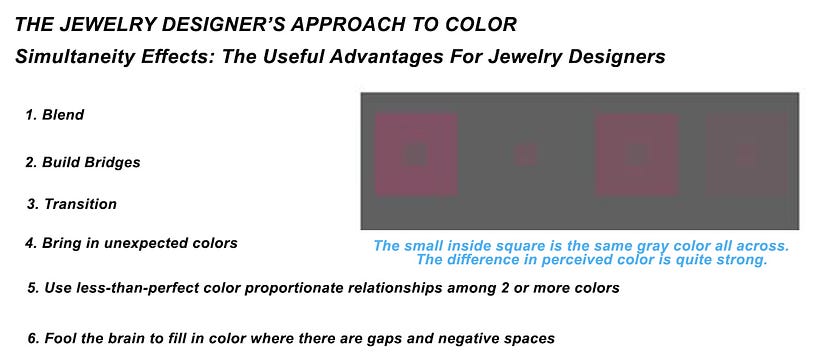
1. I am always trying to explain how jewelry designers have to think differently than visual artists when it comes to the use of color.
COLOR DILEMMAS FOR THE JEWELRY DESIGNER: Managing, Challenging, Exploiting and Violating Color Theory
Color is the single most important Design Element. Most artists and jewelry designers learn about how to use and control for color in art schools. They learn about how colors are perceived. How to combine colors and maximize the appealing effects of such combinations. How the perceptions of color vary, given the context, and how to anticipate these variations. These art theories work well for those who paint. But not so well for those who design jewelry.
How Artists and Jewelry Designers
Respond Differently To The Use Of Color
The artist is concerned with achieving harmony, balance and evoking an emotional response. Color theories point the way. The artist wants to be guided by these and conform to them. To the artist, color theory is more about objectives and universals. They tap into the brain’s propensity to balance things out. People are prewired with an anxiety response. Our brains have some presets so that we avoid snakes and spiders. When things get too unbalanced and too unharmonious, the brain gets edgy. We begin to interpret things as not as interesting, perhaps somewhat unsatisfying, even ugly.
Color schemes show what colors in combination yield a balance in energy and wave length signatures. For example, and with a lot of oversimplification, color theory points out that in any project, the proportion of red should equal the proportion of green. If red has an energy signature of +1, then the energy signature of green would be -1. Added together, they equal zero. The brain wants things to equal zero. Balanced. Harmonious. And artists who follow the theories about color are secure in this. They recognize that all people want the colors in front of them to balance out to zero. Color theory leads the way. Artists want to be guided and conform to it.
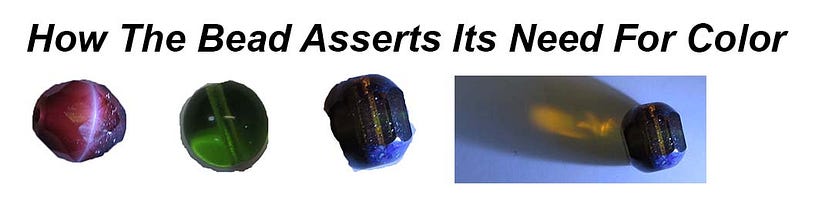
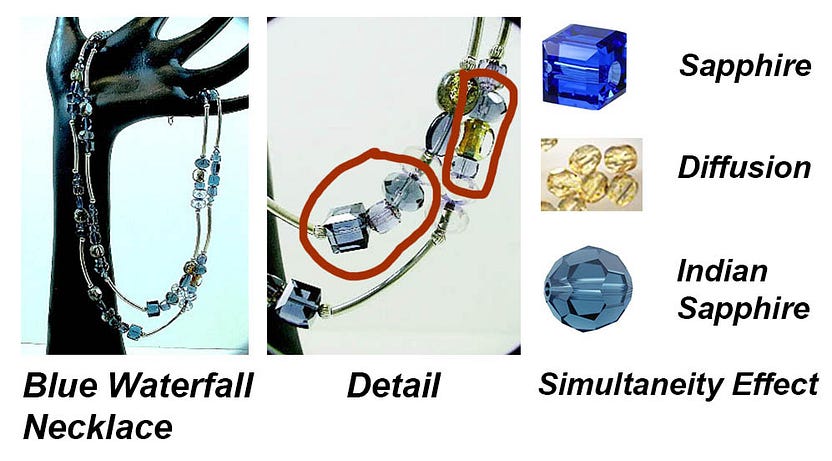
For the jewelry designer, however, color theories are a starting point, but quickly break down. This is because jewelry is only art as it is worn. That means the jewelry will move with the person, shift from one type of light to another as the person moves from room to room or from inside to outside. The materials used in jewelry do not come in every color of the rainbow. You cannot crush them up and blend them. Even with a simple round bead, the color will vary across the bead, becoming lighter or darker, sometimes even changing the color as presented, as you move around the curved surface, perceive the hole piercing through the bead, at the hole’s end with added shadows. Many beads will even cast a color shadow extending well beyond the boundary of the bead, but changing scope and direction as the wearer pivots or the lighting changes. The silhouette of any piece of jewelry will shift in shape as the jewelry shifts in position in responses to the forces of movement, stresses and strains. Unlike a painting, jewelry is never static. The perceived colors keep changing. If from any one position, the jewelry appears less than appealing, this is awkward for the wearer. People viewing jewelry attribute the qualities of the jewelry to the qualities of the person wearing it. This situation is unacceptable to the professional jewelry designer. The wearer should always look good. So color, as a design element with all its attributes of expression, must be managed differently.
The artist manages the perception of color. The jewelry designer manages its sensation.
2. Is Your Jewelry Ready To Be Shown In A Gallery?
As I talk to jewelry designers who aren’t yet showing in galleries, one of their biggest concerns about approaching galleries for representation is that they are concerned their artwork might not be “gallery quality.” As they think about presenting a portfolio to a gallery owner, these desigmers fear that they may face ridicule and rejection of their art.
I understand that presenting jewelry pieces to galleries can be an intimidating prospect. I also acknowledge that some gallery owners are more critical than they need be in rejecting designers’ work. However, many designers are allowing the fear of rejection to prevent them from establishing successful long-term relationships with galleries that would be interested in their work. It’s important to remember, that no matter where you are in your jewelry designing career and development, there are galleries that would be a fit for your work.
A jewelry designer who is very early in her/his career might not be able to immediately secure representation with a top gallery that represents well-established designers. There are many galleries, however, that have built successful businesses around working with designers who are newer to the market and, consequently are selling their work at a better value.
5 Questions You Can Ask to Evaluate Your Gallery-readiness When deciding whether or not you are ready to approach galleries, ask yourself the following questions:
Am I using the highest quality materials I can obtain for my work?
Is my presentation clean and professional?
Have I created a consistent body of work that can show well together?
Do I have a professional, engaging biography and artist’s statement?
Is my portfolio polished and appealingly organized?
If you can answer “yes” to all of those questions, you are ready to approach galleries — it’s that simple.
Once you are ready, it will be important to build a list of appropriate galleries to approach, and you will need to develop a strategy for presenting yourself, your portfolio and your work to the galleries, but you can do so with the full confidence that your work is ready for galleries.
3. Craft a compelling biographical sketch!
The Biographical Sketch or Profile
Your customers, your sales venues, your clients all love stories, and they want to know yours. Your story might be a profile on a social media site. It might be a synopsis on the back of your portfolio or print book on demand. It might be part of a grant or art show application.
You will want to create several versions of varying lengths, but all basically highlighting the same information. I suggest creating versions which are 25 words, 50 words, 100 words, 250 words, 500 words. Your first 25 words should sound fun, intriguing, exciting, enticing, creating wonder and curiosity … you get the point.
Do not follow a template. You want your bio or profile to feel authentically your own.
Write your bio for a portfolio in the 3rd person. Write your profile for a social media site (think Facebook) targeted at family and friends in the 1st person. Write your profile for a social media site (think LinkedIn) targeted at potential employers in the 3rd person.
Within your Sketch or Profile, you will want to anticipate what people will be curious about. When someone first sees your jewelry, they will try to understand it, categorize it, emotionally connect to it. The greater the connection, the more likely the sale. How well has your bio helped them?
4. I strongly advocate that, whatever technique(s) you specialize in, that you learn the Architectural Basics of Jewelry Design which underly the technique.
Whenever you create a piece of jewelry, it is important to try to anticipate how your choice of materials, techniques and technologies might positively or negatively affect how the piece moves and feels (called Support) and how its components maintain shape and integrity (called Structure) when worn. Achieving balance between support and structure means that the piece is at its point of least vulnerability. This is where all the materials, techniques and technologies have been leveraged to optimize the four S’s: Strength, Suppleness, Stability and Synergy.
Guiding Questions: (1) How do your design choices positively or negatively affect support and structure? (2) How do you redefine techniques in architectural terms? (3) How will aging of materials affect the integrity of the piece? (4) What are the anatomical parts of a piece of jewelry? (5) Is the ‘art’ of jewelry the whole piece,or only centerpiece?
5. I’ll be teaching my Intro to Pearl Knotting class, Saturday, 3/22/25, 12–3pm, in Donelson at Fifty Forward
For more information, contact the Middle Tennessee Gem & Mineral Society. Click here.
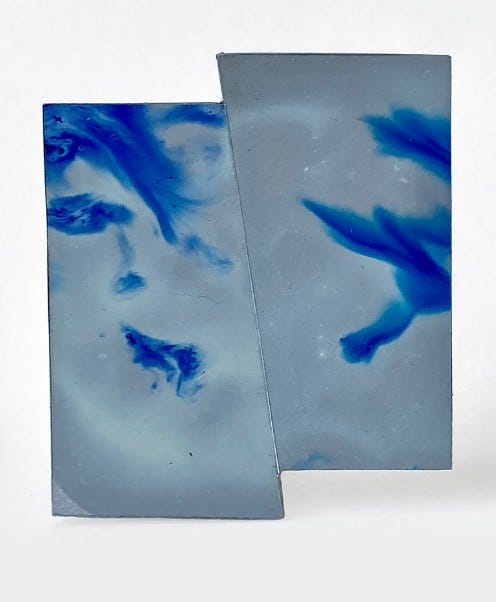
6. I recently came across this gallery exhibit which I thought was an especially clever collaboration
Flow by Beppe Kessler
Here we have a brooch. Each half was created by a different jewelry designer.
Beppe Kessler (b. 1952, The Netherlands), a contemporary painter and jewelry maker, lives and works in the Netherlands.
Kanya Charoensupkul (b. 1947, Thailand) has been creating and exhibiting her work locally and internationally since the 1970s, following her training in printmaking.
Their works reflect their inner states of mind with fluid, open-ended stories of life expressed through their use of shape, form, color, and texture. While their art leans toward the abstract, it remains uncategorized within traditional abstraction, perhaps because both artists work across various media not typically aligned with this genre, using unique methods to express their artistic visions.
Materials are central to both artists’ work, deeply connected to their training. Kanya incorporates paper into her paintings, using it to construct textures and forms, while Beppe integrates textiles, stretching fabric over carefully designed and crafted frames. Both artists also engage with collage: Beppe in her small sculptures and wearable art, and Kanya directly within her paintings.
8. I started, with my partner Jayden, selling jewelry with hope, persistence, grit — all at craft fairs and flea markets. I wrote this book — SO YOU WANT TO DO CRAFT SHOWS — illustrating the lessons we learned.
Doing craft shows is a wonderful experience. You can make a lot of money at craft shows, you meet new people, you have new adventures. You learn a lot about business and arts and crafts designing.
IF… you do your homework when selecting them, and verify all information
IF… you are very organized in preparing for them, setting up, selling and re-packing up IF… you promote, promote, promote.
CRAFT SHOWS
In this book, I discuss 16 lessons I learned, including How To:
• Find, Evaluate and Select Craft Shows Right for You
• Determine a Set of Realistic Goals
• Compute a Simple Break-Even Analysis
• Develop Your Applications and Apply in the Smartest Ways
• Understand How Much Inventory to Bring
• Set Up and Present Both Yourself and Your Wares
• Best Promote and Operate Your Craft Show Business
TABLE OF CONTENTS
What You Will Learn Intro to Book and Acknowledgements
LESSON 1: Not Every Craft Show Is Alike
LESSON 2: Research All Your Possibilities
LESSON 3: Know Which Craft Shows Are For You
LESSON 4: Set Realistic Goals / Determine Break-Even Point
LESSON 5: Get Those Applications In Early
LESSON 6: Promote, Promote, Promote
LESSON 7: Set Up For Success
LESSON 8: Bring Enough Inventory To Sell
LESSON 9: Sell Yourself And Your Craft At The Show
LESSON 10: Make A List Of Things To Bring
LESSON 11: Be Prepared To Accept Credit Cards
LESSON 12: Price Things To Sell
LESSON 13: Keep Your Money Safe
LESSON 14: Generate Follow-Up Sales
LESSON 15: Take Care Of Yourself
LESSON 16: Be Nice To Your Neighbors
Some Final Words Of Advice Helpful Resources Thank You And Request For Reviews About Warren Feld, Jewelry Designer Other Articles And Tutorials
WARREN FELD JEWELRY (www.warrenfeldjewelry.com) Custom Design, Workshops, Video Tutorials, Webinars, Coaching, Kits, Group Activities, Repairs ~~~~~~~~~~~~~~~~~~~~~~~ Join our community of jewelry designers on my Patreon hub Be part of a community of jewelry designers who recognize that we have a different way of thinking and doing than other types of crafters or artists. One free downloadable Mini-Lesson of your choice for all new members! ~~~~~~~~~~~~~~~~~~~~~~~
ESSENTIAL QUESTIONS ABOUT JEWELRY DESIGN WORTH ANSWERING
As you work your way through the chapters in this book, it is important to recognize and understand the larger social and professional contexts within which jewelry design is but a part, and your place in it. Towards this end, I have formulated some essential questions every designer needs to have answers for and have deeper understandings about. Another way to look at this is that answers to these questions become your evidence for determining whether you are on the right track for becoming fluent in jewelry design.
(1) Why are there disciplinary conflicts between art and craft, and between art and design?
(2) How do you resolve tensions between aesthetics and functionality within an object like jewelry?
(3) What is jewelry, and what is it for?
(4) Is jewelry necessary?
(5) What does it mean to be successful as a jewelry artist working today?
(6) What does it mean to think like a jewelry designer? How does this differ from thinking like an artist or thinking like a craftsperson?
(7) How does the jewelry designer know when a piece is finished and successful?
(8) How do you place a value on a piece of jewelry?
(9) How do you introduce your jewelry into a public setting, either to wear or to collect or to buy?
(10) Why does some jewelry draw your attention, and others do not?
(11) What does it mean to be a contemporary jewelry designer?
SO YOU WANT TO BE A JEWELRY DESIGNER Merging Your Voice With Form
So You Want To Be A Jewelry Designer reinterprets how to apply techniques and modify art theories from the Jewelry Designer’s perspective. To go beyond craft, the jewelry designer needs to become literate in this discipline called Jewelry Design. Literacy means understanding how to answer the question: Why do some pieces of jewelry draw your attention, and others do not? How to develop the authentic, creative self, someone who is fluent, flexible and original. How to gain the necessary design skills and be able to apply them, whether the situation is familiar or not.
Long thought merely a craft, or, sometimes alternatively, a subset of art, painting and sculpture, we have begun to recognize that Jewelry Design is something more. Jewelry making encapsulates the designer’s anticipation, not only of aesthetic requirements, but also those of function and context, as well. Creating jewelry means understanding how to make strategic design choices at the boundary between jewelry and person. Translating inspirations and aspirations into designs and finished products requires an intuitive, integrative sensitivity to shared understandings brought to the design situation by the designer and all the audiences ultimately invested in the product. The better designer is able to bring a high level of coherence and consistency to the process of managing all this — shared understandings, knowledge and skills, evaluative review, and reflection and adjustment. This is called ‘fluency’ in design. For the jewelry designer, there is a defined set of concepts and principles which revolve around this disciplinary literacy — the professional way of thinking through design, production, communication, marketing, selling and critique — and how to be proficient at this. This is what this book is all about.
DISCIPLINARY LITERACY AND FLUENCY IN DESIGN
Jeremy thought that the only thing he wanted to do in life was design jewelry. He loved it. So it was not a question of “if” or “when” or “how”. But he told me it was always important not to get tricked by fashion. It was mandatory not to seek the trendy object. Not to turn away from that odd thing. And to pay very close attention to the details of how jewelry designers think, act, speak and reflect.
I thought about his advice a lot over the years of my own career as a jewelry designer. The disciplined designer needs to be attuned to the discipline way of seeing the world, understanding it, responding to it, and asserting that creative spark within it. Yes, I believe jewelry designers have a special way of thinking through selecting design elements, composing, constructing, and manipulating objects. Different than crafters. Different than artists. Different than other disciplines and their core ways of defining things and thinking things through. Different than what other disciplines use as evidence to determine if their pieces are finished and successful.
Yet jewelry design does not yet exist as an established discipline. It is claimed by art. It is claimed by craft. It is claimed by design. And each of these more established disciplines offer conflicting advice about what is expected of the designer. How should she think? How should she organize her tasks? How should she tap into her creative self? How should she select materials, techniques and technologies? How should she assert her creativity and introduce her ideas and objects to others? How much does she need to know about how and why people wear and inhabit jewelry? What impact should she strive to have on others or the more general culture and society as a whole?
In this book, I try to formulate a disciplinary literacy unique and special and legitimate for jewelry designers. Such literacy encompasses a basic vocabulary about materials, techniques, color and other design elements and rules of composition. It also includes the kinds of thinking routines and strategies jewelry designers need to know in order to be fluent, flexible and original. It includes what the jewelry designer needs to know and do when introducing their pieces publicly, either to have others wear, buy or collect their pieces.
These routines and strategies are at the heart of the designer’s knowledges, skills and understandings related to creativity, elaboration, embellishment, reflection, critique and metacognition. This disciplinary literacy in design is very similar to how sounds are made into music. This literacy is very similar to how words are made into literature. There is an underlying vocabulary and grammar to jewelry design, from decoding to comprehension to fluency. The jewelry designer is dependent upon this disciplinary literacy to the extent that she or he is able to move from inspiration to aspiration to implementation and management towards finish and success.
At the heart of this disciplinary literacy are the tools and strategies designers use to think through and make choices which optimize aesthetics and functionality within a specific context. Again, these literacy tools and strategies enable the designer to create something out of nothing, to translate inspiration into aspiration, and to influence content and meaning in context.
There are four sets of tools, routines and strategies which designers employ to determine how to create, what to create, how to know a piece is finished and how to know a piece is successful. These are,
(1) Decoding
(2) Composing, Constructing and Manipulating
(3) Expressing Intent and Content
(4) Expressing Intent and Content within a Context
You don’t become a jewelry designer to be something.
You become a jewelry designer to do something.
The question becomes: How do you learn to do that something?
How do you learn to be fluent, flexible and original in design? And develop an automaticity? And self-direction? And an ability to maneuver within new or unfamiliar situations? And a comfort when introducing your pieces in public?
We call this ‘literacy’. For the jewelry designer, literacy means developing the abilities to think like a designer. These include,
o Reading a piece of jewelry. Here you the designer are able to break down and decode a piece of jewelry into its essential graphical and design elements. This aspect of fluency and literacy is very descriptive.
o Writing a piece of jewelry. Here you the designer are able to identify, create or change the arrangement of these design elements within a composition. Fluency and literacy are very analytical.
o Expressing a piece of jewelry. Here you the designer use the design elements and principles underlying any arrangement to convey content and meaning. Fluency and literacy are very interpretive.
o Expressing a piece of jewelry in context. Here you the designer are able to anticipate, reflect upon and incorporate into your own thinking the understandings and reactions of various client groups to the piece, the degree they desire and value the piece, and whether they see the piece as finished and successful. The jewelry is introduced publicly, whether for someone to admire or wear or buy or collect. The designer comfortably moves back and forth between the objective and subjective, and the universal and the specific. The designer analyzes contextual variables, particularly the shared understandings as these relate to desire, and in line with that, thus determining value and worth. Fluency and literacy are very judgmental.
Everyone knows that anyone can put beads and other pieces together on a string and make a necklace. But can anyone make a necklace that draws attention? That evokes some kind of emotional response? That resonates with someone where they say, not merely “I like that”, but, more importantly, say “I want to wear that!” or “I want to buy that!”? Which wears well, drapes well, moves well as the person wearing it moves? Which is durable, supportive and keeps its silhouette and shape? Which doesn’t feel underdone or over done? Which is appropriate for a given context, situation, culture or society?
True, anyone can put beads on a string. But that does not make them artists or designers. From artists and designers, we expect jewelry which is something more. More than parts. More than an assemblage of colors, shapes, lines, points and other design elements. More than simple arrangements of lights and darks, rounds and squares, longs and shorts, negative and positive spaces. We expect to see the artist’s hand. We expect the jewelry to be impactful for the wearer. We expect both wearer and viewer, and seller and buyer, and exhibitor and collector, to share expectations for what makes the jewelry finished and successful.
Jewelry design is an occupation in the process of professionalization. Regrettably, this betwixt and between status means, when the designer seeks answers to questions like What goes together well?, or What would happen if?, or What would things be like if I had made different choices?, the designer still has to rely on contradictory advice and answers. Should s/he follow the Craft Approach? Or rely on Art Tradition? Or take cues from the Design Perspective? Each larger paradigm, so to speak, would take the designer in different directions. This can be confusing. Frustrating. Unsettling.
As a whole, the jewelry design profession has become strong in identifying things which go together well. There are color schemes, and proven ideas about shapes, and balance, and distribution, and proportions. But when we try to factor in the individualistic characteristics associated with the designer and his or her intent, things get muddied. And when we try to anticipate the subjective reactions of all our audiences, as we introduce our creative products into the creative marketplace, things get more muddied still. What should govern our judgments about success and failure, right and wrong? What should guide us? What can we look to for helping us answer the What would happen if or What would things be like if questions?
SO YOU WANT TO BE A JEWELRY DESIGNER Merging Your Voice With Form
So You Want To Be A Jewelry Designer reinterprets how to apply techniques and modify art theories from the Jewelry Designer’s perspective. To go beyond craft, the jewelry designer needs to become literate in this discipline called Jewelry Design. Literacy means understanding how to answer the question: Why do some pieces of jewelry draw your attention, and others do not? How to develop the authentic, creative self, someone who is fluent, flexible and original. How to gain the necessary design skills and be able to apply them, whether the situation is familiar or not.