





FLUENCY IN JEWELRY DESIGN: Gaining A Disciplinary Literacy and Fluency in Design
Posted by learntobead on January 6, 2025
Abstract:
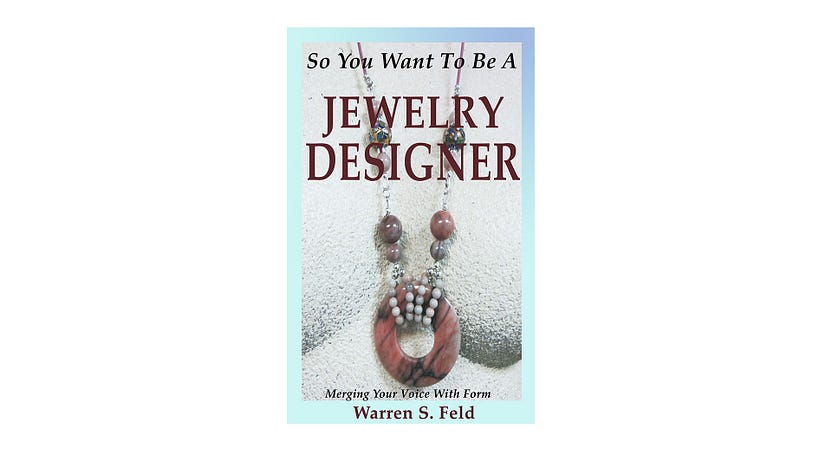
Long thought merely a craft, or, sometimes alternatively, a subset of art, painting and sculpture, we have begun to recognize that Jewelry Design is something more. Jewelry making encapsulates the designer’s anticipation, not only of aesthetic requirements, but also those of function and context, as well. Creating jewelry means understanding how to make strategic design choices at the boundary between jewelry and person. Translating inspirations and aspirations into designs and finished products requires an intuitive, integrative sensitivity to shared understandings brought to the design situation by the designer and all the audiences ultimately invested in the product. The better designer is able to bring a high level of coherence and consistency to the process of managing all this — shared understandings, knowledge and skills, evaluative review, and reflection and adjustment. This is called ‘fluency’ in design. For the jewelry designer, there is a defined set of concepts and principles which revolve around this disciplinary literacy — the professional way of thinking through design, production, communication, marketing, selling and critique — and how to be proficient at this. This is what this book is all about.
DISCIPLINARY LITERACY AND FLUENCY IN DESIGN
Jeremy thought that the only thing he wanted to do in life was design jewelry. He loved it. So it was not a question of “if” or “when” or “how”. But he told me it was always important not to get tricked by fashion. It was mandatory not to seek the trendy object. Not to turn away from that odd thing. And to pay very close attention to the details of how jewelry designers think, act, speak and reflect.
I thought about his advice a lot over the years of my own career as a jewelry designer. The disciplined designer needs to be attuned to the discipline way of seeing the world, understanding it, responding to it, and asserting that creative spark within it. Yes, I believe jewelry designers have a special way of thinking through selecting design elements, composing, constructing, and manipulating objects. Different than crafters. Different than artists. Different than other disciplines and their core ways of defining things and thinking things through. Different than what other disciplines use as evidence to determine if their pieces are finished and successful.
Yet jewelry design does not yet exist as an established discipline. It is claimed by art. It is claimed by craft. It is claimed by design. And each of these more established disciplines offer conflicting advice about what is expected of the designer. How should she think? How should she organize her tasks? How should she tap into her creative self? How should she select materials, techniques and technologies? How should she assert her creativity and introduce her ideas and objects to others? How much does she need to know about how and why people wear and inhabit jewelry? What impact should she strive to have on others or the more general culture and society as a whole?
In this book, I try to formulate a disciplinary literacy unique and special and legitimate for jewelry designers. Such literacy encompasses a basic vocabulary about materials, techniques, color and other design elements and rules of composition. It also includes the kinds of thinking routines and strategies jewelry designers need to know in order to be fluent, flexible and original. It includes what the jewelry designer needs to know and do when introducing their pieces publicly, either to have others wear, buy or collect their pieces.
These routines and strategies are at the heart of the designer’s knowledges, skills and understandings related to creativity, elaboration, embellishment, reflection, critique and metacognition. This disciplinary literacy in design is very similar to how sounds are made into music. This literacy is very similar to how words are made into literature. There is an underlying vocabulary and grammar to jewelry design, from decoding to comprehension to fluency. The jewelry designer is dependent upon this disciplinary literacy to the extent that she or he is able to move from inspiration to aspiration to implementation and management towards finish and success.
At the heart of this disciplinary literacy are the tools and strategies designers use to think through and make choices which optimize aesthetics and functionality within a specific context. Again, these literacy tools and strategies enable the designer to create something out of nothing, to translate inspiration into aspiration, and to influence content and meaning in context.
There are four sets of tools, routines and strategies which designers employ to determine how to create, what to create, how to know a piece is finished and how to know a piece is successful. These are,
(1) Decoding
(2) Composing, Constructing and Manipulating
(3) Expressing Intent and Content
(4) Expressing Intent and Content within a Context
You don’t become a jewelry designer to be something.
You become a jewelry designer to do something.
The question becomes: How do you learn to do that something?
How do you learn to be fluent, flexible and original in design? And develop an automaticity? And self-direction? And an ability to maneuver within new or unfamiliar situations? And a comfort when introducing your pieces in public?
We call this ‘literacy’. For the jewelry designer, literacy means developing the abilities to think like a designer. These include,
o Reading a piece of jewelry. Here you the designer are able to break down and decode a piece of jewelry into its essential graphical and design elements. This aspect of fluency and literacy is very descriptive.
o Writing a piece of jewelry. Here you the designer are able to identify, create or change the arrangement of these design elements within a composition. Fluency and literacy are very analytical.
o Expressing a piece of jewelry. Here you the designer use the design elements and principles underlying any arrangement to convey content and meaning. Fluency and literacy are very interpretive.
o Expressing a piece of jewelry in context. Here you the designer are able to anticipate, reflect upon and incorporate into your own thinking the understandings and reactions of various client groups to the piece, the degree they desire and value the piece, and whether they see the piece as finished and successful. The jewelry is introduced publicly, whether for someone to admire or wear or buy or collect. The designer comfortably moves back and forth between the objective and subjective, and the universal and the specific. The designer analyzes contextual variables, particularly the shared understandings as these relate to desire, and in line with that, thus determining value and worth. Fluency and literacy are very judgmental.
Everyone knows that anyone can put beads and other pieces together on a string and make a necklace. But can anyone make a necklace that draws attention? That evokes some kind of emotional response? That resonates with someone where they say, not merely “I like that”, but, more importantly, say “I want to wear that!” or “I want to buy that!”? Which wears well, drapes well, moves well as the person wearing it moves? Which is durable, supportive and keeps its silhouette and shape? Which doesn’t feel underdone or over done? Which is appropriate for a given context, situation, culture or society?
True, anyone can put beads on a string. But that does not make them artists or designers. From artists and designers, we expect jewelry which is something more. More than parts. More than an assemblage of colors, shapes, lines, points and other design elements. More than simple arrangements of lights and darks, rounds and squares, longs and shorts, negative and positive spaces. We expect to see the artist’s hand. We expect the jewelry to be impactful for the wearer. We expect both wearer and viewer, and seller and buyer, and exhibitor and collector, to share expectations for what makes the jewelry finished and successful.
Jewelry design is an occupation in the process of professionalization. Regrettably, this betwixt and between status means, when the designer seeks answers to questions like What goes together well?, or What would happen if?, or What would things be like if I had made different choices?, the designer still has to rely on contradictory advice and answers. Should s/he follow the Craft Approach? Or rely on Art Tradition? Or take cues from the Design Perspective? Each larger paradigm, so to speak, would take the designer in different directions. This can be confusing. Frustrating. Unsettling.
As a whole, the jewelry design profession has become strong in identifying things which go together well. There are color schemes, and proven ideas about shapes, and balance, and distribution, and proportions. But when we try to factor in the individualistic characteristics associated with the designer and his or her intent, things get muddied. And when we try to anticipate the subjective reactions of all our audiences, as we introduce our creative products into the creative marketplace, things get more muddied still. What should govern our judgments about success and failure, right and wrong? What should guide us? What can we look to for helping us answer the What would happen if or What would things be like if questions?
For more articles about Fluency In Jewelry Design, visit our jewelry designers’ hub at www.patreon.com/warrenfeldjewelry
_______________________________________________________
Thanks for being here. I look forward to sharing more resources, tips,
sources of inspiration and insights with you.

WarrenFeldJewelry.com
Shop.warrenfeldjewelry.com
School.warrenfeldjewelry.com
Coaching by Warren Feld
Add your name to my email list.
SO YOU WANT TO BE A JEWELRY DESIGNER
Merging Your Voice With Form
So You Want To Be A Jewelry Designer reinterprets how to apply techniques and modify art theories from the Jewelry Designer’s perspective. To go beyond craft, the jewelry designer needs to become literate in this discipline called Jewelry Design. Literacy means understanding how to answer the question: Why do some pieces of jewelry draw your attention, and others do not? How to develop the authentic, creative self, someone who is fluent, flexible and original. How to gain the necessary design skills and be able to apply them, whether the situation is familiar or not.
588pp, many images and diagrams Ebook , Kindle or Print formats
The Jewelry Journey Podcast
“Building Jewelry That Works: Why Jewelry Design Is Like Architecture”
Podcast, Part 1
Podcast, Part 2
Discover more from Warren Feld Jewelry
Subscribe to get the latest posts sent to your email.

Leave a comment