




Question 1: Should BEADWORK and JEWELRY MAKING be considered ART or CRAFT or DESIGN?
The jewelry designer confronts a world which is unsure whether jewelry is “craft” or “art” or its own special thing I’ll call “design”. This can get very confusing and unsettling. Each approach has its own separate ideas about how the designer should think, speak, work, and how he or she should be judged.
CRAFT: When defined as “craft,” jewelry is seen as something that anyone can do — no special powers are needed to be a jewelry designer. Design is seen as a step-by-step process, almost like paint-by-number. Designers color within the lines. The craft piece or project has functional value but limited aesthetic value. As “craft”, there is somewhat of a pejorative meaning — it’s looked down upon, thought of as something less than art.
If following the Craft Approach, the designer would learn a lot of techniques and applications in a step-by-step fashion. The designer, based on their professional socialization into Craft, would assume that:
a) The outlines and the goals of any piece or project can be specified in a clear, defined way.
b) Anyone can do these techniques.
c) There is no specialized knowledge that a designer needs to know beyond how to do these step-by-step techniques and applications.
d) If a particular designer has a strong sense of design, this is something innate and cannot be learned or taught.
e) There is little need to vary or adapt these techniques and applications.
f) The primary goal is functionality.
g) There are no consequences if you have followed the steps correctly.
As “craft”, we still recognize the interplay of the artist’s hand with the piece and the storytelling underlying it. We honor the technical prowess. People love to bring art into their personal worlds, and the craftsperson offers them functional objects which have some artistic sensibilities.
ART: When defined as “art”, jewelry is seen as something which transcends itself and its design. It is not something that anyone can do without special insights and training. The goal of any project would be harmony with a little variety, and some satisfaction and approval.
Continue reading on my JEWELRY DESIGNERS’ HUB
https://www.patreon.com/posts/fluency-in-q1-or-117173716?utm_medium=clipboard_copy&utm_source=copyLink&utm_campaign=postshare_creator&utm_content=join_link
_______________________________________________________
Thanks for being here. I look forward to sharing more resources, tips,
sources of inspiration and insights with you.

WarrenFeldJewelry.com
Shop.warrenfeldjewelry.com
School.warrenfeldjewelry.com
Coaching by Warren Feld
Add your name to my email list.
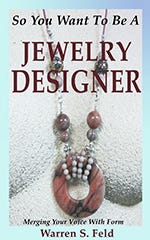
SO YOU WANT TO BE A JEWELRY DESIGNER
Merging Your Voice With Form
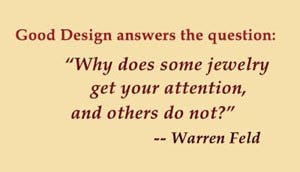
So You Want To Be A Jewelry Designer reinterprets how to apply techniques and modify art theories from the Jewelry Designer’s perspective. To go beyond craft, the jewelry designer needs to become literate in this discipline called Jewelry Design. Literacy means understanding how to answer the question: Why do some pieces of jewelry draw your attention, and others do not? How to develop the authentic, creative self, someone who is fluent, flexible and original. How to gain the necessary design skills and be able to apply them, whether the situation is familiar or not.
588pp, many images and diagrams Ebook , Kindle or Print formats
The Jewelry Journey Podcast
“Building Jewelry That Works: Why Jewelry Design Is Like Architecture”
Podcast, Part 1
Podcast, Part 2
