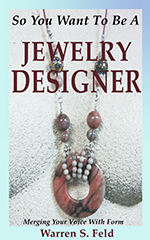
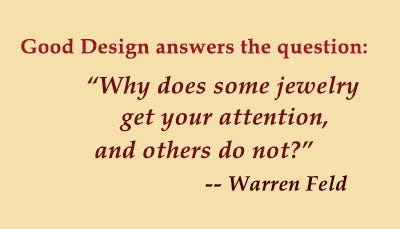
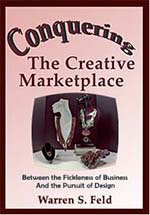
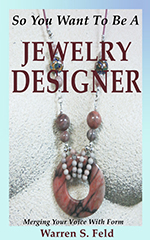
I believe jewelry designers have a special way of thinking through selecting design elements, composing, constructing, and manipulating objects. Different than crafters. Different than artists. Different than other disciplines and their core ways of defining things and thinking things through.
How should the designer think? How should she organize her tasks? How should she tap into her creative self? How should she select materials, techniques and technologies? How should she assert her creativity and introduce her ideas and objects to others? How much does she need to know about how and why people wear and inhabit jewelry? What impact should she strive to have on others or the more general culture and society as a whole? How should she approach unfamiliar, unknown or problematic designs?
I try to formulate a disciplinary literacy unique and special and legitimate for jewelry designers. Such literacy encompasses a basic vocabulary about materials, techniques, color and other design elements and rules of composition. It also includes the kinds of thinking routines and strategies jewelry designers need to know in order to be fluent, flexible and original. It includes what the jewelry designer needs to know and do when introducing their pieces publicly, either to have others wear, buy or collect their pieces.
These routines and strategies are at the heart of the designer’s knowledges, skills and understandings related to creativity, elaboration, embellishment, reflection, critique and metacognition. This disciplinary literacy in design is very similar to how sounds are made into music. This literacy is very similar to how words are made into literature. There is an underlying vocabulary and grammar to jewelry design, from decoding to comprehension to fluency. The jewelry designer is dependent upon this disciplinary literacy to the extent that she or he is able to move from inspiration to aspiration to implementation and management towards finish and success. …
From Warren and Land of Odds Join my community of jewelry designers on myPatreon hub June 1, 2025 Sign up for a Free or Paid Subscription[Note: Paid Subscribers on Patreon Hub get 25% Off @Land of Odds]www.landofodds.comHi everyone, Some Updates and Things Happening. (Please share this newsletter)
Some Updates and Things Happening. (Please share this newsletter)
In this Issue: 1. Radical Adornment 2. Cataloging 7,000 years of jewelry at the Museum of Applied Arts – Cologne, Germany 3. Website Checklist 4. What kind of jewelry can you make with porcelain? 5. Gems of Wisdom by Stellene Volandes 6. More Artist Statement Tips
Some articles you may have missed Featured
_________________________ 1. Radical Adornment From article by Bobbye Tigerman, Art Jewelry Forum, 5/22/2025
Beyond Bling—that’s what the Los Angeles County Museum of Art called its 2016 exhibition of the Lois Boardman Collection. The jewelry on view, donated by Boardman and her husband, meant to provoke and foster conversation. In a city legendary for glamour and glitz, this collection encourages discussions about how jewelry communicates powerful messages besides wealth and status.It prompts the question “what are you wearing?” rather than the tired red carpet refrain “who are you wearing?”Lois Boardman entered eternity in Pasadena, CA, on April 21, 2025. There is little doubt that she planned to accompany Pope Francis, wearing her Gold Nose, cast by Gerd Rothmann, and adorned by Nancy Worden’s necklace titled Gilding the Past. Like the dinner gatherings of historical persons in Van Loon’s Lives, her presence would have enticed individuals like Emily Dickinson, Madame Curie, and Queen Elizabeth into the Boardman world of ornamentation.LACMA curator Bobbye Tigerman remembers Boardman
Internationally renowned jewelry artists also represent the 20th and 21st centuries. These include Raymond Templier, Lili Schultz, Hildegard Risch, Ewald and Sonja Mataré, Dieter Roth, Emmy van Leersum, Peter Chang, Wendy Ramshaw, Peter Skubic, Herman Jünger, Falko Marx, E.R. Nele, Bernhard Schobinger, Herman Hermsen, Ronne Löwensteyn, Wilhelm Tasso Mattar, Otto Künzli, Karl Fritsch, Nel Linssen and Johanna Dalm. Particularly noteworthy is the work of Elisabeth Treskow, whose extensive estate is held by the MAKK. Her donation contains not only her collection of antiques, but also her own works, sketches and design portfolios, as well as works by her students and colleagues.
3. Website Checklist ✅ Website checklist — must-haves in every jewelry designer’s website: Fast loading time: homepage loads quickly, and the jewelry takes up significant screen space effectively.Compelling newsletter opt-in: using ex.”join my inner circle” instead of generic language like “Subscribe” adds uniqueness.A visible opt-in section: should be easy to find and not only at the very bottom of your pages.Jewelry inquiry forms: placed strategically under your work, these should invite interest without pressuring.Approachable language like “Interested?” instead of hard sells.A clean, low-pressure check out: ask only for what’s needed — email and message may be enough.Optional: testimonials with names, photos, and locations which build trust and authority.
4. What kind of jewelry can you make with porcelain? (From KLIMT02, 5/14/2025)
The porcelain, or The white gold (for the insiders), traces its origins back to China in the 6th century. Its appeal stems from being attributed to the alchemy of fire, which transforms a particular clay into a white, translucent, brilliant, and resistant material. / Cécile Maes
“I’m on a High Jewelry trip right now. What’s a High Jewelry trip? I’m glad you asked. No one can tell me who really started it, but I don’t remember these client presentation extravaganzas happening much before 2011, and they are now a standard part of my work trip schedule. Beginning around April, the VICs (very important clients) and a small group of press are invited to see the new High Jewelry (a collection of one-of-a-kind pieces that showcase the absolute best in stone selection and craftsmanship a house has to offer) and, frankly, to be wined and dined and dazzled. “
Sat, 6/21, 1-4, PEARL KNOTTING, Hoamsy, Nashville, LC Goat, Germantown, 1220 2nd Ave N Register: www.hoamsy.com
Sat, 7/19, 9am-Noon, INTRODUCTION TO WIRE WEAVING and MAYAN PENDANT Middle Tenn Gem & Mineral Society, Donelson Fifty Forward Registration begins June 21http://www.mtgms.org/schools.htm Sat, 7/19, 1-4pm, WIRE WORKING INTRODUCTION and MIX N MATCH BRACELET Middle Tenn Gem & Mineral Society, Donelson Fifty Forward Registration begins June 21http://www.mtgms.org/schools.htm Sat, 7/26, 1-4pm, WIRE WOVEN MAYAN PENDANT, Hoamsy, Nashville, LC Goat, Germantown, 1220 2nd Ave N Register: www.hoamsy.com
Sat, 8/16, 9am-Noon, WIRE WRAPPED CABOCHON PENDANT Middle Tenn Gem & Mineral Society, Donelson Fifty Forward Registration begins June 21http://www.mtgms.org/schools.htm Sat, 8/16, 1-4pm, WIRE WEAVE 2 and SUN PENDANT Middle Tenn Gem & Mineral Society, Donelson Fifty Forward Registration begins June 21http://www.mtgms.org/schools.htm Sat, 8/23, 1-4pm, WIRE WRAP MIX N MATCH BRACELET, Hoamsy, Nashville, LC Goat, Germantown, 1220 2nd Ave N Register: www.hoamsy.com
Sat, 9/20, 9am-Noon, LEARN BEAD WEAVING: RIGHT ANGLE WEAVE and CURVY RAW BRACELET Middle Tenn Gem & Mineral Society, Donelson Fifty Forward Registration begins June 21http://www.mtgms.org/schools.htm Sat, 9/20, 1-4pm, INTRO TO EVEN COUNT, FLAT PEYOTE and JUNGLE FLOWER BRACELET Middle Tenn Gem & Mineral Society, Donelson Fifty Forward Registration begins June 21http://www.mtgms.org/schools.htm
9/15/2025 – 10/15/2025 Art Jewelry Exhibit at Pryor Gallery, Columbia State Community College My pieces will be showcased an this exhibit. In the works is a possible Seminar and a beading workshop.
Feature your jewelryHere next weekIn This Newsletter, as well as, on our Jewelry Designer’s Hub!
Promote your current projects, promotional copy, News & Views, videos, reels, tutorials, instructions, social media posts online in this newsletter and on our jewelry designers’ Patreon hub.
No deadlines! Opportunity available all the time. No fees.
But don’t wait to take advantage of this opportunity. This copyrighted material is published here with permission of the author(s) as noted, or with Land of Odds or Warren Feld Jewelry. All rights reserved.
Repairs Stumping You? Let Me Take A Look I take in a lot of jewelry repairs. People either bring them to me in Columbia, TN, or, I pick them up and deliver them back in Nashville. I am in Nashville at least once a week. It’s been convenient for most people to meet me at Green Hills Mall. But if not, I can come to your workplace or your home. This is perfectly fine for me. My turnaround time typically is 3-4 weeks.
I do most repairs, but I do not do any soldering. I also do not repair watches. These are the kinds of repairs I do:
o Beaded jewelry o Pearl knotting, hand knotting o Size/Length adjustment o Re-stringing o Wire work/weave/wrap o Micro macrame o Broken clasp replacfement o Earring repair o Replace lost rhinestones or gemstones o Stone setting o Stretchy bracelet o Metal working which does not involve soldering o Bead woven jewelry and purses o Beaded clothing o Custom jewelry design
WARREN FELD JEWELRY (www.warrenfeldjewelry.com) Custom Design, Workshops, Video Tutorials, Webinars, Coaching, Kits, Group Activities, Repairs ~~~~~~~~~~~~~~~~~~~~~~~ Join our community of jewelry designers on myPatreon hub Be part of a community of jewelry designers who recognize that we have a different way of thinking and doing than other types of crafters or artists. One free downloadable Mini-Lesson of your choice for all new members! ~~~~~~~~~~~~~~~~~~~~~~~
Add your email address to my Warren Feld Jewelry emailing listhere.
Thanks for being here. I look forward to sharing more resources, tips, sources of inspiration and insights with you.Join A Community Of Jewelry Designers On MyPatreon Hub
BECOMING THE BEAD ARTIST AND JEWELRY DESIGNER: Your Getting Started Story
When did you first realize you had a passion for designing jewelry?
[While you are thinking about this, now is a good time to get out your pen and paper and jot down some thoughts.]
Everyone has a “Getting Started” story. This is a story you tell over and over again. In it, you express your wonderment and passion. You talk about your excitement, your aspirations, your motivations and how you decided to channel them. You go over the steps you went through to discover what it is that drives you to create. You recall who influenced you, when and why. You remember different pathways and crossroads, where you decided to pursue your interests in one direction or another. You reflect on your expectations before you got started, and how these evolved or changed as you began to make and design jewelry.
Sometimes your story begins by touching some beads. …
Over and over again, I have seen one jewelry designer after another fail as a business. The reasons may seem predictable, and they repeat themselves over and over again, as well.
1. Has not defined a clear set of goals from the start
2. Going for roofs before setting foundations
3. A reluctance to learn how to conduct yourself as a business
4. Gets bored or lonely
5. A fear of marketing your own things
6. Tries to do too many projects at the same time
7. Trying to please all audiences
8. Doesn’t do homework on the competition
9. Trying to do everything by yourself
10. A fear that someone will steal your designs
11. Failure to plan for balances in the use of your time
12. Hasn’t planned for the ups and downs of cash flow at different times of the year
13. Cannot describe your competitive advantage(s)
14. Failure to understand marketing and merchandising requirements
15. Not photographing all your pieces, or, making notes about their construction
16. Lacks understanding about how to leverage your work
17. Doesn’t have plans and procedures for generating follow-up sales and re-orders
18. Failure to innovate
~~~~~~~~~~~~~~~~~~~~~~~~~~~~~~~
FIRST RULE OF HOLES
When you are in one,
stop digging!
~~~~~~~~~~~~~~~~~~~~~~~~~~~~~~~
1. Has not defined a clear set of goals from the start
OK, you’ve made a decision that you want to make some money through your craft. Before you start buying a lot of inventory and equipment and tools and furniture and other supplies, sit down and reflect. Write down 3 or 4 achievable goals about what you want to have accomplished within 1 year. Write down another 3 or 4 to achieve within 3–5 years.
For each goal, list what specific tangible and intangible things you need to have or need to happen, in order to achieve that goal within your timeframe.
At the end of each year, you should be able to ask a friend: Did I achieve my goal or not? And the goals should be clear enough that your friend can immediately weigh the evidence and let you know their thoughts.
2. Going for roofs before setting foundations
At the point you are getting started, I know you are very excited about all the prospects. Your brain is racing in many different directions all at once. As a creative person, you are probably generating an inordinate amount of things you want to do.
Rein yourself in.
You need to be very deliberate here. Get control over all that excitement and all those ideas.
Create the foundations for your business. These are made up of the different systems of activity which have to be in place so that everything will work smoothly, and continue to work smoothly, down the road.
Systems include things like:
· Administrative
· Financial Management
· Product Design and Development
· Inventory
· Marketing, Promotion and Selling
· Evaluation and feedback
For each system, you specify required policies, procedures, and materials.
You set up some pretesting and reality-testing of each system and its policies and procedures.
Yes, this is a lot of work up front, but it will all pay off in your success.
3. A reluctance to learn how to conduct yourself as a business.
Many jewelry designers get so excited after selling their first piece, that they think they don’t have to get too involved with business principles. …
There is not just one type of person who becomes a jewelry designer. There are many, many types of people who find jewelry design a common passion. They may have different ambitions. They may prefer to use different techniques and materials. They may have different expectations for financial success. They may have different compulsions for creating jewelry. But the excitement is there for each of them.
We can differentiate people who become jewelry designers by their aspirations (1 Neuendorf, 2016) — why they became jewelry designers. Some jewelry designers fit one type of aspiration; others, more than one. But the contour of their lives brings them to similar places within jewelry and its design. How do your motivations and ambitions compare?
There are 5 basic types of Creatives which can be defined by their aspirations:
o Social Interactants o Compulsive Creators o Lifestyle of Freedom Seekers o Financial Success Achievers o People Who Find Themselves Making Jewelry Through Happenstance and Chance
Social Interactants
This type of Creative often seeks out other creatives and forms a social network. Social Interactants may be makers. They may be sellers or exhibiters or collectors. But their excitement comes, in part, by looking for ways to interact and meet and share close-knit social ties. Part of the reason is to learn new ideas. Another part is to get feedback and critique. …
You need to look yourself in the mirror, and be very, very, very honest with yourself. Getting started in business is a big step. It’s not all fun and games. There’s paperwork, repetition, tradeoffs to be made. Be honest with yourself.
Ask yourself:
• Why do I want to start a business?
• What type of business do I want?
• What kinds of things do I want to sell?
• What kind of time and energy commitments do I want to commit?
• Where will the money come from to get started?
• Where will I work: kitchen table? craft studio? at a store?
• What will I name my business?
• Where will I get my jewelry making supplies?
• Do I want to do this alone, or with a partner(s)?
There are many different kinds of jewelry you can sell. …
Why do you want to become (or are already on the way to becoming) a jewelry designer? What drives you? How do you channel your excitement? Is it something to do with what type of person you are? How you view the world? How you want to fill your time? It turns out there are many types of people who become jewelry designers. Although they may have different aspirations and ambitions underlying their excitement about jewelry design, they find common ground and a common way of thinking about making and designing jewelry. But because jewelry design has not yet become a full-fledged, recognizable discipline all its own, it sometimes becomes difficult to get clarity on how to channel your excitement into an avocation or career. Your support group is often made up of a polyglot of crafters and artists, some who do not fully understand jewelry making and design. Advice can be diffuse. Clients have difficulty evaluating the value of your work, frequently expressing misunderstandings about what is good. This can lead to self-doubt, which better designers learn to manage and overcome.
GETTING STARTED: CHANNELING YOUR EXCITEMENT What drives you to pursue your passion for jewelry?
“Why Are You A Jewelry Artist?” As if you had a choice…
It often is difficult for others to understand why you consider yourself a jewelry designer. How did this come to be? How did you get started? Were you always artistic? Is your family crafty? How did you learn these things? Why jewelry? Why do you get so excited about all this? Do you want to make a living out of it? Can you really sell things?
They don’t really feel these things like you do. They don’t feel this pulsing heart, this urge to create, and this passion to make jewelry. When you get started making jewelry, it’s hard to stop. It becomes ingrained in you. What may have begun as a hobby evolves into something you cannot live without. Applying your creative self becomes habit, almost addicting, often relaxing and self-affirming … and painful to do without.
As a jewelry artist, you have a purpose in life. It is something you do because you must do it. It is what helps you function in life. You make new amazing pieces, share these, and make some more new amazing pieces. You have those little conversations with yourself about the various choices you are making, when designing a piece of jewelry, and this can be therapeutic, informative, reaffirming. And, you are ever in search of developing those insightful, smart strategies for merging voice with form, aesthetics with function, your intent with the desires of others. …
Some Updates and Things Happening. (Please share this newsletter)
Some Updates and Things Happening. (Please share this newsletter)
In this Issue: 1. What Does It Mean To Be A Professional In The Arts? 2. Jewelry Heightens “Tailored For You” Theme of Met Gala 3. INSTORE Design 2025 Awards: Pearls Category 4. How To Be A Social Media Star 5. The Signet Ring
Some articles you may have missed Featured
1. What Does It Mean To Be A Professional In The Arts?
“The word professional gets tossed around a lot. It shows up on resumes, in bios, on LinkedIn profiles, and in funding proposals. It implies credibility, mastery, and often, innovation. But in the arts, where the boundaries are more fluid and the path less linear, professionalism doesn’t always look the way the wider world expects. It rarely fits neatly into a traditional space. And more importantly, it doesn’t have to.
For more than 25 years, I was creative director at Patina Gallery in Santa Fe, New Mexico — a space that celebrated contemporary studio jewelry artists working at the highest level of their disciplines. We didn’t represent work that merely looked good under lights. We represented work made with intention, with heart, with soul, and with vision. That was the benchmark for professionalism as I came to understand it: not a title, but a way of being.
Now, through Serious Play, I work with artists, gallerists, and cultural leaders who ask deeper questions. How do I define success on my own terms? How do I grow without losing my center? What does it mean to be a working artist or arts leader right now, in the face of global uncertainty, shifting values, and vanishing support systems?”
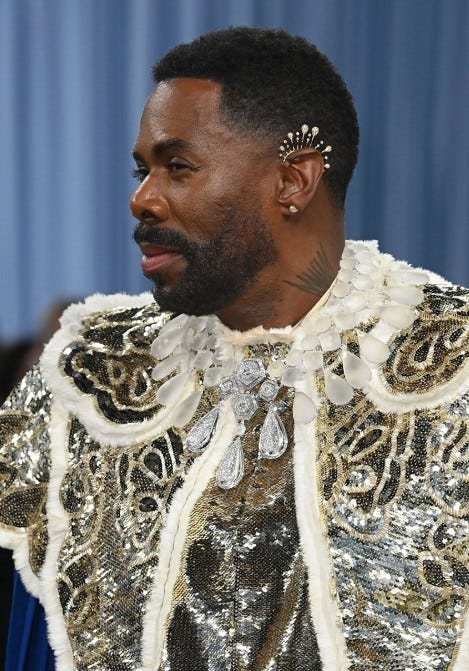
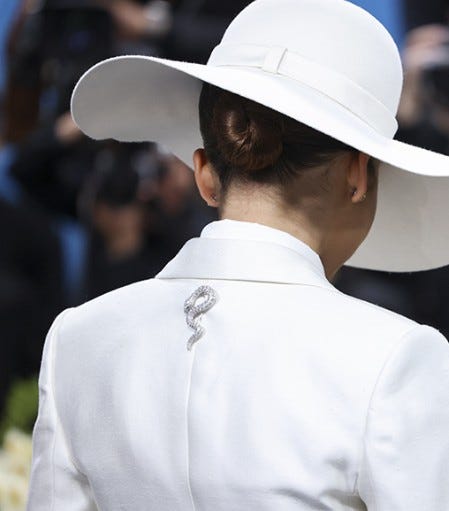
“From brooches to statement necklaces and diamonds galore, the Met Gala, which always takes place the first Monday in May, was a veritable feast for the eyes when it came to jewelry and how celebrity guests interpreted the theme of the evening, “Tailored For You.” As always, the theme for the gala left room for creative interpretation — in this case, menswear tailoring and suitings that will be on display as part of Metropolitan Museum of Art’s Costume Institute’s exhibition. For 2025, the exhibition is entitled “Superfine: Tailoring Black Style” and is partly inspired by Monica L. Miller’s book Slaves to Fashion: Black Dandyism and the Styling of Black Diasporic Identity. Miller is a guest curator of the exhibit with the Costume Institute’s curator in charge, Andrew Bolton. The exhibit features a cultural and historical look at Black style and dandyism, which dates to the 18th century. It is the first exhibit to focus exclusively on designers of color. As for the gala, the turnout couldn’t have been more star-studded, with big names from arenas such as film, music and sports.”
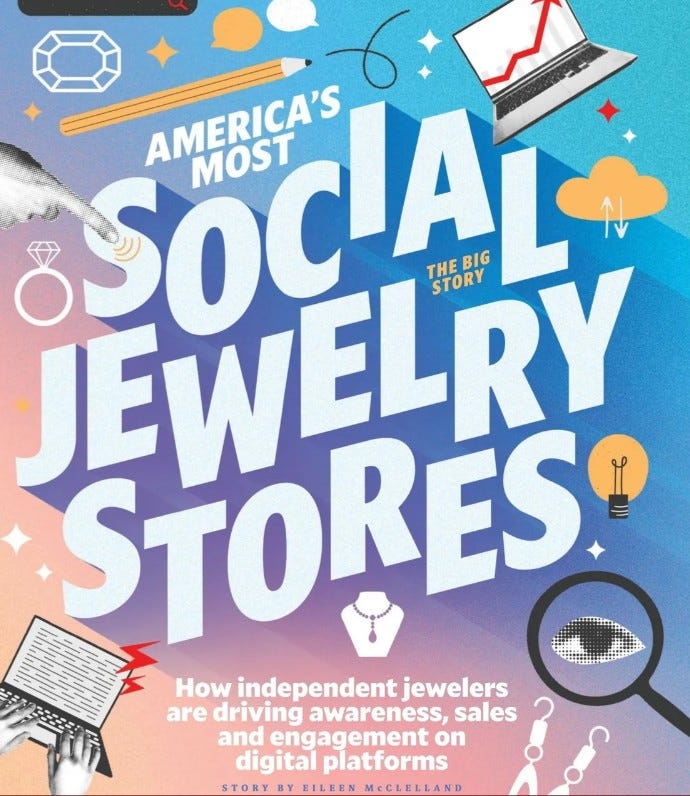
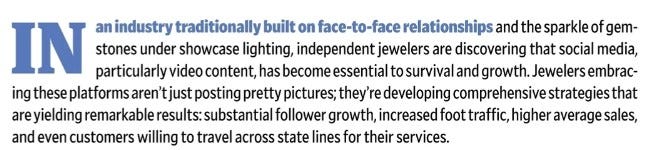
“The jewelers finding the most success aren’t just posting sporadically — they’re committing time and resources, experimenting with multiple platforms, and leveraging the unique storytelling capabilities that only video can provide. whether it’s viral videos that rack up six-figure views, educational content about gemstones that builds trust, or behind-the-scenes looks at custom design processes that humanize the business, these retailers are finding that authenticity and creativity drive both engagement and sales.”
It’s a job. You have to devote time to it. You want to establish expertise. You want to provide a window into your products and services. You want to recruit and retain customers. You want to clearly identify your competitive advantage(s). Video reins supreme. It all comes down to good storytelling.
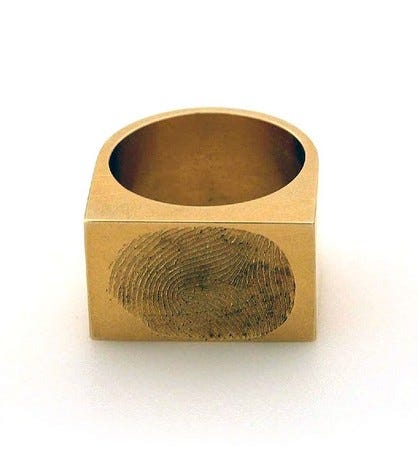
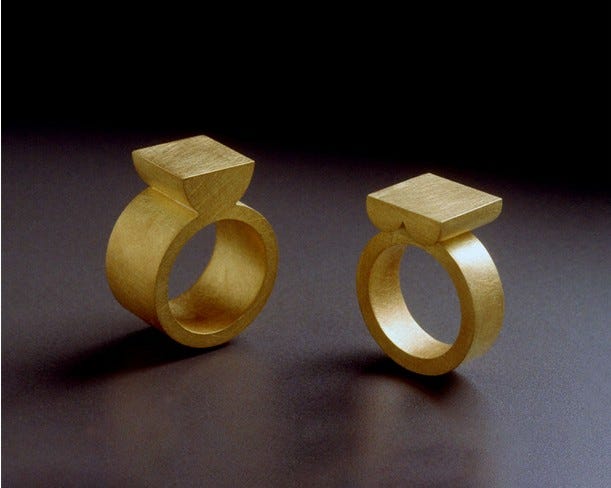
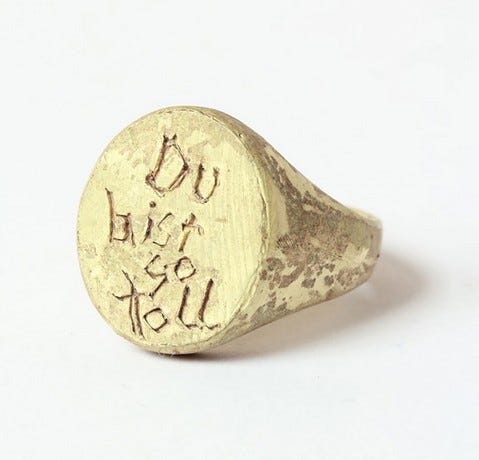
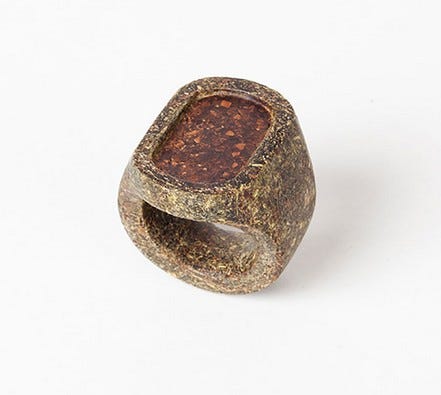
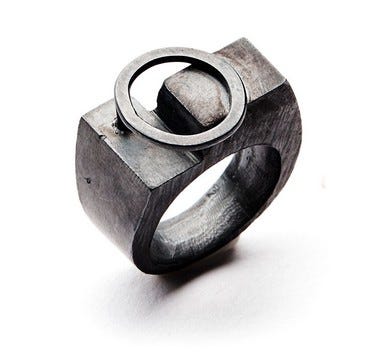
There was a short article in the most recent newsletter (#79) from Klimt02 about signet rings, some history, and some examples of contemporary interpretations.
“Passed down from one family member to another, the signet ring represents clan or family affiliation and carries deep symbolic and historical value. Originally used to authenticate official documents, this iconic jewellery typology has transcended centuries, worn by ancient Egyptian nobles, embraced by religious orders with the renowned Papal Fisherman’s Ring, associated with the mafia in the previous century, and now adopted as a fashion statement by the bling-bling generation. / Cécile Maes”
9/15/2025–10/15/2025 Art Jewelry Exhibit at Pryor Gallery, Columbia State Community College
My pieces will be showcased an this exhibit. In the works is a possible Seminar and a beading workshop.
Repairs Stumping You? Let Me Take A Look
I take in a lot of jewelry repairs. People either bring them to me in Columbia, TN, or, I pick them up and deliver them back in Nashville. I am in Nashville at least once a week. It’s been convenient for most people to meet me at Green Hills Mall. But if not, I can come to your workplace or your home. This is perfectly fine for me. My turnaround time typically is 3–4 weeks.
I do most repairs, but I do not do any soldering. I also do not repair watches. These are the kinds of repairs I do:
o Beaded jewelry o Pearl knotting, hand knotting o Size/Length adjustment o Re-stringing o Wire work/weave/wrap o Micro macrame o Broken clasp replacfement o Earring repair o Replace lost rhinestones or gemstones o Stone setting o Stretchy bracelet o Metal working which does not involve soldering o Bead woven jewelry and purses o Beaded clothing o Custom jewelry design
WARREN FELD JEWELRY (www.warrenfeldjewelry.com) Custom Design, Workshops, Video Tutorials, Webinars, Coaching, Kits, Group Activities, Repairs ~~~~~~~~~~~~~~~~~~~~~~~ Join our community of jewelry designers on my Patreon hub Be part of a community of jewelry designers who recognize that we have a different way of thinking and doing than other types of crafters or artists. One free downloadable Mini-Lesson of your choice for all new members! ~~~~~~~~~~~~~~~~~~~~~~~
Success or Failure? Some of my jewelry design students’ experiences at business
I’d estimate that 25–30% of my students are in the jewelry making /design hobby to make some extra money. Some see a way to supplement their income. Some see it as a retirement strategy. Others see it as a career transition. Whatever their goals, some have been successful, and others less so. Here are some of their stories.
Cindy
Cindy saw it as a career transition. She made and sold jewelry, went to craft shows and church bazaars, put her stuff on consignment all over the metropolitan area, did home shows, whatever.
After about two to two-and-a-half years, she took the giant leap and quit her full-time legal aid job to be a full-time jewelry artist/entrepreneur. She was successful because she knew how to promote herself, and was very comfortable at this.
Her designs were fashion-current, but not bizarre. One business that had her stuff on consignment told me how great she was to work with.
My only concerns were that she often short-changed some of the quality of materials, and perhaps pushed the pricing a bit too high. But I marvel at her success. if you stick to it, and are confident in yourself, you’ll get there.
Mona
Mona refurbished old pieces into new. She took old brooches, fixed them up, restored missing stones, polished or colored damaged edges. …
QUESTION #5: When is enough enough? How does the jewelry artist know when the piece is done? Overdone? Or underdone? What is the evidence? How do you edit? What fix-it strategies do you come up with and employ?
In the bead and jewelry arenas, you see piece after piece that is either over-embellished or under-done. Things may get too repetitive with the elements and materials. Or the pieces don’t feel that they are quite there yet.
For every piece of jewelry there will be that point of parsimony when enough is enough. We want to find that point where experiencing the “whole” is more satisfying than experiencing any of the parts. That point of parsimony is where, if we added (or subtracted) one more thing, we would detract from the whole of our design.
Knowing that point of parsimony is also related to anticipating how and when others will judge the piece as finished and successful. And what to do about it when judged unfinished or unsuccessful.
Some jewelry designers are only interested in selling the occasional piece. Others want to create a steady flow of some extra income. Still others want to be financially self-sufficient as a jewelry designer.
Whatever your personal goal and commitment, can you make money? The answer is YES!… That is, if you are smart about it.
Your friends and relatives might tell you that jewelry design “Is not practical,” or a warning “Don’t quit your day job.”
I won’t lie to you. It’s tough. It requires commitment and perseverance. It requires some introverted skills and some extroverted skills. It requires managing a process which includes some creative elements and some business and administrative ones. But you can do it.





 Beyond Bling—that’s what the Los Angeles County Museum of Art called its 2016 exhibition of the Lois Boardman Collection. The jewelry on view, donated by Boardman and her husband, meant to provoke and foster conversation. In a city legendary for glamour and glitz, this collection encourages discussions about how jewelry communicates powerful messages besides wealth and status.It prompts the question “what are you wearing?” rather than the tired red carpet refrain “who are you wearing?”Lois Boardman entered eternity in Pasadena, CA, on April 21, 2025. There is little doubt that she planned to accompany Pope Francis, wearing her Gold Nose, cast by Gerd Rothmann, and adorned by Nancy Worden’s necklace titled Gilding the Past. Like the dinner gatherings of historical persons in Van Loon’s Lives, her presence would have enticed individuals like Emily Dickinson, Madame Curie, and Queen Elizabeth into the Boardman world of ornamentation.


 Thanks for being here. I look forward to sharing more resources, tips,