Warren Feld Jewelry

Taking Jewelry Making Beyond Craft

Archive for June, 2025

FLUENCY IN JEWELRY DESIGN: How Do You Learn?

Posted by learntobead on June 30, 2025

HOW DO YOU LEARN?

Many people who begin to bead and make jewelry want to rush to the finish line. They want to learn everything at once. They buy beads and parts indiscriminately. They try to use stringing and other materials insufficient to meet their design goals. They fail to anticipate how to finish off the clasp assembly. Their choices of colors often less than appealing. They don’t have the right tools. They purchase every book they can find. They take classes and view video tutorials on anything that interests them or catches their eye, no matter what the skill levels involved. They want to create those perfect, elaborate pieces Now. Not later. Now.

Beading and jewelry making are not things to rush into, however. These are not things to learn haphazardly. Not everything is something you can easily pick up without having someone else show you.

This is a hobby and avocation and even a career which requires you to know a lot of things. You need to know a lot about materials. You need to know a lot about quality issues underlying these materials, and what happens to these materials over time. You need to be mechanical and comfortable using tools to construct things. You need to learn many basic techniques. You need to understand physical mechanics and what happens to all these materials and pieces, when jewelry is worn. You need to be familiar with art theories and design theories and their applications. You must be aware of some architectural basics and physical mechanics which inform you how things keep their shape and how things move, drape and flow. You need to understand people, their psychology, the dynamics of the groups they find themselves in, and their cultural rules which get them through the day.

There is so much to learn, that you can’t learn it all at once. And there is so much to bring to bear, when making a piece of jewelry, that it is difficult to access all this information, if you haven’t learned how everything is interrelated and interdependent.

Where can you learn jewelry making skills?…
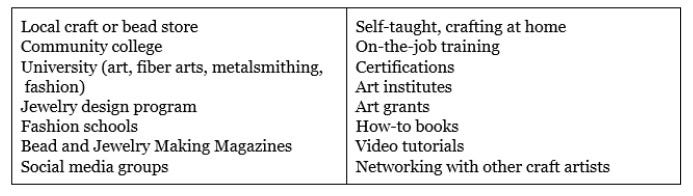
It’s important to learn in an organized, developmental way. You want to be always asking how things are interrelated. What depends on what? You want to pose what-if questions so that you can train yourself to anticipate the implications and consequences of making one choice over another. What happens If? What happens When? What enhances? What impedes? What synergizes? What can be leveraged, and toward what objective? You want to reflect on your outcomes.

Towards this end, you learn a core set of integrated and inter-dependent skills. Then learn another set of integrated and inter-dependent skills, perhaps at a slightly higher skill level, and how these link back to the core. Then learn yet another set of skills, again, increasing the skill level, how they link back to the first set, and then link back to the core. And so forth. Only in this way will you begin to know if you are learning the right way, and learning the right things.

There Are Many Ways To Learn

People apply different learning styles, when developing their beading and jewelry-making knowledge, skills and understandings. Each has pros and cons. Different people come to learn with different strategies or combinations of strategies. What is your preferred learning style? These learning styles and strategies include:

(1) Rote Memory

(2) Analogously

(3) Contradictions

(4) Assimilation

(5) Constructing Meanings

Most people learn by Rote Memory. They follow a set of steps, and they end up with something. They memorize all the steps. In this approach, all the choices have been made for them. So they never get a chance to learn the implications of their choices. Why one bead over another? Why one stringing material over another? How would you use the same technique in a different situation? You pick up a lot of techniques, but not necessarily many skills.

Other people learn Analogously. They have experiences with other crafts, such as sewing or knitting or woodworking or other craft, and they draw analogies. Such and Such is similar to Whatnot, so I do Whatnot the same way I do Such and Such. This can work to a point. However, beading and jewelry making can often be much more involved with composition, construction and manipulation, requiring making many more types of choices, than in other crafts. And there are still the issues of understanding the quality of the pieces you use, and what happens to them, both when jewelry is worn, as well as when jewelry is worn over time.

Yet another way people learn is through Contradictions. They see cheap jewelry and expensive jewelry, and analyze the differences. They see jewelry people are happy with, and jewelry people are not happy with, and analyze the differences. They see fashion jewelry looked down upon by artists, and art jewelry looked down upon by fashionistas, and they analyze the differences.

Assimilation is a learning approach that combines Analogous Learning and Learning Through Contradictions. People pursue more than one craft, keeping one foot in one arena, and another foot in the other. They teach themselves by analogy and contradiction. This assumes that multiple media and multiple techniques mix, and mix easily. Often, however, this is not true. Philosophies of design and technique differ. That means, the thinking about how a media and technique assert needs for shape and drape will have a different basis, not necessarily compatible. Usually one medium (or technique) has to predominate for any one project to be successful. So assimilative learning can lead to confusion and poor products, trying to meet the special concerns and structures of each craft simultaneously. It is challenging to mix media and/or techniques. Often the fundamentals of each particular craft need to be learned and understood in and of themselves.

The last approach to learning a craft is called Constructing Meanings. In this approach, you learn groups of things, and how to apply an active or thematic label to that grouping. For example, you might learn about beading threads, such as Nymo, C-Lon and FireLine, applying each one separately to accomplish the same project. In this way you begin to learn to evaluate each one’s strengths and weaknesses, especially in terms of Managing Thread Tension or allowing movement, drape and flow. You might learn about crystal beads, Czech glass beads, and lampwork beads, and then again, concurrently and in comparison, learn the pros and cons of each, in terms of achieving good color blending strategies. You might learn peyote stitch and Ndebele stitch, and how to combine them within the same project.

In reality, you learn a little in each of these different learning styles and strategies. The Constructing Meanings approach, what is often referred to as the Art & Design Perspective, usually is associated with more successful and satisfying learning. This approach provides you with the tools for making sense of a whole lot of information — all the information you need to bring to bear to make a successful piece of jewelry, one that is both aesthetically pleasing and optimally functioning.

The Types of Things You Need To Learn

There is so much to know, and so many types of choices to make. Which clasp? Which stringing material? Which technique? Which beads? Which strategy of construction? What aesthetic you want to achieve? How you want to achieve it? Drape, movement, context, durability.

Types of Beading and Jewelry Making
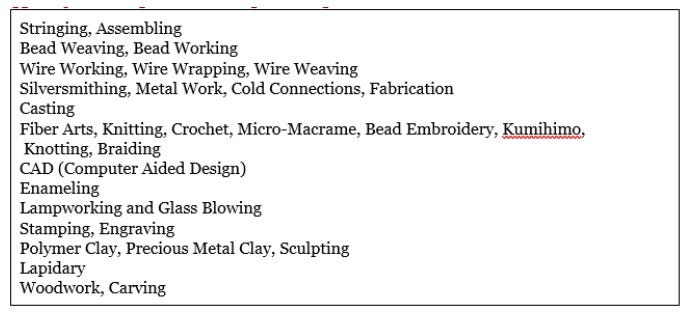
Lots to know. One mistake most people make is that they learn everything randomly. Some things on their own. Some from books. Some from friends. In no special order. Without any plan.

And because there are so many things that you need to bring to bear, when creating a piece of jewelry, that it is difficult to see how everything links up. How everything is inter-related and mutually dependent. And how to make the best, most strategic and most satisfying series of inter-related choices.

Types of Tasks Jewelry Makers and Beaders Do
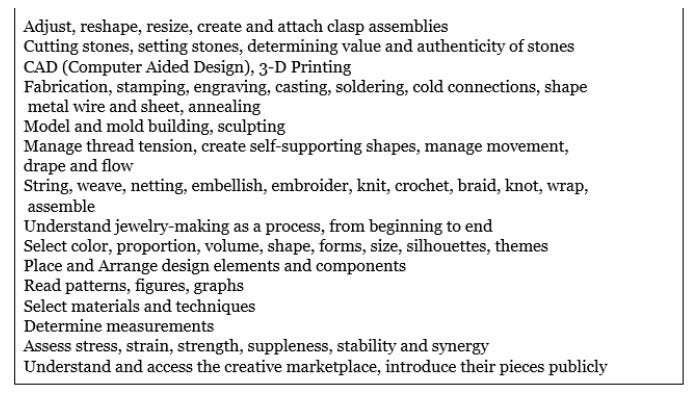
And this is the essence of this book — a way to learn all the kinds of things you need to bring to bear, in order to create a wonderful and functional piece of jewelry. When you are just beginning your beading or jewelry making avocation, or have been beading and making jewelry awhile — time spent with the material in these segments will be very useful. You’ll learn the critical skills and ideas. You’ll learn how these inter-relate and are mutually inter-dependent. And you’ll learn how to make better choices — fluent, flexible and original.

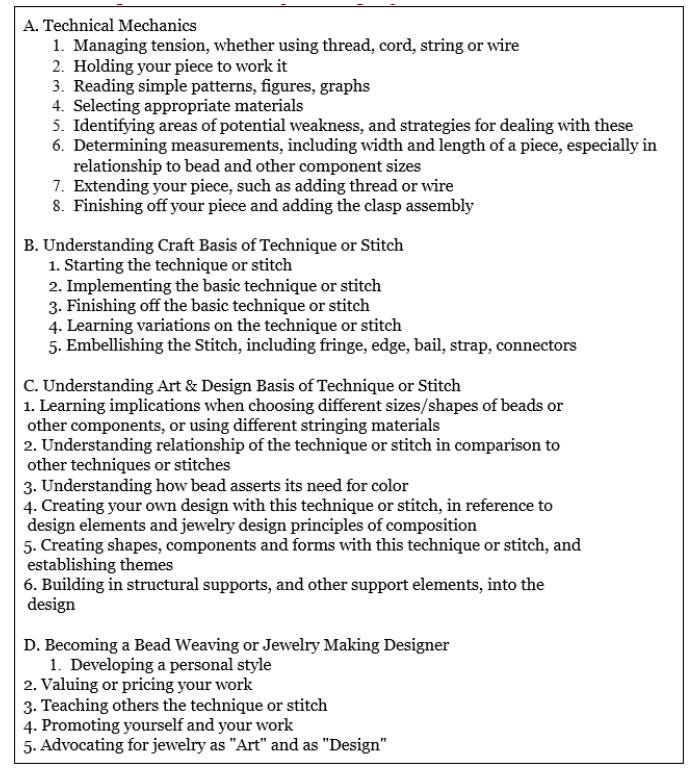
In the class curriculum I teach,
students are guided to learn the following objectives:
_______________________________________________________

For more articles about FLUENCY IN DESIGN, go to the JEWELRY DESIGNERS’ HUB

https://www.patreon.com/collection/613906?view=expanded

_______________________________________________________
Thanks for being here. I look forward to sharing more resources, tips,
sources of inspiration and insights with you.

WarrenFeldJewelry.com
Shop.warrenfeldjewelry.com
School.warrenfeldjewelry.com
Coaching by Warren Feld

Add your name to my email list.

SO YOU WANT TO BE A JEWELRY DESIGNER
Merging Your Voice With Form
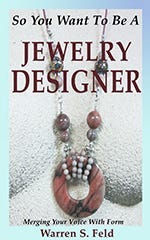
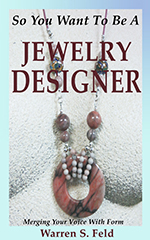
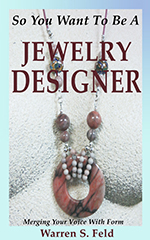
So You Want To Be A Jewelry Designer reinterprets how to apply techniques and modify art theories from the Jewelry Designer’s perspective. To go beyond craft, the jewelry designer needs to become literate in this discipline called Jewelry Design. Literacy means understanding how to answer the question: Why do some pieces of jewelry draw your attention, and others do not? How to develop the authentic, creative self, someone who is fluent, flexible and original. How to gain the necessary design skills and be able to apply them, whether the situation is familiar or not.

588pp, many images and diagrams Ebook , Kindle or Print formats

The Jewelry Journey Podcast
“Building Jewelry That Works: Why Jewelry Design Is Like Architecture”
Podcast, Part 1
Podcast, Part 2
Posted in architecture, art, Art or Craft?, art theory, bead stringing, bead weaving, beads, beadwork, business of craft, color, Contests, craft, craft shows, creativity, cruises, design management, design theory, design thinking, enrichment travel, Entrepreneurship, fashion, handmade jewelry, jewelry, jewelry collecting, jewelry design, jewelry making, Learn To Bead, literacy, pearl knotting, professional development, Resources, Stitch 'n Bitch, Travel Opportunities, wire and metal, Workshops, Classes, Exhibits | Tagged: , , , , | Leave a Comment »

FLUENCY IN JEWELRY DESIGN: Learning Technique: Finishing Off The Piece

Posted by learntobead on June 30, 2025

FINISHING OFF THE PIECE

Finishing Off The Piece. We always need to step back and reflect whether the piece as designed and implemented will be judged as finished and successful by each of the myriad audiences we hope to please. Will their judgments confirm or reject our philosophy of the particular technique(s) we used?

It is the challenge for the designer not to make the piece under-done or over-done. Each and every material and component part should be integral to the piece as a whole. In fact, the sensation of the piece as a whole should be greater than the sensation of any of its individual parts.

______________________________________________

For more articles about FLUENCY IN DESIGN, visit the JEWELRY DESIGNERS’ HUB

https://www.patreon.com/collection/613906?view=expanded

______________________________________________

_______________________________________________________

Thanks for being here. I look forward to sharing more resources, tips,
sources of inspiration and insights with you.

WarrenFeldJewelry.com
Shop.warrenfeldjewelry.com
School.warrenfeldjewelry.com
Coaching by Warren Feld

Add your name to my email list.

SO YOU WANT TO BE A JEWELRY DESIGNER
Merging Your Voice With Form

So You Want To Be A Jewelry Designer reinterprets how to apply techniques and modify art theories from the Jewelry Designer’s perspective. To go beyond craft, the jewelry designer needs to become literate in this discipline called Jewelry Design. Literacy means understanding how to answer the question: Why do some pieces of jewelry draw your attention, and others do not? How to develop the authentic, creative self, someone who is fluent, flexible and original. How to gain the necessary design skills and be able to apply them, whether the situation is familiar or not.

588pp, many images and diagrams Ebook , Kindle or Print formats

The Jewelry Journey Podcast
“Building Jewelry That Works: Why Jewelry Design Is Like Architecture”
Podcast, Part 1
Podcast, Part 2

Posted in architecture, art, Art or Craft?, art theory, bead stringing, bead weaving, beads, beadwork, business of craft, color, Contests, craft, craft shows, creativity, cruises, design management, design theory, design thinking, enrichment travel, Entrepreneurship, fashion, handmade jewelry, jewelry, jewelry collecting, jewelry design, jewelry making, Learn To Bead, literacy, pearl knotting, professional development, Resources, Stitch 'n Bitch, Travel Opportunities, wire and metal, Workshops, Classes, Exhibits | Tagged: , , , , | Leave a Comment »

CONQUERING THE CREATIVE MARKETPLACE: Your Getting Started Story

Posted by learntobead on June 27, 2025

Your Getting Started Story

When did you first realize you wanted to make a business out of your passion for making jewelry?

[While you are thinking about this, now is a good time to get out your pen and paper and jot down some thoughts.]

Everyone has a Getting Started Story.

This is a story you tell over and over again. In it, you express your wonderment and passion. You talk about your excitement, your inspirations, your aspirations, your motivations and how you decided to channel them. You go over the steps you went through to discover what it is that drives you to create. You recall who influenced you, when and why. You remember different pathways and crossroads, where you decided to pursue your interests in one direction or another. You reflect on your expectations before you got started, and how these evolved or changed as you began to make and design jewelry.

Sometimes your story begins by touching some beads. Or running a strand of pearls through your hand. Or the sight of something perfectly worn around the wrist, upon the breast, or up near the neck. Other times, it may begin by taking a class, or deciding to make a special pair of earrings to match a particular outfit. Or thinking you want to make a piece of jewelry you saw someone wearing on TV or in a photospread in some magazine.

Your Getting Started Story is a measure of what you have discovered, and what you need to discover still. It is a foil against which to measure your successes, and some not-so-successful things. It represents your insight and foresight when making both personal development and jewelry design choices.

And, it is very important to be cognizant and aware of how your Getting Started Story follows you throughout your career …

… CONTINUE READING ON THE JEWELRY DESIGNERS’ HUB

Posted in architecture, art, Art or Craft?, art theory, bead stringing, bead weaving, beads, beadwork, business of craft, color, Contests, craft, craft shows, creativity, cruises, design management, design theory, design thinking, enrichment travel, Entrepreneurship, fashion, handmade jewelry, jewelry, jewelry collecting, jewelry design, jewelry making, Learn To Bead, literacy, pearl knotting, professional development, Resources, Stitch 'n Bitch, Travel Opportunities, wire and metal, Workshops, Classes, Exhibits | Tagged: , , , , | Leave a Comment »

FLUENCY IN JEWELRY DESIGN: Developing Your Passion

Posted by learntobead on June 23, 2025

GETTING STARTED:
DEVELOPING YOUR PASSION
Passions Aren’t Found, They Are Developed!

Design is about knowledge, skill and understanding. Knowledge requires time and preciseness. Skill requires care and attention. Understanding requires empathy and insight.

You are not born with the knowledge, skill and understandings necessary for jewelry design. These must be learned and developed over time. Anyone and everyone can learn these. Everyone has a creative capacity within them. There are many different ways to express things creatively. But one has to learn to express their thoughts and feelings creatively, step by step, developmentally over a period of time. It is through this process of investment in self that the designer’s passions emerge and expand.

It is important not to give up too easily, if designing and making jewelry seems too difficult at first. Difficulty does not equate to a lack of passion. It does not equate to a lack of ability. It does not equate to a lack of creativity. Many things will be difficult, particularly at first.

Nor does any waxing and waning of motivation imply that jewelry design is not for you. It’s natural that jewelry design does not provide an endless, infinite, always-there motivation. This does not mean you have lost your passion for it.

Passions must be cultivated. As do technical abilities and creative thinking. These all must be developed.

_______________________________________________________

For more articles about FLUENCY IN JEWELRY DESIGN, visit the JEWELRY DESIGNERS’ HUB

_______________________________________________________

Thanks for being here. I look forward to sharing more resources, tips,
sources of inspiration and insights with you.

WarrenFeldJewelry.com
Shop.warrenfeldjewelry.com
School.warrenfeldjewelry.com
Coaching by Warren Feld

Add your name to my email list.

SO YOU WANT TO BE A JEWELRY DESIGNER
Merging Your Voice With Form

So You Want To Be A Jewelry Designer reinterprets how to apply techniques and modify art theories from the Jewelry Designer’s perspective. To go beyond craft, the jewelry designer needs to become literate in this discipline called Jewelry Design. Literacy means understanding how to answer the question: Why do some pieces of jewelry draw your attention, and others do not? How to develop the authentic, creative self, someone who is fluent, flexible and original. How to gain the necessary design skills and be able to apply them, whether the situation is familiar or not.

588pp, many images and diagrams Ebook , Kindle or Print formats

The Jewelry Journey Podcast
“Building Jewelry That Works: Why Jewelry Design Is Like Architecture”
Podcast, Part 1
Podcast, Part 2
Posted in architecture, art, Art or Craft?, art theory, bead stringing, bead weaving, beads, beadwork, business of craft, color, Contests, craft, craft shows, creativity, cruises, design management, design theory, design thinking, enrichment travel, Entrepreneurship, fashion, handmade jewelry, jewelry, jewelry collecting, jewelry design, jewelry making, Learn To Bead, literacy, pearl knotting, professional development, Resources, Stitch 'n Bitch, Travel Opportunities, wire and metal, Workshops, Classes, Exhibits | Tagged: , , , , | Leave a Comment »

CONQUERING THE CREATIVE MARKETPLACE: Explain Who You Are As A Designer

Posted by learntobead on June 20, 2025

The Challenge To Explain Who You Are As A Designer

It is very challenging to explain who you are to people who do not know anything about you. You have several vehicles for conveying this information. These include how you name your business or name your jewelry and jewelry lines. These include your getting started story. Your tag line. Your elevator pitch. Your brochures, business cards and stationery. The types of inventory you carry, and do not carry. The consistent and coherent features of your jewelry designs.

In this book, I go over in detail how to begin to develop the kinds of information and the vehicles for conveying this information to influence how people see you, want to come to you, want to buy your jewelry, want to recommend you to others. Then it comes down to planning, strategy and practice.

TELL YOUR STORY

The story of your jewelry passion and career is a critical component of business success. The story can be real. It can be partially real and partially embellished. It can be a fantasy. However, it is important to have a story. It will always be a foundational element of your business. Jewelry design doesn’t speak for itself. Storytelling helps design stand out. People are attracted to stories and like to follow narratives. Always remember this maxim: Facts Tell, but Stories Sell!

With your story, you begin to establish that personal, emotional connection between your customer, you and your products. When you establish a very personal connection with your customer, you will more likely make the sale. And keep making the sale. Over and over again.

People are not just buying your work. They are buying an experience. The more they know about you, your techniques, and the particulars of the work, the more likely they are to buy something.

You, in effect, are building a brand. The brand is you.

Your story could be real or imagined. Whatever it is, it must be relevant and ring true to what you are selling. AND, it must be to the point and easily repeatable.

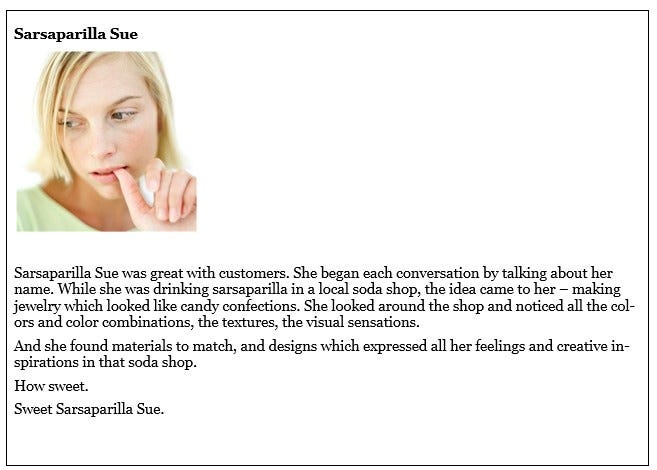
Telling her story was something Sarsaparilla Sue did very, very well.

_______________________________________________________

For more articles about Conquering The Creative Marketplace, click over to our Jewelry Designers’ Hub

_______________________________________________________

Thanks for being here. I look forward to sharing more resources, tips,
sources of inspiration and insights with you.

WarrenFeldJewelry.com
Shop.warrenfeldjewelry.com
School.warrenfeldjewelry.com
Coaching by Warren Feld

Add your name to my email list.

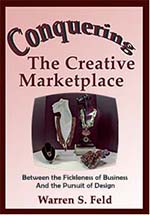
Conquering The Creative Marketplace

Many people learn beadwork and jewelry-making in order to sell the pieces they make. Based both on the creation and development of my own jewelry design business, as well as teaching countless students over the past 35+ years about business and craft, I want to address what should be some of your key concerns and uncertainties. I want to share with you the kinds of things (specifically, a business mindset and confidence) it takes to start your own jewelry business, run it, anticipate risks and rewards, and lead it to a level of success you feel is right for you. I want to help you plan your road map.

I will explore answers to such questions as: How does someone get started marketing and selling their pieces? What business fundamentals need to be brought to the fore? How do you measure risk and return on investment? How does the creative person develop and maintain a passion for business? To what extent should business decisions affect artistic choices? What similar traits to successful jewelry designers do those in business share? How do you protect your intellectual property?

The major topics covered include,

1. Integrating Business With Design

2. Getting Started

3. Financial Management

4. Product Development, Creating Your Line, and Pricing

5. Marketing, Promotion, Branding

6. Selling

7. Professional Responsibilities and Strategic Planning

8. Professional Responsibilities and Gallery / Boutique Representation

9. Professional Responsibilities and Creating Your Necessary Written Documents

548pp, many images and diagrams
Kindle or Ebook or Print

Posted in architecture, art, Art or Craft?, art theory, bead stringing, bead weaving, beads, beadwork, business of craft, color, Contests, craft, craft shows, creativity, cruises, design management, design theory, design thinking, enrichment travel, Entrepreneurship, fashion, handmade jewelry, jewelry, jewelry collecting, jewelry design, jewelry making, Learn To Bead, literacy, pearl knotting, professional development, Resources, Stitch 'n Bitch, Travel Opportunities, wire and metal, Workshops, Classes, Exhibits | Tagged: , , , , | Leave a Comment »

FLUENCY IN JEWELRY DESIGN: Merging Your Voice With Form

Posted by learntobead on June 16, 2025

Merging Your Voice and Inspiration With Form

Jewelry design is an ongoing process of finding how to merge your artistic voice and inspiration with form. As you become more fluent and comfortable with all the vocabulary and materials and techniques, you take on more and more challenges.

Jewelry design is a conversation. It is a quiet conversation between what you come to feel and understand as inspiration, and what logical options you might bring to bear on translating that inspiration into a design. It is a conversation between you the designer and someone else as the wearer. It might also be a conversation between you the maker with someone else as the viewer, buyer, seller, exhibiter or collector.

The conversation is never done. It is a dialog. It is a back-and-forth process of refining, questioning and translating your feelings, impressions, ideas, influences into a visual grammar, forms and arrangements, and content, intent and meanings. Everything comes into play, and everything matters.

Some of the conversation is inward, and some of the conversation is very interactional. Part of the conversation focuses on generating a lot of possibilities. Another part concentrates on narrowing down those possibilities. During all this iteration, your artistic voice gets closer and closer to merging with that final jewelry form.

As your fluency in jewelry design grows, you find that all this conversation and all divergence and convergence of ideas and feelings and choices, gets reflected and sensed within your jewelry designs. This is how you develop and channel your excitement and passion.

This is how your jewelry begins to resonate.

_______________________________________________________

For more articles on FLUENCY IN JEWELRY DESIGN, visit the JEWELRY DESIGNERS’ HUB.

https://www.patreon.com/collection/613906?view=expanded

_______________________________________________________

Thanks for being here. I look forward to sharing more resources, tips,
sources of inspiration and insights with you.

WarrenFeldJewelry.com
Shop.warrenfeldjewelry.com
School.warrenfeldjewelry.com
Coaching by Warren Feld

Add your name to my email list.

SO YOU WANT TO BE A JEWELRY DESIGNER
Merging Your Voice With Form

So You Want To Be A Jewelry Designer reinterprets how to apply techniques and modify art theories from the Jewelry Designer’s perspective. To go beyond craft, the jewelry designer needs to become literate in this discipline called Jewelry Design. Literacy means understanding how to answer the question: Why do some pieces of jewelry draw your attention, and others do not? How to develop the authentic, creative self, someone who is fluent, flexible and original. How to gain the necessary design skills and be able to apply them, whether the situation is familiar or not.

588pp, many images and diagrams Ebook , Kindle or Print formats

The Jewelry Journey Podcast
“Building Jewelry That Works: Why Jewelry Design Is Like Architecture”
Podcast, Part 1
Podcast, Part 2
Posted in architecture, art, Art or Craft?, art theory, bead stringing, bead weaving, beads, beadwork, business of craft, color, Contests, craft, craft shows, creativity, cruises, design management, design theory, design thinking, enrichment travel, Entrepreneurship, fashion, handmade jewelry, jewelry, jewelry collecting, jewelry design, jewelry making, Learn To Bead, literacy, pearl knotting, professional development, Resources, Stitch 'n Bitch, Travel Opportunities, wire and metal, Workshops, Classes, Exhibits | Tagged: , , , , | Leave a Comment »

THE JEWELERS’ PALETTE, 6/15/2025

Posted by learntobead on June 14, 2025


From Warren and Land of Odds
Join my community of jewelry designers on my Patreon hub
June 15, 2025
Sign up for a Free or Paid Subscription

[Note: Paid Subscribers on Patreon Hub get 25% Off @Land of Odds]

www.landofodds.com

Hi everyone,

Some Updates and Things Happening.
(Please share this newsletter)

In this Issue:
1. Exhibitions Not Just Seen But Felt
2. Why jewelers are championing ‘ugly’ gems
3. Jewelry Deserves A Place In Art History
4. Call For Submissions: Smithsonian Craft Show, 2026
5. The Artist Who Captured the Contradictions of Femininity
6. Some Tips For Designing Your Website
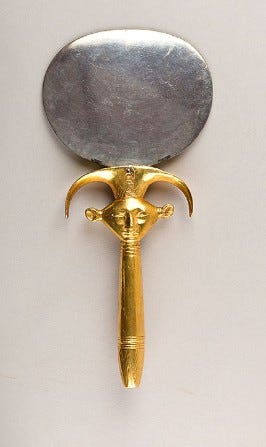
7. The Mirror Motif In Contemporary Jewelry
8. FEAST -Contemporary Jewelry From the Susan Beech Collection 

Some articles you may have missed
Featured

__________________________________________

1. Exhibitions Not Just Seen but Felt, Beyond the Vitrine.
By matt lambert, Art Jewelry Forum

(Left) Leo wearing a necklace by (right) Sofia Tekela-Smith. Sofia Tekela-Smith, Untitled, 2025, necklace in mother-of-pearl, waxed thread, photo: Jamie Berry

Read the full article here

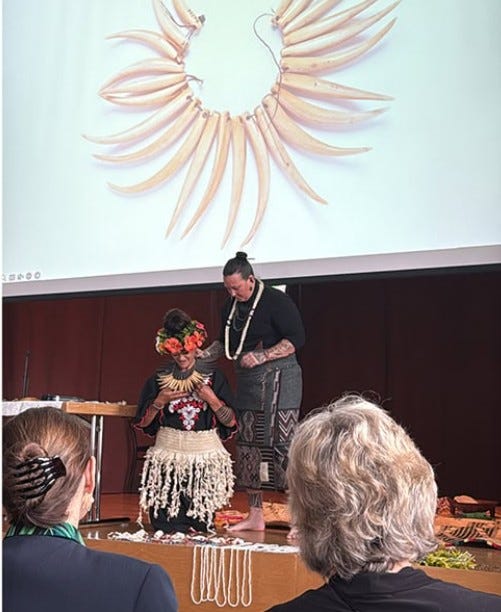
At the start of my Munich Jewellery Week adventure, I made my way to the Museum Fünf Kontinente (Museum Five Continents) to attend the KOHĀ ceremony led by Aotearoa (New Zealand) adornment practitioners Neke Moa, Sofia Tekela-Smith, and Stevei Houkāmau. The Munich Jewellery Week website described it as a performance and activation.

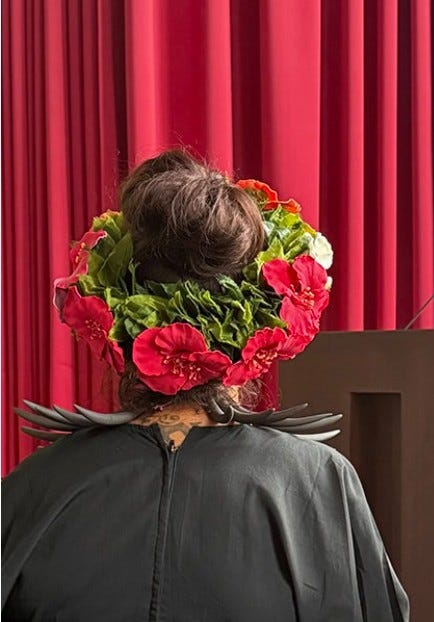
Fijian Wasekaseka Necklace, in sperm whale teeth, acquired in 1900 from Parisian dealer Emile Heymann, further provenance unknown, collection Fünf Kontinente Museum. (On stage, right) Stevei Houkāmau assists (left) Sofia Tekela-Smith in securing the necklace from the Fünf Kontinente Museum collection. Tekela-Smith is wearing a “Tofua,” a traditional Rotuman pandanus skirt from the island of Rotuma, a Parā /head lei of artificial hibiscus and leaves made of silk, 2024, necklace by Stevei Houkāmau, Korero with Our Ancestors, 2025, in black clay, wax cord, paint, photo courtesy of matt lambert

Koha is a vital concept in te ao Māori (the Māori world). It references the act of offering a gift or contribution as an expression of gratitude. Koha exists in both formal ceremony and everyday life.

The happening was rich and layered with many components. I cannot properly do it justice. In a highly emotive moment, Moa, Tekela-Smith, and Houkāmau showed works they made in response to works in the museum’s collection. In a surprise move by the museum, during the ceremony they were allowed to handle pieces from the historic collection, even permitted to wear one of them.

Read the full article here

__________________________________________


2. Why jewelers are championing ‘ugly’ gems

By Milena Lazazzera, CNN. 5/29/2025

Read the full article here

“Using the scientific precision of terms like “IF Type IIa” — to describe diamonds so pure they show no inclusions under 10x magnification — jewelry purveyors have long placed heavy emphasis on the clarity and cut of a gem. The sharper the facet and flawless the sparkle, the more valuable a stone once appeared.”

“Until now. Once dismissed as “ugly ducklings” — too marked, too dark, or too strange — imperfect gems are now stepping into the spotlight, as high-end jewelers increasingly champion stones with unique inclusions or less-than-perfect clarity.”

“The popularity of unconventional stones signals a broader shift in consumer behavior. More women are now buying jewelry for themselves, often valuing design and emotional resonance over traditional notions of investment — contrasting with male buyers who typically view jewelry as a store of value or a gift, according to several jewelry executives interviewed by CNN. “

Read the full article here

__________________________________________


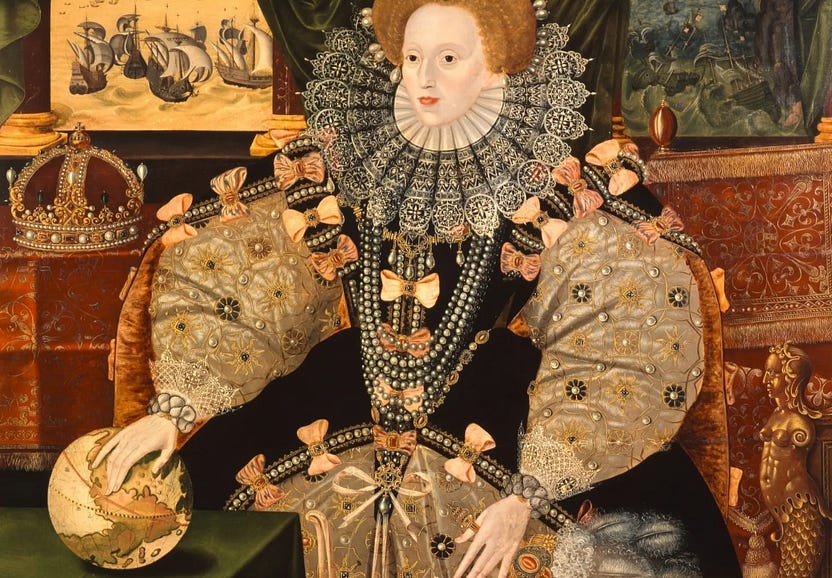
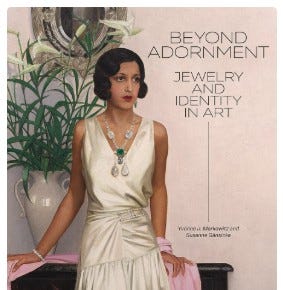
3. Jewelry Deserves A Place In Art History

Beyond Adornment explores what the depiction of jewelry in art says about adornment, artists, and their subjects, from Charlemagne to Frida Kahlo.

Aida Amoako, 5/28/2025

Read the full article here

Unknown English artist, “Armada Portrait” (1588), oil on oak panel (image courtesy Woburn Abbey, Woburn, Bedfordshire, England)

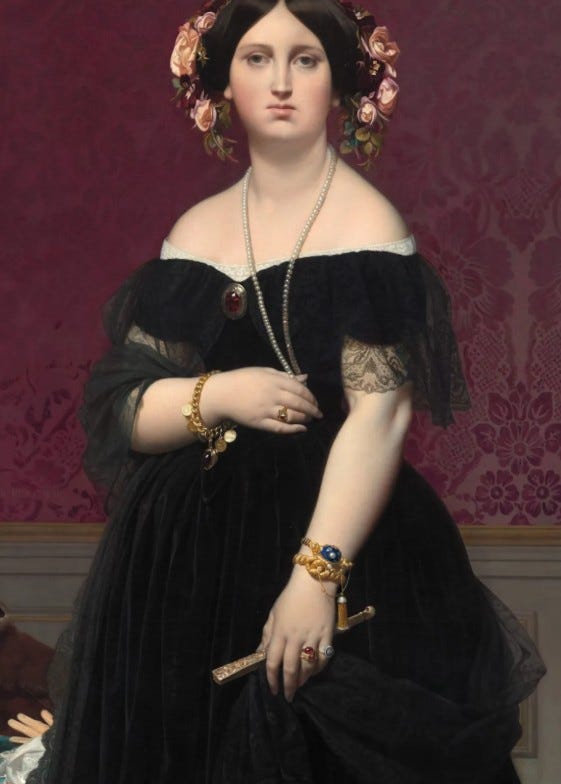
“In Albrecht Dürer’s idealized, early-16th-century portrait of Charlemagne, the Holy Roman Emperor wears a dazzling crown. The diadem, topped by a cross, was itself very real. But it did not exist until around 962 CE, over a century after Charlemagne’s death. “

Jean-Auguste-Dominique Ingres, “Portrait of Madame Moitessier” (1851), oil on canvas (image courtesy National Gallery of Art, Washington, DC)

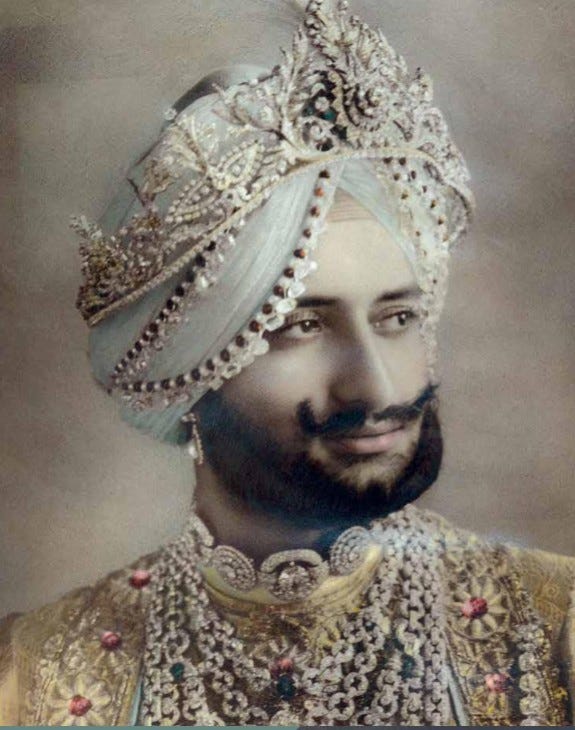
“Considered the oldest decorative art, jewelry has such a power to communicate that artists have been willing to bend the truth to exploit its associative capacities — or so argues Beyond Adornment: Jewelry and Identity in Art (2025). Yvonne J. Markowitz, jewelry curator at the Museum of Fine Arts (MFA), Boston, and Susanne Gänsicke, senior conservator of Antiquities at the Getty Museum, explore what the depiction of jewelry in art says about adornment, artists, and their subjects.”

“This practice of eschewing historical accuracy in order to build a compelling narrative is a prevalent theme, and the book’s discussion of Archaeological Revival jewelry — European and American pieces from the 18th and 19th centuries that sought to recreate ancient styles — is particularly fascinating. In Spanish painter Vicente Palmaroli y González’s 1870 portrait of aristocrat Enid, Lady Layard, the sitter wears jewelry made from “numerous ancient cylinder seals and stamp seals” found in excavations at Nineveh, the effect of which Gänsicke describes as a “historical melange.” Her husband was a prominent Assyriologist known for uncovering the Library of Ashurbanipal. Perhaps, Gänsicke suggests, “the set’s purpose was as much to declare her husband’s accomplishments as to adorn the wearer.” “

Read the full article here

__________________________________________


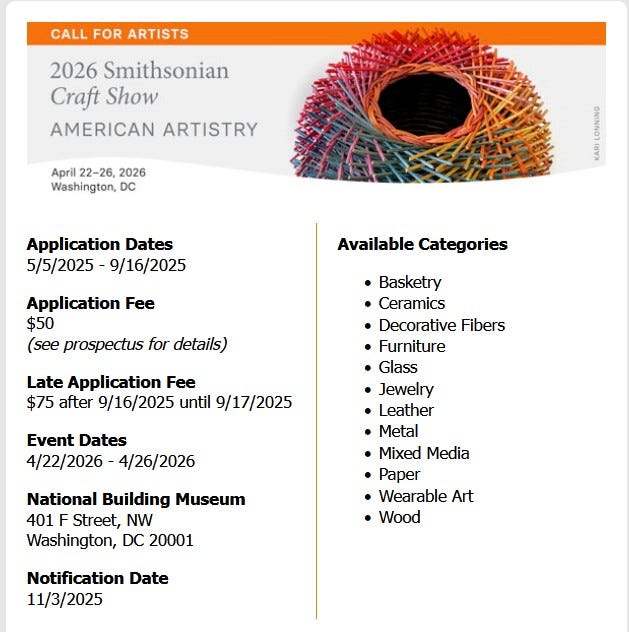
4. Call For Submissions, Smithsonian Craft Show 2026

Read the full prospectus here

Juried Art Services
Edit descriptionjuriedartservices.com

__________________________________________


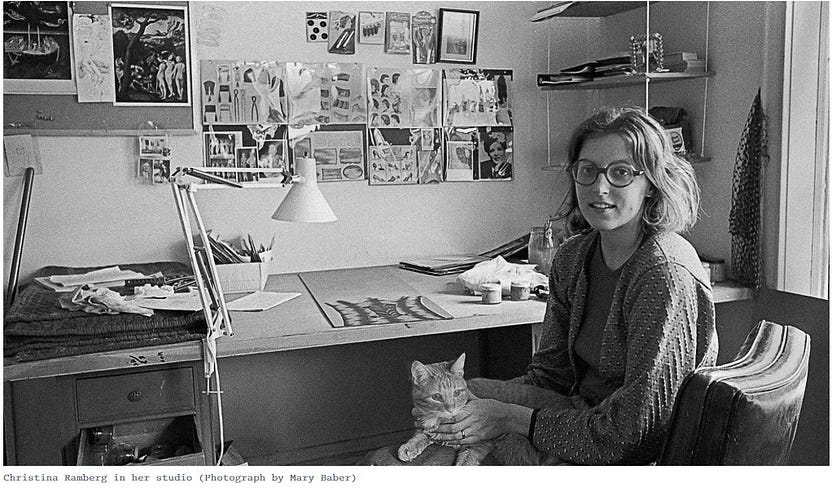
5. The Artist Who Captured the Contradictions of Femininity

In her too-short career, the painter Christina Ramberg studied the many contortions that being a woman can demand.

By Jane Yong Kim
The Atlantic, 5/30/2025

Read the full article here

Christina Ramberg in her studio (Photograph by Mary Baber)

“Observing a woman get ready to go out is, for many girls, an early glimpse at the ritualistic preparations that femininity can entail. For the artist Christina Ramberg, watching her mother getting dressed for parties — in particular, putting on a corset called a merry widow, which gave her an hourglass figure — revealed the extent to which the female form was a ruse. “I can remember being stunned by how it transformed her body, how it pushed up her breasts and slendered down her waist,” Ramberg later observed. “I used to think that this is what men want women to look like; she’s transforming herself into the kind of body men want. I thought it was fascinating,” she said. “In some ways, I thought it was awful.””

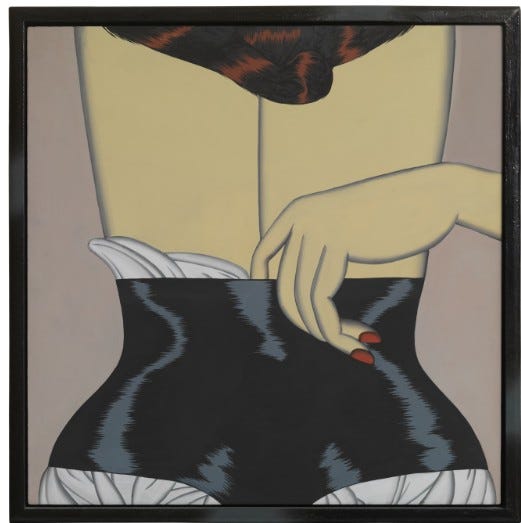
The estate of Christina Ramberg
Probed Cinch, 1971

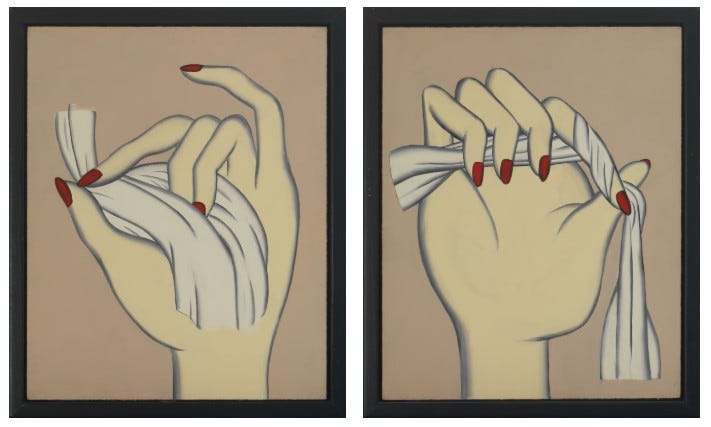
“These dueling reactions, fascination and repulsion, come up in Ramberg’s paintings, which, especially early in her career, fixated on the artifice of the female body — all the different ways that women construct themselves, with the aid of the mass market. Her striking portraits of women’s body parts feature torsos strapped into corsets, feet shoved into high heels, intricately arranged updos. The images are crisp, flat, and slyly cropped or angled to never show faces. And although they’re sensual, they’re also depersonalized and often off-kilter; sometimes, hair is parted in unnatural directions, or skin is patchy. The dueling presence of unruly and taming forces in these paintings recalls the consumer products that divide women’s bodies into conquerable parts: the sprays that restrain, the undergarments that shape. As the artist Riva Lehrer puts it in one of several essays accompanying a traveling exhibit of Ramberg’s work, currently at the Philadelphia Museum of Art, “Without the face, the body must tell all.””

The estate of Christina Ramberg
Untitled (Hand), 1971; Untitled (Hand), 1971

Read the full article here

__________________________________________


6. Some Tips For Designing Your Webiste

📊 Simplify your website for multiple audiences.

If your art website serves different audiences — like collectors, store owners, individual buyers, and publishers — don’t overwhelm visitors with too many options.

Instead, divide your homepage into clear sections, each labeled for its audience (e.g., “For Collectors,” “For Store Owners,”, “For My Customers”, “For Authors”).

  • Let each section guide visitors to the relevant content and products, so they instantly know where to go.
  • Use simple language and align your navigation menu with those same categories.

A clear structure not only reduces confusion — it helps the right people find what they’re looking for, fast.

💻 Quick tips on designing a clear and engaging artist website:

  • Start with messaging that speaks to your audience’s experience, not just your own story.
  • Break long paragraphs into short, scannable chunks to keep visitors engaged.
  • Simplify your menu by grouping offerings into “artworks” and “services.”
  • Move exhibitions to your About page to keep your navigation clean and current.
  • Aim for a clean, professional layout that feels like a curated gallery space.

🖼️ When building your website, treat it as a portfolio — not an archive.

  • Focus on showcasing only your strongest work that represents who you are today as a creator, especially if you’re multidisciplinary.
  • Resist the urge to include everything you’ve ever made; too much content can overwhelm visitors and dilute your message.
  • Highlight only key exhibitions that add credibility, and keep the layout clean and intentional to avoid a “garage sale” feel.

__________________________________________


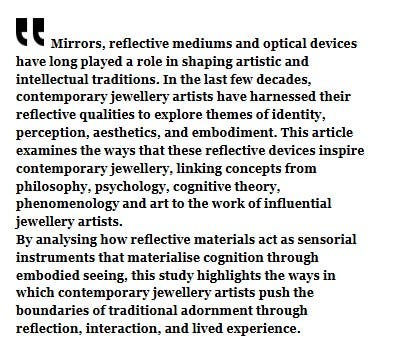
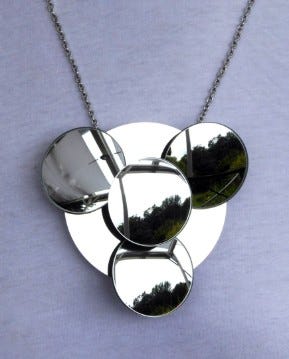
7. Perceptual Surfaces in Flux: Mirrors, Embodied Vision and Optical Fields in Contemporary Jewellery

By Sotiria Vasileiou 
Klimt02, 6/3/2025
Read the full article here

From 1479 BC, Met Museum

Herman Hermsen, Be aware! Watch your back!, Pendant necklace, 2023, glass blind spot mirrors, computer hard disk, metal mirror, chain.
Image Credit: Courtesy of the Artist ©.

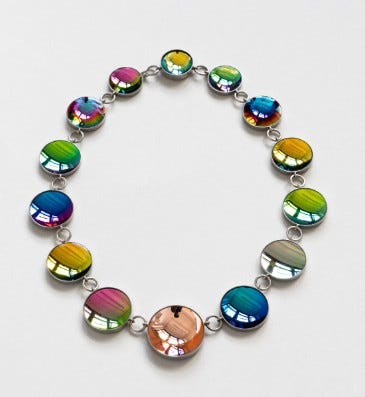
iro Kamata, WG SpiegelNecklace, 2021, camera lens, rose-gold coating, PVD coating, 18K palladium white gold.
Image Credit: Courtesy of the Artist ©.

Read the full article here

__________________________________________


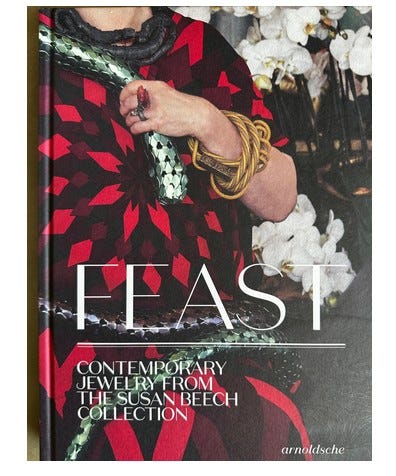
8. FEAST — Contemporary Jewelry From the Susan Beech Collection

Feast: Contemporary Jewelry from the Susan Beech Collection

Tour the home of American collector Susan Beech. Since 1991, she has been transforming her house into an extraordinary environment in which the themes of her extensive jewelry collection interact with craft and fine art, all against a backdrop of Art Deco glamour. Beauty is entwined with darker forces of death and decay, and glimpses of pleasure are complicated by a nod to the surreal and uncanny. The result is a wholly original and fascinating stage for a major collection of contemporary jewelry thoughtfully assembled over four decades.

Purchase your copy in AJF’s bookstore.


__________________________________________

UPCOMING WORKSHOPS by Warren Feld

Sat, 6/21, 1–4, PEARL KNOTTING, Hoamsy, Nashville, LC Goat, Germantown, 1220 2nd Ave N

Register: www.hoamsy.com

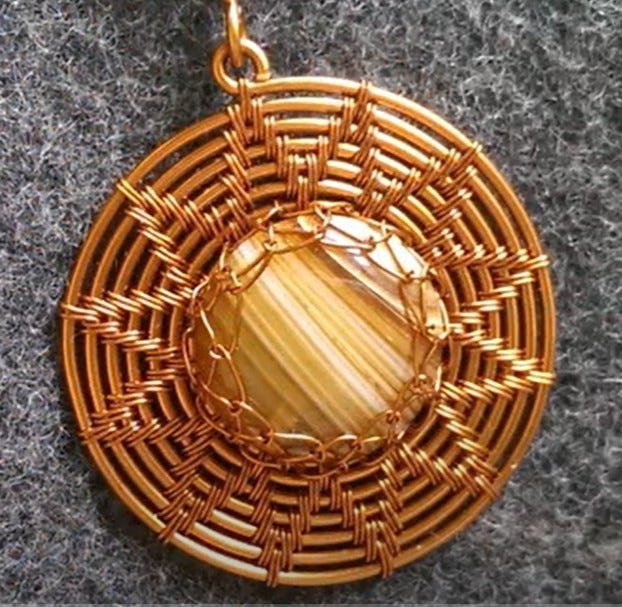
Sat, 7/19, 9am-Noon, INTRODUCTION TO WIRE WEAVING and MAYAN PENDANT

Middle Tenn Gem & Mineral Society, Donelson Fifty Forward
Registration begins June 21http://www.mtgms.org/schools.htm
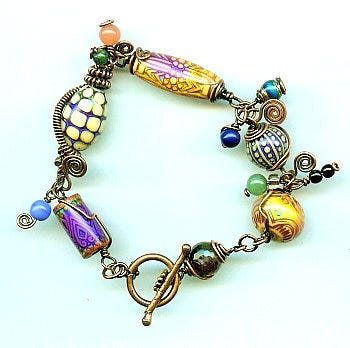
Sat, 7/19, 1–4pm, WIRE WORKING INTRODUCTION and MIX N MATCH BRACELET

Middle Tenn Gem & Mineral Society, Donelson Fifty Forward
Registration begins June 21http://www.mtgms.org/schools.htm
Sat, 7/26, 1–4pm, WIRE WOVEN MAYAN PENDANT, Hoamsy, Nashville, LC Goat, Germantown, 1220 2nd Ave N

Register: www.hoamsy.com

Sat, 8/16, 9am-Noon, WIRE WRAPPED CABOCHON PENDANT

Middle Tenn Gem & Mineral Society, Donelson Fifty Forward
Registration begins June 21http://www.mtgms.org/schools.htm
Sat, 8/16, 1–4pm, WIRE WEAVE 2 and SUN PENDANT
Middle Tenn Gem & Mineral Society, Donelson Fifty Forward
Registration begins June 21http://www.mtgms.org/schools.htm 
Sat, 8/23, 1–4pm, WIRE WRAP MIX N MATCH BRACELET, Hoamsy, Nashville, LC Goat, Germantown, 1220 2nd Ave N

Register: www.hoamsy.com

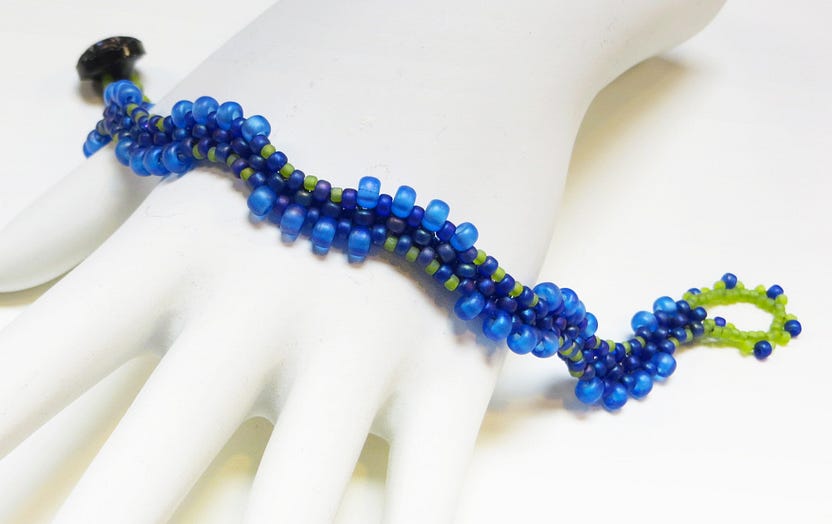
Sat, 9/20, 9am-Noon, LEARN BEAD WEAVING: RIGHT ANGLE WEAVE and CURVY RAW BRACELET

Middle Tenn Gem & Mineral Society, Donelson Fifty Forward
Registration begins June 21http://www.mtgms.org/schools.htm
Sat, 9/20, 1–4pm, INTRO TO EVEN COUNT, FLAT PEYOTE and JUNGLE FLOWER BRACELET

Middle Tenn Gem & Mineral Society, Donelson Fifty Forward
Registration begins June 21http://www.mtgms.org/schools.htm


9/15/2025–10/15/2025 Art Jewelry Exhibit at Pryor Gallery, Columbia State Community College

My pieces will be showcased an this exhibit. In the works is a possible Seminar and a beading workshop.

__________________________________________

__________________________________________

SOME POSTS YOU MAY HAVE MISSED:

CONQUERING THE CREATIVE MARKETPLACE: Audit Memorandum To Yourself

Where can I source ethically and sustainably produced gemstones and metals?

SIGNATURE READY? You Judge!

FLUENCY IN JEWELRY DESIGN: Surviving As A Jewelry Designer

CONQUERING THE CREATIVE MARKETPLACE: Do These Thing FIRST

__________________________________________

Feature your jewelry Here next week

In This Newsletter, as well as, on our Jewelry Designer’s Hub!

Email a post (text and/or image) to warren@warrenfeldjewelry.com.

Promote your current projects, promotional copy, News & Views, videos, reels, tutorials, instructions, social media posts online in this newsletter and on our jewelry designers’ Patreon hub.

No deadlines! Opportunity available all the time. No fees. 

But don’t wait to take advantage of this opportunity.


This copyrighted material is published here with permission of the author(s) as noted, or with Land of Odds or Warren Feld Jewelry. All rights reserved.

__________________________________________

Repairs Stumping You?
Let Me Take A Look

I take in a lot of jewelry repairs. People either bring them to me in Columbia, TN, or, I pick them up and deliver them back in Nashville. I am in Nashville at least once a week. It’s been convenient for most people to meet me at Green Hills Mall. But if not, I can come to your workplace or your home. This is perfectly fine for me. My turnaround time typically is 3–4 weeks.

I do most repairs, but I do not do any soldering. I also do not repair watches. These are the kinds of repairs I do:

o Beaded jewelry
o Pearl knotting, hand knotting
o Size/Length adjustment
o Re-stringing
o Wire work/weave/wrap
o Micro macrame
o Broken clasp replacfement
o Earring repair
o Replace lost rhinestones or gemstones
o Stone setting
o Stretchy bracelet
o Metal working which does not involve soldering
o Bead woven jewelry and purses
o Beaded clothing
o Custom jewelry design

View my How-To-Repair-Jewelry videos on our Jewelry Designers’ Hub.
My most recent how-to: Converting 3-Strand Stretchy Bracelet to Cable Wire W/ Clasp

WARREN FELD JEWELRY (www.warrenfeldjewelry.com)
Custom Design, Workshops, Video Tutorials, Webinars, Coaching, Kits, Group Activities, Repairs
~~~~~~~~~~~~~~~~~~~~~~~
Join our community of jewelry designers
on my Patreon hub
Be part of a community of jewelry designers who recognize that we have a different way of thinking and doing than other types of crafters or artists.
One free downloadable Mini-Lesson of your choice for all new members!
~~~~~~~~~~~~~~~~~~~~~~~

Follow me on social media: facebook, instagram

shop.warrenfeldjewelry.com
Where you can buy:
Seed Beads and Delicas, Kits, Books, Finished Jewelry

school.warrenfeldjewelry.com
Take advantage of our video tutorials, mini-lessons, projects and our coaching services:

Read articles about jewelry design and about the business of craft:
Articles on Medium.com 

Books (in kindle, ebook or print formats) by Warren Feld, purchase from Amazon.com or BarnesAndNoble.com:

Kits by Warren Feld

Ask about my COACHING services

Arrange a GROUP ACTIVITY

Add your email address to my Warren Feld Jewelry emailing list here.

Thanks for being here. I look forward to sharing more resources, tips,
sources of inspiration and insights with you.

Join A Community Of Jewelry Designers 
On My Patreon Hub

Posted in architecture, art, Art or Craft?, art theory, bead stringing, bead weaving, beads, beadwork, business of craft, color, Contests, craft, craft shows, creativity, cruises, design management, design theory, design thinking, enrichment travel, Entrepreneurship, fashion, handmade jewelry, jewelry, jewelry collecting, jewelry design, jewelry making, Learn To Bead, literacy, pearl knotting, professional development, Resources, Stitch 'n Bitch, Travel Opportunities, wire and metal, Workshops, Classes, Exhibits | Tagged: , , , | Leave a Comment »

FLUENCY IN JEWELRY DESIGN: Surviving As A Jewelry Designer

Posted by learntobead on June 10, 2025

Designers focus their attention inward, looking, listening, sensing and searching themselves at length, only later to redirect their findings outward, creating jewelry to be displayed publicly or worn by others or sold. Doing this well often requires having several coping strategies.

Designers have to bridge the gap between inspiration and execution. This requires a lot of thought, understanding and skill.

Having both right- (creative) and left- (administrative) brain skills is a good place to be.

Don’t let the craft substitute for your personal identity. It’s always great to get compliments on what you make. This bolsters your self-esteem. But you should have good self-esteem based on who you are as a person, not on the pieces of jewelry you make. Self-esteem should come from within you, not external to you. …

… Continue reading the article on the JEWELRY DESIGNERS’ HUB

Posted in architecture, art, Art or Craft?, art theory, bead stringing, bead weaving, beads, beadwork, business of craft, color, Contests, craft, craft shows, creativity, cruises, design management, design theory, design thinking, enrichment travel, Entrepreneurship, fashion, handmade jewelry, jewelry, jewelry collecting, jewelry design, jewelry making, Learn To Bead, literacy, pearl knotting, professional development, Resources, Stitch 'n Bitch, Travel Opportunities, wire and metal, Workshops, Classes, Exhibits | Leave a Comment »

CONQUERING THE CREATIVE MARKETPLACE: Do These Thing FIRST

Posted by learntobead on June 6, 2025

First, If You Have Not Already Done So,
Make These Particular Choices Right Now

Pick a date. 
It might be easiest, from an accounting standpoint, to pick January 1st. But you can pick any date. This is the date your business has been founded, and your business obligations (discussed below) begin.

Define your fiscal year. 
It would be easiest to make your fiscal year January 1 through December 31. But any 12-month bounded period which works best for you would be acceptable.

Set your goals for success. 
Everyone’s goals will be different. You might want to sell a few things occasionally. You might want some steady extra income. You might want to be financially self-sufficient.

Determine what business organizational type you want 
How do you want to evolve into the future. These range from hobbyist to sole proprietor to partnership to various types of corporate arrangements.

_______________________________________________________

For more articles about Conquering The Creative Marketplace, click over to our Jewelry Designers’ Hub

_______________________________________________________

Thanks for being here. I look forward to sharing more resources, tips,
sources of inspiration and insights with you.

WarrenFeldJewelry.com
Shop.warrenfeldjewelry.com
School.warrenfeldjewelry.com
Coaching by Warren Feld

Add your name to my email list.

Posted in architecture, art, Art or Craft?, art theory, bead stringing, bead weaving, beads, beadwork, business of craft, color, Contests, craft, craft shows, creativity, cruises, design management, design theory, design thinking, enrichment travel, Entrepreneurship, fashion, handmade jewelry, jewelry, jewelry collecting, jewelry design, jewelry making, Learn To Bead, literacy, pearl knotting, professional development, Resources, Stitch 'n Bitch, Travel Opportunities, wire and metal, Workshops, Classes, Exhibits | Leave a Comment »

FLUENCY IN JEWELRY DESIGN: Doubt and Self-Doubt

Posted by learntobead on June 2, 2025

For the novice, all that excitement at the beginning, when thinking about making jewelry and making some pieces, sometimes collides with a wall of developing self-doubt. It’s not easy to quiet a doubt.

The jewelry artist organizes their life around an inspiration. There is some fuzziness here. That inspiration has some elements of ideas, but not necessarily crystal clear ones. That inspiration has some elements of emotions — it makes you feel something — but not necessarily something you can put into words or images or fully explain. You then need to translate this fuzzy inspiration into materials, into techniques, into color, into arrangements, into a coherent whole.

You start to make something, but realize you don’t know how to do it. But you want to do it, and do it now. However, to pick up the needed skills, you realize you can’t learn things all at once. You can’t do everything you want to do all at once. That initial excitement often hits a wall. Things take time to learn. There are a lot of trial and error moments, with a lot of errors. Pieces break. Combining colors and other design elements feels very awkward. Picking the right clasps and rings and connectors and stringing materials is fraught with implications. Silhouettes are confusing. You might get the right shape for your piece, but it is difficult to get the right movement, drape and flow, without compromising that shape.

To add to this stress and strain, you need to show your jewelry off. You might want someone to like it. To want it. To need it. To desire it. To buy it. To wear it. To wear it more than once. To wear it often. To exhibit it. To collect it. To show and talk about it with others. And how will all these other people recognize your creative spark, and your abilities to translate that spark into a wonderful, beautiful, functional piece of jewelry, appropriate for the wearer and appropriate for the situation?

Frequently, because of all this, the designer experiences some sense of doubt and self-doubt. Some paralysis. Can’t get started. Can’t finish something. Wondering why they became a jewelry designer in the first place.

Doubt holds you back from seizing your opportunities.

It makes getting started or finishing things harder than they need to be.

It adds uncertainty.

It makes you question yourself.

It blocks your excitement, perhaps diminishing it.

While sometimes doubt and self-doubt can be useful in forcing you to think about and question your choices, it mostly holds you back.

Having doubt and self-doubt is common among all artistic types. What becomes important is how to manage and overcome it, hence, my idea of Channeling Your Excitement, so that doubts do not get in the way of your creative process and disciplinary development, but rather, inform them.

There are 8 major ways in which jewelry designers get caught beginning to fall into that abyss we call self-doubt: …

… CONTINUE READING THIS ARTICLE ON THE JEWELRY DESIGNERS’ HUB

Posted in architecture, art, Art or Craft?, art theory, bead stringing, bead weaving, beads, beadwork, business of craft, color, Contests, craft, craft shows, creativity, cruises, design management, design theory, design thinking, enrichment travel, Entrepreneurship, fashion, handmade jewelry, jewelry, jewelry collecting, jewelry design, jewelry making, Learn To Bead, literacy, pearl knotting, professional development, Resources, Stitch 'n Bitch, Travel Opportunities, wire and metal, Workshops, Classes, Exhibits | Tagged: , , , , | Leave a Comment »