Warren Feld Jewelry

Taking Jewelry Making Beyond Craft

Archive for the ‘Stitch ‘n Bitch’ Category

Any expression of stitching or bitching that doesn’t fit any other existing category

Part 3: SHARED UNDERSTANDINGS:  THE CONVERSATION CENTERED WITHIN A DESIGN How Assumptions…

Posted by learntobead on October 16, 2020

Practice-By-Design Series
Image by Feld, 2020

The Primacy of Subjectivity

The designer needs / wants / demands some level of acceptance by the client for the design. It is important to anticipate and assess how the client will form an opinion and make this kind of judgment.

For the client, some things will be accepted as true and right without proof. We call these things assumptions.

Other things for the client must be interpreted as to what they mean — a mental map or impression. We call these things perceptions.

The client will also have certain beliefs about what will happen or should have happened. We call these things expectations.

Last, the client will have certain preferences about what will or should happen which motivate the client to make certain judgments and take certain actions. We call these things values or desires.

Clients Have Opinions and Judge

We all know this. When we first meet the client, they have opinions about us and judge us. As we are working on the project, they have opinions about us and judge us. When we hand over the project to them, they have opinions about us and judge us. This is OK. This is natural and to be expected.

· Do they like it or not?

· Is it exciting to them or boring?

· Ugly or pretty?

· Useful or not?

· Worth it to them or not?

As a designer who wants people to wear or use your designs, sell your designs, exhibit your designs, buy your designs, share your designs with others, then you need to understand how your clients form their opinions and make their judgments. You need to understand the implications, consequences, impacts, effects and affects this all brings to your designs and your design process. You need to begin to formulate how you will incorporate these understandings into your design process. And you need to figure out how you will influence their understandings so that they will recognize your skill and worth as a designer. All this is essential to the design process. It should be stating the obvious that things go awry whenever the interests of people are incompatible.

One cautionary note: Your clients will probably have a certain naivete. They may know little to nothing about design, construction, selection of materials and techniques, compositions and arrangements of design elements — everything you know a lot about.

Will they appreciate the difference between hand-made and machine made? Will they be accepting your choices about what to include and what not to include? Will they recognize good design and be able to differentiate it from bad? Will they demand of you a higher level of fluency in design and motivate you to meet high expectations?

The better designer will look for ways to bring the client into the core of the design process. The designer will signal to the client that design requires some communication and conversation. The designer will take time to educate the client. The designer will guide the client through the process of eliciting assumptions, expectations, perceptions and values and desires. The designer will identify the emerging shared understandings and incorporate these into decisions about selecting materials and techniques, arrangements of objects within a design, and specifying tasks to be performed.

Assumptions

Our ideas and intents are supported by our assumptions about the world around us. Some assumptions are learned through our history and experiences. Some are taught to us. We take assumptions as givens and usually are unaware of them as we apply them. Except when our assumptions lead us on a path we do not want to travel.

Assumptions save us time and effort. As truisms, they allow us not to have to test and validate every little thing that comes our way. But they also can negatively affect our relationships, business or otherwise. We make assumptions about other people’s behavior, other people’s intentions, and our own behavior and intentions, and our assumptions can be off the mark. We may be laying a flawed foundation for our understanding of the relationship.

We need to identify and check our assumptions. We need to give our client the opportunity to identify and check their own assumptions. All this has to occur while developing a common, shared understanding of the design task at hand.

So, you can ask the client directly,

What do you want this piece or project to do for you?
 What do you see me doing?
 How familiar are you with the design tasks involved?

Assumptions are one of several things underlying client judgments. Let’s talk about Perceptions.

Perceptions

Perceptions are ways of regarding, understanding or interpreting something. Perceptions are subjective, and each person has their own subtle differences, even when responding to the same design or event. In fact, different people may have very different perceptions about the same design or event. Their assumptions, expectations and values may further color their perceptions.

Each person filters their perceptions with each move, each conversation, and each situation. Such filters may contingently alter perceptions. They may result in selectively perceiving some things, but not others. In design work, our clients might selectively focus on brighter lights, louder sounds, stronger odors, sharper textures. Selective perception can add some more muddiness to the interaction and finding and developing the shared understandings necessary for success.

Adequately sharing understandings within a situation and among the people in it depends on the amount of information available to each person and how correctly they interpret it. Perception is one of the critical psychological abilities we have in order to survive in any environment.

The designer needs to be open to understanding how the client perceives the design tasks and proposed outcomes, and to adjust their own perceptions when the management of the relationship calls for this. There is no formula here. Each situation requires its own management strategy. Each designer is left with their own inventiveness, sensitivity, and introspective skills to deal with perceptions. But it comes down to asking the right questions and actively listening.

How does the client begin to understand your product or service?
 Can the client describe what they think you will be doing and what the piece or product might look like when finished?
 Can the client tell you how the finished piece or product will meet their needs and feelings?
 Can the client tell you about different options?
 How will they interpret what you want them to know?
 What impressions do you want to leave with them?
 Do they perceive a connection between you as a designer and your design work as proposed?
 What levels of agreement and disagreement exist between your perceptions and theirs?
 Can you get at any reasons which might explain their perceptions, and any agreement or difference?
 Can you clear up any misperceptions?

Expectations

Expectations attach to perceptions. These are predispositions to perceive things in a certain way. They explain why people are more likely to prefer one interpretation or explanation over another.

Clients will have expectations about what the designer is like as a person. What the designer does. How the designer interacts with other people. How the designer sets a value and prices their work. What kind of ongoing information we will get. What the finished product or project might look like. How useful that product or project might be.

When expectations are not met, there is a sense of frustration. Even paralysis. There might be feelings of disrespect or disregard. Why didn’t the designer do what was expected? Why am I unhappy with the finished product or project?

As with assumptions and perceptions, the designer needs to define a management role for him- or herself relative to client expectations.

Was the designer aware of the client’s expectations?
 Was the client asked about their expectations?
 Was the designer skilled enough and insightful enough to meet those expectations?
 Was it in the client’s interest to steadfastly hold tight to their expectations, or to modify them?

Values and Desires

Values and desires are motivational. They signal a predisposition to act. They are a measure of the tradeoffs between the risks involved and the expected rewards. A social or economic calculation. A cognitive evaluation further affecting behavior. As such, they are a form of understanding.

Values and desires have a great impact on the assumptions people bring with them to the situation, and which ones they do not want to challenge. Values and desires have a great impact on the expectations people have, and which ones they want to prioritize. Values and desires have a great impact on the perceptions people have of the world, and which perceptions they want to act on.

Values and desires have two key components — the contributions of the designer and the motivations of the client. First, there is the value the designer places on the work, given the resources involved, the time spent, the skill applied, and meanings represented in the piece and importance to the designer. Second, there is the value the client places on the work, given their assumptions, perceptions, expectations, previous experience, and the socio-cultural-psychological context they find themselves in.

People project their feelings and thoughts and sensitivities onto the designed object, whether it be jewelry, an interior design, or a digitized representation online. These projections, however, can have many roots. Self-esteem. Self-expression. Social advantage. Tool of negotiation. Power.

Values and desires sometimes are expressed in monetary terms. Such and such a thing is priced at some dollar amount or assigned some worth also in monetary terms.

They more often are expressed with words. We hear words like beautiful, satisfying, appealing. And other words like ugly, boring, scary. Or phrases like worth it, I want it, I want to buy it, I want to collect it. Or more phrases like the designer’s pieces are in demand and rare, or the designer spent so much time creating the design, or the object contains several rare jewels.

Sometimes the meanings associated with these words are relative, comparative or proportional. That is, they reveal more about values and desires. We hear phrases like more satisfying, not as ugly as…, rarer than…, not as large as…, takes longer to make, about half as bright, and so forth.

Values and desires, then, involve direction (positive or negative) and intensity (a lot, somewhat, or a little). Both designer and client, more often than not, have to filter their assumptions, perceptions and expectations a bit and sensitively trade-off various assumptions, perceptions and expectations each brings to the design situation. They do this by establishing value and desire. They establish value and desire by communicating about risks relative to rewards.

Communicating about risks and rewards takes the form of (a) identifying various design or design process options, (b) talking about their pros, cons and consequences, ( c) attaching a sense of measurability (absolute or relative) to each option, and (d) selecting preferences for what should happen next.

About the Shared Understanding Series…

For any design, it is a long journey from idea to implementation. This journey involves different people at different times along the way. People will not use a design if their agendas and understandings do not converge in some way. They will not buy a design or contract with the designer unless there are some shared understandings about what should happen and when, what will happen, and what the risks and rewards of the finished project will be. Shared understandings are about recognizing intent and risk. Design is both an outcome as well as an instrument for new shared understandings, new relationships, new behaviors, new reflections. As such, any design represents a commitment to a conversation — between designer and self and designer and client. The conversation allows for the management of shifting assumptions, expectations, perspectives and values. Better designs show the designer’s conscious awareness of all the things affecting shared understandings.

Continue Reading With…
 PART 1: What Are Shared Understandings?
 PART 2: What Part Does The Designer Need To Know?
 PART 3: How Assumptions, Perceptions, Expectations and Values Come Into Play?
 PART 4: How Does The Designer Establish Shared Understandings?

Other Articles of Interest by Warren Feld:

Disciplinary Literacy and Fluency In Design

Backward Design is Forward Thinking

How Creatives Can Successfully Survive In Business

Part I: The First Essential Question Every Designer Should Be Able To Answer: Is What I do Craft, Art or Design?

Part 2: The Second Essential Question Every Designer Should Be Able To Answer: What Should I Create?

Part 3: The Third Essential Question Every Designer Should Be Able To Answer: What Materials (and Techniques) Work Best?

Part 4: The Fourth Essential Question Every Designer Should Be Able To Answer: How Do I Evoke A Resonant Response To My Work?

Part 5: The Firth Essential Question Every Designer Should Be Able To Answer: How Do I Know My Design Is Finished?

Doubt / Self-Doubt: 8 Pitfalls Designers Fall Into…And What To Do About Them

Part 1: Your Passion For Design: Is It Necessary To Have A Passion?

Part 2: Your Passion For Design: Do You Have To Be Passionate To Be Creative?

Part 3: Your Passion For Design: How Does Being Passionate Make You A Better Designer?

______________________________
 
FOOTNOTES

Adamson, Glenn. Thinking Through Craft. 2007.

Baker, Jamie Feild. What is Shared Understanding? 6/24/2009. As referenced:

http://reverbconsulting.blogspot.com/2009/06/what-is-shared-understanding.html

Bittner, Eva Alice Christiane, and Leimeister, Jan Marco. Why Shared Understanding Matters — Engineering a Collaboration Process for Shared Understanding to Improve Collaboration Effectiveness in Heterogeneous Teams. Year: 2013, Volume: 1, Pages: 106–114, DOI Bookmark:10.1109/HICSS.2013.608.

Canel, Melissa. The Role of Perceptions in Conflict. April 9, 2016. As referenced:

https://prezi.com/auvtd6yylkkf/the-role-of-perceptions-in-conflict/

Cheung, Chung Fai. A Connected Critic: Can Michael Walzer Connect High-Mondernity with Tradition? Understanding, 2006. As referenced:
 http://www.emonastery.org/files/art/critic/2understanding.html

Clark, Garth. Shards. Ceramic Arts Foundation and Distributed Art Publications, 2003.

Cooper, J. David, Robinson, M, Slansky, J.A., and Kiger, N. Literacy: Helping Students Construct, 9th Edition, Cengage Learning, 2015.

Dunlop, Cole. You Are Not Worried Enough About Perceptions and Assumptions. May 7, 2014. As referenced:
 https://www.authoritylabs.com/worried-enough-perceptions-assumptions/

Feld, Warren. Backward Design Is Forward Thinking. 2020. As referenced:
 https://medium.com/@warren_29626/backward-design-is-forwards-thinking-design-in-practice-series-6f9a9f4f8cd9

Feld, Warren. Jewelry Design: A Managed Process. Klimt02, 2/2/2018. As referenced:
 https://klimt02.net/forum/articles/jewelry-design-managed-process-warren-feld

Hector, Valerie. The Art of Beadwork. NY: Watson-Guptill Publications, 2005.

Kroeger, Andrew. Prevent Conflict By Knowing Your talent’s Needs, Expectations, and Assumptions. n.d. As referenced: https://leadthroughstrengths.com/prevent-conflict-knowing-talents-needs-expectations-assumptions/

Mausolf, Judy Kay. How To Avoid 4 Communication Pitfalls:
 Assumptions, Perceptions, Comparison Expectations and Commitments. Spring, 2014. As referenced:
 https://www.practicesolutionsinc.net/assets/docs/communication_pitfalls.pdf
 Progressive Dentist Magazine
 
 Mazumdar, Pravu. All Art is a Critique of Reality. About Critique. Interview with Pravu Mazumdar. Klimt 02, 6/25/18. As referenced:
 https://klimt02.net/forum/interviews/all-art-is-critique-reality-about-critique-interview-pravu-mazumdar-carolin-denter?utm_source=phplist908&utm_medium=email&utm_content=HTML&utm_campaign=Criticism+is+not+the+application+of+a+norm+to+judge+a+work%2C+but+a+mode+of+cooperation+with+the+art.+All+Art+is+a+Critique+of+Reality%2C+the+new+klimt02+interview+about+critics%2C+with+Pravu+Mazumdar…+and+much+more.+Klimt02+Newsletter+423

Murray, Kevin. US VERSUS THEM IN THE CONTEMPORARY JEWELRY WORLD, 06/18/2018. As Referenced:
 https://artjewelryforum.org/us-versus-them-in-the-contemporary-jewelry-world

Norbeck, Edward. Rite of Passage. As referenced:
 https://www.britannica.com/topic/rite-of-passage

Ravick, Joseph. The Role Of Assumptions, Perceptions And Expectations In Conflict, n.d. As referenced: https://adm.viu.ca/workplace-conflict/assumptions-perceptions-expectations

Saylor Academy. Understanding Culture, Chapter 2. 2012. As referenced:
 https://saylordotorg.github.io/text_leading-with-cultural-intelligence/s04-understanding-culture.html

Skinner, Damian. ALL THE WORLD OVER: THE GLOBAL AMBITIONS OF CONTEMPORARY JEWELRY. 6/15/12.

Schultz, Quentin. Servant Leadership Communication is Shared Understanding — Not Transmission, Influence, or Agreement. 9/25/17. As referenced:
 https://quentinschultze.com/communication-is-shared-understanding

Spool, Jared M. Attaining a Collaborative Shared Understanding. 7/3/18. As referenced:
 https://medium.com/@jmspool/attaining-a-collaborative-shared-understanding-dc70cf03f98f

ThoughtWorks Studios. “How do you develop a Shared Understanding on an Agile project? 2013. As referenced:
 http://info.thoughtworks.com/rs/thoughtworks2/images/twebook-developing-a-shared-understanding.pdf

Unumeri, Godwin Ogheneochuko. PERCEPTION AND CONFLICT. Lagos, Nigeria: National Open University of Nigeria, 2009. As referenced:
 https://nou.edu.ng/sites/default/files/2017-03/PCR%20276%20PERCEPTION%20%26%20CONFLICT_0.pdf

Verwijs, Christiaan. “Create shared understanding with ‘What, So What, Now What’ 8/4/2018. As referenced:
 https://medium.com/the-liberators/create-shared-understanding-with-what-so-what-now-what-6dda51d5bcf9

Vilajosana, Lluis Comin. Connotations and Contributions of the Maker: The Value of Jewels. 6/26/18.

Wiggins, Grant and Jay McTighe. Understanding by Design, 2nd Edition, Association for Supervision and Curriculum Development, 2005.

Yusuf, Bulama. Understanding Shared Understanding: 5 Ways to Improve Shared Understanding in Software Teams. 12/8/2019. As referenced:
 https://dev.to/bulsyusuf/5-ways-to-improve-shared-understanding-in-software-teams-1f62

— — — — — — — — — — — — — — — —

I hope you found this article useful.

Also, check out my website (www.warrenfeldjewelry.com).

Enroll in my jewelry design and business of craft video tutorials online.

Add your name to my email list.

Visit Land of Odds online (https://www.landofodds.com)for all your jewelry making supplies.

Subscribe to my Learn To Bead blog (https://blog.landofodds.com).
Posted in Stitch 'n Bitch | Tagged: , , , , | Leave a Comment »

Part 2: SHARED UNDERSTANDINGS:  THE CONVERSATION CENTERED WITHIN A DESIGN What Does The Designer…

Posted by learntobead on October 16, 2020

Practice-By-Design Series

Image by Feld, 2020

What Kinds Of Things Does The Designer Need To Know?

The designer needs to be able to assess and manage shared understandings all through-out the design process. The designer needs to …

(1) Be clear about the role designers should play, and how to relate to the client

Design is an occupation in the throws of becoming a profession. “Design” and the designer role are claimed by three very different perspectives — what are called paradigms — about what the designer role should be about. These ways of looking at things come down to whether designers see their roles as craft, art or design. This can make it a little confusing about how the designer should go about assessing and managing shared understandings, and how the designer should relate to the client. To do so successfully, the designer may have to change their preferred paradigm, that is, how they think through what they should do.

(2) Be aware of the primacy of subjective experiences

How people interact with designs is very subjective. The designer can predict some universal understandings about color, object and placement. But the designer also needs to be prepared to ferret out those subjective assumptions, perspectives and values of the client (and the client’s various audiences).

(3) Be familiar with how designs have shared understandings, and why the development of these shared understandings is a social process

Conception, creation and implementation do not occur in a vacuum. They emerge as part of a social process. The recognition of a design — what it is, how useful it is, how enduring it is — is not wholly determined by that design’s objective characteristics. It is jointly determined.

Designers Operate Within One Of Three Professional Paradigms

There are three different paradigms or approaches within which designers operate — Craft, Art or Design. Each paradigm is very coherent and rule- and expectation-bound. Each is a standard perspective and set of ideas.

Each approach seeks to provide the answers to the question: Who Am I As A Designer? Each approach steers the designer to play out their role differently. Each approach leads the designer to make different assumptions about the process, what skills and abilities need to come to bear, how to approach and interact with the client, and how to evaluate the success of the outcome. Each approach provides guidance about the outcome the designer should strive for.

Designing is about making choices. Each approach gives you different advice about the norms for acceptable conduct. It is important to be aware of all this, and if you are to develop the necessary skills and insights for assessing and managing shared understandings, you may have to change the paradigm-perspective you have been operating under.

THE CRAFT APPROACH

By far, the most typically-encountered approach is called the Craft Approach
 The design process here is very mechanical. Tasks are reduced to step-by-step instructions, almost like paint-by-number. Things are very systematic. There is a clear beginning where you start your project, an organized middle, and a clear end when you finish it. Tasks are specified and carried out generically, that is, applied similarly over many design projects. The primary focus is on getting the job done with some attention to beauty and appeal.

The Craft Approach assumes:
 
 1. That the designer is either born with creative talents or not. Creativity is not something that you can learn.
 2. The only thing that matters in design is to complete the task.
 3. Designing is something anyone can do. It requires little to no specialized knowledge that must be garnered through a professional degree program.
 4. In unfamiliar or new situations, there are no issues of adaptability. There is sort of a Have-Design-Will-Travel mentality. 
 5. Disciplinary literacy and fluency result from repetition and practice. The designer learns to be able to produce the same object over and over again.

Some consequences:
 

 a. Since the singular goal is to get the job done, little thought or concern is placed on anticipating consequences and responding to them as they arise.
 
 b. Appeal and beauty are primarily based on simply completing the project — no matter how it looks or feels or holds up with wear or use. It is assumed the project will be functional.

c. The designer is taught to start with a set of instructions, flow-chart or a pattern, and follow these mechanically. The instructions are assumed to be written correctly, need no further clarification, and should not be altered.
 
 d. The better designer is one who has done more and more projects.
 
 e. Easy to define an acceptable outcome — completing the project instructions from start to finish. It is assumed that there are few compositional issues, and that the project will be appreciated universally simply because it has been completed.

THE ART TRADITION

A second approach designers gravitate towards is the Art Tradition. The Art Tradition believes that the designer needs to learn a set of rules that can be used to apply to any situation where you are making designs. It is less important that you follow a set of steps. It’s more important to know how to apply art theories — things like color, perspective, dimension, pattern, texture, balance, harmony, composition and the like — to your project at each stage of the process, whatever that process is, and wherever that process takes you.

These art theories detail what defines successful (and unsuccessful) manipulation of design elements — universally and objectively — within any piece of art or design. There is some acknowledgement that subjectivity influences perceptions, but this is minimized. The focus, is instead, on universally accepted ideas about harmony in design. Design is seen as either a subset of painting or of sculpture. It is not seen as having its own discipline and medium, with its own special rules, theories, techniques and approaches, apart from those in art. Design is judged apart from the setting in which it is put into use.

What is nice about the Art Tradition, is that the goal is Beauty and there are issues of choice to be solved. The designer is not encumbered by having to follow specific steps or patterns. Nor is the designer encumbered by the structural and functional properties of all the pieces she or he uses — only their beauty. The designer does not have to compromise Beauty for Functionality.

The Art Tradition assumes:
 
 1. While different people have different creative abilities, everyone has some creative ability, and can be influenced in how to apply these creative talents.
 2. What matters in design is how you approach the process. It is irrelevant whether the designer is deliberative or spontaneous. It does matter whether the designer has applied the rules intuitively and correctly at each increment of the way. The end result will be a very beautiful piece of jewelry.
 3. Design as art is really a form of sculpture or painting, and should be judged by the rules of sculpture or painting. The focus is on how you think through the process and make it intuitive. 
 4. The designer can achieve universally-accepted combinations and arrangements of design elements incorporated into any specific design piece or project.
 5. Disciplinary literacy and fluency result from rehearsing theories and applying them over and over again until they become intuitive for any design choices you make.

Some consequences:
 

 a. Little thought is given to issues of wearability or usability or durability.

b. The beauty of the design is as if it had been painted or sculpted. This is paramount.

c. The designer is taught that design is a matter of making choices, there are smarter choices to be made, and there are consequences when making any one choice. There is recognition that the designer may need to adapt to new or unfamiliar situations.

d. Design requires professional training and development over time.
 
 e. Success results from universal understandings about how design elements should be combined and arranged so that they are harmonious, preferably with a bit of variety.

f. The full attention is on managing composition. Little attention or concern is placed on managing construction.

THE ART AND DESIGN PERSPECTIVE

A third approach to design is called the Art and Design Perspective. This paradigm recognizes the importance of the Art Tradition, especially in understanding the design process as the culmination of a series of choices, each sensitive to the context within which they are made, and each with elements of risks, rewards and consequences. This approach adds, however, to the types of choices the designer is seen as making beyond those involving beauty and appeal. These include such things as functionality, usability, durability.

· Design creates its own challenges which the Art Tradition either ignores or cannot meet.

· Designs function in real (or virtual) 3-dimensional spaces, particularly sensitive to position, light/shadow, volume and scale.

· Design must stand on its own as an object of art, while simultaneously interacting with the people around it while they are using or utilizing it. Design alters people’s relationships to it in the moment, across situations and settings, and over time.

· Design has to succeed where the responses to it are primarily subjective, even quirky. It serves many purposes for many wearers and viewers and users and responders. Some are aesthetic. Some functional. Some social, cultural and/or psychological.

In the Art and Design Perspective, designers learn their roles developmentally. That means, certain steps and rules should be learned before others, and that continual learning keeps building upon itself. While many designers initially learn their profession in a more shot-gun, less-than-organized way, it is necessary for them to, at some point, return to some basics and begin that developmental, hierarchical process. Only in this way will they truly begin to comprehend how everything interrelates and is inter-dependent.

There are many things to know and learn that present themselves in the design process — some art, architecture, engineering, behavioral science, social science, psychology, physics, mechanics, planning, marketing, administering, many techniques, many different materials, perhaps some computer coding and technology management, and the list goes on. The only way to become to become fluent in design is to gain an intuitive understanding how all these things are integrated, inter-related, and inter-dependent. That means developmentally learning how to become a design professional.

Designers work backward. That is, they first assess the shared understandings of all their clients involved, and how they anticipate the design project will be understood as finished and successful. Then the designers begin to clarify what tasks they need to perform to get there. How deliberate they are in specifying and following through on the ordering of the tasks to be performed will vary, depending on their personality, experience and comfort level. They may not do everything a full scientific management approach might suggest if there is no cost-benefit in the use of this time and the materials; that is, if their assessment of shared understandings informs them that particular tasks are unnecessary to do.

The Art and Design Tradition assumes:
 

 1. Everyone has creative abilities, but for most people, these need to be carefully groomed and attended to developmentally. Expressing creativity is not a matter of turning a switch on and off. It’s a process that can be influenced by ideas and situations. The challenge is to teach people to become more intuitive in expressing their creative abilities and ideas.
 2. What matters in design is that your project be judged as a work of art. In this case, the definition of “art” is specific to the design, in anticipation of how it will be used or utilized. Design can only be understood as “art” as it is put into use.
 3. The end-user — the wearer or viewer, the buyer, the seller, the exhibitor, the collector, the student, the interactor, the inhabiter — responds to design mostly in a very subjective way.
 4. Disciplinary literacy and fluency result from continual learning, rehearsing, and applying sets of integrated skills in different situations.

Some consequences:
 
 a. This approach focuses on design issues. Beauty and appeal, along with functionality, wearability, durability, context, movement are all key considerations in selecting parts and interrelating these parts in a design. Very concerned with how you select parts and materials.
 
 b. The beauty of the piece involves its construction, its lay-out, its consistency with rules of art theory, and how it holds up (physically and aesthetically) as it is worn in different situations. The focus is on how you organize your construction, piece by piece.

c. The jewelry designer is taught that design is a matter of making choices, there are smarter choices to be made, and there are consequences when making any one choice. Choices involve making strategic tradeoffs among appeal, functionality, and contextual relevance. There is recognition that the designer may need to adapt to new or unfamiliar situations.

d. Design requires continue professional training, development and re-training and re-development over time.

e. The full attention is on managing composition, manipulation and construction, and making hard choices where strategies conflict.
 
 f. An acceptable outcome is one where the design maintains a sense of itself as art, as the piece is worn, inhabited or otherwise utilized. The piece or project should feel finished, usable and resonant to its intended client audience. The piece or project should reflect the designer’s hand while at the same time reveal its intimacy with the client.

The Universal and the Subjective

In design, we play with, organize and arrange design elements and objects, some of which are universally understood, like color schemes, and others in which clients respond to in very subjective ways.

For things universally shared and understood, we do not have to take the time to delineate and convey all the relevant information. Some of the relevant information is already understood. Designers do not have to spend a lot of time trying to anticipate and assess these universal and shared understandings.

These universals typically are predetermined. Sometimes by biology where our brains are prewired to either approach or flee. Universals are things which we approach. Other things we might have to interpret and figure out, perhaps deciding to flee. Othertimes, by culture or society, where we learn automatically to recognize various symbols, objects and meanings, and play out certain roles. And, yet, still othertimes by psychology, where we make certain assumptions, interpretations and value judgments where we accept things as fact without needing further proof.

Most things we will encounter, however, are not universals. They are subjective. Our work, our interactions with clients, our marketing our products and services all revolve around interpretation. Interpretation is subjective and judgmental.

What designers do need to figure out, when working with any client, is how that person’s assumptions, perceptions, expectations and values will impact the design process and the resulting piece or project so designed.

About the Shared Understanding Series…

For any design, it is a long journey from idea to implementation. This journey involves different people at different times along the way. People will not use a design if their agendas and understandings do not converge in some way. They will not buy a design or contract with the designer unless there are some shared understandings about what should happen and when, what will happen, and what the risks and rewards of the finished project will be. Shared understandings are about recognizing intent and risk. Design is both an outcome as well as an instrument for new shared understandings, new relationships, new behaviors, new reflections. As such, any design represents a commitment to a conversation — between designer and self and designer and client. The conversation allows for the management of shifting assumptions, expectations, perspectives and values. Better designs show the designer’s conscious awareness of all the things affecting shared understandings.

Continue Reading With…
 PART 1: What Are Shared Understandings?
 PART 2: What Part Does The Designer Need To Know?
 PART 3: How Assumptions, Perceptions, Expectations and Values Come Into Play?
 PART 4: How Does The Designer Establish Shared Understandings?

Other Articles of Interest by Warren Feld:

Disciplinary Literacy and Fluency In Design

Backward Design is Forward Thinking

How Creatives Can Successfully Survive In Business

Part I: The First Essential Question Every Designer Should Be Able To Answer: Is What I do Craft, Art or Design?

Part 2: The Second Essential Question Every Designer Should Be Able To Answer: What Should I Create?

Part 3: The Third Essential Question Every Designer Should Be Able To Answer: What Materials (and Techniques) Work Best?

Part 4: The Fourth Essential Question Every Designer Should Be Able To Answer: How Do I Evoke A Resonant Response To My Work?

Part 5: The Firth Essential Question Every Designer Should Be Able To Answer: How Do I Know My Design Is Finished?

Doubt / Self-Doubt: 8 Pitfalls Designers Fall Into…And What To Do About Them

Part 1: Your Passion For Design: Is It Necessary To Have A Passion?

Part 2: Your Passion For Design: Do You Have To Be Passionate To Be Creative?

Part 3: Your Passion For Design: How Does Being Passionate Make You A Better Designer?

______________________________
 
FOOTNOTES

Adamson, Glenn. Thinking Through Craft. 2007.

Baker, Jamie Feild. What is Shared Understanding? 6/24/2009. As referenced:

http://reverbconsulting.blogspot.com/2009/06/what-is-shared-understanding.html

Bittner, Eva Alice Christiane, and Leimeister, Jan Marco. Why Shared Understanding Matters — Engineering a Collaboration Process for Shared Understanding to Improve Collaboration Effectiveness in Heterogeneous Teams. Year: 2013, Volume: 1, Pages: 106–114, DOI Bookmark:10.1109/HICSS.2013.608.

Canel, Melissa. The Role of Perceptions in Conflict. April 9, 2016. As referenced:

https://prezi.com/auvtd6yylkkf/the-role-of-perceptions-in-conflict/

Cheung, Chung Fai. A Connected Critic: Can Michael Walzer Connect High-Mondernity with Tradition? Understanding, 2006. As referenced:
 http://www.emonastery.org/files/art/critic/2understanding.html

Clark, Garth. Shards. Ceramic Arts Foundation and Distributed Art Publications, 2003.

Cooper, J. David, Robinson, M, Slansky, J.A., and Kiger, N. Literacy: Helping Students Construct, 9th Edition, Cengage Learning, 2015.

Dunlop, Cole. You Are Not Worried Enough About Perceptions and Assumptions. May 7, 2014. As referenced:
 https://www.authoritylabs.com/worried-enough-perceptions-assumptions/

Feld, Warren. Backward Design Is Forward Thinking. 2020. As referenced:
 https://medium.com/@warren_29626/backward-design-is-forwards-thinking-design-in-practice-series-6f9a9f4f8cd9

Feld, Warren. Jewelry Design: A Managed Process. Klimt02, 2/2/2018. As referenced:
 https://klimt02.net/forum/articles/jewelry-design-managed-process-warren-feld

Hector, Valerie. The Art of Beadwork. NY: Watson-Guptill Publications, 2005.

Kroeger, Andrew. Prevent Conflict By Knowing Your talent’s Needs, Expectations, and Assumptions. n.d. As referenced: https://leadthroughstrengths.com/prevent-conflict-knowing-talents-needs-expectations-assumptions/

Mausolf, Judy Kay. How To Avoid 4 Communication Pitfalls:
 Assumptions, Perceptions, Comparison Expectations and Commitments. Spring, 2014. As referenced:
 https://www.practicesolutionsinc.net/assets/docs/communication_pitfalls.pdf
 Progressive Dentist Magazine
 
 Mazumdar, Pravu. All Art is a Critique of Reality. About Critique. Interview with Pravu Mazumdar. Klimt 02, 6/25/18. As referenced:
 https://klimt02.net/forum/interviews/all-art-is-critique-reality-about-critique-interview-pravu-mazumdar-carolin-denter?utm_source=phplist908&utm_medium=email&utm_content=HTML&utm_campaign=Criticism+is+not+the+application+of+a+norm+to+judge+a+work%2C+but+a+mode+of+cooperation+with+the+art.+All+Art+is+a+Critique+of+Reality%2C+the+new+klimt02+interview+about+critics%2C+with+Pravu+Mazumdar…+and+much+more.+Klimt02+Newsletter+423

Murray, Kevin. US VERSUS THEM IN THE CONTEMPORARY JEWELRY WORLD, 06/18/2018. As Referenced:
 https://artjewelryforum.org/us-versus-them-in-the-contemporary-jewelry-world

Norbeck, Edward. Rite of Passage. As referenced:
 https://www.britannica.com/topic/rite-of-passage

Ravick, Joseph. The Role Of Assumptions, Perceptions And Expectations In Conflict, n.d. As referenced: https://adm.viu.ca/workplace-conflict/assumptions-perceptions-expectations

Saylor Academy. Understanding Culture, Chapter 2. 2012. As referenced:
 https://saylordotorg.github.io/text_leading-with-cultural-intelligence/s04-understanding-culture.html

Skinner, Damian. ALL THE WORLD OVER: THE GLOBAL AMBITIONS OF CONTEMPORARY JEWELRY. 6/15/12.

Schultz, Quentin. Servant Leadership Communication is Shared Understanding — Not Transmission, Influence, or Agreement. 9/25/17. As referenced:
 https://quentinschultze.com/communication-is-shared-understanding

Spool, Jared M. Attaining a Collaborative Shared Understanding. 7/3/18. As referenced:
 https://medium.com/@jmspool/attaining-a-collaborative-shared-understanding-dc70cf03f98f

ThoughtWorks Studios. “How do you develop a Shared Understanding on an Agile project? 2013. As referenced:
 http://info.thoughtworks.com/rs/thoughtworks2/images/twebook-developing-a-shared-understanding.pdf

Unumeri, Godwin Ogheneochuko. PERCEPTION AND CONFLICT. Lagos, Nigeria: National Open University of Nigeria, 2009. As referenced:
 https://nou.edu.ng/sites/default/files/2017-03/PCR%20276%20PERCEPTION%20%26%20CONFLICT_0.pdf

Verwijs, Christiaan. “Create shared understanding with ‘What, So What, Now What’ 8/4/2018. As referenced:
 https://medium.com/the-liberators/create-shared-understanding-with-what-so-what-now-what-6dda51d5bcf9

Vilajosana, Lluis Comin. Connotations and Contributions of the Maker: The Value of Jewels. 6/26/18.

Wiggins, Grant and Jay McTighe. Understanding by Design, 2nd Edition, Association for Supervision and Curriculum Development, 2005.

Yusuf, Bulama. Understanding Shared Understanding: 5 Ways to Improve Shared Understanding in Software Teams. 12/8/2019. As referenced:
 https://dev.to/bulsyusuf/5-ways-to-improve-shared-understanding-in-software-teams-1f62

— — — — — — — — — — — — — — — —

I hope you found this article useful.

Also, check out my website (www.warrenfeldjewelry.com).

Enroll in my jewelry design and business of craft video tutorials online.

Add your name to my email list.

Visit Land of Odds online (https://www.landofodds.com)for all your jewelry making supplies.

Subscribe to my Learn To Bead blog (https://blog.landofodds.com).
Posted in Stitch 'n Bitch | Tagged: , , , , | Leave a Comment »

Part 1: SHARED UNDERSTANDINGS:  THE CONVERSATION CENTERED WITHIN A DESIGN What Are Shared…

Posted by learntobead on October 16, 2020

Practice-By-Design Series

Image by Feld, 2020

How You Are Reflected Back In Your Own Work

A piece of jewelry, a website landing page, the interior of a room, the public face of a building, all these so designed, are objects of beauty and functionality. But they are more than that. Things which are designed are unique forms of artistic expression. They are not stationery in the sense of paintings hung in a museum. They have a different type of relationship with the user or utilizer. They have a specific relationship to the body. They might move with the person, or have the person move with them or through them. They might adjust positions as the person walks, sits, runs, turns, bends, maneuvers. They might relate to clothing and hair styles and dexterity and maneuverability and body shapes and sizes. They might flow through many contexts, environments and situations. Design is expressive. Relational. Both an object and, more importantly, an intent.

Design represents a commitment to a conversation — between designer and self, designer and client, and less directly, designer and all the various audiences of that client. Otherwise people would not use the design. Or influence others to use and buy it. Or bring it into a public space with them. Or interact with it. Or buy it.

That conversation does not happen all at once. It does not start and stop at the beginning of the design process. It does not fully resolve itself even after the piece or project is finished and then used or bought or shared. That conversation continues as that piece or project is introduced to others and they react to it.

The things we design and make and inhabit and wear speak about ourselves as artists and our clients as persons. The designer can be somewhat alone, but never alone. In his or her head, but simultaneously complicit or perhaps collaborative with others, either in reality, or virtually and in the abstract. Design emerges from this dialogue, imaginative or otherwise. And only emerges with some level of commitment to a conversation.

This commitment to a conversation, centered around any piece of jewelry or other designed product or project, then is progressive. It is perspective shifting. It is reflective. It keeps going as everyone who interacts with the design begins to formulate whether they like it or not. Whether it excites them or not. Whether they would wear it or buy it or inhabit it or utilize it or not. Whether it feels finished. Whether it seems successful. Whether it would suit some purpose, or fulfill some agenda. But the shifting perspectives and emerging collective, shared understandings about the design always reflect back on the authentic performance of the designer. Endlessly reflective.

Some designers are very aware of their thinking during their authentic performance in design; others are not. While the former is a more powerful position to be in, all designers will need to figure out — before, during and after the design process — what criteria these various audiences will use to assess any design as meeting their needs, desires and requirements. How do they evaluate a design as coherent, relevant and resonant for them? How do they determine how much the designer’s own design sense contributed to coherency, relevancy and resonance? How do they share these understandings with others as they use and interact with the design publicly? What makes these understandings contagious so that others get excited about the design, as well?

The better designer anticipates answers to these questions. The designer uses this information as evidence in formulating and judging the smartness of the choices to be made when designing and constructing something. This evidence — good, bad or indifferent — forms the basis for criticality. It is a measurement. It states a position and measures the deviation. That criticality guides the designer all along the way from inspiration to aspiration to design to introducing the piece or project publicly.

Evidence in this knowledge-building experience is assessed, managed and controlled. All designers want to get good at this. It is their way of inspiring their clients to recognize the designer’s power in translating thoughts and feelings into design, that is, to reflect back the designer in their own design. We call this coherency. It is their way to excite their clients on an emotional level. We call this resonance. It is their way of influencing their clients to want to wear and buy and utilize their designs. We call this contagion. As the clients use these designs publicly, we also want to get their audiences to see and experience coherency, resonance and contagion.

Design is both an outcome as well as an instrument for new shared understandings, new relationships, new behaviors, new reflections. It is a two-way mirror. It is a catalyst for exchange. It is a marker of validity. Design is a product of creativity. Design is a tool of engagement. Design is a means toward criticality and legitimacy. Better designs show the designer’s conscious awareness of all these things and how they might play out in any situation. Authentic performances in anticipation of shared understandings and with no apologies. That’s the goal, at least.

Why Shared Understanding Matters

For any design, it is a long journey from idea to implementation. This journey involves different people at different times along the way. The designer’s ability to solve what is, in effect, a complex problem or puzzle becomes a performance of sorts, where the designer ferrets out in various ways — deliberate or otherwise — what the end users will perceive as making sense, having value and eliciting a desire powerful enough to motivate them to wear a design, inhabit it, buy it, utilize it, exhibit it or collect it. The designer, however, wants one more critical thing to result from this performance — recognition and validation of all the creative and managerial choices he or she made during the design process.

People will not use a design if their agendas and understandings do not converge in some way. They will interact with the designer to answer the question: Do You Know What I Know? If they get a sense, even figure out, that the answer is Yes, they share understandings! — they then become willing to collaborate (or at least become complicit) with the designer and the developing design.

Sometimes this convergence of understandings and meanings and intents occurs in a happenstance sort of way. But more often, it won’t happen without some degree of assertive leadership on the part of the designer. It is primarily up to the designer to establish these shared understandings. That is, the designer must take the lead to anticipate how they themselves should relate to their understanding of reality. The designer must invite the client to engage. So the designer, too, will ask the same question of the client that the client has asked of them: Do You Know What I Know?

The answer to this simple question — Do You Know What I Know? — is more than how the designer impresses the client and how the client impresses the designer. It is deeper than that. It is not surface meaning. It is not something descriptive. It is something critical. At its core are ideas about intent and desire. Its vocabulary gets very caught up in ideas about risks and rewards. The conversation to establish these shared understandings — we might call this a dance — proceeds on many levels, some assumptive, some perceptual, some through expectations, some through values and desires.

The designer, in effect, bridges the gap between how the designer sees the risks and rewards within any design process and outcome, and how the client might see these same risks and rewards. Both want to assess ahead of time whether the project will be satisfactory, feel finished, and meet their needs and desires. Both want to assess ahead of time whether there will be consequences, and what these consequences might be, should these communications and shared understandings about risk somehow fail or not meet expectations.

The designer wants to avoid any miscommunication. Any frustration. Any discomfort. So an in-depth, intuitive knowledge about shared understandings, how to anticipate them, and how to incorporate them into the design process is necessary for the success of any design.

The designer should not assume there will be shared understandings. The designer should not assume that there will be a pleasant, conflict-free relationship with the client. The designer should not assume that any disagreement or miscommunication will be worked out at the beginning of the process and not have to be dealt with again. Nor, conversely, should the designer assume that any disagreement about elements of the design would negate shared understandings. The designer and client can agree to disagree as long as they share certain understandings.

Shared understandings are about recognizing intent and risk. They are about

· Getting a sense of where the ideas for the design originate

· How the design process is to unfold

· What the design might be able to accomplish and what it might not

· What happens if conditions or intents and desires change over the course of the process

· How adaptable the designer is

· The chances the final design will feel finished and successful

· What criteria the final design needs to meet

If neither designer nor client understand intent and risk as each other sees it, there will be no shared understandings. The design will be ill-defined and poorly articulated. The designer’s performance will be inauthentic. There will be no trust. No legitimacy. No satisfactory outcome.

While the need for establishing shared understanding in the design process might seem obvious, it does not often occur. Designers too often assume this will happen automatically. They present designs as fait-accompli — their success predetermined and prejudged as successful. They lose some level of management control when the client responds negatively. They fail to adapt or become too inflexible when the situation changes. The designs get implemented imperfectly. When the client takes possession of the design, the relationship ends.

About the Shared Understanding Series…

For any design, it is a long journey from idea to implementation. This journey involves different people at different times along the way. People will not use a design if their agendas and understandings do not converge in some way. They will not buy a design or contract with the designer unless there are some shared understandings about what should happen and when, what will happen, and what the risks and rewards of the finished project will be. Shared understandings are about recognizing intent and risk. Design is both an outcome as well as an instrument for new shared understandings, new relationships, new behaviors, new reflections. As such, any design represents a commitment to a conversation — between designer and self and designer and client. The conversation allows for the management of shifting assumptions, expectations, perspectives and values. Better designs show the designer’s conscious awareness of all the things affecting shared understandings.

Continue Reading With…
 PART 1:
What Are Shared Understandings?
 PART 2:
What Part Does The Designer Need To Know?
 PART 3:
How Assumptions, Perceptions, Expectations and Values Come Into Play?
 PART 4:
How Does The Designer Establish Shared Understandings?

Other Articles of Interest by Warren Feld:

Disciplinary Literacy and Fluency In Design

Backward Design is Forward Thinking

How Creatives Can Successfully Survive In Business

Part I: The First Essential Question Every Designer Should Be Able To Answer: Is What I do Craft, Art or Design?

Part 2: The Second Essential Question Every Designer Should Be Able To Answer: What Should I Create?

Part 3: The Third Essential Question Every Designer Should Be Able To Answer: What Materials (and Techniques) Work Best?

Part 4: The Fourth Essential Question Every Designer Should Be Able To Answer: How Do I Evoke A Resonant Response To My Work?

Part 5: The Firth Essential Question Every Designer Should Be Able To Answer: How Do I Know My Design Is Finished?

Doubt / Self-Doubt: 8 Pitfalls Designers Fall Into…And What To Do About Them

Part 1: Your Passion For Design: Is It Necessary To Have A Passion?

Part 2: Your Passion For Design: Do You Have To Be Passionate To Be Creative?

Part 3: Your Passion For Design: How Does Being Passionate Make You A Better Designer?

______________________________
 
FOOTNOTES

Adamson, Glenn. Thinking Through Craft. 2007.

Baker, Jamie Feild. What is Shared Understanding? 6/24/2009. As referenced:

http://reverbconsulting.blogspot.com/2009/06/what-is-shared-understanding.html

Bittner, Eva Alice Christiane, and Leimeister, Jan Marco. Why Shared Understanding Matters — Engineering a Collaboration Process for Shared Understanding to Improve Collaboration Effectiveness in Heterogeneous Teams. Year: 2013, Volume: 1, Pages: 106–114, DOI Bookmark:10.1109/HICSS.2013.608.

Canel, Melissa. The Role of Perceptions in Conflict. April 9, 2016. As referenced:

https://prezi.com/auvtd6yylkkf/the-role-of-perceptions-in-conflict/

Cheung, Chung Fai. A Connected Critic: Can Michael Walzer Connect High-Mondernity with Tradition? Understanding, 2006. As referenced:
 http://www.emonastery.org/files/art/critic/2understanding.html

Clark, Garth. Shards. Ceramic Arts Foundation and Distributed Art Publications, 2003.

Cooper, J. David, Robinson, M, Slansky, J.A., and Kiger, N. Literacy: Helping Students Construct, 9th Edition, Cengage Learning, 2015.

Dunlop, Cole. You Are Not Worried Enough About Perceptions and Assumptions. May 7, 2014. As referenced:
 https://www.authoritylabs.com/worried-enough-perceptions-assumptions/

Feld, Warren. Backward Design Is Forward Thinking. 2020. As referenced:
 https://medium.com/@warren_29626/backward-design-is-forwards-thinking-design-in-practice-series-6f9a9f4f8cd9

Feld, Warren. Jewelry Design: A Managed Process. Klimt02, 2/2/2018. As referenced:
 https://klimt02.net/forum/articles/jewelry-design-managed-process-warren-feld

Hector, Valerie. The Art of Beadwork. NY: Watson-Guptill Publications, 2005.

Kroeger, Andrew. Prevent Conflict By Knowing Your talent’s Needs, Expectations, and Assumptions. n.d. As referenced: https://leadthroughstrengths.com/prevent-conflict-knowing-talents-needs-expectations-assumptions/

Mausolf, Judy Kay. How To Avoid 4 Communication Pitfalls:
 Assumptions, Perceptions, Comparison Expectations and Commitments. Spring, 2014. As referenced:
 https://www.practicesolutionsinc.net/assets/docs/communication_pitfalls.pdf
 Progressive Dentist Magazine
 
 Mazumdar, Pravu. All Art is a Critique of Reality. About Critique. Interview with Pravu Mazumdar. Klimt 02, 6/25/18. As referenced:
 https://klimt02.net/forum/interviews/all-art-is-critique-reality-about-critique-interview-pravu-mazumdar-carolin-denter?utm_source=phplist908&utm_medium=email&utm_content=HTML&utm_campaign=Criticism+is+not+the+application+of+a+norm+to+judge+a+work%2C+but+a+mode+of+cooperation+with+the+art.+All+Art+is+a+Critique+of+Reality%2C+the+new+klimt02+interview+about+critics%2C+with+Pravu+Mazumdar…+and+much+more.+Klimt02+Newsletter+423

Murray, Kevin. US VERSUS THEM IN THE CONTEMPORARY JEWELRY WORLD, 06/18/2018. As Referenced:
 https://artjewelryforum.org/us-versus-them-in-the-contemporary-jewelry-world

Norbeck, Edward. Rite of Passage. As referenced:
 https://www.britannica.com/topic/rite-of-passage

Ravick, Joseph. The Role Of Assumptions, Perceptions And Expectations In Conflict, n.d. As referenced: https://adm.viu.ca/workplace-conflict/assumptions-perceptions-expectations

Saylor Academy. Understanding Culture, Chapter 2. 2012. As referenced:
 https://saylordotorg.github.io/text_leading-with-cultural-intelligence/s04-understanding-culture.html

Skinner, Damian. ALL THE WORLD OVER: THE GLOBAL AMBITIONS OF CONTEMPORARY JEWELRY. 6/15/12.

Schultz, Quentin. Servant Leadership Communication is Shared Understanding — Not Transmission, Influence, or Agreement. 9/25/17. As referenced:
 https://quentinschultze.com/communication-is-shared-understanding

Spool, Jared M. Attaining a Collaborative Shared Understanding. 7/3/18. As referenced:
 https://medium.com/@jmspool/attaining-a-collaborative-shared-understanding-dc70cf03f98f

ThoughtWorks Studios. “How do you develop a Shared Understanding on an Agile project? 2013. As referenced:
 http://info.thoughtworks.com/rs/thoughtworks2/images/twebook-developing-a-shared-understanding.pdf

Unumeri, Godwin Ogheneochuko. PERCEPTION AND CONFLICT. Lagos, Nigeria: National Open University of Nigeria, 2009. As referenced:
 https://nou.edu.ng/sites/default/files/2017-03/PCR%20276%20PERCEPTION%20%26%20CONFLICT_0.pdf

Verwijs, Christiaan. “Create shared understanding with ‘What, So What, Now What’ 8/4/2018. As referenced:
 https://medium.com/the-liberators/create-shared-understanding-with-what-so-what-now-what-6dda51d5bcf9

Vilajosana, Lluis Comin. Connotations and Contributions of the Maker: The Value of Jewels. 6/26/18.

Wiggins, Grant and Jay McTighe. Understanding by Design, 2nd Edition, Association for Supervision and Curriculum Development, 2005.

Yusuf, Bulama. Understanding Shared Understanding: 5 Ways to Improve Shared Understanding in Software Teams. 12/8/2019. As referenced:
 https://dev.to/bulsyusuf/5-ways-to-improve-shared-understanding-in-software-teams-1f62

— — — — — — — — — — — — — — — —

I hope you found this article useful.

Also, check out my website (www.warrenfeldjewelry.com).

Enroll in my jewelry design and business of craft video tutorials online.

Add your name to my email list.

Visit Land of Odds online (https://www.landofodds.com)for all your jewelry making supplies.

Subscribe to my Learn To Bead blog (https://blog.landofodds.com).

Posted in Stitch 'n Bitch | Tagged: , , , , | Leave a Comment »

PART 3: YOUR PASSION FOR DESIGN: How Does Being Passionate Make You A Better Designer?

Posted by learntobead on September 12, 2020

Practice-By-Design Series

Image by Feld, 2020

How Is Your Passion For Design Developed?

I continued working in the health care field, teaching graduate school, doing consulting, government health policy planning, and, my last professional job, directing a nonprofit membership organization of primary health care centers. Working in health care had become such a hollow experience for me, that I jumped off the corporate ladder when I was 36 years old. With a partner, we opened up a retail operation, in Nashville, Tennessee, where we sold finished jewelry, most of it custom made, as well as selling all the parts for other people interested in making jewelry themselves.

My partner was the creative one, and the design aspects of the business were organized around her work. I was the business person. I made some jewelry to sell, but my motivation was purely monetary. No passion yet.

During the first few years, it was painfully obvious that my jewelry construction techniques were poor, at best. The jewelry I made broke too easily. This bothered me. I was determined to figure out how to do it better.

This was pre-internet. There were no established jewelry making magazines at that time. In Nashville, there was a very small jewelry / beading craft community. No experience, no support. So I did a lot of trial-and-error. Lots of experimentation.

In these early years in our retail jewelry business, two critical things happened which started steering me in the direction of pursuing my jewelry design passion.

First, our store was located in a tourist area near the downtown convention center. Many people attending conventions lived in areas, especially California, where there were major jewelry making and beading communities. They shopped in our store, and from watching their shopping behaviors, seeing what they liked and did not like, and talking with them, I learned many insights about where to direct my energies.

Second, I began taking in jewelry repairs. It became almost like an apprenticeship. I got to see what design choices other jewelry makers made, and I looked for patterns. I got to see where things broke, and I looked for patterns. I spoke with the customers to get a sense of what happened when the jewelry broke, and I looked for patterns. I put into effect my developing insights about jewelry construction and materials selection when doing repairs, and I looked for patterns.

No passion yet, but I took one more big step. And passion was beginning to show itself on the horizon.

I was developing all this knowledge and experience about design theory and applications. Suddenly, I wanted to share this. I wanted to teach. But I wanted to have some high level of coherency underlying my curriculum. My budding passion for design saw design as a profession, not a hobby. I did not want to teach a step-by-step, paint-by-number class. I wanted to teach a way of thinking through design. I wanted my students to develop a literacy and fluency in design.

I inadvertently cultivated my passion for design over time. I did not really follow one. It was a journey. My passion for the idea of design did not necessarily match a particular job. I coordinated it with the job I had been doing. And over time, my job and my passion became more and more intertwined and coherent. For me, it was a long process. I honed my abilities. I leveraged them to create value — personal satisfaction and some monetary remuneration. My passion became my lifestyle. My lifestyle resonated with me.

Passion involves deep introspection. It requires you to be metacognitive — always aware of the things underlying your choices. It requires talking with people and testing out how different ideas or activities resonate with you. What do you care about? What changes in the world do you want to make? What is driving you? What if this or that? Are you willing to give up something else for this? Would people respect me if…?

During this journey, you will systematically test your assumptions about what you think your personal sense of purpose should be. For the most part, there may not be a single answer or one that will last forever. But you reach progressive levels of clarity which give you a sense of direction and fulfillment.

As a designer, it is more important to focus on personal connections represented in your passion, rather than on creating some material thing. You can steer your job to spend more time exploring the tasks you are passionate about and the people you like to share your passion with. Look for inspirations. Reflect on what you care about. It is a good idea to know yourself as a designer and why you are enthusiastic about it. Self-discipline and management go hand-in-hand with passion so that you maintain perspective and continue to create designs. You won’t necessarily love everything you do, but your passion will keep you motivated to do it.

It’s a cycle of self-discovery. But don’t sit around waiting for the cycle to show up and start rotating. Keep trying new things. Exploring. Taking charge of your life. Revisiting things which interested you when you were younger. Thinking about things you never tire of doing. Thinking about things you do well. Recognizing things you like learning about.

What If You Have A Passion For Something, 
But You Don’t Do Anything About It?

What if you have a passion for something, but you don’t do anything about it? There could be several reasons for this.

  • You have a good job, make good money, but are not passionate about it
  • You have time constraints
  • You are afraid of change or the unknown and unfamiliar
  • Your family and social network are not supportive
  • You tried something similar before, and were not successful
  • You dislike the people you work with or play with
  • The skills integral to your passion are not in demand or favor; they don’t make you marketable, or sufficiently marketable to earn a living wage
  • You cannot support yourself during the extended timeframe it would take to develop your skills

But, I think, one of the major reasons people do not cultivate their passion is that they do not understand it. It is not a pot of gold on the other side of the rainbow. It won’t necessarily satisfy all your needs. It is a sensation without clear boundaries. It is best expressed among an audience that already is sensitive to and aware of your passion and how it fits with their own needs and desires. It is best expressed in a context in which it is respected.

Developing your passion takes work and commitment. Mastery of design does not spring from discovered passions. Instead, passion provides the motivation for you to learn and grow within the design profession. Initially, you might be pretty bad at professional tasks. They need to be learned and applied, then applied again. Eventually your mastery earns you some satisfaction, autonomy and respect.

What Are The Characteristics of a Passionate Designer?

A prominent country music star and her six-person entourage entered my store. They had heard about our jewelry design work, and were eager to see what we could make for the singer.

She had some specifics in mind. A necklace. It had to be all black. She wanted crosses all around it. Each cross had to be different. Each cross had to be black.

We accepted the challenge.

We began laying out some different ideas and options on the work table. The singer said No! to each idea. The entourage chimed in like a Greek chorus. (Admittedly a little weird and unnerving.) We weren’t really getting anywhere, so we set another meeting date. We would put together more options, and get their opinions. Agreed.

The color of black was easily accomplished. We could string black beads or use black chain or black cord. It would be a challenge to find or design a lot of black crosses, but not impossible.

We put in a lot of hours gathering materials and developing some more prototype options.

The second meeting was no more fruitful than the first. The artist and her entourage could offer no additional insights about what they wanted. Our mock-ups were unacceptable.

We ended the meeting.

We were not, however, going to throw in the towel.

In fact, we were intrigued by the puzzling puzzle put before us.

We decided we needed more information about why this country music artist wanted this necklace, what outfit and styling she would wear it with, and why an assortment of differing black crosses was important to her.

We put on our anthropology, psychology and sociology hats and played Sherlock Holmes. We approached members of her entourage individually. Her entourage was made up of her stylists. We were able to fill in a lot of the blanks by talking with them. She was going to wear this piece on the road, performing in several concert venues. We got into some discussions about her religion, more specifically, how she practiced it. The best way to describe this was a pagan-influenced Christianity. We had enough information to go by. This was particularly important in picking out crosses, and arranging them around the necklace.

They loved our prototype, and we only had to do a little tweaking.

You know you are passionate when you…

1. Start your days early

2. Passions consume your thoughts all the time

3. Get more excited about things

4. Get more emotional, frustrated and even angry about things

5. Take more risks

6. Devote more of your time and other resources to your work — working harder, practicing more, spending more time developing your skills

7. Are eager to share what you are working on

8. Fight within yourself as well as with others (friends, family, clients) about managing the balance between work and everything else

9. Are optimistic about the future

10. Surround yourself with their work

11. More easily accept (and get past) failures and consequences

12. Do not easily give in to criticism or skepticism.

13. Have focus and plan things out more

14. Inspire others

15. Radiate your passions

Three Types Of Passions For Design

There are three types of passions designers might cultivate:

(1) The Passion To Do Or Make Something
 (2) The Passion For Beauty and Appeal
 (3) The Passion For Coherency

(1) The Passion To Do Or Make Something

The designer’s passion is focused on an activity. They believe it is possible to make something out of nothing. Designers do, see, touch, compose, arrange, construct, manipulate. This passion is very hands-on and mechanical. Its drive is orderly, methodical, systematic, and directional.

(2) The Passion For Beauty and Appeal

The designer’s passion is focused on beauty and appeal. They believe it is possible to do whatever it takes to create or develop something of beauty. Designers select, feel, sense, compose, arrange, construct, manipulate. This passion is very emotional and feeling. Its drive follows the senses, the intuitive, the inspiration with an eye always on the ultimate outcome — beauty and appeal.

(3) The Passion For Coherence

The designer’s passion is focused on resolving tensions, typically between the need for beauty concurrently with the need for functionality. They believe it is possible to resolve these tensions. Designers think, analyze, reflect, organize, present, resolve, solve. This passion is very intellectual. Its drive is meaning, content, sense-making, conflict resolution and balance.

Whatever type of passion you see yourself as pursuing, it is passion nonetheless which motivates your creativity and sustains your attention long enough to get something done for someone else and fulfill their desires.

How Does Being Passionate Make You A Better Designer?

Not every professional designer is passionate about what they do. Nor do they have to be in order to do a good job and make money.

Passions do not solve your problems at work — the stresses, the difficult interpersonal relationships, the need to find people to pay you for what you do. They guide you to better resolve them.

Passions make the work extra special. The work becomes less a job, and more a process of continual growth and self-actualization. Passions help you more easily clarify the ambiguous and unfamiliar. They help you more readily overcome obstacles. They assist you in finding that sweet spot between fulfilling your needs and intents, and meeting those of others who work with you, pay you for what you do, critique, evaluate and recommend you.

Having a passion for something does not equate to having a professional career. Careers don’t necessarily happen because you have a passion for them. But it is great to have your career and passion co-align. You have to build upon your passion, implement it, fine-tune it, and manage it over time.

The secret for successfully bringing all this together — your desires, the tasks you want to do and those you are required to do, the various audiences whose acceptance in some way is necessary for what you must accomplish — is how you manage your passions.

Good passion management results in…

· More work getting done and more engagement with that work

· More work satisfaction and intrinsic rewards

· More self-actualization and development professionally

· Higher levels of creativity

· More trust in colleagues and clients

· More likely to feel purposeful and connected

· More capability in putting your imprint (your artist’s hand) on your work to the point your work is meaningful and acceptable to others

· More fix-it strategies to store in your designer tool box, allowing you to be more adaptable to new or difficult situations

Just like with all good things, too much can be damaging.

Bad passion management could result in…

· Becoming a workaholic

· Having others exploit your willingness to work, do the hard stuff, take on unnecessary challenges and strive for success

· Losing a good balance between work life and personal life

· Suffering burn-out

· Becoming too over-confident, less likely to seek feedback, less likely to collaborate, less likely to seek clarification

· Becoming irritable, stressed, rigid, unwilling to compromise

Again, your passion must be managed. You want balance. You want to set aside times for self-reflection and self care.

Don’t wait to follow your passion. Define and develop it within the context of your professional design career.

While it is not necessary to have found your passion in order to be a good and successful designer, developing your passion for design can be very beneficial and worth the effort. With passion comes greater satisfaction, self-affirmation, creativity and motivation. With passion comes a greater ability to gain acceptance from clients about what your designs mean and can do for them. People are not born with passions. They find them, often in a round-about, circuitous way over a period of time. Once found, they need to be developed, cultivated and managed. And you don’t want to get overwhelmed by your passions to the detriment of balance in your personal and work lives.

Continue with…
PART 1: Is It Necessary To Have A Passion?
PART 2: Do You Have To Be Passionate To Be Creative?
PART 3: How Does Being Passionate Make You A Better Designer?

_________________________________

FOOTNOTES

Chen, Robert. “The Real Meaning of Passion,” Embrace Possibility, March, 2015.
 As referenced: https://www.embracepossibility.com/blog/real-meaning-passion/

Financial Mechanic. “Why ‘Follow Your Passion’ Is Bad Advice,” Published: 05 July 
 2019 — Updated: 23 February 2020
 As referenced:
https://www.getrichslowly.org/follow-your-passion-is-bad-advice/#:~:text=They%20found%20that%20people%20who,interest%20if%20it%20becomes%20difficult.

Fisher, Christian. “How To Define Your Passion In Life,” Chron (Houston 
 Chronicle), n.d.
 As referenced: https://work.chron.com/define-passion-life-10132.html

Hill, Maria. “Are Passion and Creativity The Same Thing?” Sensitive Evolution, 
 11/11/2019.
 As referenced: https://sensitiveevolution.com/passion-and-creativity/

Hudson, Paul. “10 Things That Truly Passionate People Do Differently,” Elite Daily, 
 April 9, 2014.
 As referenced: https://www.elitedaily.com/money/entrepreneurship/10-things-that-truly-passionate-people-do-differently

Jachimowicz, Jon M. “3 Reasons It’s So Hard To ‘Follow Your Pasion’”, Harvard 
 Business Review, October 15, 2019
 As referenced: https://hbr.org/2019/10/3-reasons-its-so-hard-to-follow-your-passion

Koloc, Nathanial. “Why ‘Follow Your Passion’ Is Pretty Bad Advice,” Hot Jobs On 
 The Muse
 As referenced: https://www.themuse.com/advice/why-follow-your-passion-is-pretty-bad-advice

 Millburn, Joshua Fields. “’Follow Your Passion’ Is Crappy Advice,” The 
 Minimalists.
 As referenced: https://www.theminimalists.com/cal/

Pringle, Zorana Ivcevic. “Creativity Runs On Passion,” Psychology Today, 10/2019.
 As referenced: https://www.psychologytoday.com/us/blog/creativity-the-art-and-science/201910/creativity-runs-passion

Robbins, Kyle. “15 Things Truly Passionate People Do Differently,” Lifehack, 2018.
 As referenced: https://www.lifehack.org/articles/communication/15-things-truly-passionate-people-differently.html

Thompson, Braden. “What Is Passion and What It Means To Have Passion,” 
 Lifehack, 10/15/2019.
 As referenced: https://www.lifehack.org/articles/lifestyle/what-means-have-passion.html

Unger, Roberto Mangabeira. Passion: An Essay On Personality. NY: The Free 
 Press, 1984.
 Book downloadable: http://www.robertounger.com/en/wp-content/uploads/2017/10/passion-an-essay-on-personality.pdf

— — — — — — — — — —

Other related articles of interest by Warren Feld:

Disciplinary Literacy and Fluency In Design

Backward Design is Forward Thinking

How Creatives Can Successfully Survive In Business

Part I: The First Essential Question Every Designer Should Be Able To Answer: Is What I do Craft, Art or Design?

Part 2: The Second Essential Question Every Designer Should Be Able To Answer: What Should I Create?

Part 3: The Third Essential Question Every Designer Should Be Able To Answer: What Materials (and Techniques) Work Best?

Part 4: The Fourth Essential Question Every Designer Should Be Able To Answer: How Do I Evoke A Resonant Response To My Work?

Part 5: The Firth Essential Question Every Designer Should Be Able To Answer: How Do I Know My Design Is Finished?

Doubt / Self-Doubt: 8 Pitfalls Designers Fall Into…And What To Do About Them

Part 1: Your Passion For Design: Is It Necessary To Have A Passion?

Part 2: Your Passion For Design: Do You Have To Be Passionate To Be Creative?

Part 3: Your Passion For Design: How Does Being Passionate Make You A Better Designer?

Part 1: SHARED UNDERSTANDINGS: THE CONVERSATION CENTERED WITHIN A DESIGN What Are Shared Understandings?

Part 2: SHARED UNDERSTANDINGS: THE CONVERSATION CENTERED WITHIN A DESIGN What Does The Designer Need To Know?

Part 3: SHARED UNDERSTANDINGS: THE CONVERSATION CENTERED WITHIN A DESIGN How Assumptions, Perceptions, Expectations and Values Come Into Play?

Part 4: SHARED UNDERSTANDINGS: THE CONVERSATION CENTERED WITHIN A DESIGN How Does The Designer Establish Shared Understandings?

— — — — — — — — — — — — — — — —

I hope you found this article useful.

Also, check out my website (www.warrenfeldjewelry.com).

Subscribe to my Learn To Bead blog (https://blog.landofodds.com).

Visit Land of Odds online (https://www.landofodds.com)for all your jewelry making supplies.

Enroll in my jewelry design and business of craft video tutorials online.

Add your name to my email list.

Posted in Stitch 'n Bitch | Tagged: , , , , | Leave a Comment »

PART 2: YOUR PASSION FOR DESIGN: Do You Have To Be Passionate To Be Creative?

Posted by learntobead on September 12, 2020

Practice-By-Design Series

Image by Feld, 2020

Where Does Your Passion Come From?

It was always just a whispered aside. Something quiet. A glance in one direction, then back so no one would notice. A comment. And the only comment ever said out loud. But hushed. Always and only in that hushed voice. A voice conveying alarm. Embarrassment. Bravery. Humiliation. Horror. Survival. History. Culture.

“She has a number tattooed on her arm. Did you see it?”

And I had. It was difficult to hide. Everyone spoke with so many gestures and drama, whatever the subject, and the sleeves pulled up on their arms.

And not another word was said about it. It — the situation. The larger situation. I never knew their specific experiences. Nor their views. Nor their feelings. Nor their understandings.

They never shared their terror. Or spoke about their anxiety. Or explained what they thought had happened, or how they had managed to survive.

I could not see anything in their faces. Or their eyes. There was nothing different about their skin. Their height. Their weight. The way they walked. Or talked.

There were those in the room who escaped to America during or immediately after the war. There were those in the room who had escaped similar horrors, but many decades earlier, fleeing Poland and Russia and the Middle East. There were their children. And there were their children’s children, I being one of them.

And while I was only 4 or 5 or 6 years old, I remember the collective feeling — even 60 years later — of the hushed voice and the tattooed numbers. I was never privy to any person’s history. I never heard about anyone’s experience. It was inappropriate to talk about it. But that one memory conveyed it all. The full story. I wrote the full story in my mind. And attached all the full emotions.

Passion Starts With Curiosity

It is the little things that come up every so often that imbues a curiosity in you. That makes you want to make sense of the world. Find understanding. Make sense of things where you do not know all the details. Or where things are headed. But you fill in the blanks anyway. And keep asking questions. To clarify. To intensify. To soften. To connect with other stories your curiosity has led you to.

Passion starts with curiosity. But not just curiosity. Passion is sparked by curiosity, but goes further. It creates this emotional energy within you to make meaning out of ambiguity. For passion to continually grow and develop, such derived meaning must be understood within a particular context, and all the people, actually or virtually present, who concurrently interact with that context, and your place in it.

Passion involves insights. Passion is about finding connections. Connections to insights and meanings. Connections to things which are pleasing to you. Connections to things which are contradictory. Connections to thinbgs which are unfamiliar or ambiguous. Connections to others around you. And finding them again. And reconnecting with them again. And again and again.

Passion requires reflection. It demands an awareness of why you make certain choices rather than others. Why particular designs draw your attention, and others do not. Why you are attracted to certain people (or activities), and others not.

Passion affects how you look at things and people. It is dynamic. It is communicative. It affects all your interactions.

Passion is not innate. You are not born with it. It is not set at birth waiting to be discovered. It is something to find and cultivate.

The elemental roots of my passion were present at a very early age. I was very curious. I tried to impose a sensibility on things. While I wanted people around me to like me, that wasn’t really a part of my motivation. I wanted people to understand me as a thinking human being. And I was always that way.

In some respects, this situation when I was around 5 years old has been an example of the root of my passion. My jewelry designs resonate with that hushed, quiet voice. That voice conveys my intent through the subtle choices I make about color and proportion and arrangement and materials and techniques. I usually start each design activity by anticipating how others will come to understand what I hope to achieve. How they might recognize the intent in my designs. How my intent might coordinate with their desires.

My jewelry designs tell stories. They tell my stories. They tell my stories so that other people might connect with them. And understand my passion for design.

Are Passion and Creativity the Same Thing?

As designers, we bring our creative assets to every situation. But we must not confuse these with the passion within us. Passion and creativity are not the same thing. We do not need passion to be creative. Nor do we need passion to be motivated to create something.

Passion is the love of design. Creating is making an object or structuring a project.

Passion is the love of jewelry. Creating is making a necklace.

Passion is the love of color. Creating is using a color scheme within a project.

Passion is the love of fashion. Creating is making a dress.

After college, I had some great jobs. Lots of creativity. Not much passion.

I was a college administrator for a year. I was hired to organize the student orientation program. As new students arrived at the university in the fall, I created social activities, like dances and mixers and discussions. I arranged for greet and meets in each of the dorms. I worked with each club to generate their first meetings and some of the marketing materials. I set up religious orientations and services for Jewish, Christian and Islamic students. I set up orientations for women’s affinity groups, black groups, latino groups, and many others. I wrote, photographed and published an orientation handbook and a new faces book. I even planned the food services menus for the first week. I did a lot. I loved it. It was very creative.

But not my passion.

I also had an opportunity to become the Assistant Editor of the American Anthropologist for a year. The regular Assistant wanted to go on a sabbatical. The Editor knew me and asked if I wanted to do her job for a year. I edited and saw to the publication of 2 ½ issues. I worked with anthropologists all over the world in helping them translate their work into publishable articles. I loved this job too. I did a lot. It was very creative.

But not my passion.

I decided to pursue a degree in City and Regional Planning. I was getting an inkling that I liked things associated with the word “design.” I liked the idea of designing cities and neighborhoods and community developments. I was intrigued with transportation systems and building systems and urban development.

I was about to enter graduate training in City Planning, which meant moving from where I lived, but a family crisis came up. Physical planning — buildings, cities, roads, neighborhoods — had captured my interest. But I resigned myself, in order to accommodate family needs, to attend a graduate program close to home which emphasized social and health planning, instead.

I got a job as a city health planner, and worked for a private revitalization agency. I assisted in getting government approval for a rehabilitation center. I developed a local maternal-child health system. I organized a health fair. I loved this job. I did a lot. It was very creative.

But not my passion.

As I have come to believe over many careers and many years, the better designer needs both passion and creativity. They reinforce each other. They accentuate. When both are appropriately harnessed, the joys and stresses of passion fuel creativity, innovation and design. Passion inspires. It is insightful. It motivates. Creativity translates that emotional imaging and feeling into a design. Creativity is opportunistic. It transforms things. It generates ideas. It translates inspirations into aspirations into finished projects.

The design process usually takes place over an extended period of time. There can be several humps and bumps. Passion gets us through this. It is that energizing, emotional, motivating resource for creative work. Passion is that strong desire and pressing need to get something done. Passion helps us, almost forces us, in fact, to build our professional identities around that activity we call design.

Passion reveals an insatiability for self discovery and self development. But this sense of self is always contingent upon the acceptance of others. Sounds a lot like the design process and working with clients. You don’t need to be passionate to do design and do it well. You need passion to do design better and more coherently. You need passion to have more impact on yourself and others.

While it is not necessary to have found your passion in order to be a good and successful designer, developing your passion for design can be very beneficial and worth the effort. With passion comes greater satisfaction, self-affirmation, creativity and motivation. With passion comes a greater ability to gain acceptance from clients about what your designs mean and can do for them. People are not born with passions. They find them, often in a round-about, circuitous way over a period of time. Once found, they need to be developed, cultivated and managed. And you don’t want to get overwhelmed by your passions to the detriment of balance in your personal and work lives.

Continue with…
PART 1: Is It Necessary To Have A Passion?
PART 2: Do You Have To Be Passionate To Be Creative?
PART 3: How Does Being Passionate Make You A Better Designer?

_________________________________

FOOTNOTES

Chen, Robert. “The Real Meaning of Passion,” Embrace Possibility, March, 2015.
 As referenced: https://www.embracepossibility.com/blog/real-meaning-passion/

Financial Mechanic. “Why ‘Follow Your Passion’ Is Bad Advice,” Published: 05 July 
 2019 — Updated: 23 February 2020
 As referenced:
https://www.getrichslowly.org/follow-your-passion-is-bad-advice/#:~:text=They%20found%20that%20people%20who,interest%20if%20it%20becomes%20difficult.

Fisher, Christian. “How To Define Your Passion In Life,” Chron (Houston 
 Chronicle), n.d.
 As referenced: https://work.chron.com/define-passion-life-10132.html

Hill, Maria. “Are Passion and Creativity The Same Thing?” Sensitive Evolution, 
 11/11/2019.
 As referenced: https://sensitiveevolution.com/passion-and-creativity/

Hudson, Paul. “10 Things That Truly Passionate People Do Differently,” Elite Daily, 
 April 9, 2014.
 As referenced: https://www.elitedaily.com/money/entrepreneurship/10-things-that-truly-passionate-people-do-differently

Jachimowicz, Jon M. “3 Reasons It’s So Hard To ‘Follow Your Pasion’”, Harvard 
 Business Review, October 15, 2019
 As referenced: https://hbr.org/2019/10/3-reasons-its-so-hard-to-follow-your-passion

Koloc, Nathanial. “Why ‘Follow Your Passion’ Is Pretty Bad Advice,” Hot Jobs On 
 The Muse
 As referenced: https://www.themuse.com/advice/why-follow-your-passion-is-pretty-bad-advice
 
 Millburn, Joshua Fields. “’Follow Your Passion’ Is Crappy Advice,” The 
 Minimalists.
 As referenced: https://www.theminimalists.com/cal/

Pringle, Zorana Ivcevic. “Creativity Runs On Passion,” Psychology Today, 10/2019.
 As referenced: https://www.psychologytoday.com/us/blog/creativity-the-art-and-science/201910/creativity-runs-passion

Robbins, Kyle. “15 Things Truly Passionate People Do Differently,” Lifehack, 2018.
 As referenced: https://www.lifehack.org/articles/communication/15-things-truly-passionate-people-differently.html

Thompson, Braden. “What Is Passion and What It Means To Have Passion,” 
 Lifehack, 10/15/2019.
 As referenced: https://www.lifehack.org/articles/lifestyle/what-means-have-passion.html

Unger, Roberto Mangabeira. Passion: An Essay On Personality. NY: The Free 
 Press, 1984.
 Book downloadable: http://www.robertounger.com/en/wp-content/uploads/2017/10/passion-an-essay-on-personality.pdf

— — — — — — — — — —

Other related articles of interest by Warren Feld:

PART 1:THE FIRST ESSENTIAL QUESTION EVERY DESIGNER
SHOULD BE ABLE TO ANSWER:
Is What I Am Doing Craft, Art or Design?

GETTING STARTED IN BUSINESS: What You Do First To Make It Official! Design-In Practice Series

How Creatives Can Successfully Survive In Business? Design-In-Practice Series

“Backward-Design” is Forward Thinking: Design-In-Practice Series

Are You Prepared For When The Reporter Comes A-Calling?

Creativity: How Do You Get It? How Do You Enhance It?

Becoming One With What Inspires You

Teaching Disciplinary Literacy: Strategic Learning In Jewelry Design

— — — — — — — — — — — — — — — —

I hope you found this article useful.

Also, check out my website (www.warrenfeldjewelry.com).

Subscribe to my Learn To Bead blog (https://blog.landofodds.com).

Visit Land of Odds online (https://www.landofodds.com)for all your jewelry making supplies.

Enroll in my jewelry design and business of craft video tutorials online.

Add your name to my email list.

Posted in Stitch 'n Bitch | Tagged: , , , , | Leave a Comment »

PART 1: YOUR PASSION FOR DESIGN: Is It Necessary To Have A Passion?

Posted by learntobead on September 12, 2020

Practice-By-Design Series

Image by Feld, 2020

Can You Really Follow A Passion?

Is it necessary to have a passion?

Sometimes I get so sick and tired of this question. I get perplexed. What does it really mean? What are people really telling me when they say I should follow my passion?

What job or career or avocation should I pursue? Do I have an intense interest in anything? Does anything drive me? Motivate me? Capture my undivided attention? What do I wish I would have done? Or should have done? Or could have done? Is something to do with design the answer? Passion! That word is spoken so often.

Follow your passion! Follow your passion! Follow your passion!

You get told this over and over again so many times that you begin to question whether anyone has ever really been successful, or even been substantially motivated, to follow their passions. Especially those people who tell you to do so — surely, they have not actually found their passion. It seems so hard to find. A good goal, but let’s get real. Insurmountable. There are lots of things I like and get very enthusiastic about, but I can’t say I’m passionate about them. And you can’t forget you have to earn a living, whether you are passionate about what you do or not.

You hear and read about finding your passion, so much so, that you feel if you haven’t found yours, something must be wrong with you. And, certainly you think no one else has, either. The pressure, the pressure. Why is it so important to my family and friends and my inner still voice that I be passionate about something?

Their admonitions take different tones, from command, to pleading, to expressing concern and sorrow, to lowering their expectations for you. You see / feel/ know what they are really trying to say to you — sympathy, empathy, pity — by those variations on the memes they throw at you.

You don’t have to make a decision about a career until you find your passion!

Don’t worry, you’ll find something to be passionate about!

Not everyone finds their passion.

You begin to feel like a failure in life for not finding your passion. Or that so-and-so you went to school with found theirs… and you didn’t.

The only way to stave all these folks off is to get a job that makes a lot of money. Pursuing money apparently is seen as a legitimate substitute for following your passion.

And that’s what I did.

For almost 40 years.

I pursued money.

Until I found my passion.

My passion for design.

Specifically, jewelry design.

What Is Passion?

Passion, I have discovered over many years in the design world, is something key to a more fulfilling and successful career.

Passion makes sense for design.

Passion is an emotion.

Passion provides the fuel firing you to action.

Almost in spite of yourself.

Passion is often equated with determination, motivation, and conviction — all moving you in a particular direction. But these do not adequately capture what passion is all about. Passion challenges you. It is intriguing. It provides the principle around which you organize your life.

Passion is something more than a strong interest. Passion is a bit more energetic, directional. And when you want to change direction, emotionally, passion makes this very difficult. Passion is simultaneously a response somewhat divorced from any reason, but in the service of reason, as well. Once you have it, passion can be very sticky and hard to shake off.

Passion puts you to work. It helps you overcome those times when you get frustrated. Or bored. Or anxious.

Passion reveals what you are willing to sacrifice other pleasures for.

Passion is what helps you overcome those times when you get frustrated when something isn’t working out exactly as you want, or when you are anxious about your ability to do something, or you get bored with what you are trying to do at the moment.

But passion is somewhat amorphous. Intangible. Not something solid enough or clear enough to grab and grip and get ahold of.

Is it Necessary To Have A Passion For Design?

In high school, I decided that my passion would be archaeology. I read books and articles about Middle East history and settlement patterns. I loved the idea of traveling. I loved history. I selected a college that had an excellent and extensive archaeology program.

That first fall semester, I took two archaeology classes. In one of these classes, week after week for 18 weeks, I sat through the examinations and resultant reports looking at the remains of a small grouping of houses in Iran. I saw the partial remains of some walls. An area the remains of which suggested it was a kitchen. And lots of dust and dirt and not much else.

The archaeological reports were each done by teams from different countries. From the scant evidence, the Russian report found the settlement to be communal and socialist. They based their conclusions on the positioning of the walls, the proximity of the kitchen area to the walls, and the remains mostly consisting of chicken bones. The German report found the settlement to be more democratic but still communal. Their evidence was based on the positioning of the walls, the proximity of the kitchen area to the walls, and the remains mostly consisting of chicken bones. And the American report found the settlement to be an early example of democracy and capitalism. Their evidence — can you guess? — was based on the positioning of the walls, the proximity of the kitchen area to the walls, and the remains mostly consisting of chicken bones.

I made a discovery in myself and about myself that first semester of college. Archaeology was not my passion. I changed majors. But still no passion.

I still yearned to be passionate about something, however. A goal. A Task. An activity. A career. Anything. My search took almost another 20 years.

Not having a passion did not affect my ability to work and do my job. But I felt some distance from it. Some disconnection. Something missing and less satisfying.

While it took me a long time to find my passion, for others it happens very quickly. You never know. In either case, passion is not something that falls down from the sky and hits you on the head. It is something that has to be pursued, developed and cultivated over time.

Pursuing your passion has many advantages. When you are passionate about something, you can more easily accomplish things which are difficult and hard. Your work and job and life feel more fulfilling. You feel you are impacting the world around you.

A passion for design enables you to become the best designer you can be. It builds within you a more stick-to-it-iveness, while you develop yourself as a designer over many years, and learn the intricacies of your trade and profession. Having a passion for design is a necessity if you are to come to an understanding of yourself as a professional practicing a discipline.

Passion gives us purpose. It attaches a feeling to our thoughts, intensifying our emotions. It is transformative. Empowering. Passion allows us to realize a vision within any context we find ourselves.

A passion for design allows us to navigate those tensions between the pursuit of beauty and the pursuit of functionality. It allows us to incorporate the opinions and desires of our clients into our own design work, without sacrificing our identities and integrities as designers. In a sense, it allows our design choices to reaffirm our ideas and concepts, tempering them with the needs, desires, and understandings of our client and the client’s various audiences. It allows us, through our design decisions, to manage the vagaries in any situation and, ultimately, to get the professional recognition we seek. However, most of us — including and especially me — have not known how to pursue our passions. And we fail to do so.

Not only should we have to pursue a passion for meaningful work, but we must incorporate our passion into our everyday lives. Passion is not just about ourselves. Passion affects our friends and families and work mates. They suffer or benefit (or both) from our driven selves. Passion affects how we utilize our time. It affects how we see the world, define problems and anticipate solutions.

Passion can be a bitch, and it must be managed. Otherwise, without some ongoing management and a bit of reflection and skepticism, passion can have the opposite effect from what we desire in life. Poorly managed and integrated into our lives, passion can lead to less happiness, less satisfaction, less contentment and less personal growth. In spite of all this, having passion for what you do will result in many more positives than negatives in your design work.

Pursing our passion requires that we bring on our journey these four understandings:

(1) Passion is not innate to the individual. Passion must be developed.

(2) It is not easy to take this journey to find your passion, especially as it gets drawn out over a long period of time.

(3) Passion makes it easier to mediate and sustain our pathways through our interactions at work and through life.

(4) Passion can lead us astray, blinding us to its limits.

While it is not necessary to have found your passion in order to be a good and successful designer, developing your passion for design can be very beneficial and worth the effort. With passion comes greater satisfaction, self-affirmation, creativity and motivation. With passion comes a greater ability to gain acceptance from clients about what your designs mean and can do for them. People are not born with passions. They find them, often in a round-about, circuitous way over a period of time. Once found, they need to be developed, cultivated and managed. And you don’t want to get overwhelmed by your passions to the detriment of balance in your personal and work lives.

Continue with…
PART 1: Is It Necessary To Have A Passion?
PART 2: Do You Have To Be Passionate To Be Creative?
PART 3: How Does Being Passionate Make You A Better Designer?

_________________________________

FOOTNOTES

Chen, Robert. “The Real Meaning of Passion,” Embrace Possibility, March, 2015.
 As referenced: https://www.embracepossibility.com/blog/real-meaning-passion/

Financial Mechanic. “Why ‘Follow Your Passion’ Is Bad Advice,” Published: 05 July 
 2019 — Updated: 23 February 2020
 As referenced:
https://www.getrichslowly.org/follow-your-passion-is-bad-advice/#:~:text=They%20found%20that%20people%20who,interest%20if%20it%20becomes%20difficult.

Fisher, Christian. “How To Define Your Passion In Life,” Chron (Houston 
 Chronicle), n.d.
 As referenced: https://work.chron.com/define-passion-life-10132.html

Hill, Maria. “Are Passion and Creativity The Same Thing?” Sensitive Evolution, 
 11/11/2019.
 As referenced: https://sensitiveevolution.com/passion-and-creativity/

Hudson, Paul. “10 Things That Truly Passionate People Do Differently,” Elite Daily, 
 April 9, 2014.
 As referenced: https://www.elitedaily.com/money/entrepreneurship/10-things-that-truly-passionate-people-do-differently

Jachimowicz, Jon M. “3 Reasons It’s So Hard To ‘Follow Your Pasion’”, Harvard 
 Business Review, October 15, 2019
 As referenced: https://hbr.org/2019/10/3-reasons-its-so-hard-to-follow-your-passion

Koloc, Nathanial. “Why ‘Follow Your Passion’ Is Pretty Bad Advice,” Hot Jobs On 
 The Muse
 As referenced: https://www.themuse.com/advice/why-follow-your-passion-is-pretty-bad-advice
 
 Millburn, Joshua Fields. “’Follow Your Passion’ Is Crappy Advice,” The 
 Minimalists.
 As referenced: https://www.theminimalists.com/cal/

Pringle, Zorana Ivcevic. “Creativity Runs On Passion,” Psychology Today, 10/2019.
 As referenced: https://www.psychologytoday.com/us/blog/creativity-the-art-and-science/201910/creativity-runs-passion

Robbins, Kyle. “15 Things Truly Passionate People Do Differently,” Lifehack, 2018.
 As referenced: https://www.lifehack.org/articles/communication/15-things-truly-passionate-people-differently.html

Thompson, Braden. “What Is Passion and What It Means To Have Passion,” 
 Lifehack, 10/15/2019.
 As referenced: https://www.lifehack.org/articles/lifestyle/what-means-have-passion.html

Unger, Roberto Mangabeira. Passion: An Essay On Personality. NY: The Free 
 Press, 1984.
 Book downloadable: http://www.robertounger.com/en/wp-content/uploads/2017/10/passion-an-essay-on-personality.pdf

— — — — — — — — — —

Other related articles of interest by Warren Feld:

PART 1:THE FIRST ESSENTIAL QUESTION EVERY DESIGNER
SHOULD BE ABLE TO ANSWER:
Is What I Am Doing Craft, Art or Design?

GETTING STARTED IN BUSINESS: What You Do First To Make It Official! Design-In Practice Series

How Creatives Can Successfully Survive In Business? Design-In-Practice Series

“Backward-Design” is Forward Thinking: Design-In-Practice Series

Are You Prepared For When The Reporter Comes A-Calling?

Creativity: How Do You Get It? How Do You Enhance It?

Becoming One With What Inspires You

Teaching Disciplinary Literacy: Strategic Learning In Jewelry Design

— — — — — — — — — — — — — — — —

I hope you found this article useful.

Also, check out my website (www.warrenfeldjewelry.com).

Subscribe to my Learn To Bead blog (https://blog.landofodds.com).
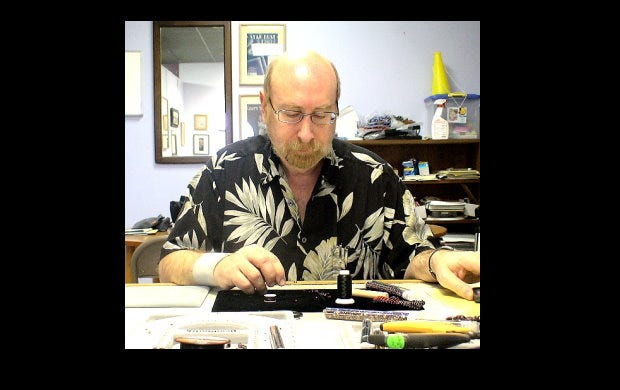
Visit Land of Odds online (https://www.landofodds.com)for all your jewelry making supplies.

Enroll in my jewelry design and business of craft video tutorials online.

Add your name to my email list.

Posted in Stitch 'n Bitch | Tagged: , , , , | Leave a Comment »

Doubt / Self-Doubt: 8 Major Pitfalls For Designers… And What To Do About Them

Posted by learntobead on September 6, 2020

Practice-By-Design Series

Warren Feld at work, around 2010

For the novice, all that excitement at the beginning, when thinking about designing things, sometimes collides with a wall of developing self-doubt. It’s not easy to quiet a doubt.

The designer organizes their life around an inspiration. There is some fuzziness here. That inspiration has some elements of ideas, but not necessarily crystal clear ones. That inspiration has some elements of emotions — it makes you feel something — but not necessarily something you can put into words or images or fully explain. You then need to translate this fuzzy inspiration into materials, into techniques, into color, into arrangements, into a coherent whole.

You start to create something, but realize you don’t know how to do it. But you want to do it, and do it now. However, to pick up the needed skills, you realize you can’t learn things all at once. You can’t do everything you want to do all at once. That initial excitement often hits a wall. Things take time to learn. There are a lot of trial and error moments, with a lot of errors. Pieces break. Projects don’t gel. Combining colors and other design elements feels very awkward. Silhouettes or structural layouts are confusing. You might get the right shape for your piece, but it is difficult to get the right movement, drape and flow, without compromising that shape. Or you might get the right placement of objects, but difficult to get everything into the frame, without compromising the placements. Things take time to do.

To add to this stress and strain, you need to show your designs off. You might want someone to like it. To want it. To need it. To buy it. To wear or use it. To wear or use it more than once. To wear or use it often. To exhibit it. To collect it. To publicize it. And how will all these other people recognize your creative spark, and your abilities to translate that spark into a wonderful, beautiful, functional design, appropriate for the wearer or user and appropriate for the situation? Things need to be shared.

Frequently, because of all this, the designer experiences some sense of doubt and self-doubt. Some paralysis. Can’t get started. Can’t finish something. Wondering why they became a designer in the first place.

Doubt holds you back from seizing your opportunities.

It makes getting started or finishing things harder than they need to be.

It adds uncertainty.

It makes you question yourself.

It blocks your excitement, perhaps diminishing it.

While sometimes doubt and self-doubt can be useful in forcing you to think about and question your choices, it mostly holds you back.

Having doubt and self-doubt is common among all artistic types. What becomes important is how to manage, channel and overcome it, so that doubts do not get in the way of your creative process and disciplinary development.

8 MAJOR WAYS DESIGNERS FALL INTO SELF-DOUBT

There are 8 major ways in which designers get caught beginning to fall into that abyss we call self-doubt:

1) What If I’m Not Creative Enough or Original Enough or Cannot Learn or Master or Don’t Know a Particular Technique?

2) What If No One Likes What I Make?

3) What If No One Takes Me Seriously As An Artist And Designer?

4) I Overthink Things and Am A Bit of a Perfectionist.

5) How Can I Stay Inspired?

6) Won’t People Steal My Work?

7) Being Over Confident or Under Confident

8) Role Confusion

1. What If I’m Not Creative Enough or Original Enough or Cannot Learn or Master or Don’t Know a Particular Technique?

Everyone has some creativity baked into their being. It is a matter of developing your way of thinking and doing so that you can apply it. This takes time.

So does originality. Originality is not an all-or-nothing proposition. Originality grows in stages. At first, you’ll try different ways of personalizing projects. There are always things you can do to bring some aspects of originality to your pieces. This might be the choice of colors, or using a special component or object, or rearranging some elements in your composition. Again, as with creativity, the ability to be more and more original will evolve over time. It is helpful to think of originality, not necessarily as coming up with something completely new, but rather as differentiation — how you differentiate yourself from other designers.

For almost everyone, you don’t begin your design career at the height of your levels of creativity and originality. Yes, if you look around you, other people are more creative and original than you or have more skills than you. Don’t let these observations be a barrier to your own development as a designer. You get there through persistence and hard work. You handle your inner critic. You may not be there, yet — the key word here is yet. But you will be.

2. What If No One Likes What I Make?

We all have fears about how our creativity and originality are going to be evaluated and judged. We project our self-doubts to the doubts we think we see and feel from others. What if no one wants to wear my pieces, or buy my works, or use my projects?

We can’t let these outsider reactions dictate our lives and creative selves. A key part of successful design is learning how to introduce what we do publicly. At the least, it is the core nature of the things we create that they are to be worn on the body. Design is a very public thing.

Turn negative comments into positive ideas, motivators, insights, explorations. Allow yourself some give and take, some needs to step back awhile, some needs to tweak. Design is an iterative processes. It in no way is linear. Your outcomes and their success are more evolutionary, than guaranteed.

Distressing about what others may think of your work can be very damaging to your self-esteem. It can amplify your worries. Don’t go there.

Don’t become your worst critic.

3. What If No One Takes Me Seriously As An Artist And Designer?

Design is an occupation in search of a profession. You will find that a lot of people won’t recognize your passion and commitment. They may think anyone can design. They may think of design as a craft or some subset of art, not as something unique and important in and of itself. They may wonder how you can make a living at this.

The bottom line: if you don’t take yourself seriously as a designer, no one else will.

People will take you seriously as they see all the steps you are taking to master your craft and develop yourself as a professional.

4. I Over Think Things And Am A Bit Of A Perfectionist

Some designers let a sense that their work is not as good as imagined get in the way. They never finish anything. They let doubt eat away at them.

Perfectionism is the enemy of the good. It’s great to be meticulous, but emotionally, we get wrecked when anything goes astray, or any little thing is missing, or you don’t have that exact color or part you originally wanted.

Go ahead and plan. Planning is good. It’s insightful. It can be strategic. But also be sure to be adaptable and realistic. Each piece is a stepping stone to something that will come next.

The better designer develops a Designer’s Toolbox — a collection of fix-it strategies to deal with the unfamiliar or the problematic.

Overthinking can be very detrimental. You can’t keep changing your mind, trying out every option, thinking that somewhere, someplace there exists a better option. Make a choice and get on with it. You can tweak things later.

Yes, attention to detail is important. But so is the value of your time. You do not want to waste too much time on trivial details.

Be aware when you begin over-analyzing things. Stop, take a breath, make a decision, and move on.

5. How Can I Stay Inspired?

Designing something takes time, sometimes a long time. That initial inspirational spark might feel like it’s a dying ember.

Don’t let that happen.

Translate that inspiration into images, colors, words, sample designs, and surround your work space with these.

Talk about your inspiration in detail with family and friends.

6. Won’t People Steal My Work and Ideas?

Many designers fear that if they show their work publicly, people will steal their work and ideas. So they stop designing.

Yet design is a very communicative process which requires introducing your work publicly. If you are not doing this, then you are creating simple sculptures or paintings, not designed work.

Yes, other people may copy your work and co-opt your ideas. See this source of doubt as an excuse. It is a self-imposed, but unnecessary, barrier we might impose to prevent us from experiencing that excitement as a designer. Other people will never be able to copy your design prowess — how you translate inspiration into a finished piece. That is unique and special to you, and why the general public responds positively to you and your work.

7. Over Confidence can blind you to the things you need to be doing and learning, and Under Confidence can hinder your development as a designer.

Too often, we allow under confidence to deter us from the design tasks at hand. We always question our lack of ability and technical prowess for accomplishing the necessary tasks at hand. It is important, however, to believe in yourself. To believe that you can work things out when confronted with unfamiliar or problematic situations. It is important to develop your skills for thinking like a designer. Fluency. Flexibility. Originality. There is a vocabulary to learn. Techniques to learn. Strategies to learn. These develop over time with practice and experience. You need to believe in your abilities to develop as a designer over time.

With over confidence comes a naivete. You close off the wisdom to listen to what others have to say or offer. You stunt your development as an designer. You overlook important factors about materials and techniques to the detriment of your final designs and products. You close yourself off to doubt and self-doubt, which is unfortunate. Doubt and self-doubt are tools for asking questions and questioning things. These help you grow and develop as an artist and designer. These influence your ability to make good, professional choices in your career.

8. Role Confusion

Designers play many roles and wear different hats. Each has its own set of opportunities, requirements, and pressures that the designer must cope with. It’s a balancing act extraordinaire.

First, people who design often wear different hats: Artist and Designer, Manufacturer, Architect and Engineer, Distributor, Retailer, Accountant, Exhibitor, Marketer and Promoter.

Second, people who design have different needs: Artistic Excellence, Recognition, Monetary Gain, or Financial Stability.

Third, the designer needs to please and satisfy themselves, as well as other various clients.

Fourth, the designer constructs things which need to function in different settings: Situational, Cultural, Sociological, Psychological.

Last, the designer must negotiate a betwixt and between situation — a rite of passage — as they relinquish control over the piece or project and its underlying inspirations to the user (and the user’s various audiences), who have their own needs, desires and expectations.

This gets confusing. It affects how you pick materials and supplies. Which techniques you use. What marketing strategies you employ. How you value and price things. And the list goes on.

It is important to be aware (metacognitive) of what role(s) you play, what goals you have, what clients desires you need to satisfy, in what contexts your work will function, when, and why. Given these things, it is important to understand the types of choices you need to make, when constructing an object or a project. It is critical to understand the tradeoffs you will invariably end up making, and their consequences for the aesthetic, emotional and functional success of your designs.

Some Advice

While doubt and self-doubt can hinder our development as designers, some degree of these may be helpful, as well.

To develop yourself as a designer, and to continue to grow and expand in your profession, you must have a balanced amount of both doubt and self-doubt. Uncertainty leads to questioning. A search for knowledge. Some acceptance of trial and error and experimentation. A yearning for more reliable information and feedback.

Design uses a great deal of emotion as a Way of Knowing. Emotions cloud or distort how we perceive things. They may lead to more doubt and worry and lack of confidence. But they also enhance our excitement when translating inspirations into designs.

· Don’t let your inner doubts spin out of control. Be aware and suppress them.

· Be real with yourself and your abilities.

· Keep a journal. Detail what your doubts are and the things you are doing to overcome them.

· Create a developmental plan for yourself. Identify the knowledge, skills and understandings you want to develop and grow into.

· Remember what happened in the past the last time doubt got in your way. Remember what you did to overcome this doubt. Remember that probably nothing negative actually happened.

· Talk to people. These can be friends, relatives and colleagues. Don’t keep doubts unto yourself.

· Don’t compare yourself to others. This is a trap. Self-reflect and self-evaluate you on your own terms.

· Worrying about what others think? The truth is that people don’t really care that much about what you do or not do.

· Don’t beat yourself up.

· Get re-inspired. This might mean surrounding yourself with images and photos of things. It might mean a walk in nature. It might me letting someone else’s excitement flow over to you.

· Take breaks.

· See setbacks as temporary.

· Celebrate small steps.

· Keep developing your skills.

· Set goals for yourself.

__________________________________________

Footnotes

(1) Henri Neuendorf, A Young Artist’s Brief Guide to Art World 
 Ambition
,
Art World, November 18, 2016
 As referenced: https://news.artnet.com/art-world/4-motivations-that-make- 
 artists-successful-752957
 
 (2) Drew Kimble, Five Fears That Can Destroy An Artist, Skinny Artist, 
 As referenced: https://skinnyartist.com/5-fears-that-can-destroy-an-artist/

— — — — — — — — — —

Other related articles of interest by Warren Feld:

PART 1:THE FIRST ESSENTIAL QUESTION EVERY DESIGNER
SHOULD BE ABLE TO ANSWER:
Is What I Am Doing Craft, Art or Design?

GETTING STARTED IN BUSINESS: What You Do First To Make It Official! Design-In Practice Series

How Creatives Can Successfully Survive In Business? Design-In-Practice Series

“Backward-Design” is Forward Thinking: Design-In-Practice Series

Are You Prepared For When The Reporter Comes A-Calling?

— — — — — — — — — — — — — — — —

I hope you found this article useful.

Also, check out my website (www.warrenfeldjewelry.com).

Subscribe to my Learn To Bead blog (https://blog.landofodds.com).

Visit Land of Odds online (https://www.landofodds.com)for all your jewelry making supplies.

Enroll in my jewelry design and business of craft video tutorials online.

Add your name to my email list.

Posted in Stitch 'n Bitch | Tagged: , , , , | Leave a Comment »

PART 1:THE FIRST ESSENTIAL QUESTION EVERY DESIGNER   SHOULD BE ABLE TO ANSWER:   Is What I Am…

Posted by learntobead on August 16, 2020

PRACTICE-BY-DESIGN SERIES

Image by Feld, 2020

In order to make better artistic and design choices, the Fluent and Empowered Designer should have answers to 5 essential questions. In this article, I present the first essential question: Is What I Am Doing Craft, Art, or Design?

Jane landed her first real client. She had designed websites and social marketing campaigns for some friends and family. But this was the first real contract. She was excited, as you would expect, and could not wait to begin.

The client was a furniture manufacturing company. They wanted to promote themselves by holding a contest online. It was to take the form of a sweepstakes and furniture give-away. This company had been online for several years, but this was the first contest they had ever done. They wanted this effort to have a huge marketing impact.

The first task was to design a Landing Page for this contest. The page was to coordinate with general look and feel of the company’s website. It should generate excitement about the contest, and persuade people to register their email addresses for future company marketing. It needed to be completed within 6 weeks.

Jane began outlining and sketching some things to share with the client.

· She felt the colors in the client’s logo did not completely work as a harmonious color scheme. So, for the Landing Page, she tweaked them a bit.

· She had posted her draft page on her own website, using her own domain name. She understood that this would be temporary.

· She researched a set of 25 key words relevant to furniture sales. She used these key words to develop three descriptive paragraphs.

· She located the email text-box on the left side of the web-page, and the submit button on the right side, parallel on the page with the text box. The submit button text was SUBMIT.

· She was unfamiliar with responsive web page design, so she did not consider any implications for various browsers and screen sizes.

At the 3-week mark, she met with the client, and presented her work to them. They were not happy. The tweaking of the logo colors did not go over well. They were confused about the domain name. The key words, and subsequent descriptions, did not resonate with them. The look of the Landing Page on a cell phone was very disjointed, and the submit button ended up about 4” below the email text box — not visible without scrolling down.

Jane was at a loss. She did not know what she should do next.

Designers, like Jane, need to learn to think like designers. They need to become fluent in the disciplinary way of defining problems, developing solutions, anticipating the client’s understandings, and introducing these solutions publicly. They need strategies to adapt to changing or unfamiliar circumstances.

However, what all this specifically means, and how all this plays out, gets a bit muddled. There is a lot of advice to sift through. Designers learn what they do from several sources, including teachers to books to online videos. It turns out that what perspective the advisor, teacher, how-to author is coming from affects what they suggest you do. Because of this, and especially because of this, every designer must get straight in their heads that to think like a craftsperson or to think like an artist is not the same as thinking like a designer.

There are three competing perspectives (or what are called paradigms) for how designers should be taught and practice — (1) The Craft Approach, (2) The Art Tradition, and (3) The Art and Design Perspective. Each provides a different set of advice for telling the designer what to do. Each uses different criteria for judging success.

Had Jane been able to answer the question: Craft, Art or Design?, she may have managed the design process much better. She probably would not have hit this wall with the client. She could have come up with ideas to fix and overcome the problems.

Fluency and Empowerment

The fluent designer is able to think like a designer. The designer is more than a craftsperson and more than an artist. The designer must learn a specialized language, and specialized way of balancing the needs for appeal with the needs for functionality. The designer must intimately recognize and understand the roles design plays for individuals as well as the society as a whole. The designer must learn how art, architecture, physical mechanics, engineering, sociology, psychology, context, even party planning, all must come together and get expressed at the point where the design meets the boundary of the individual.

And to gain that fluency, the designer must commit to learning a lot of vocabulary, ideas and terms, and how these imply content and meaning through expression. The designer will need to be very aware of personal thoughts and thinking as these get reflected in all the choices made in design. The designer will have to be good at anticipating the understandings and judgements of many different audiences, including the user and all the user’s own clients.

With fluency comes empowerment. The empowered designer has a confidence that whatever needs to be done, or whatever must come next, the designer can get through it. Empowerment is about making and managing choices. These choices could be as simple as whether to finish a piece or project or not. Or whether to begin a second piece or project. The designer will make choices about how to draw someone’s attention to the work, or present the work to a larger audience. She or he may decide to submit the work to a magazine or contest. She or he may want to sell the work and market it. The designer will make choices about how the work might be used, or who use it, or when it might be used, in what context.
 
 
And for all these choices, the designer might need to overcome a sense of fear, doubt, boredom, or resistance. The designer might need to overcome anxiety, a sense of giving up, having designer’s block, feeling unchallenged, and even laziness.

This makes it critical for any designer, in order to flourish and succeed, to be able to answer these 5 essential questions, beginning with question 1.

Question 1: Should Design work be considered ART or CRAFT or DESIGN?

All designers, whether making jewelry, building buildings, creating interiors, putting together websites and digital marketing plans, confront a world which is unsure whether design is “craft” or “art” or its own special thing I’ll call “design”. This can get very confusing and unsettling. Each approach has its own separate ideas about how the designer should work, and how he or she should be judged.

CRAFT: When defined as “craft,” design is seen as something that anyone can do — no special powers are needed to be a designer. Design is seen as a step-by-step process, almost like paint-by-number. Designers color within the lines. The craft piece or project has functional value but limited aesthetic value.

If following the Craft Approach, the designer would learn a lot of techniques and applications in a step-by-step fashion. The designer, based on their professional socialization into Craft, would assume that:

a) The outlines and the goals of any piece or project can be specified in a clear, defined way.
 b) Anyone can do these techniques.
 c) There is no specialized knowledge that a designer needs to know beyond how to do these step-by-step techniques and applications.
 d) If a particular designer has a strong sense of design, this is something innate and cannot be learned or taught.
 e) There is little need to vary or adapt these techniques and applications.
 f) The primary goal is functionality.
 g) There are no consequences if you have followed the steps correctly.

As “craft”, we still recognize the interplay of the artist’s hand with the piece and the storytelling underlying it. We honor the technical prowess. People love to bring art into their personal worlds, and the craftsperson offers them functional objects which have some artistic sensibilities.

ART: When defined as “art”, design is seen as something which transcends itself and its design. It is not something that anyone can do without special insights and training. The goal of any project would be harmony with a little variety, and some satisfaction and approval.
 
 “Design as art”
evokes an emotional response. Functionality should play no role at all, or, if an object has some functional purpose, then its functional reason-for-being should merely be supplemental to the art. For example, the strap on a necklace is comparable to the frame around a painting, or the pedestal for a sculpture. They supplement the art. The borders, and perhaps the footer and side navigation bars, on a website home page would also be understood as supplemental to the design. As supplemental components, these would not be included with nor judged as part of the design work. In an extreme example, from the art perspective, the beauty, balance and harmony of a website’s appearance should be unencumbered by any considerations of user experience and navigatability.

If following the Art Tradition, the designer would learn a lot of art theories and rules about the manipulation of design elements, such as color, movement, perspective, within the piece or project. Then, the designer would keep rehearsing these until their application becomes very intuitive. The designer, based on their professional socialization into Art, would assume that:

a) Whether the piece or project outlines are clear from the beginning, or emergent or process-like, what is most important is that art theories and rules be applied at each little increment along the way.
 b) The designer as artist must learn some specialized knowledge — art theories and rules — in order to be successful.
 c) The outcomes — either pieces or projects — would be judged on visual and art criteria alone, as if they were paintings and sculptures on display.
 d) While everyone has within them the creative abilities to design as an artist, for most people, this must be learned.
 e) The primary goals are beauty and appeal. Beauty and appeal are typically judged in terms of harmony and variety.
 f) If you have not applied the theories and rules optimally, the piece or project would be judged as incomplete and unsuccessful.

What is nice about the Art Tradition, is that the goal is Beauty. Beauty is achieved through smart choices and decisions. The designer as artist is not encumbered by having to follow specific steps or patterns. Nor is the designer encumbered by the structural and functional properties of all the pieces or elements she or he uses — only their beauty. The designer does not have to compromise Beauty for Functionality.

DESIGN: When defined as “design”, you begin to focus more on construction and functionality issues. You often find yourself making tradeoffs between appeal and functionality. You incorporate situational relevance into your designs. You anticipate what the client (and the various audiences of the client) understands as something which is finished and successful. You see “choice” as more multidimensional and contingent. You define success only in reference to the design as it is worn, placed, constructed or used.

If following the Art and Design Perspective, the designer would have to learn a lot of things. These would include things in art, architecture, engineering, social science, psychology, behavioral science, and anthropology. The designer would develop those professional skills and insights, what we might call disciplinary literacy, so that she or he could bring a lot of disparate ideas and applications to the fore, depending on what the situation warranted.

The designer, based on their professional socialization into Art and Design, would assume that:

a) Whether the piece or project outlines are clear or emergent, what is most important is the ability to bring a wide range of design principles and applications to the situation.

b) The designer must learn a lot of specialized knowledge, some related to art, and some related to several other disciplines, such as architecture and social science.

c) The outcomes — either pieces or projects — must find the best fit between considerations about appeal with concerns about functionality. Functionality is not an add-on. It is an equal, competing partner with beauty and appeal.

d) The designer does not design in a vacuum. She or he must anticipate the shared understandings among self, client and the various audiences of the client about what might be seen as finished and successful. These anticipations must be incorporated into the design process and how it is managed.

e) Anyone can learn to be a designer, but fluency and literacy in the profession involves development of skills and insights over a period of time.

f) The primary goal is to find the best fit between appeal and functionality.

g) The consequences for not finding that best fit is some level of client dissatisfaction.

The Art and Design Perspective is very relevant for the education and training of designers. Here, the designer is seen as a multi-functional professional. The designer must bring a lot of very different kinds of skills and abilities to bear, when constructing a piece or developing a project. The professional has to be able to manage artistic design, functionality, and the interaction of the piece or project with the client as well as that client’s environment. This approach also believes that “Design” should be appreciated as its own discipline — not a subset of sculpture or painting. And that a piece or project as designed can only be understood as these are placed in use.

How you define your work as ART or CRAFT or DESIGN (or some mix) will determine what skills you learn, how you apply them, and how you introduce your pieces to a wider audience. The Craft Approach ignores the need to learn a specialized knowledge and approach. The Art Tradition focuses solely on the artistic merits of the project, and assumes the client will have more passive relationship to it, as if the client were standing in front of the project in a museum. The Art and Design Perspective focuses on how to anticipate shared understandings and incorporate these into how best to make tradeoffs between appeal and functionality.

So, returning to the situation with Jane, she had not yet become fluent in design thinking. She tried to apply art theory to balance the colors in the logo, and that’s not what the client wanted. She had applied the techniques she knew, but did not arrive at an acceptable place. She became stumped about the next steps she needed to take after the client expressed reservations. She was unable to delineate a learning plan for herself so that she could make the web-page responsive. She researched key words without putting them to some kind of reality test with the client.

Many people begin to explore design as a hobby, avocation, business or career. This requires, not only strong creativity skills, but also persistence and perseverance. A lot of the success in this pursuit comes down to an ability to make and follow through on many artistic and design decisions within a particular context or situation. Developing this ability — a fluency, flexibility and originality in design — means that the designer has to become empowered to answer these 5 essential questions: (1) whether creating something is a craft, an art or design, (2) how they think creatively, (3) how they leverage the strengths of various materials and techniques, and minimize weaknesses, (4) how the choices they make in any one design evoke emotions and resonate, and (5) how they know their piece is finished and successful.

Design is more than the application of a set of techniques. It is a mind-set. This fluency and empowerment enable the designer to think and speak like a designer. With fluency comes empowerment, confidence and success.

Continue reading about the Second Essential Question every designer should be able to answer: What Should I Create?

The 5 Essential Questions:
 1. Is What I Am Doing Craft, Art or Design?
2. What Should I Create?
 3. What Materials (And Techniques) Work The Best?
 4. How Do I Evoke A Resonant Response To My Work?
5. How Do I Know My Piece Is Finished?

Other Articles of Interest by Warren Feld:

Disciplinary Literacy and Fluency In Design

Backward Design is Forward Thinking

How Creatives Can Successfully Survive In Business

Part I: The First Essential Question Every Designer Should Be Able To Answer: Is What I do Craft, Art or Design?

Part 2: The Second Essential Question Every Designer Should Be Able To Answer: What Should I Create?

Part 3: The Third Essential Question Every Designer Should Be Able To Answer: What Materials (and Techniques) Work Best?

Part 4: The Fourth Essential Question Every Designer Should Be Able To Answer: How Do I Evoke A Resonant Response To My Work?

Part 5: The Firth Essential Question Every Designer Should Be Able To Answer: How Do I Know My Design Is Finished?

Doubt / Self-Doubt: 8 Pitfalls Designers Fall Into…And What To Do About Them

Part 1: Your Passion For Design: Is It Necessary To Have A Passion?

Part 2: Your Passion For Design: Do You Have To Be Passionate To Be Creative?

Part 3: Your Passion For Design: How Does Being Passionate Make You A Better Designer?

Part 1: SHARED UNDERSTANDINGS: THE CONVERSATION CENTERED WITHIN A DESIGN What Are Shared Understandings?

Part 2: SHARED UNDERSTANDINGS: THE CONVERSATION CENTERED WITHIN A DESIGN What Does The Designer Need To Know?

Part 3: SHARED UNDERSTANDINGS: THE CONVERSATION CENTERED WITHIN A DESIGN How Assumptions, Perceptions, Expectations and Values Come Into Play?

Part 4: SHARED UNDERSTANDINGS: THE CONVERSATION CENTERED WITHIN A DESIGN How Does The Designer Establish Shared Understandings?

Thank you. I hope you found this article useful.

Also, check out my website (www.warrenfeldjewelry.com).

Subscribe to my Learn To Bead blog (https://blog.landofodds.com).

Visit Land of Odds online (https://www.landofodds.com)for all your jewelry making supplies.

Enroll in my jewelry design and business of craft video tutorials online.

Add your name to my email list.

______________________________

FOOTNOTES

Feld, Warren. Jewelry Design: A Managed Process. (2020)

Feld, Warren. Teaching Disciplinary Literacy. (2020)

Feld, Warren. Backward-Design Is Forward Thinking. (2020

Posted in Stitch 'n Bitch | Tagged: , , , , | Leave a Comment »

PART 5: THE FIFTH ESSENTIAL QUESTION EVERY DESIGNER   SHOULD BE ABLE TO ANSWER:   How Do I Know…

Posted by learntobead on August 16, 2020

PRACTICE-BY-DESIGN SERIES

Image by Feld, 2020

In order to make better artistic and design choices, the Fluent and Empowered Designer should have answers to 5 essential questions. In this article, I present the fifth and last essential question: How Do I Know When My Design Is Finished?

I taught a bead weaving workshop where my students followed a basic pattern to make an amulet bag. When they finished the bag itself, they were then given free rein on making a strap and adding fringe.

And they went to town. They added some fringe. Then some more fringe. Then some longer fringe. And fringe with more beads on it. And bigger beads. And some tiny charms. And some more fringe.

Yes, it’s fun to create fringes. But the star of the piece should have been the design of the amulet bag itself. Not the fringe. The fringe detracted. It competed. It made the piece feel very overdone. Not particularly artistic, or designed well.

My students needed to think about editing. As they continued to build each component of the amulet bag and its fringe, they should have repeatedly asked themselves would the addition of one more thing make the project more or less satisfying. Designers should be able to answer these 5 essential questions, especially question 5: How Do I Know When My Design Is Finished?

QUESTION #5: When is enough enough? How does the designer know when the piece is done? Overdone? Or underdone? How do you edit?

It is the challenge for the designer not to make the piece or project under-done or over-done. Each and every material and component part should be integral to the work as a whole. Things should not get too busy, or not busy enough. Things should not be too repetitive. The work should feel, not merely coordinated and balanced, but coherent, as well. The work should not convey a sense that you are not quite there yet.

For every design, there will be that point of parsimony when enough is enough. We want to find that point where experiencing the “whole” is more satisfying than experiencing any of the parts. That point of parsimony is where, if we added (or subtracted) one more thing, we would detract from the whole of our design. The design would be less satisfying. Less resonant.

Finding that point of parsimony is also related to anticipating how and when others will judge the piece as finished and successful. And what to do about it when judged unfinished or unsuccessful.

Parsimony vs. Unity/Variety

In art, the traditional measure of completion and success is a feeling or sense of “Unity.” Unity signifies how everything feels all right. All the Design Elements used, and how they were coordinated and placed, are very coordinated, matching, clear, balanced, harmonious and satisfying. I think the idea of unity begins to get at the place we want to end up. But this concept is not concrete enough for me as a designer.

What bothers me the most is that you can have unity, but the piece still be seen as boring when there is no variety. Criteria provided from the art perspective recognize this. But somehow tempering unity with variety starts to add some ambiguity to our measurements of finish and success. Our work too easily can be judged as lacking coherence. This ambiguity is unacceptable as a principled outcome of construction and design.

Another concern I have, is that you can have unity with variety, but, from the art perspective, these assessments rely too much on universal, objective expectations about design elements and their attributes (for example, the use of color schemes).

A lot of client reactions to our work and a lot of our own design decisions can be very subjective. They can be very culture- and context-related. And sometimes, we intentionally want to violate these universal, objective expectations. We want to give a little edge to our work, or a splash of color, or a shout-out. We may find we have limited material resources, or all the colors / patterns / textures which ideally should be used are unavailable to us. We may want to personalize things so people recognize who the designer is behind the design.

Resonance is not about picking the correct color scheme (or any other design element). It is more about how that color scheme (or design element) is used, manipulated, leveraged or violated within the piece. We must not leave the artist, the user, and the situation out of the equation. We must not minimize the artist’s hand — the artist’s intent, thinking, strategizing, arranging, pushing the boundaries, even violating the universal, objective rules.

Design and the act of creation usually demand a series of judgment calls and tradeoffs. Tradeoffs between aesthetics and functionality. Tradeoffs between artist goals and audience understandings and expectations. Tradeoffs between a full palette of colors-shapes-textures and a very limited one.

Any measure of completeness and success needs to result from the forced choice decisions of the artist. It needs to account for the significance of the results, not just the organization of them. It needs to explain the Why, not just the What.

For me, the Art criteria are insufficient when applied to design. The more appropriate concept here is Parsimony. Parsimony is when you know enough is enough. When the finished and successful piece is parsimonious, the relationship of all the Design Elements and their expressed attributes, as understood by designer and client alike, will be so strong, that to add or remove any one thing would diminish, not just the design, but rather the significance of the design.
 
 Parsimony is sometimes referred to in art and design as Economy, but the idea of economy in art is reserved for the visual effects. Design not only pays homage to the visual, but to the functional, socio-cultural-psychological and situational, as well. The designer needs to be able to decide when enough is enough with all these multi-dimensional cues.

The Traps of Over-Doneness and Under-Doneness

Among designers, you will find a lot of over-doers and under-doers.

· There is a tendency of designers to over-do:
 — over-embellish the surface
 — add too much fringe
 — repeat themes and design elements too often
 — use too many colors

· Or a fear or self-doubt causing designers to under-do:

– not sure if someone will like it

– hesitant to push forward too far, for fear of a negative reaction

– uncertain if they can learn a new technique

– feeling choosing alternative colors, materials or techniques by be too risky

With over-doneness comes a naivete. The designer shuts him- or herself off from what should be that inner designer voice warning about parsimony. It stunts your development as a designer. You begin to allow yourself to overlook important factors about materials and techniques to the detriment of your final products. You close yourself off to doubt and self-doubt, which is unfortunate. Doubt and self-doubt are tools for asking questions and questioning things. These help you grow and develop as an artist and designer. These influence your ability to make good, professional choices.

On the other extreme is under-doneness. Often this results from a lack of confidence in our design abilities, including the ability to introduce our work publicly. We question our lack of ability and technical prowess for accomplishing the necessary tasks at hand. We fear we cannot work things out when confronted with unfamiliar or problematic situations. Here, doubt and self-doubt become excuses for less than satisfying results, rather than tools for improvement. Doubt and self-doubt become self-imposed, but unnecessary, barriers we impose to prevent us from thinking like a designer, and experiencing the full excitement of design.

Designers need to build within themselves that key sense of parsimony. Keep things simple and parsimonious. Edit your ideas. You do not want to over-do or under-do your pieces. You do not have to include everything in one piece or project. You can do several pieces or projects. Showing restraint allows for better communication with your audiences. Each work you make should not look like you are frantically trying to prove yourself. These should look like you have given a lot of thought about how others should emotionally engage with your piece.

Many people begin to explore design as a hobby, avocation, business or career. This requires, not only strong creativity skills, but also persistence and perseverance. A lot of the success in this pursuit comes down to an ability to make and follow through on many artistic and design decisions within a particular context or situation. Developing this ability — a fluency, flexibility and originality in design — means that the designer has to become empowered to answer these 5 essential questions: (1) whether creating something is a craft, an art or design, (2) how they think creatively, (3) how they leverage the strengths of various materials and techniques, and minimize weaknesses, (4) how the choices they make in any one design evoke emotions and resonate, and (5) how they know their piece is finished and successful.

Design is more than the application of a set of techniques. It is a mind-set. This fluency and empowerment enable the designer to think and speak like a designer. With fluency comes empowerment, confidence and success.

The 5 Essential Questions:
1. Is What I Am Doing Craft, Art or Design?
2. What Should I Create?
3. What Materials (And Techniques) Work The Best?
4. How Do I Evoke A Resonant Response To My Work?
5. How Do I Know My Piece Is Finished?

Other Articles of Interest by Warren Feld:

Disciplinary Literacy and Fluency In Design

Backward Design is Forward Thinking

How Creatives Can Successfully Survive In Business

Part I: The First Essential Question Every Designer Should Be Able To Answer: Is What I do Craft, Art or Design?

Part 2: The Second Essential Question Every Designer Should Be Able To Answer: What Should I Create?

Part 3: The Third Essential Question Every Designer Should Be Able To Answer: What Materials (and Techniques) Work Best?

Part 4: The Fourth Essential Question Every Designer Should Be Able To Answer: How Do I Evoke A Resonant Response To My Work?

Part 5: The Firth Essential Question Every Designer Should Be Able To Answer: How Do I Know My Design Is Finished?

Doubt / Self-Doubt: 8 Pitfalls Designers Fall Into…And What To Do About Them

Part 1: Your Passion For Design: Is It Necessary To Have A Passion?

Part 2: Your Passion For Design: Do You Have To Be Passionate To Be Creative?

Part 3: Your Passion For Design: How Does Being Passionate Make You A Better Designer?

Part 1: SHARED UNDERSTANDINGS: THE CONVERSATION CENTERED WITHIN A DESIGN What Are Shared Understandings?

Part 2: SHARED UNDERSTANDINGS: THE CONVERSATION CENTERED WITHIN A DESIGN What Does The Designer Need To Know?

Part 3: SHARED UNDERSTANDINGS: THE CONVERSATION CENTERED WITHIN A DESIGN How Assumptions, Perceptions, Expectations and Values Come Into Play?

Part 4: SHARED UNDERSTANDINGS: THE CONVERSATION CENTERED WITHIN A DESIGN How Does The Designer Establish Shared Understandings?

Thank you. I hope you found this article useful.

Also, check out my website (www.warrenfeldjewelry.com).

Subscribe to my Learn To Bead blog (https://blog.landofodds.com).
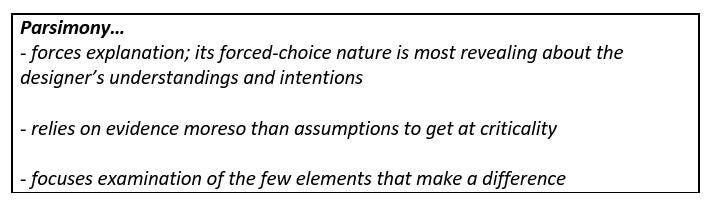
Visit Land of Odds online (https://www.landofodds.com)for all your jewelry making supplies.

Enroll in my jewelry design and business of craft video tutorials online. Check our my video tutorials on DOING CRAFT SHOWS and on PRICING AND SELLING YOUR JEWELRY.

Add your name to my email list.

_______________________________

FOOTNOTES

Feld, Warren. The Goal Oriented Designer: The Path To Resonance. Art Jewelry 
 Forum, 2018.

Feld, Warren. “Jewelry Design: A Managed Process,” Klimt02, 2/2/18. https://klimt02.net/forum/articles/jewelry-design-managed-process-warren-feld

Posted in Stitch 'n Bitch | Tagged: , , , , | Leave a Comment »

PART 4:THE FOURTH ESSENTIAL QUESTION EVERY DESIGNER   SHOULD BE ABLE TO ANSWER:   How Do I Evoke A…

Posted by learntobead on August 16, 2020

PRACTICE-BY-DESIGN SERIES

Image by Feld, 2020

In order to make better artistic and design choices, the Fluent and Empowered Designer should have answers to 5 essential questions. In this article, I present the fourth essential question: How Do I Evoke A Resonant Response To My Work?

Jason seemed to never be able to get past “That’s nice.” His clients always said, “That’s nice,” and that was about it.

His colors were balanced and harmonious. They fit rules about color schemes and color proportions. His placement of shapes and sizes were always pleasing to the eye. The little bit of math he had to do always checked out. His clients liked him.

They had approved the initial sketches. Their comments were positive. They never complained about his approach. But they were never satisfied enough for Jason to make that final sale.

Even though the feedback always seemed positive, he rarely had repeat business.

He was perplexed, and felt a little defeated.

What was it about his work that somehow fell short?

Jason was stuck with the impression that if someone said they liked something, that this would translate into them doing something more, like buying it. All designers need a firm and comprehensive understanding about the differences among like, need, want, demand, and parting with some money for it. Another way to put this is that designers need to recognize the differences between an emotional response and a resonant one. Designers should be able to answer these 5 essential questions, especially question 4: How Do I Evoke A Resonant Response To My Work?

Question 4: Beyond applying basic techniques and selecting quality materials, how do I evoke a resonant response to my work?

An artistic and well-designed piece or project should evoke, at the least, an emotional response. In fact, preferably, it should go beyond this a bit, and have what we call “resonance”. The difference between an emotional response and resonance is reflected in the difference between someone saying, “That’s beautiful,” from saying “I need to wear that piece,” or, “I need to buy that piece,” or, “I need to implement that project.” 
 
 Quite simply: If no resonant response is evoked, then the piece or project has some remaining issues including the possibility that it is poorly designed. Evoking a resonant response takes the successful selection and arrangement of materials or objects, the successful application of techniques as well as the successful management of skills, insights, and anticipating the client’s needs and understandings.
 
 
Every designer should have but one guiding star — Resonance. If our piece or project does not have some degree of resonance, we keep working on it. If the process of creative exploration and design does not lead us in the direction of resonance, we change it. If the results we achieve — numbers of pieces made and numbers of pieces sold — is not synced tightly with resonance, we cannot call ourselves designers.

The Proficient Designer specifies those goals about performance which will lead to one primary outcome: To Evoke Resonance. Everything else is secondary.

Materials, techniques and technologies are selected with resonance in mind. Design elements are selected and applied with that idea of Resonance in mind. Principles of Composition, Construction and Manipulation are applied with that idea of Resonance in mind, with extra special attention paid to the Principle of Parsimony — knowing when enough is enough.

People may approach the performance tasks in varied ways. For some this means getting very detailed on pathways, activities, and objectives. For others, they let the process of design emerge and see where it takes them. Whatever approach they take in their creative process, for all designers, a focus on one outcome — Resonance — frees them up to think through design without encumbrance. It allows them to express meaning. It allows them to convey expressions in meaningful ways to others.

This singular focus on resonance becomes a framework within which to question everything and try to make sense of everything. Make sense of what the materials and techniques can allow them to do, and what they cannot. Make sense of what understandings other people — clients, sellers, buyers, students, colleagues, teachers — will bring to the situation, when exploring and evaluating their work. Make sense of why some things inspire you, and other things do not. Make sense of why you are a designer. Make sense of the fluency of your artistic expression, what works, how it works, why it works.

We achieve Resonance by gaining a comfort and ease in communicating about design. This comfort and ease, or what we can call disciplinary fluency, has to do with how we translate our inspirations and aspirations into all our compositional, constructive and manipulative choices. It is empowering. Our pieces resonate. We achieve success.

Resonance, communication, success, fluency — these are all words that stand in place for an intimacy between the designer and the materials, the designer and the techniques, the designer and inspiration. They reflect the designer’s aspirations. They reflect the shared understandings of everyone the designer’s piece or project is expected to touch. They reflect the designer’s managerial prowess in bringing all these things together.

Evoking An Emotional Response vs. A Resonant One

What is the evidence we need to know for determining when a piece or project is finished and successful? What clear and appropriate criteria hone in at what we should look at? What clues has the designer provided to let the various audiences become aware of the authenticity of the performance?

There are different opinions in craft, art and design about what are the most revealing and important aspects of the work, and which every authentic jewelry design performance must meet.

The traditional criteria used in the art world are that the designer should achieve unity with some variety and evoke emotions. These, I feel, may work well when applied to paintings or sculpture, but they are insufficient measures of success when applied to design. Design involves the creation of objects or projects where both artistic appeal as well as practical considerations of use are essential. Unity and variety can feel harmonious and balanced, but yet boring, monotonous and unexciting. Art, in contrast to Design, can be judged apart from its use and functionality. The response to Art can show some positive emotion without the client having to show any strong commitment. Design doesn’t share that luxury.

Finished and successful designed objects or projects not only must evoke emotions, but, must resonate with the user (and user’s various audiences), as well.

Achieving Resonance is the guiding star for designers, at each step of the way.

Resonance is some level of felt energy which extends a little beyond an emotional response. The difference between emotion and resonance can, for example, be like the differences between saying that piece or project is “Beautiful” vs. saying that piece or project “Makes me want to wear it”. Or that “I want to touch it.” Or “My friends need to see this.” Or “I need to implement this at once.”

Resonance is something more than emotion. It is some kind of additional energy we see, feel and otherwise experience. Emotion is very reactive. Resonance is intuitive, involving, identifying. Emotion is very sympathetic. Resonance is more of an empathetic response where artist and audience realize a shared (or contradictory) understanding without losing sight of whose views and feelings belong to whom.

Resonance results from how the artist controls light, shadow, and their characteristics of warmth and cold, receding and approaching, bright and dull, light and dark. Resonance results from how the artist leverages the strengths of materials, objects and techniques and minimizes their weaknesses. Resonance results from social, cultural and situational cues. Resonance results from how the artist takes us to the edge of universal, objective understandings, and pushes us ever so slightly, but not too, too far, beyond that edge.

Many people begin to explore design as a hobby, avocation, business or career. This requires, not only strong creativity skills, but also persistence and perseverance. A lot of the success in this pursuit comes down to an ability to make and follow through on many artistic and design decisions within a particular context or situation. Developing this ability — a fluency, flexibility and originality in design — means that the designer has to become empowered to answer these 5 essential questions: (1) whether creating something is a craft, an art or design, (2) how they think creatively, (3) how they leverage the strengths of various materials and techniques, and minimize weaknesses, (4) how the choices they make in any one design evoke emotions and resonate, and (5) how they know their piece is finished and successful.

Design is more than the application of a set of techniques. It is a mind-set. This fluency and empowerment enable the designer to think and speak like a designer. With fluency comes empowerment, confidence and success.

Continue reading about the Fifth Essential Question every designer should be able to answer: How Do I Know My Piece Is Finished?

The 5 Essential Questions:
1. Is What I Am Doing Craft, Art or Design?
2. What Should I Create?
3. What Materials (And Techniques) Work The Best?
4. How Do I Evoke A Resonant Response To My Work?
5. How Do I Know My Piece Is Finished?

Other Articles of Interest by Warren Feld:

Disciplinary Literacy and Fluency In Design

Backward Design is Forward Thinking

How Creatives Can Successfully Survive In Business

Part I: The First Essential Question Every Designer Should Be Able To Answer: Is What I do Craft, Art or Design?

Part 2: The Second Essential Question Every Designer Should Be Able To Answer: What Should I Create?

Part 3: The Third Essential Question Every Designer Should Be Able To Answer: What Materials (and Techniques) Work Best?

Part 4: The Fourth Essential Question Every Designer Should Be Able To Answer: How Do I Evoke A Resonant Response To My Work?

Part 5: The Firth Essential Question Every Designer Should Be Able To Answer: How Do I Know My Design Is Finished?

Doubt / Self-Doubt: 8 Pitfalls Designers Fall Into…And What To Do About Them

Part 1: Your Passion For Design: Is It Necessary To Have A Passion?

Part 2: Your Passion For Design: Do You Have To Be Passionate To Be Creative?

Part 3: Your Passion For Design: How Does Being Passionate Make You A Better Designer?

Part 1: SHARED UNDERSTANDINGS: THE CONVERSATION CENTERED WITHIN A DESIGN What Are Shared Understandings?

Part 2: SHARED UNDERSTANDINGS: THE CONVERSATION CENTERED WITHIN A DESIGN What Does The Designer Need To Know?

Part 3: SHARED UNDERSTANDINGS: THE CONVERSATION CENTERED WITHIN A DESIGN How Assumptions, Perceptions, Expectations and Values Come Into Play?

Part 4: SHARED UNDERSTANDINGS: THE CONVERSATION CENTERED WITHIN A DESIGN How Does The Designer Establish Shared Understandings?

Thank you. I hope you found this article useful.

Also, check out my website (www.warrenfeldjewelry.com).

Subscribe to my Learn To Bead blog (https://blog.landofodds.com).

Visit Land of Odds online (https://www.landofodds.com)for all your jewelry making supplies.

Enroll in my jewelry design and business of craft video tutorials online. Check our my video tutorials on DOING CRAFT SHOWS and on PRICING AND SELLING YOUR JEWELRY.

Add your name to my email list.

____________________________________

FOOTNOTES

Feld, Warren. The Goal Oriented Designer: The Path To Resonance. Art Jewelry Forum, 2018.

Feld, Warren. “Jewelry Design: A Managed Process,” Klimt02, 2/2/18.

Posted in Stitch 'n Bitch | Tagged: , , , , | Leave a Comment »

PART 3: THE THIRD ESSENTIAL QUESTION EVERY DESIGNER   SHOULD BE ABLE TO ANSWER: What Materials…

Posted by learntobead on August 16, 2020

PRACTICE-BY-DESIGN SERIES

Image by Feld, 2020

In order to make better artistic and design choices, the Fluent and Empowered Designer should have answers to 5 essential questions. In this article, I present the third essential question: What Materials (and/or Techniques) Work The Best?

Ferity was determined to make a Kumihimo bracelet. Kumihimo is a braiding technique. You make a braid and attach a clasp. Ferity thought it would be cool to incorporate some beads in her braid. So she strung up a lot of beads on various cords, and braided them. She glued on end caps on either side, and attached a clasp.

But she wasn’t liking her piece. She couldn’t figure out why. All the different colors, widths and materials of the cords she used were very upscale and attractive. She used a mix of crystal, gemstone and hand-made beads in the project — all very expensive and all very attractive.

But braided all together was somewhat unsatisfying. She didn’t think she would wear it very often. She didn’t think she could sell it. And she couldn’t figure out why.

A successful design has character and some kind of evocative essence. The choice of materials often sets the tone. And a choice of techniques cements that tone in place. Techniques link the designer’s intent with the client’s expectations. The successful designer has a depth of knowledge about materials, their attributes, their strengths, their weaknesses, and is able to leverage the good and minimize the bad within any design. The same can be said of techniques.

For some designs, the incorporation of mixed media or mixed techniques can have a synergistic effect — increasing (or decreasing) the appeal and/or functionality of the piece or project better than any one media or technique alone. It can feel more playful and experimental and fun to mix media or techniques. But there may be adverse effects, as well. Each media or technique will have its own structural and support requirements. Each will enable the control of light and shadow, space and mass, dimension and movement in different ways. Each will react differently to various physical forces impacting the piece when worn or the project when used. So it becomes difficult for the designer to successfully utilize any one medium or technique, as well as much more difficult to coordinate and integrate more than one media or technique.

Ferity had little understanding about the materials and their combined use within a Kumihimo technique. All designers need a firm and comprehensive understanding about selecting materials and techniques, and should be able to answer these 5 essential questions, now with question 3: What Materials (and/or Techniques) Work The Best?

QUESTION 3: What kinds of MATERIALS work well together, and which ones do not? This applies to TECHNIQUES as well. What kinds of TECHNIQUES (or combinations of techniques) work well when, and which ones do not?

The choice of materials and the choice of techniques set the tone and chances of success for your piece. Materials and techniques establish the character and personality of your designs. They contribute to understandings whether the piece is finished and successful.

However, there are no perfect materials (or techniques) for every project. Selecting materials (or techniques) is about making smart, strategic choices. This means relating your choices to your design and marketing goals. It also frequently means having to make tradeoffs and judgment calls between aesthetics and functionality. Last, materials may have different relationships with the designer, wearer or viewer depending on how they are intended to be used, and the situational or cultural contexts.

There are many implications of choice. There are light/shadow issues, pattern, texture, rhythm, dimensionality, proportions, placement and color issues. There are mechanics, shapes, forms, durability, drape, flow and movement issues. There are positive and negative space issues. There are user experience issues.

It is important to know what happens to all these materials (or applications of techniques) over time. It is important to know how each material (or technique) enhances or impedes architectural requirements, such as allowing an object to move and drape, or assisting the object in maintaining a shape or allowing a project to adapt to its audience and environment, or utilizing an object to direct navigation or viewing.

Each material or technique has strengths and weaknesses, pros and cons, and contingencies affecting their utilization. The designer needs to be able to leverage the strengths and minimize the weaknesses.

All of these choices:
 
… affect the look
 … affect the movement
 … affect the feel
 … affect the durability
 … affect both the designer’s and user’s responses
 … relate to the context

Many people begin to explore design as a hobby, avocation, business or career. This requires, not only strong creativity skills, but also persistence and perseverance. A lot of the success in this pursuit comes down to an ability to make and follow through on many artistic and design decisions within a particular context or situation. Developing this ability — a fluency, flexibility and originality in design — means that the designer has to become empowered to answer these 5 essential questions: (1) whether creating something is a craft, an art or design, (2) how they think creatively, (3) how they leverage the strengths of various materials and techniques, and minimize weaknesses, (4) how the choices they make in any one design evoke emotions and resonate, and (5) how they know their piece is finished and successful.

Design is more than the application of a set of techniques. It is a mind-set. This fluency and empowerment enable the designer to think and speak like a designer. With fluency comes empowerment, confidence and success.

Continue reading about the Fourth Essential Question every designer should be able to answer: How Do I Evoke A Resonant Response To My Work?

The 5 Essential Questions:
1. Is What I Am Doing Craft, Art or Design?
2. What Should I Create?
3. What Materials (And Techniques) Work The Best?
4. How Do I Evoke A Resonant Response To My Work?
5. How Do I Know My Piece Is Finished?

Other Articles of Interest by Warren Feld:

Disciplinary Literacy and Fluency In Design

Backward Design is Forward Thinking

How Creatives Can Successfully Survive In Business

Part I: The First Essential Question Every Designer Should Be Able To Answer: Is What I do Craft, Art or Design?

Part 2: The Second Essential Question Every Designer Should Be Able To Answer: What Should I Create?

Part 3: The Third Essential Question Every Designer Should Be Able To Answer: What Materials (and Techniques) Work Best?

Part 4: The Fourth Essential Question Every Designer Should Be Able To Answer: How Do I Evoke A Resonant Response To My Work?

Part 5: The Firth Essential Question Every Designer Should Be Able To Answer: How Do I Know My Design Is Finished?

Doubt / Self-Doubt: 8 Pitfalls Designers Fall Into…And What To Do About Them

Part 1: Your Passion For Design: Is It Necessary To Have A Passion?

Part 2: Your Passion For Design: Do You Have To Be Passionate To Be Creative?

Part 3: Your Passion For Design: How Does Being Passionate Make You A Better Designer?

Part 1: SHARED UNDERSTANDINGS: THE CONVERSATION CENTERED WITHIN A DESIGN What Are Shared Understandings?

Part 2: SHARED UNDERSTANDINGS: THE CONVERSATION CENTERED WITHIN A DESIGN What Does The Designer Need To Know?

Part 3: SHARED UNDERSTANDINGS: THE CONVERSATION CENTERED WITHIN A DESIGN How Assumptions, Perceptions, Expectations and Values Come Into Play?

Part 4: SHARED UNDERSTANDINGS: THE CONVERSATION CENTERED WITHIN A DESIGN How Does The Designer Establish Shared Understandings?

Thank you. I hope you found this article useful.

Also, check out my website (www.warrenfeldjewelry.com).

Subscribe to my Learn To Bead blog (https://blog.landofodds.com).
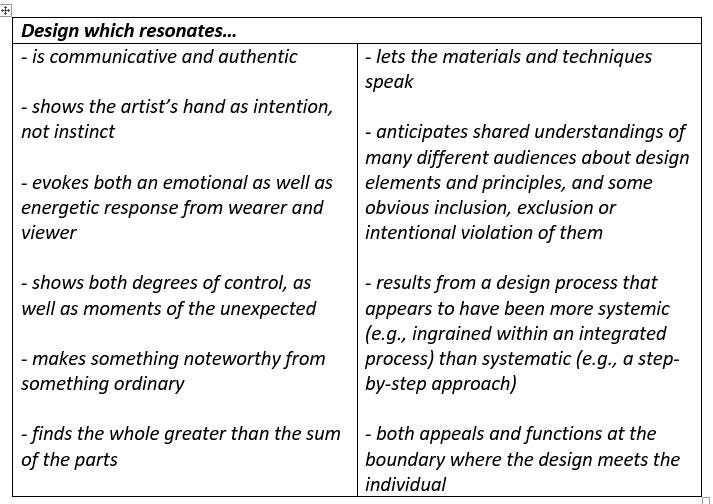
Visit Land of Odds online (https://www.landofodds.com)for all your jewelry making supplies.

Enroll in my jewelry design and business of craft video tutorials online. Check our my video tutorials on DOING CRAFT SHOWS and on PRICING AND SELLING YOUR JEWELRY.

Add your name to my email list.

______________________________

FOOTNOTES

Feld, Warren. Materials: Knowing What To Know. Art Jewelry Forum, 2020.

Feld, Warren. Techniques and Technology: Knowing What To Do. Art 
 Jewelry Forum, 2020.

WASTIELS, Lisa and WOUTERS, Ina. Material Considerations in Architectural 
 Design: A Study of the Aspects Identified by Architects for Selecting Materials. July, 2008. As referenced in:
 http://shura.shu.ac.uk/511/1/fulltext.pdf

Posted in Stitch 'n Bitch | Tagged: , , , , | Leave a Comment »

PART 2: THE SECOND ESSENTIAL QUESTION EVERY DESIGNER  SHOULD BE ABLE TO ANSWER:  What Should I…

Posted by learntobead on August 16, 2020

PRACTICE-BY-DESIGN SERIES

Image by Feld, 2020

In order to make better artistic and design choices, the Fluent and Empowered Designer should have answers to 5 essential questions. In this article, I present the second essential question: What Should I Create?

Selma got by very well in life by asking her teachers, and in subsequent years, her bosses, what she should do. She followed their instructions to the letter, and was particularly good at coloring within all the lines. Everyone was always pleased with her work. So pleased, in fact, that her current boss promoted her into a designer position.

In her new position, she was to work with construction, architectural and interior design firms. She was to assist them and guide them into choosing textiles with which to incorporate into their interior and exterior building plans.

When she met with various clients, she started byasking them to tell her what they wanted. But no one could really articulate much more than general ideas about colors. For Selma, this was disconcerting. She thought she could do a great job, but needed more information and direction. These were never forthcoming.

At the core of Creativity is the ability to generate options, and then narrown them down. Creativity is not innate; it is developed. Creativity is a muscle requiring attention and practice. This is something Selma never really worked on.

This was critical for Selmer, as well as any other designer, in order to flourish and succeed, to be able to answer these 5 essential questions, now with question 2.

QUESTION 2: How do you decide what you want to create? What kinds of things do you do to translate your passions and inspirations into design?

Applying yourself creatively can be fun at times, but scary at other times. It is work. You are creating something out of nothing. There is an element of risk. You might not like what you end up doing. Your friends might not like it. Nor your family. You might not finish it. Or you might do it wrong. It may seem easier to go with someone else’s project.

Applying creativity means developing abilities to generate options and alternatives, and narrowing these down to specific choices. It means developing an ease and comfort generating fix-it strategies when approaching unknown situations or problematic ones. It means figuring out how to translate inspiration into design in a way that inspires others and taps into their desires. It means differentiating yourself from other designers as a measure of your originality.
 

Creative people…

Set no boundaries and set no rules. They go with the flow. Don’t conform to expectations.
 
 Play.
They pretend they are kids again.
 
 Experiment.
They take the time to do a lot of What Ifs and Variations On A Theme and Trial and Error.
 
 Keep good records.
They make good notes and sketches of what seems to work, and what seems to not work.
 
 Evaluate.
They learn from their successes and mistakes.

As designers gain more and more creative experiences, they begin to assemble what I call a Designer’s Tool Box. In this virtual tool box are a set of thinking routines, strategies and fix-it strategies whichhave worked well in the past, are very workable in and of themselves, and are highly adaptive when used in unfamiliar situations. Every designer should develop their own Tool Box. This vastly contributes to adaptability and success in creative thinking and application.

Creativity

Creativity isn’t found, it is developed. Creativity is a phenomenon where both something new and, at the same time, somehow valuable is created. While some people come to creativity naturally, in fact, everyone can develop their creative ability.

Thinking creatively involves the integration and leveraging of three different kinds of ideas — insight and inspiration, establishing value, and implementing something.

We work through creative thinking through divergence (that is, generating many possibilities), and convergence (that is, reducing the number of these possibilities).

Kierkegaard — and I apologize for getting a little show-off-y with my reference — once described Creativity as “a passionate sense of the potential.” And I love this definition. Passion is very important. Passion and creativity can be summed up as some kind of intuitive sense made operational by bringing all your capabilities and wonderings and technical know-how to the fore. All your mechanical and imaginative abilities grow over time, as do your abilities for creative thinking and applications. Creativity isn’t inherently natural. It is something that is developed over time as you get more and more experience in design.

You sit down, and you ask, What should I create?

For most people, especially those getting started, the answer to this question is very basic. They look for patterns and instructions in magazines or how-to books or websites online. They let someone else make all the creative choices for them. The singular creative choice here is picking what you want to make. And, when you’re starting, this is OK.

As you grow as a designer, and feel more comfortable with materials and techniques, you can begin to make additional choices. You can choose your own colors. You can make simple adaptations, such as tweaking colors or placements or dimensions or proportions.

Eventually in your designer career, however, you will want to confront the Creativity issue head on. You will want to decide that pursuing your innermost designer, no matter what pathway this takes you along, is the next thing, and right thing, to do. That means you want your projects or objects to reflect your artistic hand. You want to develop a personal style. You want to come up with your own designs.

Sometimes creativity seems insurmountable, after finishing one project, to decide what to do next. Exercising your creative abilities can sometimes be a bear. But it’s important to keep pushing on. Challenging yourself. Developing yourself. Turning yourself into a designer. And pursuing opportunities to exercise your creative talents even more, as you enter the world of design.

Types of Creativity

Creativity has two primary components: (1) originality, and (2) functionality or value.

The idea of originality can be off-putting. It doesn’t have to be. The projects or objects, so creatively designed, do not have to be totally and completely new and original. The included design elements and arrangements do not have to be solely unique and never been done before.

Originality can be seen in making something stimulating, interesting or unusual. It can represent an incremental change which makes something better or more personal or a fresh perspective. It can be something that is a clever or unexpected rearrangement, or a great idea, insight, meaningful interpretation or emotion which shines through. It can include the design of new patterns and textures. It can accomplish connections between seemingly unrelated phenomena, and generate solutions. It can be a variation on a technique or how material gets used. It can be something which enhances the functionality or value of the piece.

Creativity in design marries that which is original to that which is functional, valued, useful, worthwhile, desired. These things are co-dependent, if any creative project is to be seen as successful.

For designers, creativity is not the sketch or computer aided drawing. It is not the inspiration. It is not the piece which never sees the light of day. Creativity requires implementation. And for designers, implementation is a very public enterprise.

How Do We Create?

It’s not what we create, but how we create!

The creative process involves managing the interplay of two types of thinking — Convergence and Divergence. Both are necessary for thinking creatively.

Divergent thinking is defined as the ability to generate or expand upon options and alternatives, no matter the goal, situation or context.

Convergent thinking is the opposite. This is defined as the ability to narrow down all these options and alternatives.

The fluent designer is able to comfortably weave back and forth between divergence and convergence, and know when piece or project is finished, and when the final choices will be judged as successful.

Brainstorming is a great example of how creative thinking is used. We ask ourselves What If…? How about…? Could we try this or that idea…? The primary exercise here is to think of all the possibilities, then whittle these down to a small set of solutions.

Many people begin to explore design as a hobby, avocation, business or career. This requires, not only strong creativity skills, but also persistence and perseverance. A lot of the success in this pursuit comes down to an ability to make and follow through on many artistic and design decisions within a particular context or situation. Developing this ability — a fluency, flexibility and originality in design — means that the designer has to become empowered to answer these 5 essential questions: (1) whether creating something is a craft, an art or design, (2) how they think creatively, (3) how they leverage the strengths of various materials and techniques, and minimize weaknesses, (4) how the choices they make in any one design evoke emotions and resonate, and (5) how they know their piece is finished and successful.

Design is more than the application of a set of techniques. It is a mind-set. This fluency and empowerment enable the designer to think and speak like a designer. With fluency comes empowerment, confidence and success.

Continue reading about the Third Essential Question every designer should be able to answer: What Materials (And Techniques) Work The Best?

The 5 Essential Questions:
1. Is What I Am Doing Craft, Art or Design?
2. What Should I Create?
3. What Materials (And Techniques) Work The Best?
4. How Do I Evoke A Resonant Response To My Work?
5. How Do I Know My Piece Is Finished?

Other Articles of Interest by Warren Feld:

Disciplinary Literacy and Fluency In Design

Backward Design is Forward Thinking

How Creatives Can Successfully Survive In Business

Part I: The First Essential Question Every Designer Should Be Able To Answer: Is What I do Craft, Art or Design?

Part 2: The Second Essential Question Every Designer Should Be Able To Answer: What Should I Create?

Part 3: The Third Essential Question Every Designer Should Be Able To Answer: What Materials (and Techniques) Work Best?

Part 4: The Fourth Essential Question Every Designer Should Be Able To Answer: How Do I Evoke A Resonant Response To My Work?

Part 5: The Firth Essential Question Every Designer Should Be Able To Answer: How Do I Know My Design Is Finished?

Doubt / Self-Doubt: 8 Pitfalls Designers Fall Into…And What To Do About Them

Part 1: Your Passion For Design: Is It Necessary To Have A Passion?

Part 2: Your Passion For Design: Do You Have To Be Passionate To Be Creative?

Part 3: Your Passion For Design: How Does Being Passionate Make You A Better Designer?

Part 1: SHARED UNDERSTANDINGS: THE CONVERSATION CENTERED WITHIN A DESIGN What Are Shared Understandings?

Part 2: SHARED UNDERSTANDINGS: THE CONVERSATION CENTERED WITHIN A DESIGN What Does The Designer Need To Know?

Part 3: SHARED UNDERSTANDINGS: THE CONVERSATION CENTERED WITHIN A DESIGN How Assumptions, Perceptions, Expectations and Values Come Into Play?

Part 4: SHARED UNDERSTANDINGS: THE CONVERSATION CENTERED WITHIN A DESIGN How Does The Designer Establish Shared Understandings?

Thank you. I hope you found this article useful.

Also, check out my website (www.warrenfeldjewelry.com).

Subscribe to my Learn To Bead blog (https://blog.landofodds.com).
Visit Land of Odds online (https://www.landofodds.com)for all your jewelry making supplies.

Enroll in my jewelry design and business of craft video tutorials online. Check our my video tutorials on DOING CRAFT SHOWS and on PRICING AND SELLING YOUR JEWELRY.

Add your name to my email list.

______________________________

FOOTNOTES

Besemer, S.P. and D.J. Treffinger. Analysis of Creative Products: Review and 
 Synthesis. Wiley Online Library, (1981).

Black, Robert Alan. Blog: http://www.cre8ng.com/blog/

Csikszentmihalyi, Mihaly. Creativity: Flow and the Psychology of Discovery and Invention. Harper Perennial; Reprint edition (August 6, 2013)

Feld, Warren. Creativity: How Do You Get It? How Do You Enhance It? (2020)

Guilford, J.P. Creativity. American Psychologist, 5, 444–454, 1950.

Koestler, Arthur. The Act of Creation. Last Century Media (April 1, 2014).

Lucy Lamp. “Inspiration in Visual Art Where Do Artists Get Their Ideas. As 
 reference in: 
 https://www.sophia.org/tutorials/inspiration-in-visual-art-where-do-artists-get-the

Maital, Shlomo. “How IBM’s Executive School Fostered Creativity,” Global Crisis Blog, April 7, 2014. Summarizes Louis R. Mobley’s writings on creativity, 1956.

March, Anna Craft. Creativity in Education. Report prepared for the 
 Qualifications and Curriculum Authority, March, 2001.

Seltzer, Kimberly and Tom Bentley. The Creative Age: Knowledge and Skills for the New Economy. Demos, 1999.

Torrance, E. P. The Torrance Tests of Creative Thinking-Norms-Technical Manual Research Edition-Verbal Tests, Forms A and B-Figural Tests, Forms A and B. Princeton, NJ: Personnel Press, 1966.

Torrance, E. P. The Torrance Tests of Creative Thinking-Norms-Technical Manual Research Edition- Verbal Tests, Forms A and B- Figural Tests, Forms A and B. Princeton, NJ: Personnel Press, 1974.

Turak, August. “Can Creativity Be Taught,” Forbes, May 22, 2011.

Posted in Stitch 'n Bitch | Tagged: , , , , | Leave a Comment »

THE BRIDESMAID BRACELETS

Posted by learntobead on July 16, 2020

lMy niece Dara and her bridesmaids

For years, I fretted. I worried, and fretted, and paced up and down, and down and up. I rubbed my hands in the way that worried people rub their hands. I shouldn’t go. I would not go.

To my niece’s wedding.

My only niece.

Of my only sister.

My niece who I had hoped and prayed and prayed some more that she would never get married. Why couldn’t she just live with the guy? Why marry? Marriage is an encumbrance. It’s an outdated, middle ages kind of thing that denigrates women under the guise of “protecting them”. They sign a contract giving themselves over to the man, vowing to obey. Respect. Follow. Bear babies. Cook. Clean. Even earn a living, if he can’t.

Yet the man keeps the power. His voice to God. Her voice through his to God.

Marriage. Not for me.

And I didn’t want to go.

Too afraid I’d say something or do something to upset people.

Because they would be there.

Those cousins.

And their children.

And their children’s children.

Too many of them, and only one of me.

But my cousins had rejected me because I was gay.

And that hurt.

And then that rejection became an idea of rejection and a symbol of rejection, and I thought how often in life, from when I was very young, to when I was much, much older, — how often in life had I been rejected for some label or category or reason having nothing to do with me. Rejected as a Jew. Rejected as gay. Rejected by friends. Rejected by strangers. Rejected by family.

So toxic.

Didn’t want to deal with this.

Preferred avoidance.

Thought over and over again what excuses I could give my sister.

I thought about this when my niece was 13.

I thought about this when she was 18.

Then 20, and 23, and 24 and finally 28, when I had to make a choice.

My sister and her family were very close to these cousins, closer to them in most ways than to me. Years ago, my sister used to invite me for Thanksgiving and for Passover. And she invited all these cousins, as well. She liked to give a party.

Partying with these cousins was too toxic for me, so I made excuses. Too busy at work. Things too slow in business so couldn’t afford it. Had other things scheduled.

For me to feel comfortable, my sister’s choice would have to have been “ME”, not “THEM”. I felt bad. I felt guilty. I didn’t want to put my sister in this situation. It was easier to come up with an excuse.

But year after year, the situation took its toll. Rejection — a symbol, but painful nonetheless. Not because of the act itself, but the symbolic power of the act to affect me — Rejection — put a wedge between my sister and myself. I did not have the self-confidence, and I didn’t value myself enough, to prevent caving in before this symbolically powerful act of rejection because I was gay.

And I didn’t have to deal with this as long as I stayed hundreds of miles away from New Jersey and Maryland and Virginia and Florida. Tucked safely in middle Tennessee.

The wedding was in March.

The previous summer, I decided I would go. Not exactly sure what changed my mind, perhaps a feeling of familial obligation, perhaps putting my sense of self to the test, perhaps wanting to try out all that good food and cake and drink specially prepared for the occasion. My sister plans the best parties.

I offered to make bracelets for all the bridesmaids.

I wasn’t just being a good guy here. Jewelry and design are at the core of my identity. The jewelry I design is the result of my choices. Choices about colors. Choices about the placement of lines, shapes and forms. Choices about the clasp and how to attach it. Choices about materials and techniques.

My inner being. On display. Irrefutable.

My choices have little to nothing to do with the label “JEW”.

Nor do my choices have much to do with the label “GAY”.

They are about me. A Designer.

Reflected in my jewelry.

And would be on display.

Accept or reject my jewelry.

And you accept or reject me.

On my terms.

My own terms.

Me.

My essence.

My resonance.

My jewelry.

This was my chance to shine. I was going to create a special bead woven design for these bracelets. Something frilly and girly for a wedding, but something also indicative of my style. Something that would not take too much work, but would look very rich and substantial.

I designed what I thought would be the perfect bracelet. A mix of stitches. Great looking beads. Had movement and dimension. But I was struggling to find the perfect color palette. The bracelet was made up of 4 colors, and a 4-color color scheme is one of the most difficult to work with — especially when it comes to beads, which are not available in all colors, let alone 4 colors which could specifically work in a specific color scheme in this specific bracelet.

While I was struggling to pick colors, Dara, my niece, had been doing a little online research, as well. She found two bead-strung bracelets on Etsy that she particularly liked, and shared these with me.

No, No, No!!!

My first reaction was Horror! Oh No!, she wants something bead strung and so non-artisan looking. Making these up would not signify to my terrible cousins nor to my good cousins, who I was all about. As Jayden, my partner, said, buy all the parts and do it quick. You’re not close to your niece, so who cares. But to me, although the work involved would be minimal — it would not be enough of a gift for the wedding.

Don’t get me wrong. These two bracelets were very attractive. They were just so out of sync with everything I wanted to do, and everything I wanted to accomplish. And I had to ask myself: give Dara what she wants, or go off in a different direction?

The question was kind of rhetorical. Of course, I’d give Dara what she wanted. But what to do. How can I construe, mold, fashion, arrange the bracelet to be reflective of me? Jewelry designer Me. Bead artist Me. Worthy cousin to be awed and ooh’ed over Me.

The bracelet Dara wanted was 3 strands of 6mm round fire polish beads in two coordinating colors which matched the color of her bridesmaid dresses. The beads were staggered in a V-shape like bowling pins, each section separated by a diagonally placed 3-hole spacer bar.

Bead woven spacer bar, with right angle weave sides and flat peyote top and bottom, top embellished with Austrian crystal beads

I thought long and hard about how I could make this general design my own. A few weeks passed. And an idea came to me. I could bead weave the spacer bars. I could alternate right angle weave and flat peyote to create a stable, rectangular shape. The right angle weave sections would be the two sides, which would allow me to build in the “holes”. The flat peyote would be the top and the bottom, which would allow me to build in a shape-supporting structure. I would embellish the tops of the bars with 2mm round Austrian crystal beads, and I would create bead woven end caps on either side of the bar, to give the bars a finished and polished look. Then I would use needle and thread to string everything up.

That was my answer.

It was a good one.

So, first, I set about coming up with the bead woven pattern for my spacer bars. This did not take very long because I had a clear idea about what I wanted in my head. What was not in my head, however, was how long to make the bars and how many holes each should have. And would they work in the whole composition.

I ended up making 5 test bracelets, each requiring 11 spacer bars, and each with some variety in the design or placement of the spacer bars, and in the attachment strategy for the clasp.

Now I had three key tasks finished:
 (1) The design of the spacer bars
 (2) The construction plan for the bracelet
 (3) The construction plan for attaching the clasp

Next, selecting the right colors of beads.

First off, I wanted to use 6mm round Austrian crystal beads, instead of Czech glass.

There were images of the bridesmaid dresses on line, but the actual color skirted that area between blue teal and green teal, and not every computer screen showed the color exactly. It became critical to the choice of colors, given some limited choices available in the Swarovski line in this range, whether the dress was more on the green side or more on the blue side.

My sister said Blue.

My niece said Green.

My sister was supposed to send me a fabric sample, but she lost it.

I mocked up 3 bracelets, one all blue teal, one a mix of blue and green teal, and one more green teal.

My sister picked the green.

My niece picked the mix of blue and green.

And my gut, from looking at the computer images, was telling me it should be all blue.

Impasse.

I went with my gut, and settled on all blue, actually a mix of capri blue and Caribbean opal.

Dara’s Bracelet w/Austrian crystal beads

There were four bridesmaids. I asked my niece to get their wrist measurements. One the bridesmaids had a very, very thin wrist. Would my design work for her? I agonized over it. The sections were very rigidly organized, and I’d have to remove a whole section at a time. Luckily, this worked OK.

The only other hitch that came up had to do with the availability of the parts.

In another color palette using Czech glass

I designed the piece in September. The wedding was in March. In November, I tried to acquire enough clasps and end bars for the clasp assembly, and found out that both the clasp and end bar I had chosen were either out of stock until the following April, or no longer manufactured.

So began the desperate hunt for these parts. The end bars had to be 22mm wide, or very close to that, with 3 holes and 3 holes spaced out evenly across the bar. Most 3-hole end bars were around 15mm wide. Found some in Israel, which while no longer manufactured, the supplier had just the amount I needed left in stock. Easily found a substitute clasp.

Then there were the beads. Again, I’m in November. The capri beads were out of stock from my supplier, and 2 of my alternative suppliers, but due back by December. The Caribbean opal beads were out of stock, and not due back anytime soon. I found a supplier who charged a little bit more for these, but got enough for my needs.

Whew!

It was a few weeks before the wedding, and I was wondering if my choice to attend was the right one. Over and over and over again, I played out in my head what I would or would not say to my very prejudiced relatives. One part of me wanted me to be pleasant but distant. Another part of me wanted me to say something pointed and ugly.

I asked each of my friends, what they would do. I wanted so badly to be pointed and ugly. I was leaning in that direction. Of course, I didn’t want to upset my sister or my niece.

I thought back on the event that started it all. It was really so insignificant. An expected invitation never came. But I hadn’t planned on going. I expected to receive an invitation, however. Because everyone expected me to receive an invitation. We all had been planning vacations and things to do around this invitation. For well over a year at that point. We had been planning. All of us. When we were going to arrive, where we were going to stay, and what we were going to do. And while I didn’t plan on going, I expected the invitation.

I’m a firm believer that every few years, we each go through a life crisis. When we are babies, we have to resolve a crisis of finding out who to trust, and who not to. A few life crises later, we’re in puberty, having to resolve whether we’re still a kid, or some kind of adult. Several life crises after puberty, we go through a mother of all life crisis — what we call Mid-Life Crisis. This crisis is filled with anger, frustration, regret, disappointment, fear.

Eventually we come to terms with mid-life. That’s what I did. And then I had a sudden, almost primal, no, yes it was primal, urge to reconnect with my family. I had grown apart from my sister and father and brother. From my first cousins in Florida and those in New Jersey, New York and Maryland. And from their children, my new second cousins. And I was feeling the need to re-connect. Post mid-life I felt the need to re-connect.

And I did.

I slowly began to let everyone know I was gay. They kinda knew and suspected already. But I made it official. Pretty much everyone except my sister was supportive at some level. Eventually she got used to it.

I was invited to my cousin Michele’s oldest son’s wedding. And then, over the next few years, to some other weddings and bar and bat mitzvahs and special occasions. I re-connected. I was happy. Soon there were the occasional phone calls and emails. A few of my cousins sent out the periodic mass emails, and I was on their lists. I kept up with their newsy news and not-so-newsy news, their shared successes, their joys in life, and the every-so-often sadnesses. I felt included. Supported.

It was important to everyone, and you could tell, because they spent so much time doing it, to anticipate the next event we’d all attend. The next event was the marriage of my cousin Michele’s middle son.

It was to be a June wedding. I got a phone call sometime in April from my sister. “Did you get your invitation yet?” And a day later, from my cousin Leslie. “Did you get your invitation yet?” And obviously the answer was, No! Not yet. I kept checking the mail for several days, and then it began to dawn on me that I wasn’t invited. I wasn’t going to be invited. And if not getting invited to an event that I wasn’t planning on going to wasn’t enough of a jolt and shock, both my cousins Michele and Paulette dropped me from their almost daily mass email lists.

I was person non-grata. Why?

I asked myself, Why?

And I asked some cousins, Why?

And it became known that the Why was because I was gay.

And that was that.

Excluded again.

Of course, I wanted my sister to make the choice not to go.

She went.

And that put a wedge in our relationship that never really healed, because it was irreconcilable.

And I got very depressed for a few months afterwards.

And this what otherwise would have been a little incidental event, over the years, took on more and more negative meanings for me. I think of the event, and I also think of all times I struggled for acceptance and inclusion as a Jew. I think of my sister, and I also think of all the times I struggled for acceptance and inclusion as a Jew. I think of how my parents, in the face of all the times I struggled for acceptance and inclusion as a Jew and was physically or emotionally punished by the powers that be for trying to step outside this imposed boundary referred to as “Jew”, looking the other way. Pretending there were no issues. Telling me over and over again that I lived in a Christian world and had to accept that fact. Accept lower grades just because I was Jewish. Accept exclusion from student activities just because I was Jewish. Accept the fact that I couldn’t play with my friends who went to the local country club, accept the fact that I had difficulty getting dates with Christian girls, except when they wanted me to show up on their doorsteps and shove this “Jewish thing, monstrosity” into their parents face, even accept the fact that barely a day went by without someone accusing me of killing Christ.

And you can see where all this goes. Getting rejected as gay brought up deeper feelings of getting rejected as a Jew.

So I wasn’t invited to a wedding. So my relationship with my sister and her family never became close — at least for a long while. So I no longer kept up with my cousins and second cousins and all their offspring. So I had some issues with my parents and my school and the dominant Christian culture. That’s largely behind me. Not an obsession. But the oncoming wedding of my sister’s daughter forced me to focus on these things again.

Thank God the wedding only lasted a weekend.

True to form, my sister threw a grand event people are probably still talking about.

In the few months leading up to the wedding, I concentrated on designing the bridesmaids bracelets. As I determined how I would make the pieces my own, I got very excited. I developed a very clever and professional way to bead weave the 3-hole separator bars. I combined Right Angle Weave and Flat Peyote, using the structural and inherent properties of each in a strategic way. This allowed be to create holes in the sides through when to thread the strands, and structural support to allow the bars to keep their shape.

I kept thinking that, while the bridesmaids would find the bracelets appealing and desirable, they would never appreciate the amount of thought, work and insight involved in their construction. So, I decided I would later turn this piece into a kit and a workshop. This piece was a great example of my evolving ideas and writings about the architectural bases of bead weaving stitches.

Dara’s bracelet in Czech glass

The wedding itself was beautiful, and went off without a hitch. The food was terrific. The location romantic. The flowers and bridal gown beautiful. There were over 200 guests. And about 60 of those I was trying to avoid.

I arrived a day earlier. One of my cousins, whom I do speak with occasionally, arrived at the airport at the same time. After we checked in at our hotel, we went to lunch and unloaded about all the relatives. She and I have similar opinions about these people.

In the late afternoon, I stopped by the Bridal Suite, where they had set up to greet guests arriving early and staying at the hotel. You walked into the equivalent of a living room. Off to the left were a bedroom, kitchenette and bathroom. Off to the right were a dining room and an outdoor patio. It was in the 30’s and wet and snowy, so no one went out there.

As more and more people gathered in the Suite, I found myself talking to some folks in the dining room. And then, one by one, two by two, three by three, these cousins I wanted to avoid started filling up the center room. And I found myself backing up against the far dining room wall, seemingly pushing myself into the wall and through it, or so it felt to me. My mind left the room and merged into the wall. I desperately looked for an opening where I could run through the living room and out the door. But more and more people came flooding in. I was having trouble catching my breath, slowly going into panic.

At last, an opening. I escaped. Hyperventilating. I went up to my room, and waited until I regained some composure. My panic attack had run its course.

Twenty minutes later, I returned to the Bridal Suite, bridesmaids bracelets in hand. I had put each into its own jewelry box, with the name of the bridesmaid written on a card in each box. They were going to take the bridal pictures in the morning, and I wanted to be sure they were wearing their bracelets. And I secretly wanted a lot of these people crowding this Bridal Suite to get a glimpse of what I had made.

As I had thought, they loved the bracelets — they were beautiful — but were clueless about design. That “full” feedback is so very important to me, but often missing.

Luckily the colors of the bracelet perfectly matched the dresses.

My job was done.

Dara’s bracelet, different palette, Czech glass

Other Articles of Interest by Warren Feld:

Do You Know Where Your Beading Needles Are?

Consignment Selling: A Last Resort

Odds or Evens? What’s Your Preference?

My Clasp, My Clasp, My Kingdom For A Clasp

Why Am I So Addicted To Beads?

The Bead Spill: My Horrifying Initiation

The Artists At The Party

How To Bead A Rogue Elephant

You Can Never Have Enough Containers For Your Stuff

Beading While Traveling On A Plane

Contemplative Ode To A Bead

How To Bead In A Car

My Aunt Gert: Illustrating Some Lessons In Business Smarts

A Jewelry Designer’s Day Dream

A Dog’s Life by Lily

I Make All The Mistakes In The Book

How Sparkle Enters People’s Lives

Upstairs, Downstairs At The Bead Store

Beads and Race

Were The Ways of Women or of Men Better At Fostering How To Make Jewelry

Women and Their Husbands When Shopping For Beads

Women Making Choices In The Pursuit Of Fashion

Existing As A Jewelry Designer: What Befuddlement!

The Bridesmaid Bracelets

How To Design An Ugly Necklace: The Ultimate Designer Challenge

Thank you. I hope you found this article useful.

Also, check out my website (www.warrenfeldjewelry.com).

Subscribe to my Learn To Bead blog (https://blog.landofodds.com).

Visit Land of Odds online (https://www.landofodds.com)for all your jewelry making supplies.

Enroll in my jewelry design and business of craft video tutorials online. Begin with my ORIENTATION TO BEADS & JEWELRY FINDINGS video tutorial.

Add your name to my email list.

Posted in Stitch 'n Bitch | Tagged: , , , , | Leave a Comment »

GETTING STARTED IN BUSINESS: What You Do First To Make It Official! Design-In Practice Series

Posted by learntobead on July 16, 2020

But First, If You Have Not Already Done So,
 Make These Particular Choices Right Now

Pick a date. It might be easiest, from an accounting standpoint, to pick January 1st. But you can pick any date. This is the date your business has been founded, and your business obligations (discussed below) begin.

Define your fiscal year. It would be easiest to make your fiscal year January 1 through December 31. But any 12-month bounded period which works best for you would be acceptable.

Set your goals for success. Everyone’s goals will be different. You might want to sell a few things occasionally. You might want some steady extra income. You might want to be financially self-sufficient.

Determine what business organizational type you want now, and how you might want to evolve into the future. These range from hobbyist to sole proprietor to partnership to various types of corporate arrangements.

The purpose of this article is to provide the how-to knowledge you will need to know to get started in your design business, whether making jewelry or other crafts, or working on projects involving design. While the specific names of some licenses and registrations will vary by locality, there will be comparable things where you live.

NOTE: The information in this section is a guide. It is not a substitute for sitting down with an accountant, lawyer or business consultant.

Specifically, I want to demystify and review with you these things:

1) Getting federal, state, local licenses and registrations

2) How to protect your intellectual property
 
 
3) What form of business? Sole proprietor, partner, corporation, limited liability corporation.

1) Registrations and Licenses

You register and get licenses for your business for several reasons. First, you will be setting up accounts with various government agencies. This allows you to collect money for them, and then transmit that money to them on a regular basis. This might be sales taxes, payroll taxes, property taxes, income taxes, business census information, and on and on.

The account numbers associated with each registration or license, in turn, allow you to present yourself as a business. They make you look more official and give you more legitimacy. They open doors for you to get deep wholesale and manufacturer discounts.

But, after you register or receive a license, each is associated with some application fees, some have annual renewal fees, some have income or property tax levies, most require periodic paperwork and more involved accounting and bookkeeping.

So, to get the benefits of lower business costs to you, you will incur some additional monetary and time costs. You will have to decide at what point in time becoming an official business is right for you.

Let’s look at some of these things I have had to get doing business in Tennessee. Most of the application forms can be found totally or partially online.

STATE

a. Registration to Collect Sales Taxes (called a “tax number”, “wholesale number”, or “resale number”)

This registration sets up an account so that you can collect sales taxes on each of your in-state taxable sales, and then transmit these sales taxes to the state. You only have to register once. There is a small registration fee, but this is a one-time fee only.

The application will ask if you will be doing more than $4500. (or some similar amount) of sales within the current year. If not, you do not need to register. However, even if you don’t think you will, this does not prohibit you from saying Yes. Saying Yes means you will start to incur costs (fees, taxes, paperwork), and have to be more organized as a business. But it also means you will be able to purchase inventory at wholesale prices.

After a few years, the state will review your activity. If less than $4500/year (or that similar amount required by your state), they will de-activate your number. You can simply and easily ask them to re-activate it.

Handled in Tennessee by the state Department of Revenue.

b. Business registration number (you might end up with separate business registration numbers for the city, county and state you do business in, or there might be a single number used by all three).

This number allows you to pay business income taxes (to your city, county and state), usually once a year. In Tennessee, this is collected each April 15th. Tennessee also collects a registration renewal fee each year.

In Tennessee, handled by the state Department of Revenue.

c. State Employment Account Number. (It might be called a State Unemployment Account Number in other locales).

If you have employees, and thus collect payroll taxes, you need this number to submit these taxes to the state. Typically, you pay these quarterly. You only have to register once for this.

In Tennessee, handled by the state Department of Labor and Workforce Development.

LOCAL CITY AND COUNTY

a. Business License from the county you live in (from County Clerk)

You use this number to submit business county income and property taxes. 
 You renew this annually.

b. Business License from the city you live in (from City Clerk)

You use this number to submit business city income and property taxes. 
 You renew this annually.

NOTE: If you register for a State Re-Sale Number, the State will eventually inform your local county and city. Your county and city will check if you have registered your business with them. If not, they will find you. This works in reverse, as well. If you register with the city and county, they will inform the State, and the State will eventually find you.

c. Business Property Taxes (sometimes called Use Taxes; in Tennessee, called Schedule B)

Each year you send the state and/or county and/or city a list of your 
 business property assets. About 6–8 months later, you get an invoice due 
 notice from the state/county/city indicating how much business property 
 taxes you owe.

Your business property is: displays, tools, register, telephone, computer, 
 fax, credit card machine, copier, furniture and the like; things that will be 
 around longer than 1 year. Some states might consider major (meaning 
 costly) software, such as accounting software, business property. Other 
 states do not.

You do not have to list everything, but you have to list somethings. Many people who first get started think that if everything — tables, calculators, computers, phone, etc. — are old and used, or given to them by someone else, that their value is $0.00. It is not. Here you would estimate the value or depreciated value at the time you consider the first day of your business. You can check auction sites online, like Ebay, to gauge current values.

If you are leasing any equipment, you would list this separately.

Your business property is NOT: inventory, consumable supplies (such as paper, ink, staples, and the like), the parts you use to make your jewelry. It is not something assumed to be used up within a year.

In Tennessee, the state uses a different depreciation schedule than the 
 Federal Government. Your property, from the State’s standpoint, never 
 gets fully depreciated as on your Federal taxes. You cannot expense your 
 property for state purposes, although you can for Federal purposes. This 
 means you have to keep separate Assets Lists for the state and for the 
 Federal government.

d. State Unemployment Insurance Form — if you have employees, you will be submitting state payroll taxes (SUTA) collected on their behalf to the state, usually quarterly.

FEDERAL GOVERNMENT

Federal Income Tax Forms (available from the US Internal Revenue Service online)

Each year, you summarize your revenues and costs on an income tax form (really a series of forms, beginning with a Form 1040). Depending on what form of business (discussed below) you are organized as, you will have different forms to fill out. Learn how to do most of this by yourself without having to pay an accountant or tax attorney. This will save you a lot of money. Use these professionals for the more difficult, confusing parts of the tax code requirements. Besides the Form 1040 Income Tax Return, you will be completing one or more of the forms below.

Most of these are handled by the US Internal Revenue Service. All the forms are available online. Some can be submitted electronically; others, you submit by mail.

a. 1040-ES You will need to submit estimated income taxes to the Internal Revenue Service (IRS) at least quarterly. You do this online, and easily done by yourself. When you do your annual taxes, you will reconcile these payments on your form 1040.

You will be paying these online through the IRS website.

b. Schedule C — You use this form if you are a sole proprietorship to report your revenues and expenses, as well as the total value of your inventory on the last day of the year. This is a form you should be able to fill out yourself.

The only tricky part is that in the expenses section, when it asks for the Costs of Inventory, it is asking only for the costs of the inventory that you have sold during the year. This is NOT all your inventory costs. The inventory bought but not sold during the year is treated as if it were cash. [In your inventory management procedures, you need to be able to accurately track the costs of your inventory that has sold within the current year, so you can deduct these costs from your revenue, thus reduce your tax burden if you are showing a profit.]

c. Schedule SE — self employment taxes. You have to pay both the employer and the employee payroll taxes (so double-paying on yourself as the sole proprietor), if you show a profit on your Schedule C. This can end up being a big number. This is a form you can complete by yourself.

d. Schedule K — If your form of business is a partnership, you will be completing a Schedule K to document your revenues, expenses and profit distributions. This can be a very confusing form, so it is a good idea to have an accountant complete this. On this form, it will indicate where various calculated subtotals or totals should go on the 1040 form, which is something you can do yourself.

e. Form 1120 — If your form of business is an S-corporation, you will be completing a Form 1120 to document your revenues, expenses, profit distributions and tax obligations. It is a good idea to have an accountant complete this.

f. Depreciation Form — This can be a confusing form The depreciation rules can change frequently. It is a good idea to have an accountant complete this form, at least the first time you have to fill it out. Then, perhaps, teach you how to fill this out in the future.

g. 941 Form — If you have employees, you will be submitting payroll taxes collected on their behalf to the Federal Government, usually monthly or quarterly, and reconciling all your payroll tax deposits quarterly.

You will be submitting these taxes online, and will need to set up an account through the IRS to do so.

h. 940 Form — If you have employees, you will be submitting federal unemployment taxes (FUTA), at least annually, but quarterly if these exceed $100.00 in a quarter.

You will be submitting these taxes online, and will need to set up an account through the IRS to do so.

i. Federal EIN (or, FEIN) Number. You can apply for this online through the Internal Revenue Service. This Employer Identification number is a tax identification number (sometimes referred to as your TIN number) similar to a Social Security Number (also a TIN), but attached to a business rather than an individual. You need this number if you have employees and are collecting payroll taxes on their behalf and have to submit these taxes to the federal government.

However, if you do not have employees, this number is still useful to have On various forms and applications you will be filling out for your business, you will be asked to put down either your FEIN number or your Social Security Number. The FEIN makes you look more of an official business. There are no fees or costs involved by having this number. However, the first year after you applied, you will have to complete a Form 940. On this form, you can indicate that you have no employees and will not need to complete this form again.

They will not deactivate your FEIN number, even after indicating you have no employees.

OTHER

a) At some point, you may want to purchase business insurance. If you are working out of your home, this may be problematic. The zoning laws in most places forbid businesses in areas zoned residential. Most business insurance packages will not cover a business if they are violating any law, in this case, zoning. Your homeowners insurance may or may not cover things related to your business.

b) If you have 5 or more employees (that’s the number of people, not the number of full time equivalents), you will need to purchase Workers Compensation Insurance. You do this through a private insurance company.

c) You will need a set up where you can process credit cards.

d) You will need a bank account. You can either set up a business account or use your personal account.

You will need checks preprinted with your business name on them. If you are using a personal account, get business-size checks printed up. If your business type is a sole proprietorship, whether the account is personal or business, your business name is your personal name. So you would have them print something like this, where DBA stands for Doing Business As:

Warren Feld
 DBA Warren Feld Jewelry

e) You will need an organized way (either in-house, or with an accountant or bookkeeper) to track your costs and revenues, and liabilities and assets.

f) You will need an organized way to store all your receipts during the year, and then all your receipts from prior years. You need to store all your receipts and ledgers for 10 years.

2) Protecting Your Intellectual Property

Trademarks and Service Marks

You will want to protect your business name, your slogan, your logo. A legal trademark or service mark expands the protections available to you. A trademark or service mark protects anything you use to identify your brand and differentiate it from other companies. These prevent other businesses from using any of these things, as long as you are actively using them yourself. If you stop actively using these, you lose your trademark or service mark rights to them.

Each State you do business in, as well as the US as a whole, offer opportunities to protect your trade or service mark. You can prevent someone else from using your business name, or product name, or logo, by registering this name or logo with the state(s), or US. You would put a TM next to the name you’ve trademarked, such as Be Dazzled BeadsTM

A US Trademark would protect you anywhere in the United States. The rules can be a little confusing. It is important to know ahead of time that you cannot trademark an adjective. For a US Trademark, I would suggest working with a trademark attorney. The trademark plus lawyer fees will be costly.

State trademarks protect you in the state you have the trademark in. This should include the state you do business in. It can include other states, as well. In Tennessee, this process is especially inexpensive and easy to do. You would not need to consult a lawyer here. For most designers, a state trademark coupled with some smart marketing and branding would be more than sufficient.

In Tennessee, trademarks and service marks are handled by the Tennessee Secretary of State. For the United States, these are handled by the US Patent and Trademark Office.

Copyrights

Copyright is another form of legal protection. You can copyright advertising copy, brochures, other marketing materials, instructions, jewelry designs, project designs, articles and other written materials critical to your business.

Copyrights can be done two ways. 
 1) Through the US Library of Congress
 2) Using a Post Office strategy

When you have written copy you want to copyright, first, somewhere on the document, you want to either use the copyright symbol © or write out the word COPYRIGHT. List your name and the year.

Examples: ©Warren Feld, 2020 or COPYRIGHT, Warren Feld, 2020

At this point, your document is considered copyrighted. The issue for you is if someone violated that copyright and you went to court to contest this, this would not be sufficient evidence for the courts.

Library of Congress: You can get an official certificate of copyright by submitting an application to the US Library of Congress. Your copyright starts the date the application is submitted. There is a minimal fee. It usually takes about one year before you actually receive the certificate. Courts usually require this certificate as evidence.

US Post Office: You can put your material in a self-addressed, stamped envelope and mail this Registered/Certified to yourself. On the outside of the envelope, write what is inside. When you receive it, however, DO NOT OPEN IT. The post mark date will be evidence of copyright. This will usually hold up in court.

NOTE: It is difficult to copyright a specific jewelry or project design. While there is no legal rule about what constitutes a copyright violation of the design, it is generally accepted that merely a 10% difference would not be a violation. That 10% difference might be a different clasp, a slightly different pattern, or a different color scheme (though the courts allow you some flexibility with color issues).

NOTE: It is expensive to contest a copyright violation in court. This might run $3,000 per incident.

The US Copyright Office will often reject jewelry and other creative project designs for lacking authorship because they consist of common or usual shapes and forms. When submitting your application, you should present a well-reasoned argument, based on basic principles of art and design composition, form and function, as to why your jewelry and patterns should be copyrighted.

You can also copyright a “collection of jewelry”, but you can’t add new designs to the collection, without getting new copyrights. In the collection, the pieces would need to share design elements and sensibilities, and these would need to be obvious.

Copyrights last for the life of the designer plus 70 years. Use form VA (Visual Arts). It usually takes about a year for the paperwork to go through, but your piece is considered copyrighted from the date you submitted your application.

3) What Form of Business?

Your form of business determines what tax forms you fill out each year. You can set y our business up as an unofficial or an official one.

One way you can set up your business is as an unofficial hobbyist. Here you do not need to register your business or getting any local, county, state, and federal licenses and accounts. Typically, your state or province that you do business in will have some kind of benchmark. In Tennessee (circa 2020), if you were going to make less than $4500. per year in sales, you would not have to register your business. You could make sales and not worry about collecting sales tax. You would not pay a business income tax to the city, county and state. You would not pay business property taxes. You would still, however, have to report your income to the government entities which collect personal income taxes. Virtually no paperwork. No worries.

Another way you can set up your business is as an official business entity. As you make your sales, you would also be accumulating money, such as sales taxes, which you would have to transmit on a regular basis to one government agency of another. You will begin to incur some monetary costs (business income and property taxes, and some bookkeeping / accounting costs, for example). You will begin to incur some time costs (securing and maintaining licenses and registrations; monthly, quarterly and annual reports to fill out; more time spent bookkeeping and accounting). However, a BIG ADVANTAGE!!! Is that you will be positioned to buy your inventory (and displays and furnishings) at steeper discounts, thus, make more money.

If you plan on becoming more than a hobbyist, you will need to organize and register your business as to its tax structure. Again, your options are:

(a) sole proprietorship

(b) partnership

c) limited liability corporation

(d) incorporation

Sole Proprietorship: Here you are the owner of the business and solely in charge.

If you are a sole proprietorship, your business name is your own name, and the name you use for your business is your DBA (Doing Business As) name. On various tax forms and registrations, you would list your own name where it asks for the business name, and there usually is a DBA line under this to type in your actual business name.

Sole Proprietorship Advantages: You will have less accounting and associated costs to contend with. Completing your state and federal tax forms will be easier. The business profits are your income, and are taxed as an individual.

Sole Proprietorship Disadvantage: This form of business does not protect you from liability damages. However, you can use your business insurance policy to provide a lot of protection here.

Partnerships: Here 2 or more people get together and form a business together. Partnerships, like marriages, are fraught with the potential for disharmony. Who makes what decisions? How are disagreements adjudicated? What happens to the relationship over time, particularly if the interests of any one partner begin to change?

If you are a partnership, your business name is your actual business name, and you would use your Federal EIN Number as your TIN.

Things partners should think about:
 
 a) You have a deep, honest series of discussions about each of your strengths and weaknesses, and what you can bring to the business

b) You write up a partnership agreement which 
 — details who will do what when
 — how you will distribute profits
 — how you will cover losses
 — how decisions for the business are to be made, especially when there are disagreements
 — rules for what happens when a partner wants to leave the business, or if all the partners want to dissolve the business 
— rules for how to handle growth, expansion, taking on new partners, managing employees

c) You notarize the agreement, and everyone gets a copy

Partnership Advantages: Two heads are better than one, usually. Share a lot of the administrative burdens. More accounting requirements and costs, but not as much as incorporation. Your business profits are your income as this profit is allocated among the partners, and taxed as an individual.

Partnership Disadvantages: This form of business does not protect you from liability damages. However, you can use your business insurance policy to provide a lot of protection here. It is difficult to share the responsibilities as partners.

From my experience, while one partner might be the “creative” one, and the other partner might be the “business one”, partnerships work best when both partners learn and take on both creative and administrative tasks.

Incorporation: Incorporating a business is essentially creating a separate entity (as if it were a person), thereby making the business separate from the owner (in a sense, the business has a life of its own). As a separate entity, the corporation exists independent from the shareholders/owners and its employees.

If you are a corporation, your business name is your actual business name, and you would use your Federal EIN Number as your TIN.

Incorporating Advantages: The advantages of incorporating a small business include: Personal asset protection. Both corporations and LLCs (limited liability corporations) allow owners to separate and protect their personal assets. In a properly structured and managed corporation or LLC, owners should have limited liability for business debts and obligations.

Incorporating Disadvantages: The administration costs are more expensive with a corporation than with a partnership or a sole proprietorship. Administration costs include incorporation costs, annual financial statements and annual corporate income tax return. If you are not an accountant, paying someone to do these can be very costly. Losses in an incorporated business can’t be personally claimed. The corporation is taxed first, and if it distributes profits to its owners, they are taxed again on the same money for their personal income taxes — a double taxation.

Limited Liability Corporation: Small businesses can avoid this double-taxation by taking advantage of the options given to a corporation by the states. Some options include incorporating as an S-corporation or filing as a Limited Liability Company (LLC). These options allow the taxable income to flow directly to the shareholders/members without being taxed twice, while at the same time, maintaining the benefits of incorporation. You still end up with a lot of accounting requirements and expenses. You are protected from liability damages incurred by the business, but you can also use your business insurance to cover a lot of this liability protection without all the accounting issues.

If you are a LLC corporation, your business name is your actual business name, and you would use your Federal EIN Number as your TIN.

Other Articles of Interest by Warren Feld:

Should I Set Up My Craft Business On A Marketplace Online?

The Importance of Self-Promotion: Don’t Be Shy

Are You Prepared For When The Reporter Comes A-Calling?

A Fool-Proof Formula For Pricing And Selling Your Jewelry

Designer Connect Profile: Tony Perrin, Jewelry Designer

My Aunt Gert: Illustrating Some Lessons In Business Smarts

Copyrighting Your Pieces: Let’s Not Confuse The Moral With The Legal Issues

Naming Your Business / Naming Your Jewelry

Jewelry Making Materials: Knowing What To Do

To What Extent Should Business Concerns Influence Artistic and Jewelry Design Choices

How Creatives Can Successfully Survive In Business

Getting Started In Business: What You Do First To Make It Official

Thank you. I hope you found this article useful.

Also, check out my website (www.warrenfeldjewelry.com).

Subscribe to my Learn To Bead blog (https://blog.landofodds.com).
Visit Land of Odds online (https://www.landofodds.com)for all your jewelry making supplies.

Enroll in my jewelry design and business of craft video tutorials online. Check our my video tutorials on DOING CRAFT SHOWS and on PRICING AND SELLING YOUR JEWELRY.

Add your name to my email list.

Other Suggested Readings:

David K. William. 20 Books To Read Before You Start Your Own Business, Lifehack,

Backward-Design Is Forward Thinking, (FELD, 2020)

Disciplinary Literacy and Fluency in Design, (FELD, 2020)

Jewelry Design: A Managed Process, (FELD, 2020)

How Creatives Can Successfully Survive In Business, (FELD, 2020)

Posted in Stitch 'n Bitch | Tagged: , , , , | Leave a Comment »

How Creatives Can Successfully Survive In Business? Design-In-Practice Series

Posted by learntobead on July 12, 2020

Designed Impacts was a management consulting firm I started in 1980. In the late 1990s and early 2000s, I worked with several large corporations on internet marketing. Today, I provide management and marketing assistance and training to jewelry designers under the Warren Feld Jewelry company name. Image Source, Feld, 2020

STRATEGIC MANAGEMENT: 
 How Do You Start and Run A Business Selling Creative Products?

Between Commerce and Art

Many people learn design in order to sell what they make. Designers create websites. They create interiors and exteriors. They build things. They craft things. They make art. All in an effort to make some money.

In today’s world, designers who sell what they create must become savvy in both regular retail selling, that is, directly business-to-customer, as well as internet retail, or virtually business-to-customer. This might seem too complex. Too overwhelming. Too impossible. Too boring. There are a lot of tensions here between commerce and art, not least of which is having to introduce your creative products publicly and persuade people to buy them. Creative thinking is not the same as business thinking. This makes many creatives uncomfortable.

Let Business Concerns Influence Your Artistic Choices

OK, you want to sell your work. But there is always this nagging question: To what extent do (and should) business concerns influence the artistic choices you make?

If you want to be in business, then I’d say, “A Lot!” But this isn’t what a lot of artists like to hear. Design is not the same as painting a painting or sculpting a sculpture. With paintings or sculptures, the artist does not need to communicate interactively with the viewer in order to create the product and that product be deemed successful. Design, instead, is more of an interactive art. It is like architecture, where success can only be created through some kind of meaningful interaction with others, and only be defined as successful as the product is introduced publicly.

Selling your pieces is merely another phase of this interactive art, but, as a business, selling creative products sometimes forces upon you some more limits and refinements. You have to market to audiences. You may have to make trade-offs between visual appeal and functionality. You may have to standardize things to be able to make the same thing over and over again. You may have to work in a production mode and repeat making certain designs, rather than freely creating and designing anew each time. You have to price things so that they will sell, and you have to price things so that you can make a sufficient profit. You shouldn’t undersell yourself, like offering discounts to family, friends and co-workers, lest you run out of money.

You have to conform to prevalent styles and colors and forms. You have to make things that will photograph well. You have to make things that clients want and are willing to buy. You may end up with a lot of “one size fits all,” because producing too much variety in sizes, shapes, colors and sizes could overwhelm you financially.

You find that if you want to make your designs into a successful business, you may have to compromise with yourself, your artistic drives and sensibilities. You may have to limit what you offer. In order to make that sale. In order to make a profit. And stay in business.

A Good Business Selling Creative Products involves:
— Putting your artwork on a sound cost/revenue footing
 — Developing market-driven (what they want) strategies as opposed to product-driven ones (what you want)
 — Pricing your work for sale
 — Implementing various selling strategies
 — Compromising artistic and design choices, in the interest of the business

Why Designers Fail In Business: Some Key Reasons

Over and over again, I have seen one designer after another fail as a business. Usually the reasons why keep repeating themselves with each designer.

1. A reluctance to learn how to conduct oneself as a business

2. Gets bored

3. A fear of marketing your own things

4. Trying to please all audiences

5. Doesn’t do homework on the competition

1. A reluctance to learn how to conduct oneself as a business.

Many designers get so excited after making their first sale, that they think they don’t have to get too involved with business principles. They misunderstand their “business” as a “project-by-project” endeavor. Make something, sell it. Doesn’t matter what the price. Doesn’t matter to whom. Doesn’t matter if making the work in the first place is in line with the resources you currently have, or will drive you in debt in order to get those resources. All that matters is the count — the number of pieces or designs you have sold.

Designers need to focus, not with the count, but on what’s called Velocity, instead. You need to have in place sufficient strategies for keeping your money turning over at a constant rate. You make something. You sell it. You reallocate the money you just made to reinvesting in more inventory, replacing the inventory you sold, evaluating the pros and cons of the sale that just happened, adjusting accordingly, and strategizing how to keep this velocity going at a constant, or ever-increasing, velocity or rate. If you can’t maintain this rate, you go in the hole.

And artists need to keep good records, and implement good accounting principles so they can monitor and evaluate the data about velocity.

2. Gets Bored.

People who get started are very excited. They’ve made a lot of pretty pieces or designs, and someone has bought some of them. But then you need to leave your creative mode, and enter a production mode. You need to discipline yourself to make the same things over and over again, particularly in the first 2 or 3 years of your business. Many designers quickly lose interest.

3. A fear of marketing your own things

You won’t succeed without marketing. Marketing is more than advertising. It includes all forms of self-promotion. It includes doing research on your markets and market niches. It incluces how to reach your potential clients in these markets, how to get their attention, how to get them to translate this attention into needs and wants and desires, and how to get them to part with some money.

Many artists are shy about self-promotion. Time to train yourself, if this is you, to get over it.

4. Trying to please all audiences

When people get started, they are reluctant to use the “No” word. They want to please everyone. But when you get started, you can’t. It will put you out of business.

Let’s say you are a jewelry designer, and have some jewelry for sale that is predominantly purple. Someone at work loves the jewelry, but asks if you can make it in red. If you don’t have an inventory of red beads, and will have to go out and buy them, it may make this sale foolish, from a business standpoint. You can’t buy just one bead at a time; you need to buy strands or packages of these beads — many more parts than you would need to make one piece of jewelry for this customer.

When you start in business, you need to pursue a strategy of depth, rather than breadth. As a digital designer, you want to invest in a limited number of software applications, equipment, and related resources, and narrow your focus on the types of projects you undertake. As a jewelry or crafts designer, you want to buy a limited number of pieces, colors, sizes and shapes of materials in large enough quantities to get adequate price breaks. So, initially, your designs will be limited, as well. If someone asks you to develop a project or design that is outside your budgeted resources, you need to be able to say No!. No! to your family. No! to your friends. No! to the people you work with.

Source, Feld, 2013

In my experience, such as the situation for the jewelry designer with red vs purple beads above, when you say No!, the potential customer tends to make a face. Pitiful. Angry. Frustrated. Sad. Pleading. If you can wait 60 seconds, in almost every case, the customer stops making this face, and says, in our jewelry example, for instance, “OK, I’ll take what you have in purple.”

60-seconds. That’s how long you have to wait without responding. Only 60-seconds before that person gives up and stops making the Face. It always amazes me, but so many jewelry and other designers can’t wait those 60 seconds. They cave.

And don’t give these people discounts. They’re already getting it cheaper, than if they bought the same design in a store, or purchased the design services from a large corporation. One major way your business will get built up is word-of-mouth. You don’t want some of that information to include extremely low price expectations. If you are stuck giving low prices, you will never be self-supporting in your business.

5. Doesn’t do homework on the competition

You need to understand how other designers you compete with function as a business.

How do they define their markets?
 How do they price things?
 What kinds of inventory, software and equipment do they own? What kinds do they NOT own?
 Where do they advertise? How do they promote themselves? 
How do they staff up, contract out, or learn the necessary skills to get the jobs done within the set time-frame?
 How do they define their competitive advantage — that is, all the reasons people should buy from them, rather than from anyone else, like you?
 Where do they sell things? What seems to work better for them?
 How do they figure out the best place — real or virtual — to link their product and product message to the customers most likely to need, want and buy their designs?

You can find a lot of this out by Googling. You can look for designers in your field and occupation. Directories of designers. You can plug in a designer’s website, and see where they are listed, and who lists them. You can look at their work. Often, you can discover many of their clients. You can look at reviews.

Can I Make Money?

Some designers are only interested in selling the occasional piece or project. Others want to create a steady flow of some extra income. Still others want to be financially self-sufficient as a designer.

Whatever your personal goal and commitment, can you make money? The answer is YES… That is, if you are smart about it.

Your friends and relatives might tell you that living as a creative designer “Is not practical,” or a warning “Don’t quit your day job.”

I won’t lie to you. It’s tough. It requires commitment and perseverance. It requires some introverted skills and some extroverted skills. It requires managing a process that includes some creative elements and some business and administrative ones. But you can do it.

First, Goals. Sit down and write down some do-able sets of goals for your business. Some sets of goals will be on the creative side; others on the business side.

One set of goals should answer the question: How are you going to manage the design process (from inspiration to aspiration to finished product to marketing and selling your products)?

Another set of these goals should answer the question: How are you going to maintain your cash flow throughout the whole year?

After you start implementing your goals, at some point you should be able to ask a friend: Did I achieve my goals or not?

Second, Time. Organize your time. You need to spend a certain amount of time with creative activity. Another block of time on business, administrative and marketing activities. And a certain amount of time for reflection and evaluation and self-care. You need to maintain balance between the personal and the professional, and between the creative and the administrative.

Third, Limits. Do not try to do too many different projects or work with too many different kinds of design elements and components at the same time — particularly in your first 3 years in business.

As your business grows, you’ll reach a point where you have enough cash flow — that Velocity of sales — that you can begin to broaden your efforts, meeting more of the needs of your current clients, and expanding the options for new clients.

Fourth, Realism. Do not go for roofs before setting foundations. Learn about materials and techniques in a developmental order. Things will make much more sense and be easier to accomplish as you advance your skills and endeavors.

Last, Supports. You can’t do everything by yourself. Find compatriots. Find a mentor. Share or coordinate some workloads. Be sure you structure in ways to be accountable and get feedback.

_____________________________________

FOOTNOTES

Bethke, Kelly. “A creative’s guide to starting a new business,” Fast Company, 11/9/18.

Campbell, Anita. “A 30-Point Checklist For Your Start-Up,” Small Biz Trends, 4/18/13.

Other Articles of Interest by Warren Feld:

Should I Set Up My Craft Business On A Marketplace Online?

The Importance of Self-Promotion: Don’t Be Shy

Are You Prepared For When The Reporter Comes A-Calling?

A Fool-Proof Formula For Pricing And Selling Your Jewelry

Designer Connect Profile: Tony Perrin, Jewelry Designer

My Aunt Gert: Illustrating Some Lessons In Business Smarts

Copyrighting Your Pieces: Let’s Not Confuse The Moral With The Legal Issues

Naming Your Business / Naming Your Jewelry

Jewelry Making Materials: Knowing What To Do

To What Extent Should Business Concerns Influence Artistic and Jewelry Design Choices

How Creatives Can Successfully Survive In Business

Getting Started In Business: What You Do First To Make It Official

Thank you. I hope you found this article useful.

Also, check out my website (www.warrenfeldjewelry.com).

Subscribe to my Learn To Bead blog (https://blog.landofodds.com).
Visit Land of Odds online (https://www.landofodds.com)for all your jewelry making supplies.

Enroll in my jewelry design and business of craft video tutorials online.

Add your name to my email list.

Other Suggested Readings:

Backward-Design Is Forward Thinking, (FELD, 2020)

Disciplinary Literacy and Fluency in Design, (FELD, 2020)

Jewelry Design: A Managed Process, (FELD, 2020)

Posted in Stitch 'n Bitch | Tagged: , , , , | Leave a Comment »