Guiding Questions? 1. How do I write a Biographical Sketch or Profile? 2. Does a biographical sketch replace or compliment a person’s resume?
Keywords: biographical sketch profile resume connection avatar 1st person vs. 3rd person voice
The Biographical Sketch or Profile
Your customers, your sales venues, your clients all love stories, and they want to know yours. Your story might be a profile on a social media site. It might be a synopsis on the back of your portfolio or print book on demand. It might be part of a grant or art show application.
You will want to create several versions of varying lengths, but all basically highlighting the same information. I suggest creating versions which are 25 words, 50 words, 100 words, 250 words, 500 words. Your first 25 words should sound fun, intriguing, exciting, enticing, creating wonder and curiosity … you get the point.
Do not follow a template. You want your bio or profile to feel authentically your own.
Write your bio for a portfolio in the 3rd person. Write your profile for a social media site (think Facebook) targeted at family and friends in the 1st person. Write your profile for a social media site (think LinkedIn) targeted at potential employers in the 3rd person.
Within your Sketch or Profile, you will want to anticipate what people will be curious about. When someone first sees your jewelry, they will try to understand it, categorize it, emotionally connect to it. The greater the connection, the more likely the sale. How well has your bio helped them?
Your bio or profile is not your resume. It is not a listing of things. It will only touch on some things, and not all things, you might include in a resume. It is a story about you and your work. You might highlight a particular product, achievement or contribution as a way of illustrating the points you are making in your bio or profile.
Things to help people make that connection will include,
· Your name
· How you got started
· Where you are from
· How long you have been making jewelry
· Your style preferences
· Where can they find and buy your work
· Your inspirations and aspirations
· Techniques and technologies
· Materials used
· Who taught you; where did you learn your craft?
· Your career development
· Awards won, certifications, exhibitions, where to find your work
· Reviews, testimonials, what others think about your work, collectors
Avoid vague statements like “innovative approach” or “original” without context — use specific influences, techniques, and themes instead.
An Avatar
An Avatar is a digital image that represents you. Avatars are relatively small and usually are placed at the top left or right corner of web pages which represent your work, such as an article you have written or a video tutorial you offer.
The Avatar may be an image of yourself, typically a head shot. It might be an image of a favorite piece of jewelry. It might be your logo. It might be an animation representative of you and your business.
Remember that the space is limited in size. It may be a circle or an oval, rather than a square or rectangle. This means you will need to center the image to its advantage.
There are avatar generators online. Or you can make your own from scratch.
_________________
FOOTNOTES
Patkar, Mihir. The 8 Best Avatar Maker Sites for Profile Pictures. 4/27/22.
This guidebook is a must-have for anyone serious about making money selling jewelry. I focus on straightforward, workable strategies for integrating business practices with the creative design process. These strategies make balancing your creative self with your productive self easier and more fluid.
Based both on the creation and development of my own jewelry design business, as well as teaching countless students over the past 35+ years about business and craft, I address what should be some of your key concerns and uncertainties. I help you plan your road map. Whether you are a hobbyist or a self-supporting business, success as a jewelry designer involves many things to think about, know and do. I share with you the kinds of things it takes to start your own jewelry business, run it, anticipate risks and rewards, and lead it to a level of success you feel is right for you, including
• Getting Started: Naming business, identifying resources, protecting intellectual property • Financial Management: basic accounting, break even analysis, understanding risk-reward-return on investment, inventory management • Product Development: identifying target market, specifying product attributes, developing jewelry line, production, distribution, pricing, launching • Marketing, Promoting, Branding: competitor analysis, developing message, establishing emotional connections to your products, social media marketing • Selling: linking product to buyer among many venues, such as store, department store, online, trunk show, home show, trade show, sales reps and showrooms, catalogs, TV shopping, galleries, advertising, cold calling, making the pitch • Resiliency: building business, professional and psychological resiliency • Professional Responsibilities: preparing artist statement, portfolio, look book, resume, biographical sketch, profile, FAQ, self-care
There will be occasions where you might need a letter of recommendation. You might be applying for a grant or some other source of funding. You might be trying to get your pieces into a gallery or high-end boutique. You might be submitting a piece to a juried competition. You might be searching for a partnership or collaboration or guidance.
You might request this letter from a mentor, a colleague, someone familiar with your work, or a gallery or boutique owner.
You want that person, in the context of that letter, to refer to your competitive advantage. That is how you differentiate yourself from other jewelry designers. It suggests that taking a risk on showing/selling your works is worthwhile. Some examples of describing your competitive advantages:
1. innovative, originality, differentiation
2. sells well, clear and predictable client base
3. experimenting with new materials, techniques or technologies
4. responsible, always timely, communicates well with client during process
5. open and willing to learn, adaptable, flexible
You want to clearly explain to that person, before they write that letter of recommendation, what you personally want to get from the opportunity. It might include such things as new clients, more sales, representation, becoming a part of an agency, test out new ideas, and such.
If the person you are requesting your letter from has never written one before, feel free to show them this template👇
I am very familiar with [your name’s] jewelry design pieces, and I know you will be as excited with them as I am. In discussions over the years with [your name], I have seen (her/him) grow and develop as a designer. I have watched (her/him) explore, investigate and experiment with colors, compositions and techniques. We have discussed various opportunities and their pros and cons for [sales, exhibits, demonstrations, whatever you want to happen at the other end.]
[Your name’s] pieces generate a great interest among [her/his] clients. [She/he] shows an intuitive sense of color and composition, meeting goals both of appeal as well as functionality. [Her/his pieces sell well / are original / other competitive advantage]. [Her/his] workmanship is impeccable. [She or he seeks from the target audience what outcome.] [Working with you / achieving funding / other outcome] would be incredibly beneficial to [her/him], and make a great different in [her/his] continued development as a jewelry designer.
For more articles about CONQUERING THE CREATIVE MARKETPLACE, click over to our Jewelry Designers’ Hub
I have been designing jewelry and teaching classes for over 38 years now.
What excites me is finding answers to such questions as:
What does it mean to be fluent and literate in design?
What are the implications for defining jewelry as an “object” versus as an “intent”?
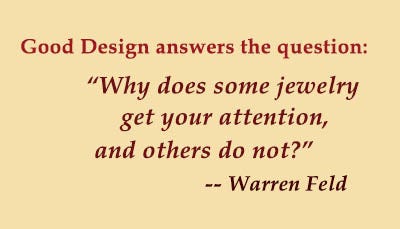
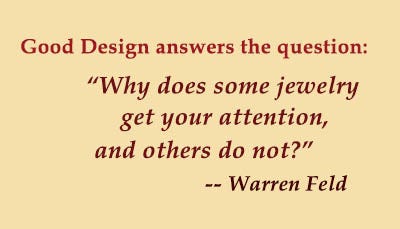
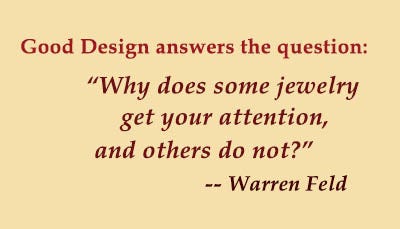
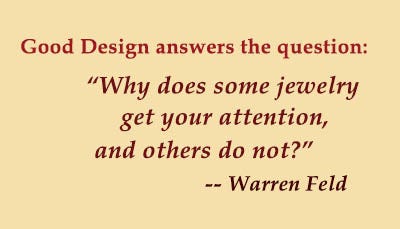
Why does some jewelry draw your attention, and others do not?
How does jewelry design take you beyond art or craft?
How do you judge a piece as finished and successful?
Why is disciplinary literacy in design important for introducing your works publicly, as well as selling your works in the creative marketplace?
My ideas have developed and evolved over time. These are ideas about jewelry, its design, and the necessary tradeoffs between appeal and functionality. These are ideas which express the why and the how jewelry design differs from art or craft. These are ideas which are embedded in and emerge from the special disciplinary and literacy requirements all jewelry designers need to learn so that they can think and speak and work like designers. These are ideas about how to introduce jewelry into the creative marketplace. These ideas center on fluency, flexibility and originality. And that’s what you want to be as a jewelry designer: fluent, flexible and original.
I teach classes in jewelry design and applications.
I want my students to learn the mechanics of various techniques. This is obvious. But I want them to go beyond the basic mechanics. I want them to be able to have a great degree of management control over the interplay of aesthetic elements. I also want them to have a great degree of insight, strategy and “smartness” in how things get constructed architecturally. Last, I want them, and this is important, to understand and recognize and incorporate into their designs how and why people desire things — why they want to wear things and why they want to buy things and why they want to tell all their friends about the things they are wearing and buying.
Literacy involves all these things: craft, art, design, context. Teaching a disciplinary literacy specific to jewelry design is a lot like teaching literacy in reading and writing. We want our students to comprehend. We want them to be able to be self-directed in organizing and implementing their basic tasks. We want them to be able to function in unfamiliar situations and respond when problems arise. We want them to develop an originality in their work — originality in the sense that they can differentiate themselves from other jewelry designers. We want them to anticipate the shared understandings their various audiences have about whether a piece is inhabitable — that is, finished and successful for them. We want them to think like designers. And, we want a high level of automaticity in all this. The basic jewelry design curriculum does not accomplish this. There is an absence of strategy and strategic thinking.
Hence this book and guide for anyone who wants to become a successful jewelry designer. This book is for someone who wants to develop that strategic kind of thinking and speaking and doing which underly their discipline we call Jewelry Design.
For more articles about Fluency in Design, click over to our Jewelry Designers’ Hub
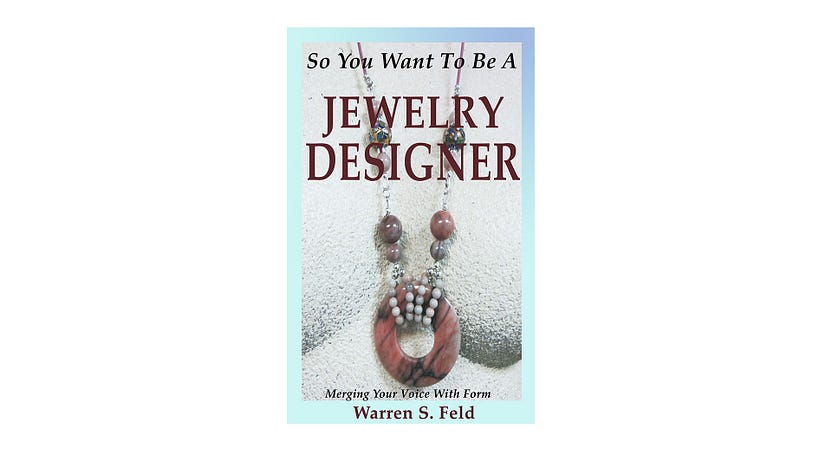
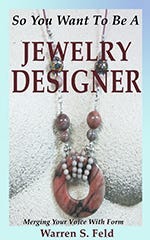
SO YOU WANT TO BE A JEWELRY DESIGNER Merging Your Voice With Form
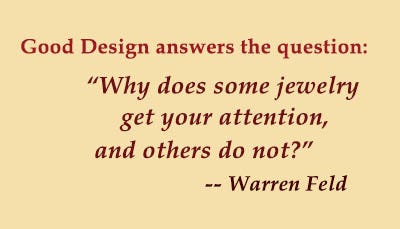
So You Want To Be A Jewelry Designer reinterprets how to apply techniques and modify art theories from the Jewelry Designer’s perspective. To go beyond craft, the jewelry designer needs to become literate in this discipline called Jewelry Design. Literacy means understanding how to answer the question: Why do some pieces of jewelry draw your attention, and others do not? How to develop the authentic, creative self, someone who is fluent, flexible and original. How to gain the necessary design skills and be able to apply them, whether the situation is familiar or not.
But when you think jewelry and speak jewelry and work jewelry, this is what you become.
Yes, jewelry making has aspects of craft to it. But it is so much more. It is art. It is architecture. It is communicative and interactive. It is reflective of the jewelry designer’s hand. And it defines or reaffirms the self- and social-identities of everyone who wears it, views it, buys it, exhibits it, collects it, talks about it.
To go beyond craft as a jewelry designer, you need to become literate in this discipline called jewelry design. As a person literate in jewelry design, you become your authentic, creative self, someone who is fluent, flexible and original. You gain the skills necessary to design jewelry whether the situation is familiar or not. You are a jewelry designer.
The literate jewelry designer grasps the differences between jewelry as object and jewelry as intent. That is, you recognize how a piece of jewelry needs to be orchestrated from many angles. How jewelry making involves more than following a set of steps. How jewelry, without design, is just sculpture. How jewelry is a very communicative, public and interactive work of art and design. How jewelry focuses attention. How true design enhances the dignity of the person wearing it. And how the success of a jewelry designer, and associated practice or business, comes down to what’s happening at the boundary between the jewelry and the body – that is, jewelry is art only as it is worn.
Read more articles about becoming Fluent in Jewelry Design on our Jewelry Designers’ Hub.
SO YOU WANT TO BE A JEWELRY DESIGNER Merging Your Voice With Form
So You Want To Be A Jewelry Designer reinterprets how to apply techniques and modify art theories from the Jewelry Designer’s perspective. To go beyond craft, the jewelry designer needs to become literate in this discipline called Jewelry Design. Literacy means understanding how to answer the question: Why do some pieces of jewelry draw your attention, and others do not? How to develop the authentic, creative self, someone who is fluent, flexible and original. How to gain the necessary design skills and be able to apply them, whether the situation is familiar or not.
“Asheville and its surrounding area in Western North Carolina boast a strong history with the arts. Penland School of Craft was founded in 1929, the Southern Highland Craft Guild started in 1930, Black Mountain College thrived from 1933 to 1957, and the Asheville Art Museum opened in 1948. More recently, Asheville’s River Arts District (RAD) began to develop in the 1990s, growing dramatically in the 2010s. Until late September 2024, it comprised more than two dozen old brick buildings and warehouses—mostly remnants of its time as an industrial hub—painted with bright murals and filled with vibrant studios, galleries, restaurants, and bars. With this rich artistic presence (which had a $3 billion economic contribution to Buncombe County in 2023), it is not surprising that, even amidst the shocking destruction and loss of life caused by Hurricane Helene, the impact on the arts community is keenly felt and widely acknowledged, even by the New York Times and Wall Street Journal. “
“I think the artists will suffer a lot of economic uncertainty. But on the other side of that I think a lot of art inspiration will come out of something so deeply felt by the artists.” —Jessica Blissett
“I feel like a small river pebble being worn round by a constant current of change. And I’m so beyond grateful for all the hugs, and prayers and folks putting in orders on my shop even though I don’t have a studio right now.” —Alice Scott
“While the waters and winds of Hurricane Helene ravaged studios and stalled practices that artists have spent their entire careers building, the tight social networks and a sense of hope remain. Artists have set up online fundraisers and raffles for friends, served meals through the World Central Kitchen (Deb Karash has helped serve tens of thousands of hot meals in downtown Asheville), and shoveled a lot of dirt and debris out of art spaces. Many are expressing optimism and sharing heart-warming experiences of fellow artists supporting one another. Blissett, for example, observed, “Those less affected at their homes donned hazmat suits and threw themselves into the cleanup. Those who lost so much still kept at the tasks at hand.” Foundation Studios conveyed the pervasive feeling of loss mixed with promise, posting on social media, “In the grand scheme of things we are lucky. This is an art gallery & studios, not a home (though it felt like it). These are things, not lives (though souls were put into them). If there’s one thing artists will do, it’s make more art!” “
Treats Studios in Spruce Pine provides a list of artists affected with links to make direct donations or support through direct sales: www.treatsstudios.org/artist-support-helene
Instagram is trying to phase out the use of hashtags.
Artist, social media influencer, and faculty expert Dina Brodsky recommends not focusing too much time on hashtags when you post.
“Honestly, they’re not really a thing anymore and it’s something that Instagram is trying to phase out.”
Unless it is a branded hashtag (when you specifically want a publication, gallery, or brand to see you), or you’re using your own: it doesn’t really matter.
3. Meet the world’s rarest mineral. It was only found once!
A single gemstone from Myanmar holds the title of Earth’s rarest mineral, kyawthuite.
“The kyawthuite crystal was discovered in 2010 by sapphire hunters in the Chaung Gyi Valley, near Mogok, Myanmar. Initially mistaken for an ordinary gem, it was later identified as unique by Dr. Kyaw Thu, a prominent mineralogist. After extensive analysis, the International Mineralogical Association (IMA) officially recognized kyawthuite as a new mineral in 2015. Today, the sole specimen resides in the Natural History Museum of Los Angeles County, where it is safeguarded as a geological treasure.”
4. Pewter. A Most Misunderstood Metal by Ana LopezFrom an article in Metalsmith Magazine 44(3):
“Now that pewter alloys are lead-free, a surprising number of artists are revisiting pewter’s unique qualities and complex history. Pewter is a tin-based alloy. Since tin is brittle, it is combined with other metals to improve its durability and working properties. And because it alloys easily and has a very low melting temperature, it can form a eutectic mixture with other metals, reducing the melting temperatures of each component. For metalsmiths, the nightmare scenario is heating silver that unbeknownst to them has been in contact with pewter, which leads to a meltdown in every sense.”
“Conversely, fans of pewter rave about its accessibility and forgiving nature. For example, welded pewter joints provide a seamless construction without being brittle. Pewter can be formed with wood tools, and can be melted with just a small butane torch. Since no amount of hammering, rolling, or forming will cause it to stiffen, there is no need to stop and anneal the metal. And since it’s a poor conductor, pewtersmiths can hold elements in place with masking tape while soldering with a torch. It can be liqueified in a saucepan on a hotplate and cast into a silicone mold. Scrap metal can be endlessly melted down for reuse, so nothing goes to waste. Finally, it is food safe— and considerably less expensive than silver.”
5. At the shop, I went through 3 pearl knotting instructors, and was never satisfied. Not only could their students not do a consistently good job, particularly when they tried to repeat what they learned after their classes, but also these instructors could not do a consistently good job themselves. So, after a lot of research, I wrote this book: PEARL KNOTTING…Warren’s Way.
Classic Elegance! Timeless! Architectural Perfection! Learn a simple Pearl Knotting technique anyone can do. No special tools. Beautiful. Durable. Wearable.
PEARL KNOTTING Doesn’t Need To Be Hard
In this very detailed book, with thoroughly-explained instructions and pictures, you are taught a non-traditional Pearl Knotting technique which is very easy for anyone to learn and do. Does not use special tools. Goes slowly step-by-step. Presents a simple way to tie knots and position the knots to securely abut the bead. Anticipates both appeal and functionality. Shows clearly how to attach your clasp and finish off your cords. And achieves that timeless, architectural perfection we want in our pearl knotted pieces.
Most traditional techniques are very frustrating. These can get overly complicated and awkward. They rely on tools for making and positioning the knots. When attempting to follow traditional techniques, people often find they cannot tie the knots, make good knots, get the knots close enough to the beads, nor centered between them. How to attach the piece to the clasp gets simplified or glossed over. Fortunately, Pearl Knotting doesn’t need to be this hard.
Pearl Knotting…Warren’s Way teaches you how to: • Hand-knot without tools • Select stringing materials • Begin and finish pieces by (1) attaching directly to the clasp, (2) using French wire bullion, (3), using clam shell bead tips, or, (4) making a continuous piece without a clasp • Add cord • Buy pearls, care for them, string and restring them, store them
By the end of this book, you will have mastered hand-knotting pearls.
Not comfortable showing prices online? Publish a private page.
Create a website page that is only accessible via private link, in which you feature the prices of the pieces you have on sale.
Next to your product information and image, add an INQUIRE Button.
Whenever an interested buyer asks about the prices of certain pieces, send them the private/exclusive link so they can see the works.
Also, include them immediately in your email database. Flag them as more likely to be interested in your work, because they have taken the effort to click on the INQUIRE button.
I was burnt out in my job as Director of a non-profit, health care organization when I met Jayden at a local bar. I was so bored in my job. Bored with the people I worked with. Bored with the tasks. Bored with the goals. I felt so disconnected from the field of health care. I wanted to stop the world and jump off. But into what, I had no idea.
I so much yearned for some creative spark. Some creative excitement. Something that challenged me, was artistic, was fun. And someone to do these things with. And, in 1987, I met Jayden. Jayden epitomizes creativity.
Soon after we met, Jayden moved to Nashville. But she was having difficulty finding a job. There was a recession going on at the time. At one point, I asked her what she could do, and she said that she could make jewelry. I thought we could build a business around that.
And so we did. Land of Odds was born.
Initially the business was oriented around Jayden’s design work. She made all kinds of jewelry from beads to wire to silver fabrication to lampwork. And at first, I had little interest in actually making or designing jewelry. But gradually, very gradually, I began learning the various techniques and the different kinds of materials and components. We took in a lot of repairs. I found it intellectually challenging to figure out why something broke — construction, technique, something about the wearing. I began to formalize some ideas and hypotheses into rules and principles.
Around 1998, Jayden and I wanted to offer jewelry making classes in our shop. But we did not want to repeat and replicate the types of classes already offered at other craft and bead shops in town. We did not want to do the Step-by-Step paint-by-number approach to jewelry making. We wanted to integrate architectural considerations with those of art. While we recognize that all jewelry making has some aspect of craft to it, we wanted to inspire our students to go beyond this. Jewelry beyond craft.
Over the next couple of years, with the help and guidance from many local artisans and craft teachers, we developed an educational curriculum embedded within what is called the Design Perspective. That is, our classes would teach students how to manage both beauty and functionality, and how to make the necessary tradeoffs between these within their finished pieces. Our classes would guide students in developing a literacy and fluency in jewelry design.
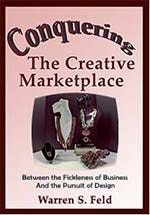
Eventually Jayden retired and our business began to revolve around my own designs and my developing understanding of the Design Perspective. After 35+ years in the business, I came away with some strong beliefs about what jewelry designers should be taught and how they should be taught. I’ve encapsulated all this within this text So You Want To Be A Jewelry Designer and its companion book Conquering The Creative Marketplace.
Promote your current projects, promotional copy, News & Views, videos, reels, tutorials, instructions, social media posts online in this newsletter and on our jewelry designers’ Patreon hub.
No deadlines! Opportunity available all the time. No fees. But don’t wait to take advantage of this opportunity. This copyrighted material is published here with permission of the author(s) as noted, or with Land of Odds or Warren Feld Jewelry. All rights reserved.
Repairs Stumping You? Let Me Take A Look
I take in a lot of jewelry repairs. People either bring them to me in Columbia, TN, or, I pick them up and deliver them back in Nashville. I am in Nashville at least once a week. It’s been convenient for most people to meet me at Green Hills Mall. But if not, I can come to your workplace or your home. This is perfectly fine for me. My turnaround time typically is 3-4 weeks.
I do most repairs, but I do not do any soldering. I also do not repair watches. These are the kinds of repairs I do:
o Beaded jewelry o Pearl knotting, hand knotting o Size/Length adjustment o Re-stringing o Wire work/weave/wrap o Micro macrame o Broken clasp replacfement o Earring repair o Replace lost rhinestones or gemstones o Stone setting o Stretchy bracelet o Metal working which does not involve soldering o Bead woven jewelry and purses o Beaded clothing o Custom jewelry design
WARREN FELD JEWELRY (www.warrenfeldjewelry.com) Custom Design, Workshops, Video Tutorials, Webinars, Coaching, Kits, Group Activities, Repairs ~~~~~~~~~~~~~~~~~~~~~~~ Join our community of jewelry designers on myPatreon hub Be part of a community of jewelry designers who recognize that we have a different way of thinking and doing than other types of crafters or artists. One free downloadable Mini-Lesson of your choice for all new members! ~~~~~~~~~~~~~~~~~~~~~~~
I was burnt out in my job as Director of a non-profit, health care organization when I met Jayden at a local bar. I was so bored in my job. Bored with the people I worked with. Bored with the tasks. Bored with the goals. I felt so disconnected from the field of health care. I wanted to stop the world and jump off. But into what, I had no idea.
I so much yearned for some creative spark. Some creative excitement. Something that challenged me, was artistic, was fun. And someone to do these things with. And, in 1987, I met Jayden. Jayden epitomizes creativity.
Soon after we met, Jayden moved to Nashville. But she was having difficulty finding a job. There was a recession going on at the time. At one point, I asked her what she could do, and she said that she could make jewelry. I thought we could build a business around that.
And so we did. Land of Odds was born.
Initially the business was oriented around Jayden’s design work. She made all kinds of jewelry from beads to wire to silver fabrication to lampwork. And at first, I had little interest in actually making or designing jewelry. But gradually, very gradually, I began learning the various techniques and the different kinds of materials and components. We took in a lot of repairs. I found it intellectually challenging to figure out why something broke — construction, technique, something about the wearing. I began to formalize some ideas and hypotheses into rules and principles.
Around 1998, Jayden and I wanted to offer jewelry making classes in our shop. But we did not want to repeat and replicate the types of classes already offered at other craft and bead shops in town. We did not want to do the Step-by-Step paint-by-number approach to jewelry making. We wanted to integrate architectural considerations with those of art. While we recognize that all jewelry making has some aspect of craft to it, we wanted to inspire our students to go beyond this. Jewelry beyond craft.
Over the next couple of years, with the help and guidance from many local artisans and craft teachers, we developed an educational curriculum embedded within what is called the Design Perspective. That is, our classes would teach students how to manage both beauty and functionality, and how to make the necessary tradeoffs between these within their finished pieces. Our classes would guide students in developing a literacy and fluency in jewelry design.
Eventually Jayden retired and our business began to revolve around my own designs and my developing understanding of the Design Perspective. After 35+ years in the business, I came away with some strong beliefs about what jewelry designers should be taught and how they should be taught. I’ve encapsulated all this within this text So You Want To Be A Jewelry Designer and its companion book Conquering The Creative Marketplace.
SO YOU WANT TO BE A JEWELRY DESIGNER Merging Your Voice With Form
So You Want To Be A Jewelry Designer reinterprets how to apply techniques and modify art theories from the Jewelry Designer’s perspective. To go beyond craft, the jewelry designer needs to become literate in this discipline called Jewelry Design. Literacy means understanding how to answer the question: Why do some pieces of jewelry draw your attention, and others do not? How to develop the authentic, creative self, someone who is fluent, flexible and original. How to gain the necessary design skills and be able to apply them, whether the situation is familiar or not.
Join my community of jewelry designers on myPatreon hub From Warren and Land of Odds Use December’s Discount Code For Extra 25% Off @Land of Odds: DECEMBER25 www.landofodds.comDecember 1, 2024Hi everyone, Some Updates and Things Happening. (Please share this newsletter)
Did the people closest to you, your family and friends, encourage or discourage your pursuit of art as a profession? Share your experiences or thoughts on the influence friends or family have had on your pursuit of your art and/or jewelry designing.
2. I have always tried to push my jewelry making students to see themselves as professionals providing a service to others. I wrote my first book — SO YOU WANT TO BE A JEWELRY DESIGNER — with this foremost in my mind. If I were teaching an undergraduate college class in jewelry design, this would be my textbook.
Jewelry making has aspects of craft to it, but it is so much more. It is art. It is architecture. It is communicative and interactive. It moves with the person wearing it. It is reflective of the jewelry designer’s hand. And it defines and reaffirms the narrative stories of everyone who wears it, views it, buys it, exhibits it, collects it, talks about it.
To go beyond craft, the jewelry designer needs to become literate in this discipline called Jewelry Design. Literacy means understanding how to answer the question: Why do some pieces of jewelry draw your attention, and others do not? How to develop the authentic, creative self, someone who is fluent, flexible and original. How to gain the necessary design skills and be able to apply them, whether the situation is familiar or not.
Craft and art techniques and theories are of little help. These do not show how to make trade-offs between beauty and functionality. Nor how to introduce pieces publicly. These provide weak rules for determining when a piece of jewelry is finished and successful. Often, the desires and motivations of wearers, viewers and buyers are minimized or ignored.
So You Want To Be A Jewelry Designer reinterprets craft techniques, modifies art theories, and introduces architectural, socio-cultural and perceptual-cognitive considerations so that jewelry makers are better prepared to approach design.
By the end of So You Want To Be A Jewelry Designer, established jewelry artisan Warren Feld teaches you how to • Select materials, techniques and technologies • Choose, compose, construct and manipulate jewelry design elements • Anticipate expectations, perceptions, values and desires of client audiences • Develop those soft skills of creativity, inspiration, aspiration and passion
Warren Feld examines with you all those things which lead to your success as a jewelry designer, and your associated design practice or business.
This book is for someone who wants to develop that strategic kind of thinking and speaking and doing which underly their discipline we call Jewelry Design. TABLE OF CONTENTS
Why I wrote this book and acknowledgements AN INTRODUCTION
1. JEWELRY BEYOND CRAFT: GAINING A DISCIPLINARY LITERACY AND FLUENCY IN DESIGN
2. GETTING STARTED 2a. BECOMING THE BEAD ARTIST AND JEWELRY DESIGNER: The Ongoing Tensions Between Inspiration and Form 2b. BECOMING THE BEAD ARTIST AND JEWELRY DESIGNER: 5 Essential Questions Every Jewelry Designer Should Have An Answer For 2c. GETTING STARTED: CHANNELING YOUR EXCITEMENT 2d. GETTING STARTED: DEVELOPING YOUR PASSION 2e. GETTING STARTED: CULTIVATING YOUR PRACTICE
3. WHAT IS JEWELRY, Really?
4. MATERIALS, TECHNIQUES AND TECHNOLOGIES 4a. MATERIALS: Knowing What To Know 4b. TECHNIQUES AND TECHNOLOGIES: Knowing What To Do 4c. MIXED MEDIA / MIXED TECHNIQUES
5. RULES OF COMPOSITION, CONSTRUCTION, AND MANIPULATION 5a. JEWELRY DESIGN COMPOSITION: PLAYING WITH BUILDING BLOCKS CALLED DESIGN ELEMENTS 5b. THE JEWELRY DESIGNER’S APPROACH TO COLOR 5c. POINT, LINE, PLANE, SHAPE, FORM, THEME: Creating Something Out Of Nothing 5d. JEWELRY DESIGN PRINCIPLES: COMPOSING, CONSTRUCTING, MANIPULATING 5e. HOW TO DESIGN AN UGLY NECKLACE: The Ultimate Designer’s Challenge / You Be The Judge 5f. ARCHITECTURAL BASICS OF JEWELRY DESIGN: Building In The Necessary Support and Structure 5g. ARCHITECTURAL BASICS OF JEWELRY DESIGN: Anatomy of a Necklace 5h. ARCHITECTURAL BASICS OF JEWELRY DESIGN: Sizing
6. DESIGN MANAGEMENT 6a. THE PROFICIENT DESIGNER: The Path To Resonance 6b. JEWELRY DESIGN: A Managed Process 6c. COMPONENT BASED DESIGN SYSTEMS: Building Both Efficiency As Well As Effectiveness Into Your Jewelry Designs
7. INTRODUCING YOUR DESIGNS PUBLICLY 7a. SHARED UNDERSTANDINGS AND DESIRES: THE CONVERSATION CENTERED WITHIN A DESIGN 7b. “BACKWARD-DESIGN” IS FORWARDS THINKING
8. DEVELOPING THOSE INTUITIVE SKILLS WITHIN 8a. CREATIVITY ISN’T FOUND, IT’S DEVELOPED 8b. INSPIRATION AND ASPIRATION 8c. YOUR PASSION FOR DESIGN: Finding It, Developing It, and Embedding It In Your Designs
9. JEWELRY IN CONTEXT 9a. CONTEMPORARY JEWELRY IS NOT A “LOOK” — IT’S A WAY OF “THINKING” 9b. CONTEMPORIZING TRADITIONAL JEWELRY: Transitioning From Conformity To Individuality 9c. Fashion-Style-Taste-Art-Design: Coordinating Aesthetics With Pleasure 9d. Designing With The Brain In Mind: Perception, Cognition, Sexuality 9e. SELF CARE
10. TEACHING DISCIPLINARY LITERACY: Strategic Learning in Jewelry Design
SOME FINAL WORDS BY WARREN FELD ABOUT WARREN FELD OTHER ARTICLES AND TUTORIALS BY WARREN FELD
3. If you’re lacking confidence when pricing your art… Set a price at which you’ll sell the maximum number of pieces, and achieve the maximum profit for your business. Your goal: a consistent and steady level of sales (the price can’t prohibit most interested buyers from buying). Flipside: don’t price it so low that you’re not generating profit for yourself (or any gallery you apply to). “To do this, start by understanding your baselines: what does it cost to produce? What is the framing cost? Time?”
4. “Is my art good enough to be in boutiques and galleries?”
There is always a boutique or gallery out there in which you can show your jewelry.
Just like there are jewelry designers at every phase of development & progression, the same is true for boutiques and galleries (at every level of development).
As the boutique or gallery becomes more established and grows, they will become able to be more selective and assertive.
“Our job, especially in the early phases, is to show our work to as many boutiques and galleries as possible. Find those that are interested in your work, and grow right along with your galleries.”
5. It’s approaching the end of the year. You might have some excess inventory that you need to sell, and want to take advantage of the season to promote a sale.
Feel free to use or adapt either of these two images (my copyright so you have full permission) in your marketing:
6. People are often hesitant about signing up for coaching services. One thing we don’t think about as much when it comes to finding the motivation to be consistent with your jewelry designing is something I talk about a lot in other contexts: Know Thyself.
This is something I work on with designers when coaching them. When I’m struggling with consistency, it’s not the same mayhem necessarily that you’re working with. Our remedies are going to be different potions. We have to do the work to know who we are, to look honestly and as objectively as possible at our patterns, and to understand why we struggle with certain things.
If you’re getting pummeled by procrastination, what’s behind it? Fear? What are you afraid of? Why?
Is your tendency toward perfectionism? Where’s that rooted?
Wondering why you’re not getting the sales you anticipated?
Got shiny object syndrome? Always looking for the next thing to pull you in and not letting yourself mature into something remarkable? What part of you thinks it’s being nourished by that pattern?
There’s a lot we can do to motivate and channel creative effort, but it’s all going to be short-lived if we don’t get to the root of our patterns. So who are you and what are your actions and mindsets that are in the way of your motivation?
I hope you’ll give yourself some time to consider these questions. If you’re ready for support in this critical exploration, review my COACHING services. Book your coaching session now.
— Warren
7. People are always wondering what types of jewelry I make. This is how I describe my personal jewelry making style.
My Personal Style My personal style centers on a few key elements. I like to…
– Mix colors in unexpected ways, particularly colors you would not ordinarily assume would complement one another
– Use a lot of what are called “grays”, such as black diamond, montana blue, colorado topaz, alexandrite, and other “simultaneity effects”
– Combine both bead weaving, bead stringing, and wire-working techniques within the same piece, but typically the emphasis is on bead weaving techniques.
– Modify traditional weaving and stringing techniques or come up with my own new ones– I’m very experimental
– Define and play with forms and themes, and thresholds, frames and transitions from one form to the next
– Have pieces that emphasize the sensual and sexual
– Create unusual, unexpected placement of shapes, such as using curved tubes where you might expect a straight tube instead, or using a cube where you would expect a flat rondelle
– Add dimensionality, curvature, and interlocking forms, where I can, to make my pieces both fashionable and contemporary
– Add a sense of movement and move-ability, wherever possible, and likewise, anticipate the aesthetic and functional impacts and effects which come from movement when worn
– Push the limits of, and experiment with, the materials and techniques I am using
– Organize my pieces into Series I call “Collections.” For each Collection, I study a particular culture or technique or design theory, and play with what I’ve learned. How can I adopt what I’ve learned to my individual style and approach? Each Collection, then, is a personal challenge of expression and expressiveness.
– Consider that both the art (appeal) and architecture (function) goals both must be satisfied to the fullest, which most often requires making tradeoffs in design,
– Believe that jewelry can be judged as art only as it is worn, thus, designed in anticipation of this principle.
8. Some Quick Notes a. Added 70 new colors, size 11/0 Miyuki seed beads to Land of Odds catalog. Shop here.
b. Added 130 new colors, delicas (size 11/0) to Land of Odds catalog. Shop here.
c. Added 159 new colors, size 8/0 Miyuki seed beads to Land of Odds catalog. Shop here.
d. Added 202 new colors, size 6/0 Miyuki seed beads to Land of Odds catalog. Shop here.
“Whether you succeed or not is irrelevant, there is no such thing. Making your unknown known is the important thing.” / Georgia O’Keeffe
WARREN FELD JEWELRY (www.warrenfeldjewelry.com) Custom Design, Workshops, Video Tutorials, Webinars, Coaching, Kits, Group Activities, Repairs ~~~~~~~~~~~~~~~~~~~~~~~ Join our community of jewelry designers on myPatreon hub Be part of a community of jewelry designers who recognize that we have a different way of thinking and doing than other types of crafters or artists. One free downloadable Mini-Lesson of your choice for all new members! ~~~~~~~~~~~~~~~~~~~~~~~
Some Updates and Things Happening. (Please share this newsletter)
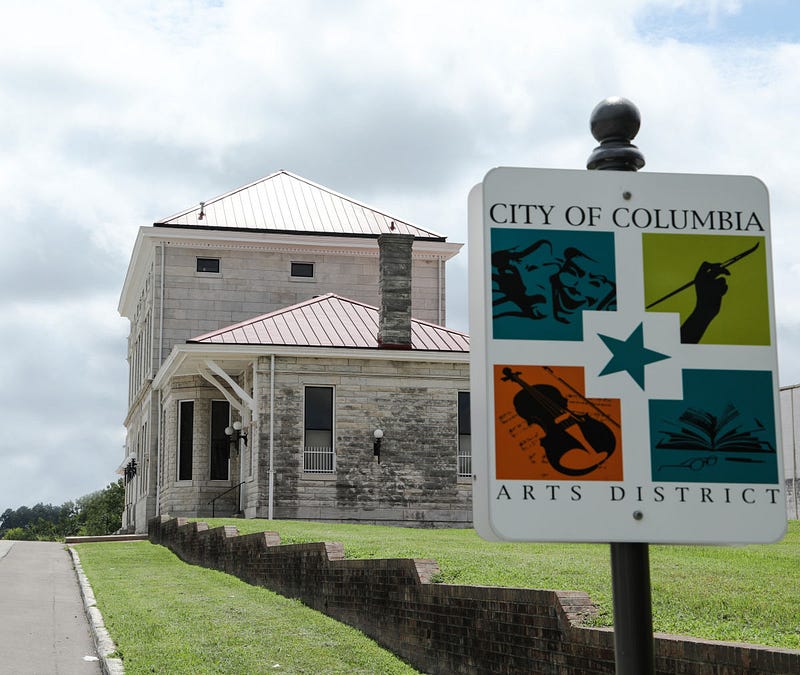
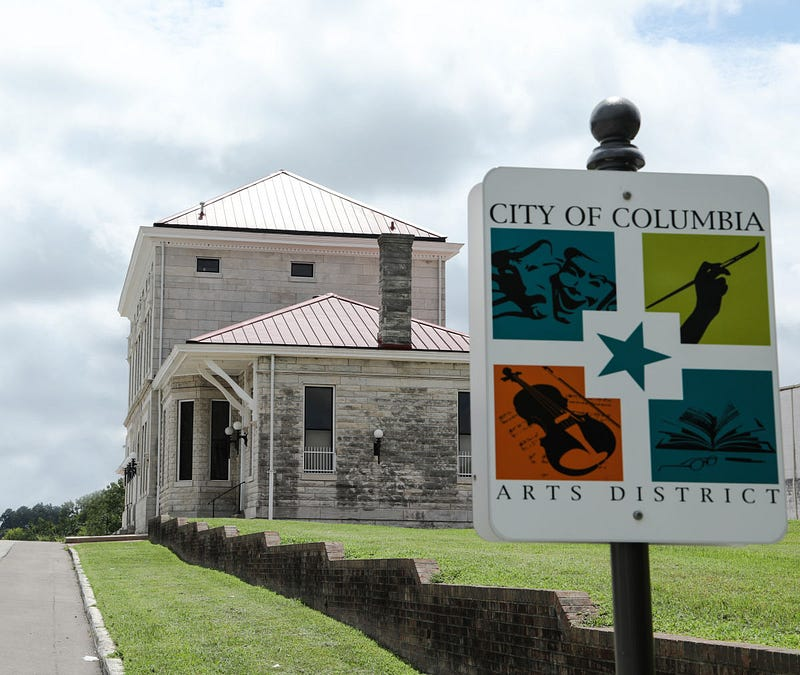
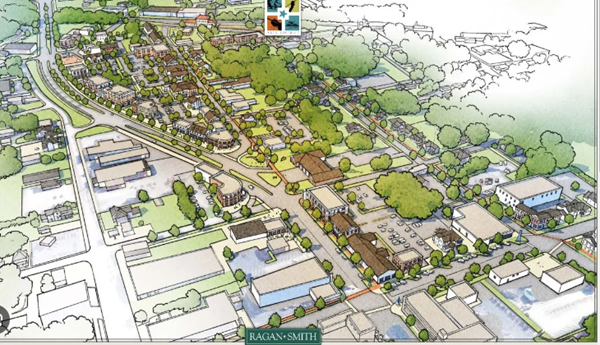
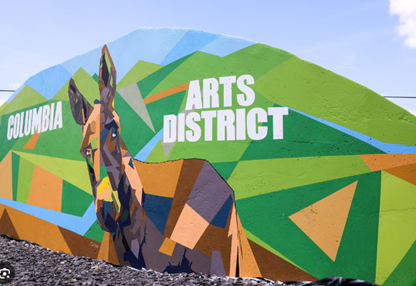
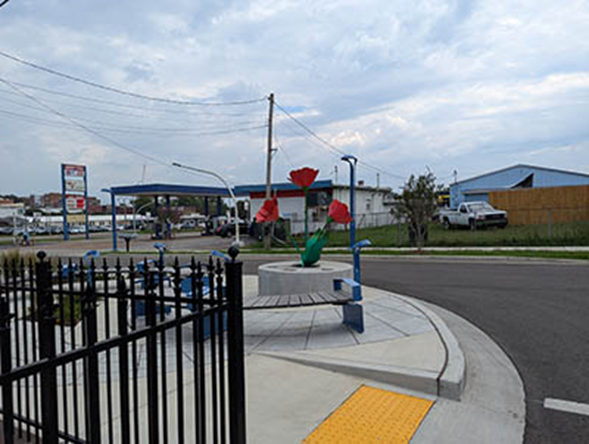
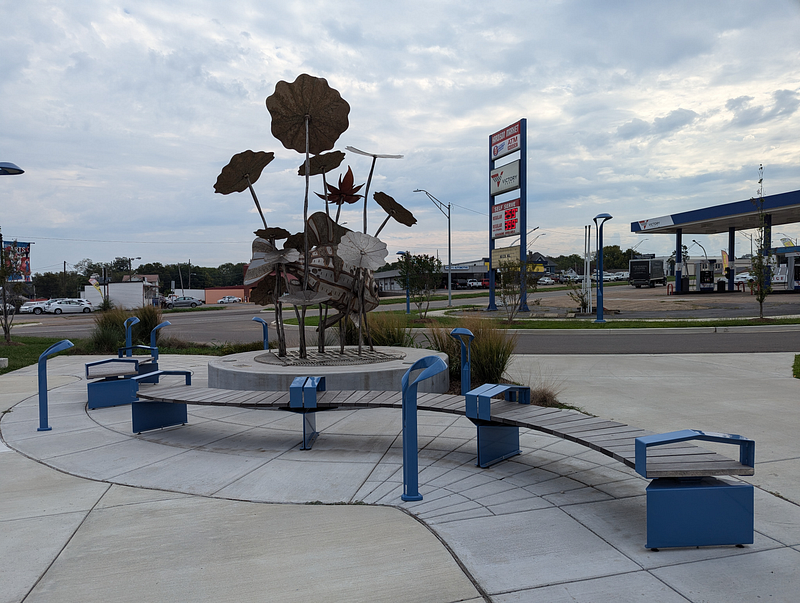
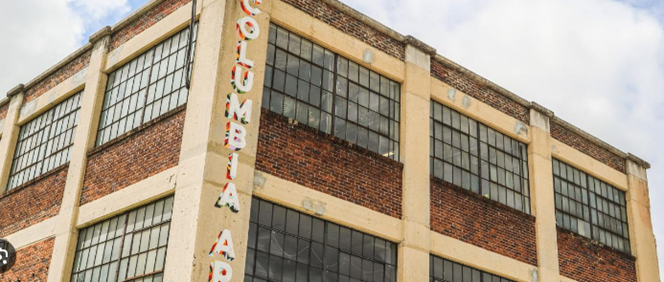
1. I have been participating with the Columbia TN Arts Council over the last several months. Their major tasks are to develop a sense of community among artists (broadly defined), and a sense of place in a several block area off the downtown identified as the Columbia Arts District. I wrote a visioning plan for this District which I want to share, and welcome any feedback and ideas for programs, and community and economic development.
The Columbia ARTS DISTRICT (CAD) was created to provide a haven for artists to live and work. The CAD is located a few blocks from Downtown Columbia in the South Garden/High Street area. The City has established historic zoning overlays to protect historic and cultural assets that include distinct neighborhoods like the ARTS DISTRICT. The area currently comprises several blocks of old warehouses, old houses (some historically significant), mobile homes and manufactured homes, and vacant lots. One warehouse building was turned into a multi-story mix of artist studios, retail spaces, coffee house, some office space. There are some restaurants and specialty shops in the District, but not many. Columbia is a small town of about 45,000 residents, growing 2–3% annually, and is located about 45 miles south of Nashville.
The BIG question for me was whether you can create a community-based Arts District, where the focus and energy emerge from how the community interacts with and finds meaningful experiences within the space, rather than focusing on physical design per se.
My SECONDARY question was whether a District designed to bring artists to live, work and play together can remain competitively viable over time, or will the community either lose interest or will the area become so attractive that gentrification negates its original reason for being. Time will tell, … as will smart thinking, planning, and cooperative partnering.
What makes a space into a place? Placemaking inspires people to collectively reimagine and reinvent public spaces as the heart of every community. Strengthening the connection between people and the places they share, placemaking refers to a collaborative process by which we can shape our public realm in order to maximize shared value. More than just promoting better urban design, placemaking facilitates creative patterns of use, paying particular attention to the physical, cultural, and social identities that define a place and support its ongoing evolution.
Great public spaces are those places where celebrations are held, social and economic exchanges occur, friends run into each other, and cultures mix. They are the “front porches” of our public institutions — libraries, field houses, schools — where we interact with each other and government. When these spaces work well, they serve as the stage for our public lives.
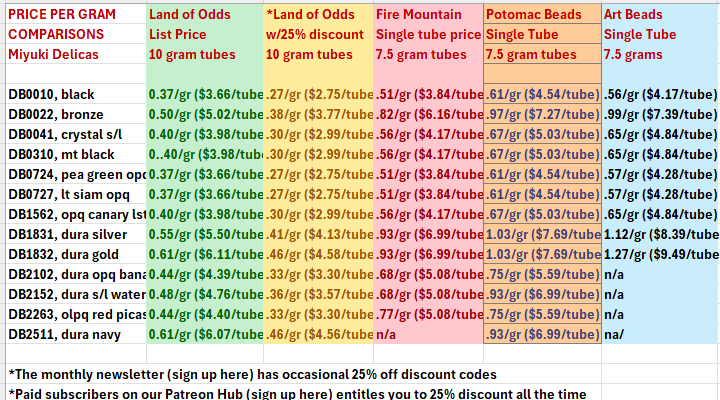
3. I encourage you to take advantage of the very low prices of delica beads on the Land of Odds website.
Compare Our Prices To What You Are Paying:
In this monthly newsletter, occasionally, like in this newsletter, you will find a discount coupon code that you can use on the Land of Odds website.
You can also become a paid subscribing member on our Jewelry Designers’ Patreon Hub, which entitles you to a 25% discount as long as you maintain your subscription.
4. If you have the resources, I strongly suggest you look into furthering your jewelry design education by attending a degree program. Here are the top 30 jewelry design programs in the United States:
Here are some of the leading jewelry design programs in the United States, known for their specialized curriculums, faculty expertise, and facilities. While specific rankings can vary by source, these schools are widely regarded as some of the best for jewelry design.
1. Rhode Island School of Design (RISD) — Providence, RI
Offers a strong focus on metalwork, traditional jewelry techniques, and contemporary design principles.
2. Savannah College of Art and Design (SCAD) — Savannah, GA
Provides a comprehensive approach with state-of-the-art facilities and focuses on various facets of jewelry design and business.
3. Fashion Institute of Technology (FIT) — New York, NY
Known for hands-on learning and access to New York City’s fashion and jewelry industry.
4. California College of the Arts (CCA) — San Francisco, CA
Emphasizes interdisciplinary approaches and sustainable design practices.
5. Parsons School of Design — New York, NY
Offers access to an extensive network in the fashion and luxury sectors, with an emphasis on innovative design.
6. Pratt Institute — Brooklyn, NY
Known for a strong arts program and a metal/jewelry design program focused on both technical skills and creativity.
7. Cranbrook Academy of Art — Bloomfield Hills, MI
Known for a small student body and intensive, personalized instruction.
8. University of the Arts — Philadelphia, PA
Offers a jewelry and metals program that includes contemporary jewelry, metalsmithing, and interdisciplinary work.
9. School of the Art Institute of Chicago (SAIC) — Chicago, IL
Known for an experimental approach that blends traditional and digital techniques.
10. Temple University’s Tyler School of Art — Philadelphia, PA
Focuses on combining creative expression with technical skill development.
11. University of Washington — Seattle, WA
Known for a broad curriculum that includes both traditional metalworking and experimental materials.
12. Virginia Commonwealth University (VCU) — Richmond, VA
Offers a BFA in Craft and Material Studies with a focus on metals and jewelry.
13. SUNY New Paltz — New Paltz, NY
Known for its Metal/Jewelry Design program that integrates both artistic development and technical skill.
14. Massachusetts College of Art and Design (MassArt) — Boston, MA
Offers a program with a focus on metalsmithing, jewelry, and art history.
15. University of Oregon — Eugene, OR
Known for a jewelry program that encourages both traditional and experimental methods.
16. California State University, Long Beach (CSULB) — Long Beach, CA
Offers a BFA in 3D Media focusing on metal and jewelry arts.
17. University of Georgia — Athens, GA
Strong focus on craftsmanship and a broad approach to metal and jewelry design.
18. University of Kansas — Lawrence, KS
The jewelry and metals program is known for its commitment to traditional techniques and design principles.
19. Texas State University — San Marcos, TX
Offers a BFA with a concentration in Metals and Jewelry, focusing on both technique and conceptual development.
20. Indiana University Bloomington — Bloomington, IN
Known for its craft-focused metalsmithing program, including traditional and contemporary approaches.
21. North Bennet Street School — Boston, MA
Provides a specialized training program in jewelry-making with a focus on bench skills and craftsmanship.
22. College for Creative Studies (CCS) — Detroit, MI
Focuses on both jewelry and metalsmithing, providing a solid technical foundation.
23. Kent State University — Kent, OH
Offers a jewelry/metals concentration that emphasizes craftsmanship and innovative design.
24. University of Illinois at Urbana-Champaign — Champaign, IL
Known for an interdisciplinary approach, blending jewelry design with broader art and design disciplines.
25. Rochester Institute of Technology (RIT) — Rochester, NY
The School for American Crafts at RIT is highly regarded for its jewelry and metals programs.
26. Appalachian State University — Boone, NC
Offers a focused jewelry and metals concentration that emphasizes skill development and conceptual work.
27. University of North Texas (UNT) — Denton, TX
Known for a metals and jewelry program that encourages experimentation and craftsmanship.
28. University of Wisconsin-Milwaukee (UWM) — Milwaukee, WI
Provides a curriculum that emphasizes both skill and design in jewelry-making.
29. Arizona State University (ASU) — Tempe, AZ
Offers a robust jewelry program as part of its larger art program, with access to a variety of tools and techniques.
30. Oregon College of Art and Craft (OCAC) — Portland, OR
Although it closed in 2019, its legacy remains influential, and several of its faculty and alumni continue to contribute to the field.
Each program has unique strengths, from technical skills to conceptual approaches and connections to the industry.
5. I wanted to share this email I received from Miguel Mayher at the Professional Artists Assn. We were beginning to discuss the need to be consistent in using Instagram and Emails to promote our businesses. I had brought up that it was difficult to maintain my motivation, especially given the time it takes to use social media.
Hi warren feld,
Yesterday, we talked about feeling overwhelmed.
Overwhelmed by the amount of energy and time that seems required to stay up to date on Instagram & your Email Newsletters.
And how that can hold you back from getting the consistent art income you desire.
Today, I want to dive deeper into why this feeling is SO COMMON in artists and what’s actually causing it.
📱 There are over *2 billion* monthly active users on Instagram. 🤯 And when you open the feed, it can be overwhelming. 🙅🏻♀️ It’s enough to make an established artist yell “nope!”…
…and close the app immediately, never to open it again.
Avoiding Instagram & Email doesn’t just stop you from using the tools, it also affects your entire “sharing your journey” workflow.
Some artists hold their cards close to their chest, but then expect strangers to buy the finished artwork at first glance.
Because when you’re opposed to these tools (and yes, they are just tools), you’re left waiting until you finish every artwork before you share it.
Or even worse — waiting for your next “show” to announce it to the world.
Then your audience doesn’t feel like they were part of that creative process… …they are not invested in your artist journey… …because you are not sharing it with them.
And so surprise, surprise… they are not “bought in”.
Maybe you do end up sending that jam-packed newsletter with a smorgasbord of updates about the last 6 months…
….not QUITE what you wanted, but you settle, “good enough I guess…”.
And a whole world of steady monthly direct sales seems out of reach for you.
Here’s the truth though… it’s not your fault:
Instagram is a hungry beast and the algorithm does reward consistency.
Emails are easy for writers, using WORDS, but not for most visual artists.
So without a good framework to simplify all this, it’s natural to get lost.
The big problem is the time and energy required to keep the Instagram & Email wheels turning…
👨👩👧👦 Competes with your family time 🎨 Competes with your studio time 🤹♀️ Competes with “life’s demands” time
And so how can you justify investing your precious time and energy in them?
You don’t have a simple system to navigate the sea of online art marketing.
If you had a clear system, it’d be hard to get lost, even if you’re an introvert.
I have an amazingly simple framework to share with you at the end of this week, but for now, here’s some encouragement…
❌ You DON’T need to POST EVERY DAY. ❌ You DON’T need to EMAIL EVERY WEEK.
And most importantly… stop thinking of your newsletters as NEWS.
Start thinking of them as Letters, or even better, POSTCARDS.
They are a casual conversation. Ideally one single topic per email. And they either share your journey… or give an opportunity to buy from you.
No middle ground.
I know even this is a lot easier said than done, but don’t worry, over the next few days I’ll be holding your hand and helping you out.
In tomorrow’s email, I’ll share a simple framework that will help you look at your online marketing as an enjoyable documenting of your journey.
Even if you are not a writer.
Talk soon,
Miguel
Director of Education The Professional Artist Association ProfessionalArtist.com P.S. Remember, feeling overwhelmed is normal, but it doesn’t have to stop you.
6. I’ve added additional articles to my collection HOW TO BEAD A ROGUE ELEPHANT. Check these out:
TRANSITIONS A piece of jewelry is a series of sections, each integral to the piece, which must flow together visually and functionally. For example, transitioning from the strap to the centerpiece. How the jewelry designer manages the transitions between each section will determine to a great degree the success of the piece.
DOUBT / SELF-DOUBT For the novice, all that excitement at the beginning, when thinking about making jewelry and making some pieces, sometimes collides with a wall of developing self-doubt. It’s not easy to quiet a doubt. Doubt may hold you back, but it can also be seen as an opportunity.
But the artist appeals to that part of our being which is not dependent on wisdom, to that in us which is a gift and not an acquisition- and, therefore, more permanently enduring. He speaks to our capacity for delight and wonder, to the sense of mystery surrounding our lives; to our sense of pity, and beauty, and pain; to the latent feeling of fellowship with all creation- and to the subtle but invincible conviction of solidarity that knits together the loneliness of innumerable hearts, to the solidarity in dreams, in joy, in sorrow, in aspirations, in illusions, in hope, in fear, which binds men to each other, which binds together all humanity- the dead to the living and the living to the unborn. / Joseph Conrad
8. Now is a good time to begin planning for enrichment travel and skills development opportunities you might take advantage of in 2025. Here are some ideas:
Here are 20 jewelry-related travel and learning opportunities in 2025, perfect for designers and enthusiasts who want hands-on experience, cultural immersion, and networking:
Tucson Gem and Mineral Show — This iconic show offers a variety of workshops in jewelry making and design (Feb 8–11, Tucson, AZ). More information: Tucson Gem and Mineral Show.
Colors of the Stone — Held in Tucson alongside the Gem Show, with classes in bead making, metal clay, enameling, and more (Feb 1–8, 2025). Details: Colors of the Stone
Santa Fe Symposium — An annual jewelry technology conference, ideal for designers interested in advanced techniques and business insights (Santa Fe, NM). Find details at Santa Fe Symposium.
Pasadena Bead & Design Show — Featuring jewelry making and design workshops, Pasadena’s show offers a space for artists and buyers (Jan 17–19, 2025). Learn more: Bead & Design Shows
Studio di Mare — Sogni d’Oro — In Italy, join immersive jewelry retreats that blend cultural exploration with expert-led classes in enameling and stone setting (Summer 2025, San Mango Piemonte). More info: Studio di Mare
Great Bead Escape Retreat — A jewelry workshop retreat in Florida offering classes by skilled instructors, suitable for beginners and experienced crafters alike (April 23–27, 2025, Live Oak, FL). Explore more: The Great Bead Escape
Marin Arts & Crafts Show — A blend of jewelry and fine arts workshops in a scenic setting, ideal for creatives (Mar 7–9, 2025, San Rafael, CA). Details at Marin Arts & Crafts Show.
Jewelry Arts Academy — Florence — Offers jewelry design and goldsmithing programs with Italian artisans in Florence. Contact them at Jewelry Arts Academy.
SNAG Conference — Society of North American Goldsmiths hosts its annual conference with workshops and talks on metalsmithing and jewelry (Spring 2025, Location TBA). Info: SNAG Conference.
Ecole des Arts Joailliers — A prestigious Parisian school offering workshops and courses on traditional French jewelry techniques. Check out L’École Van Cleef & Arpels.
Penland School of Craft — Located in North Carolina, Penland offers workshops in metalworking and jewelry design throughout the year. Discover more: Penland School.
Istanbul Jewelry Show — Workshops and networking in a historic jewelry hub, with thousands of international jewelers (March 2025, Istanbul, Turkey). Info at Istanbul Jewelry Show.
John C. Campbell Folk School — This school in North Carolina provides jewelry and metalsmithing workshops year-round in a peaceful, rural setting. See John C. Campbell Folk School.
Munich Jewellery Week — An annual celebration of contemporary jewelry art in Munich, Germany, with exhibitions, talks, and workshops (March 2025). Visit Munich Jewellery Week.
Craft in America Jewelry Residency — A Los Angeles residency offering workshops, talks, and mentorship for emerging jewelers. Find out more at Craft in America.
Arrowmont School of Arts and Crafts — Tennessee-based school offers multi-day workshops in metals and jewelry design. Learn more: Arrowmont.
American Jewelry Design Council Workshop — A one-day workshop for emerging jewelry artists in the U.S. More details: AJDC.
Jewelry Studies International — Offers annual workshops in Austin, Texas, on topics like CAD jewelry design and hand engraving. See Jewelry Studies International.
Walnut Creek Bead & Design Show — A bead and jewelry show with classes in techniques like chainmaille and wire wrapping (Mar 21–23, 2025). Details: Bead & Design Shows
Jewelry Design Lab NYC — Based in New York City, this lab offers short-term and seasonal classes in modern jewelry-making techniques. Find out more at Jewelry Design Lab NYC.
These programs provide a diverse range of learning, travel, and cultural experiences to enhance skills and deepen your appreciation of jewelry design worldwide.
Some more ideas:
1. Gemstone Mining Experience in Sri Lanka
Travel to Sri Lanka to visit traditional sapphire mines, learn about sourcing gemstones, and attend workshops on stone cutting and polishing.
2. Jewelry Design Retreat in Bali
Join a retreat focused on traditional Balinese silversmithing techniques, including hands-on workshops with local artisans.
3. Italian Goldsmithing Tour in Florence, Italy
Explore Florence’s historic goldsmithing district, including visits to renowned ateliers and classes on classic Italian jewelry techniques.
4. Diamond District Tour in Antwerp, Belgium
Gain exclusive insights into the diamond trade with a behind-the-scenes tour of Antwerp’s Diamond District and attend a masterclass on diamond grading.
5. Native American Jewelry Workshop in Santa Fe, New Mexico
Discover Native American jewelry traditions with workshops led by expert artisans in silver and turquoise jewelry.
6. Gemstone Safari in Tanzania
Participate in a guided tour of Tanzanian tanzanite mines, with sessions on gem selection, sourcing ethics, and jewelry design.
7. Paris Jewelry Week
Attend Paris Jewelry Week, featuring exhibitions, workshops, and networking events with prominent European designers and jewelry houses.
8. Jewelry Design Masterclass in Jaipur, India
Study Indian jewelry design, from enameling to intricate gemstone settings, with local artisans in the “Pink City,” Jaipur.
9. Silversmithing Workshop in Taxco, Mexico
Taxco is famous for silver. Join a workshop to learn silver jewelry crafting techniques from skilled Mexican artisans.
10. Luxury Jewelry Show Tour in Dubai
Tour Dubai’s high-end jewelry markets, attend the International Jewellery Show, and visit the Gold Souk for an insider look at the luxury jewelry industry.
11. Art Deco Jewelry Tour in New York City
A guided tour through New York’s Art Deco landmarks and workshops focusing on jewelry inspired by this iconic style.
12. Lapidary Arts Course in Idar-Oberstein, Germany
Idar-Oberstein is known for its gem-cutting industry. Attend a course on lapidary arts and gem faceting techniques.
13. Pearl Cultivation Workshop in Okinawa, Japan
Learn about pearl farming in Okinawa with tours of pearl farms, plus hands-on sessions in pearl grading and jewelry design.
14. Scandinavian Design Tour in Copenhagen, Denmark
A guided tour focusing on Scandinavian jewelry design, featuring visits to design museums, workshops, and jewelry houses.
15. Thai Gold and Gemstone Tour in Bangkok, Thailand
Explore Bangkok’s gem and gold markets, attend workshops on Thai goldsmithing, and learn about local jewelry design traditions.
16. Russian Enameling and Filigree Workshop in St. Petersburg
Learn traditional Russian techniques of enameling and filigree in a workshop setting in historic St. Petersburg.
17. Artisanal Gold Mining Tour in Colombia
Visit artisanal gold mines in Colombia and attend workshops focused on sustainable and ethical jewelry sourcing.
18. Swiss Watchmaking and Jewelry Workshop in Geneva, Switzerland
Discover Swiss craftsmanship with a combination of jewelry-making and watchmaking workshops and factory tours.
19. African Beadwork and Jewelry Design Tour in Ghana
Join a cultural tour and workshop on traditional African beadwork and jewelry-making in Ghana’s artisan villages.
20. Modern Jewelry Design Course in Barcelona, Spain
Attend a design-intensive course focusing on modern techniques, including 3D jewelry design, hosted in Barcelona.
These trips offer unique learning experiences, hands-on practice, and exposure to global jewelry design techniques and cultures.
That’s it for now! There is a lot of creative expression all around the world right now. Hope you get to experience a lot of it, either first hand, or through social media online.
WSF
SOME POSTS YOU MAY HAVE MISSED:
(1) HOLD THEIR ATTENTION WITH TEXT HOOKS One way of keeping and holding someone’s attention is to use what is called a text hook or verbal hook at the beginning — literally within the first 2 seconds.
(3) How To Bead A Rogue Elephant: DOUBT AND SELF-DOUBT For the novice, all that excitement at the beginning, when thinking about making jewelry and making some pieces, sometimes collides with a wall of developing self-doubt. It’s not easy to quiet a doubt. Doubt may hold you back, but it can also be seen as an opportunity.
(4) How To Bead A Rogue Elephant: TRANSITIONS A piece of jewelry is a series of sections, each integral to the piece, which must flow together visually and functionally. For example, transitioning from the strap to the centerpiece. How the jewelry designer manages the transitions between each section will determine to a great degree the success of the piece.
(6) COLUMBIA ARTS DISTRICT: CASE STUDIES There are many approaches various towns and cities have taken when finding that mix of art and planning necessary for revitalization, and community and economic development.
(7) COLUMBIA TENNESSEE ARTS DISTRICT VISIONING PLAN Establishing an arts identity can take many directions. A vibrant arts scene no longer means a street lined with art galleries. It can include a broader segment of the creative community — theatre, music, writing, crafts, fashion, media arts, applied arts and graphic design, interior design. The specific arts identity for any community is shaped by those arts for which a community has a special affinity for, as well as the types of assets available to support those arts.
Feature your jewelry Here next week In This Newsletter, as well as, on our Jewelry Designer’s Hub!
Promote your current projects, promotional copy, News & Views, videos, reels, tutorials, instructions, social media posts online in this newsletter and on our jewelry designers’ Patreon hub.
No deadlines! Opportunity available all the time. No fees.
But don’t wait to take advantage of this opportunity.
“Our story is rooted in the personal testimony of our founder, B. Batson-Paculabo, which tells of how she overcame a low season of adversity with a God encounter and answered prayers that led to liberation and unlocking gifts from within.”
This copyrighted material is published here with permission of the author(s) as noted, or with Land of Odds or Warren Feld Jewelry. All rights reserved.
Repairs Stumping You? Let Me Take A Look
I take in a lot of jewelry repairs. People either bring them to me in Columbia, TN, or, I pick them up and deliver them back in Nashville. I am in Nashville at least once a week. It’s been convenient for most people to meet me at Green Hills Mall. But if not, I can come to your workplace or your home. This is perfectly fine for me. My turnaround time typically is 3–4 weeks.
I do most repairs, but I do not do any soldering. I also do not repair watches. These are the kinds of repairs I do:
o Beaded jewelry o Pearl knotting, hand knotting o Size/Length adjustment o Re-stringing o Wire work/weave/wrap o Micro macrame o Broken clasp replacfement o Earring repair o Replace lost rhinestones or gemstones o Stone setting o Stretchy bracelet o Metal working which does not involve soldering o Bead woven jewelry and purses o Beaded clothing o Custom jewelry design
WARREN FELD JEWELRY (www.warrenfeldjewelry.com) Custom Design, Workshops, Video Tutorials, Webinars, Coaching, Kits, Group Activities, Repairs ~~~~~~~~~~~~~~~~~~~~~~~ Join our community of jewelry designers on my Patreon hub Be part of a community of jewelry designers who recognize that we have a different way of thinking and doing than other types of crafters or artists. One free downloadable Mini-Lesson of your choice for all new members! ~~~~~~~~~~~~~~~~~~~~~~~
Access an ever-expanding library of articles, videos, podcast episodes, charts, and graphs available 24/7. Whether you’re interested in the latest trends in jewelry design and techniques or problem-solving at the bench, we have a wealth of information ready to help you learn, grow, and thrive.
Tons of info about jewelry and every kind of technique of jewelry making.
b. The 2024 Summer Design Challenge Winning Design
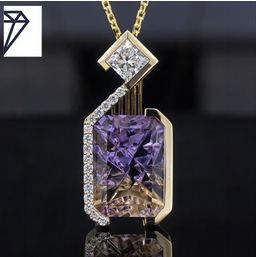
Matthew Piorkowski’s winning piece, “Interstellar”, features a stunning fantasy-cut octagon ametrine showcased in a custom yellow-gold pendant setting. Centered on the bail is a brilliant square-shaped diamond with sixteen accenting diamonds along the left side of the pendant mounting, creating visual interest along the path of the diamonds.
Rio Grande runs a seasonal challenge called For the Love of Jewelers Design Challenge. They haven’t announced winter or spring submissions rules yet. Check on their website: www.riogrande.com
In the ever-evolving world of artificial intelligence, the ability to create photorealistic images has become a groundbreaking achievement. ChatAI‘s Image Generator, powered by advanced Stable Diffusion models, offers users the tools to create images that blur the line between reality and AI-generated art. This article will guide you through the 7 steps to create photorealistic images with Stable Diffusion, focusing on the art of prompting. We’ll start by explaining what photorealistic images are, delve into the concept of Stable Diffusion, and then provide a step-by-step guide to crafting effective prompts. At the end, we will share 15 example prompts to inspire your creativity.
3. I encourage you to take advantage of the very low prices of delica beads on the Land of Odds website.
Compare Our Prices To What You Are Paying:
In this monthly newsletter, occasionally, like in this newsletter, you will find a discount coupon code that you can use on the Land of Odds website.
You can also become a paid subscribing member on our Jewelry Designers’ Patreon Hub, which entitles you to a 25% discount as long as you maintain your subscription.
4. 🎭 As a jewelry designer, it is important to identify your direction, voice, & identity.
Direction is understanding what work you want to make, and why you are making it (your emotional response to your work).
Voice is your unique take on your work’s descriptions and your unique way of portraying messages within your work.
Identity is about what you have experienced: what makes you you, including aspects like your family or where you grew up.
5. I’m always faulting craft show vendors for not having good enough signage for their booths. Recently, I came across this sign, and liked it.
6. What does jewelry sound like, I, for no particular reason, asked myself the other day, so I went to take a look.
To my surprise, there are thousands of jewelry sound effects. There are sounds the jewelry makes when someone wears it. There are sounds the jewelry makes when someone makes it.
7. Sometimes, as jewelry designers, we feel we don’t have the luxury of great access to resources — support, money, materials. There are opportunities available to you. Read the first of what will be a series of articles about this here.
NOTE: The word “artist” is often used in these opportunities, but in most cases, you should take this to be broadly defined, to include jewelry makers and fine craftspersons,
“Often burdened with a bad reputation, an artist’s career is not the easiest path.
It’s true, that unstable income is not particularly reassuring in a world increasingly governed by financial power. After graduation, many young artists leave behind the schools where they had access to resources, mentorship, and time to create, often needing to fully realize how valuable that support was. This transition into the professional world can be daunting as they face the challenge of establishing themselves in a competitive industry.
With this in mind, we have created a series specifically dedicated to programs, grants, residencies and incubators, all aimed at supporting artists in research. This includes selected open calls, formative meetings, articles, and interviews published on Klimt02 to help artists better understand these opportunities and confidently use them as valuable resources to expand and communicate their creative practice.
This series will be continually updated to reflect the latest opportunities, ensuring you, the readers, have access to the most current information and resources published on Klimt02.”
8. Are you wondering if working with me as a coach would be a good fit?
Not sure if you’re ready or if you’re at the right place in your jewelry design journey? But you’re thinking that you want to do something powerful to bring more meaning to your art and start to actually make the pieces your soul is craving (maybe silently, maybe4 LOUDLY) to express?
Jewelry Design is not a simple, easy path. It is full of incredible challenges, and those are different for every designer. You will be confronted with struggle, obstacles will be placed at your feet, you’ll be bowled over by tedium, and frustrated by setbacks, befuddled when introducing your work publicly. Most things you will learn come from the art world or craft world, and don’t fit perfectly with what it means to design jewelry. The thing to remember is that those challenges are yours. They belong to you because you stepped into that world we call design. You have that desire to find and explore what all that means.
So often that first step in working deciding to work with a coach is the most difficult. But it is all about having the right guide through all the barriers and dilemmas and vagaries when designing jewelry.
I’m here to talk if you’re feeling stuck and curious about what it would be like to have the support of my mentorship program with you on the journey. Go ahead and schedule a free consultation to talk about your jewelry and problem solve some ways to jump start your creativity. This is a completely no-pressure opportunity to talk about your work and see if we can bring fresh energy, more meaning, and bitter impact to your art.
I’m here to offer guidance and if you think it’s a good fit to work together moving forward, that is great.
But really, this is a free opportunity, no pressure, absolutely no obligation. Let’s talk about where you’re at.
The easiest way to begin the process is to sign up here: COACHING WITH WARREN FELD You can review what coaching entails. You can submit a form on this web page. When I receive it, I’ll schedule our free initial consultation. Beginning the process does not obligate you to anything.
That’s it for now! There is a lot of creative expression all around the world right now. Hope you get to experience a lot of it, either first hand, or through social media online.
Promote your current projects, promotional copy, News & Views, videos, reels, tutorials, instructions, social media posts online in this newsletter and on our jewelry designers’ Patreon hub.
No deadlines! Opportunity available all the time. No fees.
But don’t wait to take advantage of this opportunity.
This copyrighted material is published here with permission of the author(s) as noted, or with Land of Odds or Warren Feld Jewelry. All rights reserved.
Repairs Stumping You? Let Me Take A Look
I take in a lot of jewelry repairs. People either bring them to me in Columbia, TN, or, I pick them up and deliver them back in Nashville. I am in Nashville at least once a week. It’s been convenient for most people to meet me at Green Hills Mall. But if not, I can come to your workplace or your home. This is perfectly fine for me. My turnaround time typically is 3–4 weeks.
I do most repairs, but I do not do any soldering. I also do not repair watches. These are the kinds of repairs I do:
o Beaded jewelry o Pearl knotting, hand knotting o Size/Length adjustment o Re-stringing o Wire work/weave/wrap o Micro macrame o Broken clasp replacfement o Earring repair o Replace lost rhinestones or gemstones o Stone setting o Stretchy bracelet o Metal working which does not involve soldering o Bead woven jewelry and purses o Beaded clothing o Custom jewelry design
WARREN FELD JEWELRY (www.warrenfeldjewelry.com) Custom Design, Workshops, Video Tutorials, Webinars, Coaching, Kits, Group Activities, Repairs ~~~~~~~~~~~~~~~~~~~~~~~ Join our community of jewelry designers on my Patreon hub Be part of a community of jewelry designers who recognize that we have a different way of thinking and doing than other types of crafters or artists. One free downloadable Mini-Lesson of your choice for all new members! ~~~~~~~~~~~~~~~~~~~~~~~
Access an ever-expanding library of articles, videos, podcast episodes, charts, and graphs available 24/7. Whether you’re interested in the latest trends in jewelry design and techniques or problem-solving at the bench, we have a wealth of information ready to help you learn, grow, and thrive.
Tons of info about jewelry and every kind of technique of jewelry making.
b. The 2024 Summer Design Challenge Winning Design
Matthew Piorkowski’s winning piece, “Interstellar”, features a stunning fantasy-cut octagon ametrine showcased in a custom yellow-gold pendant setting. Centered on the bail is a brilliant square-shaped diamond with sixteen accenting diamonds along the left side of the pendant mounting, creating visual interest along the path of the diamonds.
Rio Grande runs a seasonal challenge called For the Love of Jewelers Design Challenge. They haven’t announced winter or spring submissions rules yet. Check on their website: www.riogrande.com
In the ever-evolving world of artificial intelligence, the ability to create photorealistic images has become a groundbreaking achievement. ChatAI‘s Image Generator, powered by advanced Stable Diffusion models, offers users the tools to create images that blur the line between reality and AI-generated art. This article will guide you through the 7 steps to create photorealistic images with Stable Diffusion, focusing on the art of prompting. We’ll start by explaining what photorealistic images are, delve into the concept of Stable Diffusion, and then provide a step-by-step guide to crafting effective prompts. At the end, we will share 15 example prompts to inspire your creativity.
3. I encourage you to take advantage of the very low prices of delica beads on the Land of Odds website.
Compare Our Prices To What You Are Paying:
In this monthly newsletter, occasionally, like in this newsletter, you will find a discount coupon code that you can use on the Land of Odds website.
You can also become a paid subscribing member on our Jewelry Designers’ Patreon Hub, which entitles you to a 25% discount as long as you maintain your subscription.
4. 🎭 As a jewelry designer, it is important to identify your direction, voice, & identity.
Direction is understanding what work you want to make, and why you are making it (your emotional response to your work).
Voice is your unique take on your work’s descriptions and your unique way of portraying messages within your work.
Identity is about what you have experienced: what makes you you, including aspects like your family or where you grew up.
5. I’m always faulting craft show vendors for not having good enough signage for their booths. Recently, I came across this sign, and liked it.
6. What does jewelry sound like, I, for no particular reason, asked myself the other day, so I went to take a look.
To my surprise, there are thousands of jewelry sound effects. There are sounds the jewelry makes when someone wears it. There are sounds the jewelry makes when someone makes it.
7. Sometimes, as jewelry designers, we feel we don’t have the luxury of great access to resources — support, money, materials. There are opportunities available to you. Read the first of what will be a series of articles about this here.
NOTE: The word “artist” is often used in these opportunities, but in most cases, you should take this to be broadly defined, to include jewelry makers and fine craftspersons,
“Often burdened with a bad reputation, an artist’s career is not the easiest path.
It’s true, that unstable income is not particularly reassuring in a world increasingly governed by financial power. After graduation, many young artists leave behind the schools where they had access to resources, mentorship, and time to create, often needing to fully realize how valuable that support was. This transition into the professional world can be daunting as they face the challenge of establishing themselves in a competitive industry.
With this in mind, we have created a series specifically dedicated to programs, grants, residencies and incubators, all aimed at supporting artists in research. This includes selected open calls, formative meetings, articles, and interviews published on Klimt02 to help artists better understand these opportunities and confidently use them as valuable resources to expand and communicate their creative practice.
This series will be continually updated to reflect the latest opportunities, ensuring you, the readers, have access to the most current information and resources published on Klimt02.”
8. Are you wondering if working with me as a coach would be a good fit?
Not sure if you’re ready or if you’re at the right place in your jewelry design journey? But you’re thinking that you want to do something powerful to bring more meaning to your art and start to actually make the pieces your soul is craving (maybe silently, maybe4 LOUDLY) to express?
Jewelry Design is not a simple, easy path. It is full of incredible challenges, and those are different for every designer. You will be confronted with struggle, obstacles will be placed at your feet, you’ll be bowled over by tedium, and frustrated by setbacks, befuddled when introducing your work publicly. Most things you will learn come from the art world or craft world, and don’t fit perfectly with what it means to design jewelry. The thing to remember is that those challenges are yours. They belong to you because you stepped into that world we call design. You have that desire to find and explore what all that means.
So often that first step in working deciding to work with a coach is the most difficult. But it is all about having the right guide through all the barriers and dilemmas and vagaries when designing jewelry.
I’m here to talk if you’re feeling stuck and curious about what it would be like to have the support of my mentorship program with you on the journey. Go ahead and schedule a free consultation to talk about your jewelry and problem solve some ways to jump start your creativity. This is a completely no-pressure opportunity to talk about your work and see if we can bring fresh energy, more meaning, and bitter impact to your art.
I’m here to offer guidance and if you think it’s a good fit to work together moving forward, that is great.
But really, this is a free opportunity, no pressure, absolutely no obligation. Let’s talk about where you’re at.
The easiest way to begin the process is to sign up here: COACHING WITH WARREN FELD You can review what coaching entails. You can submit a form on this web page. When I receive it, I’ll schedule our free initial consultation. Beginning the process does not obligate you to anything.
That’s it for now! There is a lot of creative expression all around the world right now. Hope you get to experience a lot of it, either first hand, or through social media online.
Promote your current projects, promotional copy, News & Views, videos, reels, tutorials, instructions, social media posts online in this newsletter and on our jewelry designers’ Patreon hub.
No deadlines! Opportunity available all the time. No fees.
But don’t wait to take advantage of this opportunity.
This copyrighted material is published here with permission of the author(s) as noted, or with Land of Odds or Warren Feld Jewelry. All rights reserved.
Repairs Stumping You? Let Me Take A Look
I take in a lot of jewelry repairs. People either bring them to me in Columbia, TN, or, I pick them up and deliver them back in Nashville. I am in Nashville at least once a week. It’s been convenient for most people to meet me at Green Hills Mall. But if not, I can come to your workplace or your home. This is perfectly fine for me. My turnaround time typically is 3–4 weeks.
I do most repairs, but I do not do any soldering. I also do not repair watches. These are the kinds of repairs I do:
o Beaded jewelry o Pearl knotting, hand knotting o Size/Length adjustment o Re-stringing o Wire work/weave/wrap o Micro macrame o Broken clasp replacfement o Earring repair o Replace lost rhinestones or gemstones o Stone setting o Stretchy bracelet o Metal working which does not involve soldering o Bead woven jewelry and purses o Beaded clothing o Custom jewelry design
WARREN FELD JEWELRY (www.warrenfeldjewelry.com) Custom Design, Workshops, Video Tutorials, Webinars, Coaching, Kits, Group Activities, Repairs ~~~~~~~~~~~~~~~~~~~~~~~ Join our community of jewelry designers on my Patreon hub Be part of a community of jewelry designers who recognize that we have a different way of thinking and doing than other types of crafters or artists. One free downloadable Mini-Lesson of your choice for all new members! ~~~~~~~~~~~~~~~~~~~~~~~
One way of keeping and holding someone’s attention is to use what is called a text hook or verbal hook at the beginning — literally within the first 2 seconds.
So, you have created a reel or a video or a slide show, and you want your viewers to take the time to view the entire piece from beginning to end. In our day and age, people spend about 2 seconds on something, then move onto the next. One way of keeping and holding their attention is to use what is called a text hook or verbal hook at the beginning — literally within the first 2 seconds. These hooks are designed to pique curiosity, make the viewer feel like they’ll gain something valuable, and create a sense of anticipation for what comes next.
Some examples for you:
“What if I told you this one trick can improve your jewelry design instantly?”
“In just 5 minutes, you’ll see how this technique changes everything.”
“Ever wonder how pros create stunning jewelry? Keep watching.”
“This one jewelry making hack saved me hours of frustration.”
“By the end of this video, you’ll master this powerful jewelry making skill.”
“I bet you’ve never seen this jewelry making technique before!”
“Get ready to unlock a new level of creativity.”
“Stick around for my #1 secret to creating impactful jewelry.”
“Here’s what no one tells you about improving your jewelry designs.”
“If you’re struggling with (jewelry making technique), this is for you.”
“You’ll be surprised at how simple this pro technique really is.”
“I’m going to reveal how I overcame this major jewelry making block.”
“Watch until the end to see the transformation of this piece.”
“This one tool will change the way you approach your jewelry making forever.”
“The difference between good and great jewelry? I’ll show you.”
“Want to create jewelry which stands out? Don’t skip this video.”
“By the end of this video, your perspective on jewelry will shift.”
“I used to struggle with this, but then I discovered this simple fix.”
“Stay with me — this final step ties the entire piece together.”
“If you’ve ever felt stuck as a jewelry artisan, this is what you need.”
“Are you ready to take your jewelry to the next level?”
“Let me show you how this one technique will transform your work.”
“Have you ever wondered how to make your jewelry more dynamic?”
“This is something I wish I knew when I first started out.”
“What if I told you that you can master this technique today?”
“I’m about to show you something that changed the way I create jewelry.”
“Stay with me — this tip could save you hours in the studio.”
“Here’s how I achieved this effect with just a few simple steps.”
“You’re not going to believe how easy this technique is.”
“If you stick around, I’ll reveal the secret to my process.”
Watch until the end to see the final result
Here’s how to …(example/subject) achieve this (result)
This is what 30 hours of beading looks like.
Here are the materials I used to (technique used)
Here’s what I did to (final result)
This technique changed my life as a jewelry designer.
Thanks for being here. I look forward to sharing more resources, tips, sources of inspiration and insights with you.
I have set up a space for our community of jewelry designers — Warren Feld Jewelry’s PATREON HUB — to learn, to interact, and to provide and/or get feedback on what they are working on. Please join here.
Be part of a community of jewelry designers who recognize that we have a different way of thinking and doing than other types of crafters or artists. Access more articles and other resources not included in my medium.com site.
CONQUERING THE CREATIVE MARKETPLACE: Between the Fickleness of Business and the Pursuit of Design
This guidebook is a must-have for anyone serious about making money selling jewelry. I focus on straightforward, workable strategies for integrating business practices with the creative design process. These strategies make balancing your creative self with your productive self easier and more fluid.
Based both on the creation and development of my own jewelry design business, as well as teaching countless students over the past 35+ years about business and craft, I address what should be some of your key concerns and uncertainties. I help you plan your road map.
Whether you are a hobbyist or a self-supporting business, success as a jewelry designer involves many things to think about, know and do. I share with you the kinds of things it takes to start your own jewelry business, run it, anticipate risks and rewards, and lead it to a level of success you feel is right for you, including
· Marketing, Promoting, Branding: competitor analysis, developing message, establishing emotional connections to your products, social media marketing
· Selling: linking product to buyer among many venues, such as store, department store, online, trunk show, home show, trade show, sales reps and showrooms, catalogs, TV shopping, galleries, advertising, cold calling, making the pitch
· Resiliency: building business, professional and psychological resiliency
· Professional Responsibilities: preparing artist statement, portfolio, look book, resume, biographical sketch, profile, FAQ, self-care
The Columbia ARTS DISTRICT (CAD) was created to provide a haven for artists to live and work. The CAD is located a few blocks from Downtown Columbia in the South Garden/High Street area. The City has established historic zoning overlays to protect historic and cultural assets that include distinct neighborhoods like the ARTS DISTRICT. The area currently comprises several blocks of old warehouses, old houses (some historically significant), mobile homes and manufactured homes, and vacant lots. One warehouse building was turned into a multi-story mix of artist studios, retail spaces, coffee house, some office space. There are some restaurants and specialty shops in the District, but not many. Columbia is a small town of about 45,000 residents, growing 2–3% annually, and is located about 45 miles south of Nashville.
My Interest In Creating A Visioning Plan For The ARTSWORKS ART DISTRICT
I am a relatively recent resident of Columbia, TN. I have an extensive background in city planning, city revitalization, art and design. The COLUMBIA ARTS DISTRICT area, about 1 square mile in size, and abutting the downtown, has excited me in so many ways, not least of which, because the idea to use the arts as a planning tool for community and economic development offers so many great possibilities.
The BIG question for me was whether you can create a community-based Arts District, where the focus and energy emerge from how the community interacts with and finds meaningful experiences within the space, rather than focusing on physical design per se.
My SECONDARY question was whether a District designed to bring artists to live, work and play together can remain competitively viable over time, or will the community either lose interest or will the area become so attractive that gentrification negates its original reason for being. Time will tell, … as will smart thinking, planning, and cooperative partnering.
My excitement comes from things like,
(1) Taking a proactive approach to planning for the arts, maximizing realistic and effective physical and social development, and minimizing unintended consequences, when making a space into a place.
(2) Promoting cooperative relationships among artists, planners, developers, educators, nonprofits, funding sources and the general public, leading to a greater sense of place, voicing a narrative for it, and celebrating it.
(3) Offering many possibilities for nontraditional engagement program and physical development and the community
(4) Focusing on the ‘arts’ (broadly defined) as a driver of community and economic development, perhaps generating new practices and ideas in urban planning, the arts and design, and thus elevating ideas about creative place-making
(5) Relying on a local framework to steer community and economic development, hopefully resulting in a more unique expression of the Columbia community
(6) Recognizing that the city has a strong commitment for developing the Arts District
(7) Having an early opportunity to create a strong vision for development, preventing some undesirable development outcomes.
The Arts As Defined By Columbia
Initially, Columbia Arts Council focused on 5:
· Visual Arts (painting, sculpture, applied arts, graphic arts)
· Theater
· Craft
· Music
· Writing
I suggested breaking out applied arts and graphic arts as their own discipline apart from visual arts.
I suggested adding:
· Fashion
· Interior Design
People pursue artistic and creative expression through a variety of outlets: formal theatrical performances, sculptures, paintings, and buildings; as well as the less formal arts, music and food festivals, celebrations and informal cultural gatherings, pickup bands, and crafts groups. Together, these formal and informal, tangible and intangible, professional and amateur artistic and cultural activities constitute a community’s cultural assets. These activities — which encompass a diverse set of locations, spaces, levels of professionalism and participation, products, events, consumers, creators, and critics — are essential to a community’s well-being, economic and cultural vitality, sense of identity, and heritage. (American Planning Association, 2011)
People participate in arts and culture at varying levels of skill and engagement. Participants include creators (from the professional actor to a child actor in a school play), consumers (from the audience member for an opera performance to the parent of the child in the school play), and supporters and critics (whether foundations, parents and school fund-raisers, or journalists).
Some create, while others listen to, watch, teach, critique, or learn a cultural activity, art form, or expression. Some are professional artists, designers, and inventors, while others engage informally in expressive activities or create innovative tools, relationships, or products.
The field as a whole can be represented within a framework that has four main aspects:
1. Degree of professionalism, (professional/formal à vocational/informal)
2. Type of product or activity, (tangible à intangible)
3. Locations and spaces, (specific purpose venue à non-arts venue)
4. Level of participation and involvement (creator à consumer) (American Planning Association, 2011)
What makes a great place? What keeps it great over a very long, sustained time?
These are questions we need to be asking ourselves as we translate visions of what can be into actual programs of community and economic development. This vision plan for the ARTSWORKS ARTS DISTRICT provides a lot of food for thought, some tools for clarifying options, and some suggestions for how to approach Placemaking over the next several years. It is an effort to help us collectively reinvent and reimagine what could be. Something more than attractive urban designs. Something distinctive from other cities and towns. Something with community and meaning and quality well-being, shaping how people come together, interact, share experiences and feel a special connection to this place we call the ARTSWORKS ARTS DISTRICT and this place we call Columbia.
Placemaking inspires people to collectively reimagine and reinvent public spaces as the heart of every community. Strengthening the connection between people and the places they share, placemaking refers to a collaborative process by which we can shape our public realm in order to maximize shared value. More than just promoting better urban design, placemaking facilitates creative patterns of use, paying particular attention to the physical, cultural, and social identities that define a place and support its ongoing evolution.
Great public spaces are those places where celebrations are held, social and economic exchanges occur, friends run into each other, and cultures mix. They are the “front porches” of our public institutions — libraries, field houses, schools — where we interact with each other and government. When these spaces work well, they serve as the stage for our public lives.
What makes some places succeed while others fail?
To be successful, places generally share the following four qualities:
1. They are accessible
2. People are engaged in activities there
3. The space is comfortable and has a good image
4. It is a sociable place: one where people meet each other and take people when they come to visit.
Access & Linkages
You can judge the accessibility of a place by its connections to its surroundings, both visual and physical. A successful public space is easy to get to and get through; it is visible both from a distance and up close. The edges of a space are important as well: For instance, a row of shops along a street is more interesting and generally safer to walk by than a blank wall or empty lot. Accessible spaces have a high parking turnover and, ideally, are convenient to public transit.
Activities
Activities can take many forms — one-off programs, ongoing programs, small number of participants to a large number of participants. The placemaking goal of each activity is that participants have a meaningful experience, and one they want to share with others.
Comfort & Image
Whether a space is comfortable and presents itself well — has a good image — is key to its success. Comfort includes perceptions about safety, cleanliness, and the availability of places to sit — the importance of giving people the choice to sit where they want is generally underestimated, and the availability of shade.
When it comes to accessibility, it isn’t simply enough to be able to get to a place. To fully enjoy a space, people must be able to navigate it and spend time there with dignity and confidence. Unfortunately, many spaces deliver a message of exclusion to their visitors.
Sociability
This is a difficult quality for a place to achieve, but once attained it becomes an unmistakable feature. When people see friends, meet and greet their neighbors, and feel comfortable interacting with strangers, they tend to feel a stronger sense of place or attachment to their community — and to the place that fosters these types of social activities.
Power of 10+
The idea behind this concept is that places thrive when users have a range of reasons (10+) to be there. These might include a place to sit, playgrounds to enjoy, art to touch, music to hear, food to eat, history to experience, and people to meet. Ideally, some of these activities will be unique to that particular place, reflecting the culture and history of the surrounding community. Local residents who use this space most regularly will be the best source of ideas for which uses will work best.
Some questions/concerns to consider when placemaking
Does the space function for people with special needs?
Providing shade, ways to cool off, or spots to take cover during a storm not only ensure that public spaces are usable in all weather, but also that they become trusted refuges in an era of climate crisis.
Accessible bathrooms
Regular maintenance of public spaces
The more activities that are going on at one time, and that people have an opportunity to participate in, the better
Good balance between men and women
People of different ages are using the space
The space is used throughout the day
A space that is used by both singles and people in groups is better than one that is just used by people alone because it means that there are places for people to sit with friends, there is more socializing, and it is more fun.
The ultimate determinant of a place’s success is how well it is managed.
Are people using the space or is it empty?
Are people in groups?
How many different types of activities are occurring — people walking, eating, playing baseball, chess, relaxing, reading?
Which parts of the space are used and which are not?
Are there choices of things to do?
Is there a management presence, or can you identify anyone who is in charge of the space?
Is this a place where you would choose to meet your friends? Are others meeting friends here or running into them?
Are people in groups? Are they talking with one another?
Do people seem to know each other by face or by name?
Do people bring their friends and relatives to see the place or do they point to one of its features with pride?
Are people smiling? Do people make eye contact with each other?
Do people use the place regularly and by choice?
Does a mix of ages and ethnic groups that generally reflect the community at large?
Do people tend to pick up litter when they see it?
Establishing An Arts Identity
Establishing an arts identity can take many directions. A vibrant arts scene no longer means a street lined with art galleries. It can include a broader segment of the creative community — theatre, music, writing, crafts, fashion, media arts, applied arts and graphic design, interior design. The specific arts identity for any community is shaped by those arts for which a community has a special affinity for, as well as the types of assets available to support those arts.
Depending upon the values and decision making criteria put into action today, the area can evolve, over time, towards one of 4 ways:
(1) Museum: people come to look, but often do not linger or return to look again; the art is static
(2) Amusement Park: people come to play (think lower Broadway in Nashville); the art is ignored
(3) Gentrified and Residential: people come to live and the area becomes somewhat insular, with the importance of the arts often diminished to the role of ornamentation
(4) Community organized around the idea of “art”: people come from near and far to interact with the arts as a way of enhancing a meaningful and memorable sense of self and community
I prefer option #4, and that is my bias throughout this visioning plan.
Development takes time and patience. It takes vision and values. Development with little to no or poor planning is a waste of time, and typically fails in its quest to realize any set of vision and values. Decisions made today will impact what the area looks like 25–50 years from now.
Columbia’s Art Culture
Columbia’s arts, culture, and music scene add flavor to the region, cultivated with the support of:
· Non-profit arts organizations, including multiple community theater groups
Columbia nightlife highlights the growing music culture as more artists showcase their talents at local restaurants and local venues.
Columbia Arts Council
COLUMBIA ARTS COUNCIL Authority: Promotes Arts in the Community Appointed by the Mayor Confirmed by Council Terms: Three Years Composition: Nine Members Involved in the Arts
Advised by Tourism & Marketing Director Role in Planning Process:
Final Decision on Appeals of Zoning Administrator’s Determination of Arts-Related Uses in the Arts District Overlay
City Specified Guiding Essential Values
Columbia has set a development goal to make an area adjacent to the downtown, in this plan referred to as the ARTSWORKS ARTS DISTRICT, into a place where the community organizes around the arts (broadly defined). These are the guiding essential values toward that end.
· The Arts
· Viability
· Connection and Flow
· Vitality
· Interactivity
· Diversification and Flexibility
· Steadfast
· Neighborly
· Leverage
· Sustainability
· The Arts: Emphasize the arts as the ARTSWORKS ART DISTRICT’s main theme. The arts are to be broadly defined as inclusive of visual artists, theater, crafts, writers, and musicians. The Arts are to be represented in a variety of ways, from business development, to exhibitions, to demonstrations, to public art, to the structuring of meaningful public experiences, to education, to physical infrastructure planning, to one-off as well as ongoing programs and events.
· Viability: Build, attract and retain creative talent. Encourage additional development of arts-related uses that complement the district’s theme. This will enhance the life and energy of the city, contribute to the long-term viability and success of businesses in the ARTSWORKS ARTS DISTRICT, and help the city attract new types of businesses which will diversify its commercial base.
· Connection and Flow: Columbia provides options for safe, efficient and accessible movement throughout the ARTSWORKS ARTS DISTRICT, including pedestrian walkways, proposed INTERACTIVE ARTS TRAILS (one by auto, the other by foot), attention to areas of potential conflict between cars, bicycles and pedestrians. The ARTSWORKS ARTS DISTRICT should be easily navigable by all.
· Vitality: Columbia ARTSWORKS ARTS DISTRICT is a safe community with opportunities for the personal and community expression through the arts (broadly defined), and the setting and maintaining of high standards for the quality of the built environment, the commercial and residential environment. Retain many of The District’s architectural features and landscape. Enable affordable residential and commercial spaces for artists and art-related businesses. Ensure many comforts throughout, such as seating and shading. Designed for lingering.
· Interactivity: Engage visitors in ways traditional artwork does not. Encourage community participation and meaningful interaction and immersion in some form with the art they are seeing, hearing, touching, smelling, experiencing. The ARTSWORKS ARTS DISTRICT should be seen by the public as a sociable place, where they want to come to meet others, are comfortable with strangers, share meaningful experiences, and where they want to bring their friends and family to see and experience.
· Diversification and Flexibility: The ARTSWORKS ARTS DISTRICT will include a mix of residential, restaurant, retail, art, educational, other commercial, hotel/motel/conference/exhibition/B&B /inn infrastructure. The ARTSWORKS ARTS DISTRICT will be a place for programs, exhibits, demonstrations, special events, educational and training related to visual and sculptural art, craft, theatre, music and writing. The ARTSWORKS ARTS DISTRICT will host several flexible-use spaces.
· Steadfast: The ARTSWORKS ARTS DISTRICT is viable as a livable, workable, and commercial area of Columbia, where development is economically sustainable and pertinent to both community and economic development, new development is cohesive and compatible, that the distribution of new development is balanced and flows organically throughout the entire delineated area, and the unique character of this neighborhood develops as vibrant, interactive and community based. Tensions between historical preservation and land use and business development are resolved.
· Neighborly: Columbia ARTSWORKS ARTS DISTRICT is a place where all residents feel welcome and included in community decisions.
· Leverage: Where it makes sense, Columbia should use a leverage approach to encourage developments and programs. Columbia can leverage money, power, position, and authority. Columbia might offer an incentive where every private dollar raised would be matched with one dollar of city funds. Columbia might foster (and mentor) public/private partnerships. Columbia might use its location, population and industrial mix to its advantage. Columbia might develop additional criteria and planning/development standards and codes to the advantage of the ARTSWORKS ARTS DISTRICT and leading development in line with values, goals and objectives. Columbia might rely on volunteers to accomplish many of its development and program goals.
· Sustainability: The ARTSWORKS ARTS DISTRICT over time should become less and less dependent on city funds.
Concerns
It is important to try and anticipate what kinds of things can go right, and what kinds of things can go wrong, as the ARTSWORKS ARTS DISTRICT develops. Will initial investments prove overly optimistic about their return? Will the area generate a lot of excitement at first, but not be able to sustain that excitement over time? Will “art” remain the core organizing principle for the area, or be replaced by unrelated commercial and/or residential development?
It is also important to try and anticipate how Columbia’s ARTSWORKS ARTS DISTRICT will continue to provide stimulus to sense of community and fiscal viability, and how it might not. Will visitors to the district be motivated to stay long enough to spend money there? Will they return and visit again? Will they have a memorable experience that they want to share with others?
It is also important to try and anticipate how Columbia’s ARTSWORKS ARTS DISTRICT can create and retain a competitive advantage over similar or competing areas in neighboring towns, in other towns in Tennessee and in other towns throughout the United States. If every town takes an interior design approach (Museum) with placement of murals and sculptures, how will Columbia differentiate itself?
What things will keep the ARTSWORKS ARTS DISTRICT going over the next 10–50 years as it develops, and what things will prove to be impediments?
Goals and Objectives
COLUMBIA ARTSWORKS ARTS DISTRICT GOALS: A community organized around creative talent and businesses can improve…
1.THE ARTSWORKS DEVELOPMENT OPPORTUNITY, p. 2 2.ESSENTIAL GUIDING VALUES, p. 8 3.PLACEMAKING, p. 11 4.WHAT IS INTERACTIVE ART, p. 15 5.CONCERNS, p. 17 6.THE FUNCTIONAL PRIMARY NEEDS AND SECONDARY EFFECTS OF THE VARIOUS ARTS, p. 21 7.GOALS AND OBJECTIVES, p. 23 8.LAND USE AND PROGRAM APPROACHES AND POSSIBILITIES, p. 29 Primary strategies and tools towns resort to, p. 30 9.EXAMPLES OF TYPES OF PROGRAM ACTIVITIES, p. 39 What Is An Arts Trail, p. 40 9a. Visual Arts, p. 45 9b. Theatre, p. 50 9c. Outdoor Stage Options, p. 55 9d. Crafts, p. 60 9e. Music, p. 65 9f. Writing, p. 69 9g. Applied Arts and Graphic Arts, p. 73 9h. Fashion, p. 77 9i. Interior Design, p. 79 9j. Interdisciplinary Ideas, p. 82 10.DESCRIPTION OF AREA, p. 83 With Suggestions For High Priority Land Uses Development, p. 85 How a CONFERENCE HOTEL differs from a CONVENTION HOTEL, p. 98 11.IMPLEMENTATION PROPOSALS AND RECOMMENDATIONS, p. 100 Creating Partners, p. 117 Organizing Volunteers, p. 118 12.FUNDING POSSIBILITIES, p. 119 In-state Tennessee funds, p. 120 Funding methods used to develop arts districts across America, p. 122 Foundation and grant funds in Tennessee which may be used for the arts, p. 124 Funding and grant programs for the arts and artists, p. 125 13.ORGANIZATIONAL RESPONSIBILITIES, p. 128 14.STANDARDS & CRITERIA, p. 130 15.CASE STUDIES, p.138
I have set up a space for our community of jewelry designers — Warren Feld Jewelry’s PATREON HUB — to learn, to interact, and to provide and/or get feedback on what they are working on. Please join here.
Be part of a community of jewelry designers who recognize that we have a different way of thinking and doing than other types of crafters or artists. Access more articles and other resources not included in my medium.com site.
A jewelry designer is not born with an inherent essence of being a designer. Rather, they become a designer, and exist as a designer, through the act of designing. The essence with which each jewelry designer conveys when existing as a jewelry designer is some blend of artistic expression, craftsmanship, emotional resonance, and functional ability, and, in some cases, business acumen.
The question we get asked over and over again, and we ask ourselves over and over again, is: Who Are You? / Who Am I?
The obvious answer is You are who you are. Or, You are what you do. You exist.
But, how do you become?
You weren’t born into jewelry design. Jewelry designing may or may not have been on your horizon as you grew up, began some kind of work, and lived your life. At some point, you became a jewelry designer.
Was there a point in time where you felt in your gut that you not only were making jewelry, but you had become a jewelry designer?
Perhaps not. In this case, you might have felt that anyone might make jewelry at any point in time. You made it, you sold it, you gave it away. If we merely exist to make jewelry, then we are a technician. An automaton. Interchangeable with a machine. Easily replaceable and duplicated. The results of our work are repeatable. Universal. Mass appeal. Same ole, same ole. We haven’t become a jewelry designer. We merely implement designs.
Yet, perhaps there is a point in time where we, not only be and do, but become. After all, in this case, not just anyone can design jewelry. A machine can be given instructions on how to design jewelry. But it cannot be inspired. It cannot, on its own, inspire others. It cannot build in meaning and content and power and edginess. It cannot evoke emotions. It cannot, on its own, find that point of conversation between designer and client where both believe the jewelry is finished and successful. It cannot, on its own, understand desire and its driving forces for both designer and client. Nor, where their desires overlap and where they conflict. All these cannots suggest that one more likely becomes a jewelry designer. At some point.
So, how do you become? How do you become a jewelry designer?
And once you become, how do you know you are one?
And, finally, what does it mean to exist as one?
Existence
The idea of existence can sound so pejorative in some ways. A sense of nothingness, an as “is”. Something mechanical that may or may not be self-perpetuating. A tree holding up the sky for no particular reason, but that it does.
I can prefix the idea of existence with one of essence. This sounds a little sexier. The jewelry designer cannot exist as a jewelry designer without some sense of exuding some essence. It is not a smell or perfume. It is not some particular set of tools or techniques. It is more than an idea or fantasy or wish fulfillment.
The essence with which each jewelry designer conveys when existing as a jewelry designer is some blend of artistic expression, craftsmanship, emotional resonance, and functional ability, and, in some cases, business acumen. It is not beauty or functionality, but beauty and functionality. It is not object or intent, but object and intent. It is not mechanically constructed or symbolically constructed, but mechanically constructed and symbolically constructed. It is not the assumptions, expectations, perceptions, values and desires of the designer or the client, but both of designer and client in a shared dialogue about understandings.
The existence of the jewelry designer is one of telling stories. Stories evoke meanings. Meanings lead to emotional and resonant responses. Emotional and resonant responses often lead to public expression. Public expression might lead to contagion or rejection.
To exist as a jewelry designer means encapsulating all these things. Together. At once. But piecemeal, too. Integrated, but contradictory, too. Coherent, yet incoherent concurrently, too. Existence as a jewelry designer takes on multi-faceted meanings. Existence is shaped by creativity, influenced by materials and techniques, affected by someone’s relationship to beauty, oftentimes jarred by architectural issues of functionality, stresses and strains, softened by the impact their pieces have on the client and the situations the client, wearing their works, finds themselves in.
Jewelry design is a process, and the cycle repeats with each new piece. But the essence is the same. The existence has, indeed requires, the same essential parameters.
You Know It When You Know It
I do some coaching from time to time with students who want to exist as jewelry designers, but not sure if they do, if they do yet, and how to know when it happens. It could result from difficulty with a technique. Or the application of art and design principles of composition, construction and manipulation. Or how to make some success in business.
A lot of the coaching boils down to the same thing: the essence of existence.
I have set up a space for our community of jewelry designers — Warren Feld Jewelry’s PATREON HUB — to learn, to interact, and to provide and/or get feedback on what they are working on. Please join here.
Be part of a community of jewelry designers who recognize that we have a different way of thinking and doing than other types of crafters or artists. Access more articles and other resources not included in my medium.com site.
I have set up a space for our community of jewelry designers — Warren Feld Jewelry’s PATREON HUB — to learn, to interact, and to provide and/or get feedback on what they are working on. Please join here.
Be part of a community of jewelry designers who recognize that we have a different way of thinking and doing than other types of crafters or artists.
WHY SUBSCRIBE?
Engage with a community. Benefit from its collective power — insights, reactions, feedback, foresight, and directing you to opportunities.
Never miss an update. You won’t have to worry about missing anything. Every new article of interest, and announcements about kits, workshops and webinars, chat groups, feedback sessions, and special promotions, goes directly to your inbox.
I bring articles, tutorials, and chat-group discussion sessions to you about…
What it means to be fluent and literate in design?
What the implications are for defining jewelry as an “object” versus as an “intent”?
Why some jewelry draws your attention, and others do not?
· Articles. Stay up-to-date. Access each new article up to 3 months. · Advanced Notice. Kits, webinars, workshops, tutorials, promotions, discounts · Free Mini-Lesson Download. One free downloadable Mini-Lesson of your choice
· First view of all articles and kits · Access to all the articles in the archive · 25% Discount on beads, supplies and kits on LandOfOdds.com website · Priority in posting comments · All member chats · Once a month online chat with Warren Feld · + All free-tier member benefits
How to navigate the tensions between other people’s expectations and your own sense of personal authenticity. This is what Criticality is all about.
KIT AFTER KIT
I designed kit after kit with some highlighted core design or architectural principle, or technique variation in mind, hoping that in the process of making each particular piece of jewelry, the maker would also learn a lot of new insights they hadn’t been exposed to before. I wrote the instructions in sections — inspirations, design considerations, material and technique selection, points of vulnerability, workspace, step-by-step, dealing with contingencies. For each section, I approached it as a ‘think-aloud.’ That is, I wanted to explain the critical why’s and wherefore’s of each and every design choice I made, and in the order I made them, so the kit-maker could gain insight into how I made my each of my choices. And subsequently, be able to critically evaluate my choices with respect to their own sense of authenticity as a jewelry designer.
My efforts were in response to how virtually everyone learned jewelry making. [Which I consider mis-learning.] They learned to follow a set of steps. After the very last step, they completed something. It didn’t matter if that something was appealing. Or durable. Or wearable. Or comfortable. Or context appropriate. It didn’t matter if the steps were written out correctly. It didn’t matter whether you could apply those steps to any other situation, let alone situations which were unfamiliar or otherwise problematic. What mattered was the ”Look, Ma” feeling you got when you finished doing all the steps.
This isn’t learning. This is basic mechanics. I wanted to create a set of instructions and procedures which were insightful. Were tools which could be used to resolve other jewelry making goals and situations. Were a set of coherent ideas which could be built upon and expanded. Which empowered people with fix-it strategies for them to resort to whenever they needed. But most people saw my efforts as forcing them to review lots of text, images and diagrams, when they just wanted quickly to get to the point — something they could show and tell.
The sales were so-so. I adapted somewhat. I added summaries of steps so people could skip the explanations. I condensed things by creating 3-column layouts, where directions, images, diagrams and annotations sat side-by-side. Sales remained so-so. I was unwilling to make any more compromises.
Criticality
People fear getting criticized. So they avoid it. At all costs. Yet, at costs to themselves.
Criticism is not something you want to avoid. It is not meant to be harmful. And though I recognize, at times, you have probably experienced others using criticism to hurt you in some way, this isn’t what it is meant to be for. Criticism is there to bring clarity to what is working and what is not. What other possibilities might offer. What things you are doing that suggest you are on the right track … keep following it.
Criticality is something you want to build into your Practice. It is not something to avoid or minimize. It is one of your most useful tools as you begin to move your piece of jewelry from your workbench into the public sphere of sales, collectors, exhibitors, students, colleagues, you get the point.
Criticality is about making choices. It is about separating and confronting and going beyond your piece in order to build in that relevance jewelry needs as it gets exposed to the public.
Criticality helps you close the distance between the jewelry you create and the person it has been created for.
Criticality aids you in revealing the implications and consequences of all your choices. About materials. About techniques. About colors and patterns and textures and forms. About construction. About architectural and mechanical considerations. Each form of jewelry requires endless and constant adjustments, and you should be very critically aware of what, why and how. Preferably not waiting until you have finished your piece, but rather all along the way of your design process — inspiration to aspiration to implementation.
Criticality is necessary for you to continue to grow and develop as a professional jewelry designer.
Criticality is not a put-down of the jewelry designer. Rather it is a way of reflecting, evaluating and being very metacognitive of all the choices made in design and construction, and a lot of what-if envisioning and analysis of possible alternative choices. It is an exploratory thing. It adds understanding and comprehension.
Criticality assists in creating a dialog between designer and all the various audiences with whom the designer interacts. Towards that end, it is helpful to actively bring others into that criticality discussion, where we now have the prospects of many voices merging into a form. It can be difficult to be objective about your own work. It is equally as hard to anticipate its reception. And you may not be aware of how the quality of your work stacks up with others, and where it needs to be.
For the jewelry designer, criticality enters into the design process in several ways. These include,
(1) Cultural and Social Critique: Jewelry can serve as a means of socio-cultural commentary. Jewelry can challenge norms. It can highlight tensions related to gender, identity and inequality. It can provoke thinking, dialog and response.
(2) Material Exploration: Materials can be selected for different reasons. Their strengths can be leveraged and weaknesses minimized. They can be experimented with. They can be repurposed, such as with found objects. Their associated traditional uses can be challenged. Contradictions about ideas about value can be brought to the fore.
(3) Taking Design Beyond Ornamentation And Embellishment: Jewelry tells stories, holds meanings, reveals content, triggers dialog. As such, it is more than ornamentation and embellishment. Jewelry is expressive. It can be political. It forces reflection.
(4) Interdisciplinary Collaborations: Criticality in jewelry design often involves collaboration with other disciplines, such as fashion, art, or technology. As such, boundaries between disciplines become blurred or redefined. New ideas, materials, techniques and technologies emerge.
(5) Challenges Standards Of Beauty, Fashion, Style, Taste and Art: Jewelry imposes questions on traditions, refocuses discussions about cultures and cultural appropriation, and points out alternative ways to appreciate different body types and forms of beauty.
(6) Shared Understandings: Jewelry is a vehicle for understanding how the desires and values of the designer must interact / coordinate / be cohesive with the desires, values, assumptions, expectations and perceptions of the various audiences which interact with the jewelry once introduced publicly. All their interactions during (and after) the design process is a veritable volleyball game of back and forth criticality.
(7) Appeal and Functionality: Jewelry is something to be worn, else it is merely sculpture. There are critical elements underlying any piece which relate in successful (or not) tradeoffs between appeal and functionality, art and architecture, object and intent.
By adopting a persistent, ever-present critical approach, jewelry designers can push the boundaries of design, explore new concepts, and create innovative pieces that go beyond mere adornment.
The Social Movement Gallery
When I was director of the Tennessee Primary Care Association, I had the opportunity, when moving our offices to a new location, to design a series of multi-use spaces. I put in a conference room which could double as a focus-group room for marketing studies. I put in a row of small spaces which could double as office spaces for temporary interns and display or storage spaces. And I organized the center of our space into a large, open space, with our staff offices bordering it on all four sides, and opening up into this space. This space was designed as an art gallery, with special lighting, furnishings, wall treatments. The space itself doubled for meetings, press conferences, gallery visitors, small work desks throughout.
Why an art gallery in the Primary Care Association offices?
The goals were part marketing, part meeting state and federal expectations of our health clinic members, and part forming or improving relationships with various power players throughout Tennessee.
The full conceptual powers and understandings underlying the idea of criticality were, pardon the repetition, critical to what we were trying to accomplish as an association — expanding access to health care services. These services were broadly defined to include basic primary care, prenatal and postnatal care, elderly care, homeless (now referred to as unhoused) care, veterans care, prisoners care, among other categories. Our member clinics were responsible for demonstrating that they were working in all these areas. And that was impossible. These clinics definitely did not have enough staff and not enough money and not enough time in the day.
The Gallery had national calls for submissions. I organized a nonprofit board of influential members, in one way or another, associated with the arts or the use of arts in program and economic development. The first exhibit was from Amnesty International. They had a traveling curated exhibit of works by Picasso, Pollock, Chagall, and others. This set the tone for the Gallery and got us a lot of free press and TV coverage.
Subsequent exhibits were organized by my new board. For each exhibit, we coordinated with one or two social service agencies directly responsible for providing services in line with the them. We formed a partnership. We used each exhibit to garner visibility, and allowed our partner agencies to take the lead in introducing the exhibit to the public.
For example, the homeless exhibit resulted in an oversized book, including images from the exhibit and articles by key people in the field. Tipper Gore (former Vice President Al Gore’s wife) held a press conference in the Gallery, introducing a new bill to expand mental health services across the nation. The two nonprofit organizations we worked with raised considerable funds for new grants and services. And all our member clinics were able to indicate to the state and to the federal government that they had met the requirement for providing expanded access to the homeless.
An exhibit on the elderly showcased two artists, one a painter and one a photographer. Both of them focused considerable attention on the hands of their elderly subjects. We introduced the world to the cover art for the book When I Am An Old Woman, I Shall Wear Purple. Again, we partnered with two nonprofit organizations, coordinating marketing and promotion. We triggered the development of two trial programs. And all our member clinics were able to indicate to the state and to the federal government that they had met the requirement for providing expanded access to the elderly.
Access to Prenatal Care was the focus of another exhibit. We displayed the incredible and powerful photographic works of two California artists. We coordinated several different programs with both nonprofit and state agencies in Tennessee. We held a reception for the artists in our Gallery. This resulted in over 6 weeks of TV exposure — news casts, repeated over and over every day, TV program coverage, newspaper articles. Everyone wanted to use these powerfully presented images highlighting the issues of access to prenatal care. We provided the opportunity for them to do so. And all our member clinics were able to indicate to the state and to the federal government that they had met the requirement for providing expanded access to women who needed prenatal care.
We had an exhibit of art works done by Vietnam vets. Some were artistic, but most were crude, haunting, perhaps mostly meaningful only to other Vietnam vets. Every day over 6 weeks, three or four or ten veterans would come into the Gallery. Most homeless. Many had walked 10–20 miles to come. They were kind of scary to look at, and definitely not the types of people who would normally frequent our offices. They would stare at the works of art and sit in our Gallery for hours. Otherwise, it was the usual routine for us. Coordinate with other agencies with their marketing and development needs. And indicate to the state and the feds that our clinics were expanding access to services for this underserved population.
My Gallery was not without its detractors. They sat on the Association’s board of directors. In spite of all this positive activity, they did not see the benefit of a Gallery within their mists. To them, art meant buying a blue painting to hang over a blue couch. Social and political art was something uncomfortable for them, no matter how much they benefited from it. They did not comprehend arts relationship to health care. And, predictably, we had very few sales. In crass money terms, the Gallery was a cost center for the Association. The benefits, while extremely large, were primarily intangibles. Luckily for me, my Association board stalemated on this issue.
I defended the Gallery until I left the Association. I believed it was critical to our operations and those of our member clinics. It triggered partnerships and visibility and awareness. It increased the accessibility of services throughout the state without burdening the limited resources of our member clinics. Major foundations in Tennessee, which had had the Association on their Do-Not-Deal-With Lists, took us off those lists.
But, when I left the Association, I closed the Gallery down at that point. There was no one at the Association to take over the reins. It was not self-sufficient financially.
My next career move was to sell jewelry and eventually design it.
And ventured into new worlds of criticality. Or, if I think about it, perhaps the same worlds, but different words, different scale.
Legitimacy
Coping with criticality goes hand in hand with developing a sense of legitimacy as a designer. Criticality gives you insights on how to become legitimate. Legitimacy gives you the fortitude for listening to, understanding, and responding to criticality.
Your legitimacy as a jewelry designer, your reputation, your visibility, your opportunities, to some degree, flow from this process of criticality. Legitimacy comes from both local and more general validation. Validation results from these processes of critical observation and analyses of your work and of how you conduct yourself within your practice.
Your legitimacy encompasses several aspects which are determinative of it, including:
(2) Experience: projects you’ve worked on, skills you possess, your portfolio
(3) Reputation: reviews, client recommendations, industry recognition
(4) Ethics: how you professionally interact to meet your client needs
(5) Authenticity: how your original work differentiates you from other jewelry designers, given your values and desires, your craftsmanship, your creativity
Your various audiences that view your work critically, in turn, bring your work in contact with the external world, what is referred to as contagion. They look for a high level of coherence within the design and its execution. They describe it critically as to its qualifications for matching desire, establishing appeal, having personal or general value and meaning. For successful jewelry designers, this contagion continues, diffuses, and grows.
Legitimacy engenders a deeper level of confidence among designer, wearer and viewer. The relationships are stimulated, enriched, given more and more value. Jewelry is more than a simple object; it is a catalyst for interaction, for relationships, for engagement, for emotion. Legitimacy results in trust and validation.
With globalization and rapid technological changes, the jewelry designer is confronted with additional burdens, making the effort to achieve legitimacy ever more difficult. That is because these larger forces bring about more and more standardization of jewelry, and with it, a diminished need for criticality. These forces rapidly bring fashions and styles to the fore, only to scrap them, in the seemingly blink of an eye, for the next hot thing. They channel images of jewelry pieces around and around the world taking on a sameness, and lowering people’s expectations to what jewelry could be about.
If the products around the world are essentially the same, then the only thing the customer will care about is price. They won’t care who made it. They won’t care about quality. There will be no critical evaluation or assessment of designer legitimacy. Jewelry design and the jewelry designer would, in effect, become meaningless — merely a tool of production.
Innovation begins to disappear. With its disappearance, the role of the jewelry designer diminishes. The jewelry designer becomes more a technician with no professional identity or concerns. No need for authenticity or design fluency or originality. The jewelry simply becomes the sum of its parts — the market value of the beads, metals and other components. There are few, if any, pathways to legitimacy.
That’s not what we want. And that makes it ever more important that jewelry designers see themselves as professionals, and develop their disciplinary literacy — fluency, flexibility and originality in design. Aspects of design which cannot be globalized. Or standardized. Or accomplished without the work, knowledge, skills, understandings and insights of a professional jewelry designer.
You can’t achieve this without a framework for criticality in the jewelry design process.
Questioning and analyzing.
Challenging assumptions and values.
Finding contradictions or weaknesses in perspectives.
Going beyond norms.
Exploring alternatives.
The fluent designer.
The legitimate one.
Criticism can be used to suppress legitimacy in design. It can be used to force the designer into a particular incompatible or undesirable framework or system. This kind of criticism needs to be challenged.
However, criticism can also be used to overcome suppression, allowing for a more professional, purposeful, innovative, responsible and authentic jewelry designer to emerge.
A designer who has ownership over his or her own designs.
I have set up a space for our community of jewelry designers — Warren Feld Jewelry’s PATREON HUB — to learn, to interact, and to provide and/or get feedback on what they are working on. Please join here.
Be part of a community of jewelry designers who recognize that we have a different way of thinking and doing than other types of crafters or artists. Access more articles and other resources not included in my medium.com site.