
Warren Feld Jewelry

Taking Jewelry Making Beyond Craft

Posts Tagged ‘art’

THE JEWELERS’ PALLETTE, 4/1/2025

Posted by learntobead on March 27, 2025


From Warren and
Land of Odds
Join my community of jewelry designers on my Patreon hub
April 1, 2025
Sign up for a Free or Paid Subscription

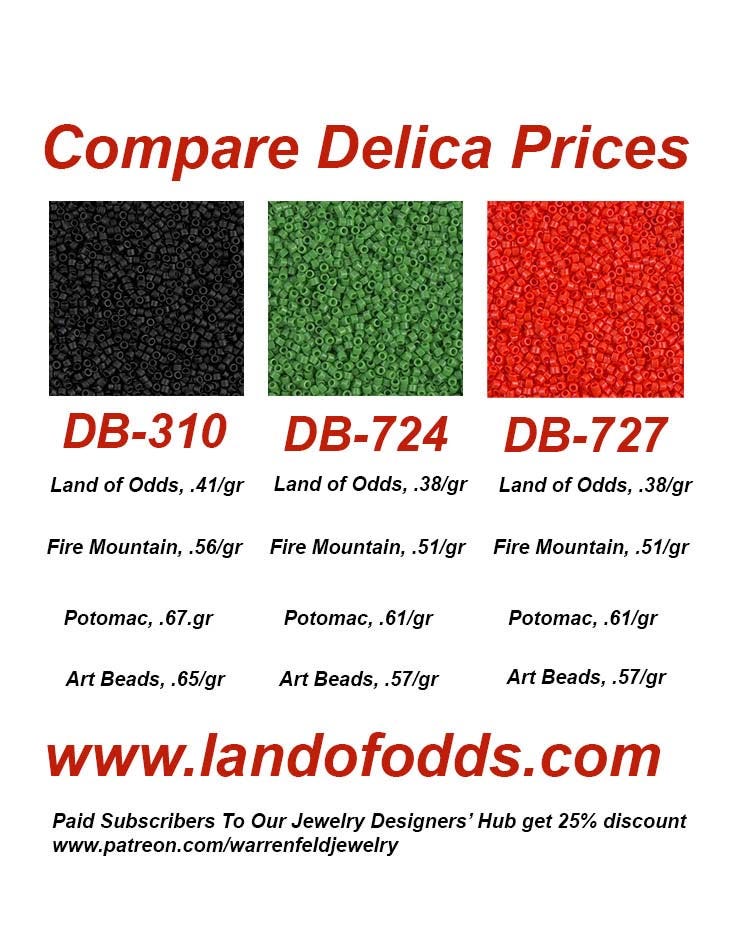
[Note: Paid Subscribers on Patreon Hub get 25% Off @Land of Odds]

www.landofodds.com

Hi everyone,

Some Updates and Things Happening.
(Please share this newsletter)

In this Issue:
1. Some highlights from the recent ORNAMENT magazine
2. Mastering the art of talking about your jewelry in public
3. Some advice about self promotion
4. Smithsonian Craft2Wear Show, September 26–28, 2025, APPLY NOW
5. What does it mean to foster a Growth Mindset?
6. Are the days of men’s jewelry worn solely as symbol of power and wealth gone for good?
7. Call for entries: Richmond CRAFT+DESIGN
8. Clever phrases/aphorisms/memes for artists of all kinds
Some articles you may have missed


1. Some highlights from the recent ORNAMENT magazine

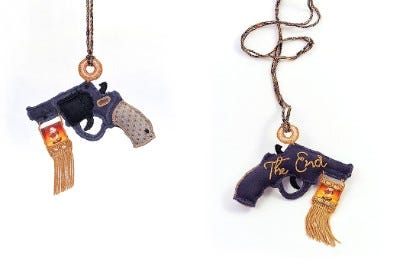
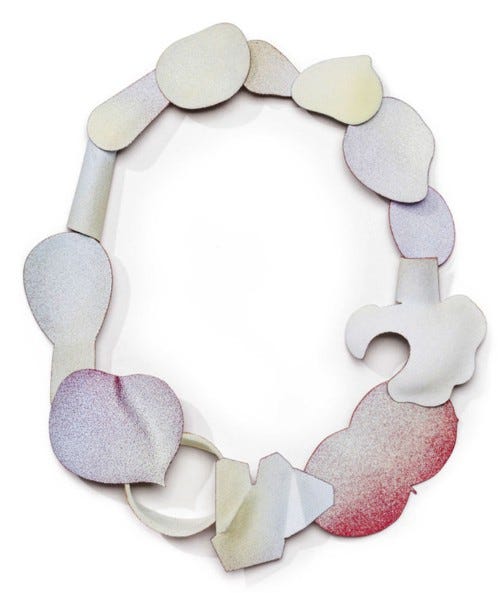
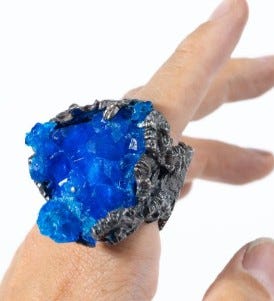
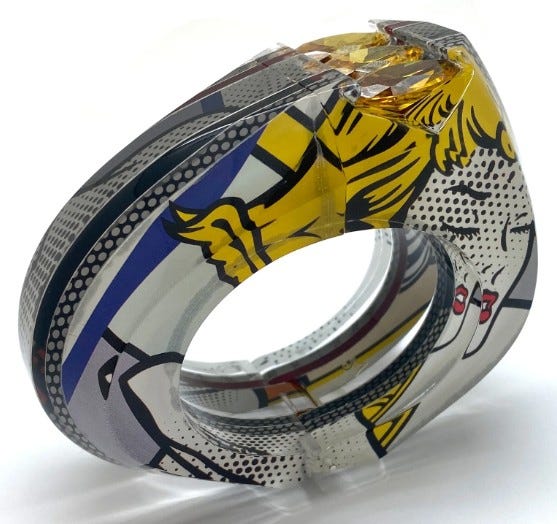
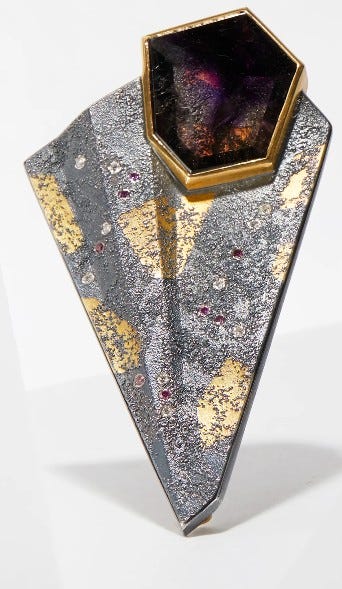
I received my most recent issue of one of my favorite magazines — ORNAMENT. Here are some highlights.

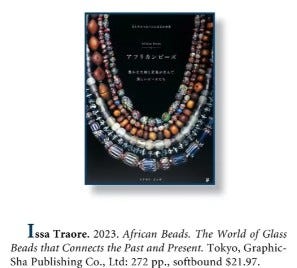
New books:
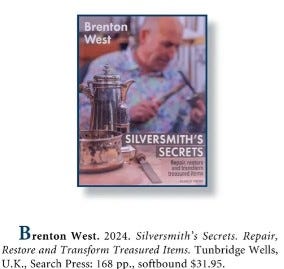
Articles:

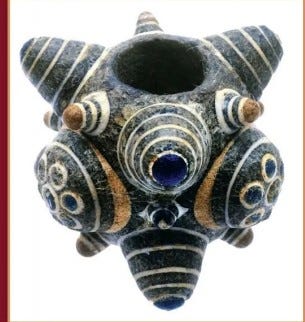
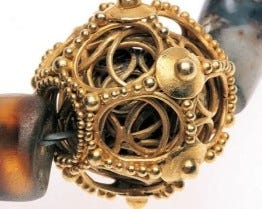
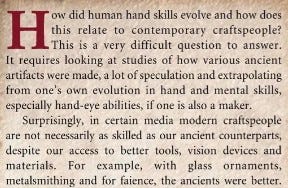
Ancient Craft Skills and the Contemporary Craftsperson
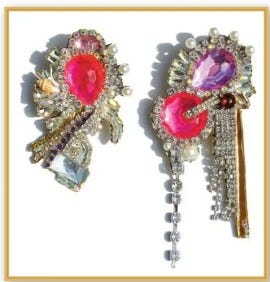
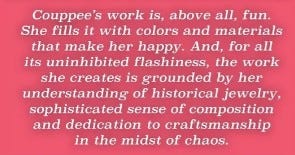
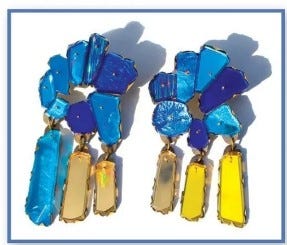
Nikki Couppee Showcase
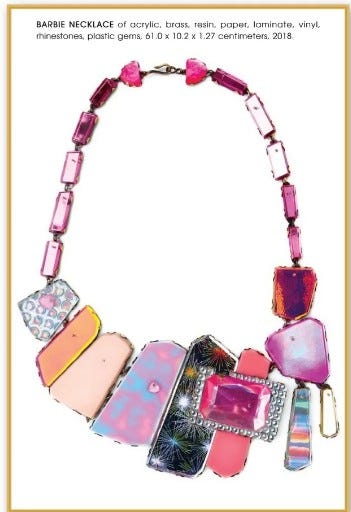
There are many other jewelry designers highlighted, as is New York City Jewelry Week.


2. Mastering the art of talking about your jewelry in public

Speaking about your work publicly can be both exciting and nerve-wracking. Here are some key tips to confidently and effectively share your work:

a. Know Your Story (Inspirations, getting started, techniques and materials)

b. Develop a Clear 30 second Elevator Pitch (engage in 30 seconds; focus on what makes your jewelry unique)

c. Speak with Passion and Confidence (enthusiasm is contagious; take your time and speak clearly, even if you are nervous)

d. Adapt to your Audience (what do you think your audience wants to hear? focus on process and inspiration; highlight your brand and craftsmanship; be conversational and authentic; tell stories and anecdotes and don’t lecture)

e. Prepare a Narrative (focus on crafting a story that encapsulates your artistic journey, the challenges, triumphs, pivotal moments, struggles, doubts you’ve overcome, mishaps, recurring themes in your work, how your themes relate to your personal story; a compelling narrative evokes emotion)

f. Show and Tell (be prepared to show and tell, whether you have your jewelry with you at the moment, or you share images or your portfolio on your cellphone)

g. Engage, Don’t Just Talk (be interactive; encourage questions; ask what people think, invite them to share their opinions or what they think; get their reactions to a piece of jewelry before you begin to talk about it; style preferences; be conversational; show genuine interest in their responses and respond with some detail to what they say; be patient with responses and allow your audience time to formulate and articulate their thoughts; resist the urge to fill silences too quickly; you can always start the conversation by talking about a question you get asked a lot)

h. Practice, Practice, Practice (outline your remarks or write it out like a script for a play; rehearse in front of a mirror or with a friend; record yourself and refine your delivery; I use a desktop/mobile app called LOOM, which has a free subscription option)

i. Be Ready For Questions (why use these, do this, not do this?; what do you like?; how long does this take?)

j. Provide Takeaways (at the end of your talk, summarize the key ‘learnings’; provide a brochure or postcard or business card that your audience can take with them, as a physical reminder of your work; provide an avenue for them to explore your work further or contact you for potential opportunities, purchases, collaborations)

k. End With A Call To Action (extend the conversation beyond the event; always end with a call to action: visit website; sign up for newsletter; take them on a tour)

l. Follow-Up (you want to build lasting relationships (invite audience to stay connected and give you their email addresses, other contact information; send a personalized thank you note or email shortly after event; repeat highlights of your talk, links to your work, information about where to find you next)

m. Reflect and Adapt (review the event/encounter; what resonated best/least; what feedback did the audience present; adjust previous steps accordingly)

n. Network and Connect (expand your professional circle and foster meaningful relationships with other jewelry designers as well as your client base; engage in one-on-one conversations with clients who seemed interested in your work; exchange contact information with fellow designers and any boutiques, galleries or other businesses that seemed interested in your work; discover new opportunities to keep you and your work visible)


3. I was reading this article about self promotion, and wanted to share this with you. Good stuff.

The Art of Self-Promotion: Building Identity and Crafting a Legacy

by Ivan Barnett, Klimt02, 3/17/2025
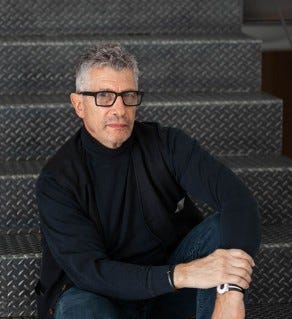
The Power of Being Yourself
Self-promotion often feels like an uncomfortable task for artists, but my first rule is simple: be yourself. There is no one way to self-promote, and the key is to find an approach that aligns with your personality. Authenticity is what draws people in — it’s not about forcing a persona but rather amplifying what makes you unique.

Let’s address social media, the most obvious self-promotional tool. Over the past half-decade, its impact has declined as big businesses have taken over. That doesn’t mean it’s useless — it just means you must use it wisely. Instead of treating social media as an advertising outlet, think of it as a storytelling tool. Show your process, your inspirations, and the personal side of your work. People connect with authenticity, not just finished products.

[His stated philosophy: Art is not something we create, it is who we are.]

Continue reading the article


4. 
Smithsonian Craft2Wear Show, September 26–28, 2025, APPLY NOW

The 2025 Smithsonian Craft2Wear Show is an exhibition and sale of wearable contemporary American craft (clothing, accessories and jewelry) held in Washington, DC at the beautiful Smithsonian Arts and Industries Building (AIB) on the National Mall. 

Electronic applications are due by Tuesday, April 15, 2025. A non-refundable fee of $30 must accompany each application.

APPLY NOW


5. What Does It Mean To Foster A Growth Mindset?
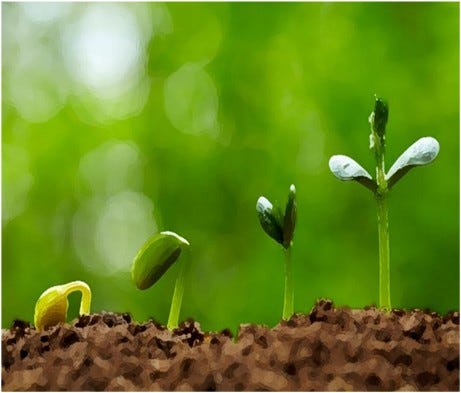
Failure is uncomfortable. Disconcerting. Too often, we do everything we can to keep ourselves out of situations where we might fail. We focus on what could go wrong, instead of what could go right. We think we don’t have the abilities to do the task. We get paralyzed. We do nothing. Or we keep repeating ourselves, producing the same-ole, same-ole, whether there is a continued market for these items, or not. Or we begin to visualize any risk as insurmountable, way bigger than it really is.

But allowing any fear of failure to become some kind of insurmountable wall works against us. If we are trying to make a go of it by selling our jewelry, we can’t build these kinds of walls. Successful business people and successful businesses need to foster a culture which promotes a growth mindset. Simply, a growth mindset is a culture where you have permission and encouragement and confidence to take risks.

Risks are OK because they bring rewards. Rewards allow the business to maintain itself, sustain itself, grow and expand.

Failures are OK, as well, as long as they become learning experiences.

Doubt and self-doubt are OK only if they are used to trigger reflection and new ideas to overcome them.

Not having the skills requisite for the moment is OK because we are all capable of continual learning.

Temporary setbacks are OK because you have had them before and overcame them.

Carol Dweck wrote the seminal book on growth mindsets called Mindset: The New Psychology of Success (2006), with a series of related books to follow. People have either a growth-mindset or a fixed-mindset.

Those with a growth-mindset believe their abilities are developed through continual learning and hard work. They are more willing to experiment and try new things, and see failures as opportunities rather than setbacks.

Those with a fixed-mindset believe that abilities are innate — you’re born with talents or not. They seek out opportunities where specific talents, rather than effort, leads to success. They prefer to repeat tasks and apply skills they are already familiar with.

Developing a growth mindset means such things as…

1. Understanding the power of “Not Yet”.

2. Setting learning and continual learning goals

3. Being deliberate and constantly challenging yourself

4. Asking for honest feedback and criticism

5. Always reflecting on and being very metacognitive about your thoughts and actions, successes and
 failures

6. Recognizing if you are stuck in a fixed-mindset, and acknowledging your weaknesses

7. Focusing on the process, and less-so on the result

8. Getting comfortable with self-affirmation, rather than needing the affirmation and approval of others


6. Are the days of men’s jewelry worn solely as symbol of power and wealth gone for good?

A look at men’s jewellery at GemGenève

The rebirth of jewellery for men since the 2010s is actually due to another factor altogether: men have changed the way they relate to jewels and jewellery in general, argues GemGenève co-founder Ronny Totah. Today, men account for up to 30% of jewellery purchases from certain collections by brands and independent craftsmen and women.
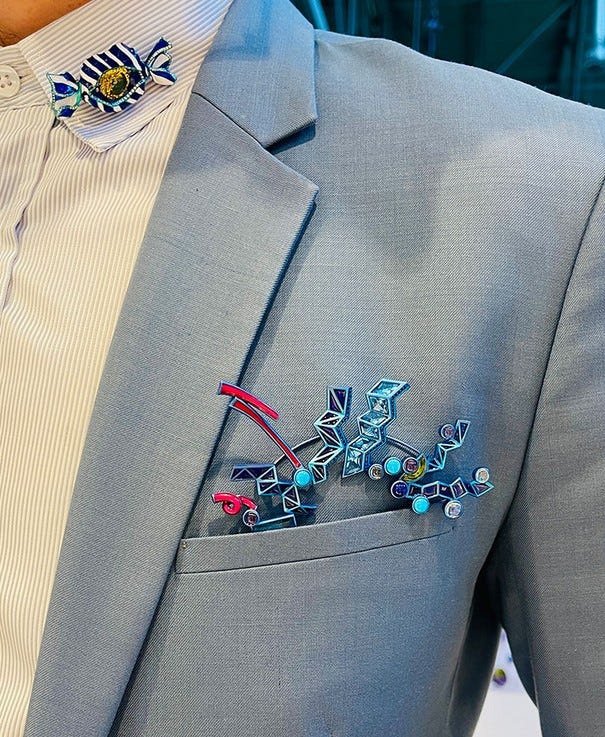
View other men’s jewelry and Read responses to this question here.
https://klimt02.net/forum/articles/look-mens-jewellery-gemgeneve


7. Call for entries: Richmond CRAFT+DESIGN
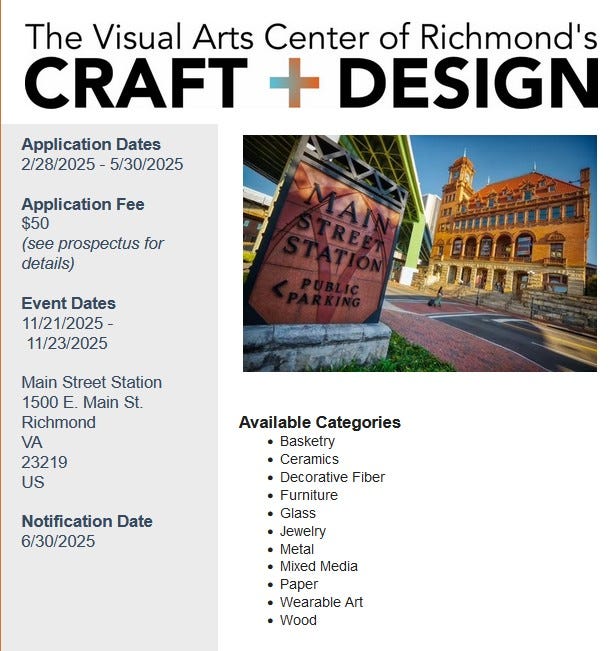
Begin application process here
https://juriedartservices.net/events/2188


8. Clever phrases/aphorisms/memes for artists of all kinds

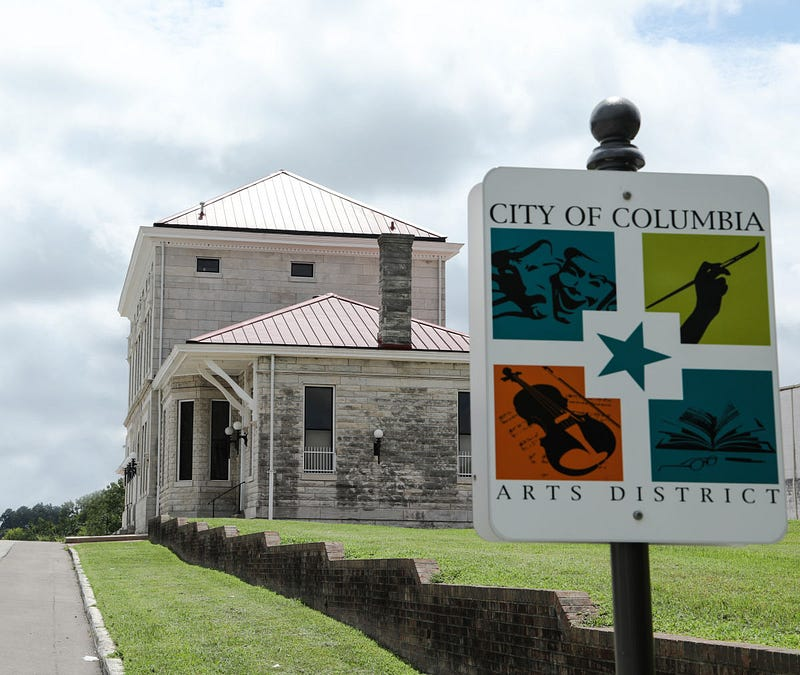
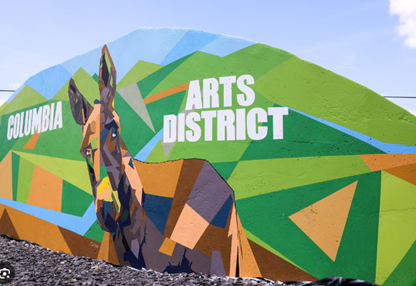
I am a member of the Columbia Arts Council. For an event, we are going to pass out stickers. I generated a sampling of sayings that could go on the stickers, and I’m sharing them with you. Thought you’d get a chuckle out of these.

General Creativity & Art

  1. Create like nobody’s watching.
  2. Messy hands, brilliant mind.
  3. Art: cheaper than therapy.
  4. Make art, not excuses.
  5. Doubt kills more art than failure ever will.
  6. Every artist was first an amateur.
  7. Creativity is intelligence having fun.
  8. I speak fluent paint splatter.
  9. Art is my love language.
  10. Reality is overrated — paint me another one.
  11. The world is my canvas, and I’m out of control.
  12. Perfectly imperfect — just like my art.
  13. Stay weird, stay creative.
  14. Warning: Contains excessive imagination.
  15. Creativity takes courage — and a lot of snacks.

Makers & Hands-On Artists

  1. Handmade with sarcasm and love.
  2. Makers gonna make.
  3. I make things. What’s your superpower?
  4. Handcrafted with reckless precision.
  5. This is what ‘made with love’ looks like.
  6. I turn coffee into art.
  7. Saw dust is my glitter.
  8. I make because I must.
  9. Perfection is boring. Make something weird.
  10. Measure twice, cut once, cry anyway.
  11. My blood type is glue and glitter.
  12. I can’t. I have a project.
  13. Made by hand, heart, and a little bit of chaos.
  14. Mistakes are just creative detours.
  15. Cut. Sew. Cry. Repeat.

Painting & Drawing

  1. Watercolor outside the lines.
  2. Oil paint runs in my veins.
  3. Sketch today, masterpiece tomorrow.
  4. More paint, less perfection.
  5. I draw, therefore I am.
  6. Happy little accidents happen daily.
  7. Smudges are just love marks from my art.
  8. Inking my way through life.
  9. My brush dances to its own tune.
  10. If you see me clean, I’m out of paint.

Jewelry Making & Beading

  1. Bead it like you mean it.
  2. I like big beads and I cannot lie.
  3. Stringing together happiness, one bead at a time.
  4. Jewelry is art you can wear.
  5. Beading: because therapy is expensive.
  6. If lost, check the bead store.
  7. Some collect memories; I collect beads.
  8. Beading is my cardio.
  9. Life is too short for boring jewelry.
  10. More beads, less stress.

Creative Process & Inspiration

  1. Inspiration hits at inconvenient times.
  2. Chaos is just creativity’s warm-up.
  3. Creativity is a work in progress.
  4. Start before you’re ready.
  5. Don’t wait for inspiration — just start.
  6. Creativity thrives in the mess.
  7. Done is better than perfect.
  8. There’s no such thing as too many ideas.
  9. Creativity: where the fun begins and logic ends.
  10. You can’t rush art — but you can procrastinate it.

Art & Business

  1. Starving artist? No, thriving artist.
  2. Yes, it’s handmade. No, it’s not cheaper.
  3. Support artists — buy art, not mass production.
  4. Art is work. Pay accordingly.
  5. Artists don’t work for exposure.
  6. Yes, I make art. No, I won’t do it for free.
  7. DIY: Because hiring professionals costs money.
  8. Just because I enjoy it doesn’t mean I’ll do it for free.
  9. I create. You buy. Everyone’s happy.
  10. Respect the artist. Respect the craft.

Music & Performing Arts

  1. Life’s better with a soundtrack.
  2. Dancers don’t sweat, they sparkle.
  3. Sing like you mean it.
  4. Break a leg — but not my instruments.
  5. Music is what feelings sound like.
  6. The stage is my happy place.
  7. Dance first, think later.
  8. Creativity has no volume control.
  9. When in doubt, just improvise.
  10. Make music, not noise.

Writing & Literature

  1. Write your own story.
  2. Plot twist: I need more coffee.
  3. My brain is 90% plot ideas and 10% snacks.
  4. Poetic soul, chaotic mind.
  5. Editing is just rewriting with regret.
  6. Too many tabs open — some are story ideas.
  7. I write. What’s your superpower?
  8. Procrastinating? No, I’m world-building.
  9. My characters made me do it.
  10. Caution: Writer at work — approach with snacks.

Quirky & Funny

  1. Oops, I arted.
  2. Eat. Sleep. Create. Repeat.
  3. More glue, less stress.
  4. Why fit in when you can stand out?
  5. I make, therefore I am.
  6. Art teachers gave up on me; now they buy my work.
  7. Creativity: The only mess that’s worth it.
  8. Not all who wander are lost… some are just looking for inspiration.
  9. This shirt contains 100% recycled creative energy.
  10. The best ideas come at 2 AM and disappear by 7 AM.

UPCOMING WORKSHOPS by Warren Feld

Sat, 4/12, 2–3, LET’S MAKE EARRINGS, Maury County Library, 211 W 8th St, Columbia, TN
Register: Call (931) 375–6502

Sat, 4/26, 1–4, PEARL KNOTTING, Hoamsy, Nashville, Fait La Force Brewery,1414 3rd Ave S, Ste 101, Nashville
Register: https://www.hoamsy.com/experiences/detail/z1IFcpOwTimeKRYk1akv

Sat, 6/7, 1–4, WIRE WRAPPED CABOCHON PENDANT, Hoamsy, Nashville, Nashville, Fait La Force Brewery,1414 3rd Ave S, Ste 101, Nashville
Register: https://www.hoamsy.com/experiences/detail/6azTthSZL5h76jCqKjNp
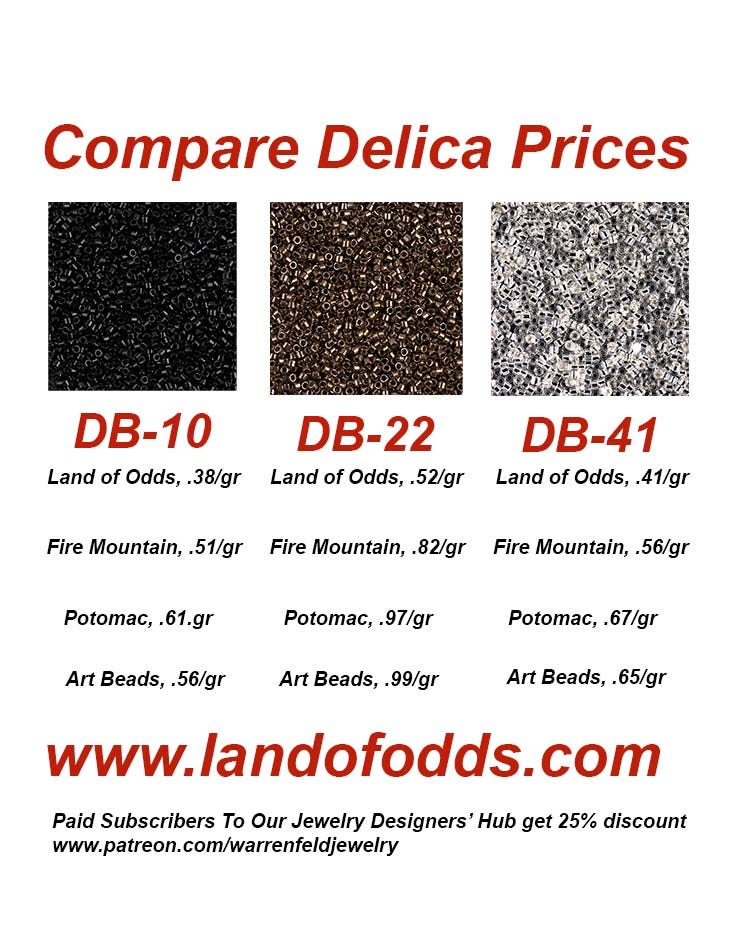
SOME POSTS YOU MAY HAVE MISSED:

TYPES OF JEWELRY MAKING and What You Need To Learn

EDUCATIONAL RUBRIC: Learning To Think Like A Jewelry Designer

THE JEWELRY DESIGN PHILOSOPHY: Not Art, Not Craft, But Design!


WARREN FELD JEWELRY (www.warrenfeldjewelry.com)
Custom Design, Workshops, Video Tutorials, Webinars, Coaching, Kits, Group Activities, Repairs
~~~~~~~~~~~~~~~~~~~~~~~
Join our community of jewelry designers
on my Patreon hub
Be part of a community of jewelry designers who recognize that we have a different way of thinking and doing than other types of crafters or artists.
One free downloadable Mini-Lesson of your choice for all new members!
~~~~~~~~~~~~~~~~~~~~~~~

Follow me on social media: facebook, instagram

shop.warrenfeldjewelry.com
Where you can buy:
Seed Beads and Delicas, Kits, Books, Finished Jewelry

school.warrenfeldjewelry.com
Take advantage of our video tutorials, mini-lessons, projects and our coaching services:

Read articles about jewelry design and about the business of craft:
Articles on Medium.com 

Books (in kindle, ebook or print formats) by Warren Feld, purchase from Amazon.com or BarnesAndNoble.com:

Kits by Warren Feld

Ask about my COACHING services

Arrange a GROUP ACTIVITY

Add your email address to my Warren Feld Jewelry emailing list here.
Thanks for being here. I look forward to sharing more resources, tips,
sources of inspiration and insights with you.

Join A Community Of Jewelry Designers 
On My Patreon Hub

Posted in architecture, Art or Craft?, art theory, bead stringing, bead weaving, beads, beadwork, business of craft, color, Contests, craft, craft shows, creativity, cruises, design management, design theory, design thinking, enrichment travel, Entrepreneurship, handmade jewelry, jewelry, jewelry collecting, jewelry design, jewelry making, Learn To Bead, literacy, pearl knotting, professional development, Resources, Stitch 'n Bitch, Travel Opportunities, wire and metal, Workshops, Classes, Exhibits | Tagged: , , , , | Leave a Comment »

FLUENCY IN JEWELRY DESIGN: The 5 Essential Questions

Posted by learntobead on March 24, 2025

Abstract:

People have different motivations and ambitions when making jewelry. These can be as simple as an avocation or hobby, or more involved as a business or career. Jewelry making is an investment in time and materials. It requires, not only strong creativity skills, but also persistence and perseverance to take a project from inspiration to aspiration to implementation. A lot of the success in this pursuit comes down to an ability to make and follow through on many artistic and design decisions. Developing this ability — a fluency, flexibility and originality in design — means that the designer has become empowered to answer these 5 essential questions: (1) Is jewelry making a craft, an art or design? (2) How do you think creatively? (3) How do you leverage the strengths of various materials and techniques, and minimize weaknesses? (4) How do the choices you make in any one jewelry design evoke emotions and resonate? and, (5) How do you know your piece is finished and successful?

5 Essential Questions Every Jewelry Designer
Should Have An Answer For

Interested in trying your hand at jewelry design? 

Before you begin, consider the following 5 questions I pose for you…

1. Is what you do Art, Craft or Design?
2. How do you decide what you want to create?
3. What materials (or techniques) work well together, and which do not?
4. What things do you do so that your finished piece evokes an emotional
 response?
5. How do you know when your piece is done?

People have different motivations and ambitions when making jewelry. These can be as simple as an avocation or hobby, or more involved as a business or career. Jewelry making is an investment in time and materials. It requires, not only strong creativity skills, but also persistence and perseverance to take a project from inspiration to aspiration to implementation. It means understanding that jewelry can only be judged as finished and successful as the piece is worn. Jewelry design is more than the application of a set of techniques; it is a mind-set, as well. It is a way of thinking like a designer.

A lot of the achievement and accomplishment in this pursuit of jewelry design comes down to an ability to make and follow through on many artistic and design decisions. Some have to do with managing a process, which can take an extended period of time. It also comes down to being fluent, flexible and original in your thinking through design. The greater your disciplinary literacy, the more empowered and confident you become in your design work.

Susan is one example of what happens when uncertainty — that paralysis or deer-in-the-headlights feeling that we so often face — sets in. Susan felt very unsure of herself. And unsure of her jewelry. Would people like it? Was the color mix appropriate? Was the construction secure? Was the price smart and fair? She allowed all this uncertainty to affect her design work — she had difficulty finishing pieces she was working on, starting new projects, and getting her work out there.

Like many of my jewelry design and beadwork students, Susan needed to be fluent as a designer. With fluency comes empowerment, confidence and success.

_______________________________________________________

Thanks for being here. I look forward to sharing more resources, tips,
sources of inspiration and insights with you.

WarrenFeldJewelry.com
Shop.warrenfeldjewelry.com
School.warrenfeldjewelry.com
Coaching by Warren Feld

Add your name to my email list.

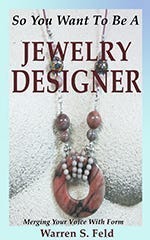
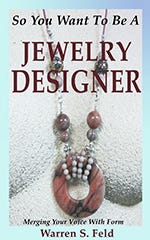
SO YOU WANT TO BE A JEWELRY DESIGNER
Merging Your Voice With Form

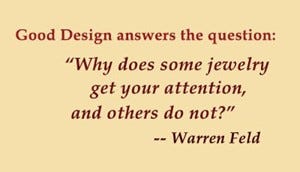
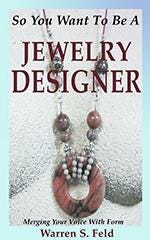
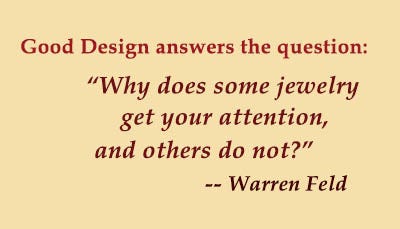
So You Want To Be A Jewelry Designer reinterprets how to apply techniques and modify art theories from the Jewelry Designer’s perspective. To go beyond craft, the jewelry designer needs to become literate in this discipline called Jewelry Design. Literacy means understanding how to answer the question: Why do some pieces of jewelry draw your attention, and others do not? How to develop the authentic, creative self, someone who is fluent, flexible and original. How to gain the necessary design skills and be able to apply them, whether the situation is familiar or not.

588pp, many images and diagrams Ebook , Kindle or Print formats

The Jewelry Journey Podcast
“Building Jewelry That Works: Why Jewelry Design Is Like Architecture”
Podcast, Part 1
Podcast, Part 2

Posted in architecture, Art or Craft?, art theory, bead stringing, bead weaving, beads, beadwork, business of craft, color, Contests, craft, craft shows, creativity, cruises, design management, design theory, design thinking, enrichment travel, Entrepreneurship, handmade jewelry, jewelry, jewelry collecting, jewelry design, jewelry making, Learn To Bead, literacy, pearl knotting, professional development, Resources, Stitch 'n Bitch, Travel Opportunities, wire and metal, Workshops, Classes, Exhibits | Tagged: , , , , | Leave a Comment »

CONQUERING THE CREATIVE MARKETPLACE: Strategic Management

Posted by learntobead on March 21, 2025

STRATEGIC MANAGEMENT: 
How Do You Start and Run A Business
Selling Hand Made Products?

Between Commerce and Art

Many people learn beadwork and jewelry-making in order to sell the pieces they make. In today’s world, people who sell their pieces must become savvy in both regular retail, as well as internet retail. This does not have to be too complex. Nor too overwhelming. Too impossible. Too boring. There are a lot of tensions here between commerce and art. Production and creativity. They parallel the tensions between the creative act and having to introduce your jewelry publicly. But all are manageable.

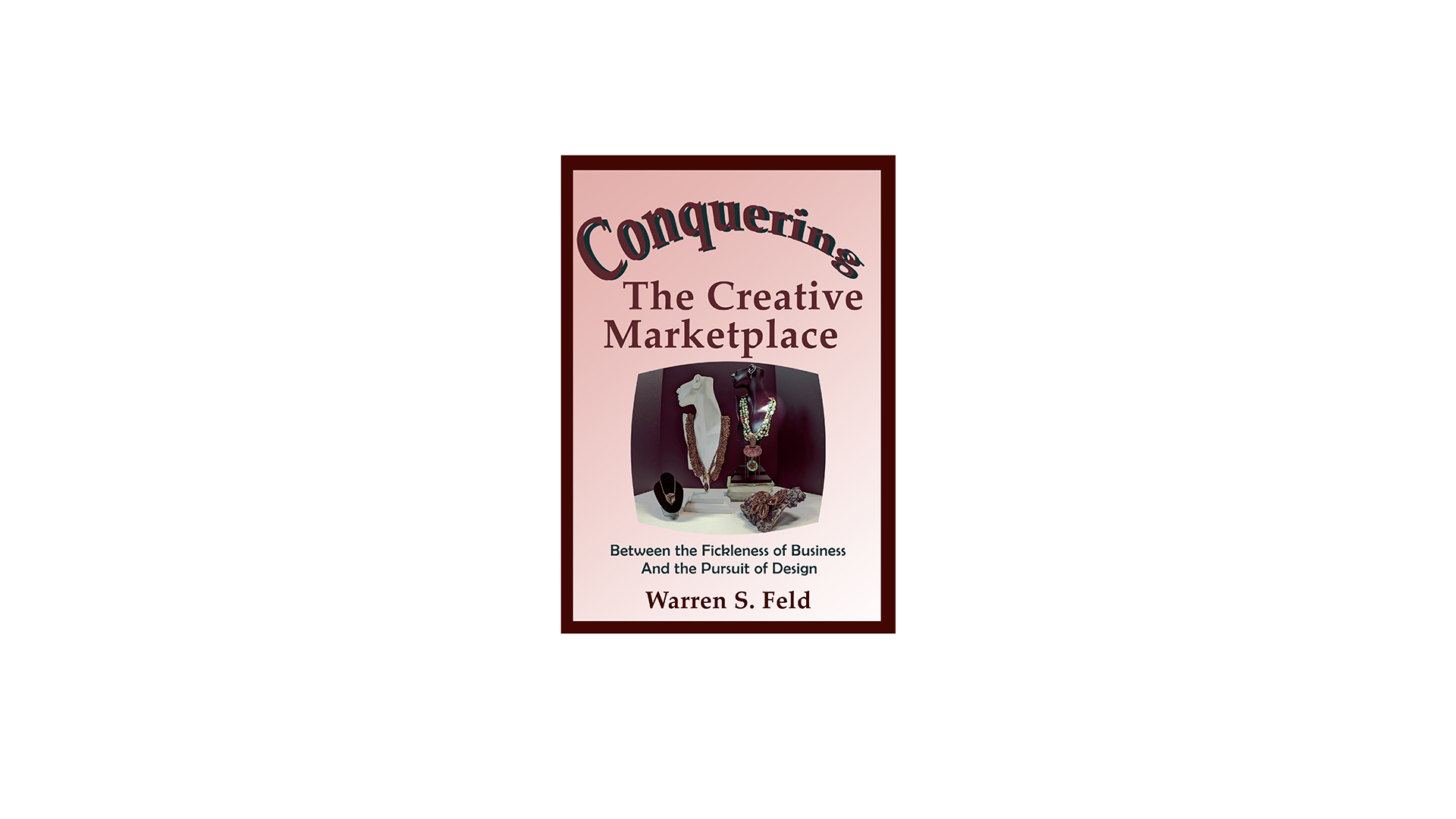
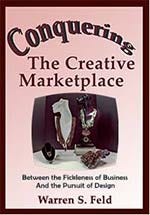
Conquering The Creative Marketplace is a comprehensive guide for you — someone who wants to start and run a business selling handmade products you love to make. The chapters in this book focus on developing and implementing your road map. This map helps show you how to better understand and relate to the creative marketplace, eventually earning money from your jewelry designs (or other art or craft projects). I go into detail about the things you have to do to start and run a business selling handmade products. I talk about the things you will want to do to manage, evolve and expand your business. These have to do with general accounting and setting up a general ledger. They include things like inventory management, pricing formulas, marketing and branding strategies. Also important is the protection of your designs — your intellectual property. I also discuss in detail key concepts like risk, return on investment, legitimacy, effectiveness, efficiency, consumption, influence, persuasion, coherence and contagion.

Based both on the creation and development of my own jewelry design business, as well as teaching countless students over the past 38+ years about business and craft, I want to address what should be some of your key concerns and uncertainties. I want to share with you the kinds of things (specifically, a business mindset and confidence) it takes to start your own jewelry business, run it, and lead it to a level of success you feel is right for you. Right for you will mean different things to different designers, from a hobbyist selling some pieces to a full-fledged operation. Whatever, your goals and ambitions, you will need to follow a basic road map. I want to help you plan your road map.

I explore answers to such questions as: How does someone get started selling their pieces? What business fundamentals need to be brought to the fore? How do you measure risk and return on investment? How does the creative person develop and maintain a passion for business? To what extent should business decisions affect artistic choices? What similar traits do successful jewelry designers share with those in business? How do you protect your intellectual property? What is your competitive advantage?

The next few chapters are descriptions of the kinds of things it takes for successfully integrating commerce with art. There are literally many full books written on each topic and subtopic, which you can easily access in bookstores or online. This book should be considered a comprehensive introduction to these topics. While all the information in this book is pertinent and necessary for you, it is not a substitute for talking with an accountant and business lawyer familiar with you and the locality, state/province and country you are doing business in.

The advice in these sections is useful for any jewelry designer who wants to sell their pieces. It is useful for the jewelry designer who occasionally wants to sell a few pieces. It is useful for the jewelry designer who wants to supplement their income. It is useful, as well, for the jewelry designer who wants to develop a fully, financially secure jewelry design business.

These major topics covered in this book include,

1. Integrating Business With Design (begin with chapter 2)

2. Disciplinary Literacy In the Creative Marketplace (begin with chapter 6)

3. Getting Started (begin with chapter 7)

4. Financial Management (begin with chapter 18)

5. Product Development, Creating Your Line, and Pricing (begin with chapter 31)

6. Marketing, Promotion, Branding (begin with chapter 42)

7. Selling (begin with chapter 54)

8. Resiliency (begin with chapter 81)

9. Professional Responsibilities, including Developing Your Portfolio (begin with chapter 82)

For more articles about Conquering The Creative Marketplace, click over to our Jewelry Designers’ Hub

_______________________________________________________

Thanks for being here. I look forward to sharing more resources, tips,
sources of inspiration and insights with you.

WarrenFeldJewelry.com
Shop.warrenfeldjewelry.com
School.warrenfeldjewelry.com
Coaching by Warren Feld

Add your name to my email list.

Conquering The Creative Marketplace

Many people learn beadwork and jewelry-making in order to sell the pieces they make. Based both on the creation and development of my own jewelry design business, as well as teaching countless students over the past 35+ years about business and craft, I want to address what should be some of your key concerns and uncertainties. I want to share with you the kinds of things (specifically, a business mindset and confidence) it takes to start your own jewelry business, run it, anticipate risks and rewards, and lead it to a level of success you feel is right for you. I want to help you plan your road map.

I will explore answers to such questions as: How does someone get started marketing and selling their pieces? What business fundamentals need to be brought to the fore? How do you measure risk and return on investment? How does the creative person develop and maintain a passion for business? To what extent should business decisions affect artistic choices? What similar traits to successful jewelry designers do those in business share? How do you protect your intellectual property?

The major topics covered include,

1. Integrating Business With Design

2. Getting Started

3. Financial Management

4. Product Development, Creating Your Line, and Pricing

5. Marketing, Promotion, Branding

6. Selling

7. Professional Responsibilities and Strategic Planning

8. Professional Responsibilities and Gallery / Boutique Representation

9. Professional Responsibilities and Creating Your Necessary Written Documents

548pp, many images and diagrams
Kindle or Ebook or Print

Posted in architecture, Art or Craft?, art theory, bead stringing, bead weaving, beads, beadwork, business of craft, color, Contests, craft, craft shows, creativity, cruises, design management, design theory, design thinking, enrichment travel, Entrepreneurship, handmade jewelry, jewelry, jewelry collecting, jewelry design, jewelry making, Learn To Bead, literacy, pearl knotting, professional development, Resources, Stitch 'n Bitch, Travel Opportunities, wire and metal, Workshops, Classes, Exhibits | Tagged: , , , , | Leave a Comment »

FLUENCY IN JEWELRY DESIGN: Advice For The Newly Emerging Jewelry Designer

Posted by learntobead on March 17, 2025

Some Bottom-Line Advice For The Newly Emerging Jewelry Designer

Always keep working and working hard. Set up a routine, and do at least one thing every day.

Find a comfortable place to work in your home or apartment. If at all possible, find separate spaces for creative work, business stuff, and reflection.

Develop strategies for organizing your projects, your supplies and your tools, and for keeping things generally organized over time. But don’t overdue the organizing thing. A little chaos can be OK, and even, sometimes, trigger new ideas.

Give yourself permission to play, experiment, go down many paths. Everything you work on doesn’t have to meet the criterion of perfection, be cool, or become the next Rembrandt. A key part of the learning process is trial and error, hypothesis, test, and conclusion. This helps you develop fix-it strategies so that you can overcome unfamiliar or problematic situations, enhancing your skills as a designer.

Don’t let self-doubt and any sense of impending failure take over you, and paralyze you. Designer’s block, while it may happen occasionally, should be temporary. Jewelry projects usually evolve, and involve some give and take, change and rearrangement. Often the time to complete a project can be lengthy, and you have to maintain your interest and inspiration over this extended time period.

Don’t get stuck in a rut. Try new materials. Try new colors. Try new designs. Try new styles. Try to add variation, new arrangements, smart embellishments. Learn new techniques and technologies.

_______________________________________________________

Thanks for being here. I look forward to sharing more resources, tips,
sources of inspiration and insights with you.

WarrenFeldJewelry.com
Shop.warrenfeldjewelry.com
School.warrenfeldjewelry.com
Coaching by Warren Feld

Add your name to my email list.

SO YOU WANT TO BE A JEWELRY DESIGNER
Merging Your Voice With Form

So You Want To Be A Jewelry Designer reinterprets how to apply techniques and modify art theories from the Jewelry Designer’s perspective. To go beyond craft, the jewelry designer needs to become literate in this discipline called Jewelry Design. Literacy means understanding how to answer the question: Why do some pieces of jewelry draw your attention, and others do not? How to develop the authentic, creative self, someone who is fluent, flexible and original. How to gain the necessary design skills and be able to apply them, whether the situation is familiar or not.

588pp, many images and diagrams Ebook , Kindle or Print formats

The Jewelry Journey Podcast
“Building Jewelry That Works: Why Jewelry Design Is Like Architecture”
Podcast, Part 1
Podcast, Part 2

Posted in architecture, Art or Craft?, art theory, bead stringing, bead weaving, beads, beadwork, business of craft, color, Contests, craft, craft shows, creativity, cruises, design management, design theory, design thinking, enrichment travel, Entrepreneurship, handmade jewelry, jewelry, jewelry collecting, jewelry design, jewelry making, Learn To Bead, literacy, pearl knotting, professional development, Resources, Stitch 'n Bitch, Travel Opportunities, wire and metal, Workshops, Classes, Exhibits | Tagged: , , , , | Leave a Comment »

FLUENCY IN JEWELRY DESIGN: The Challenging Moments

Posted by learntobead on March 11, 2025

The Challenging Moments

Developing yourself as a jewelry designer has several challenging moments. Learning. Recognizing. Getting Inspired. Creating. Organizing. Constructing. Managing. Presenting. Marketing. Selling. You want to maintain high expectations and goals for yourself, and see these all these challenging moments through.

Some challenging moments include the following:

1. Learning your craft and continually growing and developing within your profession

2. Recognizing how jewelry design goes beyond basic mechanics and aesthetics, thus, differs from craft and differs from art, and then learning and working accordingly.

3. Getting Inspired

4. Translating Inspiration into a design

5. Implementing that design both artistically and architecturally by finding that balance between beauty (must look good) and functionality (must wear well)

6. Organizing your work space and all your stuff

7. Managing a design process

8. Introducing your pieces publicly, and anticipating how others (wearer, viewer, seller, marketer, exhibitor, collector, teacher, student, for example) will desire your pieces, as well as judge your pieces as finished (parsimonious) and successful (resonant)

9. Infusing your pieces with a sense of yourself, your values, your aesthetics, your originality

10. Developing a fluency and flexibility when working with new materials, new techniques and technologies, and new design expectations, including well-established ideas about fix-it strategies when confronted with unfamiliar situations

11. Differentiating your jewelry and yourself from other jewelry designers

12. If selling your pieces, then linking up to and connecting with those who will market and buy your pieces

_______________________________________________________

Thanks for being here. I look forward to sharing more resources, tips,
sources of inspiration and insights with you.

WarrenFeldJewelry.com
Shop.warrenfeldjewelry.com
School.warrenfeldjewelry.com
Coaching by Warren Feld

Add your name to my email list.

SO YOU WANT TO BE A JEWELRY DESIGNER
Merging Your Voice With Form

So You Want To Be A Jewelry Designer reinterprets how to apply techniques and modify art theories from the Jewelry Designer’s perspective. To go beyond craft, the jewelry designer needs to become literate in this discipline called Jewelry Design. Literacy means understanding how to answer the question: Why do some pieces of jewelry draw your attention, and others do not? How to develop the authentic, creative self, someone who is fluent, flexible and original. How to gain the necessary design skills and be able to apply them, whether the situation is familiar or not.

588pp, many images and diagrams Ebook , Kindle or Print formats

The Jewelry Journey Podcast
“Building Jewelry That Works: Why Jewelry Design Is Like Architecture”
Podcast, Part 1
Podcast, Part 2

Posted in architecture, Art or Craft?, art theory, bead stringing, bead weaving, beads, beadwork, business of craft, color, Contests, craft, craft shows, creativity, cruises, design management, design theory, design thinking, enrichment travel, Entrepreneurship, handmade jewelry, jewelry, jewelry collecting, jewelry design, jewelry making, Learn To Bead, literacy, pearl knotting, professional development, Resources, Stitch 'n Bitch, Travel Opportunities, wire and metal, Workshops, Classes, Exhibits | Tagged: , , , , | Leave a Comment »

THE JEWELERS’ PALETTE: 3/15/2025

Posted by learntobead on March 10, 2025


From Warren and
Land of Odds
Join my community of jewelry designers on my Patreon hub
March 15, 2025
Sign up for a Free or Paid Subscription

[Note: Paid Subscribers on Patreon Hub get 25% Off @Land of Odds]

www.landofodds.com

Hi everyone,

Some Updates and Things Happening.
(Please share this newsletter)

In this Issue:
1. HANDWORK & DESIGN 2025 in Munich this March — take a look!
2. I recently was a guest on a webinar sponsored by the Bead Society of Northern California
3. Clamshells fascinate a Greek jeweler
4. Aging new beads to match old beads
5. To keep your artist statement evolving as you evolve
6. Art Blend — a community of creatives in Columbia, TN
7. Find a great source of bead weaving tutorials from Jill Wiseman
8. Some jewelry galleries of note — must sees on your travels
Some articles you may have missed
Featured


1. HANDWORK & DESIGN 2025 in Munich this March — take a look!

HANDWORK & DESIGN is an annual international trade fair for crafts of all kinds. It highlights new techniques, award winning designs and new designers.

At the event, masterful technical execution meets a pronounced awareness of good design. Individually, and sustainably produced in local small businesses, the artisanal products incorporate the latest ideas and innovations. Here you can discover things that are not found in any catalogue.

Humans are makers: we have always designed our environment according to our own needs and it is never solely about functionality, it is always equally about beautyorg. The focus of «Handwerk & Design» is entirely on this creative aspect of craftsmanship. Once a year, creators from Germany and abroad showcase their art here.
Metal-free unique furniture that relies entirely on centuries-old wood joints, handmade lamps made of glass, fountain pens made of wood, headdresses made of straw or “Suiddys” made of high-quality woollen fabrics, a mixture of jacket and hoody for men: «Handwerk & Design» offers 11,000 square metres full of perfection in craftsmanship and design!

Jewellery is traditionally particularly well represented at «Handwerk & Design». Whether unusual one-off pieces for everyday wear, jewellery made of precious metals and precious stones, or artistic jewellery that tells stories. From personal memories to political statements: there is nothing that cannot be expressed with jewellery. Traditional and contemporary techniques and materials go hand in hand. Unk Kraus makes colourful brooches out of corn starch, Christine Demmel creates delicate flowers out of hand-painted parchment, and Christoph Straube’s illusionist enamel painting is so deceptively real that you can hardly believe your eyes.

Here are some websites to peruse as you explore all the various offerings at this trade fair:
https://klimt02.net/institutions/organizations/handwerk-design
Handwork & Design website
Contemporary jewelry
Schmuck Munich 2025
Instagram


2. I recently was a guest on a webinar sponsored by the Bead Society of Northern California

Here’s the link to the recording.
[Had a technical glitch right at the beginning, but soon corrected.]

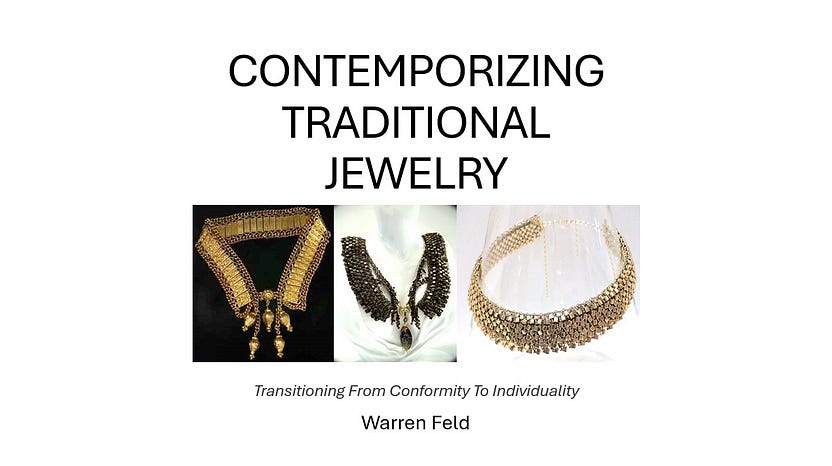
TOPIC: Contemporizing Traditional Jewelry

GOALS:
Understanding the differences between traditional jewelry and contemporary jewelry.
Exploring why people feel connected to traditional jewelry.
Comparing a traditional Etruscan necklace design with my attempts to contemporize it.
Discussing why developing skills for “contemporizing” is important for jewelry designers.

Guiding Questions
(1) How do you marry personal artistic intent with traditional ideas, keeping the jewelry design essential and alive for today’s audience?
(2) Why do so many people draw inspiration from traditional pieces?
(3) How is contemporary jewelry different from traditional jewelry?
(4) To what degree should the contemporary piece reference the traditional piece which inspired it?
(5) If the wearer does not feel a connection between the jewelry and society, culture or history, can the piece of jewelry still be successful?
(6) What would be considered “good” contemporary jewelry design, and does this conflict with ideas and goals for contemporizing traditional jewelry?

ABSTRACT:
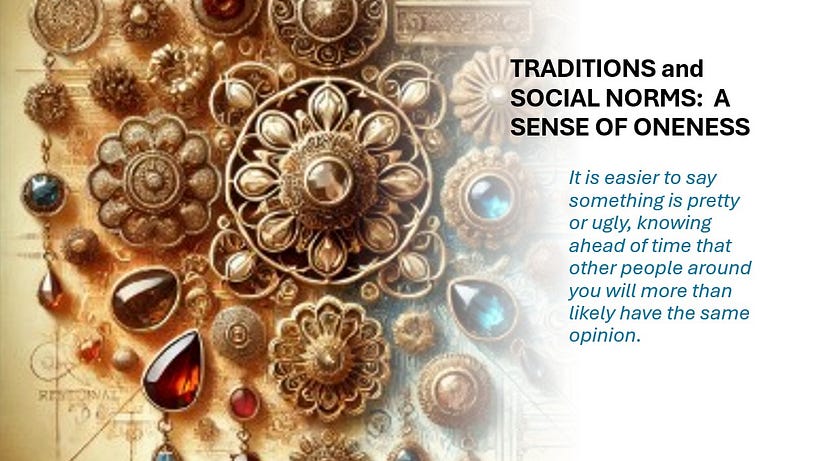
Many people, jewelry designers among them, draw inspirations from traditional jewelry styles. One thing they seek to create through jewelry is a feeling of connectedness, coupled with a desire to feel connected. Traditional jewelry provides clear clues about what society and culture consider appropriate, good and even necessary ideas about connectedness.
 
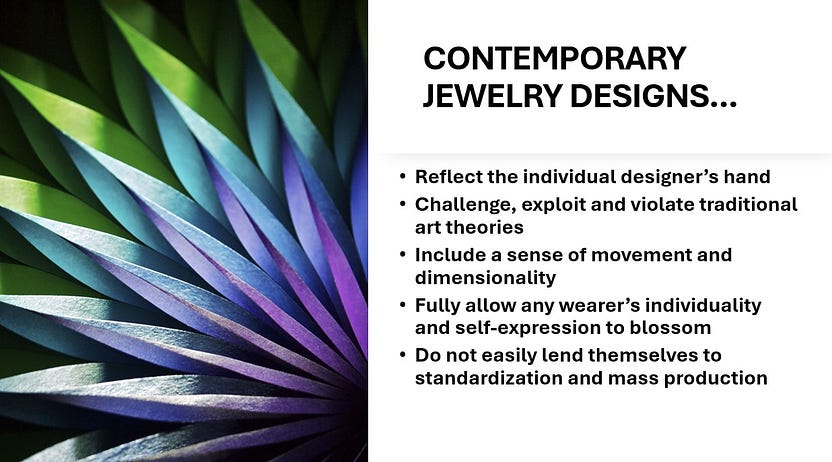
But the core issue for jewelry designers today is how to achieve jewelry design which is more contemporary than merely a replay or reworking of traditional preferences and styles, that is, how to contemporize it. How to construct ideas into objects, challenge history and culture, produce that which typically ignores (or even is in opposition to) socio-cultural norms, standardization and monotony.
 
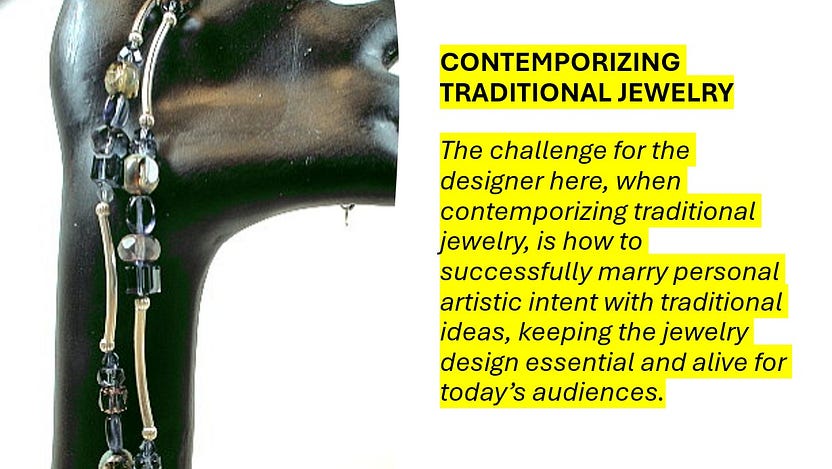
Contemporizing Traditional Jewelry has to do with how designers take these particular traditional forms and techniques, and by substituting their personal values for traditional socio-cultural ones, bring into being jewelry more connected and relevant to today’s sense of fashion, style, individuality and personal expression. The challenge for the designer, when contemporizing traditional jewelry, is how to marry personal artistic intent with traditional ideas, keeping jewelry design essential and alive for today’s audience. What helps here is understanding contemporary jewelry as a way of thinking through the design process, rather than something representative of a particular look.

Here’s the link to the recording.
[Had a technical glitch right at the beginning, but soon corrected.]


3. Clamshells fascinate a Greek jewelry

Original article
Melanie Georgacopoulos website: https://www.melaniegeorgacopoulos.com/

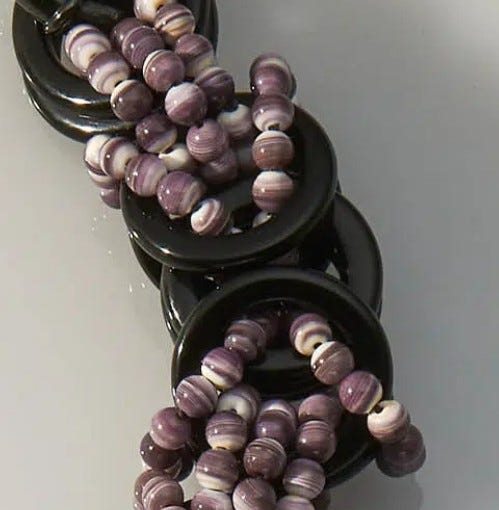
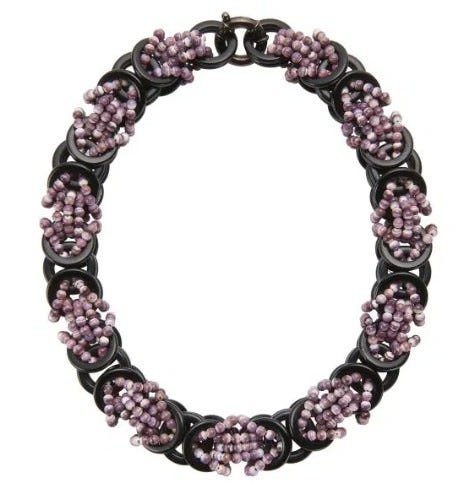
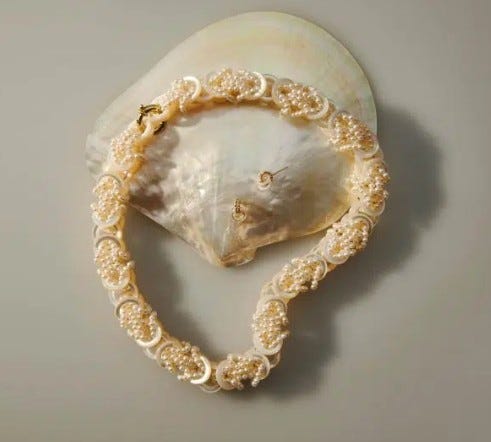
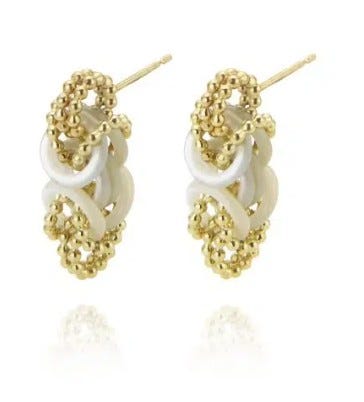
The purplish shells of quahogs, treasured in the past by Native Americans, now appear alongside gold, mother-of-pearl and onyx.

“For centuries Native Americans treasured quahog shells, the purplish hard coverings of clams found along North Atlantic shores, which they fashioned into beads called wampum to adorn ceremonial garments and, later, to use as currency.

Today, however, quahogs are primarily a food source, often found in clam chowders, and their shells are discarded.

Melanie Georgacopoulos, a jewelry designer known for her unconventional use of pearls and shells, had never even heard of quahogs before she began work on her new Katina collection.

“When I saw them, I fell in love with the shells,” said Ms. Georgacopoulos, who was born in Greece and now works in London and Hamburg, Germany. “At first, I was drawn to its beautiful purple color, but after researching, I realized it has a significant history and carries a people’s culture.”

She learned about them when Brendan Breen, an entrepreneur in Boston who has had a lifelong fascination with quahogs, asked if she wanted to buy some shells.”

Original article
Melanie Georgacopoulos website: https://www.melaniegeorgacopoulos.com/


4. Over the years, I have gotten asked about aging new beads to look like old beads.

Often, someone has an old beaded dress or wedding dress, with a lot of beads missing. Usually these beads are crystal silver lined. The older beads have faded and darkened somewhat. The new beads are very shiny.

Here are some things that you can do: The goal is to slightly darken or tarnish the silver lining inside the beads without damaging the glass exterior.

1. Ammonia Vapor Method (I always try this first. Darkens things slowly).

  • Spray the beads with Windex with ammonia
  • Place the beads in a small, sealed container with a few drops of ammonia on a cotton ball (do not let them touch).
  • Leave them for a few hours or overnight, checking periodically.
  • This method can give a slightly aged, yellowed effect without darkening too much.

2. Sulfur Exposure (Safe Patina) (Can darken things too quickly).

  • Place the new beads in a sealed container with a hard-boiled egg (shell removed and mashed) for 24–48 hours. The sulfur in the egg will oxidize the silver lining and darken it. If resorting to sulfur, I’d start with the hard boiled eggs before going to liquid of sulfur.
  • Check periodically to avoid over-darkening.
  • Rinse the beads thoroughly and dry them completely before use. You can stop the darkening process at any point by dumping the beads into a bowl of water that has 1 tbsp baking soda in it. But then immediately was the beads in regular water.

3. Liver of Sulfur (Stronger Patina)

  • Mix a very diluted solution of liver of sulfur (LOS) with warm water. You can used a Liver of Sulfur gel. Put the solution in the microwave for 1 minute. You want the temperature of the solution to be different than the temperature of the beads. The greater the difference, the faster the darkening.
  • Submerge the beads briefly (10–30 seconds), then rinse immediately. I actually like to put them into a solution of water and 1 tbsp baking soda. This stops the darkening process, and then rinse them in plain water.
  • If necessary, repeat for a deeper patina.
  • Buff the exterior glass gently with a soft cloth to remove any residue. You can use a paper towel or 0000 steel wool.

4. Tea or Coffee Staining (Subtle Tinting)

  • Soak the beads in strongly brewed black tea or coffee for a few hours to add a slight antique warmth.
  • This won’t tarnish the silver lining but may subtly warm the color of the glass. The resulting color is pretty but brownish, so probably won’t match the older beads in the dress.

5. Diluted Paint or Ink Wash (For Controlled Aging)

  • Mix a very diluted wash of brown, black, or sepia acrylic paint or alcohol ink.
  • Apply lightly with a fine brush or dip quickly and wipe off excess.
  • This can create an aged appearance without chemical reactions.
  • I have never tried this, but I’m thinking, but do not know, that this will leave a glossy finish on the outside glass of the beads, as if they were painted with clear nail polish.

5. To keep your artist statement evolving as you evolve

📝 To keep your artist statement clear and relevant…

  • Your statement should evolve alongside your artistic practice. Review it periodically to ensure it reflects your current work.
  • Even if you’ve explored different mediums, highlight what connects your past work to your present practice. Ex.: “My past work with acrylics taught me blending techniques that I now apply in my current series.”
  • Keep your biography separate — your statement focuses on your work and process, while your bio should include education and background details.

Review and Revise to keep your content clear, concise and consistent…

  • Focus on clarity and intentionality. Every sentence should serve a purpose, whether describing your artistic process, inspirations, or themes.
  • Reinforce a central thread throughout your statement. If you begin with a theme, weave it into the conclusion to create cohesion.
  • If a word is commonly used in an artistic context, consider if it truly adds value or if a more precise term would be better. Be mindful of overused words.
  • If your statement already feels focused and intentional, small edits — such as removing a concluding sentence that doesn’t add depth — can make it even more powerful.

Keep the focus on YOU and not your Viewer…

  • Keep the focus on your experience and process — avoid phrases like “I hope the viewer will feel.” Allow the viewer to find their own connection to your pieces.
  • Highlight tangible aspects (e.g., techniques, materials) to create a connection between words and visuals.
  • Maintain a concise and engaging statement; quality matters more than length.
  • Expand only if something essential feels missing, not just for comparison to others.

6. Art Blend — a community of creatives in Columbia, TN

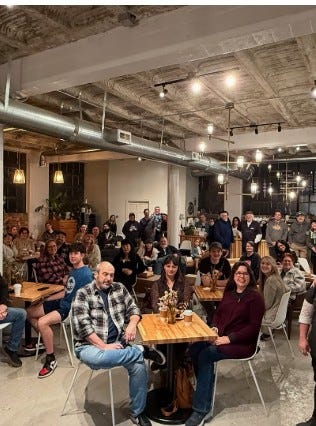
I had the recent opportunity to attend the monthly get-together of Art Blend — a community, grass-roots group of creatives in Columbia, TN. It was exciting. Lots of synergy in the room.

First, they define ARTISTS very broadly to include all creatives. Visual artists, theater folks, crafters, jewelry designers, wood workers, cake decorators, writers, interior designers, musicians.

They hold their events at local coffee shops, restaurants, and pubs. The first part of the mixer was open-ended. Then, the core of their program was show-and-tell. Visual artists presented one or more of their works and talked about their inspirations, their journey as an artist, their hopes and fears. Musicians and song writers sang songs their wrote. Writers read from pieces they were working on. 

The broad representation put an emphasis on commonalities, particularly in terms of the prospects and struggles of tapping into your personal creative spark and translating that into something creative to share with others. It also clearly was a significant support system.

The last part of the evening was time to walk around and view many of the works close-up and talking with each creative. Getting more of the story. Learning more of the insights. Feeling a part of someone’s journey.

On Instagram: @artblend-columbia


7. Find a great source of bead weaving video tutorials from Jill Wiseman

Jill wiseman is a prominent bead weaving author and instructor. On her YouTube Channel (https://www.youtube.com/@JillWisemanDesigns) , you will find many free instructional videos on how-to do various bead weaving techniques. She has many free pattern tutorials for projects you can work on. You even documents some of her bead weaving experiences and travels.


8. Some jewelry galleries of note — must sees on your travels

Galerie Cebra (https://www.galerie-cebra.de/die_galerie/)
https://www.instagram.com/cebragalerie/

Located in the heart of Düsseldorf’s Old Town, GALERIE CEBRA is a welcoming space dedicated to contemporary jewellery.

Pistachios (https://www.pistachiosonline.com/)
https://www.instagram.com/pistachiosjewelry/

Pistachios is a contemporary art jewelry and objects gallery in downtown Chicago, curating the most talented and cutting edge artists from around the world.

Patina Gallery (https://www.patina-gallery.com/)
https://www.instagram.com/patinagallery/
Downtown Santa Fe, New Mexico


UPCOMING WORKSHOPS by Warren Feld

Sat, 3/15, 2–3, LET’S MAKE A STRETCHY BRACELET, Maury County Library, 211 W 8th St, Columbia, TN
Register: Call (931) 375–6502

Sat, 3/22, 12–3, PEARL KNOTTING, Middle TN Gem & Mineral Society, Donelson, Fifty Forward 
Register: Call 615 883–8375

Sat, 4/12, 2–3, LET’S MAKE EARRINGS, Maury County Library, 211 W 8th St, Columbia, TN
Register: Call (931) 375–6502

Sat, 4/26, 1–4, PEARL KNOTTING, Hoamsy, Nashville, Fait La Force Brewery,1414 3rd Ave S, Ste 101, Nashville
Register: https://www.hoamsy.com/experiences/detail/z1IFcpOwTimeKRYk1akv

Sat, 6/7, 1–4, WIRE WRAPPED CABOCHON PENDANT, Hoamsy, Nashville, Nashville, Fait La Force Brewery,1414 3rd Ave S, Ste 101, Nashville
Register :https://www.hoamsy.com/experiences/detail/6azTthSZL5h76jCqKjNp

SOME POSTS YOU MAY HAVE MISSED:

THE JEWELRY DESIGNER’S ORIENTATION TO STRINGING MATERIALS

YOU DON’T CHOOSE CLASPS…YOU CHOOSE CLASP ASSEMBLIES

UFO’s YOUR UNFINISHED CRAFT PROJECTS

WARREN FELD JEWELRY (www.warrenfeldjewelry.com)
Custom Design, Workshops, Video Tutorials, Webinars, Coaching, Kits, Group Activities, Repairs
~~~~~~~~~~~~~~~~~~~~~~~
Join our community of jewelry designers
on my Patreon hub
Be part of a community of jewelry designers who recognize that we have a different way of thinking and doing than other types of crafters or artists.
One free downloadable Mini-Lesson of your choice for all new members!
~~~~~~~~~~~~~~~~~~~~~~~

Follow me on social media: facebook, instagram

shop.warrenfeldjewelry.com
Where you can buy:
Seed Beads and Delicas, Kits, Books, Finished Jewelry

school.warrenfeldjewelry.com
Take advantage of our video tutorials, mini-lessons, projects and our coaching services:

Read articles about jewelry design and about the business of craft:
Articles on Medium.com 

Books (in kindle, ebook or print formats) by Warren Feld, purchase from Amazon.com or BarnesAndNoble.com:

Kits by Warren Feld

Ask about my COACHING services

Arrange a GROUP ACTIVITY

Add your email address to my Warren Feld Jewelry emailing list here.

Thanks for being here. I look forward to sharing more resources, tips,
sources of inspiration and insights with you.

Join A Community Of Jewelry Designers 
On My Patreon Hub
Posted in architecture, Art or Craft?, art theory, bead stringing, bead weaving, beads, beadwork, business of craft, color, Contests, craft, craft shows, creativity, cruises, design management, design theory, design thinking, enrichment travel, Entrepreneurship, handmade jewelry, jewelry, jewelry collecting, jewelry design, jewelry making, Learn To Bead, literacy, pearl knotting, professional development, Resources, Stitch 'n Bitch, Travel Opportunities, wire and metal, Workshops, Classes, Exhibits | Tagged: , , , , | Leave a Comment »

CONQUERING THE CREATIVE MARKETPLACE: The Beginning

Posted by learntobead on March 7, 2025

The Beginning

When I began making jewelry 35+ years ago, my only interest was in making money. Concerns about design and art, construction and appeal, functionality and emotional engagement were superficial. Probably non-existent is a better word. And yes, this meant I did not care about what any piece of jewelry I made might mean for the person buying it. Or wearing it. Or otherwise putting it on display. There was no consequence for my actions in making jewelry. Except making money. There was a hollowness here which I was, at the time, totally unaware of.

That was a shame.

I missed out on a lot of excitement that emerges from the design process and that special relationship between designer and client.

As I became more proficient in making jewelry, I questioned more and more of myself about what I was doing. Why were some pieces of jewelry I made more successful than others? Why did some sell better than others? Why were some received more warmly than others? Why did some hold up much better from wear than others?

I had had to place a value on the pieces I made. Initially I used a simple pricing formula which related the costs of parts and the costs of labor and the costs of overhead to the price set. But over time, I noticed that some of my pieces were more resonant than others. More desirable. More intriguing. Sexier. Should I increase my prices to reflect these greater, though more difficult to measure, kinds of things? I didn’t know. But I was thinking about it.

Over the years, I thought more and more about what made jewelry more or less successful. How to know when a piece was finished. How to know that I made the best tradeoffs between beauty and functionality. How to know what my jewelry was worth. How to market jewelry. How to sell it. How to sell it in a store. How to sell it at a craft show. How to sell it online. How to organize it into a coherent line of jewelry. How to measure and assess costs, revenues and returns-on-investment.

I share part of my developing knowledge in my book SO YOU WANT TO BE A JEWELRY DESIGNER (https://shop.ingramspark.com/b/084?EenmVM2NMYJGNKaAzr68kaH6GGGSPuNIkGCP1Hfzm3N). In this book, I go over the many hard and soft skills required to become fluent, flexible and original in jewelry design. It is important to understand what jewelry is, how design elements are selected, arranged, constructed and manipulated, how to manage the design process, and how to introduce your designs publicly.

In this book, which is the focus of this series of articles, CONQUERING THE CREATIVE MARKETPLACE, I focus on strategies for integrating business practices with the creative design process — things which can make balancing the creative self with the productive self easier and more fluid. I talk about how dreams are made between the fickleness of business and the pursuit of design.

I go into great detail about all the things you need to think about, know and do when getting started. This begins with basic bookkeeping and accounting as well as developing a business model and also understanding how to protect your intellectual property.

I discuss briefly about how the more literate jewelry designer is more successful in business. Disciplinary literacy involves a set of skills which enable the designer to best relate the jewelry design to client understandings and desires. These skills influence how the client interacts with the piece of jewelry, seeing relevance, value, usefulness, and the designer’s intent.

It is important to understand some basic concepts — Competitive Advantage, Risk, Rewards and Return-On-Investment, and how these play out in all aspects of your business. Also critical is to recognize how what you do in business and what you do creatively affect the Efficiency and Effectiveness of both your design process as well as your business operations.

I have several chapters devoted to product design and development. These range from product goal setting to needs assessment to product distribution, pricing and promotion to managing product launch.

Another section focuses on marketing and branding. You need to create an identify for your business, one that people become aware of and feel positively towards.

This leads to the next section on selling. I review selling strategies important in different settings from retail to craft shows to home shows to online.

I talk about resiliency in business. What kinds of things — emotional, administrative, creative — lead to a greater level of resilience in your business as you face growth, market ups and downs and fashion and taste changes.

Last, I review and present advice for creating the kinds of documents you will need to complement your business goals. These include a creative resume; portfolio; artist statement, biographical sketch, certificate of authenticity and the like.

_______________________________________________________

For more articles about Conquering The Creative Marketplace, click over to our Jewelry Designers’ Hub

Thanks for being here. I look forward to sharing more resources, tips,
sources of inspiration and insights with you.

WarrenFeldJewelry.com
Shop.warrenfeldjewelry.com
School.warrenfeldjewelry.com
Coaching by Warren Feld

Add your name to my email list.

Conquering The Creative Marketplace

Many people learn beadwork and jewelry-making in order to sell the pieces they make. Based both on the creation and development of my own jewelry design business, as well as teaching countless students over the past 35+ years about business and craft, I want to address what should be some of your key concerns and uncertainties. I want to share with you the kinds of things (specifically, a business mindset and confidence) it takes to start your own jewelry business, run it, anticipate risks and rewards, and lead it to a level of success you feel is right for you. I want to help you plan your road map.

I will explore answers to such questions as: How does someone get started marketing and selling their pieces? What business fundamentals need to be brought to the fore? How do you measure risk and return on investment? How does the creative person develop and maintain a passion for business? To what extent should business decisions affect artistic choices? What similar traits to successful jewelry designers do those in business share? How do you protect your intellectual property?

The major topics covered include,

1. Integrating Business With Design

2. Getting Started

3. Financial Management

4. Product Development, Creating Your Line, and Pricing

5. Marketing, Promotion, Branding

6. Selling

7. Professional Responsibilities and Strategic Planning

8. Professional Responsibilities and Gallery / Boutique Representation

9. Professional Responsibilities and Creating Your Necessary Written Documents

548pp, many images and diagrams
Kindle or Ebook or Print

Posted in architecture, Art or Craft?, art theory, bead stringing, bead weaving, beads, beadwork, business of craft, color, Contests, craft, craft shows, creativity, cruises, design management, design theory, design thinking, enrichment travel, Entrepreneurship, handmade jewelry, jewelry, jewelry collecting, jewelry design, jewelry making, Learn To Bead, literacy, pearl knotting, professional development, Resources, Stitch 'n Bitch, Travel Opportunities, wire and metal, Workshops, Classes, Exhibits | Tagged: , , , , | Leave a Comment »

FLUENCY IN JEWELRY DESIGN: Why People Like To Bead and Make Jewelry

Posted by learntobead on February 24, 2025

Why People Like To Bead and Make Jewelry

Most people, when they get started beading or making jewelry, don’t have this overwhelming urge to become star jewelry designers. On the contrary, fame and fortune as a designer are some of the furthest things from their minds. Most people look to jewelry making and beading to fulfill other needs.

Over the years I’ve seen many people pick up beading and jewelry making as a hobby. They are drawn to these for many reasons, but most often, to make fashionable jewelry at a much lower cost than they would find for the same pieces in a Department store, or to repair jewelry pieces they especially love. When you start with the parts, and the labor is all your own, it is considerably less expensive than the retail prices you would find in a store for the same pieces.

Some people want to make jewelry for themselves. Others want to make handmade gifts. Giving someone something of great value, that reflects a personal expression of creativity, and a labor of love — you can’t beat it. And everyone loves jewelry.

When people get into beading and jewelry making, they discover it’s fun. Even addictive. They tap into their inner-creative-self. They see challenges, and find ways to meet them. They take classes. They buy books and magazines. They join beading groups and bead societies and jewelry making collaboratives. They have beading and jewelry making parties with their friends. They scour web-sites on-line looking for images of and patterns for jewelry. They comb the web and the various beading, jewelry-making and craft magazines, looking for sources and resources. They join on-line jewelry and bead boards, on-line forums, on-line web-rings, on-line ezines, groups, and on-line blogs. They take shopping trips to malls and boutiques and like little good Agatha Christies and Sherlock Holmes, they spy, looking for fashions, fashion trends, and fashionistas. They attend traveling bead shows. And every town they visit, they schedule some free time to check out the local bead stores and boutiques.

As people get more into beading and jewelry making, some discover that these avocations are not only sources of artistic self-expression, but also have many meditative qualities. They are relaxing. They take your mind off the here and now, and transport you to a very calming place.

Still, for others, beading and jewelry making become a way to earn some extra income. They might be to supplement what you’re making now. They might be ways to generate some extra dollars after you retire. They might be the start of your own business as a designer of jewelry. They might be a sense of independence and self-reliance. Having someone pay you for something you made is often the hook that gets people addicted to beadwork and jewelry making.

Most people, however, are content just to make jewelry. There are no professional Design paths to pursue. They may realize that they are out there somewhere, but don’t particularly care. Or sometimes they are unfamiliar with or can’t see all the possibilities. Perhaps they get stuck. No mentor, no book, no magazine, no project to entice them or spark an interest in something more than what they are doing now. But it suffices. Beading and jewelry making relaxes them, gives them a creative outlet, things to enjoy, other like-minded people to be with.

For those fewer people, however, who get a whiff of what it means to design jewelry, and jewelry which resonates, well, what a trip they are in for.

_______________________________________________________

Thanks for being here. I look forward to sharing more resources, tips,
sources of inspiration and insights with you.

WarrenFeldJewelry.com
Shop.warrenfeldjewelry.com
School.warrenfeldjewelry.com
Coaching by Warren Feld

Add your name to my email list.

SO YOU WANT TO BE A JEWELRY DESIGNER
Merging Your Voice With Form

So You Want To Be A Jewelry Designer reinterprets how to apply techniques and modify art theories from the Jewelry Designer’s perspective. To go beyond craft, the jewelry designer needs to become literate in this discipline called Jewelry Design. Literacy means understanding how to answer the question: Why do some pieces of jewelry draw your attention, and others do not? How to develop the authentic, creative self, someone who is fluent, flexible and original. How to gain the necessary design skills and be able to apply them, whether the situation is familiar or not.

588pp, many images and diagrams Ebook , Kindle or Print formats

The Jewelry Journey Podcast
“Building Jewelry That Works: Why Jewelry Design Is Like Architecture”
Podcast, Part 1
Podcast, Part 2

Posted in jewelry design | Tagged: , , , , | Leave a Comment »

THE JEWELERS’ PALETTE, 3/1/2025

Posted by learntobead on February 24, 2025


Join my community of jewelry designers on my Patreon hub
From Warren and Land of Odds

Use March’s Discount Code For Extra 25% Off @Land of Odds:
MARCH25
www.landofodds.com

March 1, 2025

~~~~~~~~~~~~~~~~~~~~~~~~~~~~~~

Hi everyone,

Some Updates and Things Happening.
(Please share this newsletter)

In this Issue:
1. Juried Art Services — You Should Be Registered Here!
2. To Keep People On Your Website, Follow These Tips
3. Extraordinary price increases on gold seed beads! +85%!
4. Film and photograph your design process, suggested once every hour!
5. Humanae — A pantone map of skin tones
6. Tips for balancing portfolios for retail and gallery shops vs. online sales
7. Is it jewelry or sculpture?
8. 3 Austrian crystal bead and rhinestone colors have been discontinued
Some articles you may have missed
Featured

1. JURIED ART SERVICES — You Should Be Registered Here

https://juriedartservices.net/

Juried Art Services is a comprehensive online application and jurying system for art shows, galleries, and museums. We provide a seamless and efficient platform for managing your art show, gallery, or museum. We have been in business for over 20 years and have worked with some of the largest art shows in the world.

Here is a central place to create a “portfolio” for yourself, and find out about and submit applications to various art and craft shows. Each show has its own special requirements and fees, and this site structures each application accordingly.

VIDEO LINK
Creating an application has never been easier. With Juried Art Services, you have tons of creative options for uploading and editing your artworks. Get started with this quick tutorial video on how to create your first application.

VIDEO LINK


2. To keep people on your website, I suggest you follow these tips:

When your website gets ranked by search engines, one of the key things they measure is how long visitors who have clicked over to your site remain on your site. The longer you keep them there, the higher your rank.

To keep people on your website, improve readability & contrast:

  • Avoid light-colored text on light backgrounds — it reduces readability.
  • Use a background effect or contrast to make text stand out.
  • Increase font size for key text to ensure easy reading.
  • Keep design consistent — spacing and formatting should be uniform.
  • Prioritize clear, high-contrast text for a polished and professional look.

By enhancing contrast and legibility, visitors will have a better browsing experience.

Simplify your website’s navigation to improve user experience.

  • Shorten menu titles — use single words like “Teaching” instead of “Workshops & Classes.”
  • Group similar pages — place sales and classes together for logical flow.
  • Move secondary pages (About, Contact) to the right side of the menu.
  • Reduce menu clutter — only include essential categories to avoid overwhelming visitors.
  • Keep navigation intuitive so users can find what they need quickly.

A cleaner menu layout makes browsing effortless and keeps visitors engaged.

Showing visuals of your work/classes can help you sell more.

Show images of students making jewelry in workshops or displaying their finished pieces. Feature completed commissions to help potential clients imagine their own.

Capture behind-the-scenes moments of your creative process, from sketch to final piece. Include action shots of yourself making jewelry to add a personal and engaging touch.

Make the experience feel real so visitors can clearly see what they’ll gain.

By integrating more visuals, your site will feel more immersive and persuasive.


3. Price increases, some extraordinary (+85%) on Miyuki seed beads

First, expect at least 6% increase in prices on all Miyuki seed and delica beads.

Second, can be a 85% increase on beads with gold plating or with colors that use gold to make the colors

From the US distributor:
:Over the last year and a bit, Miyuki has charged a surcharge on beads which contain gold. This means not just gold-plated beads, but any bead which has gold in the glass-making process. Gold is extra expensive right now, and the additional fee is to cover the materials cost for making those beads. The surcharge is currently hovering about 85% and has been in that vicinity for about a year.
 
Until now we have dragged our feet on re-ordering these items because the cost is almost doubled, but we’ve decided to simply re-price them because the cost doesn’t seem to be going down. If it does go down, we’ll redo our prices on these beads and you’ll be the first to know!
 
Here is the long list of items that are affected:”
 
Delica Beads (all sizes)

DB12, DB22, DB22L, DB23, DB24, DB25, DB27, DB31, DB31L, DB33, DB34, DB103, DB105, DB115, DB116, DB230, DB312, DB322, DB324, DB331, DB334, DB371, DB373, DB376, DB378, DB380, DB501, DB505, DB506, DB507, DB508, DB1051, DB2521, DB2522, DB2523, DB2524 and DB2525

Other Seed Beads (all sizes and shapes)

191, 191L, 191F, 193, 193F, 195, 196, 199, 301, 302, 303, 307, 309, 310, 311, 312, 313, 313SF, 314, 315, 316, 318, 421, 457, 457B, 457L, 457L-F, 459, 460, 461, 461L, 462, 462L, 465, 466, 467, 468, 469, 512, 588, 590, 594, 597, 599, 600, 601, 952, 953, 954, 955, 982, 1865, 1880, 1888, 1889, 1890, 1891, 1892, 1893, 1894, 1895, 1897, 1898, 1899, 1958, 1959, 1962, 1963, 1964, 1965, 1966, 1970, 1981, 1983,1984,1985, 1986, 2005, 2005L, 2006, 2007, 2008, 2009, 2015, 2016, 2017, 2018, 2019, 2020, 2027, 2030, 2031, 2032, 2033, 2034, 2035, 2037, 2038, 2040, 2061, 2062, 2064, 2065, 2067, 2068, 2069, 2292, 2301, 2303, 2304, 2312, 2318, 2331, 2333, 2336, 2441, 2444, 2449, 2470, 2591, 2592, 2593, 2597, 4693, 4695, 4696, 4697, 4698, 4700 and 4705

https://landofodds.com/miyuki/


4. Film and photograph your design process, I suggest once every hour!

Always have your cell phone handy.

Anticipate the kinds of image and video materials you might need for any marketing you will do once you have completed your project. It is important to recognize up front that “sharing your process” is one of the strongest marketing messages you can develop.

Do you forget to film/photograph your process often? Set an alarm.

I recommend filming yourself working once an hour (for about 5 seconds). If you get very into your work/forget, set an alarm or timer when you start.

You can decide whether you set just one, or several (if you plan on working for a while). For example: if you’ll be painting from 5 pm to 8 pm, set alarms at:

  • 6:00 pm
  • 7:00 pm
  • 8:00 pm

This way you can fully focus on your work and still get the footage you need.

Store your images and videos in a place you can easily find them again after you finish your project.


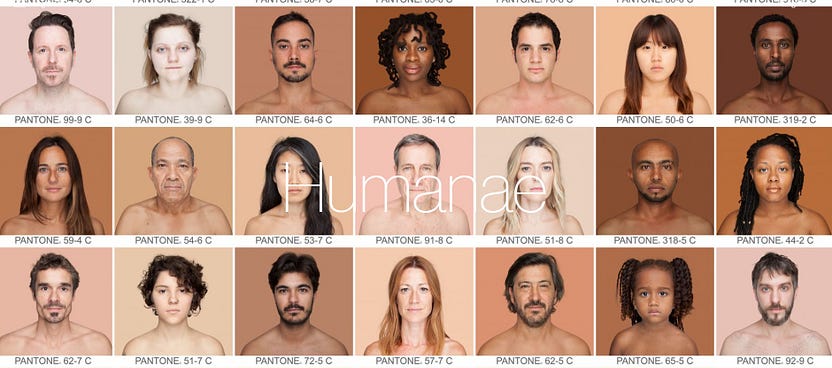
5. I found this extraordinary project called Humanae which is photographically documenting skin tones and relating each to pantone colors

Visit here.

Humanæ is a photographic work in progress by artist Angélica Dass, an unusually direct reflection on the color of the skin, attempting to document humanity’s true colors rather than the untrue labels “white”, “red”, “black” and “yellow” associated with race. It’s a project in constant evolution seeking to demonstrate that what defines the human being is its inescapably uniqueness and, therefore, its diversity. The background for each portrait is tinted with a color tone identical to a sample of 11 x 11 pixels taken from the nose of the subject and matched with the industrial pallet Pantone®, which, in its neutrality, calls into question the contradictions and stereotypes related to the race issue.

More than just faces and colors in the project there are almost 4,000 volunteers, with portraits made in 20 different countries and 36 different cities around the world, thanks to the support of cultural institutions, political subjects, governmental organizations and non-governmental organizations. The direct and personal dialogue with the public and the absolute spontaneity of participation are fundamental values of the project and connote it with a strong vein of activism. 

Currently more than 4000 images exist in the project. They have been taken in 36 cities, in 20 different countries: Arteixo, Madrid, Barcelona, Getxo, Bilbao and Valencia (Spain), Paris (France), Bergen (Norway), Winterthur, Chiasso (Switzerland), Groningen, The Hague (Netherlands), Dublin (Ireland), London (UK), Tyumen (Russia), Gibellina and Vita (Italy), Vancouver, Montreal (Canada), New York, San Francisco, Gambier, Pittsburgh and Chicago (USA), Quito (Ecuador), Valparaíso (Chile), Sao Paulo and Rio de Janeiro (Brazil), Córdoba (Argentina), New Delhi (India), Daegu (South Korea) Wenzhou and Shanghai (China), Ciudad de México, Oaxaca (Mexico) and Addis Abeba (Ethiopia).


6. Tips for balancing portfolios for retail and gallery shops vs. online sales

To balance your website for store/gallery vs. online sales

  • Use a digital portfolio to showcase your work professionally — galleries especially expect a polished presentation.
  • If adding an online store, ensure pricing matches what stores/galleries display to avoid conflicts.
  • Communicate openly with stores/galleries — let them know you prioritize selling through them and will refer clients back.
  • Focus on store/gallery relationships first — building online sales takes time, so establish a strong presence before investing heavily in ecommerce.
  • If you enable an online shop, manage it carefully and address concerns with transparency to maintain good store/gallery partnerships
  • You should correctly assume that potential clients will, after seeing your physical store/gallery representation, then go online to check you and your jewelry out as well

7. Is It Jewelry or Sculpture?

Read the full article here

The question of whether jewelry is sculpture has been debated for over a century. The key distinction often comes down to context. An unknown sculptor attempting to position their jewelry as sculpture faces a challenge. Likewise, an unknown jeweler claiming to be a sculptor must overcome substantial hurdles.

However, when an artist deliberately blurs these lines, the results can be extraordinary. Many Patina Gallery exhibitions began as And & Both ideas — concepts that walked the lines of nuance and risked failure but ultimately thrived. Ivy Ross has built her career on this delicate balance. She consistently reminded me that the story must always support the idea.

Most people know my thinking: Jewelry is only art as it is worn. It is not sculpture.

But what do you think? I’d like to know.

Read the full article here
And & Both: Is It Jewelry or Sculpture?
by Ivan Barnett


8. 3 Austrian crystal bead and rhinestone colors have been discontinued

Swarovski has shared some unforeseen news regarding three colors in their crystal line:

  • Smoked Amber
  • Light Amber
  • Golden Topaz

Due to technical difficulties, they can no longer be produced and have been discontinued.

While Swarovski no longer distributes directly to the general public, they are the manufacturing source of distributors that handle their products. The distributor I use is call Star Bright.

And don’t forget to use this 25% discount code
throughout March at Land of Odds!!
Use March’s Discount Code
For Extra 25% Off
@Land of Odds:
MARCH25
www.landofodds.com


~~~~~~~~~~~~~~~~~~~~~~~~~~~

~~~~~~~~~~~~~~~~~~~~~~~~~~~~~~

SOME POSTS YOU MAY HAVE MISSED:

AN ADVERTISING PRIMER FOR JEWELRY DESIGNERS: How To Work Within Different Advertising Channels

SELLING YOUR JEWELRY: How To Define Your Competitive Advantages

MARKETING / PROMOTION / POSITIONING: Enhancing The Designer’s Influence and Persuasion

~~~~~~~~~~~~~~~~~~~~~~~

WARREN FELD JEWELRY (www.warrenfeldjewelry.com)
Custom Design, Workshops, Video Tutorials, Webinars, Coaching, Kits, Group Activities, Repairs
~~~~~~~~~~~~~~~~~~~~~~~
Join our community of jewelry designers
on my Patreon hub
Be part of a community of jewelry designers who recognize that we have a different way of thinking and doing than other types of crafters or artists.
One free downloadable Mini-Lesson of your choice for all new members!
~~~~~~~~~~~~~~~~~~~~~~~

Follow me on social media: facebook, instagram

shop.warrenfeldjewelry.com
Where you can buy:
Seed Beads and Delicas, Kits, Books, Finished Jewelry

school.warrenfeldjewelry.com
Take advantage of our video tutorials, mini-lessons, projects and our coaching services:

Read articles about jewelry design and about the business of craft:
Articles on Medium.com 

Books (in kindle, ebook or print formats) by Warren Feld, purchase from Amazon.com or BarnesAndNoble.com:

Kits by Warren Feld

Ask about my COACHING services

Arrange a GROUP ACTIVITY

Add your email address to my Warren Feld Jewelry emailing list here.

Thanks for being here. I look forward to sharing more resources, tips,
sources of inspiration and insights with you.

Join A Community Of Jewelry Designers 
On My Patreon Hub
Posted in architecture, Art or Craft?, art theory, bead stringing, bead weaving, beads, beadwork, business of craft, color, Contests, craft, craft shows, creativity, cruises, design management, design theory, design thinking, enrichment travel, Entrepreneurship, handmade jewelry, jewelry, jewelry collecting, jewelry design, jewelry making, Learn To Bead, literacy, pearl knotting, professional development, Resources, Stitch 'n Bitch, Travel Opportunities, wire and metal, Workshops, Classes, Exhibits | Tagged: , , , , | Leave a Comment »

COLOR DILEMMAS FOR THE JEWELRY DESIGNER: Managing, Challenging, Exploiting and Violating Color Theory

Posted by learntobead on December 22, 2024

Abstract
Color is the single most important Design Element. Most artists and jewelry designers learn about how to use and control for color in art schools. They learn about how colors are perceived. How to combine colors and maximize the appealing effects of such combinations. How the perceptions of color vary, given the context, and how to anticipate these variations. These art theories work well for those who paint. But not so well for those who design jewelry.

How Artists and Jewelry Designers
Respond Differently To The Use Of Color

The artist is concerned with achieving harmony, balance and evoking an emotional response. Color theories point the way. The artist wants to be guided by these and conform to them. To the artist, color theory is more about objectives and universals. They tap into the brain’s propensity to balance things out. People are prewired with an anxiety response. Our brains have some presets so that we avoid snakes and spiders. When things get too unbalanced and too unharmonious, the brain gets edgy. We begin to interpret things as not as interesting, perhaps somewhat unsatisfying, even ugly.

Color schemes show what colors in combination yield a balance in energy and wave length signatures. For example, and with a lot of oversimplification, color theory points out that in any project, the proportion of red should equal the proportion of green. If red has an energy signature of +1, then the energy signature of green would be -1. Added together, they equal zero. The brain wants things to equal zero. Balanced. Harmonious. And artists who follow the theories about color are secure in this. They recognize that all people want the colors in front of them to balance out to zero. Color theory leads the way. Artists want to be guided and conform to it.

For the jewelry designer, however, color theories are a starting point, but quickly break down. This is because jewelry is only art as it is worn. That means the jewelry will move with the person, shift from one type of light to another as the person moves from room to room or from inside to outside. The materials used in jewelry do not come in every color of the rainbow. You cannot crush them up and blend them. Even with a simple round bead, the color will vary across the bead, becoming lighter or darker, sometimes even changing the color as presented, as you move around the curved surface, perceive the hole piercing through the bead, at the hole’s end with added shadows. Many beads will even cast a color shadow extending well beyond the boundary of the bead, but changing scope and direction as the wearer pivots or the lighting changes. The silhouette of any piece of jewelry will shift in shape as the jewelry shifts in position in responses to the forces of movement, stresses and strains. Unlike a painting, jewelry is never static. The perceived colors keep changing. If from any one position, the jewelry appears less than appealing, this is awkward for the wearer. People viewing jewelry attribute the qualities of the jewelry to the qualities of the person wearing it. This situation is unacceptable to the professional jewelry designer. The wearer should always look good. So color, as a design element with all its attributes of expression, must be managed differently.

The artist manages the perception of color. The jewelry designer manages its sensation. Perceptions may be managed as objective, universal responses to color. Sensations result from designers manipulating, exploiting, challenging and violating theories of color, because sensations are more subjective, less predictable and are context specific. The artist seeks an emotional response. The jewelry design seeks something a little bit more, a slight edginess beyond harmony, what I call resonance. An emotional response to jewelry would be I like it. A resonant response to jewelry would be I want to wear it, or I want to buy it.

PAINTS vs. BEADS

How one becomes fluent in art is by necessity different than how one becomes fluent in jewelry design. Jewelry designers must learn to think differently than artists when working with colors. They must learn to be able to anticipate and control the sensation of colors by wearer AND viewer, as the jewelry is worn.

With artists, color is applied. With jewelry designers, color is arranged. Because color is not applied per se, the bead — its very being — creates a series of dilemmas for the colorist.

(1) Availability of Colors
Beads do not come in every color. The perceived color on any bead has a lot of variation due to the shape, curvature and faceting of beads, as well as the effects of the hole and its drilled channel. Some beads will cast a shadow past their boundary. Some beads have striations or other similar effects where different colors are strewn within and throughout the bead. The perception of color may differ as the bead is viewed under different light sources, or indoor or outdoor, or different casts of shadows. Different types of bead finishes reflect, absorb or refract light differently from each other. The perceived color of the bead might vary based on the colors of the clothing, skin tone, hair style and color, and makeup of the person wearing the jewelry.

With paint, you can construct any color and can create many coloration effects. But, once completed, the painting is static as is the lighting. There will be a more consistent perception of colors and colorations.

(2) Position
Painting is observed in fixed position with fixed lighting with a viewer standing in front of it. Jewelry is observed as it moves, with varying light and shadow conditions by someone who wears it and others who view it. Jewelry will also shift positions as it is worn.

(3) Appeal and Functionality
Jewelry has to succeed both visually and functionally. The things contributing to function, from canvas to clasp assembly, offer their own complications to the sensation of color.

Paintings are judged by appeal alone.

(4) 2 or more colors in contrast
When you have 2 or more colors existing within the same composition, they may affect the perception of color of any one of them. They may blend, exude temperature, feel closer or more distant. The proportion of each color present will affect how they are perceived. The juxtaposition of 2 or more colors has a critical effect on the sensation of colors, moreso, complicated because jewelry moves.

(5) Transitioning from one bead to the next
With jewelry, more attention must be given to the transitioning from one bead to the next, one color to the next, because this often is not fluid or natural. There will be gaps of light between beads, or negative spaces not taken up by the volume of each component. With jewelry, as it moves, it is more often the case that perceptions of color will not conform to scientific universals.

(6) Goals
The goal for the artist is to evoke emotions based on harmony and balance with a little variety. Evidence of finish and success lie in establishing harmony and balance.

The goal for the jewelry designer is resonance with a little more of an edge to it that takes the viewer slightly beyond harmony and balance. Evidence of finish and success relates to how the designer and the wearer establish some shared understanding that the values and desires of each have been met when the jewelry is worn.

DESIGNING JEWELRY INVOLVES
MAKING A WHOLE HOST OF CHOICES

As designers, we…

  • Select materials and techniques, leveraging their strengths and minimizing their weaknesses
  • Anticipate how the parts we use to make a piece of jewelry assert their needs for color
  • Anticipate shared universal understandings among self, viewer, wearer, exhibitor, collector and seller about color and its use
  • Think through how colors relate to our inspirations and how they might impact our aspirations
  • Pick colors
  • Place and arrange colors
  • Distribute the proportions of colors
  • Play with and experiment with color values and color intensities
  • Leverage the synergistic effects and what happens when two (or more) colors are placed next to one another
  • Create focus, rhythm, balance, dimension and movement with color
  • Create satisfying blending and transitioning strategies using color
  • Anticipate how color and the play of color within our piece might be affected by contextual or situational variables
  • Reflect on how our choices about color affect how the piece of jewelry is judged as finished and successful by our various client audiences
  • Use color to promote the coherency of our pieces, and the speed and extent to which attention by others continues to spread

PICKING COLORS FOR JEWELRY DESIGNS

The jewelry designer has to pick colors pleasing to the designer, as well as anticipate what colors will be pleasing to the wearer or buyer. This makes picking colors very personal and subjective. We all know that designs are imperfect. Beads are imperfect. Colors are imperfect. So part of picking colors has to be very strategic and well-managed.

Colors are used by the designer to clarify and intensify the effects she or he wants to achieve. They are used to:

  • Delineate segments, forms, themes, areas
  • Express naturalism or abstraction
  • Enhance the sense of structure or physicality (forward/recede; emphasize mass or lines or surfaces or points)
  • Stimulate the senses (warmth or cold; memories; enlarging or decreasing)
  • Play with light and shadow (surprise, distort, challenge, contradict, provoke)
  • Alter the natural relationship between the jewelry and the situation it is worn in (context, clothing, body and face types/skin tones, setting)
  • The resulting relationships between space and mass, negative and positive areas
  • Focus attention, particularly providing information about direction, boundaries, permissions

Color Tools At The Designer’s Discretion

Both the artist as well as the jewelry designer have three primary color tools at their discretion. For the artist, these tools are used to control perceptions of color. For the jewelry designer, however, these tools are used to control the sensations and experiencing of color.

TOOL 1: SENSATION OF COLOR BALANCES (Light Values)

Individually, each color is perceived in the same way. Each color is associated with a particular energy and wavelength signature. Both artist and jewelry designer can assume that each color standing fixed and alone is perceived in the same way universally. For the jewelry designer, however, since jewelry is worn and moves, the designer cannot assume that in any one minute, each color will be perceived consistently in the same way.

TOOL 2: SENSATION OF COLOR CONTRASTS (Color Schemes/Color Wheel, Color Proportions)

When 2 or more colors co-exist in the same space, they affect each other. Color schemes and information about color proportions have been scientifically derived. These determine, to oversimplify things, a zero-zero point where the positive and negative energy signatures of each color balance out to zero. With a composition of blue and orange, this contrast color scheme indicates that their energy signatures would balance out to zero. When dealing with proportions, color theory determines that there should be one orange for every 3 blues, again to achieve harmony within this zero balance point. In this way, certain combinations of colors are seen as more appealing than others.

For the artist, she or he can achieve these universal understandings about color contrasts within any composition. For the jewelry designer, not so much. Color schemes and color proportions are a good place for the designer to start any project. But because movement and context will continually distort perceptions of these colors as the jewelry is worn, more color management will be called for, if the piece is to feel finished and successful. The jewelry designer literally has to work hard to trick the brain so that it interprets the inevitably resulting imperfections in color use as PERFECTions.

TOOL 3: SENSATION OF COLOR CONTRASTS IN CONTEXT (simultaneity effects, shared understandings)

When 2 or more colors are present, and you take into effect more contextual information, you often find that colors experienced simultaneously can affect how each color is perceived apart from what you would predict from things like color light values, color schemes or color proportions.

A yellow square inside a white box appears to feel cooler than that same yellow square in a black box. Similarly with the red square. Colors appearing simultaneously can be made to feel to be receding/approaching, warm/gold, blending and bridging, overcoming gaps and negative spaces or paralyzed by them, establishing dimensionality and movement, redirecting attention, blurring or bounding, smaller or larger.

Any color with a gray or black undertone will take on the characteristics of the color beside it. Besides the obvious black diamond color, other colors which have gray or black undertones include prairie green, Montana blue, French rose, purple violet, Colorado topaz.

Other types of beads which allow you to create simultaneity effects: silver, gold, anything with a mirror or foil effect, color-lined beads.

Thus, Simultaneity Effects are a boon to the jewelry designer. They are great tools for TRICKING THE BRAIN and …

  • Making the variation in color as expressed within the bead or other object as more homogeneous
  • Filling in the gaps of light between beads
  • Assisting in the guiding attention along or the sense of movement of colors along a line or plane
  • Assisting in establishing dimensionality in a piece that otherwise would appear flat
  • Harmonizing, Blending or Bridging two or more colors which, as a set, don’t quite match up on the color wheel
  • Establishing frames, boundaries or silhouettes
  • Re-directing the eye to another place, or creating sense of movement

The Blue Waterfall Necklace

In this Blue Waterfall Necklace, which is one of my designs, I capitalized on the use of simultaneity effects. As you can see in the image above, there are three colors which I lined up together: Sapphire (cube), Crystal Diffusion (cathedral) and Indian Sapphire (which is a rounder shape). Normally, you would not mix sapphire and Indian sapphire in the same piece. They don’t really go together. Using a color in between — crystal diffusion in this case — which acts in a similar way to a gray color bead, I was able to blend the characteristics of the Indian sapphire bead on one side and the sapphire bead on the other. When you look at the finished piece, the colors lined up in each segment appear harmonious.

Some additional examples of strategic color use that I have done:

A. Putting a transparent faceted olivine bead next to a transparent faceted capri blue bead. In bright or direct light, depending on in what direction from the light the person wearing the piece is standing, will cast a color shadow — either an olivine shadow over the capri bead, or a capri blue shadow over the olivine bead. That means, when the person orients their stance in various positions, you will often get a muddy brown look, rather than distinct olivine and capri blue colors.

This arrangement would also be the beginning of an analogous color scheme. In this scheme no color should predominate. If one does, it starts to look less satisfying. If we rely on a different color theory about color proportions, then we want to have 1.5 blue green for every 1 olivine. In this case, we could not meet the criteria for both the color scheme rule and the color proportion rule.

In any event, I would probably first place a sterling silver or gold bead between the olivine and capri. These metal beads will create that simultaneous effect. When a person is wearing the piece, sometimes, depending on the lighting and the person’s stance, the capri and its shadow will take up a greater volume, and vice versa with the olivine. There won’t be that occasional muddy look.

B. In my piece — Little Tapestries: Ghindia — I embedded red crystal beads within a seam. They are not visible if you are standing in front of the person wearing the piece. I wanted the person wearing the piece to subtly catch the eye (bright red flashes of color reflecting the light) of anyone to her side or just behind her.

C. It is difficult to mix materials within the same piece. That is partly because the brain/eye interaction with each type of material is often different, and this is unsettling for the brain. Painful. When the brain is unsettled, the piece gets interpreted as unsatisfactory, unappealing, even ugly. Successfully mixing materials gets very caught up in an understanding of light and shadow. And an understanding of light and shadow is very influenced by and influential in the use of color.

The surface of a material has many characteristics which the jewelry designer leverages within the finished piece. Light might reflect off this surface, such as with opaque glass or shiny metal. Light might be brought into and below the surface before getting reflected back, such as with many gemstones and opalescent glass. Light might refract through the piece at different angles, even creating a prism effect. Light might be absorbed below the surface, as with pearls.

The surface might be a solid color. It might be a mix of colors. It might be matte. It may be flat, have crevices, have matrixing, or have inclusions. It may have fire or flashing coloration effects. There may be tonal differences. There may be pattern or textural differences. It may convey movement. It may convey depth.

One example that comes up a lot: it is difficult to mix gemstone with glass. For most gemstones, the light travels from the eye to the surface of the material, then continues below the surface, before bouncing back. For most glass, the light travels from the eye to the surface of the material, then bounces back; it does not penetrate the surface. When mixing gemstones and glass, if the brain’s interaction with the materials requires a shift in the activity of physical perception, then this is often uneasy and painful for the brain.

If I were to mix glass and gemstone, I would choose glass which mimics the brain/eye/light effect. I would choose a translucent glass bead where this effect is mirrored to that with the gemstone.

Let’s say I created a necklace of opal beads. With opals, the light penetrates below the surface, interacts with movement (fire effect), then bounces back to the eye. I can mirror this effect with silver lined translucent glass beads. The silver lining within the transparent glass mimics the sense of ‘fire’. If I had added a silver lined transparent bead instead, this would not work as well. Here, with the transparent bead, the light hits the surface of the glass and the silver lining intensifies the experience of the particular color of the glass.

Let’s stick with this opal necklace. Say I added an opaque black seed bead in between each opal bead. If small enough, this configuration kicks in the GESTALT cognitive behavior. The brain “sees” a gap between each opal bead, and not a glass bead. The brain fills in the gap with color approximating that of the opal beads. If this seed bead gets too large relative to the opal bead, however, a different cognitive process kicks in. Here the brain has to deal with the perceptual anomaly of light bouncing back and forth in different ways — eye to surface and eye to below surface. Again, painful for the brain.

D. Substituting one material for another will result in a very different experience of the object for the wearer. Take, for example, a Chakra bracelet strung on cable wire with a clasp. Say the beads used are gemstones. Each gemstone has spiritual and healing properties. Each gemstone has a coloration, and each different coloration, too, is associated with certain spiritual and healing properties. Moreover, every individual has their own unique needs for which set of gemstones and which assortment of colorations are best and most appropriate. This can get even more complicated in that each situation and context may have its own requirements.

The designer could have used glass or acrylic beads instead. These would be less spiritual, less healing, less valuable and less durable over time. Only the property of coloration would be the critical variable leading to spiritual and healing properties. The sensations the wearer would have with the gemstone bracelet would differ significantly from those with the glass or acrylic bracelet.

YOU CANNOT SEPARATE THE COLOR
FROM THE HOW AND WHY IT WAS CHOSEN

With any art object, the designer and the artist are at the core of it all. Its success depends on the types of choices made. Though both disciplines overlap some, artists and designers have to resort to a different thinking process when making choices about color.

When someone interacts with any art object, the brain tries everything it can to make sense of and harmonize the situation. Should it like it or not? Should it touch it, wear it, buy it, or not? Should it influence you to share your observations and emotions, or not? The brain tries to zero-sum the light values by taking into effect each color’s energy signature. It has to weigh information about how much of one color there is in relation to one or more other colors. It has to evaluate information about emotional and other meaningful content the juxtaposition and placement of any set of colors within any context or situation represents. It has to fill in the blanks — gaps and negative spaces — where it might expect to see some color but does not. It has to determine whether the person should expend the time and energy to attend to the whole object, or stop at just a small part of it. It has to attend to color, whether static or moving.

The artist seeks to anticipate how people perceive color, and based on color theories, can recognize how certain universals come into play. They emphasize these universals. This results in harmony and balance.

The jewelry designer has a different task, more complex, riskier. The designer, in anticipation of how others perceive, recognize and interpret colors in their lives, has to establish within any design a strategy for how color is used to enhance expression within any piece. The jewelry designer must anticipate the effects of movement on color. The jewelry designer is the manager. The designer is the controller. The designer is the influencer. The designer brings to the situation personal values and desires. The designer establishes and conveys intent and meaning resulting from the choices, including and especially about color, she or he has made. Fluent designers can decode color and its use intuitively and quickly, and apply color in more expressive ways to convey inspiration, show the designer’s strategy and intent, and trigger an especially resonant, energetic response by wearers and viewers alike.

The viewer and wearer then must determine whether the designer’s use of color meets and assists them in expressing their own values, needs and desires. They might wear or buy it. They might show it to their friends. They might merely complement the designer. They might walk away.

_______________________________________________________

Get more from Warren Feld Jewelry on Patreon
Taking Jewelry Beyond 
Craft

Thanks for being here. I look forward to sharing more resources, tips,
sources of inspiration and insights with you.

WarrenFeldJewelry.com
Shop.warrenfeldjewelry.com
School.warrenfeldjewelry.com
Coaching by Warren Feld

Add your name to my email list.

~~~~~~~~~~~~~~~~~~~~~~~~~

SO YOU WANT TO BE A JEWELRY DESIGNER:
Merging Your Voice With Form

588pp, many images and diagrams Ebook , Kindle or Print formats

Taking Jewelry Design Beyond Craft

Jewelry making has aspects of craft to it, but it is so much more. It is art. It is architecture. It is communicative and interactive. It moves with the person wearing it. It is reflective of the jewelry designer’s hand. And it defines and reaffirms the narrative stories of everyone who wears it, views it, buys it, exhibits it, collects it, talks about it.

To go beyond craft, the jewelry designer needs to become literate in this discipline called Jewelry Design. Literacy means understanding how to answer the question: Why do some pieces of jewelry draw your attention, and others do not? How to develop the authentic, creative self, someone who is fluent, flexible and original. How to gain the necessary design skills and be able to apply them, whether the situation is familiar or not.

Craft and art techniques and theories are of little help. These do not show how to make trade-offs between beauty and functionality. Nor how to introduce pieces publicly. These provide weak rules for determining when a piece of jewelry is finished and successful. Often, the desires and motivations of wearers, viewers and buyers are minimized or ignored.

So You Want To Be A Jewelry Designer reinterprets craft techniques, modifies art theories, and introduces architectural, socio-cultural and perceptual-cognitive considerations so that jewelry makers are better prepared to approach design.

By the end of So You Want To Be A Jewelry Designer, established jewelry artisan Warren Feld teaches you how to

· Select materials, techniques and technologies

· Choose, compose, construct and manipulate jewelry design elements

· Anticipate expectations, perceptions, values and desires of client audiences

· Develop those soft skills of creativity, inspiration, aspiration and passion

Warren Feld examines with you all those things which lead to your success as a jewelry designer, and your associated design practice or business.

588pp, many images and diagrams Ebook , Kindle or Print formats

Posted in architecture, Art or Craft?, art theory, bead stringing, bead weaving, beads, beadwork, business of craft, color, Contests, craft, craft shows, creativity, cruises, design management, design theory, design thinking, enrichment travel, Entrepreneurship, handmade jewelry, jewelry, jewelry collecting, jewelry design, jewelry making, Learn To Bead, pearl knotting, professional development, Resources, Stitch 'n Bitch, Travel Opportunities, wire and metal, Workshops, Classes, Exhibits | Tagged: , , , , , , , | Leave a Comment »

THE JEWELERS’ PALETTE, 12/15/2024

Posted by learntobead on December 9, 2024

Join my community of jewelry designers on my Patreon hub
From Warren and
Land of Odds

Use December’s Discount Code For Extra 25% Off @Land of Odds: 
DECEMBER25
www.landofodds.com

December 15, 2024

Hi everyone,


Some Updates and Things Happening.
(Please share this newsletter)1. 

Heartache and Helpers in Western North Carolina After Hurricane Helene   (by Ashley Callahan, Ornament Magazine, Nov 25, 2024)


Asheville and its surrounding area in Western North Carolina boast a strong history with the arts. Penland School of Craft was founded in 1929, the Southern Highland Craft Guild started in 1930, Black Mountain College thrived from 1933 to 1957, and the Asheville Art Museum opened in 1948. More recently, Asheville’s River Arts District (RAD) began to develop in the 1990s, growing dramatically in the 2010s. Until late September 2024, it comprised more than two dozen old brick buildings and warehouses—mostly remnants of its time as an industrial hub—painted with bright murals and filled with vibrant studios, galleries, restaurants, and bars. With this rich artistic presence (which had a $3 billion economic contribution to Buncombe County in 2023), it is not surprising that, even amidst the shocking destruction and loss of life caused by Hurricane Helene, the impact on the arts community is keenly felt and widely acknowledged, even by the New York Times and Wall Street Journal. “


“I think the artists will suffer a lot of economic uncertainty. But on the other side of that I think a lot of art inspiration will come out of something so deeply felt by the artists.”  —Jessica Blissett


“I feel like a small river pebble being worn round by a constant current of change. And I’m so beyond grateful for all the hugs, and prayers and folks putting in orders on my shop even though I don’t have a studio right now.”  —Alice Scott

“While the waters and winds of Hurricane Helene ravaged studios and stalled practices that artists have spent their entire careers building, the tight social networks and a sense of hope remain. Artists have set up online fundraisers and raffles for friends, served meals through the World Central Kitchen (Deb Karash has helped serve tens of thousands of hot meals in downtown Asheville), and shoveled a lot of dirt and debris out of art spaces. Many are expressing optimism and sharing heart-warming experiences of fellow artists supporting one another. Blissett, for example, observed, “Those less affected at their homes donned hazmat suits and threw themselves into the cleanup. Those who lost so much still kept at the tasks at hand.” Foundation Studios conveyed the pervasive feeling of loss mixed with promise, posting on social media, “In the grand scheme of things we are lucky. This is an art gallery & studios, not a home (though it felt like it). These are things, not lives (though souls were put into them). If there’s one thing artists will do, it’s make more art!” “
 

How You Can Help: 

CERF+ (Craft Emergency Relief Fund): www.cerfplus.org 

RADA Foundation (River Arts District Artists Foundation): www.riverartsdistrict.com (app.thefield.org/home/donation/general/638093/0) 

Curve Studios: www.gofundme.com/f/curvestudios 

Craft Futures Fund from the Center for Craft: www.centerforcraft.org/grants-and-fellowships/craft-futures-fund

ArtsAVL, aid for artists in Buncombe County: artsavl.org/aid 

Lamplight AVL, working to secure space for artists: lamplightavl.org

Toe River Arts, for artists in the Toe River Valley, in both Mitchell and Yancey Counties: toeriverarts.org (secure.givelively.org/donate/toe-river-arts-council-inc/toe-river-arts-disaster-recovery-fund-for-mitchell-and-yancey-artists)

Treats Studios in Spruce Pine provides a list of artists affected with links to make direct donations or support through direct sales: www.treatsstudios.org/artist-support-helene


Read the full article here…


  2.  Continuing Notes on Instagram Marketing…


Instagram is trying to phase out the use of hashtags.

Artist, social media influencer, and faculty expert Dina Brodsky recommends not focusing too much time on hashtags when you post.

“Honestly, they’re not really a thing anymore and it’s something that Instagram is trying to phase out.”

Unless it is a branded hashtag (when you specifically want a publication, gallery, or brand to see you), or you’re using your own: it doesn’t really matter.

  3.  Meet the world’s rarest mineral.   It was only found once!


A single gemstone from Myanmar holds the title of Earth’s rarest mineral, kyawthuite.

“The kyawthuite crystal was discovered in 2010 by sapphire hunters in the Chaung Gyi Valley, near Mogok, Myanmar. Initially mistaken for an ordinary gem, it was later identified as unique by Dr. Kyaw Thu, a prominent mineralogist. After extensive analysis, the International Mineralogical Association (IMA) officially recognized kyawthuite as a new mineral in 2015. Today, the sole specimen resides in the Natural History Museum of Los Angeles County, where it is safeguarded as a geological treasure.”

Read more…


4.  Pewter. A Most Misunderstood Metal by Ana LopezFrom an article in Metalsmith Magazine 44(3):

“Now that pewter alloys are lead-free, a surprising number of artists are revisiting pewter’s unique qualities and complex history. Pewter is a tin-based alloy. Since tin is brittle, it is combined with other metals to improve its durability and working properties. And because it alloys easily and has a very low melting temperature, it can form a eutectic mixture with other metals, reducing the melting temperatures of each component. For metalsmiths, the nightmare scenario is heating silver that unbeknownst to them has been in contact with pewter, which leads to a meltdown in every sense.”

“Conversely, fans of pewter rave about its accessibility and forgiving nature. For example, welded pewter joints provide a seamless construction without being brittle. Pewter can be formed with wood tools, and can be melted with just a small butane torch. Since no amount of hammering, rolling, or forming will cause it to stiffen, there is no need to stop and anneal the metal. And since it’s a poor conductor, pewtersmiths can hold elements in place with masking tape while soldering with a torch. It can be liqueified in a saucepan on a hotplate and cast into a silicone mold. Scrap metal can be endlessly melted down for reuse, so nothing goes to waste. Finally, it is food safe— and considerably less expensive than silver.”

You can read the full article here on Klimt02 for free without having to subscribe to Metalsmith Magazine.


5.  At the shop, I went through 3 pearl knotting instructors, and was never satisfied.   Not only could their students not do a consistently good job, particularly when they tried to repeat what they learned after their classes, but also these instructors could not do a consistently good job themselves.    So, after a lot of research, I wrote this book:  PEARL KNOTTING…Warren’s Way.


188pp, many images and diagrams
Kindle or Ebook or Print

Classic Elegance! Timeless! Architectural Perfection!
Learn a simple Pearl Knotting technique anyone can do.
No special tools. Beautiful. Durable. Wearable.


PEARL KNOTTING Doesn’t Need To Be Hard

In this very detailed book, with thoroughly-explained instructions and pictures, you are taught a non-traditional Pearl Knotting technique which is very easy for anyone to learn and do. Does not use special tools. Goes slowly step-by-step. Presents a simple way to tie knots and position the knots to securely abut the bead. Anticipates both appeal and functionality. Shows clearly how to attach your clasp and finish off your cords. And achieves that timeless, architectural perfection we want in our pearl knotted pieces.

Most traditional techniques are very frustrating. These can get overly complicated and awkward. They rely on tools for making and positioning the knots. When attempting to follow traditional techniques, people often find they cannot tie the knots, make good knots, get the knots close enough to the beads, nor centered between them. How to attach the piece to the clasp gets simplified or glossed over. Fortunately, Pearl Knotting doesn’t need to be this hard.

Pearl Knotting…Warren’s Way teaches you how to:
• Hand-knot without tools
• Select stringing materials
• Begin and finish pieces by
(1) attaching directly to the clasp,
(2) using French wire bullion,
(3), using clam shell bead tips, or,
(4) making a continuous piece without a clasp
• Add cord
• Buy pearls, care for them, string and restring them, store them


By the end of this book, you will have mastered hand-knotting pearls.


TABLE OF CONTENTS

1. PEARL KNOTTING IS FOR YOU: An Introduction

2. MATERIALS, TOOLS AND YOUR WORK SPACE

3. ALL ABOUT PEARLS

4. ALL ABOUT HAND-KNOTTING PEARLS

5. DESIGN CONSIDERATIONS

6. MEASUREMENTS

7. SELECTING AND TESTING BEAD CORD

8a. VARIATION #1: ATTACHING DIRECTLY TO THE CLASP

8b. VARIATION #2: USING FRENCH WIRE BULLION

8c. VARIATION #3: USING CLAM SHELL BEAD TIPS

8d. VARIATION #4: CONTINUOUS PIECE WITHOUT CLASP

8e. A NOTE ABOUT ADDING MORE CORD

9. HANDLING CONTINGENCIES

10. FINISHING TOUCHES

Kindle or Ebook or rint


6.   About Showing Prices OnLine

Not comfortable showing prices online? Publish a private page.

Create a website page that is only accessible via private link,
in which you feature the prices of the pieces you have on sale.

Next to your product information and image, add an INQUIRE Button.

Whenever an interested buyer asks about the prices of certain pieces,
send them the private/exclusive link so they can see the works.

Also, include them immediately in your email database.    Flag them as more
likely to be interested in your work, because they have taken the effort
to click on the INQUIRE button.


7. In our jewelry designers’ hub, I post questions students and customers have related to jewelry design, either the techniques, the materials, or the business.    Here’s one of the latest.   Please share your responses on the hub.

Does anyone have suggestions how to use my existing customer base to find new customers for my jewelry?


8.  FLUENCY IN JEWELRY DESIGN: The Journey Begins


I was burnt out in my job as Director of a non-profit, health care organization when I met Jayden at a local bar. I was so bored in my job. Bored with the people I worked with. Bored with the tasks. Bored with the goals. I felt so disconnected from the field of health care. I wanted to stop the world and jump off. But into what, I had no idea.

I so much yearned for some creative spark. Some creative excitement. Something that challenged me, was artistic, was fun. And someone to do these things with. And, in 1987, I met Jayden. Jayden epitomizes creativity.

Soon after we met, Jayden moved to Nashville. But she was having difficulty finding a job. There was a recession going on at the time. At one point, I asked her what she could do, and she said that she could make jewelry. I thought we could build a business around that.

And so we did. Land of Odds was born.

Initially the business was oriented around Jayden’s design work. She made all kinds of jewelry from beads to wire to silver fabrication to lampwork. And at first, I had little interest in actually making or designing jewelry. But gradually, very gradually, I began learning the various techniques and the different kinds of materials and components. We took in a lot of repairs. I found it intellectually challenging to figure out why something broke — construction, technique, something about the wearing. I began to formalize some ideas and hypotheses into rules and principles.

Around 1998, Jayden and I wanted to offer jewelry making classes in our shop. But we did not want to repeat and replicate the types of classes already offered at other craft and bead shops in town. We did not want to do the Step-by-Step paint-by-number approach to jewelry making. We wanted to integrate architectural considerations with those of art. While we recognize that all jewelry making has some aspect of craft to it, we wanted to inspire our students to go beyond this. Jewelry beyond craft.

Over the next couple of years, with the help and guidance from many local artisans and craft teachers, we developed an educational curriculum embedded within what is called the Design Perspective. That is, our classes would teach students how to manage both beauty and functionality, and how to make the necessary tradeoffs between these within their finished pieces. Our classes would guide students in developing a literacy and fluency in jewelry design.

Eventually Jayden retired and our business began to revolve around my own designs and my developing understanding of the Design Perspective. After 35+ years in the business, I came away with some strong beliefs about what jewelry designers should be taught and how they should be taught. I’ve encapsulated all this within this text So You Want To Be A Jewelry Designer and its companion book Conquering The Creative Marketplace.

588pp, many images and diagrams Ebook , Kindle or Print formats

Read more about FLUENCY IN DESIGN on our Jewelry Designers’ Hub


And don’t forget to use this 25% discount code
throughout December at Land of Odds!!
Use December’s Discount Code
For Extra 25% Off 
@Land of Odds: 
DECEMBER25
www.landofodds.com  

SOME POSTS YOU MAY HAVE MISSED:

IF YOU WANT A SUSTAINABLE JEWELRY DESIGN CAREER…Preventing The Business Side From Killing Your Creativity!

INSTAGRAM SERIES: (10a) Connecting With Other Jewelry Designers

DON’T BE THE TEACHER KNOWN FOR BAD INSTRUCTIONS! SOME POINTERS.

The Musings Of A Jewelry Designer: RACE

THE JEWELRY DESIGNER’S ORIENTATION TO STRINGING MATERIALS
 

Feature your jewelry

Here next week
In This Newsletter,
as well as,
on our Jewelry Designer’s Hub!

Email a post (text and/or image) to warren@warrenfeldjewelry.com.

Promote your current projects, promotional copy, News & Views, videos, reels, tutorials, instructions, social media posts online in this newsletter and on our jewelry designers’
Patreon hub.

No deadlines!   Opportunity available all the time.    No fees.   
But don’t wait to take advantage of this opportunity.
This copyrighted material is published here with permission of the author(s) as noted, or with Land of Odds or Warren Feld Jewelry.    All rights reserved.

Repairs Stumping You?
Let Me Take A Look

I take in a lot of jewelry repairs.    People either bring them to me in Columbia, TN, or, I pick them up and deliver them back in Nashville.   I am in Nashville at least once a week.    It’s been convenient for most people to meet me at Green Hills Mall.    But if not, I can come to your workplace or your home.   This is perfectly fine for me.   My turnaround time typically is 3-4 weeks.

I do most repairs, but I do not do any soldering.    I also do not repair watches.    These are the kinds of repairs I do:

o Beaded jewelry
o Pearl knotting, hand knotting
o Size/Length adjustment
o Re-stringing
o Wire work/weave/wrap
o Micro macrame
o Broken clasp replacfement
o Earring repair
o Replace lost rhinestones or gemstones
o Stone setting
o Stretchy bracelet
o Metal working which does not involve soldering
o Bead woven jewelry and purses
o Beaded clothing
o Custom jewelry design


View my How-To-Repair-Jewelry videos on our Jewelry Designers’ Hub.
My most recent how-to:   Converting 3-Strand Stretchy Bracelet to Cable Wire W/ Clasp

WARREN FELD JEWELRY (www.warrenfeldjewelry.com)
Custom Design, Workshops, Video Tutorials, Webinars, Coaching, Kits, Group Activities, Repairs
~~~~~~~~~~~~~~~~~~~~~~~
Join our community of jewelry designers
on my
 
Patreon hub
Be part of a community of jewelry designers who recognize that we have a different way of thinking and doing than other types of crafters or artists.
One free downloadable Mini-Lesson of your choice for all new members!
~~~~~~~~~~~~~~~~~~~~~~~

Follow me on social media:  facebook, instagram

shop.warrenfeldjewelry.com
Where you can buy:
Seed Beads and Delicas, Kits, Books, Finished Jewelry

school.warrenfeldjewelry.com
Take advantage of our video tutorials, mini-lessons, projects and our coaching services:

Read articles about jewelry design and about the business of craft:
Articles on Medium.com 

Books (in kindle, ebook or print formats) by Warren Feld, purchase from Amazon.com or BarnesAndNoble.com:

Kits by Warren Feld

Ask about my COACHING services

Arrange a GROUP ACTIVITY

Add your email address to my Warren Feld Jewelry emailing list here.


Thanks for being here.   I look forward to sharing more resources, tips,
sources of inspiration and insights with you.

Join A Community Of Jewelry Designers 
On My Patreon Hub


Posted in architecture, Art or Craft?, art theory, bead stringing, bead weaving, beads, beadwork, business of craft, color, Contests, craft, craft shows, creativity, cruises, design management, design theory, design thinking, enrichment travel, Entrepreneurship, handmade jewelry, jewelry, jewelry collecting, jewelry design, jewelry making, Learn To Bead, pearl knotting, professional development, Resources, Stitch 'n Bitch, Travel Opportunities, wire and metal, Workshops, Classes, Exhibits | Tagged: , , , , | Leave a Comment »

The Jewelers’ Palette, 12/1/2024

Posted by learntobead on November 28, 2024


Join my community of jewelry designers on myPatreon hub
From Warren and
Land of Odds Use December’s Discount Code For Extra 25% Off @Land of Odds: 
DECEMBER25
www.landofodds.com December 1, 2024 Hi everyone,
Some Updates and Things Happening.
(Please share this newsletter)


1.  In our jewelry designers’ hub, I post questions students and customers have related to jewelry design, either the techniques, the materials, or the business.    Here’s one of the latest.   Please share your responses on the hub.

Did the people closest to you, your family and friends, encourage or discourage your pursuit of art as a profession? Share your experiences or thoughts on the influence friends or family have had on your pursuit of your art and/or jewelry designing.


2.   I have always tried to push my jewelry making students to see themselves as professionals providing a service to others.    I wrote my first book — SO YOU WANT TO BE A JEWELRY DESIGNER — with this foremost in my mind.   If I were teaching an undergraduate college class in jewelry design, this would be my textbook.


600pp, many images and diagrams
Kindle or Ebook or Print


Taking Jewelry Design Beyond Craft

Jewelry making has aspects of craft to it, but it is so much more. It is art. It is architecture. It is communicative and interactive. It moves with the person wearing it. It is reflective of the jewelry designer’s hand. And it defines and reaffirms the narrative stories of everyone who wears it, views it, buys it, exhibits it, collects it, talks about it.

To go beyond craft, the jewelry designer needs to become literate in this discipline called Jewelry Design. Literacy means understanding how to answer the question: Why do some pieces of jewelry draw your attention, and others do not? How to develop the authentic, creative self, someone who is fluent, flexible and original. How to gain the necessary design skills and be able to apply them, whether the situation is familiar or not.

Craft and art techniques and theories are of little help. These do not show how to make trade-offs between beauty and functionality. Nor how to introduce pieces publicly. These provide weak rules for determining when a piece of jewelry is finished and successful. Often, the desires and motivations of wearers, viewers and buyers are minimized or ignored.

So You Want To Be A Jewelry Designer reinterprets craft techniques, modifies art theories, and introduces architectural, socio-cultural and perceptual-cognitive considerations so that jewelry makers are better prepared to approach design.

By the end of So You Want To Be A Jewelry Designer, established jewelry artisan Warren Feld teaches you how to
• Select materials, techniques and technologies
• Choose, compose, construct and manipulate jewelry design elements
• Anticipate expectations, perceptions, values and desires of client audiences
• Develop those soft skills of creativity, inspiration, aspiration and passion

Warren Feld examines with you all those things which lead to your success as a jewelry designer, and your associated design practice or business.

  This book is for someone who wants to develop that strategic kind of thinking and speaking and doing which underly their discipline we call Jewelry Design.
TABLE OF CONTENTS

Why I wrote this book and acknowledgements
AN INTRODUCTION

1. JEWELRY BEYOND CRAFT: GAINING A DISCIPLINARY LITERACY AND FLUENCY IN DESIGN

2. GETTING STARTED
2a. BECOMING THE BEAD ARTIST AND JEWELRY DESIGNER:
The Ongoing Tensions Between Inspiration and Form
2b. BECOMING THE BEAD ARTIST AND JEWELRY DESIGNER:
5 Essential Questions Every Jewelry Designer Should Have An Answer For
2c. GETTING STARTED: CHANNELING YOUR EXCITEMENT
2d. GETTING STARTED: DEVELOPING YOUR PASSION
2e. GETTING STARTED: CULTIVATING YOUR PRACTICE

3. WHAT IS JEWELRY, Really?

4. MATERIALS, TECHNIQUES AND TECHNOLOGIES
4a. MATERIALS: Knowing What To Know
4b. TECHNIQUES AND TECHNOLOGIES: Knowing What To Do
4c. MIXED MEDIA / MIXED TECHNIQUES

5. RULES OF COMPOSITION, CONSTRUCTION, AND MANIPULATION
5a. JEWELRY DESIGN COMPOSITION:
PLAYING WITH BUILDING BLOCKS CALLED DESIGN ELEMENTS
5b. THE JEWELRY DESIGNER’S APPROACH TO COLOR
5c. POINT, LINE, PLANE, SHAPE, FORM, THEME:
Creating Something Out Of Nothing
5d. JEWELRY DESIGN PRINCIPLES: COMPOSING, CONSTRUCTING, MANIPULATING
5e. HOW TO DESIGN AN UGLY NECKLACE:
The Ultimate Designer’s Challenge / You Be The Judge
5f. ARCHITECTURAL BASICS OF JEWELRY DESIGN:
Building In The Necessary Support and Structure
5g. ARCHITECTURAL BASICS OF JEWELRY DESIGN:
Anatomy of a Necklace
5h. ARCHITECTURAL BASICS OF JEWELRY DESIGN:
Sizing

6. DESIGN MANAGEMENT
6a. THE PROFICIENT DESIGNER: The Path To Resonance
6b. JEWELRY DESIGN: A Managed Process
6c. COMPONENT BASED DESIGN SYSTEMS:
Building Both Efficiency As Well As Effectiveness Into Your Jewelry Designs

7. INTRODUCING YOUR DESIGNS PUBLICLY
7a. SHARED UNDERSTANDINGS AND DESIRES:
THE CONVERSATION CENTERED WITHIN A DESIGN
7b. “BACKWARD-DESIGN” IS FORWARDS THINKING

8. DEVELOPING THOSE INTUITIVE SKILLS WITHIN
8a. CREATIVITY ISN’T FOUND, IT’S DEVELOPED
8b. INSPIRATION AND ASPIRATION
8c. YOUR PASSION FOR DESIGN:
Finding It, Developing It, and Embedding It In Your Designs

9. JEWELRY IN CONTEXT
9a. CONTEMPORARY JEWELRY IS NOT A “LOOK” —
IT’S A WAY OF “THINKING”
9b. CONTEMPORIZING TRADITIONAL JEWELRY:
Transitioning From Conformity To Individuality
9c. Fashion-Style-Taste-Art-Design:
Coordinating Aesthetics With Pleasure
9d. Designing With The Brain In Mind:
Perception, Cognition, Sexuality
9e. SELF CARE

10. TEACHING DISCIPLINARY LITERACY:
Strategic Learning in Jewelry Design

SOME FINAL WORDS BY WARREN FELD
ABOUT WARREN FELD
OTHER ARTICLES AND TUTORIALS BY WARREN FELD


Kindle or Ebook or Print


    3.  If you’re lacking confidence when pricing your art…   Set a price at which you’ll sell the maximum number of pieces, and achieve the maximum profit for your business. Your goal: a consistent and steady level of sales (the price can’t prohibit most interested buyers from buying). Flipside: don’t price it so low that you’re not generating profit for yourself (or any gallery you apply to).
“To do this, start by understanding your baselines: what does it cost to produce? What is the framing cost? Time?”


For more information:

Pricing and Selling Video Tutorial
Conquering the Creative Marketplace book
“A Foolproof Formula For Pricing And Selling Your Jewelry” article


    4.  “Is my art good enough to be in boutiques and galleries?”

There is always a boutique or gallery out there in which you can show your jewelry.

Just like there are jewelry designers at every phase of development & progression,
the same is true for boutiques and galleries (at every level of development).

As the boutique or gallery becomes more established and grows,
they will become able to be more selective and assertive.

“Our job, especially in the early phases, is to show our work to as many boutiques and galleries as possible. Find those that are interested in your work, and grow right along with your galleries.”


Further reading:
CONQUERING THE CREATIVE MARKETPLACE book
“Selling Your Pieces In Galleries: Some Strategic Choices” article


    5.   It’s approaching the end of the year.   
You might have some excess inventory that you need to sell, and want to take advantage of the season to promote a sale.

Feel free to use or adapt either of these two images (my copyright so you have full permission) in your marketing:


    6.   People are often hesitant about signing up for coaching services.
One thing we don’t think about as much when it comes to finding the motivation to be consistent with your jewelry designing is something I talk about a lot in other contexts: Know Thyself.
 
This is something I work on with designers when coaching them. When I’m struggling with consistency, it’s not the same mayhem necessarily that you’re working with.   Our remedies are going to be different potions. We have to do the work to know who we are, to look honestly and as objectively as possible at our patterns, and to understand why we struggle with certain things. 
 
If you’re getting pummeled by procrastination, what’s behind it? Fear? What are you afraid of? Why?
 
Is your tendency toward perfectionism? Where’s that rooted?

Wondering why you’re not getting the sales you anticipated?
 
Got shiny object syndrome? Always looking for the next thing to pull you in and not letting yourself mature into something remarkable? What part of you thinks it’s being nourished by that pattern?
 
There’s a lot we can do to motivate and channel creative effort, but it’s all going to be short-lived if we don’t get to the root of our patterns. So who are you and what are your actions and mindsets that are in the way of your motivation? 
 
I hope you’ll give yourself some time to consider these questions. If you’re ready for support in this critical exploration, review my COACHING services.   Book your coaching session now.


—   Warren


    7.    People are always wondering what types of jewelry I make.    This is how I describe my personal jewelry making style.

My Personal Style
  My personal style centers on a few key elements. I like to…

– Mix colors in unexpected ways, particularly colors you would not ordinarily assume would complement one another

– Use a lot of what are called “grays”, such as black diamond, montana blue, colorado topaz, alexandrite, and other “simultaneity effects”

– Combine both bead weaving, bead stringing, and wire-working techniques within the same piece, but typically the emphasis is on bead weaving techniques.

– Modify traditional weaving and stringing techniques or come up with my own new ones– I’m very experimental

– Define and play with forms and themes, and thresholds, frames and transitions from one form to the next

– Have pieces that emphasize the sensual and sexual

– Create unusual, unexpected placement of shapes, such as using curved tubes where you might expect a straight tube instead, or using a cube where you would expect a flat rondelle

– Add dimensionality, curvature, and interlocking forms, where I can, to make my pieces both fashionable and contemporary

– Add a sense of movement and move-ability, wherever possible, and likewise, anticipate the aesthetic and functional impacts and effects which come from movement when worn

– Push the limits of, and experiment with, the materials and techniques I am using

– Organize my pieces into Series I call “Collections.” For each Collection, I study a particular culture or technique or design theory, and play with what I’ve learned. How can I adopt what I’ve learned to my individual style and approach? Each Collection, then, is a personal challenge of expression and expressiveness.

– Consider that both the art (appeal) and architecture (function) goals both must be satisfied to the fullest, which most often requires making tradeoffs in design, 

– Believe that jewelry can be judged as art only as it is worn, thus, designed in anticipation of this principle.    


8.  Some Quick Notes
a. Added 70 new colors, size 11/0 Miyuki seed beads to Land of Odds catalog.   Shop here.

b. Added 130 new colors, delicas (size 11/0) to Land of Odds catalog.   Shop here.

c. Added 159 new colors, size 8/0 Miyuki seed beads to Land of Odds catalog.  Shop here.

d. Added 202 new colors, size 6/0 Miyuki seed beads to Land of Odds catalog.  Shop here.


“Whether you succeed or not is irrelevant, there is no such thing. Making your unknown known is the important thing.” /  Georgia O’Keeffe 


  And don’t forget to use this 25% discount code
throughout December at Land of Odds!!
Use December’s Discount Code
For Extra 25% Off @Land of Odds: 

DECEMBER25
www.landofodds.com  

    SOME POSTS YOU MAY HAVE MISSED:   Can Jewelry Designers Deduct the Value of Their Handmade JewelryDonated to Charities or Non-Profits?

SO YOU WANT TO BE A JEWELRY DESIGNER: Creativity: How Do You Get It, How Do You Enhance It?

ODDS or EVENS…What’s Your Preference?

AN ADVERTISING PRIMER FOR JEWELRY DESIGNERS: How To Work Within Different Advertising Channels


JEWELRY MAKING TIPS: When You Attend A Bead Show…

HOW TO BEAD A ROGUE ELEPHANT: The Musings Of A Jewelry Designer: RACE

THE JEWELRY DESIGNER’S ORIENTATION TO OTHER JEWELRY FINDINGS: PART 2 (of 2): CONTROLLERS AND ADAPTERS

 
WARREN FELD JEWELRY (www.warrenfeldjewelry.com)
Custom Design, Workshops, Video Tutorials, Webinars, Coaching, Kits, Group Activities, Repairs
~~~~~~~~~~~~~~~~~~~~~~~
Join our community of jewelry designers
on my
 Patreon hub

Be part of a community of jewelry designers who recognize that we have a different way of thinking and doing than other types of crafters or artists.
One free downloadable Mini-Lesson of your choice for all new members!
~~~~~~~~~~~~~~~~~~~~~~~

Follow me on social media:  facebook, instagram shop.warrenfeldjewelry.com
Where you can buy:
Seed Beads and Delicas, Kits, Books, Finished Jewelry

school.warrenfeldjewelry.com
Take advantage of our video tutorials, mini-lessons, projects and our coaching services:

Read articles about jewelry design and about the business of craft:
Articles on Medium.com 

Books (in kindle, ebook or print formats) by Warren Feld, purchase from Amazon.com or BarnesAndNoble.com:

Kits by Warren Feld

Ask about my COACHING services

Arrange a GROUP ACTIVITY

Add your email address to my Warren Feld Jewelry emailing list here.


Thanks for being here.   I look forward to sharing more resources, tips,
sources of inspiration and insights with you.

Join A Community Of Jewelry Designers 
On MyPatreon Hub


Posted in architecture, Art or Craft?, art theory, bead stringing, bead weaving, beads, beadwork, business of craft, color, Contests, craft, craft shows, creativity, cruises, design management, design theory, design thinking, enrichment travel, Entrepreneurship, handmade jewelry, jewelry, jewelry collecting, jewelry design, jewelry making, Learn To Bead, pearl knotting, professional development, Resources, Stitch 'n Bitch, Travel Opportunities, wire and metal, Workshops, Classes, Exhibits | Tagged: , , , , | Leave a Comment »

THE JEWELERS’ PALETTE, 11/1/2024

Posted by learntobead on October 29, 2024

Join my community of jewelry designers on my Patreon hub
From Warren and
Land of Odds

Use November’s Discount Code For Extra 25% Off @Land of Odds:
NOVEMBER25
www.landofodds.com

November 1, 2024

Hi everyone,

Some Updates and Things Happening.
(Please share this newsletter)

1. I wanted to share some great resources for packaging and display supplies:

FETPAK
www.fetpak.com

AZAR DISPLAYS
https://azardisplays.com/

ULINES
https://www.uline.com/

VISIPAK
https://www.visipak.com/

CLEAR BAGS
https://www.clearbags.com/

QUILL
https://www.quill.com/

2. A couple of quick links for you that you might want to bookmark

a. RIO GRANDE’s new KNOWLEDGE HUB

Access an ever-expanding library of articles, videos, podcast episodes, charts, and graphs available 24/7. Whether you’re interested in the latest trends in jewelry design and techniques or problem-solving at the bench, we have a wealth of information ready to help you learn, grow, and thrive.

Tons of info about jewelry and every kind of technique of jewelry making.

b. The 2024 Summer Design Challenge Winning Design

Matthew Piorkowski’s winning piece, “Interstellar”features a stunning fantasy-cut octagon ametrine showcased in a custom yellow-gold pendant setting. Centered on the bail is a brilliant square-shaped diamond with sixteen accenting diamonds along the left side of the pendant mounting, creating visual interest along the path of the diamonds.

Rio Grande runs a seasonal challenge called For the Love of Jewelers Design Challenge. They haven’t announced winter or spring submissions rules yet. Check on their website: www.riogrande.com

c. 7 Steps to Create Photorealistic Images With Stable Diffusion w. Chat AI’s Image Generator

In the ever-evolving world of artificial intelligence, the ability to create photorealistic images has become a groundbreaking achievement. ChatAI‘s Image Generator, powered by advanced Stable Diffusion models, offers users the tools to create images that blur the line between reality and AI-generated art. This article will guide you through the 7 steps to create photorealistic images with Stable Diffusion, focusing on the art of prompting. We’ll start by explaining what photorealistic images are, delve into the concept of Stable Diffusion, and then provide a step-by-step guide to crafting effective prompts. At the end, we will share 15 example prompts to inspire your creativity.

Read the article here.

3. I encourage you to take advantage of the very low prices of delica beads on the Land of Odds website.

Compare Our Prices To What You Are Paying:

In this monthly newsletter, occasionally, like in this newsletter, you will find a discount coupon code that you can use on the Land of Odds website.

You can also become a paid subscribing member on our Jewelry Designers’ Patreon Hub, which entitles you to a 25% discount as long as you maintain your subscription.

4. 🎭 As a jewelry designer, it is important to identify your direction, voice, & identity.

Direction is understanding what work you want to make, and why you are making it (your emotional response to your work).

Voice is your unique take on your work’s descriptions and your unique way of portraying messages within your work.

Identity is about what you have experienced: what makes you you, including aspects like your family or where you grew up.

5. I’m always faulting craft show vendors for not having good enough signage for their booths. Recently, I came across this sign, and liked it.

6. What does jewelry sound like, I, for no particular reason, asked myself the other day, so I went to take a look.

To my surprise, there are thousands of jewelry sound effects. There are sounds the jewelry makes when someone wears it. There are sounds the jewelry makes when someone makes it.

22 Royalty Free Jewelry Sound Effects
https://pixabay.com/sound-effects/search/jewelry/

Click sample jewelry sound effect
Click sample jewelry ring spin sound effect
Click sample jewelry chain bounce sound effect

Soundsnap.com

Zapsplat.com

Videvo.net

YouTube and Tik Tok have lots of jewelry sound effects
necklace jingling sound effect

7. Sometimes, as jewelry designers, we feel we don’t have the luxury of great access to resources — support, money, materials. There are opportunities available to you. Read the first of what will be a series of articles about this here.

NOTE: The word “artist” is often used in these opportunities, but in most cases, you should take this to be broadly defined, to include jewelry makers and fine craftspersons,

Building Creative Futures: Residencies, Grants, and Opportunities for Artists

“Often burdened with a bad reputation, an artist’s career is not the easiest path.

It’s true, that unstable income is not particularly reassuring in a world increasingly governed by financial power. After graduation, many young artists leave behind the schools where they had access to resources, mentorship, and time to create, often needing to fully realize how valuable that support was. This transition into the professional world can be daunting as they face the challenge of establishing themselves in a competitive industry.

With this in mind, we have created a series specifically dedicated to programs, grants, residencies and incubators, all aimed at supporting artists in research. This includes selected open calls, formative meetings, articles, and interviews published on Klimt02 to help artists better understand these opportunities and confidently use them as valuable resources to expand and communicate their creative practice.

This series will be continually updated to reflect the latest opportunities, ensuring you, the readers, have access to the most current information and resources published on Klimt02.”

Continue reading here.

8. Are you wondering if working with me as a coach would be a good fit?

Not sure if you’re ready or if you’re at the right place in your jewelry design journey? But you’re thinking that you want to do something powerful to bring more meaning to your art and start to actually make the pieces your soul is craving (maybe silently, maybe4 LOUDLY) to express?

Jewelry Design is not a simple, easy path. It is full of incredible challenges, and those are different for every designer. You will be confronted with struggle, obstacles will be placed at your feet, you’ll be bowled over by tedium, and frustrated by setbacks, befuddled when introducing your work publicly. Most things you will learn come from the art world or craft world, and don’t fit perfectly with what it means to design jewelry. The thing to remember is that those challenges are yours. They belong to you because you stepped into that world we call design. You have that desire to find and explore what all that means.

So often that first step in working deciding to work with a coach is the most difficult. But it is all about having the right guide through all the barriers and dilemmas and vagaries when designing jewelry.

I’m here to talk if you’re feeling stuck and curious about what it would be like to have the support of my mentorship program with you on the journey. Go ahead and schedule a free consultation to talk about your jewelry and problem solve some ways to jump start your creativity. This is a completely no-pressure opportunity to talk about your work and see if we can bring fresh energy, more meaning, and bitter impact to your art.

I’m here to offer guidance and if you think it’s a good fit to work together moving forward, that is great.

But really, this is a free opportunity, no pressure, absolutely no obligation. Let’s talk about where you’re at.

The easiest way to begin the process is to sign up here: COACHING WITH WARREN FELD
You can review what coaching entails. You can submit a form on this web page. When I receive it, I’ll schedule our free initial consultation. Beginning the process does not obligate you to anything.

Warren

And don’t forget to use this 25% discount code

throughout October at Land of Odds!!
Use November’s Discount Code
For Extra 25% Off 
@Land of Odds:
NOVEMBER25
www.landofodds.com

That’s it for now! There is a lot of creative expression all around the world right now. Hope you get to experience a lot of it, either first hand, or through social media online.

WSF

Feature your jewelry

Here next week

In This Newsletter,
as well as,
on our Jewelry Designer’s Hub!

Email a post (text and/or image) to warren@warrenfeldjewelry.com.

Promote your current projects, promotional copy, News & Views, videos, reels, tutorials, instructions, social media posts online in this newsletter and on our jewelry designers’ Patreon hub.

No deadlines! Opportunity available all the time. No fees.

But don’t wait to take advantage of this opportunity.

This copyrighted material is published here with permission of the author(s) as noted, or with Land of Odds or Warren Feld Jewelry. All rights reserved.

Repairs Stumping You?
Let Me Take A Look

I take in a lot of jewelry repairs. People either bring them to me in Columbia, TN, or, I pick them up and deliver them back in Nashville. I am in Nashville at least once a week. It’s been convenient for most people to meet me at Green Hills Mall. But if not, I can come to your workplace or your home. This is perfectly fine for me. My turnaround time typically is 3–4 weeks.

I do most repairs, but I do not do any soldering. I also do not repair watches. These are the kinds of repairs I do:

o Beaded jewelry
o Pearl knotting, hand knotting
o Size/Length adjustment
o Re-stringing
o Wire work/weave/wrap
o Micro macrame
o Broken clasp replacfement
o Earring repair
o Replace lost rhinestones or gemstones
o Stone setting
o Stretchy bracelet
o Metal working which does not involve soldering
o Bead woven jewelry and purses
o Beaded clothing
o Custom jewelry design

View my How-To-Repair-Jewelry videos on our Jewelry Designers’ Hub.
My most recent how-to: Converting 3-Strand Stretchy Bracelet to Cable Wire W/ Clasp

WARREN FELD JEWELRY (www.warrenfeldjewelry.com)
Custom Design, Workshops, Video Tutorials, Webinars, Coaching, Kits, Group Activities, Repairs
~~~~~~~~~~~~~~~~~~~~~~~
Join our community of jewelry designers
on my Patreon hub
Be part of a community of jewelry designers who recognize that we have a different way of thinking and doing than other types of crafters or artists.
One free downloadable Mini-Lesson of your choice for all new members!
~~~~~~~~~~~~~~~~~~~~~~~

Follow me on social media: facebookinstagram

shop.warrenfeldjewelry.com
Where you can buy:
Seed Beads and Delicas, Kits, Books, Finished Jewelry

school.warrenfeldjewelry.com
Take advantage of our video tutorials, mini-lessons, projects and our coaching services:

Read articles about jewelry design and about the business of craft:
Articles on Medium.com

Books (in kindle, ebook or print formats) by Warren Feld, purchase from Amazon.com or BarnesAndNoble.com:

Kits by Warren Feld

Ask about my COACHING services

Arrange a GROUP ACTIVITY

Add your email address to my Warren Feld Jewelry emailing list here.

Thanks for being here. I look forward to sharing more resources, tips,
sources of inspiration and insights with you.

Join A Community Of Jewelry Designers
On My Patreon Hub
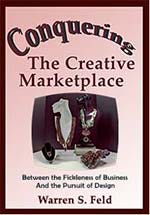
THE JEWELERS’ PALETTE, 11/1/2024

Join my community of jewelry designers on my Patreon hub
From Warren and
Land of Odds

Use November’s Discount Code For Extra 25% Off @Land of Odds:
NOVEMBER25
www.landofodds.com

November 1, 2024

Hi everyone,

Some Updates and Things Happening.
(Please share this newsletter)

1. I wanted to share some great resources for packaging and display supplies:

FETPAK
www.fetpak.com

AZAR DISPLAYS
https://azardisplays.com/

ULINES
https://www.uline.com/

VISIPAK
https://www.visipak.com/

CLEAR BAGS
https://www.clearbags.com/

QUILL
https://www.quill.com/

2. A couple of quick links for you that you might want to bookmark

a. RIO GRANDE’s new KNOWLEDGE HUB

Access an ever-expanding library of articles, videos, podcast episodes, charts, and graphs available 24/7. Whether you’re interested in the latest trends in jewelry design and techniques or problem-solving at the bench, we have a wealth of information ready to help you learn, grow, and thrive.

Tons of info about jewelry and every kind of technique of jewelry making.

b. The 2024 Summer Design Challenge Winning Design

Matthew Piorkowski’s winning piece, “Interstellar”features a stunning fantasy-cut octagon ametrine showcased in a custom yellow-gold pendant setting. Centered on the bail is a brilliant square-shaped diamond with sixteen accenting diamonds along the left side of the pendant mounting, creating visual interest along the path of the diamonds.

Rio Grande runs a seasonal challenge called For the Love of Jewelers Design Challenge. They haven’t announced winter or spring submissions rules yet. Check on their website: www.riogrande.com

c. 7 Steps to Create Photorealistic Images With Stable Diffusion w. Chat AI’s Image Generator

In the ever-evolving world of artificial intelligence, the ability to create photorealistic images has become a groundbreaking achievement. ChatAI‘s Image Generator, powered by advanced Stable Diffusion models, offers users the tools to create images that blur the line between reality and AI-generated art. This article will guide you through the 7 steps to create photorealistic images with Stable Diffusion, focusing on the art of prompting. We’ll start by explaining what photorealistic images are, delve into the concept of Stable Diffusion, and then provide a step-by-step guide to crafting effective prompts. At the end, we will share 15 example prompts to inspire your creativity.

Read the article here.

3. I encourage you to take advantage of the very low prices of delica beads on the Land of Odds website.

Compare Our Prices To What You Are Paying:

In this monthly newsletter, occasionally, like in this newsletter, you will find a discount coupon code that you can use on the Land of Odds website.

You can also become a paid subscribing member on our Jewelry Designers’ Patreon Hub, which entitles you to a 25% discount as long as you maintain your subscription.

4. 🎭 As a jewelry designer, it is important to identify your direction, voice, & identity.

Direction is understanding what work you want to make, and why you are making it (your emotional response to your work).

Voice is your unique take on your work’s descriptions and your unique way of portraying messages within your work.

Identity is about what you have experienced: what makes you you, including aspects like your family or where you grew up.

5. I’m always faulting craft show vendors for not having good enough signage for their booths. Recently, I came across this sign, and liked it.

6. What does jewelry sound like, I, for no particular reason, asked myself the other day, so I went to take a look.

To my surprise, there are thousands of jewelry sound effects. There are sounds the jewelry makes when someone wears it. There are sounds the jewelry makes when someone makes it.

22 Royalty Free Jewelry Sound Effects
https://pixabay.com/sound-effects/search/jewelry/

Click sample jewelry sound effect
Click sample jewelry ring spin sound effect
Click sample jewelry chain bounce sound effect

Soundsnap.com

Zapsplat.com

Videvo.net

YouTube and Tik Tok have lots of jewelry sound effects
necklace jingling sound effect

7. Sometimes, as jewelry designers, we feel we don’t have the luxury of great access to resources — support, money, materials. There are opportunities available to you. Read the first of what will be a series of articles about this here.

NOTE: The word “artist” is often used in these opportunities, but in most cases, you should take this to be broadly defined, to include jewelry makers and fine craftspersons,

Building Creative Futures: Residencies, Grants, and Opportunities for Artists

“Often burdened with a bad reputation, an artist’s career is not the easiest path.

It’s true, that unstable income is not particularly reassuring in a world increasingly governed by financial power. After graduation, many young artists leave behind the schools where they had access to resources, mentorship, and time to create, often needing to fully realize how valuable that support was. This transition into the professional world can be daunting as they face the challenge of establishing themselves in a competitive industry.

With this in mind, we have created a series specifically dedicated to programs, grants, residencies and incubators, all aimed at supporting artists in research. This includes selected open calls, formative meetings, articles, and interviews published on Klimt02 to help artists better understand these opportunities and confidently use them as valuable resources to expand and communicate their creative practice.

This series will be continually updated to reflect the latest opportunities, ensuring you, the readers, have access to the most current information and resources published on Klimt02.”

Continue reading here.

8. Are you wondering if working with me as a coach would be a good fit?

Not sure if you’re ready or if you’re at the right place in your jewelry design journey? But you’re thinking that you want to do something powerful to bring more meaning to your art and start to actually make the pieces your soul is craving (maybe silently, maybe4 LOUDLY) to express?

Jewelry Design is not a simple, easy path. It is full of incredible challenges, and those are different for every designer. You will be confronted with struggle, obstacles will be placed at your feet, you’ll be bowled over by tedium, and frustrated by setbacks, befuddled when introducing your work publicly. Most things you will learn come from the art world or craft world, and don’t fit perfectly with what it means to design jewelry. The thing to remember is that those challenges are yours. They belong to you because you stepped into that world we call design. You have that desire to find and explore what all that means.

So often that first step in working deciding to work with a coach is the most difficult. But it is all about having the right guide through all the barriers and dilemmas and vagaries when designing jewelry.

I’m here to talk if you’re feeling stuck and curious about what it would be like to have the support of my mentorship program with you on the journey. Go ahead and schedule a free consultation to talk about your jewelry and problem solve some ways to jump start your creativity. This is a completely no-pressure opportunity to talk about your work and see if we can bring fresh energy, more meaning, and bitter impact to your art.

I’m here to offer guidance and if you think it’s a good fit to work together moving forward, that is great.

But really, this is a free opportunity, no pressure, absolutely no obligation. Let’s talk about where you’re at.

The easiest way to begin the process is to sign up here: COACHING WITH WARREN FELD
You can review what coaching entails. You can submit a form on this web page. When I receive it, I’ll schedule our free initial consultation. Beginning the process does not obligate you to anything.

Warren

And don’t forget to use this 25% discount code

throughout October at Land of Odds!!
Use November’s Discount Code
For Extra 25% Off 
@Land of Odds:
NOVEMBER25
www.landofodds.com

That’s it for now! There is a lot of creative expression all around the world right now. Hope you get to experience a lot of it, either first hand, or through social media online.

WSF

Feature your jewelry

Here next week

In This Newsletter,
as well as,
on our Jewelry Designer’s Hub!

Email a post (text and/or image) to warren@warrenfeldjewelry.com.

Promote your current projects, promotional copy, News & Views, videos, reels, tutorials, instructions, social media posts online in this newsletter and on our jewelry designers’ Patreon hub.

No deadlines! Opportunity available all the time. No fees.

But don’t wait to take advantage of this opportunity.

This copyrighted material is published here with permission of the author(s) as noted, or with Land of Odds or Warren Feld Jewelry. All rights reserved.

Repairs Stumping You?
Let Me Take A Look

I take in a lot of jewelry repairs. People either bring them to me in Columbia, TN, or, I pick them up and deliver them back in Nashville. I am in Nashville at least once a week. It’s been convenient for most people to meet me at Green Hills Mall. But if not, I can come to your workplace or your home. This is perfectly fine for me. My turnaround time typically is 3–4 weeks.

I do most repairs, but I do not do any soldering. I also do not repair watches. These are the kinds of repairs I do:

o Beaded jewelry
o Pearl knotting, hand knotting
o Size/Length adjustment
o Re-stringing
o Wire work/weave/wrap
o Micro macrame
o Broken clasp replacfement
o Earring repair
o Replace lost rhinestones or gemstones
o Stone setting
o Stretchy bracelet
o Metal working which does not involve soldering
o Bead woven jewelry and purses
o Beaded clothing
o Custom jewelry design

View my How-To-Repair-Jewelry videos on our Jewelry Designers’ Hub.
My most recent how-to: Converting 3-Strand Stretchy Bracelet to Cable Wire W/ Clasp

WARREN FELD JEWELRY (www.warrenfeldjewelry.com)
Custom Design, Workshops, Video Tutorials, Webinars, Coaching, Kits, Group Activities, Repairs
~~~~~~~~~~~~~~~~~~~~~~~
Join our community of jewelry designers
on my Patreon hub
Be part of a community of jewelry designers who recognize that we have a different way of thinking and doing than other types of crafters or artists.
One free downloadable Mini-Lesson of your choice for all new members!
~~~~~~~~~~~~~~~~~~~~~~~

Follow me on social media: facebookinstagram

shop.warrenfeldjewelry.com
Where you can buy:
Seed Beads and Delicas, Kits, Books, Finished Jewelry

school.warrenfeldjewelry.com
Take advantage of our video tutorials, mini-lessons, projects and our coaching services:

Read articles about jewelry design and about the business of craft:
Articles on Medium.com

Books (in kindle, ebook or print formats) by Warren Feld, purchase from Amazon.com or BarnesAndNoble.com:

Kits by Warren Feld

Ask about my COACHING services

Arrange a GROUP ACTIVITY

Add your email address to my Warren Feld Jewelry emailing list here.

Thanks for being here. I look forward to sharing more resources, tips,
sources of inspiration and insights with you.

Join A Community Of Jewelry Designers
On My Patreon Hub
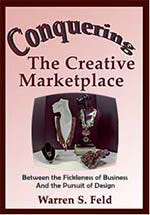
Posted in architecture, Art or Craft?, art theory, bead stringing, bead weaving, beads, beadwork, business of craft, color, Contests, craft, craft shows, creativity, cruises, design management, design theory, design thinking, enrichment travel, Entrepreneurship, handmade jewelry, jewelry, jewelry collecting, jewelry design, jewelry making, Learn To Bead, pearl knotting, professional development, Resources, Stitch 'n Bitch, Travel Opportunities, wire and metal, Workshops, Classes, Exhibits | Tagged: , , , , | Leave a Comment »

How To Make A Space Into A Place: Art and Planning in the Columbia Tennessee Arts District

Posted by learntobead on October 17, 2024

Columbia ARTS DISTRICT

Read the full plan here.

The Columbia ARTS DISTRICT (CAD) was created to provide a haven for artists to live and work. The CAD is located a few blocks from Downtown Columbia in the South Garden/High Street area. The City has established historic zoning overlays to protect historic and cultural assets that include distinct neighborhoods like the ARTS DISTRICT. The area currently comprises several blocks of old warehouses, old houses (some historically significant), mobile homes and manufactured homes, and vacant lots. One warehouse building was turned into a multi-story mix of artist studios, retail spaces, coffee house, some office space. There are some restaurants and specialty shops in the District, but not many. Columbia is a small town of about 45,000 residents, growing 2–3% annually, and is located about 45 miles south of Nashville.

My Interest In Creating A Visioning Plan 
 For The ARTSWORKS ART DISTRICT

I am a relatively recent resident of Columbia, TN. I have an extensive background in city planning, city revitalization, art and design. The COLUMBIA ARTS DISTRICT area, about 1 square mile in size, and abutting the downtown, has excited me in so many ways, not least of which, because the idea to use the arts as a planning tool for community and economic development offers so many great possibilities.

The BIG question for me was whether you can create a community-based Arts District, where the focus and energy emerge from how the community interacts with and finds meaningful experiences within the space, rather than focusing on physical design per se.

My SECONDARY question was whether a District designed to bring artists to live, work and play together can remain competitively viable over time, or will the community either lose interest or will the area become so attractive that gentrification negates its original reason for being. Time will tell, … as will smart thinking, planning, and cooperative partnering.

My excitement comes from things like,

(1) Taking a proactive approach to planning for the arts, maximizing realistic and effective physical and social development, and minimizing unintended consequences, when making a space into a place.

(2) Promoting cooperative relationships among artists, planners, developers, educators, nonprofits, funding sources and the general public, leading to a greater sense of place, voicing a narrative for it, and celebrating it.

(3) Offering many possibilities for nontraditional engagement program and physical development and the community

(4) Focusing on the ‘arts’ (broadly defined) as a driver of community and economic development, perhaps generating new practices and ideas in urban planning, the arts and design, and thus elevating ideas about creative place-making

(5) Relying on a local framework to steer community and economic development, hopefully resulting in a more unique expression of the Columbia community

(6) Recognizing that the city has a strong commitment for developing the Arts District

(7) Having an early opportunity to create a strong vision for development, preventing some undesirable development outcomes.

The Arts As Defined By Columbia

Initially, Columbia Arts Council focused on 5:

· Visual Arts (painting, sculpture, applied arts, graphic arts)

· Theater

· Craft

· Music

· Writing

I suggested breaking out applied arts and graphic arts as their own discipline apart from visual arts.

I suggested adding:

· Fashion

· Interior Design

People pursue artistic and creative expression through a variety of outlets: formal theatrical performances, sculptures, paintings, and buildings; as well as the less formal arts, music and food festivals, celebrations and informal cultural gatherings, pickup bands, and crafts groups. Together, these formal and informal, tangible and intangible, professional and amateur artistic and cultural activities constitute a community’s cultural assets. These activities — which encompass a diverse set of locations, spaces, levels of professionalism and participation, products, events, consumers, creators, and critics — are essential to a community’s well-being, economic and cultural vitality, sense of identity, and heritage. (American Planning Association, 2011)

People participate in arts and culture at varying levels of skill and engagement. Participants include creators (from the professional actor to a child actor in a school play), consumers (from the audience member for an opera performance to the parent of the child in the school play), and supporters and critics (whether foundations, parents and school fund-raisers, or journalists).

Some create, while others listen to, watch, teach, critique, or learn a cultural activity, art form, or expression. Some are professional artists, designers, and inventors, while others engage informally in expressive activities or create innovative tools, relationships, or products.

The field as a whole can be represented within a framework that has four main aspects:

1. Degree of professionalism, (professional/formal à vocational/informal)

2. Type of product or activity, (tangible à intangible)

3. Locations and spaces, (specific purpose venue à non-arts venue)

4. Level of participation and involvement (creator à consumer)
 (American Planning Association, 2011)

What makes a great place? What keeps it great over a very long, sustained time?

These are questions we need to be asking ourselves as we translate visions of what can be into actual programs of community and economic development. This vision plan for the ARTSWORKS ARTS DISTRICT provides a lot of food for thought, some tools for clarifying options, and some suggestions for how to approach Placemaking over the next several years. It is an effort to help us collectively reinvent and reimagine what could be. Something more than attractive urban designs. Something distinctive from other cities and towns. Something with community and meaning and quality well-being, shaping how people come together, interact, share experiences and feel a special connection to this place we call the ARTSWORKS ARTS DISTRICT and this place we call Columbia.

The object is to create a place, not a design.

About Placemaking 
 (based on information from ArtPlace America
 
https://www.artplaceamerica.org/ )

Placemaking inspires people to collectively reimagine and reinvent public spaces as the heart of every community. Strengthening the connection between people and the places they share, placemaking refers to a collaborative process by which we can shape our public realm in order to maximize shared value. More than just promoting better urban design, placemaking facilitates creative patterns of use, paying particular attention to the physical, cultural, and social identities that define a place and support its ongoing evolution.

Great public spaces are those places where celebrations are held, social and economic exchanges occur, friends run into each other, and cultures mix. They are the “front porches” of our public institutions — libraries, field houses, schools — where we interact with each other and government. When these spaces work well, they serve as the stage for our public lives.

What makes some places succeed while others fail?

To be successful, places generally share the following four qualities:

1. They are accessible

2. People are engaged in activities there

3. The space is comfortable and has a good image

4. It is a sociable place: one where people meet each other and take people when they come to visit.

Access & Linkages

You can judge the accessibility of a place by its connections to its surroundings, both visual and physical. A successful public space is easy to get to and get through; it is visible both from a distance and up close. The edges of a space are important as well: For instance, a row of shops along a street is more interesting and generally safer to walk by than a blank wall or empty lot. Accessible spaces have a high parking turnover and, ideally, are convenient to public transit.

Activities

Activities can take many forms — one-off programs, ongoing programs, small number of participants to a large number of participants. The placemaking goal of each activity is that participants have a meaningful experience, and one they want to share with others.

Comfort & Image

Whether a space is comfortable and presents itself well — has a good image — is key to its success. Comfort includes perceptions about safety, cleanliness, and the availability of places to sit — the importance of giving people the choice to sit where they want is generally underestimated, and the availability of shade.

When it comes to accessibility, it isn’t simply enough to be able to get to a place. To fully enjoy a space, people must be able to navigate it and spend time there with dignity and confidence. Unfortunately, many spaces deliver a message of exclusion to their visitors.

Sociability

This is a difficult quality for a place to achieve, but once attained it becomes an unmistakable feature. When people see friends, meet and greet their neighbors, and feel comfortable interacting with strangers, they tend to feel a stronger sense of place or attachment to their community — and to the place that fosters these types of social activities.

Power of 10+

The idea behind this concept is that places thrive when users have a range of reasons (10+) to be there. These might include a place to sit, playgrounds to enjoy, art to touch, music to hear, food to eat, history to experience, and people to meet. Ideally, some of these activities will be unique to that particular place, reflecting the culture and history of the surrounding community. Local residents who use this space most regularly will be the best source of ideas for which uses will work best.

Some questions/concerns to consider when placemaking

  • Does the space function for people with special needs?
  • Providing shade, ways to cool off, or spots to take cover during a storm not only ensure that public spaces are usable in all weather, but also that they become trusted refuges in an era of climate crisis.
  • Accessible bathrooms
  • Regular maintenance of public spaces
  • The more activities that are going on at one time, and that people have an opportunity to participate in, the better
  • Good balance between men and women
  • People of different ages are using the space
  • The space is used throughout the day
  • A space that is used by both singles and people in groups is better than one that is just used by people alone because it means that there are places for people to sit with friends, there is more socializing, and it is more fun.
  • The ultimate determinant of a place’s success is how well it is managed.
  • Are people using the space or is it empty?
  • Are people in groups?
  • How many different types of activities are occurring — people walking, eating, playing baseball, chess, relaxing, reading?
  • Which parts of the space are used and which are not?
  • Are there choices of things to do?
  • Is there a management presence, or can you identify anyone who is in charge of the space?
  • Is this a place where you would choose to meet your friends? Are others meeting friends here or running into them?
  • Are people in groups? Are they talking with one another?
  • Do people seem to know each other by face or by name?
  • Do people bring their friends and relatives to see the place or do they point to one of its features with pride?
  • Are people smiling? Do people make eye contact with each other?
  • Do people use the place regularly and by choice?
  • Does a mix of ages and ethnic groups that generally reflect the community at large?
  • Do people tend to pick up litter when they see it?

Establishing An Arts Identity

Establishing an arts identity can take many directions. A vibrant arts scene no longer means a street lined with art galleries. It can include a broader segment of the creative community — theatre, music, writing, crafts, fashion, media arts, applied arts and graphic design, interior design. The specific arts identity for any community is shaped by those arts for which a community has a special affinity for, as well as the types of assets available to support those arts.

Depending upon the values and decision making criteria put into action today, the area can evolve, over time, towards one of 4 ways:

(1) Museum: people come to look, but often do not linger or return to look again; the art is static

(2) Amusement Park: people come to play (think lower Broadway in Nashville); the art is ignored

(3) Gentrified and Residential: people come to live and the area becomes somewhat insular, with the importance of the arts often diminished to the role of ornamentation

(4) Community organized around the idea of “art”: people come from near and far to interact with the arts as a way of enhancing a meaningful and memorable sense of self and community

I prefer option #4, and that is my bias throughout this visioning plan.

Development takes time and patience. It takes vision and values. Development with little to no or poor planning is a waste of time, and typically fails in its quest to realize any set of vision and values. Decisions made today will impact what the area looks like 25–50 years from now.

Columbia’s Art Culture

Columbia’s arts, culture, and music scene add flavor to the region, cultivated with the support of:

· Non-profit arts organizations, including multiple community theater groups

· ARTS DISTRICT

· Columbia Arts Council

· Columbia citizens

Columbia nightlife highlights the growing music culture as more artists showcase their talents at local restaurants and local venues.

Columbia Arts Council

COLUMBIA ARTS COUNCIL Authority: Promotes Arts in the Community Appointed by the Mayor Confirmed by Council Terms: Three Years Composition: Nine Members Involved in the Arts

Advised by Tourism & Marketing Director Role in Planning Process:

Final Decision on Appeals of Zoning Administrator’s Determination of Arts-Related Uses in the Arts District Overlay

City Specified Guiding Essential Values

Columbia has set a development goal to make an area adjacent to the downtown, in this plan referred to as the ARTSWORKS ARTS DISTRICT, into a place where the community organizes around the arts (broadly defined). These are the guiding essential values toward that end.

· The Arts

· Viability

· Connection and Flow

· Vitality

· Interactivity

· Diversification and Flexibility

· Steadfast

· Neighborly

· Leverage

· Sustainability

· The Arts: Emphasize the arts as the ARTSWORKS ART DISTRICT’s main theme. The arts are to be broadly defined as inclusive of visual artists, theater, crafts, writers, and musicians. The Arts are to be represented in a variety of ways, from business development, to exhibitions, to demonstrations, to public art, to the structuring of meaningful public experiences, to education, to physical infrastructure planning, to one-off as well as ongoing programs and events.

· Viability: Build, attract and retain creative talent. Encourage additional development of arts-related uses that complement the district’s theme. This will enhance the life and energy of the city, contribute to the long-term viability and success of businesses in the ARTSWORKS ARTS DISTRICT, and help the city attract new types of businesses which will diversify its commercial base.

· Connection and Flow: Columbia provides options for safe, efficient and accessible movement throughout the ARTSWORKS ARTS DISTRICT, including pedestrian walkways, proposed INTERACTIVE ARTS TRAILS (one by auto, the other by foot), attention to areas of potential conflict between cars, bicycles and pedestrians. The ARTSWORKS ARTS DISTRICT should be easily navigable by all.

· Vitality: Columbia ARTSWORKS ARTS DISTRICT is a safe community with opportunities for the personal and community expression through the arts (broadly defined), and the setting and maintaining of high standards for the quality of the built environment, the commercial and residential environment. Retain many of The District’s architectural features and landscape. Enable affordable residential and commercial spaces for artists and art-related businesses. Ensure many comforts throughout, such as seating and shading. Designed for lingering.

· Interactivity: Engage visitors in ways traditional artwork does not. Encourage community participation and meaningful interaction and immersion in some form with the art they are seeing, hearing, touching, smelling, experiencing. The ARTSWORKS ARTS DISTRICT should be seen by the public as a sociable place, where they want to come to meet others, are comfortable with strangers, share meaningful experiences, and where they want to bring their friends and family to see and experience.

· Diversification and Flexibility: The ARTSWORKS ARTS DISTRICT will include a mix of residential, restaurant, retail, art, educational, other commercial, hotel/motel/conference/exhibition/B&B /inn infrastructure. The ARTSWORKS ARTS DISTRICT will be a place for programs, exhibits, demonstrations, special events, educational and training related to visual and sculptural art, craft, theatre, music and writing. The ARTSWORKS ARTS DISTRICT will host several flexible-use spaces.

· Steadfast: The ARTSWORKS ARTS DISTRICT is viable as a livable, workable, and commercial area of Columbia, where development is economically sustainable and pertinent to both community and economic development, new development is cohesive and compatible, that the distribution of new development is balanced and flows organically throughout the entire delineated area, and the unique character of this neighborhood develops as vibrant, interactive and community based. Tensions between historical preservation and land use and business development are resolved.

· Neighborly: Columbia ARTSWORKS ARTS DISTRICT is a place where all residents feel welcome and included in community decisions.

· Leverage: Where it makes sense, Columbia should use a leverage approach to encourage developments and programs. Columbia can leverage money, power, position, and authority. Columbia might offer an incentive where every private dollar raised would be matched with one dollar of city funds. Columbia might foster (and mentor) public/private partnerships. Columbia might use its location, population and industrial mix to its advantage. Columbia might develop additional criteria and planning/development standards and codes to the advantage of the ARTSWORKS ARTS DISTRICT and leading development in line with values, goals and objectives. Columbia might rely on volunteers to accomplish many of its development and program goals.

· Sustainability: The ARTSWORKS ARTS DISTRICT over time should become less and less dependent on city funds.

Concerns

It is important to try and anticipate what kinds of things can go right, and what kinds of things can go wrong, as the ARTSWORKS ARTS DISTRICT develops. Will initial investments prove overly optimistic about their return? Will the area generate a lot of excitement at first, but not be able to sustain that excitement over time? Will “art” remain the core organizing principle for the area, or be replaced by unrelated commercial and/or residential development?

It is also important to try and anticipate how Columbia’s ARTSWORKS ARTS DISTRICT will continue to provide stimulus to sense of community and fiscal viability, and how it might not. Will visitors to the district be motivated to stay long enough to spend money there? Will they return and visit again? Will they have a memorable experience that they want to share with others?

It is also important to try and anticipate how Columbia’s ARTSWORKS ARTS DISTRICT can create and retain a competitive advantage over similar or competing areas in neighboring towns, in other towns in Tennessee and in other towns throughout the United States. If every town takes an interior design approach (Museum) with placement of murals and sculptures, how will Columbia differentiate itself?

What things will keep the ARTSWORKS ARTS DISTRICT going over the next 10–50 years as it develops, and what things will prove to be impediments?

Goals and Objectives

COLUMBIA ARTSWORKS ARTS DISTRICT GOALS:
 A community organized around creative talent and businesses can improve…

#1: Character

#2: Opportunity

#3: Support

#4: Investment

#5: Administration and Regulation

Read the full plan here.

Table of Contents

1. THE ARTSWORKS DEVELOPMENT OPPORTUNITY, p. 2
2.
ESSENTIAL GUIDING VALUES, p. 8
3.
PLACEMAKING, p. 11
4.
WHAT IS INTERACTIVE ART, p. 15
5.
CONCERNS, p. 17
6.
THE FUNCTIONAL PRIMARY NEEDS AND SECONDARY EFFECTS
 OF THE VARIOUS ARTS, p. 21
7.
GOALS AND OBJECTIVES, p. 23
8.
LAND USE AND PROGRAM APPROACHES AND POSSIBILITIES, p. 29
Primary strategies and tools towns resort to, p. 30
9.
EXAMPLES OF TYPES OF PROGRAM ACTIVITIES, p. 39
What Is An Arts Trail, p. 40
9a. Visual Arts, p. 45
9b. Theatre, p. 50
9c. Outdoor Stage Options, p. 55
9d. Crafts, p. 60
9e. Music, p. 65
9f. Writing, p. 69
9g. Applied Arts and Graphic Arts, p. 73
9h. Fashion, p. 77
9i. Interior Design, p. 79
9j. Interdisciplinary Ideas, p. 82
10.
DESCRIPTION OF AREA, p. 83 
With Suggestions For High Priority Land Uses Development, p. 85
How a CONFERENCE HOTEL differs from a CONVENTION HOTEL, p. 98
11.
IMPLEMENTATION PROPOSALS AND RECOMMENDATIONS, p. 100
Creating Partners, p. 117
Organizing Volunteers, p. 118
12.
FUNDING POSSIBILITIES, p. 119
In-state Tennessee funds, p. 120
Funding methods used to develop arts districts across America, p. 122
Foundation and grant funds in Tennessee which may be used for the arts, p. 124
Funding and grant programs for the arts and artists, p. 125
13.
ORGANIZATIONAL RESPONSIBILITIES, p. 128
14.
STANDARDS & CRITERIA, p. 130
15.
CASE STUDIES, p.138

Read the full plan here.

_______________________________________________________

I have set up a space for our community of jewelry designers — Warren Feld Jewelry’s PATREON HUB — to learn, to interact, and to provide and/or get feedback on what they are working on. Please join here.

Be part of a community of jewelry designers who recognize that we have a different way of thinking and doing than other types of crafters or artists. Access more articles and other resources not included in my medium.com site.

Visit my website www.warrenfeldjewelry.com

Feel free to add your comments.

Shop with us at Land of Odds.

Posted in architecture, Art or Craft?, beadwork, business of craft, craft, design thinking, Entrepreneurship, handmade jewelry | Tagged: , , , , , , , , , | Leave a Comment »

HOW TO BEAD A ROGUE ELEPHANT: The Musings Of A Jewelry Designer: Color

Posted by learntobead on April 22, 2024

Warren Feld

Warren Feld

I am a color addict.

Not sure how I got this way. I can remember when I was 10 or 11 years old, my friend Gary and I, and sometimes Ira, who was sometimes a friend, sometimes someone we bullied, used to set fires, and then try to put them out. We would set fire to this field behind the Ford dealership on Rt. 22. We would set fire to homes and businesses under construction. We would set fires, let them burn awhile and then try to put them out by stamping them with our feet, putting blankets over them, pouring water on them.

We set fires until we were caught. By the police. Punished severely by our parents who could not figure out why we were setting fires. The word because was insufficient for them. We did it because we could. The fields and buildings were there waiting to be used. We used them the way we knew how. That gave us some fun. A feeling of power. And that was that.

That was that for Gary and Ira. Actually, not for me. I became mesmerized. The colors. The contrasts. The saturation and vibrancy. The interplay. The movement and rapid color changes. The certainty when it was all over.

My gaze locked in, never wavering, staring as the light tans and beiges of the tall field grasses, very still, began undulating with reds and oranges, some blues, some maroons, the fiery colors taking over, first a small area, then more and more, until the colors were more powerful than the heat generated by the fire. Once the fire was put out, I literally felt the strong juxtaposition between charcoal and beige, at once listless and lifeless, yet exuding a powerful finality.

Color is such a powerful influencer. I never set fires again, but, at the same time, I had no one to share my very personal, very emotional, very primal color experiences with until I was in my late 20’s. In school, I was always tracked with the more intelligent kids. This meant rewards for math and science, and some put downs for art and music. My parents did not want to hear about anything else besides lawyer and doctor.

Soon after Gary and Ira and I were caught, I moved away.

But I doubt color was in their forethoughts as we set fires to things.

The Jewelry Designer Colors Differently Than The Artist

You cannot paint with beads and other jewelry components.

I am going to repeat this: You cannot paint with beads and other jewelry components.

When you take color class after color class rooted in art, they are teaching you how to paint. You can’t do this with jewelry and beads.

I give this warning to all my students. I repeat it frequently in the articles I write. I follow it carefully when designing my own pieces. I have been challenged frequently by people who make jewelry and consider themselves artists. But to create successful jewelry takes you beyond art, its ideas, constructs and precepts. Jewelry has some roots in art, which is true. But it also has roots in craft. It is very comparable to architecture. Its product — the outcome — plays a different role and must conform to different social and physical tensions than paintings and sculptures. I repeat: You cannot paint with beads.

As frustrating as this can be, you cannot ignore the fact that Color is the single most important Design Element. Colors, their selection, use and arrangement, are believed to have universal powers to get people to see things as harmonious and appealing. Color attracts attention. A great use of color within an object, not only makes that object more coherent, it can make it more contagious, as well. Using colors that do not work well together, or using too many colors or not enough colors, or using colors which look good on paper but distort in reality can put people off.

Jewelry Designers can learn the artistic basics of Color concepts and theories. They can reference this visual language of color to influence how they go about making choices, including those about picking and using colors. However, jewelry artists who are fluent in design will be very aware of the limitations this artistic, painterly language imposes on them. They will have to learn how to decode, adjust and leverage their thinking to anticipate how the bead and other related and integrated materials assert their needs for color, and how to strategically compose, construct and manipulate them.

Jewelry, unlike painting or sculpture, has certain characteristics and requirements which rely on the management and control of color, its sensation and its variability with a slightly different emphasis than learned in a traditional art class. Jewelry is a 3-dimensional object, composed of a range of materials. Jewelry situates, moves and adjusts in relation to the human body and what that body is doing at the moment.

To get the attention their jewelry deserves, jewelry artists must become fluent with color selection and application from their own disciplinary perspective. We must understand color in jewelry as the jewelry is worn, and worn in a particular context or situation. Ever-changing directions and intensities of light and shadow, reflection, absorption and refraction. The observation that color may be present, even projected (the color shadow), outside the boundaries of the bead or jewelry component itself.

Beads [here I use ‘beads’ as a stand-in for all the component parts and stringing and canvas materials used in a piece of jewelry] are curved or faceted or otherwise shaped, and the shape and texture and material and dimensionality and even the hole through it affect the color, its variation and its placement and movement on the bead’s surface. They affect how light reflects and refracts, so depending on the angle at which you are standing, and how you are looking at the bead, you get some unexpected, unanticipated, sometimes unwanted colors in your piece of jewelry.

Additionally, you need to anticipate how the bead, when worn, can alter its color, depending on the source and positioning of light, the type and pace of movement of the wearer, and how the eye interacts with the bead at any point of time or positioning. There are many more color tensions that come from the interrelationships between positive and negative spaces. There are many gaps of light between each pair of beads, and you can’t paint these in. The colors don’t blend, don’t merge, don’t spill over, don’t integrate. You can’t create the millions of subtle color variations that you can with paint.

I’m not suggesting that beaders and jewelry makers be afraid of colors. Rather, they should embrace them. They should learn insights into understanding colors. They should be inspired by colors. They should express their artistic and creative selves through color. They should use color palettes to their fullest. They should recognize how their various audiences see and claim and interact with color.

It is most important that jewelry designers understand color, its use and application from their own disciplinary standpoint. In some sense, however, the approaches of most bead artists and jewelry designers too often remain somewhat painterly — too rooted in the Art Model.

The Art Model ignores things about functionality and context. The Art Model does not anticipate all the additional management and control issues which arise with jewelry creation and how /where / when it is worn. The Art Model diminishes how the individuality of the designer, and the subjective responses of the wearer and viewer affect each other. In many respects, these are synergetic, mutually dependent and reciprocal. The Art Model understands the success of jewelry only as if the jewelry were sitting on an easel, not as it is worn. When jewelry is treated as an inanimate object, apart from when it is worn, then traditional art color theories would suffice and apply.

As a result, when the use of color is solely dictated by art theory, then color theories get oversimplified for the jewelry artist. “Value” is barely differentiated from “Intensity”. Color selection focuses too much on harmony and variety, and too little on resonance and edginess. Color training too often steers jewelry designers towards a step-by-step, paint-by-number sort of approach to color selection and application. Color theory seeks to explain the universal, and paintings, given that they are immobile, hung on a wall, give time and space for the viewer to experience these universals.

Jewelry, on the other hand, requires an understanding of how color can be adapted to more subjective experiences. It does not stay in the same place. It is not desired in the same way across individuals who view it and wear it. As such, the co-dependent relationship between Color and other Jewelry Design Elements is downplayed and glossed over. This is a major disservice.

Designers need to think of colors as building blocks, and the process of using colors, as one of Creative Construction. Creative Construction requires focusing on how color (and multiple co-existing colors) is (are) sensed, and sensed by various audiences which include the artist him- or herself, and the wearer and the viewer, and the exhibitor, collector, and the seller, if need be. Creative Construction also requires anticipating how color is sensed within those context(s) and situation(s) the jewelry will be worn. Creative Construction includes an ability to anticipate how the various audiences of the designer use color to assume, perceive, understand, express, value and desire jewelry within any context.

All jewelry designers, including myself, are challenged with tasks like controlling the presentation of color(s) along a jewelry object’s silhouette. Or in blending colors among fixed physical objects awkwardly aligning or misaligning within some positive and negative spaces. Or having two or more colors co-exist within the same space or form which may or may not harmonize, given the reality that beads and other jewelry objects do not come in every possible and desirable color, nor consistently express any particular color over their entire surface.

I have found the use of simultaneity effects especially useful here. The one I use the most is that of grays. Gray takes on the colors around it. If I line up an orange bead, then a gray bead, then a blue bead, the middle gray bead will create the perception of a blended orange to blue form. Any bead with an underlying gray or black tone, strategically placed, will accomplish some color blending otherwise problematic.

I often play with other simultaneity effects. Some colors in combination emphasize warmth, and others cold. A sense of temperature (for example a red square embedded within a white square vs. that same red square embedded within a black square) can sometimes be used to divert the mind’s attention from whether the colors correctly harmonize.

In a similar way, some colors in combination (example a yellow square within a black square vs. within a white square) can create the illusion of either projecting or receding, and this too can be used to divert the mind’s attention from whether the colors correctly harmonize.

In my pieces, you will often find colors which, if not used strategically in combination and placement, would not seem to go together. They don’t fit a color scheme. They do not perfectly conform to a mathematical algorithm. They might even clash. More often, however, they just seem off in some way. But by smartly using simultaneity effects, they feel whole, consistent, coherent, right in some way. But also intriguing as the viewer’s mind tries to make sense of them. The colors resonate and are edgy in some way, yet feel harmonious, and the viewers can never figure out why. I intentionally create an object which lacks inherent meaning in order to trap the viewer into trying to find inherent meaning. Fun stuff. And something which often draws the viewer’s attention to my pieces, and keeps their attention there.

I like to play with color proportions. There are ideal proportions of the presence of any two or more colors. Red should appear in equal proportions to green. There should be one orange for any two blues. In art, we would strive to achieve the perfect proportions. In jewelry design, however, I would want to play with imperfections in proportions to give an edginess to my piece. This edginess, if not gone too far, enhances how the jewelry resonates emotionally for the wearer or buyer. We want our jewelry to have a little bit of edginess, or else it may feel harmonious yet boring and banal.

I believe the jewelry designer needs to be able to apply the careful of consideration of color with the goal of evoking resonance in the viewer. Something beyond harmony. Something represented by the difference of the viewer saying I like it, from the viewer saying I want to wear it, or I want to buy it. The designer is here to perhaps emphasize a little bit of the absurdity in life, some playfulness, some inquisitiveness which result from tensions between order and chaos, meaning and meaninglessness.

The designer is there, in part, to challenge the viewer’s subjective interpretations. This is especially true as the jewelry is worn and the wearer moves from different situations, contexts, and lighting. The use of color in jewelry designer often fails when the designer merely tries to duplicate a perfect color scheme, given perfect lighting and no movement. Jewelry is not a painting or sculpture to be displayed in fixed position. It’s much more. Using color from the designer’s viewpoint, rather than of the artist, is a very useful tool.

All these and similar color tricks I use as a jewelry designer contribute to how my jewelry expresses and reflects my authenticity. They add the cachet to my pieces as contemporary. Uninhibited by social norms encapsulated in art theory rules for the use of color. Creating more of a sense of freedom in my pieces, a sense which affects the feelings of freedom the wearer has. Transcendence. A re-imagining. Revelation, connection, awakening.

That’s what my Rogue Elephant needs, wants, demands. In this chaotic and indifferent universe, that rogue-ness could not have it any other way.

_______________________________

I hope you found this article useful. Please consider sharing. Thank you for clicking the CLAP HANDS icon at the bottom of this article.

I’d welcome any suggestions for topics (warren@warrenfeldjewelry.com)

Also, check out my website (www.warrenfeldjewelry.com).

Enroll in my jewelry design and business of craft Video Tutorials online. Begin with my ORIENTATION TO BEADS & JEWELRY FINDINGS COURSE.
Take my tutorial on THE JEWELRY DESIGNER’S APPROACH TO COLOR .

Follow my articles on Medium.com.

Check out my books on Amazon.com

Subscribe to my Learn To Bead blog (https://blog.landofodds.com).

Follow my series HOW TO BEAD A ROGUE ELEPHANT.

Visit Land of Odds online (https://www.landofodds.com)for all your jewelry making supplies.

Check out my Jewelry Making and Beadwork Kits.

Add your name to my email list.

_________________________________________________________________

CONQUERING THE CREATIVE MARKETPLACE: Between the Fickleness of Business and the Pursuit of Design

KindlePrintEpub

SO YOU WANT TO BE A JEWELRY DESIGNER
Merging Your Voice With Form

Ebook , Kindle or Print formats

The Jewelry Journey Podcast
“Building Jewelry That Works: Why Jewelry Design Is Like Architecture”
Podcast, Part 1
Podcast, Part 2

PEARL KNOTTING…Warren’s Way
Easy. Simple. No tools. Anyone Can Do!

EbookKindle or Print

SO YOU WANT TO DO CRAFT SHOWS: 16 Lessons I Learned Doing Craft Shows

EbookKindle or Print

BASICS OF BEAD STRINGING AND ATTACHING CLASPS

EbookKindle or Print

___________________________________________

Posted in architecture, Art or Craft?, art theory, bead stringing, bead weaving, beads, beadwork, color, craft, creativity, design management, design theory, design thinking, Entrepreneurship, handmade jewelry, jewelry, jewelry design, jewelry making, Learn To Bead, pearl knotting, professional development, wire and metal | Tagged: , , , , | Leave a Comment »