Use a catchy phrase to summarize your business and get people’s attention…
Create A Tag Line
On written documents, brochures, stationery, envelopes and on online documents with titles, headings and the like, you have an opportunity to present more “words”, that is “meanings”, about your business. This gives you a second opportunity to convey things about your business that perhaps your specific business name falls short on, or needs more emphasis.
After you’ve come up with a business name, return to your lists of key words, and not-so-key words, and think of a tag line. Think of it as a “subtitle”.
Your Tag Line is a marketing opportunity, and should be worded in a catchy way. A great tag line captures the essence of the value you provide to your customer in one or two concise sentences.
Great tag line for taxidermy business: “the only game in town”
For my shop, Be Dazzled, “Don’t Be Frazzled, Be Dazzled!”
For my shop, Land of Odds, “Your Partner In Design”
First write a 9 words or less tag line. You need to be able to tell someone, in 1-sentence, preferably seven to nine words, who you are as a jewelry designer. What’s your style? What’s your approach? What’s your uniqueness? What’s your competitive advantage?
No qualifiers. No further supporting detail and elaboration. 1-Sentence.
It might be helpful to fill in this blank: “You want to buy/sell my jewelry because….(blank)….”
Or, “My jewelry is different and more relevant and better than everyone else’s because… (blank) …. “
A tagline doesn’t need to be overly clever or cute to be effective. A good tagline is primarily functional. It should explain the unique value that your business offers as clearly as possible.
Sure, many classic taglines are pretty smart. “Let your fingers do the walking” is a clever play on words. But it also clearly evokes the value that the Yellow Pages offers: easy access to reliable information.
Don’t Worry About Being Too Cute
Make It Memorable
Inject a Little Personality
Settle on a final draft.
GUIDELINES TO CREATE A GREAT SLOGAN
1. Identification. A good slogan must stay consistent with the brand name either obviously stated or strongly implied. It’s better to include the name of your business to it.
2. Memorable. Some of the best taglines or slogans are still being used today, even though they were launched several years ago.
3. Beneficial. Reveal your purpose and benefits of the product by conveying the message in consumer language. Turn bad into good. Suggest the risk of not using the product. Create a positive feeling for the consumers.
4. Differentiation. In an overcrowded market, companies in the same industry need to set themselves apart through their creative and original tagline or slogan.
5. Keep it simple. Use proven words and short keywords. One word is usually not enough.
Some examples of tag lines / slogans:
A diamond is forever. Beyond precision. Crystal gets closer to the body than ever before. Diamonds by the Yard. Every kiss begins with Kay. Live the moment. Perpetual spirit. Quality is Remembered Long After the Price is Forgotten. The crown jewellers for 150 years. The Jeweller of Kings. The right time for life. The added value of the first impression. Where Maryland gets engaged. For those who want more. Honesty, my addiction. Getting rid of headaches since 1888. Ring on your finger, necklace on your neck, and men on their knees. Diamonds. Divas. Desire. Love’s embrace. Want honesty? She only has two things on her list. Unleashing the beauty of the stone. Unstoppable. Our reputation shines as brightly as our diamonds. Beautiful, masterful design never goes out of fashion. Walk down our aisles first. Hearts on fire. The ultimate in luxury and style.
For more articles about Conquering The Creative Marketplace, click over to our Jewelry Designers’ Hub
Many people learn beadwork and jewelry-making in order to sell the pieces they make. Based both on the creation and development of my own jewelry design business, as well as teaching countless students over the past 35+ years about business and craft, I want to address what should be some of your key concerns and uncertainties. I want to share with you the kinds of things (specifically, a business mindset and confidence) it takes to start your own jewelry business, run it, anticipate risks and rewards, and lead it to a level of success you feel is right for you. I want to help you plan your road map.
I will explore answers to such questions as: How does someone get started marketing and selling their pieces? What business fundamentals need to be brought to the fore? How do you measure risk and return on investment? How does the creative person develop and maintain a passion for business? To what extent should business decisions affect artistic choices? What similar traits to successful jewelry designers do those in business share? How do you protect your intellectual property?
The major topics covered include,
1. Integrating Business With Design
2. Getting Started
3. Financial Management
4. Product Development, Creating Your Line, and Pricing
5. Marketing, Promotion, Branding
6. Selling
7. Professional Responsibilities and Strategic Planning
8. Professional Responsibilities and Gallery / Boutique Representation
9. Professional Responsibilities and Creating Your Necessary Written Documents
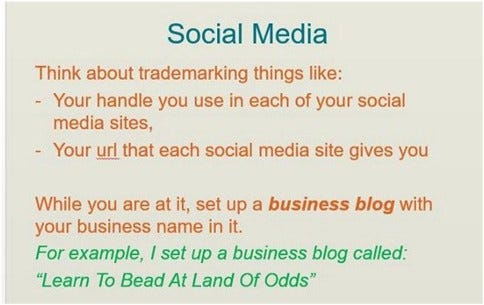
Besides your personal pages on various social media sites, you will want to have separate business pages. You would each business page to be keyed off you unique, registered and/or trademarked business name.
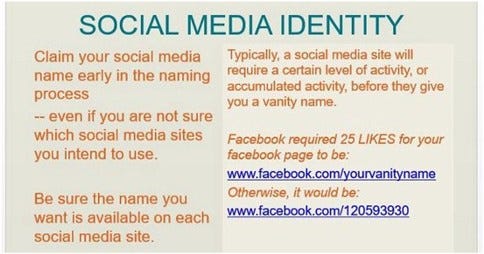
It’s a good idea to claim your social media name early in the naming process — even if you are not sure which sites you intend to use. A name for your Facebook page can be set up and changed, but you can only claim a vanity URL or custom URL once you’ve got 25 fans or “likes.” This custom URL name must be unique, or un-claimed.
Along with the URL for the business name, you’ll want to check and make sure there are places on Facebook, LinkedIn, Twitter, and Instagram (at the minimum) to claim early on.
You will want your business listed as a business in various search engines, like Google and Bing, Google Maps, Google Business, and various directories, like Yelp.
Being active on public social media platforms such as Facebook, Instagram, LinkedIn, BlueSky, and Twitter in addition to your own business blog, is almost an essential part of any business marketing toolkit. These tools can have enormous benefits, but they also have their dangers.
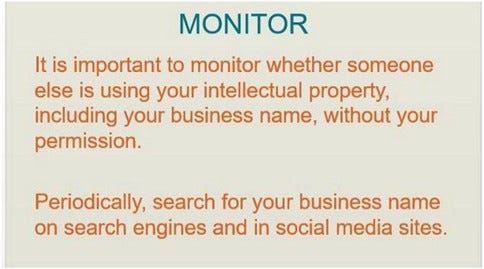
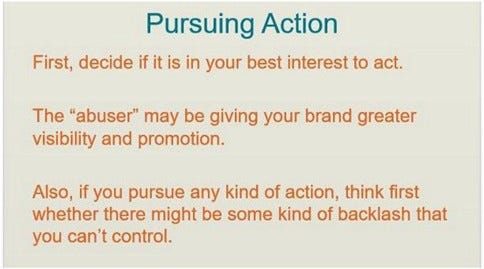
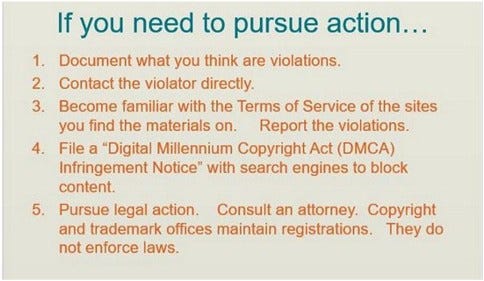
For example, some businesses jump on social networking sites only to discover that someone has already registered their company or product names on Facebook and Twitter and is misrepresenting their brand as a consequence. Likewise someone might be out there reproducing your copyrighted web copy, blogs, photographs and videos (all that good multi-media stuff that social networks love to propagate) — without your knowledge.
For more articles about Conquering The Creative Marketplace, click over to our Jewelry Designers’ Hub
Many people learn beadwork and jewelry-making in order to sell the pieces they make. Based both on the creation and development of my own jewelry design business, as well as teaching countless students over the past 35+ years about business and craft, I want to address what should be some of your key concerns and uncertainties. I want to share with you the kinds of things (specifically, a business mindset and confidence) it takes to start your own jewelry business, run it, anticipate risks and rewards, and lead it to a level of success you feel is right for you. I want to help you plan your road map.
I will explore answers to such questions as: How does someone get started marketing and selling their pieces? What business fundamentals need to be brought to the fore? How do you measure risk and return on investment? How does the creative person develop and maintain a passion for business? To what extent should business decisions affect artistic choices? What similar traits to successful jewelry designers do those in business share? How do you protect your intellectual property?
The major topics covered include,
1. Integrating Business With Design
2. Getting Started
3. Financial Management
4. Product Development, Creating Your Line, and Pricing
5. Marketing, Promotion, Branding
6. Selling
7. Professional Responsibilities and Strategic Planning
8. Professional Responsibilities and Gallery / Boutique Representation
9. Professional Responsibilities and Creating Your Necessary Written Documents
Check to see if anyone has registered your business name online as a registered domain name. Go to http://www.networksolutions.com/ or www.GoDaddy.com and type in the name you want. If the name you want is taken, you can always vary the domain type, such as “.net” or “.biz” instead of “.com”. You can vary a name by adding punctuation like a hyphen or period or deleting a space between words. You can vary a name by making it plural. You can vary the name by playing with the spelling of certain words — even making up your own creative spelling for some words.
Next, register a business domain name, so that you protect your business name from other people who might use it on-line. In translating your business name to an internet domain name, keep in mind that your email address will include that domain name. You want people to be able to easily and quickly type in your email address into an email. You do not want people to confuse the spelling or any added punctuation.
Pointers: The business name does not have to match your domain name The .com extension would be best, even though there are many other choices If possible, the domain name should be rich in key words.
To find out if your business name has been claimed online, do a simple web search to see if anyone is already using that name.
Many people learn beadwork and jewelry-making in order to sell the pieces they make. Based both on the creation and development of my own jewelry design business, as well as teaching countless students over the past 35+ years about business and craft, I want to address what should be some of your key concerns and uncertainties. I want to share with you the kinds of things (specifically, a business mindset and confidence) it takes to start your own jewelry business, run it, anticipate risks and rewards, and lead it to a level of success you feel is right for you. I want to help you plan your road map.
I will explore answers to such questions as: How does someone get started marketing and selling their pieces? What business fundamentals need to be brought to the fore? How do you measure risk and return on investment? How does the creative person develop and maintain a passion for business? To what extent should business decisions affect artistic choices? What similar traits to successful jewelry designers do those in business share? How do you protect your intellectual property?
The major topics covered include,
1. Integrating Business With Design
2. Getting Started
3. Financial Management
4. Product Development, Creating Your Line, and Pricing
5. Marketing, Promotion, Branding
6. Selling
7. Professional Responsibilities and Strategic Planning
8. Professional Responsibilities and Gallery / Boutique Representation
9. Professional Responsibilities and Creating Your Necessary Written Documents
When it comes to starting a business, there’s often some confusion about the process of business name registration. How are trade names and trademarks different? Does a trade name afford any legal branding protection? Can your trade name be the same as your trademark?
Simply put, a trade name is the official name under which a company does business. It is also known as a doing business as (DBA) name, assumed name, or fictitious name. A trade name does not afford any brand name protection or provide you with unlimited rights for the use of that name. However, registering a trade name is an important step for some — but not all — businesses (more on this below).
A trademark is used to protect your brand name and can also be associated with your trade name. A trademark can also protect symbols, logos and slogans. Your name is one of your most valuable business assets, so it’s worth protecting.
An important reason to distinguish between trade names and trademarks is that if a business starts to use its trade name to identify products and services, it could be perceived that the trade name is now functioning as a trademark, which could potentially infringe on existing trademarks.
NOTE: You cannot trademark adjectives. For example, you can’t trademark the business name “Best Jeweler In Town”.
Registering a Trade Name
Naming your business is an important branding exercise. If you choose to name your business as anything other than your own personal name (i.e. a “trade name”), then you’ll need to register it with the appropriate authority as a “doing business as” (DBA) name.
Consider this scenario: John Smith sets up a painting business and chooses to name it “John Smith Painting.” Because “John Smith Paining” is considered a DBA name (or trade name), John will need to register it as a fictitious business name with a government agency.
You need a DBA in the following scenarios:
• Sole Proprietors or Partnerships — If you wish to start a business under any name other than your real one, you’ll need to register a DBA name so you can do business under the DBA name.
• Existing Corporations or LLCs — If your business is already incorporated and you want to do business under a different name, you will need to register a DBA.
Note that many sole proprietors maintain a DBA or trade name to give their business a professional image, yet still use their own name on tax forms and invoices.
Depending on where your business is located, you’ll need to register your DBA name through either your county clerk’s office, city clerks office, and/or your state government. Note: Not all states require fictitious business names or DBA registration. SBA’s Business Name Registration (http://www.sba.gov/content/register-your-fictitious-or-doing-business-dba-name) page has more information about the process, plus links to the registration authorities in each state.
Registering Your Trademark
Choosing to register a trademark is up to you, but your business name and identity is one of its most valuable assets, so it’s worth protecting.
Registering a trademark guarantees exclusive use, establishes legally that your mark is not already being used, and provides government protection from any liability or infringement issues that may arise. Being cautious in the beginning can certainly save you trouble in the long run. You may choose to personally apply for trademark registration or hire an intellectual property lawyer to register for you.
Because it can be tricky to identify potential infringement or clashes, and the penalties for doing so are high, it’s worth talking to a good intellectual property lawyer to ensure you cover all bases.
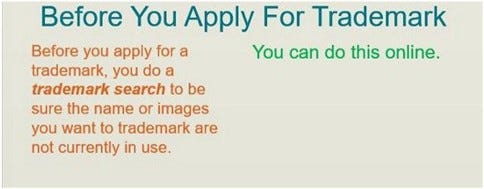
As you begin to narrow down a name, check with the US Trademark office to be sure no one else has used these names. Go to www.uspto.gov , and search the business names. Your state trademarks office may also have a searchable list.
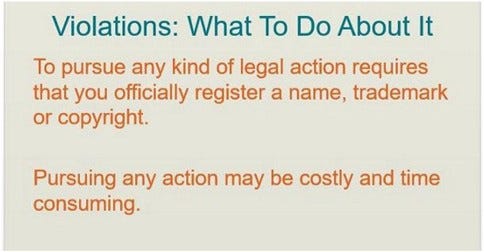
Protect your business name by registering the name (and logo, if you have one) as a trademark or service mark. Also copyright your brochures and advertising copy, and any sets of instructions, if you create these.
As soon as you pick your business name, register it as a trade or service mark with your state trademark office. Each State you do business in, as well as the US as a whole, offer opportunities to protect your trade or service mark. You can prevent someone else from using your business name, or product name, by registering this name with the state(s), or US. You would put a TM next to the name you’ve trademarked, such as Be Dazzled Beads TM .
In Tennessee, this process is especially inexpensive — around $40.00 per trade or service mark. Your intellectual property would be protected in Tennessee. If you create a strong brand identity, this can prevent businesses outside the state of Tennessee from representing your intellectual property as their own.
Getting a US trademark is expensive and a little more complicated, and I’d strongly suggest using the services of a trademark lawyer in this case. A US trademark would protect your intellectual property anywhere in the United States.
In Tennessee, trademarks and service marks are handled by the Tennessee Secretary of State. For the United States, these are handled by the US Patent and Trademark Office.
Have I conducted a proper trademark search?
A great name is worthless if someone else already has laid claim to it. Start with some free resources like Trademarkia.com or USPTO.gov to do a cursory search to see if the name is already in use. Then, hire a trademark attorney to do a more thorough screening, and if the name isn’t taken, to register it with the U.S. Patent and Trademark Office. “Get it right the first time,” Watkins says. “A third of our business comes from companies who are being threatened with trademark infringement.”
For more articles about Conquering The Creative Marketplace, click over to our Jewelry Designers’ Hub
Many people learn beadwork and jewelry-making in order to sell the pieces they make. Based both on the creation and development of my own jewelry design business, as well as teaching countless students over the past 35+ years about business and craft, I want to address what should be some of your key concerns and uncertainties. I want to share with you the kinds of things (specifically, a business mindset and confidence) it takes to start your own jewelry business, run it, anticipate risks and rewards, and lead it to a level of success you feel is right for you. I want to help you plan your road map.
I will explore answers to such questions as: How does someone get started marketing and selling their pieces? What business fundamentals need to be brought to the fore? How do you measure risk and return on investment? How does the creative person develop and maintain a passion for business? To what extent should business decisions affect artistic choices? What similar traits to successful jewelry designers do those in business share? How do you protect your intellectual property?
The major topics covered include,
1. Integrating Business With Design
2. Getting Started
3. Financial Management
4. Product Development, Creating Your Line, and Pricing
5. Marketing, Promotion, Branding
6. Selling
7. Professional Responsibilities and Strategic Planning
8. Professional Responsibilities and Gallery / Boutique Representation
9. Professional Responsibilities and Creating Your Necessary Written Documents
NAMING YOUR BUSINESS Be Smart About Selecting A Business Name That Works For You
It really is difficult to pick a business name.
Your choice of name can make your business the talk of the town, or doom it to obscurity.
Coming up with that great name for your business takes a little work, some organization, some thinking, some getting opinions from several other people, and some reality-testing.
The material in this chapter will work for all jewelry making businesses, whether you have already gotten started in your business, or are still in the “I’m thinking about starting a business” stage.
I examine the pros and cons of different types of business names. Together, we will be doing some self-marketing analysis. We will rehearse a best strategy for brainstorming and for filtering.
I also review other critical business and marketing tasks which you can do, given the research work you have done generating a business name. These include,
• Registering your business, trademarks, copyrights
• Creating a tag line
• Working on an elevator pitch
• Naming your jewelry and jewelry lines
• Writing short descriptions of your business, as well as a short story to use with your marketing plans.
The name you pick for your business is so critical, that I am spending a lot of time with you discussing the how’s, whys, pros and cons.
Many people learn beadwork and jewelry-making in order to sell the pieces they make. Based both on the creation and development of my own jewelry design business, as well as teaching countless students over the past 35+ years about business and craft, I want to address what should be some of your key concerns and uncertainties. I want to share with you the kinds of things (specifically, a business mindset and confidence) it takes to start your own jewelry business, run it, anticipate risks and rewards, and lead it to a level of success you feel is right for you. I want to help you plan your road map.
I will explore answers to such questions as: How does someone get started marketing and selling their pieces? What business fundamentals need to be brought to the fore? How do you measure risk and return on investment? How does the creative person develop and maintain a passion for business? To what extent should business decisions affect artistic choices? What similar traits to successful jewelry designers do those in business share? How do you protect your intellectual property?
The major topics covered include,
1. Integrating Business With Design
2. Getting Started
3. Financial Management
4. Product Development, Creating Your Line, and Pricing
5. Marketing, Promotion, Branding
6. Selling
7. Professional Responsibilities and Strategic Planning
8. Professional Responsibilities and Gallery / Boutique Representation
9. Professional Responsibilities and Creating Your Necessary Written Documents
Your story might be 1 to 3 paragraphs long. It should be something you can say out loud to someone within 1 – 4 minutes.
Make this write-up part of your promotional materials. Tell your story out loud to friends and relatives. Eventually telling your story will become second-nature.
Your story will have three parts:
1. INTRODUCTION
Establish a context or situation. Explain why it matters. Identify the various problems or difficulties you had to overcome. The context or situation is something you believe your customer can connect with on an experiential and/or emotional level. If possible, your first sentence should contain a hook – something that captures someone’s attention, curiosity, wonderment, or something that captures a strong connection with the listener.
2. BODY
Detail how you came up with various solutions to the problems or difficulties. Mention your style or design preferences, and why you think they are important or advantageous. Pick 1 or 2 problems that you solved. Keep things simple, short, clear.
3. CONCLUSION
Say something about how your success evolved from how you found solutions to the problems you identified. Indicate how your success guides you now and will guide you into the future.
Practice how you tell your story. Make it impressive!
For more articles about Conquering The Creative Marketplace, click over to our Jewelry Designers’ Hub
Many people learn beadwork and jewelry-making in order to sell the pieces they make. Based both on the creation and development of my own jewelry design business, as well as teaching countless students over the past 35+ years about business and craft, I want to address what should be some of your key concerns and uncertainties. I want to share with you the kinds of things (specifically, a business mindset and confidence) it takes to start your own jewelry business, run it, anticipate risks and rewards, and lead it to a level of success you feel is right for you. I want to help you plan your road map.
I will explore answers to such questions as: How does someone get started marketing and selling their pieces? What business fundamentals need to be brought to the fore? How do you measure risk and return on investment? How does the creative person develop and maintain a passion for business? To what extent should business decisions affect artistic choices? What similar traits to successful jewelry designers do those in business share? How do you protect your intellectual property?
The major topics covered include,
1. Integrating Business With Design
2. Getting Started
3. Financial Management
4. Product Development, Creating Your Line, and Pricing
5. Marketing, Promotion, Branding
6. Selling
7. Professional Responsibilities and Strategic Planning
8. Professional Responsibilities and Gallery / Boutique Representation
9. Professional Responsibilities and Creating Your Necessary Written Documents
GETTING STARTED: DEVELOPING YOUR PASSION Passions Aren’t Found, They Are Developed!
Design is about knowledge, skill and understanding. Knowledge requires time and preciseness. Skill requires care and attention. Understanding requires empathy and insight.
You are not born with the knowledge, skill and understandings necessary for jewelry design. These must be learned and developed over time. Anyone and everyone can learn these. Everyone has a creative capacity within them. There are many different ways to express things creatively. But one has to learn to express their thoughts and feelings creatively, step by step, developmentally over a period of time. It is through this process of investment in self that the designer’s passions emerge and expand.
It is important not to give up too easily, if designing and making jewelry seems too difficult at first. Difficulty does not equate to a lack of passion. It does not equate to a lack of ability. It does not equate to a lack of creativity. Many things will be difficult, particularly at first.
Nor does any waxing and waning of motivation imply that jewelry design is not for you. It’s natural that jewelry design does not provide an endless, infinite, always-there motivation. This does not mean you have lost your passion for it.
Passions must be cultivated. As do technical abilities and creative thinking. These all must be developed.
SO YOU WANT TO BE A JEWELRY DESIGNER Merging Your Voice With Form
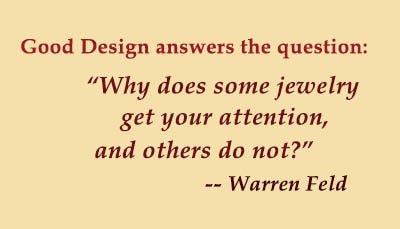
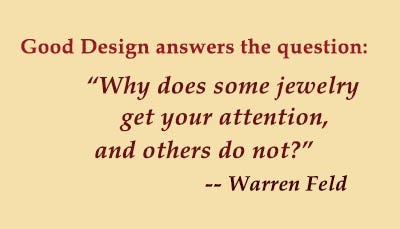
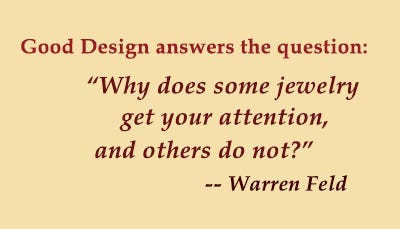
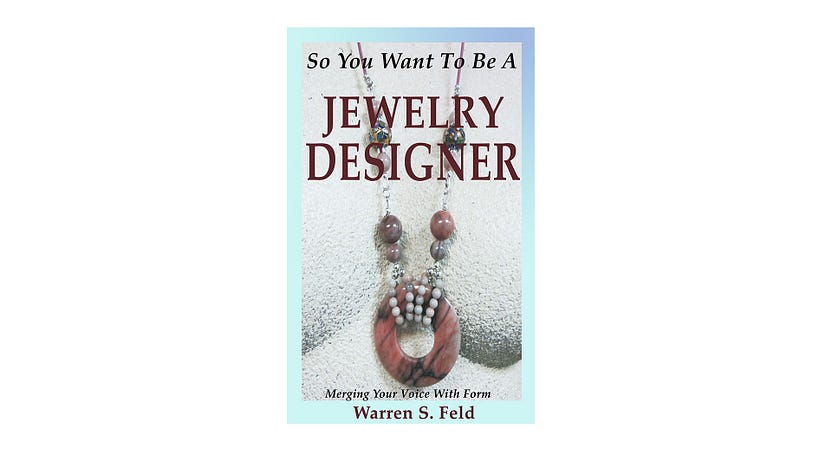
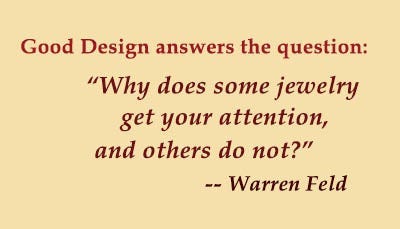
So You Want To Be A Jewelry Designer reinterprets how to apply techniques and modify art theories from the Jewelry Designer’s perspective. To go beyond craft, the jewelry designer needs to become literate in this discipline called Jewelry Design. Literacy means understanding how to answer the question: Why do some pieces of jewelry draw your attention, and others do not? How to develop the authentic, creative self, someone who is fluent, flexible and original. How to gain the necessary design skills and be able to apply them, whether the situation is familiar or not.
The Challenge To Explain Who You Are As A Designer
It is very challenging to explain who you are to people who do not know anything about you. You have several vehicles for conveying this information. These include how you name your business or name your jewelry and jewelry lines. These include your getting started story. Your tag line. Your elevator pitch. Your brochures, business cards and stationery. The types of inventory you carry, and do not carry. The consistent and coherent features of your jewelry designs.
In this book, I go over in detail how to begin to develop the kinds of information and the vehicles for conveying this information to influence how people see you, want to come to you, want to buy your jewelry, want to recommend you to others. Then it comes down to planning, strategy and practice.
TELL YOUR STORY
The story of your jewelry passion and career is a critical component of business success. The story can be real. It can be partially real and partially embellished. It can be a fantasy. However, it is important to have a story. It will always be a foundational element of your business. Jewelry design doesn’t speak for itself. Storytelling helps design stand out. People are attracted to stories and like to follow narratives. Always remember this maxim: Facts Tell, but Stories Sell!
With your story, you begin to establish that personal, emotional connection between your customer, you and your products. When you establish a very personal connection with your customer, you will more likely make the sale. And keep making the sale. Over and over again.
People are not just buying your work. They are buying an experience. The more they know about you, your techniques, and the particulars of the work, the more likely they are to buy something.
You, in effect, are building a brand. The brand is you.
Your story could be real or imagined. Whatever it is, it must be relevant and ring true to what you are selling. AND, it must be to the point and easily repeatable.
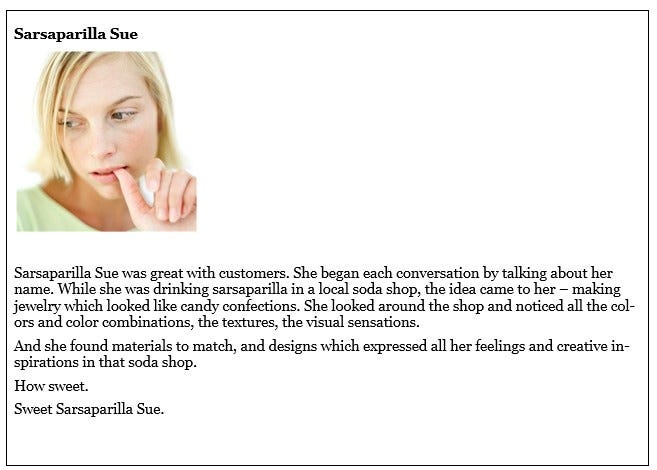
Telling her story was something Sarsaparilla Sue did very, very well.
Many people learn beadwork and jewelry-making in order to sell the pieces they make. Based both on the creation and development of my own jewelry design business, as well as teaching countless students over the past 35+ years about business and craft, I want to address what should be some of your key concerns and uncertainties. I want to share with you the kinds of things (specifically, a business mindset and confidence) it takes to start your own jewelry business, run it, anticipate risks and rewards, and lead it to a level of success you feel is right for you. I want to help you plan your road map.
I will explore answers to such questions as: How does someone get started marketing and selling their pieces? What business fundamentals need to be brought to the fore? How do you measure risk and return on investment? How does the creative person develop and maintain a passion for business? To what extent should business decisions affect artistic choices? What similar traits to successful jewelry designers do those in business share? How do you protect your intellectual property?
The major topics covered include,
1. Integrating Business With Design
2. Getting Started
3. Financial Management
4. Product Development, Creating Your Line, and Pricing
5. Marketing, Promotion, Branding
6. Selling
7. Professional Responsibilities and Strategic Planning
8. Professional Responsibilities and Gallery / Boutique Representation
9. Professional Responsibilities and Creating Your Necessary Written Documents
A Multi-Venue Approach Towards The Creative Marketplace
Successful jewelry designers are able to get the visibility and legitimacy they want and deserve. They know what to expect when exposing their work publicly within the creative marketplace.
They are good at communicating their ideas and their value, when approaching art and craft show vendors, stores and boutiques, galleries, and buyers and collectors, or applying for art grants or doing demonstrations. They are able to get articles written about them in blogs, newspapers, magazines and jewelry editorials. And, very importantly, they use a multi-venue approach (diversification) when introducing their jewelry into the marketplace. At a minimum, this multi-venue approach will include both an on-line strategy and a bricks-and-mortar strategy.
Many people learn beadwork and jewelry-making in order to sell the pieces they make. Based both on the creation and development of my own jewelry design business, as well as teaching countless students over the past 35+ years about business and craft, I want to address what should be some of your key concerns and uncertainties. I want to share with you the kinds of things (specifically, a business mindset and confidence) it takes to start your own jewelry business, run it, anticipate risks and rewards, and lead it to a level of success you feel is right for you. I want to help you plan your road map.
I will explore answers to such questions as: How does someone get started marketing and selling their pieces? What business fundamentals need to be brought to the fore? How do you measure risk and return on investment? How does the creative person develop and maintain a passion for business? To what extent should business decisions affect artistic choices? What similar traits to successful jewelry designers do those in business share? How do you protect your intellectual property?
The major topics covered include,
1. Integrating Business With Design
2. Getting Started
3. Financial Management
4. Product Development, Creating Your Line, and Pricing
5. Marketing, Promotion, Branding
6. Selling
7. Professional Responsibilities and Strategic Planning
8. Professional Responsibilities and Gallery / Boutique Representation
9. Professional Responsibilities and Creating Your Necessary Written Documents
There are lots and lots of places for selling your jewelry. These include,
1. Wear It and Sell It
2. To Friends, Family and Work-Mates
3. Retail and Wholesale Stores
4. Consignment Shops
5. Art and Crafts Fairs, Flea Markets, Bazaars
6. Jewelry Parties, Home Shows
7. Trunk Shows
8. Galleries
9. Online
10. Catalogs
As well as through Trade Shows, TV and Radio, Webcasts, Through Sales Reps and Agencies, and many more options for profitable venues.
1. Wear it and Sell It
Yes, people do buy jewelry off your back, so to speak. You might be standing in line at the supermarket. Or attending a concert. Or sitting in the shade at a table in a local park. People will come up to you, marvel at your jewelry, and ask if they can buy it.
So, wear your favorite pieces and flaunt them.
2. To Friends, Family and Work-Mates
Arrange showings of your jewelry with friends, families and people you work with. They know you, and you know them….
____________________________________________________________________ Conquering The Creative Marketplace
Many people learn beadwork and jewelry-making in order to sell the pieces they make. Based both on the creation and development of my own jewelry design business, as well as teaching countless students over the past 35+ years about business and craft, I want to address what should be some of your key concerns and uncertainties. I want to share with you the kinds of things (specifically, a business mindset and confidence) it takes to start your own jewelry business, run it, anticipate risks and rewards, and lead it to a level of success you feel is right for you. I want to help you plan your road map.
I will explore answers to such questions as: How does someone get started marketing and selling their pieces? What business fundamentals need to be brought to the fore? How do you measure risk and return on investment? How does the creative person develop and maintain a passion for business? To what extent should business decisions affect artistic choices? What similar traits to successful jewelry designers do those in business share? How do you protect your intellectual property?
The major topics covered include,
1. Integrating Business With Design
2. Getting Started
3. Financial Management
4. Product Development, Creating Your Line, and Pricing
5. Marketing, Promotion, Branding
6. Selling
7. Professional Responsibilities and Strategic Planning
8. Professional Responsibilities and Gallery / Boutique Representation
9. Professional Responsibilities and Creating Your Necessary Written Documents
Let Business Concerns Influence Your Artistic Choices
To what extent do (and should) business concerns influence the artistic choices bead and jewelry artists make?
If you want to be in business, then I’d say, “A Lot!” But this isn’t what a lot of designers like to hear. Success in business takes something besides being an excellent jewelry designer.
Jewelry making is not a passive art. You make jewelry for others to wear and buy, and you have to anticipate how they will assess your work and recognize your artistry. It is not the same as painting a painting or sculpting a sculpture in the sense that with paintings or sculptures, the artist does not need to communicate interactively with the viewer in order to create the product and be deemed successful. Jewelry making, instead, is more an interactive art. It is like architecture, where success can only be created through some kind of dialectic with others, and only be defined as successful as the product is introduced publicly and understood by others as finished and successful.
Selling your pieces is merely another phase of this interactive art, but sometimes forces upon you some more limits and refinements. You have to market to audiences. You may have to standardize things to be able to make the same thing over and over again. You may have to work in a production mode and repeat making certain designs, rather than freely creating and designing anew each time. You have to price things so that they will sell, and you have to price things so that you can make a sufficient profit. You do not (which translates as never) undersell yourself, like offering discounts to family, friends and co-workers.
You have to conform to prevalent styles and colors and forms. You have to make things which will photograph well for sale online. You have to make things that local stores want and are willing to buy or put on consignment. You may end up with a lot of “one size fits all,” because producing too much variety in sizes, shapes, colors and sizes could overwhelm you financially.
You find that if you want to make your jewelry design into a successful business, you may have to compromise with yourself, your artistic drives and sensibilities. You may have to limit what you offer. In order to make that sale. In order to make a profit. In order to establish your brand and how it is recognized. And stay in business.
As You Get Started, Ask Yourself These Questions
1. After honestly evaluating my hard and soft skills, am I business-ready?
2. Are there potential customers who will want, need and demand the kinds of jewelry I design?
3. Can I price my products competitively?
4. Where do I want to sell my pieces?
5. Can I get my pieces the visibility and opportunities to get purchased, given where I want to sell my pieces?
6. What are my competitive advantages? How do my works and my business strategies differentiate myself from my competition?
7. Are my pieces consistent and coherent enough to be recognized and understood as a brand, and as a brand designed by me?
8. Do I feel I can organize, manage, control and keep updated all the business functions – Design, Financial Management, Production and Distribution, Marketing and Branding, and Selling, Feedback and Evaluation?
Many people learn beadwork and jewelry-making in order to sell the pieces they make. Based both on the creation and development of my own jewelry design business, as well as teaching countless students over the past 35+ years about business and craft, I want to address what should be some of your key concerns and uncertainties. I want to share with you the kinds of things (specifically, a business mindset and confidence) it takes to start your own jewelry business, run it, anticipate risks and rewards, and lead it to a level of success you feel is right for you. I want to help you plan your road map.
I will explore answers to such questions as: How does someone get started marketing and selling their pieces? What business fundamentals need to be brought to the fore? How do you measure risk and return on investment? How does the creative person develop and maintain a passion for business? To what extent should business decisions affect artistic choices? What similar traits to successful jewelry designers do those in business share? How do you protect your intellectual property?
The major topics covered include,
1. Integrating Business With Design
2. Getting Started
3. Financial Management
4. Product Development, Creating Your Line, and Pricing
5. Marketing, Promotion, Branding
6. Selling
7. Professional Responsibilities and Strategic Planning
8. Professional Responsibilities and Gallery / Boutique Representation
9. Professional Responsibilities and Creating Your Necessary Written Documents
STRATEGIC MANAGEMENT: How Do You Start and Run A Business Selling Hand Made Products?
Between Commerce and Art
Many people learn beadwork and jewelry-making in order to sell the pieces they make. In today’s world, people who sell their pieces must become savvy in both regular retail, as well as internet retail. This does not have to be too complex. Nor too overwhelming. Too impossible. Too boring. There are a lot of tensions here between commerce and art. Production and creativity. They parallel the tensions between the creative act and having to introduce your jewelry publicly. But all are manageable.
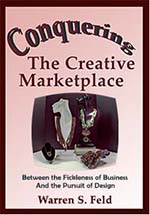
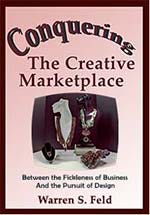
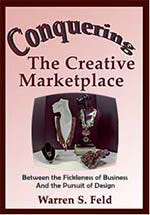
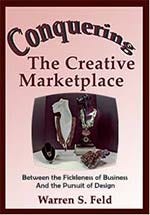
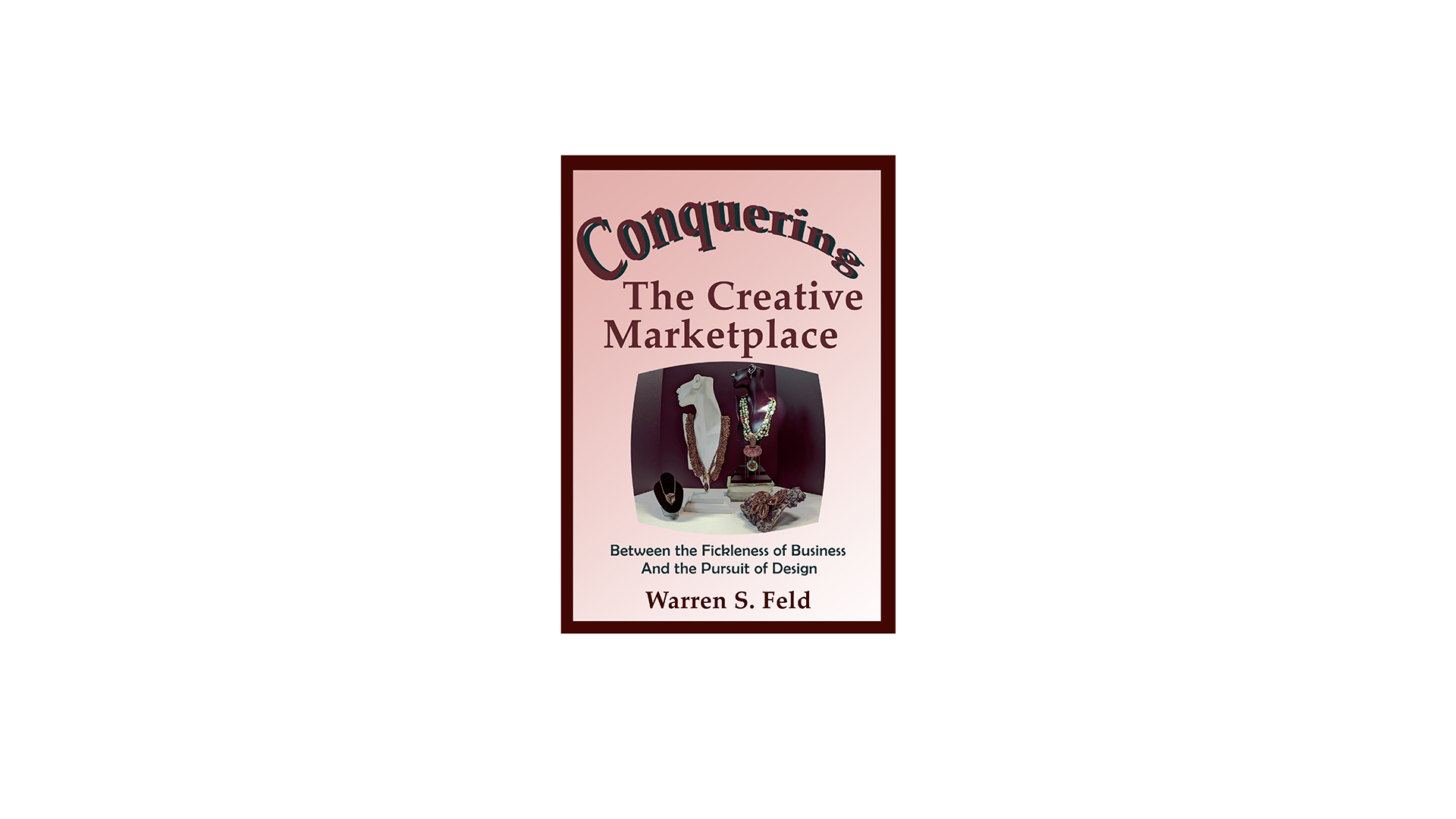
Conquering The Creative Marketplace is a comprehensive guide for you — someone who wants to start and run a business selling handmade products you love to make. The chapters in this book focus on developing and implementing your road map. This map helps show you how to better understand and relate to the creative marketplace, eventually earning money from your jewelry designs (or other art or craft projects). I go into detail about the things you have to do to start and run a business selling handmade products. I talk about the things you will want to do to manage, evolve and expand your business. These have to do with general accounting and setting up a general ledger. They include things like inventory management, pricing formulas, marketing and branding strategies. Also important is the protection of your designs — your intellectual property. I also discuss in detail key concepts like risk, return on investment, legitimacy, effectiveness, efficiency, consumption, influence, persuasion, coherence and contagion.
Based both on the creation and development of my own jewelry design business, as well as teaching countless students over the past 38+ years about business and craft, I want to address what should be some of your key concerns and uncertainties. I want to share with you the kinds of things (specifically, a business mindset and confidence) it takes to start your own jewelry business, run it, and lead it to a level of success you feel is right for you. Right for you will mean different things to different designers, from a hobbyist selling some pieces to a full-fledged operation. Whatever, your goals and ambitions, you will need to follow a basic road map. I want to help you plan your road map.
I explore answers to such questions as: How does someone get started selling their pieces? What business fundamentals need to be brought to the fore? How do you measure risk and return on investment? How does the creative person develop and maintain a passion for business? To what extent should business decisions affect artistic choices? What similar traits do successful jewelry designers share with those in business? How do you protect your intellectual property? What is your competitive advantage?
The next few chapters are descriptions of the kinds of things it takes for successfully integrating commerce with art. There are literally many full books written on each topic and subtopic, which you can easily access in bookstores or online. This book should be considered a comprehensive introduction to these topics. While all the information in this book is pertinent and necessary for you, it is not a substitute for talking with an accountant and business lawyer familiar with you and the locality, state/province and country you are doing business in.
The advice in these sections is useful for any jewelry designer who wants to sell their pieces. It is useful for the jewelry designer who occasionally wants to sell a few pieces. It is useful for the jewelry designer who wants to supplement their income. It is useful, as well, for the jewelry designer who wants to develop a fully, financially secure jewelry design business.
Many people learn beadwork and jewelry-making in order to sell the pieces they make. Based both on the creation and development of my own jewelry design business, as well as teaching countless students over the past 35+ years about business and craft, I want to address what should be some of your key concerns and uncertainties. I want to share with you the kinds of things (specifically, a business mindset and confidence) it takes to start your own jewelry business, run it, anticipate risks and rewards, and lead it to a level of success you feel is right for you. I want to help you plan your road map.
I will explore answers to such questions as: How does someone get started marketing and selling their pieces? What business fundamentals need to be brought to the fore? How do you measure risk and return on investment? How does the creative person develop and maintain a passion for business? To what extent should business decisions affect artistic choices? What similar traits to successful jewelry designers do those in business share? How do you protect your intellectual property?
The major topics covered include,
1. Integrating Business With Design
2. Getting Started
3. Financial Management
4. Product Development, Creating Your Line, and Pricing
5. Marketing, Promotion, Branding
6. Selling
7. Professional Responsibilities and Strategic Planning
8. Professional Responsibilities and Gallery / Boutique Representation
9. Professional Responsibilities and Creating Your Necessary Written Documents
It is very feasible to start and run a successful business selling handmade products. This series of articles based on my book introduces you to the things you will need to do along the way as you develop your business road map. You need to embrace the idea that you are in business. You have to understand how the creative marketplace works. You have to understand, as well, what business fundamentals need to be brought to the fore. You have to be comfortable with money, documentation and production. You want to approach going into business with a clear vision of its challenges as well as its rewards.
Business involves creating sustainable income strategies. These includes things like:
1. Putting your jewelry designs on a sound cost/revenue footing,
2. Developing market-driven strategies (as opposed to product-driven ones),
3. Pricing your pieces for sale,
4. Implementing various selling strategies, and
5. Resolving artistic and design choices and tensions, in the interest of the business.
It is important to understand why designers fail at business so as not to repeat their mistakes. It is important to develop a management mindset where you are balancing creativity and business.
For more articles about Conquering The Creative Marketplace, click over to our Jewelry Designers’ Hub
Many people learn beadwork and jewelry-making in order to sell the pieces they make. Based both on the creation and development of my own jewelry design business, as well as teaching countless students over the past 35+ years about business and craft, I want to address what should be some of your key concerns and uncertainties. I want to share with you the kinds of things (specifically, a business mindset and confidence) it takes to start your own jewelry business, run it, anticipate risks and rewards, and lead it to a level of success you feel is right for you. I want to help you plan your road map.
I will explore answers to such questions as: How does someone get started marketing and selling their pieces? What business fundamentals need to be brought to the fore? How do you measure risk and return on investment? How does the creative person develop and maintain a passion for business? To what extent should business decisions affect artistic choices? What similar traits to successful jewelry designers do those in business share? How do you protect your intellectual property?
The major topics covered include,
1. Integrating Business With Design
2. Getting Started
3. Financial Management
4. Product Development, Creating Your Line, and Pricing
5. Marketing, Promotion, Branding
6. Selling
7. Professional Responsibilities and Strategic Planning
8. Professional Responsibilities and Gallery / Boutique Representation
9. Professional Responsibilities and Creating Your Necessary Written Documents
Developing yourself as a jewelry designer has several challenging moments. Learning. Recognizing. Getting Inspired. Creating. Organizing. Constructing. Managing. Presenting. Marketing. Selling. You want to maintain high expectations and goals for yourself, and see these all these challenging moments through.
Some challenging moments include the following:
1. Learning your craft and continually growing and developing within your profession
2. Recognizing how jewelry design goes beyond basic mechanics and aesthetics, thus, differs from craft and differs from art, and then learning and working accordingly.
3. Getting Inspired
4. Translating Inspiration into a design
5. Implementing that design both artistically and architecturally by finding that balance between beauty (must look good) and functionality (must wear well)
6. Organizing your work space and all your stuff
7. Managing a design process
8. Introducing your pieces publicly, and anticipating how others (wearer, viewer, seller, marketer, exhibitor, collector, teacher, student, for example) will desire your pieces, as well as judge your pieces as finished (parsimonious) and successful (resonant)
9. Infusing your pieces with a sense of yourself, your values, your aesthetics, your originality
10. Developing a fluency and flexibility when working with new materials, new techniques and technologies, and new design expectations, including well-established ideas about fix-it strategies when confronted with unfamiliar situations
11. Differentiating your jewelry and yourself from other jewelry designers
12. If selling your pieces, then linking up to and connecting with those who will market and buy your pieces
SO YOU WANT TO BE A JEWELRY DESIGNER Merging Your Voice With Form
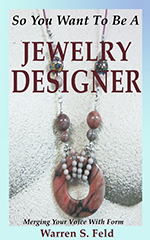
So You Want To Be A Jewelry Designer reinterprets how to apply techniques and modify art theories from the Jewelry Designer’s perspective. To go beyond craft, the jewelry designer needs to become literate in this discipline called Jewelry Design. Literacy means understanding how to answer the question: Why do some pieces of jewelry draw your attention, and others do not? How to develop the authentic, creative self, someone who is fluent, flexible and original. How to gain the necessary design skills and be able to apply them, whether the situation is familiar or not.
When I began making jewelry 35+ years ago, my only interest was in making money. Concerns about design and art, construction and appeal, functionality and emotional engagement were superficial. Probably non-existent is a better word. And yes, this meant I did not care about what any piece of jewelry I made might mean for the person buying it. Or wearing it. Or otherwise putting it on display. There was no consequence for my actions in making jewelry. Except making money. There was a hollowness here which I was, at the time, totally unaware of.
That was a shame.
I missed out on a lot of excitement that emerges from the design process and that special relationship between designer and client.
As I became more proficient in making jewelry, I questioned more and more of myself about what I was doing. Why were some pieces of jewelry I made more successful than others? Why did some sell better than others? Why were some received more warmly than others? Why did some hold up much better from wear than others?
I had had to place a value on the pieces I made. Initially I used a simple pricing formula which related the costs of parts and the costs of labor and the costs of overhead to the price set. But over time, I noticed that some of my pieces were more resonant than others. More desirable. More intriguing. Sexier. Should I increase my prices to reflect these greater, though more difficult to measure, kinds of things? I didn’t know. But I was thinking about it.
Over the years, I thought more and more about what made jewelry more or less successful. How to know when a piece was finished. How to know that I made the best tradeoffs between beauty and functionality. How to know what my jewelry was worth. How to market jewelry. How to sell it. How to sell it in a store. How to sell it at a craft show. How to sell it online. How to organize it into a coherent line of jewelry. How to measure and assess costs, revenues and returns-on-investment.
I share part of my developing knowledge in my book SO YOU WANT TO BE A JEWELRY DESIGNER (https://shop.ingramspark.com/b/084?EenmVM2NMYJGNKaAzr68kaH6GGGSPuNIkGCP1Hfzm3N). In this book, I go over the many hard and soft skills required to become fluent, flexible and original in jewelry design. It is important to understand what jewelry is, how design elements are selected, arranged, constructed and manipulated, how to manage the design process, and how to introduce your designs publicly.
In this book, which is the focus of this series of articles, CONQUERING THE CREATIVE MARKETPLACE, I focus on strategies for integrating business practices with the creative design process — things which can make balancing the creative self with the productive self easier and more fluid. I talk about how dreams are made between the fickleness of business and the pursuit of design.
I go into great detail about all the things you need to think about, know and do when getting started. This begins with basic bookkeeping and accounting as well as developing a business model and also understanding how to protect your intellectual property.
I discuss briefly about how the more literate jewelry designer is more successful in business. Disciplinary literacy involves a set of skills which enable the designer to best relate the jewelry design to client understandings and desires. These skills influence how the client interacts with the piece of jewelry, seeing relevance, value, usefulness, and the designer’s intent.
It is important to understand some basic concepts — Competitive Advantage,Risk, Rewards and Return-On-Investment, and how these play out in all aspects of your business. Also critical is to recognize how what you do in business and what you do creatively affect the Efficiency and Effectiveness of both your design process as well as your business operations.
I have several chapters devoted to product design and development. These range from product goal setting to needs assessment to product distribution, pricing and promotion to managing product launch.
Another section focuses on marketing and branding. You need to create an identify for your business, one that people become aware of and feel positively towards.
This leads to the next section on selling. I review selling strategies important in different settings from retail to craft shows to home shows to online.
I talk about resiliency in business. What kinds of things — emotional, administrative, creative — lead to a greater level of resilience in your business as you face growth, market ups and downs and fashion and taste changes.
Last, I review and present advice for creating the kinds of documents you will need to complement your business goals. These include a creative resume; portfolio; artist statement, biographical sketch, certificate of authenticity and the like.
Many people learn beadwork and jewelry-making in order to sell the pieces they make. Based both on the creation and development of my own jewelry design business, as well as teaching countless students over the past 35+ years about business and craft, I want to address what should be some of your key concerns and uncertainties. I want to share with you the kinds of things (specifically, a business mindset and confidence) it takes to start your own jewelry business, run it, anticipate risks and rewards, and lead it to a level of success you feel is right for you. I want to help you plan your road map.
I will explore answers to such questions as: How does someone get started marketing and selling their pieces? What business fundamentals need to be brought to the fore? How do you measure risk and return on investment? How does the creative person develop and maintain a passion for business? To what extent should business decisions affect artistic choices? What similar traits to successful jewelry designers do those in business share? How do you protect your intellectual property?
The major topics covered include,
1. Integrating Business With Design
2. Getting Started
3. Financial Management
4. Product Development, Creating Your Line, and Pricing
5. Marketing, Promotion, Branding
6. Selling
7. Professional Responsibilities and Strategic Planning
8. Professional Responsibilities and Gallery / Boutique Representation
9. Professional Responsibilities and Creating Your Necessary Written Documents