Warren Feld Jewelry

Taking Jewelry Making Beyond Craft

Posts Tagged ‘craft’

WHAT IS JEWELRY … Really?

Posted by learntobead on April 18, 2020

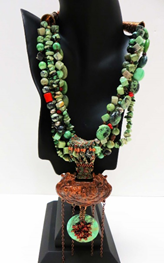
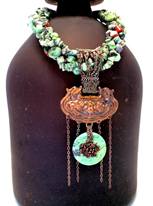
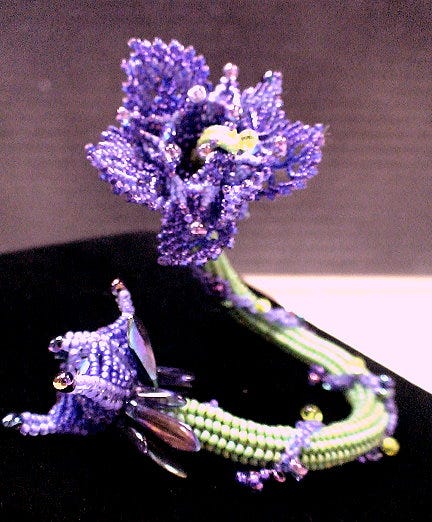
“Tibetan Dreams”, Feld, 2010

Abstract: We create and wear jewelry because we do not want to feel alone. But “not wanting to feel alone” can mean different things to different people. The jewelry artist must have insight here. The artist needs to understand what jewelry really is in order to make the kinds of successful choices about forms, materials, design elements, inspirations, techniques, arrangements, public presentations and exhibitions and the like. There are different frameworks from which the artist might draw such understanding, including the sensation of jewelry as OBJECT, CONTENT, INTENT or DIALECTIC. All these lenses share one thing in common — communication. Although jewelry can be described in the absence of communicative interaction, the artist can never begin to truly understand what jewelry really is without some knowledge about its creation and without somehow referencing the artist, the wearer, the viewer and the context.

WHAT IS JEWELRY, Really?

Simply put, we create and wear jewelry because we do not want to feel alone.

But “not wanting to feel alone” can mean different things to different people. The jewelry designer, in order to make the best choices and the most strategic choices throughout the process of designing a piece of jewelry, requires some detail and clarity here. What does it mean to say that we create and wear jewelry so we do not want to feel alone?

We might want to reaffirm that we are similar (or different) than someone else or some other group or culture. We might want to signal some connection (or disconnection or mal-connection) with a higher power or mystical source or sense of well-being or with some idea, concept or meaning. We might want to express an intent or feeling or emotion.

We might want to differentiate what it means to be yourself relative to something else, whether animate or inanimate, functional or artistic, part of a dialectic conversation with self or other. We might want to signal or differentiate status, intelligence, awareness, and resolution. We might want to separate ourselves from that which is sacred and that which is profane.

Whatever the situation, jewelry becomes something more than simple decoration or adornment. It becomes more than an object which is worn merely because this is something that we do. It becomes more than a functional object used to hold things together. It is communicative. It is connective. It is intentional. And concurrently, it must be functional and appealing and be seen as the result of an artist’s application of technique and technology.

The word jewelry derives from the Latin “jocale” meaning plaything. It is traditionally defined as a personal adornment or decoration. It is usually assumed to be constructed from durable items, though exceptions are often made for the use of real flowers. It is usually made up of materials that have some perceived value. It can be used to adorn nearly every part of the body.

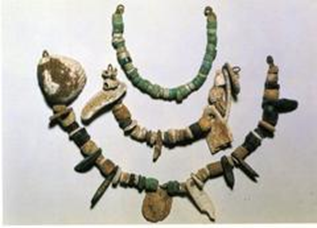
Prehistoric Necklaces 40000 B.C

One of the earliest evidences of jewelry was that of a Neanderthal man some 115,000 years ago. What was it — and we really need to think about this and think this through — which made him craft the piece of jewelry and want to wear it? Mere decoration? Did it represent some kind of status? Or religious belief? Or position or role? Or sexuality and sensuality? Or was it symbolic of something else? Was this a simplified form or representation of something else?

Did this Neanderthal have concerns about craft and technique? Did the making of it require some special or innovative technology? Did the cost of materials come into play? Was this an expression of art? Self? Power? A show of intelligence and prowess? A confirmation of shared beliefs, experiences and values? Was it something he made himself, or was it something given to him as a gift or token of recognition?

Picture yourself there at this very moment. What happened at the point this Neanderthal man put this piece of jewelry on? Did this reduce or increase social and cultural barriers between himself and others? Did this define a new way of expression or a new way of defining the self? Did this impact or change any kind of outcome? Did this represent a divergence between craft and art? Was this piece of jewelry something that had to be worn all the time? Were the purposes and experiences of this Neanderthal man similar to why and how we design and adorn ourselves with jewelry today?

We know that this Neanderthal man was not the last person to wear a piece of jewelry. Jewelry continued in importance over time. Jewelry mattered. It was an object we touched. And it was an object we allowed to touch our bodies. The object had form. The form encapsulated meaning. We allowed others to view the jewelry as we wore it, and when we did not.

Making and wearing jewelry became very widespread about 5,000 years ago, especially in India and Mesopotamia, but worldwide as well. While some cultures banned jewelry or limited its forms and uses (see medieval Japan or ancient Rome, for example), they could not maintain these restrictions over time. People want to support the making of jewelry, the wearing of it, the exhibiting of it in public, and the accumulating of it. People want to touch it. Display it. Comment about it. Talk about it with others. Collect it, trade it, buy it, sell it.

As jewelry designers, we need to understand the why’s … Why make jewelry at all? Why develop different techniques and use different materials and come up with different arrangements? Why do people want to wear jewelry and buy jewelry?

We observe that jewelry is everywhere, worn by all types of people, on various parts of the body, in many different kinds of situations. Jewelry must possess a kind of inherent value for the artist, the wearer, the viewer and the society as a whole.

So we have to continue to wonder, Why is jewelry so coveted universally? Why is it important? How is understanding ‘what jewelry is really’ necessary for making the kinds of successful choices about forms, materials, design elements, inspirations, techniques, arrangements, public presentations and exhibitions and the like?

Let us review the range of definitions and justifications for jewelry before fine-tuning any ideas and conclusions. Each understanding leads us in different directions when filling in the blanks of this constructive phrasing:

Jewelry means to me …..… therefore, 
 These are the types of choices I need to make as a designer 
 to know my pieces are finished and successful, 
 including things like ……… .

These different definitional frameworks about jewelry are things characterized by sensations the jewelry evokes in designer, wearer and viewer.

These frameworks for defining what jewelry really is include,

SENSATION OF JEWELRY AS OBJECT:

1. ROUTINE: Something that we do with little or no reflection

2. MATERIAL: Objects that we use as materials characterized or sorted by design elements, such as color, pattern, texture, volume, weight, reflective and refractive properties

3. ARRANGEMENT AND FORMS: Materials are sorted by various Principles of Composition into arrangements and forms, expressing things like rhythm, focus, and juxtaposition of lines and planes

4. TECHNIQUE: Steps or routines we use to assemble and construct

5. FUNCTIONALITY: Things which have a useful purpose and practicality

SENSATION OF JEWELRY AS CONTENT:

6. MEANING: Things to which we assign meaning(s), especially where such meaning(s) transcends materials, functions and techniques

7. VALUE: Things to which we assign monetary and economic value, particularly materials

SENSATION OF JEWELRY AS INTENT:

8. ORDER OUT OF CHAOS: A sense-making attempt to control and order the world

9. SELF-IDENTITY: An agent of personality

SENSATION OF JEWELRY AS DIALECTIC:

10. INTERACTION AND SHARED UNDERSTANDINGS: A way to create, confirm and retain connections through interaction, desires, and shared understandings

Yet, no matter what the framework we use to try to make sense about what jewelry really is, all these lenses share one thing in common — jewelry is more than ornament and decoration; it is sensation and communication, as well. Although we can describe jewelry in the absence of knowledge about its creation, we cannot begin to understand what jewelry really is without somehow referencing the artist, the wearer, the viewer and the context.

SENSATION OF JEWELRY AS OBJECT

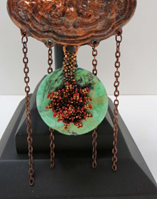
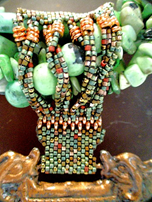
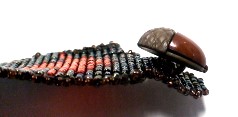
“Tibetan Dreams”, detail, FELD, 2010

Too often, ideas about communication and meaning and intent get too messy and complicated. We seek a simpler framework within which to understand what jewelry is all about. We try to fit the idea of jewelry into the confines of a box we call “object”. It is decoration. Sculptural adornment. Jewelry succeeds as “object” to the extent that everyone everywhere universally agrees to what it is, how it is made, what it is made from, why it was made, and in what ways it is used.

This universality in defining and evaluating jewelry helps us not to feel alone.

Jewelry As Something That We Do. Wearing jewelry might simply be something that we do. We put on earrings. We slip a ring onto a finger. We clasp a necklace around our neck or a bracelet around our wrist. It is habit. Routine. Not something to stop and ask why. A necklace is a necklace. An earring is an earring. We mechanically interact with decorative objects we call jewelry.

Jewelry As A Material. Sometimes we want to get a little more specific and describe what this object or ‘box’ is made of. It is some kind of material. Jewelry encompasses all types of stones and metals, in various shades and colors, and light-impacting properties, which the artist has taken tools to them to shape and sharpen. Sometimes we want to further delineate the character of materials within and around this box. We refer to this as selecting various design elements such as color, pattern, texture.

Jewelry As Arrangements and Forms. Sometimes we want to even further elaborate on our placement of materials within our pieces in terms of Principles of Composition. These Principles refer to arrangements and organized forms to create movement, rhythm, focal point, balance, distribution. We apply this framework in a static way. Jewelry is reduced to an object, somehow apart from its creator and disconnected from any wearer or viewer.

Jewelry As The Application of Technique(s). We can also understand jewelry as object in a more dynamic sense. It is something which is created by the application of one or more techniques. The techniques are applications of ideas often corralled into routines. The object is seen to evolve from a starting point to a finishing point. As object, it is reduced to a series of organized steps. These steps are disconnected from insight, inspiration, aspiration or desire. There is no human governance or interference.

Jewelry As Function and Practicality. In a similar dynamic way, the object may be seen to have function. It may hold up something, or keep something closed. It may, in a decorative sense, embellish a piece of clothing. It may assist in the movement of something else. It is not understood to have any meaning beyond its function. As it coordinates the requirements of form to the requirements of function, it plays a supportive, practical role, not a substantive role. As such, it is unimportant. It might allow the wearer to change position of the necklace on the neck. It might better enable the piece to move with the body. But it should not demand much insight or reflection by creator, wearer, or viewer.

SENSATION OF JEWELRY AS CONTENT

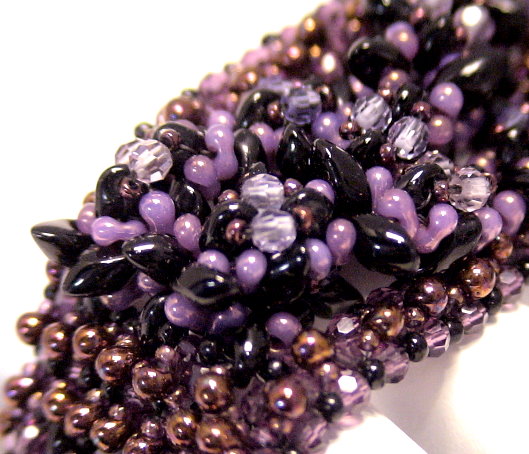
“Tibetan Dreams”, detail, FELD, 2010

However, as we get closer to defining the object as one that is sensed and experienced and which evokes an emotional response, it becomes more difficult to maintain that the object does not reflect meaning, does not result from some kind of thought process and intent, and does not communicate quite a lot about the designer, the wearer, the viewer and the situation. Jewelry when worn and which succeeds becomes a sort of identifier or locator, which can inform the wearer and the viewer about particular qualities or content, such as where you belong, or what you are about, or what your needs are.

Jewelry without content, after all, can skew to the superficial, boring, monotonous, and unsatisfying. Without meaning and value, jewelry has little to offer.

These shared recognitions and valuing of meanings helps us not to feel alone.

Jewelry As Meaning. Jewelry when worn signals, signifies or symbolizes something else. It is a type of recognizable short-hand. It is a powerful language of definition and expression. By representing meaning, it takes responsibility for instigating shared understandings, such as membership in a group or delineating the good from the bad. It might summarize difficult to express concepts or emotions, such as God, love, loyalty, fidelity. It might be a stand-in marker for status, power, wealth, connection and commitment. It might visually represent the completion or fulfillment of a rite of passage — puberty, adulthood, marriage, birthing, and death.

Sometimes, the sensation of jewelry as meaning derives from energy and powers we believe can transfer from the meaning of the materials the jewelry is made of to ourselves. These might be good luck, or good fortune, or good health, or good love, or good faith or protection from harm. Various gemstones, metals and other materials are seen to have mystical, magical and supernatural qualities that, when touching the body, allow us to incorporate these powers with our own.

Jewelry As Value. When we refer to meaning as having power, sacredness, respect, significance, we are beginning to assign a value to it. A sensation of value may emerge from how rare the item is — its material rarity or the rarity of how it was constructed or where it came from or who made it or who was allowed to wear it. It may emerge from how bright it is or the noteworthy arrangement of its elements. Its value may emerge from how pliable or workable the material is. Its value might be set from how tradable it is for other materials, objects, access or activities.

By assigning value, we determine things like importance, uniqueness, appeal, status, need, want, and demand. We establish control over how and how often a piece of jewelry will change hands. We establish some regulation over how individuals in a group, culture or society interact and transact with one another.

SENSATION OF JEWELRY AS INTENT

“Tibetan Dreams”, detail, FELD, 2010

Someone has to infuse the object with all this content, and this proactive act leads us to the idea of intent. Often this imposition of meaning begins with the jewelry artist. Jewelry becomes a means of self-expression. The artist, in effect, tells the world who the artist is, and what the artist wants to happen next.

The artist might be subdued or bold, colorful or monochromatic, simple or complex, extravagant or economical, logical or romantic, deliberate or spontaneous. The artist might be direct or indirect in how meanings get communicated. It is important, in order to understand the meaning of an object, to begin by delineating the artist’s inspiration, aspiration and intent.

The jewelry artist begins with nothing and creates something. The unknown, the unknowable, the nothingness is made more accessible.

The artist fills in a negative space with points, lines, planes, shapes, forms and themes. Color, pattern and texture are added. Things get organized and arranged.

Though often unstated, it becomes obvious that of all the possible choices the artist could have made in design, that some choices were ignored and excluded, while others were not. Some negative space is left so. Some positive space has direction, motion, weightiness. Somethings are abstract; other things realistic. These and related choices have implications and consequences.

The question becomes, what influences that artist’s selections? Successful jewelry reveals the artist’s hand.

Our perceptions of the coherence in the artist’s inspiration and intent, as reflected in our interpretations of that artist’s jewelry, helps us not to feel alone. We may see coherence as a subjective thing or a universally understoodthing. It doesn’t matter which. If we believe we can make sense of things, if the jewelry feels and seems coherent in some way, we feel safe, and that we have reduced the risks in life. We do not feel so left alone.

Jewelry As Creating Order Out Of Chaos. Partly, what the artist does is attempt to order the world. The artist looks for clues within him- or herself (inspiration and intent). The artist formulates concepts and a plan for translating inspiration and intent into a design. The artist determines whether to take into account the expectations of others (shared understandings) about what would be judged as finished and successful.

Jewelry is an object created out of chaos and which has an order to it. The order has content, meaning and value. It has coherency based on color and texture and arrangement.

Jewelry as an organized, ordered, coherent object reflects the hypotheses the artist comes up with about how to translate inspiration into aspiration, and do this in such a way that the derived jewelry is judged positively. The artist anticipates how others might experience and sense the object on an emotional level.

It reflects the shared understandings among artist, wearer and viewer about emotions, desires, inherent tensions and yearnings and how these play out in everyday life.

The artist makes the ordered chaos more coherent, and this coherence becomes contagious through the artist’s choices about creative production and design. The artist lets this contagion spread. To the extent that others share the artist’s ideas about coherence, the more likely the work will be judged finished and successful. And no one — not the artist, not the wearer, not the viewer — will feel alone.

The process of bringing order to chaos continues with the wearer. The wearer introduces the piece of jewelry into a larger context. We have more contagion. The jewelry as worn causes more, ever-expanding tension and efforts at balance and resolution. There is an effort to figure out the original artist intent and ideas about coherence as reflected in design.

Unsuccessful efforts at design, where the artist’s intent becomes obscured, reverse the process, and the object — our piece of jewelry — then brings about decoherence. Decoherence may come in the forms of bad feedback, inappropriate feedback, less than satisfying feedback, or no feedback at all.

Decoherence means the wearer may not get that sense of self s/he seeks. S/he may feel less motivated to wear the piece. S/he may store the piece or give the piece away. As this decoherence filters down to the level of the artist, any necessary support in design may be lost. There will be fewer clients, fewer opportunities to display the works publicly, and fewer sales. The artist’s motivation may diminish.

Jewelry As An Agent of Personality. People wear jewelry because they like it. It becomes an extension of themselves. It is self-confirming, self-identifying and self-reconfirming. Liking a piece of jewelry gets equated with liking oneself, or as a strategy for getting others to express their like for you. Jewelry makes us feel more like ourselves. We might use jewelry to help us feel emotionally independent, or we might come to rely on jewelry for emotional support and feedback, leading us down the path to emotional dependency.

Jewelry may have personal significance, linking one to their past, or one to their family, or one to their group. It may be a way to integrate history with the present. It is a tool to help us satisfy our need to affiliate.

Jewelry may help us differentiate ourselves from others. It may assist us in standing out from the crowds. Conversely, we may use it to blend into those multitudes, as well.

Jewelry fulfills our needs. If we look at Maslow’s Hierarchy of Needs, after meeting our basic physiological needs such as for food and water, and our safety needs, such as for shelter, we can turn to jewelry to meet our additional social needs for love and belonging and self-esteem. Designing and creating jewelry can form an additional basis for our needs for self-actualization.

We may derive our personality and sense of soul and spirit from the qualities we assign the jewelry we wear. We do not merely wear jewelry as some object; more specifically, we inhabit jewelry. If ruby jewelry symbolizes passion, we may feel passion when wearing it. We may use jewelry as an expressive display of who we feel we are and want to be seen as in order to attract mates and sexual partners. We use jewelry in a narcissistic way to influence the alignment of the interests and desires among artist, weaver, viewer, collector, exhibiter, and seller.

In similar ways, we may derive our sense of belief, devotion and faith to a higher power or spiritual being or God from wearing jewelry. It may help us feel more connected to that religious, spiritual something within ourselves. It may remind us to stay on our religious path.

As an agent of our psychological selves, jewelry is used to resolve those core conflicts — Who are we? Why do we exist? How should we relate to other people around us? Jewelry orients us in coming to grips with our self-perceived place within critical contradictions around us. Trust and mistrust. Living and dying. Good and evil. Pleasure and pain. Permission and denial. Love and hate. Experience and expectation. Traditional and contemporary. Rational and reasonable.

SENSATION OF JEWELRY AS DIALECTIC
 
Jewelry As Interaction and Shared Understandings

“Tibetan Dreams”, FELD, 2010

Jewelry is a two-way street. It is a way to create, confirm and retain connections. At its very core, it is interactive and communicative. It is more an action than an object. Jewelry can start a conversation. Jewelry encapsulates a very public, ongoing matrix of choices and interactions among artist, wearer and viewer, with the purpose of getting responses. It is a dialectic.

The optimum position to view jewelry is on a person’s body, where and when its dialectical power is greatest. Again, it is very public, yet concurrently, very intimate. We exhibit jewelry. It forces reaction, response and reciprocity. Jewelry helps us negotiate, in relatively non-threatening ways, those critical tensions and contradictions in life, not merely define them.

It very publicly forces us to reveal our values, delineate tensions and contradictions which might result, and resolve all those betwixt and between qualities which occur as the artist, wearer, viewer, marketer, seller, exhibitor and collector try to make sense of it all. Conversely, jewelry, as worn, may signal that any negotiation would be futile, but this is a dialectic, communicative act, as well.

Jewelry expresses or implies things, the relevance of which emerges through interactions. There is an exchange of meaning. There is some reciprocity between the artist expressing an inspiration with the desire for a reaction, and the wearer evaluating the success of the piece and impacting the artist, in return. We have those coherence-contagion-decoherence behavioral patterns discussed above.

Jewelry is persuasive. It allows for the negotiation of influence and power in subtle, often soft-pedalled ways. It helps smooth the way for support or control. Compliance or challenge. Wealth and success or poverty and failure. High or low status. Social recognition. An expression of who you know, and who might know you. Jewelry is a tool for managing the dynamics between any two people.

Jewelry is emotional and feeling, with attempts by the artist to direct these, and with opportunities for others to experience these. It is not that we react emotionally to the beauty of an object. It is not mechanical or fleeting. It is more of a dialectic. The jewelry is an expression of an artist’s inspiration and intent. We react emotionally to what we sense as that expression as it resonates from the object itself. This resonance ebbs and flows, waxes and wanes, over time as the object is worn in many different situations.

Jewelry draws attention. It becomes a virtual contract between artist and wearer. The artist agrees to design something that will call attention to the wearer and that wearer’s preferred sense of self. The wearer agrees to wear something that reaffirms the artist’s insights for all to witness and experience and draw support.

Jewelry may cue the rules for sexual and sensual interactions. Nurturing and desire. Necklaces draw attention to the breasts. Earrings to the ear and neck. Rings to the hands. Jewelry, such as a wedding band, may confirm a relationship, and signal permission for various forms of touching that otherwise would not be appropriate. The silhouettes and placements of jewelry on the body indicate where it may be appropriate for the viewer to place his gaze, and where it would not.

We don’t feel alone because we have opportunities to have a dialectic experience — a dialogue between self and artist, self and others, self and self — all catalyzed by the piece of jewelry, and our sensation of all the choices that had to be made in order for it to exist, in order for it to feel coherent, in order for it for fulfill desire, and in order for all of this to somehow feel contagious and resonant. We don’t feel alone because the jewelry taps into something inside us that makes us want to wear it, buy it and share it.

Jewelry Ages In Place With Us

Jewelry comforts us as we age in place. The bracelet we got for graduation still worn on an occasion when we are 65. The ring he bought her when she was in her 20’s still worn on the day she passed away.

With jewelry, we will never feel alone as we grow older. As our body changes in pallor and texture. As we gain weight or lose weight. As we change our styles of clothing or hair or activity.

This constellation of material objects, distributed across the human body, reflects transformation, movement, growth, and behavior. These reflect the life we live, and how we lived it. These are a story of how we performed our lives over time. They reveal an otherwise unseen perspective on life as the body ages, and we live through time. They show that not all lived lives have been ad libbed.

The jewelry will also show its age over time. Changes in color, perhaps fading, perhaps becoming duller or spotty. A clasp may have been replaced. The piece may have been restrung. It may have been shortened or lengthened. It may have been worn a lot. Or lost for a while. Or given away. Its associative or symbolic value may have changed.

Jewelry is life performed. Both are observable. Both indicative of our place — our aura — in the world around us as time goes on. Both an experience — often changing — of a point of view from the hand that crafted the piece in the first place, and the desires of the person who wore the piece over time. We possess it and wear it so it reminds us that we are not alone.

Knowing What Jewelry Really Is
 Translates Into Artistic and Design Choices

Knowing what jewelry really is better connects the artist to the various audiences the artist seeks to reach. It results in better outcomes. More exhibits. More sales. More collections. Better self-esteem. Better representation of self in various contexts and situations.

Jewelry asks the artist, the wearer and the viewer to participate in its existence. In a somewhat subtle way, by allowing communication, dialog, evaluation, and emotion, jewelry allows each one not to feel alone. It allows each one to express intent, establish a sense of self, and introduce these intents and self-expressions into a larger social context.

Jewelry judged as finished and successful results from these shared understandings and desires among artist, viewer and wearer, and how these influence their subsequent choices. These choices extend to materials and arrangements. They extend to how the artist determines what is to be achieved, and how the work is talked about and presented to others. These anticipate the reactions of others, beliefs about saleability, assumptions about possible inclusions in exhibitions, knowing what is appealing or collectible.

The artist is always omnipresent in the jewelry s/he creates. The artist, through the jewelry, and how it is worn on the body, to some extent, arbitrates how other sets of relationships interact, transfer feelings, ideas and emotions, reduce ambiguity, influence one another, and make sense of the world around them.

These sets of relationships, through which jewelry serves as a conduit, include:

artist and wearer
 wearer and viewer
 artist and self
 artist and seller
 seller and client
 artist and exhibiter
 artist and collector
 exhibiter and collector

In the abstract, jewelry is a simple object. We make it. We wear it. We sell it. We buy it. We exhibit it. We collect it. But in reality, jewelry channels all the artist’s and wearer’s and viewer’s energy — the creative sparks, the tensions, the worries, the aspirations, the representations, the assessments of risks and rewards, the anticipations of influence and affect. Jewelry becomes the touchstone for all these relationships. It is transformational. It is a manifestation of their internal worlds. An essence resonant in context. A comforting togetherness, inclusion, reaffirmation.

The better jewelry designer is one who anticipates these shared understandings about what makes a piece of jewelry finished and successful, and can incorporate these understandings within the jewelry design process s/he undertakes. Knowing what jewelry really is forms a critical aspect of what sets jewelry design as a discipline apart from that of art or craft. Knowing what jewelry really is and how it helps us not feel alone forms the basis of the professional identity and disciplinary literacy of the jewelry designer.

_________________________________________

FOOTNOTES

(1) Grosz, Stephen, The Examined Life: How We Lose and Find Ourselves, NY: 
 W.W.Norton & Company, 2014.

(2) Pravu Mazumdar, Jewellery as Performance: on Gisbert Stach’s Experiments with 
 Jewellery and Life
, Klimt02, 11/22/2019

As referenced:

Other Articles of Interest by Warren Feld:

The Jewelry Design Philosophy: Not Craft, Not Art, But Design

What Is Jewelry, Really?

The Jewelry Design Philosophy

Creativity: How Do You Get It? How Do You Enhance It?

Disciplinary Literacy and Fluency In Design

Becoming The Bead Artist and Jewelry Designer

5 Essential Questions Every Jewelry Designer Should Have An Answer For

Getting Started / Channeling Your Excitement

Getting Started / Developing Your Passion

Getting Started / Cultivating Your Practice

Becoming One With What Inspires You

Architectural Basics of Jewelry Design

Doubt / Self Doubt: Major Pitfalls For The Jewelry Designer

Techniques and Technologies: Knowing What To Do

Jewelry, Sex and Sexuality

Jewelry Making Materials: Knowing What To Do

Teaching Discplinary Literacy: Strategic Thinking In Jewelry Design

The Jewelry Designer’s Approach To Color

Point, Line, Plane, Shape, Form, Theme: Creating Something Out Of Nothing

The Jewelry Designer’s Path To Resonance

Jewelry Design Principles: Composing, Constructing, Manipulating

Jewelry Design Composition: Playing With Building Blocks Called Design Elements

Contemporary Jewelry Is Not A “Look” — It’s A Way Of Thinking

I hope you found this article useful.

Also, check out my website (www.warrenfeldjewelry.com).

Subscribe to my Learn To Bead blog (https://blog.landofodds.com).

Visit Land of Odds online (https://www.landofodds.com)for all your jewelry making supplies.

Enroll in my jewelry design and business of craft video tutorials online.

Add your name to my email list.

Posted in Stitch 'n Bitch | Tagged: , , , , | Leave a Comment »

The Martha Stewart Beaded Wreath Project

Posted by learntobead on April 18, 2020

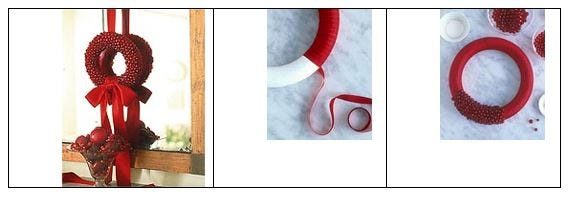
Supplies needed:
8″ — 10″ floral wreath styrofoam form
3 or 4 sizes of round druk beads (6mm, 8mm, 10mm and 12mm)
Straight pins like you would use when sewing
Red nail polish (to paint over the pin heads)
Red wrapping tape or ribbon for wrapping the styrofoam form
Wide ribbon or cloth for a bow

The Martha Stewart Wreath

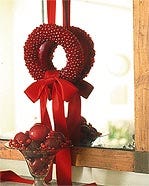
In 1999, Martha Stewart, on her TV show, demonstrated how to make a Christmas Wreath, using round druk beads. (“Druk” means plain, smooth, roundish beads.) And she started an avalanche of orders. Her powers to send millions of women to their bead stores was, and still is, enormous. So big, in fact, that it is difficult to visualize. With this project, there were not enough red druk beads in the entire world to fill the demand in 1999 and several years afterward.

This first year saw over 2800 orders to our Land of Odds website. We were able to fill about 1700 of them before the beads started running out. In both 1999 and 2000, (and now, by this time, the instructions also had been published in a Martha Stewart Christmas Projects book), our suppliers ran out of the 10mm size druks around October, and we were unable to fill orders past the first few days of December. The 10mm beads started coming back in stock in February or March. The 12mm size ran out soon after, but wasn’t available again until much later. (NOTE: There are 25mm in an inch.)

Traditionally, there has never been a large supply of larger beads — 10mm and 12mm — in any color, because the main purpose of beads is to be used in jewelry, and these larger sizes tend to be heavy, and usually not in style. When a particular bead in size and color runs out, it usually takes 3 or more months before it is back in stock.

This is because these beads come from the Czech Republic and must be imported, and also because every color, type and size of bead is not always in production all the time. Beads are usually produced from lightest to darkest. That is, they try to make clear and light colors first in the kiln, and gradually over the course of a few months make darker and darker beads. In this way, they can use the kiln for the longest period of time before having to clean it out.

Martha Stewart provided one set of directions in 1999, and a new set of directions in 2000. In both, we believe she underestimated the number of beads needed, so with some interpretation, your two design choices are:

Design Option A. 300 each of 6mm, 8mm and 10mm for a 10-inch wreath (the original 1999 version)
 
 Design Option B. 200 each of 6mm, 8mm, 10mm and 12mm for an 8-inch wreath (the new 2000 version)

We have a personal preference for choice “A”.

Colors: Ruby (also called Siam) is the color of choice. A slightly lighter Light Siam works well also. For a contrast, either Red Opal or Garnet will work.

Red is one of the most expensive colors to make, so there are few color choices in this area for the druk line of round beads. Many of the reds that exist are very close in color in this particular bead, so do not provide much if any contrast. We offer ruby (also called siam), and suggest either garnet (very dark, almost black), and/or red opal (a translucent red), as workable contrasting or complimentary colors. There is a cherry red, but this doesn’t have the same effect as the transparent and translucent colors. There is also a dark ruby (or dark siam, sometimes called light garnet) which we do not offer.

Using the smaller 4mm beads, such as in a 4–6–8mm configuration, doesn’t work very well. It doesn’t look realistic enough.

NOTE: It is also important to get your styrofoam wreath form. Stores run out of these as well. Try these types of places: Wal-Mart, K-Mart, craft stores, floral shops and floral supply places. We prefer the 10-inch wreath that is a half dome in shape. On this wreath, you only cover the domed part, not the back of the wreath. You can also use a completely round (tube) wreath, which you would cover entirely with beads.

Other Articles of Interest by Warren Feld:

Best Way To Thread Your Needle

Bead Stringing With Needle and Thread

Beading Threads vs. Bead Cord

Turning Silver and Copper Metals Black: Some Oxidizing Techniques

Color Blending; A Management Approach

Cleaning Sterling Silver Jewelry: What Works!

What Glue Should I Use When Making Jewelry?

When Choosing Colors Has You Down, Check Out The Magic Of Simultaneity Effects

The Color Effects of Threads

Wax, Wax, Wax

When You Attend A Bead Show…

When Your Cord Doesn’t Come With A Needle…What You Can Do

Duct Tape Your Pliers

What To Know About Gluing Rhinestones

Know Your Anatomy Of A Necklace

How Does The Jewelry Designer Make Asymmetry Work?

How To Design An Ugly Necklace: The Ultimate Designer Challenge

I hope you found this article useful. Be sure to click the CLAP HANDS icon at the bottom of this article.

Also, check out my website (www.warrenfeldjewelry.com).

Subscribe to my Learn To Bead blog (https://blog.landofodds.com).

Visit Land of Odds online (https://www.landofodds.com)for all your Martha Stewart Christmas Wreath, as well as other jewelry making supplies.

Enroll in my jewelry design and business of craft video tutorials online.

Add your name to my email list.

Posted in Stitch 'n Bitch | Tagged: , , , , | Leave a Comment »

Watch Out! Or You’ll Catch The Bead-Bug!

Posted by learntobead on April 18, 2020

Getting Started Beading and Making Jewelry
 
Channeling your excitement”

CATCHING THE “BEAD-BUG”

As someone once told me, “I bought some beads, dumped them all out on the table, and I was hooked!”

She began making simple bracelets and necklaces, and was hooked some more.

And then she learned wire working, and made wire bezels and bails, wire clasps and ear-wires, and wire-constructed bracelets, and yes, she was hooked some more.

She sold several pieces, and now, even her husband started getting hooked.

And she learned bead weaving and some silversmithing, some polymer clay and metal clay, some kumihimo and micro-macrame, and now, not just herself and her husband, but her three children and her mother and her next-door neighbor were hooked.

She spent hours and hours organizing her beads. And organizing some more, as her beads and her ongoing projects took up more and more room in her house.

She was overwhelmed by choices. And was very hooked. And, although she kept buying up bead after bead, and learning technique after technique, and organizing workspace after workspace, she allowed very little time for “design.”

Yet, we need to give her a chance to get started. To catch her breath. To learn how to learn. To learn how to organize and work. To learn how to manage all the emotions and anxieties which come with so many choices, and so many colors, and so many parts, and so many different ways to go about making jewelry and beadwork. Before she is ready to wander that path. And bump into her Inner Designer.

What Can You Do With Beads?

A BEAD is anything that has a hole in it. And you can do a lot of things with things that have holes.

You can put these things on string.

You can sew these things onto fabric.

You can weave these things together with threads.

You can knot or braid or knit or crochet these things together.

You can combine and wrap and en-cage these things with metal wires and metal sheets.

You can work these things into projects with clay, polymer clay and metal clay.

You can embellish whatever you can think of — dolls, tapestries, clothes, shoes, scrapbooks, pillows, containers, and vases.

You can use these things in scientific experiments.

You can fuse these things together.

You can incorporate these things into projects involving stained glass, mosaics, or multi-media art.

You can decorate your house and your household things with these things.

You can texture surfaces with these things, using glues, cements or resins.
 
 You can buy these pre-made, or make your own.

You can do a lot of things with beads.

Most people begin by Stringing beads, and graduate to things like Weaving beads, Embellishing with beads on Fiber, Knotting and Braiding with beads, and Wire Working with beads. A few people learn to hand-make Lampwork glass beads, or learn to sculpt with Polymer Clay or Precious Metal Clay, or learn to solder using Silver-Smithing techniques.

And you can feel self-satisfied and secure in the knowledge that, should everything else in the world around you go to pot, we will all be back to bartering with beads.

And you will have them.

So, beads are good.

Getting Started

Everyone has a Getting-Started story. Some people were always crafty, and beading was a natural extension to what they were doing. Others were driven by the allure of beads and jewelry. They saw fabulous earrings and necklaces and bracelets in magazines, department stores and boutiques at prices out of reach, and they said to themselves: I can do this — and for less. And still others were drawn by the beads themselves — beautiful objects to be adorned. And played with. And fondled.

Vanessa told me how she got started. She had bought a strand of beads. She possessed them. They possessed her. She kept them with her at all times. In her pocket. In her purse. Between her hands. Inside a zip-lock bag. Then outside the zip-lock bag. And back into the zip-lock bag. After weeks of taking them out, putting them away, and then taking them out again, she sat herself down at her kitchen table. She lay the strand of beads on the table, ever-so-gently. She reached for the sharpened scissors. And cut the strand.

The beads rolled all over the table. Vaness’s eyes got wide. She told me she couldn’t stop looking at them and touching them and playing with them. The look on her face was sinful, almost pornographic.

Vanessa returned to the local bead store. And bought some more beads.

Terry had been crafty her whole life, ever since she was a little girl. She didn’t remember when she first started making jewelry. But she did remember when she was lucky enough to get paid for it. She made more jewelry. She sold more jewelry. And made more. And sold more.

Hessie loved to watch the jewelry home shopping network. She imagined herself modeling the jewelry on TV, and telling her audience how wonderful the beads and the colors and the stones and the designers all were. She began watching the craft shows on cable, and studying the instructors and every little thing they said and did. She started bead stringing jewelry and learning some wirework.

If you had walked into Renee’s bedroom, you would have seen boxes and boxes of jewelry — all in need of repair. She kept meaning to fix each piece, but the cost and inconvenience were too high. Finally, she convinced herself, “I can do this myself.”

Darita was a fiber artist. She had become frustrated, a bit, because she wanted more life in her projects. By a happy accident — a shattered car window and shards of glass sticking into several fiber projects on the front seat of her car — she discovered she could add beads. These beads added light and interplays on light. Darita was very happy with the results.

I always find myself asking our customers and students how they got started. Here’s how some of them finished the sentence, 
When I started beading…

“… I needed jewelry for my prom.”

“… My neighbor made me do it.”

“… A friend wanted a pair of earrings.”

“… I visited my first bead shop.”

“… I needed someone to repair a necklace, and couldn’t find anyone to do it.”

“… I needed to make some extra money.”

“… I was thinking about what to do after I retired.”

“… I ordered a kit on-line.”

“… I dreamed about beads and designed in my sleep.”

“… My dad brought me a beaded Indian doll, and I had to learn how to make something so similar.”

“… I was recuperating in the hospital from some surgery, and the volunteer brought me some beadwork to keep me busy.”

“… I begged a friend of mine to make me a bracelet like hers, but she never did. So I made one for myself.”

“… I decorated a scrapbook with some beads, and suddenly found myself switching craft careers.”

“… I needed an escape, something relaxing, something meditative.”

“… I was a baby in diapers learning to walk by following my mother holding some big beads dangling from a string.”

When I started beading in the late 1980’s, there were no major bead magazines — like Bead & Button or Beadwork. There were very few stringing material options, and in fact, many people used dental floss or sewing thread or fishing line. There were few choices of clasps and other findings — especially for stringing on thicker cords like leather or waxed cotton. I had to go to hardware stores and sewing notion stores and antique stores and flea markets to find things, and make them work. I cannibalized a lot of old jewelry for their parts.

I was in Nashville, Tennessee, at the time. There wasn’t much of a beading culture here. It was difficult to find advice and direction. This was pre-Internet. I mostly strung beads, and got hooked early on. Probably because I sold so much of what I made. Selling your stuff gets you addicted very fast.

Life Has A Way of Linking You Up To Beads

I grew up in a semi-rural part of New Jersey, where every year they published the Farms Report. The Report indicated how many farms were left in each county in New Jersey. There were 300 farms left in Somerset County when I left for college in Massachusetts. The year was 1971. My parents owned a small independent pharmacy. Their business could be traced back to before the Civil War, though it moved up and down the street several times on what was called The Old York Road. I worked in the store from when I was very young, and always loved the retail setting. Healthcare, my professional occupation, not so much.

As most upwardly mobile young adolescents do in the New Jersey/New York corridor, I pursued a professional track. I studied anthropology and psychology at Brandeis. I pursed a masters degree in City and Regional Planning at Rutgers. Got a job as a city health planner in New Brunswick, NJ. And eventually went on to get my doctorate in Public Health at the University of North Carolina.

I held a series of progressively more responsible jobs in healthcare. Initially, I was an assistant professor at Ole Miss in Oxford, Mississippi. I taught graduate students health law, medical anthropology, epidemiology, and health planning. Loved Ole Miss. Loved Oxford. Loved Mississippi. At the time, however, I wasn’t so keen on teaching, and was never a big fan of working in the healthcare field.

I went on to become a health policy planner for the State of Tennessee. That’s how I got to Nashville. And then director of the Tennessee Primary Care Association. But, at that point, I could push myself to stay in healthcare no more. In spite of the great pay. In spite of the prestige. In spite of the power base I had created for myself. In spite of wanting to help people get access to care. I finally reached a point where I no longer cared as much about the money. And I cared much more about bringing back some more authenticity in my life. Some other “Fool” could step in and take over all these professional responsibilities. I had paid my dues to society.

So, I took the plunge.

With my partner Jayden, we opened a bead shop. We sold all the parts, as well as finished pieces we made. We repaired jewelry. Jayden did some teaching and instruction. We were in the right place with the right products at the right time. Business sky-rocketed. I had assumed that I would have had to continue doing some healthcare consulting, mostly with HCA, and some teaching at the graduate program with Meharry Medical College and Tennessee State University.

But I never had to. And, over the next 30+ years, never had to again.

I caught the bead-bug.

And it never left me.

Other Articles of Interest by Warren Feld:

Best Way To Thread Your Needle

Bead Stringing With Needle and Thread

Beading Threads vs. Bead Cord

Turning Silver and Copper Metals Black: Some Oxidizing Techniques

Color Blending; A Management Approach

Cleaning Sterling Silver Jewelry: What Works!

What Glue Should I Use When Making Jewelry?

When Choosing Colors Has You Down, Check Out The Magic Of Simultaneity Effects

The Color Effects of Threads

Wax, Wax, Wax

When You Attend A Bead Show…

When Your Cord Doesn’t Come With A Needle…What You Can Do

Duct Tape Your Pliers

What To Know About Gluing Rhinestones

Know Your Anatomy Of A Necklace

How Does The Jewelry Designer Make Asymmetry Work?

How To Design An Ugly Necklace: The Ultimate Designer Challenge

I hope you found this article useful. Be sure to click the CLAP HANDS icon at the bottom of this article.

Also, check out my website (www.warrenfeldjewelry.com).

Subscribe to my Learn To Bead blog (https://blog.landofodds.com).

Visit Land of Odds online (https://www.landofodds.com)for all your jewelry making supplies.

Enroll in my jewelry design and business of craft video tutorials online.

Add your name to my email list.

Posted in Stitch 'n Bitch | Tagged: , , , , | Leave a Comment »

The Bead Spill: My Horrifying Initiation!

Posted by learntobead on April 17, 2020

QUESTION:
What was your initiation into that phenomenon called “Bead Spill”?

This was mine..

“Yikes!” she screamed, shaking the ground, the store, the parking lot, in fact, the whole wide world, and I was, to everyone’s regret, caught in that earth-shattering scream. I was carefully balancing twelve trays of loose beads, moving them to their new shelves when, behind my back, I heard that cry for help, that screech of fear, that siren of bead hell.

I instinctively turned. It wasn’t something I thought out and planned rationally. It wasn’t something that arose intuitively from my gut. It was pure animal instinct. Stimulus-Response. Lust. Fear. Gluttony. Raw Emotion. I tried to juggle the twelve trays as they fled my nurturing hands and arms.

And I urgently called to the beads. Which had been in the trays. Which were now flying out of my hands.

As if to calm them, I said, “Beads, you won’t fall.” You won’t get hurt. You won’t leave the safety and sanctity of these trays. Good beads. Good, good beads.

And, for a brief moment, I thought I had saved all these little, little, beautiful, beautiful, very round, very round beads from a fate almost worse than death. The trays were juggling and for a moment, I believed they had started to re-stack themselves. They were home free. One back on top of another on top of another….

If it weren’t for that scream and that deep primal instinct ripping my fear and anxiety from the depths of my soul, and the fact that it is hard to pivot wearing sneakers on a hard wood floor, juggle twelve trays of ever-more terrified loose glass beads, and respond to a lady in distress, the situation would have come to a pleasant end.

But alas, that was not to be.

With some shame, some guilt, much surprise and yes, a lot of embarrassment, this was to be my grand initiation into the phenomenon commonly known as The Bead Spill. What a mess!

I know a lot of people have a fantasy where they are bathing in a tub of beads. It’s sensuous. Caressing. You’re at one with the God of the Beads.

This wasn’t like that. This was thousands of round objects falling and running and spreading every which way. Along the walls, behind the legs of chairs and tables, under people’s feet. In with the dust, the dog hairs, and previously spilled beads or beads that had mysteriously escaped their trays.

She should have whispered, “Shoo Fly!”

Not screamed “Yikes!”.

YIKES!

I’ve never carried twelve trays of loose beads at once again.

Bead spills are not rare occurrences. In fact, some people spill beads like other people drink water.

There are the people who like to carry big purses in small places. These people are prone to sudden turns and distractions. Guaranteed spills!

These people need to understand the interrelationships between space, lack of space and time. Simple physics. Bead spills have physics, and I’m sure could easily be considered a science. Like, if you drop a bead, in what direction does it go? How far does it go? How fast does it travel? Do red beads behave similarly as blue beads? If someone dropped you from the top of a building, would you end up going in the same direction, and as far? Probably not.

So what is it about beads that makes things happen like dropping them off to the right, and finding them off to the left? Bead spills do not have the same physics as pick-up-sticks. That is for sure. They have laws of gravity and mass and energy all of their own.

Then there are the people who are torn between their love of beads and their love for their pets. It doesn’t matter if it’s a cat, a dog, a parrot or a fish. Beads spill. It could be a monkey or a ferret or even a Rogue Elephant. Beads spill. Sometimes it’s a dog AND a cat or a parrot AND a ferret. Beads spill.

People need to understand that animals understand the situation. Animals do not want to share their love — especially with beads. Beads are beautiful, but don’t need water or food. Beads are comforting to touch, but don’t need grooming. Beads are glorious in their splendor, but will not bite. It should come, then, as no surprise, that animals, when near any pile of beads, will instinctively have the urge to make them spill in ways you never thought of. Animals spill beads, but for more selfish reasons than humans.

The strategies of animals are legend, and have been written down in a secret book — Bead Spill Techniques for Dogs and Cats. You’ve seen these techniques in practice. Your cat angling for attention, moves toward you to sit in your lap — of course, moves toward you over your tray of beads. Your dog taking the pose to beg for treats while you’re moving your tray of beads from one end of the table to the other. Your pet actually eating those particular beads you’re working with right now. You catch them, but suddenly their tail goes swoof, and you are down on your hands and knees again picking up millions and millions of tiny, very small, eye-straining beads.

These animal-based-skills are very practiced and endless. Animals do not like playing second fiddle to beads. And if the pile of beads has been organized to accommodate the needs of a particular project, well, so much the better. They score more bead spill points.

Picking up spilled beads is a familiar routine. There’s nothing like dropping 14KT gold delica seed beads onto a gold shag carpet, getting on your hands and knees, and delving into product reclamation. Picking up bead spills works better when set to jazzercise music, but no music will suffice as well. Some people get crafty, and stretch a nylon stocking across the intake collection valve of a vacuum cleaner. Other people, however, are just plain tired of picking up beads. They let them stay where they fall. On the floors. In the couches. In clothing, in boxes, in food, in pots and pans.

New beaders seem especially concerned and anal-compulsive about spilled beads. They spot an errant bead, and rush to pick it up and place it in a container somewhere. Seasoned beaders have learned to live with such minor nuisances as combing beads out of their hair.

They see a bead on the floor, and let it lay.

Other Articles of Interest by Warren Feld:

Do You Know Where Your Beading Needles Are?

Consignment Selling: A Last Resort

Odds or Evens? What’s Your Preference?

My Clasp, My Clasp, My Kingdom For A Clasp

Why Am I So Addicted To Beads?

The Bead Spill: My Horrifying Initiation

The Artists At The Party

How To Bead A Rogue Elephant

You Can Never Have Enough Containers For Your Stuff

Beading While Traveling On A Plane

Contemplative Ode To A Bead

How To Bead In A Car

My Aunt Gert: Illustrating Some Lessons In Business Smarts

A Jewelry Designer’s Day Dream

A Dog’s Life by Lily

I Make All The Mistakes In The Book

How Sparkle Enters People’s Lives

Upstairs, Downstairs At The Bead Store

Beads and Race

Were The Ways of Women or of Men Better At Fostering How To Make Jewelry

Women and Their Husbands When Shopping For Beads

Women Making Choices In The Pursuit Of Fashion

Existing As A Jewelry Designer: What Befuddlement!

The Bridesmaid Bracelets

How To Design An Ugly Necklace: The Ultimate Designer Challenge

I hope you found this article useful. Be sure to click the CLAP HANDS icon at the bottom of this article.

Also, check out my website (www.warrenfeldjewelry.com).

Subscribe to my Learn To Bead blog (https://blog.landofodds.com).

Visit Land of Odds online (https://www.landofodds.com)for all your jewelry making supplies, including beads, to spill or not.

Enroll in my jewelry design and business of craft video tutorials online.

Add your name to my email list.

Posted in Stitch 'n Bitch | Tagged: , , , , | Leave a Comment »

Why Am I So Addicted To Beads?

Posted by learntobead on April 17, 2020

QUESTION:
At what point did you realize you were addicted to beads?

People are always saying how addicting beads are. They express surprise that the pull of beads is so strong. They can’t stop buying and accumulating beads. They can’t go anywhere without stopping at the local bead store for a bead fix. They find themselves intentionally fooling or deceiving themselves about how many beads they actually have, or how much money they have spent on them.

Yes, beads are very addicting. Even though your drawers are full, you never have enough.

We asked our students, customers and colleagues to complete this sentence:

I never knew how addicting this was until….

…My car automatically turned into the parking lot in front of the bead store.

…I was laying in bed looking at my ceiling tiles and realized they were done in a “Peyote” stitch pattern!

…I made my beaded fish in progress into a screen-saver. It is all about the process, when will I finish? who cares… I have this beautiful thing to handle and see as I work. Such a pleasure!

… I began hiding a stash of money to buy beads: “It’s not like I’m sleeping around….I’m just buying beads.”

… I went shopping for clothes, but came back with only one bag — a bag of mixed beads.

…. I used 3 checks to pay for my order — one from a joint account with my husband, a second from an account in my name only, and a 3rd from my son’s account — luckily I had his checkbook in my purse. So now, my husband will think that I’m only spending a little bit, I can fool myself, and my son doesn’t care one way or the other.

… I converted my dining room to a bead room, and made my family eat in the den on TV trays.

… I found that despite my long and mostly constant love of fabric — I am after all a lifetime seamstress, having been comforted by the smell and color of fabric stores and the chush, chush, chushing of my mom’s Kenmore machine since first memories — could not resist the magnetic pull into the unknown. There, standing at the front door of my local craft store with nothing on my mind or agenda but 2 yards of multi-colored backing fabric for a client’s project, I saw the front of my wobbly plastic basket steering to the Northwest (Fabric is definitely to the Southwest) with such abandon that the lovely glass shelves in the center front of the store were in danger!

…I turned to beads for solace and a quiet focus. I have been going through a very hard time trying to keep a very ailing relationship together and when I could have been stressed out and worrying, I spent the time quietly beading. When I just wanted to go to bed and stay there for days, I was able to sit in my living room with my son and do bead work. To him, I was being with him and calm; to me, I was hiding in my beadwork and being near him. Beads have been my refuge. I have even read where hand needle work is a stress reliever, I am a living testament to that!

…I saw seed beads in what I scooped out of my cat box! I took my bead work and worked in the car on vacation. Every time I vacuum the sound of beads is heard. It seems every purse I clean out has some beads in it. I find beads on the back porch, when I sweep. It is a really tough decision, when I come to the off ramp which leads to the bead store and I really need to get home! I have more beads than projects for them!

…I gave up a Shoe Addiction for this…it better be worth it!

Other Articles of Interest by Warren Feld:

Best Way To Thread Your Needle

Bead Stringing With Needle and Thread

Beading Threads vs. Bead Cord

Turning Silver and Copper Metals Black: Some Oxidizing Techniques

Color Blending; A Management Approach

Cleaning Sterling Silver Jewelry: What Works!

What Glue Should I Use When Making Jewelry?

When Choosing Colors Has You Down, Check Out The Magic Of Simultaneity Effects

The Color Effects of Threads

Wax, Wax, Wax

When You Attend A Bead Show…

When Your Cord Doesn’t Come With A Needle…What You Can Do

Duct Tape Your Pliers

What To Know About Gluing Rhinestones

Know Your Anatomy Of A Necklace

How Does The Jewelry Designer Make Asymmetry Work?

How To Design An Ugly Necklace: The Ultimate Designer Challenge

I hope you found this article useful. Be sure to click the CLAP HANDS icon at the bottom of this article.

Also, check out my website (www.warrenfeldjewelry.com).

Subscribe to my Learn To Bead blog (https://blog.landofodds.com).

Visit Land of Odds online (https://www.landofodds.com)for all your jewelry making supplies.

Enroll in my jewelry design and business of craft video tutorials online.

Add your name to my email list.

Posted in Stitch 'n Bitch | Tagged: , , , , | Leave a Comment »

Should I Set Up My Jewelry Business on a Craft Marketplace OnLine?

Posted by learntobead on April 17, 2020

Today, it is imperative that that any jewelry designer who wants to sell their pieces must have an online presence. This could be as simple as a listing in a online directory like Yelp. You might have a Facebook page or Instagram account or a Pinterest board. You might have a website that functions like a billboard. Or you may have a website with its own commercial shopping cart.

Many jewelry designers, however, choose to place their business on one of the many craft marketplaces online. Etsy, perhaps, is the most widely known. Like anything else, this approach has some pros and some cons. Below I list some things to think about before choosing one or more sites. It is a smart move, however, to be located on more than one marketplace site.

I have found that many people get frustrated with these sites, in that sales can be minimal, or the numbers of people they are competing with seems daunting. But I have found these same people not doing all the necessary “good business” tasks, such as some intensive and persistent marketing of their wares, and smart photo and text detail for their pieces.

Question: WHAT KINDS OF EXPERIENCES HAVE YOU HAD, and WHAT KINDS OF TIPS CAN YOU OFFER?

Here’s some of the things I have found.

First, there are many, many online marketplaces to choose from. Some let you set up your own website, and others show your merchandise as part of a larger marketplace. Each has pros and cons. Perhaps one lesson is:
“Don’t put all your eggs in one basket.”

My list of these sites include:

Etsy
Zibbet
Artfire
overstock.com/mainstreet 
revolution
tophatter (an auction site)
Ebay (an auction site)
storeny
luulla
bigcartel
meylah
madeitmyself
handmadeartists
createinventandsell
thecraftstar
rubylane
dawanda
copious
1000markets
silkfair
ecrafter
supermarkethq
goodsmiths
freecraftfair
folksy
notmassproduced
market.poppytalkhandmade
jewelrywonder
ave21
jewelspan
artflock
bonanza
lilyshop
icraft.ca (Canada)
shophandmade

The PROS to look for with any site:
– low commission on sales
– good traffic
– ease of setting up your shop
– having a lot of control over how your shop looks; how customizable it is
– no monthly fees
– web host does a lot of promotion
– site has a good search function
– site has good statistics, and lets you easily track traffic and what has sold, at what price point, and when, for both of your specific merchandise, as well as for all merchants with similar merchandise

The CONS to look for with any site:
– high commissions and/or fees
– when site is too big, may be difficult to get noticed
– host limits how you list and present your items
– host restricts your contact with your customers

Other types of questions to ask:

– Does site handle the billing and payments for you?
– What kind of marketing does the site do?
– Is it relatively easy to set up your site and keep it updated?
– Are there any limitations on the numbers of items you might list at one time?
– Are there any limitations on the number or size of photos you can include on your site?
– How and where will your items appear in a search listing on the host’s site?

NOTE: Many sites put you at the front of the line for the first 30 days you have registered with them. Then they apply their regular ranking and rating algorithm, which, when you are new, puts you toward the bottom of the listing.

– What payment methods/options are allowed?
– Does the site restrict items to “Handmade” only, and how is “Handmade” defined? You do not want to compete with cheap, imported, machine made jewelry.
– How easy is it to contact customer service? Do they provide a lot of easy-to-follow tutorials for setting up and managing your site?

Different types of fees that might be assessed:
1. Listing fee
2. Sales commissions, usually as a percent of sale
3. Renewal fees (when listings are time limited)
4. Monthly site maintenance fees
5. Share of advertising fees
6. An extra shipping or postage charge to use when they handle your shipping, or enable you to purchase and print out a shipping label on the website

Some Tips and Advice:

(1) Your items should be different enough from others to set you apart, and get you remembered
(2) If your items are similar to others, you might consider competing on price
(3) Do NOT depend on the host to promote your site; you must actively — that means, almost every day — do things to promote your site.
(4) Don’t just list your items and let them sit there
(5) Excellent photos are a must
(6) Treat your online shop as a business, not a hobby
(7) Categorize and label your jewelry and jewelry lines; picture the words someone might type into a search bar in order to find this jewelry, and use those as key words in your labeling
(8) Let your passion shine

Many, many people you will be competing with do not necessarily have good business sense, particularly when it comes to pricing their jewelry. People, in general, tend to underprice their pieces. They go out of business quickly. But while they’re in business, you are competing with them, and often you find it hard to compete on price.

This is a given. That means you have to spend more energy on marketing your competitive advantages, in order to justify the prices you need to charge, in order to stay in business. Some of this will come down to better presentation — more facts and great detailed images about your jewelry, and more details about the how your jewelry will benefit your customer. Better presentation equals more trust; more trust should translate into more sales. Some more competitive advantages: your jewelry is better made; it uses better materials; your line of jewelry is broader; you have better customer care policies; your style is more unique; your jewelry supports as “cause”.

And many, many more people you will be competing with have very good business sense. There are over 6 million items of jewelry on sale on Etsy at any one time — many by sharp, savvy artists. To get seen, heard and responded to takes emphasizing your competitive advantages, as well as persistent, broadly targeted marketing.

Other Articles of Interest by Warren Feld:

Should I Set Up My Craft Business On A Marketplace Online?

The Importance of Self-Promotion: Don’t Be Shy

Are You Prepared For When The Reporter Comes A-Calling?

A Fool-Proof Formula For Pricing And Selling Your Jewelry

Designer Connect Profile: Tony Perrin, Jewelry Designer

My Aunt Gert: Illustrating Some Lessons In Business Smarts

Copyrighting Your Pieces: Let’s Not Confuse The Moral With The Legal Issues

Naming Your Business / Naming Your Jewelry

Jewelry Making Materials: Knowing What To Do

To What Extent Should Business Concerns Influence Artistic and Jewelry Design Choices

How Creatives Can Successfully Survive In Business

Getting Started In Business: What You Do First To Make It Official

I hope you found this article useful. Be sure to click the CLAP HANDS icon at the bottom of this article.

Also, check out my website (www.warrenfeldjewelry.com).

Subscribe to my Learn To Bead blog (https://blog.landofodds.com).

Visit Land of Odds online (https://www.landofodds.com)for all your jewelry making supplies.

Enroll in my jewelry design and business of craft video tutorials online.

Add your name to my email list.

Posted in Stitch 'n Bitch | Tagged: , , , , | Leave a Comment »

Use of Armature in Jewelry Design — Legitimate, or Not?

Posted by learntobead on April 17, 2020

Autumns End Bracelet

While I occasionally use armatures in my beadwork projects, I have a psychological aversion to them as somehow contaminating my beadwork, making it less pure, taking the sacred and making it profane. I think what I viscerally react to is how often, the way people use the armatures, makes the piece look more crafty or less finished.

Nevertheless, when you need your beadwork to hold a shape, what other things can you resort to?

What kinds of experiences do you have with armatures? What kinds of materials have you used, and which to you like to use best?

How do you marry the beadwork with the armature? Camouflage?

About Armature

Armature is used to create and preserve shape within a piece. It is a type of “skeleton” or internal structure.

Your goals, as a bead artist and jewelry designer, are to select an appropriate material and size of the armature, so that it does not compete or detract from your finished piece. You do not want your piece to look or feel “crafty.” You want it to look and feel artistic and well-designed. You do not want your piece to feel weak, or somehow insufficient, given the wearer’s and the viewer’s expectations.

You do not want the essence of the armature’s materials in any way to work against the essence of the material(s) your beads are made of. Usually, but not always, this means hiding the armature inside the piece.

In making your selection of armature, you need to understand the design-relationships between those sections of the piece requiring armature, and why they require it.

One reason is to create or preserve a Shape. In Autumn’s End (pictured), Kathleen Lynam wanted to turn the somewhat soft, floppy and flimsy Ndebele tube into a solid, 3-dimensional tube which maintained a consistence 3-D s cylindrical shape.

A second reason to use an armature is to Pose. In Autumn’s End, she wanted the Ndebele tube to make a circle around a person’s wrist, and, once there, stay in form and place. Thus, our armature needs some degree of flexibility, but at the same time, it must be able to hold the pose, as well.

A third reason has to do with Action. She was concerned with Action, when a part of her piece had to be animated in some way. This is somewhat important with Autumn’s End, in that our wearer will have to pull open and push closed on the wristlet, to get it on and off, and to position it comfortably on the wrist..

There are many types of materials bead artists and jewelry designers use to make armatures. Sometimes this involves stuffing with cotton or fiber fill. It might involve using tin foil. Othertimes, we might use a toothpick, dowel, straw, tubing, wire, or metal rod. We can also create the armature using glue or floor wax to create a solid or stiffened structure. We can also create our armature from sculpted clay, like polymer clay or metal clay or plastic wood.

Given the shape and pose requirements of Autumn’s End, her choices came down to plastic aquarium tubing, a thick-gauge wire, or plumber’s solder. The tubing would not have met her “pose” and “action” requirements anywhere near as well as the solder does. Nor would a thick gauge wire.

In this piece, she used the idea of “Armature” in a secondary way. She painted the flowers and leaves with acrylic floor wax. This stiffened the threads — what would be considered the canvas of the piece — so that these threads, too, turned into a type of armature preserving “shape” and “pose”.

Other Articles of Interest by Warren Feld:

Best Way To Thread Your Needle

Bead Stringing With Needle and Thread

Beading Threads vs. Bead Cord

Turning Silver and Copper Metals Black: Some Oxidizing Techniques

Color Blending; A Management Approach

Cleaning Sterling Silver Jewelry: What Works!

What Glue Should I Use When Making Jewelry?

When Choosing Colors Has You Down, Check Out The Magic Of Simultaneity Effects

The Color Effects of Threads

Wax, Wax, Wax

When You Attend A Bead Show…

When Your Cord Doesn’t Come With A Needle…What You Can Do

Duct Tape Your Pliers

What To Know About Gluing Rhinestones

Know Your Anatomy Of A Necklace

How Does The Jewelry Designer Make Asymmetry Work?

How To Design An Ugly Necklace: The Ultimate Designer Challenge

I hope you found this article useful. Be sure to click the CLAP HANDS icon at the bottom of this article.

Also, check out my website (www.warrenfeldjewelry.com).

Subscribe to my Learn To Bead blog (https://blog.landofodds.com).

Visit Land of Odds online (https://www.landofodds.com)for all your jewelry making supplies.

The Autumns End Bracelet project is available as instructions for download on the Land of Odds website.

Enroll in my jewelry design and business of craft video tutorials online.

Add your name to my email list.

Posted in Stitch 'n Bitch | Tagged: , , , , | Leave a Comment »

ODDS or EVENS … What’s Your Preference?

Posted by learntobead on April 17, 2020

Sometimes, jewelry must conform to a type of numerology — odds or evens or multiples of some number, like the number 3 — related to the numbers of beads or the numbers of strands or the numbers of drops.

Do you have a personal preference for ODDS or EVENS?

Such as,

— The number of beads on a strand?

— The number of strands in a necklace or bracelet?

— Or the number of bangle bracelets you wear on one arm?

— Or the number of beads you use to begin a peyote stitch project?

— Or the number of drops you include in your piece, or dangles you include in an earring?

— Or the number of colors or elements repeated in a pattern or jewelry segment?

— Or the number of fringes on an earring?

Is this ODDS/EVENS preference consistent all the time?

Or is it situational? That is, in certain circumstances you prefer ODDS, and in others, EVENS.

Is there any experiential, aesthetic or hypothetical basis for your preferences?

If you have a preference for one over the other, has does that affect your design process?

Do you get more compliments, when you are wearing one- or three-strand necklaces, than when you are wearing a two-strand or four-strand necklace?

Historically in Europe, it was considered bad luck and inappropriate to have an EVEN number of strands in a necklace. If you had a very long necklace that you would occasionally wrap around your neck multiple times, then it had to be long enough so that you could wrap it around an ODD number of times — such as tripled, never doubled. Even today, in etiquette books, such as “Miss Manners”, the rule is “Always Wear Odd Numbers of Strands of Pearls.” No explanation is given.

Russians even believe that you should never give an even number of flowers to your wife or girlfriend!

In ancient Babylon, even numbers were believed to be unlucky and somewhat demonic. To them, something should never be repeated an even number of times.

An ODD number of beads lets you define a specific center and focus.

Cognitively we prefer things with clear pointers and with clear symmetry.

But we also like balance and harmony and things to be distributed EVENLY.

Where do you come down in this ODDS vs. EVENS debate?

Other Articles of Interest by Warren Feld:

Do You Know Where Your Beading Needles Are?

Consignment Selling: A Last Resort

Odds or Evens? What’s Your Preference?

My Clasp, My Clasp, My Kingdom For A Clasp

Why Am I So Addicted To Beads?

The Bead Spill: My Horrifying Initiation

The Artists At The Party

How To Bead A Rogue Elephant

You Can Never Have Enough Containers For Your Stuff

Beading While Traveling On A Plane

Contemplative Ode To A Bead

How To Bead In A Car

My Aunt Gert: Illustrating Some Lessons In Business Smarts

A Jewelry Designer’s Day Dream

A Dog’s Life by Lily

I Make All The Mistakes In The Book

How Sparkle Enters People’s Lives

Upstairs, Downstairs At The Bead Store

Beads and Race

Were The Ways of Women or of Men Better At Fostering How To Make Jewelry

Women and Their Husbands When Shopping For Beads

Women Making Choices In The Pursuit Of Fashion

Existing As A Jewelry Designer: What Befuddlement!

The Bridesmaid Bracelets

How To Design An Ugly Necklace: The Ultimate Designer Challenge

I hope you found this article useful. Be sure to click the CLAP HANDS icon at the bottom of this article.

Also, check out my website (www.warrenfeldjewelry.com).

Subscribe to my Learn To Bead blog (https://blog.landofodds.com).

Visit Land of Odds online (https://www.landofodds.com)for all your jewelry making supplies.

Enroll in my jewelry design and business of craft video tutorials online.

Add your name to my email list.

Posted in Stitch 'n Bitch | Tagged: , , , , | Leave a Comment »

Consigment Selling: A Last Resort!

Posted by learntobead on April 16, 2020

Consignment Selling — A Last Resort

Over At The Consignment Shop

“She’s CHEATING ME!” the woman from Rhode Island screamed into the phone. She could hardly catch her breath, the anger overtaking her ability to explain why she was calling.

“I read your article about Pricing and Selling, and I’m not getting my $70.00 for my piece.”

She didn’t have to say anymore. I knew right off the bat she was talking about CONSIGNMENT.

I recognize the anger. The frustration. The feeling that someone put something over on you, and you’re powerless to correct the situation. You don’t know what to do. You know the sweat, time and cost you put into all the pieces you let some stranger have, and now what do you do?

“I put 10 of my pieces of jewelry in her shop in Northern Rhode Island — not a big shop, no sales, except, this one piece sold, not in a major place,” she continued, taking breath after breath, to get it all out, in some way that made sense, and some way that kept her from losing it.

“What do I Do?” “She sold my piece for $70.00, and didn’t give me my money?” “Should she have given me my money right away?” “Should I take my jewelry out of her shop?” “Should I never do consignment again?” She peppered me with questions, not waiting for an answer.

She indicated that the store owner told her that she paid her artists 30 days after a sale. Her customers had 30 days to return something. If the store owner paid before that time, she would be out the money. Store owners can set whatever policies they want, and in this case, I told the woman it was reasonable to wait 30 days, given the policy.

Of course, it had already been 7 weeks.

“Should she call her?” Her husband told her not to call yet. He didn’t want her to make waves, or ruin this opportunity to sell her jewelry.

“Call her,” I said. If the store owner said 30 days, then 30 days it should be.

Consignment may be a necessary evil, especially when you are getting started in the jewelry making business. But consignment is not the best situation to be in. Most stores that accept consignment do not understand the consignment business. As a result, when the time comes to pay the artists, there’s no cash flow.

In Consignment, the store is at greater risk than the artist. The store has to make space available for the pieces, and forgo the opportunity to get something else in that retail-real-estate that might do better. The store has to display the pieces, and keep them clean and presentable. The store has to train its sales staff so that they have sufficient information and motivation to make the sale. And, of course, there’s the tracking and accounting that goes with every consignment piece on sale.

Your best clue to whether a particular consignment situation is a good or better one, is the percentage split between the store or gallery owner and the artist. Given the level of risk each party assumes, the optimum distribution is 60/40 with the store or gallery getting the larger amount. But if the split is 40/60 or 50/50, this would be a acceptable sign as well.

However, when the split is 70/30 or 30/70 or outside this 60 and 40 range, yellow flags should go up. This shows that the store or gallery owner is not aware of the level of risk in their business. You probably won’t get paid on time, and not get paid without a lot of time spent yelling on the phone. Your pieces won’t be maintained. They won’t be displayed in a prominent place. No one will be trained or motivated to sell your pieces.

Just because you confront a potentially bad consignment situation doesn’t necessarily mean that you should walk away. There are a few prominent boutiques in Nashville that offer a 70/30 split between the store and the artist. They rarely pay their artists when the pieces sell. It takes a lot of screaming, “Bloody Murder!” before you get paid. But these are very prominent shops. Letting other stores and galleries know that you have pieces in these shops will open many doors for you. You might view the delayed payments and the effort to get your money as “marketing expenses.”

Other reasons you might settle for a bad situation:
– You’re just getting started, and saying your pieces are in a shop anywhere has some marketing cache that goes with this
– You can direct customers to this shop. At least you have a place to send people. You might not have a central base from which to work. Your main business might be doing craft shows, and here you can direct people to your jewelry between shows.
– This might be the only game in town.

But otherwise, if consignment doesn’t have some added value for you, you want to minimize your consignment exposure.

When you negotiate consignment terms with a shop, try to:

  1. Get a feel for the amount of consignment they do (and how long they have been doing this), the range of artists, the range of types of merchandise on consignment, and the types of customers they have
  2. Get a 60/40, 50/50 or 40/60 split
  3. Work with store or gallery owner on final retail pricing of your pieces.
  4. Get a written contract
  5. Get in writing if possible, but an oral agreement would suffice, to convert the situation to “wholesale terms”, if you pieces sell well. (Be sure to define what “selling well” might mean.)
  6. Determine a specific date when to take your pieces out, or trade them out for new pieces. Usually it’s good to trade them out every 3–6 months.
  7. Determine exactly how and when you will get paid, after any one piece sells. A 30-day waiting period is reasonable.

Other Articles of Interest by Warren Feld:

Should I Set Up My Craft Business On A Marketplace Online?

The Importance of Self-Promotion: Don’t Be Shy

Are You Prepared For When The Reporter Comes A-Calling?

A Fool-Proof Formula For Pricing And Selling Your Jewelry

Designer Connect Profile: Tony Perrin, Jewelry Designer

My Aunt Gert: Illustrating Some Lessons In Business Smarts

Copyrighting Your Pieces: Let’s Not Confuse The Moral With The Legal Issues

Naming Your Business / Naming Your Jewelry

Jewelry Making Materials: Knowing What To Do

To What Extent Should Business Concerns Influence Artistic and Jewelry Design Choices

How Creatives Can Successfully Survive In Business

Getting Started In Business: What You Do First To Make It Official

I hope you found this article useful. Be sure to click the CLAP HANDS icon at the bottom of this article.

Also, check out my website (www.warrenfeldjewelry.com).

Subscribe to my Learn To Bead blog (https://blog.landofodds.com).

Visit Land of Odds online (https://www.landofodds.com)for all your jewelry making supplies.

Enroll in my jewelry design and business of craft video tutorials online.

Add your name to my email list.

Posted in Stitch 'n Bitch | Tagged: , , , , | Leave a Comment »

5 Essential Questions Every Jewelry Designer Should Have An Answer For

Posted by learntobead on April 14, 2020

5 Essential Questions Every Jewelry Designer
 Should Have An Answer For

Interested in trying your hand at jewelry design? 
 
 Before you begin, consider the following 5 questions I pose for you…

  1. Is what you do Art, Craft or Design?
  2. How do you decide what you want to create?
  3. What materials (or techniques) work well together, and which do not?
  4. What things do you do so that your finished piece evokes an emotional response?
  5. How do you know when your piece is done?

Many people begin to explore jewelry designing as a hobby, avocation, business or career. This requires, not only strong creativity skills, but also persistence and perseverance. It means understanding that jewelry can only be judged as finished and successful as the piece is worn. Jewelry design is more than the application of a set of techniques; it is a mind-set, as well. It is a way of thinking like a designer.

A lot of the achievement and accomplishment in this pursuit of jewelry design comes down to ability to make and follow through on many artistic and design decisions. Some have to do with managing a process, which can take an extended period of time. It also comes down to being fluent, flexible and original in your thinking through design. The greater your disciplinary literacy, the more empowered and confident you become in your design work.

Susan is one example of what happens when uncertainty — that paralysis or deer-in-the-headlights feeling that we so often face — sets in. Susan felt very unsure of herself. And unsure of her jewelry. Would people like it? Was the color mix appropriate? Was the construction secure? Was the price smart and fair? She allowed all this uncertainty to affect her design work — she had difficulty finishing pieces she was working on, starting new projects, and getting her work out there.
 
 
Like many of my jewelry design and beadwork students, Susan needed to be fluent as a designer. With fluency comes empowerment, confidence and success.

Fluency and Empowerment

The fluent jewelry designer is able to think like a designer. The jewelry designer is more than a craftsperson and more than an artist. The jewelry designer must learn a specialized language, and specialized way of balancing the needs for appeal with the needs for functionality. The jewelry designer must intimately recognize and understand the roles jewelry plays for individuals as well as the society as a whole. The designer must learn how art, architecture, physical mechanics, engineering, sociology, psychology, context, even party planning, all must come together and get expressed at the point where jewelry meets the boundary of the person.

And to gain that fluency, the designer must commit to learning a lot of vocabulary, ideas and terms, and how these imply content and meaning through expression. The designer will need to be very aware of personal thoughts and thinking as these get reflected in all the choices made in design. The designer will have to be good at anticipating the understandings and judgements of many different audiences, including the wearer, viewer, seller, exhibitor, client, and collector.

With fluency comes empowerment. The empowered designer has a confidence that whatever needs to be done, or whatever must come next, the designer can get through it. Empowerment is about making and managing choices. These choices could be as simple as whether to finish a piece or not. Or whether to begin a second piece. The designer will make choices about how to draw someone’s attention to the piece, or present the piece to a larger audience. She or he may decide to submit the piece to a magazine or contest. She or he may want to sell the piece and market it. The designer will make choices about how a piece might be worn, or who might wear it, or when it might be worn, in what context.
 
 
And for all these choices, the jewelry designer might need to overcome a sense of fear, boredom, or resistance. The designer might need to overcome anxiety, a sense of giving up, having designer’s block, feeling unchallenged, and even laziness.

In order to make better artistic and design choices, the Fluent and Empowered Jewelry Designer should have answers to these 5 critical questions:

Question 1: Should BEADWORK and JEWELRY MAKING be considered ART or CRAFT or DESIGN?

The jewelry designer confronts a world which is unsure whether jewelry is “craft” or “art” or its own special thing I’ll call “design”. This can get very confusing and unsettling. Each approach has its own separate ideas about how the designer should work, and how he or she should be judged.
 
 
When defined as “craft,” jewelry is seen as something that anyone can do — no special powers are needed to be a jewelry designer. As “craft”, there is somewhat of a pejorative meaning — it’s looked down upon, thought of as something less than art. The craft piece has functional value but limited aesthetic value.
 
 
But as “craft”, we still recognize the interplay of the artist’s hand with the piece and the storytelling underlying it. We honor the technical prowess. People love to bring art into their personal worlds, and the craftsperson offers them functional objects which have some artistic sensibilities.
 
 
When defined as “art”, jewelry is seen as something which transcends itself and its design. It is not something that anyone can do without special insights and training.
 
 “Jewelry as art”
evokes an emotional response. Functionality should play no role at all, or, if an object has some functional purpose, then its functional reason-for-being should merely be supplemental. For example, the strap on a necklace is comparable to the frame around a painting, or the pedestal for a sculpture. It is not included with nor judged as part of the art work.

When defined as “design”, you begin to focus more on construction and functionality issues. You often find yourself making tradeoffs between appeal and functionality. You incorporate situational relevance into your designs. You see “choice” as more multidimensional and contingent. You define success only in reference to the jewelry as it is worn.

How you define your work as ART or CRAFT or DESIGN will determine what skills you learn, how you apply them, and how you introduce your pieces to a wider audience. [The bias in this book is to define jewelry as DESIGN, with its own disciplinary-specific, specialized knowledge and skills base, where jewelry is judged as art only at the point it is worn, and where jewelry-making is seen as a communicative process.]

QUESTION 2: How do you decide what you want to create? What kinds of things do you do to translate your passions and inspirations into jewelry? What is your creative process?

Applying yourself creatively can be fun at times, but scary at other times. It is work. You are creating something out of nothing. There is an element of risk. You might not like what you end up doing. Your friends might not like it. Nor your family. You might not finish it. Or you might do it wrong. It may seem easier to go with someone else’s project.

Applying creativity means developing abilities to generate options and alternatives, and narrowing these down to specific choices. It means developing an ease and comfort generating fix-it strategies when approaching unknown situations or problematic ones. It means figuring out how to translate inspiration into design in a way that inspires others and taps into their desires. It means differentiating yourself from other jewelry designers as a measure of your originality.
 

 Creative people…

Set no boundaries and set no rules. They go with the flow. Don’t conform to expectations.
 
 Play.
They pretend they are kids again.
 
 Experiment.
They take the time to do a lot of What Ifs and Variations On A Theme and Trial and Error.
 
 Keep good records.
They make good notes and sketches of what seems to work, and what seems to not work.
 
 Evaluate.
They learn from their successes and mistakes.

As jewelry designers gain more and more creative experiences, they begin to assemble what I call a Designer’s Tool Box. In this virtual box are a set of thinking routines, strategies and fix-it strategies that have worked well in the past, are very workable in and of themselves, and are highly adaptive when used in unfamiliar situations. Every jewelry designer should develop their own Tool Box. This vastly contributes to success in creative thinking and application.

QUESTION 3: What kinds of MATERIALS work well together, and which ones do not? This applies to TECHNIQUES as well. What kinds of TECHNIQUES (or combinations of techniques) work well when, and which ones do not?

The choice of materials, including beads, clasps, and stringing materials, and the choice of techniques, including stringing, weaving, wire working, glassworks, metalworks, clayworks, set the tone and chances of success for your piece.

There are many implications of choice. There are light/shadow issues, pattern, texture, rhythm, dimensionality and color issues. There are mechanics, shapes, forms, durability, drape, flow and movement issues. There are positive and negative space issues.

It is important to know what happens to all these materials over time. It is important to know how each technique enhances or impedes architectural requirements, such as allowing the piece to move and drape, or assisting the piece in maintaining a shape. Each material and technique has strengths and weaknesses, pros and cons, and contingencies affecting their utilization. The designer needs to leverage the strengths and minimize the weaknesses.

All of these choices:
 
… affect the look
 … affect the drape
 … affect the feel
 … affect the durability
 … affect both the wearer’s and viewer’s responses
 … relate to the context

Question 4: Beyond applying basic techniques and selecting quality materials, how does the Jewelry Designer evoke an emotional and resonant response to their jewelry? What skill-sets do Designers need in order to think through powerful designs?

An artistic and well-designed piece of jewelry should evoke an emotional response. In fact, ideally, it should go beyond this a bit, and have what we call “resonance”. The difference between an emotional response and resonance is reflected in the difference between someone saying, “That’s beautiful,” from saying “I need to wear that piece,” or, “I need to buy that piece.” 
 
 
Quite simply: If no emotional response, and preferably, resonance, is evoked, then the jewelry is poorly designed. Evoking an emotional and resonant response takes the successful selection and arrangement of materials, the successful application of techniques as well as the successful management of skills.
 
 
Unfortunately, beaders and jewelry makers too often focus on materials or techniques and not often enough on skills. It is important to draw distinctions here.
 
 
Materials and techniques are necessary but not sufficient to get you there. You need skills.
 
 
The classic analogy comparing materials, techniques and skills references cutting bread with a knife. Material: bread and knife. Technique: How to hold the knife relative to the bread in order to cut it. Skill: The force applied so that the bread gets cut successfully.
 
 
Skills are the kinds of things the jewelry designer applies which enhance his or her capacity to control for bad workmanship and know when the piece is finished. Skills, not techniques, are what empower the designer to evoke emotional and resonant responses to their work.

These skills include:
 
— Judgment
 — Presentation
 — Care and dexterity
 — Knowing when “enough is enough”
 — Understanding how art theory applies to the “bead” and to “jewelry when worn”
 — Understanding the architectural underpinnings of each technique, and how these enhance, or impede, what you are trying to do
 — Taking risks
 — Anticipating the desires, values, and shared understandings all client audiences of the designer have about when a piece should be considered finished and successful
 — Recognizing that jewelry is art only as it is worn

QUESTION #5: When is enough enough? How does the jewelry artist know when the piece is done? Overdone? Or underdone? How do you edit? What fix-it strategies do you come up with and employ?

In the bead and jewelry arenas, you see piece after piece that is either over-embellished or under-done. Things may get too repetitive with the elements and materials. Or the pieces don’t feel that they are quite there yet.
 
 
For every piece of jewelry there will be that point of parsimony when enough is enough. We want to find that point where experiencing the “whole” is more satisfying than experiencing any of the parts. That point of parsimony is where, if we added (or subtracted) one more thing, we would detract from the whole of our design.

Knowing that point of parsimony is also related to anticipating how and when others will judge the piece as successful. And what to do about it when judged unfinished or unsuccessful.

There is no one best way — only your way

The fluent and empowered jewelry designer will have answers to these 5 essential questions, though not every designer will have the same answers, nor is there one best answer.
 
 
Yet it is unacceptable to avoid answering any of these 5 questions, for fear you might not like the answer.
 
 
The fluent and empowered jewelry designer will have learned the skills for making good choices. He or she will recognize that jewelry design is a process of management and communication. The fluent and empowered designer manages how choices are made. These choices include making judgments about selecting and combining materials, both physical and aesthetic, and techniques, both alone or in tandem, into wearable art forms and adornment, expressive of the desires of self and others. The artist’s hand will be very visible in their work.
 
 
This is jewelry making and design.

This is at the core of how jewelry designers think like jewelry designers.

This is the substantive basis which informs how the designer introduces jewelry publicly.

Other Articles of Interest by Warren Feld:

The Jewelry Design Philosophy: Not Craft, Not Art, But Design

What Is Jewelry, Really?

The Jewelry Design Philosophy

Creativity: How Do You Get It? How Do You Enhance It?

Disciplinary Literacy and Fluency In Design

Becoming The Bead Artist and Jewelry Designer

5 Essential Questions Every Jewelry Designer Should Have An Answer For

Getting Started / Channeling Your Excitement

Getting Started / Developing Your Passion

Getting Started / Cultivating Your Practice

Becoming One With What Inspires You

Architectural Basics of Jewelry Design

Doubt / Self Doubt: Major Pitfalls For The Jewelry Designer

Techniques and Technologies: Knowing What To Do

Jewelry, Sex and Sexuality

Jewelry Making Materials: Knowing What To Do

Teaching Discplinary Literacy: Strategic Thinking In Jewelry Design

The Jewelry Designer’s Approach To Color

Point, Line, Plane, Shape, Form, Theme: Creating Something Out Of Nothing

The Jewelry Designer’s Path To Resonance

Jewelry Design Principles: Composing, Constructing, Manipulating

Jewelry Design Composition: Playing With Building Blocks Called Design Elements

Contemporary Jewelry Is Not A “Look” — It’s A Way Of Thinking

I hope you found this article useful. Be sure to click the CLAP HANDS icon at the bottom of this article.

Also, check out my website (www.warrenfeldjewelry.com).

Subscribe to my Learn To Bead blog (https://blog.landofodds.com).

Visit Land of Odds online (https://www.landofodds.com)for all your jewelry making supplies.

Enroll in my jewelry design and business of craft video tutorials online.

Add your name to my email list.

Posted in Stitch 'n Bitch | Tagged: , , , , | Leave a Comment »

TEACHING DISCIPLINARY LITERACY: Strategic Learning In Jewelry Design

Posted by learntobead on May 31, 2019


TEACHING DISCIPLINARY LITERACY:

Strategic Learning in Jewelry Design

by Warren Feld, Jewelry Designer

Abstract:

Teaching literacy in jewelry design is a lot like teaching literacy in reading and writing.    We want our students to comprehend.   We want them to be able to be self-directed in organizing and implementing their basic tasks.   We want them to be able to function in unfamiliar situations and respond when problems arise.  We want them to make reasonable judgements on marrying aesthetics to functionality.  We want them to develop an originality in their work.   We want them to think like designers.   And, we want a high level of automaticity in all this.    The basic jewelry design curriculum does not accomplish this.   There is an absence of strategy and strategic thinking.    There is a weak commitment to jewelry design as a discipline, with its own vocabulary and ways of thinking through and doing and responding to different, often unfamiliar, situations as they arise.     Without a commitment to embed the teaching of a disciplinary literacy within the standard curriculum, we will fail to impart that necessary learned awareness about fluency, flexibility, originality, and comprehension the designer needs to bring to the design process.


TEACHING DISCIPLINARY LITERACY

She said it wasn’t her job!

This prominent jewelry instructor told me that it wasn’t her job to teach anything beyond the basic steps for getting a project done.   It was not her responsibility to share any insights, choices, compromises, fix-it solutions or design considerations she herself made when creating the original project – now taught as a class with a kit and a set of step-by-step instructions.   If a student asked a specific question, she would gladly answer it.  But otherwise, it was not her job.

This attitude is so prevalent in the standard jewelry making curriculum and education.     Teachers stick very closely to the standard, basic curriculum.    Facts, not ideas.   Absolutes, not what-ifs.  Step-by-steps, not creative thinking.  Teachers rarely explain the implications for using one bead vs. another, or one stringing material vs. another, or one clasp vs. another, or one material vs. another, or one technique vs. another.   They rarely discuss the deeper meanings and potentialities underlying various problematic situations.     They ignore the role and power of jewelry to influence human relations.

They have the student gloss over things as if, once seen and memorized, the student will automatically be able to make the right choices over and over, again and again.    The teachers see themselves as easily transferring knowledge, skills and understandings to the student as if inoculating them as you would with a vaccine and a syringe.   And the student becomes a star jewelry designer.   Or not.

Teachers too often see jewelry making and design as a basic set of skills, easily adaptable and applicable to all kinds of jewelry making situations.    They assume that the challenge of improving jewelry making skills would primarily be a function of making more and more jewelry.

This might be true for the novice student, but as the student moves from basic decoding to fluency, flexibility and originality in design, what was learned initially becomes less generally useful.   For example, the student may learn about basic color schemes, but not how to adapt these in different situations, or leverage them to achieve an even more resonant result, or be more deliberate and intentional when choosing colors and determining how to use them.

There is an absence of strategy and strategic thinking.    There is a weak commitment to jewelry design as its own discipline, with its own vocabulary and ways of thinking through and doing and responding to different, often unfamiliar, situations as they arise.

Jewelry, in the standard, traditional design education model, is understood as an object.   We can speak about and learn about it as an object.    This object is distanced from the creative spark that created it.    It is divorced from desire.   Apart from the wearer or the viewer.   Ignorant of context or situation.   There are no deeper explanations, no pointing out implications, no experimenting with situational contingencies, no debating synergistic or other external effects.    The student is run through color theories, materials composition, step-by-step jewelry construction as if learning a basic lexicon is sufficient and enough.

This whole traditional process of standard jewelry designer education ignores the required disciplinary literacy.    It assumes the student is creative, or not.    It approaches jewelry design as if it were a subset of some other discipline, usually art, or more specifically, painting or sculpture.    It ignores architectural requirements allowing jewelry to move, drape and flow as it is worn.   It forgets that jewelry has personal, situational and social consequences.   It pretends that jewelry design does not have any disciplinary requirements of its own.    There are no specialized knowledges or ways of thinking unique to jewelry design alone.

It is weak at teaching the student, from a design perspective, how to decode design elements and how to combine them into compositions apart from basic art theory.   It pretends there are no architectural issues underlying how jewelry functions.   It ignores the fact that jewelry gains much of its appeal and power only as it is worn, and not as it sits on a mannequin or easel.   It totally avoids confronting the fact that much of the power of jewelry results from how it instigates and sustains relationships – artist to self, artist to wearer, wearer to viewer, artist to seller, exhibitor to client, artist to collector, and so forth.    And, it fails to impart that necessary learned awareness about fluency, flexibility, originality and comprehension the designer needs to bring to the design process.

It’s not their job.    It’s not their job to assist the student’s developing creative thinking or applying that creative spark towards better jewelry design.

It’s not their job.

But, in fact, it is!

What Is Disciplinary Literacy?

Disciplinary Literacy1 assumes there are real differences in the way professionals across fields participate and communicate.   Without this, students and professionals in a particular field would flounder and fail.   Disciplinary literacy encompasses those techniques and strategies used to teach designers to think like designers (or historians like historians or scientists like scientists, and so forth)2.

Disciplinary literacy refers to how the particular discipline creates, disseminates, and evaluates knowledge.   Each discipline has its own way of looking at the world, defining things using a specific vocabulary, gathering information, specifying understandings, posing questions and problems, delineating solutions and using evidence to justify their ideas and conclusions.

An artist looking at jewelry, or a craftsperson looking at jewelry, for instance, would have different thought and interpretive processes than a jewelry designer looking at jewelry.     Jewelry, after all, is different than a painting or sculpture or simple functional object.    Jewelry is only art as it is worn.    It must satisfy the requirements of both aesthetics and functionality.    It exists in a 3-dimensional space.   It is worn on the body.    It establishes special relationships between designer and wearer, wearer and viewer, designer and seller, designer and collector.    It encapsulates situational and socio-cultural meanings.   To evaluate whether a piece of jewelry is finished and successful requires a different thought process than art or craft alone would provide.

There are key disciplinary differences in how a jewelry designer…

  • Chooses and evaluates evidence
  • Relates evidence to a perspective
  • Gains understanding
  • Visualizes things
  • Manipulates things
  • Creates a truth and achieves an error- free solution
  • Introduces things publicly

Training in jewelry design should teach students the unique challenges they face within their discipline as they think through design and create jewelry. At each increment within the jewelry design process, they need to think like a designer.Not as an artist, nor like a craftsperson.As a designer.Finding evidence whether a piece is finished and successful.Linking causes to effects. Understanding how inspiration resulted in a finished design.Developing knowledge, understandings and skills to the level where they can transfer these to others.Generating a large number of ideas.Making inferences about the implications of any one choice.Producing things which are original.Responding to problematic or unanticipated situations.Finding new ways to adapt existing ideas to new conditions.Anticipating shared understandings about how their work will be evaluated, assessed and judged.Knowing when something is parsimonious and finished, and knowing when something resonates and is successful.

Types of Literacy

There are three different types of literacy – Basic, Intermediate, and Disciplinary.     The standard jewelry design curriculum typically focuses on Basic literacy, with some nod toward Intermediate.    Disciplinary literacy is usually ignored, but it should be incorporated and integrated within Basic and Intermediate literacy instruction.

Basic Literacy

Basic literacy refers to the degree the student learns knowledge of high frequency concepts that underlie virtually all jewelry design and jewelry making tasks.   These concepts are typically universally recognized and understood by artist and client alike.      Here jewelry is understood as an object.    An object has literal characteristics which the student can identify and list.

The student demonstrates this basic literacy by an ability to decode.   The student can decode things like color use, rules of composition, materials selection, technique implementation and the like.    The student picks up the basic words and definitions, links the vocabulary to relevant objects, and can identify their presence and use within any piece of jewelry.   Each element and principle of design can be graphically represented, and the student begins to make connections between word and graphic.   The student begins to recognize which design elements can stand alone, and which are dependent on the presence of other elements.  The student can identify harmonious and balanced clusters of these design elements within compositions.    The goal is an automaticity in decoding.

Intermediate Literacy

Here the student develops the knowledge to make more complex jewelry forms and designs.    There is more comprehension.   The student recognizes that the various design elements and principles have a range of variations in meaning and expression.   In a similar way, the student begins to recognize that clusters of design elements and principles can also show variations in meaning and expression.

The student learns about different materials and what they can and cannot be used to achieve.    Materials have names, places of origins, stories about how they get from one place to another, processes.

The student is introduced to variations in techniques and technologies.   There is more than one way to accomplish things.    There are more things that can be created using familiar techniques.

The student learns to problem-solve with various “fix-it” procedures, like re-doing, changing tools, requesting help, looking things up, drawing analogies.

The student learns to process-plan.     S/he begins to relate inspirations, aspirations and intentions to more critically evaluate their choices or the choices of others.   Students are more able to stick with things and maintain attention to a more extended design process.

The student begins to learn how to design for an audience.   This might be a client, or a purchaser, or an exhibitor, or a collector.    This begins the developing understanding of how to meld personal held preferences with those of others.

Students monitor and reflect on their own comprehension.     The goal is an automaticity in fluency.[4]   Here jewelry is understood as content.  As content, the jewelry as designed conveys meanings and expressions which the student can derive.   The jewelry and its compositional design is still, however, mostly viewed objectively, as if sitting on an easel, not as it is worn.

Disciplinary Literacy

This involves a way of thinking and doing specific to the discipline.   The student learns specialized literacy skills relevant to jewelry design as the jewelry is introduced and worn publicly.   The student learns how parsimony and resonance as outcomes expressed in design differ from harmony and variety as expressed in art.

The student learns to anticipate shared understandings[5] and the role of desire among the many audiences the student works with, works in, and relates to.    These include clients, sellers, exhibitors, collectors, wearers, viewers, and the artist him- or herself.

Much of the design process takes on the qualities of backwards design.[7]  The designer begins the process by articulating the essential shared understandings  and desires against which their work will be evaluated and judged. The designer starts with questions about assessment, and then allows this understanding to influence all other choices going forward.”

The student has an ability to conceptualize and explain what jewelry means, how it is more an action than an object, and how this meaning emerges dialectically, as the jewelry is introduced publicly, worn, shared and displayed.

The student learns to recognize the dynamics of coherency, decoherency, and contagion.   The artist’s coherent choices about design become contagious, attracting someone to want to touch the piece, wear it, or buy it.    To the extent others share the artist’s ideas about coherence, the more likely the work will be judged finished and successful.   Jewelry becomes more than an expression of meanings, but rather, it becomes an expression of meanings within context.

The process of coherence continues with the wearer, who introduces the piece into a larger context.    There is more contagion.     When efforts at design are less than successful, we begin to have decoherence.    Decoherence may come in the forms of bad feedback, inappropriate feedback, less than satisfying feedback, or no feedback at all.  The wearer may not get that sense of self s/he seeks.   S/he may feel less motivated to wear the piece, or may store it, or give it away.

The student can comfortably and flexibly respond in unfamiliar situations or to new materials, techniques, technologies and requests, and take on larger challenges arising from higher levels of ambiguity, abstraction, subtlety, and contradiction.   The student can find new ways to adapt existing ideas to new situations and requirements.

The student learns how to inspire to.    That is, the student learns how to translate an inspiration into a design in such a way that the wearer and viewer are inspired to, not merely inspired by.  They don’t simply react emotionally by saying the piece is “beautiful.”  The piece resonates for them.   They react by saying they “want to wear” it or “want to buy it” or “want to make something like it”.   They come to feel and see and sense the artist’s hand.

The student learns how to manage a very involved, and often very long and time-consuming process of jewelry design, beginning with inspiration, then aspiration, then execution, and presenting the piece publicly for exhibit or sale.   The student also picks up the skills and attitudes necessary to stick with what can be a very long process.

The goal is an automaticity in design flexibility and originality.    Jewelry is understood as both intent and dialectic communication.  Here the student can visualize, anticipate, and respond to all the things which might happen when the jewelry is introduced publicly and its value and worth is judged and determined.

Literacy in Jewelry Design

Teaching literacy in jewelry design is a lot like teaching literacy in reading and writing.    We want our students to comprehend.  We want them to be able to be self-directed in organizing and implementing their basic tasks.   We want them to be able to function in unfamiliar situations and respond when problems arise.  We want them to make reasonable judgements on marrying aesthetics to functionality.  We want them to develop an originality in their work.   We want them to think like designers.  And, we want a high level of automaticity in all this.

Using literacy techniques, goals and concepts, we teach students to read, write, express and express in context when understanding jewelry and its design.

We teach the student to “read” jewelry.    That means learning a basic vocabulary, as well as the various design elements, and how these design elements can either function on their own, or be arranged and clustered together within a design.    They learn to describe the piece, including the name of the artist and the name of the piece, the style of the piece, when the piece was created, the materials used, the construction technique, and the use of design elements such as point, line, shape, form, space, texture, color, value and pattern.

We teach the student to “write” jewelry.    The student constructs (or anticipates how a particular designer has constructed), then reflects, upon the choices made.   That means learning various principles of composition, construction and manipulation.   These affect arrangements as well as the juxtaposition and clustering of design elements, materials and techniques.     They learn to how the placement and organization of elements, materials and techniques results in things like harmony, balance, contrast, variety, unity, emphasis, movement, depth, rhythm, focus, and proportions.

We further teach the student to be more “expressive” with jewelry.   That means learning how jewelry signifies various meanings and evokes emotions.    They learn to question and ponder through answers to questions like What did they think the designer was trying to say?  Or What kind of reaction(s) would you expect to this piece of jewelry?   What feelings does the jewelry convey?   In what context would wearing the piece be especially relevant and appropriate?   Are there things in the piece which might be symbolic or otherwise signify things which transcend the piece of jewelry itself?

Last, we teach the student to be “expressive within a context”.    That means understanding how jewelry functions communicatively, socially and psychologically within any context or situation.   That means learning how various artists and various audiences use jewelry as a means of self-identity and self-esteem, and how the interaction of the artist with various audiences affects the success (or failure) of their continued relationship oriented around (and perhaps anchored to) the jewelry.   It means delving into the how and why the jewelry would be valued or worth determined or evaluative judgements made, and, furthermore, how such judgements and determinations might be contingent in their expression.   It also means understanding what jewelry is as it is worn, and the required artistic, functional and design choices and compromises which must be made, if the piece of jewelry is to be judged finished and successful.

Literacy in jewelry design includes such things as:

  • Learning art and design vocabulary, including design elements, principles of composition, manipulation and construction, and basic vocabulary words
  • Developing an understanding of a range of materials, how these are selected, and the possibilities for their use, or mis-use, in any one project
  • Developing a range of technical and technological knowledges and skills, how to vary them, and when to apply them and when not to apply them
  • Translating inspirations into aspirations into specific designs and execution
  • Choosing media, technique and strategy to convey concepts, forms and themes
  • Organizing, managing and controlling a jewelry design process, from start to finish, especially over an extended period of time
  • Deciphering the graphic representation of ideas
  • Communicating these ideas through critique and analysis of jewelry genres, styles, media use, and artist/designer intent
  • Reconciling tensions and conflicts between appeal and functionality, especially as the jewelry is worn
  • Introducing their work to others, coordinating artist goals with marketing goals, and exhibiting or selling publicly
  • Working with various client audiences, and translating, influencing or mitigating their understandings and desires about jewelry with those of the designer, whether a piece should be judged as finished and successful
  • Figuring out “fix-it” strategies where things do not turn out as desired, are uncertain, or things go wrong
  • Reflecting on one’s own thought processes and choices, increasing that metacognitive awareness of what things lead to better design
  • Developing a personal style and originality and strategies for how these get reflected in the artist’s finished compositions

Why Do We Need More Fluent Designers?

The standard curriculum and approach for teaching the making and designing  of jewelry is commonly viewed as teaching basic literacy.  This includes teaching a basic set of skills, widely adaptable and applicable to all kinds of jewelry making situations.  These basic skills are highly generalizable and adaptable.

In the standard curriculum, it is assumed that the challenge of improving jewelry making skills is a function of making more and more jewelry.    The designer, thus over time, would automatically evolve into a better designer with better, more satisfying, more appealing designs.      We refer to this as the vaccination conception of teaching.

In some sense here, these ideas about teaching basic literacy are partly right.   All students need a basic vocabulary.    All jewelry designers need these basic perceptual and decoding skills which are very connected to early learning.     These are entailed in all jewelry designs and crafting tasks.

However, as the designer moves from basic decoding to fluency, flexibility and originality, the basics which were learned become less generally useful.   For example, the designer may learn basic color schemes, but not learn how to adapt these in different situations, with components which do not easily match colors on the color wheel, and which present differently when used in combination, or under different lighting or contextual situations.

Our standard teaching curriculum, if that is all we teach, becomes less than useful.    We rely on a bad assumption:  If we only provide adequate basic skills, so we assume, from that point forward, the student with adequate background knowledge will be able to design and make anything successfully.    When the emphasis is on giving out more information and instructions rather than on discussion and challenge, students have little chance to learn to think as a fluent jewelry designer.

But this also begs the question:  Why do we need more fluent designers?

Isn’t turning out basic technicians sufficient?    Aren’t there enough designers meeting everyone’s jewelry needs?    Even if there are not, are there enough clients and customers who would want to see and purchase better, more insightful, jewelry designs?

My answer, obviously, is Yes!    We need more fluent designers who have been taught and are fluent in a disciplinary literacy.   That is because there are many things going on around us which increase the need for all this.

These include,

  • The need to adapt to more global competition, better ride the ever-faster waves and changes of fashion and style trends, and more strategically confront and challenge global “sameness” in design
  • The need to adapt, and adapt more quickly, to changes in technologies and materials
  • Automaticity in how designers more easily and successfully meet their various client needs – self, wearer, viewer, seller, exhibiter, and collector
  • Creating a clearer, publicly sanctioned professionalization of the jewelry design discipline
  • Expanding the connectedness and networking of jewelry designers in today’s world
  • Increasing opportunities for more attention, visibility, communication, support, demand and income
  • Encouraging individual student pursuits, diversity and experimentation

How Should Disciplinary Literacy

Be Incorporated Into Jewelry Design Education?

Jewelry Design is rarely taught at this disciplinary level.

There is a need to identify what an advanced literacy curriculum in jewelry design might be, how it differs from that in art or craft, and how best to implement it.

We need to move away from the ideas of “teacher of art” or “teacher of craft”, and begin to understand the role of teacher as “teacher of disciplinary literacy in jewelry design”.    How can we best prepare all jewelry design students for the thinking, the making, and the critically reflecting upon required by more intermediate and advanced work?    How can we prepare students to be independent thinkers?   Self-starters?   What program of authentic learning more closely reflects what a jewelry designer does in the field?

A disciplinary literacy program should not, however, be understood as a separate curriculum.    It is not something supplemental.    Rather, disciplinary literacy should be a part of and embedded within all existing instruction, from basic to advanced.   Disciplinary literacy should support the standard curriculum with literacy tools uniquely tailored to jewelry design.

Some ideas for integration…

  1. Build more depth into what is already taught and increase student engagement
  2. Leverage a wide range of resources – popular articles and images, academic articles, interviews, gallery exhibits and their presentation and marketing materials, online videos, bead and jewelry making magazines
  3. Task students with communicating what they read, viewed, experienced and attempted to do, and elaborate more on their understandings
  4. Ask questions which encourage students to think like jewelry designers
  5. Model design strategies and fix-it strategies
  6. Allow students to do more problem-solving and experimentation


Students should be encouraged to…

Experiment

Perform

Demonstrate

Discuss findings

Anticipate the

understandings of others

Monitor their thinking

Deal with ambiguity

Problem solve

Read

Write

Debate options

Compare their work to

others

Challenge assumptions

Go beyond the ordinary

and obvious

Comment

Communicate

Ask questions

Seek evidence to inform their

work

Gather information

Detect bias

Expose their ideas and works to

others

BLOOM’S TAXONOMY

If you are not already familiar with Bloom’s Taxonomy (1956)[6], and its model’s evolution and various adaptations in different disciplines, I urge you to do so.    This is a particularly useful tool when teaching higher level thinking and creative problem solving.    Are your lesson plans, assignments, projects, questioning strategies touching on each progressive level in Bloom’s Taxonomy?   The Taxonomy helps you evaluate the level of rigor in your instruction and the degree you are presenting your students and involving them in  learning higher level thinking skills in a subject or discipline.

In jewelry design, we might adapt Bloom’s Taxonomy like this…

Creating:  designing, constructing, developing, producing, manipulating, translating inspiration into aspiration and aspiration into a design

Evaluating:  judging, evaluating, appraising, defending, challenging, showing connections, linking design choices to emotional and resonant outcomes or sense that piece feels finished

Analyzing:  comparing, contrasting, experimenting, testing, questioning, examining, what happens when analyses with different materials, techniques, technologies, and construction and composition strategies

Applying:  dramatizing, sketching, using, solving, illustrating, writing, demonstrating, instructing, diagramming, arranging, using different techniques and technologies in making jewelry

Understanding:  classifying, describing, discussing, explaining, paraphrasing, locating, translating, decoding

Remembering:  memorizing, listing, recalling, repeating, reproducing, copying, building up a specialized vocabulary

As teachers of jewelry design, we want to build up our students’ design knowledge and skills through literacy.   This means such things as,

  1. Building prior knowledge – showing connections between what they are expected to do now with what they have done or experienced before
  2. Building a specialized vocabulary and how to use this in context
  3. Learning, applying, varying and experimenting with different materials, techniques and technologies
  4. Practicing translating inspirations into aspirations
  5. Learning to deconstruct complex visual representations of ideas which each piece of jewelry encapsulates
  6. Using knowledge of artistic design elements and genres to identify main and subordinate ideas expressed within any piece
  7. Articulating what the graphic representations mean and how they are used within a piece of jewelry, and how this supports the artist’s intent
  8. Posing disciplinary relevant questions
  9. Critically comparing one piece of jewelry to others
  10. Using reasoning with jewelry design, such as searching for alternatives, or selecting evidence to evaluate claims of finish and success
  11. Enabling students to be metacognitive – that is, become aware of the ways in which they think, learn, create and problem-solve, and aware of how they overcome those times of creativity block
  12. Anticipating shared understandings about what it means for a piece to be finished and successful
  13. Bridging creative learning to the creative marketplace

What Are Some Specific Useful Techniques?

We should teach students to design jewelry, not draw it, not sculpt it, not craft it.    And that should be our primary goal as teachers: developing our students’ Fluency, Flexibility and Originality with design.

This involves:

  1. a developmental approach and organization of knowledges, skills and understandings to be taught, usually taught as sets of interrelated, integrated skill sets, rather than one skill at a time
  2. a multi-method teaching plan and program with a shared goal of teaching disciplinary literacy,
  3. a rubric specifying degrees of accomplishment and the criteria of evaluation – all shared with the student
  4. a willingness to adjust teaching styles because different students rely on different senses and strategies for learning

I am going to touch on each of these below, but you will find numerous articles in print and online which go into much more detail.

Developmental Approach

Think of jewelry design as a large matrix.    The rows are the various knowledges, skills and understandings students need to master.    The columns represent ordered stages of learning, indicating what needs to be learned first, second and third, etc.

In the example below, learning objectives were specified for an introductory bead stringing class.   The learning objectives were characterized by skill level needed.    These objectives were clustered together and taught as a set.   The student could identify what things were learned at what level, and what things needed to be learned in another class.   Emphasis was placed during the instruction to visibly point out to the student how each learning objective was interrelated to the others.

At the conclusion of the class, students were asked to self-evaluate what they learned about each learning objective, and what else they would like to know or learn about it.    What were their take-aways, and what would they like to do next.

EXAMPLE MATRIX

LEARNING OBJECTIVES

BEAD STRINGING

Crimping

  BEGINNER  INTERMEDIATE  ADVANCED 
TECHNICAL MECHANICS
1. Holding Your Piece To Work It BEGINNER     
2. Reading Simple Pattern, Figure and/or Graph; Diagramming BEGINNER     
3. Selecting Stringing Materials BEGINNER     
4. Selecting Clasps and other Jewelry Findings BEGINNER     
5. Selecting Beads and other Components BEGINNER     
6. Laying Out Your Piece BEGINNER     
7. Identifying Areas of Potential Weakness, and

Strategies for Dealing With These

BEGINNER     
8. Selecting and Using Adhesives      
9. Use of Tools and Equipment BEGINNER     
10. Determining Measurements and Ease, including Width and Length of a Piece, Especially In Relationship To Bead Sizes BEGINNER     
11. Finishing Off Threads, Cable Wires or Other Stringing Materials in Piece or Adding Threads/Cable Wires/Stringing Materials BEGINNER     
UNDERSTANDING CRAFT BASIS OF STRINGING METHODS
1. Starting the Piece BEGINNER     
2. Implementing the Basic Method BEGINNER     
3. Finishing Off Your Piece With A Clasp Assembly BEGINNER     
4. Managing String/Cord/Thread/Wire Tension BEGINNER     
5. Crimping BEGINNER     
6. Making Simple and Coiled Loops Using Hard Wire      
7. Making and Using Connectors; Segmenting; Directional Control      
8. Adding Dangles and Embellishments      
9. Making Multi-Strands Piece      
10. Making Twist-Strands Piece      
UNDERSTANDING ART & DESIGN BASIS OF BEAD STRINGING
1. Learning Implications When Choosing Different Sizes/Shapes of Beads, or Using Different Stringing Materials  BEGINNER     
2. Learning Implications When Choosing Different Kinds of Clasps, or Using Different Jewelry Findings and Components BEGINNER     
3. Understanding Relationship of this Bead Stringing Method in Comparison to Other Types of Bead Stringing Methods  BEGINNER     
4. Creating Support Systems Within Your Piece In Anticipation of Effects of Movement, and other Architectural considerations BEGINNER     
5. Understanding How Bead Asserts Its Need For Color When Stringing Beads      
6. Creating Your Own Design with This Bead Stringing Method, in Reference to Jewelry Design Principles of Composition      
7. Creating Shapes, Components and Forms To Use With This Bead Stringing Method, and Establishing Themes      
BECOMING BEAD STRINGING ARTIST & DESIGNER
1. Developing A Personal Style      
2. Valuing or Pricing Your Work      
3. Teaching Others Bead Stringing Methods      
4. Promoting Yourself and Your Work      


When taking a developmental approach, you teach groups of integrated knowledges, skills and understandings.   You teach technical mechanics concurrently with art and craft history, and concurrently with discipline-specific literacy.     We want our students to be able to think strategically and critically, deal with unfamiliar or problematic situations, and be self directed.

In the Developmental Approach, you start with a cluster of a core set of skills.    You show, demonstrate, and have the student apply, communicate about, and experiment with how these skills inter-relate in jewelry design.

You then introduce another cluster of knowledges, skills, and understandings.    As with the core, you show, demonstrate, and have the student apply, communicate about, and experiment with how all these inter-relate.   Then you repeat all this by teaching how this second cluster of things inter-relates to the core.

And again, you introduce a third cluster, and link to the second, then link to the core.     And so forth.

Jewelry design covers a wide range of factors beyond the physical and structural aspects of jewelry.    It incorporates aesthetics, structure, value systems, philosophies, sustainability, technologies, and their integrations.   Thus the jewelry designer has to know some things about art, and some things about architecture, and about physical mechanics, and anthropology and psychology and sociology, and engineering, and be a bit of a party planner.   Here, this developmental approach serves them well.     It helps the student learn the inter-connectedness and inter-dependencies of them all, in a gradual, developmental, building-up-to-something sort of way.

Multi-Method Teaching Plan

Students need to come at jewelry design problems from different angles.    Within each lesson, teachers need to gradually relinquish control over the learning process to the student.     Using a single teaching method, such as having students keep rehearsing a series of steps, or relying on a single textbook won’t cut it.   We also need to infuse opportunities for reflection within virtually every activity.

Some of things I find especially useful include,

(a) Guided Thinking

(b) Thinking Routines

(c) Developing an effective questioning strategy

(d) Application, practice and experimentation

One approach is called “Guided Thinking”.    Here, within each lesson, the teacher begins with controlling the information and how it is presented.  This involves some lecture, some demonstration, some modelling.    The teacher never insists that there is only one way to accomplish any task.    Over the course of the lesson, the teacher gradually relinquishes more and more control to the student for directing the learning activity.

For example, we might encourage students to construct and feel and touch similar pieces made with different materials, beads or techniques, and have them tell us what differences they perceive. We should guide them in thinking through the implications for these differences. When teaching a stitch, I typically have students make samples using two different beads – say a cylinder bead and a seed bead, and try two different stringing materials, say Fireline and Nymo threads.

We also should guide them in thinking through all the management and control issues they were experiencing. Very often beginning students have difficulty finding a comfortable way to hold their pieces while working them. I let them work a little on a project, stop them, and then ask them to explain what was difficult and what was not. I suggest some alternative solutions – but do not impose a one-best-way – and have them try these solutions. Then we discuss them, fine-tuning our thinking.

After some trial-and-error and experimentation, I begin to introduce some goals.  They had identified some management and control issues, and had some observations about what they were trying to do.    I link these developing discussions to these goals. These are issues because….  And I let them fill in the blanks.    What do they think needs to be happening here?

I begin to put words to feelings.   I guide them in articulating some concrete goals.   We want good thread tension management for a bead woven piece. We want the beads to lay correctly within the piece. We want the piece to feel fluid. We want an easier way to work the piece and hold it, so it doesn’t feel so awkward.

We return to Guided Thinking. I summarize all the choices we have made in order to begin the project: type of bead, size of bead, shape of bead, type of thread, strategy for holding the piece while working it, strategy for bringing the new bead to the work in progress. I ask the students what ideas are emerging in their minds about how to bring all they have done so far together.

At this point, I usually would interject a Mini-Lesson, where I demonstrate, given the discussions, the smarter way to begin and execute the Project. In the Mini-Lesson, I “Think Aloud” so that my students can see and hear how I am approaching our Project.

And then I continue with Guided Thinking as we work through various sections of the Project towards completion. Whatever we do – select materials, select and apply techniques, set goals, anticipate how we want the Project to end up – is shown as resulting from a managed process of thinking through our design.

In “Guided Thinking”, I would prompt my students to try to explain what is/is not going on, what is/is not working as desired, where the student hopes to end up, what seems to be enhancing/impeding getting there.

As the lesson proceeds, I reduce the amount of direction and information I provide.    I relinquish this responsibility gradually to the student.   The student is asked to try out a technique or strategy, then try an alternative.   The student is asked to communicate the differences, their preferences, their explanations why, and what they might try to do next.

Experimentation with evaluation is encouraged.   The student is asked to develop a more concrete jewelry project, and explain the various choices involved.    What-if and what-next questions are posed.    The student is allowed to follow a pathway that might be not as efficient, or even a dead-end.    More discussion about what occurs begins.   If the student asks me what would happen if, I tell them to try it and see, and then discuss their experience and observations.

Towards the end of the lesson, I prompt the student to communicate what they have done and what they have discovered.   I ask them, in various ways, what take-aways they have from the class, or how they think they might apply what they learned in the future.   I suggest the “what next.”   I identify different options and pathways they might pursue next.    Metacognition and reflection are important skills for any jewelry designer to have.

And we’re ready for the next lesson.

Another approach is called “Thinking Routines”.    With guidance, demonstration and repetition, it is my hope that these experiences become a series of Thinking Routines my students resort to when starting a new project. As students develop and internalize more Thinking Routines, they develop greater Fluency with design.

Thinking Routines are different strategies for structuring a set of steps which lead a person’s thinking.    “They are the patterns by which we operate and go about the job of learning and working together in a classroom environment. A routine can be thought of as any procedure, process, or pattern of action that is used repeatedly to manage and facilitate the accomplishment of specific goals or tasks. Classrooms have routines that serve to manage student behavior and interactions, to organizing the work of learning, and to establish rules for communication and discourse. Classrooms also have routines that structure the way students go about the process of learning. These learning routines can be simple structures, such as reading from a text and answering the questions at the end of the chapter, or they may be designed to promote students’ thinking, such as asking students what they know, what they want to know, and what they have learned as part of a unit of study.[3]

Some examples:

  1. What Do You See…..What Do You Think…..What Do You Know
  2. Think – Pair – Share
  3. What Makes You Think That?
  4. I used to think…  Now I think…
  5. Connect – Extend – Challenge
  6. True for Who?
  7. Look – Score — Explain

We use Thinking Routines mirror the kinds of thinking and analytic practices common to the discipline of jewelry design.     We encourage students to reflect on what they were thinking.   We ask how they were anticipating getting to the point where they would call their piece finished.    We ask them whether there was some kind of order or routine to their process.    We ask them what criteria they would use to know that they were successful.    We ask them to anticipate what others would think, and whether others would agree that the piece was finished and successful.

These are some of the kinds of situations we want our students to develop thinking routines for:

a. Exploration of experience for a purpose; translating inspiration into designs

b. Search for meaning as conveyed by various design elements alone, clustered together, or arranged within a composition

c. Formulating how to deal with unfamiliar tasks or roadblocks preventing the finishing of a task

d. Completing well practiced technical tasks

e. Varying well practiced technical tasks

f. Contingent thinking and fix-it strategies

g. Incorporating the shared understandings of others into the thinking about what constitutes a finished and successful design

h. Introducing jewelry publicly, such as for exhibit or for sale

Another approach I want to point out is having an Effective Questioning Strategy.  Students need to be engaged in thinking and talking about jewelry and its design and its powers when worn.     The questions we ask them, and the way we phrase them, can have a big impact on this.

Questions should lead the student towards greater understanding.    Ask questions which encourage students to think like jewelry designers and understand jewelry design as a series of problems to be solved.

  • Decode piece of jewelry; measure jewelry’s impact; relate to artist intent
  • Correlation or causation when explaining and identifying design issues
  • What q’s weren’t answered; ability to assess the information at hand relevant to the design problem
  • Do the results solve the design problem and support the conclusions
  • Other explanations for the results
  • Given an artist intent, sketch a jewelry design
  • Given a piece of jewelry to be sold, develop a sales pitch

Some pointers:

  1. Avoid questions with Yes/No answers
  2. Avoid questions which contain the answers, such as “don’t you think the designer did a good job?”
  3. Avoid questions which seem to have a particular answer in mind, such as “how did the designer use materials to represent the upper class?”
  4. Do elicit questions with multiple answers.
  5. Do elicit questions which incorporate each of our senses, not just the visual, such as “what sounds do you think this piece of jewelry would make?”
  6. Do elicit questions of varying levels of difficulty and rigor.
  7. Do elicit personal interpretations of ideas and feelings, coupled with questions about what evidence the student used to come to these conclusions.
  8. Do elicit questions about how to value or judge worth, and how such values might differ among different audiences, and why.
  9. Do elicit questions about contingent situations — if such and such a variable or piece of information changed, how would our thoughts, feelings and understandings change?
  10. Do elicit follow-up questions.
  11. If no one responds immediately to a question, pause and wait about 5 seconds.
  12. Encourage conversation among all participants in the room.
  13. Encourage students to generate their own questions.

When looking at a piece of jewelry, students might be asked (in reference to Bloom’s Taxonomy)[6] to:

DESCRIBE IT:   What do you see?   What else do you see?   If you were describing this to another person who has not seen it, what would you say?

RELATE IT:   What things do you recognize?   Do you feel connected to the piece in any way?  Would you buy it?  Would you wear it?  How does this piece of jewelry relate (to any other piece of jewelry)?   What interests you the most in this piece?   If you passed this piece of jewelry onto your children or grandchildren, do you think they would relate to it in the same way you did; explain?    Would this jewelry be successful or appropriate in any culture or situation; explain with examples?

ANALYZE IT:   What can you tell me about the design elements used in this piece of jewelry?    About the arrangement and composition?    About its construction?   What type of person would wear this piece and why?    What is the most critical part of this piece of jewelry which leads to its success (or failure)?   What questions would you want to ask the designer?   What internal or external forces will positively or negatively impact the piece?   What about the piece creates good support, enabling it to move, drape and flow?  What about the piece creates good structure, enable it to keep its shape and integrity when worn?

INTERPRET IT:  What name would you give this piece of jewelry, and why did you pick this name?    What sounds do you think this piece of jewelry would make?   What role(s) would this piece of jewelry serve for the wearer, and why?    Why do you think the designer made this piece of jewelry, and made it this way?

EVALUATE IT:  Does this piece seem finished; explain?    Would you see this piece as successful; explain?    Would this piece evoke an emotion, and how?    Does this piece resonate, and how?    Does this piece feel parsimonious – that is, if you added (or subtracted) one more thing, would it make the piece seem less finished or successful?   How has the artist selected and applied materials, techniques and technologies, and could better choices have been made and why?   What do you think is worth remembering about this piece?    What do you think other people would say about this piece?   If you were selling this piece, what would be the selling points; explain?  In what ways might this piece have value and worth for various audiences?   Anticipating the artist’s purpose and intent, to what degree was the artist successful?   What would make the piece better, and what would make it worse?

RE-CREATE IT:  If you were making a similar piece, what would you do similarly and what would you do differently; explain why?    If you wanted to re-create something similar, but for a different audience or context than you thought it was originally made, what kinds of things might you do; explain?   What would you change about the piece to make it more appealing to you?   What would you change about the piece to change the “sound” it seems to make?   How could we make the piece more Traditional?  Or Avant Garde?   How could you build in more or better support or structure?  How might your own work be influenced (or not) by this piece?   Have you learned something from this piece that would influence you to do something differently in your own work in the future?   If a particular color / material / finding had not been available, what could you substitute instead?

One last approach is encouraging lots of opportunities for Application, Practice, and Experimentation.

Jewelry design students need time to create various understandings, correct or not, and to put these understandings to the test.   They should be encouraged to imagine, experiment, play, practice and apply their emerging knowledges and skills.    We need to ween them off the standard design-by-number curriculum.     We should provide opportunities for students to develop the skills to work intuitively and practically in context.

Towards this end, we should

  1. Provide space/time for artistic creativity and discovery
  2. Provide opportunities to discuss, reflect and critique about the design, management and control issues which arose
  3. Have students actively anticipate, through discussion and/or writing, what kinds of reactions various audiences might have to various design and composition choices
  4. Ask students to compare and contrast various designs or design approaches, including what is appealing (or not) and wearable (or not) and representative of an artist’s ideas and intent (or not)
  5. Students should be given various pieces to decode; that is, breaking them down into their essential design elements and compositional arrangements
  6. Students should be asked to reflect upon how the jewelry would hold up or be evaluated in different situations or cultures
  7. Students can be given different open-ended design tasks, such as creating a piece of jewelry that celebrates the student; or having students write “recipes” for the ingredients in a piece of jewelry and give these to other students to see what they come up with; or creating jewelry with social or political content; of develop a marketing and promotion strategy with a sales pitch for a particular piece of jewelry; or write a poem or short story about a piece of jewelry

A Rubric
RUBRIC[8] AS THINKING ROUTINE

Students who plan on becoming jewelry designers need a simple map to all these ideas about literacy and fluency – something they can easily review and determine where their strengths and weaknesses are, what kinds of courses they need to take, what kinds of learning goals they need to set in order to grow within the profession and gain proficiency and fluency in design over time.     One type of map is a rubric.

A rubric is a table of criteria used to rate and rank understanding and/or performance.   A rubric answers the question by what criteria understanding and/or performance should be judged.    The rubric provides insightful clues for the kinds of evidence we need to make such assessments.    The rubric helps us distinguish degrees of understanding and/or performance, from the sophisticated to the naïve.   The rubric encapsulates what an authentic jewelry design education and performance would look like.

Here is one rubric we provide students to give them insight to the educational curriculum we offer in our program.   We divide the program into Skill Levels, from preparation to beginner, intermediate, advanced, and integrated.   We identify how jewelry is defined and conceptualized at each level.   We specify the kinds of learning goals at each level – that is, what the students needs to have mastered before continuing on to the next level.   We list the classes a student could take at each Skill Level.

BE DAZZLED BEADS:    EDUCATIONAL RUBRIC:   Learning How To Think Like A Jewelry Designer
Learning Stage Jewelry Defined As… I know I’ve mastered this level when… BEAD WEAVING CLASSES

Using needle and thread with seed beads to make things which approximate cloth

BEAD STRINGING and HAND KNOTTING CLASSES

Putting beads on stringing material to make necklaces and bracelets

WIRE WORKING and WIRE WEAVING  CLASSES

Incorporating wires and sheet metal in jewelry by making shapes, structural supports, or patterns and textures

BUSINESS OF CRAFT CLASSES

Bridging creative learning to the creative marketplace

JEWELRY DESIGN CLASSES

Using creative skills to conceptualize, construct and present jewelry pieces

PREPARA-TION   I have assembled basic supplies and tools, and set up a workspace ORIENTATION TO BEADS & JEWELRY FINDINGS CLASS   (**Required First Class)

Here we teach you about the choices you will need to make when buying or using different kinds of beads, metals, findings, stringing materials, tools, and various jewelry making techniques.   Focus on quality issues, contingencies and implications of making one choice over another

BEGINNER

(Decoding)

Object – defined apart from the maker, wearer and viewer, and apart from any inspiration or aspiration I am familiar with the range of materials, beads, jewelry findings, components, stringing materials, tools and types of techniques used in jewelry making, and all associated quality issues and issues of choice.

I can identify and list the basic design elements present in any piece of jewelry.

I can explain which design elements are independent – that is, can function on their own, and which are dependent – that is, require the presence of other design elements

I have mastered the mechanics of the major techniques in the interest area(s) I have chosen

* Bead Weaving Basics

* Basic Wrap Bracelet (laddering)

Clinics/Mini-Lessons:

– Flat Peyote

– Tubular Peyote

– Right Angle Weave

– Ndebele

– Petersburg Chain

– Brick Stitch

– Square Stitch

– Kumihimo

– Attaching End Caps

* Basics of Bead Stringing and Attaching Clasps

* Introduction to Pearl Knotting

* Mahjong Tile Bracelet

* Cozumel Necklace (micro-macrame)

Clinics/Mini-Lessons

– Crimping

– Elastic String

– Using Fireline

– Simple and Coiled Wire Loops

– Adjustable Slip Knots

* Wire Mix N Match Bracelet

* Viking Knit

*Wire Weave I: 2 base wires

*Wire Weave II: 3+ base wires

* Basic Soldering

* Intro to Silver Smithing

Clinics/Mini-Lessons:

– Simple and Coiled Wire Loops

– Let’s Make Earrings on Head Pins

– Let’s Make Earrings Off of Chain

* Getting Started In Business

* Pricing and Selling

* So You Want To Do Craft Shows

* Naming Your Business / Naming Your Jewelry

Clinics/Mini-Lessons:

– Pricing Formula

* Beads and Color
INTERMEDI-ATE

(Comprehending)

Content / Expression – conveys and expresses meaning; reflects ideas about how inspiration is to be translated into a design; inspires someone to respond emotionally I can select and arrange design elements into a pleasing composition.

I can anticipate both aesthetic and architectural requirements of my piece as it is to be worn.

I am comfortable self-directing my design process.   I know 1 – 2 variations in techniques I use.

I am beginning to develop “Fix-It” strategies when approaching new or difficult situations.

* Various Workshops during year

* Aztec Wrap Bracelet

Clinics/Mini-Lessons:

– Peyote Cabochon Bezel

* Mala Necklace w/Tassel * Cold Connections Bracelet

* Wire Wrap Bracelet w/Beads

* Wire Wrap Cabochon Pendant

* Wire Sparkle and Shine Necklace

* Wire Swirled Pendant w/Earrings

* Wire Contemporary Pendant

* Wire Woven Mayan Pendant

* Wire Woven Curvy Bracelet w/Beads

* Branding * Jewelry Design I: Principles of Composition
ADVANCED

(Fluent, Flexible, Original)

Action / Intent / Communica-tive Interaction – conveying content in context;  design choices understood as emerging from interaction between artist and various client audiences; jewelry reflects artist’s intent I have well-developed tool box of “Fix-It” strategies for dealing with unknown situations, with a high degree of automaticity in their use.

I understand how parts of the mechanics of every technique I use  allow the piece to maintain its shape (structure), and how other parts allow the piece to maintain good movement, drape and flow (support).

My jewelry reflects both parsimony in the choices of elements, and resonance in its expressive qualities for the wider audiences; I understand how this differs from traditional art concepts of “harmony” and ‘variety”

I can anticipate shared understandings as these are used to judge my piece as finished and successful; I understand how wider audiences affect the coherence – decoherence- contagion impacts of my designs

I am very metacognitive of all the composition, construction, and manipulation choices I have made, and constantly reflective of the effects and implications of these choices

* Various Workshops during year   * Wire Woven Cabochon Pendant

* Wire Woven Pagoda End Cap

  *Jewelry Design II: Principles of Form, Function, Structure, Body, Mind, Movement

*Architectural Bases

INTER-RELATING AND INTEGRAT-ING ALL LEVELS

(Disciplinary Literacy)

How we begin to build and expand our definitions of jewelry and design I am learning how all these things inter-relate, leading to better design and construction:

– art

– craft

– design

– architecture and engineering

– physical mechanics

– anthropology, sociology, psychology

– perception and cognition

– management and control

– systems theory

– party planning

– creative marketplace

JEWERLY DESIGN DISCUSSION SEMINARS
1. Good Design

2. Contemporary Design

3. Composition

4. Manipulation

5. Resonance

6. Beads and Color

7. Points, Lines, Planes, Shapes, Forms, Themes

8. Architectural Basics

9. Contemporizing Traditional Jewelry

10. Mixed Media / Mixed Techniques

11. Designing An Ugly Necklace

12. Backwards Design

13. What Is Jewelry, Really?

14. Is Jewelry Making Teachable, or Merely Intuitive?

15. Can I Survive As A Jewelry Artist?

16. Creativity Isn’t Found, It Is Developed

17. Jewelry Design Management

18. 5 Questions Every Jewelry Designer Should Have An Answer For

19. The Multiple Responsibilities of Being a Professional Jewelry Artist

20. Your Work Space

21. Design Theater

22. Overcoming Designer’s Block

23. Fashion, Style, Taste or Art?

24. Threading the Business Needle

Willingness To Adjust Styles To The Different Ways Students Think

Students learn in different ways.   Some are more visual, some more oral, some more tactile, some more experiential.   It is important that teachers vary their styles within each lesson.

For example, better instructions are presented not only with written steps, but also images illustrating each step, and diagrams or patterns explaining each step.

It is important to provide opportunities for students to reflect on what they did, and evaluate the thinking, management and control issues they confronted, and what they attempted to do to overcome these.

Last, it is just as important for the teacher to model (and think aloud) their own thought processes when attempting to design or construct a piece of jewelry.

Why Should The Teacher Be Motivated

To Take A Disciplinary Approach?

The unwillingness of instructors to break out of that mold of standard craft or art content curriculum is rooted in many things.

For one, it is not very lucrative.   Teaching disciplinary literacy on top of the standard content curriculum is more work.  It requires more thought and integration.   Initially, it requires more effort and planning.   Yet the earned instructional fees would remain the same had the instructor not made the additional effort.

Teaching disciplinary literacy involves making very public and visible the teacher’s design thinking and choices.    The teacher is expected to model design behaviors.    The teacher will introduce think-alouds, experimentation, thinking routines.   The teacher, within each lesson, gradually relinquishes control of the teaching task to the student.    The student takes over the design process, making more and more choices, whether good or bad, right or wrong.    The student then evaluates, citing evidence, what appears to be working, what not working, some reasons why, and some possible consequences.    These disciplinary literacy techniques might make the teacher feel very exposed, vulnerable and uneasy where such thinking and choices of the teacher might be questioned or challenged, or where the student begins to take over and assert control over learning about design.

Teachers must also expand their training and learning to go beyond art and craft.   They must more clearly incorporate ideas about architecture and functionality into their teaching.   They must train their students to be aware of how jewelry design is a process of communicative interaction.

Teacher reluctance to incorporate disciplinary learning into the standard curriculum might also be due to the fact that there is little professional recognition.   The recognition that tends to exist gets very tied to criteria based on a standard content which understands jewelry as an object, not a dialectic between artist and relevant other.   Jewelry design is an occupation becoming a profession, and it may feel safer for the teacher to remain in craft or art, rather than design, because the criteria for teacher evaluation is more well defined and agreed-upon.

And there is no student demand.   Jewelry design is often viewed more as an avocation or occupation, rather than a professional pursuit.   It’s a way to exercise creative thoughts.  A way to earn some extra money.  A way to have fun.   Jewelry design is not seen in professional terms with specialized knowledge and specific responsibilities.

Partly demand reflects low student expectations.   There are assumptions that you cannot teach creativity – you have it or you don’t.    There are assumptions that anyone can make jewelry, and that once you learn some basic vocabulary and techniques, better design skills will naturally evolve over time.   And these assumptions get affirmed because all students ever see and experience is good ole basic craft or art education.

Partly demand reflects some realities of the marketplace.  Most people who buy jewelry have little understanding about quality issues, art and design considerations, who the artists are and what their reputations are.   They don’t know better so they don’t demand better.   Jewelry purchases skew heavily toward the upper classes.     However, this does not mean that we should assume that better designed jewelry has to equate to more expensive jewelry.

It is my firm belief, however, that if instructors integrate disciplinary literacy – thinking routines for how designers think design – into the standard curriculum, both student and client demand will follow, as well as teacher pay and recognition.

As teachers of jewelry design, we should be motivated to create that demand for deeper, disciplinary learning.     We need to support the professionalization of the field.    We should want to make jewelry design even more fulfilling for our students.

Towards this end, we should teach jewelry design knowledge and skills development which lead to greater fluency, comprehension, self-direction, flexibility, originality and automaticity in design.   This means developing our students as architects, as well as artists.   It means helping our students develop those critical thinking skills so they can adapt to different design situations, and more easily problem-solve when things go awry.   It means enabling our students to evaluate situations and contexts in ways which make clear how the shared understandings of others impact the jewelry design process.  It means giving our students a clear understanding of how creative thinking relates to the creative marketplace.   It means teaching our students to be able to assert their worth – the worth of the pieces they create, their skills, their ideas, and their labor.    Only in these ways will we play an active part in enhancing the ability of our students to make a living from their artistry and design work.   Only in this way, moreover, will we elevate contemporary jewelry design so that it has a life outside the studio, and so that it doesn’t get whipped by the whims of fashion or seen only as a design accessory.

How Should We Measure Successful Teaching?

In the standard design curriculum, it is relatively easy to measure our success as teachers.   We can gauge how many students take our classes.   We can refer to the number of concepts learned.   We can count the number of successfully completed steps students have completed.    We can get a sense of how many students are able to sell or exhibit their pieces.

What is more difficult to measure, from a disciplinary literacy standpoint, is how well our students are able to think, analyze, reflect, create and engage in jewelry design, given variation and variability in audience, client, context, situation, society and culture.

It is difficult, as well, to gauge the degree we have been able to elevate the importance of jewelry design as a profession.    Something beyond craft.   Something beyond occupation.   Something even beyond art.


WARREN FELD, Jewelry Designer

warren@warrenfeldjewelry.com

615-292-0610

For Warren Feld, Jewelry Designer, (www.warrenfeldjewelry.com), beading and jewelry making have been wonderful adventures. These adventures have taken Warren from the basics of bead stringing and bead weaving, to wire working, wire weaving and silversmithing, and onward to more complex jewelry designs which build on the strengths of a full range of technical skills and experiences.

Warren leads a group of instructors at Be Dazzled Beads (www.bedazzledbeads.com).  He teaches many of the bead-weaving, bead-stringing, wire weaving, jewelry design and business-oriented courses. He works with people just getting started with beading and jewelry making, as well as those with more experience.    Many of his classes and projects have been turned into kits, available for purchase from www.warrenfeldjewelry.com  or www.landofodds.com.     He conducts workshops at many sites around the US, and the world.

Join Warren for an enrichment-travel adventure on Your World Of Jewelry Making Cruises.

His pieces have appeared in beading and jewelry magazines and books. One piece is in the Swarovski museum in Innsbruck, Austria.

He is probably best known for creating the international The Ugly Necklace Contest, where good jewelry designers attempt to overcome our pre-wired brains’ fear response for resisting anything Ugly.

He is currently writing a book – Fluency In Design:   Do You Speak Jewelry?

_________________________________________________________

_________________________________________

FOOTNOTES

[1] T. Shanahan, C. Shanahan.  “Teaching disciplinary literacy to adolescents: Rethinking content-area literacy,” Harvard Educational Review, 2008.

[2] Historians gathering evidence like letters, journals, newspaper articles, photographs, analyze them and compare then.   They look for patterns and corroboration.   From that they infer understanding and conclusions.    The historian may take many paths and turns to discover information that may or may not be factual, but may be helpful.

Scientists set up controlled experiments, typically using information they consider facts, and interrelated these facts mathematically in order to establish understandings and conclusions.    They go about things following the scientific method and approach, beginning with observations, formulating hypotheses, setting experiment and collecting data, and so forth.

Jewelry designers manage tensions between appeal and functionality.     The successful managing of these tensions involves adequately anticipating the shared understandings of various client groups about whether a piece should be considered finished and successful.   The designer is able to establish something in and about the piece which signals such anticipation and understanding.

[3]Thinking Routines.  I teach jewelry design.   I find it useful to engage students with various ways of thinking out loud.    They need to hear me think out loud about what choices I am making and what things I am considering when making those choices.   They need to hear themselves think out loud so that they can develop strategies for getting more organized and strategic in dealing with information and making decisions.    My inspiration here was based on the work done by Visible Thinking by Project Zero at Harvard Graduate School of Education .   http://www.visiblethinkingpz.org/VisibleThinking_html_files/VisibleThinking1.html

[4] Fluency.  I took two graduate education courses in Literacy.   The primary text we used was Literacy: Helping Students Construct Meaning by J. David Cooper, M. Robinson, J.A. Slansky and N. Kiger, 9th Edition, Cengage Learning, 2015.   Even though the text was not about jewelry designing per se, it provides an excellent framework for understanding what fluency is all about, and how fluency with language develops over a period of years.    I have relied on many of the ideas in the text to develop my own ideas about a disciplinary literacy for jewelry design.

[5] Shared Understandings.  In another graduate education class, the major text reviewed the differences between understanding and knowledge.   The question was how to teach understanding.    Worth the read to gain many insights about how to structure teaching to get sufficient understanding to enrich learning.    Understanding by Design by Grant Wiggins and Jay McTighe, 2nd Edition, Association for Supervision and Curriculum Development, 2005.

[6] Bloom’s Taxonomy.

Bloom, Benjamin S. 1956. Taxonomy of educational objectives; the classification of educational goals. New York: Longmans, Green.

Anderson, L. W., Krathwohl, D. R., & Bloom, B. S. (2001). A taxonomy for learning, teaching, and assessing: A revision of Bloom’s Taxonomy of educational objectives (Complete ed.). New York: Longman.

Bloom’s Taxonomy and the Arts.   Incredible Art Department.    As referenced at

https://www.incredibleart.org/files/blooms2.htm

Bloom’s Taxonomy.   Vanderbilt University.  Center for Teaching.   As reference at

https://cft.vanderbilt.edu/guides-sub-pages/blooms-taxonomy/

[7] Backwards Design. I had taken two graduate education courses in Literacy and one in Planning that were very influential in my approach to disciplinary literacy. One of the big take-aways from Understanding by Design by Grant Wiggins and Jay McTighe, 2nd Edition, Association for Supervision and Curriculum Development, 2005, was the idea they introduced of “backwards design”. Their point is that you can better teach understanding if you anticipate the evidence others will use in their assessments of what you are trying to do. When coupled with ideas about teaching literacy and fluency (see Literacy: Helping Students Construct Meaning by J. David Cooper, M. Robinson, J.A. Slansky and N. Kiger, 9th Edition, Cengage Learning, 2015), you can begin to introduce ideas about managing the design process in a coherent and alignable way.

<!–


–>

Copyright, FELD, 2019, All rights reserved.

Posted in architecture, Art or Craft?, art theory, bead weaving, beadwork, design management, design theory, jewelry design, jewelry making | Tagged: , , , , , , , , , , , , , , | Leave a Comment »
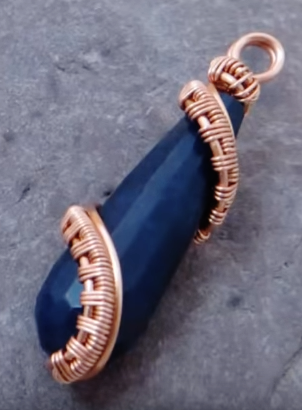
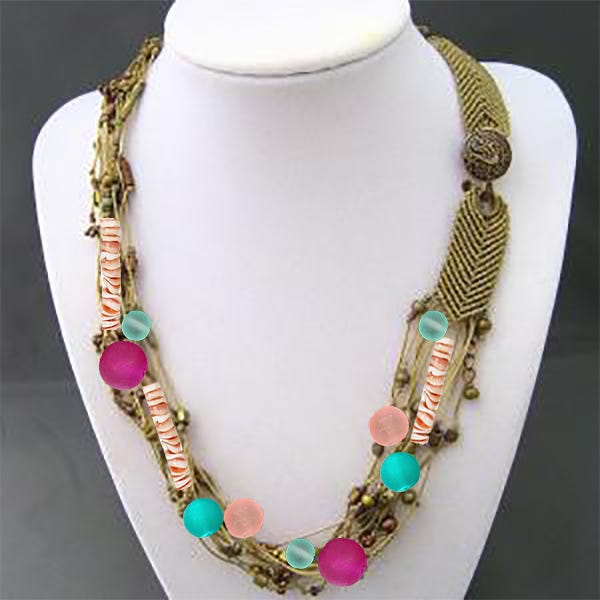
Contemporary Jewelry Is Not A “Look” — It’s A Way Of “Thinking”

Posted by learntobead on February 15, 2018

CONTEMPORARY JEWELRY IS NOT A “LOOK” —
IT’S A WAY OF “THINKING”

by Warren Feld, Jewelry Artisan
warren@warrenfeldjewelry.com
718 Thompson Lane, Ste 123, Nashville, TN 37204
615-292-0610


“Canyon Sunrise”, Warren Feld, designer, 2004, Austrian crystal, glass seed beads, 14KT gold chain and constructed clasp, fireline cable thread, photographer Warren Feld

Abstract:
Contemporary Jewelry represents a specific approach for thinking through design. Making jewelry is, in essence, an authentic performance task. The jewelry artisan applies knowledge, skill and awareness within the anticipation of the influence and constraints of a set of shared understandings. Shared understandings relate to composition, construction and performance. These understandings are enduring, transferable, big ideas at the heart of what we think of as “contemporary jewelry”. They are things which spark meaningful connections between designer and materials, designer and techniques, and designer and client. Managing these connections is what we call “fluency in design”.

Jewelry Design is a professional discipline. Every legitimately defined profession has at its core a discipline-specific way of thinking. This includes core concepts, core rules, and core beliefs. And it includes professional routines and strategies for applying, manipulating and managing these. The good designer is fluent in how to think through design, and the good contemporary designer is fluent in how to think through design which earns the label “contemporary”.

But, the jewelry designer can only wonder at this with crossed eyes and bewilderment. As a profession, jewelry design balances a series of contradictions, most notably to what extent the practice is craft, art or design. This works against professional legitimacy.

Jewelry Design, as a discipline, is not always clear and consistent about its own literacy – that is, what it means to be fluent in design. Its core concepts, rules and beliefs are not well-defined, and often break down by medium, by operational location – (visualize museum, gallery, studio, store, factory, workshop, class, home), and by the degree of involvement and commitment to the profession of the jewelry designer him- or herself. The diversity of materials, approaches, styles and the like make it difficult to delineate any unifying principles or professional image.

As designers, we see, feel and experience the evolving dynamics of an occupation in search of a profession. But our profession is still in search of a coherent identify. Perhaps we see this most often in debates over how we come to recognize what jewelry we think should be labeled “contemporary” and what jewelry should not.

On the one hand, the idea of contemporary can be very elucidating. On the other, however, we are not sure what contemporary involves, how the label should be applied, and what the label represents. Yet, our sense-making search for its meaning is at the forefront of the professionalization of jewelry design. Our persistent questioning about “What is contemporary jewelry?” opens up thinking and possibilities for every jewelry designer, working across many styles and with many materials, both experienced and novice alike.

The term “contemporary” is defined as something occurring in our time, and that can be very confusing for the jewelry designer. We get caught in a major Identity Crisis for lack of a clear, agreed-upon definition of contemporary. How we resolve this Identity Crisis around a common understanding of “contemporary jewelry” can go a long way, I believe, towards developing a coherent disciplinary literacy and professional identity for all jewelry designers. Resolution can be very unifying.

Many conceptual questions about contemporary jewelry arise. We need to be very cognizant of how we think through our responses.

Does the label apply to every piece of jewelry made today? We see all kinds of styles, shapes, silhouettes, materials, techniques, fashions all around us. There appears to be no common denominator except that they all have been created in our time.

Should the label be applied to all this variation?

Could it?

Why would we want it to?

Does the label apply to a certain timeframe, with the expectation that it will be supplanted by another label sometime in the future?

What is contemporary jewelry?

“Contemporary” Is A Specific Approach For Thinking Through Design

I suggest that contemporary jewelry is not a specific thing. But rather it is a way of thinking through the design process. It is a type of thinking routine[1] which underlays the universal core of contemporary jewelry design.
Contemporary jewelry is not every piece of jewelry made in our time. It is, instead, jewelry designed and crafted with certain shared understandings in mind – understandings about composition, construction and performance.

Contemporary jewelry is not associated with any particular color or pattern or texture. It is, instead, a strategy for selecting colors, patterns and textures.

Contemporary jewelry is not something that only a few people would make or wear, whether boring or outlandish. It is, instead, something most people recognize as wearable with some level of appeal.

Contemporary jewelry is not restricted to the use of unusual or unexpected materials or techniques. It is, instead, something which leverages the strengths or minimizes the weaknesses of any and all materials and/or techniques used in a project.

Contemporary jewelry is not a specific silhouette, or line, or shape, or form, or theme, but, instead, something which shows the artist’s control over how these can be manipulated, used, played off of, and, even, violated.

Contemporary jewelry is an integral part of our culture. We wear jewelry to tell ourselves and to tell others we are OK. It is reflective of the sum of all our choices about how we think through our place among others, our relative value among others, our behaviors among others, our preferred ways to interact, challenge, conform, question, organize and arrange.

The contemporary jewelry designer is especially positioned to serve at the nexus of all this culture. The designer’s ability to think through and define what contemporary means becomes instrumental for everyone wearing their jewelry to successfully negotiate the day-to-day cultural demands of the community they live in. Designers have a unique ability to dignify and make people feel valued, respected, honored and seen.

Think of all that power!

Each person stands at that precipice of acceptance or not, relevance or not. The jewelry designer has the power to push someone in one direction, or another.
If only we had the established profession and a disciplinary literacy to help us be smart about this.

FLUENCY[2] IN DESIGN: Managing The Contemporary Design Process

Jewelry design is, in effect, an authentic performance task.

The jewelry designer demonstrates their knowledge, awareness and abilities to:

1. Work within our shared understandings about contemporary jewelry.

2. Apply key knowledge and skills to achieve the desired result – a contemporary piece of jewelry.

3. Anticipate how their work will be reviewed, judged and evaluated by criteria reflective of these same shared understandings.

4. Step back, reflect, and validate all their thinking to reject any misunderstandings, and make adjustments accordingly.

The better designer is able to bring a high level of coherence and consistency to the process of managing all this – shared understandings, knowledge and skills, evaluative review, and reflection and adjustment.
This is called “fluency in design”.

Shared Understandings[3]

Shared understandings should be enduring, transferable, big ideas at the heart of what we think of as contemporary jewelry. These shared understandings are things which spark meaningful connections between designer and materials, designer and techniques, and designer and client. We need, however, to recognize that the idea of understanding is very multidimensional and complicated.

Understanding is not one achievement, but more the result of several loosely organized choices. Understanding is revealed through performance and evidence. Jewelry designers must perform effectively with knowledge, insight, wisdom and skill to convince us – the world at large and the client in particular — that they really understand what design, and with our case here, contemporary design, is all about. This involves a big interpersonal component where the artist introduces their jewelry to a wider audience and subjects it to psychological, social, cultural, and economic assessment.
Understanding is more than knowledge. The designer may be able to articulate what needs to be done to achieve something labeled contemporary, but may not know how to apply it.

Understanding is more than interpretation. The designer may be able to explain how a piece was constructed and conformed to ideas about contemporary, but this does not necessarily account for the significance of the results.
Understanding is more than applying principles of construction. It is more than simply organizing a set of design elements into an arrangement. The designer must match knowledge and interpretation about contemporary to the context. Application is a context-dependent skill.

Understanding is more than perspective. The designer works within a myriad of expectations and points of view about contemporary jewelry. The designer must dispassionately anticipate these various perspectives about contemporary design, and, bring some constructed point of view and knowledge of implications to bear within the design and design process.

We do not design in a vacuum. The designer must have the ability to empathize with individuals and grasp their individual and group cultures. If selling their jewelry, the designer must have the ability to empathize with small and larger markets, as well. Empathy is not sympathy. Empathy is where we can feel what others feel, and see what others see.

Last, understanding is self-knowledge, as well. The designer should have the self-knowledge, wisdom and insights to know how their own patterns of thought may inform, as well as prejudice, their understandings of contemporary design.

How the jewelry designer begins the process of creating a contemporary piece of jewelry is very revealing about the potential for success. The designer should always begin the process by articulating the essential shared understandings against which their work will be evaluated and judged. For now, let’s refer to this as Backwards Design[4]. The designer starts with questions about assessment, and then allows this understanding to influence all other choices going forward.

When designing contemporary jewelry, the designer will push for shared understandings about what it means to be worthy of the label “contemporary.” I propose the following five shared understandings as a place to start, and hopefully, to generate more discussion and debate.

These are,

1. Fixed Frameworks and Rules should not pre-determine what designers do.

Rules do exist, such as color schemes or rules for achieving balance or rhythm. But rules may be challenged or serve as guidelines for the designer. In fact, the designer may develop and implement rules of their own.

Designers do not learn understanding if they are only able to answer a question if framed in one particular way. How the designer invents and applies rules for managing design as a process become of primary importance because they reveal design fluency and thinking. And this allows for a variety of approaches as well as an escape from any dominant definitions. Nothing is sacred.

2. Jewelry should extend, rework, and play with, or even push, the boundaries of materials, techniques and technologies.

Contemporary designers are meant to ask questions, evaluate different options and experiment widely. They do this in order to leverage the strengths and minimize the weaknesses of materials, techniques and technologies used. Their jewelry should reflect this.

3. Jewelry should evoke emotions.

The audience is an integral part of the success of contemporary jewelry. The viewer/wearer recognizes things in the piece and is allowed to, (in fact, expected to), react and interpret. The designer’s goal is to achieve a level of resonance.

4. Jewelry should connect people with culture.

Contemporary jewelry is not made for art’s sake alone. Contemporary jewelry is made to connect to the world around us. It is meant to assist a person in recognizing how they want to live their lives, and how they want to introduce their view of themselves into the broader community or communities they live in.

5. Successful jewelry designs should only be judged as the jewelry is worn.

Jewelry is not designed in isolation from the human body. Its design should anticipate requirements for movement, drape and flow. Its design should anticipate the implications of the context in which the jewelry is worn. The implications for all jewelry design choices are most apparent at the boundary between jewelry and person.

Given that the designer “backward-designs [4],” he or she begins the process by anticipating those understandings about how their work will be assessed. The designer then is equipped to make three types of informed choices:

A. Choices about composition
B. Choices about construction
C. Choices about performance

The designer determines (a) what design elements to include in the piece, and then (b) rules for manipulating them. The contemporary designer (c) measures these against our shared understandings about contemporary design. These measures are a continuum – degrees of contemporary, not either/or’s or absolutes. In any given piece of jewelry, some design elements may be very contemporary, and others might not.

GOOD COMPOSITION:
Selecting and Articulating Upon Design Elements and Their Attributes

Jewelry making is a constructive process. It makes sense for the designer to begin with something like building blocks, which I call design elements. Design elements include things like color, movement, dimensionality, materials, use of space, and the like.

Each design element, in turn, encompasses a range of acceptable meanings, yet still reflective of that design element, and which are called attributes.
These design elements can be arranged in different configurations.

The combination of any two or more design elements can have synergistic effects.
Working with design elements is not much different than working with an alphabet. An alphabet is made up of different letters. Each letter has different attributes – how it is written, how it sounds, how it is used. Configurations of letters result in more sounds and more meanings and more ways to be used.

A person working with an alphabet has to be able to decode the letters, sounds and meanings, as letters are used individually as well as in combination. As the speaker becomes better at decoding, she or he begins to build in understanding of implications for how any letter is used, again, individually or in combination.

This is exactly what the jewelry designer does with design elements. The designer has to decode, that is, make sense of a series of elements and their attributes in light of our shared understandings about jewelry design. The contemporary designer decodes in light of our further shared understandings about contemporary jewelry design.

The designer might, for example, want to select from this list of design elements I have generated below. I have arranged these design elements into what is called a thinking routine[1]. The designer uses the routine to determine how each element might be incorporated into the piece, and how the desired attributes of each element relate to contemporary design. They might also use the routine to look for issues of true and false. They might use the routine to rate each element as to importance and uncertainty.

DESIGN ELEMENT LESS CONTEMPORARY MORE CONTEMPORARY
Dimensionality Flat; Width/Length focus Not Flat; Noticeable Width/Length/Height focus
Movement, Moving Elements Little or no movement, either from the movement of actual components, or from how colors or patterns are used Great sense of movement, either from the movement of components, or from how colors or patterns are used
Color, Color Blending Follows color rules, resistant to violate them Pushes color rules to the edge, or violates them
Light and Shadow Little sense artist attempted to control light and shadow in a strategic sense Great sense artist attempted to control light and shadow, strategically
Negative and Positive Spaces Little sense artist attempted to control negative and positive spaces in a strategic sense Great sense artist attempted to control negative and positive spaces strategically
Point, Line, Plane, Shape, Form Conforms to expectations; comfortable working within basic parameters Violates expectations; challenges basic parameters
Theme, Symbols If used, themes and symbols are simplistic and readily identified If used, themes and symbols have a complex relationship to form and structure, and stimulate debate and discussion to fully make sense of them
Beauty and Appeal Primary goal of piece Synergistic relationship between beauty and function to achieve designer’s ends
Structure and Support Little concern with movement, drape and flow; unwilling to sacrifice appeal for function Considerable concern with movement, drape and flow, and a willingness to make tradeoffs between appeal and function
Materials Materials are selected for how they look Materials are selected for how they function; designer leverages strengths and minimizes weaknesses
Craftsmanship Disconnect from Artist as if Artist was anonymous Shows Artist’s Hand
Context, Situation, Culture Pieces created for the sake of making something, or for the sake of beauty and appeal only Pieces created in anticipation of shared understandings about contemporary jewelry
Balance, Distribution Conforms to expectations; comfortable working within basic parameters Violates expectations; challenges basic parameters
Technique(s) Selected without questioning implications of how technique affects boundary between jewelry and person Selected after questioning implications of how technique affects boundary between jewelry and person
Texture, Pattern Conforms to expectations; comfortable working within basic parameters Violates expectations; challenges basic parameters
Reference and Reinforce an Idea, Style May or may not reference and/or reinforce symbolic meanings; if so, usually does so in a linear fashion, such as mimicking or repeating them May or may not reference and/or reinforce symbolic meanings; if so, learns from them, and then, based on this learning, takes the references to another level

Example of some choices I made using the routine when creating my piece Canyon Sunrise:
Canyon Sunrise, Warren Feld, 2004

What are some things which make this piece “Contemporary”?

Dimensionality Two layers of beadwork. The top layer overlapping the bottom layer, where the first row of the bottom layer is attached to the 2nd row of the top layer, forcing a curvature along the top. The pendant sits on top of bottom layer and in line with top layer.
Moving Elements The two layers are only connected at their tops. As the wearer moves, each layer can move somewhat independently of the other.
Color, Color Blending The piece uses a 5-color scheme, but increases the natural proportions of one color relative to the others. There are many gaps of light between all the beads which calls for a color blending strategy(ies). The piece relies heavily on simultaneity effects, as well as the overlapping effects of transparent and translucent beads.
Technique(s) The bead woven strips are allowed to fan out from the top, thus better accommodating the wearer’s body.

GOOD CONSTRUCTION:
Applying Knowledge, Skills, Competencies for Manipulating Design Elements

Design elements need to be selected, organized and implemented in some kind of satisfying design. Towards this end, the artist, consciously or not, anticipates our shared understandings in order to make these kinds of choices.

These are the most visible choices the artist makes. We can see the finished piece of jewelry. We interact with it. We question it. We get a sense of whether we want to emotionally respond to it. We either feel its resonance, or we don’t.

Most artists manage intuitively, learning to make good choices as they receive feedback and assessment, and adjust their decisions accordingly. The better jewelry designers, however, show “metacognitive awareness” of all the things they have thought of, anticipated, structured, and accomplished during the design process as these relate to larger shared understandings about contemporary jewelry.

Let’s return, for a minute, to the analogy with building blocks and the alphabet. The design elements are building blocks. I compared them to the letters of the alphabet. Building blocks have attributes, and letters have attributes. Attributes further define them and give them purpose.

The novice designer learns to decode these building blocks and their attributes. With more experience, the blocks, just like letters, get combined and constructed into words and phrases and larger, meaningful ideas and expressions.

In essence, the finished piece of jewelry is an exemplar of the jewelry artisan’s vocabulary and grammar of design. The fluency in how the artist uses this vocabulary and grammar in designing their piece should be, I would think, especially correlated with the success and resonance of the piece.

Often, artists implement their design element choices with attention and recognition to Principles of Construction. Principles of Construction are the rules or grammar for using design elements in a piece. Given the artist’s goals for beauty and function, the artist is free to apply the rules in any way she or he sees fit. However, we expect to find this grammar underlaying all pieces of jewelry, whether the piece is contemporary or otherwise.

When we want to apply the label “contemporary,” however, we search for the choices and logic the artist has used for constructing design elements into a contemporary whole, and in anticipation of our shared understandings.

I suggest these 10 Principles of Construction. All Principles need to be applied, yet each is different from and somewhat independent of the others. For example, the colors may be well chosen, but proportions or placement not right.

Principle of Construction What the Principle is About
Rhythm How the piece engages the viewer and directs their eye
Pointers How the piece directs the viewer to a certain place or focal point
Planar Relationships The degree the piece is not disorienting; obvious what is “up” and what is “down”
Interest The degree the artist has made the ordinary…”noteworthy”
Statistical Distribution How satisfying the numbers and sizes of objects within the piece are
Balance How satisfying the placement of objects (and their attributes) is
Dimensionality The degree to which the piece is flat or 3-dimensional, how satisfying this dimensionality is to the piece
Temporal Extension How well the parts are integrated into the whole in anticipation of how, where and when the jewelry is to be worn; the whole should be more than the sum of its parts
Physical Extension/Finishing The degree the piece is designed so that it accommodates physical stresses when the piece is worn
Parsimony There should be no nonessential elements; the addition or subtraction of one element or its attribute will make the piece less satisfying

GOOD PERFORMANCE:
Seeking Continual Feedback and Evaluation About Choices and Results

The jewelry designer brings perspective. The designer shows they can rise above the passions, inclinations and dominant opinions of the moment to do what their feelings, thoughts and reflections reveal to be best. And, at the same time, the designer shows that they can strive for a rapport, a sharing of values, an empathetic response, a type of respect deemed contemporary.

If we return to our alphabet metaphor, it is necessary, but not sufficient, for the artist to assemble a palette of building blocks, thus, design elements. It is necessary, but not sufficient, for the artist to apply a vocabulary and grammar for arranging these building blocks, thus for constructing a piece of jewelry.

Most importantly, however, it is both necessary and sufficient for the artist to anticipate how the piece of jewelry will be assessed prior to making any choice about design element or construction. The more coherent and aligned each aspect of this process is, the better managed. To the extent the artist can strategically manage this whole “backwards” design process, the more fluent in design that artist is. The more fluent in design, the more the finished piece reveals the artist’s hand and resonates.

So, there is a very dynamic performance component to design. The contemporary jewelry designer needs to think about what criteria their client and the general culture and market will use as acceptable evidence of “contemporary” and “good contemporary design”, when the piece is introduced. The artist needs to think about things like connection, emotion, resonance, integrity, market.

The designer needs answers to several questions at this point.

What is the designer’s process and routine for thinking about shared understandings and evidence of authentic performance?

How well have they anticipated these criteria of evaluation?

Has the designer created a continual feedback loop so that acceptable evidence is introduced throughout the full process of design?

To what extent will the eventual evaluation of the contemporary jewelry designer and their work be fair, valid, reliable, and a sufficient measure of their results?

_________________________________________________________


WARREN FELD, Jewelry Designer
warren@warrenfeldjewelry.com
615-292-0610

For Warren Feld, Jewelry Designer, (www.warrenfeldjewelry.com), beading and jewelry making have been wonderful adventures. These adventures have taken Warren from the basics of bead stringing and bead weaving, to wire working and silver smithing, and onward to more complex jewelry designs which build on the strengths of a full range of technical skills and experiences.

Warren leads a group of instructors at Be Dazzled Beads (www.bedazzledbeads.com). He teaches many of the bead-weaving, bead-stringing, jewelry design and business-oriented courses. He works with people just getting started with beading and jewelry making, as well as those with more experience.

His pieces have appeared in beading and jewelry magazines and books. One piece is in the Swarovski museum in Innsbruck, Austria.

He is probably best known for creating the international The Ugly Necklace Contest, where good jewelry designers attempt to overcome our pre-wired brains’ fear response for resisting anything Ugly.

_________________________________________________________

FOOTNOTES

1 Thinking Routines. I teach jewelry design. I find it useful to engage students with various ways of thinking out loud. They need to hear me think out loud about what choices I am making and what things I am considering when making those choices. They need to hear themselves think out loud so that they can develop strategies for getting more organized and strategic in dealing with information and making decisions. My inspiration here was based on the work done by Visible Thinking by Project Zero at Harvard Graduate School of Education .

2 Fluency. I took two graduate education courses in Literacy. The primary text we used was Literacy: Helping Students Construct Meaning by J. David Cooper, M. Robinson, J.A. Slansky and N. Kiger, 9th Edition, Cengage Learning, 2015. Even though the text was not about jewelry designing per se, it provides an excellent framework for understanding what fluency is all about, and how fluency with language develops over a period of years. I have relied on many of the ideas in the text to develop my own ideas about a disciplinary literacy for jewelry design.

3 Shared Understandings. In another graduate education class, the major text reviewed the differences between understanding and knowledge. The question was how to teach understanding. Worth the read to gain many insights about how to structure teaching to get sufficient understanding to enrich learning. Understanding by Design by Grant Wiggins and Jay McTighe, 2nd Edition, Association for Supervision and Curriculum Development, 2005.

4 Backwards Design. One of the big take-aways from Understanding by Design (see footnote 2) was the idea they introduced of “backwards design”. Their point is that you can better teach understanding if you anticipate the evidence others will use in their assessments of what you are trying to do. When coupled with ideas about teaching literacy and fluency (see footnote 1), you can begin to introduce ideas about managing the design process in a coherent and alignable way.

Posted in design management, jewelry design, jewelry making, Learn To Bead, Stitch 'n Bitch | Tagged: , , , , , , | 3 Comments »

5 Questions Every Jewelry Designer Should Have An Answer For

Posted by learntobead on December 14, 2017

Interested in trying your hand at jewelry design? Before you begin, consider the following 5 questions, as outlined by Nashville jewelry designer and teacher Warren Feld  (www.warrenfeldjewelry.com) 

Susan felt very unsure of herself. And unsure of her jewelry. Would people like it? Was the color mix appropriate? Was the construction secure? Was the price smart and fair? She allowed all this uncertainty to affect her design work – she had difficulty finishing pieces she was working on, starting new projects, and getting her work out there.

Like many of my jewelry and beadwork students, Susan needed to be empowered as a designer.

Empowerment is about making choices. These choices could be as simple as whether to finish a piece or not. Or whether to begin a second piece. The designer will make choices about how to draw someone’s attention to the piece, or present the piece to a larger audience. She or he may decide to submit the piece to a magazine or contest. She or he may want to sell the piece and market it. The designer will make choices about how a piece might be worn, or who might wear it, or when it might be worn, in what context.

And for all these choices, the jewelry designer might need to overcome a sense of fear, boredom, or resistance. The designer might need to overcome anxiety, a sense of giving up, having jeweler’s block, feeling unchallenged, and even laziness.

The empowered jewelry designer should have answers to 5 critical questions:

Question 1:  Should BEADWORK and JEWELRY MAKING be considered ART or CRAFT?
The jewelry designer confronts a world that is unsure whether jewelry is “craft” or “art.” This can get very confusing and unsettling. Each approach has its own separate ideas about how the designer should work, and how he or she should be judged.

When defined as “craft,” jewelry is seen as something that anyone can do – no special powers are needed to be a jewelry designer. As “craft,” there is somewhat of a pejorative meaning — it’s looked down upon, thought of as something less than art. But as “craft,” we recognize the interplay of the artist’s hand with the piece and the storytelling underlying it. We honor the technical prowess. People love to bring art into their personal worlds, and the craftsperson offers them functional objects that have artistic sensibilities.

When defined as “art,” jewelry is seen as something which transcends itself and its design. It evokes an emotional response from the viewer.   It has more of a sense of clarity of purpose and choice, a sense of presence. As “jewelry art,”  things done to improve functionality – durability, movement, drape and flow – should play no role at all, or as a compromise, merely be supplemental.

How you define your work as ART or CRAFT will determine what skills you learn, how you apply them, and how you introduce your pieces to a wider audience.

QUESTION 2:  How do you decide what you want to create?
What kinds of things do you do to translate your passions and inspirations into jewelry? What is your creative process?

Applying yourself creatively can be fun at times, but scary at other times. It is work. There is an element of risk. You might not like what you end up doing. Your friends might not like it. Nor your family. You might not finish it.  Or you might do it wrong. It may seem easier to go with someone else’s project.

Set no boundaries and set no rules. Be free. Go with the flow. Don’t conform to expectations.
Play. Pretend you’re a kid again. Have fun. Get the giggles.
Experiment. Take the time to do a lot of What Ifs and Variations On A Theme and Trial and Error.
Keep good records. Make good notes and sketches of what seems to work, and what seems to not work.
Evaluate. Learn from your successes and mistakes. Figure out the Why did something work, and the Why Nots.

QUESTION 3:  What kinds of MATERIALS work well together, and which ones do not?   
The choice of materials, including beads, clasps, and stringing materials, set the tone and chances of success for your piece.   There are light/shadow issues, textural issues, and color issues.  All of these choices:
… affect the look
… affect the drape
… affect the feel
… relate to the context

I always suggest using the highest quality materials your budget will allow.

Question 4: Beyond applying basic techniques, how does the Jewelry Designer evoke an emotional response to their jewelry?
An artistic and well-designed piece of jewelry should evoke an emotional response. This takes both the successful application of techniques as well as skills.

Unfortunately, beaders and jewelry makers focus too often on techniques and not often enough on skills. It is important to draw distinctions here.

Techniques are necessary but not sufficient to get you there. You need skills. The classic analogy comparing techniques and skills references cutting bread with a knife. Technique:  How to hold the knife relative to the bread in order to cut it. Skill:  The force applied so that the bread gets cut successfully.

Skills are the kinds of things the jewelry designer applies which enhance his or her capacity to control for bad workmanship. These include:
– Judgment
– Presentation
– Care and dexterity
– Taking risks

QUESTION #5: When is enough enough?
How does the jewelry artist know when the piece is done? Overdone? Or underdone? How do you edit?

In the bead and jewelry arenas, you see piece after piece that is either over-embellished or under-done. Things may get too repetitive with the elements and materials. Or the pieces don’t feel that they are quite there yet.

For every piece of jewelry there will be that point of parsimony, where adding or subtracting one more element will make the experiencing of the whole greater than the sum of its parts.

The empowered jewelry designer will have answers to these questions, though not every designer will have the same answers, nor is there one best answer. Yet it is unacceptable to avoid answering any of these 5 questions, for fear you might not like the answer.

The empowered jewelry designer will have learned the skills for making good choices. These choices include making judgments about combining materials, both physical and aesthetic, into wearable art forms and adornment. This is jewelry making and design.


Warren FFor Warren F., Jewelry Designer and teacher in Nashville, TN, beading and jewelry making endeavors have been wonderful adventures. These adventures, over the past 25 years, have taken Warren from the basics of bead stringing and bead weaving, to wire working and silver smithing, and onward to more complex jewelry designs which build on the strengths of a full range of technical skills and experiences. Learn more about Warren here!

Posted in Art or Craft?, jewelry design | Tagged: , , , | Leave a Comment »

DIMENSIONALITY: One Principle of Composition

Posted by learntobead on February 25, 2014

DIMENSIONALITY: One Principle of Composition

hrstep10c

Jewelry Design is the application of basic principles of artistic expression. One set of principles involves COMPOSITION.    In an article online – Good Jewelry Design (http://www.landofodds.com/store/goodjewelrydesign.htm ) – I describe 10 Principles of Composition.     Principles of Composition define what types of goals the good jewelry designer should achieve.   Discussion on these principles and their application focus on what elements in our pieces we , as jewelry designers, manipulate in order to achieve a principled, satisfactory outcome.

In this post, I focus on one in particular:   Dimensionality.

QUESTION:
What kinds of things have you manipulated within your piece(s) that helps you achieve a satisfying sense of dimensionality?

Conversely, where do you see failures in attempts to achieve “dimensionality”, and what kinds of wrong-way choices do you think the jewelry designer made, that might have led to this failure?    What better choices could the designer have made?

Share images, if you have them.

gjddimbb1

Dimensionality

Good Dimensionality  refers to the degree to which, whether the piece is flat or 3-dimensional, the placement of objects (and their attributes) is satisfying, and does not compete or conflict with the dimensionality of the piece as a whole.

Sometimes dimensionality is achieved through the positioning of masses of objects or planes of interconnected pieces, such as varying sizes/heights/lengths or layering or cut-aways, or varying positive and negative spaces.

Othertimes, dimensionality is achieved through color/texture optical effects, such as the use of glossy and matte beads in the same piece, or mixing darker/more intense colors with light/less intense colors.

gjddimbb2

How often have you seen something like a flat loomed bracelet and a button clasp, that sits so high on the bracelet, that it detracts from the 2-dimensional reason-for-being of the piece. Would a clasp, and a flatter clasp, at the end of the piece have worked better?

Glossy surfaces move toward the viewer, and matte ones recede.   Can you point to successful examples of this?

Achieving Good Dimensionality is considered, not only a desirable design goal, but a critical and important characteristic of contemporary jewelry.

This doesn’t mean we want to pile up bead up bead and layer upon layer.   It means we want to show how creative we can be to achieve something more satisfying than flat and more satisfying than one-dimensional.

We want to demonstrate more artistic control over line and plane.

gwynian-wine-detail2-medium

Posted in jewelry design | Tagged: , , , | Leave a Comment »

WHAT SHAPE ARE YOU?

Posted by learntobead on May 14, 2013

WHAT “SHAPE” ARE YOU?
— Spiral, Cross, Triangle, Round or Square?

shapes

Signs of Life: The Five Universal Shapes and How to Use Them, by Angelese Arrien

Diane Fitzgerald had pointed this out as an interesting book about shapes, I think in her book SHAPED BEADWORK. I read the book. Fascinating and goes into a lot of interesting detail.

In this book, the author, who is a cultural anthropologist, studied shapes, and searched for universals. She found that cross-culturally, people use 5 particular shapes to describe and understand themselves in relationship to others within their culture.

These shapes were:

Circle, Square, Triangle, Cross and Spiral

She developed what she calls the Preferential Shapes Test.

Take this test, and use Arrien’s book to interpret the results.

I’m going to oversimplify this test and paraphrase her words, so you can try it, if you haven’t already. However, to read more details about interpretations and to read stories about people who fit various patterns, I’d suggest you visit this book.

STEP 1:
On a piece of paper, write the numbers 1 thru 5 across the page.

Here are the shapes to play with:

SPIRAL, CROSS, TRIANGLE, ROUND, or SQUARE.

STEP 2:
Under the first position number, put your favorite shape.
Under the 2nd position number, put your second favorite shape.
Under the 3rd position, your third favorite shape
Under the 4th position, your fourth favorite
Under the 5th position, your least favorite.

STEP 3:
Use the information below to interpret the results:

POSITION 1: Where you Think You Are
This is where you think you are today or want to go in the future, but not necessarily the most accurate indicator of where you actually are right now.

POSITION 2: Your Strengths
An inherent strength predominant in you at this time, whether you know it or not. Often, this is how other people see you.

POSITION 3: Where You Are
This is the most significant shape.
This shape shows your true current self.

Think of the goldilocks story – the porridge is too hot, the next too cold, the third just right.

POSITION 4: Your Motivation
This shape points to past events or things which motivated or provoked you to get to Position 3.

POSITION 5: Old, Unfinished Business
A process you have outgrown, dislike, resist, or are judging. Unresolved issues you want to put aside.

CIRCLE: wholeness
Position 1: desire to be independent and self-sufficient
Position 2: strengths are self-reliance and resourcefulness
Position 3: process of achieving independence is at core of your nature
Position 4: something in your past motivated you to become responsible and self-reliant
Position 5: you may be resisting or denying this process of individuation

CROSS: relationships
Position 1: forming relationships is most important to you
Position 2: you rely on good people skills
Position 3: forming relationships is something deep within your nature
Position 4: a past shared journey inspired you to become who you are today
Position 5: you may want to ignore or dismiss relationships

SPIRAL: growth and change
Position 1: change holds great importance to you
Position 2: easy for you to handle change
Position 3: you are profoundly engaged in process of change
Position 4: your were challenged in your past to make significant changes in your life
Position 5:you are unlikely to show interest in process of change and growth

TRIANGLE: goals, dreams, visions
Position 1:process of envisioning seems especially important to you now
Position 2:you carry the gift of vision naturally, whether you are fully aware of this or not
Position 3:the process of envisioning is central to your current development
Position 4:your process of following dreams in your past motivated you to change your life
Position 5:you are resisting the process of honoring your dreams and establishing goals

SQUARE: stability
Position 1:stability and authenticity are inspirational to you
Position 2:you are responsible, authentic, and fully committed when you give your word
Position 3:it is vitally important to you to stabilize and implement your creative endeavors
Position 4:past issues of responsibility and accountability led you to make changes in your life
Position 5:you may be denying process of stability and responsibility

Posted in jewelry design, jewelry making | Tagged: , , , , | Leave a Comment »