What do you (or will you) say to people who ask you what you do for a living? When you say, “Jewelry Designer”, you probably get a “That’s nice” or “Oh, you make jewelry,” and perhaps a far-away look. Most people can’t imagine exactly what you do. Their images and experiences with jewelry and what it can look like, the materials available to use, the techniques applied are somewhat limited. Not everyone knows you can craft jewelry by hand, not just by machine.
It can be difficult to define the scope of jewelry design. There’s your inspiration and intent. The availability and knowledge about materials and techniques. There are the perceptions and desires of your various audiences. What you do as an artist and designer may involve several different kinds of tasks. Your process may be conventional or unconventional. And it’s not just the “What do you do” aspect of the question, but the concurrently implied “Can you make a living at this” aspect of the question, as well. It’s almost as if they are about to say, “What do you really do?”
The response you want to come up with is your personal understanding and recognition about your passion for design, and all the things that drive this passion. Your excitement in telling your story will become infectious, and, while they still might not comprehend everything you do or the how and why you do it, they will certainly see that you are a jewelry designer, one who is intent on achieving some level of success within the profession.
Your Practice, and how you define and live and succeed in it depends on gaining some clarity in terms of…,
(1) Having a definition of what Success as a designer means to you
(2) Developing a production (and marketing) Routine
(3) Creating a Consistent and Coherent body of work
(4) Being very Organized
(5) If selling or exhibiting, taking a Multi-Venue Approach
(6) Developing a Criticality where you are reflecting, evaluating, validating, legitimizing, being very metacognitive
(7) Self-Care and finding balance in your life
(1) Defining Success
Not every designer is going to define success in the same way. In fact, there will be dramatic differences. …
Jewelry design is an ongoing process of finding how to merge your artistic voice and inspiration with form. As you become more fluent and comfortable with all the vocabulary and materials and techniques, you take on more and more challenges.
Jewelry design is a conversation. It is a quiet conversation between what you come to feel and understand as inspiration, and what logical options you might bring to bear on translating that inspiration into a design. It is a conversation between you the designer and someone else as the wearer. It might also be a conversation between you the maker with someone else as the viewer, buyer, seller, exhibiter or collector.
The conversation is never done. It is a dialog. It is a back-and-forth process of refining, questioning and translating your feelings, impressions, ideas, influences into a visual grammar, forms and arrangements, and content, intent and meanings. Everything comes into play, and everything matters.
Some of the conversation is inward, and some of the conversation is very interactional. Part of the conversation focuses on generating a lot of possibilities. Another part concentrates on narrowing down those possibilities. During all this iteration, your artistic voice gets closer and closer to merging with that final jewelry form.
As your fluency in jewelry design grows, you find that all this conversation and all divergence and convergence of ideas and feelings and choices, gets reflected and sensed within your jewelry designs. This is how you develop and channel your excitement and passion.
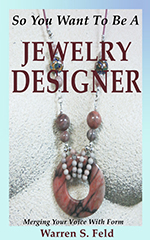
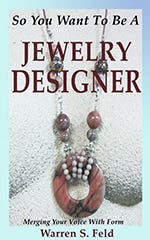
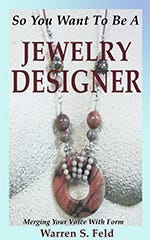
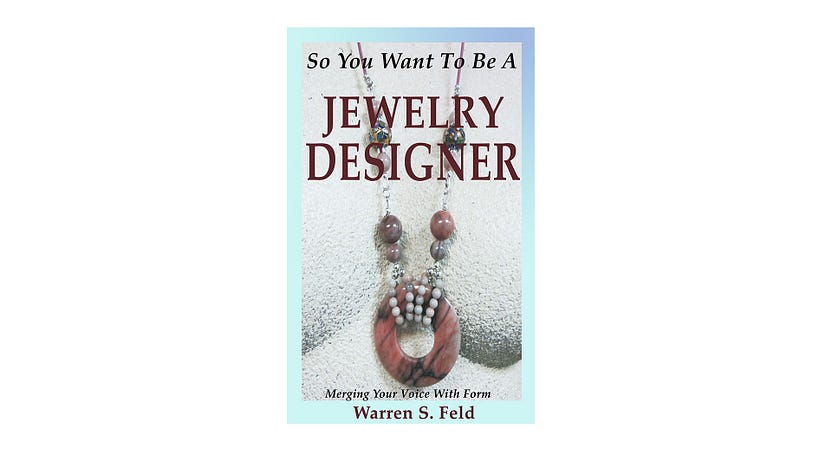
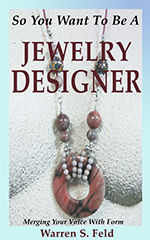
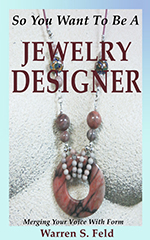
SO YOU WANT TO BE A JEWELRY DESIGNER Merging Your Voice With Form
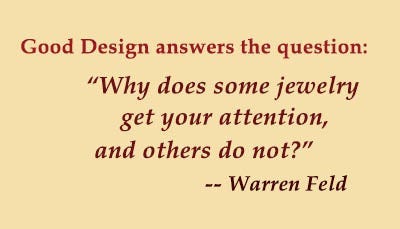
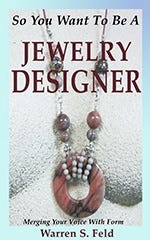
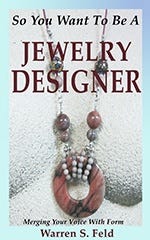
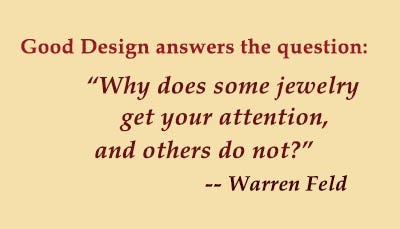
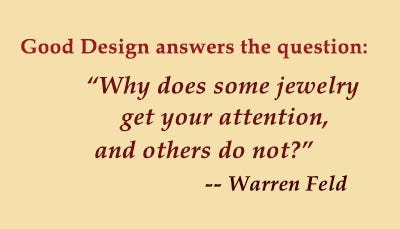
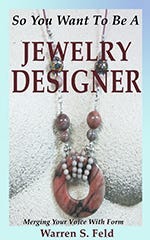
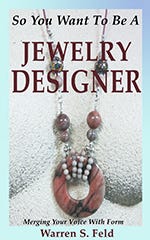
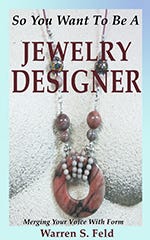
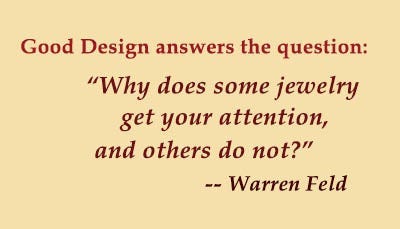
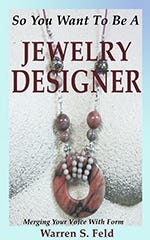
So You Want To Be A Jewelry Designer reinterprets how to apply techniques and modify art theories from the Jewelry Designer’s perspective. To go beyond craft, the jewelry designer needs to become literate in this discipline called Jewelry Design. Literacy means understanding how to answer the question: Why do some pieces of jewelry draw your attention, and others do not? How to develop the authentic, creative self, someone who is fluent, flexible and original. How to gain the necessary design skills and be able to apply them, whether the situation is familiar or not.
From Warren and Land of Odds Join my community of jewelry designers on myPatreon hub MAY 1, 2025 Sign up for a Free or Paid Subscription[Note: Paid Subscribers on Patreon Hub get 25% Off @Land of Odds]www.landofodds.comHi everyone, Some Updates and Things Happening. (Please share this newsletter)
Some Updates and Things Happening. (Please share this newsletter)
In this Issue: 1. Jewels of the Garden 2. HANDWORK: Celebrating American Craft 2026 3. Pearl Knotting…Warren’s Way, 2nd Edition Released 4. 64 Open Courses You Can Apply For 5. Your Artist Statement 6. Call for Entries: Workhouse Arts Center CLAY INTERNATIONAL 7. The Jewelry of Lesley Aine McKeown
Insects and fruits in adornment. What would jewelry be without them?
2. HANDWORK: Celebrating American Craft 2026
To join the celebration, please contact Jen Ruppmann (handwork@craftamerica.org) . Visit www.handwork2026.org for a full listing of participating organizations. 3. Pearl Knotting…Warren’s Way, 2nd Edition Released 184pp, many images and diagrams Ebook, Kindle or PrintClassic Elegance! Timeless! Architectural Perfection! Learn a simple Pearl Knotting technique anyone can do. No special tools. Beautiful. Durable. Wearable.In this very detailed book, with thorough instructions and pictures, you are taught a non-traditional Pearl Knotting technique which is very easy for anyone to learn and do. Does not use special tools. Presents a simple way to tie knots and position the knots to securely abut the bead. Anticipates both appeal and functionality. Shows clearly how to attach your clasp and finish off your cords.Most traditional techniques are very frustrating. These can get overly complicated and awkward. They rely on tools for making and positioning the knots. When attempting to follow traditional techniques, people often find they cannot tie the knots, make good knots, get the knots close enough to the beads, nor centered between them. How to attach the piece to the clasp gets simplified or glossed over.Pearl Knotting…Warren’s Way teaches you how to:· Hand-knot without tools· Select stringing materials· Begin and finish pieces by (1) attaching directly to the clasp, (2) using French wire bullion, (3), using clam shell bead tips, or, (4) making a continuous piece without a clasp· Add cord· Buy pearls, care for them, string and restring them, store themPearl Knotting doesn’t need to be this hard. By the end of Pearl Knotting…Warren’s Way, you will have mastered hand-knotting pearls. RE: Second EditionThis second edition takes into account a fuller utilization of technical options for the E-book version. Additional information, clarifications and summaries of ideas are added throughout. Instructions for Variation #3: Using Clam Shell Bead Tips is simplified a little bit.184pp, many images and diagrams Ebook, Kindle or Print
4. 64 Open Courses You Can Apply ForWhen jewelry making is your passion…
5. Your Artist Statement 📝 Your Artist Statement isn’t about you—it’s about the work.
Curators are looking for clarity, context, and commitment.
A strong artist statement clearly explains what your work is about, what drives it, and why it matters—without over-intellectualizing.
Avoid vague phrases like “exploring the liminal space…” unless you can explain exactly what that means.
Your bio, on the other hand, is your professional snapshot. Lead with location, education, exhibitions, and press—keep it factual and recent.
6. Call for entries, Workhouse Arts Center CLAY INTERNATIONAL
READ THE PROSPECTUS HERE 7. The Jewelry of Lesley Aine McKeownVisit her website “Creating is a process constantly in motion, one that keeps the maker searching for balance. I hope to create work that provokes thought. Bordering between sculpture and jewelry each is thoughtful in design and construction representing a meaning deeper than aesthetics.”“I am fascinated with juxtaposition and fluidity of materials. My work is about exploring the aspects of ephemeral impressions and the urbanity of metal. I use precious metals, stones and alternative materials to explore these expressions.”Using low-tech traditional metal smithing techniques and tools, each piece is created in Lesley’s studio in the tradition of the American Studio Art Jewelry movement of the 1940’s through the 60’s, which dictates that the work is created entirely in the artist’s studio. Her work is hand fabricated using recycled metals and ethically, sustainably-mined gemstones.
Promote your current projects, promotional copy, News & Views, videos, reels, tutorials, instructions, social media posts online in this newsletter and on our jewelry designers’ Patreon hub.
No deadlines! Opportunity available all the time. No fees.
But don’t wait to take advantage of this opportunity. This copyrighted material is published here with permission of the author(s) as noted, or with Land of Odds or Warren Feld Jewelry. All rights reserved.Repairs Stumping You? Let Me Take A Look I take in a lot of jewelry repairs. People either bring them to me in Columbia, TN, or, I pick them up and deliver them back in Nashville. I am in Nashville at least once a week. It’s been convenient for most people to meet me at Green Hills Mall. But if not, I can come to your workplace or your home. This is perfectly fine for me. My turnaround time typically is 3-4 weeks.
I do most repairs, but I do not do any soldering. I also do not repair watches. These are the kinds of repairs I do:
o Beaded jewelry o Pearl knotting, hand knotting o Size/Length adjustment o Re-stringing o Wire work/weave/wrap o Micro macrame o Broken clasp replacfement o Earring repair o Replace lost rhinestones or gemstones o Stone setting o Stretchy bracelet o Metal working which does not involve soldering o Bead woven jewelry and purses o Beaded clothing o Custom jewelry design
WARREN FELD JEWELRY (www.warrenfeldjewelry.com) Custom Design, Workshops, Video Tutorials, Webinars, Coaching, Kits, Group Activities, Repairs ~~~~~~~~~~~~~~~~~~~~~~~ Join our community of jewelry designers on myPatreon hub Be part of a community of jewelry designers who recognize that we have a different way of thinking and doing than other types of crafters or artists. One free downloadable Mini-Lesson of your choice for all new members! ~~~~~~~~~~~~~~~~~~~~~~~
Add your email address to my Warren Feld Jewelry emailing listhere.
Thanks for being here. I look forward to sharing more resources, tips, sources of inspiration and insights with you.Join A Community Of Jewelry Designers On MyPatreon Hub
QUESTION 3: What kinds of MATERIALS work well together, and which ones do not? This applies to TECHNIQUES as well. What kinds of TECHNIQUES (or combinations of techniques) work well when, and which ones do not?
A successful jewelry design has a character of its own as well as some kind of evocative essence. Let’s call this a tone. The choice of materials, including beads, clasps, and stringing materials, and the choice of techniques, including stringing, weaving, wire working, glassworks, metalworks, clayworks, cements that tone into place. Techniques link the designer’s intent with the client’s expectations. The successful designer has a depth of knowledge about materials, their attributes, their strengths, their weaknesses, and is able to leverage the good and minimize the bad within any design. The same can be said of techniques.
The choice of materials and the choice of techniques set the tone and chances of success for your piece. Materials and techniques establish the character and personality of your designs. They contribute to understandings whether the piece is finished and successful.
However, there are no perfect materials (or techniques) for every jewelry project. Selecting materials (or techniques) is about making smart, strategic choices. This means relating your choices to your design and marketing goals. It also frequently means having to make tradeoffs and judgment calls between aesthetics and functionality. Last, materials (or techniques) may have different relationships with the designer, wearer or viewer depending on how they are intended to be used, and the situational or cultural contexts….
JEWELRY DESIGN: An Occupation In Search Of Professionalization
Jewelry design is an activity which occupies your time.
How the world understands what you do when you occupy that time, however, is in a state of flux and confusion, and which often can be puzzling or disorienting for the jewelry artist, as well.
Is what you are doing merely a hobby or an avocation? Is it something anyone can do, anytime they want, without much preparation and learning? Is it something primarily done by hand or by machine?
Is what you do an occupation? Does it require learning specialized technical skills? Is it something that involves your interaction with others? Is it something you are paid to do?
Or is what you do a profession? Is there a specialized body of knowledge, perspectives and values, not just mechanical skills, to learn and apply? Do you provide a service to the public? Do you need to learn and acquire certain insights which enable you to serve the needs of others?
Are you part of another occupation or profession, or do you have your own? Is jewelry design merely a craft, where you make things by following sets of steps?
Is jewelry design an art, where your personal inspirations and artistic sense is employed to create things of aesthetic beauty for others to admire, as if they were sculptures? Is the jewelry you create to be judged as something separate and apart from the person wearing it?
Or is jewelry design its own thing. Is it a design activity where you learn specialized knowledge, skills and understandings in how to integrate aesthetics and functionality, and where your success can only be judged at the boundary between jewelry and person — that is, only as the jewelry is introduced publicly and is worn?
The line of demarcation between occupation and profession is thin, often blurred, but for the jewelry designer, this distinction is very important. It feeds into our sense of self and self-esteem. It guides us in the choices we make to become better and better at our craft, art and trade. It influences how we introduce our jewelry to the public, and how we influence the public to view, wear, exhibit, purchase or collect the things we make.
SO YOU WANT TO BE A JEWELRY DESIGNER Merging Your Voice With Form
So You Want To Be A Jewelry Designer reinterprets how to apply techniques and modify art theories from the Jewelry Designer’s perspective. To go beyond craft, the jewelry designer needs to become literate in this discipline called Jewelry Design. Literacy means understanding how to answer the question: Why do some pieces of jewelry draw your attention, and others do not? How to develop the authentic, creative self, someone who is fluent, flexible and original. How to gain the necessary design skills and be able to apply them, whether the situation is familiar or not.
Sometimes becoming a designer begins by touching some beads. Or running a strand of pearls through your hand. Or the sight of something perfectly worn around the wrist, or upon the breast, or up near the neck. Or trying to accessorize an outfit. Or finding something for a special occasion.
Jewelry designers are extraordinarily blessed to do what they love for a living. For many, they have turned a hobby into an avocation into a lifestyle.
But it’s not like a regular job. There are many intangibles. Such as, what exactly is creativity and creative thinking? What are all the things that have to come together to recognize that creative spark when it hits you in your heart, gut or head? How do you translate that into something real, with beauty, with function, and with purpose? How do you mesh your views of and desires for aesthetics and functionality with those of your many audiences — wearer, viewer, buyer, seller, collector, exhibiter, teacher and student?
What exactly does it mean to design jewelry, and how do you know it is the right path for you? This is a tough question. You may love jewelry, but not know how to make it. You may get off on creative problem solving or be a color addict but not know what specific techniques and skills you need to learn, in what organized way, with what direction, leading you towards becoming that better jewelry designer. You may wonder what it means and what it takes to be successful as a designer. You may feel the motivation, but not know what the jewelry designer really has to do each day.
You may be taking classes and getting some training, but how do you know when you have arrived? How do you know when you have emerged as a successful professional jewelry designer? And what are your responsibilities and obligations, once you get there?
SO YOU WANT TO BE A JEWELRY DESIGNER Merging Your Voice With Form
So You Want To Be A Jewelry Designer reinterprets how to apply techniques and modify art theories from the Jewelry Designer’s perspective. To go beyond craft, the jewelry designer needs to become literate in this discipline called Jewelry Design. Literacy means understanding how to answer the question: Why do some pieces of jewelry draw your attention, and others do not? How to develop the authentic, creative self, someone who is fluent, flexible and original. How to gain the necessary design skills and be able to apply them, whether the situation is familiar or not.
As a jewelry designer, you have a purpose. Your purpose is to figure out, untangle and solve, with each new piece of jewelry you make, how both you, as well as the wearer, will understand your inspirations and the design elements and forms you chose to express them, and why this piece of jewelry is right for them. Not as easy as it might first appear. There are no pre-set formulas here. There are artistic principles of composition, yes, but how you implement them is still up to you. Moreover, your pieces have to wear well, drape well, and connect with the desires of people who will want to wear or buy them. Jewelry design involves an ongoing effort, on many levels, to merge voice and inspiration with form. Often challenging, but very rewarding.
BECOMING THE BEAD ARTIST AND JEWELRY DESIGNER: The Ongoing Tensions Between Inspiration and Form
As a jewelry designer, you have a purpose. Your purpose is to figure out, untangle and solve, with each new piece of jewelry you make, how both you, as well as the wearer or buyer, will understand your inspirations and the design elements and forms you chose to express them, and why this particular piece of jewelry is right for them. Not as easy as it might first appear. There are no pre-set formulas here. There are artistic principles of composition, yes, but how you implement them is still up to you. Moreover, your pieces have to wear well, drape well, and connect with the desires of people who will want to wear or buy them.
You will want the piece to be beautiful and appealing. So you will be applying a lot of art theories about color, perspective, composition and the like. You will quickly discover that much about color use and the use of lines and planes and shapes and so forth in art is very subjective. People see things differently. They may bring with them some biases to the situation. Many of the physical materials you will use may not reflect or refract the color and other artistic effects more easily achieved with paints.
You want the piece to be durable. So you will be applying a lot of theories and practices of architects and engineers and mechanical physicists. You will need to intuitively and intrinsically understand what about your choices leads to the jewelry keeping its shape, and what about your choices allows the jewelry to move, drape and flow. You also will be attentive to issues of physical mechanics, particularly how jewelry responds to forces of stress, strain and movement. This may mean making tradeoffs between beauty and function, appeal and durability, desire and acceptance.
You want the piece to be satisfying and accepted by various viewing, wearing, buying and collecting audiences. So you will have to have some understanding of the role jewelry plays in different people’s lives. Jewelry is more than some object to them; jewelry is something they inhabit — reflective of soul, culture, status, aspiration. You will recognize that people ascribe the qualities of the jewelry to the qualities of the person wearing it. You will bring to the forefront ideas underlying psychology and anthropology and sociology, and even party planning, while designing your jewelry or introducing it publicly. You may find the necessity to compromise part of your vision for something socially acceptable, or in some degree of conformance with a client’s taste or style.
SO YOU WANT TO BE A JEWELRY DESIGNER Merging Your Voice With Form
So You Want To Be A Jewelry Designer reinterprets how to apply techniques and modify art theories from the Jewelry Designer’s perspective. To go beyond craft, the jewelry designer needs to become literate in this discipline called Jewelry Design. Literacy means understanding how to answer the question: Why do some pieces of jewelry draw your attention, and others do not? How to develop the authentic, creative self, someone who is fluent, flexible and original. How to gain the necessary design skills and be able to apply them, whether the situation is familiar or not.
ESSENTIAL QUESTIONS ABOUT JEWELRY DESIGN WORTH ANSWERING
As you work your way through the chapters in this book, it is important to recognize and understand the larger social and professional contexts within which jewelry design is but a part, and your place in it. Towards this end, I have formulated some essential questions every designer needs to have answers for and have deeper understandings about. Another way to look at this is that answers to these questions become your evidence for determining whether you are on the right track for becoming fluent in jewelry design.
(1) Why are there disciplinary conflicts between art and craft, and between art and design?
(2) How do you resolve tensions between aesthetics and functionality within an object like jewelry?
(3) What is jewelry, and what is it for?
(4) Is jewelry necessary?
(5) What does it mean to be successful as a jewelry artist working today?
(6) What does it mean to think like a jewelry designer? How does this differ from thinking like an artist or thinking like a craftsperson?
(7) How does the jewelry designer know when a piece is finished and successful?
(8) How do you place a value on a piece of jewelry?
(9) How do you introduce your jewelry into a public setting, either to wear or to collect or to buy?
(10) Why does some jewelry draw your attention, and others do not?
(11) What does it mean to be a contemporary jewelry designer?
SO YOU WANT TO BE A JEWELRY DESIGNER Merging Your Voice With Form
So You Want To Be A Jewelry Designer reinterprets how to apply techniques and modify art theories from the Jewelry Designer’s perspective. To go beyond craft, the jewelry designer needs to become literate in this discipline called Jewelry Design. Literacy means understanding how to answer the question: Why do some pieces of jewelry draw your attention, and others do not? How to develop the authentic, creative self, someone who is fluent, flexible and original. How to gain the necessary design skills and be able to apply them, whether the situation is familiar or not.
First (and foremost): Jewelry is art only as it is worn.
Second: Jewelry should reflect the artist’s intent Creativity is not merely Doing. It’s Thinking, as well.
Third: Jewelry is something affected by, and in return, affects the contexts within which it is introduced. The purpose of jewelry design is to communicate a designer’s idea in a way which others understand and will come to desire. Jewelry is not designed in a vacuum; rather, it results from the interaction of the artist and his or her various audiences, and is communicative at its core.
Fourth: Jewelry design should be seen as a constructive process involving the balancing act of maintaining both shape (structure) as well as good movement, drape and flow (support); jewelry should be seen as more architectural than craft or art alone.
Fifth: Design choices are best made and strategically managed at the boundary between jewelry and person, where the artist can best determine when enough is enough, and the piece is most resonant.
Sixth: Jewelry must succeed aesthetically, functionally, and contextually, and, as such, jewelry design choices must reflect the full scope of all this, if jewelry is to be judged as finished, successful and, most importantly, resonant.
Seventh: Everyone has a level of creativity within them, and they can learn and be taught how to be better and more literate jewelry designers.
Eighth: Students need to learn a deeper understanding about why some pieces of jewelry attract your attention, and others do not. Successful teaching of jewelry design requires strategies leading students to be more literate in how they select, combine and arrange design elements, and to be fluent, flexible and original in how they manipulate, construct, and reveal their compositions.
Ninth: Successful jewelry designing can only be learned within an agreed upon disciplinary literacy. That is, jewelry design requires its own specialized vocabulary, grammar and way of thinking things through and solving problems in order to prepare the designer to be fluent, flexible and original.
Tenth (and final): Disciplinary literacy should be learned developmentally. You start at the beginning, learn a core set of skills and how they are inter-related and inter-dependent. Then you add in a second set of integrated and inter-dependent skills. Next and third set, and so forth, increasing the sophistication of skills in a developmental and integrative sense. The caveat, if you have been making jewelry for a while, it is particularly helpful to go back and relearn things in an organized, developmental approach, which can be very revealing, even to the experienced designer, about how your design choices impact your pieces and your success.
Our curriculum emerged from our understandings about disciplinary literacy in jewelry design and our attempts to implement what we learned from it. This curriculum evolved into this book.
Here you will begin to understand
The challenges jewelry designers face
How to channel your excitement
How to develop your passion
How to cultivate your practice
How to understand what jewelry means and how jewelry is used by various audiences
The variety of materials, techniques and technologies you might want to explore and incorporate into what you do
The creative process, and the things involved in translating inspirations into aspirations into designs
What it means to develop a passion for design
The role desire plays in how people come to recognize and understand whether a piece is finished and successful, and how values are set and imposed on any piece of jewelry
Principles of composition, construction and manipulation, and the intricacies and dependencies of various design elements, such as color, point, line, plane, shape, forms, themes, among others
Creating and using components
The architectural bases of jewelry design
What the ideas underlying “good design” are, as well as those associated with “good contemporary design”
How design concepts are applied in real life
The psychological, cognitive and sexuality underpinnings of jewelry design
Your professional responsibilities as a jewelry designer
Entering the creative marketplace and threading the business needle
Self-care
In fact, the book covers the full range of things you need to learn (or teach others) in order become fluent, flexible and original in jewelry design
Sadly, the field of jewelry design has little academic scholarship relative to the ideas which must support it. This is mostly because jewelry design is not thought of as a discipline apart from art or craft. And this is a disservice to we designers.
Most description and analysis focus on the accomplishments of various successful designers. These texts detail their biographies, their use of artistic elements and techniques, and their influence over styles and fashions. This information is important, but insufficient to support jewelry design as a profession all its own, relevant for today and tomorrow, and inclusive of all of us who call ourselves jewelry designers.
This book covers the bases of those critical professional, think-like-a-designer skills jewelry designers need to develop and at which to become proficient.
SO YOU WANT TO BE A JEWELRY DESIGNER Merging Your Voice With Form
So You Want To Be A Jewelry Designer reinterprets how to apply techniques and modify art theories from the Jewelry Designer’s perspective. To go beyond craft, the jewelry designer needs to become literate in this discipline called Jewelry Design. Literacy means understanding how to answer the question: Why do some pieces of jewelry draw your attention, and others do not? How to develop the authentic, creative self, someone who is fluent, flexible and original. How to gain the necessary design skills and be able to apply them, whether the situation is familiar or not.
In the 1990s, my partner and I decided we wanted to set up a training program, but something different than what already existed. It was obvious to us that what already existed wasn’t working.
It came down to this: our bead store customers and our jewelry making students were not challenging us. They were not pushing us to seek out new materials. They were not demanding that we more critically evaluate the quality, usefulness, and long term staying power of various stringing materials and jewelry findings options. They were not wondering why some things broke or didn’t come together well. They were not encouraging us to explore the craft, improve upon it, search for more variations on existing methods and more ideas about new methods, and see where we could take it.
The typical customer, at that time, would learn one technique, apply it to one pattern, and do this pattern over and over again, perhaps only varying the colors. They would make at least 10 or 12 of the exact same pieces, again, typically only varying in color choices, and carry them around in zip lock plastic bags secured in their purses. They rarely deviated from using the same materials, the same clasps, the same jewelry findings. They never asked questions about what else they could do. They never varied their techniques. They never challenged themselves. They never questioned why things broke, or didn’t come together well, or why people liked or didn’t like the pieces they were making.
Students wanted us to tell them, step-by-step, how to do it. They didn’t want to think about it. They just wanted to make something quickly, that looked good on them, matched what they were wearing, and could be worn home. Uninterested in whether there were better stringing materials for the project. Or a more clever way to construct the clasp assembly. Or better choices of colors, patterns, textures or materials. Or things they could do to make the piece move better, drape better and be more comfortable to wear. Or even take the time to consider the appropriateness of the technique or the appropriateness of the piece itself, given where and when and how the piece was intended to be worn.
We began to see that this was not a customer or student problem. It was not any personal characteristics. Or motivations. Or experiences. Or skill level. This was a problem about what they learned and how they were taught and their level of expectations about what to assume and what to anticipate. They weren’t learning or getting taught that disciplinary way of asking questions, solving problems and day-to-day thinking unique to jewelry designers. They were not learning how to become literate in design. Their expectations about what was good, acceptable, finished, successful — you get the idea — were low. Bead and jewelry magazines, video tutorials, craft and bead stores, jewelry design programs set these low bars and reinforced them. As a result, they convinced their readers and students and practitioners to understand jewelry merely as an object to be worn, not inhabited. And not part of any kind of public interaction or dialog.
Jewelry design, at the time we began in business, was considered more a hobby or an avocation than an occupation or a profession. There was the assumption that no special knowledge was required. You were either creative or you were not. And all it took to make a piece of jewelry was to reduce a project to a series of steps where jewelry making was basically paint-by-numbers.
Art and Design concepts were dumbed down for jewelry makers, rather than elaborated and reinforced. It was assumed that everyone universally used the same criteria for judging a piece as finished and successful. As a consequence, there was a lot of standardization in jewelry designs, materials and construction. Too much sameness. Not enough variation and originality. Too much focus on fashion and product consumption. Too much diminishing of individuality and the reflection of the artist’s hand in design. And with all this standardization, an increasing risk that the jewelry artist was no longer a necessary and critical part of jewelry making and its design.
Around this time, the art world seemed to want to make a big push to encompass jewelry, as well. Jewelry was defined as a subset of painting or sculpture. And this lent an air of professionalization to the field. Jewelry making here became a beauty contest. But jewelry design was divorced from the materials it was made from, the constructive choices necessary for it to function, and the person who was to wear it.
Before designing jewelry, I had been a painter. For several years when I began designing jewelry, I approached jewelry projects as if I were painting them. This was very frustrating. I couldn’t get the color effects I wanted to achieve. Or the sense of line and shape and dimension. To compensate for my repeated feelings of failure, I actually pulled out my acrylic paints and canvas and painted my creations as I had visualized them in my mind. I could paint jewelry well. But, stuck as I was in this painter-as-designer-rut, I could not satisfactorily translate my vision into a satisfying piece of jewelry.
It finally began to dawn on me the things which needed to be learned and needed to be taught. I needed to approach jewelry from the jewelry’s standpoint. I needed to understand the components and beads used in jewelry on their own terms — how they asserted themselves within each of my projects. Beads and related components were not paints. I needed to understand what happened to all these components over time. I needed to understand how the placement of each component, as well as clusters of components, affected people within the situations they found themselves. I needed to understand much more about light and shadow and reflection and refraction. I needed more insight into how things moved, draped and flowed, all the while keeping their shape. Starting with a merely mechanical view of making jewelry wasn’t cutting it. Nor was starting with an artistic view of the aesthetics of jewelry. We needed to incorporate aspects of design, as well.
My partner and I began organizing our evolving ideas and values about the designing of jewelry into something we called The Design Perspective. These ideas and values form a sort of Design Manifesto. They are principles at the core of any jewelry design discipline. These principles take the designer beyond craft. They integrate art with function and context. These principles were, and continue to be, as follows, and it is my hope, as you read through the book, that these become yours, as well.
SO YOU WANT TO BE A JEWELRY DESIGNER Merging Your Voice With Form
So You Want To Be A Jewelry Designer reinterprets how to apply techniques and modify art theories from the Jewelry Designer’s perspective. To go beyond craft, the jewelry designer needs to become literate in this discipline called Jewelry Design. Literacy means understanding how to answer the question: Why do some pieces of jewelry draw your attention, and others do not? How to develop the authentic, creative self, someone who is fluent, flexible and original. How to gain the necessary design skills and be able to apply them, whether the situation is familiar or not.
There will be occasions where you might need a letter of recommendation. You might be applying for a grant or some other source of funding. You might be trying to get your pieces into a gallery or high-end boutique. You might be submitting a piece to a juried competition. You might be searching for a partnership or collaboration or guidance.
You might request this letter from a mentor, a colleague, someone familiar with your work, or a gallery or boutique owner.
You want that person, in the context of that letter, to refer to your competitive advantage. That is how you differentiate yourself from other jewelry designers. It suggests that taking a risk on showing/selling your works is worthwhile. Some examples of describing your competitive advantages:
1. innovative, originality, differentiation
2. sells well, clear and predictable client base
3. experimenting with new materials, techniques or technologies
4. responsible, always timely, communicates well with client during process
5. open and willing to learn, adaptable, flexible
You want to clearly explain to that person, before they write that letter of recommendation, what you personally want to get from the opportunity. It might include such things as new clients, more sales, representation, becoming a part of an agency, test out new ideas, and such.
If the person you are requesting your letter from has never written one before, feel free to show them this template👇
I am very familiar with [your name’s] jewelry design pieces, and I know you will be as excited with them as I am. In discussions over the years with [your name], I have seen (her/him) grow and develop as a designer. I have watched (her/him) explore, investigate and experiment with colors, compositions and techniques. We have discussed various opportunities and their pros and cons for [sales, exhibits, demonstrations, whatever you want to happen at the other end.]
[Your name’s] pieces generate a great interest among [her/his] clients. [She/he] shows an intuitive sense of color and composition, meeting goals both of appeal as well as functionality. [Her/his pieces sell well / are original / other competitive advantage]. [Her/his] workmanship is impeccable. [She or he seeks from the target audience what outcome.] [Working with you / achieving funding / other outcome] would be incredibly beneficial to [her/him], and make a great different in [her/his] continued development as a jewelry designer.
For more articles about CONQUERING THE CREATIVE MARKETPLACE, click over to our Jewelry Designers’ Hub
I have been designing jewelry and teaching classes for over 38 years now.
What excites me is finding answers to such questions as:
What does it mean to be fluent and literate in design?
What are the implications for defining jewelry as an “object” versus as an “intent”?
Why does some jewelry draw your attention, and others do not?
How does jewelry design take you beyond art or craft?
How do you judge a piece as finished and successful?
Why is disciplinary literacy in design important for introducing your works publicly, as well as selling your works in the creative marketplace?
My ideas have developed and evolved over time. These are ideas about jewelry, its design, and the necessary tradeoffs between appeal and functionality. These are ideas which express the why and the how jewelry design differs from art or craft. These are ideas which are embedded in and emerge from the special disciplinary and literacy requirements all jewelry designers need to learn so that they can think and speak and work like designers. These are ideas about how to introduce jewelry into the creative marketplace. These ideas center on fluency, flexibility and originality. And that’s what you want to be as a jewelry designer: fluent, flexible and original.
I teach classes in jewelry design and applications.
I want my students to learn the mechanics of various techniques. This is obvious. But I want them to go beyond the basic mechanics. I want them to be able to have a great degree of management control over the interplay of aesthetic elements. I also want them to have a great degree of insight, strategy and “smartness” in how things get constructed architecturally. Last, I want them, and this is important, to understand and recognize and incorporate into their designs how and why people desire things — why they want to wear things and why they want to buy things and why they want to tell all their friends about the things they are wearing and buying.
Literacy involves all these things: craft, art, design, context. Teaching a disciplinary literacy specific to jewelry design is a lot like teaching literacy in reading and writing. We want our students to comprehend. We want them to be able to be self-directed in organizing and implementing their basic tasks. We want them to be able to function in unfamiliar situations and respond when problems arise. We want them to develop an originality in their work — originality in the sense that they can differentiate themselves from other jewelry designers. We want them to anticipate the shared understandings their various audiences have about whether a piece is inhabitable — that is, finished and successful for them. We want them to think like designers. And, we want a high level of automaticity in all this. The basic jewelry design curriculum does not accomplish this. There is an absence of strategy and strategic thinking.
Hence this book and guide for anyone who wants to become a successful jewelry designer. This book is for someone who wants to develop that strategic kind of thinking and speaking and doing which underly their discipline we call Jewelry Design.
For more articles about Fluency in Design, click over to our Jewelry Designers’ Hub
SO YOU WANT TO BE A JEWELRY DESIGNER Merging Your Voice With Form
So You Want To Be A Jewelry Designer reinterprets how to apply techniques and modify art theories from the Jewelry Designer’s perspective. To go beyond craft, the jewelry designer needs to become literate in this discipline called Jewelry Design. Literacy means understanding how to answer the question: Why do some pieces of jewelry draw your attention, and others do not? How to develop the authentic, creative self, someone who is fluent, flexible and original. How to gain the necessary design skills and be able to apply them, whether the situation is familiar or not.
But when you think jewelry and speak jewelry and work jewelry, this is what you become.
Yes, jewelry making has aspects of craft to it. But it is so much more. It is art. It is architecture. It is communicative and interactive. It is reflective of the jewelry designer’s hand. And it defines or reaffirms the self- and social-identities of everyone who wears it, views it, buys it, exhibits it, collects it, talks about it.
To go beyond craft as a jewelry designer, you need to become literate in this discipline called jewelry design. As a person literate in jewelry design, you become your authentic, creative self, someone who is fluent, flexible and original. You gain the skills necessary to design jewelry whether the situation is familiar or not. You are a jewelry designer.
The literate jewelry designer grasps the differences between jewelry as object and jewelry as intent. That is, you recognize how a piece of jewelry needs to be orchestrated from many angles. How jewelry making involves more than following a set of steps. How jewelry, without design, is just sculpture. How jewelry is a very communicative, public and interactive work of art and design. How jewelry focuses attention. How true design enhances the dignity of the person wearing it. And how the success of a jewelry designer, and associated practice or business, comes down to what’s happening at the boundary between the jewelry and the body – that is, jewelry is art only as it is worn.
Read more articles about becoming Fluent in Jewelry Design on our Jewelry Designers’ Hub.
SO YOU WANT TO BE A JEWELRY DESIGNER Merging Your Voice With Form
So You Want To Be A Jewelry Designer reinterprets how to apply techniques and modify art theories from the Jewelry Designer’s perspective. To go beyond craft, the jewelry designer needs to become literate in this discipline called Jewelry Design. Literacy means understanding how to answer the question: Why do some pieces of jewelry draw your attention, and others do not? How to develop the authentic, creative self, someone who is fluent, flexible and original. How to gain the necessary design skills and be able to apply them, whether the situation is familiar or not.
“Asheville and its surrounding area in Western North Carolina boast a strong history with the arts. Penland School of Craft was founded in 1929, the Southern Highland Craft Guild started in 1930, Black Mountain College thrived from 1933 to 1957, and the Asheville Art Museum opened in 1948. More recently, Asheville’s River Arts District (RAD) began to develop in the 1990s, growing dramatically in the 2010s. Until late September 2024, it comprised more than two dozen old brick buildings and warehouses—mostly remnants of its time as an industrial hub—painted with bright murals and filled with vibrant studios, galleries, restaurants, and bars. With this rich artistic presence (which had a $3 billion economic contribution to Buncombe County in 2023), it is not surprising that, even amidst the shocking destruction and loss of life caused by Hurricane Helene, the impact on the arts community is keenly felt and widely acknowledged, even by the New York Times and Wall Street Journal. “
“I think the artists will suffer a lot of economic uncertainty. But on the other side of that I think a lot of art inspiration will come out of something so deeply felt by the artists.” —Jessica Blissett
“I feel like a small river pebble being worn round by a constant current of change. And I’m so beyond grateful for all the hugs, and prayers and folks putting in orders on my shop even though I don’t have a studio right now.” —Alice Scott
“While the waters and winds of Hurricane Helene ravaged studios and stalled practices that artists have spent their entire careers building, the tight social networks and a sense of hope remain. Artists have set up online fundraisers and raffles for friends, served meals through the World Central Kitchen (Deb Karash has helped serve tens of thousands of hot meals in downtown Asheville), and shoveled a lot of dirt and debris out of art spaces. Many are expressing optimism and sharing heart-warming experiences of fellow artists supporting one another. Blissett, for example, observed, “Those less affected at their homes donned hazmat suits and threw themselves into the cleanup. Those who lost so much still kept at the tasks at hand.” Foundation Studios conveyed the pervasive feeling of loss mixed with promise, posting on social media, “In the grand scheme of things we are lucky. This is an art gallery & studios, not a home (though it felt like it). These are things, not lives (though souls were put into them). If there’s one thing artists will do, it’s make more art!” “
Treats Studios in Spruce Pine provides a list of artists affected with links to make direct donations or support through direct sales: www.treatsstudios.org/artist-support-helene
Instagram is trying to phase out the use of hashtags.
Artist, social media influencer, and faculty expert Dina Brodsky recommends not focusing too much time on hashtags when you post.
“Honestly, they’re not really a thing anymore and it’s something that Instagram is trying to phase out.”
Unless it is a branded hashtag (when you specifically want a publication, gallery, or brand to see you), or you’re using your own: it doesn’t really matter.
3. Meet the world’s rarest mineral. It was only found once!
A single gemstone from Myanmar holds the title of Earth’s rarest mineral, kyawthuite.
“The kyawthuite crystal was discovered in 2010 by sapphire hunters in the Chaung Gyi Valley, near Mogok, Myanmar. Initially mistaken for an ordinary gem, it was later identified as unique by Dr. Kyaw Thu, a prominent mineralogist. After extensive analysis, the International Mineralogical Association (IMA) officially recognized kyawthuite as a new mineral in 2015. Today, the sole specimen resides in the Natural History Museum of Los Angeles County, where it is safeguarded as a geological treasure.”
4. Pewter. A Most Misunderstood Metal by Ana LopezFrom an article in Metalsmith Magazine 44(3):
“Now that pewter alloys are lead-free, a surprising number of artists are revisiting pewter’s unique qualities and complex history. Pewter is a tin-based alloy. Since tin is brittle, it is combined with other metals to improve its durability and working properties. And because it alloys easily and has a very low melting temperature, it can form a eutectic mixture with other metals, reducing the melting temperatures of each component. For metalsmiths, the nightmare scenario is heating silver that unbeknownst to them has been in contact with pewter, which leads to a meltdown in every sense.”
“Conversely, fans of pewter rave about its accessibility and forgiving nature. For example, welded pewter joints provide a seamless construction without being brittle. Pewter can be formed with wood tools, and can be melted with just a small butane torch. Since no amount of hammering, rolling, or forming will cause it to stiffen, there is no need to stop and anneal the metal. And since it’s a poor conductor, pewtersmiths can hold elements in place with masking tape while soldering with a torch. It can be liqueified in a saucepan on a hotplate and cast into a silicone mold. Scrap metal can be endlessly melted down for reuse, so nothing goes to waste. Finally, it is food safe— and considerably less expensive than silver.”
5. At the shop, I went through 3 pearl knotting instructors, and was never satisfied. Not only could their students not do a consistently good job, particularly when they tried to repeat what they learned after their classes, but also these instructors could not do a consistently good job themselves. So, after a lot of research, I wrote this book: PEARL KNOTTING…Warren’s Way.
Classic Elegance! Timeless! Architectural Perfection! Learn a simple Pearl Knotting technique anyone can do. No special tools. Beautiful. Durable. Wearable.
PEARL KNOTTING Doesn’t Need To Be Hard
In this very detailed book, with thoroughly-explained instructions and pictures, you are taught a non-traditional Pearl Knotting technique which is very easy for anyone to learn and do. Does not use special tools. Goes slowly step-by-step. Presents a simple way to tie knots and position the knots to securely abut the bead. Anticipates both appeal and functionality. Shows clearly how to attach your clasp and finish off your cords. And achieves that timeless, architectural perfection we want in our pearl knotted pieces.
Most traditional techniques are very frustrating. These can get overly complicated and awkward. They rely on tools for making and positioning the knots. When attempting to follow traditional techniques, people often find they cannot tie the knots, make good knots, get the knots close enough to the beads, nor centered between them. How to attach the piece to the clasp gets simplified or glossed over. Fortunately, Pearl Knotting doesn’t need to be this hard.
Pearl Knotting…Warren’s Way teaches you how to: • Hand-knot without tools • Select stringing materials • Begin and finish pieces by (1) attaching directly to the clasp, (2) using French wire bullion, (3), using clam shell bead tips, or, (4) making a continuous piece without a clasp • Add cord • Buy pearls, care for them, string and restring them, store them
By the end of this book, you will have mastered hand-knotting pearls.
Not comfortable showing prices online? Publish a private page.
Create a website page that is only accessible via private link, in which you feature the prices of the pieces you have on sale.
Next to your product information and image, add an INQUIRE Button.
Whenever an interested buyer asks about the prices of certain pieces, send them the private/exclusive link so they can see the works.
Also, include them immediately in your email database. Flag them as more likely to be interested in your work, because they have taken the effort to click on the INQUIRE button.
I was burnt out in my job as Director of a non-profit, health care organization when I met Jayden at a local bar. I was so bored in my job. Bored with the people I worked with. Bored with the tasks. Bored with the goals. I felt so disconnected from the field of health care. I wanted to stop the world and jump off. But into what, I had no idea.
I so much yearned for some creative spark. Some creative excitement. Something that challenged me, was artistic, was fun. And someone to do these things with. And, in 1987, I met Jayden. Jayden epitomizes creativity.
Soon after we met, Jayden moved to Nashville. But she was having difficulty finding a job. There was a recession going on at the time. At one point, I asked her what she could do, and she said that she could make jewelry. I thought we could build a business around that.
And so we did. Land of Odds was born.
Initially the business was oriented around Jayden’s design work. She made all kinds of jewelry from beads to wire to silver fabrication to lampwork. And at first, I had little interest in actually making or designing jewelry. But gradually, very gradually, I began learning the various techniques and the different kinds of materials and components. We took in a lot of repairs. I found it intellectually challenging to figure out why something broke — construction, technique, something about the wearing. I began to formalize some ideas and hypotheses into rules and principles.
Around 1998, Jayden and I wanted to offer jewelry making classes in our shop. But we did not want to repeat and replicate the types of classes already offered at other craft and bead shops in town. We did not want to do the Step-by-Step paint-by-number approach to jewelry making. We wanted to integrate architectural considerations with those of art. While we recognize that all jewelry making has some aspect of craft to it, we wanted to inspire our students to go beyond this. Jewelry beyond craft.
Over the next couple of years, with the help and guidance from many local artisans and craft teachers, we developed an educational curriculum embedded within what is called the Design Perspective. That is, our classes would teach students how to manage both beauty and functionality, and how to make the necessary tradeoffs between these within their finished pieces. Our classes would guide students in developing a literacy and fluency in jewelry design.
Eventually Jayden retired and our business began to revolve around my own designs and my developing understanding of the Design Perspective. After 35+ years in the business, I came away with some strong beliefs about what jewelry designers should be taught and how they should be taught. I’ve encapsulated all this within this text So You Want To Be A Jewelry Designer and its companion book Conquering The Creative Marketplace.
Promote your current projects, promotional copy, News & Views, videos, reels, tutorials, instructions, social media posts online in this newsletter and on our jewelry designers’ Patreon hub.
No deadlines! Opportunity available all the time. No fees. But don’t wait to take advantage of this opportunity. This copyrighted material is published here with permission of the author(s) as noted, or with Land of Odds or Warren Feld Jewelry. All rights reserved.
Repairs Stumping You? Let Me Take A Look
I take in a lot of jewelry repairs. People either bring them to me in Columbia, TN, or, I pick them up and deliver them back in Nashville. I am in Nashville at least once a week. It’s been convenient for most people to meet me at Green Hills Mall. But if not, I can come to your workplace or your home. This is perfectly fine for me. My turnaround time typically is 3-4 weeks.
I do most repairs, but I do not do any soldering. I also do not repair watches. These are the kinds of repairs I do:
o Beaded jewelry o Pearl knotting, hand knotting o Size/Length adjustment o Re-stringing o Wire work/weave/wrap o Micro macrame o Broken clasp replacfement o Earring repair o Replace lost rhinestones or gemstones o Stone setting o Stretchy bracelet o Metal working which does not involve soldering o Bead woven jewelry and purses o Beaded clothing o Custom jewelry design
WARREN FELD JEWELRY (www.warrenfeldjewelry.com) Custom Design, Workshops, Video Tutorials, Webinars, Coaching, Kits, Group Activities, Repairs ~~~~~~~~~~~~~~~~~~~~~~~ Join our community of jewelry designers on myPatreon hub Be part of a community of jewelry designers who recognize that we have a different way of thinking and doing than other types of crafters or artists. One free downloadable Mini-Lesson of your choice for all new members! ~~~~~~~~~~~~~~~~~~~~~~~
I was burnt out in my job as Director of a non-profit, health care organization when I met Jayden at a local bar. I was so bored in my job. Bored with the people I worked with. Bored with the tasks. Bored with the goals. I felt so disconnected from the field of health care. I wanted to stop the world and jump off. But into what, I had no idea.
I so much yearned for some creative spark. Some creative excitement. Something that challenged me, was artistic, was fun. And someone to do these things with. And, in 1987, I met Jayden. Jayden epitomizes creativity.
Soon after we met, Jayden moved to Nashville. But she was having difficulty finding a job. There was a recession going on at the time. At one point, I asked her what she could do, and she said that she could make jewelry. I thought we could build a business around that.
And so we did. Land of Odds was born.
Initially the business was oriented around Jayden’s design work. She made all kinds of jewelry from beads to wire to silver fabrication to lampwork. And at first, I had little interest in actually making or designing jewelry. But gradually, very gradually, I began learning the various techniques and the different kinds of materials and components. We took in a lot of repairs. I found it intellectually challenging to figure out why something broke — construction, technique, something about the wearing. I began to formalize some ideas and hypotheses into rules and principles.
Around 1998, Jayden and I wanted to offer jewelry making classes in our shop. But we did not want to repeat and replicate the types of classes already offered at other craft and bead shops in town. We did not want to do the Step-by-Step paint-by-number approach to jewelry making. We wanted to integrate architectural considerations with those of art. While we recognize that all jewelry making has some aspect of craft to it, we wanted to inspire our students to go beyond this. Jewelry beyond craft.
Over the next couple of years, with the help and guidance from many local artisans and craft teachers, we developed an educational curriculum embedded within what is called the Design Perspective. That is, our classes would teach students how to manage both beauty and functionality, and how to make the necessary tradeoffs between these within their finished pieces. Our classes would guide students in developing a literacy and fluency in jewelry design.
Eventually Jayden retired and our business began to revolve around my own designs and my developing understanding of the Design Perspective. After 35+ years in the business, I came away with some strong beliefs about what jewelry designers should be taught and how they should be taught. I’ve encapsulated all this within this text So You Want To Be A Jewelry Designer and its companion book Conquering The Creative Marketplace.
SO YOU WANT TO BE A JEWELRY DESIGNER Merging Your Voice With Form
So You Want To Be A Jewelry Designer reinterprets how to apply techniques and modify art theories from the Jewelry Designer’s perspective. To go beyond craft, the jewelry designer needs to become literate in this discipline called Jewelry Design. Literacy means understanding how to answer the question: Why do some pieces of jewelry draw your attention, and others do not? How to develop the authentic, creative self, someone who is fluent, flexible and original. How to gain the necessary design skills and be able to apply them, whether the situation is familiar or not.





 From Warren and


 “I am fascinated with juxtaposition and fluidity of materials. My work is about exploring the aspects of ephemeral impressions and the urbanity of metal. I use precious metals, stones and alternative materials to explore these expressions.”
 Using low-tech traditional metal smithing techniques and tools, each piece is created in Lesley’s studio in the tradition of the American Studio Art Jewelry movement of the 1940’s through the 60’s, which dictates that the work is created entirely in the artist’s studio. Her work is hand fabricated using recycled metals and ethically, sustainably-mined gemstones.
 SOME POSTS YOU MAY HAVE MISSED:CONQUERING THE CREATIVE MARKETPLACE SERIES:
 Thanks for being here. I look forward to sharing more resources, tips,