I’ve always wanted a fuller online space for representing the various things I’ve been involved with. A space to bring all my writings about jewelry making, jewelry design and conquering the creative marketplace. A central place to guide people to opportunities — art and craft shows, beads, findings and other supplies, highlighting new ideas and new designers in jewelry.
My ultimate goal is to contribute a set of ideas, practical steps, and fix-it strategies to stuff into your designer toolbox, which all lead towards becoming a professional in jewelry design. Not a craft. Not only an artist. But a designer with the skills and insights for making tradeoffs between beauty and function, pure art and commercialization, and the intuitive excitement which comes from applying your creativity and the negotiation of shared understandings and desires as you introduce your pieces publicly.
I have set up this space for our community of jewelry designers — Warren Feld Jewelry’s PATREON HUB — to learn, to interact, and to provide and/or get feedback on what they are working on. Please join here.
Be part of a community of jewelry designers who recognize that we have a different way of thinking and doing than other types of crafters or artists.
WHY SUBSCRIBE?
Engage with a community. Benefit from its collective power — insights, reactions, feedback, foresight, and directing you to opportunities.
Never miss an update. You won’t have to worry about missing anything. Every new article of interest, and announcements about kits, workshops and webinars, chat groups, feedback sessions, and special promotions, goes directly to your inbox.
I bring articles, tutorials, and chat-group discussion sessions to you about…
What it means to be fluent and literate in design?
What the implications are for defining jewelry as an “object” versus as an “intent”?
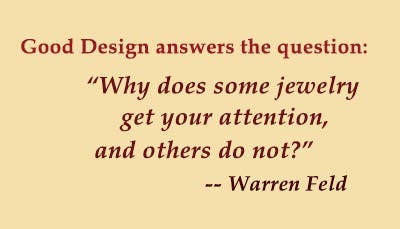
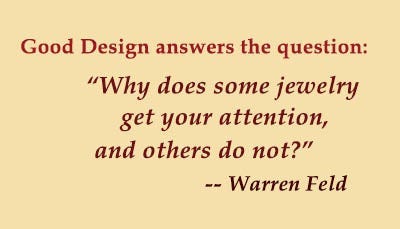
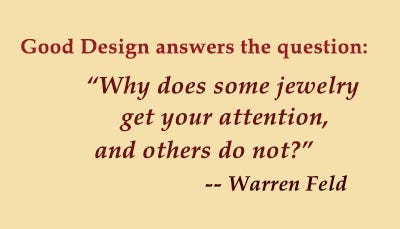
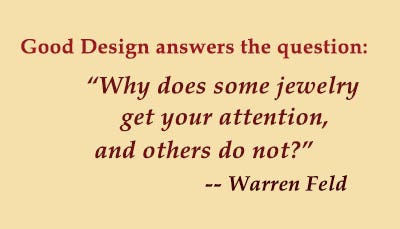
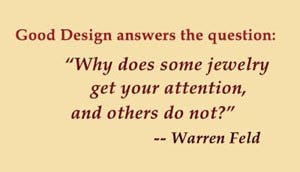
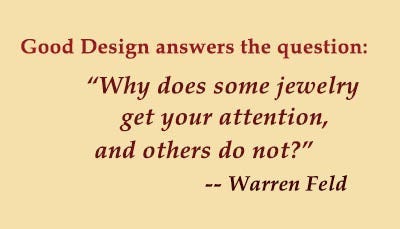
Why some jewelry draws your attention, and others do not?
· Articles. Stay up-to-date. Access each new article up to 3 months. · Advanced Notice. Kits, webinars, workshops, tutorials, promotions, discounts · Free Mini-Lesson Download. One free downloadable Mini-Lesson of your choice
· First view of all articles and kits · Access to all the articles in the archive · 25% Discount on beads, supplies and kits on LandOfOdds.com website · Priority in posting comments · All member chats · + All free-tier member benefits
I always tell people it is easier to start by having someone show you what to do, either with a friend, or in a class, than trying to teach yourself out of a book or video tutorial. Books and videos are good at teaching you basic mechanics. But they are poor in teaching you the artistry and design skills you will need as a jewelry artist and designer. After working with a person, then go back to the books and online tutorials. You’ll get more out of them this way.
Particularly important to learn, and what you pick up best from another human being, include:
– how to hold the piece while working it – how to manage when you need to have firmer tension, and when you need to relax your tension, as you hold the piece – what about the technique allows your project to maintain its shape, and what about the technique allows your project to move, drape and flow – how to attach a clasp assembly or otherwise finish off your project – what materials are most suited to the project, and which are not – whether this, or another technique, is best suited to the project goals – how to prepare your materials, if necessary, before you use them – which tools you should be using, and how to hold them and use them – how to size things – how to read instructions, diagrams, and figures – how to anticipate what your potential customer or client would want from any piece of jewelry
Try to learn things in a developmental order. Start with beginner projects, graduate to advanced beginner and intermediate, then finally, to advanced. Take your time. Don’t rush to the finish line. You will learn more and be a better designer for it.
Try to learn things by groupings or categories. Vary things. You might start by doing the same project using three different stringing materials. You might try doing the same project using different types of clasps. You might create a compositional arrangement, and then play by rearranging or by changing out certain components or colors for others. Comparative learning is a very strong teacher.
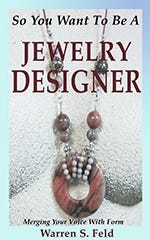
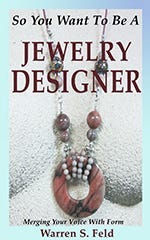
SO YOU WANT TO BE A JEWELRY DESIGNER Merging Your Voice With Form
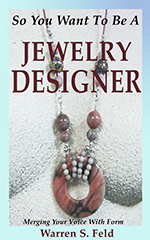
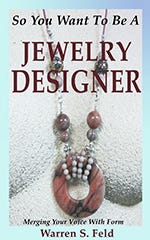
So You Want To Be A Jewelry Designer reinterprets how to apply techniques and modify art theories from the Jewelry Designer’s perspective. To go beyond craft, the jewelry designer needs to become literate in this discipline called Jewelry Design. Literacy means understanding how to answer the question: Why do some pieces of jewelry draw your attention, and others do not? How to develop the authentic, creative self, someone who is fluent, flexible and original. How to gain the necessary design skills and be able to apply them, whether the situation is familiar or not.
Many people who begin to bead and make jewelry want to rush to the finish line. They want to learn everything at once. They buy beads and parts indiscriminately. They try to use stringing and other materials insufficient to meet their design goals. They fail to anticipate how to finish off the clasp assembly. Their choices of colors often less than appealing. They don’t have the right tools. They purchase every book they can find. They take classes and view video tutorials on anything that interests them or catches their eye, no matter what the skill levels involved. They want to create those perfect, elaborate pieces Now. Not later. Now.
Beading and jewelry making are not things to rush into, however. These are not things to learn haphazardly. Not everything is something you can easily pick up without having someone else show you.
This is a hobby and avocation and even a career which requires you to know a lot of things. You need to know a lot about materials. You need to know a lot about quality issues underlying these materials, and what happens to these materials over time. You need to be mechanical and comfortable using tools to construct things. You need to learn many basic techniques. You need to understand physical mechanics and what happens to all these materials and pieces, when jewelry is worn. You need to be familiar with art theories and design theories and their applications. You must be aware of some architectural basics and physical mechanics which inform you how things keep their shape and how things move, drape and flow. You need to understand people, their psychology, the dynamics of the groups they find themselves in, and their cultural rules which get them through the day.
There is so much to learn, that you can’t learn it all at once. And there is so much to bring to bear, when making a piece of jewelry, that it is difficult to access all this information, if you haven’t learned how everything is interrelated and interdependent.
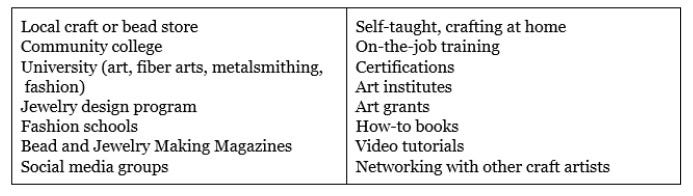
Where can you learn jewelry making skills?…
It’s important to learn in an organized, developmental way. You want to be always asking how things are interrelated. What depends on what? You want to pose what-if questions so that you can train yourself to anticipate the implications and consequences of making one choice over another. What happens If? What happens When? What enhances? What impedes? What synergizes? What can be leveraged, and toward what objective? You want to reflect on your outcomes.
Towards this end, you learn a core set of integrated and inter-dependent skills. Then learn another set of integrated and inter-dependent skills, perhaps at a slightly higher skill level, and how these link back to the core. Then learn yet another set of skills, again, increasing the skill level, how they link back to the first set, and then link back to the core. And so forth. Only in this way will you begin to know if you are learning the right way, and learning the right things.
There Are Many Ways To Learn
People apply different learning styles, when developing their beading and jewelry-making knowledge, skills and understandings. Each has pros and cons. Different people come to learn with different strategies or combinations of strategies. What is your preferred learning style? These learning styles and strategies include:
(1) Rote Memory
(2) Analogously
(3) Contradictions
(4) Assimilation
(5) Constructing Meanings
Most people learn by Rote Memory. They follow a set of steps, and they end up with something. They memorize all the steps. In this approach, all the choices have been made for them. So they never get a chance to learn the implications of their choices. Why one bead over another? Why one stringing material over another? How would you use the same technique in a different situation? You pick up a lot of techniques, but not necessarily many skills.
Other people learn Analogously. They have experiences with other crafts, such as sewing or knitting or woodworking or other craft, and they draw analogies. Such and Such is similar to Whatnot, so I do Whatnot the same way I do Such and Such. This can work to a point. However, beading and jewelry making can often be much more involved with composition, construction and manipulation, requiring making many more types of choices, than in other crafts. And there are still the issues of understanding the quality of the pieces you use, and what happens to them, both when jewelry is worn, as well as when jewelry is worn over time.
Yet another way people learn is through Contradictions. They see cheap jewelry and expensive jewelry, and analyze the differences. They see jewelry people are happy with, and jewelry people are not happy with, and analyze the differences. They see fashion jewelry looked down upon by artists, and art jewelry looked down upon by fashionistas, and they analyze the differences.
Assimilation is a learning approach that combines Analogous Learning and Learning Through Contradictions. People pursue more than one craft, keeping one foot in one arena, and another foot in the other. They teach themselves by analogy and contradiction. This assumes that multiple media and multiple techniques mix, and mix easily. Often, however, this is not true. Philosophies of design and technique differ. That means, the thinking about how a media and technique assert needs for shape and drape will have a different basis, not necessarily compatible. Usually one medium (or technique) has to predominate for any one project to be successful. So assimilative learning can lead to confusion and poor products, trying to meet the special concerns and structures of each craft simultaneously. It is challenging to mix media and/or techniques. Often the fundamentals of each particular craft need to be learned and understood in and of themselves.
The last approach to learning a craft is called Constructing Meanings. In this approach, you learn groups of things, and how to apply an active or thematic label to that grouping. For example, you might learn about beading threads, such as Nymo, C-Lon and FireLine, applying each one separately to accomplish the same project. In this way you begin to learn to evaluate each one’s strengths and weaknesses, especially in terms of Managing Thread Tension or allowing movement, drape and flow. You might learn about crystal beads, Czech glass beads, and lampwork beads, and then again, concurrently and in comparison, learn the pros and cons of each, in terms of achieving good color blending strategies. You might learn peyote stitch and Ndebele stitch, and how to combine them within the same project.
In reality, you learn a little in each of these different learning styles and strategies. The Constructing Meanings approach, what is often referred to as the Art & Design Perspective, usually is associated with more successful and satisfying learning. This approach provides you with the tools for making sense of a whole lot of information — all the information you need to bring to bear to make a successful piece of jewelry, one that is both aesthetically pleasing and optimally functioning.
The Types of Things You Need To Learn
There is so much to know, and so many types of choices to make. Which clasp? Which stringing material? Which technique? Which beads? Which strategy of construction? What aesthetic you want to achieve? How you want to achieve it? Drape, movement, context, durability.
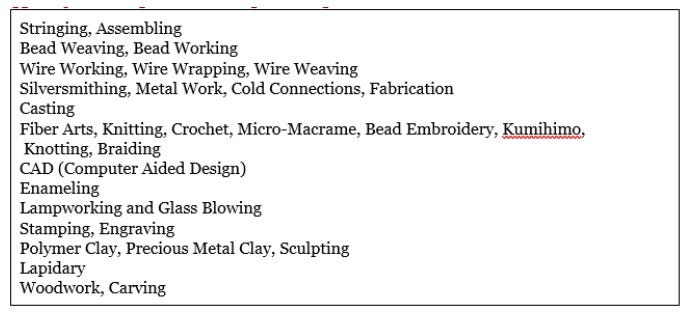
Types of Beading and Jewelry Making
Lots to know. One mistake most people make is that they learn everything randomly. Some things on their own. Some from books. Some from friends. In no special order. Without any plan.
And because there are so many things that you need to bring to bear, when creating a piece of jewelry, that it is difficult to see how everything links up. How everything is inter-related and mutually dependent. And how to make the best, most strategic and most satisfying series of inter-related choices.
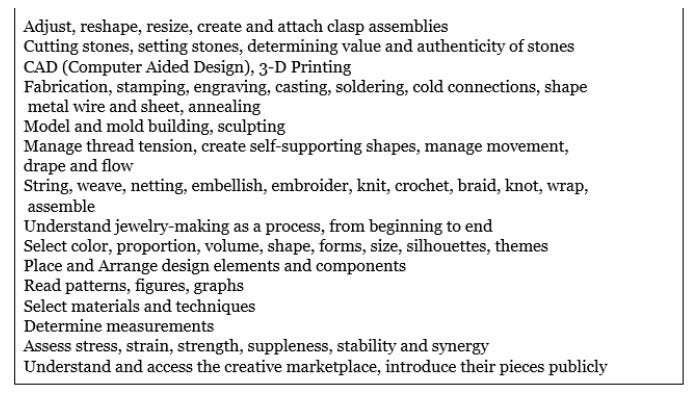
Types of Tasks Jewelry Makers and Beaders Do
And this is the essence of this book — a way to learn all the kinds of things you need to bring to bear, in order to create a wonderful and functional piece of jewelry. When you are just beginning your beading or jewelry making avocation, or have been beading and making jewelry awhile — time spent with the material in these segments will be very useful. You’ll learn the critical skills and ideas. You’ll learn how these inter-relate and are mutually inter-dependent. And you’ll learn how to make better choices — fluent, flexible and original.
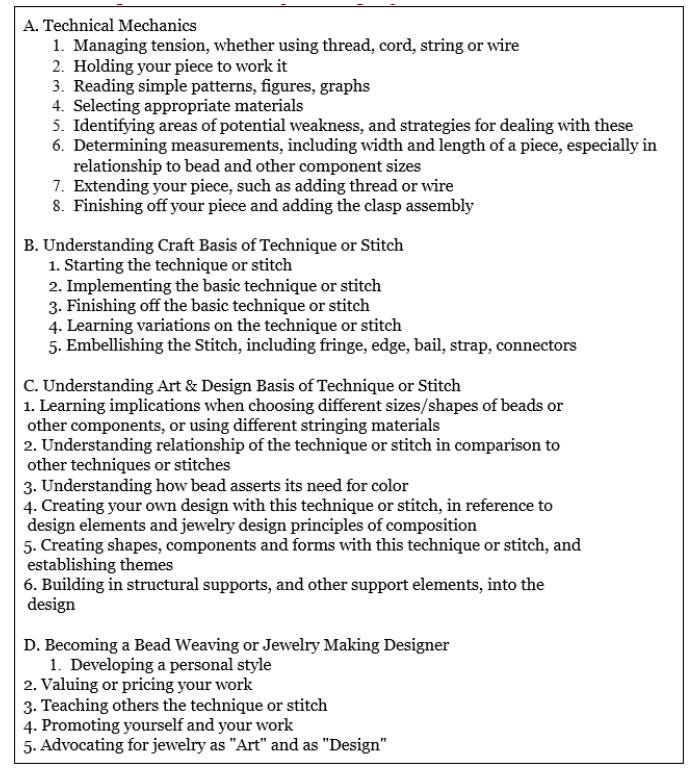
In the class curriculum I teach, students are guided to learn the following objectives:
SO YOU WANT TO BE A JEWELRY DESIGNER Merging Your Voice With Form
So You Want To Be A Jewelry Designer reinterprets how to apply techniques and modify art theories from the Jewelry Designer’s perspective. To go beyond craft, the jewelry designer needs to become literate in this discipline called Jewelry Design. Literacy means understanding how to answer the question: Why do some pieces of jewelry draw your attention, and others do not? How to develop the authentic, creative self, someone who is fluent, flexible and original. How to gain the necessary design skills and be able to apply them, whether the situation is familiar or not.
Some Updates and Things Happening. (Please share this newsletter)
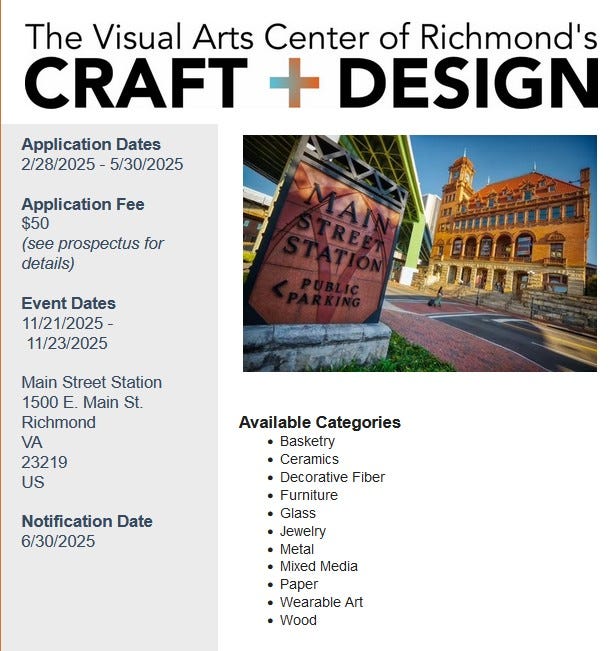
In this Issue: 1. Some highlights from the recent ORNAMENT magazine 2. Mastering the art of talking about your jewelry in public 3. Some advice about self promotion 4. Smithsonian Craft2Wear Show, September 26–28, 2025, APPLY NOW 5. What does it mean to foster a Growth Mindset? 6. Are the days of men’s jewelry worn solely as symbol of power and wealth gone for good? 7. Call for entries: Richmond CRAFT+DESIGN 8. Clever phrases/aphorisms/memes for artists of all kinds Some articles you may have missed
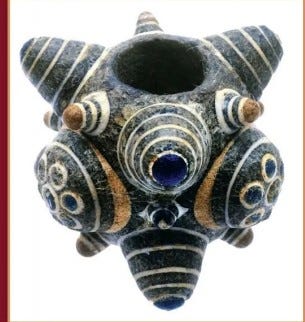
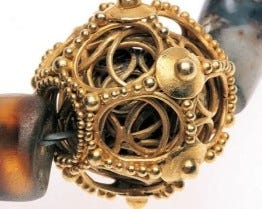
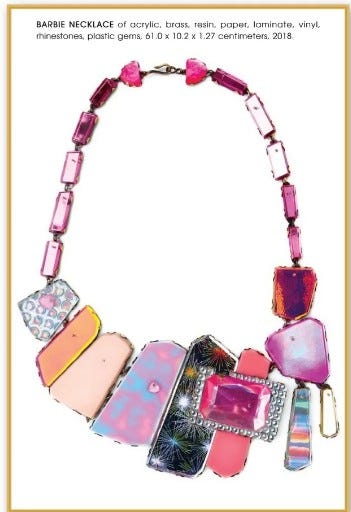
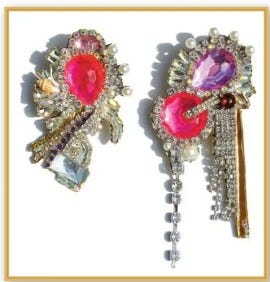
I received my most recent issue of one of my favorite magazines — ORNAMENT. Here are some highlights.
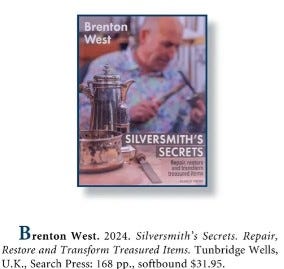
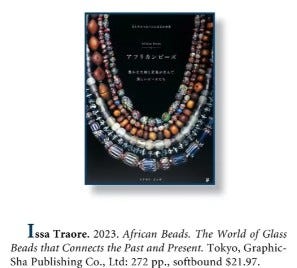
New books:
Articles:
Ancient Craft Skills and the Contemporary Craftsperson
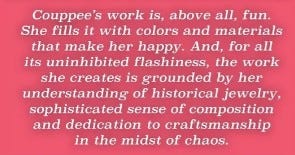
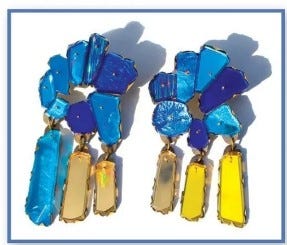
Nikki Couppee Showcase
There are many other jewelry designers highlighted, as is New York City Jewelry Week.
2. Mastering the art of talking about your jewelry in public
Speaking about your work publicly can be both exciting and nerve-wracking. Here are some key tips to confidently and effectively share your work:
a. Know Your Story (Inspirations, getting started, techniques and materials)
b. Develop a Clear 30 second Elevator Pitch (engage in 30 seconds; focus on what makes your jewelry unique)
c. Speak with Passion and Confidence (enthusiasm is contagious; take your time and speak clearly, even if you are nervous)
d. Adapt to your Audience (what do you think your audience wants to hear? focus on process and inspiration; highlight your brand and craftsmanship; be conversational and authentic; tell stories and anecdotes and don’t lecture)
e. Prepare a Narrative (focus on crafting a story that encapsulates your artistic journey, the challenges, triumphs, pivotal moments, struggles, doubts you’ve overcome, mishaps, recurring themes in your work, how your themes relate to your personal story; a compelling narrative evokes emotion)
f. Show and Tell (be prepared to show and tell, whether you have your jewelry with you at the moment, or you share images or your portfolio on your cellphone)
g. Engage, Don’t Just Talk (be interactive; encourage questions; ask what people think, invite them to share their opinions or what they think; get their reactions to a piece of jewelry before you begin to talk about it; style preferences; be conversational; show genuine interest in their responses and respond with some detail to what they say; be patient with responses and allow your audience time to formulate and articulate their thoughts; resist the urge to fill silences too quickly; you can always start the conversation by talking about a question you get asked a lot)
h. Practice, Practice, Practice (outline your remarks or write it out like a script for a play; rehearse in front of a mirror or with a friend; record yourself and refine your delivery; I use a desktop/mobile app called LOOM, which has a free subscription option)
i. Be Ready For Questions (why use these, do this, not do this?; what do you like?; how long does this take?)
j. Provide Takeaways (at the end of your talk, summarize the key ‘learnings’; provide a brochure or postcard or business card that your audience can take with them, as a physical reminder of your work; provide an avenue for them to explore your work further or contact you for potential opportunities, purchases, collaborations)
k. End With A Call To Action (extend the conversation beyond the event; always end with a call to action: visit website; sign up for newsletter; take them on a tour)
l. Follow-Up (you want to build lasting relationships (invite audience to stay connected and give you their email addresses, other contact information; send a personalized thank you note or email shortly after event; repeat highlights of your talk, links to your work, information about where to find you next)
m. Reflect and Adapt (review the event/encounter; what resonated best/least; what feedback did the audience present; adjust previous steps accordingly)
n. Network and Connect (expand your professional circle and foster meaningful relationships with other jewelry designers as well as your client base; engage in one-on-one conversations with clients who seemed interested in your work; exchange contact information with fellow designers and any boutiques, galleries or other businesses that seemed interested in your work; discover new opportunities to keep you and your work visible)
3. I was reading this article about self promotion, and wanted to share this with you. Good stuff.
The Power of Being Yourself Self-promotion often feels like an uncomfortable task for artists, but my first rule is simple: be yourself. There is no one way to self-promote, and the key is to find an approach that aligns with your personality. Authenticity is what draws people in — it’s not about forcing a persona but rather amplifying what makes you unique.
Let’s address social media, the most obvious self-promotional tool. Over the past half-decade, its impact has declined as big businesses have taken over. That doesn’t mean it’s useless — it just means you must use it wisely. Instead of treating social media as an advertising outlet, think of it as a storytelling tool. Show your process, your inspirations, and the personal side of your work. People connect with authenticity, not just finished products.
[His stated philosophy: Art is not something we create, it is who we are.]
4. Smithsonian Craft2Wear Show, September 26–28, 2025, APPLY NOW
The 2025 Smithsonian Craft2Wear Show is an exhibition and sale of wearable contemporary American craft (clothing, accessories and jewelry) held in Washington, DC at the beautiful Smithsonian Arts and Industries Building (AIB) on the National Mall.
Electronic applications are due by Tuesday, April 15, 2025. A non-refundable fee of $30 must accompany each application.
Failure is uncomfortable. Disconcerting. Too often, we do everything we can to keep ourselves out of situations where we might fail. We focus on what could go wrong, instead of what could go right. We think we don’t have the abilities to do the task. We get paralyzed. We do nothing. Or we keep repeating ourselves, producing the same-ole, same-ole, whether there is a continued market for these items, or not. Or we begin to visualize any risk as insurmountable, way bigger than it really is.
But allowing any fear of failure to become some kind of insurmountable wall works against us. If we are trying to make a go of it by selling our jewelry, we can’t build these kinds of walls. Successful business people and successful businesses need to foster a culture which promotes a growth mindset. Simply, a growth mindset is a culture where you have permission and encouragement and confidence to take risks.
Risks are OK because they bring rewards. Rewards allow the business to maintain itself, sustain itself, grow and expand.
Failures are OK, as well, as long as they become learning experiences.
Doubt and self-doubt are OK only if they are used to trigger reflection and new ideas to overcome them.
Not having the skills requisite for the moment is OK because we are all capable of continual learning.
Temporary setbacks are OK because you have had them before and overcame them.
Carol Dweck wrote the seminal book on growth mindsets called Mindset: The New Psychology of Success (2006), with a series of related books to follow. People have either a growth-mindset or a fixed-mindset.
Those with a growth-mindset believe their abilities are developed through continual learning and hard work. They are more willing to experiment and try new things, and see failures as opportunities rather than setbacks.
Those with a fixed-mindset believe that abilities are innate — you’re born with talents or not. They seek out opportunities where specific talents, rather than effort, leads to success. They prefer to repeat tasks and apply skills they are already familiar with.
Developing a growth mindset means such things as…
1. Understanding the power of “Not Yet”.
2. Setting learning and continual learning goals
3. Being deliberate and constantly challenging yourself
4. Asking for honest feedback and criticism
5. Always reflecting on and being very metacognitive about your thoughts and actions, successes and failures
6. Recognizing if you are stuck in a fixed-mindset, and acknowledging your weaknesses
7. Focusing on the process, and less-so on the result
8. Getting comfortable with self-affirmation, rather than needing the affirmation and approval of others
6. Are the days of men’s jewelry worn solely as symbol of power and wealth gone for good?
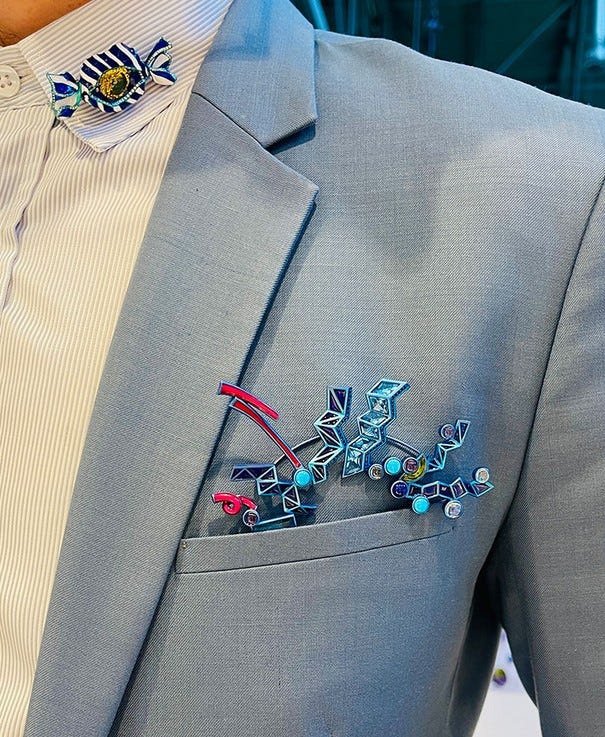
A look at men’s jewellery at GemGenève
The rebirth of jewellery for men since the 2010s is actually due to another factor altogether: men have changed the way they relate to jewels and jewellery in general, argues GemGenève co-founder Ronny Totah. Today, men account for up to 30% of jewellery purchases from certain collections by brands and independent craftsmen and women.
8. Clever phrases/aphorisms/memes for artists of all kinds
I am a member of the Columbia Arts Council. For an event, we are going to pass out stickers. I generated a sampling of sayings that could go on the stickers, and I’m sharing them with you. Thought you’d get a chuckle out of these.
General Creativity & Art
Create like nobody’s watching.
Messy hands, brilliant mind.
Art: cheaper than therapy.
Make art, not excuses.
Doubt kills more art than failure ever will.
Every artist was first an amateur.
Creativity is intelligence having fun.
I speak fluent paint splatter.
Art is my love language.
Reality is overrated — paint me another one.
The world is my canvas, and I’m out of control.
Perfectly imperfect — just like my art.
Stay weird, stay creative.
Warning: Contains excessive imagination.
Creativity takes courage — and a lot of snacks.
Makers & Hands-On Artists
Handmade with sarcasm and love.
Makers gonna make.
I make things. What’s your superpower?
Handcrafted with reckless precision.
This is what ‘made with love’ looks like.
I turn coffee into art.
Saw dust is my glitter.
I make because I must.
Perfection is boring. Make something weird.
Measure twice, cut once, cry anyway.
My blood type is glue and glitter.
I can’t. I have a project.
Made by hand, heart, and a little bit of chaos.
Mistakes are just creative detours.
Cut. Sew. Cry. Repeat.
Painting & Drawing
Watercolor outside the lines.
Oil paint runs in my veins.
Sketch today, masterpiece tomorrow.
More paint, less perfection.
I draw, therefore I am.
Happy little accidents happen daily.
Smudges are just love marks from my art.
Inking my way through life.
My brush dances to its own tune.
If you see me clean, I’m out of paint.
Jewelry Making & Beading
Bead it like you mean it.
I like big beads and I cannot lie.
Stringing together happiness, one bead at a time.
Jewelry is art you can wear.
Beading: because therapy is expensive.
If lost, check the bead store.
Some collect memories; I collect beads.
Beading is my cardio.
Life is too short for boring jewelry.
More beads, less stress.
Creative Process & Inspiration
Inspiration hits at inconvenient times.
Chaos is just creativity’s warm-up.
Creativity is a work in progress.
Start before you’re ready.
Don’t wait for inspiration — just start.
Creativity thrives in the mess.
Done is better than perfect.
There’s no such thing as too many ideas.
Creativity: where the fun begins and logic ends.
You can’t rush art — but you can procrastinate it.
Art & Business
Starving artist? No, thriving artist.
Yes, it’s handmade. No, it’s not cheaper.
Support artists — buy art, not mass production.
Art is work. Pay accordingly.
Artists don’t work for exposure.
Yes, I make art. No, I won’t do it for free.
DIY: Because hiring professionals costs money.
Just because I enjoy it doesn’t mean I’ll do it for free.
I create. You buy. Everyone’s happy.
Respect the artist. Respect the craft.
Music & Performing Arts
Life’s better with a soundtrack.
Dancers don’t sweat, they sparkle.
Sing like you mean it.
Break a leg — but not my instruments.
Music is what feelings sound like.
The stage is my happy place.
Dance first, think later.
Creativity has no volume control.
When in doubt, just improvise.
Make music, not noise.
Writing & Literature
Write your own story.
Plot twist: I need more coffee.
My brain is 90% plot ideas and 10% snacks.
Poetic soul, chaotic mind.
Editing is just rewriting with regret.
Too many tabs open — some are story ideas.
I write. What’s your superpower?
Procrastinating? No, I’m world-building.
My characters made me do it.
Caution: Writer at work — approach with snacks.
Quirky & Funny
Oops, I arted.
Eat. Sleep. Create. Repeat.
More glue, less stress.
Why fit in when you can stand out?
I make, therefore I am.
Art teachers gave up on me; now they buy my work.
Creativity: The only mess that’s worth it.
Not all who wander are lost… some are just looking for inspiration.
This shirt contains 100% recycled creative energy.
The best ideas come at 2 AM and disappear by 7 AM.
UPCOMING WORKSHOPS by Warren Feld
Sat, 4/12, 2–3, LET’S MAKE EARRINGS, Maury County Library, 211 W 8th St, Columbia, TN Register: Call (931) 375–6502
WARREN FELD JEWELRY (www.warrenfeldjewelry.com) Custom Design, Workshops, Video Tutorials, Webinars, Coaching, Kits, Group Activities, Repairs ~~~~~~~~~~~~~~~~~~~~~~~ Join our community of jewelry designers on my Patreon hub Be part of a community of jewelry designers who recognize that we have a different way of thinking and doing than other types of crafters or artists. One free downloadable Mini-Lesson of your choice for all new members! ~~~~~~~~~~~~~~~~~~~~~~~
People have different motivations and ambitions when making jewelry. These can be as simple as an avocation or hobby, or more involved as a business or career. Jewelry making is an investment in time and materials. It requires, not only strong creativity skills, but also persistence and perseverance to take a project from inspiration to aspiration to implementation. A lot of the success in this pursuit comes down to an ability to make and follow through on many artistic and design decisions. Developing this ability — a fluency, flexibility and originality in design — means that the designer has become empowered to answer these 5 essential questions: (1) Is jewelry making a craft, an art or design? (2) How do you think creatively? (3) How do you leverage the strengths of various materials and techniques, and minimize weaknesses? (4) How do the choices you make in any one jewelry design evoke emotions and resonate? and, (5) How do you know your piece is finished and successful?
5 Essential Questions Every Jewelry Designer Should Have An Answer For
Interested in trying your hand at jewelry design?
Before you begin, consider the following 5 questions I pose for you…
1. Is what you do Art, Craft or Design? 2. How do you decide what you want to create? 3. What materials (or techniques) work well together, and which do not? 4. What things do you do so that your finished piece evokes an emotional response? 5. How do you know when your piece is done?
People have different motivations and ambitions when making jewelry. These can be as simple as an avocation or hobby, or more involved as a business or career. Jewelry making is an investment in time and materials. It requires, not only strong creativity skills, but also persistence and perseverance to take a project from inspiration to aspiration to implementation.It means understanding that jewelry can only be judged as finished and successful as the piece is worn. Jewelry design is more than the application of a set of techniques; it is a mind-set, as well. It is a way of thinking like a designer.
A lot of the achievement and accomplishment in this pursuit of jewelry design comes down to an ability to make and follow through on many artistic and design decisions. Some have to do with managing a process, which can take an extended period of time. It also comes down to being fluent, flexible and original in your thinking through design. The greater your disciplinary literacy, the more empowered and confident you become in your design work.
Susan is one example of what happens when uncertainty — that paralysis or deer-in-the-headlights feeling that we so often face — sets in. Susan felt very unsure of herself. And unsure of her jewelry. Would people like it? Was the color mix appropriate? Was the construction secure? Was the price smart and fair? She allowed all this uncertainty to affect her design work — she had difficulty finishing pieces she was working on, starting new projects, and getting her work out there.
Like many of my jewelry design and beadwork students, Susan needed to be fluent as a designer. With fluency comes empowerment, confidence and success.
SO YOU WANT TO BE A JEWELRY DESIGNER Merging Your Voice With Form
So You Want To Be A Jewelry Designer reinterprets how to apply techniques and modify art theories from the Jewelry Designer’s perspective. To go beyond craft, the jewelry designer needs to become literate in this discipline called Jewelry Design. Literacy means understanding how to answer the question: Why do some pieces of jewelry draw your attention, and others do not? How to develop the authentic, creative self, someone who is fluent, flexible and original. How to gain the necessary design skills and be able to apply them, whether the situation is familiar or not.
Hey there! Check out my book about Pearl knotting.
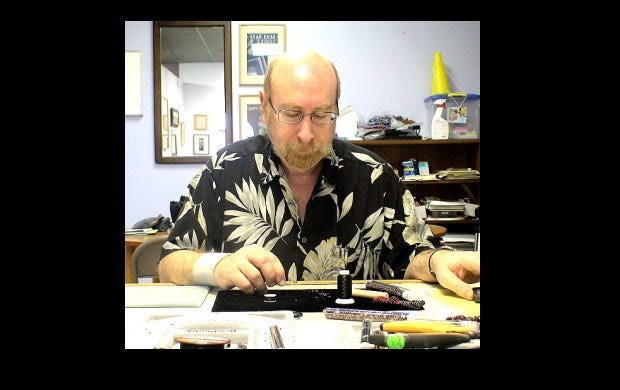
My name is Warren Feld. I am a jewelry designer with 40+ years of experience. In my book, I teach you the basic steps in Pearl Knotting. I’ll walk you through how to start your piece, tie knots between pearls, and how to end your piece. Simple instructions. Lots of diagrams and images.
What you will learn
In this book, i teach a non-traditional pearl knotting technique which is very easy for people to learn and do, does not use special tools, includes step-by-step instructions, a simple way to tie knots, shows clearly how to attach your clasp and finish off your cords, and achieves that architectural perfection we want in our pearl strung pieces,
Why This Class Is Important
There are many, many variations in technique.
They all work.
Yet most are very difficult for the beginner — especially those traditional techniques which rely on tools for making and positioning the knots.
Over the years, Ihave seen how students, when following traditional pearl knotting methods, or methods which utilize some more traditional techniques and approaches, become dissatisfied with their results.
And give up.
Pearl knotting doesn’t need to be this hard.
Warren’s Way
After many, many years, enduring many concerns, debates, demonstrations and arguments about which way is best, I came up with my own preferences —
o Using ideas, goals and parts of techniques from several established methods o Adjusting them, based on my experiences with students and teachers o And my knowledge of good design o And how to balance artistic concerns with functional ones.
The Book
I used these ideas and techniques, which I reached and put them to many test, to create a non-traditional pearl knotting technique which i call “Warren’s Way”.
4 variations
The book covers 4 different variations for starting and finishing your piece, including 1. Attaching directly to the clasp 2. Using French wire bullion 3. Using clam shell bead tips 4. Making a continuous piece without a clasp
I also present the steps for adding cord.
Kit and Supplies, Tools
You may purchase an accompanying PEARL KNOTTING KIT, as well as supplies and tools, at www.landofodds.com
Join my community of jewelry designers on myPatreon hub From Warren and Land of OddsUse February’s Discount Code For Extra 25% Off @Land of Odds: FEBRUARY25 www.landofodds.comFebruary 15, 2025
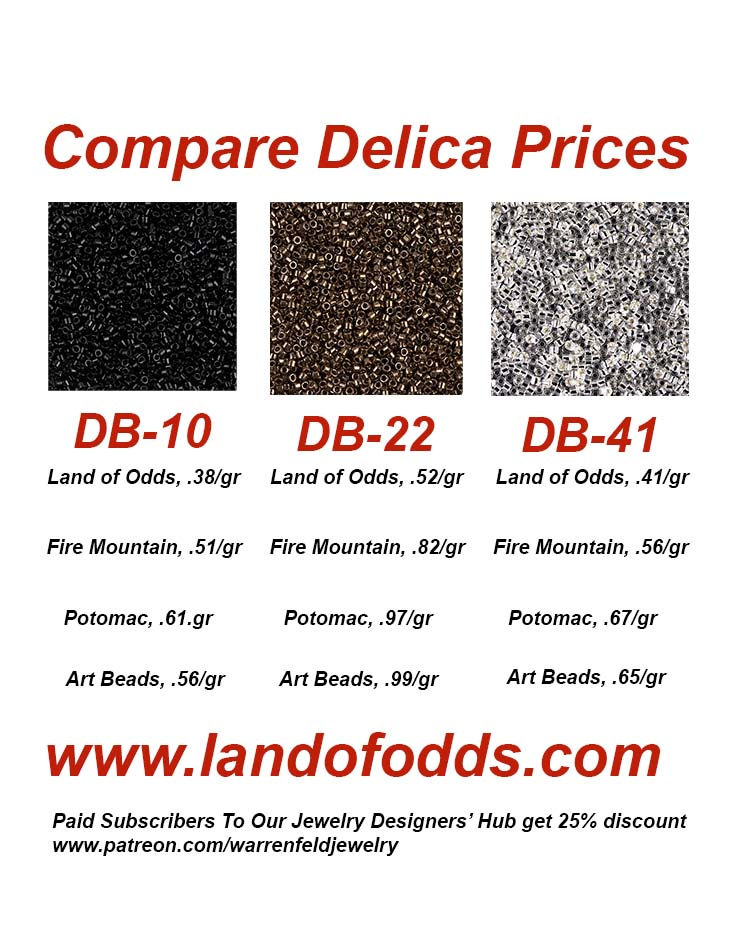
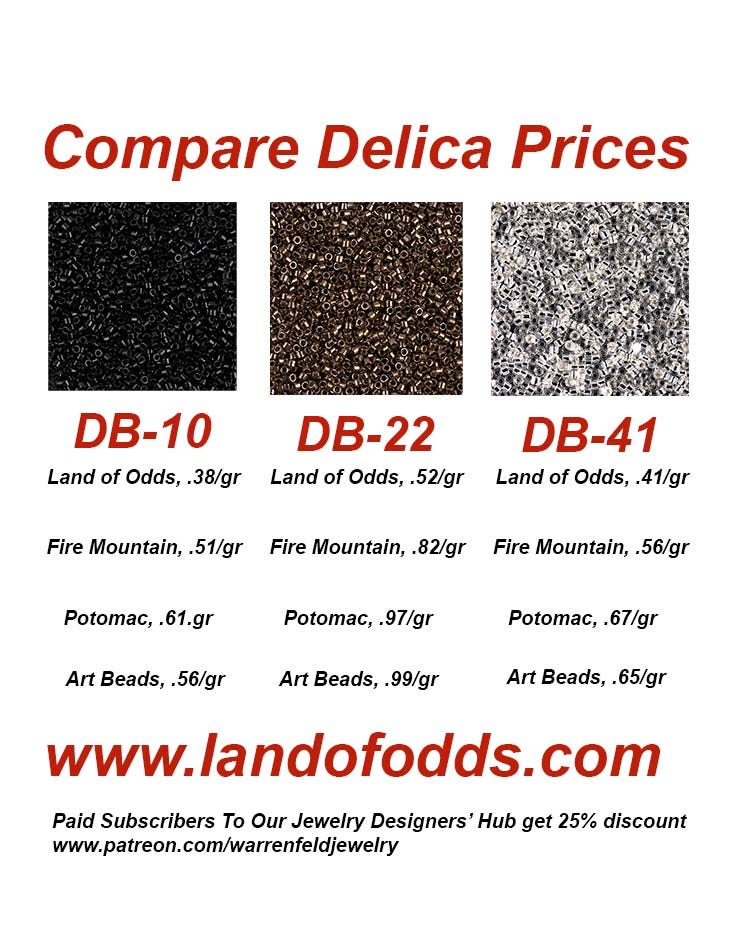
Hi everyone,Some Updates and Things Happening. (Please share this newsletter)**NOTE: Miyuki is now noticeably raising their prices on all seed and delica beadsIn this Issue: 1. Boost Your Instagram Marketing 2. New kit: Catenary Arches Bracelet 3. My 2nd Edition of PEARL KNOTTING…Warren’s Way is now available as ebook, kindle, or print 4. Love this quote 5. Check out The Contrast Club jewelry 6. The Jewelry of Wallace Chan 7. Latest question from our members – please share your comments 8. A book you might like: The Secret Lives Of Colors Some articles you may have missed Featured
1. Posting on Instagram seems to have the greatest return for jewelry designers compared to other social media sites. TIP 1: To boost Instagram engagement, show your process. Don’t post things that look like a commercial ad. It shouldn’t be a wide shot of your jewelry display at a craft fair — “Come see me”; rather, it should be something like you in the process of setting up that display- “Come share my experience”.Your art’s final form may be stunning, but people want to see how it’s made.Instead of just panning over finished pieces, show your creative process: “Show your audience how this work happens.”Use different angles and close-ups to highlight texture and patterns. Keep videos engaging but not too fast—let viewers absorb the details.A mix of casual presentation and behind-the-scenes content can enhance interaction. Give people a reason to stop scrolling by making them feel part of your creation process. TIP 2: Struggling to come up with Instagram content? Keep your audience engaged by not breaking up the “flow” of your posts. Try these tips: You don’t need to post daily, just focus on high-quality, engaging reels.Break your process into multiple reels—each section or stage of the painting can be a post.Show close-ups—let people see the details and textures of your work.Use time-lapses strategically—some parts can be sped up, but also include real-time segments.Film short clips periodically—record a 5-second video every hour and compile them later.No need for constant recording—this prevents distractions and makes content creation easier. TIP 3: Spend less time overproducing to avoid Instagram burnout. Keep things raw, uncomplicated, authentic.1) Skip tools like Canva for Reels – They make content look too polished and decrease engagement. Instagram favors organic, natural-looking posts.2) Don’t Overcomplicate – A heavily edited, structured reel with too much buildup can lose viewers before they reach the main point.3) Keep It Simple & Efficient – The less time you spend overproducing, the more content you can create without burnout.For a lot more tips and tricks with Instagram, visit our social media marketing collection on our Jewelry Designers’ Hub www.patreon.com/warrenfeldjewelry
2. I finally finished this new kit — Catenary Arches Bracelet!
About the CATENARY ARCHES BRACELETI have always been fascinated by the architectural works of Antonio Gaudi in Barcelona, Spain. He builds very organic, undulating forms. These fantastical shapes and spires and walls and rooftops are supported internally by a type of arch called a catenary arch. I knew from experience that creating a beadwoven arch was a difficult proposition, most likely to fail when the piece of jewelry was worn.The typical arch structure would be called a parabolic arch, and this one I knew would not work. In response to weight pressed onto the arch, a parabolic arches channels this stress along its entire length, from base to top to base. The stresses and strains from pushing on parabolic arches, pulling the arches, smashing the arches, would typically end up in a flat and flattened mess.A catenary arch is a type of architectural arch which follows what is called an inverted catenary curve. A catenary arch, in response to weight pressed on to it, centers its response to force at the top of its arch. It does not distribute this force, as in the parabolic arch. As such, it can handle the stresses and strains pushing on it much better. The catenary arch is less likely to fail because of stress and strain. Architecturally, a catenary arch has the ability to withstand the weight of the material from which it is constructed, without collapsing. This catenary arch can be uniformly dense and thick along its entire length. These are strong because they redirect the vertical force of gravity into compression forces pressing along the arch’s curve.This catenary arch has been used in building structures since ancient times. It forms the basis of Gothic cathedrals, Renaissance domes, the St. Louis Gateway arch, for examples. Gaudi faced the same issues in creating building structures. His solution was the catenary arch. My challenge was to see if I could create a beadwoven catenary arch that could hold its shape when the piece was worn.
WHAT YOUR WILL LEARN – Ladder stitch – Coordinating Peyote and Right Angle Weave stitches to optimize support (movement) and structure (shape) – Bookbinding stitch to reposition thread when you need to cross over several beads – Creating a catenary arch using bead weaving strategy – Attaching catenary arch to a foundation base – Using brick stitch to form an edging – Attaching a clasp – Designing and working with a piece that is more 3-dimensional rather than 2-dimensional
3. My 2nd Edition of PEARL KNOTTING…Warren’s Way is now available as kindle, or print
PEARL KNOTTING Doesn’t Need To Be HardIn this very detailed book, with thoroughly-explained instructions and pictures, you are taught a non-traditional Pearl Knotting technique which is very easy for anyone to learn and do. Does not use special tools. Goes slowly step-by-step. Presents a simple way to tie knots and position the knots to securely abut the bead. Anticipates both appeal and functionality. Shows clearly how to attach your clasp and finish off your cords. And achieves that timeless, architectural perfection we want in our pearl knotted pieces.Most traditional techniques are very frustrating. These can get overly complicated and awkward. They rely on tools for making and positioning the knots. When attempting to follow traditional techniques, people often find they cannot tie the knots, make good knots, get the knots close enough to the beads, nor centered between them. How to attach the piece to the clasp gets simplified or glossed over.
Fortunately, Pearl Knotting doesn’t need to be this hard.
Pearl Knotting…Warren’s Way teaches you how to: o Hand-knot without tools o Select stringing materials o Begin and finish pieces by (1) Attaching directly to the clasp, (2) using French wire bullion, (3), using clam shell bead tips, or, (4) making a continuous piece without a clasp o Add cord o Buy pearls, care for them, string and restring them, store themBy the end of this book, you will have mastered hand-knotting pearls. This second edition takes into account a fuller utilization of technical options for the E-book version. Additional information, clarifications and summaries of ideas are added throughout. Instructions for Variation #3: Using Clam Shell Bead Tips is simplified a little bit.
Interpretation is the revenge of the intellectual upon art. / Susan Sontag
5. Check this out: Interactive Fine Jewelry from The Contrast Club The Moth. (The gold wings push aside to reveal the stone)
The Contrast Club is a family run design company located in Southern Finland. The company focuses on merging the worlds of jewellery and engineering, bringing a breath of life to the traditional art of fine jewellery. After spending several years balancing parallel career paths in art and engineering, The Contrast Club was created as a beautiful middle ground where aesthetics are supported by creative technical design. Using this unusual pairing in expertise, the company focuses on the creation of items that go beyond the boundaries of traditional products, pushing the limits of what an object actually is. Together with its network of artisans, jewellery professionals and engineers, each piece goes through a meticulous development process, lasting months, if not years, before it is ready to be presented to the public.
Bracelet (Lay this flat on table, rest your wrist on it, and it automatically curls around your wrist and closes)
6. I wanted to introduce you to the jewelry of Wallace Chan Visit his website
Wallace Chan is a world-renowned Chinese jewellery creator, visual artist and innovator that exhibits internationally and participates in prestigious art fairs. He is renowned for his unworldly jewelry creations and sculptures. He is also the first Chinese contemporary jewelry artist whose work is included in the permanent collection of the British Museum.
The Secret Lives of Color tells the unusual stories of seventy-five fascinating shades, dyes, and hues. From blonde to ginger, the brown that changed the way battles were fought to the white that protected against the plague, Picasso’s blue period to the charcoal on the cave walls at Lascaux, acid yellow to kelly green, and from scarlet women to imperial purple, these surprising stories run like a bright thread throughout history.
In this book, Kassia St. Clair has turned her lifelong obsession with colors and where they come from (whether Van Gogh’s chrome yellow sunflowers or punk’s fluorescent pink) into a unique study of human civilization. Across fashion and politics, art and war, the secret lives of color tell the vivid story of our culture.
WARREN FELD JEWELRY (www.warrenfeldjewelry.com) Custom Design, Workshops, Video Tutorials, Webinars, Coaching, Kits, Group Activities, Repairs ~~~~~~~~~~~~~~~~~~~~~~~ Join our community of jewelry designers on myPatreon hub Be part of a community of jewelry designers who recognize that we have a different way of thinking and doing than other types of crafters or artists. One free downloadable Mini-Lesson of your choice for all new members! ~~~~~~~~~~~~~~~~~~~~~~~















 Wallace Chan is a world-renowned Chinese jewellery creator, visual artist and innovator that exhibits internationally and participates in prestigious art fairs. He is renowned for his unworldly jewelry creations and sculptures. He is also the first Chinese contemporary jewelry artist whose work is included in the permanent collection of the British Museum.