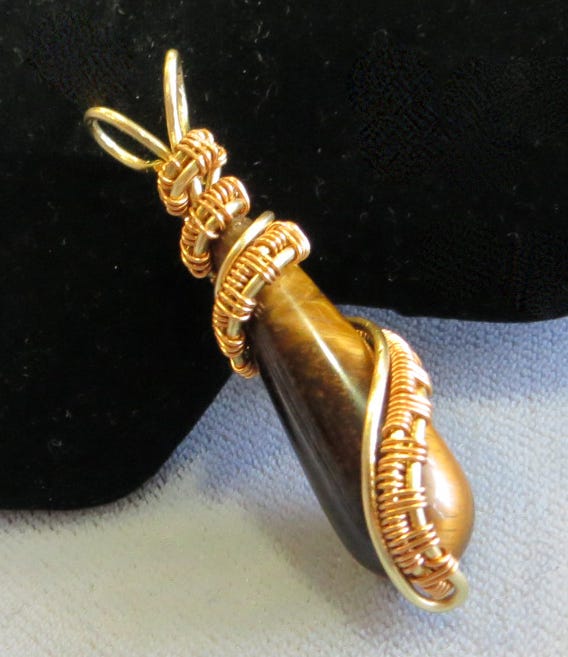
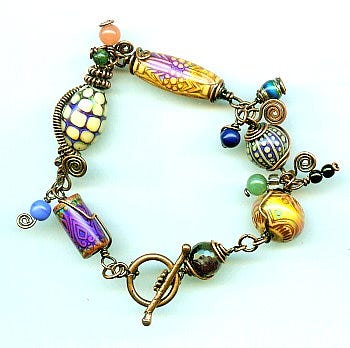
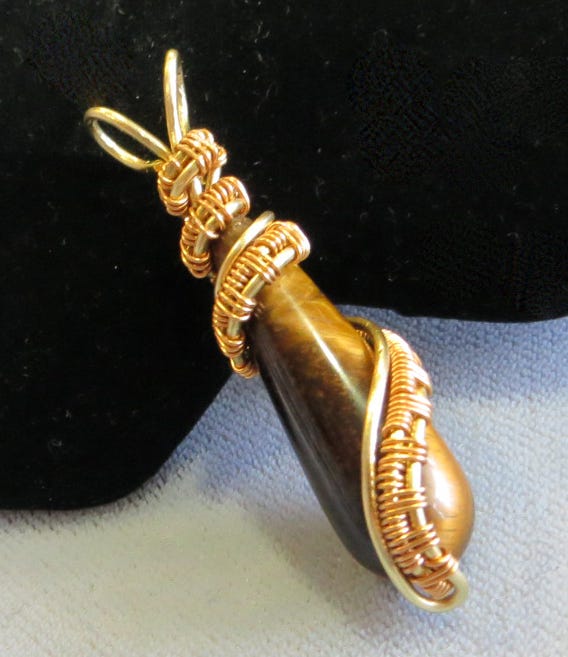
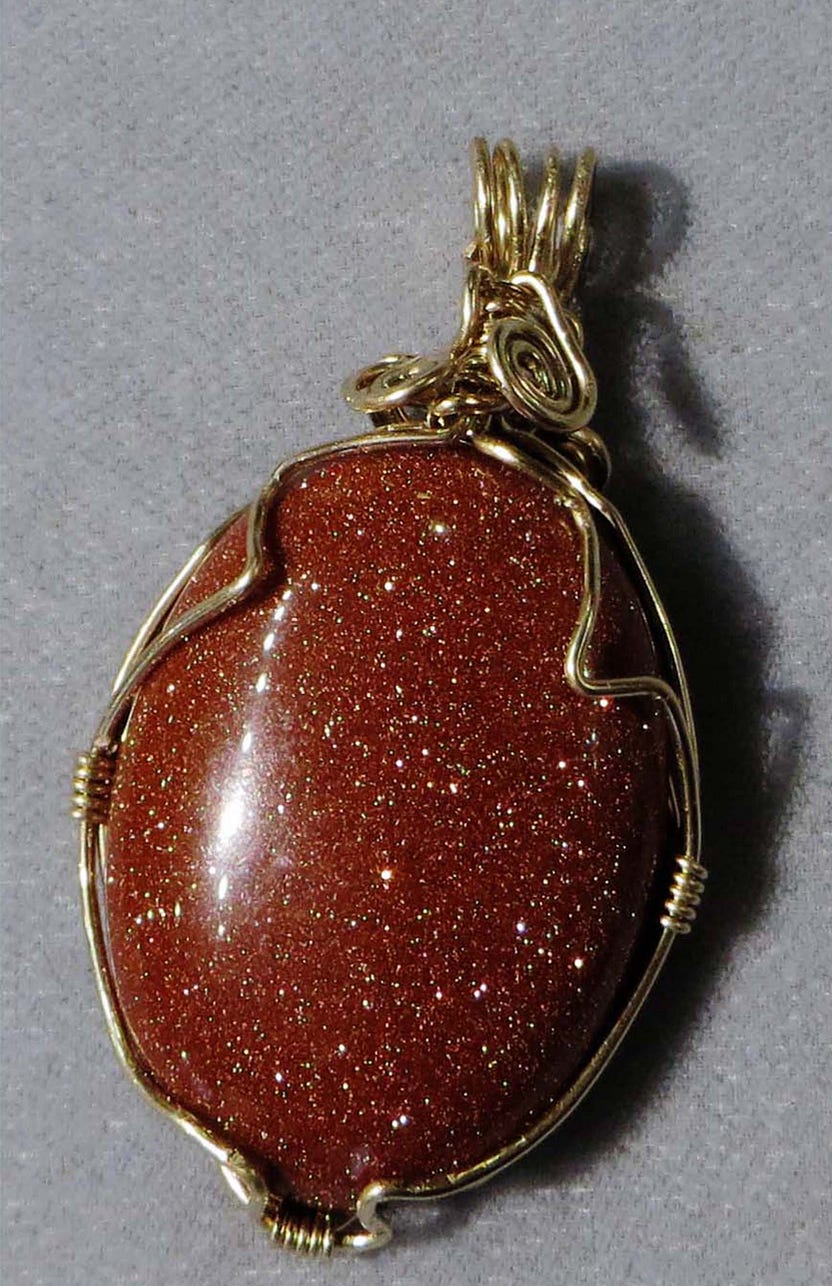
DIALECTIC: Jewelry As Interaction and Shared Understandings. Jewelry is a two-way street. It is a way to create, confirm and retain connections. At its very core, it is interactive and communicative. It is more an action than an object. Jewelry can start a conversation. Jewelry encapsulates a very public, ongoing matrix of choices and interactions among artist, wearer and viewer, with the purpose of getting responses. It is a dialectic.
The optimum position to view jewelry is on a person’s body, where and when its dialectical power is greatest. Again, it is very public, yet concurrently, very intimate. We exhibit jewelry. It forces reaction, response and reciprocity. Jewelry helps us negotiate, in relatively non-threatening ways, those critical tensions and contradictions in life, not merely define them.
It very publicly forces us to reveal our values, delineate tensions and contradictions which might result, and resolve all those betwixt and between qualities which occur as the artist, wearer, viewer, marketer, seller, exhibitor and collector try to make sense of it all. Conversely, jewelry, as worn, may signal that any negotiation would be futile, but this is a dialectic, communicative act, as well.
Jewelry expresses or implies things, the relevance of which emerges through interactions. There is an exchange of meaning. There is some reciprocity between the artist expressing an inspiration with the desire for a reaction, and the wearer evaluating the success of the piece and impacting the artist, in return. We have those coherence-contagion-decoherence behavioral patterns discussed above.
Jewelry is persuasive. It allows for the negotiation of influence and power in subtle, often soft-pedalled ways. It helps smooth the way for support or control. Compliance or challenge. Wealth and success or poverty and failure. High or low status. Social recognition. An expression of who you know, and who might know you. Jewelry is a tool for managing the dynamics between any two people.
Jewelry is emotional and feeling, with attempts by the artist to direct these, and with opportunities for others to experience these. It is not that we react emotionally to the beauty of an object. It is not mechanical or fleeting. It is more of a dialectic. The jewelry is an expression of an artist’s inspiration and intent. We react emotionally to what we sense as that expression as it resonates from the object itself. This resonance ebbs and flows, waxes and wanes, over time as the object is worn in many different situations.
Jewelry draws attention. It becomes a virtual contract between artist and wearer. The artist agrees to design something that will call attention to the wearer and that wearer’s preferred sense of self. The wearer agrees to wear something that reaffirms the artist’s insights for all to witness and experience and draw support.
Jewelry may cue the rules for sexual and sensual interactions. Nurturing and desire. Necklaces draw attention to the breasts. Earrings to the ear and neck. Rings to the hands. Jewelry, such as a wedding band, may confirm a relationship, and signal permission for various forms of touching that otherwise would not be appropriate. The silhouettes and placements of jewelry on the body indicate where it may be appropriate for the viewer to place his gaze or touch, and where it would not.
We don’t feel alone because we have opportunities to have a dialectic experience — a dialogue between self and artist, self and others, self and self — all catalyzed by the piece of jewelry, and our sensation of all the choices that had to be made in order for it to exist, in order for it to feel coherent, in order for it for fulfill desire, and in order for all of this to somehow feel contagious and resonant. We don’t feel alone because the jewelry taps into something inside us that makes us want to wear it, buy it and share it.
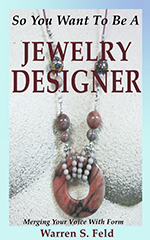
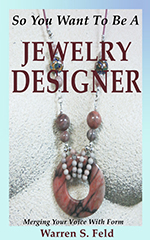
SO YOU WANT TO BE A JEWELRY DESIGNER Merging Your Voice With Form
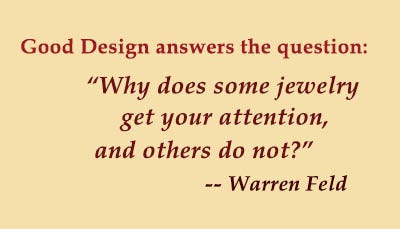
So You Want To Be A Jewelry Designer reinterprets how to apply techniques and modify art theories from the Jewelry Designer’s perspective. To go beyond craft, the jewelry designer needs to become literate in this discipline called Jewelry Design. Literacy means understanding how to answer the question: Why do some pieces of jewelry draw your attention, and others do not? How to develop the authentic, creative self, someone who is fluent, flexible and original. How to gain the necessary design skills and be able to apply them, whether the situation is familiar or not.
Some Updates and Things Happening. (Please share this newsletter)
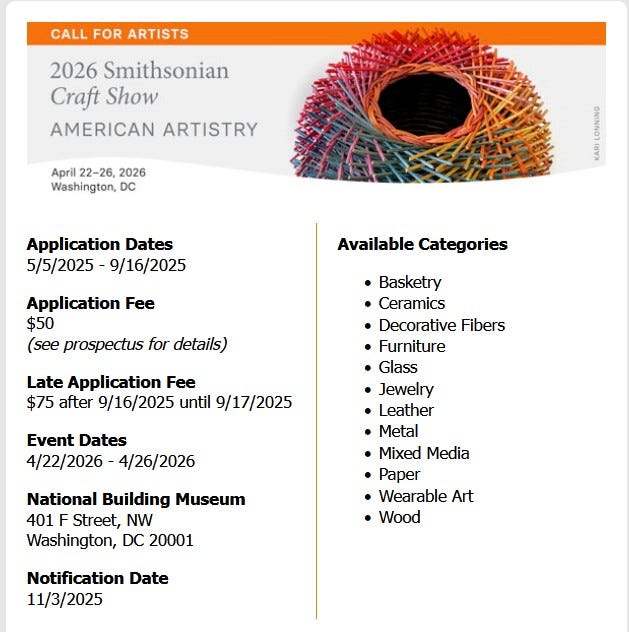
In this Issue: 1. Exhibitions Not Just Seen But Felt 2. Why jewelers are championing ‘ugly’ gems 3. Jewelry Deserves A Place In Art History 4. Call For Submissions: Smithsonian Craft Show, 2026 5. The Artist Who Captured the Contradictions of Femininity 6. Some Tips For Designing Your Website 7. The Mirror Motif In Contemporary Jewelry 8. FEAST -Contemporary Jewelry From the Susan Beech Collection
Some articles you may have missed Featured
__________________________________________
1. Exhibitions Not Just Seen but Felt, Beyond the Vitrine. By matt lambert, Art Jewelry Forum
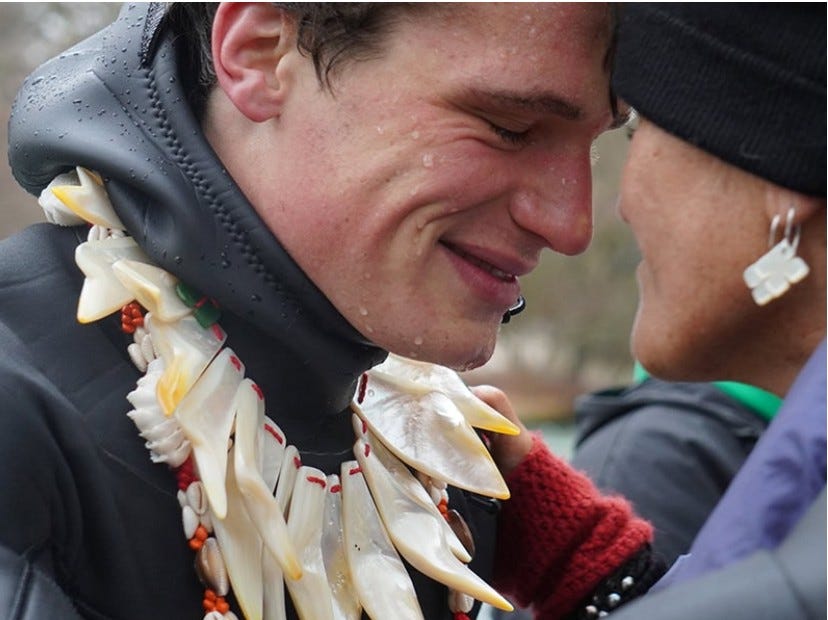
(Left) Leo wearing a necklace by (right) Sofia Tekela-Smith. Sofia Tekela-Smith, Untitled, 2025, necklace in mother-of-pearl, waxed thread, photo: Jamie Berry
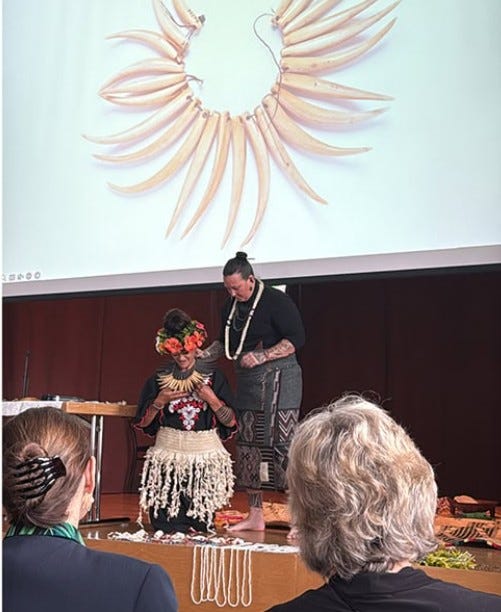
At the start of my Munich Jewellery Week adventure, I made my way to the Museum Fünf Kontinente (Museum Five Continents) to attend the KOHĀ ceremony led by Aotearoa (New Zealand) adornment practitioners Neke Moa, Sofia Tekela-Smith, and Stevei Houkāmau. The Munich Jewellery Week website described it as a performance and activation.
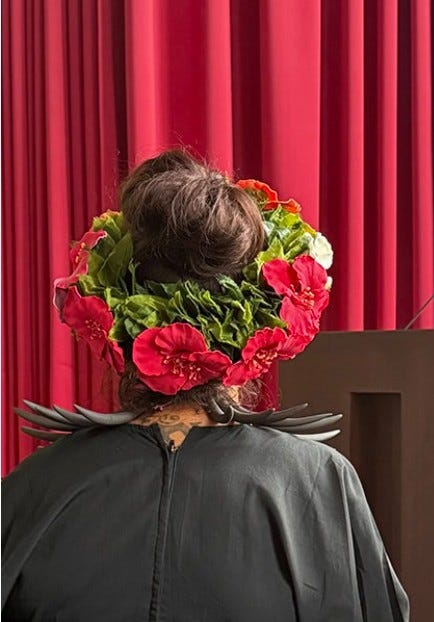
Fijian Wasekaseka Necklace, in sperm whale teeth, acquired in 1900 from Parisian dealer Emile Heymann, further provenance unknown, collection Fünf Kontinente Museum. (On stage, right) Stevei Houkāmau assists (left) Sofia Tekela-Smith in securing the necklace from the Fünf Kontinente Museum collection. Tekela-Smith is wearing a “Tofua,” a traditional Rotuman pandanus skirt from the island of Rotuma, a Parā /head lei of artificial hibiscus and leaves made of silk, 2024, necklace by Stevei Houkāmau, Korero with Our Ancestors, 2025, in black clay, wax cord, paint, photo courtesy of matt lambert
Koha is a vital concept in te ao Māori (the Māori world). It references the act of offering a gift or contribution as an expression of gratitude. Koha exists in both formal ceremony and everyday life.
The happening was rich and layered with many components. I cannot properly do it justice. In a highly emotive moment, Moa, Tekela-Smith, and Houkāmau showed works they made in response to works in the museum’s collection. In a surprise move by the museum, during the ceremony they were allowed to handle pieces from the historic collection, even permitted to wear one of them.
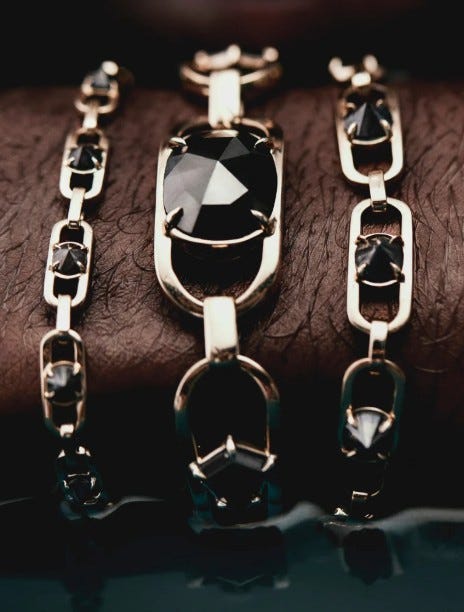
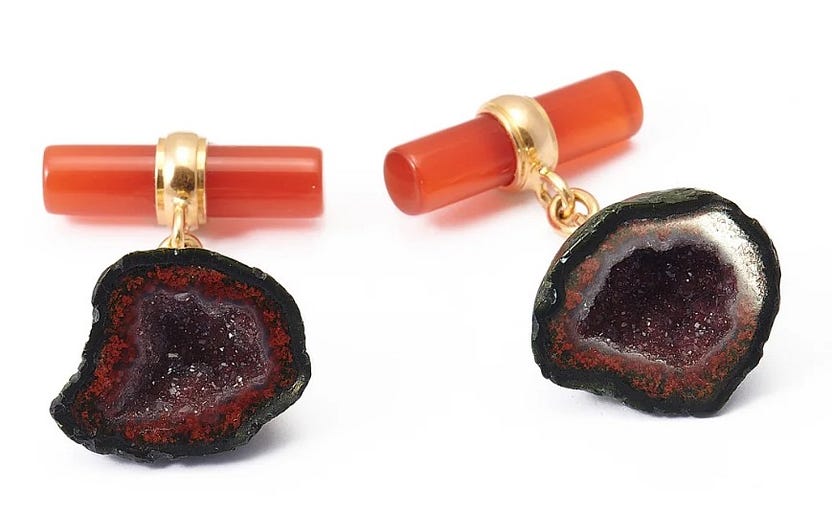
“Using the scientific precision of terms like “IF Type IIa” — to describe diamonds so pure they show no inclusions under 10x magnification — jewelry purveyors have long placed heavy emphasis on the clarity and cut of a gem. The sharper the facet and flawless the sparkle, the more valuable a stone once appeared.”
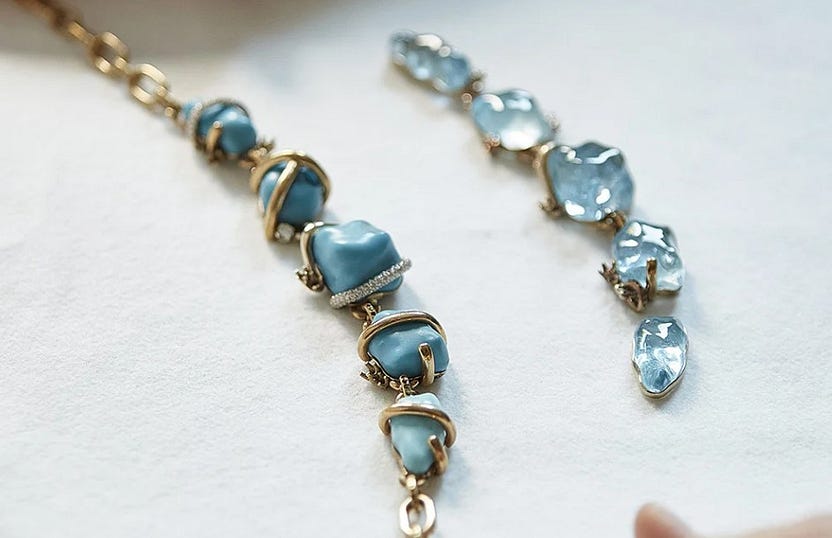
“Until now. Once dismissed as “ugly ducklings” — too marked, too dark, or too strange — imperfect gems are now stepping into the spotlight, as high-end jewelers increasingly champion stones with unique inclusions or less-than-perfect clarity.”
“The popularity of unconventional stones signals a broader shift in consumer behavior. More women are now buying jewelry for themselves, often valuing design and emotional resonance over traditional notions of investment — contrasting with male buyers who typically view jewelry as a store of value or a gift, according to several jewelry executives interviewed by CNN. “
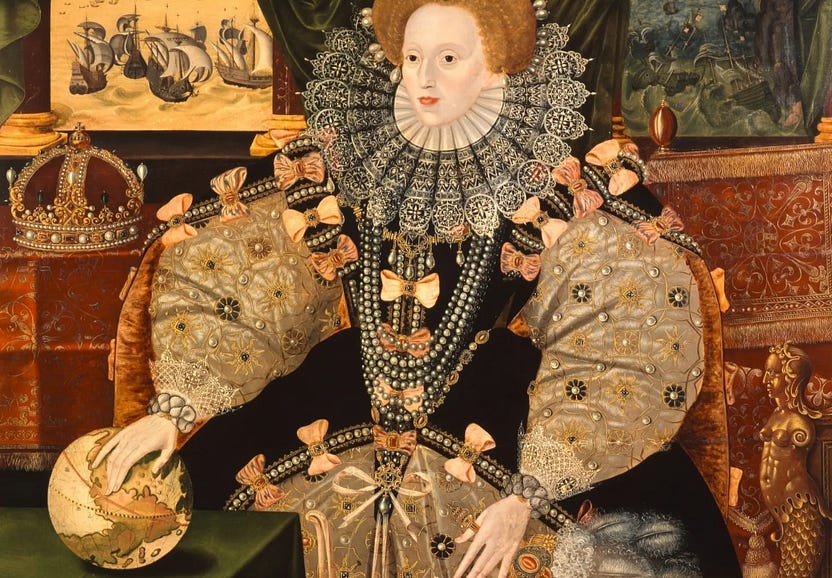
Unknown English artist, “Armada Portrait” (1588), oil on oak panel (image courtesy Woburn Abbey, Woburn, Bedfordshire, England)
“In Albrecht Dürer’s idealized, early-16th-century portrait of Charlemagne, the Holy Roman Emperor wears a dazzling crown. The diadem, topped by a cross, was itself very real. But it did not exist until around 962 CE, over a century after Charlemagne’s death. “
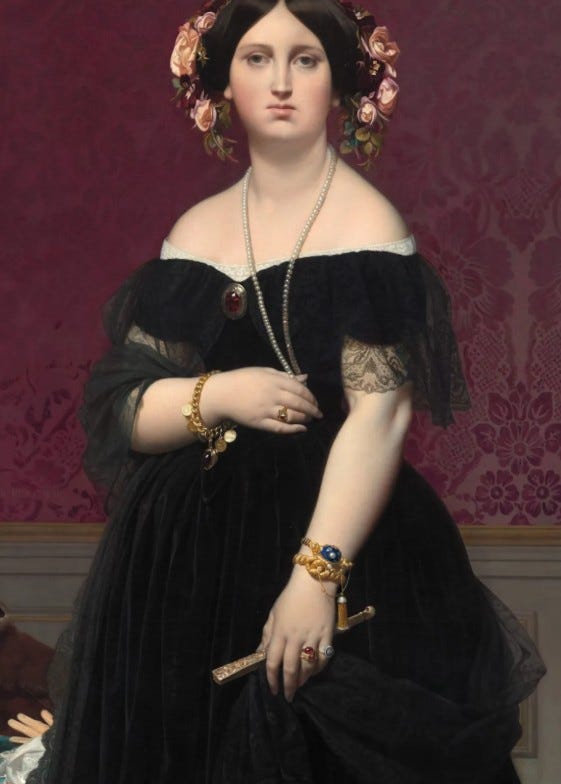
Jean-Auguste-Dominique Ingres, “Portrait of Madame Moitessier” (1851), oil on canvas (image courtesy National Gallery of Art, Washington, DC)
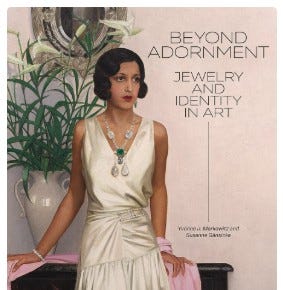
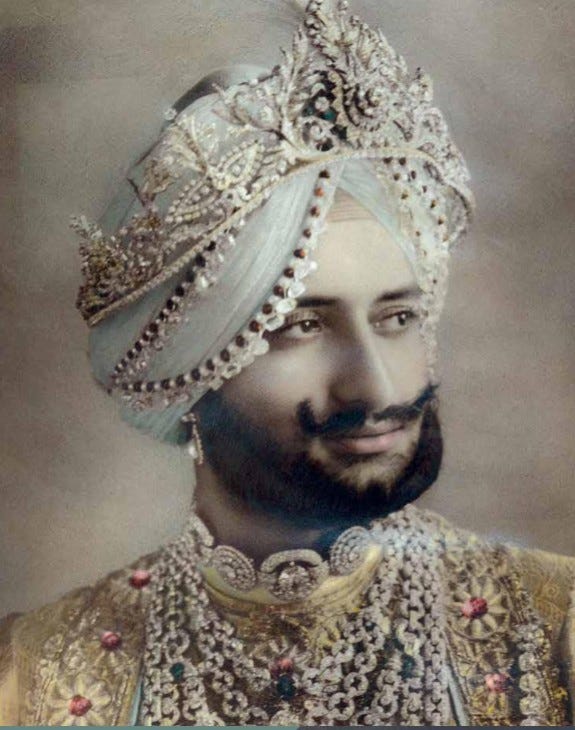
“Considered the oldest decorative art, jewelry has such a power to communicate that artists have been willing to bend the truth to exploit its associative capacities — or so argues Beyond Adornment: Jewelry and Identity in Art (2025). Yvonne J. Markowitz, jewelry curator at the Museum of Fine Arts (MFA), Boston, and Susanne Gänsicke, senior conservator of Antiquities at the Getty Museum, explore what the depiction of jewelry in art says about adornment, artists, and their subjects.”
“This practice of eschewing historical accuracy in order to build a compelling narrative is a prevalent theme, and the book’s discussion of Archaeological Revival jewelry — European and American pieces from the 18th and 19th centuries that sought to recreate ancient styles — is particularly fascinating. In Spanish painter Vicente Palmaroli y González’s 1870 portrait of aristocrat Enid, Lady Layard, the sitter wears jewelry made from “numerous ancient cylinder seals and stamp seals” found in excavations at Nineveh, the effect of which Gänsickedescribes as a “historical melange.” Her husband was a prominent Assyriologist known for uncovering the Library of Ashurbanipal. Perhaps, Gänsicke suggests, “the set’s purpose was as much to declare her husband’s accomplishments as to adorn the wearer.” “
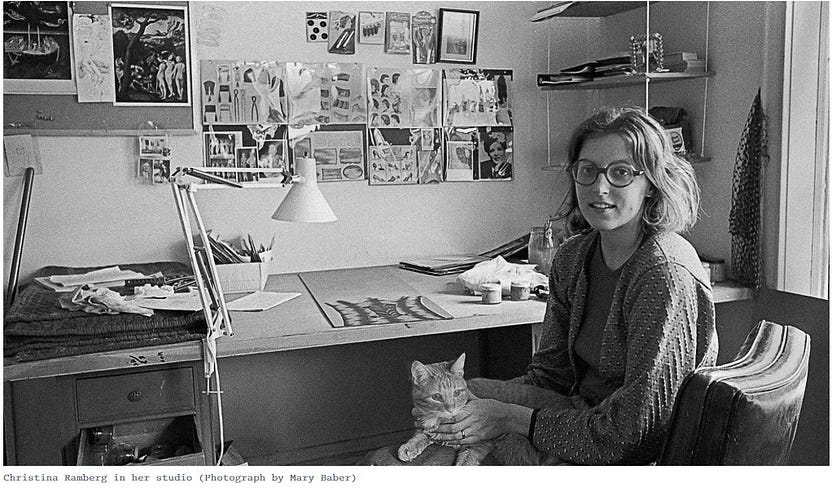
Christina Ramberg in her studio (Photograph by Mary Baber)
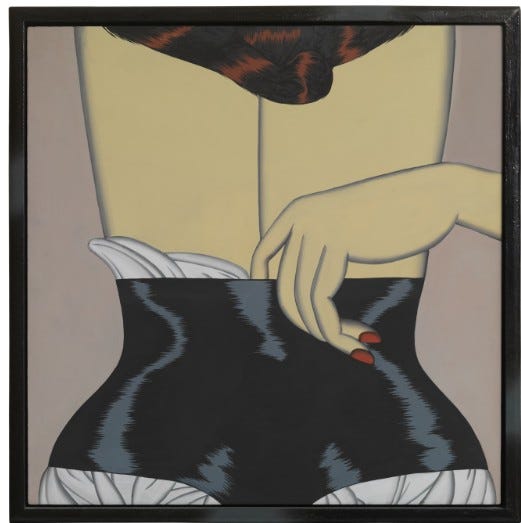
“Observing a woman get ready to go out is, for many girls, an early glimpse at the ritualistic preparations that femininity can entail. For the artist Christina Ramberg, watching her mother getting dressed for parties — in particular, putting on a corset called a merry widow, which gave her an hourglass figure — revealed the extent to which the female form was a ruse. “I can remember being stunned by how it transformed her body, how it pushed up her breasts and slendered down her waist,” Ramberg later observed. “I used to think that this is what men want women to look like; she’s transforming herself into the kind of body men want. I thought it was fascinating,” she said. “In some ways, I thought it was awful.””
The estate of Christina Ramberg Probed Cinch, 1971
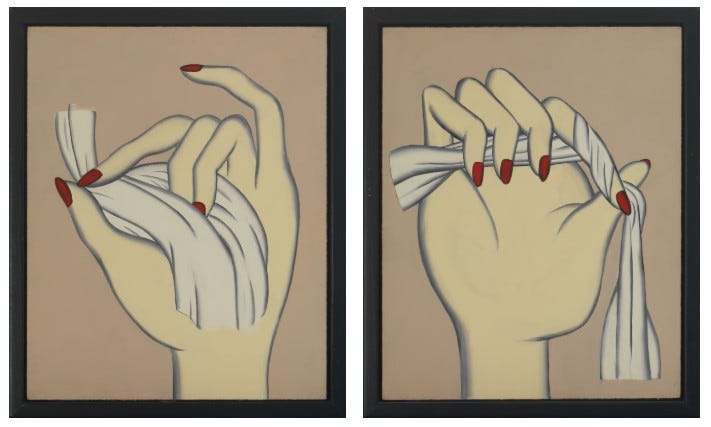
“These dueling reactions, fascination and repulsion, come up in Ramberg’s paintings, which, especially early in her career, fixated on the artifice of the female body — all the different ways that women construct themselves, with the aid of the mass market. Her striking portraits of women’s body parts feature torsos strapped into corsets, feet shoved into high heels, intricately arranged updos. The images are crisp, flat, and slyly cropped or angled to never show faces. And although they’re sensual, they’re also depersonalized and often off-kilter; sometimes, hair is parted in unnatural directions, or skin is patchy. The dueling presence of unruly and taming forces in these paintings recalls the consumer products that divide women’s bodies into conquerable parts: the sprays that restrain, the undergarments that shape. As the artist Riva Lehrer puts it in one of several essays accompanying a traveling exhibit of Ramberg’s work, currently at the Philadelphia Museum of Art, “Without the face, the body must tell all.””
The estate of Christina Ramberg Untitled (Hand), 1971; Untitled (Hand), 1971
If your art website serves different audiences — like collectors, store owners, individual buyers, and publishers — don’t overwhelm visitors with too many options.
Instead, divide your homepage into clear sections, each labeled for its audience (e.g., “For Collectors,” “For Store Owners,”, “For My Customers”, “For Authors”).
Let each section guide visitors to the relevant content and products, so they instantly know where to go.
Use simple language and align your navigation menu with those same categories.
A clear structure not only reduces confusion — it helps the right people find what they’re looking for, fast.
💻 Quick tips on designing a clear and engaging artist website:
Start with messaging that speaks to your audience’s experience, not just your own story.
Break long paragraphs into short, scannable chunks to keep visitors engaged.
Simplify your menu by grouping offerings into “artworks” and “services.”
Move exhibitions to your About page to keep your navigation clean and current.
Aim for a clean, professional layout that feels like a curated gallery space.
🖼️ When building your website, treat it as a portfolio — not an archive.
Focus on showcasing only your strongest work that represents who you are today as a creator, especially if you’re multidisciplinary.
Resist the urge to include everything you’ve ever made; too much content can overwhelm visitors and dilute your message.
Highlight only key exhibitions that add credibility, and keep the layout clean and intentional to avoid a “garage sale” feel.
__________________________________________
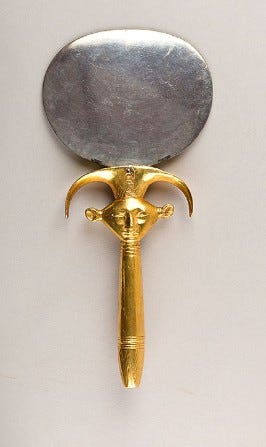
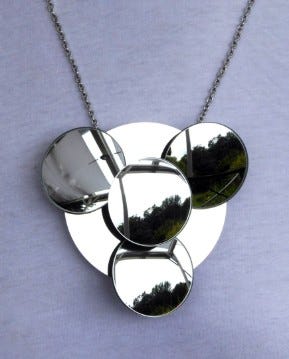
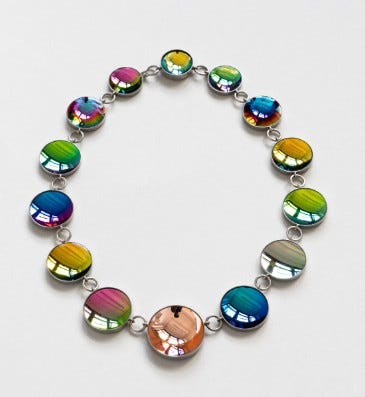
7. Perceptual Surfaces in Flux: Mirrors, Embodied Vision and Optical Fields in Contemporary Jewellery
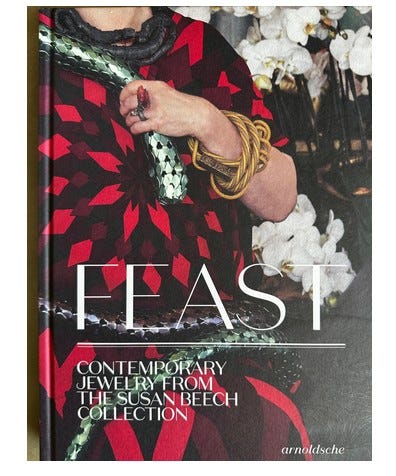
Tour the home of American collector Susan Beech. Since 1991, she has been transforming her house into an extraordinary environment in which the themes of her extensive jewelry collection interact with craft and fine art, all against a backdrop of Art Deco glamour. Beauty is entwined with darker forces of death and decay, and glimpses of pleasure are complicated by a nod to the surreal and uncanny. The result is a wholly original and fascinating stage for a major collection of contemporary jewelry thoughtfully assembled over four decades.
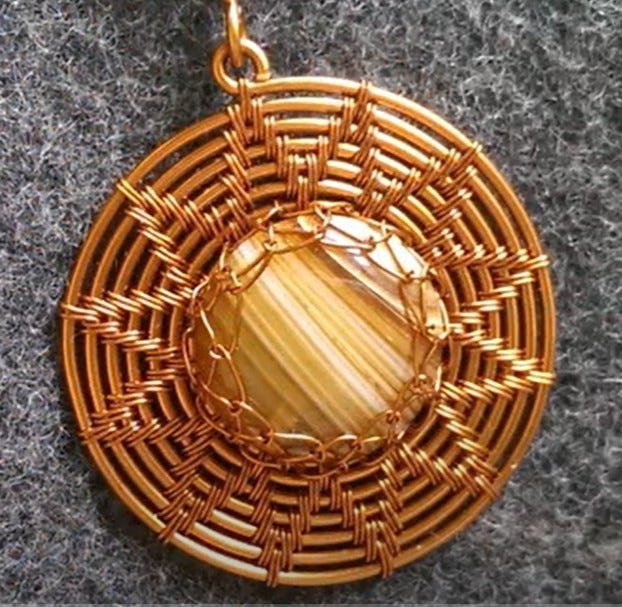
Sat, 7/19, 9am-Noon, INTRODUCTION TO WIRE WEAVING and MAYAN PENDANT
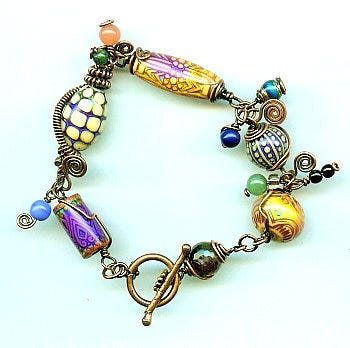
Middle Tenn Gem & Mineral Society, Donelson Fifty Forward Registration begins June 21http://www.mtgms.org/schools.htm Sat, 7/19, 1–4pm, WIRE WORKING INTRODUCTION and MIX N MATCH BRACELET
Middle Tenn Gem & Mineral Society, Donelson Fifty Forward Registration begins June 21http://www.mtgms.org/schools.htm Sat, 7/26, 1–4pm, WIRE WOVEN MAYAN PENDANT, Hoamsy, Nashville, LC Goat, Germantown, 1220 2nd Ave N
Sat, 8/16, 9am-Noon, WIRE WRAPPED CABOCHON PENDANT
Middle Tenn Gem & Mineral Society, Donelson Fifty Forward Registration begins June 21http://www.mtgms.org/schools.htm Sat, 8/16, 1–4pm, WIRE WEAVE 2 and SUN PENDANT
Middle Tenn Gem & Mineral Society, Donelson Fifty Forward Registration begins June 21http://www.mtgms.org/schools.htm Sat, 8/23, 1–4pm, WIRE WRAP MIX N MATCH BRACELET, Hoamsy, Nashville, LC Goat, Germantown, 1220 2nd Ave N
Promote your current projects, promotional copy, News & Views, videos, reels, tutorials, instructions, social media posts online in this newsletter and on our jewelry designers’ Patreon hub.
No deadlines! Opportunity available all the time. No fees.
But don’t wait to take advantage of this opportunity.
This copyrighted material is published here with permission of the author(s) as noted, or with Land of Odds or Warren Feld Jewelry. All rights reserved.
__________________________________________
Repairs Stumping You? Let Me Take A Look
I take in a lot of jewelry repairs. People either bring them to me in Columbia, TN, or, I pick them up and deliver them back in Nashville. I am in Nashville at least once a week. It’s been convenient for most people to meet me at Green Hills Mall. But if not, I can come to your workplace or your home. This is perfectly fine for me. My turnaround time typically is 3–4 weeks.
I do most repairs, but I do not do any soldering. I also do not repair watches. These are the kinds of repairs I do:
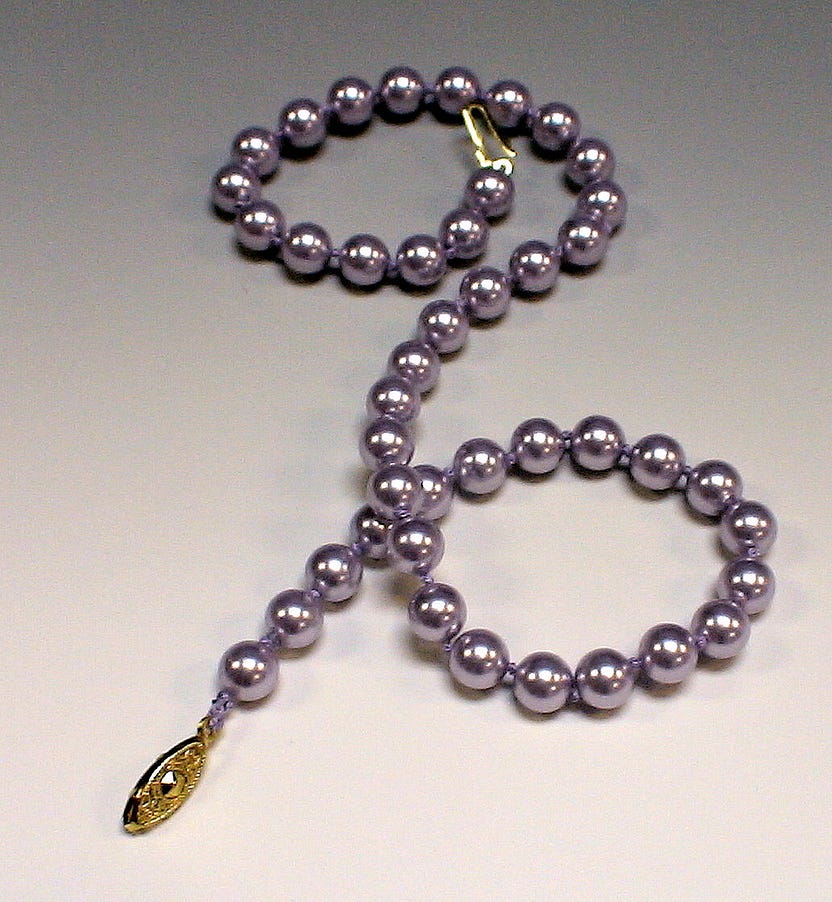
o Beaded jewelry o Pearl knotting, hand knotting o Size/Length adjustment o Re-stringing o Wire work/weave/wrap o Micro macrame o Broken clasp replacfement o Earring repair o Replace lost rhinestones or gemstones o Stone setting o Stretchy bracelet o Metal working which does not involve soldering o Bead woven jewelry and purses o Beaded clothing o Custom jewelry design
WARREN FELD JEWELRY (www.warrenfeldjewelry.com) Custom Design, Workshops, Video Tutorials, Webinars, Coaching, Kits, Group Activities, Repairs ~~~~~~~~~~~~~~~~~~~~~~~ Join our community of jewelry designers on my Patreon hub Be part of a community of jewelry designers who recognize that we have a different way of thinking and doing than other types of crafters or artists. One free downloadable Mini-Lesson of your choice for all new members! ~~~~~~~~~~~~~~~~~~~~~~~
QUESTION 3: What kinds of MATERIALS work well together, and which ones do not? This applies to TECHNIQUES as well. What kinds of TECHNIQUES (or combinations of techniques) work well when, and which ones do not?
A successful jewelry design has a character of its own as well as some kind of evocative essence. Let’s call this a tone. The choice of materials, including beads, clasps, and stringing materials, and the choice of techniques, including stringing, weaving, wire working, glassworks, metalworks, clayworks, cements that tone into place. Techniques link the designer’s intent with the client’s expectations. The successful designer has a depth of knowledge about materials, their attributes, their strengths, their weaknesses, and is able to leverage the good and minimize the bad within any design. The same can be said of techniques.
The choice of materials and the choice of techniques set the tone and chances of success for your piece. Materials and techniques establish the character and personality of your designs. They contribute to understandings whether the piece is finished and successful.
However, there are no perfect materials (or techniques) for every jewelry project. Selecting materials (or techniques) is about making smart, strategic choices. This means relating your choices to your design and marketing goals. It also frequently means having to make tradeoffs and judgment calls between aesthetics and functionality. Last, materials (or techniques) may have different relationships with the designer, wearer or viewer depending on how they are intended to be used, and the situational or cultural contexts….
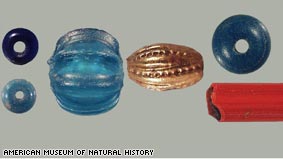
FROM CNN: Glass Beads Found Off Coast Of Georgia Shed Light On Spanish Empire
Roughly 70,000 beads said to provide clues to the social structure and wealth of people from the 17th century Spanish empire have been excavated by a team of scientists, an archaeologist said Tuesday.
Since 1974, scientists at the American Museum of Natural History have been digging beneath the Santa Catalina de Guale Mission, a remote outpost of the Spanish empire on St. Catherines Island off the coast of Georgia and “the largest repository ever from Spanish Florida,” museum spokeswoman Kristin Phillips said.