When I began making jewelry 35+ years ago, my only interest was in making money. Concerns about design and art, construction and appeal, functionality and emotional engagement were superficial. Probably non-existent is a better word. And yes, this meant I did not care about what any piece of jewelry I made might mean for the person buying it. Or wearing it. Or otherwise putting it on display. There was no consequence for my actions in making jewelry. Except making money. There was a hollowness here which I was, at the time, totally unaware of.
That was a shame.
I missed out on a lot of excitement that emerges from the design process and that special relationship between designer and client.
As I became more proficient in making jewelry, I questioned more and more of myself about what I was doing. Why were some pieces of jewelry I made more successful than others? Why did some sell better than others? Why were some received more warmly than others? Why did some hold up much better from wear than others?
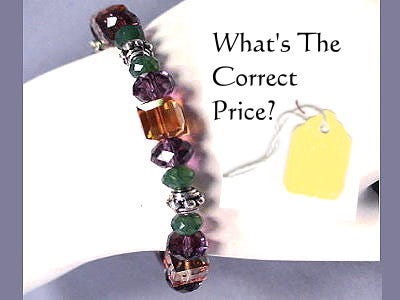
I had had to place a value on the pieces I made. Initially I used a simple pricing formula which related the costs of parts and the costs of labor and the costs of overhead to the price set. But over time, I noticed that some of my pieces were more resonant than others. More desirable. More intriguing. Sexier. Should I increase my prices to reflect these greater, though more difficult to measure, kinds of things? I didn’t know. But I was thinking about it.
Over the years, I thought more and more about what made jewelry more or less successful. How to know when a piece was finished. How to know that I made the best tradeoffs between beauty and functionality. How to know what my jewelry was worth. How to market jewelry. How to sell it. How to sell it in a store. How to sell it at a craft show. How to sell it online. How to organize it into a coherent line of jewelry. How to measure and assess costs, revenues and returns-on-investment.
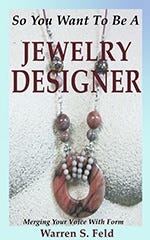
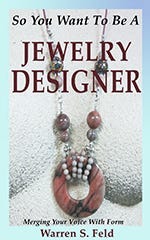
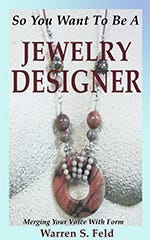
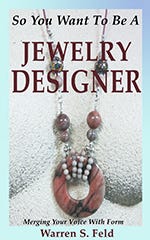
I share part of my developing knowledge in my book SO YOU WANT TO BE A JEWELRY DESIGNER (https://shop.ingramspark.com/b/084?EenmVM2NMYJGNKaAzr68kaH6GGGSPuNIkGCP1Hfzm3N). In this book, I go over the many hard and soft skills required to become fluent, flexible and original in jewelry design. It is important to understand what jewelry is, how design elements are selected, arranged, constructed and manipulated, how to manage the design process, and how to introduce your designs publicly.
In this book, which is the focus of this series of articles, CONQUERING THE CREATIVE MARKETPLACE, I focus on strategies for integrating business practices with the creative design process — things which can make balancing the creative self with the productive self easier and more fluid. I talk about how dreams are made between the fickleness of business and the pursuit of design.
I go into great detail about all the things you need to think about, know and do when getting started. This begins with basic bookkeeping and accounting as well as developing a business model and also understanding how to protect your intellectual property.
I discuss briefly about how the more literate jewelry designer is more successful in business. Disciplinary literacy involves a set of skills which enable the designer to best relate the jewelry design to client understandings and desires. These skills influence how the client interacts with the piece of jewelry, seeing relevance, value, usefulness, and the designer’s intent.
It is important to understand some basic concepts — Competitive Advantage,Risk, Rewards and Return-On-Investment, and how these play out in all aspects of your business. Also critical is to recognize how what you do in business and what you do creatively affect the Efficiency and Effectiveness of both your design process as well as your business operations.
I have several chapters devoted to product design and development. These range from product goal setting to needs assessment to product distribution, pricing and promotion to managing product launch.
Another section focuses on marketing and branding. You need to create an identify for your business, one that people become aware of and feel positively towards.
This leads to the next section on selling. I review selling strategies important in different settings from retail to craft shows to home shows to online.
I talk about resiliency in business. What kinds of things — emotional, administrative, creative — lead to a greater level of resilience in your business as you face growth, market ups and downs and fashion and taste changes.
Last, I review and present advice for creating the kinds of documents you will need to complement your business goals. These include a creative resume; portfolio; artist statement, biographical sketch, certificate of authenticity and the like.
Many people learn beadwork and jewelry-making in order to sell the pieces they make. Based both on the creation and development of my own jewelry design business, as well as teaching countless students over the past 35+ years about business and craft, I want to address what should be some of your key concerns and uncertainties. I want to share with you the kinds of things (specifically, a business mindset and confidence) it takes to start your own jewelry business, run it, anticipate risks and rewards, and lead it to a level of success you feel is right for you. I want to help you plan your road map.
I will explore answers to such questions as: How does someone get started marketing and selling their pieces? What business fundamentals need to be brought to the fore? How do you measure risk and return on investment? How does the creative person develop and maintain a passion for business? To what extent should business decisions affect artistic choices? What similar traits to successful jewelry designers do those in business share? How do you protect your intellectual property?
The major topics covered include,
1. Integrating Business With Design
2. Getting Started
3. Financial Management
4. Product Development, Creating Your Line, and Pricing
5. Marketing, Promotion, Branding
6. Selling
7. Professional Responsibilities and Strategic Planning
8. Professional Responsibilities and Gallery / Boutique Representation
9. Professional Responsibilities and Creating Your Necessary Written Documents
It is important up front to ask yourself, as a jewelry artist, what is more important to you: the piece of jewelry itself, or the reason why it was made? The material object? Or the idea?
The idea is about cause and effect. How the inspiration resulted in choices about colors, materials and techniques. How the artist’s intent is revealed through choices about composition, arrangements and manipulation of design elements. How the jewelry relates to the person and to the body? How the artist anticipates how others will understand whether a piece is finished and successful, and whether the piece incorporates these shared understandings into the choices made about design.
As solely a material object, the jewelry so designed shies away from resonance. It becomes something to be judged apart from the wearer. It too often gets co-opted by global forces tending towards standardization and same-old-same-old designs. The designer’s mastery is barely referenced or attended to. The designers voice is reduced to noise. The very real fear is that, with globalization, advances in technology, and standardization, the designer’s voice will no longer be needed.
Jewelry as idea fosters communication and connection between the artist and his or her various audiences. It bridges thinking. It bridges emotion. It bridges social, cultural and/or situational ties. It goes beyond simple adornment and ornamentation. It becomes interactive, and emerges from a co-dependency between artist and audience, reflective and indicative of both.
Analyzing reasons, finding connections, and conceptualizing forms, components and arrangements are the primary functions of jewelry designer survival.
Otherwise, why make jewelry? Why make something so permanent to reflect your inner motivations, efforts, even struggles, to translate inspiration into this object? Why make something wearable, especially when each piece is usually not worn all the time? Why make something that might have such an intimate relationship with the body and mind? Why make something that can have real consequences for the wearer as the jewelry is worn in social, cultural or specific situational settings?
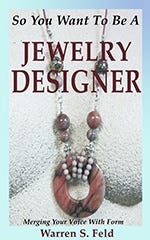
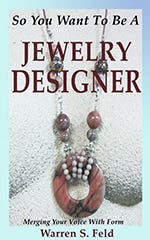
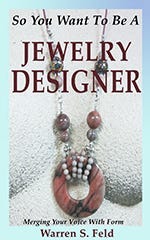
SO YOU WANT TO BE A JEWELRY DESIGNER Merging Your Voice With Form
So You Want To Be A Jewelry Designer reinterprets how to apply techniques and modify art theories from the Jewelry Designer’s perspective. To go beyond craft, the jewelry designer needs to become literate in this discipline called Jewelry Design. Literacy means understanding how to answer the question: Why do some pieces of jewelry draw your attention, and others do not? How to develop the authentic, creative self, someone who is fluent, flexible and original. How to gain the necessary design skills and be able to apply them, whether the situation is familiar or not.
Join my community of jewelry designers on myPatreon hub From Warren and Land of OddsUse February’s Discount Code For Extra 25% Off @Land of Odds: FEBRUARY25 www.landofodds.comFebruary 15, 2025
Hi everyone,Some Updates and Things Happening. (Please share this newsletter)**NOTE: Miyuki is now noticeably raising their prices on all seed and delica beadsIn this Issue: 1. Boost Your Instagram Marketing 2. New kit: Catenary Arches Bracelet 3. My 2nd Edition of PEARL KNOTTING…Warren’s Way is now available as ebook, kindle, or print 4. Love this quote 5. Check out The Contrast Club jewelry 6. The Jewelry of Wallace Chan 7. Latest question from our members – please share your comments 8. A book you might like: The Secret Lives Of Colors Some articles you may have missed Featured
1. Posting on Instagram seems to have the greatest return for jewelry designers compared to other social media sites. TIP 1: To boost Instagram engagement, show your process. Don’t post things that look like a commercial ad. It shouldn’t be a wide shot of your jewelry display at a craft fair — “Come see me”; rather, it should be something like you in the process of setting up that display- “Come share my experience”.Your art’s final form may be stunning, but people want to see how it’s made.Instead of just panning over finished pieces, show your creative process: “Show your audience how this work happens.”Use different angles and close-ups to highlight texture and patterns. Keep videos engaging but not too fast—let viewers absorb the details.A mix of casual presentation and behind-the-scenes content can enhance interaction. Give people a reason to stop scrolling by making them feel part of your creation process. TIP 2: Struggling to come up with Instagram content? Keep your audience engaged by not breaking up the “flow” of your posts. Try these tips: You don’t need to post daily, just focus on high-quality, engaging reels.Break your process into multiple reels—each section or stage of the painting can be a post.Show close-ups—let people see the details and textures of your work.Use time-lapses strategically—some parts can be sped up, but also include real-time segments.Film short clips periodically—record a 5-second video every hour and compile them later.No need for constant recording—this prevents distractions and makes content creation easier. TIP 3: Spend less time overproducing to avoid Instagram burnout. Keep things raw, uncomplicated, authentic.1) Skip tools like Canva for Reels – They make content look too polished and decrease engagement. Instagram favors organic, natural-looking posts.2) Don’t Overcomplicate – A heavily edited, structured reel with too much buildup can lose viewers before they reach the main point.3) Keep It Simple & Efficient – The less time you spend overproducing, the more content you can create without burnout.For a lot more tips and tricks with Instagram, visit our social media marketing collection on our Jewelry Designers’ Hub www.patreon.com/warrenfeldjewelry
2. I finally finished this new kit — Catenary Arches Bracelet!
About the CATENARY ARCHES BRACELETI have always been fascinated by the architectural works of Antonio Gaudi in Barcelona, Spain. He builds very organic, undulating forms. These fantastical shapes and spires and walls and rooftops are supported internally by a type of arch called a catenary arch. I knew from experience that creating a beadwoven arch was a difficult proposition, most likely to fail when the piece of jewelry was worn.The typical arch structure would be called a parabolic arch, and this one I knew would not work. In response to weight pressed onto the arch, a parabolic arches channels this stress along its entire length, from base to top to base. The stresses and strains from pushing on parabolic arches, pulling the arches, smashing the arches, would typically end up in a flat and flattened mess.A catenary arch is a type of architectural arch which follows what is called an inverted catenary curve. A catenary arch, in response to weight pressed on to it, centers its response to force at the top of its arch. It does not distribute this force, as in the parabolic arch. As such, it can handle the stresses and strains pushing on it much better. The catenary arch is less likely to fail because of stress and strain. Architecturally, a catenary arch has the ability to withstand the weight of the material from which it is constructed, without collapsing. This catenary arch can be uniformly dense and thick along its entire length. These are strong because they redirect the vertical force of gravity into compression forces pressing along the arch’s curve.This catenary arch has been used in building structures since ancient times. It forms the basis of Gothic cathedrals, Renaissance domes, the St. Louis Gateway arch, for examples. Gaudi faced the same issues in creating building structures. His solution was the catenary arch. My challenge was to see if I could create a beadwoven catenary arch that could hold its shape when the piece was worn.
WHAT YOUR WILL LEARN – Ladder stitch – Coordinating Peyote and Right Angle Weave stitches to optimize support (movement) and structure (shape) – Bookbinding stitch to reposition thread when you need to cross over several beads – Creating a catenary arch using bead weaving strategy – Attaching catenary arch to a foundation base – Using brick stitch to form an edging – Attaching a clasp – Designing and working with a piece that is more 3-dimensional rather than 2-dimensional
3. My 2nd Edition of PEARL KNOTTING…Warren’s Way is now available as kindle, or print
PEARL KNOTTING Doesn’t Need To Be HardIn this very detailed book, with thoroughly-explained instructions and pictures, you are taught a non-traditional Pearl Knotting technique which is very easy for anyone to learn and do. Does not use special tools. Goes slowly step-by-step. Presents a simple way to tie knots and position the knots to securely abut the bead. Anticipates both appeal and functionality. Shows clearly how to attach your clasp and finish off your cords. And achieves that timeless, architectural perfection we want in our pearl knotted pieces.Most traditional techniques are very frustrating. These can get overly complicated and awkward. They rely on tools for making and positioning the knots. When attempting to follow traditional techniques, people often find they cannot tie the knots, make good knots, get the knots close enough to the beads, nor centered between them. How to attach the piece to the clasp gets simplified or glossed over.
Fortunately, Pearl Knotting doesn’t need to be this hard.
Pearl Knotting…Warren’s Way teaches you how to: o Hand-knot without tools o Select stringing materials o Begin and finish pieces by (1) Attaching directly to the clasp, (2) using French wire bullion, (3), using clam shell bead tips, or, (4) making a continuous piece without a clasp o Add cord o Buy pearls, care for them, string and restring them, store themBy the end of this book, you will have mastered hand-knotting pearls. This second edition takes into account a fuller utilization of technical options for the E-book version. Additional information, clarifications and summaries of ideas are added throughout. Instructions for Variation #3: Using Clam Shell Bead Tips is simplified a little bit.
Interpretation is the revenge of the intellectual upon art. / Susan Sontag
5. Check this out: Interactive Fine Jewelry from The Contrast Club The Moth. (The gold wings push aside to reveal the stone)
The Contrast Club is a family run design company located in Southern Finland. The company focuses on merging the worlds of jewellery and engineering, bringing a breath of life to the traditional art of fine jewellery. After spending several years balancing parallel career paths in art and engineering, The Contrast Club was created as a beautiful middle ground where aesthetics are supported by creative technical design. Using this unusual pairing in expertise, the company focuses on the creation of items that go beyond the boundaries of traditional products, pushing the limits of what an object actually is. Together with its network of artisans, jewellery professionals and engineers, each piece goes through a meticulous development process, lasting months, if not years, before it is ready to be presented to the public.
Bracelet (Lay this flat on table, rest your wrist on it, and it automatically curls around your wrist and closes)
6. I wanted to introduce you to the jewelry of Wallace Chan Visit his website
Wallace Chan is a world-renowned Chinese jewellery creator, visual artist and innovator that exhibits internationally and participates in prestigious art fairs. He is renowned for his unworldly jewelry creations and sculptures. He is also the first Chinese contemporary jewelry artist whose work is included in the permanent collection of the British Museum.
The Secret Lives of Color tells the unusual stories of seventy-five fascinating shades, dyes, and hues. From blonde to ginger, the brown that changed the way battles were fought to the white that protected against the plague, Picasso’s blue period to the charcoal on the cave walls at Lascaux, acid yellow to kelly green, and from scarlet women to imperial purple, these surprising stories run like a bright thread throughout history.
In this book, Kassia St. Clair has turned her lifelong obsession with colors and where they come from (whether Van Gogh’s chrome yellow sunflowers or punk’s fluorescent pink) into a unique study of human civilization. Across fashion and politics, art and war, the secret lives of color tell the vivid story of our culture.
WARREN FELD JEWELRY (www.warrenfeldjewelry.com) Custom Design, Workshops, Video Tutorials, Webinars, Coaching, Kits, Group Activities, Repairs ~~~~~~~~~~~~~~~~~~~~~~~ Join our community of jewelry designers on myPatreon hub Be part of a community of jewelry designers who recognize that we have a different way of thinking and doing than other types of crafters or artists. One free downloadable Mini-Lesson of your choice for all new members! ~~~~~~~~~~~~~~~~~~~~~~~
JEWELRY DESIGN: An Occupation In Search Of Professionalization
Jewelry design is an activity which occupies your time.
How the world understands what you do when you occupy that time, however, is in a state of flux and confusion, and which often can be puzzling or disorienting for the jewelry artist, as well.
Is what you are doing merely a hobby or an avocation? Is it something anyone can do, anytime they want, without much preparation and learning? Is it something primarily done by hand or by machine?
Is what you do an occupation? Does it require learning specialized technical skills? Is it something that involves your interaction with others? Is it something you are paid to do?
Or is what you do a profession? Is there a specialized body of knowledge, perspectives and values, not just mechanical skills, to learn and apply? Do you provide a service to the public? Do you need to learn and acquire certain insights which enable you to serve the needs of others?
Are you part of another occupation or profession, or do you have your own? Is jewelry design merely a craft, where you make things by following sets of steps?
Is jewelry design an art, where your personal inspirations and artistic sense is employed to create things of aesthetic beauty for others to admire, as if they were sculptures? Is the jewelry you create to be judged as something separate and apart from the person wearing it?
Or is jewelry design its own thing. Is it a design activity where you learn specialized knowledge, skills and understandings in how to integrate aesthetics and functionality, and where your success can only be judged at the boundary between jewelry and person — that is, only as the jewelry is introduced publicly and is worn?
The line of demarcation between occupation and profession is thin, often blurred, but for the jewelry designer, this distinction is very important. It feeds into our sense of self and self-esteem. It guides us in the choices we make to become better and better at our craft, art and trade. It influences how we introduce our jewelry to the public, and how we influence the public to view, wear, exhibit, purchase or collect the things we make.
SO YOU WANT TO BE A JEWELRY DESIGNER Merging Your Voice With Form
So You Want To Be A Jewelry Designer reinterprets how to apply techniques and modify art theories from the Jewelry Designer’s perspective. To go beyond craft, the jewelry designer needs to become literate in this discipline called Jewelry Design. Literacy means understanding how to answer the question: Why do some pieces of jewelry draw your attention, and others do not? How to develop the authentic, creative self, someone who is fluent, flexible and original. How to gain the necessary design skills and be able to apply them, whether the situation is familiar or not.
Some Updates and Things Happening. (Please share this newsletter)
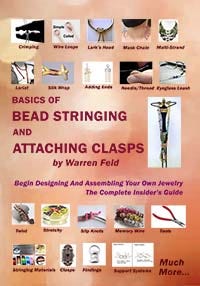
1. My most popular class was called BASICS OF BEAD STRINGING AND ATTACHING CLASPS. I turned this into a book, and expanded the chapters to include some related clinics and classes that I also taught.
In this Issue: 1. Basics of Bead Stringing and Attaching Clasps 2. Promoting Your Jewelry On Social Media: Some Tips 3. How To Market An Open Studios Event 4. Some suggestions about pricing when you have multiple audiences 5. Coreen Simpson Defined the Black Cameo by Black Women for Black Women 6. 2025 A’ Design Award, Jewelry Design Category 7. Latest question from our members — please share your comments 8. Getting that grant application to a Yes! Some articles you may have missed
I pay particular attention to architectural issues — that is, how you deal in your design with the inevitable stresses and strains placed on jewelry when worn.
Learning Bead Stringing Is More Than Putting Beads On A String And Tying On A Clasp
There is an art and skill to stringing beads. First, of course, is the selection of beads for a design, and the selection of the appropriate stringing material. Then is the selection of a clasp or closure, appropriate to the design and use of the piece.
You want your pieces to be appealing. You want them to wear well. You want someone to wear them or buy them. This means understanding the basic techniques, not only in terms of craft and art, but also with considerations about architecture, mechanics, and some sociology, anthropology and psychology.
In this book, I go into depth about: 1. Choosing stringing materials, and the pros and cons of each type 2. Choosing clasps, and the pros and cons of different clasps 3. All about the different jewelry findings and how you use them 4. Architectural considerations and how to build these into your pieces 5. How better designers use cable wires and crimp, as well as, use needle and thread to string beads 6. How best to make stretchy bracelets 7. How to make adjustable slip knots, coiled wire loops, and silk wraps 8. How to finish off the ends of thicker cords or ropes, so that you can attach a clasp 9. How to construct such projects as eyeglass leashes, mask chains, lariats, multi-strand pieces, twist multi-strand pieces, and memory wire bracelets 10. How different teaching paradigms — craft vs. art vs. design — might influence the types of choices you make
TABLE OF CONTENTS
ACKNOWLEDGEMENTS 1. INTRODUCTION 2. MATERIALS AND TOOLS 3. WORKSPACE 4. THREE TEACHING APPROACHES 5. THE DESIGN PROCESS 6. CHOOSING CLASPS 7. CHOOSING STRINGING MATERIALS 8. TWO COGNITIVE PHENOMENA 9. TYPES OF CLASPS 10. TYPES OF STRINGING MATERIALS 11. JEWELRY FINDINGS 12. HOW TO CRIMP 13. STRINGING WITH NEEDLE AND THREAD 14. ELASTIC STRING AND STRETCHY BRACELETS 15. MAKING SIMPLE AND COILED WIRE LOOPS 16. ATTACHING END PIECES TO THICKER CORDS 17. MAKING SIMPLE AND FANCY ADJUSTABLE SLIP KNOTS 18. SILK WRAP 19. EYEGLASS LEASH AND MASK CHAIN 20. LARIAT 21. MULTI-STRAND PIECES 22. TWIST MULTI-STRAND PIECES 23. MEMORY WIRE 24. FINAL WORDS OF ADVICE
2. Promoting your jewelry on social media: Some Tips
🎨 Create buzz on social media for your upcoming projects/shows:
Start sharing as soon as possible: use any existing footage in stories and reels.
Early sharing builds anticipation and allows you to experiment with what resonates.
Add voiceovers to explain why this project matters. Personal insights create emotional connections with viewers.
Natural light is best for recording. If unavailable, invest in an affordable $20 tripod (simple tools can yield beautiful videos).
Take risks with your content — when it goes well, it can go viral. When it doesn’t, you lose nothing. It’s the perfect way to learn and grow your online presence.
📱 If you wish your posts were performing better on IG, remember:
Algorithms prioritize engagement, not frequency — 1 viral post trumps 30 non-viral ones.
Use vertical/portrait format (9:16) for Reels. Avoid landscape; mobile users miss key visuals.
Short, engaging videos with multiple cuts show progression better than time-lapses.
Remove text overlapping artwork; instead, lead with finished work and show process in successive slides.
Use hooks (both visual and verbal) to draw viewers in (e.g., dramatic start or surprising technique).
Keep content dynamic — switch angles, zoom, and close-ups.
Simplify production. Think less like a filmmaker — focus on storytelling in short, direct clips.
📈 Boost your Instagram growth with storytelling…
As mentioned above, instead of polished posts or static images, show how you create your art and share the story behind it.
Process-focused content — like videos of you working on textures or unique techniques — grabs attention and keeps viewers engaged.
Pair this with storytelling or insights about your materials (like nontoxic pigments or unique inspirations) to turn informative content into mesmerizing reels.
This authentic approach will outperform paid promotions for long-term growth.
3. I have a friend who works from a studio he rents in a converted warehouse in Nashville, which also houses many other related artisan businesses. Some insights from him on how to market an open studios event.
🗣️How to market an open studios event and have successful sales conversations with collectors
Use storytelling to highlight the unique aspects of your process, such as working with invasive species leather.
Prepare materials that educate visitors about your mission and the significance of your medium.
Engage collectors with interactive displays showcasing your creative process.
Focus on conversational sales techniques — ask questions about their interests and share personalized recommendations.
Follow up with attendees post-event to nurture relationships and encourage repeat sales.
4. Some suggestions for pricing your jewelry if you are targeted multiple audiences at different income and interest points.
💰 How to price your jewelry for different buyer categories to increase overall sales
Offer a range of price points, including smaller, affordable pieces for new buyers.
Create limited edition prints to scale sales and increase accessibility without diluting exclusivity.
Price jewelry that is more “art” or uses unique materials (like leather or feathers or vintage materials and clasps) higher to reflect craftsmanship and rarity.
Consider bundling products or services (e.g., jewelry with donations to relevant causes) to appeal to conscious buyers.
Continuously evaluate pricing strategies based on collector feedback and sales data.
For some pieces, you might turn them into kits.
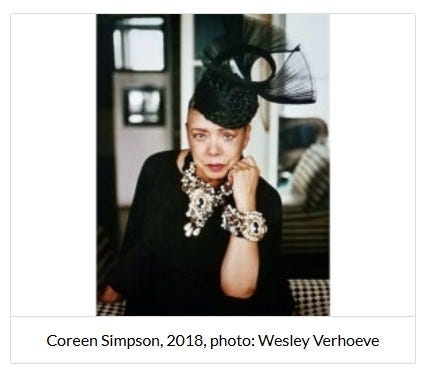
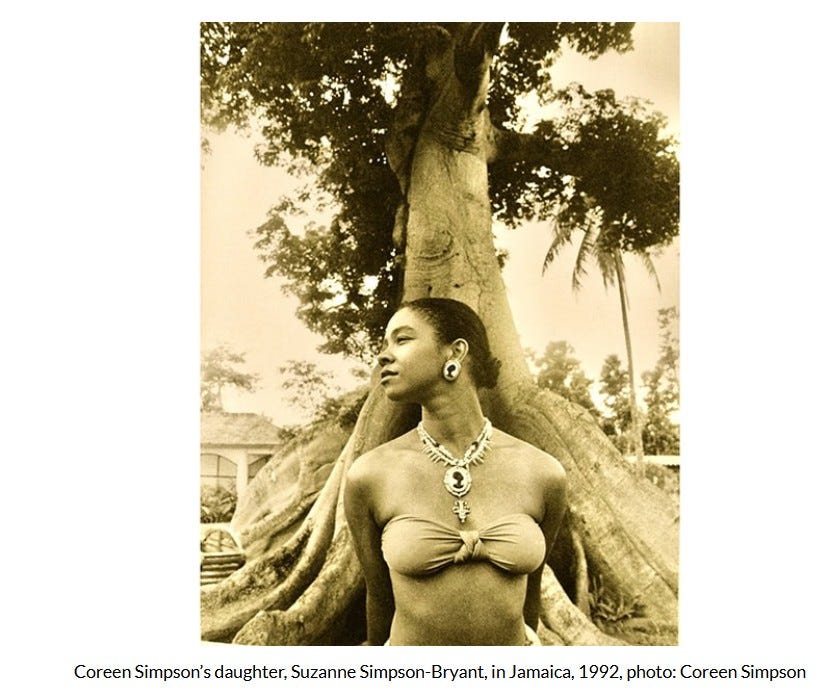
5. Coreen Simpson Defined the Black Cameo by Black Women for Black Women
Cameos have existed since ancient Egypt and play an essential role in the history of jewelry. In materials such as onyx, agate, or mother-of-pearl, which contrast with the color of the gemstone backing, the cameo acted as a miniature canvas to present carved portraits of kings, emperors, or scenes from mythology.
Yet despite the cameo’s ancient origins and its status as a classic jewelry item, the Black community has often had a complicated relationship with these pieces, especially due to a history of racist caricature in the imagery that also became associated with the cameo.
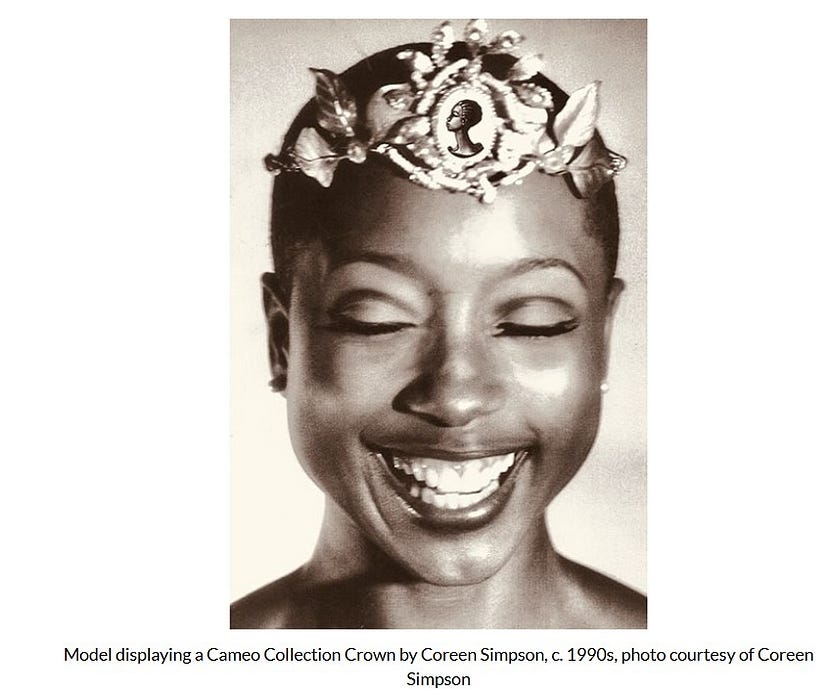
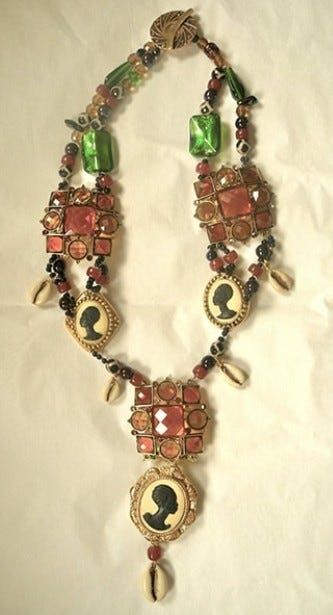
Artist Coreen Simpson wanted to explore this issue of representation by making her own American take on the cameo. In the 1990s, Simpson developed a cameo for modern Black consumers. In so doing, she built a successful company that subverted the negative historical narrative.
Her first foray into jewelry came as a product of necessity. When she tried to find the right pieces to accessorize her outfits in various stores in Paris, she was often disappointed. The jewelry just didn’t fit her aesthetic. Because of this lack of options, Simpson decided to create her own.
Simpson eventually opened a showroom in the Garment District, and she continued to experiment with “unique combinations of stones, metal, and unusual materials.” Simpson got her big break in the late 80s when, one day, as she was selling necklaces on 57th Street and Madison Avenue, close to the Henri Bendel department store, designer Carolina Herrera noticed her work and purchased 11 necklaces, which she featured in her 1988 resort collection. The journalist Renee White has also commented that publications such as Vogue described Simpson’s pieces as power necklaces, thereby cementing her position in fashion jewelry. The New York Times proclaimed her a “style maker.” Stars such as Diahann Carroll and Joan Collins were seen wearing her pieces publicly and privately.
In 1990, all of Simpson’s experimentation in jewelry culminated in the launch of the Black Cameo, her signature collection. Her first encounters with the cameo had started as she paged through fashion magazines. She saw pieces she found beautiful, but she also thought “no Black woman [was] going to wear” them. The cameos may have looked pretty, but they did not represent the cultural diversity of Black women in America.
A’ Design Award, recognizing the excellent and original design work from across the globe, is one of the highest achievements in design, a source of inspiration for award-winning designers, artists, architects, brands and design agencies. Entry and nomination is open to all from all countries. The A’ Jewelry Design Award is open to entries by Jewelry Designers, Jewelry Brands, Jewelers, Goldsmiths, Silversmiths, Gemologists, Lapidarists, Accessory Designers, Metalworkers, Artisan Jewelers, Craftspeople, Contemporary Jewelry Artists, Custom Jewelry Designers, Fine Art Jewelers, Jewelry Manufacturing Enterprises, Jewelry Brand Managers, Fashion Designers, Fashion Brands, Industrial Designers, Luxury Good Manufacturers, Jewelry Innovation, Consultancy, Research and Development Companies worldwide. Enter your work today to highlight Jewelry Excellence.
💰 If you are submitting an application for a public or private art grant…
Keep in mind that these are highly competitive: for you to stand out, you’ll have to be specific about how your work aligns with their criteria.
For your next submission:
Describe how audiences interact with your work — mention workshops, events, or participatory elements.
Clarify your concept: Use vivid language to make your vision tangible. Explain how your art fits into the public or private space your proposal is targeting
Titles and descriptions: Make them concise and impactful to quickly convey the project’s essence.
And don’t forget to use this 25% discount code throughout February at Land of Odds!! Use February’s Discount Code For Extra 25% Off @Land of Odds: FEBRUARY25 www.landofodds.com
WARREN FELD JEWELRY (www.warrenfeldjewelry.com) Custom Design, Workshops, Video Tutorials, Webinars, Coaching, Kits, Group Activities, Repairs ~~~~~~~~~~~~~~~~~~~~~~~ Join our community of jewelry designers on my Patreon hub Be part of a community of jewelry designers who recognize that we have a different way of thinking and doing than other types of crafters or artists. One free downloadable Mini-Lesson of your choice for all new members! ~~~~~~~~~~~~~~~~~~~~~~~
As a jewelry designer, you have a purpose. Your purpose is to figure out, untangle and solve, with each new piece of jewelry you make, how both you, as well as the wearer, will understand your inspirations and the design elements and forms you chose to express them, and why this piece of jewelry is right for them. Not as easy as it might first appear. There are no pre-set formulas here. There are artistic principles of composition, yes, but how you implement them is still up to you. Moreover, your pieces have to wear well, drape well, and connect with the desires of people who will want to wear or buy them. Jewelry design involves an ongoing effort, on many levels, to merge voice and inspiration with form. Often challenging, but very rewarding.
BECOMING THE BEAD ARTIST AND JEWELRY DESIGNER: The Ongoing Tensions Between Inspiration and Form
As a jewelry designer, you have a purpose. Your purpose is to figure out, untangle and solve, with each new piece of jewelry you make, how both you, as well as the wearer or buyer, will understand your inspirations and the design elements and forms you chose to express them, and why this particular piece of jewelry is right for them. Not as easy as it might first appear. There are no pre-set formulas here. There are artistic principles of composition, yes, but how you implement them is still up to you. Moreover, your pieces have to wear well, drape well, and connect with the desires of people who will want to wear or buy them.
You will want the piece to be beautiful and appealing. So you will be applying a lot of art theories about color, perspective, composition and the like. You will quickly discover that much about color use and the use of lines and planes and shapes and so forth in art is very subjective. People see things differently. They may bring with them some biases to the situation. Many of the physical materials you will use may not reflect or refract the color and other artistic effects more easily achieved with paints.
You want the piece to be durable. So you will be applying a lot of theories and practices of architects and engineers and mechanical physicists. You will need to intuitively and intrinsically understand what about your choices leads to the jewelry keeping its shape, and what about your choices allows the jewelry to move, drape and flow. You also will be attentive to issues of physical mechanics, particularly how jewelry responds to forces of stress, strain and movement. This may mean making tradeoffs between beauty and function, appeal and durability, desire and acceptance.
You want the piece to be satisfying and accepted by various viewing, wearing, buying and collecting audiences. So you will have to have some understanding of the role jewelry plays in different people’s lives. Jewelry is more than some object to them; jewelry is something they inhabit — reflective of soul, culture, status, aspiration. You will recognize that people ascribe the qualities of the jewelry to the qualities of the person wearing it. You will bring to the forefront ideas underlying psychology and anthropology and sociology, and even party planning, while designing your jewelry or introducing it publicly. You may find the necessity to compromise part of your vision for something socially acceptable, or in some degree of conformance with a client’s taste or style.
SO YOU WANT TO BE A JEWELRY DESIGNER Merging Your Voice With Form
So You Want To Be A Jewelry Designer reinterprets how to apply techniques and modify art theories from the Jewelry Designer’s perspective. To go beyond craft, the jewelry designer needs to become literate in this discipline called Jewelry Design. Literacy means understanding how to answer the question: Why do some pieces of jewelry draw your attention, and others do not? How to develop the authentic, creative self, someone who is fluent, flexible and original. How to gain the necessary design skills and be able to apply them, whether the situation is familiar or not.
ESSENTIAL QUESTIONS ABOUT JEWELRY DESIGN WORTH ANSWERING
As you work your way through the chapters in this book, it is important to recognize and understand the larger social and professional contexts within which jewelry design is but a part, and your place in it. Towards this end, I have formulated some essential questions every designer needs to have answers for and have deeper understandings about. Another way to look at this is that answers to these questions become your evidence for determining whether you are on the right track for becoming fluent in jewelry design.
(1) Why are there disciplinary conflicts between art and craft, and between art and design?
(2) How do you resolve tensions between aesthetics and functionality within an object like jewelry?
(3) What is jewelry, and what is it for?
(4) Is jewelry necessary?
(5) What does it mean to be successful as a jewelry artist working today?
(6) What does it mean to think like a jewelry designer? How does this differ from thinking like an artist or thinking like a craftsperson?
(7) How does the jewelry designer know when a piece is finished and successful?
(8) How do you place a value on a piece of jewelry?
(9) How do you introduce your jewelry into a public setting, either to wear or to collect or to buy?
(10) Why does some jewelry draw your attention, and others do not?
(11) What does it mean to be a contemporary jewelry designer?
SO YOU WANT TO BE A JEWELRY DESIGNER Merging Your Voice With Form
So You Want To Be A Jewelry Designer reinterprets how to apply techniques and modify art theories from the Jewelry Designer’s perspective. To go beyond craft, the jewelry designer needs to become literate in this discipline called Jewelry Design. Literacy means understanding how to answer the question: Why do some pieces of jewelry draw your attention, and others do not? How to develop the authentic, creative self, someone who is fluent, flexible and original. How to gain the necessary design skills and be able to apply them, whether the situation is familiar or not.
Long thought merely a craft, or, sometimes alternatively, a subset of art, painting and sculpture, we have begun to recognize that Jewelry Design is something more. Jewelry making encapsulates the designer’s anticipation, not only of aesthetic requirements, but also those of function and context, as well. Creating jewelry means understanding how to make strategic design choices at the boundary between jewelry and person. Translating inspirations and aspirations into designs and finished products requires an intuitive, integrative sensitivity to shared understandings brought to the design situation by the designer and all the audiences ultimately invested in the product. The better designer is able to bring a high level of coherence and consistency to the process of managing all this — shared understandings, knowledge and skills, evaluative review, and reflection and adjustment. This is called ‘fluency’ in design. For the jewelry designer, there is a defined set of concepts and principles which revolve around this disciplinary literacy — the professional way of thinking through design, production, communication, marketing, selling and critique — and how to be proficient at this. This is what this book is all about.
DISCIPLINARY LITERACY AND FLUENCY IN DESIGN
Jeremy thought that the only thing he wanted to do in life was design jewelry. He loved it. So it was not a question of “if” or “when” or “how”. But he told me it was always important not to get tricked by fashion. It was mandatory not to seek the trendy object. Not to turn away from that odd thing. And to pay very close attention to the details of how jewelry designers think, act, speak and reflect.
I thought about his advice a lot over the years of my own career as a jewelry designer. The disciplined designer needs to be attuned to the discipline way of seeing the world, understanding it, responding to it, and asserting that creative spark within it. Yes, I believe jewelry designers have a special way of thinking through selecting design elements, composing, constructing, and manipulating objects. Different than crafters. Different than artists. Different than other disciplines and their core ways of defining things and thinking things through. Different than what other disciplines use as evidence to determine if their pieces are finished and successful.
Yet jewelry design does not yet exist as an established discipline. It is claimed by art. It is claimed by craft. It is claimed by design. And each of these more established disciplines offer conflicting advice about what is expected of the designer. How should she think? How should she organize her tasks? How should she tap into her creative self? How should she select materials, techniques and technologies? How should she assert her creativity and introduce her ideas and objects to others? How much does she need to know about how and why people wear and inhabit jewelry? What impact should she strive to have on others or the more general culture and society as a whole?
In this book, I try to formulate a disciplinary literacy unique and special and legitimate for jewelry designers. Such literacy encompasses a basic vocabulary about materials, techniques, color and other design elements and rules of composition. It also includes the kinds of thinking routines and strategies jewelry designers need to know in order to be fluent, flexible and original. It includes what the jewelry designer needs to know and do when introducing their pieces publicly, either to have others wear, buy or collect their pieces.
These routines and strategies are at the heart of the designer’s knowledges, skills and understandings related to creativity, elaboration, embellishment, reflection, critique and metacognition. This disciplinary literacy in design is very similar to how sounds are made into music. This literacy is very similar to how words are made into literature. There is an underlying vocabulary and grammar to jewelry design, from decoding to comprehension to fluency. The jewelry designer is dependent upon this disciplinary literacy to the extent that she or he is able to move from inspiration to aspiration to implementation and management towards finish and success.
At the heart of this disciplinary literacy are the tools and strategies designers use to think through and make choices which optimize aesthetics and functionality within a specific context. Again, these literacy tools and strategies enable the designer to create something out of nothing, to translate inspiration into aspiration, and to influence content and meaning in context.
There are four sets of tools, routines and strategies which designers employ to determine how to create, what to create, how to know a piece is finished and how to know a piece is successful. These are,
(1) Decoding
(2) Composing, Constructing and Manipulating
(3) Expressing Intent and Content
(4) Expressing Intent and Content within a Context
You don’t become a jewelry designer to be something.
You become a jewelry designer to do something.
The question becomes: How do you learn to do that something?
How do you learn to be fluent, flexible and original in design? And develop an automaticity? And self-direction? And an ability to maneuver within new or unfamiliar situations? And a comfort when introducing your pieces in public?
We call this ‘literacy’. For the jewelry designer, literacy means developing the abilities to think like a designer. These include,
o Reading a piece of jewelry. Here you the designer are able to break down and decode a piece of jewelry into its essential graphical and design elements. This aspect of fluency and literacy is very descriptive.
o Writing a piece of jewelry. Here you the designer are able to identify, create or change the arrangement of these design elements within a composition. Fluency and literacy are very analytical.
o Expressing a piece of jewelry. Here you the designer use the design elements and principles underlying any arrangement to convey content and meaning. Fluency and literacy are very interpretive.
o Expressing a piece of jewelry in context. Here you the designer are able to anticipate, reflect upon and incorporate into your own thinking the understandings and reactions of various client groups to the piece, the degree they desire and value the piece, and whether they see the piece as finished and successful. The jewelry is introduced publicly, whether for someone to admire or wear or buy or collect. The designer comfortably moves back and forth between the objective and subjective, and the universal and the specific. The designer analyzes contextual variables, particularly the shared understandings as these relate to desire, and in line with that, thus determining value and worth. Fluency and literacy are very judgmental.
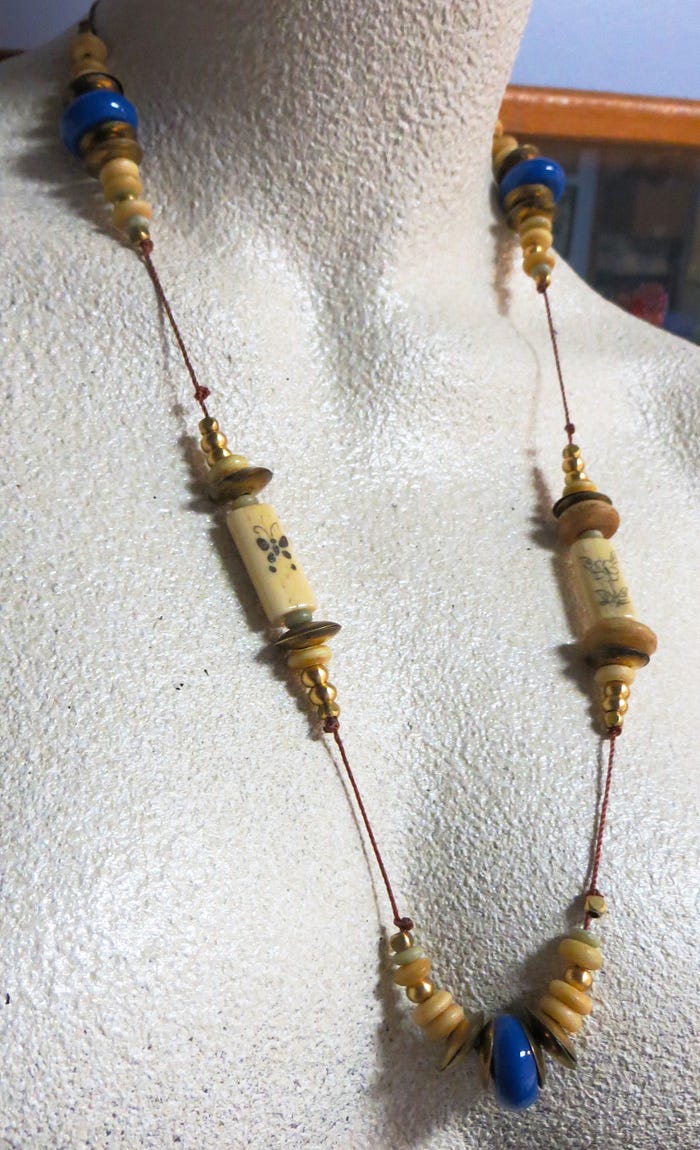
Everyone knows that anyone can put beads and other pieces together on a string and make a necklace. But can anyone make a necklace that draws attention? That evokes some kind of emotional response? That resonates with someone where they say, not merely “I like that”, but, more importantly, say “I want to wear that!” or “I want to buy that!”? Which wears well, drapes well, moves well as the person wearing it moves? Which is durable, supportive and keeps its silhouette and shape? Which doesn’t feel underdone or over done? Which is appropriate for a given context, situation, culture or society?
True, anyone can put beads on a string. But that does not make them artists or designers. From artists and designers, we expect jewelry which is something more. More than parts. More than an assemblage of colors, shapes, lines, points and other design elements. More than simple arrangements of lights and darks, rounds and squares, longs and shorts, negative and positive spaces. We expect to see the artist’s hand. We expect the jewelry to be impactful for the wearer. We expect both wearer and viewer, and seller and buyer, and exhibitor and collector, to share expectations for what makes the jewelry finished and successful.
Jewelry design is an occupation in the process of professionalization. Regrettably, this betwixt and between status means, when the designer seeks answers to questions like What goes together well?, or What would happen if?, or What would things be like if I had made different choices?, the designer still has to rely on contradictory advice and answers. Should s/he follow the Craft Approach? Or rely on Art Tradition? Or take cues from the Design Perspective? Each larger paradigm, so to speak, would take the designer in different directions. This can be confusing. Frustrating. Unsettling.
As a whole, the jewelry design profession has become strong in identifying things which go together well. There are color schemes, and proven ideas about shapes, and balance, and distribution, and proportions. But when we try to factor in the individualistic characteristics associated with the designer and his or her intent, things get muddied. And when we try to anticipate the subjective reactions of all our audiences, as we introduce our creative products into the creative marketplace, things get more muddied still. What should govern our judgments about success and failure, right and wrong? What should guide us? What can we look to for helping us answer the What would happen if or What would things be like if questions?
SO YOU WANT TO BE A JEWELRY DESIGNER Merging Your Voice With Form
So You Want To Be A Jewelry Designer reinterprets how to apply techniques and modify art theories from the Jewelry Designer’s perspective. To go beyond craft, the jewelry designer needs to become literate in this discipline called Jewelry Design. Literacy means understanding how to answer the question: Why do some pieces of jewelry draw your attention, and others do not? How to develop the authentic, creative self, someone who is fluent, flexible and original. How to gain the necessary design skills and be able to apply them, whether the situation is familiar or not.
Join my community of jewelry designers on myPatreon hub From Warren and Land of OddsUse January’s Discount Code For Extra 25% Off @Land of Odds: JANUARY25 www.landofodds.comJanuary 1, 2025Hi everyone, Some Updates and Things Happening. (Please share this newsletter)
In this Issue: 1. Trailblazers in the art jewelry scene 2. About mixing materials 3. Drilling pearls 4. Conquering the creative marketplace 5. David Szauder digital reels 6. Getting a letter of recommendation 7. Latest question from our members – please share your comments 8. Types of places which showcase jewelry for sale Some articles you may have missed Featured
1. What It Takes, Art Jewelry Forum Panel Discussion at NYCJW24 Art jeweler, educator, and AJF board member Emily Cobb moderates a panel that spotlights trailblazers in the art jewelry scene who have shaken things up with inventive collaborations and/or daring ventures. The panelists are Funlola Coker, Melanie Georgacopoulos, Roxanne Simone, and Mallory Weston.
2. I have some strong opinions about Mixing Materials. Here’s a synopsis of some of my ideas.
MATERIALS / MIXED MATERIALS
It is difficult to mix materials. The brain/eye interaction with various materials are often different, and this is unsettling for the brain. Painful. When this happens, the piece may get interpreted as unsatisfactory, not appealing, even ugly.
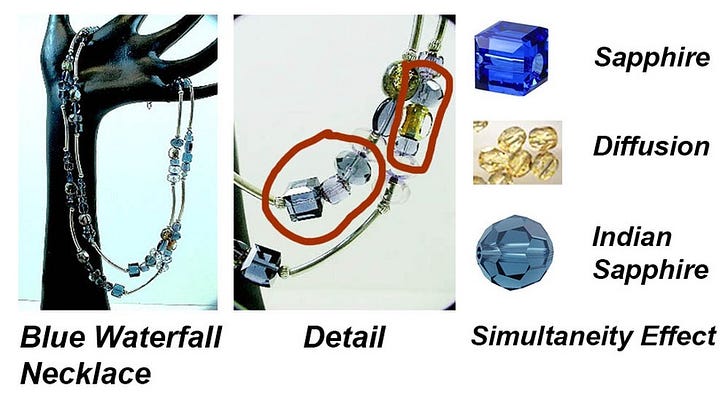
Example: Mixing gemstone and glass With most gemstones, the light travels from eye to surface of the material, and continues below the surface, before bouncing back to the eye. With most glass, the light travels from eye to surface of material, then bounces back. It does not penetrate the surface. When mixing gemstone and glass, if the brain/material interaction requires a shift in physical perception, then this is often painful for the brain. If using gemstones, where the light penetrates below surface before bouncing back, then I’d choose a translucent glass bead where this physical perceptual activity mirrors that of the gemstone.
Let’s continue and take the example of an Opal bead. With opals, the light penetrates below surface, interacts with movement (fire), then bounces back to eye. If adding glass, I’d add silver lined translucent glass beads to mirror this effect. Light penetrates below surface, silver is a mirroring/shimmering effect which creates some of that movement below the surface.
If I had added silver lined transparent glass bead, the light would hit the surface and bounce back, with the silver lining creating a mirroring effect primarily reflecting back the color of the glass, but this would not duplicate the shimmering effect had the glass been translucent.
Now say I added an opaque black bead between each opal bead. The bead would have to be very small in proportion to the opal bead. I call this framing. If small enough, this would kick in the GESTALT cognitive behavior of the brain. It sees a ‘gap’, not a black glass bead, and fills in the space as if something similar to the opal bead were there. The Gestalt overrides the perceptual effects. However, if the black glass bead takes up too much volume relative to the opal bead, then the brain has to deal with the perceptual anomaly of light bouncing back and forth in different ways, which is painful for the brain. The Gestalt effect would not kick in.
Aesthetic Materials: Sensations and Symbolism Materials have sensory and symbolic powers which extend beyond the materials themselves. Obviously, this can be very subjective. It might have psychological roots, sociological roots and/or cultural roots.
Things may feel warm, cold, soft, rough, oily, weighty. Things may represent romance, power, membership, religiosity, status. Vanderbilt University’s colors are gold and black, so using those colors in the Nashville, TN area might evoke a different emotional response than when used elsewhere. And here’s that very-difficult-to-design-with University of Tennessee orange, again, in the Nashville area will evoke a very different response than elsewhere.
Materials like amber and bone and crystal are things people like to touch, not just look at. The sensation extends beyond the visual grammar.
The surface of a material has many characteristics which the jewelry designer leverages within the finished piece. Light might reflect off this surface, such as with opaque glass or shiny metal. Light might be brought into and below the surface before reflected back, such as with many gemstones and opalescent glass. Light might refract through the piece at different angles, even creating a prism effect.
The surface might be a solid color. It might be a mix of colors. It might be matte. It may have inclusions or markings. It may have fired on coloration effects. There may be tonal differences. There may be pattern or textural differences. It may have movement. It may have depth.
Best combine the materialistic qualities with the non-materialistic qualities of the project Every material has two over-arching qualities. The obvious is its physical properties and physicality. Let’s call this materialistic. It is something that is measurable. In the realm of the mystic, it is ordinary or profane.
But the material also has qualities that extend beyond this. They can be sensory. They can be symbolic. They can be psychological. They can be contextual. Let’s call this non-materialistic. It is something that is non-measurable. In the realm of the mystic, it is extraordinary and sacred.
Both properties must be considered when designing a piece of jewelry. They have equal importance, when selecting, placing and arranging materials and design elements within a piece.
Example: Take a Chakra bracelet strung on cable wire with a clasp. The beads used are gemstones. Each gemstone has spiritual and healing properties. Each gemstone has a coloration, and each different coloration, too, is associated with certain spiritual and healing properties. Moreover, every individual has their own unique needs for which set of gemstones and which assortment of colorations are best and most appropriate. This can get even more complicated in that each situation and context may have its own requirements. The person may end up needing several Chakra bracelets for different occasions. The designer could have used glass or acrylic beads, instead, which have less non-materialistic value, and might be less durable over time. The designer could have strung the beads on elastic string without using a clasp, again, less non-materialistic value and durability.
When mixing materials, it is best to let one material predominate.
3. A NOTE ABOUT DRILLING PEARL HOLES TO MAKE THEM LARGERPearls typically have very small holes. Because of how they are often drilled, the hole on one side is slightly larger than the hole on the other. The holes are small because it is too easy to chip and crack the nacre around the holes, when drilling them.You can, however, make the holes a little larger. You could first try to use a hand-held or battery-operated bead reamer to make the holes in your pearls larger. You want your drill bits to be diamond coated. Sometimes this might work, but more often, you need something more powerful.More likely you will want to use a dremel, with carbide steel drill bits.Usually, your drill bits need to be between .5mm (1/50”) and .7mm (3/50”), with .5mm the most common.With some natural pearls, however, you may need drill bits to be between .3mm (1/100”) and .45mm (1.6/100”).For a large hole, you would want drill bits to be between 1.0mm and 2.0mm.I keep a set of carbide drill bills between .4mm and 1.2mm.You want to work slowly but steadily.Wear safety goggles. Pearl dust can adversely affect your eyesight.Until the 1970s, pearl holes were typically drilled by hand. Pearl companies from Japan would often have boys in India drill holes in pearls. They would hire and train boys who were 9 years old. By the time the boys were 14, many had lost their eyesight. Thankfully, with the advent of mechanized ways to drill pearls, this practice no longer continues today.
4. I have advised so many students and clients about taking their jewelry making to the creative marketplace and becoming a successful entrepreneur. In this book, CONQUERING THE CREATIVE MARKETPLACE, I summarized all my advice. 548pp, many images and diagrams Kindle or Ebook or Print
HOW DREAMS ARE MADE BETWEEN THE FICKLENESS OF BUSINESS AND THE PURSUIT OF JEWELRY DESIGN
This guidebook is a must-have for anyone serious about making money selling jewelry. I focus on straightforward, workable strategies for integrating business practices with the creative design process. These strategies make balancing your creative self with your productive self easier and more fluid.
Based both on the creation and development of my own jewelry design business, as well as teaching countless students over the past 35+ years about business and craft, I address what should be some of your key concerns and uncertainties. I help you plan your road map. Whether you are a hobbyist or a self-supporting business, success as a jewelry designer involves many things to think about, know and do. I share with you the kinds of things it takes to start your own jewelry business, run it, anticipate risks and rewards, and lead it to a level of success you feel is right for you, including
• Getting Started: Naming business, identifying resources, protecting intellectual property • Financial Management: basic accounting, break even analysis, understanding risk-reward-return on investment, inventory management • Product Development: identifying target market, specifying product attributes, developing jewelry line, production, distribution, pricing, launching • Marketing, Promoting, Branding: competitor analysis, developing message, establishing emotional connections to your products, social media marketing • Selling: linking product to buyer among many venues, such as store, department store, online, trunk show, home show, trade show, sales reps and showrooms, catalogs, TV shopping, galleries, advertising, cold calling, making the pitch • Resiliency: building business, professional and psychological resiliency • Professional Responsibilities: preparing artist statement, portfolio, look book, resume, biographical sketch, profile, FAQ, self-care
TABLE OF CONTENTS
ACKNOWLEDGEMENTS 1. AN INTRODUCTION: CONQUERING THE CREATIVE MARKETPLACE
2. THREADING THE BUSINESS NEEDLE 3. Where Can I Sell My Jewelry? 4. Can I Make Money? 5. Why Designers Fail in Business
6. DISCIPLINARY LITERACY IN THE CREATIVE MARKETPLACE
7. GETTING STARTED IN BUSINESS 8. Write A Business Audit Memorandum To Self 9. Your Getting Started Story 10. Naming Your Business 11. Protecting Your Business Name and Other Intellectual Property 12. Tag Line, Descriptions, Naming Jewelry, Story, Elevator Pitch 13. What Do I Need To Become Official? 14. What Form of Business? 15. Retail, Wholesale, Consignment 16. Your Business Model 17. Custom Work
18. FINANCIAL MANAGEMENT AND RETURN ON INVESTMENT 19. Understanding Risk and Reward 20. Tracking Costs and Revenues With Bookkeeping and General Accounting 21. Other Record Keeping 22. Fixed and Variable Costs, Budgeting, Break Even Analysis 23. Managing Inventory 24. Efficiency, Effectiveness, Component Design Systems 25. Employees and Independent Contractors 26. Banking, Insurance, Credit Card Processing 27. Getting Terms 28. Getting Paid 29. Developing a Growth Mindset 30. Crowd Funding
31. PRODUCT DEVELOPMENT 32. Product Goals 33. Product Target Market / Market Niche 34. Product Design Management and Design Coherency 35. Build A Distinctive Line Of Jewelry 36. Product Production 37. Product Distribution 38. Product Marketing, Promotion and Positioning 39. Product Pricing 40. Product Launch 41. Product Feedback and Evaluation
42. MARKETING / PROMOTION / POSITIONING 43. Finding Your Target Market 44. Competitor Analysis 45. Fashion and Consumption 46. Influence and Persuasion 47. Marketing Strategies 48. Social Media Marketing 49. Collaborating With Influencers 50. Increasing Credibility and Legitimacy 51. Building Your BRAND 52. Self Promotion and Raising Your Visibility 53. Writing A Press Release and Preparing For Reporters
54. SELLING 55. How Will You Link Up Your Product To Your Buyer? 56. Knowing Your Competitive Advantages 57. Training and Educating The Customer 58. Selling At Art And Craft Shows 59. Selling Online 60. Selling In Local Shops, Boutiques and Department Stores 61. Consignment 62. Selling In Galleries 63. Selling At Home Shows 64. Selling At Trunk Shows 65. Selling At Jewelry Making Parties 66. Selling Through Mail Order Catalogs 67. Selling On TV Shopping Sites and Streamed Web 68. Selling Through A Mobile Truck Business 69. Advertising 70. Cold Calling And Making The Pitch 71. Working with Sales Reps, Agencies, and Show Rooms 72. Selling At Trade Shows 73. Teaching Classes and Selling Patterns and Kits 74. Other Selling Venues 75. About Contracts and Agreements 76. Overcoming Setbacks and Fears of Rejection 77. Relying On Other People To Sell Your Jewelry 78. Saying Goodbye To Your Jewelry 79. Merchandising and Display 80. DesignerConnect – Interview With Tony Perrin
81. RESLILIENCY
82. PROFESSIONAL RESPONSIBILITIES 83. Artist Statement 84. Portfolio and Look Book 85. Biographical Sketch and Profile 86. Resume or Curriculum Vitae 87. Certificate of Authenticity 88. FAQ: Frequently Asked Questions 89. Self Care
About Warren Feld, Jewelry Designer Thank You and Request For Reviews Other Articles and Tutorials
5. Although this has nothing to do with jewelry per se, this guy’s (David Szauder) digital reels on instagram are so phenomenal, I wanted to share them with you. https://www.instagram.com/davidszauder/
6. There will be occasions where you might need a letter of recommendation. There will be occasions where you might need a letter of recommendation. You might be applying for a grant or some other source of funding. You might be trying to get your pieces into a gallery or high-end boutique. You might be submitting a piece to a juried competition. You might be searching for a partnership or collaboration or guidance. You might request this letter from a mentor, a colleague, someone familiar with your work, or a gallery or boutique owner. You want that person, in the context of that letter, to refer to your competitive advantage. That is how you differentiate yourself from other jewelry designers. It suggests that taking a risk on showing/selling your works is worthwhile. Some examples of describing your competitive advantages:innovative, originality, differentiationsells well, clear and predictable client baseexperimenting with new materials, techniques or technologiesresponsible, always timely, communicates well with client during processopen and willing to learn, adaptable, flexibleContinue reading this article on our Jewelry Designers’ Hub.
8. I am often asked where you can showcase your jewelry for sale. There’s the obvious: Boutiques.
Then the less obvious: Beauty parlor (usually the law prevents jewelry sales, except in a separate lobby waiting area) Nail salon (usually the law prevents jewelry sales, except in a separate lobby waiting area) Spa, massage shop, tattoo shop Hotel lobby gift shop Museum, art center gift shop Farmer’s markets Art and craft shows Holiday markets Antique stores Libraries Flea markets Art galleries
Where it becomes worth your while, you want to showcase your jewelry in places your typical “client” would go to, but not where it is stressful, like a doctor’s office.
At the least, you want to maximize your exposure.
Ask the business owner to host a reception where their customers could meet you. This is a win-win. The business gets to build better relationships with their clients, and you get exposure.
Assess how secure your pieces will be, and whether you can live with whatever security there might be.Be sure to post statements about your inspiration and creative process with each piece of art. Have business cards there.
Be sure there are obvious ways a person can find you outside of this business. Be sure it is obvious how someone can purchase any of your pieces.Set a time limit for showcasing at this business. 1-3 months is a good framework. If there is a lot of interest in your work, you can repeat with another exhibit.
Check in on the display regularly to make sure your haven’t run out of promotional materials, like your business cards, and that things are still displayed well.Determine what percent of sales will go to the business and what percent to you. Best arrangements: 60-40, 50-50, 40-60. When the arrangement is outside this range, this is a yellow flag indicating that your exposure (and sales) probably is not worth the risk of your time, resources and energy.
WARREN FELD JEWELRY (www.warrenfeldjewelry.com) Custom Design, Workshops, Video Tutorials, Webinars, Coaching, Kits, Group Activities, Repairs ~~~~~~~~~~~~~~~~~~~~~~~ Join our community of jewelry designers on myPatreon hub Be part of a community of jewelry designers who recognize that we have a different way of thinking and doing than other types of crafters or artists. One free downloadable Mini-Lesson of your choice for all new members! ~~~~~~~~~~~~~~~~~~~~~~~
Add your email address to my Warren Feld Jewelry emailing listhere.
Thanks for being here. I look forward to sharing more resources, tips, sources of inspiration and insights with you.Join A Community Of Jewelry Designers On MyPatreon Hub
In the 1990s, my partner and I decided we wanted to set up a training program, but something different than what already existed. It was obvious to us that what already existed wasn’t working.
It came down to this: our bead store customers and our jewelry making students were not challenging us. They were not pushing us to seek out new materials. They were not demanding that we more critically evaluate the quality, usefulness, and long term staying power of various stringing materials and jewelry findings options. They were not wondering why some things broke or didn’t come together well. They were not encouraging us to explore the craft, improve upon it, search for more variations on existing methods and more ideas about new methods, and see where we could take it.
The typical customer, at that time, would learn one technique, apply it to one pattern, and do this pattern over and over again, perhaps only varying the colors. They would make at least 10 or 12 of the exact same pieces, again, typically only varying in color choices, and carry them around in zip lock plastic bags secured in their purses. They rarely deviated from using the same materials, the same clasps, the same jewelry findings. They never asked questions about what else they could do. They never varied their techniques. They never challenged themselves. They never questioned why things broke, or didn’t come together well, or why people liked or didn’t like the pieces they were making.
Students wanted us to tell them, step-by-step, how to do it. They didn’t want to think about it. They just wanted to make something quickly, that looked good on them, matched what they were wearing, and could be worn home. Uninterested in whether there were better stringing materials for the project. Or a more clever way to construct the clasp assembly. Or better choices of colors, patterns, textures or materials. Or things they could do to make the piece move better, drape better and be more comfortable to wear. Or even take the time to consider the appropriateness of the technique or the appropriateness of the piece itself, given where and when and how the piece was intended to be worn.
We began to see that this was not a customer or student problem. It was not any personal characteristics. Or motivations. Or experiences. Or skill level. This was a problem about what they learned and how they were taught and their level of expectations about what to assume and what to anticipate. They weren’t learning or getting taught that disciplinary way of asking questions, solving problems and day-to-day thinking unique to jewelry designers. They were not learning how to become literate in design. Their expectations about what was good, acceptable, finished, successful — you get the idea — were low. Bead and jewelry magazines, video tutorials, craft and bead stores, jewelry design programs set these low bars and reinforced them. As a result, they convinced their readers and students and practitioners to understand jewelry merely as an object to be worn, not inhabited. And not part of any kind of public interaction or dialog.
Jewelry design, at the time we began in business, was considered more a hobby or an avocation than an occupation or a profession. There was the assumption that no special knowledge was required. You were either creative or you were not. And all it took to make a piece of jewelry was to reduce a project to a series of steps where jewelry making was basically paint-by-numbers.
Art and Design concepts were dumbed down for jewelry makers, rather than elaborated and reinforced. It was assumed that everyone universally used the same criteria for judging a piece as finished and successful. As a consequence, there was a lot of standardization in jewelry designs, materials and construction. Too much sameness. Not enough variation and originality. Too much focus on fashion and product consumption. Too much diminishing of individuality and the reflection of the artist’s hand in design. And with all this standardization, an increasing risk that the jewelry artist was no longer a necessary and critical part of jewelry making and its design.
Around this time, the art world seemed to want to make a big push to encompass jewelry, as well. Jewelry was defined as a subset of painting or sculpture. And this lent an air of professionalization to the field. Jewelry making here became a beauty contest. But jewelry design was divorced from the materials it was made from, the constructive choices necessary for it to function, and the person who was to wear it.
Before designing jewelry, I had been a painter. For several years when I began designing jewelry, I approached jewelry projects as if I were painting them. This was very frustrating. I couldn’t get the color effects I wanted to achieve. Or the sense of line and shape and dimension. To compensate for my repeated feelings of failure, I actually pulled out my acrylic paints and canvas and painted my creations as I had visualized them in my mind. I could paint jewelry well. But, stuck as I was in this painter-as-designer-rut, I could not satisfactorily translate my vision into a satisfying piece of jewelry.
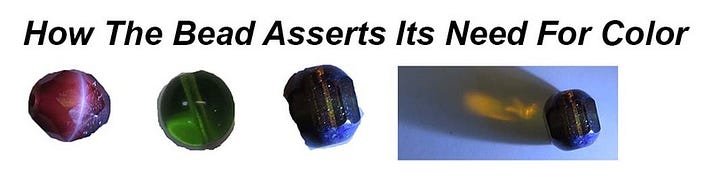
It finally began to dawn on me the things which needed to be learned and needed to be taught. I needed to approach jewelry from the jewelry’s standpoint. I needed to understand the components and beads used in jewelry on their own terms — how they asserted themselves within each of my projects. Beads and related components were not paints. I needed to understand what happened to all these components over time. I needed to understand how the placement of each component, as well as clusters of components, affected people within the situations they found themselves. I needed to understand much more about light and shadow and reflection and refraction. I needed more insight into how things moved, draped and flowed, all the while keeping their shape. Starting with a merely mechanical view of making jewelry wasn’t cutting it. Nor was starting with an artistic view of the aesthetics of jewelry. We needed to incorporate aspects of design, as well.
My partner and I began organizing our evolving ideas and values about the designing of jewelry into something we called The Design Perspective. These ideas and values form a sort of Design Manifesto. They are principles at the core of any jewelry design discipline. These principles take the designer beyond craft. They integrate art with function and context. These principles were, and continue to be, as follows, and it is my hope, as you read through the book, that these become yours, as well.
SO YOU WANT TO BE A JEWELRY DESIGNER Merging Your Voice With Form
So You Want To Be A Jewelry Designer reinterprets how to apply techniques and modify art theories from the Jewelry Designer’s perspective. To go beyond craft, the jewelry designer needs to become literate in this discipline called Jewelry Design. Literacy means understanding how to answer the question: Why do some pieces of jewelry draw your attention, and others do not? How to develop the authentic, creative self, someone who is fluent, flexible and original. How to gain the necessary design skills and be able to apply them, whether the situation is familiar or not.
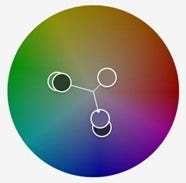
Abstract Color is the single most important Design Element. Most artists and jewelry designers learn about how to use and control for color in art schools. They learn about how colors are perceived. How to combine colors and maximize the appealing effects of such combinations. How the perceptions of color vary, given the context, and how to anticipate these variations. These art theories work well for those who paint. But not so well for those who design jewelry.
How Artists and Jewelry Designers Respond Differently To The Use Of Color
The artist is concerned with achieving harmony, balance and evoking an emotional response. Color theories point the way. The artist wants to be guided by these and conform to them. To the artist, color theory is more about objectives and universals. They tap into the brain’s propensity to balance things out. People are prewired with an anxiety response. Our brains have some presets so that we avoid snakes and spiders. When things get too unbalanced and too unharmonious, the brain gets edgy. We begin to interpret things as not as interesting, perhaps somewhat unsatisfying, even ugly.
Color schemes show what colors in combination yield a balance in energy and wave length signatures. For example, and with a lot of oversimplification, color theory points out that in any project, the proportion of red should equal the proportion of green. If red has an energy signature of +1, then the energy signature of green would be -1. Added together, they equal zero. The brain wants things to equal zero. Balanced. Harmonious. And artists who follow the theories about color are secure in this. They recognize that all people want the colors in front of them to balance out to zero. Color theory leads the way. Artists want to be guided and conform to it.
For the jewelry designer, however, color theories are a starting point, but quickly break down. This is because jewelry is only art as it is worn. That means the jewelry will move with the person, shift from one type of light to another as the person moves from room to room or from inside to outside. The materials used in jewelry do not come in every color of the rainbow. You cannot crush them up and blend them. Even with a simple round bead, the color will vary across the bead, becoming lighter or darker, sometimes even changing the color as presented, as you move around the curved surface, perceive the hole piercing through the bead, at the hole’s end with added shadows. Many beads will even cast a color shadow extending well beyond the boundary of the bead, but changing scope and direction as the wearer pivots or the lighting changes. The silhouette of any piece of jewelry will shift in shape as the jewelry shifts in position in responses to the forces of movement, stresses and strains. Unlike a painting, jewelry is never static. The perceived colors keep changing. If from any one position, the jewelry appears less than appealing, this is awkward for the wearer. People viewing jewelry attribute the qualities of the jewelry to the qualities of the person wearing it. This situation is unacceptable to the professional jewelry designer. The wearer should always look good. So color, as a design element with all its attributes of expression, must be managed differently.
The artist manages the perception of color. The jewelry designer manages its sensation. Perceptions may be managed as objective, universal responses to color. Sensations result from designers manipulating, exploiting, challenging and violating theories of color, because sensations are more subjective, less predictable and are context specific. The artist seeks an emotional response. The jewelry design seeks something a little bit more, a slight edginess beyond harmony, what I call resonance. An emotional response to jewelry would be I like it. A resonant response to jewelry would be I want to wear it, or I want to buy it.
PAINTS vs. BEADS
How one becomes fluent in art is by necessity different than how one becomes fluent in jewelry design. Jewelry designers must learn to think differently than artists when working with colors. They must learn to be able to anticipate and control the sensation of colors by wearer AND viewer, as the jewelry is worn.
With artists, color is applied. With jewelry designers, color is arranged. Because color is not applied per se, the bead — its very being — creates a series of dilemmas for the colorist.
(1) Availability of Colors Beads do not come in every color. The perceived color on any bead has a lot of variation due to the shape, curvature and faceting of beads, as well as the effects of the hole and its drilled channel. Some beads will cast a shadow past their boundary. Some beads have striations or other similar effects where different colors are strewn within and throughout the bead. The perception of color may differ as the bead is viewed under different light sources, or indoor or outdoor, or different casts of shadows. Different types of bead finishes reflect, absorb or refract light differently from each other. The perceived color of the bead might vary based on the colors of the clothing, skin tone, hair style and color, and makeup of the person wearing the jewelry.
With paint, you can construct any color and can create many coloration effects. But, once completed, the painting is static as is the lighting. There will be a more consistent perception of colors and colorations.
(2) Position Painting is observed in fixed position with fixed lighting with a viewer standing in front of it. Jewelry is observed as it moves, with varying light and shadow conditions by someone who wears it and others who view it. Jewelry will also shift positions as it is worn.
(3) Appeal and Functionality Jewelry has to succeed both visually and functionally. The things contributing to function, from canvas to clasp assembly, offer their own complications to the sensation of color.
Paintings are judged by appeal alone.
(4) 2 or more colors in contrast When you have 2 or more colors existing within the same composition, they may affect the perception of color of any one of them. They may blend, exude temperature, feel closer or more distant. The proportion of each color present will affect how they are perceived. The juxtaposition of 2 or more colors has a critical effect on the sensation of colors, moreso, complicated because jewelry moves.
(5) Transitioning from one bead to the next With jewelry, more attention must be given to the transitioning from one bead to the next, one color to the next, because this often is not fluid or natural. There will be gaps of light between beads, or negative spaces not taken up by the volume of each component. With jewelry, as it moves, it is more often the case that perceptions of color will not conform to scientific universals.
(6) Goals The goal for the artist is to evoke emotions based on harmony and balance with a little variety. Evidence of finish and success lie in establishing harmony and balance.
The goal for the jewelry designer is resonance with a little more of an edge to it that takes the viewer slightly beyond harmony and balance. Evidence of finish and success relates to how the designer and the wearer establish some shared understanding that the values and desires of each have been met when the jewelry is worn.
DESIGNING JEWELRY INVOLVES MAKING A WHOLE HOST OF CHOICES
As designers, we…
Select materials and techniques, leveraging their strengths and minimizing their weaknesses
Anticipate how the parts we use to make a piece of jewelry assert their needs for color
Anticipate shared universal understandings among self, viewer, wearer, exhibitor, collector and seller about color and its use
Think through how colors relate to our inspirations and how they might impact our aspirations
Pick colors
Place and arrange colors
Distribute the proportions of colors
Play with and experiment with color values and color intensities
Leverage the synergistic effects and what happens when two (or more) colors are placed next to one another
Create focus, rhythm, balance, dimension and movement with color
Create satisfying blending and transitioning strategies using color
Anticipate how color and the play of color within our piece might be affected by contextual or situational variables
Reflect on how our choices about color affect how the piece of jewelry is judged as finished and successful by our various client audiences
Use color to promote the coherency of our pieces, and the speed and extent to which attention by others continues to spread
PICKING COLORS FOR JEWELRY DESIGNS
The jewelry designer has to pick colors pleasing to the designer, as well as anticipate what colors will be pleasing to the wearer or buyer. This makes picking colors very personal and subjective. We all know that designs are imperfect. Beads are imperfect. Colors are imperfect. So part of picking colors has to be very strategic and well-managed.
Colors are used by the designer to clarify and intensify the effects she or he wants to achieve. They are used to:
Delineate segments, forms, themes, areas
Express naturalism or abstraction
Enhance the sense of structure or physicality (forward/recede; emphasize mass or lines or surfaces or points)
Stimulate the senses (warmth or cold; memories; enlarging or decreasing)
Play with light and shadow (surprise, distort, challenge, contradict, provoke)
Alter the natural relationship between the jewelry and the situation it is worn in (context, clothing, body and face types/skin tones, setting)
The resulting relationships between space and mass, negative and positive areas
Focus attention, particularly providing information about direction, boundaries, permissions
Color Tools At The Designer’s Discretion
Both the artist as well as the jewelry designer have three primary color tools at their discretion. For the artist, these tools are used to control perceptions of color. For the jewelry designer, however, these tools are used to control the sensations and experiencing of color.
TOOL 1: SENSATION OF COLOR BALANCES (Light Values)
Individually, each color is perceived in the same way. Each color is associated with a particular energy and wavelength signature. Both artist and jewelry designer can assume that each color standing fixed and alone is perceived in the same way universally. For the jewelry designer, however, since jewelry is worn and moves, the designer cannot assume that in any one minute, each color will be perceived consistently in the same way.
TOOL 2: SENSATION OF COLOR CONTRASTS (Color Schemes/Color Wheel, Color Proportions)
When 2 or more colors co-exist in the same space, they affect each other. Color schemes and information about color proportions have been scientifically derived. These determine, to oversimplify things, a zero-zero point where the positive and negative energy signatures of each color balance out to zero. With a composition of blue and orange, this contrast color scheme indicates that their energy signatures would balance out to zero. When dealing with proportions, color theory determines that there should be one orange for every 3 blues, again to achieve harmony within this zero balance point. In this way, certain combinations of colors are seen as more appealing than others.
For the artist, she or he can achieve these universal understandings about color contrasts within any composition. For the jewelry designer, not so much. Color schemes and color proportions are a good place for the designer to start any project. But because movement and context will continually distort perceptions of these colors as the jewelry is worn, more color management will be called for, if the piece is to feel finished and successful. The jewelry designer literally has to work hard to trick the brain so that it interprets the inevitably resulting imperfections in color use as PERFECTions.
TOOL 3: SENSATION OF COLOR CONTRASTS IN CONTEXT (simultaneity effects, shared understandings)
When 2 or more colors are present, and you take into effect more contextual information, you often find that colors experienced simultaneously can affect how each color is perceived apart from what you would predict from things like color light values, color schemes or color proportions.
A yellow square inside a white box appears to feel cooler than that same yellow square in a black box. Similarly with the red square. Colors appearing simultaneously can be made to feel to be receding/approaching, warm/gold, blending and bridging, overcoming gaps and negative spaces or paralyzed by them, establishing dimensionality and movement, redirecting attention, blurring or bounding, smaller or larger.
Any color with a gray or black undertone will take on the characteristics of the color beside it. Besides the obvious black diamond color, other colors which have gray or black undertones include prairie green, Montana blue, French rose, purple violet, Colorado topaz.
Other types of beads which allow you to create simultaneity effects: silver, gold, anything with a mirror or foil effect, color-lined beads.
Thus, Simultaneity Effects are a boon to the jewelry designer. They are great tools for TRICKING THE BRAIN and …
Making the variation in color as expressed within the bead or other object as more homogeneous
Filling in the gaps of light between beads
Assisting in the guiding attention along or the sense of movement of colors along a line or plane
Assisting in establishing dimensionality in a piece that otherwise would appear flat
Harmonizing, Blending or Bridging two or more colors which, as a set, don’t quite match up on the color wheel
Establishing frames, boundaries or silhouettes
Re-directing the eye to another place, or creating sense of movement
The Blue Waterfall Necklace
In this Blue Waterfall Necklace, which is one of my designs, I capitalized on the use of simultaneity effects. As you can see in the image above, there are three colors which I lined up together: Sapphire (cube), Crystal Diffusion (cathedral) and Indian Sapphire (which is a rounder shape). Normally, you would not mix sapphire and Indian sapphire in the same piece. They don’t really go together. Using a color in between — crystal diffusion in this case — which acts in a similar way to a gray color bead, I was able to blend the characteristics of the Indian sapphire bead on one side and the sapphire bead on the other. When you look at the finished piece, the colors lined up in each segment appear harmonious.
Some additional examples of strategic color use that I have done:
A. Putting a transparent faceted olivine bead next to a transparent faceted capri blue bead. In bright or direct light, depending on in what direction from the light the person wearing the piece is standing, will cast a color shadow — either an olivine shadow over the capri bead, or a capri blue shadow over the olivine bead. That means, when the person orients their stance in various positions, you will often get a muddy brown look, rather than distinct olivine and capri blue colors.
This arrangement would also be the beginning of an analogous color scheme. In this scheme no color should predominate. If one does, it starts to look less satisfying. If we rely on a different color theory about color proportions, then we want to have 1.5 blue green for every 1 olivine. In this case, we could not meet the criteria for both the color scheme rule and the color proportion rule.
In any event, I would probably first place a sterling silver or gold bead between the olivine and capri. These metal beads will create that simultaneous effect. When a person is wearing the piece, sometimes, depending on the lighting and the person’s stance, the capri and its shadow will take up a greater volume, and vice versa with the olivine. There won’t be that occasional muddy look.
B. In my piece — Little Tapestries: Ghindia — I embedded red crystal beads within a seam. They are not visible if you are standing in front of the person wearing the piece. I wanted the person wearing the piece to subtly catch the eye (bright red flashes of color reflecting the light) of anyone to her side or just behind her.
C. It is difficult to mix materials within the same piece. That is partly because the brain/eye interaction with each type of material is often different, and this is unsettling for the brain. Painful. When the brain is unsettled, the piece gets interpreted as unsatisfactory, unappealing, even ugly. Successfully mixing materials gets very caught up in an understanding of light and shadow. And an understanding of light and shadow is very influenced by and influential in the use of color.
The surface of a material has many characteristics which the jewelry designer leverages within the finished piece. Light might reflect off this surface, such as with opaque glass or shiny metal. Light might be brought into and below the surface before getting reflected back, such as with many gemstones and opalescent glass. Light might refract through the piece at different angles, even creating a prism effect. Light might be absorbed below the surface, as with pearls.
The surface might be a solid color. It might be a mix of colors. It might be matte. It may be flat, have crevices, have matrixing, or have inclusions. It may have fire or flashing coloration effects. There may be tonal differences. There may be pattern or textural differences. It may convey movement. It may convey depth.
One example that comes up a lot: it is difficult to mix gemstone with glass. For most gemstones, the light travels from the eye to the surface of the material, then continues below the surface, before bouncing back. For most glass, the light travels from the eye to the surface of the material, then bounces back; it does not penetrate the surface. When mixing gemstones and glass, if the brain’s interaction with the materials requires a shift in the activity of physical perception, then this is often uneasy and painful for the brain.
If I were to mix glass and gemstone, I would choose glass which mimics the brain/eye/light effect. I would choose a translucent glass bead where this effect is mirrored to that with the gemstone.
Let’s say I created a necklace of opal beads. With opals, the light penetrates below the surface, interacts with movement (fire effect), then bounces back to the eye. I can mirror this effect with silver lined translucent glass beads. The silver lining within the transparent glass mimics the sense of ‘fire’. If I had added a silver lined transparent bead instead, this would not work as well. Here, with the transparent bead, the light hits the surface of the glass and the silver lining intensifies the experience of the particular color of the glass.
Let’s stick with this opal necklace. Say I added an opaque black seed bead in between each opal bead. If small enough, this configuration kicks in the GESTALT cognitive behavior. The brain “sees” a gap between each opal bead, and not a glass bead. The brain fills in the gap with color approximating that of the opal beads. If this seed bead gets too large relative to the opal bead, however, a different cognitive process kicks in. Here the brain has to deal with the perceptual anomaly of light bouncing back and forth in different ways — eye to surface and eye to below surface. Again, painful for the brain.
D. Substituting one material for another will result in a very different experience of the object for the wearer. Take, for example, a Chakra bracelet strung on cable wire with a clasp. Say the beads used are gemstones. Each gemstone has spiritual and healing properties. Each gemstone has a coloration, and each different coloration, too, is associated with certain spiritual and healing properties. Moreover, every individual has their own unique needs for which set of gemstones and which assortment of colorations are best and most appropriate. This can get even more complicated in that each situation and context may have its own requirements.
The designer could have used glass or acrylic beads instead. These would be less spiritual, less healing, less valuable and less durable over time. Only the property of coloration would be the critical variable leading to spiritual and healing properties. The sensations the wearer would have with the gemstone bracelet would differ significantly from those with the glass or acrylic bracelet.
YOU CANNOT SEPARATE THE COLOR FROM THE HOW AND WHY IT WAS CHOSEN
With any art object, the designer and the artist are at the core of it all. Its success depends on the types of choices made. Though both disciplines overlap some, artists and designers have to resort to a different thinking process when making choices about color.
When someone interacts with any art object, the brain tries everything it can to make sense of and harmonize the situation. Should it like it or not? Should it touch it, wear it, buy it, or not? Should it influence you to share your observations and emotions, or not? The brain tries to zero-sum the light values by taking into effect each color’s energy signature. It has to weigh information about how much of one color there is in relation to one or more other colors. It has to evaluate information about emotional and other meaningful content the juxtaposition and placement of any set of colors within any context or situation represents. It has to fill in the blanks — gaps and negative spaces — where it might expect to see some color but does not. It has to determine whether the person should expend the time and energy to attend to the whole object, or stop at just a small part of it. It has to attend to color, whether static or moving.
The artist seeks to anticipate how people perceive color, and based on color theories, can recognize how certain universals come into play. They emphasize these universals. This results in harmony and balance.
The jewelry designer has a different task, more complex, riskier. The designer, in anticipation of how others perceive, recognize and interpret colors in their lives, has to establish within any design a strategy for how color is used to enhance expression within any piece. The jewelry designer must anticipate the effects of movement on color. The jewelry designer is the manager. The designer is the controller. The designer is the influencer. The designer brings to the situation personal values and desires. The designer establishes and conveys intent and meaning resulting from the choices, including and especially about color, she or he has made. Fluent designers can decode color and its use intuitively and quickly, and apply color in more expressive ways to convey inspiration, show the designer’s strategy and intent, and trigger an especially resonant, energetic response by wearers and viewers alike.
The viewer and wearer then must determine whether the designer’s use of color meets and assists them in expressing their own values, needs and desires. They might wear or buy it. They might show it to their friends. They might merely complement the designer. They might walk away.
Jewelry making has aspects of craft to it, but it is so much more. It is art. It is architecture. It is communicative and interactive. It moves with the person wearing it. It is reflective of the jewelry designer’s hand. And it defines and reaffirms the narrative stories of everyone who wears it, views it, buys it, exhibits it, collects it, talks about it.
To go beyond craft, the jewelry designer needs to become literate in this discipline called Jewelry Design. Literacy means understanding how to answer the question: Why do some pieces of jewelry draw your attention, and others do not? How to develop the authentic, creative self, someone who is fluent, flexible and original. How to gain the necessary design skills and be able to apply them, whether the situation is familiar or not.
Craft and art techniques and theories are of little help. These do not show how to make trade-offs between beauty and functionality. Nor how to introduce pieces publicly. These provide weak rules for determining when a piece of jewelry is finished and successful. Often, the desires and motivations of wearers, viewers and buyers are minimized or ignored.
So You Want To Be A Jewelry Designer reinterprets craft techniques, modifies art theories, and introduces architectural, socio-cultural and perceptual-cognitive considerations so that jewelry makers are better prepared to approach design.
By the end of So You Want To Be A Jewelry Designer, established jewelry artisan Warren Feld teaches you how to
· Select materials, techniques and technologies
· Choose, compose, construct and manipulate jewelry design elements
· Anticipate expectations, perceptions, values and desires of client audiences
· Develop those soft skills of creativity, inspiration, aspiration and passion
Warren Feld examines with you all those things which lead to your success as a jewelry designer, and your associated design practice or business.
But when you think jewelry and speak jewelry and work jewelry, this is what you become.
Yes, jewelry making has aspects of craft to it. But it is so much more. It is art. It is architecture. It is communicative and interactive. It is reflective of the jewelry designer’s hand. And it defines or reaffirms the self- and social-identities of everyone who wears it, views it, buys it, exhibits it, collects it, talks about it.
To go beyond craft as a jewelry designer, you need to become literate in this discipline called jewelry design. As a person literate in jewelry design, you become your authentic, creative self, someone who is fluent, flexible and original. You gain the skills necessary to design jewelry whether the situation is familiar or not. You are a jewelry designer.
The literate jewelry designer grasps the differences between jewelry as object and jewelry as intent. That is, you recognize how a piece of jewelry needs to be orchestrated from many angles. How jewelry making involves more than following a set of steps. How jewelry, without design, is just sculpture. How jewelry is a very communicative, public and interactive work of art and design. How jewelry focuses attention. How true design enhances the dignity of the person wearing it. And how the success of a jewelry designer, and associated practice or business, comes down to what’s happening at the boundary between the jewelry and the body – that is, jewelry is art only as it is worn.
Read more articles about becoming Fluent in Jewelry Design on our Jewelry Designers’ Hub.
SO YOU WANT TO BE A JEWELRY DESIGNER Merging Your Voice With Form
So You Want To Be A Jewelry Designer reinterprets how to apply techniques and modify art theories from the Jewelry Designer’s perspective. To go beyond craft, the jewelry designer needs to become literate in this discipline called Jewelry Design. Literacy means understanding how to answer the question: Why do some pieces of jewelry draw your attention, and others do not? How to develop the authentic, creative self, someone who is fluent, flexible and original. How to gain the necessary design skills and be able to apply them, whether the situation is familiar or not.
Join my community of jewelry designers on myPatreon hub From Warren and Land of Odds Use December’s Discount Code For Extra 25% Off @Land of Odds: DECEMBER25 www.landofodds.comDecember 1, 2024Hi everyone, Some Updates and Things Happening. (Please share this newsletter)
Did the people closest to you, your family and friends, encourage or discourage your pursuit of art as a profession? Share your experiences or thoughts on the influence friends or family have had on your pursuit of your art and/or jewelry designing.
2. I have always tried to push my jewelry making students to see themselves as professionals providing a service to others. I wrote my first book — SO YOU WANT TO BE A JEWELRY DESIGNER — with this foremost in my mind. If I were teaching an undergraduate college class in jewelry design, this would be my textbook.
Jewelry making has aspects of craft to it, but it is so much more. It is art. It is architecture. It is communicative and interactive. It moves with the person wearing it. It is reflective of the jewelry designer’s hand. And it defines and reaffirms the narrative stories of everyone who wears it, views it, buys it, exhibits it, collects it, talks about it.
To go beyond craft, the jewelry designer needs to become literate in this discipline called Jewelry Design. Literacy means understanding how to answer the question: Why do some pieces of jewelry draw your attention, and others do not? How to develop the authentic, creative self, someone who is fluent, flexible and original. How to gain the necessary design skills and be able to apply them, whether the situation is familiar or not.
Craft and art techniques and theories are of little help. These do not show how to make trade-offs between beauty and functionality. Nor how to introduce pieces publicly. These provide weak rules for determining when a piece of jewelry is finished and successful. Often, the desires and motivations of wearers, viewers and buyers are minimized or ignored.
So You Want To Be A Jewelry Designer reinterprets craft techniques, modifies art theories, and introduces architectural, socio-cultural and perceptual-cognitive considerations so that jewelry makers are better prepared to approach design.
By the end of So You Want To Be A Jewelry Designer, established jewelry artisan Warren Feld teaches you how to • Select materials, techniques and technologies • Choose, compose, construct and manipulate jewelry design elements • Anticipate expectations, perceptions, values and desires of client audiences • Develop those soft skills of creativity, inspiration, aspiration and passion
Warren Feld examines with you all those things which lead to your success as a jewelry designer, and your associated design practice or business.
This book is for someone who wants to develop that strategic kind of thinking and speaking and doing which underly their discipline we call Jewelry Design. TABLE OF CONTENTS
Why I wrote this book and acknowledgements AN INTRODUCTION
1. JEWELRY BEYOND CRAFT: GAINING A DISCIPLINARY LITERACY AND FLUENCY IN DESIGN
2. GETTING STARTED 2a. BECOMING THE BEAD ARTIST AND JEWELRY DESIGNER: The Ongoing Tensions Between Inspiration and Form 2b. BECOMING THE BEAD ARTIST AND JEWELRY DESIGNER: 5 Essential Questions Every Jewelry Designer Should Have An Answer For 2c. GETTING STARTED: CHANNELING YOUR EXCITEMENT 2d. GETTING STARTED: DEVELOPING YOUR PASSION 2e. GETTING STARTED: CULTIVATING YOUR PRACTICE
3. WHAT IS JEWELRY, Really?
4. MATERIALS, TECHNIQUES AND TECHNOLOGIES 4a. MATERIALS: Knowing What To Know 4b. TECHNIQUES AND TECHNOLOGIES: Knowing What To Do 4c. MIXED MEDIA / MIXED TECHNIQUES
5. RULES OF COMPOSITION, CONSTRUCTION, AND MANIPULATION 5a. JEWELRY DESIGN COMPOSITION: PLAYING WITH BUILDING BLOCKS CALLED DESIGN ELEMENTS 5b. THE JEWELRY DESIGNER’S APPROACH TO COLOR 5c. POINT, LINE, PLANE, SHAPE, FORM, THEME: Creating Something Out Of Nothing 5d. JEWELRY DESIGN PRINCIPLES: COMPOSING, CONSTRUCTING, MANIPULATING 5e. HOW TO DESIGN AN UGLY NECKLACE: The Ultimate Designer’s Challenge / You Be The Judge 5f. ARCHITECTURAL BASICS OF JEWELRY DESIGN: Building In The Necessary Support and Structure 5g. ARCHITECTURAL BASICS OF JEWELRY DESIGN: Anatomy of a Necklace 5h. ARCHITECTURAL BASICS OF JEWELRY DESIGN: Sizing
6. DESIGN MANAGEMENT 6a. THE PROFICIENT DESIGNER: The Path To Resonance 6b. JEWELRY DESIGN: A Managed Process 6c. COMPONENT BASED DESIGN SYSTEMS: Building Both Efficiency As Well As Effectiveness Into Your Jewelry Designs
7. INTRODUCING YOUR DESIGNS PUBLICLY 7a. SHARED UNDERSTANDINGS AND DESIRES: THE CONVERSATION CENTERED WITHIN A DESIGN 7b. “BACKWARD-DESIGN” IS FORWARDS THINKING
8. DEVELOPING THOSE INTUITIVE SKILLS WITHIN 8a. CREATIVITY ISN’T FOUND, IT’S DEVELOPED 8b. INSPIRATION AND ASPIRATION 8c. YOUR PASSION FOR DESIGN: Finding It, Developing It, and Embedding It In Your Designs
9. JEWELRY IN CONTEXT 9a. CONTEMPORARY JEWELRY IS NOT A “LOOK” — IT’S A WAY OF “THINKING” 9b. CONTEMPORIZING TRADITIONAL JEWELRY: Transitioning From Conformity To Individuality 9c. Fashion-Style-Taste-Art-Design: Coordinating Aesthetics With Pleasure 9d. Designing With The Brain In Mind: Perception, Cognition, Sexuality 9e. SELF CARE
10. TEACHING DISCIPLINARY LITERACY: Strategic Learning in Jewelry Design
SOME FINAL WORDS BY WARREN FELD ABOUT WARREN FELD OTHER ARTICLES AND TUTORIALS BY WARREN FELD
3. If you’re lacking confidence when pricing your art… Set a price at which you’ll sell the maximum number of pieces, and achieve the maximum profit for your business. Your goal: a consistent and steady level of sales (the price can’t prohibit most interested buyers from buying). Flipside: don’t price it so low that you’re not generating profit for yourself (or any gallery you apply to). “To do this, start by understanding your baselines: what does it cost to produce? What is the framing cost? Time?”
4. “Is my art good enough to be in boutiques and galleries?”
There is always a boutique or gallery out there in which you can show your jewelry.
Just like there are jewelry designers at every phase of development & progression, the same is true for boutiques and galleries (at every level of development).
As the boutique or gallery becomes more established and grows, they will become able to be more selective and assertive.
“Our job, especially in the early phases, is to show our work to as many boutiques and galleries as possible. Find those that are interested in your work, and grow right along with your galleries.”
5. It’s approaching the end of the year. You might have some excess inventory that you need to sell, and want to take advantage of the season to promote a sale.
Feel free to use or adapt either of these two images (my copyright so you have full permission) in your marketing:
6. People are often hesitant about signing up for coaching services. One thing we don’t think about as much when it comes to finding the motivation to be consistent with your jewelry designing is something I talk about a lot in other contexts: Know Thyself.
This is something I work on with designers when coaching them. When I’m struggling with consistency, it’s not the same mayhem necessarily that you’re working with. Our remedies are going to be different potions. We have to do the work to know who we are, to look honestly and as objectively as possible at our patterns, and to understand why we struggle with certain things.
If you’re getting pummeled by procrastination, what’s behind it? Fear? What are you afraid of? Why?
Is your tendency toward perfectionism? Where’s that rooted?
Wondering why you’re not getting the sales you anticipated?
Got shiny object syndrome? Always looking for the next thing to pull you in and not letting yourself mature into something remarkable? What part of you thinks it’s being nourished by that pattern?
There’s a lot we can do to motivate and channel creative effort, but it’s all going to be short-lived if we don’t get to the root of our patterns. So who are you and what are your actions and mindsets that are in the way of your motivation?
I hope you’ll give yourself some time to consider these questions. If you’re ready for support in this critical exploration, review my COACHING services. Book your coaching session now.
— Warren
7. People are always wondering what types of jewelry I make. This is how I describe my personal jewelry making style.
My Personal Style My personal style centers on a few key elements. I like to…
– Mix colors in unexpected ways, particularly colors you would not ordinarily assume would complement one another
– Use a lot of what are called “grays”, such as black diamond, montana blue, colorado topaz, alexandrite, and other “simultaneity effects”
– Combine both bead weaving, bead stringing, and wire-working techniques within the same piece, but typically the emphasis is on bead weaving techniques.
– Modify traditional weaving and stringing techniques or come up with my own new ones– I’m very experimental
– Define and play with forms and themes, and thresholds, frames and transitions from one form to the next
– Have pieces that emphasize the sensual and sexual
– Create unusual, unexpected placement of shapes, such as using curved tubes where you might expect a straight tube instead, or using a cube where you would expect a flat rondelle
– Add dimensionality, curvature, and interlocking forms, where I can, to make my pieces both fashionable and contemporary
– Add a sense of movement and move-ability, wherever possible, and likewise, anticipate the aesthetic and functional impacts and effects which come from movement when worn
– Push the limits of, and experiment with, the materials and techniques I am using
– Organize my pieces into Series I call “Collections.” For each Collection, I study a particular culture or technique or design theory, and play with what I’ve learned. How can I adopt what I’ve learned to my individual style and approach? Each Collection, then, is a personal challenge of expression and expressiveness.
– Consider that both the art (appeal) and architecture (function) goals both must be satisfied to the fullest, which most often requires making tradeoffs in design,
– Believe that jewelry can be judged as art only as it is worn, thus, designed in anticipation of this principle.
8. Some Quick Notes a. Added 70 new colors, size 11/0 Miyuki seed beads to Land of Odds catalog. Shop here.
b. Added 130 new colors, delicas (size 11/0) to Land of Odds catalog. Shop here.
c. Added 159 new colors, size 8/0 Miyuki seed beads to Land of Odds catalog. Shop here.
d. Added 202 new colors, size 6/0 Miyuki seed beads to Land of Odds catalog. Shop here.
“Whether you succeed or not is irrelevant, there is no such thing. Making your unknown known is the important thing.” / Georgia O’Keeffe
WARREN FELD JEWELRY (www.warrenfeldjewelry.com) Custom Design, Workshops, Video Tutorials, Webinars, Coaching, Kits, Group Activities, Repairs ~~~~~~~~~~~~~~~~~~~~~~~ Join our community of jewelry designers on myPatreon hub Be part of a community of jewelry designers who recognize that we have a different way of thinking and doing than other types of crafters or artists. One free downloadable Mini-Lesson of your choice for all new members! ~~~~~~~~~~~~~~~~~~~~~~~
A jewelry designer is not born with an inherent essence of being a designer. Rather, they become a designer, and exist as a designer, through the act of designing. The essence with which each jewelry designer conveys when existing as a jewelry designer is some blend of artistic expression, craftsmanship, emotional resonance, and functional ability, and, in some cases, business acumen.
The question we get asked over and over again, and we ask ourselves over and over again, is: Who Are You? / Who Am I?
The obvious answer is You are who you are. Or, You are what you do. You exist.
But, how do you become?
You weren’t born into jewelry design. Jewelry designing may or may not have been on your horizon as you grew up, began some kind of work, and lived your life. At some point, you became a jewelry designer.
Was there a point in time where you felt in your gut that you not only were making jewelry, but you had become a jewelry designer?
Perhaps not. In this case, you might have felt that anyone might make jewelry at any point in time. You made it, you sold it, you gave it away. If we merely exist to make jewelry, then we are a technician. An automaton. Interchangeable with a machine. Easily replaceable and duplicated. The results of our work are repeatable. Universal. Mass appeal. Same ole, same ole. We haven’t become a jewelry designer. We merely implement designs.
Yet, perhaps there is a point in time where we, not only be and do, but become. After all, in this case, not just anyone can design jewelry. A machine can be given instructions on how to design jewelry. But it cannot be inspired. It cannot, on its own, inspire others. It cannot build in meaning and content and power and edginess. It cannot evoke emotions. It cannot, on its own, find that point of conversation between designer and client where both believe the jewelry is finished and successful. It cannot, on its own, understand desire and its driving forces for both designer and client. Nor, where their desires overlap and where they conflict. All these cannots suggest that one more likely becomes a jewelry designer. At some point.
So, how do you become? How do you become a jewelry designer?
And once you become, how do you know you are one?
And, finally, what does it mean to exist as one?
Existence
The idea of existence can sound so pejorative in some ways. A sense of nothingness, an as “is”. Something mechanical that may or may not be self-perpetuating. A tree holding up the sky for no particular reason, but that it does.
I can prefix the idea of existence with one of essence. This sounds a little sexier. The jewelry designer cannot exist as a jewelry designer without some sense of exuding some essence. It is not a smell or perfume. It is not some particular set of tools or techniques. It is more than an idea or fantasy or wish fulfillment.
The essence with which each jewelry designer conveys when existing as a jewelry designer is some blend of artistic expression, craftsmanship, emotional resonance, and functional ability, and, in some cases, business acumen. It is not beauty or functionality, but beauty and functionality. It is not object or intent, but object and intent. It is not mechanically constructed or symbolically constructed, but mechanically constructed and symbolically constructed. It is not the assumptions, expectations, perceptions, values and desires of the designer or the client, but both of designer and client in a shared dialogue about understandings.
The existence of the jewelry designer is one of telling stories. Stories evoke meanings. Meanings lead to emotional and resonant responses. Emotional and resonant responses often lead to public expression. Public expression might lead to contagion or rejection.
To exist as a jewelry designer means encapsulating all these things. Together. At once. But piecemeal, too. Integrated, but contradictory, too. Coherent, yet incoherent concurrently, too. Existence as a jewelry designer takes on multi-faceted meanings. Existence is shaped by creativity, influenced by materials and techniques, affected by someone’s relationship to beauty, oftentimes jarred by architectural issues of functionality, stresses and strains, softened by the impact their pieces have on the client and the situations the client, wearing their works, finds themselves in.
Jewelry design is a process, and the cycle repeats with each new piece. But the essence is the same. The existence has, indeed requires, the same essential parameters.
You Know It When You Know It
I do some coaching from time to time with students who want to exist as jewelry designers, but not sure if they do, if they do yet, and how to know when it happens. It could result from difficulty with a technique. Or the application of art and design principles of composition, construction and manipulation. Or how to make some success in business.
A lot of the coaching boils down to the same thing: the essence of existence.
I have set up a space for our community of jewelry designers — Warren Feld Jewelry’s PATREON HUB — to learn, to interact, and to provide and/or get feedback on what they are working on. Please join here.
Be part of a community of jewelry designers who recognize that we have a different way of thinking and doing than other types of crafters or artists. Access more articles and other resources not included in my medium.com site.
I have found Instagram the best social media site for promoting your jewelry sales, and their algorithm has changed for the better for us
Before, Instagram would show new posts to 1% of your followers first and, depending on the response, share further.
This favored accounts with a large following, such as influencers or jewelry designers with especially large followings, since their 1% is a lot more than the 1% of a small account.
Now, every new post will be shown to a random group of users, usually ones with a shared interest in the kind of posts you create. Think: followers of your followers who don’t yet follow you will get prioritized. Aggregators accounts, like influencers, will get diminished a bit. In a similar vein, co-occurring is this situation: If you post an image on your own feed as well as with an influencer’s feed, that image will only appear on your own feed, not on the influencer’s. Instagram’s goal is to reward originality and the creator.
This is great news for smaller accounts: it widens the funnel of potential engagement with each post.
Reels are still important, but they’re no longer the only ones.
Focus on posting a mix of Reels, still images, and carousels. Should NOT be all reels all the time. The important factor is that you are giving your followers value. Make them feel like you are giving them something.
Give people something to read (in the post or the caption)
Provide an insider point of view to your jewelry-making process
Choose an eye-catching cover image for all posts (hook them)
Better lighting often solves many issues of gaining and keeping attention. Also bring people in close to the elements in the image. Focus on a a section of the piece. Show them your hands at work. Don’t pull back for that wide shot of everything necessarily.
Bring people in close, show them what you’re doing.
Give viewers a reason to watch your entire Reel.
NO’s: Instead of simply showing your work, using captions such as:
❌ “Here’s my latest piece of jewelry…”
❌ “I have an event coming…”
❌ “My website is now live…”
YES’s: Capture their attention first, and then make your announcement:
✅ “Here’s how I turned this run-of-the-mill necklace into an exciting one..” finishing with “This piece is now available”
✅ “You won’t believe how this piece turned out…” followed by “Come see this piece live at my next show.”
WARNINGs: Less time-lapse of showing each step after it has been completed, and more showing something actionable, like implementing each step.
Come up with something that will make people hang out until the interesting part. Come up with things to make people stick around. Bring them close-in to the action. Be sure they see you sometime in the images. Be sure, at the end or towards the end, they see the outcome, such as the finished piece or section of the piece, or completed step.
End with a CALL TO ACTION. Such as, direct them to your website where they can purchase the finished piece, or to your website where they can sign up for your newletters.
__________________________________
I hope you found this article useful. Please consider sharing.
SO YOU WANT TO BE A JEWELRY DESIGNER Merging Your Voice With Form
So You Want To Be A Jewelry Designer reinterprets how to apply techniques and modify art theories from the Jewelry Designer’s perspective. To go beyond craft, the jewelry designer needs to become literate in this discipline called Jewelry Design. Literacy means understanding how to answer the question: Why do some pieces of jewelry draw your attention, and others do not? How to develop the authentic, creative self, someone who is fluent, flexible and original. How to gain the necessary design skills and be able to apply them, whether the situation is familiar or not.




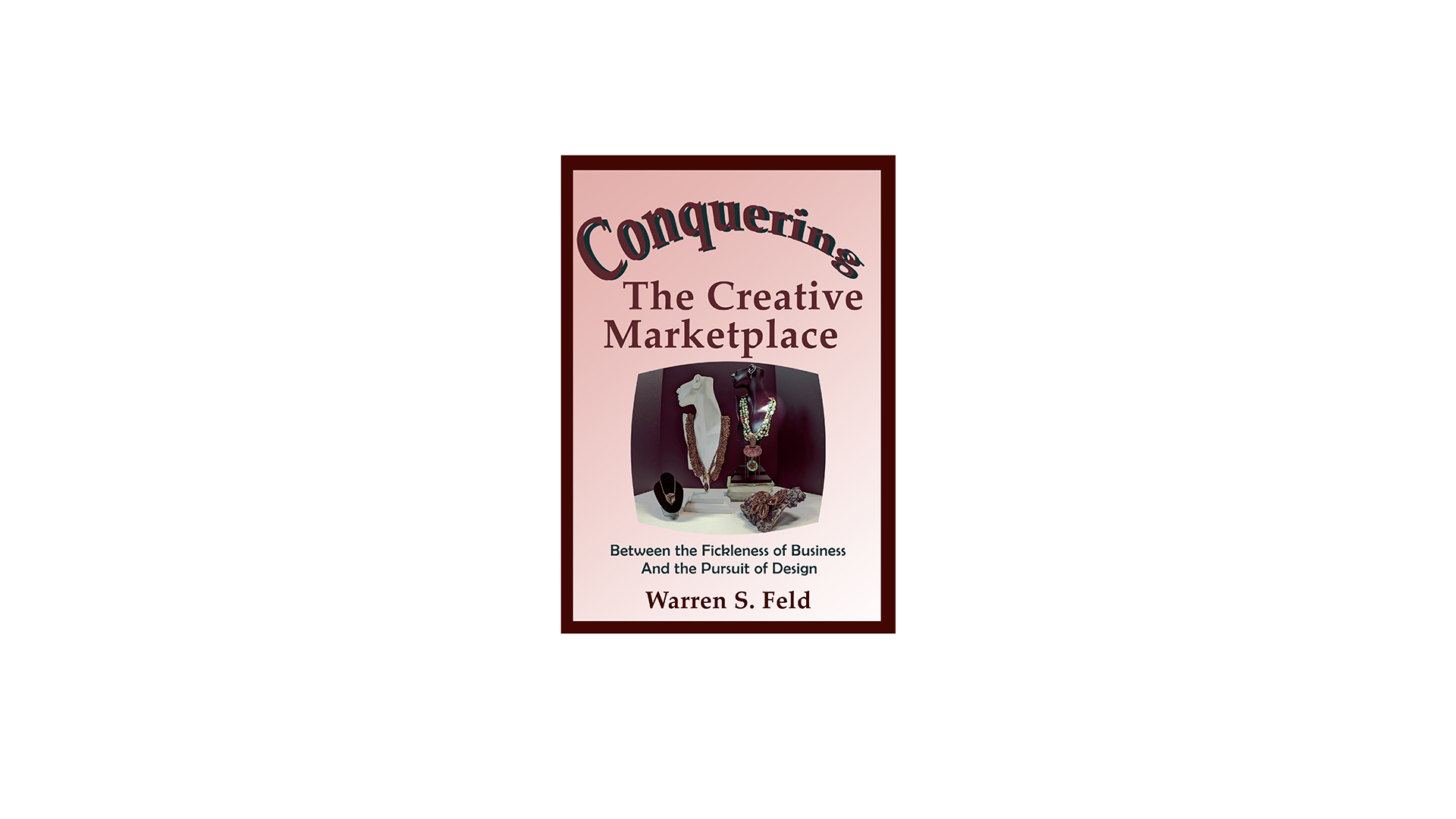
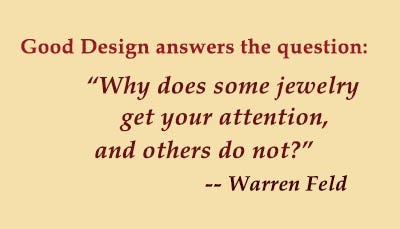

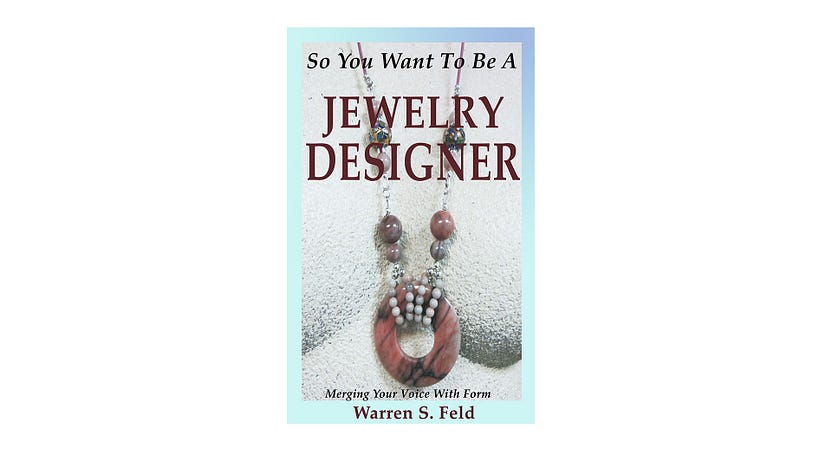
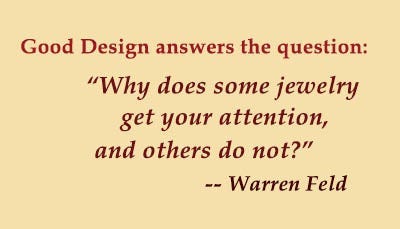

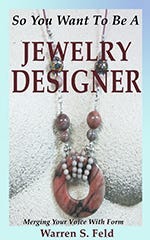


 Wallace Chan is a world-renowned Chinese jewellery creator, visual artist and innovator that exhibits internationally and participates in prestigious art fairs. He is renowned for his unworldly jewelry creations and sculptures. He is also the first Chinese contemporary jewelry artist whose work is included in the permanent collection of the British Museum.