Warren Feld Jewelry

Taking Jewelry Making Beyond Craft

Posts Tagged ‘writing’

CONQUERING THE CREATIVE MARKETPLACE: Tag Line

Posted by learntobead on October 17, 2025

CREATE A TAG LINE

Use a catchy phrase to summarize your business and get people’s attention…

Create A Tag Line

On written documents, brochures, stationery, envelopes and on online documents with titles, headings and the like, you have an opportunity to present more “words”, that is “meanings”, about your business. This gives you a second opportunity to convey things about your business that perhaps your specific business name falls short on, or needs more emphasis.

After you’ve come up with a business name, return to your lists of key words, and not-so-key words, and think of a tag line. Think of it as a “subtitle”.

Your Tag Line is a marketing opportunity, and should be worded in a catchy way. A great tag line captures the essence of the value you provide to your customer in one or two concise sentences.

Great tag line for taxidermy business:
“the only game in town”

For my shop, Be Dazzled,
“Don’t Be Frazzled, Be Dazzled!”

For my shop, Land of Odds,
“Your Partner In Design”

First write a 9 words or less tag line. You need to be able to tell someone, in 1-sentence, preferably seven to nine words, who you are as a jewelry designer. What’s your style? What’s your approach? What’s your uniqueness? What’s your competitive advantage?
No qualifiers. No further supporting detail and elaboration. 1-Sentence.

It might be helpful to fill in this blank: “You want to buy/sell my jewelry because….(blank)….”

Or, “My jewelry is different and more relevant and better than everyone else’s because… (blank) …. “

A tagline doesn’t need to be overly clever or cute to be effective. A good tagline is primarily functional. It should explain the unique value that your business offers as clearly as possible.

Sure, many classic taglines are pretty smart. “Let your fingers do the walking” is a clever play on words. But it also clearly evokes the value that the Yellow Pages offers: easy access to reliable information.

Don’t Worry About Being Too Cute

Make It Memorable

Inject a Little Personality

Settle on a final draft.

GUIDELINES TO CREATE A GREAT SLOGAN

1. Identification. A good slogan must stay consistent with the brand name either obviously
 stated or strongly implied. It’s better to include the name of your business to it.

2. Memorable. Some of the best taglines or slogans are still being used today, even
 though they were launched several years ago.

3. Beneficial. Reveal your purpose and benefits of the product by conveying the message
 in consumer language. Turn bad into good. Suggest the risk of not using the product.
 Create a positive feeling for the consumers.

4. Differentiation. In an overcrowded market, companies in the same industry need to set
 themselves apart through their creative and original tagline or slogan.

5. Keep it simple. Use proven words and short keywords. One word is usually not enough.

Some examples of tag lines / slogans:

A diamond is forever.
Beyond precision.
Crystal gets closer to the body than ever before.
Diamonds by the Yard.
Every kiss begins with Kay.
Live the moment.
Perpetual spirit.
Quality is Remembered Long After the Price is Forgotten.
The crown jewellers for 150 years.
The Jeweller of Kings.
The right time for life.
The added value of the first impression.
Where Maryland gets engaged.
For those who want more.
Honesty, my addiction.
Getting rid of headaches since 1888.
Ring on your finger, necklace on your neck, and men on their knees.
Diamonds. Divas. Desire.
Love’s embrace.
Want honesty?
She only has two things on her list.
Unleashing the beauty of the stone.
Unstoppable.
Our reputation shines as brightly as our diamonds.
Beautiful, masterful design never goes out of fashion.
Walk down our aisles first.
Hearts on fire.
The ultimate in luxury and style.

For more articles about Conquering The Creative Marketplace, click over to our Jewelry Designers’ Hub

_______________________________________________________
Thanks for being here. I look forward to sharing more resources, tips,
sources of inspiration and insights with you.

WarrenFeldJewelry.com
Shop.warrenfeldjewelry.com
School.warrenfeldjewelry.com
Coaching by Warren Feld

Add your name to my email list.
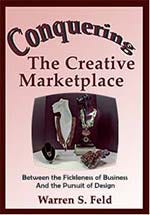
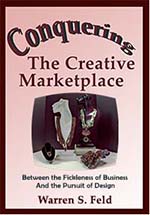
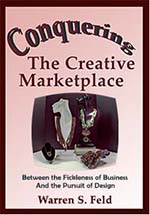
Conquering The Creative Marketplace

Many people learn beadwork and jewelry-making in order to sell the pieces they make. Based both on the creation and development of my own jewelry design business, as well as teaching countless students over the past 35+ years about business and craft, I want to address what should be some of your key concerns and uncertainties. I want to share with you the kinds of things (specifically, a business mindset and confidence) it takes to start your own jewelry business, run it, anticipate risks and rewards, and lead it to a level of success you feel is right for you. I want to help you plan your road map.

I will explore answers to such questions as: How does someone get started marketing and selling their pieces? What business fundamentals need to be brought to the fore? How do you measure risk and return on investment? How does the creative person develop and maintain a passion for business? To what extent should business decisions affect artistic choices? What similar traits to successful jewelry designers do those in business share? How do you protect your intellectual property?

The major topics covered include,

1. Integrating Business With Design

2. Getting Started

3. Financial Management

4. Product Development, Creating Your Line, and Pricing

5. Marketing, Promotion, Branding

6. Selling

7. Professional Responsibilities and Strategic Planning

8. Professional Responsibilities and Gallery / Boutique Representation

9. Professional Responsibilities and Creating Your Necessary Written Documents
548pp, many images and diagrams
Kindle or Ebook or Print

Posted in architecture, art, Art or Craft?, art theory, bead stringing, bead weaving, beads, beadwork, business of craft, color, Contests, craft, craft shows, creativity, cruises, design management, design theory, design thinking, enrichment travel, Entrepreneurship, fashion, handmade jewelry, jewelry, jewelry collecting, jewelry design, jewelry making, Learn To Bead, literacy, pearl knotting, professional development, Resources, Stitch 'n Bitch, Travel Opportunities, wire and metal, Workshops, Classes, Exhibits | Tagged: , , , , | Leave a Comment »

FLUENCY IN JEWELRY DESIGN: Sensation of Jewelry as DIALECTIC

Posted by learntobead on September 22, 2025

SENSATION OF JEWELRY AS DIALECTIC

DIALECTIC: Jewelry As Interaction and Shared Understandings. Jewelry is a two-way street. It is a way to create, confirm and retain connections. At its very core, it is interactive and communicative. It is more an action than an object. Jewelry can start a conversation. Jewelry encapsulates a very public, ongoing matrix of choices and interactions among artist, wearer and viewer, with the purpose of getting responses. It is a dialectic.

The optimum position to view jewelry is on a person’s body, where and when its dialectical power is greatest. Again, it is very public, yet concurrently, very intimate. We exhibit jewelry. It forces reaction, response and reciprocity. Jewelry helps us negotiate, in relatively non-threatening ways, those critical tensions and contradictions in life, not merely define them.

It very publicly forces us to reveal our values, delineate tensions and contradictions which might result, and resolve all those betwixt and between qualities which occur as the artist, wearer, viewer, marketer, seller, exhibitor and collector try to make sense of it all. Conversely, jewelry, as worn, may signal that any negotiation would be futile, but this is a dialectic, communicative act, as well.

Jewelry expresses or implies things, the relevance of which emerges through interactions. There is an exchange of meaning. There is some reciprocity between the artist expressing an inspiration with the desire for a reaction, and the wearer evaluating the success of the piece and impacting the artist, in return. We have those coherence-contagion-decoherence behavioral patterns discussed above.

Jewelry is persuasive. It allows for the negotiation of influence and power in subtle, often soft-pedalled ways. It helps smooth the way for support or control. Compliance or challenge. Wealth and success or poverty and failure. High or low status. Social recognition. An expression of who you know, and who might know you. Jewelry is a tool for managing the dynamics between any two people.

Jewelry is emotional and feeling, with attempts by the artist to direct these, and with opportunities for others to experience these. It is not that we react emotionally to the beauty of an object. It is not mechanical or fleeting. It is more of a dialectic. The jewelry is an expression of an artist’s inspiration and intent. We react emotionally to what we sense as that expression as it resonates from the object itself. This resonance ebbs and flows, waxes and wanes, over time as the object is worn in many different situations.

Jewelry draws attention. It becomes a virtual contract between artist and wearer. The artist agrees to design something that will call attention to the wearer and that wearer’s preferred sense of self. The wearer agrees to wear something that reaffirms the artist’s insights for all to witness and experience and draw support.

Jewelry may cue the rules for sexual and sensual interactions. Nurturing and desire. Necklaces draw attention to the breasts. Earrings to the ear and neck. Rings to the hands. Jewelry, such as a wedding band, may confirm a relationship, and signal permission for various forms of touching that otherwise would not be appropriate. The silhouettes and placements of jewelry on the body indicate where it may be appropriate for the viewer to place his gaze or touch, and where it would not.

We don’t feel alone because we have opportunities to have a dialectic experience — a dialogue between self and artist, self and others, self and self — all catalyzed by the piece of jewelry, and our sensation of all the choices that had to be made in order for it to exist, in order for it to feel coherent, in order for it for fulfill desire, and in order for all of this to somehow feel contagious and resonant. We don’t feel alone because the jewelry taps into something inside us that makes us want to wear it, buy it and share it.

_______________________________________________________

Thanks for being here. I look forward to sharing more resources, tips,
sources of inspiration and insights with you.

WarrenFeldJewelry.com
Shop.warrenfeldjewelry.com
School.warrenfeldjewelry.com
Coaching by Warren Feld

Add your name to my email list.

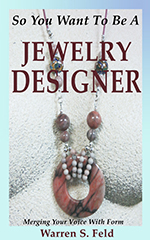
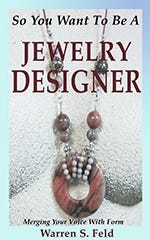
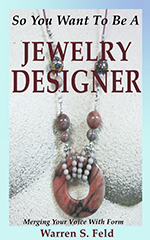
SO YOU WANT TO BE A JEWELRY DESIGNER
Merging Your Voice With Form

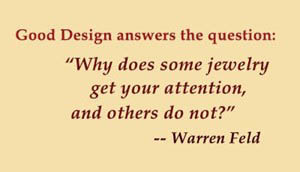
So You Want To Be A Jewelry Designer reinterprets how to apply techniques and modify art theories from the Jewelry Designer’s perspective. To go beyond craft, the jewelry designer needs to become literate in this discipline called Jewelry Design. Literacy means understanding how to answer the question: Why do some pieces of jewelry draw your attention, and others do not? How to develop the authentic, creative self, someone who is fluent, flexible and original. How to gain the necessary design skills and be able to apply them, whether the situation is familiar or not.

588pp, many images and diagrams Ebook , Kindle or Print formats

The Jewelry Journey Podcast
“Building Jewelry That Works: Why Jewelry Design Is Like Architecture”
Podcast, Part 1
Podcast, Part 2

Posted in architecture, art, Art or Craft?, art theory, bead stringing, bead weaving, beads, beadwork, business of craft, color, Contests, craft, craft shows, creativity, cruises, design management, design theory, design thinking, enrichment travel, Entrepreneurship, fashion, handmade jewelry, jewelry, jewelry collecting, jewelry design, jewelry making, Learn To Bead, literacy, pearl knotting, professional development, Resources, Stitch 'n Bitch, Travel Opportunities, wire and metal, Workshops, Classes, Exhibits | Tagged: , , , , | 1 Comment »

CONQUERING THE CREATIVE MARKETPLACE: Protecting Your Name and Intellectual Property: Copyright

Posted by learntobead on September 21, 2025

COPYRIGHT

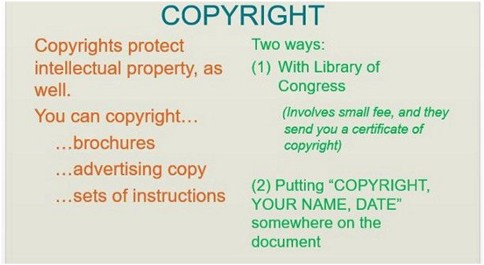
You can copyright any documents or marketing materials (brochures, instructions, etc). You can do this by registering a copy with the Library of Congress, or just putting © YOUR NAME, date somewhere on the document.

Or you can send a copy to yourself in a Registered letter, write on the outside of the envelop what is inside, and don’t open the envelop when you receive it back in the mail. This is a proof of date, should you need to challenge anyone.

Crittenden Jewelry

One jewelry dealer I know, and who exemplifies many other jewelry artists I’ve met, owns a business called Crittenden Jewelry. Ulrich is his name. Ulrich is very pleasant, interesting to talk with, knows the jewelry business in and out, but is somewhat of an odd duck. He sells some of the most beautiful and intricate jewelry you will ever see anywhere, except in a museum.

But he hides it.

He keeps all these phenomenal pieces in boxes under the floorboards of the store. He fears if they were on display, other jewelry makers would copy them. And he would be out of business. So he only takes these pieces out for a select few.

Not surprisingly, Ulrich works alone. As he often explains, “I don’t want to hire anyone to assist me, because all they’re going to do is steal my designs.”

Business is about taking risks. If you are unwilling to take risks, as Ulrich has done, you probably don’t really have a viable business.

When you have written copy you want to copyright, first, somewhere on the document, you want to either use the copyright symbol © or write out the word COPYRIGHT. List your name and the year.

Examples: ©Warren Feld, 2020 or COPYRIGHT, Warren Feld, 2020

At this point, your document is considered copyrighted. The issue for you is if someone violated that copyright and you went to court to contest this, this would not be sufficient evidence for the courts.

Library of Congress: You can get an official certificate of copyright by submitting an application to the US Library of Congress. Your copyright starts the date the application is submitted. There is a minimal fee. It usually takes about one year before you actually receive the certificate. Courts usually require this certificate as evidence.

US Post Office: You can put your material in a self-addressed, stamped envelope and mail this Registered/Certified to yourself. On the outside of the envelope, write what is inside. When you receive it, however, DO NOT OPEN IT. The post mark date will be evidence of copyright. This will usually hold up in court.

NOTE: It is difficult to copyright a specific jewelry design. While there is no legal rule about what constitutes a copyright violation of the design, it is generally accepted that merely a 10% difference would not be a violation. That 10% difference might be a different clasp, a slightly different pattern, or a different color scheme (though the courts allow you some flexibility with color issues).

NOTE: It is expensive to contest a copyright violation in court. This might run $3,000 per incident.

The US Copyright Office will often reject jewelry designs for lacking authorship because they consist of common or usual shapes and forms. When submitting your application, you should present a well-reasoned argument, based on basic principles of jewelry design composition, form and function, as to why your jewelry and patterns should be copyrighted.

You can also copyright a “collection of jewelry”, but you can’t add new designs to the collection, without getting new copyrights. In the collection, the pieces would need to share design elements and sensibilities, and these would need to be obvious.

Copyrights last for the life of the designer plus 70 years. Use form VA (Visual Arts). It usually takes about a year for the paperwork to go through, but your piece is considered copyrighted from the date you submitted your application.

For more articles about Conquering The Creative Marketplace, click over to our Jewelry Designers’ Hub

_______________________________________________________

Thanks for being here. I look forward to sharing more resources, tips,
sources of inspiration and insights with you.

WarrenFeldJewelry.com
Shop.warrenfeldjewelry.com
School.warrenfeldjewelry.com
Coaching by Warren Feld

Add your name to my email list.

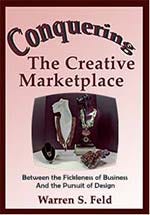
Conquering The Creative Marketplace

Many people learn beadwork and jewelry-making in order to sell the pieces they make. Based both on the creation and development of my own jewelry design business, as well as teaching countless students over the past 35+ years about business and craft, I want to address what should be some of your key concerns and uncertainties. I want to share with you the kinds of things (specifically, a business mindset and confidence) it takes to start your own jewelry business, run it, anticipate risks and rewards, and lead it to a level of success you feel is right for you. I want to help you plan your road map.

I will explore answers to such questions as: How does someone get started marketing and selling their pieces? What business fundamentals need to be brought to the fore? How do you measure risk and return on investment? How does the creative person develop and maintain a passion for business? To what extent should business decisions affect artistic choices? What similar traits to successful jewelry designers do those in business share? How do you protect your intellectual property?

The major topics covered include,

1. Integrating Business With Design

2. Getting Started

3. Financial Management

4. Product Development, Creating Your Line, and Pricing

5. Marketing, Promotion, Branding

6. Selling

7. Professional Responsibilities and Strategic Planning

8. Professional Responsibilities and Gallery / Boutique Representation

9. Professional Responsibilities and Creating Your Necessary Written Documents
548pp, many images and diagrams
Kindle or Ebook or Print

Posted in jewelry design | Tagged: , , , , | Leave a Comment »

FLUENCY IN JEWELRY DESIGN: Selling Vs. Keeping

Posted by learntobead on July 28, 2025

Selling vs. Keeping: Saying Good-Bye

It is so difficult to part with pieces you have made. There is a natural attraction. You have poured time, money, and effort towards completing them. You put off other things you could have done, in order to finish them.

I remember submitting an entry to a Swarovski Create Your Own Style contest. First, all I had to send was a picture and a write-up. This was exciting — the anticipation of winning, connecting on some level to Swarovski — like connecting to a celebrity.

And I waited and waited to hear from them. And I did. One day an email popped up on my computer, indicating that I had made the semi-finals. The next step was to send in the actual piece.

My initial elation soon deteriorated into a type of grief. I had spent over 150 hours and over $1500.00 creating this piece. I did not want to let it go. Once sent, Swarovski kept them. I knew I wouldn’t get it back.

Although I could have wrapped and packaged my piece in a part of a day, it took me a week. I’d wrap and unwrap. Put it in one display box, then decide that wasn’t good enough. Another display box, and didn’t like how it sat in the box. Some reconfiguring the positioning, and then I had to close the box. Wanted to see it one more time, then closed the lid again.

I put the display box into the shipping box, but couldn’t seal it up. I left the shipping box open and sitting on a table in my studio. Had to see the piece several more times.

Then, I didn’t like the way the display box sat in the shipping box. Changed shipping boxes. Tried setting the display box several different ways.

Finally closed the shipping box. Labeled it clearly. Printed the shipping label. Felt I needed more documentation and insurance, should the box get lost.

Took a deep breath. Drove the box to the UPS office. Dropped it off.

And felt like I had lost my best friend. I was scared. Empty. Totally disconnected from the excitement of getting selected as a semi-finalist by Swarovski.

___________________

More articles about FLUENCY IN DESIGN

https://www.patreon.com/collection/613906?view=expanded

___________________

_______________________________________________________

Thanks for being here. I look forward to sharing more resources, tips,
sources of inspiration and insights with you.

WarrenFeldJewelry.com
Shop.warrenfeldjewelry.com
School.warrenfeldjewelry.com
Coaching by Warren Feld

Add your name to my email list.

SO YOU WANT TO BE A JEWELRY DESIGNER
Merging Your Voice With Form

So You Want To Be A Jewelry Designer reinterprets how to apply techniques and modify art theories from the Jewelry Designer’s perspective. To go beyond craft, the jewelry designer needs to become literate in this discipline called Jewelry Design. Literacy means understanding how to answer the question: Why do some pieces of jewelry draw your attention, and others do not? How to develop the authentic, creative self, someone who is fluent, flexible and original. How to gain the necessary design skills and be able to apply them, whether the situation is familiar or not.

588pp, many images and diagrams Ebook , Kindle or Print formats

The Jewelry Journey Podcast
“Building Jewelry That Works: Why Jewelry Design Is Like Architecture”
Podcast, Part 1
Podcast, Part 2

Posted in architecture, art, Art or Craft?, art theory, bead stringing, bead weaving, beads, beadwork, business of craft, color, Contests, craft, craft shows, creativity, cruises, design management, design theory, design thinking, enrichment travel, Entrepreneurship, fashion, handmade jewelry, jewelry, jewelry collecting, jewelry design, jewelry making, Learn To Bead, literacy, pearl knotting, professional development, Resources, Stitch 'n Bitch, Travel Opportunities, wire and metal, Workshops, Classes, Exhibits | Tagged: , , , , | Leave a Comment »

FLUENCY IN JEWELRY DESIGN: On My Own, Books, Tutorials, Classes?

Posted by learntobead on July 8, 2025

I always tell people it is easier to start by having someone show you what to do, either with a friend, or in a class, than trying to teach yourself out of a book or video tutorial. Books and videos are good at teaching you basic mechanics. But they are poor in teaching you the artistry and design skills you will need as a jewelry artist and designer. After working with a person, then go back to the books and online tutorials. You’ll get more out of them this way.

Particularly important to learn, and what you pick up best from another human being, include:

– how to hold the piece while working it
– how to manage when you need to have firmer tension, and when you need to 
 relax your tension, as you hold the piece
– what about the technique allows your project to maintain its shape, and what 
 about the technique allows your project to move, drape and flow
– how to attach a clasp assembly or otherwise finish off your project

– what materials are most suited to the project, and which are not
– whether this, or another technique, is best suited to the project goals
– how to prepare your materials, if necessary, before you use them
– which tools you should be using, and how to hold them and use them
– how to size things
– how to read instructions, diagrams, and figures
– how to anticipate what your potential customer or client would want from any 
 piece of jewelry

Try to learn things in a developmental order. Start with beginner projects, graduate to advanced beginner and intermediate, then finally, to advanced. Take your time. Don’t rush to the finish line. You will learn more and be a better designer for it.

Try to learn things by groupings or categories. Vary things. You might start by doing the same project using three different stringing materials. You might try doing the same project using different types of clasps. You might create a compositional arrangement, and then play by rearranging or by changing out certain components or colors for others. Comparative learning is a very strong teacher.

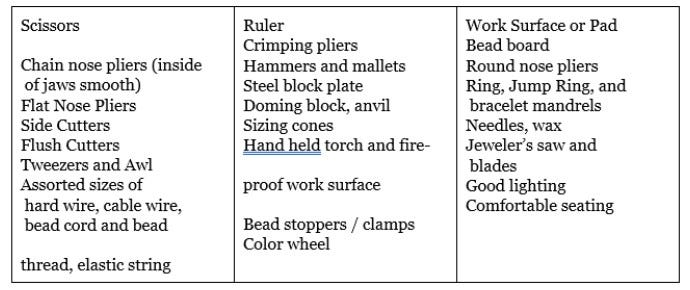
Types of Tools Needed To Get Started

______________________________________________

For more articles about FLUENCY IN JEWELRY DESIGN, visit the JEWELRY DESIGNERS’ HUB

https://www.patreon.com/collection/613906?view=expanded

______________________________________________

Thanks for being here. I look forward to sharing more resources, tips,
sources of inspiration and insights with you.

WarrenFeldJewelry.com
Shop.warrenfeldjewelry.com
School.warrenfeldjewelry.com
Coaching by Warren Feld

Add your name to my email list.

SO YOU WANT TO BE A JEWELRY DESIGNER
Merging Your Voice With Form

So You Want To Be A Jewelry Designer reinterprets how to apply techniques and modify art theories from the Jewelry Designer’s perspective. To go beyond craft, the jewelry designer needs to become literate in this discipline called Jewelry Design. Literacy means understanding how to answer the question: Why do some pieces of jewelry draw your attention, and others do not? How to develop the authentic, creative self, someone who is fluent, flexible and original. How to gain the necessary design skills and be able to apply them, whether the situation is familiar or not.

588pp, many images and diagrams Ebook , Kindle or Print formats

The Jewelry Journey Podcast
“Building Jewelry That Works: Why Jewelry Design Is Like Architecture”
Podcast, Part 1
Podcast, Part 2

Posted in architecture, art, Art or Craft?, art theory, bead stringing, bead weaving, beads, beadwork, business of craft, color, Contests, craft, craft shows, creativity, cruises, design management, design theory, design thinking, enrichment travel, Entrepreneurship, fashion, handmade jewelry, jewelry, jewelry collecting, jewelry design, jewelry making, Learn To Bead, literacy, pearl knotting, professional development, Resources, Stitch 'n Bitch, Travel Opportunities, wire and metal, Workshops, Classes, Exhibits | Tagged: , , , , | Leave a Comment »

CONQUERING THE CREATIVE MARKETPLACE: Write Your Own Getting Started Story

Posted by learntobead on July 4, 2025

Assignment: WRITE UP YOUR GETTING STARTED STORY

Your story might be 1 to 3 paragraphs long. It should be something you can say out loud to someone within 1 – 4 minutes.

Make this write-up part of your promotional materials. Tell your story out loud to friends and relatives. Eventually telling your story will become second-nature.

Your story will have three parts:

 1.    INTRODUCTION

Establish a context or situation. Explain why it matters. Identify the various problems or difficulties you had to overcome. The context or situation is something you believe your customer can connect with on an experiential and/or emotional level. If possible, your first sentence should contain a hook – something that captures someone’s attention, curiosity, wonderment, or something that captures a strong connection with the listener.

 2.   BODY

Detail how you came up with various solutions to the problems or difficulties. Mention your style or design preferences, and why you think they are important or advantageous. Pick 1 or 2 problems that you solved. Keep things simple, short, clear.

 3.   CONCLUSION

Say something about how your success evolved from how you found solutions to the problems you identified. Indicate how your success guides you now and will guide you into the future.

Practice how you tell your story. Make it impressive!

For more articles about Conquering The Creative Marketplace, click over to our Jewelry Designers’ Hub

_______________________________________________________

Thanks for being here. I look forward to sharing more resources, tips,
sources of inspiration and insights with you.

WarrenFeldJewelry.com
Shop.warrenfeldjewelry.com
School.warrenfeldjewelry.com
Coaching by Warren Feld

Add your name to my email list.

Conquering The Creative Marketplace

Many people learn beadwork and jewelry-making in order to sell the pieces they make. Based both on the creation and development of my own jewelry design business, as well as teaching countless students over the past 35+ years about business and craft, I want to address what should be some of your key concerns and uncertainties. I want to share with you the kinds of things (specifically, a business mindset and confidence) it takes to start your own jewelry business, run it, anticipate risks and rewards, and lead it to a level of success you feel is right for you. I want to help you plan your road map.

I will explore answers to such questions as: How does someone get started marketing and selling their pieces? What business fundamentals need to be brought to the fore? How do you measure risk and return on investment? How does the creative person develop and maintain a passion for business? To what extent should business decisions affect artistic choices? What similar traits to successful jewelry designers do those in business share? How do you protect your intellectual property?

The major topics covered include,

 1.    Integrating Business With Design

 2.   Getting Started

 3.   Financial Management

 4.   Product Development, Creating Your Line, and Pricing

 5.   Marketing, Promotion, Branding

 6.   Selling

 7.   Professional Responsibilities and Strategic Planning

 8.  Professional Responsibilities and Gallery / Boutique Representation

 9.    Professional Responsibilities and Creating Your Necessary Written Documents

548pp, many images and diagrams
Kindle or Ebook or Print

Posted in architecture, art, Art or Craft?, art theory, bead stringing, bead weaving, beads, beadwork, business of craft, color, Contests, craft, craft shows, creativity, cruises, design management, design theory, design thinking, enrichment travel, Entrepreneurship, fashion, handmade jewelry, jewelry, jewelry collecting, jewelry design, jewelry making, Learn To Bead, literacy, pearl knotting, professional development, Resources, Stitch 'n Bitch, Travel Opportunities, wire and metal, Workshops, Classes, Exhibits | Tagged: , , , , | Leave a Comment »

CONQUERING THE CREATIVE MARKETPLACE: Your Getting Started Story

Posted by learntobead on June 27, 2025

Your Getting Started Story

When did you first realize you wanted to make a business out of your passion for making jewelry?

[While you are thinking about this, now is a good time to get out your pen and paper and jot down some thoughts.]

Everyone has a Getting Started Story.

This is a story you tell over and over again. In it, you express your wonderment and passion. You talk about your excitement, your inspirations, your aspirations, your motivations and how you decided to channel them. You go over the steps you went through to discover what it is that drives you to create. You recall who influenced you, when and why. You remember different pathways and crossroads, where you decided to pursue your interests in one direction or another. You reflect on your expectations before you got started, and how these evolved or changed as you began to make and design jewelry.

Sometimes your story begins by touching some beads. Or running a strand of pearls through your hand. Or the sight of something perfectly worn around the wrist, upon the breast, or up near the neck. Other times, it may begin by taking a class, or deciding to make a special pair of earrings to match a particular outfit. Or thinking you want to make a piece of jewelry you saw someone wearing on TV or in a photospread in some magazine.

Your Getting Started Story is a measure of what you have discovered, and what you need to discover still. It is a foil against which to measure your successes, and some not-so-successful things. It represents your insight and foresight when making both personal development and jewelry design choices.

And, it is very important to be cognizant and aware of how your Getting Started Story follows you throughout your career …

… CONTINUE READING ON THE JEWELRY DESIGNERS’ HUB

Posted in architecture, art, Art or Craft?, art theory, bead stringing, bead weaving, beads, beadwork, business of craft, color, Contests, craft, craft shows, creativity, cruises, design management, design theory, design thinking, enrichment travel, Entrepreneurship, fashion, handmade jewelry, jewelry, jewelry collecting, jewelry design, jewelry making, Learn To Bead, literacy, pearl knotting, professional development, Resources, Stitch 'n Bitch, Travel Opportunities, wire and metal, Workshops, Classes, Exhibits | Tagged: , , , , | Leave a Comment »

CONQUERING THE CREATIVE MARKETPLACE: Your First Jewelry Sale

Posted by learntobead on April 4, 2025

Often Unexpected, Always Exciting:
Your First Jewelry Sale

How many times have you heard a jewelry artist say…

I can’t bear to part with my pieces.

My jewelry is too precious to me.

I only give a few pieces that I make away as gifts to friends and family.

I’ve never sold anything.

Selling would take the fun out of it.

And then, while you are filling your cart in the grocery store, someone offers to buy a piece you are wearing, and the rest is history. A sale! Sold! They paid so much more than it cost you! Right off your wrist! Gotta make another! That was so fast! That was so easy!

My friend Connie used to make things only for friends. She always wore the things she made. At one point, she was repeatedly approached in various stores around town by women who wanted to buy the pieces around her neck.

At first, Connie quoted them, what she thought were outlandish prices. No one hesitated. Connie was awe-struck, but didn’t say No. I don’t know if she secretly wore a sign on her back — JEWELRY FOR SALE — or, somehow stuck out her cheek in such a way, as if asking to be kissed, that people came over to her, but she was getting quite good at attracting buyers. At TJMAX, at TARGET, at MACY’s, at DILLARDS, at SEARS, at KROGERS and PUBLIX. She kept upping her prices each time, and no one had yet to blink!

Jona had made many things before, but had never sold anything. Then…

FINISH READING ON MY JEWELRY DESIGNERS’ HUB


Thanks for being here. I look forward to sharing more resources, tips,
sources of inspiration and insights with you.

WarrenFeldJewelry.com
Shop.warrenfeldjewelry.com
School.warrenfeldjewelry.com
Coaching by Warren Feld

Add your name to my email list.

Conquering The Creative Marketplace

Many people learn beadwork and jewelry-making in order to sell the pieces they make. Based both on the creation and development of my own jewelry design business, as well as teaching countless students over the past 35+ years about business and craft, I want to address what should be some of your key concerns and uncertainties. I want to share with you the kinds of things (specifically, a business mindset and confidence) it takes to start your own jewelry business, run it, anticipate risks and rewards, and lead it to a level of success you feel is right for you. I want to help you plan your road map.

I will explore answers to such questions as: How does someone get started marketing and selling their pieces? What business fundamentals need to be brought to the fore? How do you measure risk and return on investment? How does the creative person develop and maintain a passion for business? To what extent should business decisions affect artistic choices? What similar traits to successful jewelry designers do those in business share? How do you protect your intellectual property?

The major topics covered include,

1. Integrating Business With Design

2. Getting Started

3. Financial Management

4. Product Development, Creating Your Line, and Pricing

5. Marketing, Promotion, Branding

6. Selling

7. Professional Responsibilities and Strategic Planning

8. Professional Responsibilities and Gallery / Boutique Representation

9. Professional Responsibilities and Creating Your Necessary Written Documents
548pp, many images and diagrams
Kindle or Ebook or Print

Posted in architecture, Art or Craft?, art theory, bead stringing, bead weaving, beads, beadwork, business of craft, color, Contests, craft, craft shows, creativity, cruises, design management, design theory, design thinking, enrichment travel, Entrepreneurship, handmade jewelry, jewelry, jewelry collecting, jewelry design, jewelry making, Learn To Bead, literacy, pearl knotting, professional development, Resources, Stitch 'n Bitch, Travel Opportunities, wire and metal, Workshops, Classes, Exhibits | Tagged: , , , , | Leave a Comment »

Pearl Knotting…Warren’s Way

Posted by learntobead on February 24, 2025

2nd Edition Recently Released

Hey there! Check out my book about Pearl knotting.

My name is Warren Feld. I am a jewelry designer with 40+ years of experience. In my book, I teach you the basic steps in Pearl Knotting. I’ll walk you through how to start your piece, tie knots between pearls, and how to end your piece. Simple instructions. Lots of diagrams and images.

What you will learn

In this book, i teach a non-traditional pearl knotting technique which is very easy for people to learn and do, does not use special tools, includes step-by-step instructions, a simple way to tie knots, shows clearly how to attach your clasp and finish off your cords, and achieves that architectural perfection we want in our pearl strung pieces,

Why This Class Is Important

There are many, many variations in technique.

They all work.

Yet most are very difficult for the beginner — especially those traditional techniques which rely on tools for making and positioning the knots.

Over the years, Ihave seen how students, when following traditional pearl knotting methods, or methods which utilize some more traditional techniques and approaches, become dissatisfied with their results.

And give up.

Pearl knotting doesn’t need to be this hard.

Warren’s Way

After many, many years, enduring many concerns, debates, demonstrations and arguments about which way is best, I came up with my own preferences —

o Using ideas, goals and parts of techniques from several established methods
o Adjusting them, based on my experiences with students and teachers
o And my knowledge of good design
o And how to balance artistic concerns with functional ones.

The Book

I used these ideas and techniques, which I reached and put them to many test, to create a non-traditional pearl knotting technique which i call
“Warren’s Way”.

4 variations

The book covers 4 different variations for starting and finishing your piece, including
 1. Attaching directly to the clasp
 2. Using French wire bullion
 3. Using clam shell bead tips
 4. Making a continuous piece without a clasp

I also present the steps for adding cord.

Kit and Supplies, Tools

You may purchase an accompanying PEARL KNOTTING KIT, as well as supplies and tools, at
 www.landofodds.com

_______________________________________________________

For more articles about Bead Stringing and other jewelry making techniques, join our jewelry designers’ hub at www.patreon.com/warrenfeldjewelry

Thanks for being here. I look forward to sharing more resources, tips,
sources of inspiration and insights with you.

WarrenFeldJewelry.com
Shop.warrenfeldjewelry.com
School.warrenfeldjewelry.com
Coaching by Warren Feld

Add your name to my email list.

Posted in Art or Craft?, art theory, bead stringing, bead weaving, beads, beadwork, business of craft, craft, creativity, design management, design theory, design thinking, enrichment travel, Entrepreneurship, handmade jewelry, jewelry, jewelry collecting, jewelry design, jewelry making, Learn To Bead, pearl knotting, professional development, Resources, Stitch 'n Bitch | Tagged: , , , , , | Leave a Comment »