Warren Feld Jewelry

Taking Jewelry Making Beyond Craft

Archive for the ‘architecture’ Category

THE JEWELERS’ PALETTE, 11/1/2024

Posted by learntobead on October 29, 2024

Join my community of jewelry designers on my Patreon hub
From Warren and
Land of Odds

Use November’s Discount Code For Extra 25% Off @Land of Odds:
NOVEMBER25
www.landofodds.com

November 1, 2024

Hi everyone,

Some Updates and Things Happening.
(Please share this newsletter)

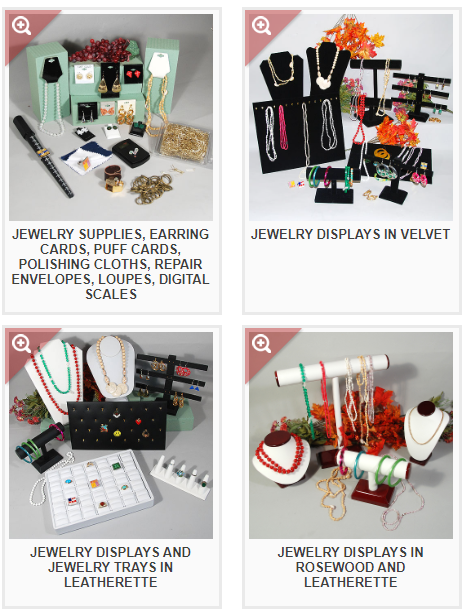
1. I wanted to share some great resources for packaging and display supplies:

FETPAK
www.fetpak.com

AZAR DISPLAYS
https://azardisplays.com/

ULINES
https://www.uline.com/

VISIPAK
https://www.visipak.com/

CLEAR BAGS
https://www.clearbags.com/

QUILL
https://www.quill.com/

2. A couple of quick links for you that you might want to bookmark

a. RIO GRANDE’s new KNOWLEDGE HUB

Access an ever-expanding library of articles, videos, podcast episodes, charts, and graphs available 24/7. Whether you’re interested in the latest trends in jewelry design and techniques or problem-solving at the bench, we have a wealth of information ready to help you learn, grow, and thrive.

Tons of info about jewelry and every kind of technique of jewelry making.

b. The 2024 Summer Design Challenge Winning Design

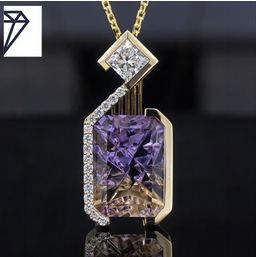
Matthew Piorkowski’s winning piece, “Interstellar”features a stunning fantasy-cut octagon ametrine showcased in a custom yellow-gold pendant setting. Centered on the bail is a brilliant square-shaped diamond with sixteen accenting diamonds along the left side of the pendant mounting, creating visual interest along the path of the diamonds.

Rio Grande runs a seasonal challenge called For the Love of Jewelers Design Challenge. They haven’t announced winter or spring submissions rules yet. Check on their website: www.riogrande.com

c. 7 Steps to Create Photorealistic Images With Stable Diffusion w. Chat AI’s Image Generator

In the ever-evolving world of artificial intelligence, the ability to create photorealistic images has become a groundbreaking achievement. ChatAI‘s Image Generator, powered by advanced Stable Diffusion models, offers users the tools to create images that blur the line between reality and AI-generated art. This article will guide you through the 7 steps to create photorealistic images with Stable Diffusion, focusing on the art of prompting. We’ll start by explaining what photorealistic images are, delve into the concept of Stable Diffusion, and then provide a step-by-step guide to crafting effective prompts. At the end, we will share 15 example prompts to inspire your creativity.

Read the article here.

3. I encourage you to take advantage of the very low prices of delica beads on the Land of Odds website.

Compare Our Prices To What You Are Paying:
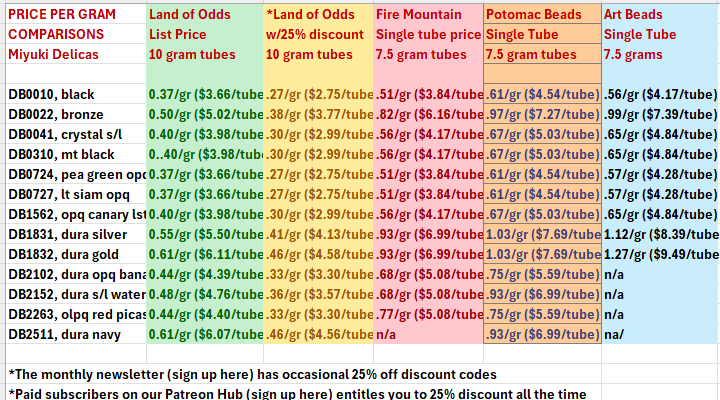
In this monthly newsletter, occasionally, like in this newsletter, you will find a discount coupon code that you can use on the Land of Odds website.

You can also become a paid subscribing member on our Jewelry Designers’ Patreon Hub, which entitles you to a 25% discount as long as you maintain your subscription.

4. 🎭 As a jewelry designer, it is important to identify your direction, voice, & identity.

Direction is understanding what work you want to make, and why you are making it (your emotional response to your work).

Voice is your unique take on your work’s descriptions and your unique way of portraying messages within your work.

Identity is about what you have experienced: what makes you you, including aspects like your family or where you grew up.

5. I’m always faulting craft show vendors for not having good enough signage for their booths. Recently, I came across this sign, and liked it.

6. What does jewelry sound like, I, for no particular reason, asked myself the other day, so I went to take a look.

To my surprise, there are thousands of jewelry sound effects. There are sounds the jewelry makes when someone wears it. There are sounds the jewelry makes when someone makes it.

22 Royalty Free Jewelry Sound Effects
https://pixabay.com/sound-effects/search/jewelry/

Click sample jewelry sound effect
Click sample jewelry ring spin sound effect
Click sample jewelry chain bounce sound effect

Soundsnap.com

Zapsplat.com

Videvo.net

YouTube and Tik Tok have lots of jewelry sound effects
necklace jingling sound effect

7. Sometimes, as jewelry designers, we feel we don’t have the luxury of great access to resources — support, money, materials. There are opportunities available to you. Read the first of what will be a series of articles about this here.

NOTE: The word “artist” is often used in these opportunities, but in most cases, you should take this to be broadly defined, to include jewelry makers and fine craftspersons,

Building Creative Futures: Residencies, Grants, and Opportunities for Artists

“Often burdened with a bad reputation, an artist’s career is not the easiest path.

It’s true, that unstable income is not particularly reassuring in a world increasingly governed by financial power. After graduation, many young artists leave behind the schools where they had access to resources, mentorship, and time to create, often needing to fully realize how valuable that support was. This transition into the professional world can be daunting as they face the challenge of establishing themselves in a competitive industry.

With this in mind, we have created a series specifically dedicated to programs, grants, residencies and incubators, all aimed at supporting artists in research. This includes selected open calls, formative meetings, articles, and interviews published on Klimt02 to help artists better understand these opportunities and confidently use them as valuable resources to expand and communicate their creative practice.

This series will be continually updated to reflect the latest opportunities, ensuring you, the readers, have access to the most current information and resources published on Klimt02.”

Continue reading here.

8. Are you wondering if working with me as a coach would be a good fit?

Not sure if you’re ready or if you’re at the right place in your jewelry design journey? But you’re thinking that you want to do something powerful to bring more meaning to your art and start to actually make the pieces your soul is craving (maybe silently, maybe4 LOUDLY) to express?

Jewelry Design is not a simple, easy path. It is full of incredible challenges, and those are different for every designer. You will be confronted with struggle, obstacles will be placed at your feet, you’ll be bowled over by tedium, and frustrated by setbacks, befuddled when introducing your work publicly. Most things you will learn come from the art world or craft world, and don’t fit perfectly with what it means to design jewelry. The thing to remember is that those challenges are yours. They belong to you because you stepped into that world we call design. You have that desire to find and explore what all that means.

So often that first step in working deciding to work with a coach is the most difficult. But it is all about having the right guide through all the barriers and dilemmas and vagaries when designing jewelry.

I’m here to talk if you’re feeling stuck and curious about what it would be like to have the support of my mentorship program with you on the journey. Go ahead and schedule a free consultation to talk about your jewelry and problem solve some ways to jump start your creativity. This is a completely no-pressure opportunity to talk about your work and see if we can bring fresh energy, more meaning, and bitter impact to your art.

I’m here to offer guidance and if you think it’s a good fit to work together moving forward, that is great.

But really, this is a free opportunity, no pressure, absolutely no obligation. Let’s talk about where you’re at.

The easiest way to begin the process is to sign up here: COACHING WITH WARREN FELD
You can review what coaching entails. You can submit a form on this web page. When I receive it, I’ll schedule our free initial consultation. Beginning the process does not obligate you to anything.

Warren

And don’t forget to use this 25% discount code

throughout October at Land of Odds!!
Use November’s Discount Code
For Extra 25% Off 
@Land of Odds:
NOVEMBER25
www.landofodds.com

That’s it for now! There is a lot of creative expression all around the world right now. Hope you get to experience a lot of it, either first hand, or through social media online.

WSF

Feature your jewelry

Here next week

In This Newsletter,
as well as,
on our Jewelry Designer’s Hub!

Email a post (text and/or image) to warren@warrenfeldjewelry.com.

Promote your current projects, promotional copy, News & Views, videos, reels, tutorials, instructions, social media posts online in this newsletter and on our jewelry designers’ Patreon hub.

No deadlines! Opportunity available all the time. No fees.

But don’t wait to take advantage of this opportunity.

This copyrighted material is published here with permission of the author(s) as noted, or with Land of Odds or Warren Feld Jewelry. All rights reserved.

Repairs Stumping You?
Let Me Take A Look

I take in a lot of jewelry repairs. People either bring them to me in Columbia, TN, or, I pick them up and deliver them back in Nashville. I am in Nashville at least once a week. It’s been convenient for most people to meet me at Green Hills Mall. But if not, I can come to your workplace or your home. This is perfectly fine for me. My turnaround time typically is 3–4 weeks.

I do most repairs, but I do not do any soldering. I also do not repair watches. These are the kinds of repairs I do:

o Beaded jewelry
o Pearl knotting, hand knotting
o Size/Length adjustment
o Re-stringing
o Wire work/weave/wrap
o Micro macrame
o Broken clasp replacfement
o Earring repair
o Replace lost rhinestones or gemstones
o Stone setting
o Stretchy bracelet
o Metal working which does not involve soldering
o Bead woven jewelry and purses
o Beaded clothing
o Custom jewelry design

View my How-To-Repair-Jewelry videos on our Jewelry Designers’ Hub.
My most recent how-to: Converting 3-Strand Stretchy Bracelet to Cable Wire W/ Clasp
WARREN FELD JEWELRY (www.warrenfeldjewelry.com)
Custom Design, Workshops, Video Tutorials, Webinars, Coaching, Kits, Group Activities, Repairs
~~~~~~~~~~~~~~~~~~~~~~~
Join our community of jewelry designers
on my Patreon hub
Be part of a community of jewelry designers who recognize that we have a different way of thinking and doing than other types of crafters or artists.
One free downloadable Mini-Lesson of your choice for all new members!
~~~~~~~~~~~~~~~~~~~~~~~

Follow me on social media: facebookinstagram

shop.warrenfeldjewelry.com
Where you can buy:
Seed Beads and Delicas, Kits, Books, Finished Jewelry

school.warrenfeldjewelry.com
Take advantage of our video tutorials, mini-lessons, projects and our coaching services:

Read articles about jewelry design and about the business of craft:
Articles on Medium.com

Books (in kindle, ebook or print formats) by Warren Feld, purchase from Amazon.com or BarnesAndNoble.com:

Kits by Warren Feld

Ask about my COACHING services

Arrange a GROUP ACTIVITY

Add your email address to my Warren Feld Jewelry emailing list here.
Thanks for being here. I look forward to sharing more resources, tips,
sources of inspiration and insights with you.

Join A Community Of Jewelry Designers
On My Patreon Hub

THE JEWELERS’ PALETTE, 11/1/2024

Join my community of jewelry designers on my Patreon hub
From Warren and
Land of Odds

Use November’s Discount Code For Extra 25% Off @Land of Odds:
NOVEMBER25
www.landofodds.com

November 1, 2024

Hi everyone,

Some Updates and Things Happening.
(Please share this newsletter)

1. I wanted to share some great resources for packaging and display supplies:

FETPAK
www.fetpak.com

AZAR DISPLAYS
https://azardisplays.com/

ULINES
https://www.uline.com/

VISIPAK
https://www.visipak.com/

CLEAR BAGS
https://www.clearbags.com/

QUILL
https://www.quill.com/

2. A couple of quick links for you that you might want to bookmark

a. RIO GRANDE’s new KNOWLEDGE HUB

Access an ever-expanding library of articles, videos, podcast episodes, charts, and graphs available 24/7. Whether you’re interested in the latest trends in jewelry design and techniques or problem-solving at the bench, we have a wealth of information ready to help you learn, grow, and thrive.

Tons of info about jewelry and every kind of technique of jewelry making.

b. The 2024 Summer Design Challenge Winning Design

Matthew Piorkowski’s winning piece, “Interstellar”features a stunning fantasy-cut octagon ametrine showcased in a custom yellow-gold pendant setting. Centered on the bail is a brilliant square-shaped diamond with sixteen accenting diamonds along the left side of the pendant mounting, creating visual interest along the path of the diamonds.

Rio Grande runs a seasonal challenge called For the Love of Jewelers Design Challenge. They haven’t announced winter or spring submissions rules yet. Check on their website: www.riogrande.com

c. 7 Steps to Create Photorealistic Images With Stable Diffusion w. Chat AI’s Image Generator

In the ever-evolving world of artificial intelligence, the ability to create photorealistic images has become a groundbreaking achievement. ChatAI‘s Image Generator, powered by advanced Stable Diffusion models, offers users the tools to create images that blur the line between reality and AI-generated art. This article will guide you through the 7 steps to create photorealistic images with Stable Diffusion, focusing on the art of prompting. We’ll start by explaining what photorealistic images are, delve into the concept of Stable Diffusion, and then provide a step-by-step guide to crafting effective prompts. At the end, we will share 15 example prompts to inspire your creativity.

Read the article here.

3. I encourage you to take advantage of the very low prices of delica beads on the Land of Odds website.

Compare Our Prices To What You Are Paying:

In this monthly newsletter, occasionally, like in this newsletter, you will find a discount coupon code that you can use on the Land of Odds website.

You can also become a paid subscribing member on our Jewelry Designers’ Patreon Hub, which entitles you to a 25% discount as long as you maintain your subscription.

4. 🎭 As a jewelry designer, it is important to identify your direction, voice, & identity.

Direction is understanding what work you want to make, and why you are making it (your emotional response to your work).

Voice is your unique take on your work’s descriptions and your unique way of portraying messages within your work.

Identity is about what you have experienced: what makes you you, including aspects like your family or where you grew up.

5. I’m always faulting craft show vendors for not having good enough signage for their booths. Recently, I came across this sign, and liked it.

6. What does jewelry sound like, I, for no particular reason, asked myself the other day, so I went to take a look.

To my surprise, there are thousands of jewelry sound effects. There are sounds the jewelry makes when someone wears it. There are sounds the jewelry makes when someone makes it.

22 Royalty Free Jewelry Sound Effects
https://pixabay.com/sound-effects/search/jewelry/

Click sample jewelry sound effect
Click sample jewelry ring spin sound effect
Click sample jewelry chain bounce sound effect

Soundsnap.com

Zapsplat.com

Videvo.net

YouTube and Tik Tok have lots of jewelry sound effects
necklace jingling sound effect

7. Sometimes, as jewelry designers, we feel we don’t have the luxury of great access to resources — support, money, materials. There are opportunities available to you. Read the first of what will be a series of articles about this here.

NOTE: The word “artist” is often used in these opportunities, but in most cases, you should take this to be broadly defined, to include jewelry makers and fine craftspersons,

Building Creative Futures: Residencies, Grants, and Opportunities for Artists

“Often burdened with a bad reputation, an artist’s career is not the easiest path.

It’s true, that unstable income is not particularly reassuring in a world increasingly governed by financial power. After graduation, many young artists leave behind the schools where they had access to resources, mentorship, and time to create, often needing to fully realize how valuable that support was. This transition into the professional world can be daunting as they face the challenge of establishing themselves in a competitive industry.

With this in mind, we have created a series specifically dedicated to programs, grants, residencies and incubators, all aimed at supporting artists in research. This includes selected open calls, formative meetings, articles, and interviews published on Klimt02 to help artists better understand these opportunities and confidently use them as valuable resources to expand and communicate their creative practice.

This series will be continually updated to reflect the latest opportunities, ensuring you, the readers, have access to the most current information and resources published on Klimt02.”

Continue reading here.

8. Are you wondering if working with me as a coach would be a good fit?

Not sure if you’re ready or if you’re at the right place in your jewelry design journey? But you’re thinking that you want to do something powerful to bring more meaning to your art and start to actually make the pieces your soul is craving (maybe silently, maybe4 LOUDLY) to express?

Jewelry Design is not a simple, easy path. It is full of incredible challenges, and those are different for every designer. You will be confronted with struggle, obstacles will be placed at your feet, you’ll be bowled over by tedium, and frustrated by setbacks, befuddled when introducing your work publicly. Most things you will learn come from the art world or craft world, and don’t fit perfectly with what it means to design jewelry. The thing to remember is that those challenges are yours. They belong to you because you stepped into that world we call design. You have that desire to find and explore what all that means.

So often that first step in working deciding to work with a coach is the most difficult. But it is all about having the right guide through all the barriers and dilemmas and vagaries when designing jewelry.

I’m here to talk if you’re feeling stuck and curious about what it would be like to have the support of my mentorship program with you on the journey. Go ahead and schedule a free consultation to talk about your jewelry and problem solve some ways to jump start your creativity. This is a completely no-pressure opportunity to talk about your work and see if we can bring fresh energy, more meaning, and bitter impact to your art.

I’m here to offer guidance and if you think it’s a good fit to work together moving forward, that is great.

But really, this is a free opportunity, no pressure, absolutely no obligation. Let’s talk about where you’re at.

The easiest way to begin the process is to sign up here: COACHING WITH WARREN FELD
You can review what coaching entails. You can submit a form on this web page. When I receive it, I’ll schedule our free initial consultation. Beginning the process does not obligate you to anything.

Warren

And don’t forget to use this 25% discount code

throughout October at Land of Odds!!
Use November’s Discount Code
For Extra 25% Off 
@Land of Odds:
NOVEMBER25
www.landofodds.com

That’s it for now! There is a lot of creative expression all around the world right now. Hope you get to experience a lot of it, either first hand, or through social media online.

WSF

Feature your jewelry

Here next week

In This Newsletter,
as well as,
on our Jewelry Designer’s Hub!

Email a post (text and/or image) to warren@warrenfeldjewelry.com.

Promote your current projects, promotional copy, News & Views, videos, reels, tutorials, instructions, social media posts online in this newsletter and on our jewelry designers’ Patreon hub.

No deadlines! Opportunity available all the time. No fees.

But don’t wait to take advantage of this opportunity.

This copyrighted material is published here with permission of the author(s) as noted, or with Land of Odds or Warren Feld Jewelry. All rights reserved.

Repairs Stumping You?
Let Me Take A Look

I take in a lot of jewelry repairs. People either bring them to me in Columbia, TN, or, I pick them up and deliver them back in Nashville. I am in Nashville at least once a week. It’s been convenient for most people to meet me at Green Hills Mall. But if not, I can come to your workplace or your home. This is perfectly fine for me. My turnaround time typically is 3–4 weeks.

I do most repairs, but I do not do any soldering. I also do not repair watches. These are the kinds of repairs I do:

o Beaded jewelry
o Pearl knotting, hand knotting
o Size/Length adjustment
o Re-stringing
o Wire work/weave/wrap
o Micro macrame
o Broken clasp replacfement
o Earring repair
o Replace lost rhinestones or gemstones
o Stone setting
o Stretchy bracelet
o Metal working which does not involve soldering
o Bead woven jewelry and purses
o Beaded clothing
o Custom jewelry design

View my How-To-Repair-Jewelry videos on our Jewelry Designers’ Hub.
My most recent how-to: Converting 3-Strand Stretchy Bracelet to Cable Wire W/ Clasp

WARREN FELD JEWELRY (www.warrenfeldjewelry.com)
Custom Design, Workshops, Video Tutorials, Webinars, Coaching, Kits, Group Activities, Repairs
~~~~~~~~~~~~~~~~~~~~~~~
Join our community of jewelry designers
on my Patreon hub
Be part of a community of jewelry designers who recognize that we have a different way of thinking and doing than other types of crafters or artists.
One free downloadable Mini-Lesson of your choice for all new members!
~~~~~~~~~~~~~~~~~~~~~~~

Follow me on social media: facebookinstagram

shop.warrenfeldjewelry.com
Where you can buy:
Seed Beads and Delicas, Kits, Books, Finished Jewelry

school.warrenfeldjewelry.com
Take advantage of our video tutorials, mini-lessons, projects and our coaching services:

Read articles about jewelry design and about the business of craft:
Articles on Medium.com

Books (in kindle, ebook or print formats) by Warren Feld, purchase from Amazon.com or BarnesAndNoble.com:

Kits by Warren Feld

Ask about my COACHING services

Arrange a GROUP ACTIVITY

Add your email address to my Warren Feld Jewelry emailing list here.

Thanks for being here. I look forward to sharing more resources, tips,
sources of inspiration and insights with you.

Join A Community Of Jewelry Designers
On My Patreon Hub

Posted in architecture, Art or Craft?, art theory, bead stringing, bead weaving, beads, beadwork, business of craft, color, Contests, craft, craft shows, creativity, cruises, design management, design theory, design thinking, enrichment travel, Entrepreneurship, handmade jewelry, jewelry, jewelry collecting, jewelry design, jewelry making, Learn To Bead, pearl knotting, professional development, Resources, Stitch 'n Bitch, Travel Opportunities, wire and metal, Workshops, Classes, Exhibits | Tagged: , , , , | Leave a Comment »

How To Make A Space Into A Place: Art and Planning in the Columbia Tennessee Arts District

Posted by learntobead on October 17, 2024

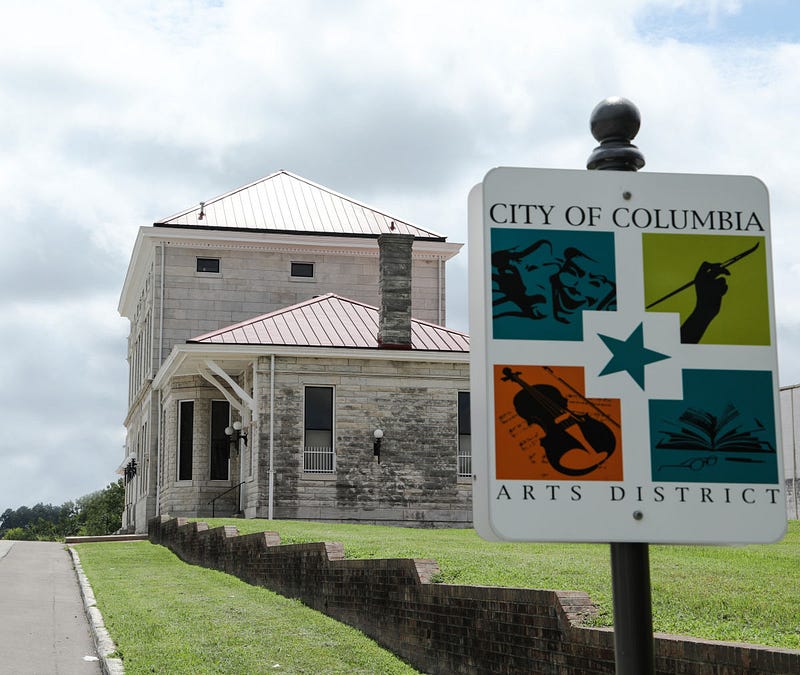
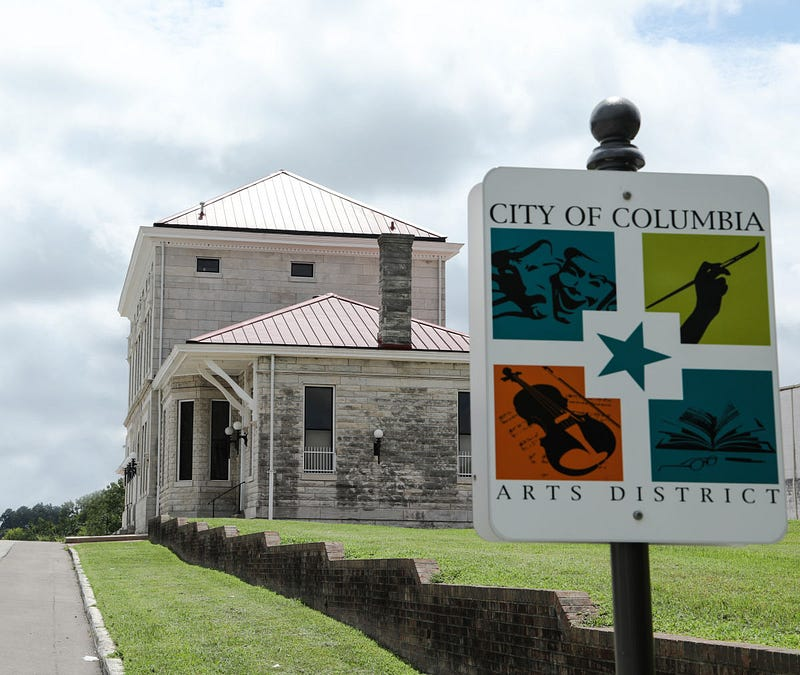
Columbia ARTS DISTRICT

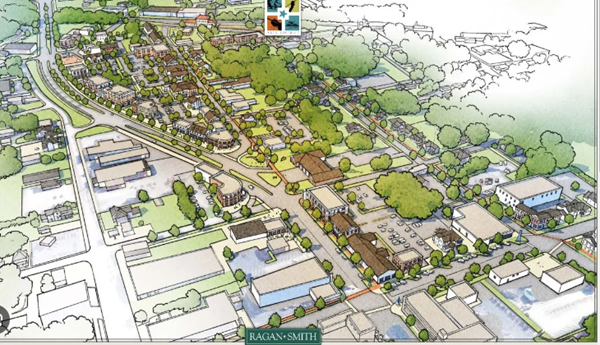
Read the full plan here.

The Columbia ARTS DISTRICT (CAD) was created to provide a haven for artists to live and work. The CAD is located a few blocks from Downtown Columbia in the South Garden/High Street area. The City has established historic zoning overlays to protect historic and cultural assets that include distinct neighborhoods like the ARTS DISTRICT. The area currently comprises several blocks of old warehouses, old houses (some historically significant), mobile homes and manufactured homes, and vacant lots. One warehouse building was turned into a multi-story mix of artist studios, retail spaces, coffee house, some office space. There are some restaurants and specialty shops in the District, but not many. Columbia is a small town of about 45,000 residents, growing 2–3% annually, and is located about 45 miles south of Nashville.

My Interest In Creating A Visioning Plan 
 For The ARTSWORKS ART DISTRICT

I am a relatively recent resident of Columbia, TN. I have an extensive background in city planning, city revitalization, art and design. The COLUMBIA ARTS DISTRICT area, about 1 square mile in size, and abutting the downtown, has excited me in so many ways, not least of which, because the idea to use the arts as a planning tool for community and economic development offers so many great possibilities.

The BIG question for me was whether you can create a community-based Arts District, where the focus and energy emerge from how the community interacts with and finds meaningful experiences within the space, rather than focusing on physical design per se.

My SECONDARY question was whether a District designed to bring artists to live, work and play together can remain competitively viable over time, or will the community either lose interest or will the area become so attractive that gentrification negates its original reason for being. Time will tell, … as will smart thinking, planning, and cooperative partnering.

My excitement comes from things like,

(1) Taking a proactive approach to planning for the arts, maximizing realistic and effective physical and social development, and minimizing unintended consequences, when making a space into a place.

(2) Promoting cooperative relationships among artists, planners, developers, educators, nonprofits, funding sources and the general public, leading to a greater sense of place, voicing a narrative for it, and celebrating it.

(3) Offering many possibilities for nontraditional engagement program and physical development and the community

(4) Focusing on the ‘arts’ (broadly defined) as a driver of community and economic development, perhaps generating new practices and ideas in urban planning, the arts and design, and thus elevating ideas about creative place-making

(5) Relying on a local framework to steer community and economic development, hopefully resulting in a more unique expression of the Columbia community

(6) Recognizing that the city has a strong commitment for developing the Arts District

(7) Having an early opportunity to create a strong vision for development, preventing some undesirable development outcomes.

The Arts As Defined By Columbia

Initially, Columbia Arts Council focused on 5:

· Visual Arts (painting, sculpture, applied arts, graphic arts)

· Theater

· Craft

· Music

· Writing

I suggested breaking out applied arts and graphic arts as their own discipline apart from visual arts.

I suggested adding:

· Fashion

· Interior Design

People pursue artistic and creative expression through a variety of outlets: formal theatrical performances, sculptures, paintings, and buildings; as well as the less formal arts, music and food festivals, celebrations and informal cultural gatherings, pickup bands, and crafts groups. Together, these formal and informal, tangible and intangible, professional and amateur artistic and cultural activities constitute a community’s cultural assets. These activities — which encompass a diverse set of locations, spaces, levels of professionalism and participation, products, events, consumers, creators, and critics — are essential to a community’s well-being, economic and cultural vitality, sense of identity, and heritage. (American Planning Association, 2011)

People participate in arts and culture at varying levels of skill and engagement. Participants include creators (from the professional actor to a child actor in a school play), consumers (from the audience member for an opera performance to the parent of the child in the school play), and supporters and critics (whether foundations, parents and school fund-raisers, or journalists).

Some create, while others listen to, watch, teach, critique, or learn a cultural activity, art form, or expression. Some are professional artists, designers, and inventors, while others engage informally in expressive activities or create innovative tools, relationships, or products.

The field as a whole can be represented within a framework that has four main aspects:

1. Degree of professionalism, (professional/formal à vocational/informal)

2. Type of product or activity, (tangible à intangible)

3. Locations and spaces, (specific purpose venue à non-arts venue)

4. Level of participation and involvement (creator à consumer)
 (American Planning Association, 2011)

What makes a great place? What keeps it great over a very long, sustained time?

These are questions we need to be asking ourselves as we translate visions of what can be into actual programs of community and economic development. This vision plan for the ARTSWORKS ARTS DISTRICT provides a lot of food for thought, some tools for clarifying options, and some suggestions for how to approach Placemaking over the next several years. It is an effort to help us collectively reinvent and reimagine what could be. Something more than attractive urban designs. Something distinctive from other cities and towns. Something with community and meaning and quality well-being, shaping how people come together, interact, share experiences and feel a special connection to this place we call the ARTSWORKS ARTS DISTRICT and this place we call Columbia.

The object is to create a place, not a design.

About Placemaking 
 (based on information from ArtPlace America
 
https://www.artplaceamerica.org/ )

Placemaking inspires people to collectively reimagine and reinvent public spaces as the heart of every community. Strengthening the connection between people and the places they share, placemaking refers to a collaborative process by which we can shape our public realm in order to maximize shared value. More than just promoting better urban design, placemaking facilitates creative patterns of use, paying particular attention to the physical, cultural, and social identities that define a place and support its ongoing evolution.

Great public spaces are those places where celebrations are held, social and economic exchanges occur, friends run into each other, and cultures mix. They are the “front porches” of our public institutions — libraries, field houses, schools — where we interact with each other and government. When these spaces work well, they serve as the stage for our public lives.

What makes some places succeed while others fail?

To be successful, places generally share the following four qualities:

1. They are accessible

2. People are engaged in activities there

3. The space is comfortable and has a good image

4. It is a sociable place: one where people meet each other and take people when they come to visit.

Access & Linkages

You can judge the accessibility of a place by its connections to its surroundings, both visual and physical. A successful public space is easy to get to and get through; it is visible both from a distance and up close. The edges of a space are important as well: For instance, a row of shops along a street is more interesting and generally safer to walk by than a blank wall or empty lot. Accessible spaces have a high parking turnover and, ideally, are convenient to public transit.

Activities

Activities can take many forms — one-off programs, ongoing programs, small number of participants to a large number of participants. The placemaking goal of each activity is that participants have a meaningful experience, and one they want to share with others.

Comfort & Image

Whether a space is comfortable and presents itself well — has a good image — is key to its success. Comfort includes perceptions about safety, cleanliness, and the availability of places to sit — the importance of giving people the choice to sit where they want is generally underestimated, and the availability of shade.

When it comes to accessibility, it isn’t simply enough to be able to get to a place. To fully enjoy a space, people must be able to navigate it and spend time there with dignity and confidence. Unfortunately, many spaces deliver a message of exclusion to their visitors.

Sociability

This is a difficult quality for a place to achieve, but once attained it becomes an unmistakable feature. When people see friends, meet and greet their neighbors, and feel comfortable interacting with strangers, they tend to feel a stronger sense of place or attachment to their community — and to the place that fosters these types of social activities.

Power of 10+

The idea behind this concept is that places thrive when users have a range of reasons (10+) to be there. These might include a place to sit, playgrounds to enjoy, art to touch, music to hear, food to eat, history to experience, and people to meet. Ideally, some of these activities will be unique to that particular place, reflecting the culture and history of the surrounding community. Local residents who use this space most regularly will be the best source of ideas for which uses will work best.

Some questions/concerns to consider when placemaking

  • Does the space function for people with special needs?
  • Providing shade, ways to cool off, or spots to take cover during a storm not only ensure that public spaces are usable in all weather, but also that they become trusted refuges in an era of climate crisis.
  • Accessible bathrooms
  • Regular maintenance of public spaces
  • The more activities that are going on at one time, and that people have an opportunity to participate in, the better
  • Good balance between men and women
  • People of different ages are using the space
  • The space is used throughout the day
  • A space that is used by both singles and people in groups is better than one that is just used by people alone because it means that there are places for people to sit with friends, there is more socializing, and it is more fun.
  • The ultimate determinant of a place’s success is how well it is managed.
  • Are people using the space or is it empty?
  • Are people in groups?
  • How many different types of activities are occurring — people walking, eating, playing baseball, chess, relaxing, reading?
  • Which parts of the space are used and which are not?
  • Are there choices of things to do?
  • Is there a management presence, or can you identify anyone who is in charge of the space?
  • Is this a place where you would choose to meet your friends? Are others meeting friends here or running into them?
  • Are people in groups? Are they talking with one another?
  • Do people seem to know each other by face or by name?
  • Do people bring their friends and relatives to see the place or do they point to one of its features with pride?
  • Are people smiling? Do people make eye contact with each other?
  • Do people use the place regularly and by choice?
  • Does a mix of ages and ethnic groups that generally reflect the community at large?
  • Do people tend to pick up litter when they see it?

Establishing An Arts Identity

Establishing an arts identity can take many directions. A vibrant arts scene no longer means a street lined with art galleries. It can include a broader segment of the creative community — theatre, music, writing, crafts, fashion, media arts, applied arts and graphic design, interior design. The specific arts identity for any community is shaped by those arts for which a community has a special affinity for, as well as the types of assets available to support those arts.

Depending upon the values and decision making criteria put into action today, the area can evolve, over time, towards one of 4 ways:

(1) Museum: people come to look, but often do not linger or return to look again; the art is static

(2) Amusement Park: people come to play (think lower Broadway in Nashville); the art is ignored

(3) Gentrified and Residential: people come to live and the area becomes somewhat insular, with the importance of the arts often diminished to the role of ornamentation

(4) Community organized around the idea of “art”: people come from near and far to interact with the arts as a way of enhancing a meaningful and memorable sense of self and community

I prefer option #4, and that is my bias throughout this visioning plan.

Development takes time and patience. It takes vision and values. Development with little to no or poor planning is a waste of time, and typically fails in its quest to realize any set of vision and values. Decisions made today will impact what the area looks like 25–50 years from now.

Columbia’s Art Culture

Columbia’s arts, culture, and music scene add flavor to the region, cultivated with the support of:

· Non-profit arts organizations, including multiple community theater groups

· ARTS DISTRICT

· Columbia Arts Council

· Columbia citizens

Columbia nightlife highlights the growing music culture as more artists showcase their talents at local restaurants and local venues.

Columbia Arts Council

COLUMBIA ARTS COUNCIL Authority: Promotes Arts in the Community Appointed by the Mayor Confirmed by Council Terms: Three Years Composition: Nine Members Involved in the Arts

Advised by Tourism & Marketing Director Role in Planning Process:

Final Decision on Appeals of Zoning Administrator’s Determination of Arts-Related Uses in the Arts District Overlay

City Specified Guiding Essential Values

Columbia has set a development goal to make an area adjacent to the downtown, in this plan referred to as the ARTSWORKS ARTS DISTRICT, into a place where the community organizes around the arts (broadly defined). These are the guiding essential values toward that end.

· The Arts

· Viability

· Connection and Flow

· Vitality

· Interactivity

· Diversification and Flexibility

· Steadfast

· Neighborly

· Leverage

· Sustainability

· The Arts: Emphasize the arts as the ARTSWORKS ART DISTRICT’s main theme. The arts are to be broadly defined as inclusive of visual artists, theater, crafts, writers, and musicians. The Arts are to be represented in a variety of ways, from business development, to exhibitions, to demonstrations, to public art, to the structuring of meaningful public experiences, to education, to physical infrastructure planning, to one-off as well as ongoing programs and events.

· Viability: Build, attract and retain creative talent. Encourage additional development of arts-related uses that complement the district’s theme. This will enhance the life and energy of the city, contribute to the long-term viability and success of businesses in the ARTSWORKS ARTS DISTRICT, and help the city attract new types of businesses which will diversify its commercial base.

· Connection and Flow: Columbia provides options for safe, efficient and accessible movement throughout the ARTSWORKS ARTS DISTRICT, including pedestrian walkways, proposed INTERACTIVE ARTS TRAILS (one by auto, the other by foot), attention to areas of potential conflict between cars, bicycles and pedestrians. The ARTSWORKS ARTS DISTRICT should be easily navigable by all.

· Vitality: Columbia ARTSWORKS ARTS DISTRICT is a safe community with opportunities for the personal and community expression through the arts (broadly defined), and the setting and maintaining of high standards for the quality of the built environment, the commercial and residential environment. Retain many of The District’s architectural features and landscape. Enable affordable residential and commercial spaces for artists and art-related businesses. Ensure many comforts throughout, such as seating and shading. Designed for lingering.

· Interactivity: Engage visitors in ways traditional artwork does not. Encourage community participation and meaningful interaction and immersion in some form with the art they are seeing, hearing, touching, smelling, experiencing. The ARTSWORKS ARTS DISTRICT should be seen by the public as a sociable place, where they want to come to meet others, are comfortable with strangers, share meaningful experiences, and where they want to bring their friends and family to see and experience.

· Diversification and Flexibility: The ARTSWORKS ARTS DISTRICT will include a mix of residential, restaurant, retail, art, educational, other commercial, hotel/motel/conference/exhibition/B&B /inn infrastructure. The ARTSWORKS ARTS DISTRICT will be a place for programs, exhibits, demonstrations, special events, educational and training related to visual and sculptural art, craft, theatre, music and writing. The ARTSWORKS ARTS DISTRICT will host several flexible-use spaces.

· Steadfast: The ARTSWORKS ARTS DISTRICT is viable as a livable, workable, and commercial area of Columbia, where development is economically sustainable and pertinent to both community and economic development, new development is cohesive and compatible, that the distribution of new development is balanced and flows organically throughout the entire delineated area, and the unique character of this neighborhood develops as vibrant, interactive and community based. Tensions between historical preservation and land use and business development are resolved.

· Neighborly: Columbia ARTSWORKS ARTS DISTRICT is a place where all residents feel welcome and included in community decisions.

· Leverage: Where it makes sense, Columbia should use a leverage approach to encourage developments and programs. Columbia can leverage money, power, position, and authority. Columbia might offer an incentive where every private dollar raised would be matched with one dollar of city funds. Columbia might foster (and mentor) public/private partnerships. Columbia might use its location, population and industrial mix to its advantage. Columbia might develop additional criteria and planning/development standards and codes to the advantage of the ARTSWORKS ARTS DISTRICT and leading development in line with values, goals and objectives. Columbia might rely on volunteers to accomplish many of its development and program goals.

· Sustainability: The ARTSWORKS ARTS DISTRICT over time should become less and less dependent on city funds.

Concerns

It is important to try and anticipate what kinds of things can go right, and what kinds of things can go wrong, as the ARTSWORKS ARTS DISTRICT develops. Will initial investments prove overly optimistic about their return? Will the area generate a lot of excitement at first, but not be able to sustain that excitement over time? Will “art” remain the core organizing principle for the area, or be replaced by unrelated commercial and/or residential development?

It is also important to try and anticipate how Columbia’s ARTSWORKS ARTS DISTRICT will continue to provide stimulus to sense of community and fiscal viability, and how it might not. Will visitors to the district be motivated to stay long enough to spend money there? Will they return and visit again? Will they have a memorable experience that they want to share with others?

It is also important to try and anticipate how Columbia’s ARTSWORKS ARTS DISTRICT can create and retain a competitive advantage over similar or competing areas in neighboring towns, in other towns in Tennessee and in other towns throughout the United States. If every town takes an interior design approach (Museum) with placement of murals and sculptures, how will Columbia differentiate itself?

What things will keep the ARTSWORKS ARTS DISTRICT going over the next 10–50 years as it develops, and what things will prove to be impediments?

Goals and Objectives

COLUMBIA ARTSWORKS ARTS DISTRICT GOALS:
 A community organized around creative talent and businesses can improve…

#1: Character

#2: Opportunity

#3: Support

#4: Investment

#5: Administration and Regulation

Read the full plan here.

Table of Contents

1. THE ARTSWORKS DEVELOPMENT OPPORTUNITY, p. 2
2.
ESSENTIAL GUIDING VALUES, p. 8
3.
PLACEMAKING, p. 11
4.
WHAT IS INTERACTIVE ART, p. 15
5.
CONCERNS, p. 17
6.
THE FUNCTIONAL PRIMARY NEEDS AND SECONDARY EFFECTS
 OF THE VARIOUS ARTS, p. 21
7.
GOALS AND OBJECTIVES, p. 23
8.
LAND USE AND PROGRAM APPROACHES AND POSSIBILITIES, p. 29
Primary strategies and tools towns resort to, p. 30
9.
EXAMPLES OF TYPES OF PROGRAM ACTIVITIES, p. 39
What Is An Arts Trail, p. 40
9a. Visual Arts, p. 45
9b. Theatre, p. 50
9c. Outdoor Stage Options, p. 55
9d. Crafts, p. 60
9e. Music, p. 65
9f. Writing, p. 69
9g. Applied Arts and Graphic Arts, p. 73
9h. Fashion, p. 77
9i. Interior Design, p. 79
9j. Interdisciplinary Ideas, p. 82
10.
DESCRIPTION OF AREA, p. 83 
With Suggestions For High Priority Land Uses Development, p. 85
How a CONFERENCE HOTEL differs from a CONVENTION HOTEL, p. 98
11.
IMPLEMENTATION PROPOSALS AND RECOMMENDATIONS, p. 100
Creating Partners, p. 117
Organizing Volunteers, p. 118
12.
FUNDING POSSIBILITIES, p. 119
In-state Tennessee funds, p. 120
Funding methods used to develop arts districts across America, p. 122
Foundation and grant funds in Tennessee which may be used for the arts, p. 124
Funding and grant programs for the arts and artists, p. 125
13.
ORGANIZATIONAL RESPONSIBILITIES, p. 128
14.
STANDARDS & CRITERIA, p. 130
15.
CASE STUDIES, p.138

Read the full plan here.

_______________________________________________________

I have set up a space for our community of jewelry designers — Warren Feld Jewelry’s PATREON HUB — to learn, to interact, and to provide and/or get feedback on what they are working on. Please join here.

Be part of a community of jewelry designers who recognize that we have a different way of thinking and doing than other types of crafters or artists. Access more articles and other resources not included in my medium.com site.

Visit my website www.warrenfeldjewelry.com

Feel free to add your comments.

Shop with us at Land of Odds.

Posted in architecture, Art or Craft?, beadwork, business of craft, craft, design thinking, Entrepreneurship, handmade jewelry | Tagged: , , , , , , , , , | Leave a Comment »

SUBSCRIBE TO MY JEWELRY DESIGNERS’ HUB

Posted by learntobead on September 5, 2024

https://www.patreon.com/warrenfeldjewelry

I have set up a space for our community of jewelry designers — Warren Feld Jewelry’s PATREON HUB — to learn, to interact, and to provide and/or get feedback on what they are working on. Please join here.

Be part of a community of jewelry designers who recognize that we have a different way of thinking and doing than other types of crafters or artists.

WHY SUBSCRIBE?

Engage with a community. Benefit from its collective power — insights, reactions, feedback, foresight, and directing you to opportunities.

Never miss an update. You won’t have to worry about missing anything. Every new article of interest, and announcements about kits, workshops and webinars, chat groups, feedback sessions, and special promotions, goes directly to your inbox.

I bring articles, tutorials, and chat-group discussion sessions to you about…

  • What it means to be fluent and literate in design?
  • What the implications are for defining jewelry as an “object” versus as an “intent”?
  • Why some jewelry draws your attention, and others do not?
  • How jewelry design differs from art or craft?
  • How you judge a piece as finished and successful?

SUBSCRIBE NOW

MEMBERSHIP TIERS:

(1) FREE

· Articles. Stay up-to-date. Access each new article up to 3 months.
· Advanced Notice. Kits, webinars, workshops, tutorials, promotions, discounts
· Free Mini-Lesson Download. One free downloadable Mini-Lesson of your choice

(2) SUBSCRIBER (7-day free trial)

· First view of all articles and kits
· Access to all the articles in the archive
· 25% Discount on beads, supplies and kits on LandOfOdds.com website
· Priority in posting comments
· All member chats
· Once a month online chat with Warren Feld
· + All free-tier member benefits

(3) VIP SUBSCRIBER

· Private Coaching with Warren Feld, for 2 hours/month
· + All benefits from other tiers

SUBSCRIBE NOW

www.warrenfeldjewelry.com

www.patreon.com/warrenfeldjewelry

Posted in architecture, Art or Craft?, art theory, bead stringing, bead weaving, beads, beadwork, business of craft, color, Contests, craft, craft shows, creativity, design management, design theory, design thinking, enrichment travel, Entrepreneurship, handmade jewelry, jewelry, jewelry collecting, jewelry design, jewelry making, Learn To Bead, pearl knotting, professional development, Resources, Stitch 'n Bitch, wire and metal, Workshops, Classes, Exhibits | Tagged: , , | Leave a Comment »

HOW TO BEAD A ROGUE ELEPHANT: The Musings Of A Jewelry Designer: Color

Posted by learntobead on April 22, 2024

Warren Feld

Warren Feld

I am a color addict.

Not sure how I got this way. I can remember when I was 10 or 11 years old, my friend Gary and I, and sometimes Ira, who was sometimes a friend, sometimes someone we bullied, used to set fires, and then try to put them out. We would set fire to this field behind the Ford dealership on Rt. 22. We would set fire to homes and businesses under construction. We would set fires, let them burn awhile and then try to put them out by stamping them with our feet, putting blankets over them, pouring water on them.

We set fires until we were caught. By the police. Punished severely by our parents who could not figure out why we were setting fires. The word because was insufficient for them. We did it because we could. The fields and buildings were there waiting to be used. We used them the way we knew how. That gave us some fun. A feeling of power. And that was that.

That was that for Gary and Ira. Actually, not for me. I became mesmerized. The colors. The contrasts. The saturation and vibrancy. The interplay. The movement and rapid color changes. The certainty when it was all over.

My gaze locked in, never wavering, staring as the light tans and beiges of the tall field grasses, very still, began undulating with reds and oranges, some blues, some maroons, the fiery colors taking over, first a small area, then more and more, until the colors were more powerful than the heat generated by the fire. Once the fire was put out, I literally felt the strong juxtaposition between charcoal and beige, at once listless and lifeless, yet exuding a powerful finality.

Color is such a powerful influencer. I never set fires again, but, at the same time, I had no one to share my very personal, very emotional, very primal color experiences with until I was in my late 20’s. In school, I was always tracked with the more intelligent kids. This meant rewards for math and science, and some put downs for art and music. My parents did not want to hear about anything else besides lawyer and doctor.

Soon after Gary and Ira and I were caught, I moved away.

But I doubt color was in their forethoughts as we set fires to things.

The Jewelry Designer Colors Differently Than The Artist

You cannot paint with beads and other jewelry components.

I am going to repeat this: You cannot paint with beads and other jewelry components.

When you take color class after color class rooted in art, they are teaching you how to paint. You can’t do this with jewelry and beads.

I give this warning to all my students. I repeat it frequently in the articles I write. I follow it carefully when designing my own pieces. I have been challenged frequently by people who make jewelry and consider themselves artists. But to create successful jewelry takes you beyond art, its ideas, constructs and precepts. Jewelry has some roots in art, which is true. But it also has roots in craft. It is very comparable to architecture. Its product — the outcome — plays a different role and must conform to different social and physical tensions than paintings and sculptures. I repeat: You cannot paint with beads.

As frustrating as this can be, you cannot ignore the fact that Color is the single most important Design Element. Colors, their selection, use and arrangement, are believed to have universal powers to get people to see things as harmonious and appealing. Color attracts attention. A great use of color within an object, not only makes that object more coherent, it can make it more contagious, as well. Using colors that do not work well together, or using too many colors or not enough colors, or using colors which look good on paper but distort in reality can put people off.

Jewelry Designers can learn the artistic basics of Color concepts and theories. They can reference this visual language of color to influence how they go about making choices, including those about picking and using colors. However, jewelry artists who are fluent in design will be very aware of the limitations this artistic, painterly language imposes on them. They will have to learn how to decode, adjust and leverage their thinking to anticipate how the bead and other related and integrated materials assert their needs for color, and how to strategically compose, construct and manipulate them.

Jewelry, unlike painting or sculpture, has certain characteristics and requirements which rely on the management and control of color, its sensation and its variability with a slightly different emphasis than learned in a traditional art class. Jewelry is a 3-dimensional object, composed of a range of materials. Jewelry situates, moves and adjusts in relation to the human body and what that body is doing at the moment.

To get the attention their jewelry deserves, jewelry artists must become fluent with color selection and application from their own disciplinary perspective. We must understand color in jewelry as the jewelry is worn, and worn in a particular context or situation. Ever-changing directions and intensities of light and shadow, reflection, absorption and refraction. The observation that color may be present, even projected (the color shadow), outside the boundaries of the bead or jewelry component itself.

Beads [here I use ‘beads’ as a stand-in for all the component parts and stringing and canvas materials used in a piece of jewelry] are curved or faceted or otherwise shaped, and the shape and texture and material and dimensionality and even the hole through it affect the color, its variation and its placement and movement on the bead’s surface. They affect how light reflects and refracts, so depending on the angle at which you are standing, and how you are looking at the bead, you get some unexpected, unanticipated, sometimes unwanted colors in your piece of jewelry.

Additionally, you need to anticipate how the bead, when worn, can alter its color, depending on the source and positioning of light, the type and pace of movement of the wearer, and how the eye interacts with the bead at any point of time or positioning. There are many more color tensions that come from the interrelationships between positive and negative spaces. There are many gaps of light between each pair of beads, and you can’t paint these in. The colors don’t blend, don’t merge, don’t spill over, don’t integrate. You can’t create the millions of subtle color variations that you can with paint.

I’m not suggesting that beaders and jewelry makers be afraid of colors. Rather, they should embrace them. They should learn insights into understanding colors. They should be inspired by colors. They should express their artistic and creative selves through color. They should use color palettes to their fullest. They should recognize how their various audiences see and claim and interact with color.

It is most important that jewelry designers understand color, its use and application from their own disciplinary standpoint. In some sense, however, the approaches of most bead artists and jewelry designers too often remain somewhat painterly — too rooted in the Art Model.

The Art Model ignores things about functionality and context. The Art Model does not anticipate all the additional management and control issues which arise with jewelry creation and how /where / when it is worn. The Art Model diminishes how the individuality of the designer, and the subjective responses of the wearer and viewer affect each other. In many respects, these are synergetic, mutually dependent and reciprocal. The Art Model understands the success of jewelry only as if the jewelry were sitting on an easel, not as it is worn. When jewelry is treated as an inanimate object, apart from when it is worn, then traditional art color theories would suffice and apply.

As a result, when the use of color is solely dictated by art theory, then color theories get oversimplified for the jewelry artist. “Value” is barely differentiated from “Intensity”. Color selection focuses too much on harmony and variety, and too little on resonance and edginess. Color training too often steers jewelry designers towards a step-by-step, paint-by-number sort of approach to color selection and application. Color theory seeks to explain the universal, and paintings, given that they are immobile, hung on a wall, give time and space for the viewer to experience these universals.

Jewelry, on the other hand, requires an understanding of how color can be adapted to more subjective experiences. It does not stay in the same place. It is not desired in the same way across individuals who view it and wear it. As such, the co-dependent relationship between Color and other Jewelry Design Elements is downplayed and glossed over. This is a major disservice.

Designers need to think of colors as building blocks, and the process of using colors, as one of Creative Construction. Creative Construction requires focusing on how color (and multiple co-existing colors) is (are) sensed, and sensed by various audiences which include the artist him- or herself, and the wearer and the viewer, and the exhibitor, collector, and the seller, if need be. Creative Construction also requires anticipating how color is sensed within those context(s) and situation(s) the jewelry will be worn. Creative Construction includes an ability to anticipate how the various audiences of the designer use color to assume, perceive, understand, express, value and desire jewelry within any context.

All jewelry designers, including myself, are challenged with tasks like controlling the presentation of color(s) along a jewelry object’s silhouette. Or in blending colors among fixed physical objects awkwardly aligning or misaligning within some positive and negative spaces. Or having two or more colors co-exist within the same space or form which may or may not harmonize, given the reality that beads and other jewelry objects do not come in every possible and desirable color, nor consistently express any particular color over their entire surface.

I have found the use of simultaneity effects especially useful here. The one I use the most is that of grays. Gray takes on the colors around it. If I line up an orange bead, then a gray bead, then a blue bead, the middle gray bead will create the perception of a blended orange to blue form. Any bead with an underlying gray or black tone, strategically placed, will accomplish some color blending otherwise problematic.

I often play with other simultaneity effects. Some colors in combination emphasize warmth, and others cold. A sense of temperature (for example a red square embedded within a white square vs. that same red square embedded within a black square) can sometimes be used to divert the mind’s attention from whether the colors correctly harmonize.

In a similar way, some colors in combination (example a yellow square within a black square vs. within a white square) can create the illusion of either projecting or receding, and this too can be used to divert the mind’s attention from whether the colors correctly harmonize.

In my pieces, you will often find colors which, if not used strategically in combination and placement, would not seem to go together. They don’t fit a color scheme. They do not perfectly conform to a mathematical algorithm. They might even clash. More often, however, they just seem off in some way. But by smartly using simultaneity effects, they feel whole, consistent, coherent, right in some way. But also intriguing as the viewer’s mind tries to make sense of them. The colors resonate and are edgy in some way, yet feel harmonious, and the viewers can never figure out why. I intentionally create an object which lacks inherent meaning in order to trap the viewer into trying to find inherent meaning. Fun stuff. And something which often draws the viewer’s attention to my pieces, and keeps their attention there.

I like to play with color proportions. There are ideal proportions of the presence of any two or more colors. Red should appear in equal proportions to green. There should be one orange for any two blues. In art, we would strive to achieve the perfect proportions. In jewelry design, however, I would want to play with imperfections in proportions to give an edginess to my piece. This edginess, if not gone too far, enhances how the jewelry resonates emotionally for the wearer or buyer. We want our jewelry to have a little bit of edginess, or else it may feel harmonious yet boring and banal.

I believe the jewelry designer needs to be able to apply the careful of consideration of color with the goal of evoking resonance in the viewer. Something beyond harmony. Something represented by the difference of the viewer saying I like it, from the viewer saying I want to wear it, or I want to buy it. The designer is here to perhaps emphasize a little bit of the absurdity in life, some playfulness, some inquisitiveness which result from tensions between order and chaos, meaning and meaninglessness.

The designer is there, in part, to challenge the viewer’s subjective interpretations. This is especially true as the jewelry is worn and the wearer moves from different situations, contexts, and lighting. The use of color in jewelry designer often fails when the designer merely tries to duplicate a perfect color scheme, given perfect lighting and no movement. Jewelry is not a painting or sculpture to be displayed in fixed position. It’s much more. Using color from the designer’s viewpoint, rather than of the artist, is a very useful tool.

All these and similar color tricks I use as a jewelry designer contribute to how my jewelry expresses and reflects my authenticity. They add the cachet to my pieces as contemporary. Uninhibited by social norms encapsulated in art theory rules for the use of color. Creating more of a sense of freedom in my pieces, a sense which affects the feelings of freedom the wearer has. Transcendence. A re-imagining. Revelation, connection, awakening.

That’s what my Rogue Elephant needs, wants, demands. In this chaotic and indifferent universe, that rogue-ness could not have it any other way.

_______________________________

I hope you found this article useful. Please consider sharing. Thank you for clicking the CLAP HANDS icon at the bottom of this article.

I’d welcome any suggestions for topics (warren@warrenfeldjewelry.com)

Also, check out my website (www.warrenfeldjewelry.com).

Enroll in my jewelry design and business of craft Video Tutorials online. Begin with my ORIENTATION TO BEADS & JEWELRY FINDINGS COURSE.
Take my tutorial on THE JEWELRY DESIGNER’S APPROACH TO COLOR .

Follow my articles on Medium.com.

Check out my books on Amazon.com

Subscribe to my Learn To Bead blog (https://blog.landofodds.com).

Follow my series HOW TO BEAD A ROGUE ELEPHANT.

Visit Land of Odds online (https://www.landofodds.com)for all your jewelry making supplies.

Check out my Jewelry Making and Beadwork Kits.

Add your name to my email list.

_________________________________________________________________

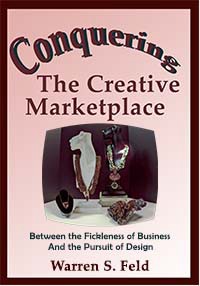
CONQUERING THE CREATIVE MARKETPLACE: Between the Fickleness of Business and the Pursuit of Design

KindlePrintEpub

SO YOU WANT TO BE A JEWELRY DESIGNER
Merging Your Voice With Form

Ebook , Kindle or Print formats

The Jewelry Journey Podcast
“Building Jewelry That Works: Why Jewelry Design Is Like Architecture”
Podcast, Part 1
Podcast, Part 2

PEARL KNOTTING…Warren’s Way
Easy. Simple. No tools. Anyone Can Do!

EbookKindle or Print

SO YOU WANT TO DO CRAFT SHOWS: 16 Lessons I Learned Doing Craft Shows

EbookKindle or Print

BASICS OF BEAD STRINGING AND ATTACHING CLASPS

EbookKindle or Print

___________________________________________

Posted in architecture, Art or Craft?, art theory, bead stringing, bead weaving, beads, beadwork, color, craft, creativity, design management, design theory, design thinking, Entrepreneurship, handmade jewelry, jewelry, jewelry design, jewelry making, Learn To Bead, pearl knotting, professional development, wire and metal | Tagged: , , , , | Leave a Comment »

Don’t Get Caught Falling Into The Abyss of Self-Doubt: Are any of these 8 questions keeping you from designing jewelry?

Posted by learntobead on April 20, 2024

Warren Feld

Warren Feld
11 min read

Keep From Letting ‘Doubt’ Paralyze You As A Jewelry Designer

For the novice, all that excitement at the beginning, when thinking about making jewelry and making some pieces, sometimes collides with a wall of developing self-doubt.

It’s not easy to quiet a doubt.

As a jewelry artist, you organize your life around an inspiration. There is some fuzziness here. That inspiration has some elements of ideas, but not necessarily crystal clear ones. That inspiration has some elements of emotions — it makes you feel something — but not necessarily something you can put into words or images or fully explain. You then need to translate this fuzzy inspiration into materials, into techniques, into color, into arrangements, into a coherent whole.

You start to make something, but realize you don’t know how to do it. But you want to do it, and do it now. However, to pick up the needed skills, you realize you can’t learn things all at once. You can’t do everything you want to do all at once. That initial excitement often hits a wall. Things take time to learn. There are a lot of trial and error moments, with a lot of errors. Pieces break. Combining colors and other design elements feels very awkward. Picking the right clasps and rings and connectors and stringing materials is fraught with implications. Silhouettes are confusing. You might get the right shape for your piece, but it is difficult to get the right movement, drape and flow, without compromising that shape.

To add to this stress and strain, you need to show your jewelry off. You might want someone to like it. To want it. To need it. To desire it. To buy it. To wear it. To wear it more than once. To wear it often. To exhibit it. To collect it. To show and talk about it with others. And how will all these other people recognize your creative spark, and your abilities to translate that spark into a wonderful, beautiful, functional piece of jewelry, appropriate for the wearer and appropriate for the situation?

Frequently, because of all this, the artist experiences some sense of doubt and self-doubt. Some paralysis. Can’t get started. Can’t finish something. Avoiding showing your pieces to others. Wondering why you became a jewelry designer in the first place.

Doubt holds you back from seizing your opportunities.

It makes getting started or finishing things harder than they need to be.

It adds uncertainty.

It makes you question yourself.

It blocks your excitement, perhaps diminishing it.

Doubt and Self-Doubt should be useful in forcing you to think about and question your choices. However, for many jewelry designers, it mostly holds them back.

Having doubt and self-doubt is common among all artistic types. After all, for much of what you do and how you spend your time, you’re mostly alone with your thoughts.

What becomes important is how you manage and overcome it. You do not want your doubts to get in the way of your creative process and disciplinary development. You want your doubts, rather, to inform them.

8 Major Ways Doubts Can Force You Into That Abyss

There are 8 major ways in which jewelry designers get caught beginning to fall into that abyss we call self-doubt:

1) What If I’m Not Creative Enough or Original Enough or Cannot Learn or Master or Don’t Know a Particular Technique?

2) What If No One Likes What I Make?

3) What If No One Takes Me Seriously As An Artist And Designer?

4) I Overthink Things and Am A Bit of a Perfectionist.

5) How Can I Stay Inspired?

6) Won’t People Steal My Work?

7) Being Over Confident or Under Confident

8) Role Confusion

1. What If I’m Not Creative Enough or Original Enough or Cannot Learn or Master or Don’t Know a Particular Technique?

Everyone has some creativity baked into their being. It is a matter of developing your way of thinking and doing so that you can apply it. This takes time.

So does originality. The word originality can be very off-putting, but it does not have to be.

At first, when you are getting started making jewelry, originality will mean that you will try different ways of personalizing projects. There are always things you can do to bring some aspects of originality to your pieces. This might be the choice of colors, or using a special clasp, or rearranging some elements in your composition.

Again, as with creativity, the ability to be more and more original will evolve over time. It is helpful to think of originality, not necessarily as coming up with something completely new, but rather as differentiation — how you differentiate yourself from other jewelry designers.

For almost everyone, you don’t begin your design career at the height of your levels of creativity and originality. Yes, if you look around you, other people are more creative and original than you or have more skills than you. Don’t let these observations be a barrier to your own development as a jewelry designer. You get there through persistence and hard work. You handle your inner critic. You may not be there, yet — the key word here is yet. But you will be.

2. What If No One Likes What I Make?

We all have fears about how our creativity and originality are going to be evaluated and judged. We project our self-doubts to the doubts we think we see and feel from others. What if no one wants to wear my pieces, or buy my works?

We can’t let these outsider reactions dictate our lives and creative selves. A key part of successful jewelry design is learning how to introduce what we do publicly. At the least, it is the core nature of the things we create that they are to be worn on the body. Jewelry is a very public thing.

Turn negative comments into positive ideas, motivators, insights, explorations. Allow yourself some give and take, some needs to step back awhile, some needs to tweak. Jewelry design and jewelry making are iterative processes. They in no way are linear. Your outcomes and their success are more evolutionary, than guaranteed.

Distressing about what others may think of your work can be very damaging to your self-esteem. It can amplify your worries. Don’t go there.

Don’t become your worst critic.

3. What If No One Takes Me Seriously As An Artist And Designer?

Jewelry design is an occupation in search of a profession. You will find that a lot of people won’t recognize your passion and commitment. They may think anyone can design jewelry. They may think of jewelry making as a craft or some subset of art, not as something unique and important in and of itself. They may wonder how you can make a living at this.

The bottom line: if you don’t take yourself seriously as a jewelry designer, no one else will.

People will take you seriously as they see all the steps you are taking to master your craft and develop yourself as a professional.

4. I Over Think Things And Am A Bit Of A Perfectionist

Some designers let a sense that their work is not as good as imagined get in the way. They never finish anything. They let doubt eat away at them.

Perfectionism is the enemy of the good. It’s great to be meticulous, but emotionally, we get wrecked when anything goes astray, or any little thing is missing, or you don’t have that exact color or part you originally wanted.

Go ahead and plan. Planning is good. It’s insightful. It can be strategic. But also be sure to be adaptable and realistic. Each piece is a stepping stone to something that will come next.

The better jewelry designer develops a Designer’s Toolbox — a collection of fix-it strategies to deal with the unfamiliar or the problematic.

Overthinking can be very detrimental. You can’t keep changing your mind, trying out every option, thinking that somewhere, someplace there exists a better option. Make a choice and get on with it. You can tweak things later.

Yes, attention to detail is important. But so is the value of your time. You do not want to waste too much time on trivial details.

Be aware when you begin over-analyzing things. Stop, take a breath, make a decision, and move on.

5. How Can I Stay Inspired?

Designing a piece of jewelry takes time, sometimes a long time. That initial inspirational spark might feel like it’s a dying ember.

Don’t let that happen.

Translate that inspiration into images, colors, words, sample designs, and surround your work space with these.

Talk about your inspiration in detail with family and friends.

6. Won’t People Steal My Work?

Many jewelry designers fear that if they show their work publicly, people will steal their ideas. So they stop designing.

Yet jewelry design is a very communicative process which requires introducing your work publicly. If you are not doing this, then you are creating simple sculptures, not jewelry.

Yes, other people may copy your work. See this source of doubt as an excuse. It is a self-imposed, but unnecessary, barrier we might impose to prevent us from experiencing that excitement as a jewelry designer. Other people will never be able to copy your design prowess — how you translate inspiration into a finished piece. That is unique and special to you. It is why the general public responds positively to you and your work.

7. Over Confidence can blind you to the things you need to be doing and learning, and Under Confidence can hinder your development as a designer.

Too often, we allow under confidence to deter us from the jewelry design and making tasks at hand. We always question our lack of ability and technical prowess for accomplishing the necessary tasks at hand. It is important, however, to believe in yourself. To believe that you can work things out when confronted with unfamiliar or problematic situations. It is important to develop your skills for thinking like a designer. Fluency. Flexibility. Originality. There is a vocabulary to learn. Techniques to learn. Strategies to learn. These develop over time with practice and experience. You need to believe in your abilities to develop as a designer over time.

With over confidence comes a naivete. You close off the wisdom to listen to what others have to say or offer. You stunt your development as an artist. You overlook important factors about materials and techniques to the detriment of your final designs and products. You close yourself off to doubt and self-doubt, which is unfortunate. Doubt and self-doubt are tools for asking questions and questioning things. These help you grow and develop as an artist and designer. These influence your ability to make good, professional choices in your career.

8. Role Confusion

Jewelry artists play many roles and wear different hats. Each has its own set of opportunities, requirements, and pressures that the artist must cope with. It’s a balancing act extraordinaire.

First, people who make jewelry wear different hats: Artist and Designer, Manufacturer, Distributor, Retailer, and Exhibitor.

Second, people who make jewelry have different needs: Artistic Excellence, Recognition, Monetary Gain, or Financial Stability.

Third, the artist needs to please and satisfy themselves, as well as other various clients.

Fourth, the artist constructs pieces which need to function in different settings: Situational, Cultural, Sociological, Psychological.

Last, the artist must negotiate a betwixt and between situation — a rite of passage — as they relinquish control over the piece and its underlying inspirations to the wearer and the viewer, who have their own needs, desires and expectations.

This gets confusing. It affects how you pick materials and supplies. Which techniques you use. What marketing strategies you employ. How you value and price things. Anticipating who your audience is. And the list goes on.

It is important to be aware (metacognitive) of what role(s) you play when, and why. Given the role, it is important to understand the types of choices you need to make, when constructing a piece of jewelry. It is critical to understand the tradeoffs you will invariably end up making, and their consequences for the aesthetic, emotional and functional success of your pieces.

Some Advice

While doubt and self-doubt can hinder our development as jewelry designers, some degree of these may be helpful, as well.

To develop yourself as a jewelry designer, and to continue to grow and expand in your profession, you must have a balanced amount of both doubt and self-doubt. Uncertainty leads to questioning. A search for knowledge. Some acceptance of trial and error and experimentation. A yearning for more reliable information and feedback.

Jewelry design uses a great deal of emotion as a Way of Knowing. Emotions cloud or distort how we perceive things. They may lead to more doubt and worry and lack of confidence. But they also enhance our excitement when translating inspirations into designs.

· Don’t let your inner doubts spin out of control. Be aware and suppress them.

· Be real with yourself and your abilities.

· Keep a journal. Detail what your doubts are and the things you are doing to overcome them.

· Create a developmental plan for yourself. Identify the knowledge, skills and understandings you want to develop and grow into.

· Remember what happened in the past the last time doubt got in your way. Remember what you did to overcome this doubt. Remember that probably nothing negative actually happened.

· Talk to people. These can be friends, relatives and colleagues. Don’t keep doubts unto yourself.

· Don’t compare yourself to others. This is a trap. Self-reflect and self-evaluate you on your own terms.

· Worrying about what others think? The truth is that people don’t really care that much about what you do or not do.

· Don’t beat yourself up.

· Get re-inspired. This might mean surrounding yourself with images and photos of things. It might mean a walk in nature. It might me letting someone else’s excitement flow over to you.

· Take breaks.

· See setbacks as temporary.

· Celebrate small steps.

· Keep developing your skills.

· Set goals for yourself.

_______________________________

I hope you found this article useful. I’d welcome any suggestions for topics (warren@warrenfeldjewelry.com)

Also, check out my website (www.warrenfeldjewelry.com).

Enroll in my jewelry design and business of craft Video Tutorials online. Begin with my ORIENTATION TO BEADS & JEWELRY FINDINGS COURSE.

Follow my articles on Medium.com.

Subscribe to my Learn To Bead blog (https://blog.landofodds.com).

Visit Land of Odds online (https://www.landofodds.com)for all your jewelry making supplies.

Check out my Jewelry Making and Beadwork Kits.

Add your name to my email list.

_________________________________________________________________

CONQUERING THE CREATIVE MARKETPLACE: Between the Fickleness of Business and the Pursuit of Design

KindlePrintEpub
SO YOU WANT TO BE A JEWELRY DESIGNER
Merging Your Voice With Form

Ebook , Kindle or Print formats

The Jewelry Journey Podcast
“Building Jewelry That Works: Why Jewelry Design Is Like Architecture”
Podcast, Part 1
Podcast, Part 2

PEARL KNOTTING…Warren’s Way
Easy. Simple. No tools. Anyone Can Do!

EbookKindle or Print

SO YOU WANT TO DO CRAFT SHOWS: 16 Lessons I Learned Doing Craft Shows

EbookKindle or Print

BASICS OF BEAD STRINGING AND ATTACHING CLASPS

EbookKindle or Print

___________________________________________

Posted in architecture, Art or Craft?, art theory, bead stringing, bead weaving, beads, beadwork, business of craft, craft shows, creativity, design management, design thinking, Entrepreneurship, jewelry design, jewelry making, Learn To Bead, pearl knotting, professional development, wire and metal, Workshops, Classes, Exhibits | Tagged: , , , , | Leave a Comment »

HOW TO BEAD A ROGUE ELEPHANT The Musings Of A Jewelry Designer: Creating

Posted by learntobead on March 9, 2023

Create, Create, Create

In the beginning, and you know how it goes, created the heavens and the earth. Create. In the first section of Genesis, the word create gets used over and over and over again, as if, not only to emphasize its importance, but to marvel at the concept. A beautiful universe is created. Humankind is created. Animals are created. There’s a flood and a re-creation. Create, create, create.

There are two Hebrew words used in Genesis which hold the idea of create within them: bara, meaning to create, and asah, meaning to make or do. They are used interchangeably. Sometimes reserved to represent God and supernatural powers. Other times to represent the impacts of people creating things and what happens over time. The meaning of one word is not more important than the meaning of the other.

And I think those folks who compiled the various stories into the Bible tried to interrelate the idea of a God with the power to create with the idea of humans having the power to create. Create, create, create. As if they kept writing and writing and writing in an attempt to clarify and come to grips with for themselves what the awesome power of creation was inside themselves, and how to use that power. There is a freedom to be your authentic self, and that was celebrated.

And this is what I spoke about in the first sermon I gave as the unofficial, untrained, never-seeking-to-be, rabbi in Oxford, Mississippi.

The Jewish congregation in Oxford varied between 20 and 40 individuals over the 5 years I was there. Some were Jewish and some only interested in Judaism. Did not matter. Vinnie and Ralph had a beautiful home there, and converted part of their home to a sanctuary. Temples in Memphis and Jackson, Mississippi lent the temple a torah and several other religious items, and a collection of prayer books. The person who was serving as rabbi was a professor who was about to move away the year I came to Oxford. I spoke Hebrew and that was my only qualification. I become the rabbi. I officiated over a wedding, a bar and bat mitzvah, and services once a month.

CREATIVITY ISN’T FOUND, IT’S DEVELOPED

Kierkegaard — and I apologize for getting a little show-off-y with my reference — once described Creativity as “a passionate sense of the potential.” And I love this definition. Passion is very important. It is motivating. Creativity obviously important because it’s a way of thinking through things.

Passion and creativity can be summed up as some kind of intuitive sense made operational by bringing all your capabilities and wonderings and technical know-how to the fore. All your mechanical, imaginative and knowledge and skills grow over time, as do your abilities for creative thinking and applications. Creativity isn’t inherently natural. It is something that is developed over time as you get more and more experience designing jewelry.

You sit down, and you ask, what should I create? For most people, especially those getting started, they look for patterns and instructions in bead magazines or how-to books or websites online. They let someone else make all the creative choices for them. The singular creative choice here is picking what you want to make. And, when you’re starting, this is OK.

When you feel more comfortable with the materials and the techniques, you can begin to make additional choices. You can choose your own colors. You can make simple adaptations, such as changing out the bead, or changing the dimensions, or changing out a row, or adding a different clasp.

Eventually, however, you will want to confront the Creativity issue head on. You will want to decide that pursuing your innermost jewelry designer, no matter what pathway this takes you along, is the next thing, and right thing, to do. That means you want your jewelry and your beadwork to reflect your artistic hand. You want to develop a personal style. You want to come up with your own projects.

But applying yourself creatively is also work. It can be fun at times, but scary at others. There is an element of risk. You might not like what you end up doing. Your friends might not like it. Nor your family. Nor your client. You might not finish it. Or you might do it wrong. It always will seem easier to go with someone else’s project, already proven to be liked and tested — because it’s been published, and passed around, and done over and over again by many different people. Sometimes it seems insurmountable, after finishing one project, to decide what to do next. Exercising your creative abilities can sometimes be a bear.

But it’s important to keep pushing on. Challenging yourself. Developing yourself. Turning yourself into a bead artist or jewelry designer. And pursuing opportunities to exercise your creative talents even more, as you enter the world of design.

That describes me. I look for inspirations in the designs of other jewelry makers, in nature, in art, in tapestries, in textures and patterns which present themselves, usually in unexpected places.

Then I go through the mental gymnastics about how to translate these inspirations into a workable jewelry design. I write out a plan of action, and begin. As I incorporate changes, or reject first ideas, I document these. There is always a notepad and pen next to me as I create. When I come to an intellectual or technical fork in the road, I document this as well, and proceed, first down one leg, then back and down the other. I reflect on what works or works better, and document my thoughts.

I keep updating and improving on my original plan of action. Towards the completion of my project, I seek out the opinion of others. Is it satisfying to look at? To wear? To reconstruct following my notes? Can you see my original inspiration within my piece? To what extent does the piece reflect my style?

I Found Myself In Mississippi

I was a New Jersey boy, educated there and in Boston. My first move to the South was to North Carolina — Chapel Hill and Durham area — for my doctoral work in Public Health. Never thought I’d end up in Mississippi. Glad I did.

As I was finishing up my doctoral work in Public Health Administration, I applied for several jobs. My dream job was to work for a prominent consulting firm in Philadelphia. These people were always at the table with many government agencies to assist them developing requests for proposals. And, as a result, were at the front of the line in applying for and receiving grant funds. Most importantly, they specialized in both physical as well as social planning. I saw this as a chance to get closer to the urban development and physical planning activities I was more interested in than health care.

I got the job. Yeah! But 6 weeks later, they rescinded the offer. Reagan had just gotten elected as President. He immediately cut out many of the social and physical planning programs that this firm specialized in (and for which I had steered my training and education). This consulting firm felt it was not a good time to expand, and in fact, one year later, they closed their doors.

I thought it safest to apply for a teaching job at a university somewhere. I would wait things out. Surely, after Reagan, the next President would bring these programs back. Of course, they never came back. I decided if I was going to teach, which was not something I wanted to do at the time, I would make it into an adventure. I would locate myself in a place that I would not normally reside in. I concentrated on applying to the University of Iowa and to the University of Mississippi. Got offers from both, and I liked both, but I liked Mississippi a little better.

I lived in Mississippi for five years. I loved it!

What Is Creativity?

If you are going to become someone who makes things, then it is of the essence that you be very clear about what the concept of creativity is all about — about for yourself, about for your various audiences, about for anyone else who will critically interact with the objects you make.

We create. Invent. Discover. Imagine. Suppose. Predict. Delve into unknown or unpredictable situations and figure out fix-it strategies for resolution and to move forward. All of these are examples of creativity. We synthesize. Generate new or novel ideas. Find new arrangements of things. Seek out challenging tasks. Broaden our knowledge. Surround ourselves with interesting objects and interesting people. Again, these are examples of creativity.

Yet, creativity scares people. They are afraid they don’t have it. Or not enough of it. Or not as much as those other people, whom they think are creative, have. They don’t know how to bring it to the fore, or apply it.

But creativity shouldn’t scare you. Everyone has some creative abilities within themselves. For most people, they need to develop it. Cultivate it. Nourish it. They need to learn various tools and skills and understandings for developing it, applying it and managing it. Creativity is a process. We think, we try, we explore, we fall down and pick ourselves up again. Creativity involves work and commitment. It requires a lot of self-awareness — what we call metacognition — extremely important for all designers. It takes some knowledge, skill and understanding. It can overwhelm at times. It can be blocked at other times.

But it is nothing to be scared about. Creativity is something we want to embrace because it can bring so much self-fulfillment, as well as bring joy and fulfillment to others. Creativity is not some divine gift. It is actually the skilled application of knowledge in new and exciting ways to create something which is valued. Creativity can be acquired and honed at any age or any experience level.

For the jewelry designer, it’s all about how to think creatively. Thinking creatively involves the integration and leveraging of three different kinds of ideas — insight and inspirationestablishing value, and implementing something.

Insight. You see something out of nothing. You relate mass to space and space to mass. You begin with a negative space. Within this space, you add points, lines, planes and shapes. Forms and themes may emerge. As you add and arrange more stuff, the mass takes on meaning and content.

Value. You make connections which have meaning, purpose and value. All of a sudden there is desire. Desire hits you in the face. You express. Your expressions hit your various audiences in the face.

Implementation. You make something. You refine it. You change it. You introduce it publicly.

Every Little Mississippi Town Celebrates Creativity

Every little town and every city and every person and every business in Mississippi celebrated creativity. Fully engaged in the act of creating. In fact, they worshipped it. I worship it. I felt very connected. Liberated.

Oxford celebrates Faulkner. You go into the supermarket, and there is a Faulkner corner. Dress shop — Faulkner corner. Souvenir shop — Faulkner corner. Talk to any local native, and they can quote Faulkner, just like someone might quote the Bible. And as you travel around the state, you notice that every town has their artist-writer-musician celebrity. And they celebrate that person. They know that person’s biography intimately. Their works as if they had created them themselves. Cleveland has McCarty potters. Jackson has Eudora Welty. Indianola has B.B. King, who gave a free concert at the local high school every year, then took everyone to a local speakeasy for an after hours party. A hoot.

Edwards, Mississippi, between Jackson and Natchez, had the Mississippi Academy of Ancient Music. Tougaloo College decades ago took in a Polish communist academic refugee when no other institution would. In honor of this music professor, several people associated with the college bought an old, run down plantation home. They held chamber music concerts almost daily. In exchange for some southern hospitality, a room to sleep in and some food, musicians donated some strength and resolve to renovate and refurbish various parts of the plantation home. The Academy become a destination point for all the great musicians across America. Usually a chamber music performance every day, most of the day and some of the night. Perhaps taking a break or two to visit the black busy bee (speakeasy) down the block to imbibe, enjoy a different form of music, snooze a little, and dance.

I traveled up and down the Natchez Trace between Tupelo in the north and Natchez in the southeast. Each connected village and town showcased some craft or art or writer. Even a religious Mennonite colony showed that they too appreciate the human act of creation in honeys and cakes. In a sacred way. Not just for commercialization.

Types of Creativity

The idea of creativity gets all entangled with the idea of originality. Artists and designers can be so fickle about the idea of originality. Fickle to the point of not creating anything, for fear it would be seen as a copy of someone else’s work, perhaps someone who inspired them. Or for fear that someone would steal their ideas and designs. But originality is not a fixed idea when it comes to creativity. It is a flexible idea, contingent on the experience level of the designer.

The idea of originality can be off-putting. It doesn’t have to be. The jewelry, so creatively designed, does not have to be a totally and completely new and original design. The included design elements and arrangements do not have to be solely unique and never been done before.

Originality can be seen in making something stimulating, interesting or unusual. It can represent an incremental change which makes something better or more personal or a fresh perspective. It can be something that is a clever or unexpected rearrangement, or a great idea, insight, meaningful interpretation or emotion which shines through. It can include the design of new patterns and textures. It can accomplish connections among seemingly unrelated phenomena, and generate solutions. It can be a variation on a technique or how material gets used. It can be something that enhances the functionality or value of the piece.

Creativity in jewelry design marries that which is original to that which is functional, valued, useful, worthwhile, desired. These things are co-dependent — originality with value — if any creative project is to be seen as successful. For jewelry designers, creativity is not the sketch or computer aided drawing. It is not the inspiration. It is not the piece which never sees the light of day, because then it would represent a mere object, not jewelry.

Creativity requires implementation. And for jewelry designers, implementation is a very public enterprise.

I First Began To Paint

It was in Mississippi where I first began to paint.

I felt safe there. I had been told so many times that I had no artistic talent, or that I should concentrate on things other than art because I would not be able to make a living at it. Part of my brain told me I could not. Another part told me I could. I finally felt safe enough — I was in my early 20s — to try.

I felt the first painting I did was successful. The inspiration was a deteriorating Black Power poster stapled to a telephone pole. I painted what I saw, and embellished it a little to bring in a little more drama. I was pleased with it.

Now I wanted to see how realistically I could draw. Not something I’m great at. If I go very, very slowly, and concentrate deeply, I can draw realistically. But I’m impatient. It’s difficult for me. But I started a second piece. I created a collage of newspaper articles related to pharmacy. Then I drew, in different locations on the canvas, a pharmacist, the plant foxglove, a blood pressure cuff around a shoulder, and a glass mortar and pestle. Using oils, I painted these in. Unless you look closely, these become indistinguishable from the newsprint. Another success.

Several more paintings later, I felt positive that I had talent. But I began to get a little bored with painting. I had gotten into that doing something blue to hang above a blue couch mode. I wanted to have an impact on people. I wanted both to communicate my perspective on life, and see others responding to this. I wanted to respond to others responding to me. To get a deeper understanding of myself. To convey this deeper understanding in my art.

Painting wasn’t accomplishing that.

It didn’t move. It avoided changes in light, shadow, brightness, dimness, saturation, shading that I love so much with jewelry as it is worn.

I wasn’t passionate about painting.

What Shapes Your Creative Process?

Creative people, at least from my perspective, tend to possess a high level of energy, intuitiveness, and discipline. They are also comfortable spending a great deal of time quietly thinking and reflecting. They understand what it means to cultivate emotions, both within themselves, as well as relative to the various audiences they interact with. They are able to stay engaged with their piece for as long as it takes to bring it to completion. They fall in love with their work and their work process.

Creativity is not something that you can use up. To the contrary, the more you use your creativity, the more you have it. It is developmental, and for the better jewelry designer, development is a continual, life-long process of learning, playing, experimenting and doing.

To be creative, one must have the ability to identify new problems, rather than depending on others to define them. The designer must be good at transferring knowledge gained in one context to another in order to solve a problem or overcome something that is unknown. I call this developing a Designer Tool Box of fix-it strategies which the designer takes everywhere.

The designer is very goal-oriented and determined in his or her pursuit. But, at the same time, the jewelry designer also understands and expects that the design process is very incremental with a lot of non-linear, back-and-forth thinking and application. There is an underlying confidence and belief, however, that eventually all of this effort will lead to success.

I found I had all the necessary ingredients to become a very creative person. But I lacked context. Lacked direction. Lacked purpose. Lacked support. I was trying on lots of different contexts, but no Ta Dah’s! It was not until my late 30s, when I met my future partner Jayden, that I discovered jewelry. And it was a few years later after that, that designing and making jewelry tapped into my creative self in a way in which I found my passion. My impact. My context. My creativity. My Rogue Elephant.

How Do We Create?

It’s not what we create, but how we create!

The creative process, at its core, can be reduced to managing the interplay of two types of thinking — Convergence and Divergence. Both are necessary for thinking creatively.

Divergent thinking is defined as the ability to generate or expand upon options and alternatives, no matter the goal, situation or context.

Convergent thinking is the opposite. This is defined as the ability to narrow down all these options and alternatives.

Creativity then is questioning things. Setting things up apart from social norms, and determining whether social norms should apply. Setting things up in line with personal desires, preferences and assumptions, and determining if any of these should still make sense, given the context. Dealing and coping and understanding one’s creativity, as merely questioning and relating, questioning and categorizing, questioning and rejecting, becomes simple. Accessible. Do-able. Not so scary.

The fluent jewelry designer is able to comfortably weave back and forth between divergence and convergence, and know when the final choices are parsimonious, finished, and will be judged as resonant and successful.

Brainstorming is a great example of how creative thinking is used. We ask ourselves What If…? How about…? Could we try this or that idea…? The primary exercise here is to think of all the possibilities, then whittle these down to a small set of solutions.

Creative thinking, first, involves cultivating divergent thinking skills and exposing ourselves to the new, the different, the unknown, the unexpected. It is, in part, a learning process. Then, next, through our set of convergent thinking skills, we criticize, and meld, and synthesize, and connect ideas, and blend, and analyze, and test practicality, as we steer our thinking towards a singular, realistic, do-able solution in design.

Partly, what we always need to remember, is that this process of creative thinking in jewelry design also assists us finding that potential audience or audiences — weaver, buyer, exhibitor, collector, student, colleague — for our creative work. Jewelry is one of those special art forms which require going beyond a set of ideas, to recognizing how these ideas will be used. Jewelry is art only when it is worn. Otherwise, it is a sculptural object.

What Should I Create?

The process of jewelry making begins with the question, What Should I Create?

You want to create something which results in an emotional engagement. That means, when you or someone else interacts with your piece, they should feel some kind of connection. That connection will have some value for them. They might see something as useful. It may have meaning. Or it may speak to a personal desire. It may increase a sense of self-esteem. It may persuade someone to buy it. It may feel especially powerful or beautiful or entertaining. They may want to share it with someone else.

You want to create something that you care about. It should not be about following trends. It should be about reflecting your inner artist and designer — what you like, how you see the world, what you want to do. Love what you are making. Otherwise, you run the risk of burning out.

It is easier to create work with someone specific in mind. This is called backwards design. You anticipate how someone else would like what you do, want to wear it, buy it, and then let this influence you in your selection about materials, techniques and composition. This might be a specific person, or a type of person, such as a potential class of buyers.

Keep things simple and parsimonious. Edit your ideas. You do not want to over-do or under-do your pieces. You do not have to include everything in one piece. You can do several pieces. Showing restraint allows for better communication with your audiences. Each piece you make should not look like you are frantically trying to prove yourself. They should look like you have given a lot of thought about how others should emotionally engage with your piece.

There is always a lot of pressure to brand yourself. That means sticking with certain themes, designs or materials. But this can be a little stifling, if you want to develop your creativity. Take the time to explore new avenues of work.

You want to give yourself some time to find inspirations. A walk in nature. A visit to a museum. Involvement with a social cause. Participation in a ritual or ceremony. Studying color samples at a paint store. A dream. A sense of spirituality or other feeling. A translation of something verbal into something visual. Inspirations are all around you.

Permit Me Some Final Words

I continually am amazed that my passion honed in on the creation of jewelry. I don’t wear jewelry. I find it uncomfortable. I find it becomes a curtain and shield to who I am as a person. It’s an embellishment and I don’t want to be embellished. Yes, I am attracted to gemstones and their powerful emergent energies. But I prefer to touch them and hold them in my hand, much moreso than wearing them around my wrist or neck.

But that creative process of designing and making jewelry makes me feel so connected to other people. Fulfilling desires. Sometimes to the point of healing. This is so inherently satisfying to me. Driving me. Sustaining me for those pieces that take a very, very long time to conceptualize and make into a reality.

I also especially like taking something and making it more contemporary. More relevant to today’s expectations about what is more pleasing, more appealing, more satisfying. This means adding in more dimensionality, more movement, more tension between positive and negatives spaces, more incremental violations of color and other art theories. This means having intimate understandings of both materials and techniques, and how to leverage their strengths and minimize their weaknesses.

I never learned to be creative. I become creative slowly, developmentally, over-coming criticism and complaint. It took a lot of effort to recognize that I had various choices within which to express my creative impulses. It was almost happenstance that jewelry making became my passion. I’m grateful that it did.

_______________________________

Thank you. I hope you found this article useful.

Also, check out my website (www.warrenfeldjewelry.com).

Enroll in my jewelry design and business of craft Video Tutorials online. Begin with my ORIENTATION TO BEADS & JEWELRY FINDINGS COURSE.

Follow my articles on Medium.com.

Subscribe to my Learn To Bead blog (https://blog.landofodds.com).

Visit Land of Odds online (https://www.landofodds.com)for all your jewelry making supplies.

Check out my Jewelry Making and Beadwork Kits.

Add your name to my email list.

_________________________________

Other Articles of Interest by Warren Feld:

What You Need To Know When Preparing A Portfolio

Smart Advice When Preparing Your Artist Statement

Design Debt: How Much Do You Have?

An Advertising Primer For Jewelry Designers

Selling Your Jewelry In Galleries: Some Strategic Pointers

Building Your Brand: What Every Jewelry Designer Needs To Know

Social Media Marketing For The Jewelry Designer

Often Unexpected, Always Exciting: Your First Jewelry Sale

Coming Out As A Jewelry Artist

Is Your Jewelry Fashion, Style, Taste, Art or Design?

Saying Goodbye To Your Jewelry: A Rite Of Passage

So You Want To Do Craft Shows: Lesson 7: Setting Up For Success

The Jewelry Designer’s Orientation To Metals, Metal Beads, Oxidizing

The Jewelry Designer’s Approach To Color

The Jewelry Designer’s Orientation To Stringing Materials

Shared Understandings: The Conversation Embedded Within Design

How Does Being Passionate Make You A Better Designer?

Doubt / Self-Doubt: 8 Major Pitfalls For Jewelry Designers

Essential Questions For Jewelry Designers: 1 — Is What I Do Craft, Art or Design?

The Bridesmaids’ Bracelets

The Jewelry Designer’s Orientation To Choosing And Using Clasps

Beads and Race

Contemporary Jewelry Is Not A ‘Look’ — It’s A Way Of Thinking

Point, Line, Plane, Shape, Form and Theme

Jewelry, Sex and Sexuality

5 Tell-Tale Signs Your Pearls Need Re-Stringing

MiniLesson: How To Crimp

MiniLesson: Making Stretchy Bracelets

Architectural Basics Of Jewelry Design

Cleaning Sterling Silver Jewelry: What Works

What Glue Should I Use When Making Jewelry?

__________________________________

CONQUERING THE CREATIVE MARKETPLACE: Between the Fickleness of Business and the Pursuit of Design

How dreams are made
between the fickleness of business
and the pursuit of jewelry design

This guidebook is a must-have for anyone serious about making money selling jewelry. I focus on straightforward, workable strategies for integrating business practices with the creative design process. These strategies make balancing your creative self with your productive self easier and more fluid.

Based both on the creation and development of my own jewelry design business, as well as teaching countless students over the past 35+ years about business and craft, I address what should be some of your key concerns and uncertainties. I help you plan your road map.

Whether you are a hobbyist or a self-supporting business, success as a jewelry designer involves many things to think about, know and do. I share with you the kinds of things it takes to start your own jewelry business, run it, anticipate risks and rewards, and lead it to a level of success you feel is right for you, including

· Getting Started: Naming business, identifying resources, protecting intellectual property

· Financial Management: basic accounting, break even analysis, understanding risk-reward-return on investment, inventory management

· Product Development: identifying target market, specifying product attributes, developing jewelry line, production, distribution, pricing, launching

· Marketing, Promoting, Branding: competitor analysis, developing message, establishing emotional connections to your products, social media marketing

· Selling: linking product to buyer among many venues, such as store, department store, online, trunk show, home show, trade show, sales reps and showrooms, catalogs, TV shopping, galleries, advertising, cold calling, making the pitch

· Resiliency: building business, professional and psychological resiliency

· Professional Responsibilities: preparing artist statement, portfolio, look book, resume, biographical sketch, profile, FAQ, self-care

548pp.

KindlePrintEpub

SO YOU WANT TO BE A JEWELRY DESIGNER
Merging Your Voice With Form

So You Want To Be A Jewelry Designer reinterprets how to apply techniques and modify art theories from the Jewelry Designer’s perspective. To go beyond craft, the jewelry designer needs to become literate in this discipline called Jewelry Design. Literacy means understanding how to answer the question: Why do some pieces of jewelry draw your attention, and others do not? How to develop the authentic, creative self, someone who is fluent, flexible and original. How to gain the necessary design skills and be able to apply them, whether the situation is familiar or not.

588pp, many images and diagrams Ebook , Kindle or Print formats

The Jewelry Journey Podcast
“Building Jewelry That Works: Why Jewelry Design Is Like Architecture”
Podcast, Part 1
Podcast, Part 2

PEARL KNOTTING…Warren’s Way
Easy. Simple. No tools. Anyone Can Do!

I developed a nontraditional technique which does not use tools because I found tools get in the way of tying good and well-positioned knots. I decided to bring two cords through the bead to minimize any negative effects resulting from the pearl rotating around the cord. I only have you glue one knot in the piece. I use a simple overhand knot which is easily centered. I developed a rule for choosing the thickness of your bead cord. I lay out different steps for starting and ending a piece, based on how you want to attach the piece to your clasp assembly.

184pp, many images and diagrams EbookKindle or Print

SO YOU WANT TO DO CRAFT SHOWS:16 Lessons I Learned Doing Craft Shows

In this book, I discuss 16 lessons I learned, Including How To (1) Find, Evaluate and Select Craft Shows Right for You, (2) Determine a Set of Realistic Goals, (3) Compute a Simple Break-Even Analysis, (4) Develop Your Applications and Apply in the Smartest Ways, (5) Understand How Much Inventory to Bring, (6) Set Up and Present Both Yourself and Your Wares, (7) Best Promote and Operate Your Craft Show Business before, during and after the show.

198pp, many images and diagrams, EbookKindle or Print

___________________________________________

Posted in architecture, Art or Craft?, art theory, bead stringing, bead weaving, beads, beadwork, business of craft, color, craft shows, creativity, design management, design theory, design thinking, jewelry collecting, jewelry design, jewelry making, Learn To Bead, pearl knotting, professional development, Stitch 'n Bitch, wire and metal, Workshops, Classes, Exhibits | Tagged: , | Leave a Comment »

HOW TO BEAD A ROGUE ELEPHANT The Musings Of A Jewelry Designer: Passion

Posted by learntobead on March 3, 2023

Can You Really Follow A Passion?

Is it necessary to have a passion?

Sometimes I get so sick and tired of this question. I get perplexed. What does it really mean? What are people really telling me when they say I should follow my passion?

What job or career or avocation should I pursue? Do I have an intense interest in anything? Does anything drive me? Motivate me? Capture my undivided attention? What do I wish I would have done? Or should have done? Or could have done? Is something to do with design the answer? Passion! That word is spoken so often.

Follow your passion! Follow your passion! Follow your passion!

You get told this over and over again so many times that you begin to question whether anyone has ever really been successful, or even been substantially motivated, to follow their passions. Especially those people who tell you to do so — surely, they have not actually found their passion. It seems so hard to find. A good goal, but let’s get real. Insurmountable. There are lots of things I like and get very enthusiastic about, but I can’t say I’m passionate about them. And you can’t forget you have to earn a living, whether you are passionate about what you do or not.

You hear and read about finding your passion, so much so, that you feel if you haven’t found yours, something must be wrong with you. And, certainly you think no one else has, either. The pressure, the pressure. Why is it so important to my family and friends and my inner still voice that I be passionate about something?

Their admonitions take different tones, from command, to pleading, to expressing concern and sorrow, to lowering their expectations for you. You see / feel/ know what they are really trying to say to you — sympathy, empathy, pity — by those variations on the memes they throw at you.

You don’t have to make a decision about a career until you find your passion!

Don’t worry, you’ll find something to be passionate about!

Not everyone finds their passion.

You begin to feel like a failure in life for not finding your passion. Or that so-and-so you went to school with found theirs… and you didn’t.

The only way to stave all these folks off is to get a job that makes a lot of money. Pursuing money apparently is seen as a legitimate substitute for following your passion.

And that’s what I did.

For almost 40 years.

I pursued money.

Until I found my passion.

In my late 30’s.

My passion for design.

Specifically, jewelry design.

What Is Passion?

Passion, I have discovered over many years in the design world, is something key to a more fulfilling and successful career.

Passion makes sense for design.

Passion is an emotion.

Passion provides the fuel firing you to action.

Almost in spite of yourself.

Passion is often equated with determinationmotivation, and conviction — all moving you in a particular direction. But these three concepts do not adequately capture what passion is all about. Passion challenges you. It is intriguing. It provides the principle around which you organize your life.

Passion is something more than a strong interest. Passion is a bit more energetic, directional. And when you want to change direction, emotionally, passion makes this very difficult. Passion is simultaneously a response somewhat divorced from any reason, but in the service of reason, as well. Once you have it, passion can be very sticky and hard to shake off.

Passion puts you to work. It helps you overcome those times when you get frustrated. Or bored. Or anxious.

Passion reveals what you are willing to sacrifice other pleasures for.

Passion is what helps you overcome those times when you get frustrated when something isn’t working out exactly as you want, or when you are anxious about your ability to do something, or you get bored with what you are trying to do at the moment.

But passion is somewhat amorphous. Intangible. Not something solid enough or clear enough to grab and grip and get ahold of.

Is it Necessary To Have A Passion For Design?

In high school, I decided that my passion would be archaeology. I read books and articles about Middle East history and settlement patterns. I loved the idea of traveling. I loved history. I selected a college that had an excellent and extensive archaeology program.

That first fall semester, I took two archaeology classes. In one of these classes, week after week for 18 weeks, I sat through the examinations and resultant reports looking at the remains of a small grouping of houses in Iran. I saw the partial remains of some walls. An area the remains of which suggested it was a kitchen. And lots of dust and dirt and not much else.

The archaeological reports were each done by teams from different countries. From the scant evidence, the Russian report found the settlement to be communal and socialist. They based their conclusions on the positioning of the walls, the proximity of the kitchen area to the walls, and the remains mostly consisting of chicken bones. The German report found the settlement to be more democratic but still communal. Their evidence was based on the positioning of the walls, the proximity of the kitchen area to the walls, and the remains mostly consisting of chicken bones. And the American report found the settlement to be an early example of democracy and capitalism. Their evidence — can you guess? — was based on the positioning of the walls, the proximity of the kitchen area to the walls, and the remains mostly consisting of chicken bones.

I made a discovery in myself and about myself that first semester of college. Archaeology was not my passion. I changed majors. But still no passion.

I still yearned to be passionate about something, however. A goal. A Task. An activity. A career. Anything. My search took almost another 20 years.

Not having a passion did not affect my ability to work and do my job. But I felt some distance from it. Some disconnection. Something missing and less satisfying.

While it took me a long time to find my passion, for others it happens very quickly. You never know. In either case, passion is not something that falls down from the sky and hits you on the head. It is something that has to be pursued, developed and cultivated over time.

Pursuing your passion has many advantages. When you are passionate about something, you can more easily accomplish things which are difficult and hard. Your work and job and life feel more fulfilling. You feel you are impacting the world around you.

A passion for design enables you to become the best designer you can be. It builds within you a more stick-to-it-iveness, while you develop yourself as a designer over many years, and as you learn the intricacies of your trade and profession. Having a passion for design is a necessity if you are to come to an understanding of yourself as a professional practicing a discipline.

Passion gives us purpose. It attaches a feeling to our thoughts, intensifying our emotions. It is transformative. Empowering. Passion allows us to realize a vision within any context we find ourselves.

passion for design allows us to navigate those tensions between the pursuit of beauty and the pursuit of functionality. It allows us to incorporate the opinions and desires of our clients into our own design work, without sacrificing our identities and integrities as designers. In a sense, it allows our design choices to reaffirm our ideas and concepts, tempering them with the needs, desires, and understandings of our client and the client’s various audiences. It allows us, through our design decisions, to manage the vagaries in any situation and, ultimately, to get the professional recognition we seek.

Where Did My Passion Come From?

It was always just a whispered aside. Something quiet. A glance in one direction, then back so no one would notice. A comment. And the only comment ever said out loud. But hushed. Always and only in that hushed voice. A voice conveying alarm. Embarrassment. Bravery. Humiliation. Horror. Survival. History. Culture.

“She has a number tattooed on her arm. Did you see it?”

And I had. It was difficult to hide. Everyone spoke with so many gestures and drama, whatever the subject, and the sleeves pulled up on their arms.

And not another word was said about it. It — the situation. The larger situation. I never knew their specific experiences. Nor their views. Nor their feelings. Nor their understandings.

They never shared their terror. Or spoke about their anxiety. Or explained what they thought had happened, or how they had managed to survive.

I could not see anything in their faces. Or their eyes. There was nothing different about their skin. Their height. Their weight. The way they walked. Or talked.

There were those in the room who escaped to America during or immediately after the war. There were those in the room who had escaped similar horrors, but many decades earlier, fleeing Poland and Russia and the Middle East. There were their children. And there were their children’s children, I being one of them.

And while I was only 4 or 5 or 6 years old, I remember the collective feeling — even 60 years later — of the hushed voice and the tattooed numbers. I was never privy to any person’s history. I never heard about anyone’s experience. It was inappropriate to talk about it. But that one memory conveyed it all. The full story. It sparked my curiosity. I had to make sense of things. I wrote the full story in my mind. And attached all the full emotions.

My curiosity grew and drove me to make sense of a lot of things as I grew up. Eventually, I found myself curious about jewelry, and began making jewelry. As many of my creations were less than satisfying and successful, I found myself more curious about design. And more emotionally attached to finding answers. My passion grew from there.

Passion Starts With Curiosity

It is the little things that come up every so often that imbues a curiosity in you. That makes you want to make sense of the world. Find understanding. Make sense of things where you do not know all the details. Or where things are headed. But you fill in the blanks anyway. And keep asking questions. To clarify. To intensify. To soften. To connect with other stories your curiosity has led you to.

Passion starts with curiosity. But not just curiosity. Passion is sparked by curiosity, but goes further. It creates this emotional energy within you to make meaning out of ambiguity. For passion to continually grow and develop, such derived meaning must be understood within a particular context, and all the people, actually or virtually present, who concurrently interact with that context, and your place in it.

Passion involves insights. Passion is about finding connections. Connections to insights and meanings. Connections to things which are pleasing to you. Connections to things which are contradictory. Connections to things which are unfamiliar or ambiguous. Connections to others around you. And finding them again. And reconnecting with them again. And again and again.

Passion requires reflection. It demands an awareness of why you make certain choices rather than others. Why particular designs draw your attention, and others do not. Why you are attracted to certain people (or activities), and others not.

Passion affects how you look at things and people. It is dynamic. It is communicative. It affects all your interactions.

Passion is not innate. You are not born with it. It is not set at birth waiting to be discovered. It is something to find and cultivate.

The elemental roots of my passion were present at a very early age. I was very curious. I tried to impose a sensibility on things. While I wanted people around me to like me, that wasn’t really a part of my motivation. I wanted people to understand me as a thinking human being. And I was always that way.

In some respects, this situation when I was around 5 years old has been an example of the root of my passion. My jewelry designs resonate with that hushed, quiet voice. That voice conveys my intent through the subtle choices I make about color and proportion and arrangement and materials and techniques. I usually start each design activity by anticipating how others will come to understand what I hope to achieve. How they might recognize the intent in my designs. How my intent might coordinate with their desires.

My jewelry design pushes limits. It seeks to find the strengths in materials and techniques and leverage them, while minimizing any weaknesses. Passion sustains the energy it takes to push limits.

My jewelry designs tell stories. They tell my stories. They tell my stories so that other people might be a little curious as well and connect with them. And understand my passion for design.

Are Passion and Creativity the Same Thing?

As designers, we bring our creative assets to every situation. But we must not confuse these with the passion within us. Passion and creativity are not the same thing. We do not need passion to be creative. Nor do we need passion to be motivated to create something.

Passion is the love of design. Creating is making an object or structuring a project.

Passion is the love of jewelry. Creating is making a necklace.

Passion is the love of color. Creating is using a color scheme within a project.

Passion is the love of fashion. Creating is making a dress.

After college, I had some great jobs. Lots of creativity. Not much passion.

I was a college administrator for a year. I was hired to organize the student orientation program. As new students arrived at the university in the fall, I created social activities, like dances and mixers and discussions. I arranged for greet and meets in each of the dorms. I worked with each club to generate their first meetings and some of the marketing materials. I set up religious orientations and services for Jewish, Christian and Islamic students. I set up orientations for women’s affinity groups, black groups, latino groups, and many others. I wrote, photographed and published an orientation handbook and a new faces book. I even planned the food services menus for the first week. I did a lot. I loved it. It was very creative.

But not my passion.

I also had an opportunity to become the Assistant Editor of the American Anthropologist for a year. The regular Assistant wanted to go on a sabbatical. The Editor knew me and asked if I wanted to do her job for a year. I edited and saw to the publication of 2 ½ issues. I worked with anthropologists all over the world in helping them translate their work into publishable articles. I loved this job too. I did a lot. It was very creative.

But not my passion.

I decided to pursue a degree in City and Regional Planning. I was getting an inkling that I liked things associated with the word “design.” I liked the idea of designing cities and neighborhoods and community developments. I was intrigued with transportation systems and building systems and urban development.

I was about to enter graduate training in City Planning, which meant moving from where I lived, but a family crisis came up. Physical planning — buildings, cities, roads, neighborhoods — had captured my interest. But I resigned myself, in order to accommodate family needs, to attend a graduate program close to home which emphasized social and health planning, instead.

I got a job as a city health planner, and worked for a private revitalization agency. I assisted in getting government approval for a rehabilitation center. I developed a local maternal-child health system. I guided a group of health care professionals in developing a health care plan for New Brunswick, New Jersey. I organized a health fair. I loved this job. I did a lot. It was very creative.

But not my passion.

As I have come to believe over many careers and many years, the better designer needs both passion and creativity. They reinforce each other. They accentuate. When both are appropriately harnessed, the joys and stresses of passion fuel creativity, innovation and design. Passion inspires. It is insightful. It motivates. Creativity translates that emotional imaging and feeling into a design. Creativity is opportunistic. It transforms things. It generates ideas. It translates inspirations into aspirations into finished projects.

The design process usually takes place over an extended period of time. There can be several humps and bumps. Passion gets us through this. It is that energizing, emotional, motivating resource for creative work. Passion is that strong desire and pressing need to get something done. Passion helps us, almost forces us, in fact, to build our professional identities around that activity we call design.

Passion reveals an insatiability for self discovery and self development. But this sense of self is always contingent upon the acceptance of others. Sounds a lot like the design process and working with clients. You don’t need to be passionate to do design and do it well. You need passion to do design better and more coherently. You need passion to have more impact on yourself and others.

How Is Your Passion For Design Developed?

I continued working in the health care field, teaching graduate school, doing consulting, government health policy planning, and, my last professional job, directing a nonprofit membership organization of primary health care centers.

Working in health care had become such a hollow experience for me, that I jumped off the corporate ladder when I was 36 years old. With a partner, we opened up a retail operation, in Nashville, Tennessee, where we sold finished jewelry, most of it custom made, as well as selling all the parts for other people interested in making jewelry themselves.

Originally, my partner was the creative one, and the design aspects of the business were organized around her work. I was the business person. I made some jewelry to sell, but my motivation was purely monetary. No passion yet.

During the first few years, it was painfully obvious that my jewelry construction techniques were poor, at best. The jewelry I made broke too easily. This bothered me. I was determined to figure out how to do it better.

This was pre-internet. There were no established jewelry making magazines at that time. In Nashville, there was a very small jewelry / beading craft community. No experience, no support. So I did a lot of trial-and-error. Lots of experimentation.

In these early years in our retail jewelry business, two critical things happened which started steering me in the direction of pursuing my jewelry design passion.

First, our store was located in a tourist area near the downtown convention center. Many people attending conventions lived in areas, especially California, where there were major jewelry making and beading communities. They shopped in our store, and from watching their shopping behaviors, seeing what they liked and did not like, and talking with them, I learned many insights about where to direct my energies.

Second, I began taking in jewelry repairs. It became almost like an apprenticeship. I got to see what design choices other jewelry makers made, and I looked for patterns. I got to see where things broke, and I looked for patterns. I spoke with the customers to get a sense of what happened when the jewelry broke, and I looked for patterns. I put into effect my developing insights about jewelry construction and materials selection when doing repairs, and I looked for patterns.

No passion yet, but I took one more big step. And passion was beginning to show itself on the horizon.

I was developing all this knowledge and experience about design theory and applications. Suddenly, I wanted to share this. I wanted to teach. But I wanted to have some high level of coherency underlying my curriculum. My budding passion for design saw design as a profession, not a hobby. I did not want to teach a step-by-step, paint-by-number class. I wanted to teach a way of thinking through design. I wanted my students to develop a literacy and fluency in design.

I inadvertently cultivated my passion for design over time. I did not really follow one. It was a journey. My passion for the idea of design did not necessarily match a particular job. I coordinated it with the job I had been doing. And over time, my job and my passion became more and more intertwined and coherent. For me, it was a long process. I honed my abilities. I leveraged them to create value — personal satisfaction and some monetary remuneration. My passion became my lifestyle. My lifestyle resonated with me.

Passion involves deep introspection. It requires you to be metacognitive — always aware of the things underlying your choices. It requires talking with people and testing out how different ideas or activities resonate with you. What do you care about? What changes in the world do you want to make? What is driving you? What if this or that? Are you willing to give up something else for this? Would people respect me if…?

During this journey, you will systematically test your assumptions about what you think your personal sense of purpose should be. For the most part, there may not be a single answer or one that will last forever. But you reach progressive levels of clarity which give you a sense of direction and fulfillment.

As a designer, it is more important to focus on personal connections represented in your passion, rather than on creating some material thing. You can steer your job to spend more time exploring the tasks you are passionate about and the people you like to share your passion with. Look for inspirations. Reflect on what you care about. It is a good idea to know yourself as a designer and why you are enthusiastic about it. Self-discipline and management go hand-in-hand with passion so that you maintain perspective and continue to create designs. You won’t necessarily love everything you do, but your passion will keep you motivated to do it.

It’s a cycle of self-discovery. But don’t sit around waiting for the cycle to show up and start rotating. Keep trying new things. Exploring. Taking charge of your life. Revisiting things which interested you when you were younger. Thinking about things you never tire of doing. Thinking about things you do well. Recognizing things you like learning about.

What Are The Characteristics of a Passionate Designer?

A prominent country music star and her six-person entourage entered my store. They had heard about our jewelry design work, and were eager to see what we could make for the singer.

She had some specifics in mind. A necklace. It had to be all black. She wanted crosses all around it. Each cross had to be different. Each cross had to be black.

We accepted the challenge.

We began laying out some different ideas and options on the work table. The singer said No! to each idea. The entourage chimed in like a Greek chorus. (Admittedly a little weird and unnerving.) We weren’t really getting anywhere, so we set another meeting date. We would put together more options, and get their opinions. Agreed.

The color of black was easily accomplished. We could string black beads or use black chain or black cord. It would be a challenge to find or design a lot of black crosses, but not impossible.

We put in a lot of hours gathering materials and developing some more prototype options.

The second meeting was no more fruitful than the first. The artist and her entourage could offer no additional insights about what they wanted. Our mock-ups were unacceptable.

We ended the meeting.

We were not, however, going to throw in the towel. Our passion would not let us.

In fact, we were intrigued by the puzzling puzzle put before us. Our passion energized us to continue the chase and find the solution.

We decided we needed more information about why this country music artist wanted this necklace, what outfit and styling she would wear it with, and why an assortment of differing black crosses was important to her.

We put on our anthropology, psychology and sociology hats and played Sherlock Holmes. We approached members of her entourage individually. Her entourage was made up of her stylists. We were able to fill in a lot of the blanks by talking with them. She was going to wear this piece on the road, performing in several concert venues. We got into some discussions about her religion, more specifically, how she practiced it. The best way to describe this was a pagan-influenced Christianity. We had enough information to go by. This was particularly important in picking out crosses, and arranging them around the necklace.

They loved our prototype, and we only had to do a little tweaking.

Three Types Of Passions For Design

It took awhile, and it was always confusing, but I came to realize that not everyone’s passion is the same.

Some designers are passionate about making things. This designer’s passion is focused on an activity. They believe it is possible to make something out of nothing. Designers do, see, touch, compose, arrange, construct, manipulate. This passion is very hands-on and mechanical. Its drive is orderly, methodical, systematic, and directional.

Other designers are passionate about beauty and appeal. They believe it is possible to do whatever it takes to create or develop something of beauty. Designers select, feel, sense, compose, arrange, construct, manipulate. This passion is very emotional and feeling. Its drive follows the senses, the intuitive, the inspiration with an eye always on the ultimate outcome — beauty and appeal.

Still other designers are passionate about making things make sense — coherency. This designer’s passion is focused on resolving tensions, typically between the need for beauty concurrently with the need for functionality. They believe it is possible to resolve these tensions. Designers think, analyze, reflect, organize, present, resolve, solve. This passion is very intellectual. Its drive is meaning, content, sense-making, conflict resolution and balance. This is the type of passion that drives me.

How Does Being Passionate
Make You A Better Designer?

I discovered that not every professional designer is passionate about what they do. Nor do they have to be in order to do a good job and make money.

It is not necessary to pursue your Rogue Elephant in order to do a good job. Part of me hopes that such pursuit is a necessity toward this end, but, alas, it has become clear to me that it is not. And pursuing your Rogue Elephant does not solve any problems at work — the stresses, the difficult interpersonal relationships, the need to find people to pay you for what you do.

Instead, Rogue Elephants guide you to better resolve problems. They make the work extra special. The work becomes less a job, and more a process of continual growth and self-actualization. Pursuing your Rogue Elephant helps you more easily clarify the ambiguous and unfamiliar. More readily overcome obstacles. Assist you in finding that sweet spot between fulfilling your needs and intents, and meeting those of others who work with you, pay you for what you do, critique, evaluate and recommend you.

Having a passion for something, that is, pursuing your Rogue Elephant, does not equate to having a professional career. Careers don’t necessarily happen because you have a passion for them. But it is great to have your career and passion co-align. This imbues you with the freedom to create your own meaning and purpose as reflected in the jewelry you design. Deeper thinking. Liberating. Breaking out of the confines of everyday living. Fully engaged. Your authentic self. Confronting the questions about your existence. You are more ready and able to pursue your design without compromise. Expressing your emotions and experiences through design.

_______________________________

Thank you. I hope you found this article useful.

Also, check out my website (www.warrenfeldjewelry.com).

Enroll in my jewelry design and business of craft Video Tutorials online. Begin with my ORIENTATION TO BEADS & JEWELRY FINDINGS COURSE.

Follow my articles on Medium.com.

Subscribe to my Learn To Bead blog (https://blog.landofodds.com).

Visit Land of Odds online (https://www.landofodds.com)for all your jewelry making supplies.

Check out my Jewelry Making and Beadwork Kits.

Add your name to my email list.

_________________________________

Other Articles of Interest by Warren Feld:

What You Need To Know When Preparing A Portfolio

Smart Advice When Preparing Your Artist Statement

Design Debt: How Much Do You Have?

An Advertising Primer For Jewelry Designers

Selling Your Jewelry In Galleries: Some Strategic Pointers

Building Your Brand: What Every Jewelry Designer Needs To Know

Social Media Marketing For The Jewelry Designer

Often Unexpected, Always Exciting: Your First Jewelry Sale

Coming Out As A Jewelry Artist

Is Your Jewelry Fashion, Style, Taste, Art or Design?

Saying Goodbye To Your Jewelry: A Rite Of Passage

So You Want To Do Craft Shows: Lesson 7: Setting Up For Success

The Jewelry Designer’s Orientation To Metals, Metal Beads, Oxidizing

The Jewelry Designer’s Approach To Color

The Jewelry Designer’s Orientation To Stringing Materials

Shared Understandings: The Conversation Embedded Within Design

How Does Being Passionate Make You A Better Designer?

Doubt / Self-Doubt: 8 Major Pitfalls For Jewelry Designers

Essential Questions For Jewelry Designers: 1 — Is What I Do Craft, Art or Design?

The Bridesmaids’ Bracelets

The Jewelry Designer’s Orientation To Choosing And Using Clasps

Beads and Race

Contemporary Jewelry Is Not A ‘Look’ — It’s A Way Of Thinking

Point, Line, Plane, Shape, Form and Theme

Jewelry, Sex and Sexuality

5 Tell-Tale Signs Your Pearls Need Re-Stringing

MiniLesson: How To Crimp

MiniLesson: Making Stretchy Bracelets

Architectural Basics Of Jewelry Design

Cleaning Sterling Silver Jewelry: What Works

What Glue Should I Use When Making Jewelry?

__________________________________

CONQUERING THE CREATIVE MARKETPLACE: Between the Fickleness of Business and the Pursuit of Design

How dreams are made
between the fickleness of business
and the pursuit of jewelry design

This guidebook is a must-have for anyone serious about making money selling jewelry. I focus on straightforward, workable strategies for integrating business practices with the creative design process. These strategies make balancing your creative self with your productive self easier and more fluid.

Based both on the creation and development of my own jewelry design business, as well as teaching countless students over the past 35+ years about business and craft, I address what should be some of your key concerns and uncertainties. I help you plan your road map.

Whether you are a hobbyist or a self-supporting business, success as a jewelry designer involves many things to think about, know and do. I share with you the kinds of things it takes to start your own jewelry business, run it, anticipate risks and rewards, and lead it to a level of success you feel is right for you, including

· Getting Started: Naming business, identifying resources, protecting intellectual property

· Financial Management: basic accounting, break even analysis, understanding risk-reward-return on investment, inventory management

· Product Development: identifying target market, specifying product attributes, developing jewelry line, production, distribution, pricing, launching

· Marketing, Promoting, Branding: competitor analysis, developing message, establishing emotional connections to your products, social media marketing

· Selling: linking product to buyer among many venues, such as store, department store, online, trunk show, home show, trade show, sales reps and showrooms, catalogs, TV shopping, galleries, advertising, cold calling, making the pitch

· Resiliency: building business, professional and psychological resiliency

· Professional Responsibilities: preparing artist statement, portfolio, look book, resume, biographical sketch, profile, FAQ, self-care

548pp.

KindlePrintEpub

SO YOU WANT TO BE A JEWELRY DESIGNER
Merging Your Voice With Form

So You Want To Be A Jewelry Designer reinterprets how to apply techniques and modify art theories from the Jewelry Designer’s perspective. To go beyond craft, the jewelry designer needs to become literate in this discipline called Jewelry Design. Literacy means understanding how to answer the question: Why do some pieces of jewelry draw your attention, and others do not? How to develop the authentic, creative self, someone who is fluent, flexible and original. How to gain the necessary design skills and be able to apply them, whether the situation is familiar or not.

588pp, many images and diagrams Ebook , Kindle or Print formats

The Jewelry Journey Podcast
“Building Jewelry That Works: Why Jewelry Design Is Like Architecture”
Podcast, Part 1
Podcast, Part 2

PEARL KNOTTING…Warren’s Way
Easy. Simple. No tools. Anyone Can Do!

I developed a nontraditional technique which does not use tools because I found tools get in the way of tying good and well-positioned knots. I decided to bring two cords through the bead to minimize any negative effects resulting from the pearl rotating around the cord. I only have you glue one knot in the piece. I use a simple overhand knot which is easily centered. I developed a rule for choosing the thickness of your bead cord. I lay out different steps for starting and ending a piece, based on how you want to attach the piece to your clasp assembly.

184pp, many images and diagrams EbookKindle or Print

SO YOU WANT TO DO CRAFT SHOWS:16 Lessons I Learned Doing Craft Shows

In this book, I discuss 16 lessons I learned, Including How To (1) Find, Evaluate and Select Craft Shows Right for You, (2) Determine a Set of Realistic Goals, (3) Compute a Simple Break-Even Analysis, (4) Develop Your Applications and Apply in the Smartest Ways, (5) Understand How Much Inventory to Bring, (6) Set Up and Present Both Yourself and Your Wares, (7) Best Promote and Operate Your Craft Show Business before, during and after the show.

198pp, many images and diagrams, EbookKindle or Print

___________________________________________

Posted in architecture, Art or Craft?, art theory, bead stringing, bead weaving, beads, beadwork, business of craft, creativity, design management, design theory, design thinking, Entrepreneurship, jewelry collecting, jewelry design, jewelry making, Learn To Bead, pearl knotting, professional development, Stitch 'n Bitch, wire and metal | Tagged: , , | Leave a Comment »

BASICS OF BEAD STRINGING AND ATTACHING CLASPS: Silk Wrap

Posted by learntobead on March 2, 2023

Take advantage of my online video tutorials, including BASICS OF BEAD STRINGING AND ATTACHING CLASPS.

ONLINE VIDEO TUTORIAL COURSES
and their PREVIEWS:

Orientation To Beads & Jewelry Findings
So You Want To Do Craft Shows…
Pricing and Selling Your Jewelry
Naming Your Business
The Jewelry Designer’s Approach To Color
Basics of Bead Stringing and Attaching Clasps
Pearl Knotting… Warren’s Way

TOOLS AND MATERIALS FOR SILK WRAP

Materials needed:

2 one-foot lengths of thicker cord, like 1–2mm leather or waxed cotton
3 ft of bead cord, about .5–1.0mm thick

Tools needed:

Clip board or bulldog clip
Bic lighter or thread zapper
Glue like G-S Hypo Fabric Cement or Beacon 527 or E6000
Chain nose pliers

SILK WRAP

Sometimes, the ends of your pieces are messy. There may be a lot of knots there. Or glue. Or something else you would like to hide.

You might use one of the jewelry findings called ends to hide and cover this messiness up.

Or you might do what is called a silk wrap, and use a cord to coil over the mess, and make the ends look pretty.

Silk wraps result in a very finished, professional look.

The silk wrap will also provide some extra support there, if you think the ends of your pieces might be weak points of vulnerability, or, you want to make the clasp assembly easier to open and close.

I want to review how to make a 10-coil silk wrap.

NOTE: 10-coil is a good goal, but it can be more or less, depending on how it looks visually, and the actual volume of the space needed to be wrapped.

I am going to make a silk wrap for a 2-strand necklace strung on leather cord.

Where the two cords come together at each end, I have attached my clasp, and, in addition, I have bound the two leather cords together with some thread tied into a bunch of knots. I have put a drop of glue there.

I am going to use some size #18 bead cord, which is a .5mm thick, choosing a bead cord in a complimentary color to the leather, and make a silk wrap to hide the threads, knots and glue.

I start with a 10” — 12” piece of size #18 bead cord.

Step 1:

Make a loop towards one end, leaving a short tail off this loop (about 1 ½”).

This gives you a loop, a short tail and a long tail.

Step 2:

Lay the loop over the 2 leather legs, about 1” from the end of the leather cords where the clasp is attached.

The short tail is the shorter tail off the loop. The short tail should extend past the position where the clasp is connected to the two leather cords.

We are going to call the rest of the 10” silk wrap cord the long tail.

So, the short tail should lay next to and side-by-side with the leather stringing cord along its outer or top surface.

The long tail will run along the bottom surface of our stringing cord.

The end of the long tail is closest to the end of the stringing cord
and the clasp.

Step 3:

We are going to use the long tail to make 10 coils around our 2 leather stringing cords, starting from the clasp end, and working towards the loop we have created with our silk wrap cord.

Your long tail should be below the two leather cords. We are going to coil clockwise.

NOTE: If it is more comfortable, you can coil counter-clockwise.

We want to end up with the coils tightly bumped up against each other, with no gaps between them.

Again, our first coil is closest to our clasp. And we are moving away from the clasp towards the loop end.

So, to begin, let’s make that first coil. Take the long tail, go up, over and around the short tail.

Continue going behind both leather stringing cords, and back down below the leather stringing cords.

Making this first coil wrap is the most difficult. At about the 3rd coil, you can gain a lot of management control, tightening the first three coils, and then continuing to add additional coils.

As you continue making coils, keep the tension tight on your long tail as you do the coiling, so that the coils do not loosen up and unravel.

Step 4:

Make the rest of the coils.

Continue wrapping the long tail around the short tail and the 2 leather stringing cords,
headed away from the clasp end.

Make about 10 coil wraps.

Again, be sure the coils are tight.

Compress them (which means close the gaps between any two coils) together with your fingers or use a chain nose pliers to slide along the leather stringing cords and bump up against the coils.

Step 5:

Clamp everything tight between your fingers.

Bring the long tail through the loop, going from front to back, or top to bottom, depending on how you are holding your piece.

Step 6:

We are going to create a knot.

Hold onto the long tail, and pull on the short tail. It might be easier for you to pull the long tail away from you and the short tail towards you.

Keep pulling on the short tail. You want to pull the loop inside the coil wraps,
but not yet all the way.

Bring the loop just under that first coil.

Step 7:

Put a drop of glue, preferably G-S Hypo Fabric Cement, where the loop and long tail connect right at that first coil wrap.

Step 8:

Using your fingers or a chain nose pliers, pull on the short tail and pull the loop all the way into the coil wraps,

To finish off our knot.

Step 9:

Cut the tails.

In this demonstration, I’ve used a nylon cord. I can hold the ends of the trimmed tails near a flame, like from a bic lighter or thread zapper, and melt the ends.

With other materials, I would use a drop of glue on each trimmed tail end. Preferably G-S- Hypo Fabric Cement.

_______________________________

Thank you. I hope you found this article useful.

Also, check out my website (www.warrenfeldjewelry.com).

Enroll in my jewelry design and business of craft Video Tutorials online. Begin with my ORIENTATION TO BEADS & JEWELRY FINDINGS COURSE.

Follow my articles on Medium.com.

Subscribe to my Learn To Bead blog (https://blog.landofodds.com).

Visit Land of Odds online (https://www.landofodds.com)for all your jewelry making supplies.

Check out my Jewelry Making and Beadwork Kits.

Add your name to my email list.

_________________________________

Other Articles of Interest by Warren Feld:

What You Need To Know When Preparing A Portfolio

Smart Advice When Preparing Your Artist Statement

Design Debt: How Much Do You Have?

An Advertising Primer For Jewelry Designers

Selling Your Jewelry In Galleries: Some Strategic Pointers

Building Your Brand: What Every Jewelry Designer Needs To Know

Social Media Marketing For The Jewelry Designer

Often Unexpected, Always Exciting: Your First Jewelry Sale

Coming Out As A Jewelry Artist

Is Your Jewelry Fashion, Style, Taste, Art or Design?

Saying Goodbye To Your Jewelry: A Rite Of Passage

So You Want To Do Craft Shows: Lesson 7: Setting Up For Success

The Jewelry Designer’s Orientation To Metals, Metal Beads, Oxidizing

The Jewelry Designer’s Approach To Color

The Jewelry Designer’s Orientation To Stringing Materials

Shared Understandings: The Conversation Embedded Within Design

How Does Being Passionate Make You A Better Designer?

Doubt / Self-Doubt: 8 Major Pitfalls For Jewelry Designers

Essential Questions For Jewelry Designers: 1 — Is What I Do Craft, Art or Design?

The Bridesmaids’ Bracelets

The Jewelry Designer’s Orientation To Choosing And Using Clasps

Beads and Race

Contemporary Jewelry Is Not A ‘Look’ — It’s A Way Of Thinking

Point, Line, Plane, Shape, Form and Theme

Jewelry, Sex and Sexuality

5 Tell-Tale Signs Your Pearls Need Re-Stringing

MiniLesson: How To Crimp

MiniLesson: Making Stretchy Bracelets

Architectural Basics Of Jewelry Design

Cleaning Sterling Silver Jewelry: What Works

What Glue Should I Use When Making Jewelry?

__________________________________

CONQUERING THE CREATIVE MARKETPLACE: Between the Fickleness of Business and the Pursuit of Design

How dreams are made
between the fickleness of business
and the pursuit of jewelry design

This guidebook is a must-have for anyone serious about making money selling jewelry. I focus on straightforward, workable strategies for integrating business practices with the creative design process. These strategies make balancing your creative self with your productive self easier and more fluid.

Based both on the creation and development of my own jewelry design business, as well as teaching countless students over the past 35+ years about business and craft, I address what should be some of your key concerns and uncertainties. I help you plan your road map.

Whether you are a hobbyist or a self-supporting business, success as a jewelry designer involves many things to think about, know and do. I share with you the kinds of things it takes to start your own jewelry business, run it, anticipate risks and rewards, and lead it to a level of success you feel is right for you, including

· Getting Started: Naming business, identifying resources, protecting intellectual property

· Financial Management: basic accounting, break even analysis, understanding risk-reward-return on investment, inventory management

· Product Development: identifying target market, specifying product attributes, developing jewelry line, production, distribution, pricing, launching

· Marketing, Promoting, Branding: competitor analysis, developing message, establishing emotional connections to your products, social media marketing

· Selling: linking product to buyer among many venues, such as store, department store, online, trunk show, home show, trade show, sales reps and showrooms, catalogs, TV shopping, galleries, advertising, cold calling, making the pitch

· Resiliency: building business, professional and psychological resiliency

· Professional Responsibilities: preparing artist statement, portfolio, look book, resume, biographical sketch, profile, FAQ, self-care

548pp.

KindlePrintEpub

SO YOU WANT TO BE A JEWELRY DESIGNER
Merging Your Voice With Form

So You Want To Be A Jewelry Designer reinterprets how to apply techniques and modify art theories from the Jewelry Designer’s perspective. To go beyond craft, the jewelry designer needs to become literate in this discipline called Jewelry Design. Literacy means understanding how to answer the question: Why do some pieces of jewelry draw your attention, and others do not? How to develop the authentic, creative self, someone who is fluent, flexible and original. How to gain the necessary design skills and be able to apply them, whether the situation is familiar or not.

588pp, many images and diagrams Ebook , Kindle or Print formats

The Jewelry Journey Podcast
“Building Jewelry That Works: Why Jewelry Design Is Like Architecture”
Podcast, Part 1
Podcast, Part 2

PEARL KNOTTING…Warren’s Way
Easy. Simple. No tools. Anyone Can Do!

I developed a nontraditional technique which does not use tools because I found tools get in the way of tying good and well-positioned knots. I decided to bring two cords through the bead to minimize any negative effects resulting from the pearl rotating around the cord. I only have you glue one knot in the piece. I use a simple overhand knot which is easily centered. I developed a rule for choosing the thickness of your bead cord. I lay out different steps for starting and ending a piece, based on how you want to attach the piece to your clasp assembly.

184pp, many images and diagrams EbookKindle or Print

SO YOU WANT TO DO CRAFT SHOWS:16 Lessons I Learned Doing Craft Shows

In this book, I discuss 16 lessons I learned, Including How To (1) Find, Evaluate and Select Craft Shows Right for You, (2) Determine a Set of Realistic Goals, (3) Compute a Simple Break-Even Analysis, (4) Develop Your Applications and Apply in the Smartest Ways, (5) Understand How Much Inventory to Bring, (6) Set Up and Present Both Yourself and Your Wares, (7) Best Promote and Operate Your Craft Show Business before, during and after the show.

198pp, many images and diagrams, EbookKindle or Print

___________________________________________

Posted in architecture, Art or Craft?, bead stringing, bead weaving, beads, beadwork, craft shows, creativity, design management, design theory, design thinking, jewelry collecting, jewelry design, jewelry making, Learn To Bead, pearl knotting, Stitch 'n Bitch, wire and metal | Tagged: , , | Leave a Comment »

HOW TO BEAD A ROGUE ELEPHANT   The Musings Of A Jewelry Designer: Race

Posted by learntobead on March 1, 2023

My academic advisor in my graduate Urban Planning program at Rutgers University was black. I probably should say happened to be black. Black has nothing to do with her working as a professor or as my advisor. The English language and our Culture and Society do not provide us with better words and phrases to distinguish someone’s characteristics and heritage without implied value judgments and stereotypes and assumptions. This is an article about racism, so her ethnicity is important, but has no relationship to the professorship or advisor-ship. The better words fail me.

In any case, I loved her dearly. She was so instrumental in guiding me through health planning theory and applications. She was a much-needed sounding board in my job as a health planner for a private revitalization agency in New Brunswick, NJ called New Brunswick Tomorrow. I could not have assisted the ushering in of a rehabilitation center, or designing a maternal-child health system, or leading a community board in developing a health plan, without her. I would not have left my job to pursue a doctorate degree in Public Health in Chapel Hill at the University of North Carolina without her encouragement and advice.

A few years later, while I was still in my doctoral program, she happened to be in Chapel Hill. Her husband was interviewing for a professorship at UNC, and as the wife, and a professional in her own right, the University set up job interviews for her in the Epidemiology Department at the School of Public Health. She told me what occurred.

She walked into a classroom in the Department. The chairs were arranged in a circle. She was directed to one chair. The rest of the chairs were filled by the faculty and the department chair and a few graduate students. The department chair stood up, and began to introduce himself and the program. And then he said, in a thoughtful way for him, and a condescending way for her: As an African-American and a woman, we would not expect to hold you to the same standards as everyone else.

Whew!

Well, one thing we knew. He hadn’t read her resume (called a CV or curriculum vitae for academics). She had published articles and program development experiences out the wazoo. She had been a nurse practitioner before becoming a college professor. She had already met and exceeded all those standards everyone was expected to meet. But the chairman saw black and female gender. That’s all he felt he needed to know.

Is There Racism In Beading?

I asked my Advanced Bead Study group, “Is there racism in beading?”

“No,” yelled the white beader chick carefully stitching her beadwork to perfection.

“But I’m not sure about that. I don’t think there’s racism with a capital ‘R’, but maybe some things with a little ‘r’”.

Look around. Very, very, very few, virtually none, Black bead artists in America. Or Latino. Or Asian. Look at the major national instructors. We have Joyce Scott. Who else?

Look at the faces of the women and men who contribute articles to the various bead magazines. White, white, white.

Look at the complexion of the attendees at bead shows, or the customers, staff and owners of bead shops, or the members of the local bead societies. Or at the entrants to all our national and international contests sponsored by Land of Odds and The Center for Beadwork & Jewelry Arts — The Ugly Necklace Contest, All Dolled Up: Beaded Art Doll Competition or The Illustrative Beader: Beaded Tapestry Competition.

Does this mean, from a color palette sense, that beading is primarily monochromatic, with no color clash, contrast, coordination or complementarity — mostly of interest to white folks, and not black, brown, or yellow? I have my doubts. I imagine everyone loves jewelry, and the same proportions of people within any cultural group probably like to make jewelry as much as any other group, as well.

One of my friends told me that in New York and New Jersey, there is a diversity of culture and complexion, and one that is very natural. But this diversity doesn’t extend across the country. Certainly not in Nashville, Tennessee.

Is It Beauty Or Cultural Appropriation?

Personally, I love ethnic beads, trinkets and jewelry. They seem powerful. Obviously hand made. Artistic to the core. A sense of history and culture. Something different that most other people admire but do not wear. But some people define these ethnic pieces as stolen. Ethnically originated, and stolen. Ethnically flavored, and stolen.

We have all seen women (and men) wear jewelry that is culturally significant to another group without a proper understanding or appreciation of the cultural significance behind the jewelry. Disrespectful. Offensive. They dishonor. When you speak with them, it is obvious they made no effort to explore its original cultural purpose, tradition, value and history. They reduce meaningful objects to mere fashion accessories.

However, I can look at things from a different perspective. Some people define wearing jewelry made up of objects from a minority or less developed culture as freedom. When adopting and using cultural elements from other cultures, the person expresses their personal style, value and self-image. It is not about cultural appropriation. It’s about the expression of individual freedom and choice. Ethnic pieces are merely a means toward this end.

I’m not sure it is for me to judge. But I can get very judge’y. I believe that if you are going to wear ethnic beads, trinkets and jewelry, you should take the time to learn something about them. In a moral, ethical sense, wearing ethnic jewelry can perpetuate harmful power dynamics between dominant and marginalized cultures. It has been too easy historically for members of dominant cultures to exploit the cultural riches from marginalized cultures. These members from dominant cultures do not face the same kinds of discrimination and marginalization that members of those cultures do. There are some aspects of the sacred when these ethnic pieces are worn. Some reverence here, always.

On the other hand, I do not share the belief that any particular culture owns all its artifacts and is the only group entitled to wear them. There is obviously a power dynamic going on here. Unhealthy. Jewelry designers and people who wear and buy jewelry should acknowledge that they have a responsibility to others, and to minimize any negative consequences resulting from the impact of them wearing these pieces. But they should be able to wear them. They should be able to use these adornments as their own personal expression.

Should We Avoid Making Jewelry 
 Inspired By Other Cultures?

If all there was to Jewelry Design was following a set of instructions and mimicking someone else’s work, a concern about diversity would not be that important. You follow the steps. You get the job done. No socio-cultural issues influencing any of your choices.

But for people who design things, this isn’t the case. Design is about creative construction. Design is where you take ideas and you take emotions and you apply your hands. Segregating ideas by race weakens your own. Segregating ideas by race results in failed opportunities to interact with others who are not like yourself. Segregating ideas by race are failed opportunities to learn new designs. They are failed opportunities for manipulating design elements in ways you’ve never thought about.

As a designer, you want to have many and varied experiences all through life. These experiences influence your recognition of colors, your choices for linking beads and pieces to stringing materials, your ideas about styles and looks and lengths and fashions. You don’t want to close yourself off to any part of the world. If you did, you would short-change your creative spirit. That essence within you and from which your jewelry resonates.

Yes, I know, you often bead and make jewelry as a type of escape from the real world. A meditative, relaxing, no problemo means of production. But you can’t escape the real world entirely. And you shouldn’t want to.

Around the year 2000, I formed what we called an Advanced Bead Group. There were up to 20 of us. The purpose of the group was to delve deeper into bead weaving and jewelry design techniques. We began with Horace Goodhue’s book about Native American beadwork. He documented over 200 different bead weaving stitches developed by many different Native American tribes across America. We took them one by one. First, we tried to learn the stitch. We found, in order to understand what Goodhue tried to document, we had to re-write each of the patterns. Then, we explored the history of each tribe, particularly information about their crafts, their values, and the materials they chose to use.

When learning the Oglala Butterfly stitch, we discovered that there was a Oglala Women’s Movement that had a lot to do with beads. About 400 years ago, French traders traveled through Canada and then down into the Dakotas. They brought with them glass trade beads, which had been manufactured in the Czech Republic, Bohemia and the Netherlands, and traded them for pelts. One of the major roles of women in Indian tribes was to make beads. They spent all day, every day, making beads out of stones and wood and antlers and shells. When these French traders came with these premade beads, it freed up a lot of time. And the women took advantage of that time.

To show that they won, the women changed the costuming of the men. Before the movement, the men wore bead embroidery strips tacked down linearly along their sleeves. After the movement, the women stitched only part of the embroidery strip to the sleeve, and let the rest hang down like a ribbon. So when the men went off to war or hunting or whatever, they would wear the mark of the women because the ribbons would flow.

Our Advanced Bead Group also studied Zulu bead weaving stitches as documented by Diane Fitzgerald. As we learned each technique, we talked about how to make the pieces visually look more contemporary. For example, by twisting a Zulu-stitched square tube, it took on a more contemporary feel — greater sense of movement and dimension. We learned a lot about the symbolic, communicative information various Zulu tribes wove into their pieces during that 70–80 year period of colonialism and apartheid.

Jewelry Making And Beading 
 Shape Who We Are And How We Identify

Jewelry and beads are imbued with meaning, history and cultural significance. They influence our development as individuals with self-perspective, self-esteem, and an understanding how to live day by day and relate to other people. They are more than fashion. They are existence.

No one wants their ornaments and adornments misused or used against them. I can site many examples where the use of beads and jewelry has not always been positive. One thing, for instance, that saddened me, was the exploitation of Native American jewelry by factories in Asia.

Downtown Santa Fe, New Mexico, is a commercial square with wide side walks on every side. Positioned on the sidewalks are Native American artisans plying their wares. Earrings. Bracelets. Cuffs. Necklaces. Beaded. Silver-smithed. With Turquoise and shell and coral and jasper. In the 1970s and 1980s, when I would visit, I couldn’t get enough, I was so excited about what I saw. In the 1990s, however, Asian knock-offs had hit the markets all across the United States — at retail prices way below the actual costs of materials for these pieces in the United States.

The square in Santa Fe was no longer that designer’s dream. There were fewer artisans. You can see the choices — and I considered them poor choices — that these artisans made to try to make their products competitive. Several added Austrian crystal beads to their pieces. They incorporated non-Native fashion styles and silhouettes. They used synthetic materials. Much of the jewelry I saw for sale no longer had any cultural significance. Profit became the sole motive. Fashion became the vehicle. These strategies did not work.

Race Issues Are Not New Problems

Race issues aren’t new problems that suddenly appeared circa 2023. They have historical roots, and an unsettling lingering quality to them.

I remember when I was in high school, there were only 7 other Jewish-Americans and only 1 other Chinese-American in the entire school. Everyone else was white. All 9 of us were all called the N-word by our peers. They used the N-word because they didn’t know the K-word or the C-word. The N-word would do. It was uncomfortable and awkward to go to school, and, as a result, I learned, at least while I was in high school, to see an anti-Semite under every rock, whether there was one or not.

I wanted to apply to Cornell University and Princeton University. At a college day at my high school, recruiters from many universities and colleges came to meet with students one by one. Earlier in the morning, I met with the recruiter from Cornell. We exchanged some pleasantries, to start off the conversation, but then he immediately, starkly, with sincere concern that I not waste my time and energy, told me that Cornell doesn’t accept many Jewish students, and that I would be wasting my time to apply. Didn’t matter that I had a straight A average. Didn’t matter that I had many leadership experiences. My Jewish nose extended outside the lines of their facial template. Don’t apply. I did, but got rejected.

I already wasn’t having a good day, when not that much longer in the day afterwards, I met with the recruiter for Princeton. I did not want to hear it. I knew it was coming. I grew up near Princeton. I knew their reputation. I let the recruiter speak. Without much chit chat, and no questioning of me, my goals, my experiences, my motivations for wanting to attend Princeton, he could have just as easily worked for Cornell. Princeton, he pointed out, accepts very few Jewish students, and it would be a waste of my time to apply. I didn’t apply.

I can remember, also, and this was decades ago, when I was young and in junior high and high school, that my dad had to manage racial issues on a different level. It wasn’t discrimination against him. It was he discriminating against others — a perhaps necessary discrimination, from a business standpoint.

My dad owned a small pharmacy in a very small town called Raritan, New Jersey. Raritan was inhabited mostly by old world Italians, and was very insular. There were no black people in town. The people in town wouldn’t allow it. I remember once that a black family had bought a house there. A week later, before this family had moved in, it was suspiciously burnt to the ground. No one knew who did this, and everyone knew who did this. This family did not rebuild.

My father was not racist. Yet he would never hire a black person as a clerk or as a delivery driver. A black clerk, he feared, would keep his customers away. And a black driver, he feared, would be shot dead.

All these tensions in the air did not mean that we had no black customers. In fact, we had many black customers. They boarded the bus — during the day, not at night — and traveled the 2 miles from the next town over — Somerville. There were two drugstores in Somerville at the time. Blacks perceived that they were discriminated against at these stores, and not at ours. As I said, my father was not a racist.

[Just an aside: In the early 1900s, Italians in America were viewed as nonwhite. The Italian folks of Raritan, New Jersey, raised a lot of money for the WWI war effort. The US Navy benefited so much from the townsfolk efforts that they named a ship after the town. But because the money came from Italians, the US Government felt they could not name the ship The Raritan. Instead, they reversed the letters so no one would know the origin and history of the name. The ship was named The Natirar.]

Similar race issues still arise. And while not as emotionally charged as when I was young, they’re still a bit emotionally charged. Owning the bead store means I can’t run and hide and bury myself. I have to deal with uncomfortable situations involving race. And I do.

It wasn’t until around 2009–22 years after starting this business — that we seemed to have some regular, repeat customers who were black, and Latino, and Asian. But still very few. Definitely not enough. I can’t imagine that there are not many, many more minority beaders and jewelry makers in town.

Each time we advertise to fill a staff position, we try to go out of our way to attract qualified minority applicants. We talk to our minority customers. We contact newspapers and agencies that target various minority communities. We contact the state’s Job Service. We get very few minority applicants, and fewer qualified ones. We pay well. The job is very interesting and rarely boring. While I’ve offered jobs to minority applicants, I’ve only had one taker. Whether I project this onto the situation, or it’s real, I get a sense of ill-ease, some risk, some discomfort.

Minority customers seem to self-select where they shop, where they look for jobs, and where they take classes. They seem to go to the large craft stores and discount stores, rather than the small bead and craft shops. This is understandable. As a minority, you are more likely to get discriminated against in a mom-and-pop shop in the South, than you are in a large corporate retail setting. You more likely have to deviate from the major roads or what are safe neighborhoods for you in order to visit these mom-and-pop shops. The odds are against you of getting hired in these small shops, because, just like with my dad, even if the owners are not racist, they have to be realists.

It doesn’t take much to make someone feel uncomfortable and ill-at-ease. Perceived slights are everywhere. Not getting asked if you need some help. A too-abrupt explanation of classes. A question which reveals that assumptions have been made about you, because of your ethnicity. Often an expected level of service rises and falls with the energy-level of the staff, or how pressured they have been during the day, or other things going on in their personal lives. It rarely rises and falls because of race. But it’s not always perceived or understood that way.

I had one minority student who tried to register for one of my advanced jewelry design classes — a class with 3 other prerequisites — and I turned her down. She was furious. She explained that she had taken all these other classes at other bead stores. I told her that our classes are not the same as at other beads stores. They teach steps; we teach theory and applications. I asked her a couple of design-theory questions — things I cover in my other classes — and she was clueless. My first question is always “Do you know the difference between gold-filled and gold-plated?” Rarely does anyone know the answer, and she did not either. I explained to her that I make everyone start at the beginning of our curriculum, including experienced beaders and jewelry makers, because classes elsewhere are craft-oriented project classes, and our classes are skills-based and more academic. I told her she would be wasting her money starting with this advanced class. She took it to mean that, as a minority, I felt she was incapable of learning. I tried to reason with her, but to no avail. Lost a student, garnered more bad word of mouth, and felt I was not heard nor understood.

On another occasion, a minority customer walked into the store, and was not greeted by staff. She walked in at a moment where the staff member who would have greeted her, had gotten sick and was throwing up in the bathroom, two other staff working on internet orders had been dealing with a problem with a customer on the phone, and another staff was getting some inventory from the back room. She expected to be greeted. She assumed the lack of any attention — and she did not even have a staff member glance her way and smile — was because she was black. She complained vociferously to me. Barely stretching my voice over her anger, I explained in great detail what was happening around her. Eventually, she calmed down. She has remained a customer. But she could as easily have gone elsewhere. She did not have to complain to me, and in effect, challenge her first assumptions. But she did. And this was a subject I did not want to deal with — not at all. But glad we had that conversation.

People make assumptions about other people based on their race. This is an unfortunate, but rationale thing that people do. It can be both funny and tragic. Someone puts you into a box in terms of the types of beading or jewelry making they expect you to do, because of your skin color or the slant of your eyes. Someone assumes that your level of jewelry-making proficiency must be based on your cultural and social and biological history.

Time and again over the years, I’ve introduced minority students to one of our bead study groups or jewelry making classes. The groups and classes are very inviting. But how many times I’ve overheard them peppering the person with questions, assuming, for instance, a black person would automatically be interested in Zulu beadwork, tribal jewelry and motifs, or African Trade Beads. And they’re not. Or that an Asian student would only be interested in bead weaving or pearl knotting, and only with Japanese seed beads or Japanese pearls. And they’re not. Or that a Latino student would prefer to use very bright colors. When they’re not. Or a Native American student would only be interested in traditional Native American styles and never contemporary ones. When they’re not. And they get asked all these questions, including the Where are you from? question, implying they are from some other place than America, and which re-emphasizes that they are not necessarily among friends. And they don’t come back.

While these occurrences are the exception, rather than the rule, they happen often enough to make you think about the relationship of beads to race, beading to race, and bead stores to race. We don’t want to contribute to a hostile environment, even if this sense of hostility is very slight, often unintended. We want to contribute to a free flowing and overflowing multitudinous outpouring of ideas.

Racism Can Be Both Individualistic And Systemic

Beads have been used for centuries. They were symbols of life, expression and identity. We see this clearly across Native American tribal groups in the United States. Or, they were symbols of the afterlife, such as when they were used in burial ceremonies in ancient Egypt. Or, these were a form of currency in many cultures around the world. They were traded by Europeans for slaves in Africa. They can signify social status, with certain colors, like royal purple, and designs reserved for the upper classes or royalty themselves. They can be used to represent continuity across generations.

Beads are embedded within the culture. The same can be said for racism. Cornell and Princeton restricted where, as a Jew, I could go to school. Exclusionary, restrictive deeds in New Jersey limited where my parents could live. Exclusionary policies at country clubs and hotels and restaurants restricted where I could socialize, play, vacation and eat. I remember all of these. No Jews, No Blacks, No Catholics. This was the New Jersey way.

These limits and restrictions and exclusions, while many no longer set in law, still existed throughout my life. In many cases, it becomes obvious when you apply for a job, whether your race becomes an issue residing just below the surface. When I got my job with the state of Tennessee, one of the first things said to me over and over again was how unusual it was for the state to hire someone who wasn’t Southern Baptist or Church of Christ. Someone I worked with got all worked up every day, worried that I would go to hell unless I converted. I asked the powers that be to get her to stop trying to convert me, but they would not. When I was director of a primary care association representing health care clinics across Tennessee, one clinic director told me she liked me, but didn’t think she could work with me because I didn’t accept Christ. I was a talented, personable individual, but there were (are) all these barriers and boundaries and limitations imposed on me which I have to accept and live with. As one person, I can try, but, in truth, I cannot change these things alone.

There are two camps in America which want to impose their understanding of racism and how to deal with it on everyone else — the it’s systemic camp and the it’s individualistic camp.

One camp feels that racism is systemic — that is, it is embedded within the structural underpinnings of culture and society. Racism is not necessarily tied to intentional beliefs or actions of individuals, but rather is embedded within the very fabric of society and perpetuated through institutions and systems. It becomes impossible for anyone from a marginalized group to find freedom, equality and happiness without these structural underpinnings getting replaced. In fact, because of this, marginalized groups can become further alienated and disconnected from the larger society.

With jewelry, the fashion industry can continue to appropriate cultural elements in their designs without giving proper credit or compensation. Materials used in jewelry can be sourced from countries with a history of colonization and exploitation, perpetuating systemic inequalities. The lack of diversity in the jewelry industry can be perpetuated through its history, practices, assumptions, and lack of diverse representation. This lack of diversity and representation can lead to narrow and limited views of what is considered beautiful or desirable. It can result in the exclusion of certain designs, styles, and color combinations which might be significant or meaningful to minority communities. The marketing and advertising of jewelry can perpetuate harmful stereotypes, such as through the choice of models, their body types, facial characteristics and skin tone.

It would take many individuals and many companies and many industries to work together towards inclusivity and equity for all communities. Truly work. Not just lip service. This costs money, time, even reputations and the effort to preserve networks of businesses and customers, or allow them to disintegrate. It means giving credit where credit is due. It means giving reasonable compensation. It means publicly recognizing cultural and social meanings and purposes. It means open and continuing compensation and dialog.

From the systemic view, those who refuse to recognize and confront systemic racism are in fact racist themselves.

The other second camp in America believes that racism resides at the level of individual and individual interaction. Racism is only based in individual actions and beliefs. Everyone is free to make choices. Everyone faces barriers to implementing these choices. In a Darwinian sense, the stronger overcome these barriers. The weaker do not. There is nothing systemic about these barriers. It is obvious that some individuals from marginalized communities have been able to overcome these barriers, so, perhaps, racism is no longer widespread nor is it systemic.

In the late 1970s, I was a professor at Ole Miss. Loved my time there. It was a very special place. I had befriended one of my African American students, a guy who was a freshman and had taken one of my classes. We would have lunch together a few times a year. When he was a Junior, we were having lunch, and he began to talk about Louis Farrakhan, and how inspiring he was. And then how dangerous Jews were. I interrupted him. I told him that I was Jewish. Did he think I fit any of those stereotypes he had learned? He looked at me quizzically. You can’t be Jewish, he said. I told him most Jews were like me. I patted my head. I didn’t have any horns, because he had learned that Jews have horns. I hoped, through our one-on-one interaction, he would change his views.

For the fun of it, before I left New Jersey for North Carolina (mid 1970s), I took the required academic course track for police in New Jersey. It was part of their licensure requirements. The classes were offered at the local community college. Really good teacher. Learned a lot about how the law gets implemented in the community and some of the concerns and fears of police. Mid-semester in the first class, the topic turned to race. This teacher was very adept at opening up the discussion. Which was heated. Very heated. Between black officers and white officers. At one point, they were starting to rise up from their seats. The teacher calmed things down. Then he made several points. One important one: you have to talk to each other to overcome racism.

In this individualistic perspective on racism, beads and jewelry are seen more as distractions. Things to adorn. Things to play with. Things to which anyone, no matter their origin, can attach meaning and purpose to. If something is seen as racist or culturally appropriated in a bad way, these are understood as artificial constructs. Beads and jewelry in and of themselves cannot be racist. And people playing with beads and making jewelry cannot be understood as racist. These objects reflect beauty, and through beauty and its contrast with harsh reality, many might view racism in the world. But the objects themselves, and the people playing with them, cannot be racist.

Both camps accuse the other of falsehood. But both perspectives have truth to them. Giving up some ideology for practicality means giving up some power — that’s something a lot of people do not like to do.

I’m Sick Of Racist Stereotypes

The elementary school my sister attended hired its first black teacher. In fact, she was the first black teacher the whole school district had hired. My sister was assigned to her class. The parents of one third of my sister’s classmates pulled their children out of the class and out of the school. Obviously because the teacher was black. They knew nothing about her credentials. Or how she was as a teacher. All they knew was that she was black.

My sister liked her new teacher. My mother decided one day to invite the teacher to our house for dinner. And then my mother got nervous. What would the neighbors think? She visited each neighbor — eight in all — to tell them, forewarn them, that a black woman would be coming to dinner. Nothing to be scared about. Nothing to call the police about. Nothing to scorn our family about. I thought it odd that my mother felt this need to talk to the neighbors. I thank God she served a beautiful meal, and not fried chicken and watermelon.

I find, too often, that the fashion industry resorts to stereotypes. There are beadworks and talismans and cross-stitch patterns and advertising campaigns which caricature Native Americans or African Americans in a distasteful way. We can appreciate the beauty of the beads and the appeal of the jewelry, but have to question the consequences.

The Complexity Of The Human Experience 
 Reflected In Beads And Jewelry

Rogue Elephants know nothing about racism. It’s a human thing. It is one of those things which can prevent you from ever meeting up with your Rogue Elephant. Or find that passion within yourself to find him. Or discover meaning and purpose in your life.

Beads and jewelry play many roles within any culture and society. Sometimes these roles can be associated with racism. Their existence for many of us can raise questions about the meaning and purpose of life. They can affect our authenticity and what we want to recognize as authentic.

Too often beads and jewelry become tools with which to exploit or exoticize others. Others become those with less power, less wealth, less centrality within a culture or society. Beads and jewelry, somehow precious to these others, can be commodified for the benefit of the powerful, the wealthy, those central members to the detriment of others who are not. Cultural objects can be used to perpetuate harmful narratives and stereotypes.

The beader’s and jewelry maker’s job is not to solve the problems of the world. But in a quest for good design, the beader and jewelry maker have to let some of the world in — problems and all.

_______________________________

Thank you. I hope you found this article useful.

Also, check out my website (www.warrenfeldjewelry.com).

Enroll in my jewelry design and business of craft Video Tutorials online. Begin with my ORIENTATION TO BEADS & JEWELRY FINDINGS COURSE.

Follow my articles on Medium.com.

Subscribe to my Learn To Bead blog (https://blog.landofodds.com).

Visit Land of Odds online (https://www.landofodds.com)for all your jewelry making supplies.

Check out my Jewelry Making and Beadwork Kits.

Add your name to my email list.

_________________________________

Other Articles of Interest by Warren Feld:

What You Need To Know When Preparing A Portfolio

Smart Advice When Preparing Your Artist Statement

Design Debt: How Much Do You Have?

An Advertising Primer For Jewelry Designers

Selling Your Jewelry In Galleries: Some Strategic Pointers

Building Your Brand: What Every Jewelry Designer Needs To Know

Social Media Marketing For The Jewelry Designer

Often Unexpected, Always Exciting: Your First Jewelry Sale

Coming Out As A Jewelry Artist

Is Your Jewelry Fashion, Style, Taste, Art or Design?

Saying Goodbye To Your Jewelry: A Rite Of Passage

So You Want To Do Craft Shows: Lesson 7: Setting Up For Success

The Jewelry Designer’s Orientation To Metals, Metal Beads, Oxidizing

The Jewelry Designer’s Approach To Color

The Jewelry Designer’s Orientation To Stringing Materials

Shared Understandings: The Conversation Embedded Within Design

How Does Being Passionate Make You A Better Designer?

Doubt / Self-Doubt: 8 Major Pitfalls For Jewelry Designers

Essential Questions For Jewelry Designers: 1 — Is What I Do Craft, Art or Design?

The Bridesmaids’ Bracelets

The Jewelry Designer’s Orientation To Choosing And Using Clasps

Beads and Race

Contemporary Jewelry Is Not A ‘Look’ — It’s A Way Of Thinking

Point, Line, Plane, Shape, Form and Theme

Jewelry, Sex and Sexuality

5 Tell-Tale Signs Your Pearls Need Re-Stringing

MiniLesson: How To Crimp

MiniLesson: Making Stretchy Bracelets

Architectural Basics Of Jewelry Design

Cleaning Sterling Silver Jewelry: What Works

What Glue Should I Use When Making Jewelry?

__________________________________

CONQUERING THE CREATIVE MARKETPLACE: Between the Fickleness of Business and the Pursuit of Design

How dreams are made 
 between the fickleness of business 
 and the pursuit of jewelry design

This guidebook is a must-have for anyone serious about making money selling jewelry. I focus on straightforward, workable strategies for integrating business practices with the creative design process. These strategies make balancing your creative self with your productive self easier and more fluid.

Based both on the creation and development of my own jewelry design business, as well as teaching countless students over the past 35+ years about business and craft, I address what should be some of your key concerns and uncertainties. I help you plan your road map.

Whether you are a hobbyist or a self-supporting business, success as a jewelry designer involves many things to think about, know and do. I share with you the kinds of things it takes to start your own jewelry business, run it, anticipate risks and rewards, and lead it to a level of success you feel is right for you, including

· Getting Started: Naming business, identifying resources, protecting intellectual property

· Financial Management: basic accounting, break even analysis, understanding risk-reward-return on investment, inventory management

· Product Development: identifying target market, specifying product attributes, developing jewelry line, production, distribution, pricing, launching

· Marketing, Promoting, Branding: competitor analysis, developing message, establishing emotional connections to your products, social media marketing

· Selling: linking product to buyer among many venues, such as store, department store, online, trunk show, home show, trade show, sales reps and showrooms, catalogs, TV shopping, galleries, advertising, cold calling, making the pitch

· Resiliency: building business, professional and psychological resiliency

· Professional Responsibilities: preparing artist statement, portfolio, look book, resume, biographical sketch, profile, FAQ, self-care

548pp.

Kindle, Print, Epub

SO YOU WANT TO BE A JEWELRY DESIGNER
Merging Your Voice With Form

So You Want To Be A Jewelry Designer reinterprets how to apply techniques and modify art theories from the Jewelry Designer’s perspective. To go beyond craft, the jewelry designer needs to become literate in this discipline called Jewelry Design. Literacy means understanding how to answer the question: Why do some pieces of jewelry draw your attention, and others do not? How to develop the authentic, creative self, someone who is fluent, flexible and original. How to gain the necessary design skills and be able to apply them, whether the situation is familiar or not.

588pp, many images and diagrams Ebook , Kindle or Print formats

The Jewelry Journey Podcast
“Building Jewelry That Works: Why Jewelry Design Is Like Architecture”
Podcast, Part 1
Podcast, Part 2

PEARL KNOTTING…Warren’s Way
Easy. Simple. No tools. Anyone Can Do!

I developed a nontraditional technique which does not use tools because I found tools get in the way of tying good and well-positioned knots. I decided to bring two cords through the bead to minimize any negative effects resulting from the pearl rotating around the cord. I only have you glue one knot in the piece. I use a simple overhand knot which is easily centered. I developed a rule for choosing the thickness of your bead cord. I lay out different steps for starting and ending a piece, based on how you want to attach the piece to your clasp assembly.

184pp, many images and diagrams Ebook, Kindle or Print

SO YOU WANT TO DO CRAFT SHOWS:16 Lessons I Learned Doing Craft Shows

In this book, I discuss 16 lessons I learned, Including How To (1) Find, Evaluate and Select Craft Shows Right for You, (2) Determine a Set of Realistic Goals, (3) Compute a Simple Break-Even Analysis, (4) Develop Your Applications and Apply in the Smartest Ways, (5) Understand How Much Inventory to Bring, (6) Set Up and Present Both Yourself and Your Wares, (7) Best Promote and Operate Your Craft Show Business before, during and after the show.

198pp, many images and diagrams, Ebook, Kindle or Print

___________________________________________

Posted in architecture, Art or Craft?, art theory, bead stringing, bead weaving, beads, beadwork, business of craft, color, craft shows, creativity, design management, design theory, design thinking, Entrepreneurship, jewelry collecting, jewelry design, jewelry making, Learn To Bead, pearl knotting, professional development, wire and metal | Tagged: | Leave a Comment »

HOW TO BEAD A ROGUE ELEPHANT The Musings Of A Jewelry Designer: Relatives

Posted by learntobead on February 18, 2023

As I pursue the pathways which have led me to my Rogue Elephant, for the most part, I feel free. I feel I can take responsibilities for the choices I am making, whether to go this way or that. I’m on that road to explore, to critique, to reflect, to ponder, to plan, to strategize, to move on. I feel within myself a purpose in life. This is all good. And right. I feel I have the tools to overcome the unfamiliar and the unknown. Clear. Confident. Not cocky.

However, during most of my childhood, youth and young adult life, my relationships with my relatives sometimes interfered. Irritated. Distracted. Distorted. Got me frustrated. Made me scared. Made me angry.

They are relatives. This is different than relationships with strangers or friends or colleagues. I too easily allowed my relatives to get inside my head. Too easily to be too sensitive and responsive to their own values, beliefs and expectations they placed on me. It made it difficult for me to stay on that path. And search for my Rogue Elephant.

It is that blood connection. That almost primal need for family, clan, tribe. You can’t pull away so easily. Distance yourself from them. Even if you barely know them. Even if you do not share their beliefs and values. Even if you detest them.

The Bridesmaids’ Bracelets

For years, I fretted. I worried, and fretted, and paced up and down, and down and up. I rubbed my hands in the way that worried people rub their hands. I shouldn’t go. I would not go.

To my niece’s wedding.

My only niece.

Of my only sister.

My niece who I had hoped and prayed and prayed some more that she would never get married. Why couldn’t she just live with the guy? Why marry? Marriage is an encumbrance. It’s an outdated, Middle Ages kind of thing that denigrates women under the guise of protecting them. They sign a contract giving themselves over to the man, vowing to obey. Respect. Follow. Bear babies. Cook. Clean. Even earn a living, if he can’t.

Yet the man keeps the power. His voice to God. Her voice through his to God.

Marriage. Not for me.

And I didn’t want to go.

Too afraid I’d say something or do something to upset people.

Because they would be there.

Those cousins.

And their children.

And their children’s children.

Too many of them, and only one of me.

But my cousins had rejected me because I was gay.

And that hurt.

And then that rejection became an idea of rejection and a symbol of rejection, and I thought how often in life, from when I was very young, to when I was much, much older, — how often in life had I been rejected for some label or category or reason having nothing to do with me. Rejected as a Jew. Rejected as gay. Rejected by friends. Rejected by strangers. Rejected by family.

So toxic.

Didn’t want to deal with this.

Preferred avoidance.

Thought over and over again what excuses I could give my sister.

I thought about this when my niece was 13.

I thought about this when she was 18.

Then 20, and 23, and 24 and finally 28, when I had to make a choice.

My sister and her family were very close to these cousins, closer to them in most ways than to me. Years ago, my sister used to invite me for Thanksgiving and for Passover. And she invited all these cousins, as well. She liked to give a party.

Partying with these cousins was too toxic for me, so I made excuses. Too busy at work. Things too slow in business so couldn’t afford it. Had other things scheduled.

For me to feel comfortable, my sister’s choice would have to have been “ME”, not “THEM”. I felt bad. I felt guilty. I didn’t want to put my sister in this situation. It was easier to come up with an excuse.

But year after year, the situation took its toll. Rejection — a symbol, but painful nonetheless. Not because of the act itself, but the symbolic power of the act to affect me — Rejection — put a wedge between my sister and myself. I did not have the self-confidence, and I didn’t value myself enough, to prevent caving in before this symbolically powerful act of rejection because I was gay.

I was always looking for love and connection, but when around my relatives, all I felt was isolated, confused and in despair.

I didn’t have to deal with this as long as I stayed hundreds of miles away from New Jersey and Maryland and Virginia and Florida. Tucked safely in middle Tennessee.

I Had To Go / I Wanted To Go

The wedding was in March.

The previous summer, I decided I would go. Not exactly sure what changed my mind, perhaps a feeling of familial obligation, perhaps putting my sense of self to the test, perhaps wanting to try out all that good food and cake and drink specially prepared for the occasion. My sister plans the best parties.

I offered to make bracelets for all the bridesmaids.

I wasn’t just being a good guy here. Jewelry and design are at the core of my identity. The jewelry I design is the result of my choices. Choices about colors. Choices about the placement of lines, shapes and forms. Choices about the clasp and how to attach it. Choices about materials and techniques.

My inner being. On display. Irrefutable.

My choices have little to nothing to do with the label “JEW”.

Nor do my choices have much to do with the label “GAY”.

They are about me. A Designer.

Reflected in my jewelry.

And would be on display.

Accept or reject my jewelry.

And you accept or reject me.

On my terms.

My own terms.

Me.

My essence.

My resonance.

My jewelry.

This was my chance to shine. I was going to create a special bead woven design for these bracelets. Something frilly and girly for a wedding, but something also indicative of my style. Something that would not take too much work, but would look very rich and substantial.

I designed what I thought would be the perfect bracelet. A mix of stitches. Great looking beads. Had movement and dimension. But I was struggling to find the perfect color palette. The bracelet was made up of 4 colors, and a 4-color color scheme is one of the most difficult to work with — especially when it comes to beads, which are not available in all colors, let alone 4 colors which could specifically work in a specific color scheme in this specific bracelet.

While I was struggling to pick colors, Dara, my niece, had been doing a little online research, as well. She found two bead-strung bracelets on Etsy that she particularly liked, and shared these with me.

No, No, No!!!

My first reaction was Horror! Oh No!, she wants something bead strung and so non-artisan looking. Making these up would not signify to my terrible cousins nor to my good cousins, who I was all about. As Jayden, my partner, said, buy all the parts and do it quick. You’re not close to your niece, so who cares. But to me, although the work involved would be minimal — it would not be enough of a gift for the wedding.

Don’t get me wrong. The two bracelets Dara picked out were very attractive. They were just so out of sync with everything I wanted to do, and everything I wanted to accomplish. And I had to ask myself: give Dara what she wants, or go off in a different direction?

The question was kind of rhetorical. Of course, I’d give Dara what she wanted. But what to do. How can I construe, mold, fashion, arrange the bracelet to be reflective of me? Jewelry designer Me. Bead artist Me. Worthy cousin to be awed and ooh’ed over Me.

Dara’s Bracelet

The bracelet Dara wanted was 3 strands of 6mm round fire polish beads in two coordinating colors which matched the color of her bridesmaid dresses. The beads were staggered in a V-shape like bowling pins, each section separated by a diagonally placed 3-hole spacer bar.

I thought long and hard about how I could make this general design my own.

A few weeks passed. And an idea came to me. I could bead weave the spacer bars. I could alternate right angle weave and flat peyote to create a stable, rectangular shape. The right angle weave sections would be the two sides, which would allow me to build in the holes. The flat peyote would be the top and the bottom, which would allow me to build in a shape-supporting structure. I would embellish the tops of the bars with 2mm round Austrian crystal beads, and I would create bead woven end caps on either side of the bar, to give the bars a finished and polished look. Then I would use needle and thread to string everything up.

That was my answer.

It was a good one.

So, first, I set about coming up with the bead woven pattern for my spacer bars. This did not take very long because I had a clear idea about what I wanted in my head. What was not in my head, however, was how long to make the bars and how many holes each should have. And would they work in the whole composition.

I ended up making 5 test bracelets, each requiring 11 spacer bars, and each with some variety in the design or placement of the spacer bars, and in the attachment strategy for the clasp.

Now I had three key tasks finished:
(1) The design of the spacer bars
(2) The construction plan for the bracelet
(3) The construction plan for attaching the clasp

Next, selecting the right colors of beads.

First off, I wanted to use 6mm round Austrian crystal beads, instead of Czech glass.

There were images of the bridesmaid dresses on line, but the actual color skirted that area between blue teal and green teal, and not every computer screen showed the color exactly. It became critical to the choice of colors, given some limited choices available in the Swarovski line in this range, whether the dress was more on the green side or more on the blue side.

My sister said Blue.

My niece said Green.

My sister was supposed to send me a fabric sample, but she lost it.

I mocked up 3 bracelets, one all blue teal, one a mix of blue and green teal, and one more green teal.

My sister picked the green.

My niece picked the mix of blue and green.

And my gut, from looking at the computer images, was telling me it should be all blue.

Impasse.

I went with my gut, and settled on all blue, actually a mix of capri blue and Caribbean opal.

There were four bridesmaids. I asked my niece to get their wrist measurements. One the bridesmaids had a very, very thin wrist. Would my design work for her? I agonized over it. The sections were very rigidly organized, and I’d have to remove a whole section at a time. Luckily, this worked OK.

The only other hitch that came up had to do with the availability of the parts.

I designed the piece in September. The wedding was in March. In November, I tried to acquire enough clasps and end bars for the clasp assembly, and found out that both the clasp and end bar I had chosen were either out of stock until the following April, or no longer manufactured.

So began the desperate hunt for these parts. The end bars had to be 22mm wide, or very close to that, with 3 holes and 3 holes spaced out evenly across the bar. Most 3-hole end bars were around 15mm wide. Found some in Israel, which while no longer manufactured, the supplier had just the amount I needed left in stock. Easily found a substitute clasp.

Then there were the beads. Again, I’m in November. The capri beads were out of stock from my supplier, and 2 of my alternative suppliers, but due back by December. The Caribbean opal beads were out of stock, and not due back anytime soon. I found a supplier who charged a little bit more for these, but got enough for my needs.

Whew!

Was Standing In The Same Room As My Relatives
The Right Choice?

It was a few weeks before the wedding, and I was wondering if my choice to attend was the right one. Over and over and over again, I played out in my head what I would or would not say to my very inconsiderate, selfish, self-centered, inhospitable, unsympathetic, narrow-minded, prejudiced relatives. One part of me wanted me to be pleasant but distant. Another part of me wanted me to say something pointed and ugly.

I asked each of my friends, what they would do. I wanted so badly to be pointed and ugly. I was leaning in that direction. Of course, I didn’t want to upset my sister or my niece.

I thought back on the event that started it all. It was really so insignificant. An expected invitation to a cousin’s wedding never came. But I hadn’t planned on going. I did expect to receive an invitation, however. Because everyone expected me to receive an invitation. We all had been planning vacations and things to do around this invitation. For well over a year at that point. We had been planning. All of us. When we were going to arrive, where we were going to stay, and what we were going to do. And while I didn’t plan on going, I expected the invitation.

Rogue Elephants Are Shy And Hide
In The Presence of Self-Doubt And Life Crises

I’m a firm believer that every few years, we each go through a life crisis. When we are babies, we have to resolve a crisis of finding out who to trust, and who not to. A few life crises later, we’re in puberty, having to resolve whether we’re still a kid, or some kind of adult. Several life crises after puberty, we go through the mother of all life crisis — what we call, cue the digital billboard, the Mid-Life Crisis. This crisis is filled with anger, frustration, regret, disappointment, fear.

My mid-life crisis arrived several years before Dara’s wedding. Eventually I came to terms with mid-life. That’s what I did. And then, immediately after my mid-life crisis, as if the mid-life crisis wasn’t traumatic enough, I had a sudden, almost primal, no, yes it was full-on primal, urge to reconnect with my family. I had grown apart from my sister and father and brother. From my first cousins in Florida and those in New Jersey, New York and Maryland. And from their children, my new second cousins. And I was feeling the need to re-connect. Post mid-life I urgently felt the need to re-connect. Like it was life or death. Connection. Affirmation. Completeness.

And I reconnected.

I slowly began to let everyone know I was gay. They kinda knew and suspected already. But I made it official. Pretty much everyone except my sister was supportive at some level. Eventually she got used to it.

I was invited to my cousin Michele’s oldest son’s wedding. And then, over the next few years, to some other weddings and bar and bat mitzvahs and special occasions. I re-connected. I was happy. Soon there were the occasional phone calls and emails. A few of my cousins sent out the periodic mass emails, and I was on their lists. I kept up with their newsy news and not-so-newsy news, their shared successes, their joys in life, and the every-so-often sadnesses. I felt included. Supported.

It was important to everyone, and you could tell, because they spent so much time doing it, to anticipate the next event we’d all attend. The next event was the marriage of my cousin Michele’s middle son.

It was to be a June wedding. I got a phone call sometime in April from my sister. “Did you get your invitation yet?” And a day later, from my cousin Leslie. “Did you get your invitation yet?” And obviously the answer was, No! Not yet. I kept checking the mail for several days, and then it began to dawn on me that I wasn’t invited. I wasn’t going to be invited. And if not getting invited to an event that I wasn’t planning on going to wasn’t enough of a jolt and shock, both my cousins Michele and Paulette dropped me from their almost daily mass email lists.

I was person non-grata. Why?

I asked myself, Why?

And I asked some cousins, Why?

And it became known that the Why was because I was gay.

And that was that.

Excluded again.

Of course, I wanted my sister to make the choice not to go.

She went.

And that put a wedge in our relationship that never really healed, because it was irreconcilable.

And I got very depressed for a few months afterwards.

There Is A Long History

I do not have to think very long or very hard to realize that my relationships with my relatives soured many years ago. There were slights. Special occasions arranged on dates my family could not attend. Arguments over matzah balls (hard or soft) and Thanksgiving dinners (traditional food or non) and inappropriate racist remarks and jokes. It was my uncle Sid, when asked to stop telling black (N-word) jokes, said, OK!, then began telling polish (P-word) jokes.

There were very barbed comments about home décor, kitchen counters, brands of appliances, whether a kitchen island or not. There were my religious cousins who would not visit New Jersey because they believed the ground outside the New York City metropolitan area was unholy. Who would not eat Kosher food prepared by my mom because she could never prepare food Kosher enough. There were the complaints that there was never enough food. And the constant, mean-spirited gossip relatives vomited out of their mouths about other relatives.

If something happened to me or to either of my parents or to my sister or brother, I could never turn to these relatives for practical or emotional support and help. I felt too alienated from them. They alienated me from them.

So I wasn’t invited to a wedding. So my relationship with my sister and her family never became close — at least for a long while. So I no longer kept up with my cousins and second cousins and all their offspring. So I had some issues with my parents and my school and the dominant Christian culture. That’s largely behind me. Not an obsession. But the oncoming wedding of my sister’s daughter forced me to focus on these things again.

Thank God the wedding only lasted a weekend.

Wedding Weekend

True to form, my sister threw a grand event people are probably still talking about.

In the few months leading up to the wedding, I concentrated on designing the bridesmaids’ bracelets. As I determined how I would make the pieces my own, I got very excited. I developed a very clever and professional way to bead weave the 3-hole separator bars. I combined Right Angle Weave and Flat Peyote, using the structural and inherent properties of each in a strategic way. This allowed be to create holes in the sides through when to thread the strands, and structural support to allow the bars to keep their shape.

I kept thinking that, while the bridesmaids would find the bracelets appealing and desirable, they would never appreciate the amount of thought, work and insight involved in their construction. So, I decided I would later turn this piece into a kit and a workshop. This piece was a great example of my evolving ideas and writings about the architectural bases of bead weaving stitches.

The wedding itself was beautiful, and went off without a hitch. The food was terrific. The location romantic. The flowers and bridal gown beautiful. There were over 200 guests. And about 60 of those I was trying to avoid. Relatives!

I arrived a day earlier. One of my cousins, whom I do speak with occasionally, arrived at the airport at the same time. After we checked in at our hotel, we went to lunch and unloaded about all the relatives. She and I have similar opinions about these people.

In the late afternoon, I stopped by the Bridal Suite, where they had set up to greet guests arriving early and staying at the hotel. You walked into the equivalent of a living room. Off to the left were a bedroom, kitchenette and bathroom. Off to the right were a dining room and an outdoor patio. It was in the 30’s and wet and snowy, so no one went out on the patio.

As more and more people gathered in the Suite, I found myself talking to some folks in the dining room. And then, one by one, two by two, three by three, these cousins I wanted to avoid started filling up the center room. And I found myself backing up against the far dining room wall, seemingly pushing myself into the wall and through it, or so it felt to me. My mind left the room and merged into the wall. I desperately looked for an opening where I could run through the living room and out the door. But more and more people came flooding in. I was having trouble catching my breath, slowly going into panic.

At last, an opening. I escaped. Hyperventilating. I went up to my room, and waited until I regained some composure. My panic attack had run its course.

Twenty minutes later, I returned to the Bridal Suite, bridesmaids’ bracelets in hand. I had put each into its own jewelry box, with the name of the bridesmaid written on a card in each box. They were going to take the bridal pictures in the morning, and I wanted to be sure they were wearing their bracelets. And I secretly wanted a lot of these people crowding this Bridal Suite to get a glimpse of what I had made.

As I had thought, they loved the bracelets — they were beautiful — but were clueless about design. That “full” feedback is so very important to me, but often missing.

Luckily the colors of the bracelet perfectly matched the dresses.

My job was done.

It was many years later, that I was able to distance myself emotionally from these people. Underlying, gnawing tensions here led, forced might be a better word for it, the way towards finding new meanings in life for myself. A source of growth and discovery. I eventually found my Rogue Elephant and beaded him. A crutch, perhaps. A diversion from family, maybe. Or a hand-knee-trunk up. A connection. A purpose.

_______________________________

Thank you. I hope you found this article useful.

Also, check out my website (www.warrenfeldjewelry.com).

Enroll in my jewelry design and business of craft Video Tutorials online. Begin with my ORIENTATION TO BEADS & JEWELRY FINDINGS COURSE.

Follow my articles on Medium.com.

Subscribe to my Learn To Bead blog (https://blog.landofodds.com).

Visit Land of Odds online (https://www.landofodds.com)for all your jewelry making supplies.

Check out my Jewelry Making and Beadwork Kits.

Add your name to my email list.

_________________________________

Other Articles of Interest by Warren Feld:

What You Need To Know When Preparing A Portfolio

Smart Advice When Preparing Your Artist Statement

Design Debt: How Much Do You Have?

An Advertising Primer For Jewelry Designers

Selling Your Jewelry In Galleries: Some Strategic Pointers

Building Your Brand: What Every Jewelry Designer Needs To Know

Social Media Marketing For The Jewelry Designer

Often Unexpected, Always Exciting: Your First Jewelry Sale

Coming Out As A Jewelry Artist

Is Your Jewelry Fashion, Style, Taste, Art or Design?

Saying Goodbye To Your Jewelry: A Rite Of Passage

So You Want To Do Craft Shows: Lesson 7: Setting Up For Success

The Jewelry Designer’s Orientation To Metals, Metal Beads, Oxidizing

The Jewelry Designer’s Approach To Color

The Jewelry Designer’s Orientation To Stringing Materials

Shared Understandings: The Conversation Embedded Within Design

How Does Being Passionate Make You A Better Designer?

Doubt / Self-Doubt: 8 Major Pitfalls For Jewelry Designers

Essential Questions For Jewelry Designers: 1 — Is What I Do Craft, Art or Design?

The Bridesmaids’ Bracelets

The Jewelry Designer’s Orientation To Choosing And Using Clasps

Beads and Race

Contemporary Jewelry Is Not A ‘Look’ — It’s A Way Of Thinking

Point, Line, Plane, Shape, Form and Theme

Jewelry, Sex and Sexuality

5 Tell-Tale Signs Your Pearls Need Re-Stringing

MiniLesson: How To Crimp

MiniLesson: Making Stretchy Bracelets

Architectural Basics Of Jewelry Design

Cleaning Sterling Silver Jewelry: What Works

What Glue Should I Use When Making Jewelry?

__________________________________

CONQUERING THE CREATIVE MARKETPLACE: Between the Fickleness of Business and the Pursuit of Design

How dreams are made
between the fickleness of business
and the pursuit of jewelry design

This guidebook is a must-have for anyone serious about making money selling jewelry. I focus on straightforward, workable strategies for integrating business practices with the creative design process. These strategies make balancing your creative self with your productive self easier and more fluid.

Based both on the creation and development of my own jewelry design business, as well as teaching countless students over the past 35+ years about business and craft, I address what should be some of your key concerns and uncertainties. I help you plan your road map.

Whether you are a hobbyist or a self-supporting business, success as a jewelry designer involves many things to think about, know and do. I share with you the kinds of things it takes to start your own jewelry business, run it, anticipate risks and rewards, and lead it to a level of success you feel is right for you, including

· Getting Started: Naming business, identifying resources, protecting intellectual property

· Financial Management: basic accounting, break even analysis, understanding risk-reward-return on investment, inventory management

· Product Development: identifying target market, specifying product attributes, developing jewelry line, production, distribution, pricing, launching

· Marketing, Promoting, Branding: competitor analysis, developing message, establishing emotional connections to your products, social media marketing

· Selling: linking product to buyer among many venues, such as store, department store, online, trunk show, home show, trade show, sales reps and showrooms, catalogs, TV shopping, galleries, advertising, cold calling, making the pitch

· Resiliency: building business, professional and psychological resiliency

· Professional Responsibilities: preparing artist statement, portfolio, look book, resume, biographical sketch, profile, FAQ, self-care

548pp.

KindlePrintEpub

SO YOU WANT TO BE A JEWELRY DESIGNER
Merging Your Voice With Form

So You Want To Be A Jewelry Designer reinterprets how to apply techniques and modify art theories from the Jewelry Designer’s perspective. To go beyond craft, the jewelry designer needs to become literate in this discipline called Jewelry Design. Literacy means understanding how to answer the question: Why do some pieces of jewelry draw your attention, and others do not? How to develop the authentic, creative self, someone who is fluent, flexible and original. How to gain the necessary design skills and be able to apply them, whether the situation is familiar or not.

588pp, many images and diagrams Ebook , Kindle or Print formats

The Jewelry Journey Podcast
“Building Jewelry That Works: Why Jewelry Design Is Like Architecture”
Podcast, Part 1
Podcast, Part 2

PEARL KNOTTING…Warren’s Way
Easy. Simple. No tools. Anyone Can Do!

I developed a nontraditional technique which does not use tools because I found tools get in the way of tying good and well-positioned knots. I decided to bring two cords through the bead to minimize any negative effects resulting from the pearl rotating around the cord. I only have you glue one knot in the piece. I use a simple overhand knot which is easily centered. I developed a rule for choosing the thickness of your bead cord. I lay out different steps for starting and ending a piece, based on how you want to attach the piece to your clasp assembly.

184pp, many images and diagrams EbookKindle or Print

SO YOU WANT TO DO CRAFT SHOWS:16 Lessons I Learned Doing Craft Shows

In this book, I discuss 16 lessons I learned, Including How To (1) Find, Evaluate and Select Craft Shows Right for You, (2) Determine a Set of Realistic Goals, (3) Compute a Simple Break-Even Analysis, (4) Develop Your Applications and Apply in the Smartest Ways, (5) Understand How Much Inventory to Bring, (6) Set Up and Present Both Yourself and Your Wares, (7) Best Promote and Operate Your Craft Show Business before, during and after the show.

198pp, many images and diagrams, EbookKindle or Print

___________________________________________

Posted in architecture, Art or Craft?, art theory, bead weaving, beads, beadwork, business of craft, craft shows, creativity, design management, design theory, design thinking, Entrepreneurship, jewelry collecting, jewelry design, jewelry making, Learn To Bead, pearl knotting, professional development, Stitch 'n Bitch, wire and metal | Tagged: , , , | Leave a Comment »

HOW TO BEAD A ROGUE ELEPHANT The Musings Of A Jewelry Designer: The Professional

Posted by learntobead on February 17, 2023

I thought I heard some swish sound of something moving in the air. Something from the back of the room. Headed toward the front of the room. And a sudden click, perhaps a bounce, then another click, click, perhaps another bounce, another click, a rolling sound, and yes, something hit the guy speaking in the front of the room. That guy was my father. That noise I heard was the sound of a plastic pharmacy bottle and its plastic safety cap making a bee-line towards that guy in the front of the room. And bull’s-eye!

My father, you see, at the time, was President of the New Jersey Pharmaceutical Association. He had higher ambitions to get appointed as a Commissioner of Pharmacy on the New Jersey Pharmacy Board. The Board, knowing that, politely volunteered him to introduce the new safety-capped prescription bottles to the pharmacy association’s members. So here he was.

And it just wasn’t one bottle that came flying. I was so peeved. I had taken the time to go up and down the aisles of this auditorium, handing sample bottles to each and every pharmacist there. Now these bottles, one after one after one after one, were getting thrown to the front of the room. My father dodged most, but not all. Yet, at no time, did my father deviate from his presentation. He kept talking from his notes from start to finish.

The original safety capped bottles were difficult to open, to say the least. The standard was that it should take an adult 3 minutes or less to open, and a child 5 minutes or less. Forget about it if you were elderly. Opening these wasn’t going to happen. And most elderly, once they got the caps off, left them off. When my father quoted this standard, that’s when most of the bottles flew up into the air, along a curved trajectory, and ever-so-slightly towards the dais. Plastic hitting tile or concrete or whatever.

And my father’s final line: Within 3 months’ time, the state will require all pharmacies to use only these new safety capped prescription bottles. You’d have thought the room was filled with cows with slight speech defects. Boooooo…..! Boooooo…..! Boooooo…..!

I internalized all this. My father modeled what it meant to be a professional. I model for my jewelry making and beading students what it means to be a professional. My father stuck to maintaining high expectations and standards. To the chagrin of many of my students, I hold them up to high expectations and standards. Although I don’t get plastic bottles thrown at me, I have had to confront a lot of resistance when trying to have my students, my clients, my customers, my colleagues live up to that label I call professional.

There is a widespread belief that crafters and makers are not professionals. There is no law about this. Or regulation. Or rule. It is more of an assumption. Laziness. Low expectations. Low self-esteem. A lack of understanding of the role of a jewelry designer. I refuse, however, to succumb to anything less.

The very nature of jewelry itself necessitates the designer’s role as professional. Jewelry is made to a quality standard. Since jewelry is to be worn and bought and sold, the needs and desires of both designer and wearer must be taken into account. In fact, each piece of jewelry, introduced publicly in whatever way and in whatever circumstance, by definition, triggers conversation. Defines relationships. Exposes desire. Sets possibilities as well as boundaries on participation.

The designer has key responsibilities here, given all the choices which need to be made, when translating inspiration into aspiration into an actual piece of jewelry. The designer can be nothing but a professional. Whether she or he believes it or not. Or acts like it or not. Designers cannot barricade their doors to their Rogue Elephants. My point: They have to bead them.

The whole prescription bottle thing was a mess. One of the things professionals learn to get good at is in anticipating their client’s needs, then shaping what they say and what they do accordingly. It’s about establishing relationships which help clarify what each other knows, assumes, wants, desires, can or cannot do. As a professional, the preference should not be on relying on the law to force these pharmacists to comply. The preference should be to reach an understanding so that the pharmacists, no matter how skeptical or reluctant, will comply on their own. My father presented his message, but it wasn’t received well. As a professional during this time, my father needed a little more development.

The Audacity

In 1998, I created a school to teach jewelry making and beading using a professional model of education. I was literally ANGRY, and very frustrated, that so many of our shop customers had taken so many classes around town, but still could not really do much on their own. I wanted them to be more informed. To do more than making the same project over and over again. To challenge themselves. To experiment. To play. I knew Rogue Elephants loved to play.

My professional training had been in planning and design. While it was health planning and urban design, and although I hadn’t worked in this particular professional capacity for 20 years, everything I learned seemed very appropriate for jewelry design and beading.

But what I saw around me in Bead World — the types of classes taught and the types of books available and the types of articles in beading and jewelry magazines — none of these things seemed quite on the mark. None of them taught about design. None of them challenged the beader or jewelry maker to step out of some very constricted boundaries and rules. None of them seemed to result in teaching beaders and jewelry makers a set of transferable skills. None of them guided beaders and jewelry makers to develop their Designer Tool Boxes — those sets of hard and soft skills which would allow them to resolve unfamiliar or difficult problems in design.

In the jewelry making world, everything seemed oriented around sets of steps. Buy books with sets of steps. Take classes to learn sets of steps. Take more and more sets of steps. The more steps you complete, the more supposedly you learn. How many steps do you have to climb before you reach the top?

But, no matter how many steps you complete, you really don’t learn how to recognize the kinds of implications and to make the kinds of choices you need to make, in order to decide what to include, and what not to include, how to proceed, and how not to proceed, in your pieces of beadwork and jewelry. You do not learn how to make the necessary tradeoffs between beauty and function, appeal and wearability, shape and movement. You do not learn how to create jewelry with a recognition of how that jewelry sets a tone. Triggers a conversation. Defines a relationship. Fulfills needs and desires.

I kept thinking of an idea of a Jewelry Making and Bead School that provided classes and other learning opportunities more in line with my own professional training in health care and urban design. Not to teach sets of steps. But to teach skills. Not to learn things randomly and at will. But to learn things in an integrated ordering. However, I didn’t have the depth of beading and jewelry making experience to pull this off. It was a BIG project, and I wasn’t sure I wanted to take something like this on.

And there was that headline — Little beading experience, wants to form School. I found that people thought I was very presumptuous. That I was treading into areas I had not earned the right to be in. That whatever I did, was too complex — either why bother, or why struggle? That there were enough classes at the other beading shops in Nashville, and there would not be any measurable demand for something different, more involved, more demanding.

Who did I think I was? This situation I found myself in reminded me of Picasso’s drive to create cubism. It took him 10 years to define it well enough, create enough attractive and desirable examples, and get it accepted as a force in art. I had visited the Picasso Museum in Barcelona, Spain several years ago. Picasso spent his boyhood years in Barcelona. The museum showcased his early-early work through his “blue” period, and up to before the cubism painting style everyone knows him by so well. It showed the development of Picasso’s inner drive to create something great and to be famous.

What the Museum’s story told was that Picasso was basically a shit in search of a reason. Pushy, arrogant, intense. He’d work a color or motif to death. He was intent on fame, or perhaps validation. As a young man, he moved to Paris for awhile, and associated with all the new exciting artists that Paris attracted in the late 1800s, early 1900s. He learned from them, socialized with them, fraternized with them, shared political and artistic views with them, imitated some of their works, and intently developed rules for a new personal artistic style.

At one point, he was determined to create and define a new style of painting. He collaborated with George Braque over 10 years to refine ideas about cubism. At that point, he was discovered, and became the primary focus of cubism as an artistic style.

I don’t mean, in telling the story about our beadwork and jewelry making school, to compare myself to Picasso. The audacity. I don’t think I was a shit. Though I imagine some of the people I worked with thought so. I never thought it would take so long to feel that our program ideas had “clicked.” It took 7–8 years. Or that I would stay the course, despite set-backs and estrangements. Perhaps that’s for posterity to decide, or another writer, like myself, writing about me.

All About Choices and Responsibility

In my father’s drug store, I stood by the register counter one day. My father was in the pharmacy section on the phone. I eavesdropped.

He was trying to get through to a physician. He wasn’t having much luck getting beyond the first line of defense — the nurse receptionist. He was explaining, trying to, sometimes calm, sometimes with anger, often with concern, that the doctor wrote an adult dosage for a baby, and that this dosage would surely kill the baby. He wanted to ask the doctor to change the dosage. The doctor refused. And refused again.

The law in New Jersey at that time forbid pharmacists from questioning any doctor’s orders. Even my father’s phone call to the physician could be a chargeable offense. By law he was required to fill the prescription.

So my father had a difficult choice: follow the law and let the baby die, or break the law.

Although the jewelry designer is not in this kind of precarious situation, there are still choices to be made and responsibilities to be taken for their choices. Jewelry is to be worn. It may be bought. It may be exhibited and collected. In short, the designer serves someone else. The designer makes that person’s life somehow better. More satisfying. More self-affirming. More culturally-affirming. While a miscalculation in design and construction choices will not lead to death, it can still have many negative consequences. As a professional, the designer will want to anticipate, mitigate or alleviate any possibilities for negative consequences.

And what happened to the baby?

My father resorted to a little bit of civil disobedience. He called every pharmacy in a 5-county area. He got every pharmacist to agree not to fill any and all prescriptions written by this doctor. The doctor’s patients were not happy about this. But, the doctor got the message. The medical society in New Jersey got the message. The Medical Board got the message. The state legislature changed the law to give pharmacists more professional responsibility in this kind of situation.

I always wanted — probably may never succeed — in changing how jewelry makers and beaders learn their craft. It’s about high expectations, professionalism, choices, responsibilities — and developing a literacy and fluency in design and building up that Designer’s Tool Box. This makes so much sense to me … why not to everyone else, I ask myself.

I don’t know if I’m copying my father, paying homage to him, genetically predisposed to who he was. But I bring all this insight — some say, baggage — to the design of jewelry. How it is made. How it is sold. How it is taught.

It Takes A Lot Of Push and Determination

I was talking with a nationally prominent jewelry instructor about my ideas for educating jewelry makers and beaders. She thought it was a waste of time. Most students only want to follow a set of steps and end up with something. Given what they want, that’s all the effort she wanted to make into teaching them. If a student wanted to go further, she would gladly answer their questions. But it was not her job or responsibility to instill professional values, expectations, or higher level skills in her students.

I found the same attitude among local teachers. I had an extensive curriculum and needed teachers to teach the courses. I required written instructions for all classes. Teachers refused. I required that teachers provide samples of the projects in each class. Teachers refused. I required that core tasks be taught with one or more variations. Teachers refused. What really gored me was that the few teachers that agreed to create classes according to my requirements, in reality, did not. They told me one thing, and did something else. After several months, I began to notice that students were not learning what was spelled out in the curriculum. As one teacher I fired told me, she could do less work and get paid the same. I said, Goodbye, Good Luck, Good Riddance.

I began to teach many of the classes myself. Had to learn a lot quickly. Over time, I regained the upper hand. I worked individually with each new teacher. I required that they create 4 interrelated, progressive courses. They had to specify how the goals for the next, related to the preceding course. This strategy worked.

At first, it was also difficult to attract students. They could take classes elsewhere that didn’t have prerequisites and requirements. Pay the same amount. End up with a finished project they could take home. Have fun, that was that. Again, over time, I regained the upper hand. I created a local demand for something more. I did not have to lower any curriculum expectations.

For me, it is such a high to learn things. Develop myself. Conquer new challenges in design, manipulation and construction. Leverage the strengths of materials and techniques, and minimize their weaknesses. I will never get it: Why others don’t share this excitement. Yet I am driven. Whether this relates somehow to my father, or not. I am driven.

In the late 1960s, my father was driven, as well. He wanted New Jersey to allow pharmacists to give injectables in the pharmacy. This could be flu shots, vaccinations, things like that. The law prohibited this. Through a lot of political manipulations, and with the support of both the New Jersey Pharmacists Association and the New Jersey Nurses Association, he convinced the Medical Board to allow a pilot test. He pushed the project forward.

A date was set. A number of pharmacies in the county agreed to participate. Pharmacists were trained. Announcements went out.

Three days before, however: another in a long line of road blocks. The Medical Board reneged on their agreement. Pharmacists would not be allowed to administer injectables. My father knew they could not, however, stop nurse practitioners from doing so. A nurse practitioner was lined up for each drug store.

The Medical Board put up another roadblock 2 days before the event. Now, injectables could only be administered in a separate area devoted to the activity, with a detail of space requirements — roughly 6’x 6’. In our store, we took down a display gondola. We took a wooden door and sat it atop two file cabinets to create a desk. A chair on either side. We put into effect all the other little required details.

The event occurred with great success. The legislature changed the professional standards to now allow pharmacists to administer injectables. Every time I walk into a Walgreens pharmacy to get my flu or COVID or whatever shot, this all started with my father, his ambition, his professionalism and his concern for good health care delivery.

The Professional

As I see it, and as I only allow myself to see it, jewelry design is not merely an activity which occupies your time. It is not something that anyone can do. It requires training, development, experience, more experience. It requires learning specialized skills.

Part of the jewelry designer’s development as a professional involves an ability to anticipate and understand how various audiences express desire and how various audiences judge a piece of jewelry to be finished and successful. Jewelry is here to amaze and intrigue. It is here to entice someone to wear it, purchase it, show it around. It is here to share the inspiration and prowess of the designer with those who see, feel, touch and inhabit it.

The more professional designer takes the time to explore how an audience is engaged with the piece. The designer learns insights in how any piece of jewelry evokes emotions and resonates with others. The designer is very sensitive to the experience people have at the point of purchase or gifting. Finish and presentation are very important. Acquiring jewelry is special and unique a process. Jewelry is not something we must have to meet some innate need; rather, it is something we desire because it stirs something within us.

At the heart of my questioning is whether we are paid and rewarded either solely for the number of jewelry pieces which we make, or rather for the skill, knowledge and intent underlying our jewelry designs.

If the former, we do not need to call ourselves professionals. We do not need much training. Entry into the activity of jewelry design would be very open, with a low bar. Our responsibility would be to turn out pieces of jewelry. We would not encumber ourselves too much with art theory or design theory. We would not concern ourselves, in any great depth, and certainly not struggle with jewelry’s psycho-socio-cultural impacts.

If the latter, we would see ourselves as professionals. We would need a lot of specialized training and experience. Entry into the activity of jewelry design would be more controlled, most likely staged from novice to master. Our responsibility would be to translate our inspirations into aspirations into designs. It would also be to influence others viewing our work to be inspired to think about and reflect and emote those things which have excited the designer, as represented by the jewelry itself. And it would also be to enable others to find personal, and even social and cultural, success and satisfaction when wearing or purchasing this piece of jewelry.

To become a professional jewelry designer is to learn, apply and experience a way of thinking like a designerFluent in terms about materials, techniques and technologies. Flexible in the applications of techniques and the organizing of design elements into compositions which excite people. Able to develop workable design strategies in unfamiliar or difficult situations. Communicative about intent, desire, purpose, no matter the context or situation within which the designer and their various audiences find themselves. Original in how concepts are introduced, organized and manipulated, and in how the designer differentiates themselves from other designers.

When I think about beading a Rogue Elephant, I think about taking ownership of my own design process. I think about finding personal meaning, and how through jewelry, this affects others. I think of myself as a professional. I think of my Rogue Elephant as something reachable. Attainable. A creative challenge. My muse.

_______________________________

Thank you. I hope you found this article useful.

Also, check out my website (www.warrenfeldjewelry.com).

Enroll in my jewelry design and business of craft Video Tutorials online. Begin with my ORIENTATION TO BEADS & JEWELRY FINDINGS COURSE.

Follow my articles on Medium.com.

Subscribe to my Learn To Bead blog (https://blog.landofodds.com).

Visit Land of Odds online (https://www.landofodds.com)for all your jewelry making supplies.

Check out my Jewelry Making and Beadwork Kits.

Add your name to my email list.

_________________________________

Other Articles of Interest by Warren Feld:

What You Need To Know When Preparing A Portfolio

Smart Advice When Preparing Your Artist Statement

Design Debt: How Much Do You Have?

An Advertising Primer For Jewelry Designers

Selling Your Jewelry In Galleries: Some Strategic Pointers

Building Your Brand: What Every Jewelry Designer Needs To Know

Social Media Marketing For The Jewelry Designer

Often Unexpected, Always Exciting: Your First Jewelry Sale

Coming Out As A Jewelry Artist

Is Your Jewelry Fashion, Style, Taste, Art or Design?

Saying Goodbye To Your Jewelry: A Rite Of Passage

So You Want To Do Craft Shows: Lesson 7: Setting Up For Success

The Jewelry Designer’s Orientation To Metals, Metal Beads, Oxidizing

The Jewelry Designer’s Approach To Color

The Jewelry Designer’s Orientation To Stringing Materials

Shared Understandings: The Conversation Embedded Within Design

How Does Being Passionate Make You A Better Designer?

Doubt / Self-Doubt: 8 Major Pitfalls For Jewelry Designers

Essential Questions For Jewelry Designers: 1 — Is What I Do Craft, Art or Design?

The Bridesmaids’ Bracelets

The Jewelry Designer’s Orientation To Choosing And Using Clasps

Beads and Race

Contemporary Jewelry Is Not A ‘Look’ — It’s A Way Of Thinking

Point, Line, Plane, Shape, Form and Theme

Jewelry, Sex and Sexuality

5 Tell-Tale Signs Your Pearls Need Re-Stringing

MiniLesson: How To Crimp

MiniLesson: Making Stretchy Bracelets

Architectural Basics Of Jewelry Design

Cleaning Sterling Silver Jewelry: What Works

What Glue Should I Use When Making Jewelry?

__________________________________

CONQUERING THE CREATIVE MARKETPLACE: Between the Fickleness of Business and the Pursuit of Design

How dreams are made
between the fickleness of business
and the pursuit of jewelry design

This guidebook is a must-have for anyone serious about making money selling jewelry. I focus on straightforward, workable strategies for integrating business practices with the creative design process. These strategies make balancing your creative self with your productive self easier and more fluid.

Based both on the creation and development of my own jewelry design business, as well as teaching countless students over the past 35+ years about business and craft, I address what should be some of your key concerns and uncertainties. I help you plan your road map.

Whether you are a hobbyist or a self-supporting business, success as a jewelry designer involves many things to think about, know and do. I share with you the kinds of things it takes to start your own jewelry business, run it, anticipate risks and rewards, and lead it to a level of success you feel is right for you, including

· Getting Started: Naming business, identifying resources, protecting intellectual property

· Financial Management: basic accounting, break even analysis, understanding risk-reward-return on investment, inventory management

· Product Development: identifying target market, specifying product attributes, developing jewelry line, production, distribution, pricing, launching

· Marketing, Promoting, Branding: competitor analysis, developing message, establishing emotional connections to your products, social media marketing

· Selling: linking product to buyer among many venues, such as store, department store, online, trunk show, home show, trade show, sales reps and showrooms, catalogs, TV shopping, galleries, advertising, cold calling, making the pitch

· Resiliency: building business, professional and psychological resiliency

· Professional Responsibilities: preparing artist statement, portfolio, look book, resume, biographical sketch, profile, FAQ, self-care

548pp.

KindlePrintEpub

SO YOU WANT TO BE A JEWELRY DESIGNER
Merging Your Voice With Form

So You Want To Be A Jewelry Designer reinterprets how to apply techniques and modify art theories from the Jewelry Designer’s perspective. To go beyond craft, the jewelry designer needs to become literate in this discipline called Jewelry Design. Literacy means understanding how to answer the question: Why do some pieces of jewelry draw your attention, and others do not? How to develop the authentic, creative self, someone who is fluent, flexible and original. How to gain the necessary design skills and be able to apply them, whether the situation is familiar or not.

588pp, many images and diagrams Ebook , Kindle or Print formats

The Jewelry Journey Podcast
“Building Jewelry That Works: Why Jewelry Design Is Like Architecture”
Podcast, Part 1
Podcast, Part 2

PEARL KNOTTING…Warren’s Way
Easy. Simple. No tools. Anyone Can Do!

I developed a nontraditional technique which does not use tools because I found tools get in the way of tying good and well-positioned knots. I decided to bring two cords through the bead to minimize any negative effects resulting from the pearl rotating around the cord. I only have you glue one knot in the piece. I use a simple overhand knot which is easily centered. I developed a rule for choosing the thickness of your bead cord. I lay out different steps for starting and ending a piece, based on how you want to attach the piece to your clasp assembly.

184pp, many images and diagrams EbookKindle or Print

SO YOU WANT TO DO CRAFT SHOWS:16 Lessons I Learned Doing Craft Shows

In this book, I discuss 16 lessons I learned, Including How To (1) Find, Evaluate and Select Craft Shows Right for You, (2) Determine a Set of Realistic Goals, (3) Compute a Simple Break-Even Analysis, (4) Develop Your Applications and Apply in the Smartest Ways, (5) Understand How Much Inventory to Bring, (6) Set Up and Present Both Yourself and Your Wares, (7) Best Promote and Operate Your Craft Show Business before, during and after the show.

198pp, many images and diagrams, EbookKindle or Print

___________________________________________

Posted in architecture, Art or Craft?, art theory, bead weaving, beads, beadwork, business of craft, craft shows, creativity, design management, design theory, design thinking, Entrepreneurship, jewelry collecting, jewelry design, jewelry making, Learn To Bead, pearl knotting, professional development, Stitch 'n Bitch, wire and metal | Tagged: , , | Leave a Comment »

HOW TO BEAD A ROGUE ELEPHANT The Musings Of A Jewelry Designer: Inward

Posted by learntobead on February 16, 2023

I could see through the panes in the door this tall man heading towards me. I waited anxiously, obviously her father, to greet me and let me in to wait for his daughter and our date. Excited. Nervous. Eager to see her and lead her to our transportation, some dinner, a movie, perhaps something else. I had prepared for this moment. Though one can never fully prepare. And I heard him turn the knob and begin to open the door.

He opened the door violently. Violently. As if it were very heavy. Or difficult to open, you know, when you add that extra pull or push. His face was stern. Angry. Full of frustration. He was winding up. Something I wasn’t prepared for, and hoped would never happen.

“Get out of here!” “Stay away from my daughter!”

And the door slammed in my face.

This had happened too many times before with other planned-for dates that never materialized. In junior high. In high school.

Arlene, that was her name, had accepted my invitation for a date, I thought, because she wanted to go out with me. I liked her. I thought she liked me. We shared high school classes. We talked often. I felt an attraction. But Arlene, like Anne, and Sue, and Mary, and Ginny before her, had one objective. To get back at her parents by bringing a Jewish boy into their lives.

That Jewish boy. Walking up the front walkway. Up the 3 stairs. Ringing the doorbell. Unsuspecting — the parents that is, not caring whether the boy suspected or not.

Slap. Bang. Slam.

The outcome was always the same.

I crawled back to my car. My mother the driver prepared to take us wherever we wanted to go. She sat there speechless. Quiet. Blinders on. “Let’s go back home,” I said quietly with rejection.

My parents never reacted. They never confronted. Never stood up for me in a very public way. “We live in a Christian society, and have to accept that fact.” That was the rule they lived by. That was the rule they wanted me to live by.

The rule was cruel. I rued it. I resented my parents for it. Yes, they loved me, but never enough to protect me.

Arlene, over the next three years, never spoke to me at school again.

We would all bury this encounter deep within our memories. Hoping it would be forgotten.

Outward Or Inward

Someone once told me, that at the point we are ready to enter the world of life and things, we have to make a choice. A choice between heading outward or inward. We might head for a job in the corporate world. Or do something very singular and private. We might surround ourselves with networks of friends. Or find ourself to be our best, perhaps only friend. We might organize group activities likes sports or shopping or travel with many friends, eager to make new friends and acquaintances, and feeling very comfortable at it. Or we might explore the world on our own, hike the Appalachian Trail, set up a small business, exercise at home, a bit uncomfortable, even fearful, should we have to interact with any human encountered.

In the summer after my 18th birthday, I turned very inward. Inward was an escape. An escape from a world that told me over and over again that, as a Jew, I was ugly. Less than. Dangerous. To be kept at a distance. Not worthy of reward. Not worthy of attention. Uncomfortable to be around. I was tired of trying to fit in. Exhausted competing and defending myself. Wary of getting hurt. Punished for something to which I did not know how to relate.

Left alone, leaving myself alone, I thought about becoming an artist, or at least to explore that side of me. In my freshman year in high school, I took an art class. I needed to see whether what I felt inside of me could actually be channeled into some creative expression. I was sure I had talent, but I never tested this. I knew my parents would disapprove. Because they disapproved.

I remember when one adult — Risa — whom I met through a community program in the next town befriended me. She saw a lot of talent in me. She asked to meet with my parents. She had many connections in the creative community in New York City. She asked their permission to take me to New York and introduce me. My parents said, “No.” That ended that.

Over the next several months, my parents would ask me over and over again, to reaffirm that I believed their decision was right. I succumbed. They told me I couldn’t make a living at art, and I shouldn’t try. I was insecure. I felt unsupported in every other aspect of life, and this would be another one. Art was not to be given a chance. I would not give it a chance. Not then.

Inward. More inward. Ever inward. There had to be something in me that I would discover by turning inward. I was a kid. A young adult. This was too tall a task at the time. To go inward. All that was there were a bunch of emotions. Not well managed. Fear. Anger. Doubt. Disappointment. Rejection. Uselessness. But, as I saw it, turning inward, I had no other choice.

That art class in high school, well, that didn’t help. My art teacher was obsessed with noses — Jewish noses, to be exact. Every figure I drew and every figure I sculpted was never acceptable to him. While I was creating these works of art, he kept asking me why my figures did not have Jewish noses. On the finished works of art, he down-graded me because my figures did not have Jewish noses.

I had a Jewish nose, at least at the time before I thought rhinoplasty would solve all my problems. By the way, it did not. I remember the doctor probing to make sure that the nose job was for cosmetic reasons, not deeply concerning psychological ones. I never let on. Nose job done. I was still Jewish. Same problems. It wasn’t the nose.

In any event, I did not want to draw or sculpt figures with Jewish noses. My Jewish nose was a testament to all my Jewish problems of fitting in, being accepted, getting along with others, finding respect, getting any kind of positive attention. I did not want any of these things reflected in the figures I drew or sculpted.

High school was like that. I suffered what we call micro-aggressions, again and again, from most of my teachers. My guidance counselor. The principal of the school. Other students. Their families. Businesses in town. School was not a safe space. Nor was the town I lived in. Neither was my family.

I never took another art class again. Even in college, I would try to visualize taking some studio art classes, but was always too intimidated, too fretful, too fearful, too angry to register for them.

Inward. I could never find a direction where I felt safe. With meaning. With purpose.

I thought Archaeology would be a good profession. I pictured myself working alone. Spending hours carefully brushing away dirt and sand, hoping to uncover that special object. Out somewhere in a location not close to any other. Inward meant alone. Control. Not in the public eye or sphere. An easy specifiable task with a beginning, middle and rewarding end which no one could refute.

My parents supported Archaeology, but I never really knew why. I guess it sounded important to them. It had to have been, because their plan was doctor or lawyer, perhaps pharmacist. And there was no resistance to Archaeology. But secretly, I wanted Architecture. But I feared it. It seemed so public and outward. It smacked of Art, and I couldn’t bring myself, I had no internal energy, to confront every thing that I imagined I would have to confront if I ever brought my very being close to Art. I couldn’t do it. A choice I’ve always regretted.

I made it through college. Took an Archaeology class, and hated it, and said Goodbye to Archaeology. A good choice, one I have never regretted.

Out into the real world and my own apartment. I was in my early 20’s. I wanted to decorate my apartment. This was the right time, a safer time, less threatening, I thought, to see if I had any artistic talent at all. I wanted to try doing some paintings. Would they have that special appeal, and sufficient appeal, that I would take the risk of hanging them up. Exposing my apartment to something I created. Where other people might see what I created. And react to them. Then react to me. Relate the artworks to me. Relate me to the artworks.

I didn’t think, I just did. I purchased some acrylic paints, some brushes, an easel, some sketch paper and a set of colored pencils and a soft drawing pencil. I set the easel up in front of my couch, to where I could still see the TV.

The inspiration for my very first painting was a deteriorating black power poster that had been stapled to a telephone pole. I sketched what I saw directly onto the canvas with a soft pencil. I painted within the lines. Some areas white, others black. An exact replica. But lacking. There was no anger in the painting. Or a sense of defeat, because I felt their cause was defeated. I was angry. My cause was defeated. Intellectually I was set on making the connection, but it wasn’t coming across.

I propped the painting up against the wall, next to the TV. I pondered. I fretted. I started letting some self-doubt rise within my core. This wasn’t working for me. Failure. I was a Jew and I couldn’t paint. Yes, I could draw. I could illustrate. I could copy. But not enough. Not enough to want to hang this on the wall. To let others see it. They’d reject the painting. They’d reject me. Because I was a Jew, talentless, ugly, awful, unacceptable. It was no good. I was no good.

There it sat. Propped up. For months. I had to see it every time I sat down on my couch. My uncomfortable couch.

I brought the painting back up to my easel. I brushed in, with thickly applied, yet narrow, thin strokes, up and down the sides of the areas which were black. In dark red. Mustard. Black. More texture. More dimension. More randomness. More power. I had added something suggestive of blood and vomit and sweat. My painting was saying something to the world. There was no longer a sense that movement, that effort to sway society toward something else, was defeated. It was a work in progress, and with a sensibility of blood, and vomit and sweat, and with dimension, texture and, yes, direction and purpose, there was a chance. A chance that things could change. For what that poster stood for. For what I wanted for myself.

Inward. But a different inward. Nothing I could articulate about or draw boundaries around it. But a different inward, nonetheless.

I painted the tension between country and city folks because I had to find my way both within the country and within the city. I painted my Aunt Gert, a frenetic, conniving individual, sitting serenely on a city park bench. I painted an abstract rendering of chaos behind two skew lines representing measurement. I painted a furious Greek god against the ravages of AIDS. A pregnant woman within a environment marred by human revenge. A woman’s gloved hand grasping binoculars, staring out in the distance at some romantic encounter, thinking about the fun they would have.

I had lots of paintings with which to decorate the walls of my apartment. Expressive. Appealing. Meaningful. Of which I was happy to share publicly.

And many years later, however, through a confluence of seemingly fateful events, I began making jewelry. Not yet designing, but making. Making jewelry had a special fascination for me, moreso than painting. More real, authentic, touchable, something residing on the body, connected to my inner soul. More expressive and meaningful — what I wanted those drawn and sculpted figures I had created in that high school class to have been. I found myself on a pathway towards finding my Rogue Elephant, inwards or outwards, not sure, and beading him.

_______________________________

Thank you. I hope you found this article useful.

Also, check out my website (www.warrenfeldjewelry.com).

Enroll in my jewelry design and business of craft Video Tutorials online. Begin with my ORIENTATION TO BEADS & JEWELRY FINDINGS COURSE.

Follow my articles on Medium.com.

Subscribe to my Learn To Bead blog (https://blog.landofodds.com).

Visit Land of Odds online (https://www.landofodds.com)for all your jewelry making supplies.

Check out my Jewelry Making and Beadwork Kits.

Add your name to my email list.

_________________________________

Other Articles of Interest by Warren Feld:

What You Need To Know When Preparing A Portfolio

Smart Advice When Preparing Your Artist Statement

Design Debt: How Much Do You Have?

An Advertising Primer For Jewelry Designers

Selling Your Jewelry In Galleries: Some Strategic Pointers

Building Your Brand: What Every Jewelry Designer Needs To Know

Social Media Marketing For The Jewelry Designer

Often Unexpected, Always Exciting: Your First Jewelry Sale

Coming Out As A Jewelry Artist

Is Your Jewelry Fashion, Style, Taste, Art or Design?

Saying Goodbye To Your Jewelry: A Rite Of Passage

So You Want To Do Craft Shows: Lesson 7: Setting Up For Success

The Jewelry Designer’s Orientation To Metals, Metal Beads, Oxidizing

The Jewelry Designer’s Approach To Color

The Jewelry Designer’s Orientation To Stringing Materials

Shared Understandings: The Conversation Embedded Within Design

How Does Being Passionate Make You A Better Designer?

Doubt / Self-Doubt: 8 Major Pitfalls For Jewelry Designers

Essential Questions For Jewelry Designers: 1 — Is What I Do Craft, Art or Design?

The Bridesmaids’ Bracelets

The Jewelry Designer’s Orientation To Choosing And Using Clasps

Beads and Race

Contemporary Jewelry Is Not A ‘Look’ — It’s A Way Of Thinking

Point, Line, Plane, Shape, Form and Theme

Jewelry, Sex and Sexuality

5 Tell-Tale Signs Your Pearls Need Re-Stringing

MiniLesson: How To Crimp

MiniLesson: Making Stretchy Bracelets

Architectural Basics Of Jewelry Design

Cleaning Sterling Silver Jewelry: What Works

What Glue Should I Use When Making Jewelry?

__________________________________

CONQUERING THE CREATIVE MARKETPLACE: Between the Fickleness of Business and the Pursuit of Design

How dreams are made 
 between the fickleness of business 
 and the pursuit of jewelry design

This guidebook is a must-have for anyone serious about making money selling jewelry. I focus on straightforward, workable strategies for integrating business practices with the creative design process. These strategies make balancing your creative self with your productive self easier and more fluid.

Based both on the creation and development of my own jewelry design business, as well as teaching countless students over the past 35+ years about business and craft, I address what should be some of your key concerns and uncertainties. I help you plan your road map.

Whether you are a hobbyist or a self-supporting business, success as a jewelry designer involves many things to think about, know and do. I share with you the kinds of things it takes to start your own jewelry business, run it, anticipate risks and rewards, and lead it to a level of success you feel is right for you, including

· Getting Started: Naming business, identifying resources, protecting intellectual property

· Financial Management: basic accounting, break even analysis, understanding risk-reward-return on investment, inventory management

· Product Development: identifying target market, specifying product attributes, developing jewelry line, production, distribution, pricing, launching

· Marketing, Promoting, Branding: competitor analysis, developing message, establishing emotional connections to your products, social media marketing

· Selling: linking product to buyer among many venues, such as store, department store, online, trunk show, home show, trade show, sales reps and showrooms, catalogs, TV shopping, galleries, advertising, cold calling, making the pitch

· Resiliency: building business, professional and psychological resiliency

· Professional Responsibilities: preparing artist statement, portfolio, look book, resume, biographical sketch, profile, FAQ, self-care

548pp.

Kindle, Print, Epub

SO YOU WANT TO BE A JEWELRY DESIGNER
Merging Your Voice With Form

So You Want To Be A Jewelry Designer reinterprets how to apply techniques and modify art theories from the Jewelry Designer’s perspective. To go beyond craft, the jewelry designer needs to become literate in this discipline called Jewelry Design. Literacy means understanding how to answer the question: Why do some pieces of jewelry draw your attention, and others do not? How to develop the authentic, creative self, someone who is fluent, flexible and original. How to gain the necessary design skills and be able to apply them, whether the situation is familiar or not.

588pp, many images and diagrams Ebook , Kindle or Print formats

The Jewelry Journey Podcast
“Building Jewelry That Works: Why Jewelry Design Is Like Architecture”
Podcast, Part 1
Podcast, Part 2

PEARL KNOTTING…Warren’s Way
Easy. Simple. No tools. Anyone Can Do!

I developed a nontraditional technique which does not use tools because I found tools get in the way of tying good and well-positioned knots. I decided to bring two cords through the bead to minimize any negative effects resulting from the pearl rotating around the cord. I only have you glue one knot in the piece. I use a simple overhand knot which is easily centered. I developed a rule for choosing the thickness of your bead cord. I lay out different steps for starting and ending a piece, based on how you want to attach the piece to your clasp assembly.

184pp, many images and diagrams Ebook, Kindle or Print

SO YOU WANT TO DO CRAFT SHOWS:16 Lessons I Learned Doing Craft Shows

In this book, I discuss 16 lessons I learned, Including How To (1) Find, Evaluate and Select Craft Shows Right for You, (2) Determine a Set of Realistic Goals, (3) Compute a Simple Break-Even Analysis, (4) Develop Your Applications and Apply in the Smartest Ways, (5) Understand How Much Inventory to Bring, (6) Set Up and Present Both Yourself and Your Wares, (7) Best Promote and Operate Your Craft Show Business before, during and after the show.

198pp, many images and diagrams, Ebook, Kindle or Print

___________________________________________

Posted in architecture, Art or Craft?, art theory, bead weaving, beads, beadwork, business of craft, craft shows, creativity, design management, design theory, design thinking, jewelry collecting, jewelry design, jewelry making, Learn To Bead, pearl knotting, professional development, wire and metal | Tagged: , , , , | Leave a Comment »

New Book By Warren Feld! Conquering The Creative Marketplace

Posted by learntobead on January 20, 2023

CONQUERING THE CREATIVE MARKETPLACE:
Between the Fickleness of Business and the Pursuit of Design

How dreams are made
between the fickleness of business
and the pursuit of jewelry design

This guidebook is a must-have for anyone serious about making money selling jewelry.   I focus on straightforward, workable strategies for integrating business practices with the creative design process.   These strategies make balancing your creative self with your productive self easier and more fluid. 

Based both on the creation and development of my own jewelry design business, as well as teaching countless students over the past 35+ years about business and craft, I  address what should be some of your key concerns and uncertainties.   I help you plan your road map.

Whether you are a hobbyist or a self-supporting business, success as a jewelry designer involves many things to think about, know and do.  I share with you the kinds of things it takes to start your own jewelry business, run it, anticipate risks and rewards, and lead it to a level of success you feel is right for you, including   

  • Getting Started:  Naming business, identifying resources, protecting intellectual property
  • Financial Management: basic accounting, break even analysis, understanding risk-reward-return on investment, inventory management
  • Product Development: identifying target market, specifying product attributes, developing jewelry line, production, distribution, pricing, launching
  • Marketing, Promoting, Branding:  competitor analysis, developing message, establishing emotional connections to your products, social media marketing
  • Selling:  linking product to buyer among many venues, such as store, department store, online, trunk show, home show, trade show, sales reps and showrooms, catalogs, TV shopping, galleries, advertising, cold calling, making the pitch
  • Resiliency:  building business, professional and psychological resiliency
  • Professional Responsibilities:  preparing artist statement, portfolio, look book, resume, biographical sketch, profile, FAQ, self-care

548pp.

Kindle, Print, Epub

OTHER BOOKS BY WARREN FELD

SO YOU WANT TO BE A JEWELRY DESIGNER
Merging Your Voice With Form

So You Want To Be A Jewelry Designer reinterprets how to apply techniques and modify art theories from the Jewelry Designer’s perspective. To go beyond craft, the jewelry designer needs to become literate in this discipline called Jewelry Design. Literacy means understanding how to answer the question: Why do some pieces of jewelry draw your attention, and others do not? How to develop the authentic, creative self, someone who is fluent, flexible and original. How to gain the necessary design skills and be able to apply them, whether the situation is familiar or not.

588pp, many images and diagrams Ebook , Kindle or Print formats

The Jewelry Journey Podcast
“Building Jewelry That Works: Why Jewelry Design Is Like Architecture”
Podcast, Part 1
Podcast, Part 2

PEARL KNOTTING…Warren’s Way
Easy. Simple. No tools. Anyone Can Do!

I developed a nontraditional technique which does not use tools because I found tools get in the way of tying good and well-positioned knots. I decided to bring two cords through the bead to minimize any negative effects resulting from the pearl rotating around the cord. I only have you glue one knot in the piece. I use a simple overhand knot which is easily centered. I developed a rule for choosing the thickness of your bead cord. I lay out different steps for starting and ending a piece, based on how you want to attach the piece to your clasp assembly.

184pp, many images and diagrams Ebook, Kindle or Print

SO YOU WANT TO DO CRAFT SHOWS:16 Lessons I Learned Doing Craft Shows

In this book, I discuss 16 lessons I learned, Including How To (1) Find, Evaluate and Select Craft Shows Right for You, (2) Determine a Set of Realistic Goals, (3) Compute a Simple Break-Even Analysis, (4) Develop Your Applications and Apply in the Smartest Ways, (5) Understand How Much Inventory to Bring, (6) Set Up and Present Both Yourself and Your Wares, (7) Best Promote and Operate Your Craft Show Business before, during and after the show.

198pp, many images and diagrams, Ebook, , Kindle or Print

___________________________________________

Posted in architecture, Art or Craft?, art theory, bead weaving, beads, beadwork, business of craft, craft shows, creativity, design management, design theory, design thinking, Entrepreneurship, jewelry collecting, jewelry design, Learn To Bead, pearl knotting, professional development, Stitch 'n Bitch, wire and metal | Tagged: , , , , , | Leave a Comment »

CONQUERING THE CREATIVE MARKETPLACE: What You Need To Know When Preparing A Portfolio

Posted by learntobead on January 19, 2023

Your Portfolio

Your Portfolio will most likely be the first impression a gallery, store, or collection gets of your work. You want to make it a positive and lasting one.

As with the Artist Statement, you do not want to follow anyone’s template when designing your Portfolio. This won’t serve you well. In reality, too many Portfolios look the same.

You will most likely want several versions, say 3 or 4, of your Portfolio in anticipate of different audiences and different ways you might use this. Specifically, you might want versions differentiated by one or more of these characteristics:

· Document without dates for jewelry pieces

· Document with dates for jewelry pieces

· Organized by theme

· Organized by audience

· Only those pieces representative of the brand you are trying to sell to a particular venue

· All your pieces

· Digital, including an online copy, an online copy with some graphical animations, an ebook, or a video online

NOTE: Your digital versions should be responsive. That means they are created in such a way that no matter what browser or what device (computer, tablet, phone, TV) they are viewed on, they will look good.

NOTE: I suggest sharing your digital copy with a URL link to where it would be posted online, say on your website. I suggest not sending a digital copy on a CD, disc or flash drive. I think the potential viewer might get annoyed having to set up their computer to ready it to read the digital copy off these formats.

· Print, including something you print yourself off an office printer, or something available from a bookseller as a print-on-demand.

· Presentation folder: basically a binder with plastic sheet holders, into which you can place sheets of printed images of your work and related text.

· PowerPoint slide show. Can easily be shared on a Tablet or Computer or Notebook Computer.

· With or without prices

Your Portfolio will include images, short text descriptions of each piece, its materials, techniques, and inspirations. You might include your Artist Statement, Testimonials, resume, copy of a significant press article about you. Of course, you would have all you contact information present.

Look Book is a more focused portfolio. It includes a limited number of your best pieces and pieces representative of your brand. The images are the stars. There is limited text, most often in the form of captioning or a short relevant quote. The Look Book should feel cohesive and feel like it targets a very specific audience.

Look Book by Laura McCabe, cover
Look Book by Laura McCabe, inside pages

In Print: These days it is easy and very inexpensive to develop a print-on-demand book for your Portfolio. You have many size options. It can be printed in high quality color. You can have a hard cover and/or a soft cover. You can go with a high quality paper if you want. A printed Portfolio is something that you can give away or sell. This format ups your legitimacy and credibility significantly. You only have to print one copy at a time. It is not difficult to keep the book updated.

Check out kdp.Amazon.com and Ingram Publishing for information about print-on-demand book publishing.

The print version would include,

· Front cover art, back cover art, and side binding art

· Back cover text

· Bar code

· ISBN number

· Library of Congress number

· Your content with images

Designing Your Portfolio

STEP 1: Decide who this is for.

Research and delineate who their audiences are and to which they have to be responsive. For example, a gallery and its collector patrons. Or a store and its core customer base.

Given who it is for, what format and content would they prefer? How do you want them to respond after they view your Portfolio; what action (of course in your interest) do you want them to take?

STEP 2: Select your content.

Ask yourself:

· How consistent and coherent is my content? Have I described each project from inspiration to aspiration to designed outcome to production and distribution? If it is important to present yourself as a brand, how well does your selected content support your brand image?

· Does my content clearly show and demonstrate how I think and problem solve when designing jewelry? Have I identified the design challenges for each project, and how I solved them? Some design challenges might be time constraints, selecting materials, selecting techniques, availability of technologies and tools, consistency with fashion and style expectations.

· Does my text support my images, and vice versa?

· You do not want to settle for a laundry list of projects. You want a set of projects and their related content with which you can create a story.

STEP 3: Organize your content.

Does your organization reaffirm your communication and presentation skills? Have you made clear your style, process and design philosophy? Do the substance, look and feel support an image of you as a professional jewelry designer? Does your organization tell a story, with a beginning, middle, and end, and some takeaways or learnings? Does it have a good narrative flow?

You might organize by theme or color or technique or silhouette. You might organize by price point. You might organize by the context in or types of outfits with which the jewelry might be worn.

NOTE: Cognitively, it is much easier for the reader to digest 3 or 4 pieces of information at a time. So, you might group projects into collections of 3 or 4 pieces. For each piece, you might present 3 or 4 critical pieces of information. And so forth.

STEP 4: Design the cover.

This can be all image, all text, or a mix of image and text. How well does the cover coordinate with your jewelry and brand image?

STEP 5Evaluation.

Does anything seem too vague or incomplete? Are the words you use strong, active, sufficiently descriptive and powerful? Does the narrative flow make sense, or can it be improved?

Ask yourself and some of your designer friends whether your Portfolio, given your audience and how you want them to act in response, prove that you are the right fit.

Given your audience, what questions can you anticipate that you think they might ask you? Example, what was difficult? What might you do differently if doing the piece again? Why would someone want to buy this piece? What kinds of related designs have you considered?

Some Advice

· Layout doesn’t matter nearly as much as the content and how you present your work

· Include some photos which demonstrate the scale of your work and the wearability of your work

· For a gallery, retail venue, or agency, show the retail prices you believe your work should sell for. Don’t include dates. A buyer might wonder, given an earlier date, why the piece hadn’t sold.
For other audiences, you can decide whether or not to include either prices and/or dates. You might want to show your evolution and history as a jewelry designer.

· Keep images separated from text. Don’t interrupt a series of images about a particular piece with text. The viewer will have a visual journey that is a very different experience than a reading journey.

· Keep only 1–2 images per page.

· Make it easy for the viewer to know what you are showing them: detail name of piece, materials, size, technique, price.

· You might include several SOLD pieces, clearly marked as sold.

· Back up all your digital files!

· Unless asked to, I would suggest not sending images on 35mm slides.

· A vertical (portrait), rather than a horizontal (landscape), format will work best. If one of your pieces looks best presented horizontally, take that horizontal image and embed it on a vertical formatted page.

· Include a TITLE PAGE after your COVER. Acts as a visual transition to the images of your pieces. The Title Page should have the artist’s name and some kind of tag line or catchy informative heading.

· 8 ½ x 11” is always a good size, but you do not have to limit yourself to these dimensions.

· A white background will work well, but you do not have to limit yourself to white. Be sure your font colors will easily be seen when printed on a color other than white.

· Where using text, always have a HEADING LINE, which usually is a larger font, than the text you use in paragraphs.

· Start each piece on its own page. Usually, consistency in page/text/image formats from piece to piece will be more pleasing to the reader.

· Ideally, showing 20–30 pieces is a good goal. Depending on how you intend to use the Portfolio and who your audience is, you might present more pieces, but not less than 20.

· Create a BACK PAGE or BACK COVER. This might include a photo of yourself, some biographical information, and contact information.

_______________________________

Thank you. I hope you found this article useful.

Also, check out my website (www.warrenfeldjewelry.com).

Enroll in my jewelry design and business of craft Video Tutorials online. Begin with my ORIENTATION TO BEADS & JEWELRY FINDINGS COURSE.

Follow my articles on Medium.com.

Subscribe to my Learn To Bead blog (https://blog.landofodds.com).

Visit Land of Odds online (https://www.landofodds.com)for all your jewelry making supplies.

Check out my Jewelry Making and Beadwork Kits.

Add your name to my email list.

_________________________________

Other Articles of Interest by Warren Feld:

Saying Good-Bye! To Your Jewelry: A Rite Of Passage

The Jewelry Design Philosophy: Not Craft, Not Art, But Design

What Is Jewelry, Really?

The Jewelry Design Philosophy

Creativity: How Do You Get It? How Do You Enhance It?

Disciplinary Literacy and Fluency In Design

Becoming The Bead Artist and Jewelry Designer

5 Essential Questions Every Jewelry Designer Should Have An Answer For

Getting Started / Channeling Your Excitement

Getting Started / Developing Your Passion

Getting Started / Cultivating Your Practice

Becoming One With What Inspires You

Architectural Basics of Jewelry Design

Doubt / Self Doubt: Major Pitfalls For The Jewelry Designer

Techniques and Technologies: Knowing What To Do

Jewelry, Sex and Sexuality

Jewelry Making Materials: Knowing What To Do

Teaching Discplinary Literacy: Strategic Thinking In Jewelry Design

The Jewelry Designer’s Approach To Color

Point, Line, Plane, Shape, Form, Theme: Creating Something Out Of Nothing

The Jewelry Designer’s Path To Resonance

Jewelry Design Principles: Composing, Constructing, Manipulating

Jewelry Design Composition: Playing With Building Blocks Called Design Elements

Contemporary Jewelry Is Not A “Look” — It’s A Way Of Thinking

__________________________________

CONQUERING THE CREATIVE MARKETPLACE: Between the Fickleness of Business and the Pursuit of Design

This guidebook is a must-have for anyone serious about making money selling jewelry. I share with you the kinds of things it takes to start your own jewelry business, run it, anticipate risks and rewards, and lead it to a level of success you feel is right for you, including
Getting Started, Financial Management, Product Development, Marketing, Selling, Resiliency, Professional Responsibilities.

548pp.

KindlePrint

SO YOU WANT TO BE A JEWELRY DESIGNER
Merging Your Voice With Form

So You Want To Be A Jewelry Designer reinterprets how to apply techniques and modify art theories from the Jewelry Designer’s perspective. To go beyond craft, the jewelry designer needs to become literate in this discipline called Jewelry Design. Literacy means understanding how to answer the question: Why do some pieces of jewelry draw your attention, and others do not? How to develop the authentic, creative self, someone who is fluent, flexible and original. How to gain the necessary design skills and be able to apply them, whether the situation is familiar or not.

588pp, many images and diagrams Ebook , Kindle or Print formats

The Jewelry Journey Podcast
“Building Jewelry That Works: Why Jewelry Design Is Like Architecture”
Podcast, Part 1
Podcast, Part 2

PEARL KNOTTING…Warren’s Way
Easy. Simple. No tools. Anyone Can Do!

I developed a nontraditional technique which does not use tools because I found tools get in the way of tying good and well-positioned knots. I decided to bring two cords through the bead to minimize any negative effects resulting from the pearl rotating around the cord. I only have you glue one knot in the piece. I use a simple overhand knot which is easily centered. I developed a rule for choosing the thickness of your bead cord. I lay out different steps for starting and ending a piece, based on how you want to attach the piece to your clasp assembly.

184pp, many images and diagrams EbookKindle or Print

SO YOU WANT TO DO CRAFT SHOWS

16 Lessons I Learned Doing Craft Shows

In this book, I discuss 16 lessons I learned, Including How To (1) Find, Evaluate and Select Craft Shows Right for You, (2) Determine a Set of Realistic Goals, (3) Compute a Simple Break-Even Analysis, (4) Develop Your Applications and Apply in the Smartest Ways, (5) Understand How Much Inventory to Bring, (6) Set Up and Present Both Yourself and Your Wares, (7) Best Promote and Operate Your Craft Show Business before, during and after the show.

198pp, many images and diagrams, Ebook, , Kindle or Print

___________________________________________

Posted in architecture, Art or Craft?, art theory, bead weaving, beads, beadwork, business of craft, craft shows, creativity, design management, design theory, design thinking, Entrepreneurship, jewelry collecting, jewelry design, jewelry making, Learn To Bead, pearl knotting, professional development, Stitch 'n Bitch, wire and metal | Tagged: , , , , , , , | Leave a Comment »

CONQUERING THE CREATIVE MARKETPLACE: Smart Advice When Writing Your Artist Statement

Posted by learntobead on January 19, 2023

PROFESSIONAL RESPONSIBILITIES:
Artist Statement

Guiding Questions?
1. What is an Artist Statement?
2. How do I write one?

Your Artist Statement

Simply, your Artist Statement is a description of you, your work and your design philosophy. It is usually 1–2 pages, with the first 3 sentences able to stand on their own and substitute for the longer version. Note: some applications will set a 200–250 word limit.

Your design philosophy is all about how you think through the designing process. You make choices about materials, techniques, styles, silhouettes, colors, patterns, construction. You anticipate the kinds of customers who will wear and purchase your pieces. What are all these choices? Explain what you think about when making these kinds of choices. How does making these kinds of choices lead to pieces which are appealing, wearable, collectible, situationally appropriate, whatever?

When writing your Artist Statement, you do not want to follow anyone’s template. This won’t serve you well. In reality, too many Artist Statements sound the same.

Make the Statement deeply personal. You want the Statement to feel like you are speaking to a client, but maintaining a professional tone of voice. Visually, you want the look to be comparable in relation to your brand identity.

You share your Artist Statement with venues in which you want to sell your jewelry, such as a boutique or gallery. You share it with sales reps and agencies. You share it with your customers and collectors. You share it with the press. You share it in print. You share it online. It can be written from the first person (that is you) or the third person (referring to you).

Your Artist Statement tells your audience who you are, what is significant about your work, your methods and techniques.

As with most things in business, you will probably want to have more than one version of your Artist Statement — one for galleries, one for stores, one for the press, and one for submissions to juried contests, competitions, shows and other venues.

Topics which might be included and get you thinking:

1. How you got started

2. Your inspiration(s)

3. Your design approach and process and philosophy

4. The challenges you face as a designer

5. Artistic influences

6. How people understand you and your work

7. What about you and your jewelry makes you stand out from the crowd

8. The materials you use

9. The techniques and technologies you use

10.What makes your jewelry a collection?

Start by thinking about these topics, and make a long list of keywords that you free-associate with these topics.

If you have difficulty thinking of keywords, write down 5 questions you would like an interviewer or reporter to ask you about yourself as a designer and about your work.

KEYWORDS (generate at least 25–30)

Next, organize these key words into 2–3 sentences.

2–3 Opening Sentences

Next, elaborate on each thought, perhaps over 1–2 written pages.

Last, edit. Remove cliches, any jargon, repetitions, and tangents which do not fit or flow.

Strengthen weakly sounding adjectives and adverbs. Your words should be descriptive, visual, active, colorful, powerful.

Can anything be re-written or expanded up to help your audience even better understand you and your work?

Keep things focused, consistent and coherent.

You want to avoid using words like unique or best or other superlatives.

If your work is very varied, do not try to encompass everything with one particular Artist Statement.

Expect to have to generate multiple drafts before you settle on a finished Statement.

Periodically, review your Artist Statement and revise it to reflect what is currently happening in your artistic life.

_______________________________

Thank you. I hope you found this article useful.

Also, check out my website (www.warrenfeldjewelry.com).

Enroll in my jewelry design and business of craft Video Tutorials online. Begin with my ORIENTATION TO BEADS & JEWELRY FINDINGS COURSE.

Follow my articles on Medium.com.

Subscribe to my Learn To Bead blog (https://blog.landofodds.com).

Visit Land of Odds online (https://www.landofodds.com)for all your jewelry making supplies.

Check out my Jewelry Making and Beadwork Kits.

Add your name to my email list.

_________________________________

Other Articles of Interest by Warren Feld:

Saying Good-Bye! To Your Jewelry: A Rite Of Passage

The Jewelry Design Philosophy: Not Craft, Not Art, But Design

What Is Jewelry, Really?

The Jewelry Design Philosophy

Creativity: How Do You Get It? How Do You Enhance It?

Disciplinary Literacy and Fluency In Design

Becoming The Bead Artist and Jewelry Designer

5 Essential Questions Every Jewelry Designer Should Have An Answer For

Getting Started / Channeling Your Excitement

Getting Started / Developing Your Passion

Getting Started / Cultivating Your Practice

Becoming One With What Inspires You

Architectural Basics of Jewelry Design

Doubt / Self Doubt: Major Pitfalls For The Jewelry Designer

Techniques and Technologies: Knowing What To Do

Jewelry, Sex and Sexuality

Jewelry Making Materials: Knowing What To Do

Teaching Discplinary Literacy: Strategic Thinking In Jewelry Design

The Jewelry Designer’s Approach To Color

Point, Line, Plane, Shape, Form, Theme: Creating Something Out Of Nothing

The Jewelry Designer’s Path To Resonance

Jewelry Design Principles: Composing, Constructing, Manipulating

Jewelry Design Composition: Playing With Building Blocks Called Design Elements

Contemporary Jewelry Is Not A “Look” — It’s A Way Of Thinking

__________________________________

CONQUERING THE CREATIVE MARKETPLACE: Between the Fickleness of Business and the Pursuit of Design

This guidebook is a must-have for anyone serious about making money selling jewelry. I share with you the kinds of things it takes to start your own jewelry business, run it, anticipate risks and rewards, and lead it to a level of success you feel is right for you, including
Getting Started, Financial Management, Product Development, Marketing, Selling, Resiliency, Professional Responsibilities.

548pp.

KindlePrint

SO YOU WANT TO BE A JEWELRY DESIGNER
Merging Your Voice With Form

So You Want To Be A Jewelry Designer reinterprets how to apply techniques and modify art theories from the Jewelry Designer’s perspective. To go beyond craft, the jewelry designer needs to become literate in this discipline called Jewelry Design. Literacy means understanding how to answer the question: Why do some pieces of jewelry draw your attention, and others do not? How to develop the authentic, creative self, someone who is fluent, flexible and original. How to gain the necessary design skills and be able to apply them, whether the situation is familiar or not.

588pp, many images and diagrams Ebook , Kindle or Print formats

The Jewelry Journey Podcast
“Building Jewelry That Works: Why Jewelry Design Is Like Architecture”
Podcast, Part 1
Podcast, Part 2

PEARL KNOTTING…Warren’s Way
Easy. Simple. No tools. Anyone Can Do!

I developed a nontraditional technique which does not use tools because I found tools get in the way of tying good and well-positioned knots. I decided to bring two cords through the bead to minimize any negative effects resulting from the pearl rotating around the cord. I only have you glue one knot in the piece. I use a simple overhand knot which is easily centered. I developed a rule for choosing the thickness of your bead cord. I lay out different steps for starting and ending a piece, based on how you want to attach the piece to your clasp assembly.

184pp, many images and diagrams EbookKindle or Print

SO YOU WANT TO DO CRAFT SHOWS

16 Lessons I Learned Doing Craft Shows

In this book, I discuss 16 lessons I learned, Including How To (1) Find, Evaluate and Select Craft Shows Right for You, (2) Determine a Set of Realistic Goals, (3) Compute a Simple Break-Even Analysis, (4) Develop Your Applications and Apply in the Smartest Ways, (5) Understand How Much Inventory to Bring, (6) Set Up and Present Both Yourself and Your Wares, (7) Best Promote and Operate Your Craft Show Business before, during and after the show.

198pp, many images and diagrams, Ebook, , Kindle or Print

___________________________________________

Posted in architecture, Art or Craft?, art theory, bead weaving, beads, beadwork, business of craft, color, Contests, craft shows, creativity, design management, design theory, design thinking, Entrepreneurship, jewelry collecting, jewelry design, jewelry making, Learn To Bead, pearl knotting, professional development, Stitch 'n Bitch, wire and metal | Tagged: , , , , , , | Leave a Comment »