Warren Feld Jewelry

Taking Jewelry Making Beyond Craft

Archive for the ‘creativity’ Category

HOW TO BEAD A ROGUE ELEPHANT The Musings Of A Jewelry Designer: Inward

Posted by learntobead on February 16, 2023

I could see through the panes in the door this tall man heading towards me. I waited anxiously, obviously her father, to greet me and let me in to wait for his daughter and our date. Excited. Nervous. Eager to see her and lead her to our transportation, some dinner, a movie, perhaps something else. I had prepared for this moment. Though one can never fully prepare. And I heard him turn the knob and begin to open the door.

He opened the door violently. Violently. As if it were very heavy. Or difficult to open, you know, when you add that extra pull or push. His face was stern. Angry. Full of frustration. He was winding up. Something I wasn’t prepared for, and hoped would never happen.

“Get out of here!” “Stay away from my daughter!”

And the door slammed in my face.

This had happened too many times before with other planned-for dates that never materialized. In junior high. In high school.

Arlene, that was her name, had accepted my invitation for a date, I thought, because she wanted to go out with me. I liked her. I thought she liked me. We shared high school classes. We talked often. I felt an attraction. But Arlene, like Anne, and Sue, and Mary, and Ginny before her, had one objective. To get back at her parents by bringing a Jewish boy into their lives.

That Jewish boy. Walking up the front walkway. Up the 3 stairs. Ringing the doorbell. Unsuspecting — the parents that is, not caring whether the boy suspected or not.

Slap. Bang. Slam.

The outcome was always the same.

I crawled back to my car. My mother the driver prepared to take us wherever we wanted to go. She sat there speechless. Quiet. Blinders on. “Let’s go back home,” I said quietly with rejection.

My parents never reacted. They never confronted. Never stood up for me in a very public way. “We live in a Christian society, and have to accept that fact.” That was the rule they lived by. That was the rule they wanted me to live by.

The rule was cruel. I rued it. I resented my parents for it. Yes, they loved me, but never enough to protect me.

Arlene, over the next three years, never spoke to me at school again.

We would all bury this encounter deep within our memories. Hoping it would be forgotten.

Outward Or Inward

Someone once told me, that at the point we are ready to enter the world of life and things, we have to make a choice. A choice between heading outward or inward. We might head for a job in the corporate world. Or do something very singular and private. We might surround ourselves with networks of friends. Or find ourself to be our best, perhaps only friend. We might organize group activities likes sports or shopping or travel with many friends, eager to make new friends and acquaintances, and feeling very comfortable at it. Or we might explore the world on our own, hike the Appalachian Trail, set up a small business, exercise at home, a bit uncomfortable, even fearful, should we have to interact with any human encountered.

In the summer after my 18th birthday, I turned very inward. Inward was an escape. An escape from a world that told me over and over again that, as a Jew, I was ugly. Less than. Dangerous. To be kept at a distance. Not worthy of reward. Not worthy of attention. Uncomfortable to be around. I was tired of trying to fit in. Exhausted competing and defending myself. Wary of getting hurt. Punished for something to which I did not know how to relate.

Left alone, leaving myself alone, I thought about becoming an artist, or at least to explore that side of me. In my freshman year in high school, I took an art class. I needed to see whether what I felt inside of me could actually be channeled into some creative expression. I was sure I had talent, but I never tested this. I knew my parents would disapprove. Because they disapproved.

I remember when one adult — Risa — whom I met through a community program in the next town befriended me. She saw a lot of talent in me. She asked to meet with my parents. She had many connections in the creative community in New York City. She asked their permission to take me to New York and introduce me. My parents said, “No.” That ended that.

Over the next several months, my parents would ask me over and over again, to reaffirm that I believed their decision was right. I succumbed. They told me I couldn’t make a living at art, and I shouldn’t try. I was insecure. I felt unsupported in every other aspect of life, and this would be another one. Art was not to be given a chance. I would not give it a chance. Not then.

Inward. More inward. Ever inward. There had to be something in me that I would discover by turning inward. I was a kid. A young adult. This was too tall a task at the time. To go inward. All that was there were a bunch of emotions. Not well managed. Fear. Anger. Doubt. Disappointment. Rejection. Uselessness. But, as I saw it, turning inward, I had no other choice.

That art class in high school, well, that didn’t help. My art teacher was obsessed with noses — Jewish noses, to be exact. Every figure I drew and every figure I sculpted was never acceptable to him. While I was creating these works of art, he kept asking me why my figures did not have Jewish noses. On the finished works of art, he down-graded me because my figures did not have Jewish noses.

I had a Jewish nose, at least at the time before I thought rhinoplasty would solve all my problems. By the way, it did not. I remember the doctor probing to make sure that the nose job was for cosmetic reasons, not deeply concerning psychological ones. I never let on. Nose job done. I was still Jewish. Same problems. It wasn’t the nose.

In any event, I did not want to draw or sculpt figures with Jewish noses. My Jewish nose was a testament to all my Jewish problems of fitting in, being accepted, getting along with others, finding respect, getting any kind of positive attention. I did not want any of these things reflected in the figures I drew or sculpted.

High school was like that. I suffered what we call micro-aggressions, again and again, from most of my teachers. My guidance counselor. The principal of the school. Other students. Their families. Businesses in town. School was not a safe space. Nor was the town I lived in. Neither was my family.

I never took another art class again. Even in college, I would try to visualize taking some studio art classes, but was always too intimidated, too fretful, too fearful, too angry to register for them.

Inward. I could never find a direction where I felt safe. With meaning. With purpose.

I thought Archaeology would be a good profession. I pictured myself working alone. Spending hours carefully brushing away dirt and sand, hoping to uncover that special object. Out somewhere in a location not close to any other. Inward meant alone. Control. Not in the public eye or sphere. An easy specifiable task with a beginning, middle and rewarding end which no one could refute.

My parents supported Archaeology, but I never really knew why. I guess it sounded important to them. It had to have been, because their plan was doctor or lawyer, perhaps pharmacist. And there was no resistance to Archaeology. But secretly, I wanted Architecture. But I feared it. It seemed so public and outward. It smacked of Art, and I couldn’t bring myself, I had no internal energy, to confront every thing that I imagined I would have to confront if I ever brought my very being close to Art. I couldn’t do it. A choice I’ve always regretted.

I made it through college. Took an Archaeology class, and hated it, and said Goodbye to Archaeology. A good choice, one I have never regretted.

Out into the real world and my own apartment. I was in my early 20’s. I wanted to decorate my apartment. This was the right time, a safer time, less threatening, I thought, to see if I had any artistic talent at all. I wanted to try doing some paintings. Would they have that special appeal, and sufficient appeal, that I would take the risk of hanging them up. Exposing my apartment to something I created. Where other people might see what I created. And react to them. Then react to me. Relate the artworks to me. Relate me to the artworks.

I didn’t think, I just did. I purchased some acrylic paints, some brushes, an easel, some sketch paper and a set of colored pencils and a soft drawing pencil. I set the easel up in front of my couch, to where I could still see the TV.

The inspiration for my very first painting was a deteriorating black power poster that had been stapled to a telephone pole. I sketched what I saw directly onto the canvas with a soft pencil. I painted within the lines. Some areas white, others black. An exact replica. But lacking. There was no anger in the painting. Or a sense of defeat, because I felt their cause was defeated. I was angry. My cause was defeated. Intellectually I was set on making the connection, but it wasn’t coming across.

I propped the painting up against the wall, next to the TV. I pondered. I fretted. I started letting some self-doubt rise within my core. This wasn’t working for me. Failure. I was a Jew and I couldn’t paint. Yes, I could draw. I could illustrate. I could copy. But not enough. Not enough to want to hang this on the wall. To let others see it. They’d reject the painting. They’d reject me. Because I was a Jew, talentless, ugly, awful, unacceptable. It was no good. I was no good.

There it sat. Propped up. For months. I had to see it every time I sat down on my couch. My uncomfortable couch.

I brought the painting back up to my easel. I brushed in, with thickly applied, yet narrow, thin strokes, up and down the sides of the areas which were black. In dark red. Mustard. Black. More texture. More dimension. More randomness. More power. I had added something suggestive of blood and vomit and sweat. My painting was saying something to the world. There was no longer a sense that movement, that effort to sway society toward something else, was defeated. It was a work in progress, and with a sensibility of blood, and vomit and sweat, and with dimension, texture and, yes, direction and purpose, there was a chance. A chance that things could change. For what that poster stood for. For what I wanted for myself.

Inward. But a different inward. Nothing I could articulate about or draw boundaries around it. But a different inward, nonetheless.

I painted the tension between country and city folks because I had to find my way both within the country and within the city. I painted my Aunt Gert, a frenetic, conniving individual, sitting serenely on a city park bench. I painted an abstract rendering of chaos behind two skew lines representing measurement. I painted a furious Greek god against the ravages of AIDS. A pregnant woman within a environment marred by human revenge. A woman’s gloved hand grasping binoculars, staring out in the distance at some romantic encounter, thinking about the fun they would have.

I had lots of paintings with which to decorate the walls of my apartment. Expressive. Appealing. Meaningful. Of which I was happy to share publicly.

And many years later, however, through a confluence of seemingly fateful events, I began making jewelry. Not yet designing, but making. Making jewelry had a special fascination for me, moreso than painting. More real, authentic, touchable, something residing on the body, connected to my inner soul. More expressive and meaningful — what I wanted those drawn and sculpted figures I had created in that high school class to have been. I found myself on a pathway towards finding my Rogue Elephant, inwards or outwards, not sure, and beading him.

_______________________________

Thank you. I hope you found this article useful.

Also, check out my website (www.warrenfeldjewelry.com).

Enroll in my jewelry design and business of craft Video Tutorials online. Begin with my ORIENTATION TO BEADS & JEWELRY FINDINGS COURSE.

Follow my articles on Medium.com.

Subscribe to my Learn To Bead blog (https://blog.landofodds.com).

Visit Land of Odds online (https://www.landofodds.com)for all your jewelry making supplies.

Check out my Jewelry Making and Beadwork Kits.

Add your name to my email list.

_________________________________

Other Articles of Interest by Warren Feld:

What You Need To Know When Preparing A Portfolio

Smart Advice When Preparing Your Artist Statement

Design Debt: How Much Do You Have?

An Advertising Primer For Jewelry Designers

Selling Your Jewelry In Galleries: Some Strategic Pointers

Building Your Brand: What Every Jewelry Designer Needs To Know

Social Media Marketing For The Jewelry Designer

Often Unexpected, Always Exciting: Your First Jewelry Sale

Coming Out As A Jewelry Artist

Is Your Jewelry Fashion, Style, Taste, Art or Design?

Saying Goodbye To Your Jewelry: A Rite Of Passage

So You Want To Do Craft Shows: Lesson 7: Setting Up For Success

The Jewelry Designer’s Orientation To Metals, Metal Beads, Oxidizing

The Jewelry Designer’s Approach To Color

The Jewelry Designer’s Orientation To Stringing Materials

Shared Understandings: The Conversation Embedded Within Design

How Does Being Passionate Make You A Better Designer?

Doubt / Self-Doubt: 8 Major Pitfalls For Jewelry Designers

Essential Questions For Jewelry Designers: 1 — Is What I Do Craft, Art or Design?

The Bridesmaids’ Bracelets

The Jewelry Designer’s Orientation To Choosing And Using Clasps

Beads and Race

Contemporary Jewelry Is Not A ‘Look’ — It’s A Way Of Thinking

Point, Line, Plane, Shape, Form and Theme

Jewelry, Sex and Sexuality

5 Tell-Tale Signs Your Pearls Need Re-Stringing

MiniLesson: How To Crimp

MiniLesson: Making Stretchy Bracelets

Architectural Basics Of Jewelry Design

Cleaning Sterling Silver Jewelry: What Works

What Glue Should I Use When Making Jewelry?

__________________________________

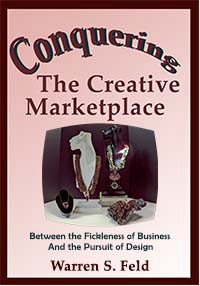
CONQUERING THE CREATIVE MARKETPLACE: Between the Fickleness of Business and the Pursuit of Design
How dreams are made 
 between the fickleness of business 
 and the pursuit of jewelry design

This guidebook is a must-have for anyone serious about making money selling jewelry. I focus on straightforward, workable strategies for integrating business practices with the creative design process. These strategies make balancing your creative self with your productive self easier and more fluid.

Based both on the creation and development of my own jewelry design business, as well as teaching countless students over the past 35+ years about business and craft, I address what should be some of your key concerns and uncertainties. I help you plan your road map.

Whether you are a hobbyist or a self-supporting business, success as a jewelry designer involves many things to think about, know and do. I share with you the kinds of things it takes to start your own jewelry business, run it, anticipate risks and rewards, and lead it to a level of success you feel is right for you, including

· Getting Started: Naming business, identifying resources, protecting intellectual property

· Financial Management: basic accounting, break even analysis, understanding risk-reward-return on investment, inventory management

· Product Development: identifying target market, specifying product attributes, developing jewelry line, production, distribution, pricing, launching

· Marketing, Promoting, Branding: competitor analysis, developing message, establishing emotional connections to your products, social media marketing

· Selling: linking product to buyer among many venues, such as store, department store, online, trunk show, home show, trade show, sales reps and showrooms, catalogs, TV shopping, galleries, advertising, cold calling, making the pitch

· Resiliency: building business, professional and psychological resiliency

· Professional Responsibilities: preparing artist statement, portfolio, look book, resume, biographical sketch, profile, FAQ, self-care

548pp.

Kindle, Print, Epub

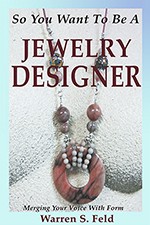
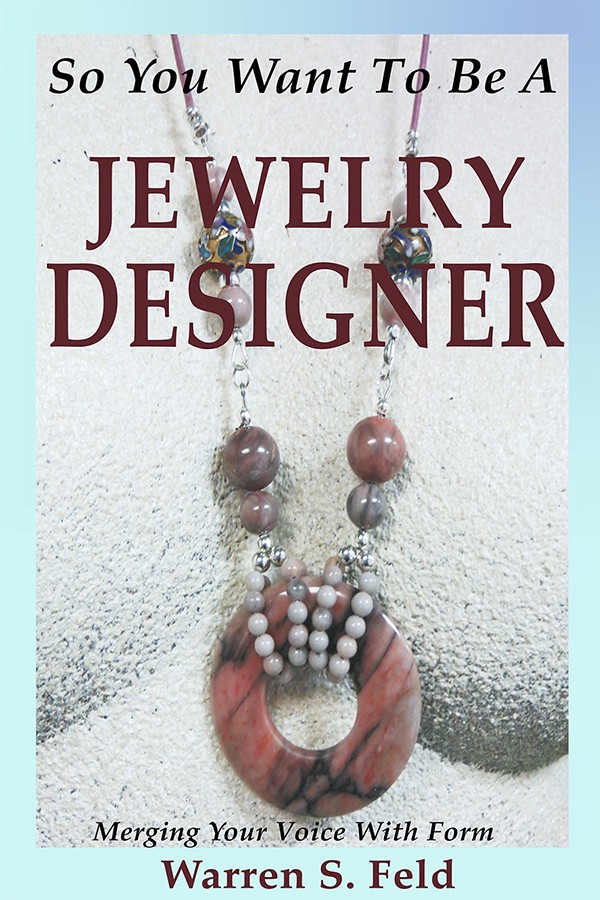
SO YOU WANT TO BE A JEWELRY DESIGNER
Merging Your Voice With Form
So You Want To Be A Jewelry Designer reinterprets how to apply techniques and modify art theories from the Jewelry Designer’s perspective. To go beyond craft, the jewelry designer needs to become literate in this discipline called Jewelry Design. Literacy means understanding how to answer the question: Why do some pieces of jewelry draw your attention, and others do not? How to develop the authentic, creative self, someone who is fluent, flexible and original. How to gain the necessary design skills and be able to apply them, whether the situation is familiar or not.

588pp, many images and diagrams Ebook , Kindle or Print formats

The Jewelry Journey Podcast
“Building Jewelry That Works: Why Jewelry Design Is Like Architecture”
Podcast, Part 1
Podcast, Part 2

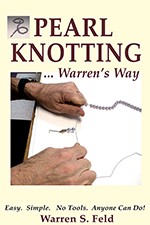
PEARL KNOTTING…Warren’s Way
Easy. Simple. No tools. Anyone Can Do!

I developed a nontraditional technique which does not use tools because I found tools get in the way of tying good and well-positioned knots. I decided to bring two cords through the bead to minimize any negative effects resulting from the pearl rotating around the cord. I only have you glue one knot in the piece. I use a simple overhand knot which is easily centered. I developed a rule for choosing the thickness of your bead cord. I lay out different steps for starting and ending a piece, based on how you want to attach the piece to your clasp assembly.

184pp, many images and diagrams Ebook, Kindle or Print

SO YOU WANT TO DO CRAFT SHOWS:16 Lessons I Learned Doing Craft Shows

In this book, I discuss 16 lessons I learned, Including How To (1) Find, Evaluate and Select Craft Shows Right for You, (2) Determine a Set of Realistic Goals, (3) Compute a Simple Break-Even Analysis, (4) Develop Your Applications and Apply in the Smartest Ways, (5) Understand How Much Inventory to Bring, (6) Set Up and Present Both Yourself and Your Wares, (7) Best Promote and Operate Your Craft Show Business before, during and after the show.

198pp, many images and diagrams, Ebook, Kindle or Print

___________________________________________
Posted in architecture, Art or Craft?, art theory, bead weaving, beads, beadwork, business of craft, craft shows, creativity, design management, design theory, design thinking, jewelry collecting, jewelry design, jewelry making, Learn To Bead, pearl knotting, professional development, wire and metal | Tagged: , , , , | Leave a Comment »

New Book By Warren Feld! Conquering The Creative Marketplace

Posted by learntobead on January 20, 2023

CONQUERING THE CREATIVE MARKETPLACE:
Between the Fickleness of Business and the Pursuit of Design

How dreams are made
between the fickleness of business
and the pursuit of jewelry design

This guidebook is a must-have for anyone serious about making money selling jewelry.   I focus on straightforward, workable strategies for integrating business practices with the creative design process.   These strategies make balancing your creative self with your productive self easier and more fluid. 

Based both on the creation and development of my own jewelry design business, as well as teaching countless students over the past 35+ years about business and craft, I  address what should be some of your key concerns and uncertainties.   I help you plan your road map.

Whether you are a hobbyist or a self-supporting business, success as a jewelry designer involves many things to think about, know and do.  I share with you the kinds of things it takes to start your own jewelry business, run it, anticipate risks and rewards, and lead it to a level of success you feel is right for you, including   

  • Getting Started:  Naming business, identifying resources, protecting intellectual property
  • Financial Management: basic accounting, break even analysis, understanding risk-reward-return on investment, inventory management
  • Product Development: identifying target market, specifying product attributes, developing jewelry line, production, distribution, pricing, launching
  • Marketing, Promoting, Branding:  competitor analysis, developing message, establishing emotional connections to your products, social media marketing
  • Selling:  linking product to buyer among many venues, such as store, department store, online, trunk show, home show, trade show, sales reps and showrooms, catalogs, TV shopping, galleries, advertising, cold calling, making the pitch
  • Resiliency:  building business, professional and psychological resiliency
  • Professional Responsibilities:  preparing artist statement, portfolio, look book, resume, biographical sketch, profile, FAQ, self-care

548pp.

Kindle, Print, Epub

OTHER BOOKS BY WARREN FELD

SO YOU WANT TO BE A JEWELRY DESIGNER
Merging Your Voice With Form

So You Want To Be A Jewelry Designer reinterprets how to apply techniques and modify art theories from the Jewelry Designer’s perspective. To go beyond craft, the jewelry designer needs to become literate in this discipline called Jewelry Design. Literacy means understanding how to answer the question: Why do some pieces of jewelry draw your attention, and others do not? How to develop the authentic, creative self, someone who is fluent, flexible and original. How to gain the necessary design skills and be able to apply them, whether the situation is familiar or not.

588pp, many images and diagrams Ebook , Kindle or Print formats

The Jewelry Journey Podcast
“Building Jewelry That Works: Why Jewelry Design Is Like Architecture”
Podcast, Part 1
Podcast, Part 2

PEARL KNOTTING…Warren’s Way
Easy. Simple. No tools. Anyone Can Do!

I developed a nontraditional technique which does not use tools because I found tools get in the way of tying good and well-positioned knots. I decided to bring two cords through the bead to minimize any negative effects resulting from the pearl rotating around the cord. I only have you glue one knot in the piece. I use a simple overhand knot which is easily centered. I developed a rule for choosing the thickness of your bead cord. I lay out different steps for starting and ending a piece, based on how you want to attach the piece to your clasp assembly.

184pp, many images and diagrams Ebook, Kindle or Print

SO YOU WANT TO DO CRAFT SHOWS:16 Lessons I Learned Doing Craft Shows

In this book, I discuss 16 lessons I learned, Including How To (1) Find, Evaluate and Select Craft Shows Right for You, (2) Determine a Set of Realistic Goals, (3) Compute a Simple Break-Even Analysis, (4) Develop Your Applications and Apply in the Smartest Ways, (5) Understand How Much Inventory to Bring, (6) Set Up and Present Both Yourself and Your Wares, (7) Best Promote and Operate Your Craft Show Business before, during and after the show.

198pp, many images and diagrams, Ebook, , Kindle or Print

___________________________________________

Posted in architecture, Art or Craft?, art theory, bead weaving, beads, beadwork, business of craft, craft shows, creativity, design management, design theory, design thinking, Entrepreneurship, jewelry collecting, jewelry design, Learn To Bead, pearl knotting, professional development, Stitch 'n Bitch, wire and metal | Tagged: , , , , , | Leave a Comment »

CONQUERING THE CREATIVE MARKETPLACE: What You Need To Know When Preparing A Portfolio

Posted by learntobead on January 19, 2023

Your Portfolio

Your Portfolio will most likely be the first impression a gallery, store, or collection gets of your work. You want to make it a positive and lasting one.

As with the Artist Statement, you do not want to follow anyone’s template when designing your Portfolio. This won’t serve you well. In reality, too many Portfolios look the same.

You will most likely want several versions, say 3 or 4, of your Portfolio in anticipate of different audiences and different ways you might use this. Specifically, you might want versions differentiated by one or more of these characteristics:

· Document without dates for jewelry pieces

· Document with dates for jewelry pieces

· Organized by theme

· Organized by audience

· Only those pieces representative of the brand you are trying to sell to a particular venue

· All your pieces

· Digital, including an online copy, an online copy with some graphical animations, an ebook, or a video online

NOTE: Your digital versions should be responsive. That means they are created in such a way that no matter what browser or what device (computer, tablet, phone, TV) they are viewed on, they will look good.

NOTE: I suggest sharing your digital copy with a URL link to where it would be posted online, say on your website. I suggest not sending a digital copy on a CD, disc or flash drive. I think the potential viewer might get annoyed having to set up their computer to ready it to read the digital copy off these formats.

· Print, including something you print yourself off an office printer, or something available from a bookseller as a print-on-demand.

· Presentation folder: basically a binder with plastic sheet holders, into which you can place sheets of printed images of your work and related text.

· PowerPoint slide show. Can easily be shared on a Tablet or Computer or Notebook Computer.

· With or without prices

Your Portfolio will include images, short text descriptions of each piece, its materials, techniques, and inspirations. You might include your Artist Statement, Testimonials, resume, copy of a significant press article about you. Of course, you would have all you contact information present.

Look Book is a more focused portfolio. It includes a limited number of your best pieces and pieces representative of your brand. The images are the stars. There is limited text, most often in the form of captioning or a short relevant quote. The Look Book should feel cohesive and feel like it targets a very specific audience.

Look Book by Laura McCabe, cover
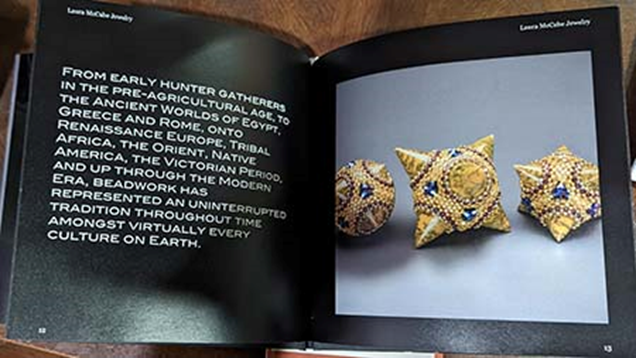
Look Book by Laura McCabe, inside pages

In Print: These days it is easy and very inexpensive to develop a print-on-demand book for your Portfolio. You have many size options. It can be printed in high quality color. You can have a hard cover and/or a soft cover. You can go with a high quality paper if you want. A printed Portfolio is something that you can give away or sell. This format ups your legitimacy and credibility significantly. You only have to print one copy at a time. It is not difficult to keep the book updated.

Check out kdp.Amazon.com and Ingram Publishing for information about print-on-demand book publishing.

The print version would include,

· Front cover art, back cover art, and side binding art

· Back cover text

· Bar code

· ISBN number

· Library of Congress number

· Your content with images

Designing Your Portfolio

STEP 1: Decide who this is for.

Research and delineate who their audiences are and to which they have to be responsive. For example, a gallery and its collector patrons. Or a store and its core customer base.

Given who it is for, what format and content would they prefer? How do you want them to respond after they view your Portfolio; what action (of course in your interest) do you want them to take?

STEP 2: Select your content.

Ask yourself:

· How consistent and coherent is my content? Have I described each project from inspiration to aspiration to designed outcome to production and distribution? If it is important to present yourself as a brand, how well does your selected content support your brand image?

· Does my content clearly show and demonstrate how I think and problem solve when designing jewelry? Have I identified the design challenges for each project, and how I solved them? Some design challenges might be time constraints, selecting materials, selecting techniques, availability of technologies and tools, consistency with fashion and style expectations.

· Does my text support my images, and vice versa?

· You do not want to settle for a laundry list of projects. You want a set of projects and their related content with which you can create a story.

STEP 3: Organize your content.

Does your organization reaffirm your communication and presentation skills? Have you made clear your style, process and design philosophy? Do the substance, look and feel support an image of you as a professional jewelry designer? Does your organization tell a story, with a beginning, middle, and end, and some takeaways or learnings? Does it have a good narrative flow?

You might organize by theme or color or technique or silhouette. You might organize by price point. You might organize by the context in or types of outfits with which the jewelry might be worn.

NOTE: Cognitively, it is much easier for the reader to digest 3 or 4 pieces of information at a time. So, you might group projects into collections of 3 or 4 pieces. For each piece, you might present 3 or 4 critical pieces of information. And so forth.

STEP 4: Design the cover.

This can be all image, all text, or a mix of image and text. How well does the cover coordinate with your jewelry and brand image?

STEP 5Evaluation.

Does anything seem too vague or incomplete? Are the words you use strong, active, sufficiently descriptive and powerful? Does the narrative flow make sense, or can it be improved?

Ask yourself and some of your designer friends whether your Portfolio, given your audience and how you want them to act in response, prove that you are the right fit.

Given your audience, what questions can you anticipate that you think they might ask you? Example, what was difficult? What might you do differently if doing the piece again? Why would someone want to buy this piece? What kinds of related designs have you considered?

Some Advice

· Layout doesn’t matter nearly as much as the content and how you present your work

· Include some photos which demonstrate the scale of your work and the wearability of your work

· For a gallery, retail venue, or agency, show the retail prices you believe your work should sell for. Don’t include dates. A buyer might wonder, given an earlier date, why the piece hadn’t sold.
For other audiences, you can decide whether or not to include either prices and/or dates. You might want to show your evolution and history as a jewelry designer.

· Keep images separated from text. Don’t interrupt a series of images about a particular piece with text. The viewer will have a visual journey that is a very different experience than a reading journey.

· Keep only 1–2 images per page.

· Make it easy for the viewer to know what you are showing them: detail name of piece, materials, size, technique, price.

· You might include several SOLD pieces, clearly marked as sold.

· Back up all your digital files!

· Unless asked to, I would suggest not sending images on 35mm slides.

· A vertical (portrait), rather than a horizontal (landscape), format will work best. If one of your pieces looks best presented horizontally, take that horizontal image and embed it on a vertical formatted page.

· Include a TITLE PAGE after your COVER. Acts as a visual transition to the images of your pieces. The Title Page should have the artist’s name and some kind of tag line or catchy informative heading.

· 8 ½ x 11” is always a good size, but you do not have to limit yourself to these dimensions.

· A white background will work well, but you do not have to limit yourself to white. Be sure your font colors will easily be seen when printed on a color other than white.

· Where using text, always have a HEADING LINE, which usually is a larger font, than the text you use in paragraphs.

· Start each piece on its own page. Usually, consistency in page/text/image formats from piece to piece will be more pleasing to the reader.

· Ideally, showing 20–30 pieces is a good goal. Depending on how you intend to use the Portfolio and who your audience is, you might present more pieces, but not less than 20.

· Create a BACK PAGE or BACK COVER. This might include a photo of yourself, some biographical information, and contact information.

_______________________________

Thank you. I hope you found this article useful.

Also, check out my website (www.warrenfeldjewelry.com).

Enroll in my jewelry design and business of craft Video Tutorials online. Begin with my ORIENTATION TO BEADS & JEWELRY FINDINGS COURSE.

Follow my articles on Medium.com.

Subscribe to my Learn To Bead blog (https://blog.landofodds.com).

Visit Land of Odds online (https://www.landofodds.com)for all your jewelry making supplies.

Check out my Jewelry Making and Beadwork Kits.

Add your name to my email list.

_________________________________

Other Articles of Interest by Warren Feld:

Saying Good-Bye! To Your Jewelry: A Rite Of Passage

The Jewelry Design Philosophy: Not Craft, Not Art, But Design

What Is Jewelry, Really?

The Jewelry Design Philosophy

Creativity: How Do You Get It? How Do You Enhance It?

Disciplinary Literacy and Fluency In Design

Becoming The Bead Artist and Jewelry Designer

5 Essential Questions Every Jewelry Designer Should Have An Answer For

Getting Started / Channeling Your Excitement

Getting Started / Developing Your Passion

Getting Started / Cultivating Your Practice

Becoming One With What Inspires You

Architectural Basics of Jewelry Design

Doubt / Self Doubt: Major Pitfalls For The Jewelry Designer

Techniques and Technologies: Knowing What To Do

Jewelry, Sex and Sexuality

Jewelry Making Materials: Knowing What To Do

Teaching Discplinary Literacy: Strategic Thinking In Jewelry Design

The Jewelry Designer’s Approach To Color

Point, Line, Plane, Shape, Form, Theme: Creating Something Out Of Nothing

The Jewelry Designer’s Path To Resonance

Jewelry Design Principles: Composing, Constructing, Manipulating

Jewelry Design Composition: Playing With Building Blocks Called Design Elements

Contemporary Jewelry Is Not A “Look” — It’s A Way Of Thinking

__________________________________

CONQUERING THE CREATIVE MARKETPLACE: Between the Fickleness of Business and the Pursuit of Design

This guidebook is a must-have for anyone serious about making money selling jewelry. I share with you the kinds of things it takes to start your own jewelry business, run it, anticipate risks and rewards, and lead it to a level of success you feel is right for you, including
Getting Started, Financial Management, Product Development, Marketing, Selling, Resiliency, Professional Responsibilities.

548pp.

KindlePrint

SO YOU WANT TO BE A JEWELRY DESIGNER
Merging Your Voice With Form

So You Want To Be A Jewelry Designer reinterprets how to apply techniques and modify art theories from the Jewelry Designer’s perspective. To go beyond craft, the jewelry designer needs to become literate in this discipline called Jewelry Design. Literacy means understanding how to answer the question: Why do some pieces of jewelry draw your attention, and others do not? How to develop the authentic, creative self, someone who is fluent, flexible and original. How to gain the necessary design skills and be able to apply them, whether the situation is familiar or not.

588pp, many images and diagrams Ebook , Kindle or Print formats

The Jewelry Journey Podcast
“Building Jewelry That Works: Why Jewelry Design Is Like Architecture”
Podcast, Part 1
Podcast, Part 2

PEARL KNOTTING…Warren’s Way
Easy. Simple. No tools. Anyone Can Do!

I developed a nontraditional technique which does not use tools because I found tools get in the way of tying good and well-positioned knots. I decided to bring two cords through the bead to minimize any negative effects resulting from the pearl rotating around the cord. I only have you glue one knot in the piece. I use a simple overhand knot which is easily centered. I developed a rule for choosing the thickness of your bead cord. I lay out different steps for starting and ending a piece, based on how you want to attach the piece to your clasp assembly.

184pp, many images and diagrams EbookKindle or Print

SO YOU WANT TO DO CRAFT SHOWS

16 Lessons I Learned Doing Craft Shows

In this book, I discuss 16 lessons I learned, Including How To (1) Find, Evaluate and Select Craft Shows Right for You, (2) Determine a Set of Realistic Goals, (3) Compute a Simple Break-Even Analysis, (4) Develop Your Applications and Apply in the Smartest Ways, (5) Understand How Much Inventory to Bring, (6) Set Up and Present Both Yourself and Your Wares, (7) Best Promote and Operate Your Craft Show Business before, during and after the show.

198pp, many images and diagrams, Ebook, , Kindle or Print

___________________________________________

Posted in architecture, Art or Craft?, art theory, bead weaving, beads, beadwork, business of craft, craft shows, creativity, design management, design theory, design thinking, Entrepreneurship, jewelry collecting, jewelry design, jewelry making, Learn To Bead, pearl knotting, professional development, Stitch 'n Bitch, wire and metal | Tagged: , , , , , , , | Leave a Comment »

CONQUERING THE CREATIVE MARKETPLACE: Smart Advice When Writing Your Artist Statement

Posted by learntobead on January 19, 2023

PROFESSIONAL RESPONSIBILITIES:
Artist Statement

Guiding Questions?
1. What is an Artist Statement?
2. How do I write one?

Your Artist Statement

Simply, your Artist Statement is a description of you, your work and your design philosophy. It is usually 1–2 pages, with the first 3 sentences able to stand on their own and substitute for the longer version. Note: some applications will set a 200–250 word limit.

Your design philosophy is all about how you think through the designing process. You make choices about materials, techniques, styles, silhouettes, colors, patterns, construction. You anticipate the kinds of customers who will wear and purchase your pieces. What are all these choices? Explain what you think about when making these kinds of choices. How does making these kinds of choices lead to pieces which are appealing, wearable, collectible, situationally appropriate, whatever?

When writing your Artist Statement, you do not want to follow anyone’s template. This won’t serve you well. In reality, too many Artist Statements sound the same.

Make the Statement deeply personal. You want the Statement to feel like you are speaking to a client, but maintaining a professional tone of voice. Visually, you want the look to be comparable in relation to your brand identity.

You share your Artist Statement with venues in which you want to sell your jewelry, such as a boutique or gallery. You share it with sales reps and agencies. You share it with your customers and collectors. You share it with the press. You share it in print. You share it online. It can be written from the first person (that is you) or the third person (referring to you).

Your Artist Statement tells your audience who you are, what is significant about your work, your methods and techniques.

As with most things in business, you will probably want to have more than one version of your Artist Statement — one for galleries, one for stores, one for the press, and one for submissions to juried contests, competitions, shows and other venues.

Topics which might be included and get you thinking:

1. How you got started

2. Your inspiration(s)

3. Your design approach and process and philosophy

4. The challenges you face as a designer

5. Artistic influences

6. How people understand you and your work

7. What about you and your jewelry makes you stand out from the crowd

8. The materials you use

9. The techniques and technologies you use

10.What makes your jewelry a collection?

Start by thinking about these topics, and make a long list of keywords that you free-associate with these topics.

If you have difficulty thinking of keywords, write down 5 questions you would like an interviewer or reporter to ask you about yourself as a designer and about your work.

KEYWORDS (generate at least 25–30)

Next, organize these key words into 2–3 sentences.

2–3 Opening Sentences

Next, elaborate on each thought, perhaps over 1–2 written pages.

Last, edit. Remove cliches, any jargon, repetitions, and tangents which do not fit or flow.

Strengthen weakly sounding adjectives and adverbs. Your words should be descriptive, visual, active, colorful, powerful.

Can anything be re-written or expanded up to help your audience even better understand you and your work?

Keep things focused, consistent and coherent.

You want to avoid using words like unique or best or other superlatives.

If your work is very varied, do not try to encompass everything with one particular Artist Statement.

Expect to have to generate multiple drafts before you settle on a finished Statement.

Periodically, review your Artist Statement and revise it to reflect what is currently happening in your artistic life.

_______________________________

Thank you. I hope you found this article useful.

Also, check out my website (www.warrenfeldjewelry.com).

Enroll in my jewelry design and business of craft Video Tutorials online. Begin with my ORIENTATION TO BEADS & JEWELRY FINDINGS COURSE.

Follow my articles on Medium.com.

Subscribe to my Learn To Bead blog (https://blog.landofodds.com).

Visit Land of Odds online (https://www.landofodds.com)for all your jewelry making supplies.

Check out my Jewelry Making and Beadwork Kits.

Add your name to my email list.

_________________________________

Other Articles of Interest by Warren Feld:

Saying Good-Bye! To Your Jewelry: A Rite Of Passage

The Jewelry Design Philosophy: Not Craft, Not Art, But Design

What Is Jewelry, Really?

The Jewelry Design Philosophy

Creativity: How Do You Get It? How Do You Enhance It?

Disciplinary Literacy and Fluency In Design

Becoming The Bead Artist and Jewelry Designer

5 Essential Questions Every Jewelry Designer Should Have An Answer For

Getting Started / Channeling Your Excitement

Getting Started / Developing Your Passion

Getting Started / Cultivating Your Practice

Becoming One With What Inspires You

Architectural Basics of Jewelry Design

Doubt / Self Doubt: Major Pitfalls For The Jewelry Designer

Techniques and Technologies: Knowing What To Do

Jewelry, Sex and Sexuality

Jewelry Making Materials: Knowing What To Do

Teaching Discplinary Literacy: Strategic Thinking In Jewelry Design

The Jewelry Designer’s Approach To Color

Point, Line, Plane, Shape, Form, Theme: Creating Something Out Of Nothing

The Jewelry Designer’s Path To Resonance

Jewelry Design Principles: Composing, Constructing, Manipulating

Jewelry Design Composition: Playing With Building Blocks Called Design Elements

Contemporary Jewelry Is Not A “Look” — It’s A Way Of Thinking

__________________________________

CONQUERING THE CREATIVE MARKETPLACE: Between the Fickleness of Business and the Pursuit of Design

This guidebook is a must-have for anyone serious about making money selling jewelry. I share with you the kinds of things it takes to start your own jewelry business, run it, anticipate risks and rewards, and lead it to a level of success you feel is right for you, including
Getting Started, Financial Management, Product Development, Marketing, Selling, Resiliency, Professional Responsibilities.

548pp.

KindlePrint

SO YOU WANT TO BE A JEWELRY DESIGNER
Merging Your Voice With Form

So You Want To Be A Jewelry Designer reinterprets how to apply techniques and modify art theories from the Jewelry Designer’s perspective. To go beyond craft, the jewelry designer needs to become literate in this discipline called Jewelry Design. Literacy means understanding how to answer the question: Why do some pieces of jewelry draw your attention, and others do not? How to develop the authentic, creative self, someone who is fluent, flexible and original. How to gain the necessary design skills and be able to apply them, whether the situation is familiar or not.

588pp, many images and diagrams Ebook , Kindle or Print formats

The Jewelry Journey Podcast
“Building Jewelry That Works: Why Jewelry Design Is Like Architecture”
Podcast, Part 1
Podcast, Part 2

PEARL KNOTTING…Warren’s Way
Easy. Simple. No tools. Anyone Can Do!

I developed a nontraditional technique which does not use tools because I found tools get in the way of tying good and well-positioned knots. I decided to bring two cords through the bead to minimize any negative effects resulting from the pearl rotating around the cord. I only have you glue one knot in the piece. I use a simple overhand knot which is easily centered. I developed a rule for choosing the thickness of your bead cord. I lay out different steps for starting and ending a piece, based on how you want to attach the piece to your clasp assembly.

184pp, many images and diagrams EbookKindle or Print

SO YOU WANT TO DO CRAFT SHOWS

16 Lessons I Learned Doing Craft Shows

In this book, I discuss 16 lessons I learned, Including How To (1) Find, Evaluate and Select Craft Shows Right for You, (2) Determine a Set of Realistic Goals, (3) Compute a Simple Break-Even Analysis, (4) Develop Your Applications and Apply in the Smartest Ways, (5) Understand How Much Inventory to Bring, (6) Set Up and Present Both Yourself and Your Wares, (7) Best Promote and Operate Your Craft Show Business before, during and after the show.

198pp, many images and diagrams, Ebook, , Kindle or Print

___________________________________________
Posted in architecture, Art or Craft?, art theory, bead weaving, beads, beadwork, business of craft, color, Contests, craft shows, creativity, design management, design theory, design thinking, Entrepreneurship, jewelry collecting, jewelry design, jewelry making, Learn To Bead, pearl knotting, professional development, Stitch 'n Bitch, wire and metal | Tagged: , , , , , , | Leave a Comment »

Success or Failure? Some of my jewelry design students’ experiences at business

Posted by learntobead on July 29, 2022

I’d estimate that 25–30% of my students are in the jewelry making /design hobby to make some extra money. Some see a way to supplement their income. Some see it as a retirement strategy. Others see it as a career transition. Whatever their goals, some have been successful, and others less so. Here are some of their stories.

Cindy

Cindy saw it as a career transition. She made and sold jewelry, went to craft shows and church bazaars, put her stuff on consignment all over the metropolitan area, did home shows, whatever.

After about two to two-and-a-half years, she took the giant leap and quit her full-time legal aid job to be a full-time jewelry artist/entrepreneur. She was successful because she knew how to promote herself, and was very comfortable at this.

Her designs were fashion-current, but not bizarre. One business that had her stuff on consignment told me how great she was to work with.

My only concerns were that she often short-changed some of the quality of materials, and perhaps pushed the pricing a bit too high. But I marvel at her success. if you stick to it, and are confident in yourself, you’ll get there.

Mona

Mona refurbished old pieces into new. She took old brooches, fixed them up, restored missing stones, polished or colored damaged edges. She turned them into pendants, and then created necklaces with the same sensibilities, colors, textures, bulk, and patterns to go with them.

Sold like hot-cakes. She took old, gaudy belt buckles, glued on Austrian crystal rhinestones, found leather belts to go with them, fashioned some tpe of bail, and voila! She had great stories to go with each piece. She also was great at self-promotion. She was very confident. And she got her pieces into all the major stores in the area. She also formed great connections to power-fashion-players, including many people in the music business.

Sharon

Sharon made lampwork beads, and turned these into necklaces and bracelets. She was shy. She tried to sell them to friends and family. She tried to get them into one store on consignment. She tried selling them on EBay. She’s still trying.

Yanxi

Yanxi made Native American style earrings mostly, but some chokers and bracelets, as well. She relied on traditional bead weaving styles of Peyote and Brick. She used traditional materials including Czech seed beads, beading thread, sinew. She used traditional colors and designs. She sold in stores. She sold at markets. She was doing very well for many years.

Until around the later 1990s. Chinese businesses began copying Native American jewelry, and selling their pieces at prices so low, that Native Americans could no longer afford to make a living at making jewelry.

Yanxi’s business faded away to nothing. She was unable to adapt to the changes in the business environment. She could have gone more upscale in the choice of materials and the elaborateness in the designs. But she did not recognize that as a pathway.

Veronica

Veronica made high-end clothing with an edge to her designs. At one point, with her clothing, she decided to create accessories, including jewelry. Necklaces out of old men’s ties. Bracelets out of leather suspender straps from Germany. Odd beads which always catch your eye dangling from old, antiqued, large-linked chain.

She had an acute sense of what jewelry women — of all shapes, ages, sizes, body shapes — could wear to empower themselves. Attract that kind of attention which borders on admiration.

At first, she sold her jewelry pieces to individual stores in various cities she visited. They sold her pieces very quickly. In response, she began working in more of a production mode. She sent these stores boxes of her pieces to be sold as special trunk shows. That idea worked well.

She then worked on setting up a shop-within-a-shop. Several stores were eager to have her store-within-a-store. She envisioned taking over a 6’x8′ area. She created display cabinets, display pieces, and an organizational plan for displaying her pieces. She went to hotel foreclosure sales and purchased old odds and ends to use for displays, such as old wooden clothes hangers which had the hotel logo or name etched in them.

Her jewelry lines overtook her clothing lines.

Debby

Debby made beautiful, elegant, dainty jewelry from bracelets to necklaces to eyeglass leashes. She put them in a few stores. She had been an airline stewardess, and frequently brought her jewelry with her to sell at get-togethers and conventions with past and current airline employees.

Everyone loved her pieces. Everything she made sold. She was reluctant, however, to place them in many stores. She was afraid people would copy her designs. One person, in fact, had copied some of her designs.

Debby wanted to mass-market her pieces to high end boutiques and department stores. She spent years making contacts and connections, which she was very successful at. But she couldn’t reel in the opportunities. Her fears overcame her — people would copy her designs, or they would not manufacture her pieces to her quality expectations, or the manufacturers wanted to make pieces with more mass appeal.

There was always something that got in the way of her making a living by making jewelry. She built walls. She couldn’t climb over them.

Larry

Larry approached Barneys New York about his line of jewelry. He had a personal connection there. He had a marketing strategy for them, which included explaining why the lines of jewelry they currently carried, were not working for them.

He showed them a very full line — jeweler’s tray after jeweler’s tray after jeweler’s tray of jewelry.

With each tray he showed them photographs of jewelry which were carried by their major competitors in New York, as well as fashion spreads in major magazines.

He kept making the point: His jewelry is better, and this is why. His jewelry is better, and this is why. His jewelry is better, and this is why.

Success!

Kiki

Kiki wanted to sell on-line. She knew she needed a web-site with a shopping cart. But she shied away from the $50.00 per month price tag. She knew she would have to hire someone to design her website, but again, the $500.00 quoted price seemed daunting to her. She spent year after year researching web-hosts and web-designers, each time finding something that made her more and more uncertain.

Virtual jewelry, virtual business.

Rosie

Rosie lived in the wealthiest part of town — Belle Meade. She custom made jewelry for the rich for them to wear at special occasions. Her biggest obstacles to overcome: many of her clients were not sure that anyone could actually make jewelry. Jewelry was something that you bought in New York. Not Nashville. Somehow it could only be made in New York and probably by machine. Her clients hesitated, not sure how anyone, let alone anyone local, could actually make jewelry for them.

She took their naivete in stride. She made the making of jewelry seem straightforward. She made the custom designing seem specialized and right up her alley.

She made a necklace and earring set for someone to wear at the Swan Ball.

She made a very unattractive, yet very appreciated by the customer, necklace to wear at a horse race. the colors had to match the specific colors in the horse’s blanket — navy, white and rose. The rose was a special color rose associated with some Queen’s rose somewhere. On the face of things, navy, white and rose don’t usually result in something rich, elegant and status’y looking. But Rosie did a fabulous job. She would not, however, have ever worn this particular necklace herself.

She made a lariat for someone to wear on a cruise. Plus, 5 different sets of earrings, each coordinating with the lariat. Plus, 10 different bracelets, each having a different clasp, and again, coordinating with the lariat.

Rosie’s willingness to adapt to the peculiar needs of her customer base made her a success. And to her customer base, money was no object.

Alejandro

Alejandro didn’t want to design jewelry per se. He wanted to find jewelry designed by others and find places that might sell this jewelry. His mom had gotten breast-cancer (she’s a survivor). And he had this brainstorm.

He visited the Dallas Merchandise Mart. He found about a dozen vendors who represented lines Alejandro thought would do well in the various fundraising events the state’s Breast Cancer Society sponsored.

From these vendors, he gathered information about the products, the minimum units which needed to be purchased at a time, the unit cost, and the suggested retail price.

He determined what kind of commission he needed to make this work and wanted to get.

He sat down with the marketing executives at the Breast Cancer Society. He showed them pictures of the various products and the numbers. He negotiated a deal and a plan.

This is what you call a Win-Win-Win. The vendor wins. The client wins. and Alejandro wins.

Getting Started In Business

You need to look yourself in the mirror, and be very, very, very honest with yourself. Getting started in business is a big step. It’s not all fun and games. There’s paperwork, repetition, tradeoffs to be made. Be honest with yourself.

Ask yourself:

o Why do I want to start a business?

o What type of business do I want?

o What kinds of things do I want to sell?

o What kind of time and energy commitments do I want to commit?

o Where will the money come from to get started?

o Where will I work — kitchen table? craft studio? at a store?

o What will I name my business?

o Where will I get my jewelry making supplies?

o Do I want to do this alone, or with a partner(s)?

There are many different kinds of jewelry you can sell. Necklaces. Bracelets. Earrings. Eyeglass leashes. Name badge jewelry. Rings. Anklets. Ear cuffs. Body jewelry. Jewelry for dogs and cats. Jewelry representing social causes. Beaded jewelry. Wire jewelry. Polymer and metal clay jewelry. Fabricated jewelry, such as with silver smithing techniques. Lampwork jewelry. Blown glass jewelry. Micro macrame and hemp jewelry. Jewel-decorated objects like pillows, lampshades, dinner ware.

There are many different approaches and venues for selling jewelry. these include selling to friends, co-workers and family. Selling at home shows. Selling at craft shows or trunk shows. Selling online. Selling in stores and galleries, either retail, consignment or wholesale. Selling in a truck, driving from city to city, parking, and opening your truck doors for people to come into your mini-showroom. Selling in print catalogs. Designing and/or selling for promotions and events, such as a fund-raiser for breast cancer. Doing repairs.

Whatever the approach and venue, you need to step back, and be sure it is on a solid business basis. This means delving into some bureaucracy and administrivia. You can’t get around this.

Yes, you can make money selling jewelry. But you have to be smart about it.

_______________________________

Thank you. I hope you found this article useful.

Also, check out my website (www.warrenfeldjewelry.com).

Enroll in my jewelry design and business of craft Video Tutorials online. Begin with my ORIENTATION TO BEADS & JEWELRY FINDINGS COURSE.

Follow my articles on Medium.com.

Subscribe to my Learn To Bead blog (https://blog.landofodds.com).

Visit Land of Odds online (https://www.landofodds.com)for all your jewelry making supplies.

Check out my Jewelry Making and Beadwork Kits.

Add your name to my email list.

_________________________________

Other Articles of Interest by Warren Feld:

Saying Good-Bye! To Your Jewelry: A Rite Of Passage

The Jewelry Design Philosophy: Not Craft, Not Art, But Design

What Is Jewelry, Really?

The Jewelry Design Philosophy

Creativity: How Do You Get It? How Do You Enhance It?

Disciplinary Literacy and Fluency In Design

Becoming The Bead Artist and Jewelry Designer

5 Essential Questions Every Jewelry Designer Should Have An Answer For

Getting Started / Channeling Your Excitement

Getting Started / Developing Your Passion

Getting Started / Cultivating Your Practice

Becoming One With What Inspires You

Architectural Basics of Jewelry Design

Doubt / Self Doubt: Major Pitfalls For The Jewelry Designer

Techniques and Technologies: Knowing What To Do

Jewelry, Sex and Sexuality

Jewelry Making Materials: Knowing What To Do

Teaching Discplinary Literacy: Strategic Thinking In Jewelry Design

The Jewelry Designer’s Approach To Color

Point, Line, Plane, Shape, Form, Theme: Creating Something Out Of Nothing

The Jewelry Designer’s Path To Resonance

Jewelry Design Principles: Composing, Constructing, Manipulating

Jewelry Design Composition: Playing With Building Blocks Called Design Elements

Contemporary Jewelry Is Not A “Look” — It’s A Way Of Thinking

__________________________________

SO YOU WANT TO BE A JEWELRY DESIGNER
Merging Your Voice With Form

588pp, many images and diagrams Ebook or Print

PEARL KNOTTING…Warren’s Way
Easy. Simple. No tools. Anyone Can Do!

184pp, many images and diagrams Ebook or Print

SO YOU WANT TO DO CRAFT SHOWS

16 Lessons I Learned Doing Craft Shows

198pp, many images and diagrams Ebook or Print

___________________________________________
Posted in Art or Craft?, bead weaving, beads, beadwork, business of craft, craft shows, creativity, Entrepreneurship, jewelry design, jewelry making, Learn To Bead, pearl knotting, professional development, wire and metal | Tagged: , , , , , | Leave a Comment »

A Visit To Jewelry Artisans, Galleries and Bead Shops in Barcelona, Spain

Posted by learntobead on July 28, 2022

Before the pandemic, I was trying to arrange some Enrichment Travel tours. One was to Rome. This was part of the itinerary. If any group wants me to lead a Jewelry Discovery Tour to Rome or elsewhere, I would be happy to talk with you about this.

BARCELONA

1. BEAD STORE SHOPPING

There are about 11 bead shops very close to each other on Carrer del Call / Carrer de la Boqueria off the Rambla in the Gothic Quarter (Barri Gotic). Most of these stores specialize in gemstone beads, and some of these stores specialize in jewelry findings and stringing materials. Some have finished jewelry. Most allow retail sales, some are primarily wholesale, where I would use my wholesale license. (3 hour walking tour; less than 1 mile; begin at 3pm (any day except Monday or Sunday) when these shops are most likely to be open)

BARCELONA 2. ART JEWELRY GALLERY TOUR

Visit prominent art jewelry galleries in Barcelona, including those shown below. About 5 hours with lunch break. Need bus. About 6 miles between furthest points.

A. Masriera Gallery
Passeig de Gracia, 41) (hours mon-sat, 10am-8:00pm)(

The Bagués dynasty has bejeweled Barcelonians since 1839. While they stock much that glitters, the Lluís Masriera line of original Art Nouveau pieces is truly unique; intricate flying nymphs, lifelike golden insects, and other easily recognizable motifs from the period take on a new depth of beauty when executed in the translucent enameling process that Masriera himself developed.

B. Klimt02 SL Gallery (Carrer de la Riera de Sant Miguel, 65) (Hours Tues-Fri, 5–8pm)

The gallery show in Barcelona the work of the best international jewelry artists; as well as showing it to the international community, thanks to our gallery website. Avant garde artists. It is owned by Amador Bertomeu and Leo Caballero and has become an influential and informative source of information for everyone interested in contemporary jewelry.

warren@warrenfeldjewelry.com
www.warrenfeldjewelry.com

_______________________________

Thank you. I hope you found this article useful.

Also, check out my website (www.warrenfeldjewelry.com).

Enroll in my jewelry design and business of craft Video Tutorials online. Begin with my ORIENTATION TO BEADS & JEWELRY FINDINGS COURSE.

Follow my articles on Medium.com.

Subscribe to my Learn To Bead blog (https://blog.landofodds.com).

Visit Land of Odds online (https://www.landofodds.com)for all your jewelry making supplies.

Check out my Jewelry Making and Beadwork Kits.

Add your name to my email list.

_________________________________

Other Articles of Interest by Warren Feld:

Saying Good-Bye! To Your Jewelry: A Rite Of Passage

The Jewelry Design Philosophy: Not Craft, Not Art, But Design

What Is Jewelry, Really?

The Jewelry Design Philosophy

Creativity: How Do You Get It? How Do You Enhance It?

Disciplinary Literacy and Fluency In Design

Becoming The Bead Artist and Jewelry Designer

5 Essential Questions Every Jewelry Designer Should Have An Answer For

Getting Started / Channeling Your Excitement

Getting Started / Developing Your Passion

Getting Started / Cultivating Your Practice

Becoming One With What Inspires You

Architectural Basics of Jewelry Design

Doubt / Self Doubt: Major Pitfalls For The Jewelry Designer

Techniques and Technologies: Knowing What To Do

Jewelry, Sex and Sexuality

Jewelry Making Materials: Knowing What To Do

Teaching Discplinary Literacy: Strategic Thinking In Jewelry Design

The Jewelry Designer’s Approach To Color

Point, Line, Plane, Shape, Form, Theme: Creating Something Out Of Nothing

The Jewelry Designer’s Path To Resonance

Jewelry Design Principles: Composing, Constructing, Manipulating

Jewelry Design Composition: Playing With Building Blocks Called Design Elements

Contemporary Jewelry Is Not A “Look” — It’s A Way Of Thinking

__________________________________

SO YOU WANT TO BE A JEWELRY DESIGNER
Merging Your Voice With Form

588pp, many images and diagrams Ebook or Print

PEARL KNOTTING…Warren’s Way
Easy. Simple. No tools. Anyone Can Do!

184pp, many images and diagrams Ebook or Print

SO YOU WANT TO DO CRAFT SHOWS

16 Lessons I Learned Doing Craft Shows

198pp, many images and diagrams Ebook or Print

___________________________________________
Posted in Art or Craft?, bead weaving, beads, beadwork, craft shows, creativity, cruises, enrichment travel, jewelry collecting, jewelry design, Travel Opportunities | Leave a Comment »

Is Beaded Jewelry Art? If The Critics Say It’s Not … What Does That Say About Me?

Posted by learntobead on July 28, 2022

The other day, I looked up some quotes that Art Critics and Art Theorists have had to say about beaded jewelry and jewelry artists. What do you think?

(1)

“Anything done with beads is not art.”

Here the art critic equates “beads/beadwork” with the canvas of a painting, and not the painting itself. To the critic, beads are merely decoration. In this point of view, it is impossible to use beads in any way so that the finished project would be seen as art.

(2)

“Beading speaks for that branch of culture which is too homey, too functional, too archaic, for the name of ‘art’ to extend to it.”

To this reviewer, art is associated with clarity of choice and purpose, a sense of presence, and the evoking of an emotional response (or unleashing psychological content). To this reviewer, these kinds of things are not associated with beadwork and jewelry. In fact, to this reviewer, they can never be. Thus, beadwork and jewelry are not “art.”

(3)

“Beading as Art Brut — The work of children, asylum patients, and others untouched by artistic culture.”

My local paper in Nashville — The Tennessean — refuses to cover anything that is not fine art in their art pages. Many galleries and museums refuse to display bead art, often justifying this by saying there is no audience for bead art.

(4)

“Objects may only be valued as ‘art’ if they have a link to the academic setting.”

Many galleries and art critics only recognize the art of those artists with formal credentials. The reputation of the schooling of the artist is directly related to the judged “artistic” value of their work. However, there really are very few academic programs in beading/jewelry making. These are mostly involved with technical training, rather than theory and investigation. There are no professional journals where ideas and theories are proposed, discussed, tested and proven. In this model, beaders/jewelry makers stand little chance of getting judged as true artists.

(5)

“An object is ‘art’ if someone is willing to pay for it as ‘art’.”

In this sense, making a distinction between craft and art, or trying to blur the distinction between craft and art, becomes irrelevant. Within this definition, a lot of what gets sold as beadwork and jewelry, which many people would not value as ‘art’, will get included within the concept. When a piece of jewelry can get labeled as ‘art’, and retain this label, it becomes more valuable. It can sell for more. More people will indicate that it is good, rather than not good. It (and the artist) have more power.

(6)

“There’s nothing conceptual about jewelry. It’s mere hedonism.”

Jewelry is seen as visual spectacle. There are no self-reflective qualities to jewelry. There is no artist’ hand involved in its creation.

It seems that the more beadwork mimics painting or sculputre, the more it gets acceptable as ‘art’. A beaded tapestry or a beaded art doll is much more readily accepted as art, than jewelry.

(7)

“The object is ‘art’ if the object shows the artist’s process of conceptualization in its final form.”

Somehow, we must be able to recognize how the artist conceived of the piece, and how the artist implemented his/her conceptions. How did the artist tewst the limits of the materials — in this case, beads? How did the artist exploit the possibilities through the use of beads? How did the artist compose and design the piece?

Within this framework, all the parts of the jewelry — the center piece, the fringe, the strap, the bail, the surface embellishment — are critical to the appreciation of the jewelry as an object of art. Each of these elements of the piece of jewelry require the artist to exploit the possibilities of the material — the beads. Only with this fuller understanding of the piece in its entirety than Classical Art Theory would allow, can the artist, through the jewelry, create something where the whole is more than the sum of its parts. And this, then, is jewelry as art. In Classical Art Theory, the strap, fringe, bail would have to be seen to be subservient to the centerpiece.

Should I Still Call Myself An Artist…
…If The Critics Say I’m Not?

Classical Art Theory is often at odds with my self-image as a jewelry artist and designer. It often denies the very essence of my artistic being, relegating what I do to some secondary status. Who is more right, I often ask myself.

Classical Art Theory holds that if, when talking about a piece, you talk or focus to much on ‘technique’, your piece is not Art. It’s Craft.

Craft is seen as having nothing to do with aesthetics. It is merely a creative engagement with materials.

With paint, the technique to apply it, is seen as virtually irrelevant. What matters with painting is what it says, not how it was made.

If the sense of ‘technique’ supersedes an object of art’s ‘statement’, then the art is really craft, thus a failure… and an embarrassment. Craft is an affront to art.

Art is exploring the expressive qualities of the medium, stoking the imagination of its audience. In fact, crafters supposedly do not play to an audience; art does.

Art critics would want us to talk about beadwork or jewelry making without speaking about technique. With a minimal reference to functionality. With a focus on the central part of the piece, not its strap or fringe or other noncentral embellishment. Apart from our audience as they are wearing our pieces.

The prominence of these are critics and their ideas and beliefs are some of the key reasons people are more willing to pay $5,000 for a painting, but not for most beadwork. They are why these critics see something special about the artist, but nothing special after the craftsperson. There is the pernicious assumption that the jewelry maker does not have to exercise judgment, does not have to worry about presentation, does not need to bring a high level of care and dexterity to the project, uses technique but not really skill, and does not need to take many risks.

Of course, I don’t buy into any of these Classical Art Critics and what they have to say. I know I am an artist. I know my pieces should be judged as a whole, and judged as the pieces are worn.

It is the process of linking the technique to the materials that is “art.” A successful process of jewelry making and design requires an understanding of the intrinsic values of the materials. It requires an understanding of how to manipulate the materials to elicit a positive response from others. It is expressive, intuitive and evokes emotions. The critical focus is not on the techniques. The critical focus in on the linking of technique and material to create something that others emotionally interact with.

_______________________________

Thank you. I hope you found this article useful.

Also, check out my website (www.warrenfeldjewelry.com).

Enroll in my jewelry design and business of craft Video Tutorials online. Begin with my ORIENTATION TO BEADS & JEWELRY FINDINGS COURSE.

Follow my articles on Medium.com.

Subscribe to my Learn To Bead blog (https://blog.landofodds.com).

Visit Land of Odds online (https://www.landofodds.com)for all your jewelry making supplies.

Check out my Jewelry Making and Beadwork Kits.

Add your name to my email list.

_________________________________
Other Articles of Interest by Warren Feld:

Saying Good-Bye! To Your Jewelry: A Rite Of Passage

The Jewelry Design Philosophy: Not Craft, Not Art, But Design

What Is Jewelry, Really?

The Jewelry Design Philosophy

Creativity: How Do You Get It? How Do You Enhance It?

Disciplinary Literacy and Fluency In Design

Becoming The Bead Artist and Jewelry Designer

5 Essential Questions Every Jewelry Designer Should Have An Answer For

Getting Started / Channeling Your Excitement

Getting Started / Developing Your Passion

Getting Started / Cultivating Your Practice

Becoming One With What Inspires You

Architectural Basics of Jewelry Design

Doubt / Self Doubt: Major Pitfalls For The Jewelry Designer

Techniques and Technologies: Knowing What To Do

Jewelry, Sex and Sexuality

Jewelry Making Materials: Knowing What To Do

Teaching Discplinary Literacy: Strategic Thinking In Jewelry Design

The Jewelry Designer’s Approach To Color

Point, Line, Plane, Shape, Form, Theme: Creating Something Out Of Nothing

The Jewelry Designer’s Path To Resonance

Jewelry Design Principles: Composing, Constructing, Manipulating

Jewelry Design Composition: Playing With Building Blocks Called Design Elements

Contemporary Jewelry Is Not A “Look” — It’s A Way Of Thinking

__________________________________

SO YOU WANT TO BE A JEWELRY DESIGNER
Merging Your Voice With Form

588pp, many images and diagrams Ebook or Print

PEARL KNOTTING…Warren’s Way
Easy. Simple. No tools. Anyone Can Do!

184pp, many images and diagrams Ebook or Print

SO YOU WANT TO DO CRAFT SHOWS

16 Lessons I Learned Doing Craft Shows

198pp, many images and diagrams Ebook or Print

___________________________________________
Posted in Art or Craft?, art theory, bead weaving, beads, beadwork, creativity, design management, design theory, design thinking, jewelry collecting, jewelry design, jewelry making, Learn To Bead, pearl knotting, professional development, wire and metal | Tagged: , , , | Leave a Comment »

Coming Out As A Jewelry Artist

Posted by learntobead on July 28, 2022

At what point did I first begin to call myself a Jewelry Artist?

Coming out as a jewelry artist is similar, though not exactly the same, as someone coming out as gay. It is fraught with fear and dread. It means very visibly presenting yourself with a new public identity. It means preparing your ego to receive some negative comments, critiques, reviews, perhaps doubt or disbelief, and in some rarer instances, rejection or denial. It means asking others to accept and support you in your new role as Jewelry Designer.

There is a betwixt and between aspect to this coming out process — a rite of passage. And the unknown time and feelings and situations, between the before and afterwards, is often a span of uncertainty too great for many an artist to transcend. Many who want to be jewelry designers, are somewhat afraid to present themselves as such. These closet artists tell their family and friends such things as, “I dabble in this and that, including jewelry-making.” Or, “I consider myself a bank teller slash jewelry artist (and you can substitute whatever profession you are in for the words bank teller).” Or, “I’m making some things for fun or gifts, but not selling things.”

There is some hesitation. “I am a jewelry designer.” Can’t quite get the words out.

“I am a jewelry designer.” But I wasn’t trained and educated to be one. It was not my original passion, though I am passionate about it now.

“I am a jewelry designer.” Keep wanting to say “but” or add some qualification, so other people don’t say, with mocking and astonishment, “You’re a what?!@#$” “Can you make a living at that?”

“I am a jewelry designer,” you whisper to yourself over and over, but don’t tell anyone else.

When you step out of the closet, however, you show others you want respect. As a jewelry designer. You demand from others an understanding. As a jewelry designer. You present yourself as someone with self-esteem and confidence. As a jewelry designer.

After multiple levels of transition, I realize that the only thing that would diminish me as a jewelry artist is if I turned my back on it.

_______________________________

Thank you. I hope you found this article useful.

Also, check out my website (www.warrenfeldjewelry.com).

Enroll in my jewelry design and business of craft Video Tutorials online. Begin with my ORIENTATION TO BEADS & JEWELRY FINDINGS COURSE.

Follow my articles on Medium.com.

Subscribe to my Learn To Bead blog (https://blog.landofodds.com).

Visit Land of Odds online (https://www.landofodds.com)for all your jewelry making supplies.

Check out my Jewelry Making and Beadwork Kits.

Add your name to my email list.

_________________________________

Other Articles of Interest by Warren Feld:

Saying Good-Bye! To Your Jewelry: A Rite Of Passage

The Jewelry Design Philosophy: Not Craft, Not Art, But Design

What Is Jewelry, Really?

The Jewelry Design Philosophy

Creativity: How Do You Get It? How Do You Enhance It?

Disciplinary Literacy and Fluency In Design

Becoming The Bead Artist and Jewelry Designer

5 Essential Questions Every Jewelry Designer Should Have An Answer For

Getting Started / Channeling Your Excitement

Getting Started / Developing Your Passion

Getting Started / Cultivating Your Practice

Becoming One With What Inspires You

Architectural Basics of Jewelry Design

Doubt / Self Doubt: Major Pitfalls For The Jewelry Designer

Techniques and Technologies: Knowing What To Do

Jewelry, Sex and Sexuality

Jewelry Making Materials: Knowing What To Do

Teaching Discplinary Literacy: Strategic Thinking In Jewelry Design

The Jewelry Designer’s Approach To Color

Point, Line, Plane, Shape, Form, Theme: Creating Something Out Of Nothing

The Jewelry Designer’s Path To Resonance

Jewelry Design Principles: Composing, Constructing, Manipulating

Jewelry Design Composition: Playing With Building Blocks Called Design Elements

Contemporary Jewelry Is Not A “Look” — It’s A Way Of Thinking

__________________________________

SO YOU WANT TO BE A JEWELRY DESIGNER
Merging Your Voice With Form

588pp, many images and diagrams Ebook or Print

PEARL KNOTTING…Warren’s Way
Easy. Simple. No tools. Anyone Can Do!

184pp, many images and diagrams Ebook or Print

SO YOU WANT TO DO CRAFT SHOWS

16 Lessons I Learned Doing Craft Shows

198pp, many images and diagrams Ebook or Print

___________________________________________

Posted in Art or Craft?, art theory, bead weaving, beads, beadwork, craft shows, creativity, design management, design theory, design thinking, jewelry collecting, jewelry design, jewelry making, Learn To Bead, pearl knotting, professional development, wire and metal | Tagged: , , , | Leave a Comment »

Tapping Into That Creative Element Is Such A High

Posted by learntobead on July 28, 2022

Translating thoughts, feelings, emotions into color, form, structure. Can never get enough of this. But where does all this creativity come from?

I remember in college — way back when — I took a physiological psychiatry class with a professor name Ina Samuels. Dr. Samuels was one of my mentors. She discussed what was new-thinking then, how the brain is this self-actualizing entity. Thoughts reside less in certain defined areas of the brain, and are more a collection of organized chemical-electrical pathways traversing the brain, all around and within it. Memories are more defined pathways that get traversed a lot.

The brain has the ability to invent, and re-invent itself. It is self-stimulative. The brain pleasures itself with creative thoughts over and over and over again each day. Sexy. Sensual. The act of creating is almost masturbatory. The brain discovers, organizes, reinforces and remembers.

Of course, I did not wax so eloquently on my final exam in Dr. Samuel’s class. She gave me a C, and I was embarrassed to have performed so poorly. I got carried away with creatively building upon my understanding of neural pathways, synapses, and thinking — too much so, that my thoughts were way off course. I carried the discussion to mechanics of three way connections and power boosters and revolving tracks — all ideas never before expressed in texts or classes or on final exams.

Yes, I let my creativity carry the day. While it didn’t earn me a good grade at the time, it sure was fun. To be wrapped up in my insights, imaginations, and good ole fashioned, solid in an organizing way, brain sex.

_______________________________
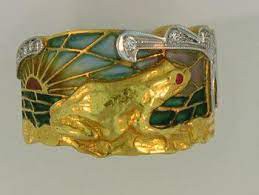
Thank you. I hope you found this article useful.

Also, check out my website (www.warrenfeldjewelry.com).

Enroll in my jewelry design and business of craft Video Tutorials online. Begin with my ORIENTATION TO BEADS & JEWELRY FINDINGS COURSE.

Follow my articles on Medium.com.

Subscribe to my Learn To Bead blog (https://blog.landofodds.com).

Visit Land of Odds online (https://www.landofodds.com)for all your jewelry making supplies.

Check out my Jewelry Making and Beadwork Kits.

Add your name to my email list.

_________________________________
Other Articles of Interest by Warren Feld:

Saying Good-Bye! To Your Jewelry: A Rite Of Passage

The Jewelry Design Philosophy: Not Craft, Not Art, But Design

What Is Jewelry, Really?

The Jewelry Design Philosophy

Creativity: How Do You Get It? How Do You Enhance It?

Disciplinary Literacy and Fluency In Design

Becoming The Bead Artist and Jewelry Designer

5 Essential Questions Every Jewelry Designer Should Have An Answer For

Getting Started / Channeling Your Excitement

Getting Started / Developing Your Passion

Getting Started / Cultivating Your Practice

Becoming One With What Inspires You

Architectural Basics of Jewelry Design

Doubt / Self Doubt: Major Pitfalls For The Jewelry Designer

Techniques and Technologies: Knowing What To Do

Jewelry, Sex and Sexuality

Jewelry Making Materials: Knowing What To Do

Teaching Discplinary Literacy: Strategic Thinking In Jewelry Design

The Jewelry Designer’s Approach To Color

Point, Line, Plane, Shape, Form, Theme: Creating Something Out Of Nothing

The Jewelry Designer’s Path To Resonance

Jewelry Design Principles: Composing, Constructing, Manipulating

Jewelry Design Composition: Playing With Building Blocks Called Design Elements

Contemporary Jewelry Is Not A “Look” — It’s A Way Of Thinking

__________________________________

SO YOU WANT TO BE A JEWELRY DESIGNER
Merging Your Voice With Form

588pp, many images and diagrams Ebook or Print

PEARL KNOTTING…Warren’s Way
Easy. Simple. No tools. Anyone Can Do!

184pp, many images and diagrams Ebook or Print

SO YOU WANT TO DO CRAFT SHOWS

16 Lessons I Learned Doing Craft Shows

198pp, many images and diagrams Ebook or Print

___________________________________________
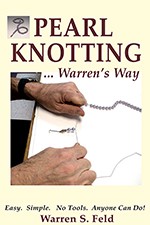
Posted in Art or Craft?, art theory, bead weaving, beads, beadwork, business of craft, craft shows, creativity, jewelry design, jewelry making, Learn To Bead, pearl knotting, wire and metal | Tagged: , , | Leave a Comment »

Why Some Jewelry Sells and Other Jewelry Does Not

Posted by learntobead on July 28, 2022

My niece’s 6-year old daughter told me the other day, “Warren, I wish I could get a job where I can make bracelets all day!” How cute! She definitely would have a lot of fun making jewelry. She most certainly could make money doing it. But I don’t think she was old enough to appreciate the amount of work, strategic thinking, and marketing and good business sense involved, in order to succeed.

But maybe she did. Jewelry making tapes into our creative souls, our artistic essence. The fact that you can make money at it, moreover, serves to heighten the experience.

Two girls — one 12 and one 13 years old — were determined to make money that summer. They had had some experience setting up a lemonade stand last year, but they were ready to make the big bucks. So they turned to jewelry. They created an attractive shelter along the side of the road, and posted clever signs — REFRESHING SPARKLES — to catch drivers going and coming in either direction. Instead of lemonade, however, their customers found cool earrings, and breezy necklaces, and yummy bracelets. And the two girls found success!

While there are many business challenges for jewelry designers, — young and old, alike — you can most assuredly answer the question — Can You Really Make Money Selling Jewelry? — with a resounding YES! It takes some planning. Some Moxie. Some start-up money. Some marketing. And some luck. But it can be done.

For people who sell their jewelry, their art is both a business as well as a source of creativity and self-expression. To be successful, they need to bring an understanding of business fundamentals to the business, and they need to find enthusiasm for business in similar ways to how they found their passion for jewelry. There will be ups and downs, as the economy changes or fashions and styles change. They will wear multiple hats — designer, distributor, manufacturer, retailer — and not always be sure which hat to wear when. They will need to understand marketing, pricing and selling. They will need to have a feel for reading and understanding people.

Successful jewelry design businesses today share several traits. They have a focus on what they do as a business model. They are comfortable working long stretches in a production mode — even though this can be very boring for the artist. They have some comfort level with both bricks and clicks. I don’t think you can have a successful business today without both a real physical presence somewhere and some on-line visibility as well.

Jewelry businesses today also must learn to quickly adapt to competition. This is not only competition from other local, regional or national jewelry designers, but from overseas, as well. Remember in the 1970s, when Asian manufacturers started selling low cost Native American jewelry, they almost put the Native American jewelry makers out of business. Today Chinese lampwork companies are wiping out the opportunities for low-end, simple, basic lampwork glass beads made in America. And adapt is the key word here. It may mean having to specialize in higher quality items, or relying on materials or designs unique to your locale. It may mean having to provide more educational and informational materials with your products to give them a competitive advantage.

Your market today may be international. if you have images of your pieces on-line, then someone in Taiwan or France can view posted images just as easily as someone in Nashville or San Francisco. They may buy your designs. They may copy your designs. Reality, what a concept here.

Successful jewelry designers keep their work fresh and relevant. They build in evaluative components into their business. They do a lot of product and ideas research. They experiment with concepts and other markets. They acutely know their competition. They strive to create a brand identify for their pieces. Branding not only best secures your client to you as a designer, but makes it that much difficult for other jewelry makers to copy your work and present it as their own.

_______________________________
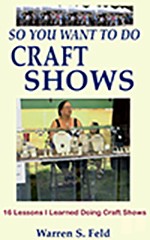
Thank you. I hope you found this article useful.

Also, check out my website (www.warrenfeldjewelry.com).

Enroll in my jewelry design and business of craft Video Tutorials online. Begin with my ORIENTATION TO BEADS & JEWELRY FINDINGS COURSE.

Follow my articles on Medium.com.

Subscribe to my Learn To Bead blog (https://blog.landofodds.com).

Visit Land of Odds online (https://www.landofodds.com)for all your jewelry making supplies.

Check out my Jewelry Making and Beadwork Kits.

Add your name to my email list.

_________________________________

Other Articles of Interest by Warren Feld:

Saying Good-Bye! To Your Jewelry: A Rite Of Passage

The Jewelry Design Philosophy: Not Craft, Not Art, But Design

What Is Jewelry, Really?

The Jewelry Design Philosophy

Creativity: How Do You Get It? How Do You Enhance It?

Disciplinary Literacy and Fluency In Design

Becoming The Bead Artist and Jewelry Designer

5 Essential Questions Every Jewelry Designer Should Have An Answer For

Getting Started / Channeling Your Excitement

Getting Started / Developing Your Passion

Getting Started / Cultivating Your Practice

Becoming One With What Inspires You

Architectural Basics of Jewelry Design

Doubt / Self Doubt: Major Pitfalls For The Jewelry Designer

Techniques and Technologies: Knowing What To Do

Jewelry, Sex and Sexuality

Jewelry Making Materials: Knowing What To Do

Teaching Discplinary Literacy: Strategic Thinking In Jewelry Design

The Jewelry Designer’s Approach To Color

Point, Line, Plane, Shape, Form, Theme: Creating Something Out Of Nothing

The Jewelry Designer’s Path To Resonance

Jewelry Design Principles: Composing, Constructing, Manipulating

Jewelry Design Composition: Playing With Building Blocks Called Design Elements

Contemporary Jewelry Is Not A “Look” — It’s A Way Of Thinking

__________________________________
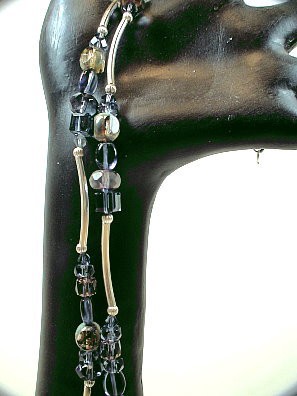
SO YOU WANT TO BE A JEWELRY DESIGNER
Merging Your Voice With Form

588pp, many images and diagrams Ebook or Print

PEARL KNOTTING…Warren’s Way
Easy. Simple. No tools. Anyone Can Do!

184pp, many images and diagrams Ebook or Print

SO YOU WANT TO DO CRAFT SHOWS

16 Lessons I Learned Doing Craft Shows

198pp, many images and diagrams Ebook or Print

___________________________________________

Posted in Art or Craft?, bead weaving, beads, beadwork, business of craft, craft shows, creativity, jewelry design, jewelry making, wire and metal | Tagged: , , , , | Leave a Comment »

Often Unexpected, Always Exciting: Your First Jewelry Sale

Posted by learntobead on July 28, 2022

How many times have you heard a jewelry artist say…

I can’t bear to part with my pieces.

My jewelry is too precious to me.

I only give a few pieces that I make away as gifts to friends and family.

I’ve never sold anything.

Selling would take the fun out of it.

And then, someone offers to buy a piece she is wearing, and the rest is history. A sale! Sold! They paid so much more than it cost me! Right off her wrist! Gotta make another! That was so fast! That was so easy!

My friend Connie used to make things only for friends. She always wore the things she made. At one point, she was repeatedly approched in various stores around town by women who wanted to buy the pieces aroundher neck.

At first, Connie quoted them, what she thought were outlandish prices. No one hesitated. Connie was awe-struck, but didn’t say No. I don’t know if she secretly wore a sign on her back — JEWELRY FOR SALE — or, somehow stuck out her cheek in such a way, as if asking to be kissed, that people came over to her, but she was getting quite good at attracting buyers. At TJMAX, at TARGET, at MACY’s, at DILLARDS, at SEARS, at KROGERS and PUBLIX. She kepy upping her prices each time, and no one had yet to blink!

Jona had made many things before, but had never sold anything. Then she had one of those weeks. It started in a Dalt’s restaurant. The waitress had to have them. She had to have Jona’s earrings. She had to have them now. Any price. So Jona suggests a price, the waitress laid the money on the table, and Jona slowly removed each earring from each ear, and said a silent Good-bye. Later that week, one of her friends was desperate. The wedding was this weekend. The piece of jewelry she had purchased for herself went lost. She remembered one of Jona’s pairs, and asked for it, and insisted on paying for it.

Elizabeth wanted to show her best friend at work the kinds of jewelry she was making. One day, she brought a box of jewelry in with her to work. At lunch time, they spread all the pieces out on a table. All of a sudden, the table was mobbed by other women in the lunch room. They were grabbing, trying on, and throwing money down right and left.

Ingren had a box of her mother’s jewelry stored away in a closet. She didn’t particularly like these pieces, and would never wear them, but knew they had some value. She took pictures of each one, and placed them on EBAY to see if she could auction them off. She sold all but one within a week’s time.

Those first jewelry sales can result in a big high. They are thrilling. Exciting. Very motivating. Selling that first piece feels like it can change your life.

But it’s that second sale that begins to determine if you can make a business out of it. Can you do it again? Is it as much fun? Now all of a sudden you have to think about record keeping, government forms, tracking inventory, maing enough product, adequately pricing your stuff, and marketing to recruit and retain customers.

The situation doesn’t seem quite the same anymore.

But believe me, it’s not as onerous as it might appear at first.

And selling your jewelry keeps getting better and better and better!

_______________________________

Thank you. I hope you found this article useful.

Also, check out my website (www.warrenfeldjewelry.com).

Enroll in my jewelry design and business of craft Video Tutorials online. Begin with my ORIENTATION TO BEADS & JEWELRY FINDINGS COURSE.

Follow my articles on Medium.com.

Subscribe to my Learn To Bead blog (https://blog.landofodds.com).

Visit Land of Odds online (https://www.landofodds.com)for all your jewelry making supplies.

Check out my Jewelry Making and Beadwork Kits.

Add your name to my email list.

_________________________________
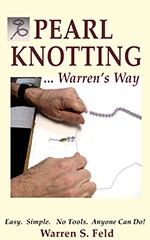
Other Articles of Interest by Warren Feld:

Saying Good-Bye! To Your Jewelry: A Rite Of Passage

The Jewelry Design Philosophy: Not Craft, Not Art, But Design

What Is Jewelry, Really?

The Jewelry Design Philosophy

Creativity: How Do You Get It? How Do You Enhance It?

Disciplinary Literacy and Fluency In Design

Becoming The Bead Artist and Jewelry Designer

5 Essential Questions Every Jewelry Designer Should Have An Answer For

Getting Started / Channeling Your Excitement

Getting Started / Developing Your Passion

Getting Started / Cultivating Your Practice

Becoming One With What Inspires You

Architectural Basics of Jewelry Design

Doubt / Self Doubt: Major Pitfalls For The Jewelry Designer

Techniques and Technologies: Knowing What To Do

Jewelry, Sex and Sexuality

Jewelry Making Materials: Knowing What To Do

Teaching Discplinary Literacy: Strategic Thinking In Jewelry Design

The Jewelry Designer’s Approach To Color

Point, Line, Plane, Shape, Form, Theme: Creating Something Out Of Nothing

The Jewelry Designer’s Path To Resonance

Jewelry Design Principles: Composing, Constructing, Manipulating

Jewelry Design Composition: Playing With Building Blocks Called Design Elements

Contemporary Jewelry Is Not A “Look” — It’s A Way Of Thinking

__________________________________

SO YOU WANT TO BE A JEWELRY DESIGNER
Merging Your Voice With Form

588pp, many images and diagrams Ebook or Print

PEARL KNOTTING…Warren’s Way
Easy. Simple. No tools. Anyone Can Do!

184pp, many images and diagrams Ebook or Print

SO YOU WANT TO DO CRAFT SHOWS

16 Lessons I Learned Doing Craft Shows

198pp, many images and diagrams Ebook or Print

___________________________________________

Posted in Art or Craft?, bead weaving, beads, beadwork, business of craft, craft shows, creativity, jewelry design, jewelry making, wire and metal | Tagged: , , , , | Leave a Comment »

Visiting Jewelry Artisans Studios and Shops in Istanbul, Turkey

Posted by learntobead on July 20, 2022

Before the pandemic, I was trying to arrange some Enrichment Travel tours. One was to Rome. This was part of the itinerary. If any group wants me to lead a Jewelry Discovery Tour to Rome or elsewhere, I would be happy to talk with you about this. — Warren@warrenfeldjewelry.com

Some favorite sites and studios in Instanbul:1. Topkapi Museum, Treasury Section Guided Tour

Once the palace of the Sultans of the Ottoman Empire, Topkapi is a vast treasury of Islamic culture, jewelry, costumes, science and weaponry. This tour is of the Treasury section (7 Halls of Exhibits) of the Topkapi Palace Museum (3rd courtyard) where you will find masterpieces of Turkish art of jewelry from different centuries and exquisite creations from the Far East, India and Europe.(2 hours guided tour of Treasury Section; 1–2 hours free time for guests to wander other parts of museum on their own.)
Open every day except Tues, 9am-4:45pm (til 6:45 in april- october)
2015: most of Treasury Section is under restoration and is closed; check back for when work is finished)

WALKING TOUR OF ARTISAN JEWELRY GALLERIES IN NISANTASI / TESVIKIYE AREA
Nisantasi / Tesvikiye is one of the best shopping districts of Istanbul. It contains designer label stores, very nice restaurants and cafes, a beautiful mall, and a few outstanding hotels. It is home to several galleries showcasing the best of Turkish jewelry artists and artisan jewelry. The store hours in this district are typically 11–7pm Tuesday through Saturday. Need to verify Monday and Sunday hours.

  1. Urart (abdi ipekci Cad. 18/1)

One of Turkey’s most established jewelry companies, Urart makes re-creations, and also chic interpretations, of ancient Anatolian designs and motifs, Hittite symbols of noblesse and glory, the arabesques of Islamic art speaking to the infinity, Seljuk tiles echoing the dreams of the Silk Road or fluid objects of modern life… Design commits to matter, not only the striking form but also the wisdom that abides at the heart of a culture.

2. Fenix (abdi ipekci Cad, Deniz Apt No: 20 D:4)

Fenix aims to bring the beautiful creations of Turkish jewelry brands such as Tohum and Alosh to the enthused consumer.

3. Zeynep Erol Taki Tasarim (Atiye Sok, Yuva Apt No: 8 D:3)

İn her first years, Zeynep Erol was mainly inspired by nature and created forms with her own modern interpretation. İn later years however, her designs have become more geometrical. Zeynep Erol’s Jewelry reflects her spiritual inner world, affections, relations, feelings, desires and change in the philosophy of life. The main materials used by Zeynep Erol in creating her pieces are; green, white and red gold (18k) together with silver (950). The selection of the remaining materials and the precious stones are chosen differently for each particular theme she wants to get across. A wide range of materials such as coconut shells, pearls, brilliants, sapphire, ruby, emeralds, quartz, glass, rose cut and uncut diamonds, sandalwood and feathers are used by her as necessary.

4. Aida Bergsen Jewellery (abdi Ipekci Cad., Atiye Sokak Ak Apt No:7, Daire 8)

Based in Istanbul, jeweller and sculptor Aida Bergsen creates jewellery with different themes that reflect traces of her hometown and its multi-layered cultural fibre. She Draws inspiration mainly from mythological heroes, organic forms and the human anatomy. Each of her wearable sculptures are meticulously crafted in wax then transformed into timeless jewels using traditional techniques.”I try to re-inerprate traditional crafts and skills in jewellery making in order to create a more contemporary approach. I like to have a play on the contrast between light and shadow as I believe it is key in capturing form at a deeper level.”Aida

Bergsen was awarded with the “étoile de mode” at BIJHORCA in Paris and she was named the first runner- up for the very prestigious Couture Show Las Vegas in 2011 and 2014.

5. ECNP Galeri — Elacindoruknazanpak (Ahmet fetgari sokak No: 56)

ECNP Gallery is a contemporary jewelry gallery showing the designs and collections of Ela Cindoruk and Nazan Pak. Partners since 1989, Ela and Nazan’s designs and creative process have reflected their philosophy of ‘less is more’. The duo have participated in numerous fairs in Turkey and abroad; their works can be found in many museum shops and galleries. Ela has received the 2012 Red Rot Design Award. Same year, the creative duo was awarded 2012 Jewelry Designer of the Year Award of Elle Style Awards. On September 2014, the designers opened their new showroom and studio, on the 21st year work anniversary. The showroom also has a gallery under its roof, Ela and Nazan’s a long time dream, a reflection of their commitment to design and aesthetic and their ambition to this gallery hosts design exhibits and aims at becoming a meeting point for the design/art world.

6. Soda, (Tesvikiye Mh, Sakayik Sokak No:1)

SODA, founded in 2010, focuses on contemporary trends in art, particularly of jewelry artists. They are interested in showcasing the use of new materials and design concepts. Some permanent artist representations as well as rotating exhbitis.

7. Alef (Tesvikiye Mh, Haci Emin Efendi Sokak, No:4)

This goldsmith adapts classical goldsmith principles to contemporary techniques and designs. Alef’s founder, jewelry designer Yeşim Yüksek,

8. Boybeyi (abdi ipekci Cad. No: 10)

BoyBeyi is a family-run business that has been around for more than 100 years, their collection features many traditional rose-cut diamonds, as well as modern and colorful pieces, all inspired by the Turkish culture.

WALKING TOUR OF JEWELRY GALLERIES, JEWELRY AND BEAD SHOPS IN AND NEAR THE GRAND BAZAAR

This walking tour takes you in and around the Grand Bazaar, discovering jewelry galleries displaying works by local artists, as well as a myriad of stores in the Grand Bazaar which sell jewelry, beads and beading supplies.

  1. Tiara (yavuz Sinan mah., rakip gumus pala cad. No; 69)

Antique jewelry, award-winning designs, modern designs that reflect trends in the world, some might find at Tiara Jewelry … Byzantine, Roman and Ottoman cultures, inspired by the collections, since the ancient civilizations in history has produced reflections of jewelry. Traditional hand-made items by craftsmen in the production of valuable, native jewelry lovers to win the admiration of the foreign guests

2. Kafkas (kalpakcilarbasi cad.)

Widely considered to be one of Istanbul’s top jewellers, with several locations throughout the city. The cuffs are studded with precious stones, the necklaces are vintage-inspired, and the gold rings are topped with enormous yellow diamonds. The Bazaar outpost is Kafkas’ first store, and you’ll often find the owners presiding behind the glittering displays.

3. Sevan Bicakci (gazi sinan pasa sok No 16)

Sevan Bıçakçı has started his journey as a jeweler when he was only 12 years old as an intern in Hovsep Çatak’s workshop. His first personal collection that he created in 2002 was inspired by the historical Grand Bazaar — Sultanahmet area where he spends a considerable part of his daily life. Since then his unique designs that require intensive craftsmanship have been attracting the attention of collectors as well as some distinguished stores.

4. Walk up Nuruosmaniye Caddessi Past the heart of jewelry and bead stores in the Grand Bazaar

There are piles and piles of antique rings, bracelets, necklaces, and earrings from Central Asia, as well as walls covered in strands of colorful beads made out of precious and semiprecious stones.

OPTIONAL: 3 block side trip to http://www.haciburhan.com) aka Emin Bead Company, Sterling Silver Handcrafted Turkish Beads. Sell different silver jewelry, beads and accessories for silver jewelry. Wholesale. Eminsinan Mah. Yeniceriler Cad. Evkaf Sok. No: 15 (Formerly 9) Cemberlitas, Fatih (verify store hours)

5. Angel Old Jewellery (kiliccilar sok., cuhaci han No: 36)

When you’re visiting this tiny, poorly lit (the blindingly bright interior doesn’t do their products any justice) store, you will be transformed into a museum where you can purchase anything you want from a collection of princess-worthy jewelry. From tiaras to necklaces, brooches to bracelets, these elegant pieces are bedecked with intricate, precious stones like diamonds. This store has both antique pieces, as well as new jewelry that looks vintage due to a special ageing method they use.

6. Bagus (cevahir bedesteni sok, kapali carsi D: 133)

In the Grand Bazaar’s Cevahir Bedestani, Bagus sells the proprietor’s own reasonably priced collection of handmade jewelry made with silver and semiprecious stones as well as intriguing pieces imported from countries including India, Nepal, Thailand, and Indonesia.

warren@warrenfeldjewelry.com
www.warrenfeldjewelry.com

_______________________________
Thank you. I hope you found this article useful.

Also, check out my website (www.warrenfeldjewelry.com).

Enroll in my jewelry design and business of craft Video Tutorials online. Begin with my ORIENTATION TO BEADS & JEWELRY FINDINGS COURSE.

Follow my articles on Medium.com.

Subscribe to my Learn To Bead blog (https://blog.landofodds.com).

Visit Land of Odds online (https://www.landofodds.com)for all your jewelry making supplies.

Check out my Jewelry Making and Beadwork Kits.

Add your name to my email list.

_________________________________
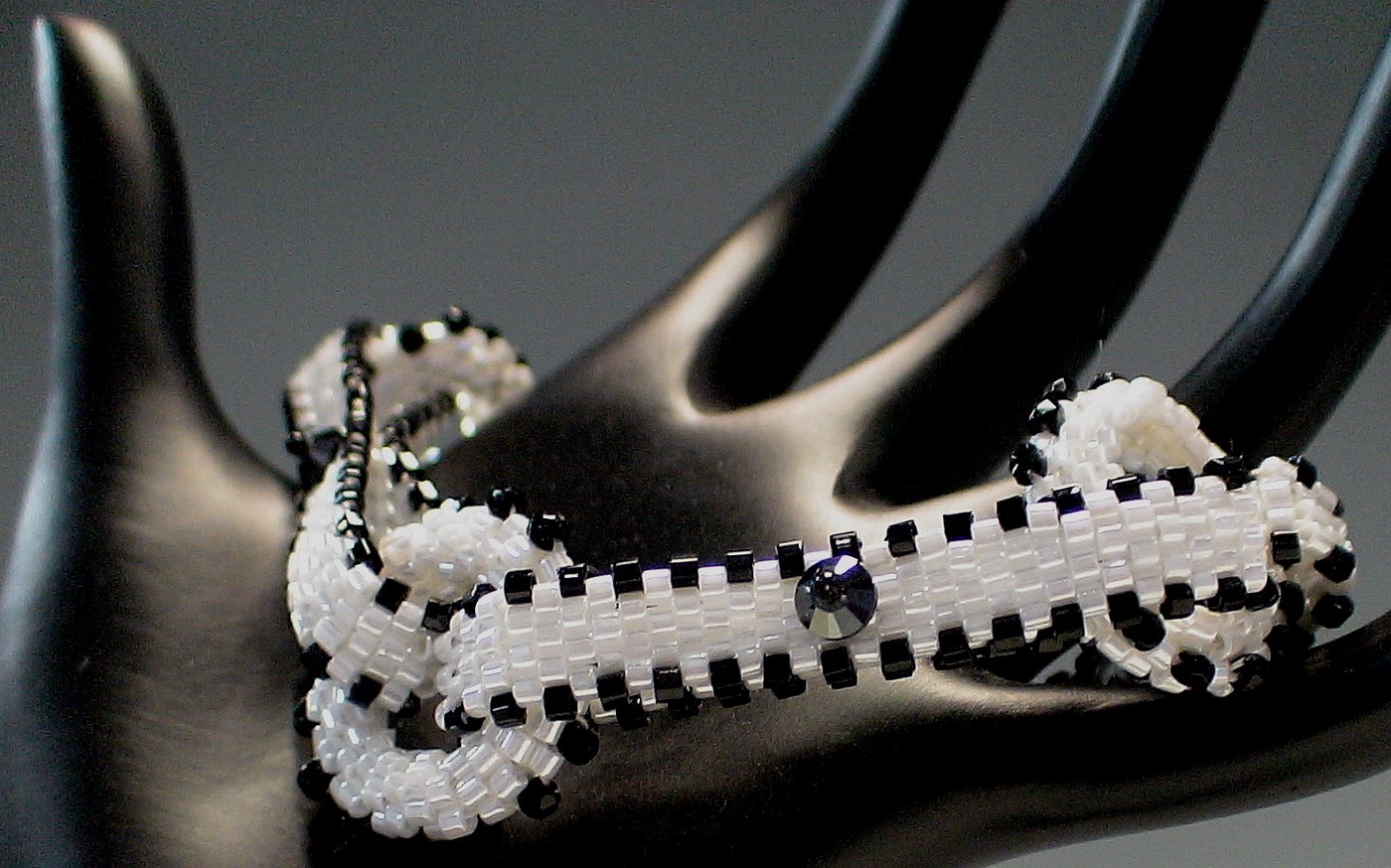
Other Articles of Interest by Warren Feld:

Resiliency: Do You Have The Most Important Skill Designers Must Have?

Disciplinary Literacy and Fluency In Design

Backward Design is Forward Thinking

How Creatives Can Successfully Survive In Business

Part I: The First Essential Question Every Designer Should Be Able To Answer: Is What I do Craft, Art or Design?

Part 2: The Second Essential Question Every Designer Should Be Able To Answer: What Should I Create?

Part 3: The Third Essential Question Every Designer Should Be Able To Answer: What Materials (and Techniques) Work Best?

Part 4: The Fourth Essential Question Every Designer Should Be Able To Answer: How Do I Evoke A Resonant Response To My Work?

Part 5: The Firth Essential Question Every Designer Should Be Able To Answer: How Do I Know My Design Is Finished?

Doubt / Self-Doubt: 8 Pitfalls Designers Fall Into…And What To Do About Them

Part 1: Your Passion For Design: Is It Necessary To Have A Passion?

Part 2: Your Passion For Design: Do You Have To Be Passionate To Be Creative?

Part 3: Your Passion For Design: How Does Being Passionate Make You A Better Designer?

__________________________________
SO YOU WANT TO BE A JEWELRY DESIGNER
Merging Your Voice With Form

588pp, many images and diagrams Ebook or Print

PEARL KNOTTING…Warren’s Way
Easy. Simple. No tools. Anyone Can Do!

184pp, many images and diagrams Ebook or Print

SO YOU WANT TO DO CRAFT SHOWS

16 Lessons I Learned Doing Craft Shows

198pp, many images and diagrams Ebook or Print

___________________________________________

Posted in Art or Craft?, bead weaving, beads, beadwork, craft shows, creativity, cruises, design management, design thinking, enrichment travel, jewelry collecting, jewelry design, jewelry making, Learn To Bead, pearl knotting, Stitch 'n Bitch, Travel Opportunities, wire and metal, Workshops, Classes, Exhibits | Tagged: , , , , | Leave a Comment »

A Visit To Jewelry Artisans and Galleries In Rome, Italy

Posted by learntobead on July 20, 2022

Before the pandemic, I was trying to arrange some Enrichment Travel tours.    One was to Rome.     This was part of the itinerary.   If any group wants me to lead a Jewelry Discovery Tour to Rome or elsewhere, I would be happy to talk with you about this.

ROME 1.  JEWELRY GALLERIES WALKING TOUR, ROME.  There are several stores/galleries specializing in artisan jewelry, with both some very famous local jewelry designers, as well as some less known between the Piazza di Spagna (Spanish Steps) and Piazza del Orologi.     This is a 1.25 mile (2.1km) leisurely jewelry shopping tour along ancient walking streets in the heart of historic Rome, where we discover the works of local jewelry artisans. (5 hour walking tour with dinner break; begin at 3pm (any day except Monday) when these shops are most likely to be open.  Typical hours:  open 10-1:30pm and 3:30-7:30pm).

  1. Damiani, via condotti 84 (All Damiani collection jewels are exclusive and unique creations, combining the allure of Italian jewelry with the unmistakable, always modern and fashionable Damiani taste.)
  2. Nicola Boncompagni, via de Babuino 15 (vintage jewelry)

        3. Oreficeria Franchi, via di Ripetta 156 (works of enrico franchi)

   4. Melis Massimo Maria, via dell’Orso 57 (ancient techniques reproduced in gold)

5. Studio Giorelleria R. Quattrocolo, via della Scrofa 54 (both antique jewelry and jewelry produced in their own workshop studio, including their line of micro-mosaics)

6. Alternatives, via della Chiesa Nuova 10  (Specializes in contemporary. Avant guard jewelry and is dedicated to the promotion of both newcomers and internationally established artists from all over the world)  

7. Del Fina Delettrez, via Governo Vecchio 67 (Delfina Delettrez Fendi is a designer and jeweller based in Rome. Original use of figurative surrealism and natural iconography including hands, eyes, bees, and lips.)

~~~~~~~~~~~~~~~~~~~~~~~~~~

ROME 2.  SHOPPING TRIP TO ARTISAN MARKET IN ROME.    Visit to Mercato Monti, 30+ artisans selling fashions, jewelry and accessories, first 3 Sundays and last Saturday of the month, 8am-8pm, inside exhibit hall of Palatino Hotel, via Leonina 46.   (4 hours)

warren@warrenfeldjewelry.com

www.warrenfeldjewelry.com

Posted in Art or Craft?, art theory, bead weaving, beads, beadwork, business of craft, craft shows, creativity, design theory, design thinking, enrichment travel, jewelry collecting, jewelry design, jewelry making, Learn To Bead, pearl knotting, Stitch 'n Bitch, Travel Opportunities, wire and metal, Workshops, Classes, Exhibits | Tagged: , , , , | Leave a Comment »

Posted by learntobead on July 14, 2022

SO YOU WANT TO DO CRAFT SHOWS

16 Lessons I Learned Doing Craft Shows

Check out this new book by Warren Feld
Ebook or Print

Doing craft shows is a wonderful experience. You can make a lot of money at craft shows, you meet new people, you have new adventures. You learn a lot about business and arts and crafts designing.

IF… you do your homework when selecting them,
and verify all information

IF… you are very organized in preparing for them,
setting up, selling and re-packing up

IF… you promote, promote, promote.

In this book, I discuss 16 lessons I learned, Including How To

(1) Find, Evaluate and Select Craft Shows Right for You,

(2) Determine a Set of Realistic Goals,

(3) Compute a Simple Break-Even Analysis,

(4) Develop Your Applications and Apply in the Smartest Ways,

(5) Understand How Much Inventory to Bring,

(6) Set Up and Present Both Yourself and Your Wares,

(7) Best Promote and Operate Your Craft Show Business.

Table of Contents

What You Will Learn, p. 1

Intro to Book and Acknowledgements, p. 3

LESSON 1: Not Every Craft Show Is Alike, p. 13

LESSON 2: Research All Your Possibilities, p. 27

LESSON 3: Know Which Craft Shows Are For You, p. 31

LESSON 4: Set Realistic Goals / Determine Break-Even
                     Point, p. 39
LESSON 5: Get Those Applications In Early, p. 71

LESSON 6: Promote, Promote, Promote, p. 83

LESSON 7: Set Up For Success, p. 87

LESSON 8: Bring Enough Inventory To Sell, p. 121

LESSON 9: Sell Yourself And Your Craft At The Show,
                     p. 125

LESSON 10: Make A List Of Things To Bring, p. 141

LESSON 11: Be Prepared To Accept Credit Cards, p. 145

LESSON 12: Price Things To Sell, p. 147

LESSON 13: Keep Your Money Safe, p. 151

LESSON 14: Generate Follow-Up Sales, p. 163

LESSON 15: Take Care Of Yourself, p. 167

LESSON 16: Be Nice To Your Neighbors, p. 169

Some Final Words Of Advice, p. 173

Helpful Resources, p. 175

~~~~~~~

SO YOU WANT TO DO CRAFT SHOWS
16 Lessons I Learned Doing Craft Shows

198pp, many images and diagrams
Ebook or Print

______________________________

_______________________________

Thank you. I hope you found this article useful.

Also, check out my website (www.warrenfeldjewelry.com).

Enroll in my jewelry design and business of craft Video Tutorials online. Begin with my ORIENTATION TO BEADS & JEWELRY FINDINGS COURSE.

Follow my articles on Medium.com.

Subscribe to my Learn To Bead blog (https://blog.landofodds.com).

Visit Land of Odds online (https://www.landofodds.com)for all your jewelry making supplies.

Check out my Jewelry Making and Beadwork Kits.

Add your name to my email list.

_________________________________

Other Articles of Interest by Warren Feld:

Resiliency: Do You Have The Most Important Skill Designers Must Have?

Disciplinary Literacy and Fluency In Design

Backward Design is Forward Thinking

How Creatives Can Successfully Survive In Business

Part I: The First Essential Question Every Designer Should Be Able To Answer: Is What I do Craft, Art or Design?

Part 2: The Second Essential Question Every Designer Should Be Able To Answer: What Should I Create?

Part 3: The Third Essential Question Every Designer Should Be Able To Answer: What Materials (and Techniques) Work Best?

Part 4: The Fourth Essential Question Every Designer Should Be Able To Answer: How Do I Evoke A Resonant Response To My Work?

Part 5: The Firth Essential Question Every Designer Should Be Able To Answer: How Do I Know My Design Is Finished?

Doubt / Self-Doubt: 8 Pitfalls Designers Fall Into…And What To Do About Them

Part 1: Your Passion For Design: Is It Necessary To Have A Passion?

Part 2: Your Passion For Design: Do You Have To Be Passionate To Be Creative?

Part 3: Your Passion For Design: How Does Being Passionate Make You A Better Designer?

__________________________________

SO YOU WANT TO BE A JEWELRY DESIGNER
Merging Your Voice With Form

588pp, many images and diagrams Ebook or Print

PEARL KNOTTING…Warren’s Way
Easy. Simple. No tools. Anyone Can Do!

184pp, many images and diagrams Ebook or Print

SO YOU WANT TO DO CRAFT SHOWS

16 Lessons I Learned Doing Craft Shows

198pp, many images and diagrams Ebook or Print

___________________________________________

Posted in Art or Craft?, art theory, bead weaving, beads, beadwork, business of craft, craft shows, creativity, jewelry design, jewelry making, Learn To Bead, pearl knotting, Resources, wire and metal | Tagged: , , , , | Leave a Comment »

Check out these new books by Warren Feld!

Posted by learntobead on April 26, 2022

SO YOU WANT TO BE A JEWELRY DESIGNER
Merging Your Voice With Form

588pp, many images and diagrams
Ebook or Print

You make jewelry. That is what you do.

But when you think jewelry and speak jewelry and work jewelry, this is what you have become. This is your purpose.

Becoming a Jewelry Designer is exciting. With each piece, you are challenged with this profound question: Why does some jewelry draw people’s attention, and others do not? When designers turn to how-to books or art theory texts, however, these do not uncover the necessary answers. They do not show you how to make trade-offs between beauty and function. Nor how to introduce your pieces publicly. You get insufficient practical guidance about knowing when your piece is finished and successful. In short, you do not learn about design. You do not learn the essentials about how to go beyond basic mechanics, anticipate the wearer’s understandings and desires, or gain management control over the process.

So You Want To Be A Jewelry Designer reinterprets how to apply techniques and modify art theories from the Jewelry Designer’s perspective. This very detailed book, by jewelry designer Warren S. Feld, reveals how to become literate and fluent in jewelry design.

Available here: Ebook or Print

TABLE OF CONTENTS

Acknowledgements, p. 7
An Introduction, p. 11


Section 1-JEWELRY BEYOND CRAFT, p. 19
1. Jewelry Beyond Craft, p. 21

Section 2-GETTING STARTED, p. 27
2a. Becoming the Bead Artist and Jewelry Designer, p. 29
2b. 5 Questions Every Jewelry Designer Should Have An Answer For,
p. 39
2c. Channeling Excitement, p. 51
2d. Developing Your Passion, p. 65
2e. Cultivating Practice, p. 79

Section 3-WHAT IS JEWELRY, p. 97
3. What Is Jewelry, Really?, p. 99

Section 4-MATERIALS, TECHNIQUES AND TECHNOLOGIES,
p. 113
4a. Materials — Knowing What To Know, p. 115
4b. Techniques and Technologies — Knowing What To Do, p. 143
4c. Mixed Media, Mixed Techniques, p. 175

Section 5-RULES OF COMPOSITION, CONSTRUCTION, AND
MANIPULATION
, p. 179
5a. Composition — Playing With Blocks Called Design Elements, p. 181
5b. The Jewelry Designer’s Approach To Color, p. 197
5c. Point Line Plane Shape Form Theme, p. 231
5d. Jewelry Design Principles: Composing, Constructing, Manipulating,
p. 253
5e. How To Design An Ugly Necklace — The Ultimate Challenge, p. 289
5f. Architectural Basics, p. 309

5g. Architectural Basics — Anatomy of a Necklace, p. 335
5h. Architectural Basics — Sizing, p. 343

Section 6-DESIGN MANAGEMENT, p. 349
6a. The Proficient Designer: The Path To Resonance, p. 351
6b. Jewelry Design: A Managed Process, p. 377
6c. Designing With Components, p. 387

Section 7-INTRODUCING YOUR DESIGNS PUBLICLY, p. 407
7a. Shared Understandings and Desires, p. 409
7b. Backward-Design Is Forwards Thinking, p. 437

Section 8-DEVELOPING THOSE INTUITIVE SKILLS WITHIN,
p. 445
8a. Creativity Isn’t Found, It’s Developed, p. 447
8b. Inspiration and Aspiration, p. 459
8c. Your Passion For Design, p. 467

Section 9-JEWELRY IN CONTEXT, p. 483
9a. Contemporary Jewelry Is Not A Look — It’s A Way Of Thinking, p. 485
9b. Contemporizing Traditional Jewelry, p. 499
9c Fashion Style Taste Art Design, p. 513
9d. Designing With The Brain In Mind: Perception, Cognition, Sexuality,
p. 523
9e. Self-Care, p. 535

Section 10-TEACHING DISCIPLINARY LITERACY, p. 543
10. Teaching Disciplinary Literacy In Jewelry Design, p. 545

Final Words of Advice, p. 579
Thank You, p. 581
About Warren Feld, p. 583
Other Articles and Tutorials, p. 587

________________________________________________________
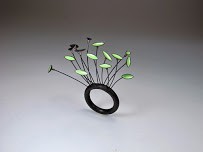
PEARL KNOTTING…Warren’s Way
Easy. Simple. No tools. Anyone Can Do!

184pp, many images and diagrams
Ebook or Print

In this very detailed book, with thoroughly-explained instructions and pictures, you are taught a non-traditional Pearl Knotting technique which is very easy for anyone to learn and do. Does not use special tools. Goes slowly step-by-step. Presents a simple way to tie knots and position the knots to securely abut the bead. Anticipates both appeal and functionality. Shows clearly how to attach your clasp and finish off your cords. And achieves that timeless, architectural perfection we want in our pearl knotted pieces.

Most traditional techniques are very frustrating. These can get overly complicated and awkward. They rely on tools for making and positioning the knots. When attempting to follow traditional techniques, people often find they cannot tie the knots, make good knots, get the knots close enough to the beads, nor centered between them. How to attach the piece to the clasp gets simplified or glossed over.

Fortunately, Pearl Knotting doesn’t need to be this hard.

Pearl Knotting…Warren’s Way teaches you how to:

· Hand-knot without tools

· Select stringing materials

· Begin and finish pieces by (1) attaching directly to the clasp, (2) using French wire bullion, (3), using clam shell bead tips, or, (4) making a continuous piece without a clasp

· Add cord

· Buy pearls, care for them, string and restring them, store them

By the end of this book, you will have mastered hand-knotting pearls.

I know you are eager to begin. Let’s get started.

Available here: Ebook or Print

Table of Contents

Intro To Book and Acknowledgements, p. 4

1. Pearl Knotting Is For You, p. 11

2. Materials-Tools-Your Workspace, p. 16

3. All About Pearls, p. 24

4. All About Hand-Knotting Pearls, p. 37

5. Design Considerations, p. 57

6. Measurements, p. 66

7. Selecting and Testing Bead Cord, p. 71

8a. Var1-Attaching Directly To Clasp, p. 76

8b. Var2-Using French Wire Bullion, p. 105

8c. Var3-Using Clam Shell Bead Tips, p. 125

8d. Var4-Continuous Without Clasp, p. 148

8e. About Adding Cord, p. 168

9. Handling Contingencies, p. 171

10. Finishing Touches, p.176

Final Words Of Advice, p. 177

About Warren Feld, p. 180

_______________________________

Thank you. I hope you found this chapter useful.

Also, check out my website (www.warrenfeldjewelry.com).

Enroll in my jewelry design and business of craft Video Tutorials online. Begin with my ORIENTATION TO BEADS & JEWELRY FINDINGS COURSE.

Follow my articles on Medium.com.

Subscribe to my Learn To Bead blog (https://blog.landofodds.com).

Visit Land of Odds online (https://www.landofodds.com)for all your jewelry making supplies.

Check out my Jewelry Making and Beadwork Kits.

Add your name to my email list.

My ARTIST STATEMENT

My TEACHING STATEMENT.

My DESIGN PHILOSOPHY.

My PROFESSIONAL PROFILE.

My PORTFOLIO.

_________________________________
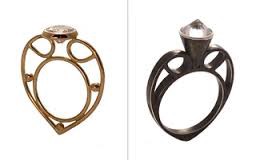
Posted in architecture, Art or Craft?, art theory, bead weaving, beads, beadwork, craft shows, creativity, design management, design theory, design thinking, jewelry collecting, jewelry design, jewelry making, pearl knotting, professional development, wire and metal, Workshops, Classes, Exhibits | Tagged: , , , , , , , | Leave a Comment »