

Natural Combinations of Amber and Jet
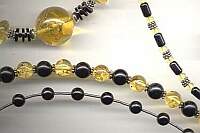
In many traditional cultures, the religious, the mystical, the magical, the royalty wore jewelry that consisted of combinations of amber and jet. These natural fossils were believed have special qualities and powers, and when used together, even moreso.
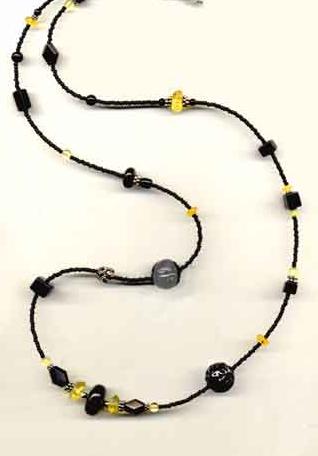
Amber is fossilized tree sap. Amber flowed from pine trees that flourished 50 to 60 million years ago. Most amber comes from either the Dominican Republic, the Baltic area of Poland and Russia, and China.
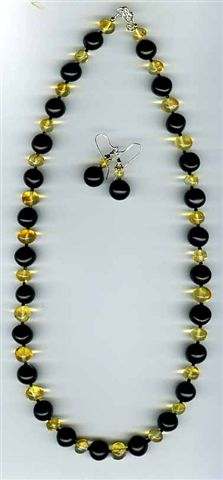
Amber is one of the oldest substances used for jewelry. In ancient times, it was prized as “solid sunlight”, and believed to have many of the sun’s properties.
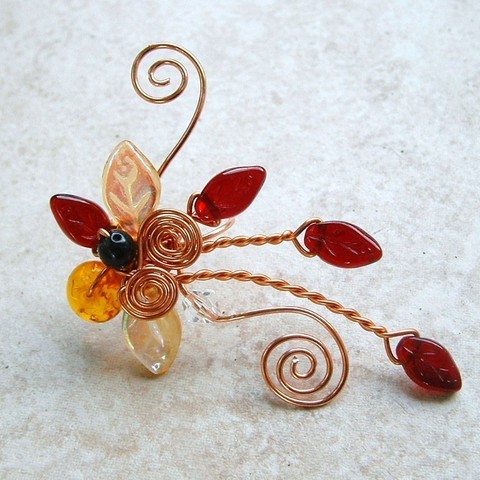
Image above from Thyme2dream ( www.thyme2dream.com ), blog: www.thyme2dream.blogspot.com from her Mabon Collection (http://www.artfire.com/modules.php?sterm=mabon&sub1=SEARCH&name=Shop&op=new&seller_id=10747&sort_cats=0&sc_id=0)
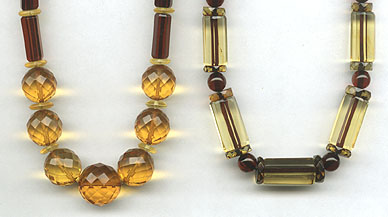
Amber comes in a wide range of colors. The colors often are called food names. We have cherry amber, custard, butterscotch, butter, caramel, egg-yolk, tomato, honey, cognac, orange, fatty, and cream. There is also green amber and blue amber, tiger amber, black-and-white amber, blonde and white.
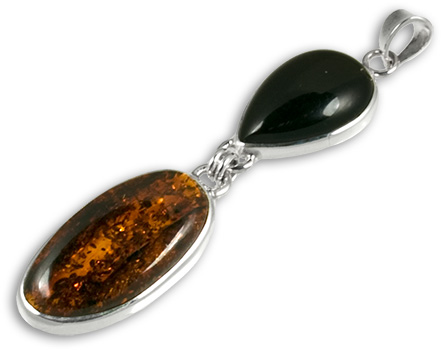
There are some simple tests to determine if your amber is genuine. One is that you take a hot needle and touch it to the maber. There should be a faint piney smell. Another, rubbing amber with a soft cloth will often cause it to give off an electrical spark, and attract a very light object like a feather. Yet another is a salt flotation test. Place several tablespoons of salt in a glass of water, and float a piece of amber in it. Amber floats; glass and plastic sinks.

Jet is the fossilized remains of trees. It was often called “black amber”. Jet comes in different softnesses, so some is less durable than others. Jet from lignite coal is the softest, while that from anthracite coal is the hardest. Jet became very popular during Victorian times in England for use in mourning jewelry.
Jet is easily confused with glass. There is only one test. First,wear safety goggles. Take a single jet bead and suspend it from a wire, and hold it over a flame with a a pair of pliers. Genuine jet will smoke and often turn white at the edges, while plastic will melt and glass will simply explode.

Image above from Thyme2dream ( www.thyme2dream.com ), blog:www.thyme2dream.blogspot.com from her Mabon Collection(http://www.artfire.com/modules.php?sterm=mabon&sub1=SEARCH&name=Shop&op=new&seller_id=10747&sort_cats=0&sc_id=0)
Jet is more likely than glass to display tiny cracks and scratches, or to be irregularly faceted, and to feel lighter and warmer to the touch. Jet is a generic term in jewelry, so buying “jet” is always something of a risk. French Jet is glass. Austrian jet is glass crystal. Bakelite jet is a plastic.
The “magical union” between amber and jet dates from ancient times. It probably represented the union between light and dark, yin and yang, female and male — dualities.
The combination of amber and jet is believed, by many magicians and witches, to be the only combination of stones that gives a full spectrum of electrical energies, from positive to negative.