Warren Feld Jewelry

Taking Jewelry Making Beyond Craft

Archive for the ‘beadwork’ Category

FASHION AND JEWELRY DESIGN

Posted by learntobead on May 6, 2013

TO WHAT DEGREE DOES/SHOULD “FASHION” INFLUENCE OUR JEWELRY DESIGN DECISIONS?

reposted from my Jewelry Design Discussion Group on FaceBook
https://www.facebook.com/groups/jewelrydesign/

pearl10-full-moneyshot-hi-res-medium

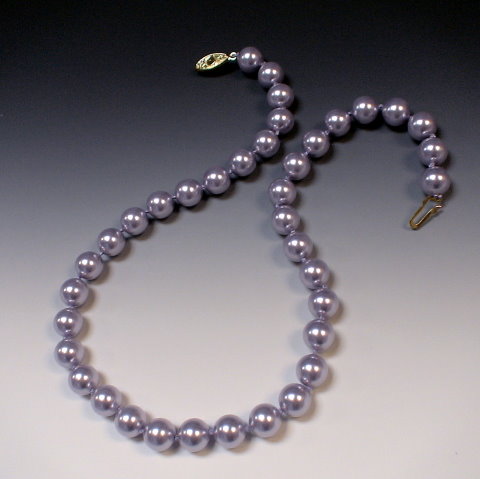
In our store, I am asked repeatedly about what the current fashion colors are? Did I see what so-and-so was wearing on TV or at an awards show? But usually, at least in Nashville, TN, a sense of fashion plays a small part in the day-to-day decisions most people make about the jewelry they want to wear.

What are your feelings and views? What are your experiences? What role should “Fashion” play? How important is Fashion to jewelry design? Should we take our design “cues” from New York and Los Angeles? To what extent do you think Fashion influences the average woman’s choices she makes, when purchasing or wearing a piece of jewelry?

Warren Feld

ctamayadetail1

From an article I wrote… APPLIED FASHION Women don’t just wear pieces of jewelry – they inhabit them.

Buying a piece of jewelry for yourself – a necklace, a bracelet, earrings, a brooch, something else – isn’t a task easily given to someone else. It’s often not a spur of the moment thing either. You just don’t rush off to the local boutique or the local Wal-Mart, grab whatever you see, and go home. I’m not talking about that impulse buy during your leisurely visit to the mall. I’m referring to purchasing those pieces of jewelry you know will have to do a lot of the hard work to accessorize your wardrobe and help you get the compliments and notice of your family, friends and   co-workers you comport with and compete with each and every day.

No, buying a piece of jewelry for yourself is a multi-purposed moment, one which must be thought through carefully and one which must be savored. Lest you buy the wrong piece. That doesn’t really go with what you intend to wear. Or is over-priced. Or poorly made. Or conveys the wrong impression about status. Or is out of fashion. Or something one of your friends already has.

The jewelry you buy has to conform to quite a long list of essential criteria before you could ever think of buying it. It is something you will wear more than once. As such, it is your companion. Your necklace is not merely lying around your neck. Or your bracelet around your wrist. Or your earrings dangling from your ears. Jewelry can cause you to lose face with others. It can irritate or scratch your skin, or get caught up in your hair. It might weigh you down or stretch or tear your ear lobes. Jewelry can break without warning in the most unexpected and embarrassing of places. It can get caught on things, sometimes hurting you in the process.

Jewelry conveys to the world something about who you really are, or think you are. As such, jewelry is very personal. Your private, innermost, most soul searching choices made very public for all to see. As you caress it, as you touch the smooth or faceted or crevice’d beads and metal parts or the clasp or the material the beads are strung on, when you twist and move the piece within your hand, you are confirming to yourself the extent to which your jewelry is doing its job.

When you buy new jewelry, the dilemmas multiply. How will the new compare to the old? Will it be able to handle all these responsibilities – looking good, representing you, fitting in with your wardrobe, meeting the expectations of others? Like divorcing, then remarrying, changing your jewelry can take some time for readjustment. And you do not want to be seen as noncommittal to your jewelry. This would sort of be like going to a hotel, but not unpacking your suitcase while staying in the room.

Conveying some sort of social or psychological distance from your jewelry can be very unsettling for others. So you need to inhabit it. You need to inhabit your jewelry, wear it with conviction, pride and satisfaction. Be one with it. Inhabiting jewelry often comes with a price. There becomes so much pressure to buy the “right” pieces, given all the roles we demand our jewelry to play, that we too often stick with the same brands, the same colors, the same styles, the same silhouettes.

We get stuck in this rut and are afraid to step out of it. Or we wear too many pieces of jewelry. The long earrings, plus the cuff bracelets on both arms, plus the head band, plus the hair ornament, plus the 7-strand necklace, plus the 5 rings. We are ever uncertain which piece or pieces will succeed at what, so hopefully, at least some combination or subset of what we wear will work out.

In a similar way, we wear over-embellished pieces – lots of charms, lots of dangles, lots of fringe, lots of strands. Something will surely be the right color, the right fit and proportion, the right fashion, the right power statement, the right reflection of me.

And our need to inhabit our jewelry comes with one more price. We are too willing to overpay for poorly made pieces in our desperation to have that right look. The $100.00 of beads strung on elastic string. The poorly dyed stones which fade in the light. The poorly crimped and overly stiff pieces with little ease for accommodating movement and frequent wear. It is OK to inhabit our jewelry. In fact, it is necessary, given all we want jewelry to do for us. But we need to be smart about it. We need to learn to recognize better designs and better designers.

This need not be expensive at all.

Just smarter.

Posted in bead weaving, beads, beadwork, jewelry design, jewelry making | Tagged: , , | 3 Comments »

A LESSON IN USING COLOR SIMULTANEITY EFFECTS:

Posted by learntobead on April 22, 2013

A LESSON IN USING COLOR SIMULTANEITY EFFECTS:
The Contemporized Etruscan Collar
By Warren Feld
http://www.warrenfeldjewelry.com


reposted from my Jewelry Design Discussion Group on FaceBook
https://www.facebook.com/groups/jewelrydesign/

bw3nb01-amethystsage-full4-hi-res-small-medium

Several years ago, I had been asked to do a week-long jewelry design workshop in Cortona, Italy. The topic I selected was on Contemporizing Traditional Etruscan Jewelry. One of the projects I developed for the workshop was this Contemporized Etruscan Collar. The challenge, here for me, was to create a sophisticated, wearable, and attractive piece that exemplified concepts about contemporizing traditional jewelry.

Contemporizing Traditional Jewelry has to do with how you take particular traditional forms and techniques, and both add your personal style to the pieces, as well as make them more relevant to today’s sense of fashion and style. The challenge for the designer is how to keep traditional ideas essential and alive for today’s audience.

Things clicked. I found a traditional Etruscan Collar that I immediately connected with.

The Contemporized Etruscan Collar

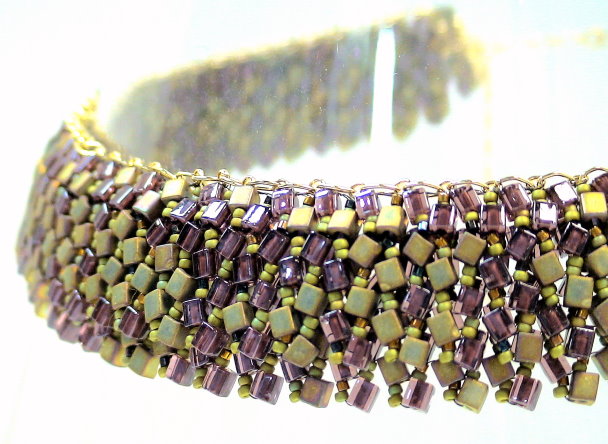
The contemporized piece basically consists of two staggered and overlapping bead-woven strips. The bead-woven technique used is the Ndebele Stitch (sometimes called Herringbone).

There are many design theory elements incorporated into this piece, including dimensionality, curvature, malleability, and movement. One of the more interesting theories I applied here has to do with color simultaneity effects.

Color Simultaneity Effects
bw3nb01-amethystsage-small-medium-full3-hi-res
Picking colors is about making strategic choices. Picking colors is very revealing about the jewelry artist’s understanding of how the bead asserts its needs for color. One set of color-theories employed to make these kinds of choices has to do with Simultaneity Effects. Colors in the presence of other colors get perceived differently, depending on the color combination.

For example, a White Square on a Black background looks bigger than a Black Square on a white background. White reaches out and overflows the boundary; black contracts.
colorsimulataneity1
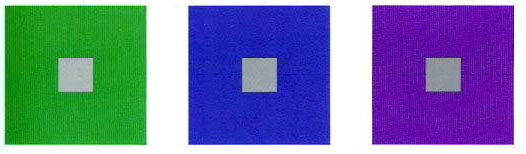
Another example: Gray always picks up some of the color characteristics of other colors around it. Gray next to orange will appear to have an orange tone to it. Gray next to green will appear to have a green tone to it. A “Gray” bead is one, the color of which, has a strong gray or black tone to it. Besides the obvious “gray”, these other colors function as a “gray”: montana blue, alexandrite, colorado topaz, prairie green. Many color-lined and silver-lined beads can function as a “gray”, particularly when the glass color is other than clear. Many metallic or otherwise reflective surface beads can function as a “gray”.

A final example of simultaneity effects has to do with how people sense whether colors are warm or cool. In one composition, depending on the color mix, a particular color might be felt as “warm”. In a second composition, with a different color mix, that same color might be felt as “cool”. You can picture a yellow square surrounded by white feels lighter, brighter and a different temperature than its counterpart surrounded by black. A red square surrounded by black feels darker, duller, and a different temperature than its counterpart surrounded by white.

Existence of these simultaneity effects is a great piece of information for the designer. There will be gaps of color and light between beads. Many bead colors are imperfect, particularly in combination. Playing with simultaneity effects gives the designer tools to overcome some of the color limitations associated with the bead and the gaps of light between beads. These allow you to “blend” and build “bridges” and create “transitions.”

Look back at the images of the Ndebele-stitched piece. When you work with beads, there are always gaps between them. In the Ndebele-stitch, there are many and very pronounced gaps of light between beads. This can be very threatening to a viewer. People are pre-wired to avoid things which might harm them, such as snakes and spiders. This is our fear- or anxiety-response.

We can summarize most color theories as a set of principles the brain uses – both in perception and cognition – to find a state of color or colors which are harmonious. That is, people like to see and feel comfortable and safe with colors which harmonize and go together. When we start to lose that harmonious state of color, this makes the brain edgy. When the brain starts to get edgy, we start to interpret pieces as boring, monotonous, scary, dangerous, will cause death. We innately reject, as part of our pre-wired fear response, that which does not follow good principles of color.

Any viewer’s brain will immediately try to interpret what it sees and make sense of it. This includes jewelry. The viewer’s brain needs to know immediately whether to approach or flee. Each time the eye/brain comes to the end of the bead and is confronted with a gap of light separating it from the next bead, it’s similar to a person approaching a cliff, and getting asked to jump off of that cliff.
No one wants to jump off a cliff. And no one’s eye/brain wants to jump over a gap of light between two beads.

We have to fool ourselves, that is, our brain, in some way. Color theories offer us many possible ideas on how to do this. I find using simultaneity effects works especially well in jewelry compositions using beads. Certain colors, when juxtaposed, create their own meanings, and fool the brain into thinking it sees something in these gaps, or is somehow more motivated to fill in the gaps, and proceed from one bead to the next.

In this Etruscan Collar project, many of my color choices were based on an understanding of simultaneity effects.

Posted in beadwork, jewelry design | Leave a Comment »

ALL DOLLED UP: Beaded Art Doll Competition

Posted by learntobead on January 30, 2013

ALL DOLLED UP:
BEADED ART DOLL COMPETITION
deadline: 8/31/2013

Create a BEADED ART DOLL by manipulating beads and forms into an imaginative
tactile and visual 3-dimensional representation. And then write a Short Story
about your Beaded Art Doll, what it represents, and how it was created.

ALL DOLLED UP: BEADED ART DOLL COMPETITION is offering a first prize of a $1000.00
shopping spree on the Land of Odds web-site (www.landofodds.com), and a Runner-Up
prize of a $400.00 shopping spree on the web-site. This is more than a beauty
pageant. It is a design competition. The Competition will take into account
the Artist’s intentions and how well these are incorporated into the design.
Enter to Win!

Beaded Art Dolls submitted as entries for this competition may be realistic,
surrealistic, whimsical or imaginary. They may be humanistic, animalistic, caricatures,
cartoons, impressions or abstractions. A Beaded Art Doll is a physical representation
in three dimensions, using human figural and expressive characteristics, through
the creative use and manipulation of beads. Beaded Art Dolls should be between
8” and 36” in size. They must be at least 80% composed of beads.

The Artist is given wide leeway in techniques for how the doll is to be beaded,
and may use one particular technique or several. Techniques, for example, may
include bead weaving stitches, bead embellishment, bead appliqué, bead
knitting, bead crochet, bead embroidery, lampworking.

Review the Official Rules on the website.

Sponsored by Land of Odds, Be Dazzled Beads, LearnToBead.net, and The Center
for Beadwork & Jewelry Arts

Posted in bead weaving, beadwork, Contests | Tagged: , , | Leave a Comment »

JEWELRY DESIGN DISCUSSION GROUP

Posted by learntobead on January 30, 2013


THE JEWELRY DESIGN DISCUSSION GROUP

Please join our new group on facebook at:

https://www.facebook.com/groups/jewelrydesign/


We’ve taken our BEAD STUDY group at The Center for Beadwork & Jewelry Arts, and opened it up online at Facebook.


Current Discussions:
– Art vs. Craft
– Technique vs. Skill
– How to organize your ideal work space
– Getting a management handle on client “Wants”
– Color Blending
– Bead Spills
– How did you get your start in beading/jewelry making?


Posted in beadwork, jewelry design, Workshops, Classes, Exhibits | Leave a Comment »

The Artistry of Barbara Natoli Witt

Posted by learntobead on January 30, 2013

THE ARTISTRY OF BARBARA NATOLI WITT
http://necklaceart.com/NecklaceArt.com.html
witt1a

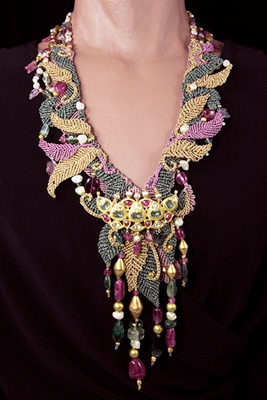
I wanted to share with you some of the beautiful, fascinating and romantic works of Barbara Natoli Witt.

witt1

Her pieces blend tapestry techniques with captivating webs of colored threads, beads, stones, artifacts and found objects.

witt2

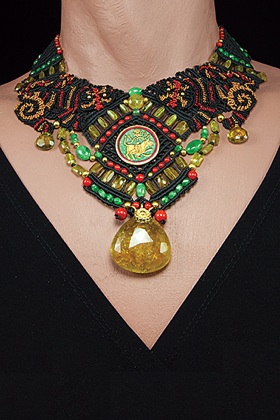
I frequently advocate among my students that they learn to incorporate several types of techniques and materials within their pieces, and Witt is a perfect example of the result.

witt3

Her use of historical motifs, signs, symbols and materials imbued with meaning within necklace pieces with a contemporary flair add synergy and power to her pieces.    She marries “meaning” to “aesthetic” particularly well.

witt4

The historical referents  make you think of themes of classical beauty, the classical role of women and the classical role of jewelry, and how these relate to women and jewelry today.

witt5

A good background biography of the artist can be found here.

witt6


Posted in bead weaving, beadwork, jewelry design | Leave a Comment »

CONTEMPORIZING TRADITIONAL JEWELRY: ETRUSCAN COLLAR

Posted by learntobead on September 6, 2012

BE DAZZLED BEADS: WORKSHOP ANNOUNCEMENT

Create a sophisticated, contemporary Etruscan-style collar!
Layer two Ndebele stitched strips, slightly curving the interior edge and embellishing
with chain.

ETRUSCAN COLLAR WORKSHOP

Instructor: Warren Feld
at Be Dazzled Beads, 718 Thompson Lane, Ste 123, Nashville, TN 37204

Sat, 11/3, Noon-5pm
Register by phone (615)-292-0610, or in-person

(REGISTRATION CLOSES: 10/15/12)


($35.00 fee + Kit $160.00 + Upgrade Option) (deposit = $195.00 + Upgrade Option)
Kit at $160.00 includes gold plated clasp, chain and findings.

UPGRADE OPTIONS 

#1: 14KT CLASP and GOLD FILLED CHAIN Chain For Embellishment
ADD + $884.00

#2: STERLING SILVER CLASP and STERLING SILVER CHAIN For Embellishment
ADD + $148.00

#3: GOLD FILLED CLASP and GOLD FILLED CHAIN for Embellishment
ADD + $165.00

ABOUT THE WORKSHOP:
Bead weaving is a collection of hundreds of different stitching techniques and
strategies for creating pieces that approximate a piece of cloth.

The Ndebele stitch, sometimes called Herringbone Stitch, is a loose-knit stitch that lends itself
to many creative variations. It results in a herringbone pattern, or zig-zag effect.

This Etruscan Collar Necklace consists of two overlapping strips of Ndebele Stitch, a chain embellishment, and an attached choker clasp. The strips are overlapped so that they curve slightly
along the inner edge.
The challenge, here for me, was to create a sophisticated, wearable, and attractive piece that exemplified concepts about contemporizing traditional jewelry. There is considerable artistry and craftsmanship underlying Etruscan jewelry. I began to interpret and analyze this piece. I first broke it down in terms of its Traditional Components.

Contemporizing Traditional Jewelry has to do with how you take these particular traditional forms and techniques, and both add your personal style to the pieces, as well as make them more relevant to today’s sense of fashion and style. The challenge for the designer is how to keep traditional ideas essential and alive for today’s audience.

Part of the artistry of the jewelry designer has to do with the control over color. Picking colors
is about making strategic choices. And picking Bead Colors is about understanding how the bead asserts its needs for color.The jewelry designer must be strategic in the placement of color within the piece. The designer achieves balance and harmony, partly through the placement of colors. The designer determines how colors are distributed within the piece, and what movement and rhythm and effect result. And the designer determines what proportions of each color are used,
where in the piece, and how.
One set of color-theories, widely used in our Etruscan Collar, employed to make these kinds of choices have to do with Simultaneity Effects. Colors in the presence of other colors get perceived differently, depending on the color combination.

What You Will Learn:
– Creating a design-plan for a layered bead woven necklace collar
– Strategically selecting a color palette, especially in reference to “simultaneity effects”
– Implementing the Ndebele Stitch using a 4mm cube and two 2mm beads to create two strips which will later overlap
– Reinforcing the Ndebele strips
– Attaching and assembling two layers of Ndebele Stitched strips using a hybrid brick stitch/ndebele stitch technique

– Weaving in a decorative chain element along the inner boundaries of the piece, using a bookbinding stitch
– Attaching a choker clasp assembly
– Some ideas about what it means to “contemporize” a traditional piece
of jewelry

Prerequisites:
– Orientation To Beads & Jewelry Findings
– Introductory Knowledge of Ndebele stitch
– An intermediate level knowledge of and experience with bead weaving

Kit Contents:
– Step by Step instructions with text, diagrams and images
– 4mm Miyuki glass cube beads, 11/0 seed beads or 11/0 delicas or 1.8mm cubes
– Swarovski crystal Series 5000 round beads, 2mm
– gold plated cable chain
– gold plated adjustable hook/eye choker clasp
– FireLine cable thread, size D
– 4ea of size #10 and size #12 beading needles
– bees wax
– Plastic case with tight lid for carrying these supplies


THE PALETTES:

LOOK N’SEE: http://www.warrenfeldjewelry.com/ecollar.htm

 1. Spectrum Gold

2. Brilliant Gold

3. Teal Terra/Antique Rose

4. Antique Amethyst/Sage Green


5. Antique Rose/Terra Cotta


ABOUT WARREN FELD

warrenfeldjewelry.com

The Design Perspective is the driving force that defines Warren Feld as a jewelry artist. Whether creating jewelry, teaching students theory and application, or helping jewelry and beading artists
establish themselves in business – the focus always comes back to how best to make functional, materials and aesthetic choices and tradeoffs.

Warren’s jewelry designs are characterized by multi-method approaches, intricate plays of color, contemporary adaptations of traditional pieces, and experimentation. He is adept at bead weaving, bead stringing, wire working and silver smithing. He works to bring senses of movement, dimension and sensuality to his pieces. Pieces must be both beautiful and wearable, concurrently meeting
the needs of wearer, viewer and designer alike.

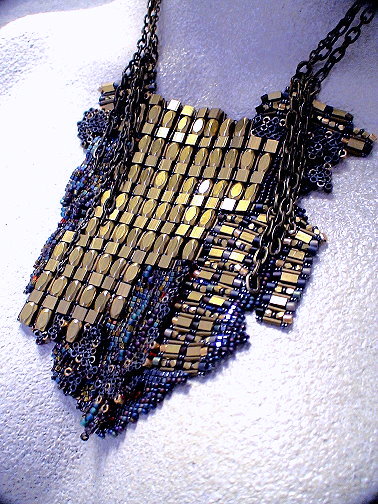
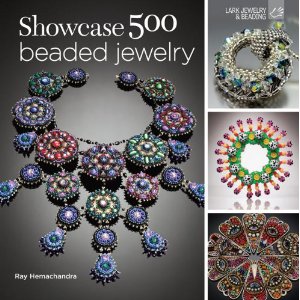
In 2000, Warren founded The Center for Beadwork & Jewelry Arts, an educational program in Nashville, TN. In 2008, “Canyon Sunrise” necklace was selected as Finalist, 4th Place, SWAROVSKI’s Be Naturally Inspired Contest. “Little Tapestries/Ghindia” — was juried into SHOWCASE 500 BEADED
JEWELRY, Lark Publications, 2012. He is writing a jewelry design series entitled “How To Bead A Rogue Elephant.” Owner, Be Dazzled Beads, and Land of Odds (www.landofodds.com). Director, Jewelry Design Camp. Warren’s pieces are available for purchase at The Open Window Gallery, or online at www.warrenfeldjewelry.com.

Administers three international contests: The Ugly Necklace, All Dolled Up-Beaded
Art Dolls, and Illustrative Beader-Beaded Tapestries.

He is working to bring the CBJA curriculum online as LearnToBead.net.

Be Dazzled Beads is located in the Berry Hill section of Nashville, Tennessee. It is 3 miles south
of downtown, off of I-65.

Lunch Options:

The workshop will take a break for lunch. Within easy walking distance are these lunch places:

Applebees
The Yellow Porch
Sam & Zoes
Baja Burrito
Subway
Kebab Gyro Shop
Pizza Hut
Wendy’s
Calypso Cafe
Pfunky Griddle
Firehouse Subs
Logans Steak House
Monell’s
Jersey Mikes
Cheeseburger Charlies
Einstein Bagel
Panda Express
Panera’s Bread Company

Lodging:
If you are coming from out of town, the closest motels are
La Quinta Inn (Sidco Drive near Harding Place and I-65)
Red Roof Inn (Sidco Drive near Hading Place and I-65)

There are additional motels 1 exit further south on I-65 on Old Hickory Blvd in Brentwood.

JEWELRY
DESIGN CAMP
 

October 2013

Session
I: Contemporizing Traditional Etruscan Jewelry


Sun,
10/6/13 thru Sat, 10/12/13

Session
II: Fringe, Edge, Strap, Bail, Surface Embellishment in Jewelry — Art
or Not?

Sun,
10/13/13 thru Sat, 10/19/13

Immerse
yourself into a week-long study of jewelry design theories, and their
applications and manipulations with various materials, techniques and
strategies.
CENTER
FOR BEADWORK & JEWELRY ARTS

WARREN
FELD JEWELRY

BE
DAZZLED BEADS


Posted in beadwork, jewelry design | Tagged: , , , | Leave a Comment »

Posted by learntobead on August 9, 2012

PRESS RELEASE: 8/9/12

CALL FOR ENTRIES:
ALL DOLLED UP: BEADED ART DOLL COMPETITION
Sponsors: Land of Odds, Center for Beadwork & Jewelry Arts, Be Dazzled Beads
Deadline: 8/31/13
Contact:
Warren Feld
warren@landofodds.com
615-292-0610

ALL DOLLED UP:
Beaded Art Doll Competition
This Year’s Theme:  Transformations

Call for Entries.

Land of Odds (http://www.landofodds.com/store/alldolledup.htm) announces its fifth 2013 All Dolled Up: Beaded Art Doll Competition.   Entries accepted between September 1, 2012 and August 31st, 2013.

Create a Beaded Art Doll by manipulating beads and forms into an imaginative tactile and visual 3-dimensional representation of this year’s theme:   TRANSFORMATIONS.

And then write a Short Story (between 1000-2000 words) about your Beaded Art Doll, what it represents, and how it was created, starting with the sentence:

“As she turns towards me, her hands no longer seem familiar;
her face, once recognizable, now unexpected;
her aura, a palette of changed colors,
I want to share, but can’t all at once.
She is transforming, before my eyes, as if I wished it to happen,
for whatever reason — fun, mundane or sinister — I’m not sure.
But as she moves and evolves, a special insight occurs to me,
so I name her… “


The 2013 ALL DOLLED UP:  BEADED ART DOLL COMPETITION is offering a first prize of a $1000.00 shopping spree on the Land of Odds web-site (http://www.landofodds.com), and a Runner-Up prize of a $400.00 shopping spree on the web-site.

Entries will be judged by a panel from The Center for Beadwork & Jewelry Arts.

A Beaded Art Doll is a physical representation in three dimensions, using human figural and expressive characteristics, through the creative use and manipulation of beads.    Beaded Art Dolls submitted as entries for this competition should be immediately recognizable as a “Doll” as defined above.

That said, Beaded Art Dolls submitted as entries for this competition may be realistic, surrealistic, whimsical or imaginary.    They may be humanistic, animalistic, caricatures, cartoons, impressions or abstractions.   The doll may take many forms, including a figure, purse, box, vessel, puppet, marionette, or pop-up figure.

Beaded Art Dolls should be between 8” and 36” in size.   They must be at least 80% composed of beads.

The doll’s internal form and structure may result from many techniques, materials and strategies.   The bead stitches themselves might be used to create the skeletal structure.   Various forms of cloth dolls might be stitched or embellished with beads.   The underlying structure might be made of polymer clay, wood, ceramic, porcelain, Styrofoam, wire, corn husk, basket weaving, yarns, cardboard, paper, cotton, or some combination of materials.   It might be a found form or object.

The Artist is given wide leeway in techniques for how the doll is to be beaded, and may use one particular technique or several.   Techniques, for example, may include bead weaving stitches, bead embellishment, bead appliqué, bead knitting, bead crochet, bead embroidery, lampworking.  These should NOT include the application of rhinestones, sequins, nailheads or studs.   The beads may be of any size, shape, color and material.

The Artist may include a doll stand or display support with the Art Doll, though this is not a requirement.   This stand or support may be an off-the-shelf piece, or created from scratch by the Artist.   It may be a base, a created setting, a decorative box, or frame.  The stand or display support need not be beaded.

The Artist may interpret and apply the theme “Transformations” any way she or he chooses.    The Beaded Art Doll might be thought of as a plaything; or a visual representation of a person, feeling, spirit or thing; or a tool for teaching; or a method for stimulating emotional development or healing.    As an object of art, the goal of the Doll should be to make a statement, evoking an emotional, cultural or social response, either by the Artist her/himself or by others.    The Doll must be an original work, and may be the work of one Artist or a Collaboration.

ALL DOLLED UP:  BEADED ART DOLL COMPETITION is more than a beauty pageant.   It is a design competition.  The Competition will take into account the Artist’s intentions and how well these are incorporated into the design.

Enter to Win!


Land of Odds, home of the annual ALL DOLLED UP:  BEADED ART DOLL COMPETITION.  Visit www.landofodds.com/store/alldolledup.htm to review the Official Rules.   Land of Odds provides doll, bead and jewelry making artists with virtually all their beads, supplies, books and jewelry findings needs, with over 30,000 products.  Retail/Discounts/Wholesale.


Posted in beadwork, Contests | Tagged: , , , , | Leave a Comment »

LARK PUBLICATIONS: Call For Entries

Posted by learntobead on June 10, 2012

LARK PUBLICATIONS
CALL FOR ENTRIES
8/1/2012 deadline
I received the following email from Ray Hemachandra of Lark Publications. They are
requesting submissions to possible be included ina book to be published called Showcase
500 Necklaces. -- Warren
"I'm pleased to announce a two-month call for entries for a new 500 Series gallery book of handmade contemporary jewelry from Lark Books: Showcase 500 Necklaces. The opportunity closes on August 1, 2012. That is a short window of time, so I ask you please to share the call for entries promptly with your entire jewelry-making community, including peers, associations, schools, students, and all online forums as well as social media like Twitter and Facebook, and to respond to it yourself in a timely way. As always, we hope to receive a wide array of entries from around the world. I'm also pleased to report Lark has converted to using an online entry system; entries are now online only, through a portal provided by Juried Art Services. Here is the link for the informational prospectus and to enter: http://bit.ly/NmsmQm


You'll find all the information you need at that link, so please follow the instructions carefully, but here are some key points: We'll accept jewelry in all materials with all techniques and design styles, including both wearable and conceptual but biasing toward the wearable, simply because most readers prefer seeing wearable jewelry in these books. Jurying will favor more recent work, and so we ask you to submit very recent or current work from no earlier than 2010. The submission limit is two pieces (one photo of each, with an option of one or two alternate or detail photos per piece). 'Necklaces' can include neckpieces, chokers, torques, collars, operas, ropes, chains, bibs, etc. There is no charge for entry for this book; Lark is covering the Juried Art Services cost. We strongly prefer work that has not been previously published in book form. The JAS form will walk you through the process, but a few notes: 1. No need to complete the Artist Statement section. 2. Please read and follow Lark's Digital Image Submission Guidelines. 3. We encourage early entries, especially to avoid having any last-minute difficulties with the new entry process: Complete the process ahead of the deadline so you're assured of having time to resolve any technical issues you might encounter. For questions about registering with Juried Art Services or uploading your material to the site, contact support@jurying.net. For other questions about the book, please direct them to Hannah Doyle at hannah@larkbooks.com. And please be sure to join Lark Jewelry & Beading on Facebook at https://www.facebook.com/LarkJewelryBeading for updates and future calls for entries. We invite you to copy the web ad for the book at http://www.larkcrafts.com/submit/calls-for-submissions/ for your own website or blog, or to share it on your Facebook page, linking either to that link or to the JAS page at http://bit.ly/NmsmQm, whichever you prefer. We are very excited about this book, the third jewelry book since the 500 series evolved into 'Showcase 500'. Showcase 500 Rings (http://amzn.to/yEERZm ) just published in May, and Showcase 500 Beaded Jewelry (http://amzn.to/z6tZH2) will publish in August. We know Showcase 500 Necklaces will be a book devoted to work of creative excellence and innovation, and we invite and welcome your contribution to the book. Thank you very much. Sincerely, Ray Join us on Facebook: facebook.com/LarkJewelryBeading Follow us on Pinterest: pinterest.com/larkjewelry Ray Hemachandra Team Lead and Business Manager Lark Jewelry & Beading 67 Broadway Asheville, North Carolina 28801 (828) 253-0467 ext. 762 ray@larkbooks.com
http://www.larkcrafts.com/jewelry-beading"

Posted in bead weaving, beads, beadwork, jewelry design, jewelry making | Tagged: , | 2 Comments »

Posted by learntobead on May 30, 2012

PRESS RELEASE –5/31/12
TOPIC:

OnLine Voting Begins!
9th International 2012 The Ugly Necklace Contest
– A Jewelry Design Competition With A Twist

Eight Jewelry Artists from around the world have been selected as Semi-Finalists of The 9th International 2012 The Ugly Necklace Contest – A Jewelry Design Competition With A Twist, by a panel of four judges from The Center for Beadwork & Jewelry Arts and Land of Odds.

Vote Online for your favorites, and help determine who will win the Grand Prize – a $992.93 shopping spree on the Land of Odds web-site (http://www.landofodds.com). Runner Up Prize: $399.07 shopping spree. Voting Ends June 30th, 2012

More details and images on-line at:
http://www.landofodds.com/store/ugly9contest.htm


Our 2012 Semi-Finalists Announced:

Nivya Raju, Dubai, United Arab Emerates


Juli Brown, Wells, Minnesota
 

Joan Veres, Norwood, New York


Corrine Zephier, Kyle, South Dakota

Lynn Margaret Davy, Dorset, United Kingdom


Pamela Orians, Zanesville, Ohio


Quisha Saunders, Atlanta, Georgia


Brenda Donaldson, Mesa, Arizona


Synopsis:
It’s not easy to do Ugly!

So the many jewelry designers from across America and around the Globe who entered our 9th International 2012 The Ugly Necklace Contest — A Jewelry Design Competition With A Twist , found this contest especially challenging. After all, your brain is pre-wired to avoid and reject things which are ugly. Think of snakes and spiders. And even if you start your necklace with a bunch of ugly pieces, once you organize them into a circle, the very nature of an ordered round form makes it difficult to achieve Ugly. Yes, “Ugly” is easier said than done.
Who will win? We need the public’s help to influence our panel of judges.

Our respected judges evaluated these creatively-designed pieces in terms of hideousness, use of materials and clasp, the number of jewelry design principles violated, and the designer’s artistic control. Extra points were awarded for artists’ use of smaller beads, because it’s much more difficult to do Ugly with these.

Now it’s time for America and the World to help finalize the decision about which of these 8 semi-finalists’ Ugly Necklaces to vote for. The winner will truly be an exceptional jewelry designer. The losers….well….this isn’t a contest where you really can “lose”.

Come see these and the other semi-finalists’ pieces at www.landofodds.com, and vote your choice for the Ugliest Necklace, 2012.

And if you are in the Nashville, Tennessee area, please stop by The Open Windows Gallery (fine art jewelry) at Be Dazzled Beads, where the 8 semi-finalists’ Ugly Necklaces are on display through September 15, 2012.

CONTACT INFORMATION:
LAND OF ODDS
Attention: Warren Feld
www.landofodds.com
718 Thompson Lane, Ste 123, Nashville, TN 37204
Phone: 615-292-0610; Fax: 615-460-7001
Email: warren@landofodds.com

ABOUT UGLY NECKLACES

The UGLY NECKLACE CONTEST (www.landofodds.com/store/uglynecklace.htm) is a jewelry design competition with a twist. The contest presents a challenge not often tackled — at least intentionally. The contest draws the jewelry designer into an alternative universe where beautiful artists create ugly necklaces. It’s not easy to do.

“Ugly” is more involved than simple surface treatment. It is not just laying out a bunch of ugly parts into a circle. It turns out that “Ugly” is something more than that. “Ugly” is the result of the interplay among Designer, Wearer, and Viewer. “Ugly” is very much a result of how a necklace is designed and constructed. “Ugly” is something the viewer actively tries to avoid and move away from. “Ugly” has deep-rooted psychological, cognitive, perceptual, sociological and anthropological functions and purposes.

As research into color and design has shown, your eye and brain compensate for imbalances in color or in the positioning of pieces and objects – they try to correct and harmonize them. They try to neutralize anything out of place or not quite right. You are pre-wired to subconsciously avoid anything that is disorienting, disturbing or distracting. Your mind and eye won’t let you go here. This is considered part of the fear response, where your brain actively attempts to avoid things like snakes and spiders…. and ugly necklaces.

This means that jewelry designers, if they are to create beautiful, wearable art, have to be more deeply involved with their pieces beyond “surface”. Or their pieces will be less successful, thus less beautiful, thus more disturbing or distracting or disorienting, thus more Ugly.  Luckily, for the jewelry designer, we are pre-wired to avoid these negative things. This makes it easier to end up with pieces that look good. Beauty, in some sense, then, is very intuitive. On the other hand, it makes it more difficult to end up with pieces that look bad. You see, Ugly goes against our nature. It’s hard to do.

The Ugly Necklace Contest is one of the many programs at The Center for Beadwork & Jewelry Arts in Nashville, Tennessee, that encourage beadwork and jewelry makers to test their design skills, have fun, and learn some fundamentals about jewelry design in the process.
To add your name to our email list associated with The Ugly Necklace Contest,
send an email to: oddsian@landofodds.com
and Write “Ugly Necklace Email List” in the subject line.
Sponsors:
Land of Odds www.landofodds.com,
Phone: 615-292-0610; Email :warren@landofodds.com
Land of Odds provides bead and jewelry making artists with virtually all their beads, supplies, books and jewelry findings needs, with over 35,000 products. Retail/Discounts/Wholesale.

Be Dazzled Beads www.bedazzledbeads.com
Nashville’s premier bead store.

Center for Beadwork & Jewelry Arts www.landofodds.com/beadschool/
Educating beaders and jewelry makers in the Design Perspective.

Other Programs at Land of Odds:
ALL DOLLED UP: Beaded Art Doll Competition
www.landofodds.com/store/alldolledup.htm

JEWELRY DESIGN CAMP
www.warrenfeldjewelry.com/jewelrydesigncamp/

Learn To Bead Blog
Start your education with our ORIENTATION TO BEADS & JEWELRY FINDINGS
http://blog.landofodds.com

Posted in beadwork, Contests, jewelry design, jewelry making | Tagged: | Leave a Comment »

Piece accepted for inclusion 500 BEADED JEWELRY book

Posted by learntobead on February 8, 2012

Just found out that one of my pieces — Little Tapestries/Ghindia — was juried into the book SHOWCASE 500 BEADED JEWELRY, Lark Publications. The book comes out August 2012, but is already listed on Amazon.com at http://amzn.to/z6tZH2 .

From Amazon.com:

This book gathers photographs of 500 of the most breathtaking beaded jewelry designs created in recent years. The techniques the beaders employ are as varied as the aesthetic sensibilities they bring to their gorgeous creations and include beadweaving in every stitch imaginable, embroidery, quilling, loom weaving, and kumihimo braiding, as well as basic stringing, simple wirework, and fine metalwork. Sometimes, a bead maker’s focal piece simply is set in a straightforward, unpretentious, and beautiful design.


Virtually all of the world’s most famous beaders who make jewelry have pieces included — including Carol Wilcox Wells, Diane Fitzgerald, Marcia DeCoster, Jamie Cloud Eakin, Huib Petersen, Paulette Baron, Sabine Lippert, Sherry Serafini, Margie Deeb, Maggie Meister, Melanie Potter, Ann Tevepaugh Mitchell, Laura McCabe, Suzanne Golden, Jean Campbell, Rachel Nelson-Smith, Eva Dobos, and many more — but we also present work from many artists who have never been published before. All together, this extensive, international, and fabulous survey of 500 pieces includes work from nearly 300 artists from 30 countries and reveals the striking vision and ambition of today’s beading community.

Posted in beads, beadwork, jewelry design | Tagged: , , , | 1 Comment »

Beaded Tapestry Contest Winner and RunnerUp Announced

Posted by learntobead on January 16, 2012

THE ILLUSTRATIVE BEADER:
Beaded Tapestry Competition

Congratulations to:

WINNER
Dot Lewallen
Westerville, OH

RUNNER-UP
Patty Rockhill
O’Brien, FL


FINAL RESULTS posted on the Land of Odds website at:

http://www.landofodds.com/store/tapestry1contest.htm


~~~~~~~~~~~~~~~~~~~~~~~~~~~~

Also check out

THE UGLY NECKLACE CONTEST
A Jewelry Design Competition With A Twist

ALL DOLLED UP: Beaded Art Doll Competition

JEWELRY DESIGN CAMP


Posted in beadwork, Contests | Tagged: , , | 2 Comments »

OnLine Voting Ends 1/14/12 – Beaded Tapestry Competition

Posted by learntobead on January 5, 2012

VOTING ENDS 1/14/12: BEADED TAPESTRY COMPETITION


Beaded Tapestry Competition
GO VOTE OnLine:  Voting ends 1/14/2012
http://www.landofodds.com/store/tapestry1contest.htm

Visit the web-pages of each of our 4 Beaded Tapestry Competition Semi-Finalists.

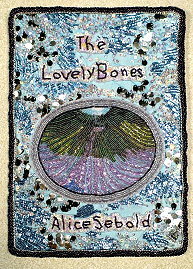
#1. KAY FIELDEN, Auckland, New Zealand, “The Lovely Bones” by Alice Sebold
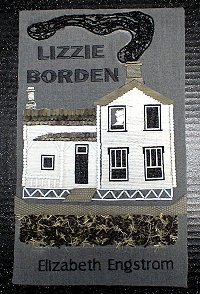
#2. JUNE JACKSON and JAMIE BRUNS,
Bryan, Texas, “Lizzie Borden” by Elizabeth Engstrom
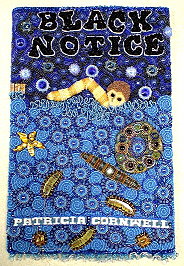
#3. DOT LEWALLEN,
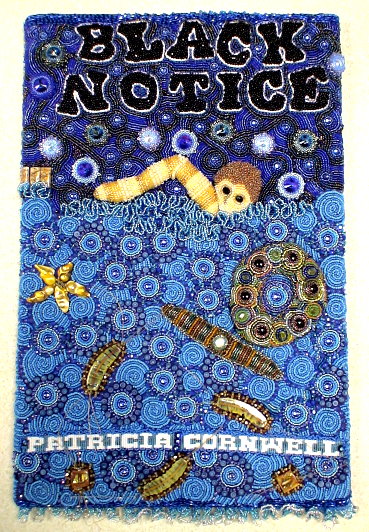
Westerville, Ohio, “Black Notice” by Patricia Cornwell
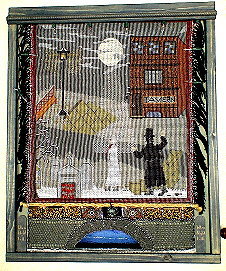
#4. PATTY ROCKHILL,
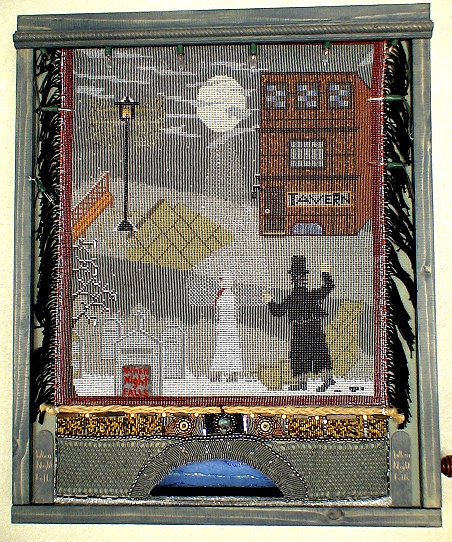
O’Brien, Florida, “When Night Falls”, by Jenna Ryan


International 2011
THE ILLUSTRATIVE BEADER:
BEADED TAPESTRY COMPETITION
Theme: Mystery Genre Book Covers

Sponsored by:
Land of Odds
The Center for Beadwork & Jewelry Arts
Be Dazzled Beads

Posted in beadwork, Contests | Leave a Comment »

Go VOTE – Beaded Tapestry Competition

Posted by learntobead on November 4, 2011

Semi-Finalists Chosen!
Beaded Tapestry Competition 

GO VOTE OnLine:  Voting ends 1/14/2012

Visit the web-pages of each of our 4 Beaded Tapestry Competition Semi-Finalists.

International 2011
THE ILLUSTRATIVE BEADER:
BEADED TAPESTRY COMPETITION
Theme: Mystery Genre Book Covers

#1. KAY FIELDEN
Auckland, New Zealand
“The Lovely Bones” by Alice Sebold

#2. JUNE JACKSON and JAMIE BRUNS
Bryan, Texas
“Lizzie Borden” by Elizabeth Engstrom

#3. DOT LEWALLEN
Westerville, Ohio
“Black Notice” by Patricia Cornwell

#4. PATTY ROCKHILL
O’Brien, Florida
“When Night Falls”
by Jenna Ryan

Evaluate their images, their write-ups, and their materials and techniques.
Then use the on-line form you will find at the bottom of each of their web-pages
to Score them in terms of
Visual Appeal,
Artist Insight,
Artist Technique, and
Use of Beads in the Design.

The judges were blown away by the quality of all 4 semifinalists.   It was truly amazing how well each artist captured the essence of their book.  Each artist brought these books to life within their book cover design.  Yet each artist’s approach was different.  These artists should commend themselves on the amount of thought, insight, and coordination of ideas and techniques which went into producing their Beaded Tapestry pieces.    Bravo!

Here we use the concept of “Tapestry” in its broadest sense as a stitched, sewn and/or woven wall hanging. Your tapestry may be woven, loomed, stitched, quilted, cross-stitched, crocheted, knitted, sewn, braided, knotted, embroidered, macrame’d, beaded and the like. Your tapestry will combine fibers/threads/and/or cloth and beads in some way, and the surface area must consist of at least 70% beads. Beads may be used in many ways, such as forming the background canvas of your piece, and/or embellishing your canvas, and/or as fringe, and/or as stitchery covering parts of your piece. Your piece should be mounted or framed in some way, ready for hanging on a wall. Your tapestry may utilize many different techniques.

GO VOTE OnLine:  Voting ends 1/14/2012

http://www.landofodds.com/store/tapestry1contest.htm

Posted in bead weaving, beads, beadwork, Contests | Leave a Comment »

EMPOWERING THE JEWELRY DESIGNER

Posted by learntobead on October 12, 2011

EMPOWERING THE JEWELRY DESIGNER
5 Questions Every Jewelry Designer Should Have An Answer For

Before I begin any discussion, it is important to understand something about Empowerment.   Empowering — why do you think it is important to Empower the Jewelry Designer?    What kinds  of powers do we want the Jewelry Designer to have?   What kinds of things happen when the Jewelry Designer is not empowered?

It is important that the Jewelry Designer feel comfortable and confident in making choices.    These kinds of choices could be as simple as whether to finish a piece, or not.    Or whether to begin a second piece after finishing the first one.    The designer will make choices about how to draw someone’s attention to the piece, or present the piece to a larger audience.   She or he may decide to submit the piece to a magazine or contest.   She or he may want to sell the piece and market it.      The designer will make choices about how a piece might be worn, or who might wear it, or when it might be worn, in what context.

And for all these choices, the Jewelry Designer might need to overcome a sense of fear, or boredom, or resistance.  The Designer might need to overcome anxiety, a sense of giving up, having jeweler’s block, feeling unchallenged, even laziness.

We want the Jewelry Designer to be empowered to be able to make the necessary choices, in the face of everything that might slow him or her down, or prevent any kind of progress toward a satisfactory end.

And there are other powers we want the Jewelry Designer to have.   We want the designer to be primed to learn more, and be aware of more.  We want our Designer to make smart choices about construction.

We want our Designer to be empowered to better able handle contingencies — to fix problems and make substitutions, as the needs arise.

Our Designer should be empowered to be better able to create an aura of resonance resonating from the piece of jewelry, perhaps giving an edge to it.    The Designer wants to evoke an emotional response from the audience.    This is accomplished by the choices the Designer makes to better use color or a more controlled use of line or a better and more frequent use of forms, themes and components, or a better mixing of materials.

One more critical power we want our Designer to have.   We want the Designer to be better able to have the jewelry reflect the artist’s hand and style.

The successful Jewelry Designer should be very empowered.

The empowered Jewelry Designer should have answers to 5 critical questions.    These have to do with:
1) Art vs. Craft?
2) How To Decide What To Create?
3) What Materials Work Well Together?
4) How To Evoke Emotional Responses To Their Work?
5) When Is Enough Enough?

Let’s start with the first question.
Question 1:  Should BEADWORK and JEWELRY MAKING be considered ART or CRAFT?
What do you think is going on here — why the distinction between Art and Craft, particularly as it applies to jewelry design and beading?     Why is this distinction important?   How does this distinction affect what we do as jewelry designers?

The Jewelry Designer confronts a world that is unsure whether jewelry is “craft” or “art”.    When defined as “craft”, jewelry is seen as something that anyone can do — no special powers are needed to be a Jewelry Designer.   As “craft”, there is somewhat of a pejorative meaning — it’s looked down upon, thought of as something less than art.    But as “craft”, we recognize the interplay of the artist’s hand with the piece and the story-telling underlying it.   We honor the technical prowess.    People love to bring art into their personal worlds, and the craftsperson offers them functional objects that have artistic sensibilities.

When defined as “art”, jewelry is seen as something which transcends itself and its design.   It evokes an emotional response from the viewer.   It has more of a sense of clarity of purpose and choice, a sense of presence.    Functionality should play no role at all, or as a compromise, merely be supplemental.

The Jewelry Designer must be clear on why his or her work should be categorized as “art” or “craft”, or as both as “art” and “craft”.

The Art World accepts jewelry as art from an aesthetic point of view.   It sees jewelry as a subset of painting or sculpture.   It judges its success as if it were sitting on an easel or perched on a mannequin.   It teaches the Jewelry Designer that the only important choices to make are ones associated with art theories.     The Art World often exhibits so much disdain for Craft, that it ignores functional considerations entirely.

With jewelry, ignoring function — durability, movement, flow, drape, structural integrity, context, psychology, sociology, anthropology, sexuality — can lead to disaster.    Jewelry should be judged as art, but only as it is worn.    The choices the Jewelry Artist needs to make are much broader than art, and all choices are equally as critical.

The more appropriate skills involved here are ones of design, where aesthetics are balanced with function, and where conflicts between art and craft are resolved in a satisfactory way, but sometimes to the detriment of aesthetics.

The Jewelry Designer should be very aware of how she or he has applied themselves to their work.   This brings up the next question.

QUESTION 2:  How do you decide what you want to create?    
What kinds of things do you do to translate your passions and inspirations into jewelry?   What is your creative process?  How is it organized?   How do you know it’s working best for you?

Applying yourself creatively can be fun at times, but scary at others.    It is work.   There is an element of risk.  You might not like what you end up doing.   Your friends might not like it.  Nor your family.   You might not finish it.  Or you might do it wrong.

It always will seem easier to go with someone else’s project, already proven to be liked and tested — because it’s been published, and passed around, and done over and over again by many different people.

Sometimes it seems insurmountable, after finishing one project, to decide what to do next.

The Jewelry Designer needs to be confident and comfortable making creative choices.    So, some advice here.

Set no boundaries and set no rules.

Be free.   Go with the flow.   Don’t conform to expectations.

Play.

Pretend you’re a kid again.    Have fun.  Get the giggles.

Experiment.

Take the time to do a lot of What If’s and Variations On A Theme and Trial and Error.

Keep Good Records

Make good notes and sketches of what seems to work, and what seems to not work.

Evaluate.

Learn from your successes and mistakes.   Figure out the Why did something work, and the Why Nots.

As you play and experiment and evaluate with all the parts, you will become more familiar with the characteristics of the materials.     This brings us to the third question.

QUESTION 3:  What kinds of MATERIALS work well together, and which ones do not?   
Why is this?

 The choice of materials, including beads, clasps and stringing materials, set the tone and chances of success for your piece.   These choices

…affect the Look
…affect the Drape
…affect the Feel
…relate to the Context

These choices involved such things as:
– Type of material(s)
– Thickness and other physical parameters of the parts, such as whether they have been stamped, fabricated or cast; interaction with sunlight, ultraviolet light, heat and cold; how the pieces have been finished off
– Cost of materials
– Durability of materials
– Compatibility of different types of materials
– Structural integrity and integration of materials, particularly in multi-media art jewelry or related pieces.

I always suggest using the highest quality materials your budget will allow.

When you try to mix different kinds of materials, the strengths and weaknesses of each material become more apparent.    Mixing different materials and achieving successful pairings is hard to do.    It is difficult to mix glass and gemstone.   It is difficult to mix glass and crystal.    Or glass and plastic.

There are textural issues.   There are color issues.   There are issues related to the reflection and refraction of light.   There are issues how one material changes the perception of another material, when put side by side — simultaneity effects.

Take, for example, mixing glass and gemstones.   Usually this doesn’t work.    When the eye/brain interacts with most glass, the light hits the surface of the material and is reflected back.   When the eye/brain interacts with most gemstone, the light both hits the surface as well as is drawn into the bead below the surface, and then reflected back.    Going from glass bead to gemstone bead can be very irritating for the eye/brain.   So as best as you can duplicate the eye/brain interaction with gemstone with the eye/brain interaction with glass, the more satisfying the mixture will become.     So you might use opalescent glass or color lined glass, which mimics the light/eye/brain interactions of gemstone.

Mixing media present another example.   Usually, when you mix media, say fibers and beads, you need to let one media predominate in your piece.   Each media has its own material properties and structural characteristics, and compete with one another.

The power to making creative choices about materials and their arrangements is a core skill of the Designer.   And this leads us to the next question.

Question 4:   Beyond applying basic techniques, how does the Jewelry Designer evoke an emotional response to their jewelry?
Beyond learning basic techniques, what kinds of choices does the successful jewelry designer need to make?
A related question:   Beaders and Jewelry Makers focus too often on Techniques and not often enough on Skills.   They learn techniques; they don’t learn skills.  How can we get away from focusing too much on Technique, and instead, focus more on Skill?
It is important to draw distinctions between Techniques and Skills.   What distinctions?   Why?   What kinds of skills do we bring, as Jewelry Designers, to our pieces, which make them Resonate?
What is Technique?   What is Skill?  What are your Skills?

An artistic and well-designed piece of jewelry should evoke an emotional response.   Techniques are necessary but not sufficient to get you there.    You need Skills.

The classic analogy comparing Techniques and Skills references cutting bread with a knife.
Technique: How to hold the knife relative to the bread in order to cut it.
Skill:  The force applied so that the bread gets cut successfully.

Skills are the kinds of things the Jewelry Designer applies which enhances his or her capacity to control for bad workmanship.     These include things like
– Judgment
– Presentation
– Care and dexterity
– Taking risks

So we can see our skillful Jewelry Designer choosing materials and colors.   Or marketing.    Or managing thread or string tension.    Color blending.    Mixing materials.   Developing variations on techniques.  Having a personal style.   Trying out something new.

Classic Art Theory holds, that if you need to talk too much about Technique underlying your piece, your piece is not art, it is craft.    And in our classes and discussion groups, the conversations are terribly concentrated on Technique as if there were nothing else to discuss.   I blame the bead magazines for ignoring the role of choice in writing instructions.   Everything is presented so mechanically.    But jewelry design is so much more.    And Jewelry Designers need to aim for the ‘so much more.’

It is this process of linking the technique to the materials that is “art”.   A successful process requires an understanding of the intrinsic values of the materials.    It requires an understanding of how to manipulate the materials to elicit a positive response from others.   It is expressive, intuitive and evokes emotions.   The critical focus is not on the techniques.   The critical focus is on the linking of technique and material to create something that others emotionally interactive with.

Creative engagement with materials.    Expressive.   Imaginative.    A sense of audience.

Jewelry Design is an avocation which requires you to know a lot of things.   You need to know a lot about materials.   You need to know a lot about quality issues underlying these materials, and what happens to these materials over time.   You need to be mechanical and comfortable using tools to construct things.   You need to learn many basic techniques.   You need to understand physical mechanics and what happens to all these materials and pieces, when jewelry is worn.    You need to be familiar with art theories and their applications.   You need to understand people, their psychology, the dynamics of the groups they find themselves in, and their cultural rules which get them through the day.

The Jewelry Designer, when creating a piece of jewelry, has a lot to do, and has a lot of skills to bring to bear on the project.   And this leads to our 5th and last question.
QUESTION #5:  When Is Enough Enough?
How does the Jewelry Artist know when the piece is done?  Overdone?  Or Underdone?    How do you edit?

In the bead and jewelry arenas, you see piece after piece that is over-embellished, or gets too repetitive with the elements and materials.    If 5 fringe look good, 20 fringe would be better.   If 6 colors are appealing, 9 colors would be better.    If 6 repeats of a pattern looks good, 8 repeats would look better.

On the other hand, you often see pieces that can be described as  ‘not quite there’.    They need something else.   A tweak.   A change in arrangement.   Some additional material or color.   A better or smarter clasp and clasp assembly.     Pretty, but they don’t resonate.    They don’t sufficiently touch their audiences.

For every piece of jewelry there will be that point of Parsimony.    Where adding or subtracting one more piece will make the experiencing of the whole somewhat less than the sum of its parts.

To get to this point, the Jewelry Designer must exercise great skill and great technique.    The Designer must show restraint and control.

And to get to this point, the Jewelry Designer must have a point of view, and a clear understanding of the point she or he wants to make through this piece of jewelry.

In this way, the Jewelry Designer can show nuance.   The Jewelry Designer can most satisfactorily arrive at a design which makes the ordinary ‘noteworthy’.

And this concludes our discussion of 5 questions every Jewelry Designer should have answers for.   The Empowered Jewelry Designer will have these answers, though not every Designer will have the same answers, nor is there one best answer.    And it is unacceptable to avoid answering any of these 5 questions, for fear you might not like the answer.

Each Jewelry Designer needs to answer these kinds of questions for themselves, in a way that is satisfying and motivating.    The answers they come up with influence how they present themselves and their work to others.

These 5 questions, in effect, define the who and what and how a Jewelry Designer is, and how to empower them.  Jewelry Designers have definable sets of interrelated skills which can be taught, creatively applied, and further developed.  These skills can be used to create and enhance color, shape, texture, sensibility, perception, sensuousness and emotion.  They can be applied to bring meaning, cognition, culture, connectivity and wisdom to a situation.   They can be used to create the tangible from the intangible, and the object from nothingness.

The skills of combining materials of physical and/or aesthetic wealth into wearable art forms and adornment — this is Jewelry Making and Design.
Empowered Jewelry Designers

Creatively combine and manipulate

Materials and components

By applying interrelated skills, and

Exercising judgment how best to enhance experience and meaning

Posted in bead weaving, beadwork, jewelry design, jewelry making | Leave a Comment »

New Column Posted to “How To Bead A Rogue Elephant”

Posted by learntobead on September 2, 2011

New Column Posted
“How To Bead A Rogue Elephant”

Getting Started in Beading and Jewelry Making
Excerpts from this book on the following topics…
Click here 

– Catching the “Bead-Bug”
– What Can You Do With Beads
– Getting Started
– Finding Inspirations
– Shopping for Beads
– What To Look For In A  Bead
– How Not To Shop
– Be A Good Customer
– Buyer Beware
– Tips for Buying Beads At A Bead Show
– What Should I Create?
– Planning Your Necklace
– Anatomy of a Necklace
– Measurements You Need to Know
– Working from a Palette
– How Do You Learn?
– The Types of Things You Need to Learn
– On My Own, Through Books, or Through Classes?
– Reading Patterns and Instructions
– Self-Esteem — Making Choices
– Selling vs. Keeping
– Beading Aphorisms

Posted in bead weaving, beads, beadwork, jewelry design, Learn To Bead | 2 Comments »