Warren Feld Jewelry

Taking Jewelry Making Beyond Craft

Archive for the ‘color’ Category

THE JEWELERS’ PALETTE, 11/15/2024

Posted by learntobead on November 12, 2024


The Jewelers’ Palette, 11/15/2024

Join my community of jewelry designers on my Patreon hub
From Warren and
Land of Odds

Use November’s Discount Code For Extra 25% Off @Land of Odds:
NOVEMBER25
www.landofodds.com

November 15, 2024

Hi everyone,

Some Updates and Things Happening.
(Please share this newsletter)

1. I have been participating with the Columbia TN Arts Council over the last several months. Their major tasks are to develop a sense of community among artists (broadly defined), and a sense of place in a several block area off the downtown identified as the Columbia Arts District. I wrote a visioning plan for this District which I want to share, and welcome any feedback and ideas for programs, and community and economic development.

Read the full plan here.

The Columbia ARTS DISTRICT (CAD) was created to provide a haven for artists to live and work. The CAD is located a few blocks from Downtown Columbia in the South Garden/High Street area. The City has established historic zoning overlays to protect historic and cultural assets that include distinct neighborhoods like the ARTS DISTRICT. The area currently comprises several blocks of old warehouses, old houses (some historically significant), mobile homes and manufactured homes, and vacant lots. One warehouse building was turned into a multi-story mix of artist studios, retail spaces, coffee house, some office space. There are some restaurants and specialty shops in the District, but not many. Columbia is a small town of about 45,000 residents, growing 2–3% annually, and is located about 45 miles south of Nashville.

The BIG question for me was whether you can create a community-based Arts District, where the focus and energy emerge from how the community interacts with and finds meaningful experiences within the space, rather than focusing on physical design per se.

My SECONDARY question was whether a District designed to bring artists to live, work and play together can remain competitively viable over time, or will the community either lose interest or will the area become so attractive that gentrification negates its original reason for being. Time will tell, … as will smart thinking, planning, and cooperative partnering.

What makes a space into a place? Placemaking inspires people to collectively reimagine and reinvent public spaces as the heart of every community. Strengthening the connection between people and the places they share, placemaking refers to a collaborative process by which we can shape our public realm in order to maximize shared value. More than just promoting better urban design, placemaking facilitates creative patterns of use, paying particular attention to the physical, cultural, and social identities that define a place and support its ongoing evolution.

Great public spaces are those places where celebrations are held, social and economic exchanges occur, friends run into each other, and cultures mix. They are the “front porches” of our public institutions — libraries, field houses, schools — where we interact with each other and government. When these spaces work well, they serve as the stage for our public lives.

Read the full plan here.


2. I created several kits using leather cord and larger hole glass beads, and call your attention to these. They make great gifts!

Beads On Leather Kits
@Land of Odds
https://landofodds.com/beads-on-leather/

LATTICEWORKS BRACELET
Criss-crossed leather full of unusual glass belly donut rondelle beads.
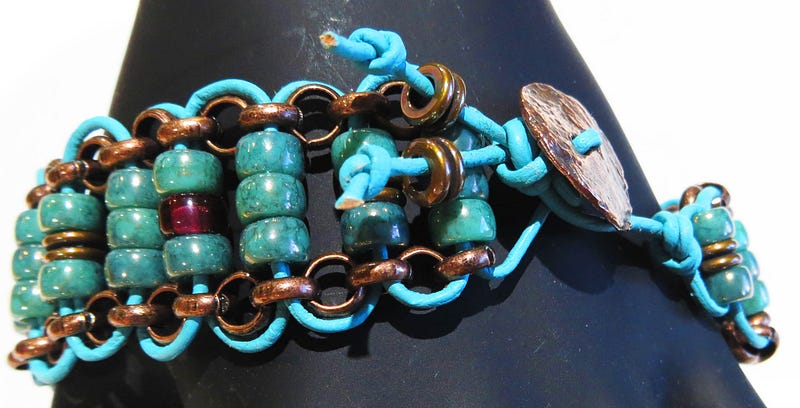
STREETSENSE BRACELET
When you walk down the street, everyone knows you’re with it.
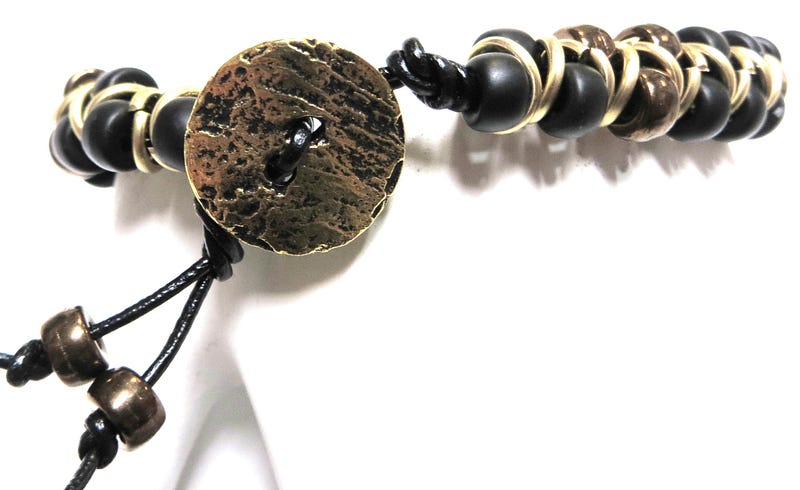
WALK-A-BOUTS BRACELET
A hip bracelet for those casual occasions.

Beads On Leather Kits
@Land of Odds
https://landofodds.com/beads-on-leather/


3. I encourage you to take advantage of the very low prices of delica beads on the Land of Odds website.

Compare Our Prices To What You Are Paying:
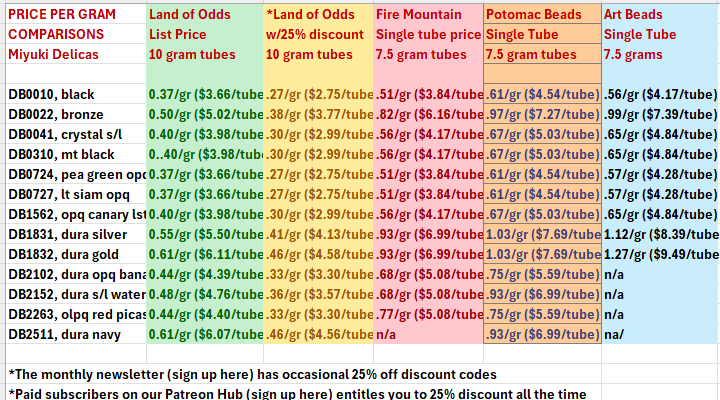
In this monthly newsletter, occasionally, like in this newsletter, you will find a discount coupon code that you can use on the Land of Odds website.

You can also become a paid subscribing member on our Jewelry Designers’ Patreon Hub, which entitles you to a 25% discount as long as you maintain your subscription.


4. If you have the resources, I strongly suggest you look into furthering your jewelry design education by attending a degree program. Here are the top 30 jewelry design programs in the United States:

Here are some of the leading jewelry design programs in the United States, known for their specialized curriculums, faculty expertise, and facilities. While specific rankings can vary by source, these schools are widely regarded as some of the best for jewelry design.

1. Rhode Island School of Design (RISD) — Providence, RI

  • Offers a strong focus on metalwork, traditional jewelry techniques, and contemporary design principles.

2. Savannah College of Art and Design (SCAD) — Savannah, GA

  • Provides a comprehensive approach with state-of-the-art facilities and focuses on various facets of jewelry design and business.

3. Fashion Institute of Technology (FIT) — New York, NY

  • Known for hands-on learning and access to New York City’s fashion and jewelry industry.

4. California College of the Arts (CCA) — San Francisco, CA

  • Emphasizes interdisciplinary approaches and sustainable design practices.

5. Parsons School of Design — New York, NY

  • Offers access to an extensive network in the fashion and luxury sectors, with an emphasis on innovative design.

6. Pratt Institute — Brooklyn, NY

  • Known for a strong arts program and a metal/jewelry design program focused on both technical skills and creativity.

7. Cranbrook Academy of Art — Bloomfield Hills, MI

  • Known for a small student body and intensive, personalized instruction.

8. University of the Arts — Philadelphia, PA

  • Offers a jewelry and metals program that includes contemporary jewelry, metalsmithing, and interdisciplinary work.

9. School of the Art Institute of Chicago (SAIC) — Chicago, IL

  • Known for an experimental approach that blends traditional and digital techniques.

10. Temple University’s Tyler School of Art — Philadelphia, PA

  • Focuses on combining creative expression with technical skill development.

11. University of Washington — Seattle, WA

  • Known for a broad curriculum that includes both traditional metalworking and experimental materials.

12. Virginia Commonwealth University (VCU) — Richmond, VA

  • Offers a BFA in Craft and Material Studies with a focus on metals and jewelry.

13. SUNY New Paltz — New Paltz, NY

  • Known for its Metal/Jewelry Design program that integrates both artistic development and technical skill.

14. Massachusetts College of Art and Design (MassArt) — Boston, MA

  • Offers a program with a focus on metalsmithing, jewelry, and art history.

15. University of Oregon — Eugene, OR

  • Known for a jewelry program that encourages both traditional and experimental methods.

16. California State University, Long Beach (CSULB) — Long Beach, CA

  • Offers a BFA in 3D Media focusing on metal and jewelry arts.

17. University of Georgia — Athens, GA

  • Strong focus on craftsmanship and a broad approach to metal and jewelry design.

18. University of Kansas — Lawrence, KS

  • The jewelry and metals program is known for its commitment to traditional techniques and design principles.

19. Texas State University — San Marcos, TX

  • Offers a BFA with a concentration in Metals and Jewelry, focusing on both technique and conceptual development.

20. Indiana University Bloomington — Bloomington, IN

  • Known for its craft-focused metalsmithing program, including traditional and contemporary approaches.

21. North Bennet Street School — Boston, MA

  • Provides a specialized training program in jewelry-making with a focus on bench skills and craftsmanship.

22. College for Creative Studies (CCS) — Detroit, MI

  • Focuses on both jewelry and metalsmithing, providing a solid technical foundation.

23. Kent State University — Kent, OH

  • Offers a jewelry/metals concentration that emphasizes craftsmanship and innovative design.

24. University of Illinois at Urbana-Champaign — Champaign, IL

  • Known for an interdisciplinary approach, blending jewelry design with broader art and design disciplines.

25. Rochester Institute of Technology (RIT) — Rochester, NY

  • The School for American Crafts at RIT is highly regarded for its jewelry and metals programs.

26. Appalachian State University — Boone, NC

  • Offers a focused jewelry and metals concentration that emphasizes skill development and conceptual work.

27. University of North Texas (UNT) — Denton, TX

  • Known for a metals and jewelry program that encourages experimentation and craftsmanship.

28. University of Wisconsin-Milwaukee (UWM) — Milwaukee, WI

  • Provides a curriculum that emphasizes both skill and design in jewelry-making.

29. Arizona State University (ASU) — Tempe, AZ

  • Offers a robust jewelry program as part of its larger art program, with access to a variety of tools and techniques.

30. Oregon College of Art and Craft (OCAC) — Portland, OR

  • Although it closed in 2019, its legacy remains influential, and several of its faculty and alumni continue to contribute to the field.

Each program has unique strengths, from technical skills to conceptual approaches and connections to the industry.


5. I wanted to share this email I received from Miguel Mayher at the Professional Artists Assn. We were beginning to discuss the need to be consistent in using Instagram and Emails to promote our businesses. I had brought up that it was difficult to maintain my motivation, especially given the time it takes to use social media.

Hi warren feld,

Yesterday, we talked about feeling overwhelmed.

Overwhelmed by the amount of energy and time that seems required to stay up to date on Instagram & your Email Newsletters.

And how that can hold you back from getting the consistent art income you desire.

Today, I want to dive deeper into why this feeling is SO COMMON in artists and what’s actually causing it.

📱 There are over *2 billion* monthly active users on Instagram.
🤯 And when you open the feed, it can be overwhelming.
🙅🏻‍♀️ It’s enough to make an established artist yell “nope!”…

…and close the app immediately, never to open it again.

Avoiding Instagram & Email doesn’t just stop you from using the tools, it also affects your entire “sharing your journey” workflow.

Some artists hold their cards close to their chest, but then expect strangers to buy the finished artwork at first glance.

Because when you’re opposed to these tools (and yes, they are just tools), you’re left waiting until you finish every artwork before you share it.

Or even worse — waiting for your next “show” to announce it to the world.

Then your audience doesn’t feel like they were part of that creative process…
…they are not invested in your artist journey…
…because you are not sharing it with them.

And so surprise, surprise… they are not “bought in”.

Maybe you do end up sending that jam-packed newsletter with a smorgasbord of updates about the last 6 months…

….not QUITE what you wanted, but you settle, “good enough I guess…”.

And a whole world of steady monthly direct sales seems out of reach for you.

Here’s the truth though… it’s not your fault:

  • Instagram is a hungry beast and the algorithm does reward consistency.
  • Emails are easy for writers, using WORDS, but not for most visual artists.

So without a good framework to simplify all this, it’s natural to get lost.

The big problem is the time and energy required to keep the Instagram & Email wheels turning…

👨‍👩‍👧‍👦 Competes with your family time
🎨 Competes with your studio time
🤹‍♀️ Competes with “life’s demands” time

And so how can you justify investing your precious time and energy in them?

You don’t have a simple system to navigate the sea of online art marketing.

If you had a clear system, it’d be hard to get lost, even if you’re an introvert.

I have an amazingly simple framework to share with you at the end of this week, but for now, here’s some encouragement…

❌ You DON’T need to POST EVERY DAY.
❌ You DON’T need to EMAIL EVERY WEEK.

And most importantly… stop thinking of your newsletters as NEWS.

Start thinking of them as Letters, or even better, POSTCARDS.

They are a casual conversation.
Ideally one single topic per email.
And they either share your journey… or give an opportunity to buy from you.

No middle ground.

I know even this is a lot easier said than done, but don’t worry, over the next few days I’ll be holding your hand and helping you out.

In tomorrow’s email, I’ll share a simple framework that will help you look at your online marketing as an enjoyable documenting of your journey.

Even if you are not a writer.

Talk soon,

Miguel

Director of Education
The Professional Artist Association
ProfessionalArtist.com
P.S.
Remember, feeling overwhelmed is normal, but it doesn’t have to stop you.


6. I’ve added additional articles to my collection HOW TO BEAD A ROGUE ELEPHANT. Check these out:

TRANSITIONS
A piece of jewelry is a series of sections, each integral to the piece, which must flow together visually and functionally. For example, transitioning from the strap to the centerpiece. How the jewelry designer manages the transitions between each section will determine to a great degree the success of the piece. 

DOUBT / SELF-DOUBT
For the novice, all that excitement at the beginning, when thinking about making jewelry and making some pieces, sometimes collides with a wall of developing self-doubt. It’s not easy to quiet a doubt. Doubt may hold you back, but it can also be seen as an opportunity.
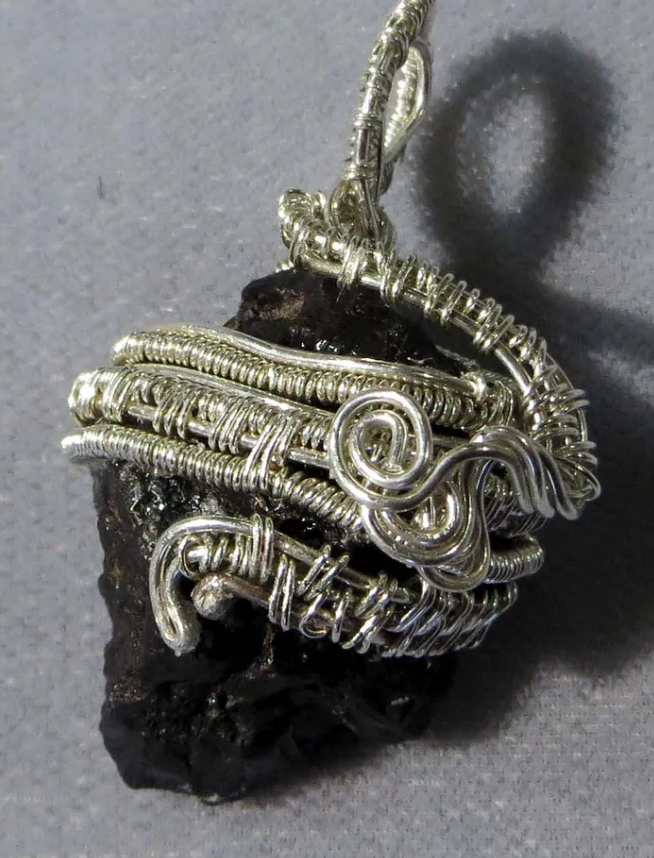

7. I liked this recent quote from KLIMT02

But the artist appeals to that part of our being which is not dependent on wisdom, to that in us which is a gift and not an acquisition- and, therefore, more permanently enduring. He speaks to our capacity for delight and wonder, to the sense of mystery surrounding our lives; to our sense of pity, and beauty, and pain; to the latent feeling of fellowship with all creation- and to the subtle but invincible conviction of solidarity that knits together the loneliness of innumerable hearts, to the solidarity in dreams, in joy, in sorrow, in aspirations, in illusions, in hope, in fear, which binds men to each other, which binds together all humanity- the dead to the living and the living to the unborn. / Joseph Conrad


8. Now is a good time to begin planning for enrichment travel and skills development opportunities you might take advantage of in 2025. Here are some ideas:

Here are 20 jewelry-related travel and learning opportunities in 2025, perfect for designers and enthusiasts who want hands-on experience, cultural immersion, and networking:

  1. Tucson Gem and Mineral Show — This iconic show offers a variety of workshops in jewelry making and design (Feb 8–11, Tucson, AZ). More information: Tucson Gem and Mineral Show.
  2. Colors of the Stone — Held in Tucson alongside the Gem Show, with classes in bead making, metal clay, enameling, and more (Feb 1–8, 2025). Details: Colors of the Stone
  3. Santa Fe Symposium — An annual jewelry technology conference, ideal for designers interested in advanced techniques and business insights (Santa Fe, NM). Find details at Santa Fe Symposium.
  4. Pasadena Bead & Design Show — Featuring jewelry making and design workshops, Pasadena’s show offers a space for artists and buyers (Jan 17–19, 2025). Learn more: Bead & Design Shows
  5. Studio di Mare — Sogni d’Oro — In Italy, join immersive jewelry retreats that blend cultural exploration with expert-led classes in enameling and stone setting (Summer 2025, San Mango Piemonte). More info: Studio di Mare
  6. Great Bead Escape Retreat — A jewelry workshop retreat in Florida offering classes by skilled instructors, suitable for beginners and experienced crafters alike (April 23–27, 2025, Live Oak, FL). Explore more: The Great Bead Escape
  7. Marin Arts & Crafts Show — A blend of jewelry and fine arts workshops in a scenic setting, ideal for creatives (Mar 7–9, 2025, San Rafael, CA). Details at Marin Arts & Crafts Show.
  8. Jewelry Arts Academy — Florence — Offers jewelry design and goldsmithing programs with Italian artisans in Florence. Contact them at Jewelry Arts Academy.
  9. SNAG Conference — Society of North American Goldsmiths hosts its annual conference with workshops and talks on metalsmithing and jewelry (Spring 2025, Location TBA). Info: SNAG Conference.
  10. Ecole des Arts Joailliers — A prestigious Parisian school offering workshops and courses on traditional French jewelry techniques. Check out L’École Van Cleef & Arpels.
  11. Penland School of Craft — Located in North Carolina, Penland offers workshops in metalworking and jewelry design throughout the year. Discover more: Penland School.
  12. Istanbul Jewelry Show — Workshops and networking in a historic jewelry hub, with thousands of international jewelers (March 2025, Istanbul, Turkey). Info at Istanbul Jewelry Show.
  13. John C. Campbell Folk School — This school in North Carolina provides jewelry and metalsmithing workshops year-round in a peaceful, rural setting. See John C. Campbell Folk School.
  14. Munich Jewellery Week — An annual celebration of contemporary jewelry art in Munich, Germany, with exhibitions, talks, and workshops (March 2025). Visit Munich Jewellery Week.
  15. Craft in America Jewelry Residency — A Los Angeles residency offering workshops, talks, and mentorship for emerging jewelers. Find out more at Craft in America.
  16. Arrowmont School of Arts and Crafts — Tennessee-based school offers multi-day workshops in metals and jewelry design. Learn more: Arrowmont.
  17. American Jewelry Design Council Workshop — A one-day workshop for emerging jewelry artists in the U.S. More details: AJDC.
  18. Jewelry Studies International — Offers annual workshops in Austin, Texas, on topics like CAD jewelry design and hand engraving. See Jewelry Studies International.
  19. Walnut Creek Bead & Design Show — A bead and jewelry show with classes in techniques like chainmaille and wire wrapping (Mar 21–23, 2025). Details: Bead & Design Shows
  20. Jewelry Design Lab NYC — Based in New York City, this lab offers short-term and seasonal classes in modern jewelry-making techniques. Find out more at Jewelry Design Lab NYC.

These programs provide a diverse range of learning, travel, and cultural experiences to enhance skills and deepen your appreciation of jewelry design worldwide.

Some more ideas:

1. Gemstone Mining Experience in Sri Lanka

  • Travel to Sri Lanka to visit traditional sapphire mines, learn about sourcing gemstones, and attend workshops on stone cutting and polishing.

2. Jewelry Design Retreat in Bali

  • Join a retreat focused on traditional Balinese silversmithing techniques, including hands-on workshops with local artisans.

3. Italian Goldsmithing Tour in Florence, Italy

  • Explore Florence’s historic goldsmithing district, including visits to renowned ateliers and classes on classic Italian jewelry techniques.

4. Diamond District Tour in Antwerp, Belgium

  • Gain exclusive insights into the diamond trade with a behind-the-scenes tour of Antwerp’s Diamond District and attend a masterclass on diamond grading.

5. Native American Jewelry Workshop in Santa Fe, New Mexico

  • Discover Native American jewelry traditions with workshops led by expert artisans in silver and turquoise jewelry.

6. Gemstone Safari in Tanzania

  • Participate in a guided tour of Tanzanian tanzanite mines, with sessions on gem selection, sourcing ethics, and jewelry design.

7. Paris Jewelry Week

  • Attend Paris Jewelry Week, featuring exhibitions, workshops, and networking events with prominent European designers and jewelry houses.

8. Jewelry Design Masterclass in Jaipur, India

  • Study Indian jewelry design, from enameling to intricate gemstone settings, with local artisans in the “Pink City,” Jaipur.

9. Silversmithing Workshop in Taxco, Mexico

  • Taxco is famous for silver. Join a workshop to learn silver jewelry crafting techniques from skilled Mexican artisans.

10. Luxury Jewelry Show Tour in Dubai

  • Tour Dubai’s high-end jewelry markets, attend the International Jewellery Show, and visit the Gold Souk for an insider look at the luxury jewelry industry.

11. Art Deco Jewelry Tour in New York City

  • A guided tour through New York’s Art Deco landmarks and workshops focusing on jewelry inspired by this iconic style.

12. Lapidary Arts Course in Idar-Oberstein, Germany

  • Idar-Oberstein is known for its gem-cutting industry. Attend a course on lapidary arts and gem faceting techniques.

13. Pearl Cultivation Workshop in Okinawa, Japan

  • Learn about pearl farming in Okinawa with tours of pearl farms, plus hands-on sessions in pearl grading and jewelry design.

14. Scandinavian Design Tour in Copenhagen, Denmark

  • A guided tour focusing on Scandinavian jewelry design, featuring visits to design museums, workshops, and jewelry houses.

15. Thai Gold and Gemstone Tour in Bangkok, Thailand

  • Explore Bangkok’s gem and gold markets, attend workshops on Thai goldsmithing, and learn about local jewelry design traditions.

16. Russian Enameling and Filigree Workshop in St. Petersburg

  • Learn traditional Russian techniques of enameling and filigree in a workshop setting in historic St. Petersburg.

17. Artisanal Gold Mining Tour in Colombia

  • Visit artisanal gold mines in Colombia and attend workshops focused on sustainable and ethical jewelry sourcing.

18. Swiss Watchmaking and Jewelry Workshop in Geneva, Switzerland

  • Discover Swiss craftsmanship with a combination of jewelry-making and watchmaking workshops and factory tours.

19. African Beadwork and Jewelry Design Tour in Ghana

  • Join a cultural tour and workshop on traditional African beadwork and jewelry-making in Ghana’s artisan villages.

20. Modern Jewelry Design Course in Barcelona, Spain

  • Attend a design-intensive course focusing on modern techniques, including 3D jewelry design, hosted in Barcelona.

These trips offer unique learning experiences, hands-on practice, and exposure to global jewelry design techniques and cultures.

And don’t forget to use this 25% discount code

throughout November at Land of Odds!!
Use November’s Discount Code
For Extra 25% Off
@Land of Odds:
NOVEMBER25
www.landofodds.com


That’s it for now! There is a lot of creative expression all around the world right now. Hope you get to experience a lot of it, either first hand, or through social media online.

WSF

SOME POSTS YOU MAY HAVE MISSED:

(1) HOLD THEIR ATTENTION WITH TEXT HOOKS
One way of keeping and holding someone’s attention is to use what is called a text hook or verbal hook at the beginning — literally within the first 2 seconds. 

(2) How do you make the leap from another career to becoming a full-time jewelry designer?

(3) How To Bead A Rogue Elephant: DOUBT AND SELF-DOUBT
For the novice, all that excitement at the beginning, when thinking about making jewelry and making some pieces, sometimes collides with a wall of developing self-doubt. It’s not easy to quiet a doubt. Doubt may hold you back, but it can also be seen as an opportunity.

(4) How To Bead A Rogue Elephant: TRANSITIONS
A piece of jewelry is a series of sections, each integral to the piece, which must flow together visually and functionally. For example, transitioning from the strap to the centerpiece. How the jewelry designer manages the transitions between each section will determine to a great degree the success of the piece. 

(5) SIGNATURE READY? … You Judge!

(6) COLUMBIA ARTS DISTRICT: CASE STUDIES
There are many approaches various towns and cities have taken when finding that mix of art and planning necessary for revitalization, and community and economic development.

(7) COLUMBIA TENNESSEE ARTS DISTRICT VISIONING PLAN
Establishing an arts identity can take many directions. A vibrant arts scene no longer means a street lined with art galleries. It can include a broader segment of the creative community — theatre, music, writing, crafts, fashion, media arts, applied arts and graphic design, interior design. The specific arts identity for any community is shaped by those arts for which a community has a special affinity for, as well as the types of assets available to support those arts.

Feature your jewelry Here next week In This Newsletter, as well as, on our Jewelry Designer’s Hub!

Email a post (text and/or image) to warren@warrenfeldjewelry.com.

Promote your current projects, promotional copy, News & Views, videos, reels, tutorials, instructions, social media posts online in this newsletter and on our jewelry designers’ Patreon hub.

No deadlines! Opportunity available all the time. No fees. 

But don’t wait to take advantage of this opportunity.


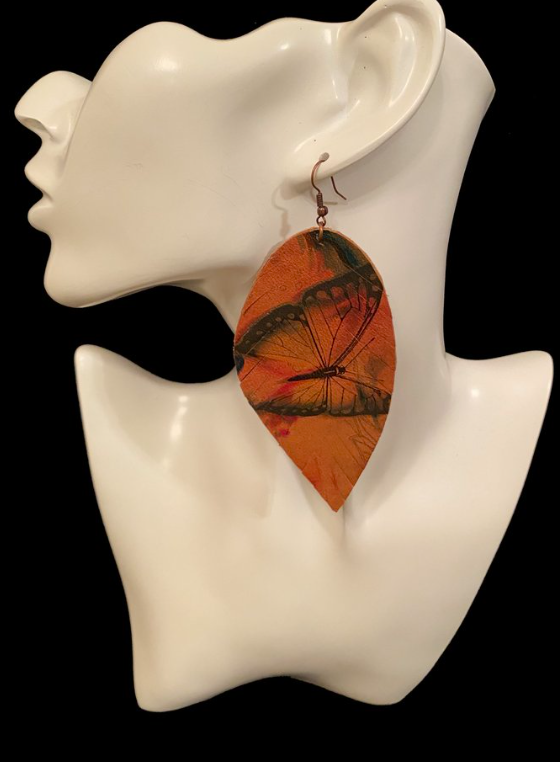
FREEBIRD FEATHERS by B. Batson-Paculabo

https://www.freebirdfeathers.com

View the featured story in our App

“Our story is rooted in the personal testimony of our founder, B. Batson-Paculabo, which tells of how she overcame a low season of adversity with a God encounter and answered prayers that led to liberation and unlocking gifts from within.”

This copyrighted material is published here with permission of the author(s) as noted, or with Land of Odds or Warren Feld Jewelry. All rights reserved.

Repairs Stumping You?
Let Me Take A Look

I take in a lot of jewelry repairs. People either bring them to me in Columbia, TN, or, I pick them up and deliver them back in Nashville. I am in Nashville at least once a week. It’s been convenient for most people to meet me at Green Hills Mall. But if not, I can come to your workplace or your home. This is perfectly fine for me. My turnaround time typically is 3–4 weeks.

I do most repairs, but I do not do any soldering. I also do not repair watches. These are the kinds of repairs I do:

o Beaded jewelry
o Pearl knotting, hand knotting
o Size/Length adjustment
o Re-stringing
o Wire work/weave/wrap
o Micro macrame
o Broken clasp replacfement
o Earring repair
o Replace lost rhinestones or gemstones
o Stone setting
o Stretchy bracelet
o Metal working which does not involve soldering
o Bead woven jewelry and purses
o Beaded clothing
o Custom jewelry design

View my How-To-Repair-Jewelry videos on our Jewelry Designers’ Hub.
My most recent how-to: Converting 3-Strand Stretchy Bracelet to Cable Wire W/ Clasp
WARREN FELD JEWELRY (www.warrenfeldjewelry.com)
Custom Design, Workshops, Video Tutorials, Webinars, Coaching, Kits, Group Activities, Repairs
~~~~~~~~~~~~~~~~~~~~~~~
Join our community of jewelry designers
on my Patreon hub
Be part of a community of jewelry designers who recognize that we have a different way of thinking and doing than other types of crafters or artists.
One free downloadable Mini-Lesson of your choice for all new members!
~~~~~~~~~~~~~~~~~~~~~~~

Follow me on social media: facebook, instagram

shop.warrenfeldjewelry.com
Where you can buy:
Seed Beads and Delicas, Kits, Books, Finished Jewelry

school.warrenfeldjewelry.com
Take advantage of our video tutorials, mini-lessons, projects and our coaching services:

Read articles about jewelry design and about the business of craft:
Articles on Medium.com 

Books (in kindle, ebook or print formats) by Warren Feld, purchase from Amazon.com or BarnesAndNoble.com:

Kits by Warren Feld

Ask about my COACHING services

Arrange a GROUP ACTIVITY

Add your email address to my Warren Feld Jewelry emailing list here.
Thanks for being here. I look forward to sharing more resources, tips,
sources of inspiration and insights with you.

Join A Community Of Jewelry Designers 
On My Patreon Hub

Posted in architecture, Art or Craft?, art theory, bead stringing, bead weaving, beads, beadwork, business of craft, color, Contests, craft, craft shows, creativity, cruises, design management, design theory, design thinking, enrichment travel, Entrepreneurship, handmade jewelry, jewelry, jewelry collecting, jewelry design, jewelry making, Learn To Bead, pearl knotting, professional development, Resources, Stitch 'n Bitch, Travel Opportunities, wire and metal, Workshops, Classes, Exhibits | Tagged: , , , , , , , | Leave a Comment »

THE JEWELERS’ PALETTE, 11/1/2024

Posted by learntobead on October 29, 2024

Join my community of jewelry designers on my Patreon hub
From Warren and
Land of Odds

Use November’s Discount Code For Extra 25% Off @Land of Odds:
NOVEMBER25
www.landofodds.com

November 1, 2024

Hi everyone,

Some Updates and Things Happening.
(Please share this newsletter)

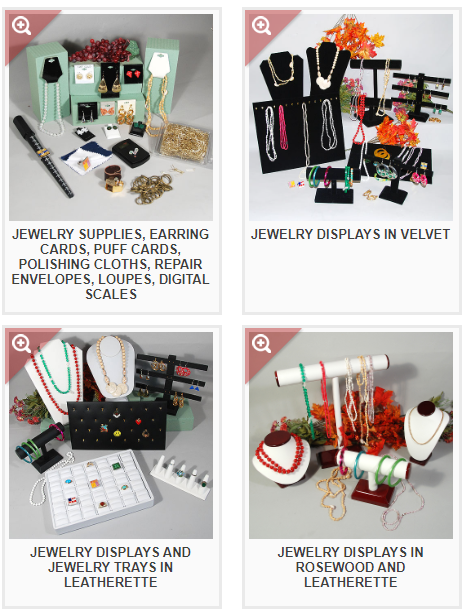
1. I wanted to share some great resources for packaging and display supplies:

FETPAK
www.fetpak.com

AZAR DISPLAYS
https://azardisplays.com/

ULINES
https://www.uline.com/

VISIPAK
https://www.visipak.com/

CLEAR BAGS
https://www.clearbags.com/

QUILL
https://www.quill.com/

2. A couple of quick links for you that you might want to bookmark

a. RIO GRANDE’s new KNOWLEDGE HUB

Access an ever-expanding library of articles, videos, podcast episodes, charts, and graphs available 24/7. Whether you’re interested in the latest trends in jewelry design and techniques or problem-solving at the bench, we have a wealth of information ready to help you learn, grow, and thrive.

Tons of info about jewelry and every kind of technique of jewelry making.

b. The 2024 Summer Design Challenge Winning Design

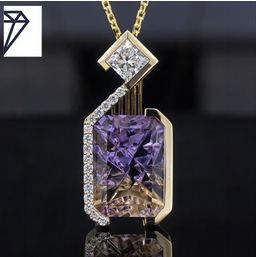
Matthew Piorkowski’s winning piece, “Interstellar”features a stunning fantasy-cut octagon ametrine showcased in a custom yellow-gold pendant setting. Centered on the bail is a brilliant square-shaped diamond with sixteen accenting diamonds along the left side of the pendant mounting, creating visual interest along the path of the diamonds.

Rio Grande runs a seasonal challenge called For the Love of Jewelers Design Challenge. They haven’t announced winter or spring submissions rules yet. Check on their website: www.riogrande.com

c. 7 Steps to Create Photorealistic Images With Stable Diffusion w. Chat AI’s Image Generator

In the ever-evolving world of artificial intelligence, the ability to create photorealistic images has become a groundbreaking achievement. ChatAI‘s Image Generator, powered by advanced Stable Diffusion models, offers users the tools to create images that blur the line between reality and AI-generated art. This article will guide you through the 7 steps to create photorealistic images with Stable Diffusion, focusing on the art of prompting. We’ll start by explaining what photorealistic images are, delve into the concept of Stable Diffusion, and then provide a step-by-step guide to crafting effective prompts. At the end, we will share 15 example prompts to inspire your creativity.

Read the article here.

3. I encourage you to take advantage of the very low prices of delica beads on the Land of Odds website.

Compare Our Prices To What You Are Paying:

In this monthly newsletter, occasionally, like in this newsletter, you will find a discount coupon code that you can use on the Land of Odds website.

You can also become a paid subscribing member on our Jewelry Designers’ Patreon Hub, which entitles you to a 25% discount as long as you maintain your subscription.

4. 🎭 As a jewelry designer, it is important to identify your direction, voice, & identity.

Direction is understanding what work you want to make, and why you are making it (your emotional response to your work).

Voice is your unique take on your work’s descriptions and your unique way of portraying messages within your work.

Identity is about what you have experienced: what makes you you, including aspects like your family or where you grew up.

5. I’m always faulting craft show vendors for not having good enough signage for their booths. Recently, I came across this sign, and liked it.

6. What does jewelry sound like, I, for no particular reason, asked myself the other day, so I went to take a look.

To my surprise, there are thousands of jewelry sound effects. There are sounds the jewelry makes when someone wears it. There are sounds the jewelry makes when someone makes it.

22 Royalty Free Jewelry Sound Effects
https://pixabay.com/sound-effects/search/jewelry/

Click sample jewelry sound effect
Click sample jewelry ring spin sound effect
Click sample jewelry chain bounce sound effect

Soundsnap.com

Zapsplat.com

Videvo.net

YouTube and Tik Tok have lots of jewelry sound effects
necklace jingling sound effect

7. Sometimes, as jewelry designers, we feel we don’t have the luxury of great access to resources — support, money, materials. There are opportunities available to you. Read the first of what will be a series of articles about this here.

NOTE: The word “artist” is often used in these opportunities, but in most cases, you should take this to be broadly defined, to include jewelry makers and fine craftspersons,

Building Creative Futures: Residencies, Grants, and Opportunities for Artists

“Often burdened with a bad reputation, an artist’s career is not the easiest path.

It’s true, that unstable income is not particularly reassuring in a world increasingly governed by financial power. After graduation, many young artists leave behind the schools where they had access to resources, mentorship, and time to create, often needing to fully realize how valuable that support was. This transition into the professional world can be daunting as they face the challenge of establishing themselves in a competitive industry.

With this in mind, we have created a series specifically dedicated to programs, grants, residencies and incubators, all aimed at supporting artists in research. This includes selected open calls, formative meetings, articles, and interviews published on Klimt02 to help artists better understand these opportunities and confidently use them as valuable resources to expand and communicate their creative practice.

This series will be continually updated to reflect the latest opportunities, ensuring you, the readers, have access to the most current information and resources published on Klimt02.”

Continue reading here.

8. Are you wondering if working with me as a coach would be a good fit?

Not sure if you’re ready or if you’re at the right place in your jewelry design journey? But you’re thinking that you want to do something powerful to bring more meaning to your art and start to actually make the pieces your soul is craving (maybe silently, maybe4 LOUDLY) to express?

Jewelry Design is not a simple, easy path. It is full of incredible challenges, and those are different for every designer. You will be confronted with struggle, obstacles will be placed at your feet, you’ll be bowled over by tedium, and frustrated by setbacks, befuddled when introducing your work publicly. Most things you will learn come from the art world or craft world, and don’t fit perfectly with what it means to design jewelry. The thing to remember is that those challenges are yours. They belong to you because you stepped into that world we call design. You have that desire to find and explore what all that means.

So often that first step in working deciding to work with a coach is the most difficult. But it is all about having the right guide through all the barriers and dilemmas and vagaries when designing jewelry.

I’m here to talk if you’re feeling stuck and curious about what it would be like to have the support of my mentorship program with you on the journey. Go ahead and schedule a free consultation to talk about your jewelry and problem solve some ways to jump start your creativity. This is a completely no-pressure opportunity to talk about your work and see if we can bring fresh energy, more meaning, and bitter impact to your art.

I’m here to offer guidance and if you think it’s a good fit to work together moving forward, that is great.

But really, this is a free opportunity, no pressure, absolutely no obligation. Let’s talk about where you’re at.

The easiest way to begin the process is to sign up here: COACHING WITH WARREN FELD
You can review what coaching entails. You can submit a form on this web page. When I receive it, I’ll schedule our free initial consultation. Beginning the process does not obligate you to anything.

Warren

And don’t forget to use this 25% discount code

throughout October at Land of Odds!!
Use November’s Discount Code
For Extra 25% Off 
@Land of Odds:
NOVEMBER25
www.landofodds.com

That’s it for now! There is a lot of creative expression all around the world right now. Hope you get to experience a lot of it, either first hand, or through social media online.

WSF

Feature your jewelry

Here next week

In This Newsletter,
as well as,
on our Jewelry Designer’s Hub!

Email a post (text and/or image) to warren@warrenfeldjewelry.com.

Promote your current projects, promotional copy, News & Views, videos, reels, tutorials, instructions, social media posts online in this newsletter and on our jewelry designers’ Patreon hub.

No deadlines! Opportunity available all the time. No fees.

But don’t wait to take advantage of this opportunity.

This copyrighted material is published here with permission of the author(s) as noted, or with Land of Odds or Warren Feld Jewelry. All rights reserved.

Repairs Stumping You?
Let Me Take A Look

I take in a lot of jewelry repairs. People either bring them to me in Columbia, TN, or, I pick them up and deliver them back in Nashville. I am in Nashville at least once a week. It’s been convenient for most people to meet me at Green Hills Mall. But if not, I can come to your workplace or your home. This is perfectly fine for me. My turnaround time typically is 3–4 weeks.

I do most repairs, but I do not do any soldering. I also do not repair watches. These are the kinds of repairs I do:

o Beaded jewelry
o Pearl knotting, hand knotting
o Size/Length adjustment
o Re-stringing
o Wire work/weave/wrap
o Micro macrame
o Broken clasp replacfement
o Earring repair
o Replace lost rhinestones or gemstones
o Stone setting
o Stretchy bracelet
o Metal working which does not involve soldering
o Bead woven jewelry and purses
o Beaded clothing
o Custom jewelry design

View my How-To-Repair-Jewelry videos on our Jewelry Designers’ Hub.
My most recent how-to: Converting 3-Strand Stretchy Bracelet to Cable Wire W/ Clasp

WARREN FELD JEWELRY (www.warrenfeldjewelry.com)
Custom Design, Workshops, Video Tutorials, Webinars, Coaching, Kits, Group Activities, Repairs
~~~~~~~~~~~~~~~~~~~~~~~
Join our community of jewelry designers
on my Patreon hub
Be part of a community of jewelry designers who recognize that we have a different way of thinking and doing than other types of crafters or artists.
One free downloadable Mini-Lesson of your choice for all new members!
~~~~~~~~~~~~~~~~~~~~~~~

Follow me on social media: facebookinstagram

shop.warrenfeldjewelry.com
Where you can buy:
Seed Beads and Delicas, Kits, Books, Finished Jewelry

school.warrenfeldjewelry.com
Take advantage of our video tutorials, mini-lessons, projects and our coaching services:

Read articles about jewelry design and about the business of craft:
Articles on Medium.com

Books (in kindle, ebook or print formats) by Warren Feld, purchase from Amazon.com or BarnesAndNoble.com:

Kits by Warren Feld

Ask about my COACHING services

Arrange a GROUP ACTIVITY

Add your email address to my Warren Feld Jewelry emailing list here.

Thanks for being here. I look forward to sharing more resources, tips,
sources of inspiration and insights with you.

Join A Community Of Jewelry Designers
On My Patreon Hub

THE JEWELERS’ PALETTE, 11/1/2024

Join my community of jewelry designers on my Patreon hub
From Warren and
Land of Odds

Use November’s Discount Code For Extra 25% Off @Land of Odds:
NOVEMBER25
www.landofodds.com

November 1, 2024

Hi everyone,

Some Updates and Things Happening.
(Please share this newsletter)

1. I wanted to share some great resources for packaging and display supplies:

FETPAK
www.fetpak.com

AZAR DISPLAYS
https://azardisplays.com/

ULINES
https://www.uline.com/

VISIPAK
https://www.visipak.com/

CLEAR BAGS
https://www.clearbags.com/

QUILL
https://www.quill.com/

2. A couple of quick links for you that you might want to bookmark

a. RIO GRANDE’s new KNOWLEDGE HUB

Access an ever-expanding library of articles, videos, podcast episodes, charts, and graphs available 24/7. Whether you’re interested in the latest trends in jewelry design and techniques or problem-solving at the bench, we have a wealth of information ready to help you learn, grow, and thrive.

Tons of info about jewelry and every kind of technique of jewelry making.

b. The 2024 Summer Design Challenge Winning Design

Matthew Piorkowski’s winning piece, “Interstellar”features a stunning fantasy-cut octagon ametrine showcased in a custom yellow-gold pendant setting. Centered on the bail is a brilliant square-shaped diamond with sixteen accenting diamonds along the left side of the pendant mounting, creating visual interest along the path of the diamonds.

Rio Grande runs a seasonal challenge called For the Love of Jewelers Design Challenge. They haven’t announced winter or spring submissions rules yet. Check on their website: www.riogrande.com

c. 7 Steps to Create Photorealistic Images With Stable Diffusion w. Chat AI’s Image Generator

In the ever-evolving world of artificial intelligence, the ability to create photorealistic images has become a groundbreaking achievement. ChatAI‘s Image Generator, powered by advanced Stable Diffusion models, offers users the tools to create images that blur the line between reality and AI-generated art. This article will guide you through the 7 steps to create photorealistic images with Stable Diffusion, focusing on the art of prompting. We’ll start by explaining what photorealistic images are, delve into the concept of Stable Diffusion, and then provide a step-by-step guide to crafting effective prompts. At the end, we will share 15 example prompts to inspire your creativity.

Read the article here.

3. I encourage you to take advantage of the very low prices of delica beads on the Land of Odds website.

Compare Our Prices To What You Are Paying:

In this monthly newsletter, occasionally, like in this newsletter, you will find a discount coupon code that you can use on the Land of Odds website.

You can also become a paid subscribing member on our Jewelry Designers’ Patreon Hub, which entitles you to a 25% discount as long as you maintain your subscription.

4. 🎭 As a jewelry designer, it is important to identify your direction, voice, & identity.

Direction is understanding what work you want to make, and why you are making it (your emotional response to your work).

Voice is your unique take on your work’s descriptions and your unique way of portraying messages within your work.

Identity is about what you have experienced: what makes you you, including aspects like your family or where you grew up.

5. I’m always faulting craft show vendors for not having good enough signage for their booths. Recently, I came across this sign, and liked it.

6. What does jewelry sound like, I, for no particular reason, asked myself the other day, so I went to take a look.

To my surprise, there are thousands of jewelry sound effects. There are sounds the jewelry makes when someone wears it. There are sounds the jewelry makes when someone makes it.

22 Royalty Free Jewelry Sound Effects
https://pixabay.com/sound-effects/search/jewelry/

Click sample jewelry sound effect
Click sample jewelry ring spin sound effect
Click sample jewelry chain bounce sound effect

Soundsnap.com

Zapsplat.com

Videvo.net

YouTube and Tik Tok have lots of jewelry sound effects
necklace jingling sound effect

7. Sometimes, as jewelry designers, we feel we don’t have the luxury of great access to resources — support, money, materials. There are opportunities available to you. Read the first of what will be a series of articles about this here.

NOTE: The word “artist” is often used in these opportunities, but in most cases, you should take this to be broadly defined, to include jewelry makers and fine craftspersons,

Building Creative Futures: Residencies, Grants, and Opportunities for Artists

“Often burdened with a bad reputation, an artist’s career is not the easiest path.

It’s true, that unstable income is not particularly reassuring in a world increasingly governed by financial power. After graduation, many young artists leave behind the schools where they had access to resources, mentorship, and time to create, often needing to fully realize how valuable that support was. This transition into the professional world can be daunting as they face the challenge of establishing themselves in a competitive industry.

With this in mind, we have created a series specifically dedicated to programs, grants, residencies and incubators, all aimed at supporting artists in research. This includes selected open calls, formative meetings, articles, and interviews published on Klimt02 to help artists better understand these opportunities and confidently use them as valuable resources to expand and communicate their creative practice.

This series will be continually updated to reflect the latest opportunities, ensuring you, the readers, have access to the most current information and resources published on Klimt02.”

Continue reading here.

8. Are you wondering if working with me as a coach would be a good fit?

Not sure if you’re ready or if you’re at the right place in your jewelry design journey? But you’re thinking that you want to do something powerful to bring more meaning to your art and start to actually make the pieces your soul is craving (maybe silently, maybe4 LOUDLY) to express?

Jewelry Design is not a simple, easy path. It is full of incredible challenges, and those are different for every designer. You will be confronted with struggle, obstacles will be placed at your feet, you’ll be bowled over by tedium, and frustrated by setbacks, befuddled when introducing your work publicly. Most things you will learn come from the art world or craft world, and don’t fit perfectly with what it means to design jewelry. The thing to remember is that those challenges are yours. They belong to you because you stepped into that world we call design. You have that desire to find and explore what all that means.

So often that first step in working deciding to work with a coach is the most difficult. But it is all about having the right guide through all the barriers and dilemmas and vagaries when designing jewelry.

I’m here to talk if you’re feeling stuck and curious about what it would be like to have the support of my mentorship program with you on the journey. Go ahead and schedule a free consultation to talk about your jewelry and problem solve some ways to jump start your creativity. This is a completely no-pressure opportunity to talk about your work and see if we can bring fresh energy, more meaning, and bitter impact to your art.

I’m here to offer guidance and if you think it’s a good fit to work together moving forward, that is great.

But really, this is a free opportunity, no pressure, absolutely no obligation. Let’s talk about where you’re at.

The easiest way to begin the process is to sign up here: COACHING WITH WARREN FELD
You can review what coaching entails. You can submit a form on this web page. When I receive it, I’ll schedule our free initial consultation. Beginning the process does not obligate you to anything.

Warren

And don’t forget to use this 25% discount code

throughout October at Land of Odds!!
Use November’s Discount Code
For Extra 25% Off 
@Land of Odds:
NOVEMBER25
www.landofodds.com

That’s it for now! There is a lot of creative expression all around the world right now. Hope you get to experience a lot of it, either first hand, or through social media online.

WSF

Feature your jewelry

Here next week

In This Newsletter,
as well as,
on our Jewelry Designer’s Hub!

Email a post (text and/or image) to warren@warrenfeldjewelry.com.

Promote your current projects, promotional copy, News & Views, videos, reels, tutorials, instructions, social media posts online in this newsletter and on our jewelry designers’ Patreon hub.

No deadlines! Opportunity available all the time. No fees.

But don’t wait to take advantage of this opportunity.

This copyrighted material is published here with permission of the author(s) as noted, or with Land of Odds or Warren Feld Jewelry. All rights reserved.

Repairs Stumping You?
Let Me Take A Look

I take in a lot of jewelry repairs. People either bring them to me in Columbia, TN, or, I pick them up and deliver them back in Nashville. I am in Nashville at least once a week. It’s been convenient for most people to meet me at Green Hills Mall. But if not, I can come to your workplace or your home. This is perfectly fine for me. My turnaround time typically is 3–4 weeks.

I do most repairs, but I do not do any soldering. I also do not repair watches. These are the kinds of repairs I do:

o Beaded jewelry
o Pearl knotting, hand knotting
o Size/Length adjustment
o Re-stringing
o Wire work/weave/wrap
o Micro macrame
o Broken clasp replacfement
o Earring repair
o Replace lost rhinestones or gemstones
o Stone setting
o Stretchy bracelet
o Metal working which does not involve soldering
o Bead woven jewelry and purses
o Beaded clothing
o Custom jewelry design

View my How-To-Repair-Jewelry videos on our Jewelry Designers’ Hub.
My most recent how-to: Converting 3-Strand Stretchy Bracelet to Cable Wire W/ Clasp

WARREN FELD JEWELRY (www.warrenfeldjewelry.com)
Custom Design, Workshops, Video Tutorials, Webinars, Coaching, Kits, Group Activities, Repairs
~~~~~~~~~~~~~~~~~~~~~~~
Join our community of jewelry designers
on my Patreon hub
Be part of a community of jewelry designers who recognize that we have a different way of thinking and doing than other types of crafters or artists.
One free downloadable Mini-Lesson of your choice for all new members!
~~~~~~~~~~~~~~~~~~~~~~~

Follow me on social media: facebookinstagram

shop.warrenfeldjewelry.com
Where you can buy:
Seed Beads and Delicas, Kits, Books, Finished Jewelry

school.warrenfeldjewelry.com
Take advantage of our video tutorials, mini-lessons, projects and our coaching services:

Read articles about jewelry design and about the business of craft:
Articles on Medium.com

Books (in kindle, ebook or print formats) by Warren Feld, purchase from Amazon.com or BarnesAndNoble.com:

Kits by Warren Feld

Ask about my COACHING services

Arrange a GROUP ACTIVITY

Add your email address to my Warren Feld Jewelry emailing list here.

Thanks for being here. I look forward to sharing more resources, tips,
sources of inspiration and insights with you.

Join A Community Of Jewelry Designers
On My Patreon Hub

Posted in architecture, Art or Craft?, art theory, bead stringing, bead weaving, beads, beadwork, business of craft, color, Contests, craft, craft shows, creativity, cruises, design management, design theory, design thinking, enrichment travel, Entrepreneurship, handmade jewelry, jewelry, jewelry collecting, jewelry design, jewelry making, Learn To Bead, pearl knotting, professional development, Resources, Stitch 'n Bitch, Travel Opportunities, wire and metal, Workshops, Classes, Exhibits | Tagged: , , , , | Leave a Comment »

SUBSCRIBE TO MY JEWELRY DESIGNERS’ HUB

Posted by learntobead on September 5, 2024

https://www.patreon.com/warrenfeldjewelry

I have set up a space for our community of jewelry designers — Warren Feld Jewelry’s PATREON HUB — to learn, to interact, and to provide and/or get feedback on what they are working on. Please join here.

Be part of a community of jewelry designers who recognize that we have a different way of thinking and doing than other types of crafters or artists.

WHY SUBSCRIBE?

Engage with a community. Benefit from its collective power — insights, reactions, feedback, foresight, and directing you to opportunities.

Never miss an update. You won’t have to worry about missing anything. Every new article of interest, and announcements about kits, workshops and webinars, chat groups, feedback sessions, and special promotions, goes directly to your inbox.

I bring articles, tutorials, and chat-group discussion sessions to you about…

  • What it means to be fluent and literate in design?
  • What the implications are for defining jewelry as an “object” versus as an “intent”?
  • Why some jewelry draws your attention, and others do not?
  • How jewelry design differs from art or craft?
  • How you judge a piece as finished and successful?

SUBSCRIBE NOW

MEMBERSHIP TIERS:

(1) FREE

· Articles. Stay up-to-date. Access each new article up to 3 months.
· Advanced Notice. Kits, webinars, workshops, tutorials, promotions, discounts
· Free Mini-Lesson Download. One free downloadable Mini-Lesson of your choice

(2) SUBSCRIBER (7-day free trial)

· First view of all articles and kits
· Access to all the articles in the archive
· 25% Discount on beads, supplies and kits on LandOfOdds.com website
· Priority in posting comments
· All member chats
· Once a month online chat with Warren Feld
· + All free-tier member benefits

(3) VIP SUBSCRIBER

· Private Coaching with Warren Feld, for 2 hours/month
· + All benefits from other tiers

SUBSCRIBE NOW

www.warrenfeldjewelry.com

www.patreon.com/warrenfeldjewelry

Posted in architecture, Art or Craft?, art theory, bead stringing, bead weaving, beads, beadwork, business of craft, color, Contests, craft, craft shows, creativity, design management, design theory, design thinking, enrichment travel, Entrepreneurship, handmade jewelry, jewelry, jewelry collecting, jewelry design, jewelry making, Learn To Bead, pearl knotting, professional development, Resources, Stitch 'n Bitch, wire and metal, Workshops, Classes, Exhibits | Tagged: , , | Leave a Comment »

INSTAGRAM SERIES: What You Need To Know, How You Should Proceed, What Works Best For Jewelry Designers

Posted by learntobead on August 7, 2024

@sophie_billebrahe, Instagram

I have set up a space for our community of jewelry designers — Warren Feld Jewelry’s PATREON HUB— to learn, to interact, and to provide and/or get feedback on what they are working on. Please join here.

Be part of a community of jewelry designers who recognize that we have a different way of thinking and doing than other types of crafters or artists. Access more articles and other resources not included in my medium.com site.

THE INSTAGRAM SERIES (14 parts)

Instagram is perhaps the best place to attract and find customers for your jewelry design work. In this INSTAGRAM SERIES, I cover some of the most frequent concerns and insights jewelry designers have about marketing on Instagram.

I have found, from personal experience as well as the experience of literally hundreds of my jewelry design students and customers, that Instagram is perhaps the best place to attract and find customers for your work. Social media marketing is not difficult, but it takes an inordinate amount of time. This marketing time takes a lot of time away from your creative time.

I have written this series of articles to provide insight and encouragement with your marketing on Instagram. I cover some of the most frequent concerns jewelry designers have about marketing on Instagram. I’m always cognizant of the tensions between business and creativity, and I hope this information will save you a lot of time to spend on your creativity side.

I suggest concentrating on only two social media sites, and that Instagram be your primary one. You want to set up a professional/business account on each. If you want to post personal things, then set up a separate personal account on each. Don’t mix the two things.

TOPICS COVERED:

INTRODUCTION

1. 20 Most Frequently Asked Questions Jewelry Designers Ask About Instagram

Marketing on Instagram can be both exciting and challenging for artists. Here are the 20 most frequently asked questions artists have about marketing on the platform. Continue reading here…

2. Making People: STOP, STAY, ENGAGE

The Instagram algorithm ranks and rates your posts based on making people STOP, STAY and Engage. Continue reading here…

3. HASHTAGS

The most useful way to be found on Instagram is to use hashtags. Think of hashtags as like books in a library — how will someone find them? Continue reading here…

a. Researching Them

Picking the best and right hashtags for your jewelry design business requires some research, understanding your audience, and analyzing your data. Continue reading here…

b. 50 Best Jewelry Designer Hashtags

Using the right hashtags can significantly boost your reach and engagement on Instagram. Here are 50 popular hashtags for jewelry designing and making. Continue reading here…

c. 50 Most Banned Hashtags

Using banned hashtags on Instagram can lead to reduced visibility of your posts or even account suspension. Some are obvious, others not so. Continue reading here…

d. Branded Hashtags

Create your brand-specific hashtag to make it easy for people to find you, your business, things you have made, workshops and shows your are involved with. Continue reading here…

4. Images and Reels

Some best-practices advice for using images and reels on Instagram. Continue reading here…

5. Best Posting Strategies for Jewelry Designers

What Makes Up The Best Instagram Posting Strategies For Jewelry Designers? Continue reading here…

6. Best Instagram Jewelry Design Related Posts

To get a feel for what an excellent jewelry design post looks like on Instagram, check out what others are doing. Here are some renowned postings. Continue reading here…

7. How Often Should I Post

Each post is your chance to get recognized by Instagram so that they more widely distribute it. Yes, it must be a great image. But posting also requires more strategizing. Continue reading here…

8. Don’t Let This Happen To You

Don’t let Instagram take over You. It is a tool for You to use. It is not a tool for Instagram to use You. Continue reading here…

9. Self Care and Social Marketing

Balancing self-care with social media marketing is crucial for jewelry designs in maintaining their creativity, well-being and motivation, while effectively promoting their work. Continue reading here…

10. CONNECTIONS:

To succeed as a designer and to succeed as a business, you need to be connected to the outside world. Continue reading here…

a. With Other Jewelry Designers

Connecting with other jewelry designers is invaluable and very easy. Important to nurture relationships. Opportunities will follow. Continue reading here…

b. Curating Your Own Show On Instagram

Instagram is an outstanding curatorial tool. Collaborate with great jewelry designers for a showing online (or offline). Continue reading here…

c. With Press And Other Publications

Use Instagram to meet jewelry design journalists, both online and off. Great opportunities to increase your visibility. Continue reading here…

d. With Galleries and Boutiques

Getting the attention of galleries and boutiques is important. This means, getting your posts in front of them, having a profile/bio that resonates with them, and writing meaningful comments on things they themselves post. Continue reading here…

11. STRONG FOUNDATIONS

Instagram is a very easy way for people to check you and your work out, and see you as a professional designer. Continue reading here…

a. Edit Your Profile/Bio

Instagram is a very easy way for people to check you and your work out, and seeing you as a professional designer. Your Profile/Bio should anticipate this. Continue reading here…

b. Clean Up Your Posts

Cleaning up your posts on a professional or business Instagram account is essential for maintaining a polished and cohesive brand image. Continue reading here…

c. Post Strong Images

What makes a great Instagram post? — Something that captures people’s attention, and makes them stay around awhile. Continue reading here…

d. About Including Text

Don’t overthink your text for your Instagram posts. The image is 90% of the battle, the text only 10%. Instagram is a visual medium for visual people. Continue reading here…

e. Feed vs. Stories

On Instagram, the Feed and the Stories serve different purposes. Your feed must be very curated, professional, and brand-reconfirming. Your stories are meant to be more casual, like behind the scenes topics or personal things about the designer. Continue reading here…

12. Takeaways

Instagram used to be like a personal blog. Today it is not. Today it is a professional representation of you as a jewelry designer. Continue reading here…

13. Data Analysis Using Instagram Insights

On Instagram, there are several advantages and opportunities for accruing more followers. But remember, it is their ENGAGEMENT that Instagram measures and likes the most. That is where Instagram Insights comes in. Continue reading here…

14. Using Jewelry Design Influencers On Instagram

If you have some money to budget to use influencers, they can speed up everything for you. Continue reading here…

~~~~~~~~~~~~~~~~~~~~~~~~~~~~~~~~

I have set up a space for our community of jewelry designers — Warren Feld Jewelry’s PATREON HUB— to learn, to interact, and to provide and/or get feedback on what they are working on. Please join here.

Be part of a community of jewelry designers who recognize that we have a different way of thinking and doing than other types of crafters or artists.

Visit my website www.warrenfeldjewelry.com

Feel free to add your comments.

Shop with us at Land of Odds.

Posted in Art or Craft?, art theory, bead stringing, bead weaving, beads, beadwork, business of craft, color, craft, craft shows, creativity, design management, design theory, Entrepreneurship, handmade jewelry, jewelry, jewelry collecting, jewelry design, Learn To Bead, pearl knotting, professional development, Resources, wire and metal | Tagged: , | Leave a Comment »

HOW TO BEAD A ROGUE ELEPHANT: The Musings Of A Jewelry Designer: Color

Posted by learntobead on April 22, 2024

Warren Feld

Warren Feld

I am a color addict.

Not sure how I got this way. I can remember when I was 10 or 11 years old, my friend Gary and I, and sometimes Ira, who was sometimes a friend, sometimes someone we bullied, used to set fires, and then try to put them out. We would set fire to this field behind the Ford dealership on Rt. 22. We would set fire to homes and businesses under construction. We would set fires, let them burn awhile and then try to put them out by stamping them with our feet, putting blankets over them, pouring water on them.

We set fires until we were caught. By the police. Punished severely by our parents who could not figure out why we were setting fires. The word because was insufficient for them. We did it because we could. The fields and buildings were there waiting to be used. We used them the way we knew how. That gave us some fun. A feeling of power. And that was that.

That was that for Gary and Ira. Actually, not for me. I became mesmerized. The colors. The contrasts. The saturation and vibrancy. The interplay. The movement and rapid color changes. The certainty when it was all over.

My gaze locked in, never wavering, staring as the light tans and beiges of the tall field grasses, very still, began undulating with reds and oranges, some blues, some maroons, the fiery colors taking over, first a small area, then more and more, until the colors were more powerful than the heat generated by the fire. Once the fire was put out, I literally felt the strong juxtaposition between charcoal and beige, at once listless and lifeless, yet exuding a powerful finality.

Color is such a powerful influencer. I never set fires again, but, at the same time, I had no one to share my very personal, very emotional, very primal color experiences with until I was in my late 20’s. In school, I was always tracked with the more intelligent kids. This meant rewards for math and science, and some put downs for art and music. My parents did not want to hear about anything else besides lawyer and doctor.

Soon after Gary and Ira and I were caught, I moved away.

But I doubt color was in their forethoughts as we set fires to things.

The Jewelry Designer Colors Differently Than The Artist

You cannot paint with beads and other jewelry components.

I am going to repeat this: You cannot paint with beads and other jewelry components.

When you take color class after color class rooted in art, they are teaching you how to paint. You can’t do this with jewelry and beads.

I give this warning to all my students. I repeat it frequently in the articles I write. I follow it carefully when designing my own pieces. I have been challenged frequently by people who make jewelry and consider themselves artists. But to create successful jewelry takes you beyond art, its ideas, constructs and precepts. Jewelry has some roots in art, which is true. But it also has roots in craft. It is very comparable to architecture. Its product — the outcome — plays a different role and must conform to different social and physical tensions than paintings and sculptures. I repeat: You cannot paint with beads.

As frustrating as this can be, you cannot ignore the fact that Color is the single most important Design Element. Colors, their selection, use and arrangement, are believed to have universal powers to get people to see things as harmonious and appealing. Color attracts attention. A great use of color within an object, not only makes that object more coherent, it can make it more contagious, as well. Using colors that do not work well together, or using too many colors or not enough colors, or using colors which look good on paper but distort in reality can put people off.

Jewelry Designers can learn the artistic basics of Color concepts and theories. They can reference this visual language of color to influence how they go about making choices, including those about picking and using colors. However, jewelry artists who are fluent in design will be very aware of the limitations this artistic, painterly language imposes on them. They will have to learn how to decode, adjust and leverage their thinking to anticipate how the bead and other related and integrated materials assert their needs for color, and how to strategically compose, construct and manipulate them.

Jewelry, unlike painting or sculpture, has certain characteristics and requirements which rely on the management and control of color, its sensation and its variability with a slightly different emphasis than learned in a traditional art class. Jewelry is a 3-dimensional object, composed of a range of materials. Jewelry situates, moves and adjusts in relation to the human body and what that body is doing at the moment.

To get the attention their jewelry deserves, jewelry artists must become fluent with color selection and application from their own disciplinary perspective. We must understand color in jewelry as the jewelry is worn, and worn in a particular context or situation. Ever-changing directions and intensities of light and shadow, reflection, absorption and refraction. The observation that color may be present, even projected (the color shadow), outside the boundaries of the bead or jewelry component itself.

Beads [here I use ‘beads’ as a stand-in for all the component parts and stringing and canvas materials used in a piece of jewelry] are curved or faceted or otherwise shaped, and the shape and texture and material and dimensionality and even the hole through it affect the color, its variation and its placement and movement on the bead’s surface. They affect how light reflects and refracts, so depending on the angle at which you are standing, and how you are looking at the bead, you get some unexpected, unanticipated, sometimes unwanted colors in your piece of jewelry.

Additionally, you need to anticipate how the bead, when worn, can alter its color, depending on the source and positioning of light, the type and pace of movement of the wearer, and how the eye interacts with the bead at any point of time or positioning. There are many more color tensions that come from the interrelationships between positive and negative spaces. There are many gaps of light between each pair of beads, and you can’t paint these in. The colors don’t blend, don’t merge, don’t spill over, don’t integrate. You can’t create the millions of subtle color variations that you can with paint.

I’m not suggesting that beaders and jewelry makers be afraid of colors. Rather, they should embrace them. They should learn insights into understanding colors. They should be inspired by colors. They should express their artistic and creative selves through color. They should use color palettes to their fullest. They should recognize how their various audiences see and claim and interact with color.

It is most important that jewelry designers understand color, its use and application from their own disciplinary standpoint. In some sense, however, the approaches of most bead artists and jewelry designers too often remain somewhat painterly — too rooted in the Art Model.

The Art Model ignores things about functionality and context. The Art Model does not anticipate all the additional management and control issues which arise with jewelry creation and how /where / when it is worn. The Art Model diminishes how the individuality of the designer, and the subjective responses of the wearer and viewer affect each other. In many respects, these are synergetic, mutually dependent and reciprocal. The Art Model understands the success of jewelry only as if the jewelry were sitting on an easel, not as it is worn. When jewelry is treated as an inanimate object, apart from when it is worn, then traditional art color theories would suffice and apply.

As a result, when the use of color is solely dictated by art theory, then color theories get oversimplified for the jewelry artist. “Value” is barely differentiated from “Intensity”. Color selection focuses too much on harmony and variety, and too little on resonance and edginess. Color training too often steers jewelry designers towards a step-by-step, paint-by-number sort of approach to color selection and application. Color theory seeks to explain the universal, and paintings, given that they are immobile, hung on a wall, give time and space for the viewer to experience these universals.

Jewelry, on the other hand, requires an understanding of how color can be adapted to more subjective experiences. It does not stay in the same place. It is not desired in the same way across individuals who view it and wear it. As such, the co-dependent relationship between Color and other Jewelry Design Elements is downplayed and glossed over. This is a major disservice.

Designers need to think of colors as building blocks, and the process of using colors, as one of Creative Construction. Creative Construction requires focusing on how color (and multiple co-existing colors) is (are) sensed, and sensed by various audiences which include the artist him- or herself, and the wearer and the viewer, and the exhibitor, collector, and the seller, if need be. Creative Construction also requires anticipating how color is sensed within those context(s) and situation(s) the jewelry will be worn. Creative Construction includes an ability to anticipate how the various audiences of the designer use color to assume, perceive, understand, express, value and desire jewelry within any context.

All jewelry designers, including myself, are challenged with tasks like controlling the presentation of color(s) along a jewelry object’s silhouette. Or in blending colors among fixed physical objects awkwardly aligning or misaligning within some positive and negative spaces. Or having two or more colors co-exist within the same space or form which may or may not harmonize, given the reality that beads and other jewelry objects do not come in every possible and desirable color, nor consistently express any particular color over their entire surface.

I have found the use of simultaneity effects especially useful here. The one I use the most is that of grays. Gray takes on the colors around it. If I line up an orange bead, then a gray bead, then a blue bead, the middle gray bead will create the perception of a blended orange to blue form. Any bead with an underlying gray or black tone, strategically placed, will accomplish some color blending otherwise problematic.

I often play with other simultaneity effects. Some colors in combination emphasize warmth, and others cold. A sense of temperature (for example a red square embedded within a white square vs. that same red square embedded within a black square) can sometimes be used to divert the mind’s attention from whether the colors correctly harmonize.

In a similar way, some colors in combination (example a yellow square within a black square vs. within a white square) can create the illusion of either projecting or receding, and this too can be used to divert the mind’s attention from whether the colors correctly harmonize.

In my pieces, you will often find colors which, if not used strategically in combination and placement, would not seem to go together. They don’t fit a color scheme. They do not perfectly conform to a mathematical algorithm. They might even clash. More often, however, they just seem off in some way. But by smartly using simultaneity effects, they feel whole, consistent, coherent, right in some way. But also intriguing as the viewer’s mind tries to make sense of them. The colors resonate and are edgy in some way, yet feel harmonious, and the viewers can never figure out why. I intentionally create an object which lacks inherent meaning in order to trap the viewer into trying to find inherent meaning. Fun stuff. And something which often draws the viewer’s attention to my pieces, and keeps their attention there.

I like to play with color proportions. There are ideal proportions of the presence of any two or more colors. Red should appear in equal proportions to green. There should be one orange for any two blues. In art, we would strive to achieve the perfect proportions. In jewelry design, however, I would want to play with imperfections in proportions to give an edginess to my piece. This edginess, if not gone too far, enhances how the jewelry resonates emotionally for the wearer or buyer. We want our jewelry to have a little bit of edginess, or else it may feel harmonious yet boring and banal.

I believe the jewelry designer needs to be able to apply the careful of consideration of color with the goal of evoking resonance in the viewer. Something beyond harmony. Something represented by the difference of the viewer saying I like it, from the viewer saying I want to wear it, or I want to buy it. The designer is here to perhaps emphasize a little bit of the absurdity in life, some playfulness, some inquisitiveness which result from tensions between order and chaos, meaning and meaninglessness.

The designer is there, in part, to challenge the viewer’s subjective interpretations. This is especially true as the jewelry is worn and the wearer moves from different situations, contexts, and lighting. The use of color in jewelry designer often fails when the designer merely tries to duplicate a perfect color scheme, given perfect lighting and no movement. Jewelry is not a painting or sculpture to be displayed in fixed position. It’s much more. Using color from the designer’s viewpoint, rather than of the artist, is a very useful tool.

All these and similar color tricks I use as a jewelry designer contribute to how my jewelry expresses and reflects my authenticity. They add the cachet to my pieces as contemporary. Uninhibited by social norms encapsulated in art theory rules for the use of color. Creating more of a sense of freedom in my pieces, a sense which affects the feelings of freedom the wearer has. Transcendence. A re-imagining. Revelation, connection, awakening.

That’s what my Rogue Elephant needs, wants, demands. In this chaotic and indifferent universe, that rogue-ness could not have it any other way.

_______________________________

I hope you found this article useful. Please consider sharing. Thank you for clicking the CLAP HANDS icon at the bottom of this article.

I’d welcome any suggestions for topics (warren@warrenfeldjewelry.com)

Also, check out my website (www.warrenfeldjewelry.com).

Enroll in my jewelry design and business of craft Video Tutorials online. Begin with my ORIENTATION TO BEADS & JEWELRY FINDINGS COURSE.
Take my tutorial on THE JEWELRY DESIGNER’S APPROACH TO COLOR .

Follow my articles on Medium.com.

Check out my books on Amazon.com

Subscribe to my Learn To Bead blog (https://blog.landofodds.com).

Follow my series HOW TO BEAD A ROGUE ELEPHANT.

Visit Land of Odds online (https://www.landofodds.com)for all your jewelry making supplies.

Check out my Jewelry Making and Beadwork Kits.

Add your name to my email list.

_________________________________________________________________

CONQUERING THE CREATIVE MARKETPLACE: Between the Fickleness of Business and the Pursuit of Design

KindlePrintEpub

SO YOU WANT TO BE A JEWELRY DESIGNER
Merging Your Voice With Form

Ebook , Kindle or Print formats

The Jewelry Journey Podcast
“Building Jewelry That Works: Why Jewelry Design Is Like Architecture”
Podcast, Part 1
Podcast, Part 2

PEARL KNOTTING…Warren’s Way
Easy. Simple. No tools. Anyone Can Do!

EbookKindle or Print

SO YOU WANT TO DO CRAFT SHOWS: 16 Lessons I Learned Doing Craft Shows

EbookKindle or Print

BASICS OF BEAD STRINGING AND ATTACHING CLASPS

EbookKindle or Print

___________________________________________

Posted in architecture, Art or Craft?, art theory, bead stringing, bead weaving, beads, beadwork, color, craft, creativity, design management, design theory, design thinking, Entrepreneurship, handmade jewelry, jewelry, jewelry design, jewelry making, Learn To Bead, pearl knotting, professional development, wire and metal | Tagged: , , , , | Leave a Comment »

MIXING MEDIA / MIXING TECHNIQUES IN JEWELRY DESIGN: Some Do’s And Don’ts

Posted by learntobead on May 3, 2023

From my book: SO YOU WANT TO BE A JEWELRY DESIGNER
Merging Your Voice With Form,
 Ebook , Kindle or Print formats

Abstract:

For some jewelry designs, the incorporation of mixed media or mixed techniques can have a synergistic effect — increasing the appeal and/or functionality of the piece better than any one media or technique alone. It can feel more playful and experimental and fun to mix media or techniques. But there may be adverse effects, as well. Each media or technique will have its own structural and support requirements — that is, its own special characteristics and its own philosophy of technique. Each will react differently to various physical forces impacting the piece when worn. So it becomes more difficult for the designer to successfully coordinate and integrate more than one media or technique.

MIXED MEDIA / MIXED TECHNIQUES

It’s my belief that you cannot combine two different media or two different techniques to make a piece of jewelry without letting one of them predominate over the other.

Whether combining fiber with beads or metal with beads or paint and sculpture with beads, or braiding with beads or metalwork with glasswork or glass beads with gemstone beads, it is difficult to have a successful, satisfying outcome, without letting one of the media or technique be dominant over the other.

Each media and technique has its own set of structural rules and requirements — that is, its own special characteristics and its own philosophy of technique. Each interacts with light and shadow very differently; that is, the materials and techniques associated with a particular media reflect, absorb and refract light differently. Each has different problems with and responses to physical mechanical forces impacting the piece internally and externally with different stresses and strains. Each requires different strategies for managing tradeoffs between aesthetics and functionality. Each triggers differing responses by wearers and viewers as to sensory, sensual and/or symbolic impressions.

These kinds of things make the viewer’s experience and interaction with the media or technique and its resulting products different, from media to media and technique to technique.

So, you can have a “knitting” project that incorporates some beads, or a “beading” project that uses a knitting stitch and/or some yarn. In the former, knitting would predominate, with more focus on the fibers; in the latter, beading would predominate, with more focus on the beads. You can have a wire project which incorporates some beads, or a beading project which incorporates some wire elements.

But it is rare that you can look at a project, and say it concurrently meets the criteria for finish and success of both media — so, both a successful, satisfying knitting AND beading project, and both a successful wire AND beading project. It is difficult to preserve the integrity of either media if you force them to be co-equals.

It is difficult to mix materials within the same project. For example, it is difficult to mix glass and acrylic beads, or glass and gemstone beads…. Unless, you let one material become predominant over the other, or one technique become predominant over the other.

But all of this is very challenging, almost off-putting, to the jewelry designer who wants to combine media techniques and materials.

Types of Mixed Media / Mixed Technique Jewelry Projects

There are four distinct types of mixed media / mixed techniques projects.

Collage: Different materials or techniques are combined in an additive fashion. Often we create a foundation or base out of one material or technique, and embellish on top of it with another material or technique. It is very 2-dimensional.

Assemblage: This is a variant of the collage, where different materials or techniques are used to enhance the dimensionality or movement within a piece. The result is very 3-dimensional, sculptural and is very multiplicative.

Found Object: Various objects which are found and used by jewelry designers within their pieces because of their perceived artistic value.

Altered: An existing piece of jewelry will be reused and altered or modified physically, resulting in a different piece with a different sensibility. The original piece might be added to, cut up and re-arranged, materials changed, different techniques applied to reconstruct the piece.

How Can Two Things Come Together For Artistic Success?

For some jewelry designs, the incorporation of mixed media or mixed techniques can have a synergistic effect — increasing the appeal and/or functionality of the piece better than any one media or technique alone.

It can feel more playful and experimental and fun to mix media or techniques.

But there may be adverse effects, as well. Each media or technique will have its own structural and support requirements. Each will react differently to various physical forces impacting the piece when worn. So it becomes more difficult for the designer to successfully coordinate and integrate more than one media or technique.

Ask yourself,

How will you match tasks and/or materials?

How will you switch between them?

How will you adapt should one restrict or impede the flow of action?

How will you adapt should one alter or otherwise impede a shape or shapes within your piece?

What if it is easier to finish off the piece with one but not the other?

Typically, what works best overall is if you allow one media or technique to predominate. There its conformance to various art and design requirements will shine through without any sense of competition, incompleteness or discordance.

_______________________________

I hope you found this article useful. Please consider sharing.

I’d welcome any suggestions for topics (warren@warrenfeldjewelry.com)

Also, check out my website (www.warrenfeldjewelry.com).

Enroll in my jewelry design and business of craft Video Tutorials online. Begin with my ORIENTATION TO BEADS & JEWELRY FINDINGS COURSE.

Follow my articles on Medium.com.

Subscribe to my Learn To Bead blog (https://blog.landofodds.com).

Visit Land of Odds online (https://www.landofodds.com)for all your jewelry making supplies.

Check out my Jewelry Making and Beadwork Kits.

Add your name to my email list.

_________________________________

Other Articles of Interest by Warren Feld:

What You Need To Know When Preparing A Portfolio

Smart Advice When Preparing Your Artist Statement

Design Debt: How Much Do You Have?

An Advertising Primer For Jewelry Designers

Selling Your Jewelry In Galleries: Some Strategic Pointers

Building Your Brand: What Every Jewelry Designer Needs To Know

Social Media Marketing For The Jewelry Designer

Often Unexpected, Always Exciting: Your First Jewelry Sale

Coming Out As A Jewelry Artist

Is Your Jewelry Fashion, Style, Taste, Art or Design?

Saying Goodbye To Your Jewelry: A Rite Of Passage

So You Want To Do Craft Shows: Lesson 7: Setting Up For Success

The Jewelry Designer’s Orientation To Metals, Metal Beads, Oxidizing

The Jewelry Designer’s Approach To Color

The Jewelry Designer’s Orientation To Stringing Materials

Shared Understandings: The Conversation Embedded Within Design

How Does Being Passionate Make You A Better Designer?

Doubt / Self-Doubt: 8 Major Pitfalls For Jewelry Designers

Essential Questions For Jewelry Designers: 1 — Is What I Do Craft, Art or Design?

The Bridesmaids’ Bracelets

The Jewelry Designer’s Orientation To Choosing And Using Clasps

Beads and Race

Contemporary Jewelry Is Not A ‘Look’ — It’s A Way Of Thinking

Point, Line, Plane, Shape, Form and Theme

Jewelry, Sex and Sexuality

5 Tell-Tale Signs Your Pearls Need Re-Stringing

MiniLesson: How To Crimp

MiniLesson: Making Stretchy Bracelets

Architectural Basics Of Jewelry Design

Cleaning Sterling Silver Jewelry: What Works

What Glue Should I Use When Making Jewelry?

__________________________________

CONQUERING THE CREATIVE MARKETPLACE: Between the Fickleness of Business and the Pursuit of Design

How dreams are made
between the fickleness of business
and the pursuit of jewelry design

This guidebook is a must-have for anyone serious about making money selling jewelry. I focus on straightforward, workable strategies for integrating business practices with the creative design process. These strategies make balancing your creative self with your productive self easier and more fluid.

Based both on the creation and development of my own jewelry design business, as well as teaching countless students over the past 35+ years about business and craft, I address what should be some of your key concerns and uncertainties. I help you plan your road map.

Whether you are a hobbyist or a self-supporting business, success as a jewelry designer involves many things to think about, know and do. I share with you the kinds of things it takes to start your own jewelry business, run it, anticipate risks and rewards, and lead it to a level of success you feel is right for you, including

· Getting Started: Naming business, identifying resources, protecting intellectual property

· Financial Management: basic accounting, break even analysis, understanding risk-reward-return on investment, inventory management

· Product Development: identifying target market, specifying product attributes, developing jewelry line, production, distribution, pricing, launching

· Marketing, Promoting, Branding: competitor analysis, developing message, establishing emotional connections to your products, social media marketing

· Selling: linking product to buyer among many venues, such as store, department store, online, trunk show, home show, trade show, sales reps and showrooms, catalogs, TV shopping, galleries, advertising, cold calling, making the pitch

· Resiliency: building business, professional and psychological resiliency

· Professional Responsibilities: preparing artist statement, portfolio, look book, resume, biographical sketch, profile, FAQ, self-care

548pp.

KindlePrintEpub

SO YOU WANT TO BE A JEWELRY DESIGNER
Merging Your Voice With Form

So You Want To Be A Jewelry Designer reinterprets how to apply techniques and modify art theories from the Jewelry Designer’s perspective. To go beyond craft, the jewelry designer needs to become literate in this discipline called Jewelry Design. Literacy means understanding how to answer the question: Why do some pieces of jewelry draw your attention, and others do not? How to develop the authentic, creative self, someone who is fluent, flexible and original. How to gain the necessary design skills and be able to apply them, whether the situation is familiar or not.

588pp, many images and diagrams Ebook , Kindle or Print formats

The Jewelry Journey Podcast
“Building Jewelry That Works: Why Jewelry Design Is Like Architecture”
Podcast, Part 1
Podcast, Part 2

PEARL KNOTTING…Warren’s Way
Easy. Simple. No tools. Anyone Can Do!

I developed a nontraditional technique which does not use tools because I found tools get in the way of tying good and well-positioned knots. I decided to bring two cords through the bead to minimize any negative effects resulting from the pearl rotating around the cord. I only have you glue one knot in the piece. I use a simple overhand knot which is easily centered. I developed a rule for choosing the thickness of your bead cord. I lay out different steps for starting and ending a piece, based on how you want to attach the piece to your clasp assembly.

184pp, many images and diagrams EbookKindle or Print

SO YOU WANT TO DO CRAFT SHOWS: 16 Lessons I Learned Doing Craft Shows

In this book, I discuss 16 lessons I learned, Including How To (1) Find, Evaluate and Select Craft Shows Right for You, (2) Determine a Set of Realistic Goals, (3) Compute a Simple Break-Even Analysis, (4) Develop Your Applications and Apply in the Smartest Ways, (5) Understand How Much Inventory to Bring, (6) Set Up and Present Both Yourself and Your Wares, (7) Best Promote and Operate Your Craft Show Business before, during and after the show.

198pp, many images and diagrams, EbookKindle or Print

BASICS OF BEAD STRINGING AND ATTACHING CLASPS

Learning Bead Stringing Is More Than
Putting Beads On A String And Tying On A Clasp

There is an art and skill to stringing beads. First, of course, is the selection of beads for a design, and the selection of the appropriate stringing material. Then is the selection of a clasp or closure, appropriate to the design and use of the piece.

You want your pieces to be appealing. You want them to wear well. You want someone to wear them or buy them. This means understanding the basic techniques, not only in terms of craft and art, but also with considerations about architecture, mechanics, and some sociology, anthropology and psychology.

In this book, I go into depth about: (1) Choosing stringing materials, and the pros and cons of each type, (2) Choosing clasps, and the pros and cons of different clasps, (3) All about the different jewelry findings and how you use them, (4) Architectural considerations and how to build these into your pieces, (5) How better designers use cable wires and crimp, as well as, use needle and thread to string beads, (6) How best to make stretchy bracelets, (7) How to make adjustable slip knots, coiled wire loops, and silk wraps, (8) How to finish off the ends of thicker cords or ropes, so that you can attach a clasp, (9) How to construct such projects as eyeglass leashes, mask chains, lariats, multi-strand pieces, twist multi-strand pieces, and memory wire bracelets, (10) How different teaching paradigms — craft vs. art vs. design — might influence the types of choices you make.

452 pp, many images, illustrations, diagrams, EbookKindle or Print

___________________________________________

Posted in Art or Craft?, art theory, bead stringing, bead weaving, beadwork, color, craft shows, creativity, design management, design theory, design thinking, jewelry collecting, jewelry design, jewelry making, Learn To Bead, pearl knotting, Stitch 'n Bitch, wire and metal | Tagged: , , | Leave a Comment »

HOW TO BEAD A ROGUE ELEPHANT The Musings Of A Jewelry Designer: Sex, Sensuality and Sexuality

Posted by learntobead on April 25, 2023

It is very difficult to differentiate among sex, sensuality and sexuality. Are they the same? Does one precede the other? Do you have to have one in order to have another? Can you have one without either of the others? Are these experienced universally? Subjectively? Do we have to experience any one of them at all?

This becomes even more confusing when we add the idea of jewelry to the mix. Does jewelry make sex or sensuousness or sexuality more obvious, less obvious? An invitation? A warning? A restriction? An assistive guide for caressing? A symbolic assertion about beliefs? A signal about desire? A confidence booster for self-esteem and self-expression through sex? A gender marker?

We let jewelry touch our body, though not necessarily everywhere. Its placement on the body tells a story. We often use it to attract the gaze of others, but can as easily use it to restrict that gaze or redirect it or cause it to be forbidden entirely. Jewelry can be inviting to the touch, or disinviting. We can use jewelry to demand respect. We can use jewelry to demand consent.

Jewelry is something we desire for its look, its value, but most importantly, for how it serves our needs and desires. Jewelry, indeed, can express our desires publicly without our having to articulate them out loud to anyone. These desires can be very sexual and sensual. Or not. These desires can be directed at certain people with certain traits, and hidden from others.

Take the necklace. In one culture it can signal that the viewer must keep his gaze above the silhouette boundary line. In another culture, it affirms for the viewer, as if it were a pointer, that it was OK to touch the breast, even encouraging it. In still another culture, the colors of the necklace determine if the situation is sacred (that is, no sex now), or is profane (sex now). The design, composition and color choices within the necklace might demonstrate which characteristics of any viewer were desirable, or not. The necklace might indicate if the woman was married and unavailable, married and available, or unmarried and, yes, available. It might broadcast femininity or masculinity.

The jewelry designer is one of the few types of professionals, typically healers, that people allow to touch their bodies. The jewelry designer is allowed to measure the wrist or the neck. Allowed to position the piece relative to the breasts. Allowed to dress the body, putting the earring on their ear, or the necklace around their neck, or the bracelet around their wrist, or the anklet around the ankle. Allowed to push them towards one emotional direction or another.

Everyone has their own personal journey learning about sex, experiencing it, becoming aware of what feels sensual and what feels sexual. People set some boundaries about what they find appealing and what they find repugnant. And they often rely on jewelry to signify all this.

My Personal Journey

My personal journey has had ups and downs and ins and outs and this ways and that ways. I consider myself gay. But I am still attracted to women, including having sex with women — I always have been so — but I like sex with men better, so I label myself gay. Not bi, not poly, not sapio, not asexual nor unisexual, not heteroflexible nor homoflexible, not fluid nor a switch. I did not consider myself gay, though, until I was in my 20’s.

When I was 7 or 8, I used to fool around with Jay Smith. We would hide in the basement. Drop our pants. Grab each other’s genitals. This wasn’t gay. This was play. Homoerotic sexually, but not sensually. There was no desire here. No passion. We stopped playing when we were 9, but kept this a secret between us.

When I was 10 or 11, I would stop at a gas station on my way walking home from school. The gas station had a little convenience store attached to it. In the store, there was a rack of porn books (hetero only, of course). I shop-lifted many on many occasions. And what I did with them, well, I’d probably make Portnoy in Portnoy’s Complaint blush. Of course, both Portnoy and I had the mother thing — the complaint! — in common. My mother did catch me with these porno books once. She made me return them. [A lot of material here for another book, but I digress.] I re-stocked later on. Would you have expected any less of me?

From the first grade, when I was 6, until the sixth grade, when I was 12, I always remember having at least one girlfriend. Sometimes it was the same girl — that’s you, Arlene — but at different times in different grades. Sometimes it was two or three girls in my class. I repeatedly tried to kiss them on many occasions. This would probably be labeled some kind of date rape today. But it, too, was play. I always thought that I’d settle down with a woman, have two kids, a house, a dog and a yard.

The only jarring disruption occurred in second grade. The teacher was Miss O’Neal. She was very sensual, I could not help noticing, even at my young age. Miss O’Neal loved David. I was extremely jealous. I wanted her to love me. My second grade teacher was hot, what can I say. All through the school year, I wanted her to love on me, as she repeatedly did to David. She would gently place her hands on David’s face, covering each cheek with one hand. She would stare into his eyes and say, “Oohhhhhh…. David!” The words came out slowly, softly, deliberately, as if their sound struggled to never end. She slowly raised David’s head up closer to hers. Her lips would meet his. I tried every Machiavellian thing I could think of at my age of 7 to try to get her to gently stroke my cheeks, and say, “Oohhhhh… Warren!”, and share that kiss. Never happened. Could care less that this teacher was most likely a pedophile. “Oohhhhhh…. David!” Damn David.

JEWELRY DESIGNS CREATE EMOTIONS

As a child, you are never certain about what your emotions are. How they came to be. How they get expressed. What they mean. But as you age, the recognition — conscious, subconscious or otherwise –of senses and their relationship to desires, sex and sexuality gets ever clearer. Sex with sensuality.

A good jewelry designer helps steer the wearer and the buyer towards positive emotions. And in turn, positive emotions often form the core of the designer’s inspirations.

Because of this, jewelry designers need a deeper understanding of types of emotions and their psychological underpinnings. They need to be in touch with themselves about how they experience and reflect sexuality and sensuousness. They need to be able to translate these emotions into jewelry designs where their wearers and buyers share similar emotional understandings.

Jewelry, on one level, encapsulates sensuality. Even the plainest, simplest pieces wreak of it. People sense this emotionally as they interact with their jewelry as worn. The sensations of the wearing of jewelry and the touching of jewelry and the seeing of jewelry can feel good.

People, in fact, develop emotions with jewelry on three levels of sensuality: (1) visceral (intrinsic), (2) behavioral (behavior), and reflective (reflection).

(1) Visceral (wants to feel): attractiveness, first impressions, feelings

(2) Behavioral (wants to do): usability, function, performance, effectiveness

(3) Reflective (wants to be): meaning, impact, shared experience, psycho-socio-cultural fit

People use their mastery of sensuality to attract others. These might be friends. These might be mates. This mastery might hold over time, or be ephemeral within a particular situation. Wearing jewelry, buying jewelry, making jewelry all contribute to making this mastery simpler, easier to apply and manipulate. And spill over into sex, if the wearer wants that.

Yes, I Did Go To The Prom

Junior high and high school, for me, were almost a complete sexual bust. I fooled around with some girls, but there was always this racial barrier. I was Jewish, and that was a deal breaker over and over again. I attended some Jewish youth groups parties and mixers, but these were far away from where I lived. There was sex, but no sustained relationships.

In my senior year in high school, I did have a girlfriend for awhile. Her name was Jean. She was Church of Christ, and her parents were very, very wary of me. They said so. And while they were not liberal in any sense of the term, they let their daughter date me. They were unaware that we had sexual relations. I took her to the prom. Never saw her again after I graduated.

Also, when I was a senior in high school, I became very close to another student — Geoff. We had a very deep, platonic, male-to-male relationship. One night, we were outside talking, and he turned me around, and for no other reason than an especially strong feeling of closeness, he kissed me.

My reaction was quick. I turned stiff. I pulled away sharply. This was very disgusting to me. Two guys kissing. Made me very uncomfortable.

Over the next few weeks, I found that I was disappointed in myself. Why shouldn’t two people, regardless of gender, be able to express their closeness with a kiss? I struggled with this. But a few weeks later, again later at night, outdoors, talking about whatever, I turned to him and kissed him. I felt OK about this.

SEX, SEXUALITY, AND SENSUALITY

As a jewelry designer, you have to be very aware of the roles jewelry plays in sex, sexuality and sensuality. The act of sex. Everything leading up to it. Attraction. Intimacy. Pleasure. Eroticism. The sensations experienced and summed up by the label sensuality. The sexuality as an interpretation about how one wants to express their sensuality within the sexual act.

It is important to differentiate sex from sensuality. Sensuality is how the jewelry brings out the sensual — the gratification of the appetite for visuals, sounds, tastes, smells and touch. Sensuality always makes jewelry desirable. More attractive. More intimate. More pleasurable. More erotic. But perhaps no two people experience the sensuality of a piece of jewelry in the same way.

Sex, on the other hand, is sex. It can be mechanical, but more preferably, passionate. It can be a simple kiss, or completion of an act. The desire here is simple and limited. It’s simply a desire to maximize the biological. Sensuality adds emotion to this. Intimacy. Sexuality is how we desire to express sex and sensuality publicly. We need sex, sexuality and sensuality as human beings. We need to manage these through our choices about composition, construction and manipulation as designers.

Part of managing sex, sensuality and sexuality is to understand the different roles jewelry plays in their expression. These sex-sexuality-sensuality roles, among others, include,

(1) The Peacock Role

(2) The Gender Role

(3) The Safe Sex Role

See if you recognize any of these.

One sexual-sensual role of jewelry is the Peacock Role. People wear personal adornment to attract the viewer’s attention. This means that the jewelry not only needs to be flashy enough, or at least stylishly coherent, but also must contain culturally meaningful elements that the viewer will recognize and be sufficiently meaningful as to motivate the viewer to focus his or her attention on the jewelry and who is wearing it.

These culturally meaningful elements might include the use of color(s), talismans, shapes, forms. They clue the viewer to what is good, appealing, appropriate, and to what is not. But the jewelry must also provide clues to the individuality of the wearer — her (or his) personal style, social or cultural preferences, personal senses of the situation in which they find themselves.

Another of these sexuality-sensuality roles — The Gender Role — is to define gender and gender-rooted culture. Certain jewelry, jewelry styles, and ways of wearing jewelry are associated with females, and others with males. Some are used to signal androgyny, others non-binary identity, polyamory or gender fluidity. You can easily label which jewelry looks more masculine, and which more feminine. Some jewelry is associated with heterosexuality, and others with homosexuality. I remember when men, in a big way, started wearing one earring stud, it was critical to remember whether to wear the stud in the left ear lobe (hetero) or the right one (gay). For engaged and married women, it is important to recognize which style of ring is more appropriate, and which hand and finger to wear these on.

One of the most important sexuality-sensuality roles, however — The Safe Sex Role — concerns the placement of jewelry on the body. Placement will garner either attention or movement or both. Such placement is suggestive of where it is safe, and where it is unsafe, to look at (attention) or to touch (movement) the person wearing it. The length of the necklace, relative to the neck, the breast, or below the breast. How long the earring extends below the lobe of the ear. Whether the person wears bracelets. The size of the belt buckle. If a person has body piercings, where these are — the navel, the eyebrow, the nose, the lip.

Jewelry calls attention to areas of the body the wearer feels are safe to view or touch. It’s like taking a sharpie marker and drawing a boundary line across the body. Jewelry gives the viewer permission to look at these areas, say above the line, and not others below the line. Jewelry may give the viewer permission to touch these areas, as well. The wearer may want to call attention to the face, the neck, the hands, the ankle, but also to the breasts, the naval, the genital area.

We know that certain areas of the body are more sexually arousing than others. We know that different people are more or less comfortable with these areas on the body. But how does the wearer communicate that? How does the wearer communicate her (or his) personal views of what is sexually acceptable without having to physically and verbally interact with someone in order for that person to find out? Taking many minutes and 10’s of minutes before interacting and using this time to espouse your personal sexual philosophy of life can really be a buzz kill.

Jewelry. How jewelry is worn is one of the most critical and strategic ways for achieving this Safe-Sex goal. The linear form of the jewelry imposes a boundary line on the body. Do not cross it. And make no mistake, this boundary line separates the permissible from the impermissible, the non-erotic from the erotic, the safe from the unsafe. In a similar way the centerpiece focuses attention as if it were an arrow pointing the way. Jewelry is not just a style preference thing. It’s a safe-sex preference thing, as well.

When news of the AIDS epidemic first burst on-stage in the 1980s, you witnessed a very dramatic change in jewelry and how it was worn. Right before the AIDS epidemic, large, long earrings were in style. Remember shoulder dusters. But as awareness of AIDS spread, most women stopped wearing earrings for awhile. Then gradually, they began wearing studs. Then very small hoops. It wasn’t until around 2004 that some women wore the new chandelier earrings, and you saw longer earrings on actresses as they paraded down the red carpets of one award show after another.

Prior to AIDS, the necklace style was for longer necklaces — 24” to 36” long. The necklaces were full — multi-strand, lots of charms and dangles. Again, as awareness of AIDS spread, the necklace profile changed rapidly to no necklace at all, or to thin, short chains and chokers. You would typically find ONE tiny charm, not many, on a necklace. Attention was pulled away from the genital area, the navel and the breasts, all the way back up to the face.

Prior to AIDS, necklaces and earrings were the best-sellers in my store. After AIDS, it became bracelets. Holding hands. Not necking. Not fondling. Not kissing the neck. Not sexual intercourse. Holding hands was now the acceptable norm. This was safe.

Body piercings came into major vogue during the 1980s. And look what typically got pierced in this decade. Noses, belly buttons, eyebrows, lips. Think of this as a big Body Chart for safe sex. It was not until the early 2000’s that nipple piercings and genital piercings became widespread.

As society became more understanding of AIDS and how it spread, the jewelry became larger. It extended to more areas of the body. People wore more of it. But in 2009, it was still restrained, when compared to what people wore before the 1980s.

In the sexual hunt between the sexes, jewelry plays an important boundary-defining role. Let’s not forget about this. Jewelry, in some sense, is an embodiment of desire. Jewelry communicates to others how the wearer comes to define what desire might mean for the self. It communicates through placement, content, embellishment and elaboration.

Jewelry does not have to be visibly erotic, or include visual representations of sexual symbols, in order to play a role in sexuality and desire — a role that helps the hunter and the hunted define some acceptable rules for interacting without verbal communication.

College

I went to Brandeis University for college. This was a Jewish sponsored but secular institution. A large Jewish student body.

During my freshman year in college, I was a sexual pig. You would not have liked me. Or respected me. I showed little respect to women. It was all about sex and conquest. I pushed boundaries. Inappropriately. I formed untenable attachments. I pushed a friend too far, and I knew it. But did it anyway. And lost a friend.

Losing this friend bothered me a lot. I’m still atoning for that.

I changed my ways.

When I was a junior, I became very serious as a student. I studied all the time. I was eager to learn things. Philosophically. Practically. Artistically.

After awhile, however, I could no longer suppress my sexual desires. My academic self was fighting my sexual self. My academic self was losing. I did not have time to form relationships. And I no longer felt comfortable taking sexual advantage of the girls around me.

For several months, I began to visit the red light district of Boston. I’d visit the gay movie theaters and have random sex. It was fun. It was a release.

Then I tired of it.

Adornment and Sexuality

Jewelry has been intertwined with sexuality and sensuality throughout history. Some cultures linked them with abandon; others feared such linkage. The movement of Buddhism from its origin in India to further east through Indochina, China and eventually Japan, is a key example of all this. In India, Buddhism was strongly linked to sexuality, and jewelry was very intricate, elaborate and elaborated and adorned all parts of the body. By the time Buddhism arrived in Japan, it had become more and more detached. In Japan, they passed a law forbidding the wearing of any jewelry that was anything but functional. Wearing jewelry as a belt buckle (netsuke) or as in the hair to keep it in place was acceptable; wearing jewelry for other than functional reasons was not, and was punishable by the authorities.

Functionality, however, could not fully contain the power of jewelry to excite, entice, attract. Functional jewelry was still made from valued materials like gold and jade and ivory. Functional jewelry still had sparkle and combinations of colors and patterns and textures of which people desired to see and touch and bring that experience into their inner selves. Functional jewelry could still be used to enhance a person’s physical features. Functional jewelry could not suppress the needs of people to interact sexually and sensuously, no matter how hard the authorities tried to make it.

Jewelry as adornment is a symbol of desire. And the exchange of desires. Whether a wedding ring or a gift to adorn the neck, jewelry makes it impossible to escape this symbolism.

Jewelry can be used to articulate eroticism. It can be very obvious like a nipple ring, or more subtle, such as where the jewelry, in its design, points to an erotic zone on your body. The sensation and perception of jewelry can influence the experience of pleasure, arousal, and intimacy in sexual and sensual contexts.

Jewelry can be used to signify someone’s gender or gender identity. It might take the look of a rainbow LBGTQ+ form. It might incorporate symbols specific to female or male genders, or specific to sexual preferences.

Wearing jewelry may be empowering. It may lead an individual to feel more confident in sex or in their sexuality and self-expression.

Jewelry has a power to physically and emotionally pull one person towards another. It can be used to overcome any shyness or hesitancy in initiating a relationship or following through on any attraction.

When I Design Jewelry

I design jewelry for all kinds of people for all kinds of events and situations. Often, when I am not doing custom work for a client, and I get to design something I want from scratch, I try to visualize a woman wearing the piece in context. I want the woman to feel that, by wearing my jewelry, she is somehow more attractive, more sensual, more powerful. I want my sense of desire to match her sense of desire.

My woman is in her late 30s / early 40s. She has some kind of career. She likes to dance. I always picture my woman wearing my piece on the dance floor. In a nightclub. Fast, not slow dancing. No matter what vantage point anyone else in the room is, and no matter what positioning of her body is in while she dances, my jewelry is designed to attract. To draw attention. To hold that attention. To experience that sensuality of the piece as she might experience it.

My jewelry is not garish. It is subtle. Parts of it are to be seen head-on. Other parts to be noticed from the sides. The parts comprising the whole composition form a vernacular that can be easily articulated. Other parts are designed to heighten experiences only. I visualize the necklace moving side to side, front and back, up and down, as she moves on the dance floor. And I want it always to look good, no matter its orientation relative to the other vantages points around the room.

There is always a subtle edginess. But not too much. The colors extend just beyond the boundaries of a color scheme. The textures vary always a step too far. A pattern will need more than a few words to describe. A concurrent formality and informality. I use adaptable elements so my pieces can work for more than one body type or for more than one situation.

My pieces must feel good to wear. I am always aware of that sense of touch. They must be comfortable, so I spend a great deal of thinking and reflection time about how to build in architectural features to make this so.

My woman wants to wear my jewelry over and over again. Not because she has to. Not because she is told to. Not because she is conforming to some social or cultural norm. But because it makes her feel good about herself. It is transformative. It projects a sensual, sexual, positive self-image to those around her.

To Exist Is To Be Sexual

To be authentic, to feel free, a person must be allowed to make choices about how to sexually express themselves, and to what degree such expression morphs into desire, identity and orientation. The contemporary jewelry designer has to rise above any societal or cultural norms which impact on or restrict this expression. The designer must be supremely cognitive of how that designer’s personal framework on life gets imposed on their jewelry all the while maintaining that sense of authenticity critical to whether someone will want to wear or buy their pieces.

Jewelry design becomes an act of reconciliation. There are the designer’s sexual and sensual preferences. There is the jewelry as a reflection of these things. There are the wearer’, viewer’, buyer’, exhibitor’, collector’, teacher’, student’s sexual and sensual preferences. There is the jewelry so designed in anticipation of these other preferences. Choices about silhouette, shapes, colors, forms, patterns, textures, themes. These choices lead to this reconciliation. Jewelry, and how it influences attention and movement, has a major role to play, triggering all this.

To be sexual is to grapple with questions about intimacy. Jewelry assists in setting the stage for such intimacy between two individuals. What jewelry is. What it is made of. How it is worn. When it is worn. Jewelry may lead these individuals to conclusions about the significance of their relationship, and the role of intimacy within it. Or it may fail to do that. In this latter case, the designer, in many respects, has failed in their design. The designer is a professional. She or he has a professional obligation to design jewelry in line with the values and desires of the client. Intimacy is one critical, valued desire which the jewelry design must design for.

In a concurrent way, jewelry should affect the situation between any two, intimate individuals whereby the experience of intimacy is pleasant, positive, fulfilling. Jewelry should reduce the anxiety and dread which can arise from thinking about sex, sensuality, sexuality and their expression through intimacy. The experience of sex can be fleeting. But the desire is that it be intimate and enduring. Jewelry can secure that desire. It makes things feel permanent, rather than impermanent. Persisting, rather than temporary. Impactful within a relationship, rather than chaotic or destructive.

As sex transforms into the sensual, this brings more pleasure, engagement, a heightened physical experience, a more aesthetic quality to the relationship. Jewelry plays a significant role in shaping a person’s subjective experience of existence, in this case, sex. Jewelry brings to the fore all those unarticulated, unformulated feelings, visions, tastes, smells, sensations of being alive. This allows the individual to transcend any narrow definitions they may have about the meaning and purpose of their lives. It allows them to surpass the limits of their everyday existence. That increased sensuality, which the jewelry has assisted in triggering, forces the individual to question how all this pleasure aligns with their sense of authenticity. In other words, jewelry impacts an individuals’ relationship with their desires, pleasures and bodily experiences.

My Decision To Be Gay

When I was 21, my mother was diagnosed with ovarian cancer. She survived one more year. The last four months of her life were spent in Sloan Kettering Hospital in Manhattan. I lived in New Brunswick, NJ at the time, was attending Rutgers University to get a Masters in City and Regional Planning. I was also serving as a health planner in New Brunswick.

I would take every opportunity to take the train into New York, and spend time with my mother. She was on high dosages of morphine. She lay quietly on her bed, darkened skin shrunk tightly on her skeletal body. I sat there. Sad, scared, horrified, in denial. She once suddenly sat up and shouted, “Ike,” then lay back down in a drug-induced slumber. I guess she liked Ike.

When I would leave the hospital, I made my way down to the red light district. Just as I had done in Boston. It was a way to leave the real world and pretend nothing bad was happening. It was a way to relieve all the stresses which overwhelmed every part of my conscious and physical being.

Back in New Brunswick, I had been dating two women. At various times, I had considered marriage to each. But the timing was all wrong. I was trying to get established in a career. I was dealing with family dynamics and responsibilities now turned topsy turvy because of my mom’s illness and eventual death. Neither Jeanne nor Robin was sufficiently empathetic to my plight. The emotional distance between each of them and myself kept widening.

I cannot put all the blame on them. I was a lousy communicator. I never articulated what was going on in my head. I hid half my sexual self. I’m sure these unspoken things irritated them.

When I moved to North Carolina to get my doctorate, one relationship ended, and the other I allowed, but shouldn’t have allowed, to slowly, over many years, die on the vine.

I continued this pattern of dating women and running off to the gay bars for several years. Then the AIDS epidemic came, beginning on the coasts, but eventually working its way to the South and Midwest. I was a professor at Ole Miss with an apartment in Memphis when AIDS began to color my life.

There were many friends and many sex-partners in Memphis who came down with AIDS and died. One after another after another. I slammed the breaks on sex, though it took awhile to slow down.

Now I was living in Nashville. I had taken a job as a health policy planner with the state of Tennessee. I was lonely. Bored with the women and the men I was dating. I had a little conversation with myself: the next interesting and creative person I meet — man or woman — that’s the path I’m going to follow.

I met James.

Sex And The Single Rogue Elephant

Let me get this straight, right up front. Finding your Rogue Elephant doesn’t mean to have sex with him. Nothing could be further from the truth.

But, on the other hand, this is not to make your Rogue Elephant asexual. He is not.

He likes his ears stroked. A gently pressure applied with both hands, one on one side and the other on the other, with a slow movement toward the ear’s end, can feel very sensual for him. With a warm attachment to you.

Playfully petting him, and playfully twirling the hair on his body, is all so sensuous for him.

His trunk can be warm and wet, or rough and dry.

He doesn’t stand there waiting for you to comfort him.

Comfort comes in the details.

As you bead him.

And as he roams.

_______________________________

I hope you found this article useful. Please consider sharing.

I’d welcome any suggestions for topics (warren@warrenfeldjewelry.com)

Also, check out my website (www.warrenfeldjewelry.com).

Enroll in my jewelry design and business of craft Video Tutorials online. Begin with my ORIENTATION TO BEADS & JEWELRY FINDINGS COURSE.

Follow my articles on Medium.com.

Subscribe to my Learn To Bead blog (https://blog.landofodds.com).

Visit Land of Odds online (https://www.landofodds.com)for all your jewelry making supplies.

Check out my Jewelry Making and Beadwork Kits.

Add your name to my email list.

_________________________________

Other Articles of Interest by Warren Feld:

What You Need To Know When Preparing A Portfolio

Smart Advice When Preparing Your Artist Statement

Design Debt: How Much Do You Have?

An Advertising Primer For Jewelry Designers

Selling Your Jewelry In Galleries: Some Strategic Pointers

Building Your Brand: What Every Jewelry Designer Needs To Know

Social Media Marketing For The Jewelry Designer

Often Unexpected, Always Exciting: Your First Jewelry Sale

Coming Out As A Jewelry Artist

Is Your Jewelry Fashion, Style, Taste, Art or Design?

Saying Goodbye To Your Jewelry: A Rite Of Passage

So You Want To Do Craft Shows: Lesson 7: Setting Up For Success

The Jewelry Designer’s Orientation To Metals, Metal Beads, Oxidizing

The Jewelry Designer’s Approach To Color

The Jewelry Designer’s Orientation To Stringing Materials

Shared Understandings: The Conversation Embedded Within Design

How Does Being Passionate Make You A Better Designer?

Doubt / Self-Doubt: 8 Major Pitfalls For Jewelry Designers

Essential Questions For Jewelry Designers: 1 — Is What I Do Craft, Art or Design?

The Bridesmaids’ Bracelets

The Jewelry Designer’s Orientation To Choosing And Using Clasps

Beads and Race

Contemporary Jewelry Is Not A ‘Look’ — It’s A Way Of Thinking

Point, Line, Plane, Shape, Form and Theme

Jewelry, Sex and Sexuality

5 Tell-Tale Signs Your Pearls Need Re-Stringing

MiniLesson: How To Crimp

MiniLesson: Making Stretchy Bracelets

Architectural Basics Of Jewelry Design

Cleaning Sterling Silver Jewelry: What Works

What Glue Should I Use When Making Jewelry?

__________________________________

CONQUERING THE CREATIVE MARKETPLACE: Between the Fickleness of Business and the Pursuit of Design

How dreams are made
between the fickleness of business
and the pursuit of jewelry design

This guidebook is a must-have for anyone serious about making money selling jewelry. I focus on straightforward, workable strategies for integrating business practices with the creative design process. These strategies make balancing your creative self with your productive self easier and more fluid.

Based both on the creation and development of my own jewelry design business, as well as teaching countless students over the past 35+ years about business and craft, I address what should be some of your key concerns and uncertainties. I help you plan your road map.

Whether you are a hobbyist or a self-supporting business, success as a jewelry designer involves many things to think about, know and do. I share with you the kinds of things it takes to start your own jewelry business, run it, anticipate risks and rewards, and lead it to a level of success you feel is right for you, including

· Getting Started: Naming business, identifying resources, protecting intellectual property

· Financial Management: basic accounting, break even analysis, understanding risk-reward-return on investment, inventory management

· Product Development: identifying target market, specifying product attributes, developing jewelry line, production, distribution, pricing, launching

· Marketing, Promoting, Branding: competitor analysis, developing message, establishing emotional connections to your products, social media marketing

· Selling: linking product to buyer among many venues, such as store, department store, online, trunk show, home show, trade show, sales reps and showrooms, catalogs, TV shopping, galleries, advertising, cold calling, making the pitch

· Resiliency: building business, professional and psychological resiliency

· Professional Responsibilities: preparing artist statement, portfolio, look book, resume, biographical sketch, profile, FAQ, self-care

548pp.

KindlePrintEpub

SO YOU WANT TO BE A JEWELRY DESIGNER
Merging Your Voice With Form

So You Want To Be A Jewelry Designer reinterprets how to apply techniques and modify art theories from the Jewelry Designer’s perspective. To go beyond craft, the jewelry designer needs to become literate in this discipline called Jewelry Design. Literacy means understanding how to answer the question: Why do some pieces of jewelry draw your attention, and others do not? How to develop the authentic, creative self, someone who is fluent, flexible and original. How to gain the necessary design skills and be able to apply them, whether the situation is familiar or not.

588pp, many images and diagrams Ebook , Kindle or Print formats

The Jewelry Journey Podcast
“Building Jewelry That Works: Why Jewelry Design Is Like Architecture”
Podcast, Part 1
Podcast, Part 2

PEARL KNOTTING…Warren’s Way
Easy. Simple. No tools. Anyone Can Do!

I developed a nontraditional technique which does not use tools because I found tools get in the way of tying good and well-positioned knots. I decided to bring two cords through the bead to minimize any negative effects resulting from the pearl rotating around the cord. I only have you glue one knot in the piece. I use a simple overhand knot which is easily centered. I developed a rule for choosing the thickness of your bead cord. I lay out different steps for starting and ending a piece, based on how you want to attach the piece to your clasp assembly.

184pp, many images and diagrams EbookKindle or Print

SO YOU WANT TO DO CRAFT SHOWS: 16 Lessons I Learned Doing Craft Shows

In this book, I discuss 16 lessons I learned, Including How To (1) Find, Evaluate and Select Craft Shows Right for You, (2) Determine a Set of Realistic Goals, (3) Compute a Simple Break-Even Analysis, (4) Develop Your Applications and Apply in the Smartest Ways, (5) Understand How Much Inventory to Bring, (6) Set Up and Present Both Yourself and Your Wares, (7) Best Promote and Operate Your Craft Show Business before, during and after the show.

198pp, many images and diagrams, EbookKindle or Print

BASICS OF BEAD STRINGING AND ATTACHING CLASPS

Learning Bead Stringing Is More Than
Putting Beads On A String And Tying On A Clasp

There is an art and skill to stringing beads. First, of course, is the selection of beads for a design, and the selection of the appropriate stringing material. Then is the selection of a clasp or closure, appropriate to the design and use of the piece.

You want your pieces to be appealing. You want them to wear well. You want someone to wear them or buy them. This means understanding the basic techniques, not only in terms of craft and art, but also with considerations about architecture, mechanics, and some sociology, anthropology and psychology.

In this book, I go into depth about: (1) Choosing stringing materials, and the pros and cons of each type, (2) Choosing clasps, and the pros and cons of different clasps, (3) All about the different jewelry findings and how you use them, (4) Architectural considerations and how to build these into your pieces, (5) How better designers use cable wires and crimp, as well as, use needle and thread to string beads, (6) How best to make stretchy bracelets, (7) How to make adjustable slip knots, coiled wire loops, and silk wraps, (8) How to finish off the ends of thicker cords or ropes, so that you can attach a clasp, (9) How to construct such projects as eyeglass leashes, mask chains, lariats, multi-strand pieces, twist multi-strand pieces, and memory wire bracelets, (10) How different teaching paradigms — craft vs. art vs. design — might influence the types of choices you make.

452 pp, many images, illustrations, diagrams, EbookKindle or Print

___________________________________________

Posted in Art or Craft?, art theory, bead stringing, bead weaving, beads, beadwork, color, craft shows, creativity, design management, design theory, design thinking, Entrepreneurship, jewelry collecting, jewelry design, jewelry making, Learn To Bead, pearl knotting, professional development, wire and metal | Tagged: , , | Leave a Comment »

HOW TO BEAD A ROGUE ELEPHANT The Musings Of A Jewelry Designer: Creating

Posted by learntobead on March 9, 2023

Create, Create, Create

In the beginning, and you know how it goes, created the heavens and the earth. Create. In the first section of Genesis, the word create gets used over and over and over again, as if, not only to emphasize its importance, but to marvel at the concept. A beautiful universe is created. Humankind is created. Animals are created. There’s a flood and a re-creation. Create, create, create.

There are two Hebrew words used in Genesis which hold the idea of create within them: bara, meaning to create, and asah, meaning to make or do. They are used interchangeably. Sometimes reserved to represent God and supernatural powers. Other times to represent the impacts of people creating things and what happens over time. The meaning of one word is not more important than the meaning of the other.

And I think those folks who compiled the various stories into the Bible tried to interrelate the idea of a God with the power to create with the idea of humans having the power to create. Create, create, create. As if they kept writing and writing and writing in an attempt to clarify and come to grips with for themselves what the awesome power of creation was inside themselves, and how to use that power. There is a freedom to be your authentic self, and that was celebrated.

And this is what I spoke about in the first sermon I gave as the unofficial, untrained, never-seeking-to-be, rabbi in Oxford, Mississippi.

The Jewish congregation in Oxford varied between 20 and 40 individuals over the 5 years I was there. Some were Jewish and some only interested in Judaism. Did not matter. Vinnie and Ralph had a beautiful home there, and converted part of their home to a sanctuary. Temples in Memphis and Jackson, Mississippi lent the temple a torah and several other religious items, and a collection of prayer books. The person who was serving as rabbi was a professor who was about to move away the year I came to Oxford. I spoke Hebrew and that was my only qualification. I become the rabbi. I officiated over a wedding, a bar and bat mitzvah, and services once a month.

CREATIVITY ISN’T FOUND, IT’S DEVELOPED

Kierkegaard — and I apologize for getting a little show-off-y with my reference — once described Creativity as “a passionate sense of the potential.” And I love this definition. Passion is very important. It is motivating. Creativity obviously important because it’s a way of thinking through things.

Passion and creativity can be summed up as some kind of intuitive sense made operational by bringing all your capabilities and wonderings and technical know-how to the fore. All your mechanical, imaginative and knowledge and skills grow over time, as do your abilities for creative thinking and applications. Creativity isn’t inherently natural. It is something that is developed over time as you get more and more experience designing jewelry.

You sit down, and you ask, what should I create? For most people, especially those getting started, they look for patterns and instructions in bead magazines or how-to books or websites online. They let someone else make all the creative choices for them. The singular creative choice here is picking what you want to make. And, when you’re starting, this is OK.

When you feel more comfortable with the materials and the techniques, you can begin to make additional choices. You can choose your own colors. You can make simple adaptations, such as changing out the bead, or changing the dimensions, or changing out a row, or adding a different clasp.

Eventually, however, you will want to confront the Creativity issue head on. You will want to decide that pursuing your innermost jewelry designer, no matter what pathway this takes you along, is the next thing, and right thing, to do. That means you want your jewelry and your beadwork to reflect your artistic hand. You want to develop a personal style. You want to come up with your own projects.

But applying yourself creatively is also work. It can be fun at times, but scary at others. There is an element of risk. You might not like what you end up doing. Your friends might not like it. Nor your family. Nor your client. You might not finish it. Or you might do it wrong. It always will seem easier to go with someone else’s project, already proven to be liked and tested — because it’s been published, and passed around, and done over and over again by many different people. Sometimes it seems insurmountable, after finishing one project, to decide what to do next. Exercising your creative abilities can sometimes be a bear.

But it’s important to keep pushing on. Challenging yourself. Developing yourself. Turning yourself into a bead artist or jewelry designer. And pursuing opportunities to exercise your creative talents even more, as you enter the world of design.

That describes me. I look for inspirations in the designs of other jewelry makers, in nature, in art, in tapestries, in textures and patterns which present themselves, usually in unexpected places.

Then I go through the mental gymnastics about how to translate these inspirations into a workable jewelry design. I write out a plan of action, and begin. As I incorporate changes, or reject first ideas, I document these. There is always a notepad and pen next to me as I create. When I come to an intellectual or technical fork in the road, I document this as well, and proceed, first down one leg, then back and down the other. I reflect on what works or works better, and document my thoughts.

I keep updating and improving on my original plan of action. Towards the completion of my project, I seek out the opinion of others. Is it satisfying to look at? To wear? To reconstruct following my notes? Can you see my original inspiration within my piece? To what extent does the piece reflect my style?

I Found Myself In Mississippi

I was a New Jersey boy, educated there and in Boston. My first move to the South was to North Carolina — Chapel Hill and Durham area — for my doctoral work in Public Health. Never thought I’d end up in Mississippi. Glad I did.

As I was finishing up my doctoral work in Public Health Administration, I applied for several jobs. My dream job was to work for a prominent consulting firm in Philadelphia. These people were always at the table with many government agencies to assist them developing requests for proposals. And, as a result, were at the front of the line in applying for and receiving grant funds. Most importantly, they specialized in both physical as well as social planning. I saw this as a chance to get closer to the urban development and physical planning activities I was more interested in than health care.

I got the job. Yeah! But 6 weeks later, they rescinded the offer. Reagan had just gotten elected as President. He immediately cut out many of the social and physical planning programs that this firm specialized in (and for which I had steered my training and education). This consulting firm felt it was not a good time to expand, and in fact, one year later, they closed their doors.

I thought it safest to apply for a teaching job at a university somewhere. I would wait things out. Surely, after Reagan, the next President would bring these programs back. Of course, they never came back. I decided if I was going to teach, which was not something I wanted to do at the time, I would make it into an adventure. I would locate myself in a place that I would not normally reside in. I concentrated on applying to the University of Iowa and to the University of Mississippi. Got offers from both, and I liked both, but I liked Mississippi a little better.

I lived in Mississippi for five years. I loved it!

What Is Creativity?

If you are going to become someone who makes things, then it is of the essence that you be very clear about what the concept of creativity is all about — about for yourself, about for your various audiences, about for anyone else who will critically interact with the objects you make.

We create. Invent. Discover. Imagine. Suppose. Predict. Delve into unknown or unpredictable situations and figure out fix-it strategies for resolution and to move forward. All of these are examples of creativity. We synthesize. Generate new or novel ideas. Find new arrangements of things. Seek out challenging tasks. Broaden our knowledge. Surround ourselves with interesting objects and interesting people. Again, these are examples of creativity.

Yet, creativity scares people. They are afraid they don’t have it. Or not enough of it. Or not as much as those other people, whom they think are creative, have. They don’t know how to bring it to the fore, or apply it.

But creativity shouldn’t scare you. Everyone has some creative abilities within themselves. For most people, they need to develop it. Cultivate it. Nourish it. They need to learn various tools and skills and understandings for developing it, applying it and managing it. Creativity is a process. We think, we try, we explore, we fall down and pick ourselves up again. Creativity involves work and commitment. It requires a lot of self-awareness — what we call metacognition — extremely important for all designers. It takes some knowledge, skill and understanding. It can overwhelm at times. It can be blocked at other times.

But it is nothing to be scared about. Creativity is something we want to embrace because it can bring so much self-fulfillment, as well as bring joy and fulfillment to others. Creativity is not some divine gift. It is actually the skilled application of knowledge in new and exciting ways to create something which is valued. Creativity can be acquired and honed at any age or any experience level.

For the jewelry designer, it’s all about how to think creatively. Thinking creatively involves the integration and leveraging of three different kinds of ideas — insight and inspirationestablishing value, and implementing something.

Insight. You see something out of nothing. You relate mass to space and space to mass. You begin with a negative space. Within this space, you add points, lines, planes and shapes. Forms and themes may emerge. As you add and arrange more stuff, the mass takes on meaning and content.

Value. You make connections which have meaning, purpose and value. All of a sudden there is desire. Desire hits you in the face. You express. Your expressions hit your various audiences in the face.

Implementation. You make something. You refine it. You change it. You introduce it publicly.

Every Little Mississippi Town Celebrates Creativity

Every little town and every city and every person and every business in Mississippi celebrated creativity. Fully engaged in the act of creating. In fact, they worshipped it. I worship it. I felt very connected. Liberated.

Oxford celebrates Faulkner. You go into the supermarket, and there is a Faulkner corner. Dress shop — Faulkner corner. Souvenir shop — Faulkner corner. Talk to any local native, and they can quote Faulkner, just like someone might quote the Bible. And as you travel around the state, you notice that every town has their artist-writer-musician celebrity. And they celebrate that person. They know that person’s biography intimately. Their works as if they had created them themselves. Cleveland has McCarty potters. Jackson has Eudora Welty. Indianola has B.B. King, who gave a free concert at the local high school every year, then took everyone to a local speakeasy for an after hours party. A hoot.

Edwards, Mississippi, between Jackson and Natchez, had the Mississippi Academy of Ancient Music. Tougaloo College decades ago took in a Polish communist academic refugee when no other institution would. In honor of this music professor, several people associated with the college bought an old, run down plantation home. They held chamber music concerts almost daily. In exchange for some southern hospitality, a room to sleep in and some food, musicians donated some strength and resolve to renovate and refurbish various parts of the plantation home. The Academy become a destination point for all the great musicians across America. Usually a chamber music performance every day, most of the day and some of the night. Perhaps taking a break or two to visit the black busy bee (speakeasy) down the block to imbibe, enjoy a different form of music, snooze a little, and dance.

I traveled up and down the Natchez Trace between Tupelo in the north and Natchez in the southeast. Each connected village and town showcased some craft or art or writer. Even a religious Mennonite colony showed that they too appreciate the human act of creation in honeys and cakes. In a sacred way. Not just for commercialization.

Types of Creativity

The idea of creativity gets all entangled with the idea of originality. Artists and designers can be so fickle about the idea of originality. Fickle to the point of not creating anything, for fear it would be seen as a copy of someone else’s work, perhaps someone who inspired them. Or for fear that someone would steal their ideas and designs. But originality is not a fixed idea when it comes to creativity. It is a flexible idea, contingent on the experience level of the designer.

The idea of originality can be off-putting. It doesn’t have to be. The jewelry, so creatively designed, does not have to be a totally and completely new and original design. The included design elements and arrangements do not have to be solely unique and never been done before.

Originality can be seen in making something stimulating, interesting or unusual. It can represent an incremental change which makes something better or more personal or a fresh perspective. It can be something that is a clever or unexpected rearrangement, or a great idea, insight, meaningful interpretation or emotion which shines through. It can include the design of new patterns and textures. It can accomplish connections among seemingly unrelated phenomena, and generate solutions. It can be a variation on a technique or how material gets used. It can be something that enhances the functionality or value of the piece.

Creativity in jewelry design marries that which is original to that which is functional, valued, useful, worthwhile, desired. These things are co-dependent — originality with value — if any creative project is to be seen as successful. For jewelry designers, creativity is not the sketch or computer aided drawing. It is not the inspiration. It is not the piece which never sees the light of day, because then it would represent a mere object, not jewelry.

Creativity requires implementation. And for jewelry designers, implementation is a very public enterprise.

I First Began To Paint

It was in Mississippi where I first began to paint.

I felt safe there. I had been told so many times that I had no artistic talent, or that I should concentrate on things other than art because I would not be able to make a living at it. Part of my brain told me I could not. Another part told me I could. I finally felt safe enough — I was in my early 20s — to try.

I felt the first painting I did was successful. The inspiration was a deteriorating Black Power poster stapled to a telephone pole. I painted what I saw, and embellished it a little to bring in a little more drama. I was pleased with it.

Now I wanted to see how realistically I could draw. Not something I’m great at. If I go very, very slowly, and concentrate deeply, I can draw realistically. But I’m impatient. It’s difficult for me. But I started a second piece. I created a collage of newspaper articles related to pharmacy. Then I drew, in different locations on the canvas, a pharmacist, the plant foxglove, a blood pressure cuff around a shoulder, and a glass mortar and pestle. Using oils, I painted these in. Unless you look closely, these become indistinguishable from the newsprint. Another success.

Several more paintings later, I felt positive that I had talent. But I began to get a little bored with painting. I had gotten into that doing something blue to hang above a blue couch mode. I wanted to have an impact on people. I wanted both to communicate my perspective on life, and see others responding to this. I wanted to respond to others responding to me. To get a deeper understanding of myself. To convey this deeper understanding in my art.

Painting wasn’t accomplishing that.

It didn’t move. It avoided changes in light, shadow, brightness, dimness, saturation, shading that I love so much with jewelry as it is worn.

I wasn’t passionate about painting.

What Shapes Your Creative Process?

Creative people, at least from my perspective, tend to possess a high level of energy, intuitiveness, and discipline. They are also comfortable spending a great deal of time quietly thinking and reflecting. They understand what it means to cultivate emotions, both within themselves, as well as relative to the various audiences they interact with. They are able to stay engaged with their piece for as long as it takes to bring it to completion. They fall in love with their work and their work process.

Creativity is not something that you can use up. To the contrary, the more you use your creativity, the more you have it. It is developmental, and for the better jewelry designer, development is a continual, life-long process of learning, playing, experimenting and doing.

To be creative, one must have the ability to identify new problems, rather than depending on others to define them. The designer must be good at transferring knowledge gained in one context to another in order to solve a problem or overcome something that is unknown. I call this developing a Designer Tool Box of fix-it strategies which the designer takes everywhere.

The designer is very goal-oriented and determined in his or her pursuit. But, at the same time, the jewelry designer also understands and expects that the design process is very incremental with a lot of non-linear, back-and-forth thinking and application. There is an underlying confidence and belief, however, that eventually all of this effort will lead to success.

I found I had all the necessary ingredients to become a very creative person. But I lacked context. Lacked direction. Lacked purpose. Lacked support. I was trying on lots of different contexts, but no Ta Dah’s! It was not until my late 30s, when I met my future partner Jayden, that I discovered jewelry. And it was a few years later after that, that designing and making jewelry tapped into my creative self in a way in which I found my passion. My impact. My context. My creativity. My Rogue Elephant.

How Do We Create?

It’s not what we create, but how we create!

The creative process, at its core, can be reduced to managing the interplay of two types of thinking — Convergence and Divergence. Both are necessary for thinking creatively.

Divergent thinking is defined as the ability to generate or expand upon options and alternatives, no matter the goal, situation or context.

Convergent thinking is the opposite. This is defined as the ability to narrow down all these options and alternatives.

Creativity then is questioning things. Setting things up apart from social norms, and determining whether social norms should apply. Setting things up in line with personal desires, preferences and assumptions, and determining if any of these should still make sense, given the context. Dealing and coping and understanding one’s creativity, as merely questioning and relating, questioning and categorizing, questioning and rejecting, becomes simple. Accessible. Do-able. Not so scary.

The fluent jewelry designer is able to comfortably weave back and forth between divergence and convergence, and know when the final choices are parsimonious, finished, and will be judged as resonant and successful.

Brainstorming is a great example of how creative thinking is used. We ask ourselves What If…? How about…? Could we try this or that idea…? The primary exercise here is to think of all the possibilities, then whittle these down to a small set of solutions.

Creative thinking, first, involves cultivating divergent thinking skills and exposing ourselves to the new, the different, the unknown, the unexpected. It is, in part, a learning process. Then, next, through our set of convergent thinking skills, we criticize, and meld, and synthesize, and connect ideas, and blend, and analyze, and test practicality, as we steer our thinking towards a singular, realistic, do-able solution in design.

Partly, what we always need to remember, is that this process of creative thinking in jewelry design also assists us finding that potential audience or audiences — weaver, buyer, exhibitor, collector, student, colleague — for our creative work. Jewelry is one of those special art forms which require going beyond a set of ideas, to recognizing how these ideas will be used. Jewelry is art only when it is worn. Otherwise, it is a sculptural object.

What Should I Create?

The process of jewelry making begins with the question, What Should I Create?

You want to create something which results in an emotional engagement. That means, when you or someone else interacts with your piece, they should feel some kind of connection. That connection will have some value for them. They might see something as useful. It may have meaning. Or it may speak to a personal desire. It may increase a sense of self-esteem. It may persuade someone to buy it. It may feel especially powerful or beautiful or entertaining. They may want to share it with someone else.

You want to create something that you care about. It should not be about following trends. It should be about reflecting your inner artist and designer — what you like, how you see the world, what you want to do. Love what you are making. Otherwise, you run the risk of burning out.

It is easier to create work with someone specific in mind. This is called backwards design. You anticipate how someone else would like what you do, want to wear it, buy it, and then let this influence you in your selection about materials, techniques and composition. This might be a specific person, or a type of person, such as a potential class of buyers.

Keep things simple and parsimonious. Edit your ideas. You do not want to over-do or under-do your pieces. You do not have to include everything in one piece. You can do several pieces. Showing restraint allows for better communication with your audiences. Each piece you make should not look like you are frantically trying to prove yourself. They should look like you have given a lot of thought about how others should emotionally engage with your piece.

There is always a lot of pressure to brand yourself. That means sticking with certain themes, designs or materials. But this can be a little stifling, if you want to develop your creativity. Take the time to explore new avenues of work.

You want to give yourself some time to find inspirations. A walk in nature. A visit to a museum. Involvement with a social cause. Participation in a ritual or ceremony. Studying color samples at a paint store. A dream. A sense of spirituality or other feeling. A translation of something verbal into something visual. Inspirations are all around you.

Permit Me Some Final Words

I continually am amazed that my passion honed in on the creation of jewelry. I don’t wear jewelry. I find it uncomfortable. I find it becomes a curtain and shield to who I am as a person. It’s an embellishment and I don’t want to be embellished. Yes, I am attracted to gemstones and their powerful emergent energies. But I prefer to touch them and hold them in my hand, much moreso than wearing them around my wrist or neck.

But that creative process of designing and making jewelry makes me feel so connected to other people. Fulfilling desires. Sometimes to the point of healing. This is so inherently satisfying to me. Driving me. Sustaining me for those pieces that take a very, very long time to conceptualize and make into a reality.

I also especially like taking something and making it more contemporary. More relevant to today’s expectations about what is more pleasing, more appealing, more satisfying. This means adding in more dimensionality, more movement, more tension between positive and negatives spaces, more incremental violations of color and other art theories. This means having intimate understandings of both materials and techniques, and how to leverage their strengths and minimize their weaknesses.

I never learned to be creative. I become creative slowly, developmentally, over-coming criticism and complaint. It took a lot of effort to recognize that I had various choices within which to express my creative impulses. It was almost happenstance that jewelry making became my passion. I’m grateful that it did.

_______________________________

Thank you. I hope you found this article useful.

Also, check out my website (www.warrenfeldjewelry.com).

Enroll in my jewelry design and business of craft Video Tutorials online. Begin with my ORIENTATION TO BEADS & JEWELRY FINDINGS COURSE.

Follow my articles on Medium.com.

Subscribe to my Learn To Bead blog (https://blog.landofodds.com).

Visit Land of Odds online (https://www.landofodds.com)for all your jewelry making supplies.

Check out my Jewelry Making and Beadwork Kits.

Add your name to my email list.

_________________________________

Other Articles of Interest by Warren Feld:

What You Need To Know When Preparing A Portfolio

Smart Advice When Preparing Your Artist Statement

Design Debt: How Much Do You Have?

An Advertising Primer For Jewelry Designers

Selling Your Jewelry In Galleries: Some Strategic Pointers

Building Your Brand: What Every Jewelry Designer Needs To Know

Social Media Marketing For The Jewelry Designer

Often Unexpected, Always Exciting: Your First Jewelry Sale

Coming Out As A Jewelry Artist

Is Your Jewelry Fashion, Style, Taste, Art or Design?

Saying Goodbye To Your Jewelry: A Rite Of Passage

So You Want To Do Craft Shows: Lesson 7: Setting Up For Success

The Jewelry Designer’s Orientation To Metals, Metal Beads, Oxidizing

The Jewelry Designer’s Approach To Color

The Jewelry Designer’s Orientation To Stringing Materials

Shared Understandings: The Conversation Embedded Within Design

How Does Being Passionate Make You A Better Designer?

Doubt / Self-Doubt: 8 Major Pitfalls For Jewelry Designers

Essential Questions For Jewelry Designers: 1 — Is What I Do Craft, Art or Design?

The Bridesmaids’ Bracelets

The Jewelry Designer’s Orientation To Choosing And Using Clasps

Beads and Race

Contemporary Jewelry Is Not A ‘Look’ — It’s A Way Of Thinking

Point, Line, Plane, Shape, Form and Theme

Jewelry, Sex and Sexuality

5 Tell-Tale Signs Your Pearls Need Re-Stringing

MiniLesson: How To Crimp

MiniLesson: Making Stretchy Bracelets

Architectural Basics Of Jewelry Design

Cleaning Sterling Silver Jewelry: What Works

What Glue Should I Use When Making Jewelry?

__________________________________

CONQUERING THE CREATIVE MARKETPLACE: Between the Fickleness of Business and the Pursuit of Design

How dreams are made
between the fickleness of business
and the pursuit of jewelry design

This guidebook is a must-have for anyone serious about making money selling jewelry. I focus on straightforward, workable strategies for integrating business practices with the creative design process. These strategies make balancing your creative self with your productive self easier and more fluid.

Based both on the creation and development of my own jewelry design business, as well as teaching countless students over the past 35+ years about business and craft, I address what should be some of your key concerns and uncertainties. I help you plan your road map.

Whether you are a hobbyist or a self-supporting business, success as a jewelry designer involves many things to think about, know and do. I share with you the kinds of things it takes to start your own jewelry business, run it, anticipate risks and rewards, and lead it to a level of success you feel is right for you, including

· Getting Started: Naming business, identifying resources, protecting intellectual property

· Financial Management: basic accounting, break even analysis, understanding risk-reward-return on investment, inventory management

· Product Development: identifying target market, specifying product attributes, developing jewelry line, production, distribution, pricing, launching

· Marketing, Promoting, Branding: competitor analysis, developing message, establishing emotional connections to your products, social media marketing

· Selling: linking product to buyer among many venues, such as store, department store, online, trunk show, home show, trade show, sales reps and showrooms, catalogs, TV shopping, galleries, advertising, cold calling, making the pitch

· Resiliency: building business, professional and psychological resiliency

· Professional Responsibilities: preparing artist statement, portfolio, look book, resume, biographical sketch, profile, FAQ, self-care

548pp.

KindlePrintEpub

SO YOU WANT TO BE A JEWELRY DESIGNER
Merging Your Voice With Form

So You Want To Be A Jewelry Designer reinterprets how to apply techniques and modify art theories from the Jewelry Designer’s perspective. To go beyond craft, the jewelry designer needs to become literate in this discipline called Jewelry Design. Literacy means understanding how to answer the question: Why do some pieces of jewelry draw your attention, and others do not? How to develop the authentic, creative self, someone who is fluent, flexible and original. How to gain the necessary design skills and be able to apply them, whether the situation is familiar or not.

588pp, many images and diagrams Ebook , Kindle or Print formats

The Jewelry Journey Podcast
“Building Jewelry That Works: Why Jewelry Design Is Like Architecture”
Podcast, Part 1
Podcast, Part 2

PEARL KNOTTING…Warren’s Way
Easy. Simple. No tools. Anyone Can Do!

I developed a nontraditional technique which does not use tools because I found tools get in the way of tying good and well-positioned knots. I decided to bring two cords through the bead to minimize any negative effects resulting from the pearl rotating around the cord. I only have you glue one knot in the piece. I use a simple overhand knot which is easily centered. I developed a rule for choosing the thickness of your bead cord. I lay out different steps for starting and ending a piece, based on how you want to attach the piece to your clasp assembly.

184pp, many images and diagrams EbookKindle or Print

SO YOU WANT TO DO CRAFT SHOWS:16 Lessons I Learned Doing Craft Shows

In this book, I discuss 16 lessons I learned, Including How To (1) Find, Evaluate and Select Craft Shows Right for You, (2) Determine a Set of Realistic Goals, (3) Compute a Simple Break-Even Analysis, (4) Develop Your Applications and Apply in the Smartest Ways, (5) Understand How Much Inventory to Bring, (6) Set Up and Present Both Yourself and Your Wares, (7) Best Promote and Operate Your Craft Show Business before, during and after the show.

198pp, many images and diagrams, EbookKindle or Print

___________________________________________

Posted in architecture, Art or Craft?, art theory, bead stringing, bead weaving, beads, beadwork, business of craft, color, craft shows, creativity, design management, design theory, design thinking, jewelry collecting, jewelry design, jewelry making, Learn To Bead, pearl knotting, professional development, Stitch 'n Bitch, wire and metal, Workshops, Classes, Exhibits | Tagged: , | Leave a Comment »

HOW TO BEAD A ROGUE ELEPHANT   The Musings Of A Jewelry Designer: Race

Posted by learntobead on March 1, 2023

My academic advisor in my graduate Urban Planning program at Rutgers University was black. I probably should say happened to be black. Black has nothing to do with her working as a professor or as my advisor. The English language and our Culture and Society do not provide us with better words and phrases to distinguish someone’s characteristics and heritage without implied value judgments and stereotypes and assumptions. This is an article about racism, so her ethnicity is important, but has no relationship to the professorship or advisor-ship. The better words fail me.

In any case, I loved her dearly. She was so instrumental in guiding me through health planning theory and applications. She was a much-needed sounding board in my job as a health planner for a private revitalization agency in New Brunswick, NJ called New Brunswick Tomorrow. I could not have assisted the ushering in of a rehabilitation center, or designing a maternal-child health system, or leading a community board in developing a health plan, without her. I would not have left my job to pursue a doctorate degree in Public Health in Chapel Hill at the University of North Carolina without her encouragement and advice.

A few years later, while I was still in my doctoral program, she happened to be in Chapel Hill. Her husband was interviewing for a professorship at UNC, and as the wife, and a professional in her own right, the University set up job interviews for her in the Epidemiology Department at the School of Public Health. She told me what occurred.

She walked into a classroom in the Department. The chairs were arranged in a circle. She was directed to one chair. The rest of the chairs were filled by the faculty and the department chair and a few graduate students. The department chair stood up, and began to introduce himself and the program. And then he said, in a thoughtful way for him, and a condescending way for her: As an African-American and a woman, we would not expect to hold you to the same standards as everyone else.

Whew!

Well, one thing we knew. He hadn’t read her resume (called a CV or curriculum vitae for academics). She had published articles and program development experiences out the wazoo. She had been a nurse practitioner before becoming a college professor. She had already met and exceeded all those standards everyone was expected to meet. But the chairman saw black and female gender. That’s all he felt he needed to know.

Is There Racism In Beading?

I asked my Advanced Bead Study group, “Is there racism in beading?”

“No,” yelled the white beader chick carefully stitching her beadwork to perfection.

“But I’m not sure about that. I don’t think there’s racism with a capital ‘R’, but maybe some things with a little ‘r’”.

Look around. Very, very, very few, virtually none, Black bead artists in America. Or Latino. Or Asian. Look at the major national instructors. We have Joyce Scott. Who else?

Look at the faces of the women and men who contribute articles to the various bead magazines. White, white, white.

Look at the complexion of the attendees at bead shows, or the customers, staff and owners of bead shops, or the members of the local bead societies. Or at the entrants to all our national and international contests sponsored by Land of Odds and The Center for Beadwork & Jewelry Arts — The Ugly Necklace Contest, All Dolled Up: Beaded Art Doll Competition or The Illustrative Beader: Beaded Tapestry Competition.

Does this mean, from a color palette sense, that beading is primarily monochromatic, with no color clash, contrast, coordination or complementarity — mostly of interest to white folks, and not black, brown, or yellow? I have my doubts. I imagine everyone loves jewelry, and the same proportions of people within any cultural group probably like to make jewelry as much as any other group, as well.

One of my friends told me that in New York and New Jersey, there is a diversity of culture and complexion, and one that is very natural. But this diversity doesn’t extend across the country. Certainly not in Nashville, Tennessee.

Is It Beauty Or Cultural Appropriation?

Personally, I love ethnic beads, trinkets and jewelry. They seem powerful. Obviously hand made. Artistic to the core. A sense of history and culture. Something different that most other people admire but do not wear. But some people define these ethnic pieces as stolen. Ethnically originated, and stolen. Ethnically flavored, and stolen.

We have all seen women (and men) wear jewelry that is culturally significant to another group without a proper understanding or appreciation of the cultural significance behind the jewelry. Disrespectful. Offensive. They dishonor. When you speak with them, it is obvious they made no effort to explore its original cultural purpose, tradition, value and history. They reduce meaningful objects to mere fashion accessories.

However, I can look at things from a different perspective. Some people define wearing jewelry made up of objects from a minority or less developed culture as freedom. When adopting and using cultural elements from other cultures, the person expresses their personal style, value and self-image. It is not about cultural appropriation. It’s about the expression of individual freedom and choice. Ethnic pieces are merely a means toward this end.

I’m not sure it is for me to judge. But I can get very judge’y. I believe that if you are going to wear ethnic beads, trinkets and jewelry, you should take the time to learn something about them. In a moral, ethical sense, wearing ethnic jewelry can perpetuate harmful power dynamics between dominant and marginalized cultures. It has been too easy historically for members of dominant cultures to exploit the cultural riches from marginalized cultures. These members from dominant cultures do not face the same kinds of discrimination and marginalization that members of those cultures do. There are some aspects of the sacred when these ethnic pieces are worn. Some reverence here, always.

On the other hand, I do not share the belief that any particular culture owns all its artifacts and is the only group entitled to wear them. There is obviously a power dynamic going on here. Unhealthy. Jewelry designers and people who wear and buy jewelry should acknowledge that they have a responsibility to others, and to minimize any negative consequences resulting from the impact of them wearing these pieces. But they should be able to wear them. They should be able to use these adornments as their own personal expression.

Should We Avoid Making Jewelry 
 Inspired By Other Cultures?

If all there was to Jewelry Design was following a set of instructions and mimicking someone else’s work, a concern about diversity would not be that important. You follow the steps. You get the job done. No socio-cultural issues influencing any of your choices.

But for people who design things, this isn’t the case. Design is about creative construction. Design is where you take ideas and you take emotions and you apply your hands. Segregating ideas by race weakens your own. Segregating ideas by race results in failed opportunities to interact with others who are not like yourself. Segregating ideas by race are failed opportunities to learn new designs. They are failed opportunities for manipulating design elements in ways you’ve never thought about.

As a designer, you want to have many and varied experiences all through life. These experiences influence your recognition of colors, your choices for linking beads and pieces to stringing materials, your ideas about styles and looks and lengths and fashions. You don’t want to close yourself off to any part of the world. If you did, you would short-change your creative spirit. That essence within you and from which your jewelry resonates.

Yes, I know, you often bead and make jewelry as a type of escape from the real world. A meditative, relaxing, no problemo means of production. But you can’t escape the real world entirely. And you shouldn’t want to.

Around the year 2000, I formed what we called an Advanced Bead Group. There were up to 20 of us. The purpose of the group was to delve deeper into bead weaving and jewelry design techniques. We began with Horace Goodhue’s book about Native American beadwork. He documented over 200 different bead weaving stitches developed by many different Native American tribes across America. We took them one by one. First, we tried to learn the stitch. We found, in order to understand what Goodhue tried to document, we had to re-write each of the patterns. Then, we explored the history of each tribe, particularly information about their crafts, their values, and the materials they chose to use.

When learning the Oglala Butterfly stitch, we discovered that there was a Oglala Women’s Movement that had a lot to do with beads. About 400 years ago, French traders traveled through Canada and then down into the Dakotas. They brought with them glass trade beads, which had been manufactured in the Czech Republic, Bohemia and the Netherlands, and traded them for pelts. One of the major roles of women in Indian tribes was to make beads. They spent all day, every day, making beads out of stones and wood and antlers and shells. When these French traders came with these premade beads, it freed up a lot of time. And the women took advantage of that time.

To show that they won, the women changed the costuming of the men. Before the movement, the men wore bead embroidery strips tacked down linearly along their sleeves. After the movement, the women stitched only part of the embroidery strip to the sleeve, and let the rest hang down like a ribbon. So when the men went off to war or hunting or whatever, they would wear the mark of the women because the ribbons would flow.

Our Advanced Bead Group also studied Zulu bead weaving stitches as documented by Diane Fitzgerald. As we learned each technique, we talked about how to make the pieces visually look more contemporary. For example, by twisting a Zulu-stitched square tube, it took on a more contemporary feel — greater sense of movement and dimension. We learned a lot about the symbolic, communicative information various Zulu tribes wove into their pieces during that 70–80 year period of colonialism and apartheid.

Jewelry Making And Beading 
 Shape Who We Are And How We Identify

Jewelry and beads are imbued with meaning, history and cultural significance. They influence our development as individuals with self-perspective, self-esteem, and an understanding how to live day by day and relate to other people. They are more than fashion. They are existence.

No one wants their ornaments and adornments misused or used against them. I can site many examples where the use of beads and jewelry has not always been positive. One thing, for instance, that saddened me, was the exploitation of Native American jewelry by factories in Asia.

Downtown Santa Fe, New Mexico, is a commercial square with wide side walks on every side. Positioned on the sidewalks are Native American artisans plying their wares. Earrings. Bracelets. Cuffs. Necklaces. Beaded. Silver-smithed. With Turquoise and shell and coral and jasper. In the 1970s and 1980s, when I would visit, I couldn’t get enough, I was so excited about what I saw. In the 1990s, however, Asian knock-offs had hit the markets all across the United States — at retail prices way below the actual costs of materials for these pieces in the United States.

The square in Santa Fe was no longer that designer’s dream. There were fewer artisans. You can see the choices — and I considered them poor choices — that these artisans made to try to make their products competitive. Several added Austrian crystal beads to their pieces. They incorporated non-Native fashion styles and silhouettes. They used synthetic materials. Much of the jewelry I saw for sale no longer had any cultural significance. Profit became the sole motive. Fashion became the vehicle. These strategies did not work.

Race Issues Are Not New Problems

Race issues aren’t new problems that suddenly appeared circa 2023. They have historical roots, and an unsettling lingering quality to them.

I remember when I was in high school, there were only 7 other Jewish-Americans and only 1 other Chinese-American in the entire school. Everyone else was white. All 9 of us were all called the N-word by our peers. They used the N-word because they didn’t know the K-word or the C-word. The N-word would do. It was uncomfortable and awkward to go to school, and, as a result, I learned, at least while I was in high school, to see an anti-Semite under every rock, whether there was one or not.

I wanted to apply to Cornell University and Princeton University. At a college day at my high school, recruiters from many universities and colleges came to meet with students one by one. Earlier in the morning, I met with the recruiter from Cornell. We exchanged some pleasantries, to start off the conversation, but then he immediately, starkly, with sincere concern that I not waste my time and energy, told me that Cornell doesn’t accept many Jewish students, and that I would be wasting my time to apply. Didn’t matter that I had a straight A average. Didn’t matter that I had many leadership experiences. My Jewish nose extended outside the lines of their facial template. Don’t apply. I did, but got rejected.

I already wasn’t having a good day, when not that much longer in the day afterwards, I met with the recruiter for Princeton. I did not want to hear it. I knew it was coming. I grew up near Princeton. I knew their reputation. I let the recruiter speak. Without much chit chat, and no questioning of me, my goals, my experiences, my motivations for wanting to attend Princeton, he could have just as easily worked for Cornell. Princeton, he pointed out, accepts very few Jewish students, and it would be a waste of my time to apply. I didn’t apply.

I can remember, also, and this was decades ago, when I was young and in junior high and high school, that my dad had to manage racial issues on a different level. It wasn’t discrimination against him. It was he discriminating against others — a perhaps necessary discrimination, from a business standpoint.

My dad owned a small pharmacy in a very small town called Raritan, New Jersey. Raritan was inhabited mostly by old world Italians, and was very insular. There were no black people in town. The people in town wouldn’t allow it. I remember once that a black family had bought a house there. A week later, before this family had moved in, it was suspiciously burnt to the ground. No one knew who did this, and everyone knew who did this. This family did not rebuild.

My father was not racist. Yet he would never hire a black person as a clerk or as a delivery driver. A black clerk, he feared, would keep his customers away. And a black driver, he feared, would be shot dead.

All these tensions in the air did not mean that we had no black customers. In fact, we had many black customers. They boarded the bus — during the day, not at night — and traveled the 2 miles from the next town over — Somerville. There were two drugstores in Somerville at the time. Blacks perceived that they were discriminated against at these stores, and not at ours. As I said, my father was not a racist.

[Just an aside: In the early 1900s, Italians in America were viewed as nonwhite. The Italian folks of Raritan, New Jersey, raised a lot of money for the WWI war effort. The US Navy benefited so much from the townsfolk efforts that they named a ship after the town. But because the money came from Italians, the US Government felt they could not name the ship The Raritan. Instead, they reversed the letters so no one would know the origin and history of the name. The ship was named The Natirar.]

Similar race issues still arise. And while not as emotionally charged as when I was young, they’re still a bit emotionally charged. Owning the bead store means I can’t run and hide and bury myself. I have to deal with uncomfortable situations involving race. And I do.

It wasn’t until around 2009–22 years after starting this business — that we seemed to have some regular, repeat customers who were black, and Latino, and Asian. But still very few. Definitely not enough. I can’t imagine that there are not many, many more minority beaders and jewelry makers in town.

Each time we advertise to fill a staff position, we try to go out of our way to attract qualified minority applicants. We talk to our minority customers. We contact newspapers and agencies that target various minority communities. We contact the state’s Job Service. We get very few minority applicants, and fewer qualified ones. We pay well. The job is very interesting and rarely boring. While I’ve offered jobs to minority applicants, I’ve only had one taker. Whether I project this onto the situation, or it’s real, I get a sense of ill-ease, some risk, some discomfort.

Minority customers seem to self-select where they shop, where they look for jobs, and where they take classes. They seem to go to the large craft stores and discount stores, rather than the small bead and craft shops. This is understandable. As a minority, you are more likely to get discriminated against in a mom-and-pop shop in the South, than you are in a large corporate retail setting. You more likely have to deviate from the major roads or what are safe neighborhoods for you in order to visit these mom-and-pop shops. The odds are against you of getting hired in these small shops, because, just like with my dad, even if the owners are not racist, they have to be realists.

It doesn’t take much to make someone feel uncomfortable and ill-at-ease. Perceived slights are everywhere. Not getting asked if you need some help. A too-abrupt explanation of classes. A question which reveals that assumptions have been made about you, because of your ethnicity. Often an expected level of service rises and falls with the energy-level of the staff, or how pressured they have been during the day, or other things going on in their personal lives. It rarely rises and falls because of race. But it’s not always perceived or understood that way.

I had one minority student who tried to register for one of my advanced jewelry design classes — a class with 3 other prerequisites — and I turned her down. She was furious. She explained that she had taken all these other classes at other bead stores. I told her that our classes are not the same as at other beads stores. They teach steps; we teach theory and applications. I asked her a couple of design-theory questions — things I cover in my other classes — and she was clueless. My first question is always “Do you know the difference between gold-filled and gold-plated?” Rarely does anyone know the answer, and she did not either. I explained to her that I make everyone start at the beginning of our curriculum, including experienced beaders and jewelry makers, because classes elsewhere are craft-oriented project classes, and our classes are skills-based and more academic. I told her she would be wasting her money starting with this advanced class. She took it to mean that, as a minority, I felt she was incapable of learning. I tried to reason with her, but to no avail. Lost a student, garnered more bad word of mouth, and felt I was not heard nor understood.

On another occasion, a minority customer walked into the store, and was not greeted by staff. She walked in at a moment where the staff member who would have greeted her, had gotten sick and was throwing up in the bathroom, two other staff working on internet orders had been dealing with a problem with a customer on the phone, and another staff was getting some inventory from the back room. She expected to be greeted. She assumed the lack of any attention — and she did not even have a staff member glance her way and smile — was because she was black. She complained vociferously to me. Barely stretching my voice over her anger, I explained in great detail what was happening around her. Eventually, she calmed down. She has remained a customer. But she could as easily have gone elsewhere. She did not have to complain to me, and in effect, challenge her first assumptions. But she did. And this was a subject I did not want to deal with — not at all. But glad we had that conversation.

People make assumptions about other people based on their race. This is an unfortunate, but rationale thing that people do. It can be both funny and tragic. Someone puts you into a box in terms of the types of beading or jewelry making they expect you to do, because of your skin color or the slant of your eyes. Someone assumes that your level of jewelry-making proficiency must be based on your cultural and social and biological history.

Time and again over the years, I’ve introduced minority students to one of our bead study groups or jewelry making classes. The groups and classes are very inviting. But how many times I’ve overheard them peppering the person with questions, assuming, for instance, a black person would automatically be interested in Zulu beadwork, tribal jewelry and motifs, or African Trade Beads. And they’re not. Or that an Asian student would only be interested in bead weaving or pearl knotting, and only with Japanese seed beads or Japanese pearls. And they’re not. Or that a Latino student would prefer to use very bright colors. When they’re not. Or a Native American student would only be interested in traditional Native American styles and never contemporary ones. When they’re not. And they get asked all these questions, including the Where are you from? question, implying they are from some other place than America, and which re-emphasizes that they are not necessarily among friends. And they don’t come back.

While these occurrences are the exception, rather than the rule, they happen often enough to make you think about the relationship of beads to race, beading to race, and bead stores to race. We don’t want to contribute to a hostile environment, even if this sense of hostility is very slight, often unintended. We want to contribute to a free flowing and overflowing multitudinous outpouring of ideas.

Racism Can Be Both Individualistic And Systemic

Beads have been used for centuries. They were symbols of life, expression and identity. We see this clearly across Native American tribal groups in the United States. Or, they were symbols of the afterlife, such as when they were used in burial ceremonies in ancient Egypt. Or, these were a form of currency in many cultures around the world. They were traded by Europeans for slaves in Africa. They can signify social status, with certain colors, like royal purple, and designs reserved for the upper classes or royalty themselves. They can be used to represent continuity across generations.

Beads are embedded within the culture. The same can be said for racism. Cornell and Princeton restricted where, as a Jew, I could go to school. Exclusionary, restrictive deeds in New Jersey limited where my parents could live. Exclusionary policies at country clubs and hotels and restaurants restricted where I could socialize, play, vacation and eat. I remember all of these. No Jews, No Blacks, No Catholics. This was the New Jersey way.

These limits and restrictions and exclusions, while many no longer set in law, still existed throughout my life. In many cases, it becomes obvious when you apply for a job, whether your race becomes an issue residing just below the surface. When I got my job with the state of Tennessee, one of the first things said to me over and over again was how unusual it was for the state to hire someone who wasn’t Southern Baptist or Church of Christ. Someone I worked with got all worked up every day, worried that I would go to hell unless I converted. I asked the powers that be to get her to stop trying to convert me, but they would not. When I was director of a primary care association representing health care clinics across Tennessee, one clinic director told me she liked me, but didn’t think she could work with me because I didn’t accept Christ. I was a talented, personable individual, but there were (are) all these barriers and boundaries and limitations imposed on me which I have to accept and live with. As one person, I can try, but, in truth, I cannot change these things alone.

There are two camps in America which want to impose their understanding of racism and how to deal with it on everyone else — the it’s systemic camp and the it’s individualistic camp.

One camp feels that racism is systemic — that is, it is embedded within the structural underpinnings of culture and society. Racism is not necessarily tied to intentional beliefs or actions of individuals, but rather is embedded within the very fabric of society and perpetuated through institutions and systems. It becomes impossible for anyone from a marginalized group to find freedom, equality and happiness without these structural underpinnings getting replaced. In fact, because of this, marginalized groups can become further alienated and disconnected from the larger society.

With jewelry, the fashion industry can continue to appropriate cultural elements in their designs without giving proper credit or compensation. Materials used in jewelry can be sourced from countries with a history of colonization and exploitation, perpetuating systemic inequalities. The lack of diversity in the jewelry industry can be perpetuated through its history, practices, assumptions, and lack of diverse representation. This lack of diversity and representation can lead to narrow and limited views of what is considered beautiful or desirable. It can result in the exclusion of certain designs, styles, and color combinations which might be significant or meaningful to minority communities. The marketing and advertising of jewelry can perpetuate harmful stereotypes, such as through the choice of models, their body types, facial characteristics and skin tone.

It would take many individuals and many companies and many industries to work together towards inclusivity and equity for all communities. Truly work. Not just lip service. This costs money, time, even reputations and the effort to preserve networks of businesses and customers, or allow them to disintegrate. It means giving credit where credit is due. It means giving reasonable compensation. It means publicly recognizing cultural and social meanings and purposes. It means open and continuing compensation and dialog.

From the systemic view, those who refuse to recognize and confront systemic racism are in fact racist themselves.

The other second camp in America believes that racism resides at the level of individual and individual interaction. Racism is only based in individual actions and beliefs. Everyone is free to make choices. Everyone faces barriers to implementing these choices. In a Darwinian sense, the stronger overcome these barriers. The weaker do not. There is nothing systemic about these barriers. It is obvious that some individuals from marginalized communities have been able to overcome these barriers, so, perhaps, racism is no longer widespread nor is it systemic.

In the late 1970s, I was a professor at Ole Miss. Loved my time there. It was a very special place. I had befriended one of my African American students, a guy who was a freshman and had taken one of my classes. We would have lunch together a few times a year. When he was a Junior, we were having lunch, and he began to talk about Louis Farrakhan, and how inspiring he was. And then how dangerous Jews were. I interrupted him. I told him that I was Jewish. Did he think I fit any of those stereotypes he had learned? He looked at me quizzically. You can’t be Jewish, he said. I told him most Jews were like me. I patted my head. I didn’t have any horns, because he had learned that Jews have horns. I hoped, through our one-on-one interaction, he would change his views.

For the fun of it, before I left New Jersey for North Carolina (mid 1970s), I took the required academic course track for police in New Jersey. It was part of their licensure requirements. The classes were offered at the local community college. Really good teacher. Learned a lot about how the law gets implemented in the community and some of the concerns and fears of police. Mid-semester in the first class, the topic turned to race. This teacher was very adept at opening up the discussion. Which was heated. Very heated. Between black officers and white officers. At one point, they were starting to rise up from their seats. The teacher calmed things down. Then he made several points. One important one: you have to talk to each other to overcome racism.

In this individualistic perspective on racism, beads and jewelry are seen more as distractions. Things to adorn. Things to play with. Things to which anyone, no matter their origin, can attach meaning and purpose to. If something is seen as racist or culturally appropriated in a bad way, these are understood as artificial constructs. Beads and jewelry in and of themselves cannot be racist. And people playing with beads and making jewelry cannot be understood as racist. These objects reflect beauty, and through beauty and its contrast with harsh reality, many might view racism in the world. But the objects themselves, and the people playing with them, cannot be racist.

Both camps accuse the other of falsehood. But both perspectives have truth to them. Giving up some ideology for practicality means giving up some power — that’s something a lot of people do not like to do.

I’m Sick Of Racist Stereotypes

The elementary school my sister attended hired its first black teacher. In fact, she was the first black teacher the whole school district had hired. My sister was assigned to her class. The parents of one third of my sister’s classmates pulled their children out of the class and out of the school. Obviously because the teacher was black. They knew nothing about her credentials. Or how she was as a teacher. All they knew was that she was black.

My sister liked her new teacher. My mother decided one day to invite the teacher to our house for dinner. And then my mother got nervous. What would the neighbors think? She visited each neighbor — eight in all — to tell them, forewarn them, that a black woman would be coming to dinner. Nothing to be scared about. Nothing to call the police about. Nothing to scorn our family about. I thought it odd that my mother felt this need to talk to the neighbors. I thank God she served a beautiful meal, and not fried chicken and watermelon.

I find, too often, that the fashion industry resorts to stereotypes. There are beadworks and talismans and cross-stitch patterns and advertising campaigns which caricature Native Americans or African Americans in a distasteful way. We can appreciate the beauty of the beads and the appeal of the jewelry, but have to question the consequences.

The Complexity Of The Human Experience 
 Reflected In Beads And Jewelry

Rogue Elephants know nothing about racism. It’s a human thing. It is one of those things which can prevent you from ever meeting up with your Rogue Elephant. Or find that passion within yourself to find him. Or discover meaning and purpose in your life.

Beads and jewelry play many roles within any culture and society. Sometimes these roles can be associated with racism. Their existence for many of us can raise questions about the meaning and purpose of life. They can affect our authenticity and what we want to recognize as authentic.

Too often beads and jewelry become tools with which to exploit or exoticize others. Others become those with less power, less wealth, less centrality within a culture or society. Beads and jewelry, somehow precious to these others, can be commodified for the benefit of the powerful, the wealthy, those central members to the detriment of others who are not. Cultural objects can be used to perpetuate harmful narratives and stereotypes.

The beader’s and jewelry maker’s job is not to solve the problems of the world. But in a quest for good design, the beader and jewelry maker have to let some of the world in — problems and all.

_______________________________

Thank you. I hope you found this article useful.

Also, check out my website (www.warrenfeldjewelry.com).

Enroll in my jewelry design and business of craft Video Tutorials online. Begin with my ORIENTATION TO BEADS & JEWELRY FINDINGS COURSE.

Follow my articles on Medium.com.

Subscribe to my Learn To Bead blog (https://blog.landofodds.com).

Visit Land of Odds online (https://www.landofodds.com)for all your jewelry making supplies.

Check out my Jewelry Making and Beadwork Kits.

Add your name to my email list.

_________________________________

Other Articles of Interest by Warren Feld:

What You Need To Know When Preparing A Portfolio

Smart Advice When Preparing Your Artist Statement

Design Debt: How Much Do You Have?

An Advertising Primer For Jewelry Designers

Selling Your Jewelry In Galleries: Some Strategic Pointers

Building Your Brand: What Every Jewelry Designer Needs To Know

Social Media Marketing For The Jewelry Designer

Often Unexpected, Always Exciting: Your First Jewelry Sale

Coming Out As A Jewelry Artist

Is Your Jewelry Fashion, Style, Taste, Art or Design?

Saying Goodbye To Your Jewelry: A Rite Of Passage

So You Want To Do Craft Shows: Lesson 7: Setting Up For Success

The Jewelry Designer’s Orientation To Metals, Metal Beads, Oxidizing

The Jewelry Designer’s Approach To Color

The Jewelry Designer’s Orientation To Stringing Materials

Shared Understandings: The Conversation Embedded Within Design

How Does Being Passionate Make You A Better Designer?

Doubt / Self-Doubt: 8 Major Pitfalls For Jewelry Designers

Essential Questions For Jewelry Designers: 1 — Is What I Do Craft, Art or Design?

The Bridesmaids’ Bracelets

The Jewelry Designer’s Orientation To Choosing And Using Clasps

Beads and Race

Contemporary Jewelry Is Not A ‘Look’ — It’s A Way Of Thinking

Point, Line, Plane, Shape, Form and Theme

Jewelry, Sex and Sexuality

5 Tell-Tale Signs Your Pearls Need Re-Stringing

MiniLesson: How To Crimp

MiniLesson: Making Stretchy Bracelets

Architectural Basics Of Jewelry Design

Cleaning Sterling Silver Jewelry: What Works

What Glue Should I Use When Making Jewelry?

__________________________________

CONQUERING THE CREATIVE MARKETPLACE: Between the Fickleness of Business and the Pursuit of Design

How dreams are made 
 between the fickleness of business 
 and the pursuit of jewelry design

This guidebook is a must-have for anyone serious about making money selling jewelry. I focus on straightforward, workable strategies for integrating business practices with the creative design process. These strategies make balancing your creative self with your productive self easier and more fluid.

Based both on the creation and development of my own jewelry design business, as well as teaching countless students over the past 35+ years about business and craft, I address what should be some of your key concerns and uncertainties. I help you plan your road map.

Whether you are a hobbyist or a self-supporting business, success as a jewelry designer involves many things to think about, know and do. I share with you the kinds of things it takes to start your own jewelry business, run it, anticipate risks and rewards, and lead it to a level of success you feel is right for you, including

· Getting Started: Naming business, identifying resources, protecting intellectual property

· Financial Management: basic accounting, break even analysis, understanding risk-reward-return on investment, inventory management

· Product Development: identifying target market, specifying product attributes, developing jewelry line, production, distribution, pricing, launching

· Marketing, Promoting, Branding: competitor analysis, developing message, establishing emotional connections to your products, social media marketing

· Selling: linking product to buyer among many venues, such as store, department store, online, trunk show, home show, trade show, sales reps and showrooms, catalogs, TV shopping, galleries, advertising, cold calling, making the pitch

· Resiliency: building business, professional and psychological resiliency

· Professional Responsibilities: preparing artist statement, portfolio, look book, resume, biographical sketch, profile, FAQ, self-care

548pp.

Kindle, Print, Epub

SO YOU WANT TO BE A JEWELRY DESIGNER
Merging Your Voice With Form

So You Want To Be A Jewelry Designer reinterprets how to apply techniques and modify art theories from the Jewelry Designer’s perspective. To go beyond craft, the jewelry designer needs to become literate in this discipline called Jewelry Design. Literacy means understanding how to answer the question: Why do some pieces of jewelry draw your attention, and others do not? How to develop the authentic, creative self, someone who is fluent, flexible and original. How to gain the necessary design skills and be able to apply them, whether the situation is familiar or not.

588pp, many images and diagrams Ebook , Kindle or Print formats

The Jewelry Journey Podcast
“Building Jewelry That Works: Why Jewelry Design Is Like Architecture”
Podcast, Part 1
Podcast, Part 2

PEARL KNOTTING…Warren’s Way
Easy. Simple. No tools. Anyone Can Do!

I developed a nontraditional technique which does not use tools because I found tools get in the way of tying good and well-positioned knots. I decided to bring two cords through the bead to minimize any negative effects resulting from the pearl rotating around the cord. I only have you glue one knot in the piece. I use a simple overhand knot which is easily centered. I developed a rule for choosing the thickness of your bead cord. I lay out different steps for starting and ending a piece, based on how you want to attach the piece to your clasp assembly.

184pp, many images and diagrams Ebook, Kindle or Print

SO YOU WANT TO DO CRAFT SHOWS:16 Lessons I Learned Doing Craft Shows

In this book, I discuss 16 lessons I learned, Including How To (1) Find, Evaluate and Select Craft Shows Right for You, (2) Determine a Set of Realistic Goals, (3) Compute a Simple Break-Even Analysis, (4) Develop Your Applications and Apply in the Smartest Ways, (5) Understand How Much Inventory to Bring, (6) Set Up and Present Both Yourself and Your Wares, (7) Best Promote and Operate Your Craft Show Business before, during and after the show.

198pp, many images and diagrams, Ebook, Kindle or Print

___________________________________________

Posted in architecture, Art or Craft?, art theory, bead stringing, bead weaving, beads, beadwork, business of craft, color, craft shows, creativity, design management, design theory, design thinking, Entrepreneurship, jewelry collecting, jewelry design, jewelry making, Learn To Bead, pearl knotting, professional development, wire and metal | Tagged: | Leave a Comment »

BASICS OF BEAD STRINGING AND ATTACHING CLASPS: How To Design, Take Measurements ForAnd Finish Off Multi-Strand Pieces

Posted by learntobead on February 18, 2023

How To Design, Take Measurements For
And Finish Off Multi-Strand Pieces

Multi-strand bracelets and necklaces are always in style and always in demand.

Many designers quickly find out, however, that they are not so easy to construct, and often do not lay on the body the way the designer initially envisioned.

Part of the problem has to do with measurement.

· How long should each strand be?

· How long if the strands are sequential, that is, do not overlap? Here, you will want strands each of a different length.

· How long if the strands do overlap? Usually, if you want overlap, the strands will approximately be the same length.

Related to measurement is some confusion about what you are really measuring — the linear length against a ruler or on a bead board, or, — the circumference length using a person or mannequin or sizing cone.

Actual linear length will vary, based on the diameter sizes of the beads, whether you are dealing with any gradations in bead sizes, and how far apart on the body you want each strand to lay.

Only circumference length will serve you well here. But this means you will be planning and constructing around a curved surface or plane.

Another part of the problem is choosing the wrong clasps and jewelry findings. Different findings work well under differing situations and circumstances.

Or, related to this, part of the problem could be how the clasp assembly was constructed without sufficient support.

How long should each strand be?

Let me re-phrase this question:

How wide do you want the negative spaces to be measuring at the center of each strand?

Usually, your goal is to have a good consistency in the width of the negative spaces between each strand.

A traditional rule of thumb is that you want each subsequent strand to be 3/4″ to 1 1/2” longer than the previous one. I like to start my planning with 1” separations.

So, if the first strand is 16”, which of course, includes the 1–2” length the clasp assembly will add, then the second will be 17”, the third 18”, and so forth.

This rule of thumb is a good starting point for planning your piece. You will have to modify it based on the characteristics and sizes of the actual beads and components you will be using. Larger beads will take up more of the volume of negative space
than smaller beads.

When your beads on the strand are graduated in size, you want to measure and work off your largest bead in each strand.

To get things right, and not get too frustrated, it is easiest to work off of a mannequin or sizing cone or an especially life-size necklace easel.

Working on a flat surface just doesn’t cut it.

You will also only attach things temporarily until you get all the strand lengths and negative spaces widths the way you want them.

I always begin with the shortest length strand.

If I’m working with cable wires, I end each side with a horseshoe wire protector. This lets me secure the beads on the strand pretty well, and gives me the equivalent of a hook to temporarily hook into my clasp. And it lets me remove the horseshoe wire protector if I want to add or subtract any beads on the cable.

I do not secure the clasp to the horseshoe wire protector or do any crimping until I have all the strands on the necklace arranged the way I want them.

I next try to complete the second smallest strand, and temporarily hook it to the clasp.

I work my way down until the longest strand.

When I am satisfied with everything and how it lays, I begin to finish the connection of each strand to the clasp assembly.

I finish off the first and smallest strand, connecting the clasp permanently, and crimping things in place.

Most likely, I will need to do some adjusting with the next strand. Things don’t work out 100% perfectly in the real world.

I do any necessary adjusting, then I connect that strand to the clasp permanently, and crimp things in place.

I go to the third strand. Most likely, I will need to do some adjusting. When I’m satisfied, usually focusing on the width of the negative space, I crimp.

And so forth down the necklace until the last strand.

With some styles of clasps, I like to use a strong, intervening jump ring, connecting the horseshoe wire protector to the fixed rings on the clasp.

All my jump rings will be the same size.

So, when I am testing things out, I hook the wire protectors (without the extra intervening jump rings) into the fixed rings on the clasp.

When I am ready to make things permanent, I crimp the crimp bead under the horseshoe, then attach the horseshoe to the jump ring and the jump ring to the clasp.

Say you are using a single strand clasp for a multi-strand necklace.

One approach:

You attach a large intervening ring to the clasp, and then attach each string to this large intervening ring.

The size of the ring should allow enough support or jointedness so that the multiple strands do not put too much stress or strain on one another at this point of connection.

Again, another strategy when using a single strand clasp for a multi-strand necklace,
is to use some kind of end piece, like a cone or end cap with a hole.

In this case, you would attach each strand to a soldered ring — that is a ring with no gaps in it. The size of the ring would have to coordinate with the interior diameter of your end piece.

You never pull all the strands through the end pieces. This would put too much strain at that point where they exited the end piece, and attached to the clasp assembly.

You need this soldered ring to work as a support system and absorb and self-adjust to this strain, so your strands won’t break.

So, you attach all the strands to one side of the soldered ring. Then you take another piece of stringing material to the other side of the ring. You pull everything through the opening of the end piece, all the way back so your mess of knots doesn’t show. And you then construct the rest of your clasp assembly.

The soldering ring is your support system. Either the crushed crimps with the required loops, or the series of knots, depending on your stringing material are ugly. Your end pieces act like a lampshade hiding the mess, and making your piece visually appealing.

Still one more strategy is to use an end bar on each side of your piece, which has the number or rings on one side equal to the number of strands in your multi-strand piece,
and a single hole on the other side.

You do the rest of your clasp assembly off the one ring on each end bar.

Be sure to use an intervening ring off each single end bar ring, before connecting the clasp.

Let’s say you have a 5-strand necklace, but only a 3-strand clasp.

It is ok to attach more than one strand to a single ring on the clasp. Just be sure this is sufficient support or jointedness.

If not, use a larger intervening ring, like a jump or split ring.

_______________________________

Thank you. I hope you found this article useful.

Also, check out my website (www.warrenfeldjewelry.com).

Enroll in my jewelry design and business of craft Video Tutorials online. Begin with my ORIENTATION TO BEADS & JEWELRY FINDINGS COURSE.

Follow my articles on Medium.com.

Subscribe to my Learn To Bead blog (https://blog.landofodds.com).

Visit Land of Odds online (https://www.landofodds.com)for all your jewelry making supplies.

Check out my Jewelry Making and Beadwork Kits.

Add your name to my email list.

_________________________________

Other Articles of Interest by Warren Feld:

What You Need To Know When Preparing A Portfolio

Smart Advice When Preparing Your Artist Statement

Design Debt: How Much Do You Have?

An Advertising Primer For Jewelry Designers

Selling Your Jewelry In Galleries: Some Strategic Pointers

Building Your Brand: What Every Jewelry Designer Needs To Know

Social Media Marketing For The Jewelry Designer

Often Unexpected, Always Exciting: Your First Jewelry Sale

Coming Out As A Jewelry Artist

Is Your Jewelry Fashion, Style, Taste, Art or Design?

Saying Goodbye To Your Jewelry: A Rite Of Passage

So You Want To Do Craft Shows: Lesson 7: Setting Up For Success

The Jewelry Designer’s Orientation To Metals, Metal Beads, Oxidizing

The Jewelry Designer’s Approach To Color

The Jewelry Designer’s Orientation To Stringing Materials

Shared Understandings: The Conversation Embedded Within Design

How Does Being Passionate Make You A Better Designer?

Doubt / Self-Doubt: 8 Major Pitfalls For Jewelry Designers

Essential Questions For Jewelry Designers: 1 — Is What I Do Craft, Art or Design?

The Bridesmaids’ Bracelets

The Jewelry Designer’s Orientation To Choosing And Using Clasps

Beads and Race

Contemporary Jewelry Is Not A ‘Look’ — It’s A Way Of Thinking

Point, Line, Plane, Shape, Form and Theme

Jewelry, Sex and Sexuality

5 Tell-Tale Signs Your Pearls Need Re-Stringing

MiniLesson: How To Crimp

MiniLesson: Making Stretchy Bracelets

Architectural Basics Of Jewelry Design

Cleaning Sterling Silver Jewelry: What Works

What Glue Should I Use When Making Jewelry?

__________________________________

CONQUERING THE CREATIVE MARKETPLACE: Between the Fickleness of Business and the Pursuit of Design

How dreams are made
between the fickleness of business
and the pursuit of jewelry design

This guidebook is a must-have for anyone serious about making money selling jewelry. I focus on straightforward, workable strategies for integrating business practices with the creative design process. These strategies make balancing your creative self with your productive self easier and more fluid.

Based both on the creation and development of my own jewelry design business, as well as teaching countless students over the past 35+ years about business and craft, I address what should be some of your key concerns and uncertainties. I help you plan your road map.

Whether you are a hobbyist or a self-supporting business, success as a jewelry designer involves many things to think about, know and do. I share with you the kinds of things it takes to start your own jewelry business, run it, anticipate risks and rewards, and lead it to a level of success you feel is right for you, including

· Getting Started: Naming business, identifying resources, protecting intellectual property

· Financial Management: basic accounting, break even analysis, understanding risk-reward-return on investment, inventory management

· Product Development: identifying target market, specifying product attributes, developing jewelry line, production, distribution, pricing, launching

· Marketing, Promoting, Branding: competitor analysis, developing message, establishing emotional connections to your products, social media marketing

· Selling: linking product to buyer among many venues, such as store, department store, online, trunk show, home show, trade show, sales reps and showrooms, catalogs, TV shopping, galleries, advertising, cold calling, making the pitch

· Resiliency: building business, professional and psychological resiliency

· Professional Responsibilities: preparing artist statement, portfolio, look book, resume, biographical sketch, profile, FAQ, self-care

548pp.

KindlePrintEpub

SO YOU WANT TO BE A JEWELRY DESIGNER
Merging Your Voice With Form

So You Want To Be A Jewelry Designer reinterprets how to apply techniques and modify art theories from the Jewelry Designer’s perspective. To go beyond craft, the jewelry designer needs to become literate in this discipline called Jewelry Design. Literacy means understanding how to answer the question: Why do some pieces of jewelry draw your attention, and others do not? How to develop the authentic, creative self, someone who is fluent, flexible and original. How to gain the necessary design skills and be able to apply them, whether the situation is familiar or not.

588pp, many images and diagrams Ebook , Kindle or Print formats

The Jewelry Journey Podcast
“Building Jewelry That Works: Why Jewelry Design Is Like Architecture”
Podcast, Part 1
Podcast, Part 2

PEARL KNOTTING…Warren’s Way
Easy. Simple. No tools. Anyone Can Do!

I developed a nontraditional technique which does not use tools because I found tools get in the way of tying good and well-positioned knots. I decided to bring two cords through the bead to minimize any negative effects resulting from the pearl rotating around the cord. I only have you glue one knot in the piece. I use a simple overhand knot which is easily centered. I developed a rule for choosing the thickness of your bead cord. I lay out different steps for starting and ending a piece, based on how you want to attach the piece to your clasp assembly.

184pp, many images and diagrams EbookKindle or Print

SO YOU WANT TO DO CRAFT SHOWS:16 Lessons I Learned Doing Craft Shows

In this book, I discuss 16 lessons I learned, Including How To (1) Find, Evaluate and Select Craft Shows Right for You, (2) Determine a Set of Realistic Goals, (3) Compute a Simple Break-Even Analysis, (4) Develop Your Applications and Apply in the Smartest Ways, (5) Understand How Much Inventory to Bring, (6) Set Up and Present Both Yourself and Your Wares, (7) Best Promote and Operate Your Craft Show Business before, during and after the show.

198pp, many images and diagrams, EbookKindle or Print

___________________________________________

Posted in Art or Craft?, art theory, bead weaving, beads, beadwork, color, craft shows, creativity, design management, design theory, design thinking, jewelry design, jewelry making, Learn To Bead, pearl knotting, Stitch 'n Bitch, wire and metal | Tagged: | Leave a Comment »

CONQUERING THE CREATIVE MARKETPLACE: Smart Advice When Writing Your Artist Statement

Posted by learntobead on January 19, 2023

PROFESSIONAL RESPONSIBILITIES:
Artist Statement

Guiding Questions?
1. What is an Artist Statement?
2. How do I write one?

Your Artist Statement

Simply, your Artist Statement is a description of you, your work and your design philosophy. It is usually 1–2 pages, with the first 3 sentences able to stand on their own and substitute for the longer version. Note: some applications will set a 200–250 word limit.

Your design philosophy is all about how you think through the designing process. You make choices about materials, techniques, styles, silhouettes, colors, patterns, construction. You anticipate the kinds of customers who will wear and purchase your pieces. What are all these choices? Explain what you think about when making these kinds of choices. How does making these kinds of choices lead to pieces which are appealing, wearable, collectible, situationally appropriate, whatever?

When writing your Artist Statement, you do not want to follow anyone’s template. This won’t serve you well. In reality, too many Artist Statements sound the same.

Make the Statement deeply personal. You want the Statement to feel like you are speaking to a client, but maintaining a professional tone of voice. Visually, you want the look to be comparable in relation to your brand identity.

You share your Artist Statement with venues in which you want to sell your jewelry, such as a boutique or gallery. You share it with sales reps and agencies. You share it with your customers and collectors. You share it with the press. You share it in print. You share it online. It can be written from the first person (that is you) or the third person (referring to you).

Your Artist Statement tells your audience who you are, what is significant about your work, your methods and techniques.

As with most things in business, you will probably want to have more than one version of your Artist Statement — one for galleries, one for stores, one for the press, and one for submissions to juried contests, competitions, shows and other venues.

Topics which might be included and get you thinking:

1. How you got started

2. Your inspiration(s)

3. Your design approach and process and philosophy

4. The challenges you face as a designer

5. Artistic influences

6. How people understand you and your work

7. What about you and your jewelry makes you stand out from the crowd

8. The materials you use

9. The techniques and technologies you use

10.What makes your jewelry a collection?

Start by thinking about these topics, and make a long list of keywords that you free-associate with these topics.

If you have difficulty thinking of keywords, write down 5 questions you would like an interviewer or reporter to ask you about yourself as a designer and about your work.

KEYWORDS (generate at least 25–30)

Next, organize these key words into 2–3 sentences.

2–3 Opening Sentences

Next, elaborate on each thought, perhaps over 1–2 written pages.

Last, edit. Remove cliches, any jargon, repetitions, and tangents which do not fit or flow.

Strengthen weakly sounding adjectives and adverbs. Your words should be descriptive, visual, active, colorful, powerful.

Can anything be re-written or expanded up to help your audience even better understand you and your work?

Keep things focused, consistent and coherent.

You want to avoid using words like unique or best or other superlatives.

If your work is very varied, do not try to encompass everything with one particular Artist Statement.

Expect to have to generate multiple drafts before you settle on a finished Statement.

Periodically, review your Artist Statement and revise it to reflect what is currently happening in your artistic life.

_______________________________

Thank you. I hope you found this article useful.

Also, check out my website (www.warrenfeldjewelry.com).

Enroll in my jewelry design and business of craft Video Tutorials online. Begin with my ORIENTATION TO BEADS & JEWELRY FINDINGS COURSE.

Follow my articles on Medium.com.

Subscribe to my Learn To Bead blog (https://blog.landofodds.com).

Visit Land of Odds online (https://www.landofodds.com)for all your jewelry making supplies.

Check out my Jewelry Making and Beadwork Kits.

Add your name to my email list.

_________________________________

Other Articles of Interest by Warren Feld:

Saying Good-Bye! To Your Jewelry: A Rite Of Passage

The Jewelry Design Philosophy: Not Craft, Not Art, But Design

What Is Jewelry, Really?

The Jewelry Design Philosophy

Creativity: How Do You Get It? How Do You Enhance It?

Disciplinary Literacy and Fluency In Design

Becoming The Bead Artist and Jewelry Designer

5 Essential Questions Every Jewelry Designer Should Have An Answer For

Getting Started / Channeling Your Excitement

Getting Started / Developing Your Passion

Getting Started / Cultivating Your Practice

Becoming One With What Inspires You

Architectural Basics of Jewelry Design

Doubt / Self Doubt: Major Pitfalls For The Jewelry Designer

Techniques and Technologies: Knowing What To Do

Jewelry, Sex and Sexuality

Jewelry Making Materials: Knowing What To Do

Teaching Discplinary Literacy: Strategic Thinking In Jewelry Design

The Jewelry Designer’s Approach To Color

Point, Line, Plane, Shape, Form, Theme: Creating Something Out Of Nothing

The Jewelry Designer’s Path To Resonance

Jewelry Design Principles: Composing, Constructing, Manipulating

Jewelry Design Composition: Playing With Building Blocks Called Design Elements

Contemporary Jewelry Is Not A “Look” — It’s A Way Of Thinking

__________________________________

CONQUERING THE CREATIVE MARKETPLACE: Between the Fickleness of Business and the Pursuit of Design

This guidebook is a must-have for anyone serious about making money selling jewelry. I share with you the kinds of things it takes to start your own jewelry business, run it, anticipate risks and rewards, and lead it to a level of success you feel is right for you, including
Getting Started, Financial Management, Product Development, Marketing, Selling, Resiliency, Professional Responsibilities.

548pp.

KindlePrint

SO YOU WANT TO BE A JEWELRY DESIGNER
Merging Your Voice With Form

So You Want To Be A Jewelry Designer reinterprets how to apply techniques and modify art theories from the Jewelry Designer’s perspective. To go beyond craft, the jewelry designer needs to become literate in this discipline called Jewelry Design. Literacy means understanding how to answer the question: Why do some pieces of jewelry draw your attention, and others do not? How to develop the authentic, creative self, someone who is fluent, flexible and original. How to gain the necessary design skills and be able to apply them, whether the situation is familiar or not.

588pp, many images and diagrams Ebook , Kindle or Print formats

The Jewelry Journey Podcast
“Building Jewelry That Works: Why Jewelry Design Is Like Architecture”
Podcast, Part 1
Podcast, Part 2

PEARL KNOTTING…Warren’s Way
Easy. Simple. No tools. Anyone Can Do!

I developed a nontraditional technique which does not use tools because I found tools get in the way of tying good and well-positioned knots. I decided to bring two cords through the bead to minimize any negative effects resulting from the pearl rotating around the cord. I only have you glue one knot in the piece. I use a simple overhand knot which is easily centered. I developed a rule for choosing the thickness of your bead cord. I lay out different steps for starting and ending a piece, based on how you want to attach the piece to your clasp assembly.

184pp, many images and diagrams EbookKindle or Print

SO YOU WANT TO DO CRAFT SHOWS

16 Lessons I Learned Doing Craft Shows

In this book, I discuss 16 lessons I learned, Including How To (1) Find, Evaluate and Select Craft Shows Right for You, (2) Determine a Set of Realistic Goals, (3) Compute a Simple Break-Even Analysis, (4) Develop Your Applications and Apply in the Smartest Ways, (5) Understand How Much Inventory to Bring, (6) Set Up and Present Both Yourself and Your Wares, (7) Best Promote and Operate Your Craft Show Business before, during and after the show.

198pp, many images and diagrams, Ebook, , Kindle or Print

___________________________________________

Posted in architecture, Art or Craft?, art theory, bead weaving, beads, beadwork, business of craft, color, Contests, craft shows, creativity, design management, design theory, design thinking, Entrepreneurship, jewelry collecting, jewelry design, jewelry making, Learn To Bead, pearl knotting, professional development, Stitch 'n Bitch, wire and metal | Tagged: , , , , , , | Leave a Comment »

Saying Good-bye! To Your Jewelry: A Rite Of Passage

Posted by learntobead on July 14, 2021

Canyon Sunrise, Necklace by Warren Feld, 2008

One of the most difficult things I have to do as a designer is say Good-Bye! to my pieces. I make something. I put it out there for sale. Someone buys it. I will probably never see it again. Yes, I can make another one, but that’s not the same thing. That’s not the point.

I submitted the necklace piece pictured above to a Swarovski Create Your Style Contest in 2008. The theme was be naturally inspired. My inspiration was this sunrise image of the Grand Canyon.

Grand Canyon at sunrise

I was selected as a Finalist. I was invited to their offices in New York City to attend the awards ceremony. I was so excited.

I had poured my all into this piece. Hours upon hours upon hours perfecting the stitching. Experimenting with using the stitching in a 3-dimensional way. Creating a curvature along the upper sides where normally it would be a sharp edge. Selecting a 5-color scheme and figuring out how to create sharper boundaries between colors when using Swarovski crystal beads. Varying the shape, size and type of beads used within the stitch. Designing a clasp assembly which I hoped looked like a mirror of the rising sun. None of these were easy tasks. Because the fully completed piece took about 100 hours to do and contained over $1500 worth of parts, I did all this experimentation and trial and error using 3″ long samples.

I had to send off my piece to New York prior to the ceremony. And from there, my piece would be flown to Innsbruck, Austria to reside in their Swarovski Museum.

I was proud. Got the big head and paraded it around. Shared my news widely, of course.

But when the day came to pack my piece up, … not a good day.

This day actually dragged on for a week.

First, I started with one jewelry box to place the piece in. Not satisfied. So another box. Not satisfied. And another box. Still not satisfied. I combed my jewelry packaging catalogs, and found 3 more choices I thought would work. I ordered these and had them shipped overnight.

Success. One of the three was perfect.

Next, I had to put this jewelry box into a larger shipping box. Easy to find a box. But my stupid brain could not come to grips with how I wanted to place the jewelry box into the shipping box. How much filler would I need? What type — paper, styrofoam, bubble wrap. Normally, I do not have difficulty making these kinds of choices. But not this time.

I would line the shipping box, sit the jewelry box in one direction, then stop. I would remove the jewelry box, change how I lined the shipping box, replace the jewelry box in another direction, then stop. I would remove the jewelry box, again decide differently how it was to lay in the shipping box, then try to line the box, cover the jewelry box, add some paper work, and seal the shipping box. Plastic tape or paper tape? Another delay while I decided.

I did not want to let go of my beautifully designed piece of jewelry. I let my next choice create a particularly high barrier. Which shipper?

The postal service was less expensive, but less reliable.

UPS was very expensive, more reliable, but what if they weren’t? It was going to New York City. How does any shipper reliability ship to New York City?

FedEx? Maybe, but I was not familiar enough with them.

Insure the package? For how much?

Certified? Signature required?

I struggled considerably over each choice. And I never struggle over these kinds of choices.

Well, at this point, my piece was in its jewelry box. My jewelry box was in its shipping box. My shipping box was sealed. I took my jewelry cum jewelry box cum sealed shipping box to UPS. The clerk had to pull it out of my hand.

And there it went.

Good-bye!

Don’t worry, it arrived safely.

I traveled to New York City for the ceremony. There was champagne and hor d’oeuvres. There were the other finalists mostly from America, but from other parts of the world, as well. There was even the Brazilian consulate general there to represent an artist from Brazil. We were all packed in the very, very bright and sparkly offices of Swarovski.

There was my piece. My Canyon Sunrise. Sitting pretty among the other pieces. Reassuring it was still there. It was in good company. I enjoyed listening to the comments of people as they admired it. I learned a lot from speaking and sharing with the other jewelry designers.

Canyon Sunrise won 4th place.

And, I had a chance to say Good-bye! one more time.

When I returned home, I immediately went to work on recreating my piece, but this time with another challenge. I took the same 5 colors I used in the original piece, and shifted the proportions around. I did not add a pendant drop in the center, nor did I recreate the elaborate clasp assembly in the back. But I had a physical piece — a cousin — to put on display with my other jewelry pieces. I could show people more than a photograph of the original piece. This was very satisfying. I was ready to move on to other projects.

Canyon Twilight, necklace by Warren Feld, 2008

Relinquishing Your Jewelry Design To Others: A Rite of Passage

One of the most emotionally difficult things designers do is saying Good-bye! to their designs as they hand them over to their client or otherwise expose their work publicly. The designer has contributed so much thinking and has spent so much time (and sometimes so much money) to the project that it is like ripping away an integral part of your being.

This is the moment where you want to maintain the conversation and engage with your audience, but look at this from a different perspective. Your relationship with your design is evolving and you need to evolve with it. Its innate intimacy is shifting away from you and getting taken over by someone else.

But you still have needs here. You want that client to ask you to design something else for them. You want the client to share your design with others, expanding your audience, your potential clients, your validation and legitimacy as a designer. And you want to prepare yourself emotionally to take on the next project.

Relinquishing control over your design is a rite of passage. At the heart of this rite of passage are shared understandings and how they must shift in content and perspective. Rites of passage are ceremonies of sorts. Marking the passage from one status to another. There are three stages:

(1) Separation

You pass your design to others. You become an orphan. You have made a sacrifice and want something emotionally powerful and equal to happen to you in return. Things feel incomplete or missing. There is a void wanting to be fulfilled. You realize you are no longer sure about and confident in the shared understandings under which you had been operating .

(2) Transition (a betwixt and between)

There is a separation, a journey, a sacrifice. The designer is somewhat removed from the object or project, but not fully. The shared understandings constructed around the original project become fuzzy. Something to be questioned. Wondering whether to hold on to them or let go. Pondering what to do next. Playing out in your head different variations in or changes to these shared understandings. Attempting to assess the implications and consequences for any change.

These original shared understandings must undergo some type of symbolic ritual death if the designer is to move on. Leverage the experience. Start again. As simple as putting all the project papers in a box to be filed away. Or having a launch party. Or deleting files and images on a computer. Or accepting payment. Or getting a compliment. Or having a closure-meeting with the client to review the process after it has been completed.

(3) Reincorporation

The designer redefines him- or her-self vis-à-vis the designed object or project. The designer acquires new knowledge and new shared understandings. There is some reaffirmation. Triumph. This usually involves a new resolve, confidence and strategy for starting new projects, attracting new clients, and seeking wider acceptance of that designer’s skills and fluency in design.

The designer has passed through the rite of passage. The jewelry or other designed object or project has been relinquished. The designer is ready to start again.

But as a designer, you will always be managing shared understandings. These most likely will have shifted or changed after the design is gone. And new ones will have to be constructed as you take on new assignments.

_______________________________

Thank you. I hope you found this article useful.

Also, check out my website (www.warrenfeldjewelry.com).

Subscribe to my Learn To Bead blog (https://blog.landofodds.com).

Visit Land of Odds online (https://www.landofodds.com)for all your jewelry making supplies.

Enroll in my jewelry design and business of craft video tutorials online. Begin with my ORIENTATION TO BEADS & JEWELRY FINDINGS COURSE.

Check out my Jewelry Making and Beadwork KITS.

Add your name to my email list.

_____________________

Other Articles of Interest by Warren Feld:

The Jewelry Design Philosophy: Not Craft, Not Art, But Design

What Is Jewelry, Really?

The Jewelry Design Philosophy

Creativity: How Do You Get It? How Do You Enhance It?

Disciplinary Literacy and Fluency In Design

Becoming The Bead Artist and Jewelry Designer

5 Essential Questions Every Jewelry Designer Should Have An Answer For

Getting Started / Channeling Your Excitement

Getting Started / Developing Your Passion

Getting Started / Cultivating Your Practice

Becoming One With What Inspires You

Architectural Basics of Jewelry Design

Doubt / Self Doubt: Major Pitfalls For The Jewelry Designer

Techniques and Technologies: Knowing What To Do

Jewelry, Sex and Sexuality

Jewelry Making Materials: Knowing What To Do

Teaching Discplinary Literacy: Strategic Thinking In Jewelry Design

The Jewelry Designer’s Approach To Color

Point, Line, Plane, Shape, Form, Theme: Creating Something Out Of Nothing

The Jewelry Designer’s Path To Resonance

Jewelry Design Principles: Composing, Constructing, Manipulating

Jewelry Design Composition: Playing With Building Blocks Called Design Elements

Contemporary Jewelry Is Not A “Look” — It’s A Way Of Thinking

Posted in Art or Craft?, art theory, bead weaving, beads, beadwork, business of craft, color, craft shows, creativity, design management, design theory, design thinking, jewelry design, jewelry making, Learn To Bead, professional development, Stitch 'n Bitch, wire and metal | Tagged: , , , | Leave a Comment »

COMPONENT DESIGN SYSTEM: Building Both Efficiency As Well As Effectiveness Into Your Jewelry Designs

Posted by learntobead on April 16, 2021

articleCover

Abstract

 Jewelry designers do not necessarily think of efficiencies when organizing and arranging their designs. They primarily focus their thinking and energies on how to effectively and successfully go from one end to the other. But the next question becomes: Is this efficient, as well as effective? Could the same piece be done just as well in less time? With less effort? Component Based Design is a process of building a piece of jewelry in pieces, sections or segments. A component is a something well-defined that feels like a whole unto itself. It can be a form. It can be a shape. It can be an object. It can be a set of steps or procedures. It has these kinds of characteristics: modularity, replaceability, portability and re-usability. Component Based Design unifies the design process and reduces variability in the numbers and types of choices we have to make as designers. It helps us tackle Design Debt. Design Debt refers to all the inefficiencies in the design process which add more time and effort to what you are trying to accomplish. This article finishes with discussion about how to create a Component Based Design System for jewelry designers.


article1
Can Jewelry Designs Be Both Effective And Efficient?

Jewelry designers do not necessarily think of efficiency when organizing and arranging their designs. They ponder how to go from one end to the other, focusing their efforts on achieving an effective level of satisfaction and appeal. They think a lot about the use and placement of colors, textures and patterns. They figure out ways to attach a clasp. They jump from selecting design components to arranging them. And in this sense, visually, they tend to see their designs as a Gestalt - that is, they appreciate and evaluate their satisfaction with the piece as a whole. That piece as a whole should evoke a greater satisfaction, sense of finish and success moreso than the individual parts. And in general, that’s the way it should be. Designers want to be effective as designers. This is what effectiveness is about.

But the next question becomes is this efficient, as well as effective? Could the same piece have been done just as well in less time? With less effort? With less thought about design elements and their arrangement? With less investment in all the beads and other pieces which eventually become finished pieces of jewelry? Is this a piece which could be created over and over again for multiple clients and larger productions? Could we be just as creative and just as effective by building in more efficiency into the process of design? Would adding an intervening step - that is, using design components to build components and then using components to build compositions - be smarter?

Re-thinking the design process in terms of components and component design systems provides one intriguing set of answers. Approaching design as a Component Based Design System is an especially good option for designers to incorporate, and for those designers who want to build their designing into a profitable business. Even if you are not headed in a business direction, thinking of design in terms of components and component systems offers a whole new way of creative thinking and design possibilities.


What Is A Component?

A component is a something well-defined that feels like a whole unto itself. It can be a form. It can be a shape. It can be an object. It can be a set of steps or procedures. It has these kinds of characteristics:

· Modularity
· Replaceability
· Portability
· Re-usability
· Functionality encapsulated within the component’s design
· Is minimally dependent on the use or presence of other components
· Anticipates its implementation
· Intended to interface and interact with other components
· Not context specific
· Can be combined with other components to create new possibilities


If we think of a piece of jewelry as an architectural object, then it would be made up of a set of components which in some way conform to one another and interact with one another in a common, predictable way. The designer would create sets of components. Then any finished composition and design would be assembled from these components.
Components will range in complexity. In general, the more complex the component, the more limited its applications. The more re-usable your components are, the easier they are to design with. The more re-usable your components are, the easier it will be to scale your projects larger or smaller, longer or shorter, more volume or less volume. Components allow you to take something apart which isn’t selling or no longer useful, and re-use all the parts.


What Is Component Based Design?

Component Based Design is a process of building a piece of jewelry in pieces, sections or segments.
These pieces are combinations of design elements.

These combinations of design elements become a set of smaller, manageable parts, which themselves are assembled into a piece of jewelry.

Systems of re-usable design components will allow any number of design possibilities. A component based design system provides a commonality within a visual language.

Instead of focusing on designing a particular product, the designer concentrates on creating a design system. The designer’s principal responsibility in the formation of style is to create meaningful forms. These forms are more than shapes. These forms contain the essential elements which contribute to the jewelry’s aesthetic and functional structure and composition. Some forms will be able to stand on their own; others, may be dependent on the presence and organization of others.

Component Based Design Systems enable the designer to build better products faster by making design re-usable. Re-usability allows designs to more easily be adapted to different body types, context-requirements, and/or scales.
Component Based Design Systems require clear documentation for each component, and a set of rules or standards for their use and assembly. Standards govern the purpose, style, and usage of these components. Documentation and standards help the designer avoid situations where you find yourself reinventing the wheel, so to speak. It helps the designer deal with such things as backlog, adapting different versions of a particular design, and concurrently managing both short-term and long-term goals and aspirations. It allows the designer to spend more time and focus on the trickier and more difficult part of coming up with designs specific or unique to each client.


How Is Component Design Helpful For Jewelry Designers?

Component Design allows for the designer to…
– Design consistently
– Prototype faster
– Iterate more quickly
– Improve usability

Design consistently. Standardized components used consistently and repetitively create a more predictable outcome. Standardized components also allow designers to spend less time focused on style, and more time developing a better user-experience and client outcome.

Prototype faster. Working within a coherent design system allows you to more quickly and easily organize your work flows. It allows you to experiment over and over again with the amount of prototypes and variants. Working with and within a design system should also provider greater and faster insights into design dilemmas and solutions.
Iterate more quickly. Design systems reduce the effort in design, from having to try out myriad colors, patterns, textures, scales and other design elements, to only having to try out a few components in the design system.

Improve usability. Should reduce inconsistent, unworkable or illogical combinations of things within any composition. In return, this should increase client satisfaction when wearing any piece of jewelry so created.


Design Systems Do Not Limit Creativity Or Design

Creating a design system does not limit or restrain the designer. In fact, it opens up more possibilities, more easily attainable. Design systems will also allow pieces to be easily customized and adapted to different situations. Design systems take away a lot of the worry about what to do next.

Design systems do not limit creativity. They offer a different way of allowing the designer to assert their creativity. The designer is still free to experiment, evolve, play, adapt. Design systems improve efficiency; they save time. Design systems do not constrain, restrain or otherwise limit the designer to work and think and speak and play as a designer.
Design systems can evolve and adapt to changes in styles and fashions. In fact, these systems trigger insights more easily apparent, as to how things need to change. After all, a change in one component will automatically define what changes need to be made in all other components it will interface and interact with.

Component based design systems are not one-shot, one-time deals. They are never complete. The work to create and maintain and improve them is ongoing. These systems are living. But because a change in one component will trigger changes in others, the effort it takes to maintain and grow these system can be many times less than what happens when the designer does not rely on such a system.


Design Debt: Something Serious Which Needs To Be Managed

In more jargoned, but eye-opening, language, Component Based Design Systems reduce what is called Design Debt.
Design Debt refers to all the inefficiencies in your design process which adds more time and effort to what you are trying to accomplish, as you are designing any piece of jewelry. Design Debt continues to accumulate and increase as a project matures over time. Even after the designer has relinquished the project to the client, Design Debt will continue to accumulate if the designer fails to deal with it head on.

Design Debt includes things like…
– Taking too much time to meet your goals
– Having to do too much research or experimentation when figuring out how to proceed
– Spending too much time thinking how to make a particular piece of jewelry unique or special for a certain client

Design Debt also includes all the good design concepts or solutions you skipped in order to complete your project on time. Design Debt includes all the additional time and effort you will have to make, should you have a backlog of projects which keep accumulating and accumulating as you are trying to finish the particular project you are now working on.

Some designers might approach the ever-accumulating Design Debt by cutting corners or relinquishing the project to the client prematurely. The designer might settle for a lower fee or less profitability. The designer might find that negative word-of-mouth is building too quickly with unsatisfied clients or demanding business stakeholders.

There are many sources of Design Debt, some very tangible, others less so. Examples of these sources of Design Debt include…

· The designer relies on an overabundance of non-reusable materials, or too much variation in inventory, or, inconsistent styles and conventions, all difficult to maintain

· The designer might start a project with assumptions, rather than research

· The designer might not have sufficient time or budget to implement each choice and step with care

· The designer might not have a full understanding of how each design element, form and component should best be arranged and interact within a particular composition

· The designer might be working with a partner or assistant, with incomplete information passing hands, as each works on the project

· The designer might not have a chance to test a design before its implementation or sale

· The designer might not get the opportunity to find out what happens with a particular piece after it has left the studio and the client wears it

· The designer might not have in place any formal or informal time and procedure for reflection and evaluation, in order to understand how various choices led to good or bad designs, or whether there is an improvement or degradation in the designer’s brand due to good or bad performance

· The designer might rely on published patterns without the wherewithal to adapt or customize them, or otherwise approach unfamiliar situations


Ultimately, Design Debt is measured in how satisfied our clients are with the products we design, and how that satisfaction affects what is referred to as contagion - the spread of word of mouth and its positive or negative impacts on our brand and reputation. Over time, Design Debt accumulates and becomes a great burden on any designer and design business.


Component Based Design Systems Help Us Tackle Design Debt

Anything which unifies the design process and reduces variability in the numbers and types of choices we make as designers will help us tackle Design Debt. That is what Component Based Design Systems are all about.
Component Based Design allows the designer to deal with a smaller number of pieces and variables at any one time.
Component Based Design leverages previous thinking and exploring, reducing the number of tasks which have to be done for each subsequent piece of jewelry.

And Component Based Design allows the designer to more easily and directly relate any kind of feedback to specific project design choices.


Creating A Component Based Design System

A Component Based Design System has…
· Visual elements
· Modular elements
· Standards
· A voice and tone
· A relationship to client needs


Your Component Based Design System can either be
(a) decoupled from any specific project, which is effective for establishing a brand identity, or
(b) coupled to a specific project, which is more effective for developing a line of jewelry made up of individual pieces.


Creating a Component Based Design System involves Six Key Task-Activities, which are…
(1) Conducting Visual Audit of Current Designs / Inventory
(2) Determining Your Voice and Tone / Brand Identity
(3) Designing A Component / Modular Elements
(4) Creating Component Based Design System(s) / Library of Documentation and Standards
(5) Defining Rules of Scale / Size, Volume, Distribution and Placement
(6) Relating To Customer Needs / Shared Understandings


(1) Visual Audit of Current Designs / Inventory


You will need to carefully review the visual elements you use in your current jewelry design practice.
You want to create a visual design language of discernable design elements, shapes, forms and components you are using now.

You will in effect be creating two inventories:
· First, a Visual Inventory of design elements which are visual features, and
· Second, a Functional Inventory of those beads, findings, shapes, forms and/or other component parts which are functional and interface with the wearer, such as clasp assemblies or things which allow a piece to move, drape and flow, or things which make a piece of jewelry adjustable, or things which allow a piece of jewelry to maintain a shape or position.


For each discernable set of design elements, (such as, color, pattern, shape, form, movement, dimensionality) or completely formed component, you would generate a description based on auditing the following design elements:
a. color, finish, pattern, texture
 b. point, line, plane, shape, form, theme (typology)
 c. sizing and spacing and scale (2–4 sets of standards of utilization; or by body type)
 d. movement and dimensionality
 e. canvas (stringing materials; foundation)
 f. principles of composition, construction, manipulation; layouts
 g. support systems (allows movement, drape and flow), structural systems (allows maintaining shapes or positions) and other functional elements
 h. plans, guidelines, icons


Your inventories can be a simple check-list, or more narrative descriptions.

By creating a 2-layer Inventory of Design, you will be able to visualize the possible design components and patterns you might have at your disposal, as well as quantify what you are working with. Cataloging these details puts you in a better management/control position. This makes visible many of the consequences of your choices and selections in terms of managing Design Debt.

After you have finished creating your initial Inventory, review it. Identify where inconsistencies are. What things are must-haves? What things are superfluous?

Then look for things which go together or will be used together. Develop a simple system of categories to group things into. Keep the number of categories short. Examples of categories might include Patterns, Templates, Themes, User Interface, Foundations, Center Pieces, Color Palettes, Linkability.


(2) Determine Your Voice and Tone / Brand Identity


You want your parts, components and groupings of components, when used in the design of a piece of jewelry, to give the impression of you as a designer and/or your business’s personality.

Look at your inventory and ask yourself: What are the more emotional, intangible qualities these seem to evoke? Do they evoke things, not only about my design sense today, but about what I aspire to be as a designer? How do I want my clients to respond to my pieces?

There should be a high level of coherence within your groupings of components. They should express a voice and tone, either of your entire brand, or of a particular line of jewelry you have created.

If there is not a high level of coherence, determine why not. What adjustments do you need to make in your inventory to achieve this?


(3) Design A Component / Modular Elements


Begin to take your visual inventory and re-imagine it as one or more collections of components.

Types of components to think about:
– Re-usable
– Repeatable
– Build-upon / Connectible / Linkable
– Scale-able
– Evolvable over time
– Has necessary function
– Has necessary shape, form or theme
– Can easily interface with customer as the jewelry is worn

Some components will be modular and self-contained, thus not dependent on the presence of other components. Some components will be compositional in that they fit or coordinate well with others. Some components will be generic, thus usable in many different kinds of situations. And some components will be flexible because they can be tweaked and made to work in a variety of situations.

Now, actually begin to develop components. Towards this end, start with developing one component.

1st: List the key design elements, such as color, pattern, texture, shape, movement, dimensionality, and the like. These are the particular design elements you want associated with your core brand identity.
2nd: Define the smallest re-usable parts, such as beads, bead clusters, connectable links, stringing material and the like.
3rd: Scale up and define a complete component
4th: Scale up and define a composition consisting of several arranged components
5th: Fully layout the piece of jewelry, which will consist of one or more components and one or more compositions.


As you develop components, you will always need to keep in mind two things:
a) How you want the component to behave within your piece, and
b) How you want the component to interface with the client wearing the jewelry


CHAIN LINK COMPONENTS
 A Simplified Example of Component Design
G-CLEF COMPONENT

article2
I have a basic component I call a G-Clef Component. It is a simple chain link which is very connectable to other things. I use this as a simple example of a Component Based Design System.

I use this in several ways. I can use these as links in a standard chain. I can easily adapt two of these links to function as a hook and eye clasp. I can add beads between each link. I can use this as the basis for creating a pendant center piece. I can use this for earring dangles.

article3
article4

article5
The general infinity shape and reference to music (I’m based in Nashville, Tennessee - ”Music City USA”) are easily incorporated into several lines of my jewelry, though there is one particular line of jewelry totally focused on this link component.

My documentation for this component is as follows:

article6a

article6b


Two Other Examples Of Jewelry Designed Based On Components

article7

article8


(4) Component Based Design Systems / Library of Documentation and Standards

Your design system is much more than a pattern library. It is a collection of re-usable components which can be assembled together in any number of ways, and used to clearly signal and cement the identify of your brand as a whole, or of a particular line of jewelry you have developed.

As such, the system has meaning. It has structure. It embodies a system of concepts relevant to and representative of you as a designer and your design business or avocation. It is resilient.

Towards this end, to build in these meanings and intentions and expectations, you will develop a set of standards. Adhering to standards is how we manage and maintain consistency with how these meanings / intensions / expectations are expressed within any piece of jewelry we create. Following the standards is how we influence our clients to consistently come to share these understandings. Standards remove a lot of the arbitrariness in our design decisions. These standards should be put in writing, and be part of your documentation library.
Regardless of what materials, tools and techniques specific to your jewelry design practice, a successful design system will follow a core set of standards developed by you. These standards will inform you how components should be designed and how they should be organized within any composition.

These standards will focus on the following:

Brand touch points. What design elements or their arrangements evoke immediate associations with your jewelry designs?

Consistent client experience. What design elements, components or their arrangements result in a consistent client experience? When your client buys your jewelry and wears it, how does the client feel? How does the client want others to react, and does the client in fact get these reactions? When you client wears your jewelry, what needs, wants and desires does s/he want to be fulfilled, and how successful has your jewelry been towards this end? How do you maintain consistency in construction, functionality and durability of your pieces?

Coherent collection. To what extent do all the pieces in your collection similarly represent your brand and result in a similar, consistent client experience?

Naming conventions. What names should we give to our components, our pieces of jewelry, our lines of jewelry, our business and brand identity as a whole? How will these names resonate with our clients? Which names do you want to be universal, and which iconic?

Emphasis. What aspects of your jewelry do you want the client to focus on? Which aspects of your jewelry are most likely to trigger a conversation between you and the client, and between the client and that person’s various audiences? Is that the conversation about your jewelry you want people to have?

Utility. What is each component, and how should you use it? What rules should you follow for building modular, composable, generic and flexible components? For linking and connecting them? How do you manage modifying any one component?

Potential. What determines if a component is to have a high potential value? Does the component have great commonality in use and/or re-use? Does the component have great business potential, whether or not it can be commonly used? Does the component have great potential in creating patterns or textures or shapes or forms or themes? Is the component technically feasible to create? Can this component be created within a certain timeframe, if there are time constraints? Does this component have the potential to excite others?


Codify, thus standardize, how components are described and detailed. Include information about basic design elements, such as color, pattern, texture, finishes. Give your component a name. Describe how you can adjust for scale - making something larger, smaller, with more volume, with less volume. Elaborate on any assembly considerations. Also anticipate in writing any situational or contingency requirements. Provide insights into how this component fits in with other components, or becomes the core component from which additional components might be fashioned. Write some notes about how the component is consistent with the standards for your brand / jewelry lines which you have developed. Last, take a picture of your component and include this image in your database.


(5) Scale / Size, Volume, Distribution and Placement


Scalability has to do with size and volume, and your strategies for adapting your component to different scales. You might think about a larger version for a necklace and a smaller version for a bracelet. You might think of modifying the component to increase its volume for use as a center piece pendant.

Scalability in jewelry will also refer to the ease of placing or distributing variations in size and/or volume.

Scalability begins with taking a modular approach to your jewelry design work. Additionally, your component must express some characteristics which are both generic as well as flexible. You want your components to be able to grow and shrink with the content of your pieces. I like to develop both a larger and a smaller version of each component, which I get very specific on and document. This usually gives me enough information should I still want to change size or volume.


(6) Relate To Customer Needs / Shared Understandings


For any design, it is a long journey from idea to implementation. This journey involves different people at different times along the way. The designer’s ability to solve what is, in effect, a complex problem or puzzle becomes a performance of sorts, where the designer ferrets out in various ways - deliberate or otherwise - what the end users will perceive as making sense, having value and eliciting a desire powerful enough to motivate them to wear a piece of jewelry, buy it, utilize it, exhibit it or collect it. The designer, however, wants one more critical thing to result from this performance - recognition and validation of all the creative and managerial choices he or she made during the design process.

People will not use a design if their agendas and understandings do not converge in some way. They will interact with the designer to answer the question: Do You Know What I Know? If they get a sense, even figure out, that the answer is Yes, they share understandings! - they then become willing to collaborate (or at least become complicit) with the designer and the developing design.

A Component Based Design System forces the designer to incorporate these shared understandings into the development and organization of components. Component choices must be justified according to a set of standards. This set of standards relates design choices to how the client will perceive and respond to your brand identity or the identity you want any line of jewelry to reflect. A Component Design System creates tight guidance and boundaries, increasing not only the efficiency of your operation, but your effectiveness at developing jewelry which is consistent, coherent, user-friendly, user-desirable, and contagious.

Re-orienting your design practice towards a Component Based Design System may seem daunting, at first. But it gets easier and faster as the system grows and evolves. It is well worth the effort.


_________________________________________
FOOTNOTES

Elliott, Gavin. “Design Debt: How to Identify Design Debt, Measure It and Overcome It.” 5/7/20. As referenced in:
 https://medium.com/@gavinelliott/design-debt-f8026795cc1c


Fanguy, Will. “A Comprehensive Guide To Design Systems.” 6/24/19. As referenced in:
 https://www.invisionapp.com/inside-design/guide-to-design-systems/


Feld, Warren. “Jewelry Design Composition: Playing With Building Blocks Called Design Elements,” Medium.com, (2020).
As referenced in:
https://warren-29626.medium.com/jewelry-design-composition-playing-with-building-blocks-called-design-elements-d2df696551d8


Koschei, Jordan. “How To Tackle Design Debt.” 4/19/17. As referenced in:
 https://www.invisionapp.com/inside-design/tackle-design-debt/


Mazur, Michal. “What Is Design Debt and Why You Should Treat It Seriously.” 8/12/18. As referenced in:
https://uxdesign.cc/what-is-design-debt-and-why-you-should-treat-it-seriously-4366d33d3c89#:~:text=In%20simple%20terms%2C%20design%20debt,the%20users%20will%20make%20do
Suarez, Marco, with Jina Anne, Katie Sylor-Miller, Diana Mounter, and Roy Stanfield. Design Systems Handbook. DesignBetter.Co by InVision.


__________________________
Other Articles of Interest by Warren Feld:

Disciplinary Literacy and Fluency In Design
Backward Design is Forward Thinking
How Creatives Can Successfully Survive In Business
Part I: The First Essential Question Every Designer Should Be Able To Answer: Is What I do Craft, Art or Design?
Doubt / Self-Doubt: 8 Pitfalls Designers Fall Into…And What To Do About Them
Part 1: Your Passion For Design: Is It Necessary To Have A Passion?
RESILIENCY: Do You Have The Most Important Skill Every Designer Must Have?
PART 1: SHARED UNDERSTANDINGS: THE CONVERSATION CENTERED WITHIN DESIGN

______________________
I hope you found this article useful.


Also, check out my website (www.warrenfeldjewelry.com).
Enroll in my jewelry design and business of craft video tutorials online.
Add your name to my email list.
Visit Land of Odds online (https://www.landofodds.com)for all your jewelry making supplies.

Posted in architecture, Art or Craft?, art theory, bead weaving, beads, beadwork, business of craft, color, craft shows, creativity, design management, design theory, design thinking, jewelry collecting, jewelry design, jewelry making, Learn To Bead, professional development, Stitch 'n Bitch, wire and metal | Leave a Comment »

THE JEWELRY DESIGNER’S APPROACH TO COLOR:

Posted by learntobead on February 14, 2021

Learn To Adapt Basic Concepts In Art When Making Jewelry

PREVIEW MY ONLINE VIDEO TUTORIAL:

https://so-you-want-to-be-a-jewelry-designer.teachable.com/courses/the-jewelry-designer-s-approach-to-color/lectures/21825453

Jewelry creates a series of dilemmas for the jewelry maker — not always anticipated by what most jewelry makers are taught in a typical art class.

That’s the rub!

Painters can create any color and color effect they want with paints.

Jewelry makers do not have access, nor can they easily create, a full color palette and all the desired coloration effects with the beads and other components used to make jewelry.

Jewelry is not like a painting or sculpture that sits in one place, with controlled lighting, and a more passive interaction with anyone looking at it.

Jewelry moves with the person through different settings, lighting, times of day. Jewelry sits on different body shapes. Jewelry must function in many different contexts. Jewelry serves many different purposes.

People use and understand colors using their senses. These perceptions among wearer, viewer and designer include:

(1) The Sensation Of Color Balance

(2) The Sensation Of Color Proportions

(3) The Sensation Of Simultaneous Color Contrasts

Better designers are able to manage these sensations. They do so, in major part, by relying on a series of color sensation management tools.

We review these in great detail in this course.

In this course, you will learn some critical skills for jewelry designers that you will want to know…

  • How to pick colors for jewelry, and how this differs from picking colors as a painter
  • How to adapt basic color concepts in art when making jewelry
  • How to recognize the differences between universal responses to color from the more typical subjective ones, and what better designers do about this
  • How to manage the sensation of color within your pieces to achieve your designer goals

You will learn to make smart choices about color when designing and making jewelry.

Enroll in my jewelry design and business of craft video tutorials online.
Of special interest: My video tutorial THE JEWELRY DESIGNER’S APPROACH TO COLOR

8 Lesson Units
1 1/2 hours of video plus practice exercises and downloadable information .pdf files
$45.00

___________________________

I hope you found this article useful. Be sure to click the CLAP HANDS icon at the bottom of this article.

Also, check out my website (www.warrenfeldjewelry.com).

Subscribe to my Learn To Bead blog (https://blog.landofodds.com).

Visit Land of Odds online (https://www.landofodds.com)for all your jewelry making supplies.

Enroll in my jewelry design and business of craft video tutorials online.
Of special interest: My video tutorial THE JEWELRY DESIGNER’S APPROACH TO COLOR

Add your name to my email list.

_________________________

Other Articles of Interest by Warren Feld:

The Jewelry Designer’s Approach To Color: Video Tutorial Preview

Cleaning Sterling Silver Jewelry: What Works!

What Glue Should I Use When Making Jewelry?

Why Am I So Addicted To Beads?

A Very Abbreviated, But Not Totally Fractured, History of Beads

The Martha Stewart Beaded Wreath Project

When Choosing Colors Has You Down, Check Out The Magic Of Simultaneity Effects

The Use of Armature In Jewelry: Legitimate or Not?

Pearl Knotting Warren’s Way

Organizing Your Craft Workspace…Some Smart Pointers

You Don’t Choose Clasps, You Choose Clasp Assemblies

Know Your Anatomy Of A Necklace

Mini Lesson: Making Stretchy Bracelets

Mini Lesson: Making Adjustable Slip Knots With Thicker Cords

Mini Lesson: How To Crimp

Mini Lesson: Attaching End Caps, Cones, Crimp Ends

Mini Lesson: Flat Even Count Peyote

Mini Lesson: Ndebele Stitch

Mini Lesson: Petersburg Chain

Mini Lesson: Right Angle Weave

Jewelry, Sex and Sexuality

Everyone Has A Getting Started StoryThe Nature-Inspired Creations of Kathleen

The Jewelry Designer’s Orientation To Lampwork Beads

The Jewelry Designer’s Orientation To Crystal Beads

The Jewelry Designer’s Orientation To Seed and Cylinder Beads

The Jewelry Designer’s Orientation To Choosing and Using Clasps

How To Design An Ugly Necklace: The Ultimate Designer Challenge

The Jewelry Designer’s Orientation To Stringing Materials

Posted in Art or Craft?, art theory, color, creativity, design theory, design thinking, jewelry design, jewelry making, Stitch 'n Bitch | Tagged: , , , , | Leave a Comment »

THE JEWELRY DESIGNER’S APPROACH TO COLOR: New Video Tutorial Added

Posted by learntobead on November 18, 2020

Warren Feld Jewelry

Update, 11-17-20


NEW VIDEO TUTORIAL POSTED:
THE JEWELRY DESIGNER’S APPROACH TO COLOR


Jewelry creates a series of dilemmas for the jewelry maker — not always anticipated by what most jewelry makers are taught in a typical art class.

That’s the rub!

Painters can create any color and color effect they want with paints.

Jewelry makers do not have access, nor can they easily create, a full color palette and all the desired coloration effects with the beads and other components used to make jewelry.

Jewelry is not like a painting or sculpture that sits in one place, with controlled lighting, and a more passive interaction with anyone looking at it.

Jewelry moves with the person through different settings, lighting, times of day.

Jewelry sits on different body shapes.

Jewelry must function in many different contexts.

Jewelry serves many different purposes.

People use and understand colors using their senses.

These perceptions among wearer, viewer and designer include:

(1) The Sensation Of Color Balance
(2) The Sensation Of Color Proportions
(3) The Sensation Of Simultaneous Color Contrasts

Better designers are able to manage these sensations. They do so, in major part, by relying on a series of color sensation management tools.

We review these in great detail in this course.

In this course, you will learn some critical skills for jewelry designers that you will want to know…
• How to pick colors for jewelry, and how this differs from picking colors as a painter
• How to adapt basic color concepts in art when making jewelry
• How to recognize the differences between universal responses to color from the more typical subjective ones, and what better designers do about this

• How to manage the sensation of color within your pieces to achieve your designer goals

You will learn to make smart choices about color when designing and making jewelry.

9 Video Lessons (approximately 80 minutes)
8 Exercises
1 Article (40-pages)
$45.00 enrollment

Check this out and view the free Preview!


<!–


–>


VISIT MY ONLINE SCHOOL

26638c3f-adf4-4d3c-aff0-8d4529779d08.jpg

Learn to Think and Speak and Work
Like a Jewelry Designer!


As always, we look forward to seeing you.


Stay safe and healthy.

Warren

www.warrenfeldjewelry.com

Posted in architecture, Art or Craft?, art theory, bead weaving, beads, beadwork, color, creativity, design management, design theory, design thinking, jewelry design, jewelry making, Learn To Bead, professional development, Stitch 'n Bitch, Workshops, Classes, Exhibits | Leave a Comment »