Warren Feld Jewelry

Taking Jewelry Making Beyond Craft

Posts Tagged ‘jewelry design’

Posted by learntobead on July 3, 2012

PRESS RELEASE:  7/3/12
Winner and Runner-Up Announced
2012 The Ugly Necklace Contest!
A Jewelry Design Competition With A Twist


And the Winner is…..


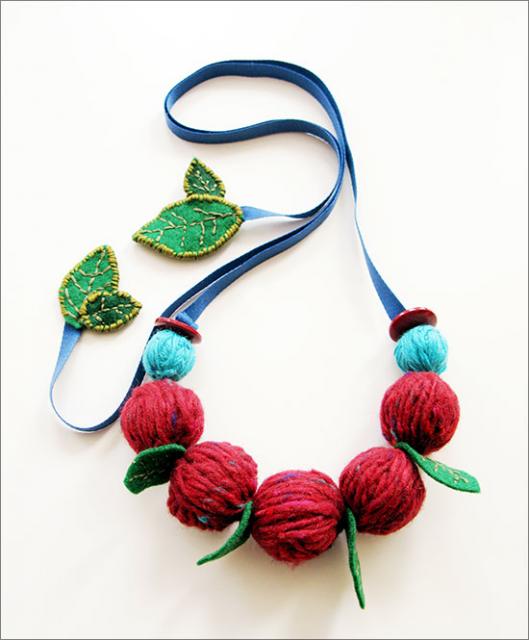
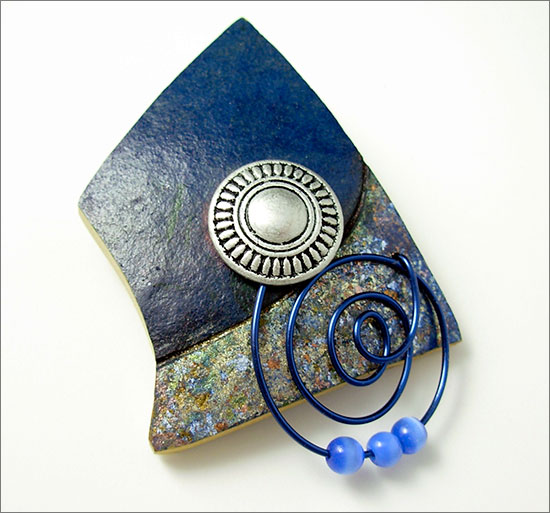
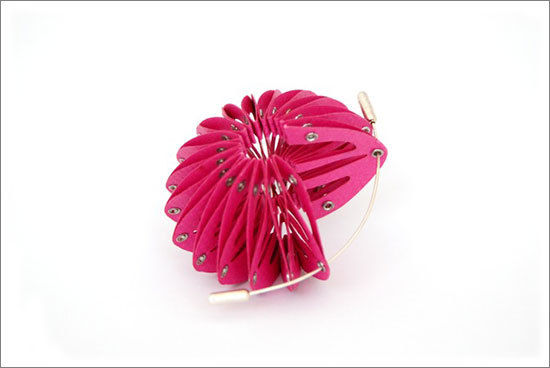
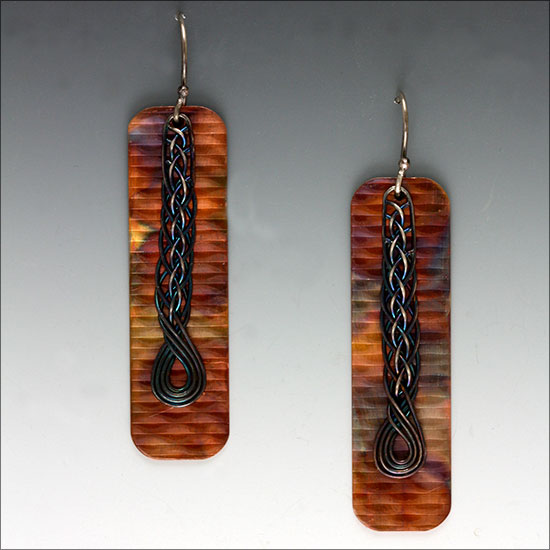
Land of Odds, Be Dazzled Beads, The Open Window Gallery, and The Center for Beadwork & Jewelry Arts are proud to announce the Winner and Runner-Up in this year’s The Ugly Necklace Contest, 2012!


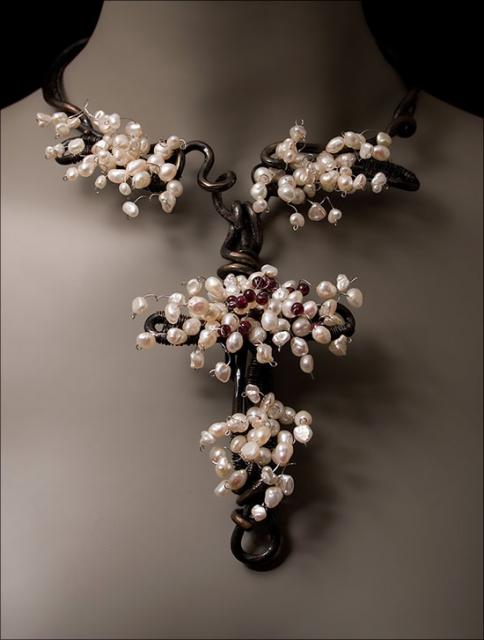
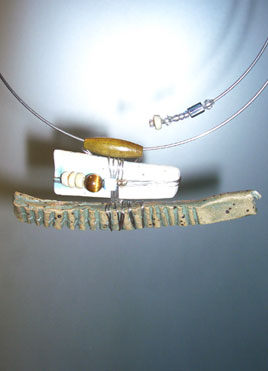
The Winner of The Ugly Necklace Contest – the Jewelry Designer who demonstrated exceptional jewelry design skills by creating The Ugliest Necklace in the America and the rest of the World in the year 2012, and the winner of a $992.93 shopping spree on the Land of Odds web-site  (www.landofodds.com) is :


Joan Veres
Norwood, NY
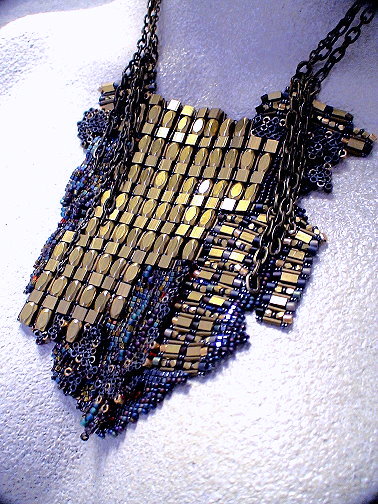
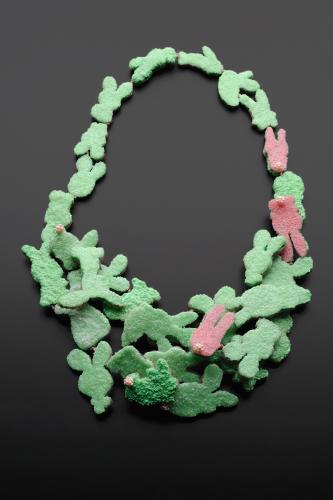
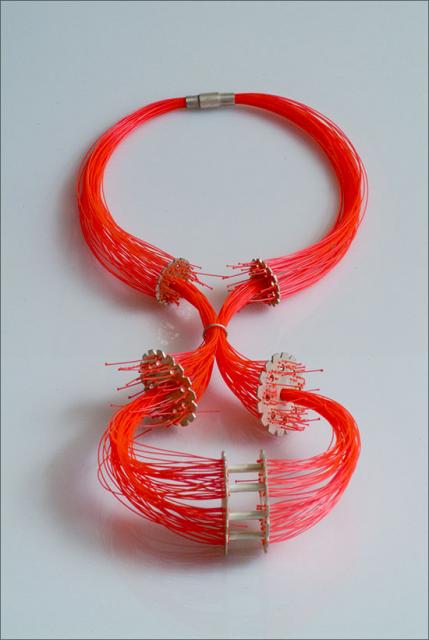
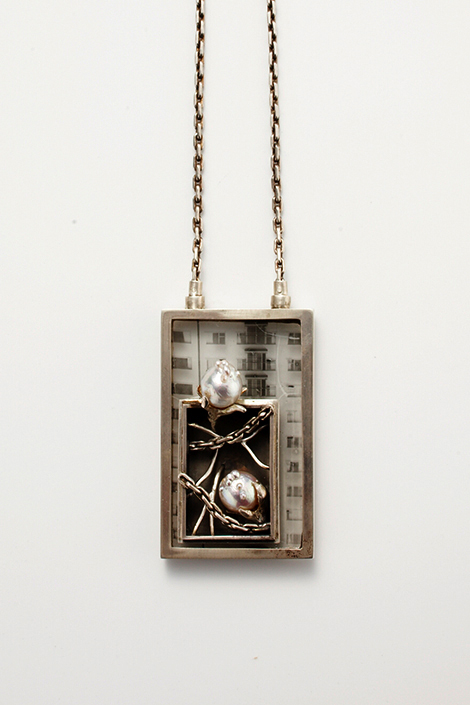
“From My Garden Of The Sea Rim”


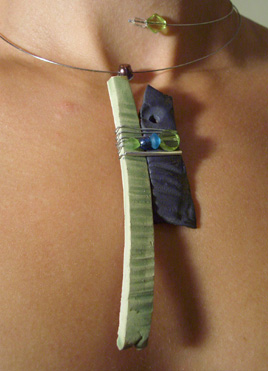
The Runner-Up in The Ugly Necklace Contest — the Jewelry Designer who also displayed obvious design talents by creating the 2nd Ugliest Necklace in America and the rest of the World in the year 2012, and the winner of a $399.07 shopping spree on the Land of Odds web-site  is:


Pamela Orians
Zanesville, OH
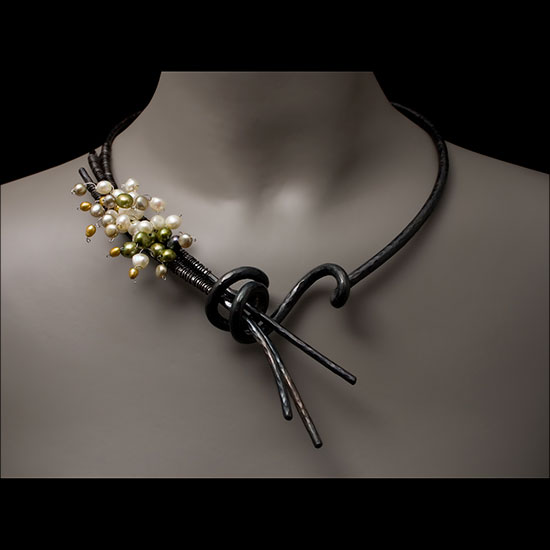
“From My Garden Of Fun”


It’s not easy doing Ugly!


So our hats are off, and we offer loud applause to Joan Veres and Pamela Orians.   These beadwork and jewelry artists have demonstrated their commendable design skills. They have been judged, from among 17 entrants from across America, Dubai, Great Britain, and South Korea, by a distinguished panel of four judges from The Center for Beadwork & Jewelry Arts in Nashville, Tennessee, and voted on by visitors to the Land of Odds web-site.


It’s difficult to design an ugly piece of jewelry because your mind and your eye won’t let you go there.    As research into color and design has shown, your eye compensates for imbalances in color or design component relationships – it tries to correct and harmonize them.   You are pre-wired to subconsciously avoid anything that is disorienting, disturbing or distracting.   


To view additional images of the necklaces submitted by the winner, runner up and the other semi-finalists of The Ugly Necklace Contest, please visit us here on-line.


And if you are in the Nashville area, please stop by Be Dazzled Beads, where the 8 selected Ugly Necklaces are on display through September 15th.


Posted in Contests, jewelry design | Tagged: , | 1 Comment »

Piece accepted for inclusion 500 BEADED JEWELRY book

Posted by learntobead on February 8, 2012

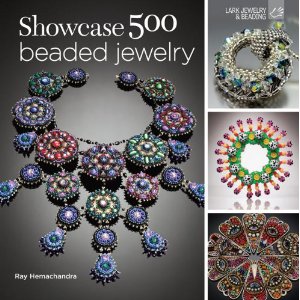
Just found out that one of my pieces — Little Tapestries/Ghindia — was juried into the book SHOWCASE 500 BEADED JEWELRY, Lark Publications. The book comes out August 2012, but is already listed on Amazon.com at http://amzn.to/z6tZH2 .

From Amazon.com:

This book gathers photographs of 500 of the most breathtaking beaded jewelry designs created in recent years. The techniques the beaders employ are as varied as the aesthetic sensibilities they bring to their gorgeous creations and include beadweaving in every stitch imaginable, embroidery, quilling, loom weaving, and kumihimo braiding, as well as basic stringing, simple wirework, and fine metalwork. Sometimes, a bead maker’s focal piece simply is set in a straightforward, unpretentious, and beautiful design.


Virtually all of the world’s most famous beaders who make jewelry have pieces included — including Carol Wilcox Wells, Diane Fitzgerald, Marcia DeCoster, Jamie Cloud Eakin, Huib Petersen, Paulette Baron, Sabine Lippert, Sherry Serafini, Margie Deeb, Maggie Meister, Melanie Potter, Ann Tevepaugh Mitchell, Laura McCabe, Suzanne Golden, Jean Campbell, Rachel Nelson-Smith, Eva Dobos, and many more — but we also present work from many artists who have never been published before. All together, this extensive, international, and fabulous survey of 500 pieces includes work from nearly 300 artists from 30 countries and reveals the striking vision and ambition of today’s beading community.

Posted in beads, beadwork, jewelry design | Tagged: , , , | 1 Comment »

Was Freedom Enough?

Posted by learntobead on November 14, 2011

Excerpt from column 
HOW TO BEAD A ROGUE ELEPHANT

WAS FREEDOM ENOUGH? 

I emancipated myself from my upwardly mobile position, after 18 years of progressively more responsible positions, having attained an annual salary the income taxes from which supported one whole government worker.

And what did that do for me?   Emancipation.  Over the next 20 plus years of starting all over again.  At the bottom.  Learning another trade.  Having no accumulated reputation or power or wherewithal to get ahead.  I had freed myself to make my own choices.  I  had painted myself into a picture of my own dreams.   To be an artist.  To make jewelry.  To play with beads.  And to make a living at it.

But what did I achieve, except for the very freedom itself to be free to make my own choices?  …

 Continue reading….

Posted in jewelry design, jewelry making | Tagged: , , , | Leave a Comment »

Read THE DESIGNERS GAZETTE, Fall 2011

Posted by learntobead on November 8, 2011

LAND OF ODDS – JEWELRY DESIGN CENTER

Take a Moment To Read….

THE DESIGNERS GAZETTE
Fall 2011
The Design Perspective On Beading and Jewelry Making

http://www.warrenfeldjewelry.com/pdf/fu111011/fall2011pdf.pdf
Chilled Morns and Eves Warmed by Fall’s Soulful Colors, Stylish Clothes, Sophisticated Thinking, and Layered Looks. Nostalgia – for changing leaves, apple cider, turkey and dressing, family gatherings, office parties, warmth by the fire. Fall is all about presenting a more elaborated side of you to the outside world. Work and play. Online and off. Jewelry to tell the world to open up, you’re coming in from the playful summer heat.

The Illustrative Beader: Beaded Tapestry Competition – SemiFinalists Announced
Jade Carving Event
Three Artists at SOFA: New York
Bracelets in 3-D Print
Erotic Watches Auctioned Off
Australian Jewelry Topos
Tiffany Video
Ara Kuo
Robert Ebendorf – Mixed-media
Asagi Maeda – Art Jewelry
Daniel Porter Stevens – Metalsmith
Creative Mentoring – Andrea Rosenfeld
Beauty Is In The Eye Of The Beholder
Snakes – Claire Kahn
Cristobal Balenciaga
LOOT 2011
SODAmore 2011: Contemporary Art Jewelry
Empowering the Jewelry Designer
Existence for the Jewelry Designer is Befuddling
The Ugly Necklace Contest – Enter to Win
Getting Started in Beading and Jewelry Making
Jewelry Design Camp
Sherry Serafini Workshops

The Design Perspective on Beading and Jewelry Making
Land of Odds
Be Dazzled Beads, &
The Center for Beadwork & Jewelry Arts

718 Thompson Lane, #123, Nashville, TN 37204
http://www.landofodds.com
615/292-0610

Posted in jewelry design, Stitch 'n Bitch | Tagged: , , | Leave a Comment »

The DESIGN PERSPECTIVE

Posted by learntobead on November 3, 2011

The DESIGN Perspective
On Beading and Jewelry Making

The DESIGN PERSPECTIVE is very focused on teaching beaders and jewelry makers how to make choices. Choices about what materials to include, and not to include. Choices about strategies and techniques of construction. Choices about mechanics. Choices about aesthetics. Choices about how best to evoke emotions.

These choices must also reflect an understanding of the bead and its related components, and how all these pieces, in conjunction with stringing materials, assert their needs. Their needs for color, light and shadow. Their needs for durability, flexibility, drape, movement and wearability. Their needs for social and psychological and cultural and contextual appropriateness, satisfaction, beauty, fashion, style, power and influence.

This DESIGN PERSPECTIVE contrasts with the more predominant Craft Approach, where the beader or jewelry maker merely follows a set of steps and ends up with something. Here, in this step-by-step approach, all the choices have been made for them.

And this DESIGN PERSPECTIVE also contrasts with another widespread approach – the Art Tradition – which focuses on achieving ideals of beauty, whether the jewelry is worn or not. Here the beader or jewelry maker learns to apply art theories learned by painters and sculptors, and assumed to apply equally to beads and jewelry, as well.

The Craft Approach and the Art Tradition ignore too much of the functional essence of jewelry. Because of this, they often steer the beader and jewelry maker in the wrong directions. Making the wrong choices. Exercising the wrong judgments. Applying the wrong tradeoffs between aesthetics and functionality.

The focus of the DESIGN PERSPECTIVE is strategic thinking. At the core of this thinking are a series of design principles and their applications. These principles provide the beader and jewelry maker with some clarity in a muddled world.

The belief here is that, since there are so many different kinds of information to be learned and applied, it is impossible to clearly integrate this information all at once. When learned haphazardly or randomly, it becomes too difficult or confusing to bring to bear all these kinds of things the beader or jewelry maker needs to do when designing and constructing a piece of jewelry. Thus, the beader and jewelry maker best learn all this related yet disparate information in a developmental order, based on some coherent grammer or set of rules of design. This is the DESIGN PERSPECTIVE.

So, we begin with a Core set of skills and concepts, and how these are interrelated and applied. Then we move on to a Second Set of skills and concepts, their interrelationships and applications, and identifying how they are related to the Core. And onward again to a Third Set of skills and concepts, their interrelationships and applications and relationship to the Second Set and the Core, and so forth.

In the DESIGN PERSPECTIVE, “Jewelry” is understood as Art, but is only Art as it is worn. It is not considered Art when sitting on a mannequin or easel. Because of this, the principles learned through Craft or Art are important, but not sufficient for learning good jewelry design and fashioning good jewelry.

Learning good jewelry design creates its own challenges. All jewelry functions in a 3-dimensional space, particularly sensitive to position, volume and scale. Jewelry must stand on its own as an object of art. But it must also exist as an object of art which interacts with people (and a person’s body), movement, personality, and quirks of the wearer, and of the viewer, as well as the environment and context. Jewelry serves many purposes, some aesthetic, some functional, some social and cultural, some psychological.

The focus of the DESIGN PERSPECTIVE is on the parts. How do you choose them? How should they be used, and not be used? How do you assemble them and combine them in such a way that the whole is greater than the sum of the parts? How do you create and build in support systems within your jewelry to enable that greater movement, more flexibility, better draping, longer durability? How do you best use all these parts, making them resonate and evoking that emotional response from your audience to your style, vision and creative hand that you so desire?

The beader and jewelry maker is seen as a multi-functional professional, similar to an architect who builds houses and an engineer who builds bridges. In all these cases, the professional must bring a lot of very different kinds of skills and abilities to bear, when constructing, whether house or bridge or jewelry. The professional has to be able to manage artistic design, functionality, and the interaction of the object with the person and that person’s environment.

Read: ABOUT GOOD JEWELRY DESIGN: Principles of Composition

Enter: The Ugly Necklace Contest – A Jewelry Design Competition With A Twist!

Posted in jewelry design | Tagged: , , , , , , | Leave a Comment »

Ara Kuo

Posted by learntobead on October 25, 2011

Ara Kuo
http://www.arakuo.com/


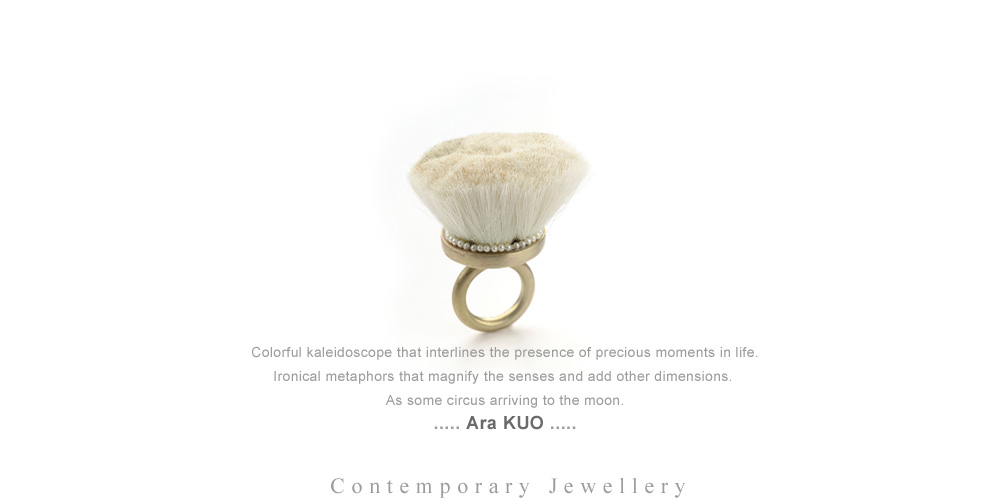
Ara Kuo is a young jewelry artist from Taiwan.    She displays a very whimsical sense of design in her pieces.

Visit her website to see more of her pieces.

Posted in jewelry design | Tagged: , | Leave a Comment »

Robert Ebendorf – Mixed Media

Posted by learntobead on October 25, 2011

Robert Ebendorf – Mixed Media Jewelry Artist

http://galleryloupe.com/exhibitions.php?sn=0&exhibit=39

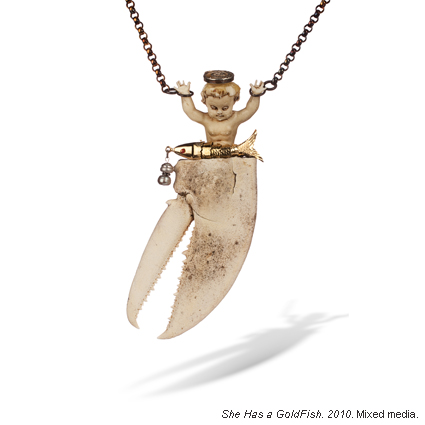
Robert Ebendorf uses unusual objects like soda pop tabs, crab claws, squirrel paws, silver spoons to create his unique and unconventional jewelry.

At Gallery Loupe, they have a retrospective of his pieces posted online.

It’s always fun to re-purpose things, and play with different media and materials.  However, it is often difficult to mix media and materials into a successful, satisfying piece of jewelry.


Posted in jewelry design | Tagged: , , | Leave a Comment »

Asagi Maeda – Art Jewelry

Posted by learntobead on October 25, 2011

Asagi Maeda – Art Jewelry

http://www.asagimaeda.com/#/en/


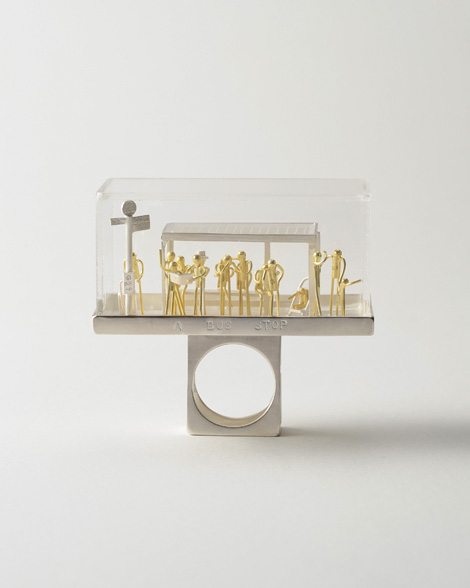
Asagi’s favorite motive is the Box, or the Box as container.    Often he creates little “scenes” and encases them in an acrylic box.   The box becomes a component in a larger piece of jewelry.

His works are what you would call “Amusing”.    And amusement is one of his primary goals.

Each piece has a story.    The story is told like a play on a stage.


His “box” motif represents something inside and something outside.     He tries to build the “emotions” or “theme” or “energy” within the confines of the box.    The viewer experiences these by experiencing the jewelry outside of his box.

Posted in jewelry design | Tagged: , , | 1 Comment »

Daniel Porter Stevens – Metal Smith

Posted by learntobead on October 25, 2011

Daniel Porter Stevens – Metal Smith
http://www.danielporterstevens.com/

I had recently read an article showcasing the work of Daniel Porter Stevens.    The reviewers were talking about his sense of “line”.

“Line” is an important jewelry design element — one of the most important things the designer needs to control.

Line establishes a “silhouette” — it delineates a part of the body above it and below it.

The curvature or straightness of the line evokes a wide range of feelings and emotions on the part of the viewer.

Sometimes the line is like an arrow pointing the viewer’s attention to one place over another.

Lines can be blurry or sharp.

Lines can be rigid, or the designer can somehow “break” the line.

Lines are important.


Visit Daniel’s website and look at his slide-shows of his jewelry.


Posted in jewelry design | Tagged: , , | 2 Comments »

Beauty Is In The Eye Of The Beholder

Posted by learntobead on October 25, 2011

Beauty Is In The Eye Of The Beholder
Online International Jewelry Exhibit
55 artists

Cintra Harbach

http://www.ganoksin.com/exhibition/v/beb/


Ginny Benton

This exhibit highlights jewelry made from materials other than gold, platinum or silver.    Many use found objects.    There are many “green” objects and materials.

Jill Morrison

Jewelry is defined as wearable art using a variety of materials.

Melanie West

You will see such materials as copper, brass and bronze.   Vinyl, velvet, machine components, bone, plastics, rubber, magnets, aluminum, wire, wood, plant seeds, pearls, and gemstones.

Shu Hsuan Tu

This exhibit shows a tremendous range of the possible.

Nancy Overmyer

You can see the full exhibit online.

http://www.ganoksin.com/exhibition/v/beb/


Sarah Kelly


Louve and Don Coulson


Burcu Buyukunal


Wired Elements


Patricia Alvarez


Valerie Ostenak


Louise Gore Langton


Valerie Ostenak


Sheila Schwede


Posted in jewelry design | Tagged: , , , , , , , , , , , , , , , , , , , , | Leave a Comment »

Join Warren in On-Line Discussion Seminar

Posted by learntobead on October 9, 2011

JOIN WARREN IN ON-LINE DISCUSSION SEMINAR

Warren will be leading this discussion on Bead Chat/Facebook next Tuesday, 10/11, 10:00am central time (11:00am eastern time). Please join us.

EMPOWERING THE JEWELRY ARTIST:
5 Questions Every Jewelry Designer Should Have An Answer For!
Time
Tuesday, October 11 · 10:00am-11:00am Central Timel (11:00am -12:00pm Eastern Time)
Location
Bead Chat Room
http://www.facebook.com/groups/261514230535263/
Created By
Auntie’s Beads
For Bead Chat (hosted by Auntie’s Beads)

Warren Feld discusses these questions in the context of art vs. craft, passion and inspiration, materials and components, techniques vs. skills, and when is enough enough. There is not one best answer. These are the kinds of things each jewelry designer must define for themselves, in a way satisfying to them, but anticipating their audience’s needs, as well. Join us for live chat with Warren!
About Auntie’s Beads Bead Chat on Facebook
Ask to join if you are interested in group chat discussions about beading and jewelry making topics. Chat is ongoing and informal, but we also post event notices and host these online events via chat…

Posted in jewelry design | Tagged: , , , , , , , , , , | Leave a Comment »

Jewelers’ Werk Gallery in DC

Posted by learntobead on July 28, 2011

Jewelers’ Werk Gallery in DC
http://www.jewelerswerk.com/ 

I am always on the lookout for galleries that sell and promote hand crafted art jewelry.     Not that easy to find, when you are not in one of the few more enlightened communities in the United States.     Most art galleries in Nashville, for example, shy away from jewelry.   They either view it as craft, not art.   Or not particularly relevant to arts in general.

One gallery in the Georgetown section of Washington, DC is known the world over for innovative contemporary jewelry by international artists.    Jewelers’ Werk Gallery.      When visiting DC, don’t forget to stop by for a real treat.

Some current artists at the Gallery.

TALYA BAHARAL


SVENJA JOHN


IRIS BODEMER


REBECCA HANNON


Posted in jewelry design | Tagged: , , , , , , | Leave a Comment »

Ceramics and Clay All Grown Up As Jewelry Medium

Posted by learntobead on July 28, 2011

Ceramics and Clay All Grown Up As Jewelry Medium

There have been some prominent exhibits and collections around the country highlighting the work of ceramics artists in jewelry.   Some of it is high-fired clay, some raku, some polymer clay and some metal clay.      It’s always very exciting to see how artists can achieve good jewelry design goals with new materials or new applications of materials.

Wearable Ceramics

One of the most prominent exhibits was called Wearable-Ceramics, at  Pewabic Pottery, in Detroit, Michigan.

From their promotional materials:

Wearable Ceramics: Jewelry from International Artists is a collaboration between Linda Ross Contemporary: Art + Projects and Tara Robinson, Curator of Ceramics, Pewabic Pottery. It brings together some of the finest established and emerging artists who are staking out new territories of design, transforming clay into jewelry often combined with found objects and other non-traditional materials. The show features a collection of intriguing and innovative brooches, necklaces, earrings and rings which demonstrate the bridge between ceramics and functional objects for the body; form and material. The tactile nature of ceramics creates a particularly visual language when translated into functional objects to wear – clay is fragile, yet direct contact with the body provides a personal resting place that is warm, protective and very intimate.

Sixteen established and emerging artists representing six countries are participating in the exhibition. The new generation of Dutch designers will be well represented in the show. True to their country’s reputation for producing outstanding craftsmen, they bring a unique international overview of avant-garde jewelry design to the mix. Likewise, artists from the U.S., Spain, Taiwan, Germany and Australia are all masters at technique and highly innovative makers who are staking out new territories of experimentation.

Some works of artists featured:

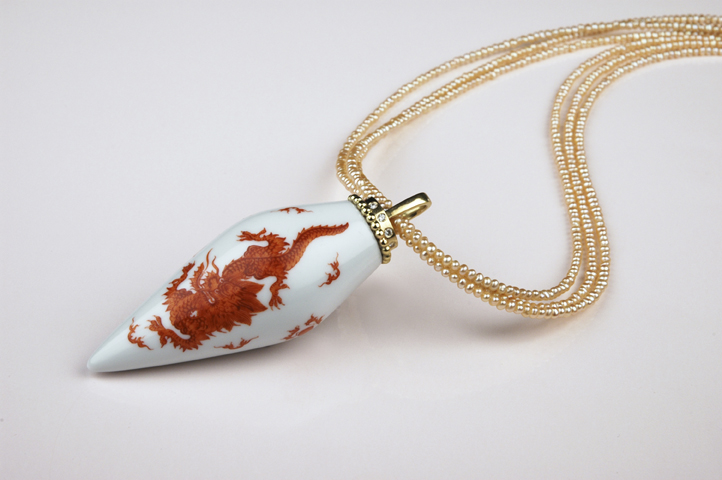
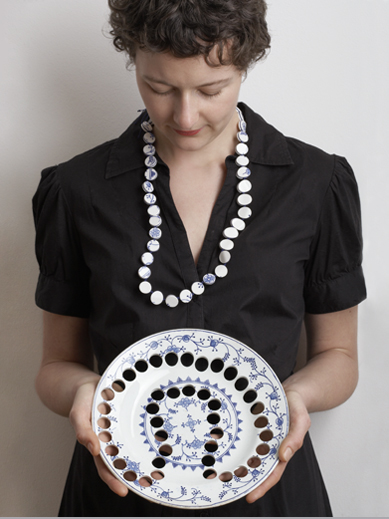
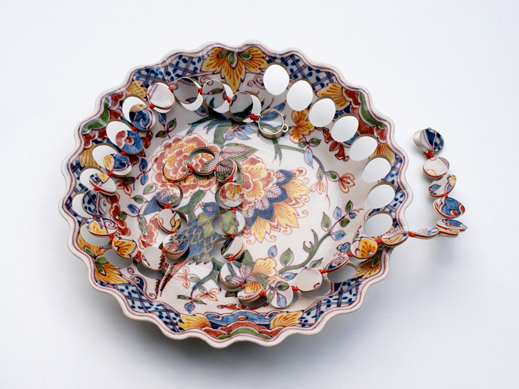
Rian de Jong. eft to right: Porcelain Necklace: gold luster, copper, tombac | Brooch: bone china, copper, garnets | Brooch: bone china, copper | Brooch: bone china, copper

Iris Eichenberg. Brooch: porcelain, coin and bone

Maria Hees. Necklace: foam, porcelain, rubber

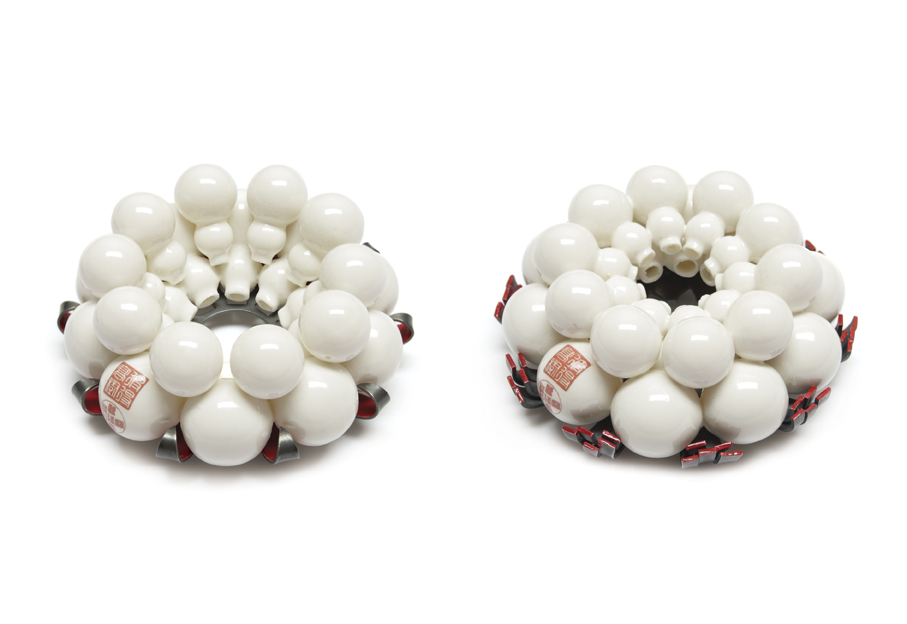
Peter Hoogeboom. “Shaoxing Peony”, Brooch: porcelain, silver, lacquer, nylon, steel

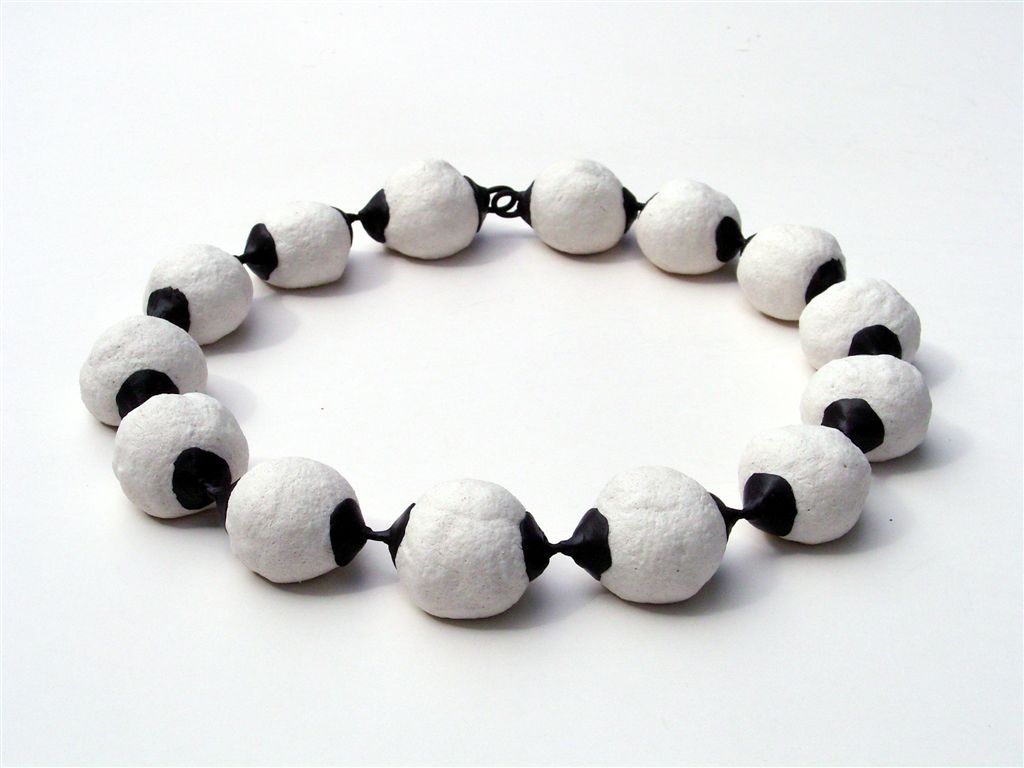
Jet Mous. Necklace: porcelain w/luster and patina

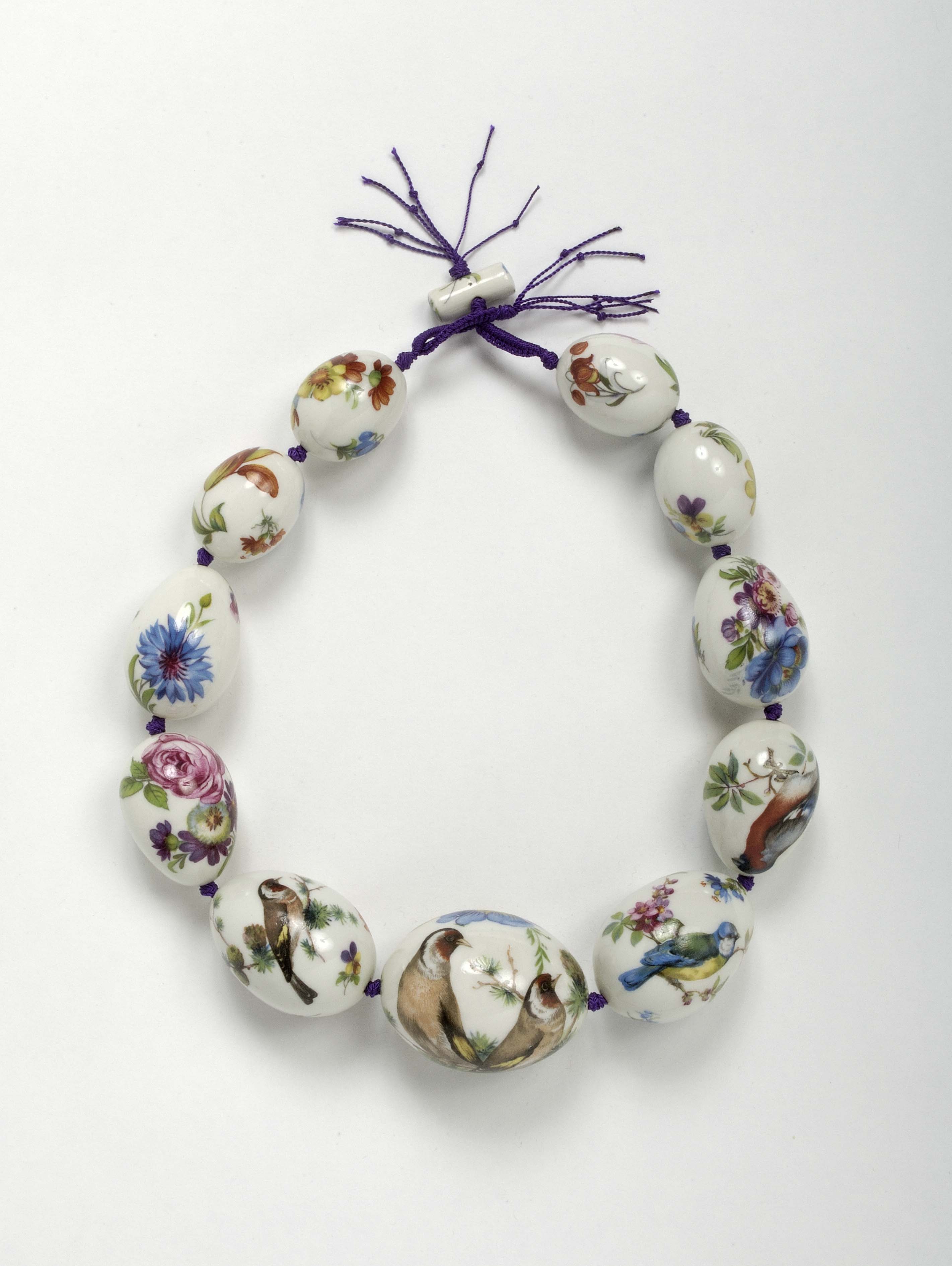
Pauline Wietz. Limonges Eggs | Materials: Porcelain, ceramic transfers | photo credit: Ron Zijlstra

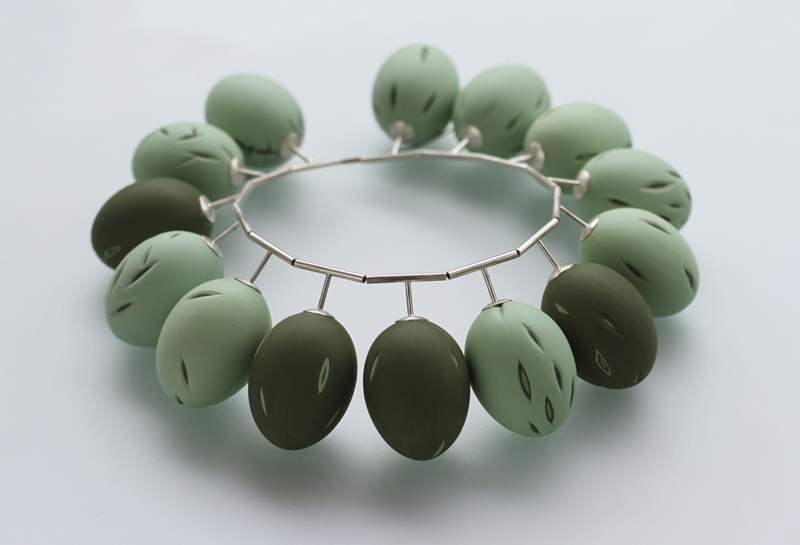
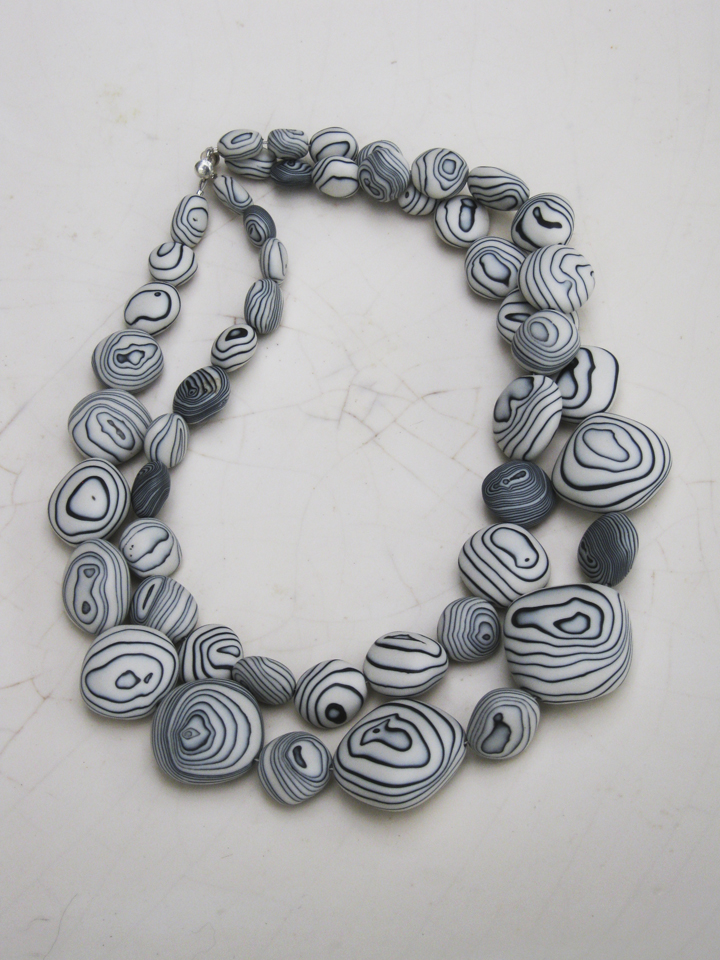
Shu-lin Wu. “Mokume Olive”, Necklace: carved porcelain, steel wire and silver

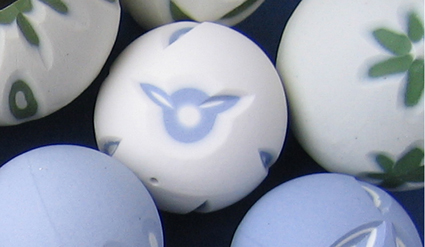
Shu-lin Wu. Mokume Game series. By hollowing out motifs in the colored porcelain, I achieved a layered polychromatic effect.

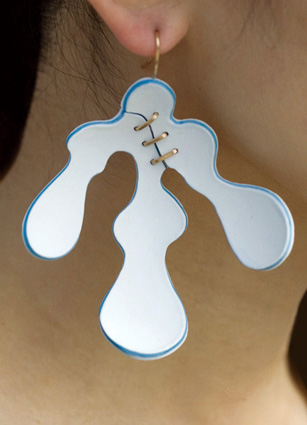
Shu-lin Wu. Earrings

Gaby Wandscher. Necklace: porcelain, pearls

David Eliot. Necklace: Vitreous porcelain beads, metal oxide pigments, sterling silver clasp

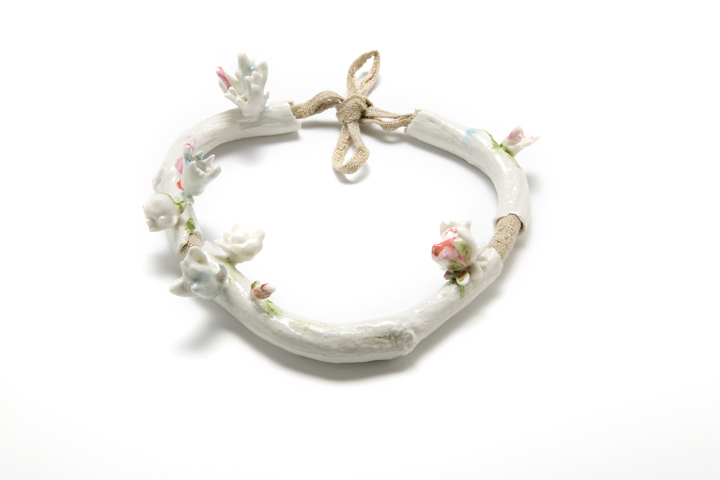
Evert Nijland. “Rococo,” 2010, Necklace: porcelain, hand-woven linen

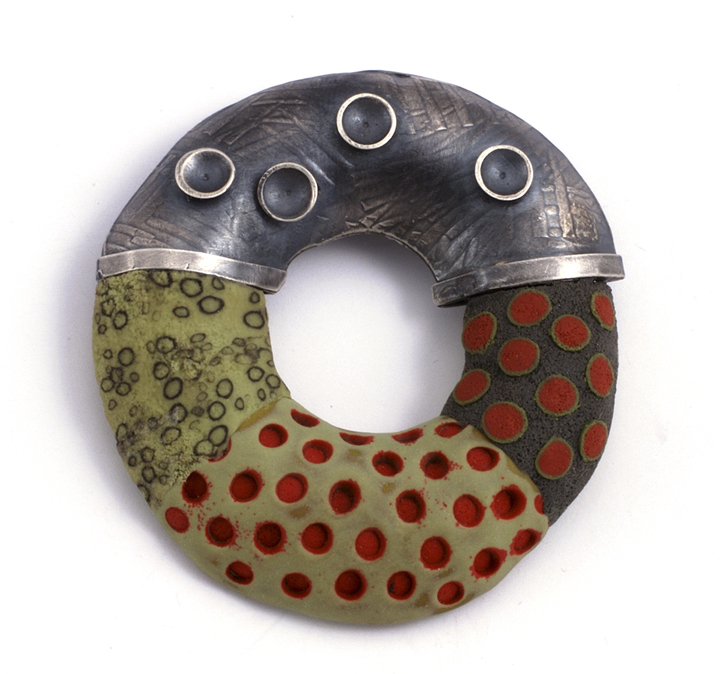
For & Forlano. Brooch: polymer clay, metal, colored oxides

Featured Artists:
Sebastian Buescher
Pilar Cotter Nunez
Rian de Jong
Iris Eichenberg
David Elliot
Ford & Forlano
Caroline Gore
Maria Hees
Peter Hoogeboom
Jet Mous
Evert Nijland
Karin Seufert
Andrea Wagner
Gaby Wandscher
Pauline Wiertz
Shu-lin Wu

A Bit of Clay On The Skin

Another exhibit, running through september 2011, is this new ceramics jewelry show at the Museum of Arts and Design in New York City.

Some of the works on display here:

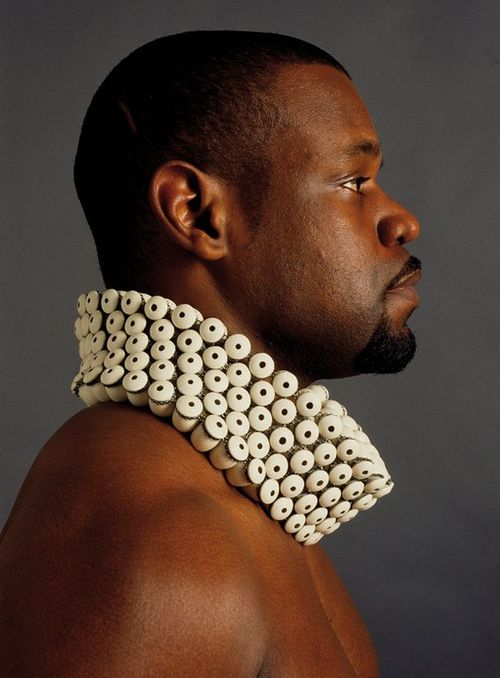
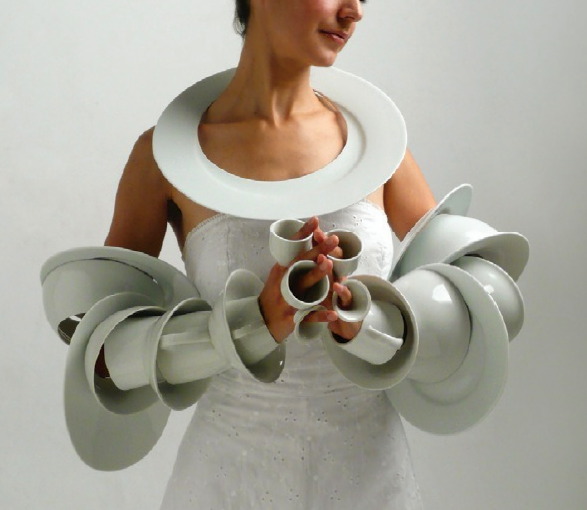
Peter Hoojeboorn. Collar

Ceramics always have great eye-appeal.  They are very alluring.   They can have stark colors, or unusual colorations and color blendings.   They can be almost unnervingly smooth, or have many different kinds of textures — all drawing the viewer to want to touch.   Ceramics can be modelled or cast, and are very versatile.

It is fascinating to see the many ways ceramics are used in jewelry.  In some cases, they are used to mimic traditional jewelry materials and forms.  In other cases, they are a material cast against type.

In the thousands of years between Egyptian faience and today, ceramics, for the most part, have not played a major role in jewelry.   People found the material too close to the earth, too humble to use to convey wealth and elegance.    But this is changing.

Gesine Hacklenberg

Gesine Hacklenberg

Gesine Hacklenberg

Marie Pendaries

Marie Pendaries

Wearable Ceramics Gallery

This online  Gallery showcases sculptural jewelry by Canadian artist Erika Ferrarin.   Some of her pieces:

Posted in jewelry design | Tagged: , , , , , , , , , , , , , , , , , , , , , , , , , , , , | Leave a Comment »

The Japonisme

Posted by learntobead on June 30, 2011

The Japonisme
Influence of Japan on Western Jewelers, 1867-1917

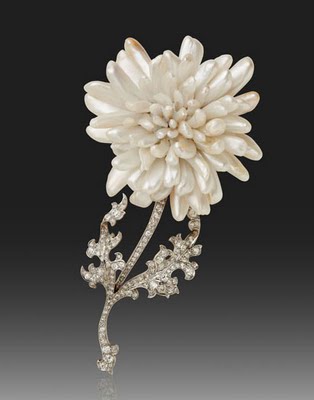
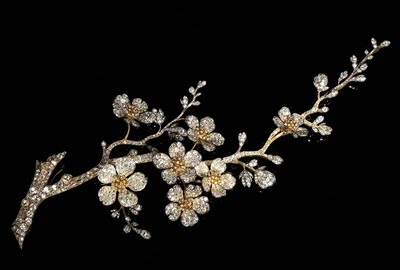
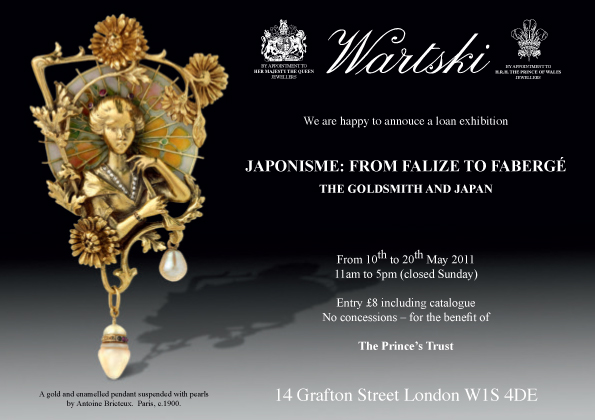
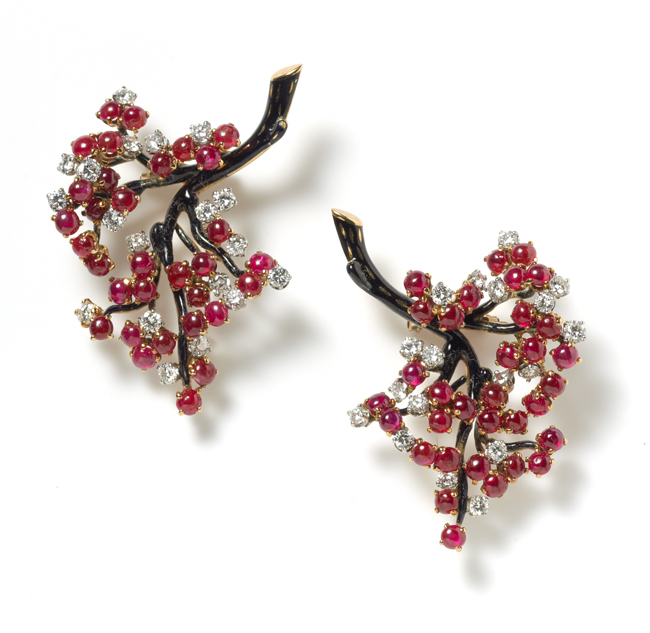
There is a current exhibit at the Wartski Gallery in London entitled “The Japonisme: From Falize to Faberge: The Goldsmith and Japan”.     This exhibit showcases the influence of Japan on western jewelers, such as Tiffany, Falize, Cartier, Boucheron, Faberge.

Here are some of the kinds of things you would see at this exhibit:

Tiffany: Pearl Flower Brooch


Vever: Cherry Blossom Brooch


Wartski Promo for Exhibit


Boucheron: Brooches


Western jewelry artists took much inspiration from the artistic works of Japan.    Specifically, they:

1) Incorporated cloisonne (enameling) techniques
2) Used fragments to capture the essence,
such as using a flower blossom and branch to capture the essence of a whole tree, and nature itself
3) created more of a sense of delicacy in their pieces
4) Built in a sense of poetry into their designs.


Posted in jewelry collecting, jewelry design | Tagged: , , , , , , , , | Leave a Comment »

HIS and HER Jewelry

Posted by learntobead on June 30, 2011

HIS and HER Jewelry


Today, I decided to travel again on the Google Highway, and explore what came up when I typed in “His and Her Jewelry”.

I’m not a “match-y” kind of of person.     If I were coupled, I don’t think I’d wear matching jewelry with my partner.

I’m not androgynous.   I don’t like to were very feminine jewelry myself, although I make a lot of jewelry for women that have “male” elements and sensibilities.

I’ve never designed jewelry for a couple or two partnered people.    But I’ve had a lot of customers in the shop who came in looking for jewelry they could both wear, and somehow coordinated or matched.

What are my design options?   What should I consider when designing his and her jewelry?

Here are some of the things I found:

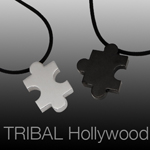
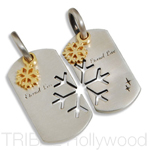
TRIBAL HOLLYWOOD
http://www.tribalhollywood.com/StoreFront.bok

Two piece pendants.

Design elements:
Two separate pieces designed as if they originally were one piece, and then cut in half.   Each piece is to be worn by 1 partner.    Here we have an image cut in half.

Four separate pieces designed with different images, 2 more male or dominant, and 2 more female or recessive.   Each pair is to be worn by 1 partner.

Two separate pieces designed as if they fit together like a puzzle.   Each piece is to be worn by 1 partner.

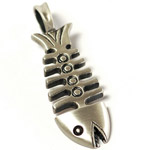
One pendant to be worn by each partner.   The fish supposedly symbolizes friendship.


REMIST
http://www.remist.com/his-her-couple-necklace.php 

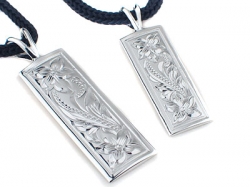
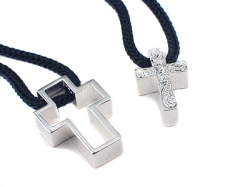
Two coordinated pendants.
Design Elements:

Paired designs, one smaller than the other.


Paired designs, one cut out from the other, and smaller.


These ideas are cute, and I’m sure very saleable.    But this male dominance/female subordination thing subtly, or not so subtly, going on, makes me a little uncomfortable.    I don’t want my partner to be less than I am.    But I also want her to be cute.    Dilemma.     Aesthetics vs. social conscience.   And again, I’m not into the matchy-matchy thing.


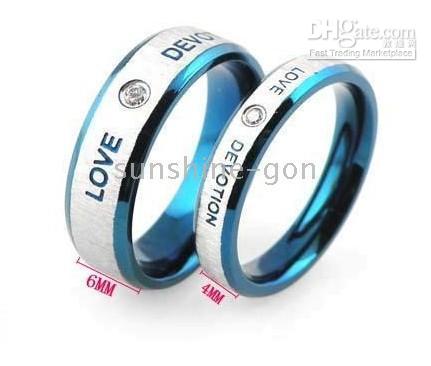
DH Gate.com
http://www.dhgate.com/


Design elements:
Matchy pieces with engraving on each one.


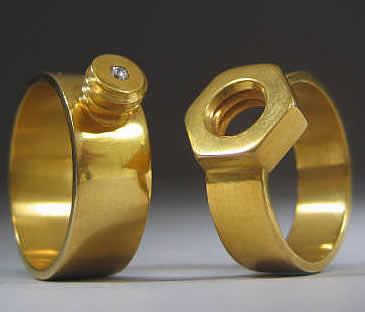
DiamondVues.com
http://www.diamondvues.com/2008/01/nuts_and_bolts_wedding_rings.html

For some reason, I like these rings.   Must be the sexual innuendo.


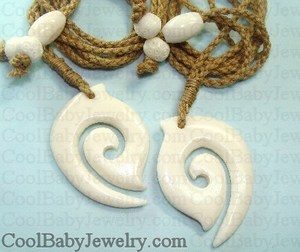
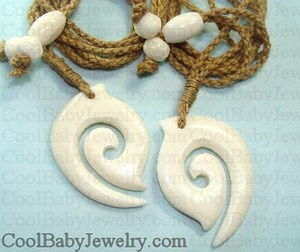
COOLBABYJEWELRY.COM
http://www.coolbabyjewelry.com/servlet/StoreFront


Design element:
Here we have similar pendants, with the design (the spiral) going in opposite directions — clockwise and counterclockwise.


Posted in jewelry design | Tagged: , , | Leave a Comment »