Warren Feld Jewelry

Taking Jewelry Making Beyond Craft

Archive for the ‘jewelry design’ Category

ANATOMY OF A NECKLACE: THE YOKE

Posted by learntobead on June 16, 2013


Anatomy of a Necklace: The Yoke

yoke1

A necklace, or any type of jewelry, has a structure and anatomy.   Each part has its own set of purposes, functions and aesthetics.   Understanding each type of structure or physical part is important to the designer.


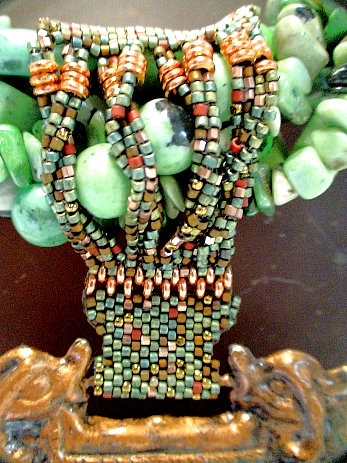
Let’s focus on one part today – The Yoke.    The Yoke is one section of the Strap which is the part around the back of the neck, including the Clasp Assembly.


To what extent, during your design process, do you divide your necklace into its anatomical parts, in order to have more strategic control over its design?


In an average necklace, how long should the Yoke be?    What proportional length relative to the rest of the strap should this be?


How do you determine the design and placement of beads or connectors along the Yoke, given that most of it would either not be particularly visible, or not often-visible when worn?


The Yoke continues into the section of the Strap called the Frame.    There are always transitional issues here?   Do you have any strategies for managing these transitions?   When your piece moves from Yoke to Frame, do you find yourself doing anything special at this point?
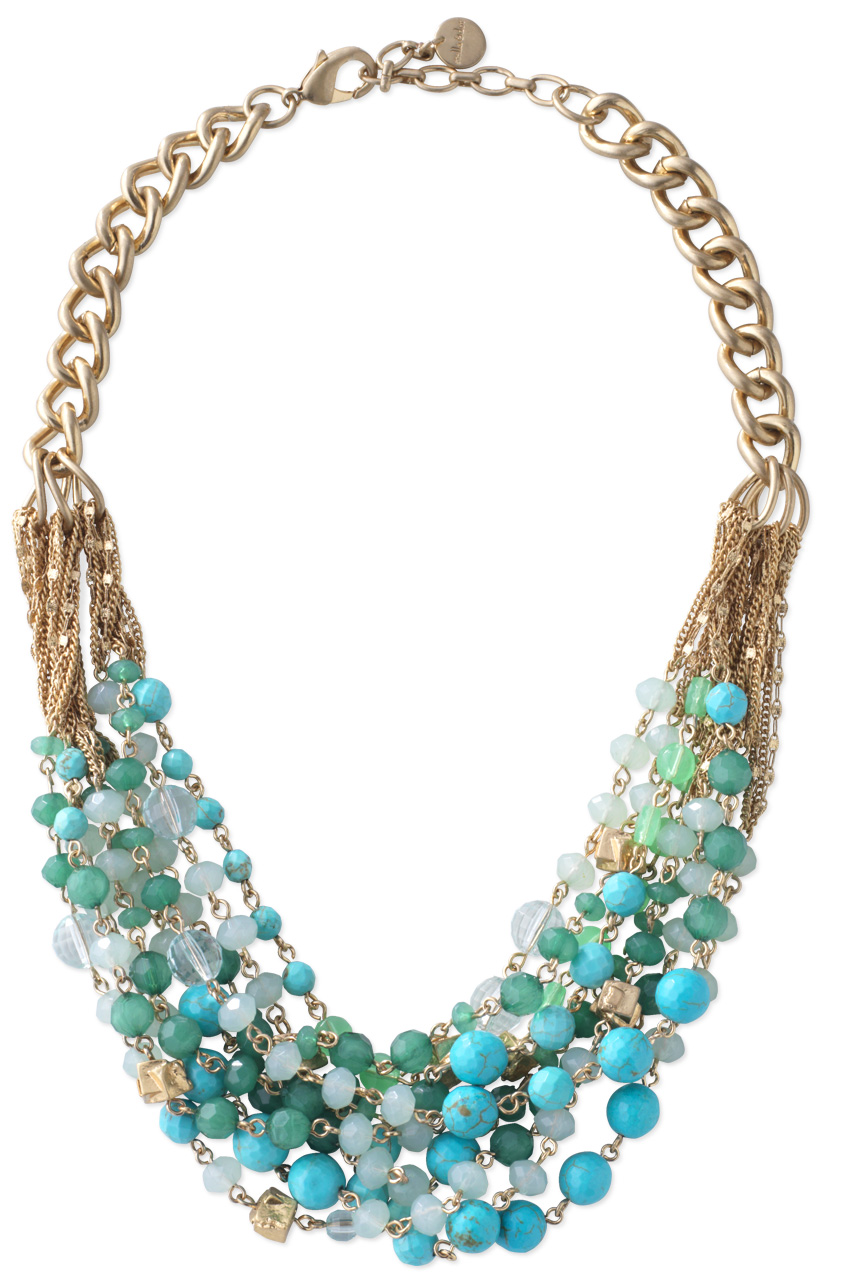
Maldives Necklace at www.stelladot.com

Maldives Necklace
at
http://www.stelladot.com


Do you prefer your Yoke to be visually distinct from the Frame?  Or more organically connected, perhaps not distinguished at all?


Do you use any special visual cues to signal to the viewer that the piece is moving from Yoke to Frame – placement of special connector?  Or change in bead size?  Or change in Color?  Or Pattern?   How do you know where to place these visual cues?


To what extent should the Yoke be integral to the design of the whole piece, or, on the other hand, be supplemental to the whole piece?


Too often, when the designer does not recognize the Yoke as distinct from the Frame – even if the transition is to be very subtle – less-than-satisfying things happen.   Proportions may be off.   The piece may not lay or sit as envisioned.    The strap may have too much embellishment going to high up the strap.    Sometimes the balance between Yoke and Frame is off – too much Yoke and not enough Frame.


So, what do you think?  What do you do?    What things can be done?


To summarize the anatomy of a necklace:


We can envision the Anatomy of the Necklace to include these parts:


Yoke:  Part around the neck.   Typically 6-7”, including the clasp assembly


Clasp Assembly:  Part of the Yoke.   This includes all the pieces it takes, including a clasp, in order to attach your beadwork to your clasp.


Break:  Transition from Yoke to Frame, usually at the collar bone on either side of the neck.


Frame:  The “line” seen on the front of the wearer, demarcating a “silhouette,” and connecting to the Yoke on each side, at the Break.   On a 16” necklace, this would typically be around 9-10” long.


Bi-Furcated Frame:   A Frame visually split in half, usually at the center and in two equal parts, with a centerpiece focal bead or pendant drop in the center.


Focal Point:  While not every necklace has a focal point, most do.  The Focal Point gives the viewer’s eye a place to rest or focus.   Sometimes this is done with a centerpiece pendant.   Can also be created by graduating the sizes of beads or playing with color or playing with fringe.


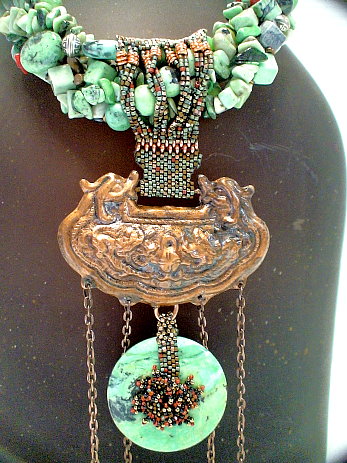
Centerpiece:   A part that extends beyond the line of the Frame, usually below it.    Forces transitional concerns between it and the Frame.


Centerpiece with Bail:    A part that drops the Centerpiece below the Frame, forcing additional transitional concerns among Centerpiece, Bail and Frame.


Strap:  A word summarizing the full connectivity of the Clasp Assembly, Yoke and Frame.


Canvas:  Typically refers to the stringing materials.  However, in a layered piece, may refer to any created “background” off of which or around which the main composition is built.


Embellishment:    Things like fringe, edging, surface decoration.


Each part of the body of a necklace poses its own special design challenges for the jewelry artist.   These involved strategies for resolving such issues as:


– making connections
– determining angularity, curvature, and roundedness
– transitioning color, pattern and texture
– placing objects
– extending lengths
– adding extensions
– creating balance and coherency
– keeping things organic, so nothing looks like an afterthought, or an outlier, or something designed by a committee
– determining which parts or critical to understanding the piece of jewelry as art, and which parts are merely supplemental to the piece.
Posted in jewelry design | Tagged: , , , | Leave a Comment »

BAILS POSE MANAGEMENT ISSUES

Posted by learntobead on June 4, 2013

BAILS POSE MANAGEMENT ISSUES

tibetandreamsdetail12

In our Jewelry Design Camp (www.warrenfeldjewelry.com/jewelrydesigncamp/), one of the topics we cover is the Bail. From a Design standpoint, it is not necessarily a simple jewelry finding to incorporate into our pieces.

There are many types of bails, some off-the-shelf and some hand-made, and there are different ways of attaching them.

tibetandreamsdetail11

A bail changes the visual and artistic relationship between the strap and the center piece. How might this be helpful, and how not? The bail poses similar design challenges as the strap — size, proportion, placement and attachment. However, it has to succeed at one additional task — it has to control the visual, aesthetic and functional transitioning between the center piece and the strap. It is the management of this transitioning which poses the most difficult design design dilemmas for the jewelry artist.

Too often, I see people use a bail because it adds another pretty component to the piece. But it doesn’t necessarily fit. Sometimes it competes with the center piece or strap. Sometimes it creates a series of functioning or wearing or movement issues.
tibetandreamsfull1

So the questions for this discussion include:
(1) Do you use bails, and if so, do you have any favorite — either machine-made or hand-made?
(2) Do you have good or bad design-experiences with bails that you would like to share with the group?

Warren


Posted in jewelry design | Tagged: , , | Leave a Comment »

WHAT SHAPE ARE YOU?

Posted by learntobead on May 14, 2013

WHAT “SHAPE” ARE YOU?
— Spiral, Cross, Triangle, Round or Square?

shapes

Signs of Life: The Five Universal Shapes and How to Use Them, by Angelese Arrien

Diane Fitzgerald had pointed this out as an interesting book about shapes, I think in her book SHAPED BEADWORK. I read the book. Fascinating and goes into a lot of interesting detail.

In this book, the author, who is a cultural anthropologist, studied shapes, and searched for universals. She found that cross-culturally, people use 5 particular shapes to describe and understand themselves in relationship to others within their culture.

These shapes were:

Circle, Square, Triangle, Cross and Spiral

She developed what she calls the Preferential Shapes Test.

Take this test, and use Arrien’s book to interpret the results.

I’m going to oversimplify this test and paraphrase her words, so you can try it, if you haven’t already. However, to read more details about interpretations and to read stories about people who fit various patterns, I’d suggest you visit this book.

STEP 1:
On a piece of paper, write the numbers 1 thru 5 across the page.

Here are the shapes to play with:

SPIRAL, CROSS, TRIANGLE, ROUND, or SQUARE.

STEP 2:
Under the first position number, put your favorite shape.
Under the 2nd position number, put your second favorite shape.
Under the 3rd position, your third favorite shape
Under the 4th position, your fourth favorite
Under the 5th position, your least favorite.

STEP 3:
Use the information below to interpret the results:

POSITION 1: Where you Think You Are
This is where you think you are today or want to go in the future, but not necessarily the most accurate indicator of where you actually are right now.

POSITION 2: Your Strengths
An inherent strength predominant in you at this time, whether you know it or not. Often, this is how other people see you.

POSITION 3: Where You Are
This is the most significant shape.
This shape shows your true current self.

Think of the goldilocks story – the porridge is too hot, the next too cold, the third just right.

POSITION 4: Your Motivation
This shape points to past events or things which motivated or provoked you to get to Position 3.

POSITION 5: Old, Unfinished Business
A process you have outgrown, dislike, resist, or are judging. Unresolved issues you want to put aside.

CIRCLE: wholeness
Position 1: desire to be independent and self-sufficient
Position 2: strengths are self-reliance and resourcefulness
Position 3: process of achieving independence is at core of your nature
Position 4: something in your past motivated you to become responsible and self-reliant
Position 5: you may be resisting or denying this process of individuation

CROSS: relationships
Position 1: forming relationships is most important to you
Position 2: you rely on good people skills
Position 3: forming relationships is something deep within your nature
Position 4: a past shared journey inspired you to become who you are today
Position 5: you may want to ignore or dismiss relationships

SPIRAL: growth and change
Position 1: change holds great importance to you
Position 2: easy for you to handle change
Position 3: you are profoundly engaged in process of change
Position 4: your were challenged in your past to make significant changes in your life
Position 5:you are unlikely to show interest in process of change and growth

TRIANGLE: goals, dreams, visions
Position 1:process of envisioning seems especially important to you now
Position 2:you carry the gift of vision naturally, whether you are fully aware of this or not
Position 3:the process of envisioning is central to your current development
Position 4:your process of following dreams in your past motivated you to change your life
Position 5:you are resisting the process of honoring your dreams and establishing goals

SQUARE: stability
Position 1:stability and authenticity are inspirational to you
Position 2:you are responsible, authentic, and fully committed when you give your word
Position 3:it is vitally important to you to stabilize and implement your creative endeavors
Position 4:past issues of responsibility and accountability led you to make changes in your life
Position 5:you may be denying process of stability and responsibility

Posted in jewelry design, jewelry making | Tagged: , , , , | Leave a Comment »

FASHION AND JEWELRY DESIGN

Posted by learntobead on May 6, 2013

TO WHAT DEGREE DOES/SHOULD “FASHION” INFLUENCE OUR JEWELRY DESIGN DECISIONS?

reposted from my Jewelry Design Discussion Group on FaceBook
https://www.facebook.com/groups/jewelrydesign/

pearl10-full-moneyshot-hi-res-medium

In our store, I am asked repeatedly about what the current fashion colors are? Did I see what so-and-so was wearing on TV or at an awards show? But usually, at least in Nashville, TN, a sense of fashion plays a small part in the day-to-day decisions most people make about the jewelry they want to wear.

What are your feelings and views? What are your experiences? What role should “Fashion” play? How important is Fashion to jewelry design? Should we take our design “cues” from New York and Los Angeles? To what extent do you think Fashion influences the average woman’s choices she makes, when purchasing or wearing a piece of jewelry?

Warren Feld

ctamayadetail1

From an article I wrote… APPLIED FASHION Women don’t just wear pieces of jewelry – they inhabit them.

Buying a piece of jewelry for yourself – a necklace, a bracelet, earrings, a brooch, something else – isn’t a task easily given to someone else. It’s often not a spur of the moment thing either. You just don’t rush off to the local boutique or the local Wal-Mart, grab whatever you see, and go home. I’m not talking about that impulse buy during your leisurely visit to the mall. I’m referring to purchasing those pieces of jewelry you know will have to do a lot of the hard work to accessorize your wardrobe and help you get the compliments and notice of your family, friends and   co-workers you comport with and compete with each and every day.

No, buying a piece of jewelry for yourself is a multi-purposed moment, one which must be thought through carefully and one which must be savored. Lest you buy the wrong piece. That doesn’t really go with what you intend to wear. Or is over-priced. Or poorly made. Or conveys the wrong impression about status. Or is out of fashion. Or something one of your friends already has.
The jewelry you buy has to conform to quite a long list of essential criteria before you could ever think of buying it. It is something you will wear more than once. As such, it is your companion. Your necklace is not merely lying around your neck. Or your bracelet around your wrist. Or your earrings dangling from your ears. Jewelry can cause you to lose face with others. It can irritate or scratch your skin, or get caught up in your hair. It might weigh you down or stretch or tear your ear lobes. Jewelry can break without warning in the most unexpected and embarrassing of places. It can get caught on things, sometimes hurting you in the process.

Jewelry conveys to the world something about who you really are, or think you are. As such, jewelry is very personal. Your private, innermost, most soul searching choices made very public for all to see. As you caress it, as you touch the smooth or faceted or crevice’d beads and metal parts or the clasp or the material the beads are strung on, when you twist and move the piece within your hand, you are confirming to yourself the extent to which your jewelry is doing its job.

When you buy new jewelry, the dilemmas multiply. How will the new compare to the old? Will it be able to handle all these responsibilities – looking good, representing you, fitting in with your wardrobe, meeting the expectations of others? Like divorcing, then remarrying, changing your jewelry can take some time for readjustment. And you do not want to be seen as noncommittal to your jewelry. This would sort of be like going to a hotel, but not unpacking your suitcase while staying in the room.

Conveying some sort of social or psychological distance from your jewelry can be very unsettling for others. So you need to inhabit it. You need to inhabit your jewelry, wear it with conviction, pride and satisfaction. Be one with it. Inhabiting jewelry often comes with a price. There becomes so much pressure to buy the “right” pieces, given all the roles we demand our jewelry to play, that we too often stick with the same brands, the same colors, the same styles, the same silhouettes.

We get stuck in this rut and are afraid to step out of it. Or we wear too many pieces of jewelry. The long earrings, plus the cuff bracelets on both arms, plus the head band, plus the hair ornament, plus the 7-strand necklace, plus the 5 rings. We are ever uncertain which piece or pieces will succeed at what, so hopefully, at least some combination or subset of what we wear will work out.

In a similar way, we wear over-embellished pieces – lots of charms, lots of dangles, lots of fringe, lots of strands. Something will surely be the right color, the right fit and proportion, the right fashion, the right power statement, the right reflection of me.

And our need to inhabit our jewelry comes with one more price. We are too willing to overpay for poorly made pieces in our desperation to have that right look. The $100.00 of beads strung on elastic string. The poorly dyed stones which fade in the light. The poorly crimped and overly stiff pieces with little ease for accommodating movement and frequent wear. It is OK to inhabit our jewelry. In fact, it is necessary, given all we want jewelry to do for us. But we need to be smart about it. We need to learn to recognize better designs and better designers.

This need not be expensive at all.

Just smarter.

Posted in bead weaving, beads, beadwork, jewelry design, jewelry making | Tagged: , , | 3 Comments »

A LESSON IN USING COLOR SIMULTANEITY EFFECTS:

Posted by learntobead on April 22, 2013

A LESSON IN USING COLOR SIMULTANEITY EFFECTS:
The Contemporized Etruscan Collar
By Warren Feld
http://www.warrenfeldjewelry.com


reposted from my Jewelry Design Discussion Group on FaceBook
https://www.facebook.com/groups/jewelrydesign/

bw3nb01-amethystsage-full4-hi-res-small-medium

Several years ago, I had been asked to do a week-long jewelry design workshop in Cortona, Italy. The topic I selected was on Contemporizing Traditional Etruscan Jewelry. One of the projects I developed for the workshop was this Contemporized Etruscan Collar. The challenge, here for me, was to create a sophisticated, wearable, and attractive piece that exemplified concepts about contemporizing traditional jewelry.

Contemporizing Traditional Jewelry has to do with how you take particular traditional forms and techniques, and both add your personal style to the pieces, as well as make them more relevant to today’s sense of fashion and style. The challenge for the designer is how to keep traditional ideas essential and alive for today’s audience.

Things clicked. I found a traditional Etruscan Collar that I immediately connected with.

The Contemporized Etruscan Collar

The contemporized piece basically consists of two staggered and overlapping bead-woven strips. The bead-woven technique used is the Ndebele Stitch (sometimes called Herringbone).

There are many design theory elements incorporated into this piece, including dimensionality, curvature, malleability, and movement. One of the more interesting theories I applied here has to do with color simultaneity effects.

Color Simultaneity Effects
bw3nb01-amethystsage-small-medium-full3-hi-res
Picking colors is about making strategic choices. Picking colors is very revealing about the jewelry artist’s understanding of how the bead asserts its needs for color. One set of color-theories employed to make these kinds of choices has to do with Simultaneity Effects. Colors in the presence of other colors get perceived differently, depending on the color combination.

For example, a White Square on a Black background looks bigger than a Black Square on a white background. White reaches out and overflows the boundary; black contracts.
colorsimulataneity1
Another example: Gray always picks up some of the color characteristics of other colors around it. Gray next to orange will appear to have an orange tone to it. Gray next to green will appear to have a green tone to it. A “Gray” bead is one, the color of which, has a strong gray or black tone to it. Besides the obvious “gray”, these other colors function as a “gray”: montana blue, alexandrite, colorado topaz, prairie green. Many color-lined and silver-lined beads can function as a “gray”, particularly when the glass color is other than clear. Many metallic or otherwise reflective surface beads can function as a “gray”.

A final example of simultaneity effects has to do with how people sense whether colors are warm or cool. In one composition, depending on the color mix, a particular color might be felt as “warm”. In a second composition, with a different color mix, that same color might be felt as “cool”. You can picture a yellow square surrounded by white feels lighter, brighter and a different temperature than its counterpart surrounded by black. A red square surrounded by black feels darker, duller, and a different temperature than its counterpart surrounded by white.

Existence of these simultaneity effects is a great piece of information for the designer. There will be gaps of color and light between beads. Many bead colors are imperfect, particularly in combination. Playing with simultaneity effects gives the designer tools to overcome some of the color limitations associated with the bead and the gaps of light between beads. These allow you to “blend” and build “bridges” and create “transitions.”

Look back at the images of the Ndebele-stitched piece. When you work with beads, there are always gaps between them. In the Ndebele-stitch, there are many and very pronounced gaps of light between beads. This can be very threatening to a viewer. People are pre-wired to avoid things which might harm them, such as snakes and spiders. This is our fear- or anxiety-response.
We can summarize most color theories as a set of principles the brain uses – both in perception and cognition – to find a state of color or colors which are harmonious. That is, people like to see and feel comfortable and safe with colors which harmonize and go together. When we start to lose that harmonious state of color, this makes the brain edgy. When the brain starts to get edgy, we start to interpret pieces as boring, monotonous, scary, dangerous, will cause death. We innately reject, as part of our pre-wired fear response, that which does not follow good principles of color.

Any viewer’s brain will immediately try to interpret what it sees and make sense of it. This includes jewelry. The viewer’s brain needs to know immediately whether to approach or flee. Each time the eye/brain comes to the end of the bead and is confronted with a gap of light separating it from the next bead, it’s similar to a person approaching a cliff, and getting asked to jump off of that cliff.
No one wants to jump off a cliff. And no one’s eye/brain wants to jump over a gap of light between two beads.

We have to fool ourselves, that is, our brain, in some way. Color theories offer us many possible ideas on how to do this. I find using simultaneity effects works especially well in jewelry compositions using beads. Certain colors, when juxtaposed, create their own meanings, and fool the brain into thinking it sees something in these gaps, or is somehow more motivated to fill in the gaps, and proceed from one bead to the next.

In this Etruscan Collar project, many of my color choices were based on an understanding of simultaneity effects.

Posted in beadwork, jewelry design | Leave a Comment »

Suzanne Belperron — Influential Jeweler, 1930’s thru 1970’s

Posted by learntobead on February 10, 2013

Suzanne Belperron — Influential Jeweler, 1930’s thru 1970’s

belperron1

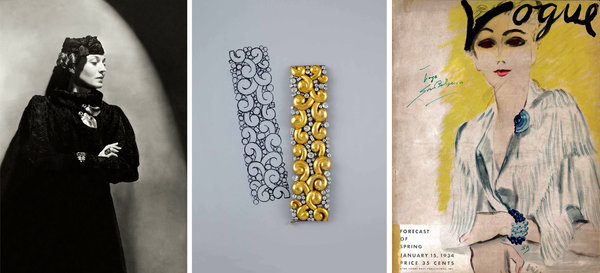
Suzanne Belperron was a successful jeweler, widely influential.   She was one of the few female jewelry designers of her time.   Her daring creations remain today of extraordinary modernity and aesthetics.  She began her career in 1919 at age 19.  She died in 1983. Her life and career spanned the modern movement in the arts, feminism and the emergence of fashion as a big business.   Her style reflected the movement in the jewelry design field away from very ornamental pieces, to those which emphasize bold forms.

belperron2

Her creations appeared in the most influential fashion magazines of the time, including Vogue and Harper’s Bazaar.  Her clients included royalty, celebrities and aristocrats.

belperron3

She never signed her pieces.     She claimed, “My style is my signature.”

belperron4

She introduced unprecedented combinations of stones and minerals in her designs.


belperron5


Posted in jewelry design | Tagged: , | Leave a Comment »

Jewelry As Art: Hanna Liljenberg

Posted by learntobead on January 30, 2013

JEWELRY AS ART: HANNA LILJENBERG
http://www.hannaliljenberg.se/

liljenberg1

The works of Hanna Liljenberg are great examples of Jewelry As Art.

liljenberg2

As “art”, jewelry is seen as a subset of sculpture or painting, and follows the prescribed rules of each.

liljenberg3

The jewelry’s success is judged as if sitting on an easel or on a mannequin.   The body’s shape is mere pedestal or frame, supportive, but subordinate.

liljenberg4

Wearability, drape, movement, context, and other functional concerns are secondary to the aesthetic.

liljenberg5

Hanna’s pieces are indeed beautiful.   How well she reaches that line connecting jewelry to art, rather than distinguishing between the two — jewelry OR art — I’ll leave up to you.


Posted in jewelry design | Tagged: , , , | Leave a Comment »

JEWELRY DESIGN DISCUSSION GROUP

Posted by learntobead on January 30, 2013


THE JEWELRY DESIGN DISCUSSION GROUP

Please join our new group on facebook at:

https://www.facebook.com/groups/jewelrydesign/


We’ve taken our BEAD STUDY group at The Center for Beadwork & Jewelry Arts, and opened it up online at Facebook.


Current Discussions:
– Art vs. Craft
– Technique vs. Skill
– How to organize your ideal work space
– Getting a management handle on client “Wants”
– Color Blending
– Bead Spills
– How did you get your start in beading/jewelry making?


Posted in beadwork, jewelry design, Workshops, Classes, Exhibits | Leave a Comment »

The Artistry of Barbara Natoli Witt

Posted by learntobead on January 30, 2013

THE ARTISTRY OF BARBARA NATOLI WITT
http://necklaceart.com/NecklaceArt.com.html
witt1a

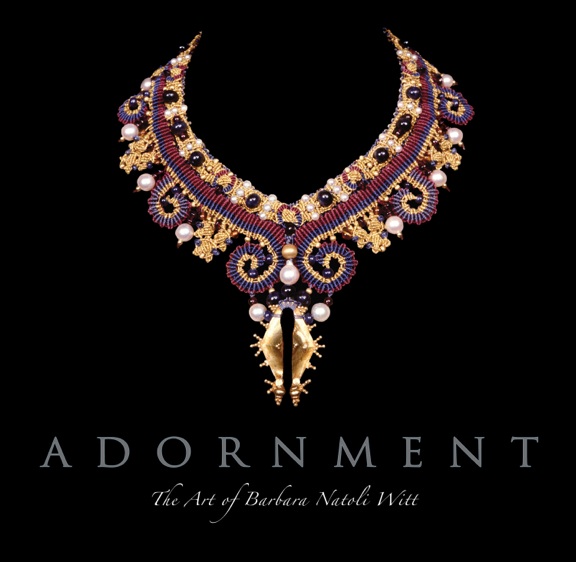
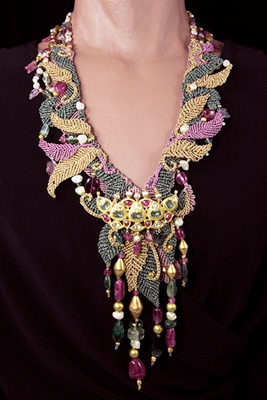
I wanted to share with you some of the beautiful, fascinating and romantic works of Barbara Natoli Witt.

witt1

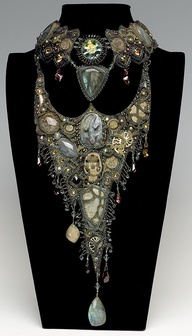
Her pieces blend tapestry techniques with captivating webs of colored threads, beads, stones, artifacts and found objects.

witt2

I frequently advocate among my students that they learn to incorporate several types of techniques and materials within their pieces, and Witt is a perfect example of the result.

witt3

Her use of historical motifs, signs, symbols and materials imbued with meaning within necklace pieces with a contemporary flair add synergy and power to her pieces.    She marries “meaning” to “aesthetic” particularly well.

witt4

The historical referents  make you think of themes of classical beauty, the classical role of women and the classical role of jewelry, and how these relate to women and jewelry today.

witt5

A good background biography of the artist can be found here.

witt6


Posted in bead weaving, beadwork, jewelry design | Leave a Comment »

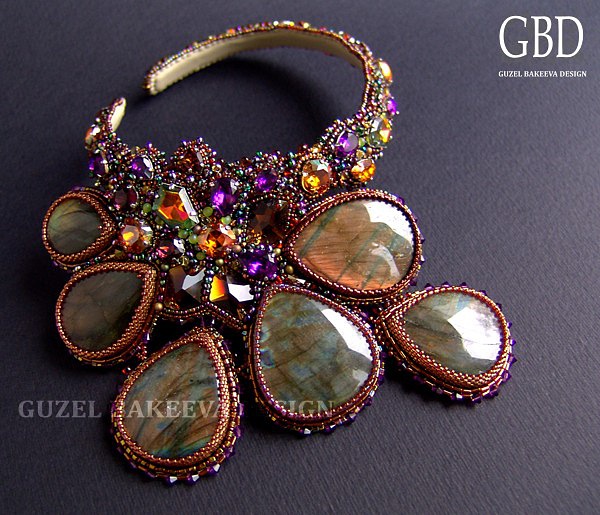
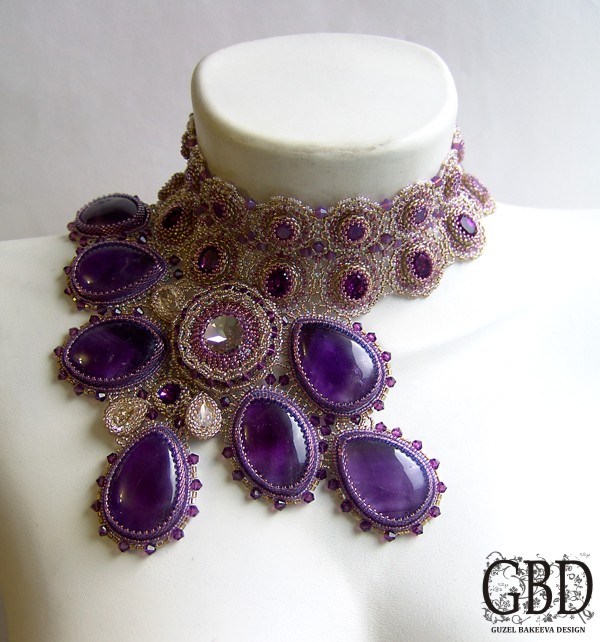
Guzel Bakeeva Design – One Artist Take On Bead Embroidered Cabochons

Posted by learntobead on September 13, 2012

Guzel Bakeeva Design – One Artist Take On Bead Embroidered Cabochons

I love to explore beautiful jewelry as art.   Guzel Bakeeva uses bead embroidery techniques, and very smart and beautiful stones and found objects in her jewelry.   She often couples this with unexpected arrangements of components.    She seems determined to create pieces which have a combined sexiness and sophistication.

Take a look.

The challenges with bead embroidery are many:
– wearability (often the use of large forms, clustered together, which much take the shape of the body)
– artistic integrity (pieces of art when made, must maintain artistic integrity as worn)
– art vs. craft (avoidance of the reduction of art to craft, because of the materials — particularly the bead as a medium)


Posted in jewelry design | Tagged: , , , | Leave a Comment »

Doris Betz – All About The Line

Posted by learntobead on September 13, 2012

Doris Betz – All About The Line


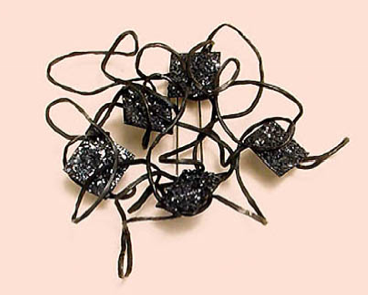
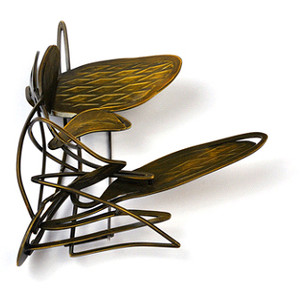
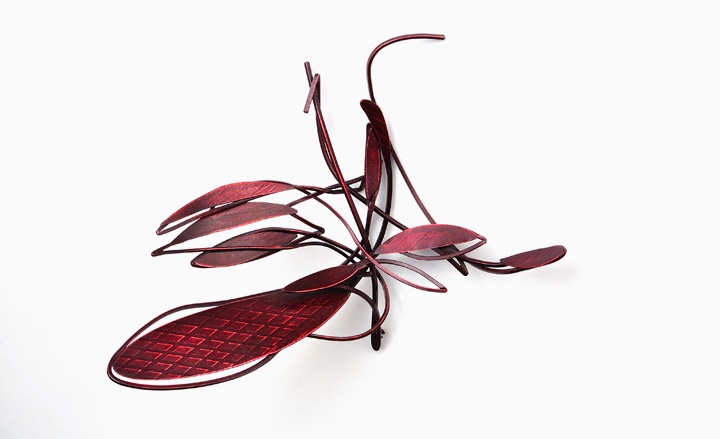
DORIS:  “My work is above all about the line: how it spreads and the possibilities of its arrangement. The line or the wire describes, through its movement, a space. There are overlaps, knots and different layers. At the same time arise apparently accidental, bizarre, three dimensional images. Plastic stands equally judged beside gold and silver. The pieces live through their lightness and transparency. Glamour and oppositions seek a beauty of their own.”
The “line” can be a frightening thing for a designer.   Once the designer commits to a certain line and its linear or curvalinear passageway, the line has to be managed towards some wearable aesthetic.    Not easy to do.

The line creates a boundary.   It separates one direction from another.   It forces, or at least implores, value judgements.  That is, which side of the line is better, more satisfying, more pleasing, more correct.

The line can also frame.   This sets up an inclusive vs exclusive quality, and recessive vs. forwarding seeking motion, a dimensionality, an encouragement vs. a restriction for movement and direction.
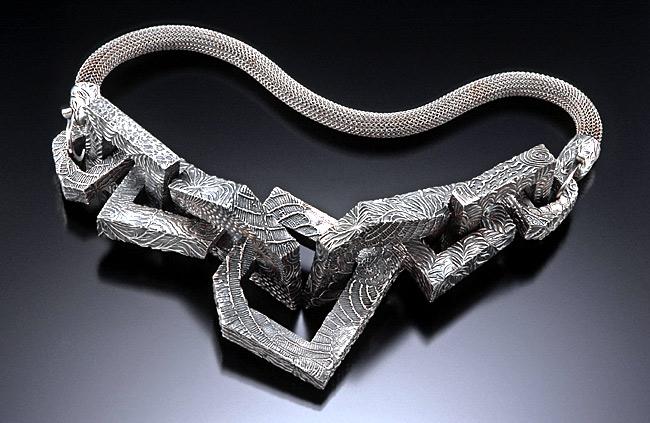
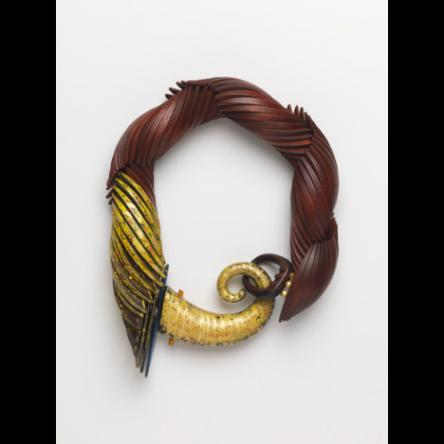
Doris Betz is not afraid of the line.


Posted in jewelry design | Tagged: , , | Leave a Comment »

Senses and Sensibilities at MAD, NY

Posted by learntobead on September 13, 2012

Senses and Sensibilities at Museum of Art and Design, NYC

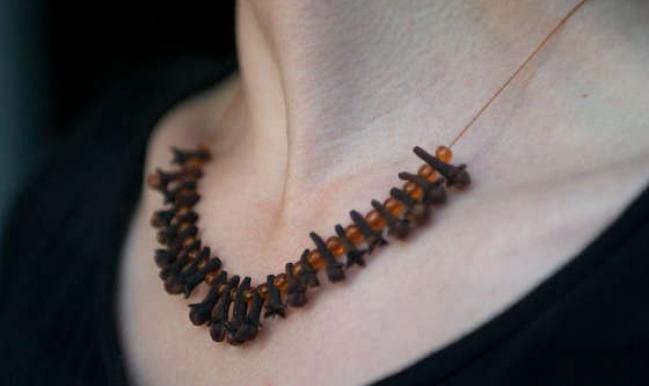
“In the hands of imaginative craftspeople, jewelry can be more than a visual aesthetic adornment.  Forged out the right materials, it can invoke pleasing experiences in scent, touch, and taste.  This winter join MAD for an afternoon-long, hands-on workshop in constructing jewelry that titillates all the senses.  From using precious metal clay to crafting tactile jewelry, creating works out of sugar glass, and using the 16th-century technique of fashioning herb and spice necklaces, “Senses and Sensibilities: Jewelry Workshops in Sensory Materials” enables everyone to try their hand working with new  materials and techniques to create their very own sensory-expanding wearable wonder.”

This is a fun and imaginative exhibit of contemporary jewelry.

Herb and Spice Necklaces with Caroline Mak


Precious Metal Clay with Max Goodman


Posted in jewelry design | Leave a Comment »

Hanging Around – Jewelry From Recent Exhibit At MAD in NY

Posted by learntobead on September 13, 2012

Hanging Around – Jewelry From Recent Exhibit At MAD in NY

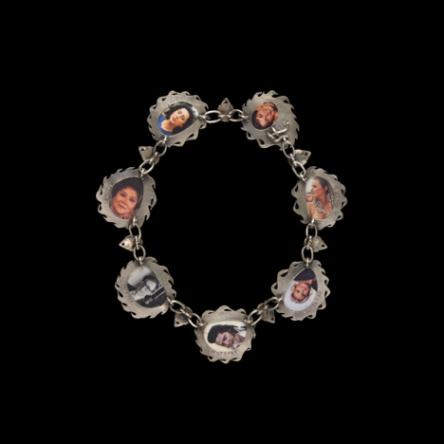
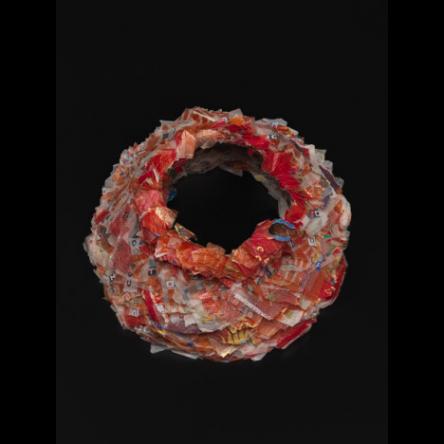
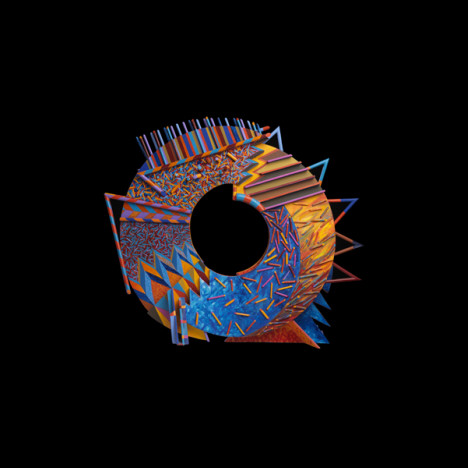
“The unique works on display in Hanging Around are from the Museum of Arts and Design’s jewelry collection. Dating from the 1960s to the present, these artistic creations encompass conceptual approaches ranging from the decorative to the provocatively political. Some of the necklaces on view feature precious metals and rare gemstones, but others derive their impact from materials as unconventional as pig intestines, gun triggers, mustard seeds, LED lighting, black coral, butterfly wings, phone directories, mirrors and lenses. The fabrication techniques employed by the artists are as different as traditional goldsmithing and cutting-edge digital prototyping.”

What do you think?

Liv Blåvarp, Untitled, 2002


Nancy Worden, The Seven Deadly Sins, 1994


Verena Sieber-Fuchs, Apart-heid, 1988


Marjorie Schick


Tory Hughes, Armillary,1992
polymer, steel, glass, brass, silver, mustard seeds


Posted in jewelry design | Tagged: , , | 1 Comment »

Contemporary Pieces Using Gemstones From Margaret De Patta Collection

Posted by learntobead on September 13, 2012

Contemporary Pieces Using Gemstones From Margaret De Patta Collection

The Velvet Davinci Gallery in San Francisco held an exhibit of contemporary jewelry artists creating new jewelry with old stones.

“The De Patta Project was born when Velvet da Vinci purchased many of these unset stones from the estate of Margaret De Patta. There are some beautiful cut stones by Francis J. Sperisen, cabochon stones and beach pebbles found by De Patta. De Patta’s nontradtional use of gemstones and non-precious pebbles are key to the understanding the importance of her influence on the field of contemporary jewelry. ”

Jewelers represented in this exhibit:

Deborah Boskin

Petra Class

Sandra Enterline

Geoffrey Giles


Joanna Gollberg

April Higashi

Tom Hill

Mike Homes

Dave Jones

Terri Logan

Deb Lozier

Maja

Dawn Nakanishi

Brigid O’hanrahan

Julia Turner

Andrea Williams


It is difficult, when creating jewelry for an exhibit celebrating the work of an historical figure, to decide the best balance among:

– referent and reference to the past, both in terms of De Patta’s jewelry style, as well as the overall modernist aesthetic.
– showcasing your own personal style
– demonstrating a sense of what contemporary style means today
– showcasing the gemstones used

It’s useful to explore these artists’ other work you can see images online, to get a better sense of the artist, as well as a better sense of De Patta.


Posted in jewelry design | Tagged: , , , , , , , , , , , , , , , , , , , | Leave a Comment »

Margaret De Patta

Posted by learntobead on September 13, 2012

Margaret De Patta Jewelry
(1903 – 1964)


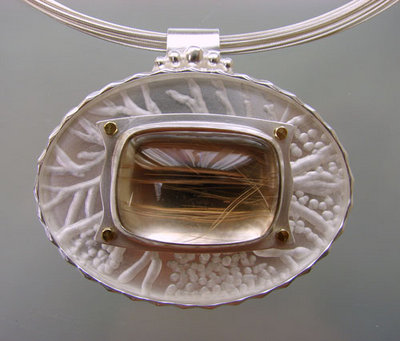
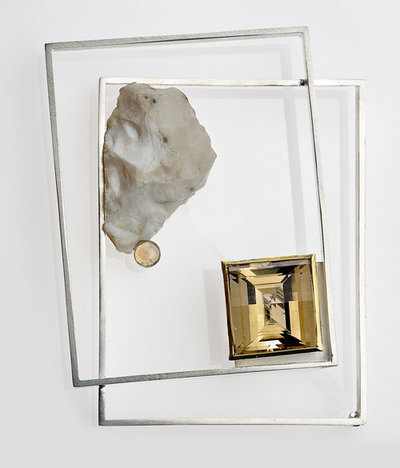
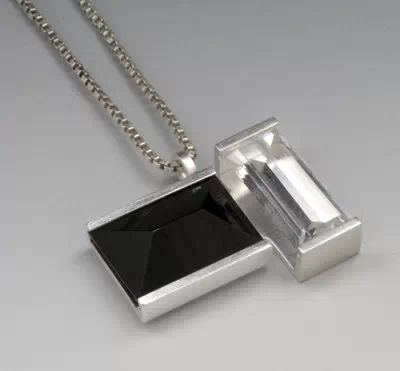
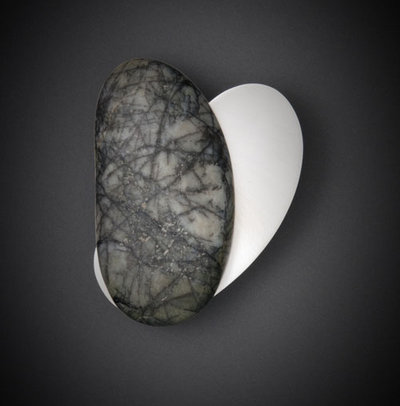
From about 1939, Margaret De Patta was a major designer in American Contemporary Jewelry history, perhaps one of the major influential forces during her time. She was a founding member of the San Francisco Metal Arts Guild.  She is often credited as starting the modern jewelry studio movement.

Her pieces epitomize her use of simple lines and structure. There is a strong architectural sense.   You can see clear connections to the cubist and modern art and bauhaus and modernist architecturer prominent at the time.

She characterized her pieces as miniature wearable sculptures, and in reaction to the prevailing view of  jewelry merely as body ornament.   Her use of line demarcates boundaries, creates a sense of dimensional space, frames elements within her pieces.


De Patta envisioned a piece of jewelry as a dynamic object capable of changing perceptions of space and movement by creating reflections, optical illusions, and unexpected alterations of light.


It is interesting to look at her jewelry designs, and think about contemporary design today, the similarities and differences.


Posted in jewelry design | Tagged: , , | Leave a Comment »