Warren Feld Jewelry

Taking Jewelry Making Beyond Craft

Archive for the ‘jewelry design’ Category

SNAKES – Claire Kahn

Posted by learntobead on October 25, 2011

SNAKES

“Snakes” are popular jewelry themes and forms.

Claire Kahn

The undulating body form.
The sharp, threatening teeth.
The relationship to the Adam and Eve story.
The use of the snake in various cultural myths and mythologies.
The patterning of the skin.

Claire Kahn

The snake evokes something primal within us.    It has an aesthetic that we all recognize and share, perhaps sensuous, perhaps threatening, yet always steeped in beauty.


Claire Kahn


Many of our students and customers love making snakes.     Snake necklaces.  Snake bracelets.  Snake cuffs.  Snake rings.

Claire Kahn


Claire Kahn‘s work recently caught my eye.
http://clairekahndesign.com/


Claire Kahn

Her website displays many beautiful, detailed images of her pieces.


Posted in bead weaving, jewelry design | Tagged: , , , | Leave a Comment »

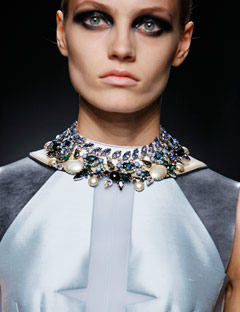
Cristobal Balenciaga

Posted by learntobead on October 25, 2011

Cristobal Balenciaga

http://cristobalbalenciagamuseoa.com/Ingles.html

Cristobal Balenciaga was a Spanish fashion designer who began selling fashion and accessories aroun 1919, but came into prominence in the 1950’s.   He’s known for building in very broad shoulders into jackets, blouses and gowns.    He also brought into fashion the Tunic Dress, and the high Empire Waist dress and gown.

He was a hands-on designer, making many of his own clothing, as well as jewelry.

He was considered one of the all-time great couturiers.    His pieces are very collectible.

Posted in jewelry collecting, jewelry design | Tagged: , , | Leave a Comment »

LOOT 2011

Posted by learntobead on October 25, 2011

LOOT 2011
Museum of Art & Design, New York City
http://madmuseum.org/events/loot-2011-gala-benefit
http://madforjewelry.tumblr.com/ 

Sarah Abrahmson

LOOT 2011 is Mad’s annual fund raising jewelry exhibition, which occurred last week.    Here are some of the pieces of jewelry that were for sale.

Sara Basch


Bona Ha


Danielle Gori-Montanelli


Posted in jewelry design | Tagged: , , , , , , | Leave a Comment »

SODAmore 2011: Contemporary Art Jewelry

Posted by learntobead on October 25, 2011

SODAmore Summer 2011: Contemporary Art Jewellery
Istanbul
http://bijoucontemporain.unblog.fr/tag/geo/turquie/


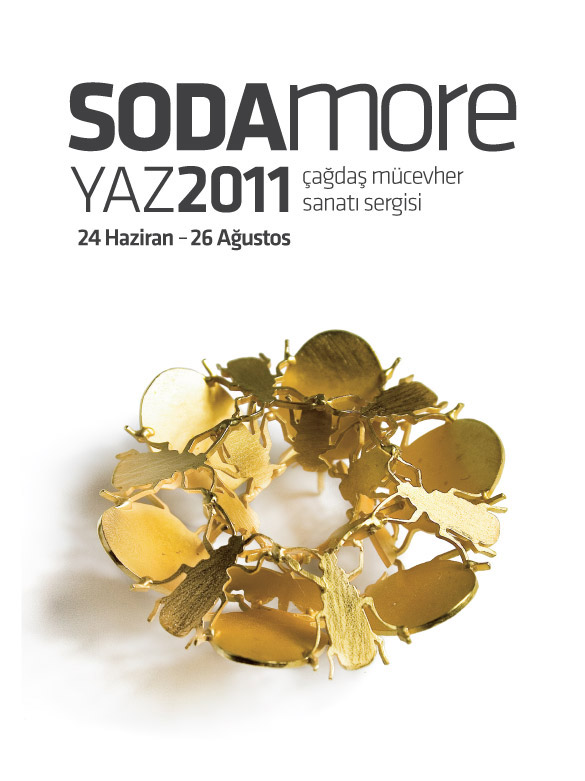
SODA is a relatively new international jewelry exhibition held this past summer in Istanbul.   There are so many, many wonderful ideas and designs by over 70 artists.   Their main webpage shows many examples, as does Google Images.

Michihiro Sato

These selections are good places to explore for ideas about using different materials, components and arrangements.   You see the Creative.  You see the Unconventional.  You see Current Trends in Jewelry.

Sele Ozus


Zwetelina Alexieva


Ritsuko Oqura


Tanel Veenre


Nikolay Sardamov


Ozay Emert


Burcu Buyukunal


Ara Kuo


Posted in jewelry design | Tagged: , , , , , , , , , , , | Leave a Comment »

EMPOWERING THE JEWELRY DESIGNER

Posted by learntobead on October 12, 2011

EMPOWERING THE JEWELRY DESIGNER
5 Questions Every Jewelry Designer Should Have An Answer For

Before I begin any discussion, it is important to understand something about Empowerment.   Empowering — why do you think it is important to Empower the Jewelry Designer?    What kinds  of powers do we want the Jewelry Designer to have?   What kinds of things happen when the Jewelry Designer is not empowered?

It is important that the Jewelry Designer feel comfortable and confident in making choices.    These kinds of choices could be as simple as whether to finish a piece, or not.    Or whether to begin a second piece after finishing the first one.    The designer will make choices about how to draw someone’s attention to the piece, or present the piece to a larger audience.   She or he may decide to submit the piece to a magazine or contest.   She or he may want to sell the piece and market it.      The designer will make choices about how a piece might be worn, or who might wear it, or when it might be worn, in what context.

And for all these choices, the Jewelry Designer might need to overcome a sense of fear, or boredom, or resistance.  The Designer might need to overcome anxiety, a sense of giving up, having jeweler’s block, feeling unchallenged, even laziness.

We want the Jewelry Designer to be empowered to be able to make the necessary choices, in the face of everything that might slow him or her down, or prevent any kind of progress toward a satisfactory end.

And there are other powers we want the Jewelry Designer to have.   We want the designer to be primed to learn more, and be aware of more.  We want our Designer to make smart choices about construction.

We want our Designer to be empowered to better able handle contingencies — to fix problems and make substitutions, as the needs arise.

Our Designer should be empowered to be better able to create an aura of resonance resonating from the piece of jewelry, perhaps giving an edge to it.    The Designer wants to evoke an emotional response from the audience.    This is accomplished by the choices the Designer makes to better use color or a more controlled use of line or a better and more frequent use of forms, themes and components, or a better mixing of materials.

One more critical power we want our Designer to have.   We want the Designer to be better able to have the jewelry reflect the artist’s hand and style.

The successful Jewelry Designer should be very empowered.

The empowered Jewelry Designer should have answers to 5 critical questions.    These have to do with:
1) Art vs. Craft?
2) How To Decide What To Create?
3) What Materials Work Well Together?
4) How To Evoke Emotional Responses To Their Work?
5) When Is Enough Enough?

Let’s start with the first question.
Question 1:  Should BEADWORK and JEWELRY MAKING be considered ART or CRAFT?
What do you think is going on here — why the distinction between Art and Craft, particularly as it applies to jewelry design and beading?     Why is this distinction important?   How does this distinction affect what we do as jewelry designers?

The Jewelry Designer confronts a world that is unsure whether jewelry is “craft” or “art”.    When defined as “craft”, jewelry is seen as something that anyone can do — no special powers are needed to be a Jewelry Designer.   As “craft”, there is somewhat of a pejorative meaning — it’s looked down upon, thought of as something less than art.    But as “craft”, we recognize the interplay of the artist’s hand with the piece and the story-telling underlying it.   We honor the technical prowess.    People love to bring art into their personal worlds, and the craftsperson offers them functional objects that have artistic sensibilities.

When defined as “art”, jewelry is seen as something which transcends itself and its design.   It evokes an emotional response from the viewer.   It has more of a sense of clarity of purpose and choice, a sense of presence.    Functionality should play no role at all, or as a compromise, merely be supplemental.

The Jewelry Designer must be clear on why his or her work should be categorized as “art” or “craft”, or as both as “art” and “craft”.

The Art World accepts jewelry as art from an aesthetic point of view.   It sees jewelry as a subset of painting or sculpture.   It judges its success as if it were sitting on an easel or perched on a mannequin.   It teaches the Jewelry Designer that the only important choices to make are ones associated with art theories.     The Art World often exhibits so much disdain for Craft, that it ignores functional considerations entirely.

With jewelry, ignoring function — durability, movement, flow, drape, structural integrity, context, psychology, sociology, anthropology, sexuality — can lead to disaster.    Jewelry should be judged as art, but only as it is worn.    The choices the Jewelry Artist needs to make are much broader than art, and all choices are equally as critical.

The more appropriate skills involved here are ones of design, where aesthetics are balanced with function, and where conflicts between art and craft are resolved in a satisfactory way, but sometimes to the detriment of aesthetics.

The Jewelry Designer should be very aware of how she or he has applied themselves to their work.   This brings up the next question.

QUESTION 2:  How do you decide what you want to create?    
What kinds of things do you do to translate your passions and inspirations into jewelry?   What is your creative process?  How is it organized?   How do you know it’s working best for you?

Applying yourself creatively can be fun at times, but scary at others.    It is work.   There is an element of risk.  You might not like what you end up doing.   Your friends might not like it.  Nor your family.   You might not finish it.  Or you might do it wrong.

It always will seem easier to go with someone else’s project, already proven to be liked and tested — because it’s been published, and passed around, and done over and over again by many different people.

Sometimes it seems insurmountable, after finishing one project, to decide what to do next.

The Jewelry Designer needs to be confident and comfortable making creative choices.    So, some advice here.

Set no boundaries and set no rules.

Be free.   Go with the flow.   Don’t conform to expectations.

Play.

Pretend you’re a kid again.    Have fun.  Get the giggles.

Experiment.

Take the time to do a lot of What If’s and Variations On A Theme and Trial and Error.

Keep Good Records

Make good notes and sketches of what seems to work, and what seems to not work.

Evaluate.

Learn from your successes and mistakes.   Figure out the Why did something work, and the Why Nots.

As you play and experiment and evaluate with all the parts, you will become more familiar with the characteristics of the materials.     This brings us to the third question.

QUESTION 3:  What kinds of MATERIALS work well together, and which ones do not?   
Why is this?

 The choice of materials, including beads, clasps and stringing materials, set the tone and chances of success for your piece.   These choices

…affect the Look
…affect the Drape
…affect the Feel
…relate to the Context

These choices involved such things as:
– Type of material(s)
– Thickness and other physical parameters of the parts, such as whether they have been stamped, fabricated or cast; interaction with sunlight, ultraviolet light, heat and cold; how the pieces have been finished off
– Cost of materials
– Durability of materials
– Compatibility of different types of materials
– Structural integrity and integration of materials, particularly in multi-media art jewelry or related pieces.

I always suggest using the highest quality materials your budget will allow.

When you try to mix different kinds of materials, the strengths and weaknesses of each material become more apparent.    Mixing different materials and achieving successful pairings is hard to do.    It is difficult to mix glass and gemstone.   It is difficult to mix glass and crystal.    Or glass and plastic.

There are textural issues.   There are color issues.   There are issues related to the reflection and refraction of light.   There are issues how one material changes the perception of another material, when put side by side — simultaneity effects.

Take, for example, mixing glass and gemstones.   Usually this doesn’t work.    When the eye/brain interacts with most glass, the light hits the surface of the material and is reflected back.   When the eye/brain interacts with most gemstone, the light both hits the surface as well as is drawn into the bead below the surface, and then reflected back.    Going from glass bead to gemstone bead can be very irritating for the eye/brain.   So as best as you can duplicate the eye/brain interaction with gemstone with the eye/brain interaction with glass, the more satisfying the mixture will become.     So you might use opalescent glass or color lined glass, which mimics the light/eye/brain interactions of gemstone.

Mixing media present another example.   Usually, when you mix media, say fibers and beads, you need to let one media predominate in your piece.   Each media has its own material properties and structural characteristics, and compete with one another.

The power to making creative choices about materials and their arrangements is a core skill of the Designer.   And this leads us to the next question.

Question 4:   Beyond applying basic techniques, how does the Jewelry Designer evoke an emotional response to their jewelry?
Beyond learning basic techniques, what kinds of choices does the successful jewelry designer need to make?
A related question:   Beaders and Jewelry Makers focus too often on Techniques and not often enough on Skills.   They learn techniques; they don’t learn skills.  How can we get away from focusing too much on Technique, and instead, focus more on Skill?
It is important to draw distinctions between Techniques and Skills.   What distinctions?   Why?   What kinds of skills do we bring, as Jewelry Designers, to our pieces, which make them Resonate?
What is Technique?   What is Skill?  What are your Skills?

An artistic and well-designed piece of jewelry should evoke an emotional response.   Techniques are necessary but not sufficient to get you there.    You need Skills.

The classic analogy comparing Techniques and Skills references cutting bread with a knife.
Technique: How to hold the knife relative to the bread in order to cut it.
Skill:  The force applied so that the bread gets cut successfully.

Skills are the kinds of things the Jewelry Designer applies which enhances his or her capacity to control for bad workmanship.     These include things like
– Judgment
– Presentation
– Care and dexterity
– Taking risks

So we can see our skillful Jewelry Designer choosing materials and colors.   Or marketing.    Or managing thread or string tension.    Color blending.    Mixing materials.   Developing variations on techniques.  Having a personal style.   Trying out something new.

Classic Art Theory holds, that if you need to talk too much about Technique underlying your piece, your piece is not art, it is craft.    And in our classes and discussion groups, the conversations are terribly concentrated on Technique as if there were nothing else to discuss.   I blame the bead magazines for ignoring the role of choice in writing instructions.   Everything is presented so mechanically.    But jewelry design is so much more.    And Jewelry Designers need to aim for the ‘so much more.’

It is this process of linking the technique to the materials that is “art”.   A successful process requires an understanding of the intrinsic values of the materials.    It requires an understanding of how to manipulate the materials to elicit a positive response from others.   It is expressive, intuitive and evokes emotions.   The critical focus is not on the techniques.   The critical focus is on the linking of technique and material to create something that others emotionally interactive with.

Creative engagement with materials.    Expressive.   Imaginative.    A sense of audience.

Jewelry Design is an avocation which requires you to know a lot of things.   You need to know a lot about materials.   You need to know a lot about quality issues underlying these materials, and what happens to these materials over time.   You need to be mechanical and comfortable using tools to construct things.   You need to learn many basic techniques.   You need to understand physical mechanics and what happens to all these materials and pieces, when jewelry is worn.    You need to be familiar with art theories and their applications.   You need to understand people, their psychology, the dynamics of the groups they find themselves in, and their cultural rules which get them through the day.

The Jewelry Designer, when creating a piece of jewelry, has a lot to do, and has a lot of skills to bring to bear on the project.   And this leads to our 5th and last question.
QUESTION #5:  When Is Enough Enough?
How does the Jewelry Artist know when the piece is done?  Overdone?  Or Underdone?    How do you edit?

In the bead and jewelry arenas, you see piece after piece that is over-embellished, or gets too repetitive with the elements and materials.    If 5 fringe look good, 20 fringe would be better.   If 6 colors are appealing, 9 colors would be better.    If 6 repeats of a pattern looks good, 8 repeats would look better.

On the other hand, you often see pieces that can be described as  ‘not quite there’.    They need something else.   A tweak.   A change in arrangement.   Some additional material or color.   A better or smarter clasp and clasp assembly.     Pretty, but they don’t resonate.    They don’t sufficiently touch their audiences.

For every piece of jewelry there will be that point of Parsimony.    Where adding or subtracting one more piece will make the experiencing of the whole somewhat less than the sum of its parts.

To get to this point, the Jewelry Designer must exercise great skill and great technique.    The Designer must show restraint and control.

And to get to this point, the Jewelry Designer must have a point of view, and a clear understanding of the point she or he wants to make through this piece of jewelry.

In this way, the Jewelry Designer can show nuance.   The Jewelry Designer can most satisfactorily arrive at a design which makes the ordinary ‘noteworthy’.

And this concludes our discussion of 5 questions every Jewelry Designer should have answers for.   The Empowered Jewelry Designer will have these answers, though not every Designer will have the same answers, nor is there one best answer.    And it is unacceptable to avoid answering any of these 5 questions, for fear you might not like the answer.

Each Jewelry Designer needs to answer these kinds of questions for themselves, in a way that is satisfying and motivating.    The answers they come up with influence how they present themselves and their work to others.

These 5 questions, in effect, define the who and what and how a Jewelry Designer is, and how to empower them.  Jewelry Designers have definable sets of interrelated skills which can be taught, creatively applied, and further developed.  These skills can be used to create and enhance color, shape, texture, sensibility, perception, sensuousness and emotion.  They can be applied to bring meaning, cognition, culture, connectivity and wisdom to a situation.   They can be used to create the tangible from the intangible, and the object from nothingness.

The skills of combining materials of physical and/or aesthetic wealth into wearable art forms and adornment — this is Jewelry Making and Design.
Empowered Jewelry Designers

Creatively combine and manipulate

Materials and components

By applying interrelated skills, and

Exercising judgment how best to enhance experience and meaning

Posted in bead weaving, beadwork, jewelry design, jewelry making | Leave a Comment »

Existence For The Jewelry Designer Is Befuddling

Posted by learntobead on October 11, 2011

Read the column How To Bead A Rogue Elephant

EXISTENCE

Existence for the jewelry designer is befuddling.

Making jewelry is such a happy endeavor.  But is the designer always happy?   It is so scary, risky, fraught with anxiety, difficult to decide, sometimes impossible to fully visualize.    Yes, you answer to yourself and your own sense of aesthetics and construction.   But yet, you make things for other people to wear, perhaps to buy, perhaps to display, perhaps to comment and evaluate and criticize and tear to shreds.    Or ‘like’ it on some level.

Befuddling.   Yes, indeed….

Continue…

Posted in jewelry design | Tagged: , | Leave a Comment »

Join Warren in On-Line Discussion Seminar

Posted by learntobead on October 9, 2011

JOIN WARREN IN ON-LINE DISCUSSION SEMINAR

Warren will be leading this discussion on Bead Chat/Facebook next Tuesday, 10/11, 10:00am central time (11:00am eastern time). Please join us.

EMPOWERING THE JEWELRY ARTIST:
5 Questions Every Jewelry Designer Should Have An Answer For!

Time
Tuesday, October 11 · 10:00am-11:00am Central Timel (11:00am -12:00pm Eastern Time)
Location
Bead Chat Room
http://www.facebook.com/groups/261514230535263/
Created By
Auntie’s Beads
For Bead Chat (hosted by Auntie’s Beads)

Warren Feld discusses these questions in the context of art vs. craft, passion and inspiration, materials and components, techniques vs. skills, and when is enough enough. There is not one best answer. These are the kinds of things each jewelry designer must define for themselves, in a way satisfying to them, but anticipating their audience’s needs, as well. Join us for live chat with Warren!

About Auntie’s Beads Bead Chat on Facebook
Ask to join if you are interested in group chat discussions about beading and jewelry making topics. Chat is ongoing and informal, but we also post event notices and host these online events via chat…

Posted in jewelry design | Tagged: , , , , , , , , , , | Leave a Comment »

New Column Posted to “How To Bead A Rogue Elephant”

Posted by learntobead on September 2, 2011

New Column Posted
“How To Bead A Rogue Elephant”

Getting Started in Beading and Jewelry Making
Excerpts from this book on the following topics…
Click here 

– Catching the “Bead-Bug”
– What Can You Do With Beads
– Getting Started
– Finding Inspirations
– Shopping for Beads
– What To Look For In A  Bead
– How Not To Shop
– Be A Good Customer
– Buyer Beware
– Tips for Buying Beads At A Bead Show
– What Should I Create?
– Planning Your Necklace
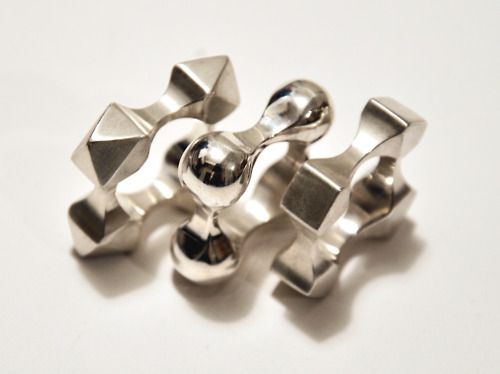
– Anatomy of a Necklace
– Measurements You Need to Know
– Working from a Palette
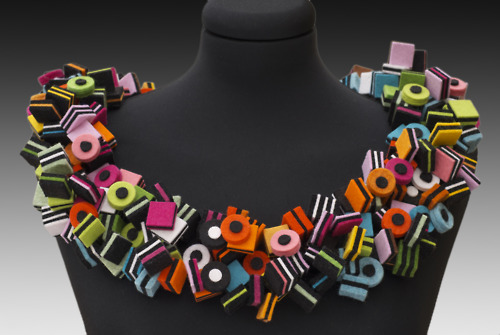
– How Do You Learn?
– The Types of Things You Need to Learn
– On My Own, Through Books, or Through Classes?
– Reading Patterns and Instructions
– Self-Esteem — Making Choices
– Selling vs. Keeping
– Beading Aphorisms

Posted in bead weaving, beads, beadwork, jewelry design, Learn To Bead | 2 Comments »

THE DESIGNERS GAZETTE, Summer, 2011

Posted by learntobead on August 15, 2011

THE DESIGNERS GAZETTE, Summer, 2011

Summer, 2011, The Designers Gazette
READ THE FULL ISSUE ONLINE (or, if you cannot see the images),
CLICK HERE http://www.warrenfeldjewelry.com/pdf/su081511/summer2011pdf.pdf

Articles, insights, workshops, happenings, CBJA course listings

Posted in jewelry design, Stitch 'n Bitch | Tagged: | Leave a Comment »

Jewelers’ Werk Gallery in DC

Posted by learntobead on July 28, 2011

Jewelers’ Werk Gallery in DC
http://www.jewelerswerk.com/ 

I am always on the lookout for galleries that sell and promote hand crafted art jewelry.     Not that easy to find, when you are not in one of the few more enlightened communities in the United States.     Most art galleries in Nashville, for example, shy away from jewelry.   They either view it as craft, not art.   Or not particularly relevant to arts in general.

One gallery in the Georgetown section of Washington, DC is known the world over for innovative contemporary jewelry by international artists.    Jewelers’ Werk Gallery.      When visiting DC, don’t forget to stop by for a real treat.

Some current artists at the Gallery.

TALYA BAHARAL


SVENJA JOHN


IRIS BODEMER


REBECCA HANNON


Posted in jewelry design | Tagged: , , , , , , | Leave a Comment »

The Artist As Jeweler

Posted by learntobead on July 28, 2011

The Artist As Jeweler

Originally, I was a painter.    I didn’t begin making jewelry until I was in my late 30’s.     When I began, I tried to make every necklace, bracelet and pair of earrings, as if these were to be painted.   Never worked.  These things have to be engineered.    Hopefully you end up with something both beautiful and functional.

Today, I see jewelry as “art”, but something somewhat different than painting or sculpture.   But occasionally the urge to paint jewelry arises.

There is going to be an exhibit at the Museum of Arts & Design in New York City on Artists as Jewelers.  The exhibit, to run from 9/20/11 thru 1/8/12, will be entitled “Picasso to Koons: Artist as Jewelry.”

Whether they were as successful as jeweler’s as they were painters or sculptors, well that’s something for you to decide.     All I know is that it is difficult to transition from one to the other.   Here’s some of what you might see:

GEORGE BRAQUE


MAX ERNST


LUCIO FONTANA


bracelet


LOUISE NEVELSON


ANTHONY CARO


ANISH KAPOOR


Posted in jewelry design | Tagged: , , , , , , | Leave a Comment »

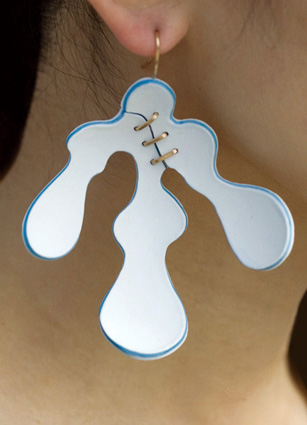
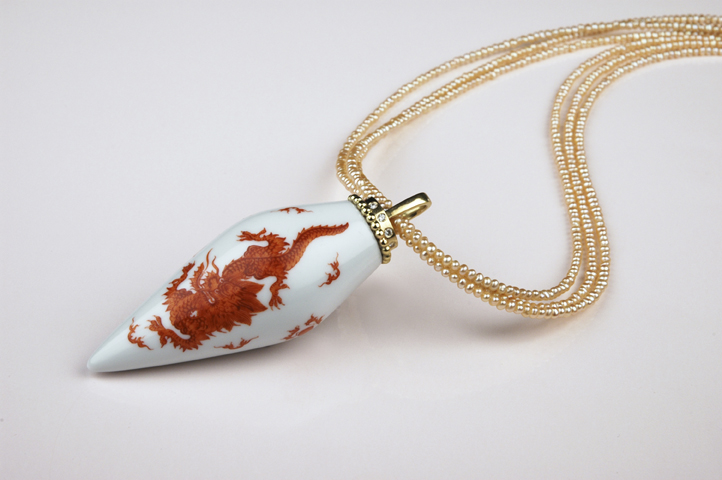
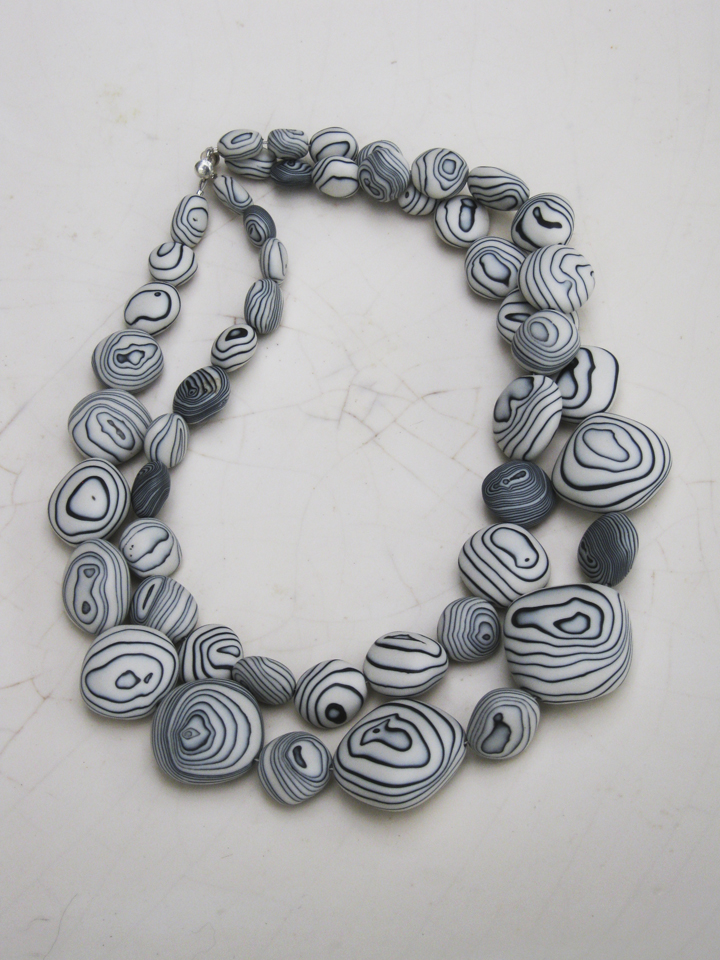
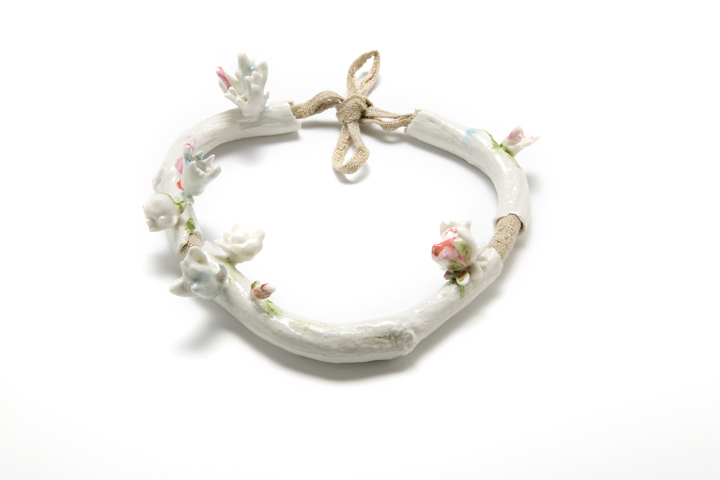
Ceramics and Clay All Grown Up As Jewelry Medium

Posted by learntobead on July 28, 2011

Ceramics and Clay All Grown Up As Jewelry Medium

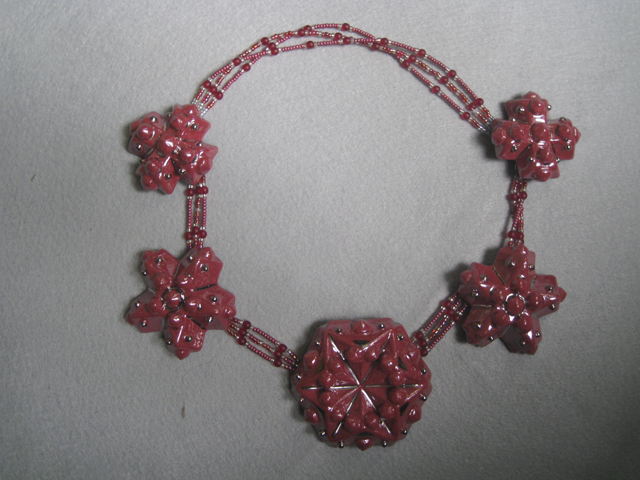
There have been some prominent exhibits and collections around the country highlighting the work of ceramics artists in jewelry.   Some of it is high-fired clay, some raku, some polymer clay and some metal clay.      It’s always very exciting to see how artists can achieve good jewelry design goals with new materials or new applications of materials.

Wearable Ceramics

One of the most prominent exhibits was called Wearable-Ceramics, at  Pewabic Pottery, in Detroit, Michigan.

From their promotional materials:

Wearable Ceramics: Jewelry from International Artists is a collaboration between Linda Ross Contemporary: Art + Projects and Tara Robinson, Curator of Ceramics, Pewabic Pottery. It brings together some of the finest established and emerging artists who are staking out new territories of design, transforming clay into jewelry often combined with found objects and other non-traditional materials. The show features a collection of intriguing and innovative brooches, necklaces, earrings and rings which demonstrate the bridge between ceramics and functional objects for the body; form and material. The tactile nature of ceramics creates a particularly visual language when translated into functional objects to wear – clay is fragile, yet direct contact with the body provides a personal resting place that is warm, protective and very intimate.

Sixteen established and emerging artists representing six countries are participating in the exhibition. The new generation of Dutch designers will be well represented in the show. True to their country’s reputation for producing outstanding craftsmen, they bring a unique international overview of avant-garde jewelry design to the mix. Likewise, artists from the U.S., Spain, Taiwan, Germany and Australia are all masters at technique and highly innovative makers who are staking out new territories of experimentation.

Some works of artists featured:

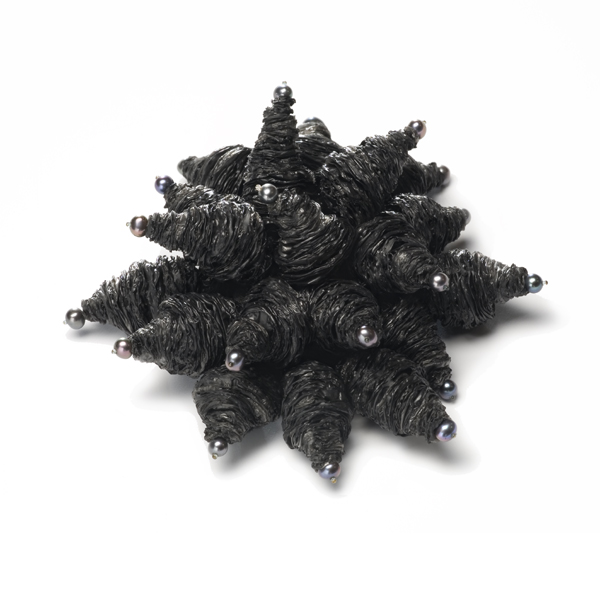
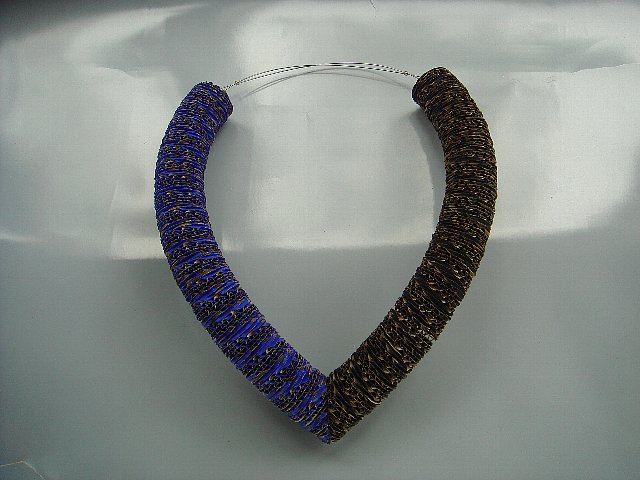
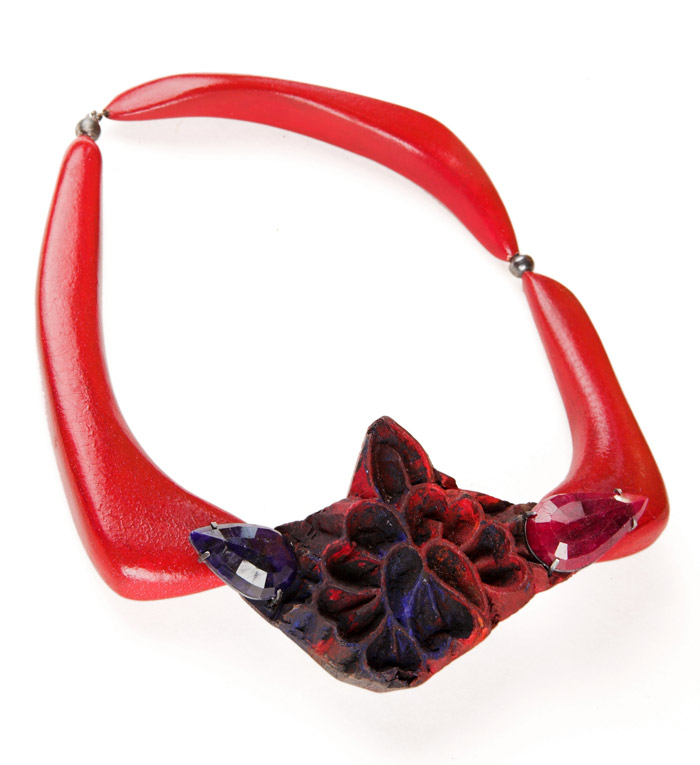
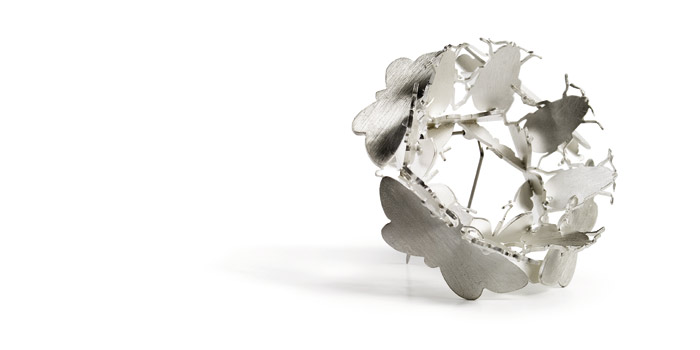
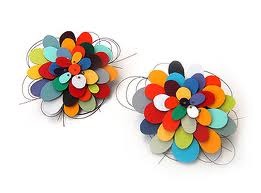
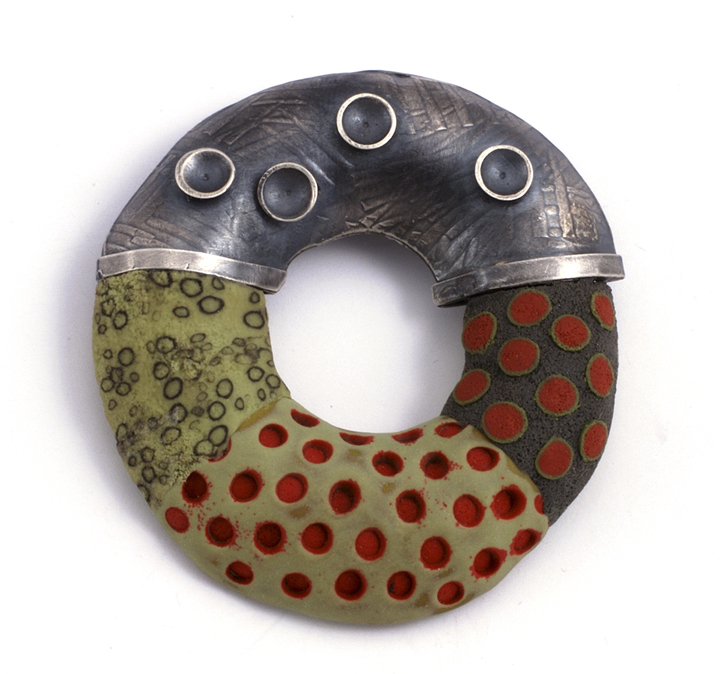
Rian de Jong. eft to right: Porcelain Necklace: gold luster, copper, tombac | Brooch: bone china, copper, garnets | Brooch: bone china, copper | Brooch: bone china, copper

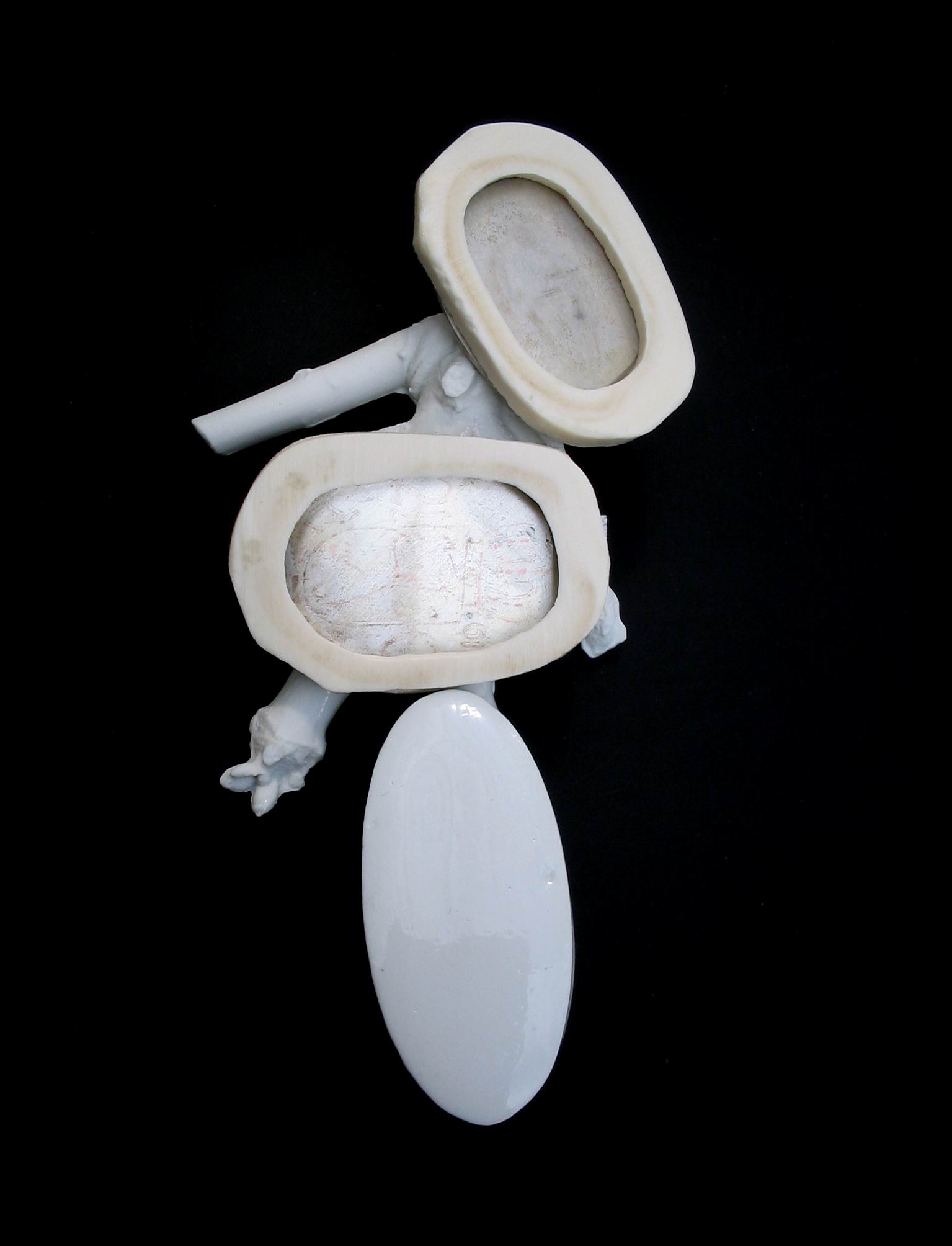
Iris Eichenberg. Brooch: porcelain, coin and bone

Maria Hees. Necklace: foam, porcelain, rubber

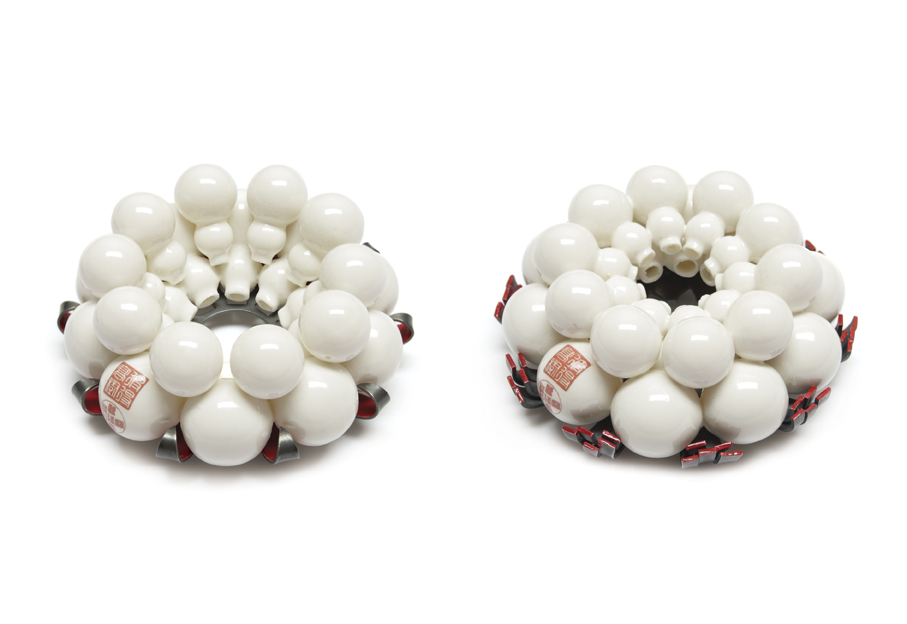
Peter Hoogeboom. “Shaoxing Peony”, Brooch: porcelain, silver, lacquer, nylon, steel

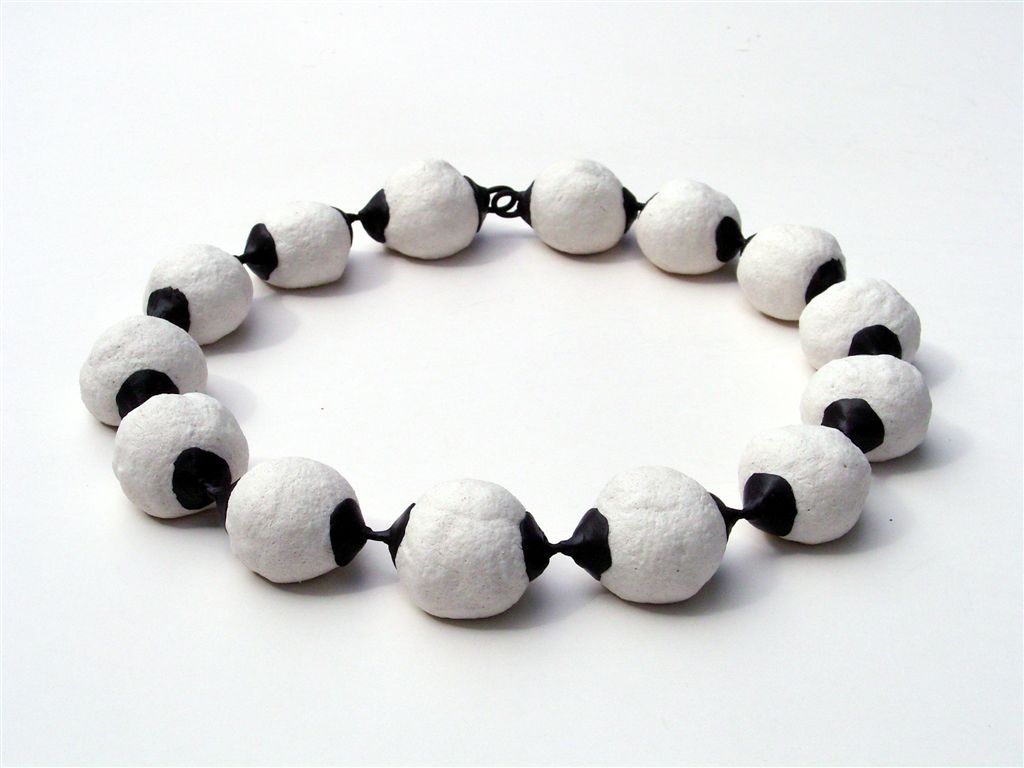
Jet Mous. Necklace: porcelain w/luster and patina

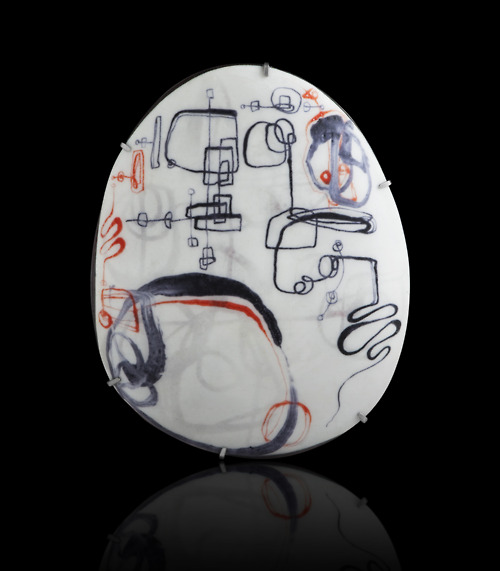
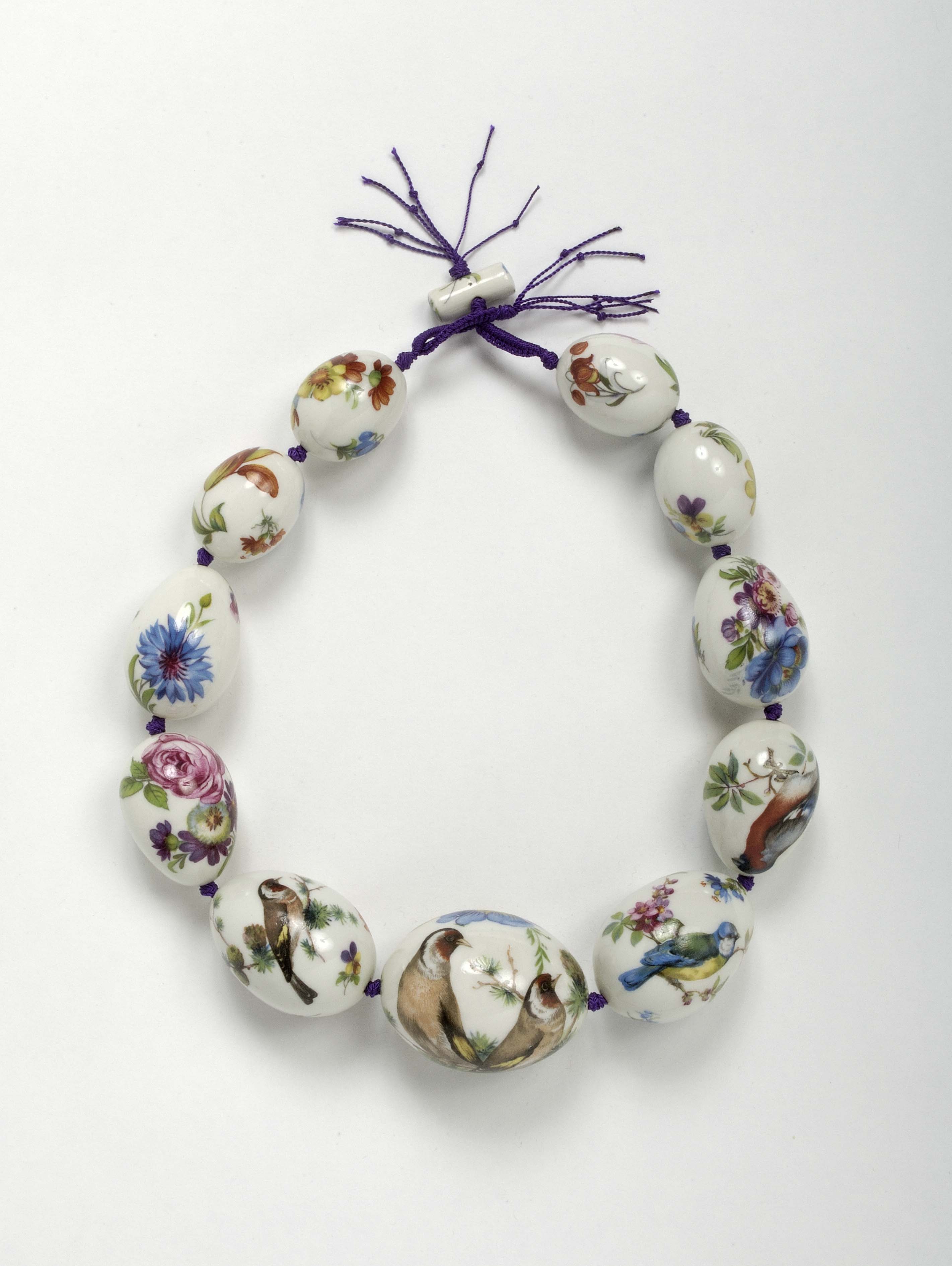
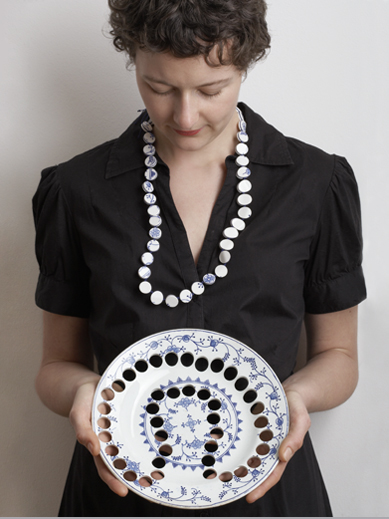
Pauline Wietz. Limonges Eggs | Materials: Porcelain, ceramic transfers | photo credit: Ron Zijlstra

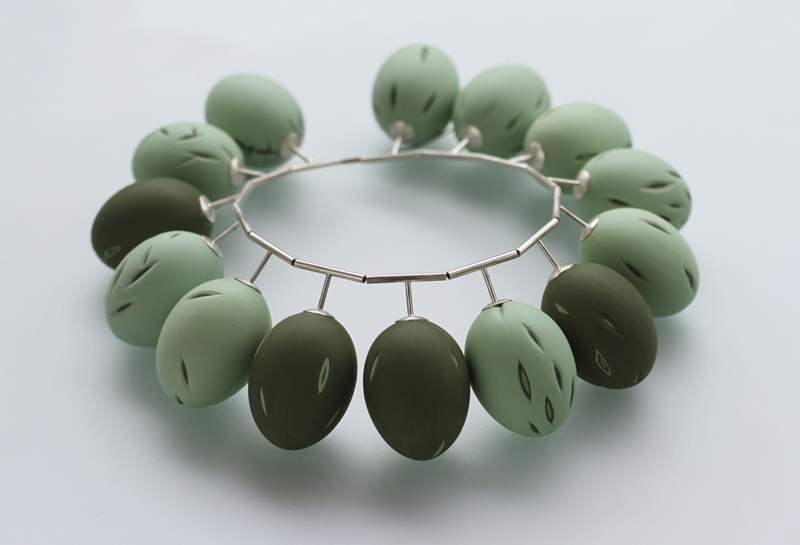
Shu-lin Wu. “Mokume Olive”, Necklace: carved porcelain, steel wire and silver

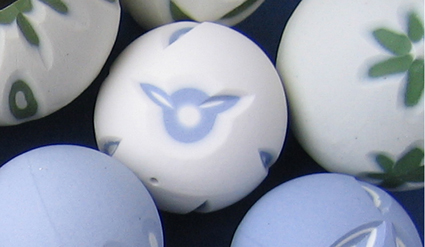
Shu-lin Wu. Mokume Game series. By hollowing out motifs in the colored porcelain, I achieved a layered polychromatic effect.

Shu-lin Wu. Earrings

Gaby Wandscher. Necklace: porcelain, pearls

David Eliot. Necklace: Vitreous porcelain beads, metal oxide pigments, sterling silver clasp

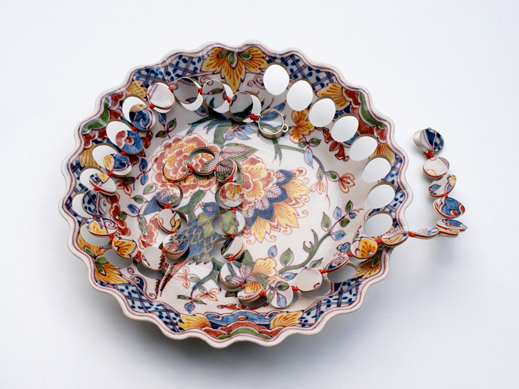
Evert Nijland. “Rococo,” 2010, Necklace: porcelain, hand-woven linen

For & Forlano. Brooch: polymer clay, metal, colored oxides

Featured Artists:
Sebastian Buescher
Pilar Cotter Nunez
Rian de Jong
Iris Eichenberg
David Elliot
Ford & Forlano
Caroline Gore
Maria Hees
Peter Hoogeboom
Jet Mous
Evert Nijland
Karin Seufert
Andrea Wagner
Gaby Wandscher
Pauline Wiertz
Shu-lin Wu

A Bit of Clay On The Skin

Another exhibit, running through september 2011, is this new ceramics jewelry show at the Museum of Arts and Design in New York City.
Some of the works on display here:

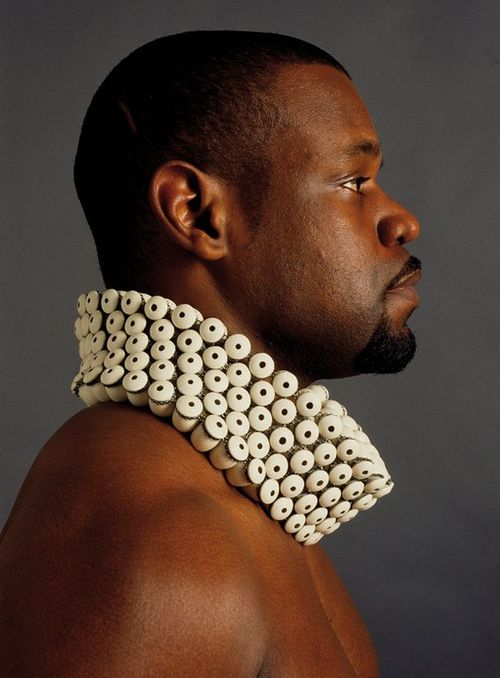
Peter Hoojeboorn. Collar

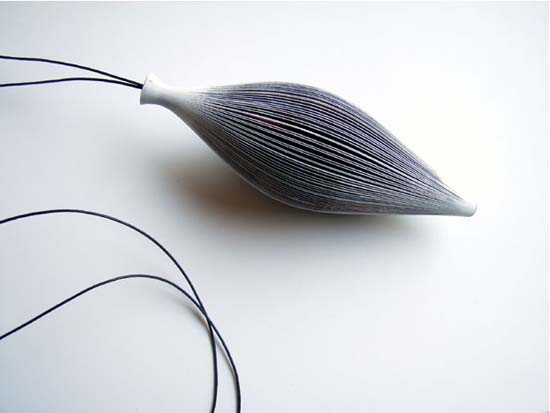
Ceramics always have great eye-appeal.  They are very alluring.   They can have stark colors, or unusual colorations and color blendings.   They can be almost unnervingly smooth, or have many different kinds of textures — all drawing the viewer to want to touch.   Ceramics can be modelled or cast, and are very versatile.
It is fascinating to see the many ways ceramics are used in jewelry.  In some cases, they are used to mimic traditional jewelry materials and forms.  In other cases, they are a material cast against type.
In the thousands of years between Egyptian faience and today, ceramics, for the most part, have not played a major role in jewelry.   People found the material too close to the earth, too humble to use to convey wealth and elegance.    But this is changing.

Gesine Hacklenberg
Gesine Hacklenberg

Gesine Hacklenberg

Marie Pendaries

Marie Pendaries

Wearable Ceramics Gallery

This online  Gallery showcases sculptural jewelry by Canadian artist Erika Ferrarin.   Some of her pieces:

Posted in jewelry design | Tagged: , , , , , , , , , , , , , , , , , , , , , , , , , , , , | Leave a Comment »

To Be, Or Not To Be?

Posted by learntobead on July 22, 2011

New article posted in our How To Bead  A Rogue Elephant column.

TO BE, OR NOT TO BE?

To be a Jewelry Artist, or not to be?

What should I do? Will I succeed? How will I succeed? I’m afraid to change careers. I’m afraid no one will like my stuff. I’m too shy to get stores to sell my stuff. I haven’t learned everything I need to learn. I don’t make necklaces as well as so-and-so. I don’t have enough money to start a business. I don’t know how to start a business. I need to take more classes. There are four more books I want to read and work through before I get started. I don’t have the supplies people want.

Ponderings, ponderings, ponderings. Thought paralzyes action. Your Rogue Elephant keeps charging at you, and you’re too scared to even get out of the way. You’re toe juice. You should have run away. But things happen too fast. Things are too much. Too difficult. Too unknown. Will that Rogue Elephant veer off to the right, or maybe, a bit to the left, or will that Elephant step right over you.

SQUISH!

Do you see yourself in these posed dilemmas? Or are you too hesistant for even this shallow reflection? Do you find yourself in such an existential crisis that you are too blind or too tired or too scared or too angry to sense your Rogue Elephant on your horizon? Or find your Elephant on your beaten path? Or comtemplate him? Or even bead him?

Maybe there’s too much Hamlet in you. The Hamlet Trap. Shakespeare’s Hamlet, for most of the play, cannot make up his mind. Should he / Shouldn’t he? Will he / Won’t he? Could he / Can’t he? ….

Continue reading….

Posted in jewelry design | Leave a Comment »

The Japonisme

Posted by learntobead on June 30, 2011

The Japonisme
Influence of Japan on Western Jewelers, 1867-1917

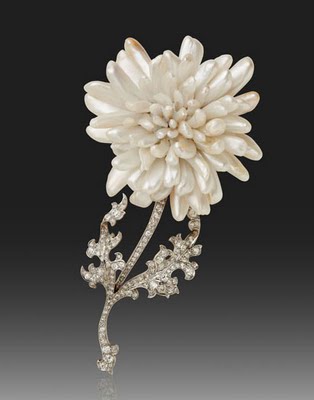
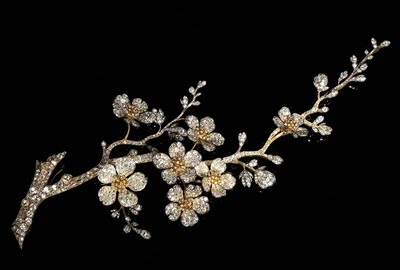
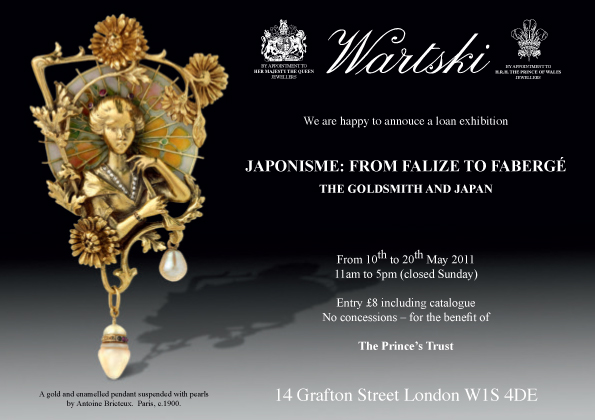
There is a current exhibit at the Wartski Gallery in London entitled “The Japonisme: From Falize to Faberge: The Goldsmith and Japan”.     This exhibit showcases the influence of Japan on western jewelers, such as Tiffany, Falize, Cartier, Boucheron, Faberge.

Here are some of the kinds of things you would see at this exhibit:

Tiffany: Pearl Flower Brooch


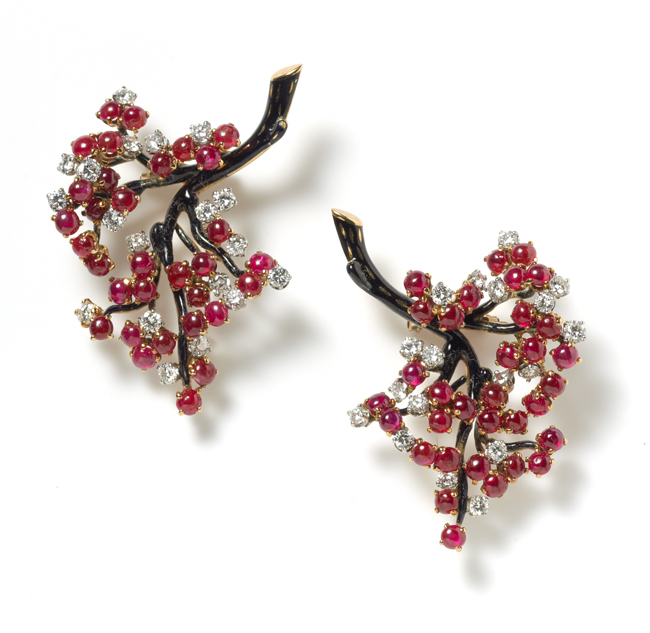
Vever: Cherry Blossom Brooch


Wartski Promo for Exhibit


Boucheron: Brooches


Western jewelry artists took much inspiration from the artistic works of Japan.    Specifically, they:

1) Incorporated cloisonne (enameling) techniques
2) Used fragments to capture the essence,
such as using a flower blossom and branch to capture the essence of a whole tree, and nature itself
3) created more of a sense of delicacy in their pieces
4) Built in a sense of poetry into their designs.


Posted in jewelry collecting, jewelry design | Tagged: , , , , , , , , | Leave a Comment »

HIS and HER Jewelry

Posted by learntobead on June 30, 2011

HIS and HER Jewelry


Today, I decided to travel again on the Google Highway, and explore what came up when I typed in “His and Her Jewelry”.

I’m not a “match-y” kind of of person.     If I were coupled, I don’t think I’d wear matching jewelry with my partner.

I’m not androgynous.   I don’t like to were very feminine jewelry myself, although I make a lot of jewelry for women that have “male” elements and sensibilities.

I’ve never designed jewelry for a couple or two partnered people.    But I’ve had a lot of customers in the shop who came in looking for jewelry they could both wear, and somehow coordinated or matched.

What are my design options?   What should I consider when designing his and her jewelry?

Here are some of the things I found:

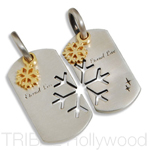
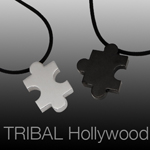
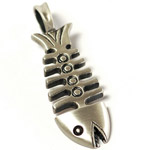
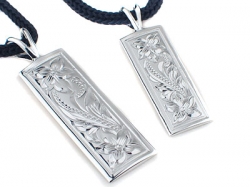
TRIBAL HOLLYWOOD
http://www.tribalhollywood.com/StoreFront.bok

Two piece pendants.

Design elements:
Two separate pieces designed as if they originally were one piece, and then cut in half.   Each piece is to be worn by 1 partner.    Here we have an image cut in half.

Four separate pieces designed with different images, 2 more male or dominant, and 2 more female or recessive.   Each pair is to be worn by 1 partner.

Two separate pieces designed as if they fit together like a puzzle.   Each piece is to be worn by 1 partner.

One pendant to be worn by each partner.   The fish supposedly symbolizes friendship.


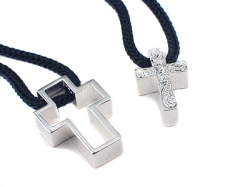
REMIST
http://www.remist.com/his-her-couple-necklace.php 

Two coordinated pendants.
Design Elements:

Paired designs, one smaller than the other.


Paired designs, one cut out from the other, and smaller.


These ideas are cute, and I’m sure very saleable.    But this male dominance/female subordination thing subtly, or not so subtly, going on, makes me a little uncomfortable.    I don’t want my partner to be less than I am.    But I also want her to be cute.    Dilemma.     Aesthetics vs. social conscience.   And again, I’m not into the matchy-matchy thing.


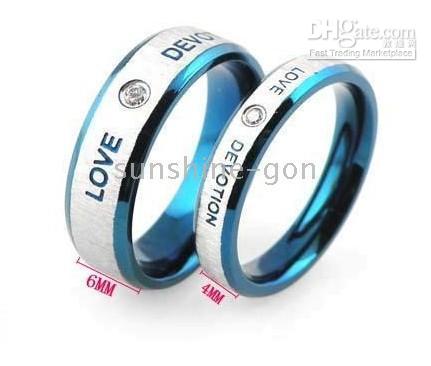
DH Gate.com
http://www.dhgate.com/


Design elements:
Matchy pieces with engraving on each one.


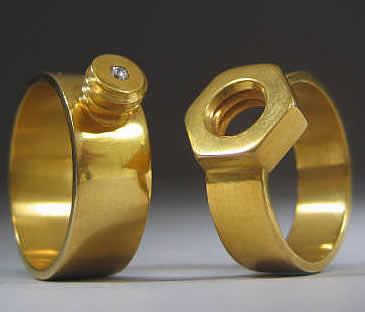
DiamondVues.com
http://www.diamondvues.com/2008/01/nuts_and_bolts_wedding_rings.html

For some reason, I like these rings.   Must be the sexual innuendo.


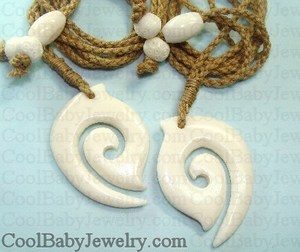
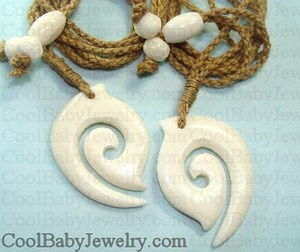
COOLBABYJEWELRY.COM
http://www.coolbabyjewelry.com/servlet/StoreFront


Design element:
Here we have similar pendants, with the design (the spiral) going in opposite directions — clockwise and counterclockwise.


Posted in jewelry design | Tagged: , , | Leave a Comment »