Warren Feld Jewelry

Taking Jewelry Making Beyond Craft

BEADING CALISTHENICS #10: Daisy Stitch Expansion
Posted by learntobead on August 3, 2013

BEADING CALISTHENICS #10: Daisy Stitch Expansion

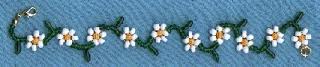
daisychain1

I do a day-long workshop called Beading Calisthenics. There are 10 of these exercises. This is the 10th one.

Beading requires a lot of mind-body coordination. That takes work. It is work.

You have to be able to get from your fingers to the needle to the beads, back along the thread to the needle to the fingers, hands, arms, eyes, mind. And then again. And again. Over and over, one more time. You need to get into a rhythm. All these working parts need to be working. No time for cramping. No time to get tired. No time to lose concentration.
daisychain2
A rhythm. Needle, pick up bead, pull down along thread, check the tension, pick up a bead, pull down along thread, check the tension, pick up a bead….

I noticed that different instructors had various techniques and strategies for maintaining this rhythm. Yes, music was involved sometimes. Othertimes simple meditation or creative reading and discourse. Some people had some stretching exercises that they did. Others tested themselves before proceeding with their big project. Still others did small things to reconfirm their learning.

I distilled what I saw others do effectively into 10 fun yet challenging beading calisthenics.

BEADING CALISTHENICS #10: Daisy Stitch Expansion

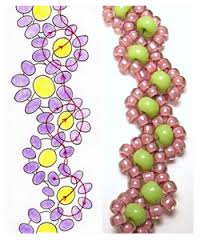
The challenge here is to see how many variations you can construct using the simple daisy chain stitch.

This is a very simple stitch. Try it out. Experiment. And share your results with the group.

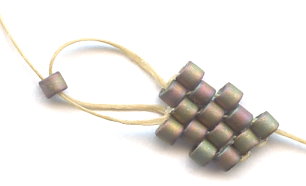
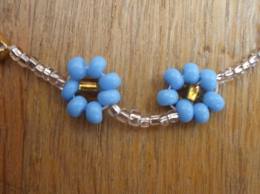
Simplest daisy chain: A stem and a flower with a center bead, then a stem and flower w/center, and so forth.

Start with a line of 5 beads.

Add 5 more beads to your thread. Make the 5th bead a different color. This is your “flower set”. The 5th bead is your center point.

Make a loop by going back through the first of these 5 beads in the set.

Add two more beads to the flower set, and bring the needle through 4th bead in that original set of 5.

So the daisy pattern goes: BEAD 1 to 2 to 3 to 4 to 5 (flower center point bead marked by X) back to 1 to 6 to 7 back to 4 and out.

Pull tight.

Add another line of 5 beads. Continue.

Try the daisy chain above without the stem, so that each flower set is interconnected by one bead — # 4 (which becomes #1 in the next flower). Make your 5th bead a different color.

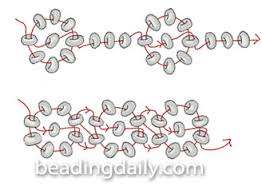
Next, look at the modified daisy chain pattern below. Try another interconnected daisy pattern, where we would connect each subsequent flower by two beads, instead of one. Here we would make the first daisy’s 3 and 4 become the next daisy’s 1 and 6.
daisychaina

This would go: 1 to 2 to 3 to 4 to 5 (flower center) to 1 to 6 to 7 to 4 up through 3 and out. Then 3 becomes 1 in the next daisy link. The pattern continues in the second link as 1 to 2 to 3 to 4 to 5 (flower center) to 1 to 6 to 7 to 4 up through 3 and out. Then 3 becomes 1 again.

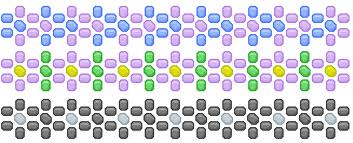
Try the same pattern, this time making the 2nd, 5th and 7th bead the same color, but different than the others.

Try again, making the 1st, 5th and 4th beads the same color, but different than the others.

Try again with any of the patterns, this time using a different size/shape/style of bead for the 5th one.
daisychain4

In Horace Goodhue’s Native American Beadwork book, he details many, many variations, including several that do not result in “flowers”, but rather patterns of lines.
daisychain3

The daisy chain is indicative of a “traditional” design. What kinds of things can you do to make the daisy chain have a more “contemporary” feel? Such as newer metallic colors? Or somehow increasing the dimensionality of each flower so it doesn’t feel so flat? Or creating a color pattern with beads 1 thru 7, so that the pattern is very op-art or contemporary graphic in feel?
Posted in bead weaving | Tagged: , , | Leave a Comment »

MAKING THE ORDINARY NOTEWORTHY

Posted by learntobead on July 26, 2013

MAKING THE ORDINARY NOTEWORTHY

makeordinarynoteworthy1

I want to continue the discussion about Jewelry Design Principles of Composition with the principle I call “INTEREST”.

“Interest” means the degree to which the artist makes the ordinary…noteworthy.

Better designed and more satisfying jewelry has more Interest.

The WHOLE will be GREATER THAN the SUM OF THE PARTS.

makeordinarynoteworthy

Towards this end, the jewelry artist might do something of INTEREST when
– selecting materials or a mix of materials
– selecting color combinations
– varying the sizes of things
– pushing the envelope on interrelating lines, curves and planes
– playing with the rhythm
– using a focal point, or using it in a clever way

makeordinarynoteworthy3

THE QUESTIONS FOR YOU….

Among the pieces you have made, can you think of examples you can share with the group, in which you made the ordinary…noteworthy?

Can you think of examples, and share with the group, times where trying to make the ordinary…noteworthy did not work out well? Why do you think that was?

In this same vein, can jewelry artists often try too hard to make the ordinary…noteworthy?

Or not try hard enough? Have you visited stores – boutiques, department stores, galleries – in which everything seems too plain, uninteresting, boring? Too much like blue jewelry for a blue dress, without any distinction?

What kinds of things can teachers do to encourage students to make the ordinary…noteworthy?

makeordinarynoteworthy4

One example of the successful application of this principle…

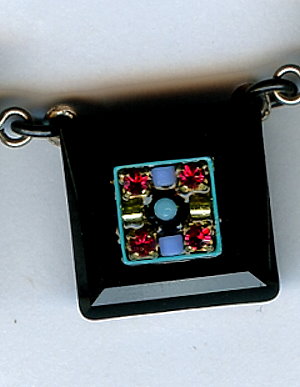
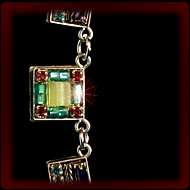
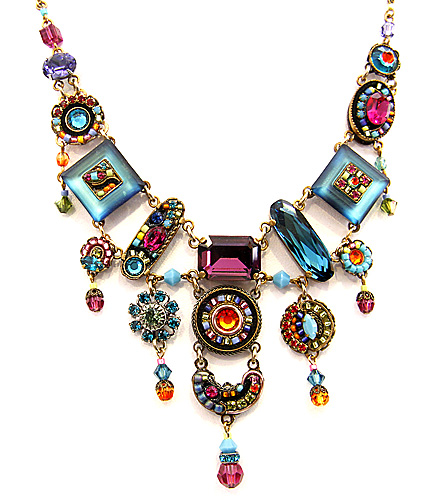
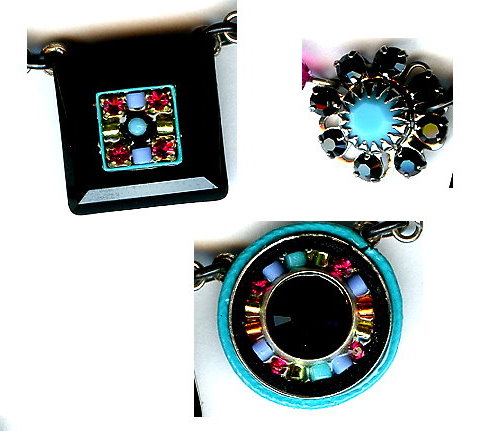
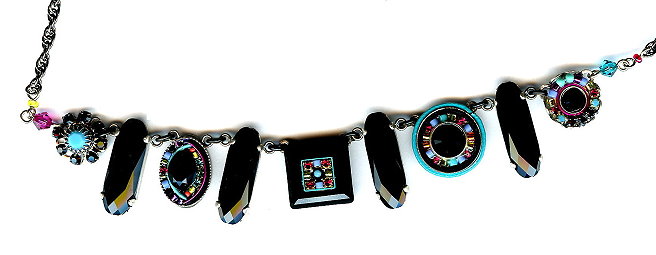
There’s a company called Firefly, and I have always been intrigued by their jewelry. It is made up of mosaic components they fashion themselves from things you might use every day. I’ve included some pictures of their pieces with this post.

makeordinarynoteworthy5

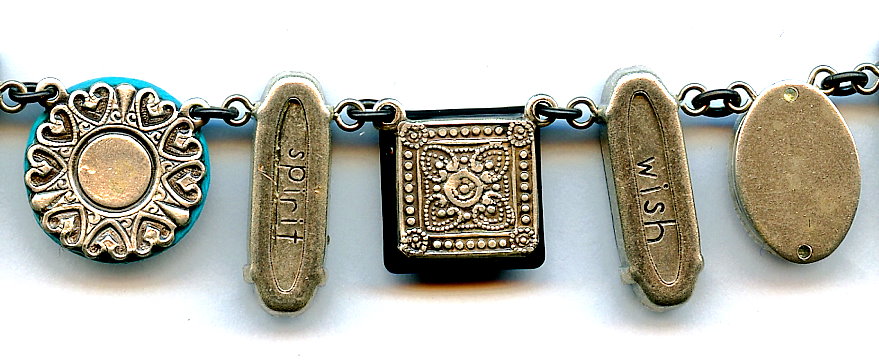
Their creativity is infinite. In one component, they take a Swarovski square donut and glue a back on it, typically a piece of metal which has been stamped or otherwise decorated, and has two holes or two rings near the top corners. In the center of the donut, they might inlay some seed beads, some crystal beads, some colorful metal shards.

In another piece, they do the same thing with a Swarovski ring donut.

On the back of some bezel settings for drops they etch in words, like Spirit or Hope.

They have beautiful and often unexpected combinations of colors in their pieces.

Often a simple bead drop has that extra, “interesting” touch; it is not only a bead on a head pin, with a loop on one end. This bead would be set off by two small 15/0 seed beads, often of a contrasting color and finish.

makeordinarynoteworthy6

Their website is: http://www.fireflyjewelrydesigns.net/

You can read up on all the principles of composition on this webpage:
http://www.landofodds.com/store/goodjewelrydesign.htm

Posted in beads, jewelry design | Tagged: , , , , , | Leave a Comment »

MANAGING DESIGN AT THE BOUNDARY BETWEEN JEWELRY AND PERSON

Posted by learntobead on July 18, 2013

MANAGING DESIGN
AT THE BOUNDARY BETWEEN
JEWELRY AND PERSON

abw1som6-bw-moneyshot1-hires-full

Jewelry is art, but only art as it is worn.

That’s a powerful idea, but we somewhat ignore it, when thinking about making jewelry.    We like to follow steps.  We like to make beautiful things.   But too often, we avoid having to think about the difficult choices and tradeoffs we need to make, when searching for that balance among aesthetics, functionality, context, materials and technique.

I am going to get on my soap box here.

Good jewelry design must answer questions and teach practitioners about managing the processes of selecting materials, implementing techniques, and constructing the piece from one end to the other.

We tend to teach students to very mechanically follow a series of steps.

What we should be doing, instead, at least from the Design Perspective which is so influential in my approach for creating jewelry, is teach students how to make choices when managing at the boundary between jewelry and person.

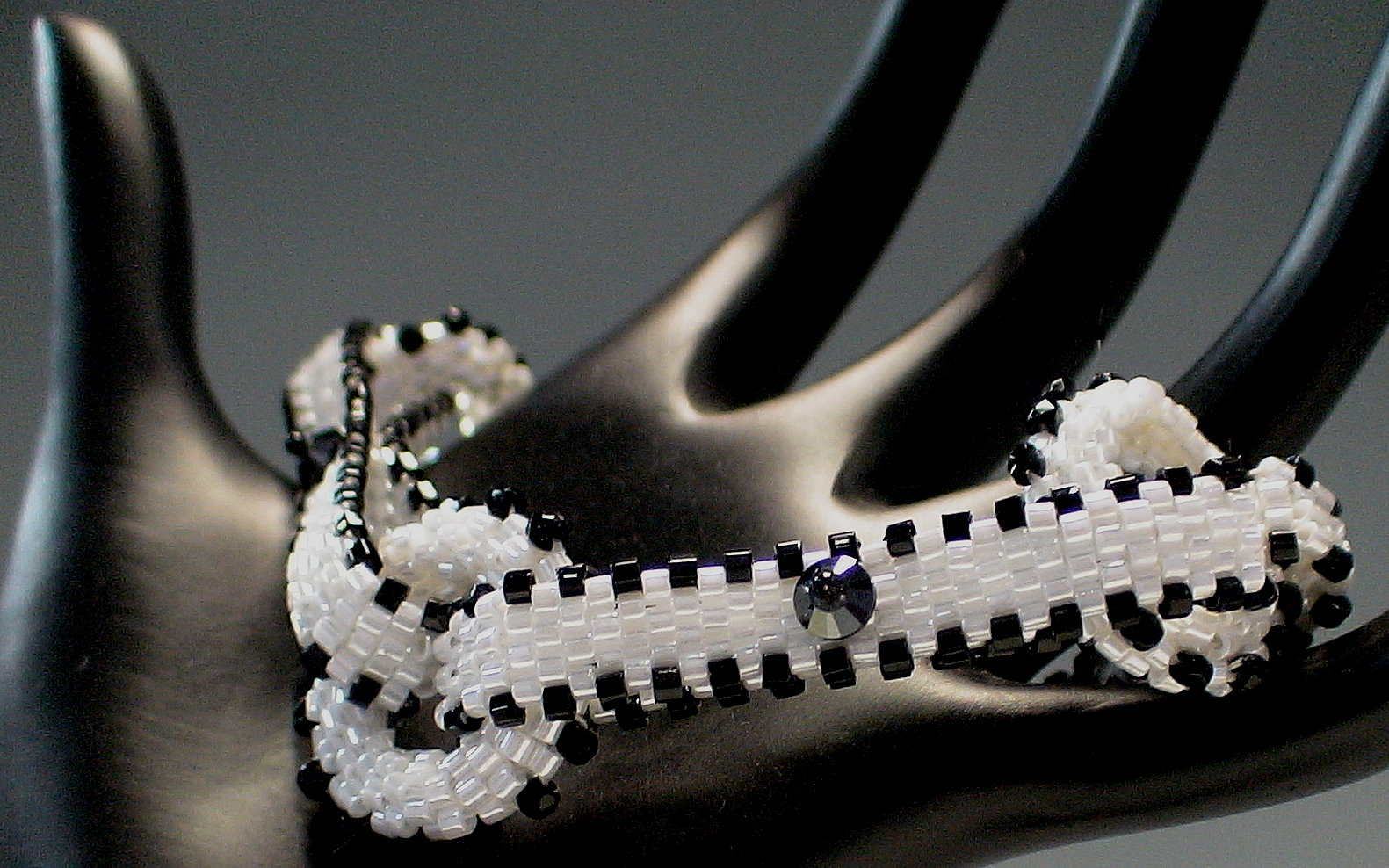
I recently put together a video tutorial for a brick-stitched project I call Tuxedo Park Bangle Bracelet, where I tried to write and present the instructions, from this Design Perspective.     I first discuss the jewelry design process as a series of choices and tradeoffs.   And only then do I list the steps the student needs to follow for completing the project.   But each step is presented as the result of a particular analytical or problem-solving process, something to the effect, “I confronted this situation, I weighed these options, and, for these reasons, I decided to execute the next step this way….”.

abw1som6-gl-moneyshot5

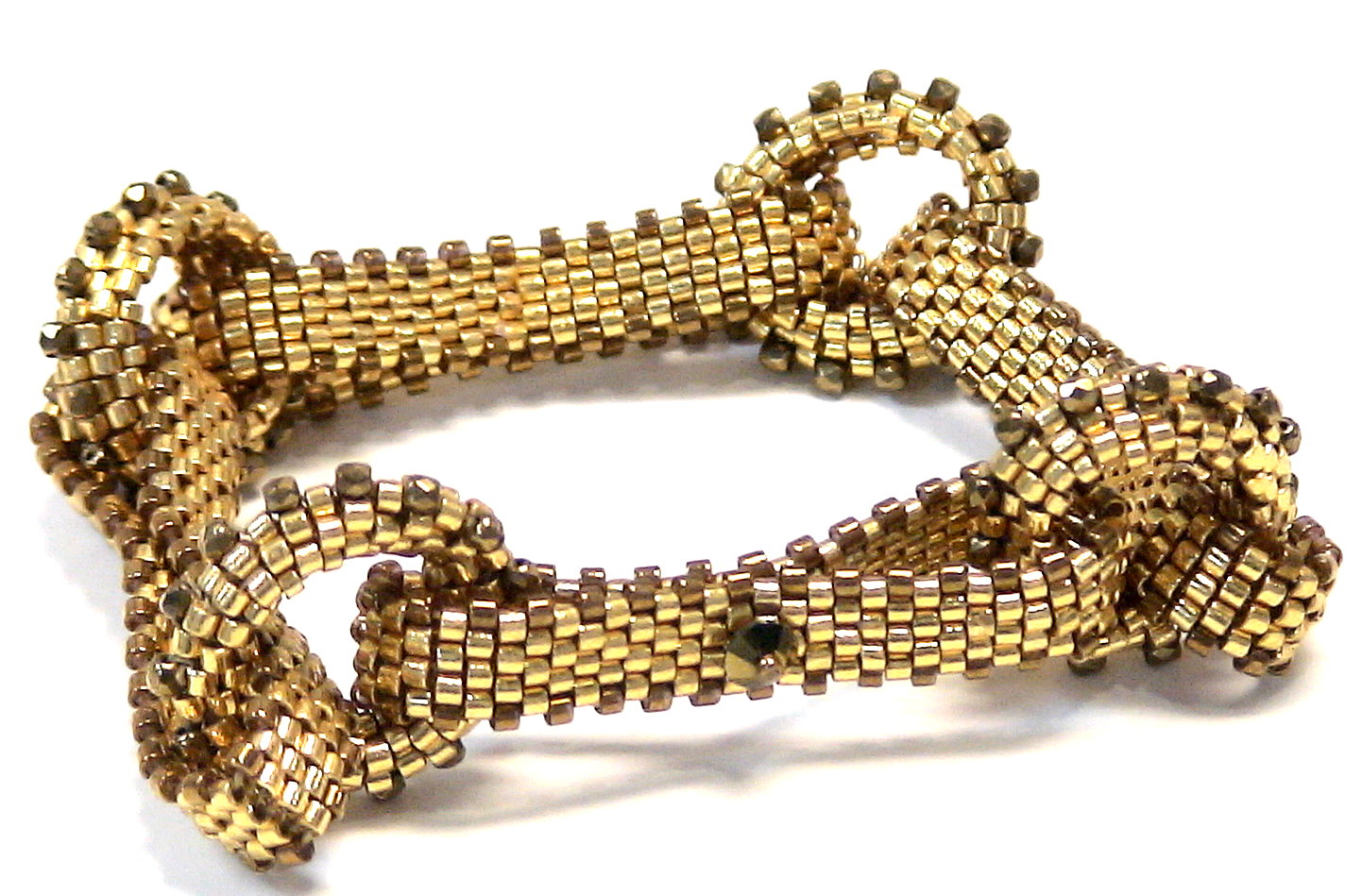
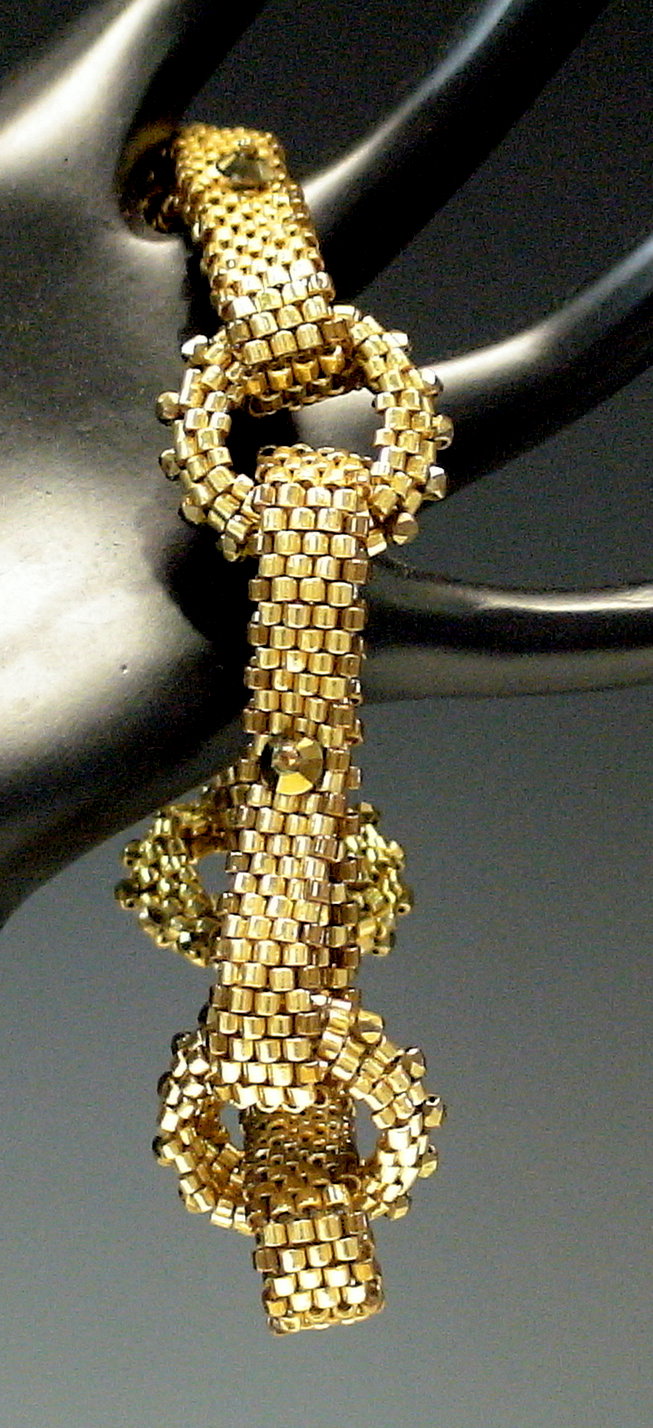
This bangle bracelet has to stretch wide to get over the hand, and then shrink back to its original dimensions, all the while keeping its shape and integrity.    It will have to do this many times.   That means, the beads within the piece, as well as each bead woven component of the piece, will need to be able to bend in more than one direction, yet remain somewhat stiff enough for maintaining each component’s shape as well as the bangle’s aesthetic and functionality over all.   If we redefine the brick stitch architecturally, we can see its versatility and flexibility, making it is the perfect stitch to achieve these goals.

abw1som6-supportsystem3

You can find this tutorial at CraftArtEdu.com, or
http://craftartedu.com/warren-feld-tuxedo-park-bangle-bracelet

The preview is free, and introduces some of my ideas.


Discussion Questions for you…

1.        Re-look at one of your favorite pieces.   Review the questions posed in the article below.   Now, describe your piece for the group, in design and architectural terms, using the questions posed below to guide your thoughts.    And post your description for the group along with an image of your piece.

2.       Think about your favorite technique – whether bead stringing, bead weaving or wire working or some other jewelry-making interest area.  How does this technique help your pieces, which are made using it, keep their shape?  How does the technique help your pieces withstand the forces that come from wearing and movement? 


From an article I’m writing about the architectural approach to defining bead weaving, bead stringing and wire working….

In addition to teaching students “steps”, we need to teach students about making good design choices.   The “steps” should be presented as the results of these choices.  The thinking and reasoning processes should be the focus.   How we arrived at these choices, and how we have made tradeoffs, should be at the forefront of what we teach.   The steps should not be presented as fait accompli.   But rather, the steps should be overtly understood as the logical outcomes from our thought and design process.

This is the architectural manifesto and challenge for re-thinking and re-defining jewelry design.   We need to teach students to think this way and answer these 10 core questions at the heart of this manifesto:


(1) Why or how does a particular bead stringing technique, wire work technique or bead weaving stitch suggest a particular form of representation?


(2) How does my work relate to the complex factors at play in design, including philosophy, science, religion, ecology, politics, cyberspace, gender, literature, aesthetics, economics, history, culture, and technology?


(3) What kinds of things characterize contemporary design, and its aesthetics and functionality?


(4) What about the materials you are using helps you transform them into a pleasing, satisfying piece?


(5) What about the particular techniques you are using helps you transform materials into a pleasing, satisfying piece?


(6) What should the design process look like?   What are the design elements which need to be managed?   What are the rules for their manipulation?


(7) How do you best define, create and use components, forms and structures?


(8) What is the structure (or, you might visualize the anatomy) of your piece of jewelry, and how is that structure construed and constructed?    What specifically about the structures or building blocks of your piece contributes to a successful and satisfying design?


(9) How does your jewelry, given its structure and the techniques you used to assemble it, withstand forces?    What, in the designing, the selecting of materials or techniques, or the strategizing about the overall construction help you better manage things like movement, drape, flexibility, strength, comfort, and interplay of light, shadow and color?


(10) How do you best manage your visual presentation in terms of color, light, shadow, dimensionality, pattern, texture, and perspective?


Posted in bead weaving, beadwork, jewelry design, jewelry making | Tagged: , , , | Leave a Comment »

TUXEDO PARK BANGLE BRACELET

Posted by learntobead on July 13, 2013

TUXEDO PARK BANGLE BRACELET
New Video Tutorial at CraftArtEdu.com

Purchase kits at:
Land Of Odds online

abw1som6-bw-moneyshot1-hires-full

IN THIS CLASS, LEARN HOW MUCH SHAPING, INTEREST, AND DIMENSIONALITY YOU CAN ACHIEVE WITH THE SIMPLE, BASIC BRICK STITCH. BY CREATING MY TUXEDO PARK BANGLE BRACELET.    THE BRICK STITCH IS EASY TO LEARN.  FUN TO DO.  AND OFFERS MANY DESIGN POSSIBILITIES FOR THE BEAD WEAVING ARTIST.


BRICK STITCH IS OFTEN OVER-SHADOWED BY ITS VERY CLOSE, BUT MORE POPULAR COUSIN – THE PEYOTE STITCH.  I OFTEN THINK THAT ONE OF THE REASONS FOR THIS, IS THAT INTRODUCTORY BRICK STITCH PROJECTS LACK SOME OF THAT “WOW” FACTOR.  THE BASIC BRICK STITCH TYPICALLY IS TAUGHT BY HAVING THE STUDENT MAKE A SIMPLE PYRAMID, PERHAPS SOME LONG DANGLING FRINGE IS WORKED OFF THE BASE OF THE PYRAMID TO MAKE NATIVE AMERICAN EARRINGS. OR, PERHAPS LINKING SEVERAL PYRAMIDS TOGETHER TO MAKE A BRACELET. WHEN THE INTRODUCTORY PROJECT IS “BORING”, STUDENTS LOSE INTEREST IN THE STITCH.


HOWEVER, TOO OFTEN IGNORED IN THESE INTRODUCTORY BRICK STITCH PROJECTS ARE THE POWERFUL, STRUCTURAL PROPERTIES OF THE STITCH ITSELF.
THE STITCH IS VERY VERSATILE.

THE BRICK STITCH CAN BE USED TO CREATE A BROAD CANVAS, AND GIVE THIS CANVAS A GREAT DEAL OF FLEXIBILITY, WHERE MANY STITCHES WOULD LEAVE IT TOO STIFF.

AT THE SAME TIME, THE BRICK STITCH CAN ALLOW THE CANVAS  TO HOLD AND MAINTAIN ITS SHAPE, WHERE MANY OTHER STITCHES MIGHT GET FLOPPY AND TOO LOOSE.

BRICK STITCH CAN ALSO EASILY GIVE THIS CANVAS VERY VARIED SHAPES, EDGES AND OPEN SPACES, AND ALLOW A GREAT DEAL OF CONTROL OF THREAD PATH AND BEAD PLACEMENT WHERE OTHER STITCHES COULD NOT.

THE TUXEDO PARK BANGLE BRACELET IS AN INTRODUCTORY PROJECT THAT INTRODUCES THE STITCH AND SEVERAL VARIATIONS TO PEAK YOUR INTEREST.
AND TURN YOU INTO A BRICK STITCH FAN.


THIS VIDEO TUTORIAL IS PRESENTED FROM WHAT IS CALLED THE DESIGN PERSPECTIVE. THE DESIGN PERSPECTIVE FOCUSES ON HOW THE JEWELRY DESIGNER AND BEAD WORKER MAKE CHOICES

ABOUT WHAT TO DO, AND NOT TO DO,

ABOUT WHAT TO INCLUDE, AND NOT INCLUDE,

AND ABOUT HOW TO BALANCE OFF CONFLICTING DEMANDS

BETWEEN BEAUTY AND FUNCTIONALITY.

abw1som6-gl-moneyshot7

IN THIS VIDEO TUTORIAL, I FIRST GUIDE YOU THROUGH THE PROJECT PLANNING PROCESS. THAT IS, I DISCUSS THE TYPES OF CHOICES I MADE, WHEN CREATING THIS PIECE. THESE CHOICES INCLUDE THINGS ABOUT TECHNIQUE. THEY INCLUDE THINGS ABOUT COLOR AND MATERIALS. THEY INCLUDE THINGS ABOUT FORM, STRUCTURE AND FUNCTION.

THEN, I GO OVER, IN DETAIL, STEP-BY-STEP, EASY-TO-FOLLOW INSTRUCTIONS FOR COMPLETING THE PROJECT.

Posted in bead weaving, beadwork | Tagged: | Leave a Comment »

HOW DO YOU STAY FOCUSED?

Posted by learntobead on July 13, 2013


HOW DO YOU STAY FOCUSED?

It is easy to get distracted.   Dagmar sent me an email with a link to a picture of a bead woven piece she liked.    At first, I reacted with some resistance, to click the link.   I needed to finish up several projects, and didn’t want to cloud my thinking, or add one more image or one more pattern I liked, or color I liked, or technique I liked, to that mix of ideas and tasks and things swirling around and around in my head.

earring1

But, you guessed it, I clicked.   The piece was beautiful, intriguing, and l discovered many more of this artist’s work on display online.    I spent time with each piece.   I read the artist’s statement because I wanted to learn more about her inspiration.    She had many embedded links in her statement.  Which led me to many other websites.   One concept was discussed, and I did a Google search on that.     And then an images.google.com search on it as well.    Which somehow got me over to Amazon, then Wikipedia, and over to some other bead artist’s website.


Three hours later – how does time pass away so quickly?    A simple click three hours earlier had led me through the looking glass and down the rabbit hole, through, what must have looked like to others, some torturous pathways, meeting all kinds of strangers.

I am always working on several projects at a time.     So in my head, are several sets of instructions, several color palettes, several understandings of inspiration.    And I want to keep some focus.   And I want to finish all of these projects.    And I want to be able to conceptualize and invent my next projects, which involves lots of trial and error experimentation.    I want to have the time and clear head space for all this.

romari1-hires-full-moneyshot


And yet, there are so many easily accessible distractions.

I know I’m not alone, so the question I put forward to you:

How do you stay focused?


And perhaps, I should phrase the question differently:   Can you stay focused?

Or, in the face of so many great examples of jewelry and bead art, so many evolving changes in styles and fashions, the introduction of many new colors and new bead shapes and new techniques – in the face of so much wonderfully inspiring, so many things to learn and educate yourself about – how do you keep in touch with your inner designer self, and find the time and energy for self-expression?


Posted in beadwork, jewelry design, jewelry making | Tagged: , , , , | 2 Comments »

HOW DO YOU MAKE “ASYMMETRY” WORK FOR YOU?

Posted by learntobead on July 7, 2013

HOW DO YOU MAKE “ASYMMETRY” WORK FOR YOU?

28coins2

Another Principle of Jewelry Design Composition is called “PLANAR RELATIONSHIPS”.     This primarily has to do with the placement of lines and planar surfaces within your piece, and how satisfying all this placement is, so that the lines and/or planes interrelate.


It turns out it is relatively easy to have lines and planes relate symmetrically.   That is, it is easy to get people to be more satisfied with your pieces, if you makes things line up evenly to the right and to the left of your center point or line.


Conversely, it is not so easy when you try to create something asymmetrical.     In fact, based on the art theory and cognitive psychology theory underlying this principle of planar relationships, I would say that, if your piece is asymmetrical, there must be something else on the person wearing the piece to create the illusion of symmetry.   This might be the way the hair is styled, the pattern on a dress, the neckline silhouette of the dress, the shape and positioning of the person’s ears, and the like.


So, for those of you who have tried and succeeded, or tried and failed, to create asymmetrical pieces, how would you describe your design process?    And people’s reactions to your piece?   Or how it looked on the wearer?     If successful, what kinds of things did you do in the design process, that worked in your favor?


Off-centered piece or someone wearing just one earring, can be disorienting and disturbing.   How do you feel about asymmetrical pieces, or people wearing only one earring?


— Warren


28coinslarge


Excerpts from some of my writings about this principle of planar relationships…
(also read: Principles of Good Jewelry Design Composition online at http://www.landofodds.com/store/goodjewelrydesign.htm


PLANAR RELATIONSHIPS


This is the degree the piece is not disorienting to the viewer, or particularly confusing in terms of what is up and what is down.


People always need to orient themselves to their surroundings, so that they know what is up and what is down. They usually do this by recognizing the horizontal planes of the floor and the ceiling of a room (ground and sky outside), and the vertical planes of the walls of a room (buildings, trees and the like outside).


Jewelry must assist, or at least not get in the way of, this natural orienting process. It accomplishes this in how its “lines” are arranged and organized. If a piece is very 3-dimensional, then how its “planes” are arranged and organized becomes important, as well.


The goal here is to “see” the piece of jewelry, especially when worn, as something that is coherent, organized, controlled, and orienting.


Design elements we might use to achieve a satisfactory planar relationship within our piece:

– a strategic use of lines and planes
— shapes

— boundaries

– -silhouettes

— contours
– symmetry

– or, more difficult to achieve, a satisfying asymmetry

– a planar pattern in how each section of the piece relates to the other sections

– how sections of the piece interlock

– how we “draw and interrelate” parallel lines, perpendicular lines and curved lines within the piece


Example:

How can a person truly pull off wearing only one earring? After all, visually, it pulls the person off to one side, thus violating the basic orienting planar relationships. What about the composition of the earring, allows this to work; what about the composition doesn’t?


Example:

When wearing a necklace, where the clasp is worn on the side, instead of the back, sometimes this works, and sometimes it does not. Again, what about the composition of the necklace, allows this to work; what about the composition doesn’t?


Posted in jewelry design | Tagged: , , , , | Leave a Comment »

WHEN IS ENOUGH ENOUGH?

Posted by learntobead on June 30, 2013


WHEN IS ENOUGH ENOUGH?

Beading and jewelry making can be so much fun, and you have so many choices of so many beautiful pieces to play with, that sometimes, from a design sense, it’s easy to go overboard.

Too many strands. Too many different kinds of beads. Too many colors. Too much embellishment. Too much fringe. Too much repetition of themes and design elements.

There is a tendency too often to over-do.

How do you answer this question for yourself – when is enough enough?

Do you tend to over-do (or under-do) your pieces?

How do you edit? Do you make a piece, and get the judgment of others? Is this based on some kind of intuition?

How do you work with students or friends who have difficulty answering this question?

Let me know what you think.

Warren

Could this be better or worse? or more satisfying or less satisfying? With more strands? If longer? More colors? More involved patterning?

Could this be better or worse? or more satisfying or less satisfying?
With more strands?
If longer?
More colors?
More involved patterning?

From an article I’ve posted online…

I had discussed in an article – 10 Principles of Jewelry Design Composition (http://www.landofodds.com/store/goodjewelrydesign.htm) – what is in effect a type of grammar and vocabulary for good jewelry design. The last principle was called Parsimony. And this one is really difficult to achieve. The jewelry artist who is good at Parsimony has a great deal of control over the design process.

Parsimony means that there should be no nonessential elements.

The designer should achieve the maximal effect with the least effort or excess.

Many jewelry designers, when they like a particular bead, or a particular design, often over-do their pieces. The thinking here is that, if they have a beautiful part, adding many of these parts will make the whole even more beautiful. Often, it results in the finished product that is boring or uninteresting. The finished product loses a type of tension, power and energy.

The artist has made a good point with their choices, but then beats a dead horse to death by trying to make the point over and over again, too many times.

Good Parsimony shows that the designer has a good sense of the relationship of the parts to the whole.

There should be no nonessential elements.

The designer should achieve the maximal effect with the least effort or excess.

There is a tendency of beaders and jewelry makers to over-do:
– over-embellish the surface
– add too much fringe
– repeat themes and design elements too often
– use too many colors

More often than not, people over-do, rather than under-do.

Posted in jewelry design | Tagged: , , , , , | 1 Comment »

COMING OUT AS A JEWELRY ARTIST

Posted by learntobead on June 22, 2013

COMING OUT AS A JEWELRY ARTIST
500-beaded-jewelry-cover
Coming out as a jewelry artist — what does that mean? For those of you who see jewelry making and beading as something more than a hobby — something more defined by art and design — actually calling yourself a jewelry artist or designer, instead of merely alluding to it, is a big step. A very big step.

It’s fraught with fear and dread. It means very visibly presenting yourself with a new public identity. It means preparing your ego to receive some negative comments, perhaps doubt or disbelief, and in some rarer instances, rejection or denial. It means asking others to accept and support you in your new role as Jewelry Artist and Designer.

Please share what this process was all about for you. How you felt. How you managed things.

Continuing with an article I had written….

There is a betwixt and between aspect to this coming out process – a rite of passage. And the unknown time and feelings and situations, between the before and afterwards, is often a span of uncertainty too great for many an artist to transcend. Many who want to be jewelry designers, are somewhat afraid to present themselves as such. These “closet artists” tell their family and friends such things as, “I dabble in this and that, including jewelry-making.” Or, “I consider myself a ‘bank teller slash jewelry artist’” (and you can substitute whatever profession you are in for the words ‘bank teller’). Or, “I’m making some things for fun or gifts, but not selling things.”

There is some hesitation. “I am a jewelry designer.” Can’t quite get the words out. “I am a jewelry designer.” Keep wanting to say “but” or add some qualification, so other people don’t say, with mocking and astonishment, “You’re a what!#@?” “I am a jewelry designer.” You whisper to yourself over and over, but don’t tell anyone else.

When you step out of the closet, however, you show others you want respect. As a jewelry designer. You demand from others an understanding. As a jewelry designer. As an artist. You present yourself as someone with self-esteem and confidence. As a jewelry designer. And as an artist.

So what does it take to manage the transition before and after? What does it take to show that you can confront your passions for designing jewelry, not only privately, but publicly as well?

Posted in jewelry design | Tagged: , , | 1 Comment »

WHAT CAN YOU DO WITH BEADS?

Posted by learntobead on June 22, 2013

WHAT CAN YOU DO WITH BEADS?

beads3

A BEAD is anything that has a hole in it. And you can do a lot of things with things that have holes.

Below is a list we generated here in the shop. Can you think of anything else to add to the list?

Have you done anything out-of-the-ordinary with your beads?

Warren

beads2

You can put these things on string.

You can sew these things onto fabric.

You can weave these things together with threads.

You can knot or braid or knit or crochet these things together.

You can combine and wrap and en-cage these things with metal wires and metal sheets.

You can work these things into projects with clay, polymer clay and metal clay.

You can embellish whatever you can think of – dolls, tapestries, clothes, shoes, scrapbooks, pillows, containers, and vases.

You can use these things in scientific experiments.

You can fuse these things together.

You can incorporate these things into projects involving stained glass, mosaics, or multi-media art.

You can decorate your house and your household things with these things.

You can texture surfaces with these things, using glues, cements or resins.

You can buy these pre-made, or make your own.

beads4

You can do a lot of things with beads. Most people begin by Stringing beads, and graduate to things like Weaving beads, Embellishing with beads on Fiber, Knotting and Braiding with beads, and Wire Working with beads. A few people learn to hand-make Lampwork glass beads, or learn to sculpt with Polymer Clay or Precious Metal Clay, or learn to solder using Silver-Smithing techniques.

And you can feel self-satisfied and secure in the knowledge that, should everything else in the world around you go to pot, we will all be back to bartering with beads.

And you will have them.

So, beads are good.

Posted in beads | Tagged: | Leave a Comment »

ANATOMY OF A NECKLACE: THE YOKE

Posted by learntobead on June 16, 2013


Anatomy of a Necklace: The Yoke

yoke1

A necklace, or any type of jewelry, has a structure and anatomy.   Each part has its own set of purposes, functions and aesthetics.   Understanding each type of structure or physical part is important to the designer.


Let’s focus on one part today – The Yoke.    The Yoke is one section of the Strap which is the part around the back of the neck, including the Clasp Assembly.


To what extent, during your design process, do you divide your necklace into its anatomical parts, in order to have more strategic control over its design?


In an average necklace, how long should the Yoke be?    What proportional length relative to the rest of the strap should this be?


How do you determine the design and placement of beads or connectors along the Yoke, given that most of it would either not be particularly visible, or not often-visible when worn?


The Yoke continues into the section of the Strap called the Frame.    There are always transitional issues here?   Do you have any strategies for managing these transitions?   When your piece moves from Yoke to Frame, do you find yourself doing anything special at this point?

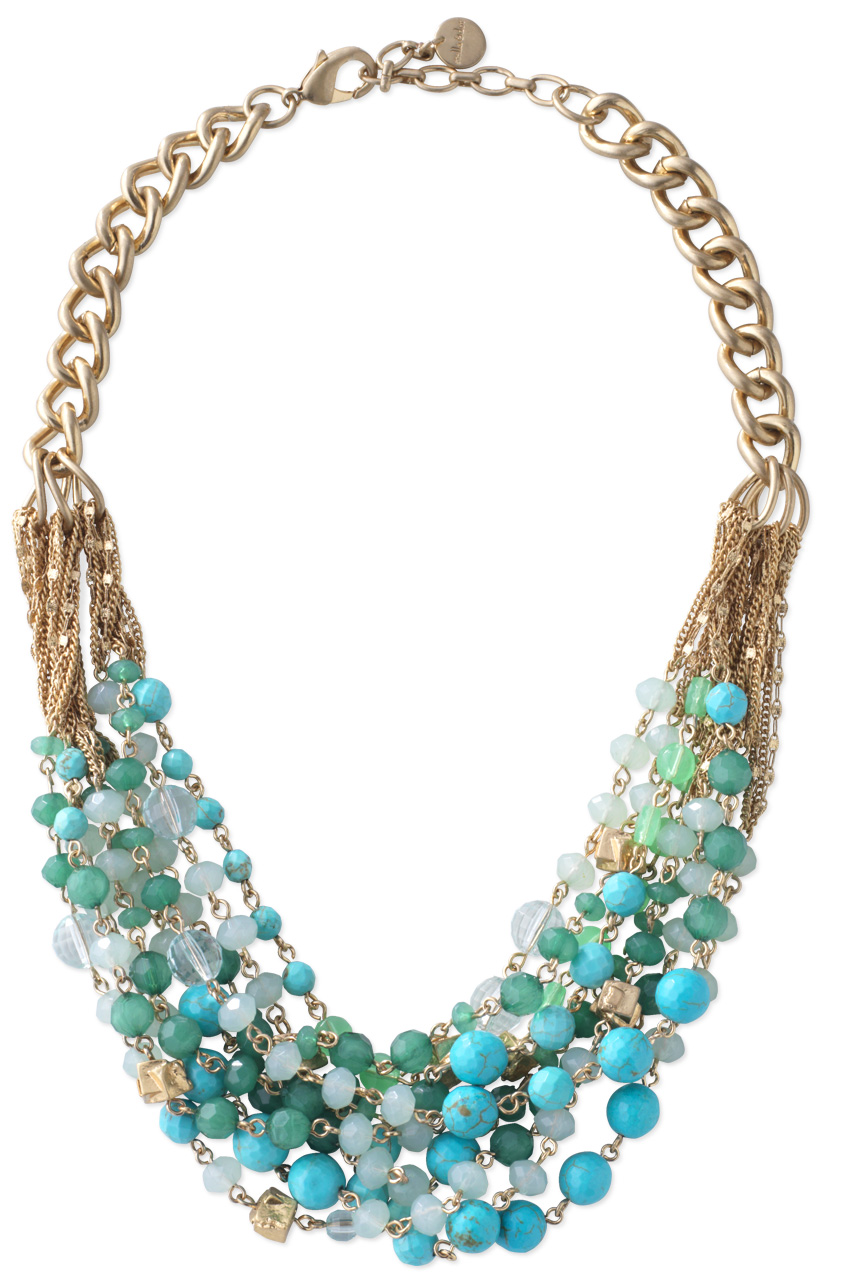
Maldives Necklace at www.stelladot.com

Maldives Necklace
at
http://www.stelladot.com


Do you prefer your Yoke to be visually distinct from the Frame?  Or more organically connected, perhaps not distinguished at all?


Do you use any special visual cues to signal to the viewer that the piece is moving from Yoke to Frame – placement of special connector?  Or change in bead size?  Or change in Color?  Or Pattern?   How do you know where to place these visual cues?


To what extent should the Yoke be integral to the design of the whole piece, or, on the other hand, be supplemental to the whole piece?


Too often, when the designer does not recognize the Yoke as distinct from the Frame – even if the transition is to be very subtle – less-than-satisfying things happen.   Proportions may be off.   The piece may not lay or sit as envisioned.    The strap may have too much embellishment going to high up the strap.    Sometimes the balance between Yoke and Frame is off – too much Yoke and not enough Frame.


So, what do you think?  What do you do?    What things can be done?


To summarize the anatomy of a necklace:


We can envision the Anatomy of the Necklace to include these parts:


Yoke:  Part around the neck.   Typically 6-7”, including the clasp assembly


Clasp Assembly:  Part of the Yoke.   This includes all the pieces it takes, including a clasp, in order to attach your beadwork to your clasp.


Break:  Transition from Yoke to Frame, usually at the collar bone on either side of the neck.


Frame:  The “line” seen on the front of the wearer, demarcating a “silhouette,” and connecting to the Yoke on each side, at the Break.   On a 16” necklace, this would typically be around 9-10” long.


Bi-Furcated Frame:   A Frame visually split in half, usually at the center and in two equal parts, with a centerpiece focal bead or pendant drop in the center.


Focal Point:  While not every necklace has a focal point, most do.  The Focal Point gives the viewer’s eye a place to rest or focus.   Sometimes this is done with a centerpiece pendant.   Can also be created by graduating the sizes of beads or playing with color or playing with fringe.


Centerpiece:   A part that extends beyond the line of the Frame, usually below it.    Forces transitional concerns between it and the Frame.


Centerpiece with Bail:    A part that drops the Centerpiece below the Frame, forcing additional transitional concerns among Centerpiece, Bail and Frame.


Strap:  A word summarizing the full connectivity of the Clasp Assembly, Yoke and Frame.


Canvas:  Typically refers to the stringing materials.  However, in a layered piece, may refer to any created “background” off of which or around which the main composition is built.


Embellishment:    Things like fringe, edging, surface decoration.


Each part of the body of a necklace poses its own special design challenges for the jewelry artist.   These involved strategies for resolving such issues as:


– making connections
– determining angularity, curvature, and roundedness
– transitioning color, pattern and texture
– placing objects
– extending lengths
– adding extensions
– creating balance and coherency
– keeping things organic, so nothing looks like an afterthought, or an outlier, or something designed by a committee
– determining which parts or critical to understanding the piece of jewelry as art, and which parts are merely supplemental to the piece.

Posted in jewelry design | Tagged: , , , | Leave a Comment »

HOW NOT TO SHOP IN A BEAD STORE

Posted by learntobead on June 9, 2013

HOW NOT TO SHOP IN A BEAD STORE

newbdfront5

Shopping in a bead store presents many overwhelming challenges — all the parts, all the colors, all the sizes, all the project possibilities. Many customers, when confronted with all these options, freeze up and get frustrated.

So, how SHOULD you shop, and how SHOULD YOU NOT shop in a bead store?

Any interesting stories out there?

What was your first trip to a bead store like.

beads4

From an article I wrote….
— Warren

HOW NOT TO SHOP

To the consternation of staff, many a Bead Warrior, as they prepare to arrive at the field of bead-selection-battle, have not properly armed themselves.

They arrive by car. They arrive by taxi. They arrive on foot. But rarely do they arrive with a design plan in hand.

They arrive with ideas swimming in their heads, from magazine articles they’ve recently read, or advertisements they’ve seen, or dreams they’ve had. And it’s all in their heads.

And when they arrive at the door, then cross the threshold, there are too many intimidating choices confronting them, attacking them from the right and the left and forward and behind, and off to the side, and down the aisle, and over and around the corner.

The knitted scarf lady ready to conquer the bead world and find that blue bead for her fringe. But no yarn in hand. And there are so many blue beads. No sense of which blue will match. No sense of hole size. No idea what needle to use. Or how to get the beads on. Which “blue?” I asked, pointing to the 37 choices. Without a word, without any response to my question, she grabbed her purse and walked out.

A woman had a list of 17 items she needed for a project. We had 16 of these items in stock. The one thing we didn’t have was one color of a delica bead. I suggested some good substitutions. After all, there are almost 2000 colors of delica beads to choose from. She put all 16 items back, and walked out.

The fashion icon determined to turn a brief visit to the bead store into ultimate world conquest, withOUT her recently perused copy of the latest of the latest from the best of the best style magazine. But no picture in hand. And there are so many beads and chains to choose from. No remembrance of what she had seen. No idea of how to attach things. No clue about finishing off the piece.

The bead-weaver, knowing full well that success is just over that hill, a straight march, and that her right-angle-weave necklace will hup-two appear without much of a scuffle. Or tussle. Or hassle. Or, whatever else might get in her way. Yet no instructions. No supply list. No knowledge of stringing materials or tools.

The woman in need of jewelry repairs. No jewelry with her. Wants that bead or rhinestone or clasp to make her jewelry complete. Which is at home. And she can’t remember. Doesn’t know sizes. Vague on colors. Forgets materials. Clueless on attachments.

The woman who returns everything she doesn’t use – and then buys the same items for the next project which happens to use the same pieces. She frequently makes the 25-mile round trip to return even 1 bead not used. And then re-buys this very same bead on her very next trip on the very next week.

The student who wants a bail for a pendant, has left that pendant at home, and doesn’t remember which direction the hole is drilled.

The knowledge is all to be won – at the bead store. The field of battle. Shock and awe. Little preparation. Few soldiers. Few weapons. A daunting walk across the entrance, and that’s all it will take. To win. To accomplish. To finish. To conquer.

The lesson, not to be lost here, is that you need to come prepared. Sufficiently armed. Some forethought. Some planning. Some thought-through concept. Some willingness to make compromises.

The field of battle is very large. The opposing forces are onerous. Over 6,000 specifically named colors. Thousands of styles and sizes and shapes of beads. Nearly 20,000 individually named metal parts. Fifteen different kinds of metals. Forty-two possibilities of metal finishes. Nearly 500 choices of stringing materials. Sixteen separate types of needles. Too numerous to count issues of quality and pricing.

Posted in business of craft, jewelry making | Tagged: , , | 4 Comments »

WAX YOUR THREAD, CONDITION IT, OR DON’T

Posted by learntobead on June 4, 2013

WAX YOUR THREAD, CONDITION IT, OR DON’T

microcrystalline-wax

We are always debating here whether to wax your thread or not, and if so, what wax or thread conditioner to use.

I have some strong opinions about this.

How about you?

Some people never wax.
Some people think it makes no difference as to whether the thread breaks.
Some people think it ruins the beads.

sun1mornbeeswax

By the way, my opinions:
With beading thread, like Nymo or C-Lon, always wax.
Always use microcrystalline wax
Never use Thread Heaven.

With cable threads, like FireLine, sometimes wax.
I wax when the stitch I am doing is a loose one, like Ndebele or Right Angle Weave. The stickiness of the wax helps me maintain a tight thread tension.

Never use pre-waxed thread like Silamide.
Silamide is not abrasion-resistant, so it breaks too easily with beads. The holes of most beads are pretty sharp.

Waxing keeps the beading thread from fraying.
It’s stickiness allows greater control over managing thread tension.
The process of waxing stretches the thread a bit before you use it.
The waxy buildup helps fill in the jagged rim of the holes of your beads, making them a little less likely to cut into your stringing material.

Posted in beadwork, jewelry making | Tagged: , , , , | 2 Comments »

BAILS POSE MANAGEMENT ISSUES

Posted by learntobead on June 4, 2013

BAILS POSE MANAGEMENT ISSUES

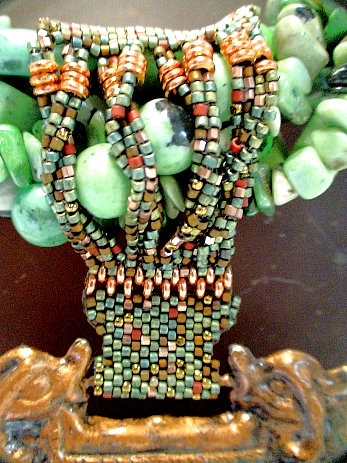
tibetandreamsdetail12

In our Jewelry Design Camp (www.warrenfeldjewelry.com/jewelrydesigncamp/), one of the topics we cover is the Bail. From a Design standpoint, it is not necessarily a simple jewelry finding to incorporate into our pieces.

There are many types of bails, some off-the-shelf and some hand-made, and there are different ways of attaching them.

tibetandreamsdetail11

A bail changes the visual and artistic relationship between the strap and the center piece. How might this be helpful, and how not? The bail poses similar design challenges as the strap — size, proportion, placement and attachment. However, it has to succeed at one additional task — it has to control the visual, aesthetic and functional transitioning between the center piece and the strap. It is the management of this transitioning which poses the most difficult design design dilemmas for the jewelry artist.

Too often, I see people use a bail because it adds another pretty component to the piece. But it doesn’t necessarily fit. Sometimes it competes with the center piece or strap. Sometimes it creates a series of functioning or wearing or movement issues.

tibetandreamsfull1

So the questions for this discussion include:
(1) Do you use bails, and if so, do you have any favorite — either machine-made or hand-made?
(2) Do you have good or bad design-experiences with bails that you would like to share with the group?

Warren


Posted in jewelry design | Tagged: , , | Leave a Comment »

HOW DO YOU GO ABOUT CHOOSING CLASPS?

Posted by learntobead on May 28, 2013

HOW DO YOU GO ABOUT CHOOSING CLASPS?

clasp7strand

The Jewelry Designer makes many choices when creating a piece of jewelry. Lots of things to manage and accomplish.

Probably the two most important choices, right up front, in creating a wearable art-piece that will be around for future generations are your:
(1) Stringing Material, and
(2) Clasp


When you work with so many customers in a store, and so many students in classes, you begin to see that people are not necessarily that great in selecting clasps. Many are in a clasps-rut — they use the same clasp over and over again. Others pick out clasps they find appealing, whether or not they would visually or functionally work with the piece they have made. Few people anticipate how they are going to attach the clasp to their beadwork, often resulting in an overly long, awkwardly connected clasp assembly. So, how to you go about choosing clasps?


From an article I had written…


Clasps always seem like they’ve been someone’s last thought. They should be the first thought. But many people get so excited creating their beadwork, that they forget about the clasp – until the last moment. You can tell when the jewelry maker hasn’t put much thought into their choice of clasp in many ways. Often, the clasp doesn’t look like it was meant to go with the bead work or general design. It might be out of proportion. It might be a different texture or sensibility. Its function – how you open and close it, while wearing your jewelry — might seem odd, perhaps unnatural. And not only does the choice of clasp seem as an after-thought, but how to attach to the bead work to that clasp seems un-thought out, as well.

So it’s not surprising, that when we were repairing jewelry on a regular basis, about 80% of the pieces to be fixed had broken at the clasp.

It is best to, in part, build your design around your clasp. If your piece has a centerpiece or focal point, then how does this link up to or coordinate with the clasp. At the least, when visualizing your beadwork, include an image of the clasp and how it is attached at both ends. The world is full of clasps. Not every clasp is a jeweler’s best friend. But it depends.

The clasp needs to visually fit with the beadwork. It needs to function as the artist intended. It needs to function in a way the wearer can relate to, use and handle. It needs to be appropriate for the piece and the context in which it is too be worn. It should not compete with the beadwork. It should complement it. Ideally, at least from a design perspective, your clasp should look and feel as if it were an integral part of the entire piece.

In a Gallery setting, if you are selling your jewelry there, you usually want a very functional, but not overwhelming, clasp. You are selling your beadwork, and you don’t want your clasp to compete with this.

In a Department Store, setting, however, often the clasp sells the piece. In this setting, choosing a clasp requires a different kind of logic, thinking and anticipation. Some clasp-types are “expected” to be a part of the piece – even if the particular choice of type would not be the best choice in the world.

The former owner of a local Tennessee pearl company was very frustrated with clasps. She sold a lot of finished pearl jewelry at very high prices, and had been using 14KT gold pearl and safety clasps. Her customers sent a lot of their pearl necklaces and bracelets back for repairs, because their clasps broke. And this company felt, because the prices of these pieces were very high, that they were obligated to replace the clasps and re-string these pearl-knotted pieces at no additional charge. 14KT clasps – particularly the pearl, safety and filigree box clasps — do not hold up well, because gold is a very soft metal.

Replacing clasps on a pearl-knotted piece is quite some job. You have to cut up the piece to free up each bead, and then you begin the knotting and finishing off processes again. It turns out, the 14KT clasps were not the only expensive part of the bracelets – making the knots between each pearl was the time-consuming and costly part. She desperately wanted to reduce the number of repairs. Her first idea was to replace the pearl and safety clasps with other styles which were sturdier. However, these pieces didn’t sell. People wanted the pearl and filigree clasps. The designs of these clasps were so traditional and so locked into their expectations for what pearl-knotted jewelry should look like, that they would not compromise.

Her second effort, she tried replacing the 14KT pearl and filigree clasps with gold-filled ones which were stronger, but this made her customers very angry – they wanted 14KT gold.

So, her final strategy, she returned to using 14KT gold, and doubled her prices. She built in the cost of one repair into the prices she charged. And only then could she present her happy face to her customers, and her somewhat-happy face to herself when she was in private.


Posted in bead weaving, jewelry making | Tagged: , , , | 2 Comments »

WHAT SHAPE ARE YOU?

Posted by learntobead on May 14, 2013

WHAT “SHAPE” ARE YOU?
— Spiral, Cross, Triangle, Round or Square?

shapes

Signs of Life: The Five Universal Shapes and How to Use Them, by Angelese Arrien

Diane Fitzgerald had pointed this out as an interesting book about shapes, I think in her book SHAPED BEADWORK. I read the book. Fascinating and goes into a lot of interesting detail.

In this book, the author, who is a cultural anthropologist, studied shapes, and searched for universals. She found that cross-culturally, people use 5 particular shapes to describe and understand themselves in relationship to others within their culture.

These shapes were:

Circle, Square, Triangle, Cross and Spiral

She developed what she calls the Preferential Shapes Test.

Take this test, and use Arrien’s book to interpret the results.

I’m going to oversimplify this test and paraphrase her words, so you can try it, if you haven’t already. However, to read more details about interpretations and to read stories about people who fit various patterns, I’d suggest you visit this book.

STEP 1:
On a piece of paper, write the numbers 1 thru 5 across the page.

Here are the shapes to play with:

SPIRAL, CROSS, TRIANGLE, ROUND, or SQUARE.

STEP 2:
Under the first position number, put your favorite shape.
Under the 2nd position number, put your second favorite shape.
Under the 3rd position, your third favorite shape
Under the 4th position, your fourth favorite
Under the 5th position, your least favorite.

STEP 3:
Use the information below to interpret the results:

POSITION 1: Where you Think You Are
This is where you think you are today or want to go in the future, but not necessarily the most accurate indicator of where you actually are right now.

POSITION 2: Your Strengths
An inherent strength predominant in you at this time, whether you know it or not. Often, this is how other people see you.

POSITION 3: Where You Are
This is the most significant shape.
This shape shows your true current self.

Think of the goldilocks story – the porridge is too hot, the next too cold, the third just right.

POSITION 4: Your Motivation
This shape points to past events or things which motivated or provoked you to get to Position 3.

POSITION 5: Old, Unfinished Business
A process you have outgrown, dislike, resist, or are judging. Unresolved issues you want to put aside.

CIRCLE: wholeness
Position 1: desire to be independent and self-sufficient
Position 2: strengths are self-reliance and resourcefulness
Position 3: process of achieving independence is at core of your nature
Position 4: something in your past motivated you to become responsible and self-reliant
Position 5: you may be resisting or denying this process of individuation

CROSS: relationships
Position 1: forming relationships is most important to you
Position 2: you rely on good people skills
Position 3: forming relationships is something deep within your nature
Position 4: a past shared journey inspired you to become who you are today
Position 5: you may want to ignore or dismiss relationships

SPIRAL: growth and change
Position 1: change holds great importance to you
Position 2: easy for you to handle change
Position 3: you are profoundly engaged in process of change
Position 4: your were challenged in your past to make significant changes in your life
Position 5:you are unlikely to show interest in process of change and growth

TRIANGLE: goals, dreams, visions
Position 1:process of envisioning seems especially important to you now
Position 2:you carry the gift of vision naturally, whether you are fully aware of this or not
Position 3:the process of envisioning is central to your current development
Position 4:your process of following dreams in your past motivated you to change your life
Position 5:you are resisting the process of honoring your dreams and establishing goals

SQUARE: stability
Position 1:stability and authenticity are inspirational to you
Position 2:you are responsible, authentic, and fully committed when you give your word
Position 3:it is vitally important to you to stabilize and implement your creative endeavors
Position 4:past issues of responsibility and accountability led you to make changes in your life
Position 5:you may be denying process of stability and responsibility

Posted in jewelry design, jewelry making | Tagged: , , , , | Leave a Comment »