Warren Feld Jewelry

Taking Jewelry Making Beyond Craft

Exhibiting Jewelry

Posted by learntobead on September 9, 2009

Exhibiting Jewelry

Because jewelry is small, and the details even smaller, it’s difficult to get good images of your pieces, and it’s difficult to display them well.

Here’s a clever idea for getting people to notice your pieces and spend a little more time exploring their details.

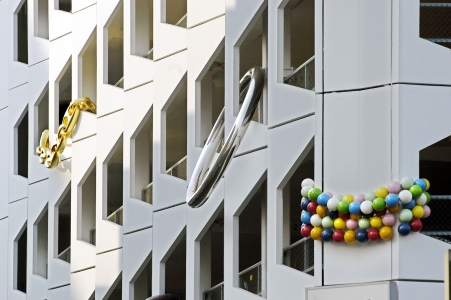
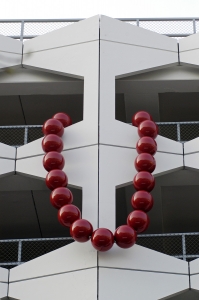
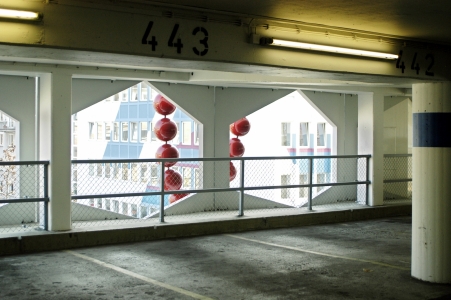
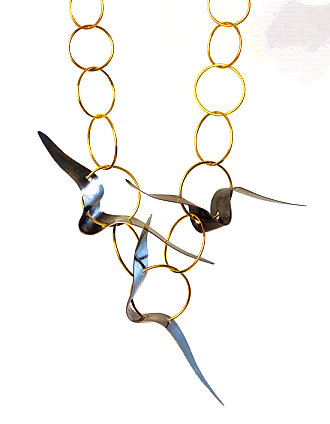
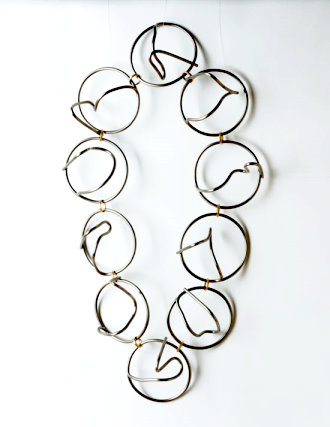
Parking Garage Karlsplatz, Düsseldorf

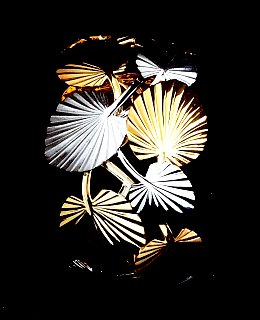
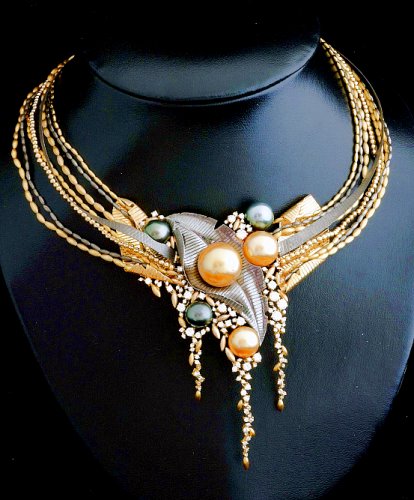
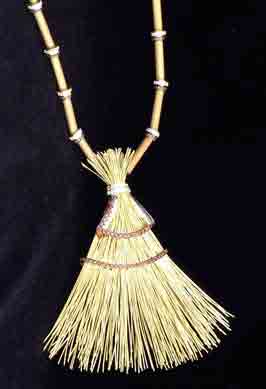
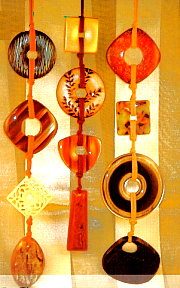
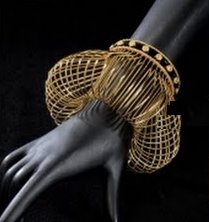
Ten objects of differing sizes have been threaded into the perforated façade of the parking garage on Karlsplatz. They are greatly magnified pieces of jewelry of the kind that might be worn by the users of the parking garage in the fashion center, Düsseldorf. The modular façade, which cannot be
experienced except as a foreign body in the Old City, is turned by the jewelry worked into it into the display case of a heterogeneously furnished jeweler’s shop.
 
Fotos: Peter Stumpf

exhibitjewelry1


exhibitjewelry2


exhibitjewelry3


exhibitjewelry4


exhibitjewelry5

Posted in business of craft | Tagged: , , , | Leave a Comment »

Shaun Leane Jewelry

Posted by learntobead on September 3, 2009

Shaun Leane Jewelry
http://www.shaunleane.com/

leane1

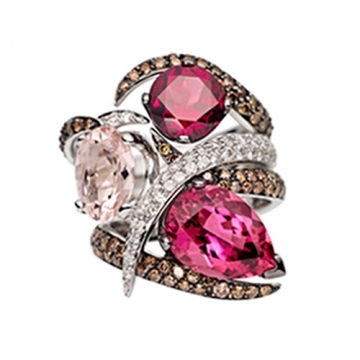
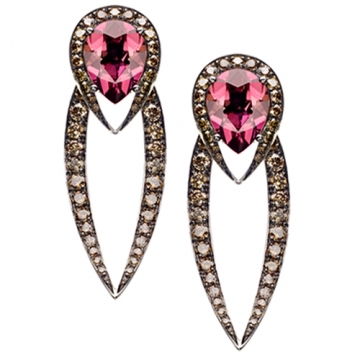
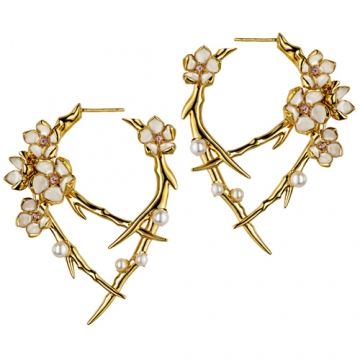
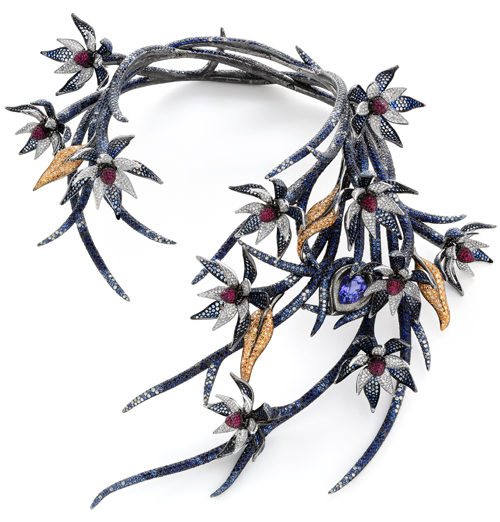
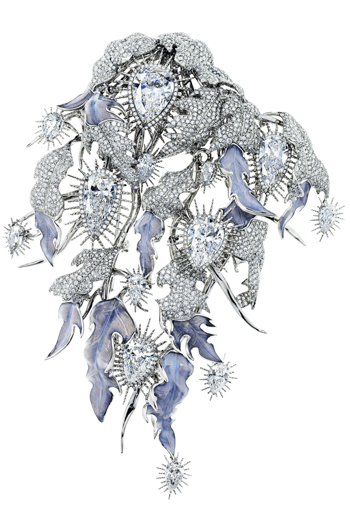
I wanted to share some beautiful pieces of jewelry by celebrity jeweler Shaun Leane.

leane2

Awarded UK Jewellery Designer of the Year, Shaun Leane is internationally celebrated for pushing the boundaries of jewellery design.

leane4

Renowned for his darkly romantic and beautifully crafted jewellery; his work has been described by Sotheby’s, London’s prestigious auction house, as ‘antiques of the future’.

leane5


leane6


leane7

Posted in jewelry design | Tagged: , , | Leave a Comment »

Dita Von Teese Jewelry Style

Posted by learntobead on September 3, 2009

Dita Von Teese Jewelry Style

Everyone’s favorite pin-up girl, Dita Von Teese is known for signature rockabilly style paired with high-end fashion and glamour. A throwback to the 50s era, Dita is usually seen rocking fire engine red lips and vintage inspired frocks. But she also has a great sense of what type of jewelry compliments her look and works with the glam vibe.
52027932
dita1a
dita1b

Posted in jewelry design | Tagged: , , | 1 Comment »

Would You Wear This?

Posted by learntobead on September 3, 2009

Would You Wear This?

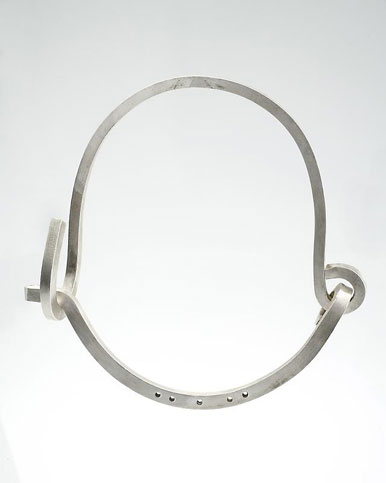
This necklace collar piece was designed by Louise Borgeois.

louiseborgeois1


If you knew some of the history of this piece, would this make you more likely to wear this piece?

DESCRIPTION:  Silver necklace in the form a shackle originally designed in 1951 as a personal statement against the violence Louise Bourgeois had witnessed against prisoners during the Spanish Civil War. A limited edition of 39 pieces was produced in Spain in the 1990s.

louiseborgeois1


Would you wear this?


Posted in jewelry design | Tagged: , , , , | 1 Comment »

New Beading Competition Announced

Posted by learntobead on September 3, 2009

The Illustrative Beader:
Beaded Tapestry Competition
Deadline 8/31/2011
Download Official Rules

by Land of Odds, Be Dazzled Beads, The Open Window Gallery, and The Center for Beadwork & Jewelry Arts

CALL FOR ENTRIES
The Illustrative Beader:
Beaded Tapestry Competition
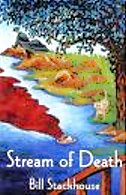
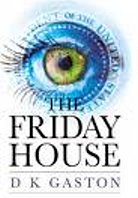
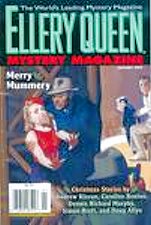
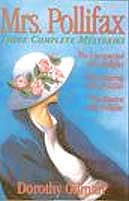
Create a Beaded Tapestry by manipulating beads, cloth and fibers into an imaginative detailed, tactile and visual representation of this year’s theme:Mystery Genre Book Covers .
tapbk2

And then write a short Artist Statement (between 1000-2000 words) about the general story-line of the book which the cover represents, how you made choices about what things to include on your cover, the materials and techniques you used in creating your book cover tapestry, and your strategies for adding a sense of dimensionality to the book cover tapestry.
tapbk3

The First Bi-Annual 2011 THE ILLUSTRATIVE BEADER: BEADED TAPESTRY COMPETITION is offering a first prize of a $1000.00 shopping spree on the Land of Odds web-site (www.landofodds.com), and a Runner-Up prize of a $400.00 shopping spree on the web-site.
 

 tapbk4

Here we use the concept of “Tapestry” in its broadest sense as a stitched, sewn and/or woven wall hanging. Your tapestry may be woven, loomed, stitched, quilted, cross-stitched, crocheted, knitted, sewn, braided, knotted, embroidered, macramed, beaded and the like. Your tapestry will combine fibers/threads/and/or cloth and beads in some way, and must consist of at least 70% beads. Beads may form the background canvas of your piece, and/or may be used to embellish your canvas, and/or as fringe, and/or as stitchery covering parts of your piece. Your piece should be mounted or framed in some way, ready for hanging on a wall. Your tapestry may utilize many different techniques. In addition, as a “Mystery Genre Book Cover”, your Beaded Tapestry should woo and entice the viewer to want open that cover and read the book!
 

 tapbk5


Entries will be judged by a panel from The Center for Beadwork & Jewelry Arts. These distinguished Beadwork and Jewelry Artist instructors will judge each beaded tapestry based on

 
1. INSIGHT: The Artist’s inner awareness and powers of self-expression through needle arts and stitchery, fiber arts and beadwork, particularly in terms of how well this year’s Competition theme is incorporated into the piece.
2. TECHNIQUE(S):
a. The range of techniques employed within the piece, and how these are combined and executed.
b. The degree the Artist is successfully able to incorporate 3-Dimensional elements and give depth to the finished piece — layering, embellishment, embroidery, movement, optical effects, color tricks, shapes, textures, patterns, and other structures
c. The strategic and parisomonious placement of visual elements throughout the piece
d. The details — how creatively, strategically, and to what extent story details are presented within the Tapestry
3. USE OF BEADS/BEADING AS ARTISTIC MEDIUM: To what extent the Beaded Tapestry may be viewed as a work of “art”, rather than “craft”; has the Artist fully utilized the power of the “bead” as a medium for art — an expression of color, light, shadow, tactile sense and emotion
4. VISUAL APPEAL: The overall visual appeal of the Beaded Tapestry, and how well it tells a story and seems to grab the Viewer’s attention and motivate the Viewer to want to, in this year’s case, read the book.
5. QUALITY OF WRITTEN ARTIST STATEMENT: How well the Artist’s write-up enhances an appreciation of the Beaded Tapestry, how it captures the theme, as well as the Artist’s talents in design, insight and implementation.
 

 tapbk6


REQUIREMENTS

A. Length and Width: The Beaded Tapestry may be oriented vertically or horizontally. One dimensional leg should be shorter than the other, but no shorter than 8″. The other dimensional leg should be longer than the other, but no longer than 25″. The relative lengths of the shorter and longer dimensions should approximate The Golden Ratio where the longer side is 1.60 times the length of the shorter side (L=1.6*S). Thus, the smallest possible piece would be approximately 8″x13″, and the largest possible piece would be approximately 16″x25″.

B. Backing and Framing: The Beaded Tapestry should be afixed to a secure backing, from which to attach a hanging mechanism, and which is secure enough to support the Tapestry, as it hangs on a wall. This can be as simple as using a piece of foam core or wood panel, or can be more elaborate. The piece may be supported with a frame, and a paper or cloth backing. Any backing/framing/matting will not be counted in the measurement rules and limitations. Thus, if the Beaded Tapestry were 16″x25″, and a frame and matte resulted in a finished piece that was 20″x29″, that would be OK. If the Tapestry is meant to hang like a curtain on a rod, using backing would be optional, depending on whether the backing will help or hinder your piece.

C. Hanging Mechanism: The Beaded Tapestry should have all the mechanical attachments affixed to the backing/frame that allow it to be hung. This might be picture wire strung across the back, or a picture hook, or a dowel that slides through the piece at the top like a curtain.

D. The Tapestry Canvas: The Beaded Tapestry will work off a canvas of some sort. What this canvas is and how it is created, would be up to the Artist. The canvas might be loomed (or stitched in some way) with threads, other fibers, cloth, or beads, or might be a stretched cloth, or might be some kind of surface (or webbing, netting or string-curtain) off of which to work your Tapestry, like bead embroidery off of ultra-suede.

E. The “Cartoon”: The cartoon is the designed image/sketch for your piece. This image should be original, and not have been submitted to any other contests or competitions. The judges are especially interested in how you transfer your cartoon to your tapestry, how you incorporate details, and how you bring dimensionality to your piece. The cartoon, thus final Tapestry as well, must include the Title of your chosen book.

F. The Use of Beads and Fibers: Beads must comprise at least 70% of the the surface of your Beaded Tapestry. A bead is an object with a hole in it. It may be applied to the Tapestry with stitching or sewing. It may be glued. It may be wired. It may be encapsulated. Your final Tapestry may be done with 100% beads, or with a mix of beads and fibers. The judges are especially interested in seeing a mix of techniques within your piece.

G. Relating Your Tapestry To This Year’s Competition Theme – Mystery Genre Book Covers


1. Based on a real book: Your Book Cover must relate to a real, published book.
2. Interpretation of Cover Design must be your own. While it’s logical that you might use elements from an existing cover, it must NOT be a copy of the book’s existing cover.
3. The Title of the Book must be incorporated into your Tapestry design
4. Your Artist statement should reference the book’s title, author, publishing company, and date of publication.
5. “Mystery Genre” refers to fictional and non-fictional books which deal with the solving of a crime.

 
H. The Artist’s Statement: Write a short Artist Statement (between 1000-2000 words), covering the following topics:


1. List the Title of your book, the author, the publishing company, and date of publication.
2. A synopsis of the general story-line of your book. Tell us the story progression. Highlight key characters including the hero or heroine, the victim, clues, mysteries, double-entendres, the murder weapon, the solution/resolution and the like.
3. Why did you choose this book?
4. How did the story-line influence you in your book cover design choices? What details did you decide to highlight on the tapestry? What details in the story line did you decide Not to highlight on the tapestry?
5. What materials did you use to create your book cover tapestry, backing and framing, hanging mechanism, canvas?
6. How did you transfer your Cartoon sketch to your finished Tapestry?
7 . What techniques did you use in creating your book cover tapestry
8 . What were your strategies for creating the Title on the tapestry — fonts, sizes, materials, placement/positioning?
9 . What were your strategies for adding a sense of dimensionality to your book cover tapestry?
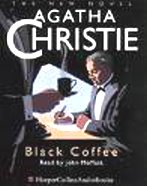
tapbk7 
I. Your Book Cover Tapestry may be done either as an individual or as a collaboration. If a collaboration, please list all the “collaborators” with your submission. Identify one person of the group to be the lead and contact person.


We Need Submissions!

A Tapestry is a form of textile art, traditionally woven on a vertical loom, and composed of two sets of interlaced threads. Threads running parallel to the piece create the tension. Threads running back and across along the width create the pattern or image. It is these threads which show in the traditional tapestry. Tapestries were very portable. They could also be draped on the walls of castles for insulation during winter. They could be hung as decorative interior elements and displays of wealth. The “Cartoon” — that is, the design image — ranged from the purely decorative to tales of heroicism, mysticism, or religiosity. Often, to make these loomed pieces feel more 3-dimensional, they were embellished with beads, pieces of glass, and pieces of mirrored glass, which would create fascinating interplays with light. The beads might be used to create border fringes, or might be sewn into or embroidered onto the tapestries themselves.

In our The Illustrative Beader: Beaded Tapestry Competition, we define the idea of a “Tapestry” very broadly, to include any stitched, sewn and/or woven wall hanging which combines some kind of fiber and beads. Fiber might consist only of the threads used to stitch the beads, or it might include quilted materials, yarn, cord, of anything that might broadly be called Fiber. The Tapestry might be loomed with fibers and embellished with beads. It might be loomed with all beads. The Tapestry does not necessarily have to be loomed in the traditional sense. It might also be knitted and embellished with beads, or quilted or cross-stitched or crocheted or braided and somehow combined with beads. The Tapestry canvas might begin with stretched, appliqued, or quilted cloth. The surface area of the finished Tapestry must be 70% made from beads.


THE ILLUSTRATIVE BEADER: BEADED TAPESTRY COMPETITION: is more than a beauty pageant. It is a design competition. The Competition will take into account the Artist’s intentions and how well these are incorporated into the theme, the design, the materials, the use of techniques, the use of details and elements which create dimensionality.

Posted in Contests | Tagged: , , , , , , , , , , , , , , , , , , , , , , | 1 Comment »

Need for Critical Writing About Beading

Posted by learntobead on August 27, 2009

Need For Critical Writing and Dialog About Beading

One of the major gaps in Bead World is the support of more open and frequent critical writing and dialog about beading.   What it is.  Why it is.   It’s relationship to art.   The relationship of current modes and techniques to historical ones.   Contemporizing Traditional Beadwork.    Adding dimensionality.   Why there are numerous ways to work thru the same stitch, like Peyote, Brick, Daisy Stitch or Right Angle Weave.    Design elements and rules of composition underlying beading.    Beading structures.  Documenting beading techniques.  Forms and functions of beading.    Sex and sexuality, wealth and poverty, emotion and no emotion, and other pertinent themes underlying beading.   Comparative analyses of artists works.    Use of color with beads.    The relationship of jewelry as display item and jewelry as item as it is worn.   Why beads have power.   What makes some jewelry resonate.

Bead World lacks an academic center, which would encourage such discussions.   Bead World lacks magazines and journals which support these kinds of discussions.   Bead World is very step-by-step craft focused, and doesn’t tend to raise a lot of questions.     It doesn’t tend to support detailed documenting of beading traditions.   It doesn’t support urgent efforts to document and collect beadwork of rapidly disappearing ethnic groups, such as those in Dafur Africa.   It doesn’t create a clear sense of what is good beadwork, and what is sloppy beadwork. 

We have a recent history of beading in the US that began around 1960, and few people have witnessed the story.   Few people have asked deeper questions of the artists and teachers who first brought about an unbelievable increase in beading in the  1990s.   A lot of information has been lost.  

The information could be used to broaden the field, attract more people into beading, and encourage experimentation, research, deliberation.

Very sad.

At the Museum of Contemporary Craft in Portland, Oregon, they have created exhibits and ongoing discussions about criticality in craft, in general at least.   Beading and jewelry come into play occasionally.  

Their new discussion series — CALL + RESPONSE — is outlined on their web-site:

http://museumofcontemporarycraft.org/call/introduction.html

It’s definitely worth a visit.   Be sure to read the full essays from each participant, as well as view images of the works associated with each essay.

Anya Kivarkis, area head, jewelry and metalsmithing, University of Oregon

Anya Kivarkis, area head, jewelry and metalsmithing, University of Oregon


Namita Gupta Wiggers, curator, Museum of Contemporary Craft
Complaints about a need for critical writing on craft surface with great frequency. Drawing on the musical concept of “call and response,” this exhibition opens a space for critical dialogue and exchange between craft-based artists and art historians. From nearly three years of discussion, studio visits and exchanges of ideas, the resulting exhibition presents artwork and essays by eight pairs of artists and art historians, all of whom currently teach in Oregon colleges and universities.


Kate Mondloch, assistant professor of contemporary art history and theory, University of Oregon on
Josh Faught, assistant professor and program coordinator of fibers, University of Oregon
Knitting was passed down to me from my grandmother. However, I attribute most of my early experiences with craft to my time in summer camp. In fact, I think it’s safe to say that I learned to weave before I learned to draw or paint. It’s a biographical aspect of my work that I still like to talk about since it locates my skill set from a time iconically loaded with issues of identity construction. In college, I studied art history and English but when I graduated I gained a bit more confidence in my creative abilities. 


Abby McGehee, associate professor, Oregon College of Art and Craft on
Anya Kivarkis, area head, jewelry and metalsmithing, University of Oregon

For any student of material culture, objects provide the means for understanding social values, ritual and domestic procedure, and individual artistic development. Objects and structures are proxies for vanished makers and patrons, and remnants of the world they created. But there is always a tension between the substantiality of these physical remains and the absence of their historical context.


Kirsi Peltomäki, assistant professor of art history, department of art, Oregon State University on
Jiseon Lee Isbara, associate professor and fibers department head, Oregon College of Art and Craft

Hand-sewing, whether to join fabric pieces together or make a mark on them by embroidery, remains at the center of Jiseon Lee Isbara’s artistic practice, although she freely makes use of a sewing machine as well, and, on occasion, includes other techniques such as inkjet printing on fabric. A fiber-based artist by training and profession, the material and conceptual dimensions of Lee Isbara’s works simultaneously resonate with contemporary sculpture, particularly work by Eva Hesse and Mona Hatoum, and with the Korean textile tradition of pojagi wrapping cloths. Lee Isbara’s recent work involves pieced fabric stitched into patchwork forms and displayed in three-dimensional installations or two-dimensional wall arrangements. In any configuration, Lee Isbara’s work constitutes mental maps, visualizing territories that are coded and decoded in languages at once familiar and uncharted.


Dawn Odell, assistant professor, department of art and art history, Lewis & Clark College on
Sam Morgan, ceramics instructor and art chair, Cascade Campus, Portland Community College

Although the necessity for a division between the fine and decorative arts has been under assault for decades, the ghost of this separation continues to haunt discussions of contemporary craft. When considering ceramics, for example, the fine/decorative divide is often breeched by emphasizing the sculptural qualities of ceramics, both in terms of the objects’ three-dimensional form and also by assuming that the work is best contemplated from a distance. Sam Morgan’s art resists this conflation of ceramic as sculpture. 


Rob Slifkin, assistant professor of art and humanities, Reed College on
Studio Gorm (John Arndt and Wonhee Jeong), associate professors, product design, University of Oregon

Understood in its most expansive sense, to design is to forge a possibility. Whether one sketches a preliminary study for a painting or sculpture, or draws a plan for a building or a piece of furniture – or outlines a draft for an essay – the act of design entails the projection of a desired future outcome from a present moment. 


Matt Johnston, assistant professor, department of art, Lewis & Clark College on 
Karl Burkheimer, associate professor and head of the wood department, Oregon College of Art and Craft
From Karl Marx to Clement Greenberg and beyond (and probably echoing as a refrain in this collection of essays), both craft and art are portrayed as heroic but losing enterprises within an increasingly pervasive dehumanization of life brought about by the growth of capitalist society. A tool-making species, in this apocalypse of our own creation, we are losing touch with basic hand-eye skills required to fashion, manipulate, and interpret objects; in effect losing the ability to re-imagine and re-make the world, and are instead becoming mere passive consumers of machine-fabricated commodities. 


Anne Marie Oliver, assistant professor of intermedia and contemporary art theory, Pacific Northwest College of Art on
David Eckard, chair of the sculpture department and an instructor in the foundation and intermedia departments, Pacific Northwest College of Art

It would be a mistake, however, to view magic simply as a reenactment of social behavior, the logic of belief, or a mere lure or decoy by which attention is drawn away from some tasks in order for others, often traumatic or violatory, to be accomplished. In the final analysis, magic is far more disturbing than any conjectured relation between duplicity and consciousness, belief and disbelief, distraction and destruction. 


Posted in Art or Craft? | Tagged: , , , , , , , , | 1 Comment »

Gallery Hopping in August

Posted by learntobead on August 14, 2009

    Jewelry Exhibits at Galleries Around The World

The Sting of Passion
Saturday 11 July 2009 – Sunday 25 October 2009
Manchester Art Gallery
Manchester, England
http://www.manchestergalleries.org/


Twelve international jewellery designers present new commissions in response to our Pre-Raphaelite painting collection.

Marianne Schliwinski for Joli Coeur by Dante Gabriel Rossetti

Marianne Schliwinski for Joli Coeur by Dante Gabriel Rossetti

Jivan Astfalck for Sappho by Charles-August Mengin

Jivan Astfalck for Sappho by Charles-August Mengin


Guild of Phillipine Jewellers
Winners from Past Design Competitions
http://www.guildofphilippinejewellersinc.com/index.php


galgp1


galgp2


galgp3


galgp4


galgp5


Dorothea Pruhl
http://www.farlang.com/exhibits/padua-dorothea-pruhl/home

galdp1

Dorothea Pruhl is a leading exponent of the current art jewellery scene.
galdp2
Her aesthetic stance is informed by abstract impressions from nature, concentration on essentials, eminent sensitivity and sculptural power.

galdp3

She makes basic statements in gold and silver – but also in wood, aluminium, titanium and stainless steel – impressions manifest in generously proportioned, clear entities.

galdp4

Starting with what is there, she tracks it down to its inmost core, applying to its quintessence a new aesthetic idiom – it might be a flower, the wind, a house, birds in flight.

Born in Breslau in 1937, Dorothea Pruhl studied art at Burg Giebichenstein in Halle before working in industry as a designer of manufactured jewellery.

galdp5


Susanne Klemm
http://www.susanneklemm.com/susanne.html

“Art creates memories of nature.”

galsk1


galsk2


galsk3


galsk4


An Interview With Vintage Costume Jewelry Collector Carole Tanenbaum

http://www.collectorsweekly.com/articles/an-interview-with-vintage-costume-jewelry-collector-carole-tanenbaum/

galt1

By Maribeth Keane and Jessica Lewis, Collectors Weekly Staff (Copyright 2009)

Carole Tanenbaum talks about vintage costume jewelry, discussing the major designers (such as Coco Chanel, Schiaparelli, Trifari, and Schreiner), popular fashion trends, and the origins of costume jewelry. She can be contacted at her website, caroletanenbaum.com.


jennifer trask: flourish

Susan Lomuto | Aug 11, 2009 |

http://dailyartmuse.com/2009/08/11/jennifer-trask-flourish/

galf1


Jennifer Trask’s latest series, Unnatural Histories: Flourish, begins with the following definitions of the word flourish:

1. To grow well or luxuriantly; thrive
2. To do or fare well; prosper
3. To be in a period of highest productivity; excellence or influence.
4. To make bold or sweeping movements.

The Hudson Valley, New York based artist, best known for jewelry that incorporates snake vertabrae, beetle shells, feathers, bone, pre-ban ivory and sea urchin shells, might have included her own name for a fifth definition. As her new work of removable jewelry mounted on encaustic drawings and paintings shows, Jennifer.Trask.Is.Flourishing.


Polymer Art Archive
http://polymerartarchive.com/

This is a site where professional artists working in the medium of polymer will find inspiration. Museum and gallery curators will be able to access documentation about the evolution of this vibrant medium for artistic expression. And serious collectors will discover windows to new works and the medium’s most collectable artists.

Sandra McCaw, Persian Cuff, 2007

Sandra McCaw, Persian Cuff, 2007


Rachel Carren, William Morris Sebo Brooch, 2009

Rachel Carren, William Morris Sebo Brooch, 2009

Posted in jewelry design | Tagged: , , , , , , , , , , , , , , , , , , , , , | 1 Comment »

All Dolled Up: Beaded Art Doll Competition

Posted by learntobead on August 6, 2009

All Dolled Up: Beaded Art Doll Competition
www.landofodds.com/store/alldolledup.htm

St. Fedupia by Kathleen Lynam

St. Fedupia by Kathleen Lynam

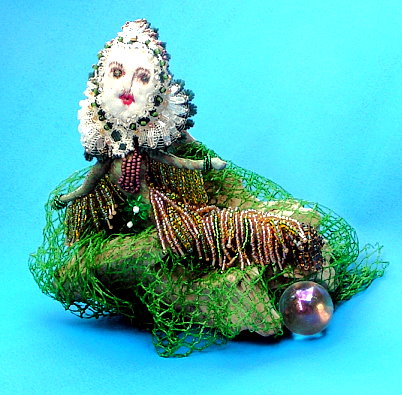
Every other year, Land of Odds and The Center for Beadwork & Jewelry Arts sponsors a beaded art doll competition.    This year’s deadline is August 31, 2009.

The theme is Earthen Mother.    Each artist submits images of their doll.   And each artist has to write a short story about their doll, starting with this sentence:

“The mirror reflects more than my hands can feel.
Lines, edges, shadings, a weariness under the eyes, an awkward stance.
Yet, not reflected is a certain vibrancy —
a compassion and wisdom and wonder so many people rely on.
Only you, my beaded art doll,
capture the fullness of me as I age in place .
You embody changes I want to make, so I aptly name you…”


Here our images of our first three submissions:

by Dawn Ott

by Dawn Ott

by Bonnie Prebula

by Bonnie Prebula

by Gabriella DeLawey

by Gabriella DeLawey

Posted in bead weaving, beadwork, Contests | Tagged: , , , , , , , , , | Leave a Comment »

Photographing Fashionable Jewelry

Posted by learntobead on August 6, 2009

PHOTOGRAPHS and JEWELRY and FASHION and BUSINESS

You have to be creative in how you stage the set for photographing your jewelry.   If people are web-surfing, you want to entice them to stay on your page a little longer, rather than click-thru to somewhere else.    If they are looking at items in a magazine or newspaper, you want them to linger a bit longer than turning the page.

I first began looking for some good ideas for photographing jewelry at the 7th International Festival of Fashion Photography in Cannes.     There were few examples of jewelry photos, however.   These included two by Marc Turlan

marc turlan

marc turlan

marc turlan

marc turlan

These didn’t excite me, so I kept web-surfing and came across the website of a fashion photographer names Niva Kedem.     Now I was getting closer to the mark.

Her website:
www.nivakedem.com

She groups her photos into photo-style categories, so you can actually learn a lot about imaging on her website, from how she groups her own examples.

niva kedem

niva kedem

niva kedem

niva kedem

niva kedem

niva kedem

niva kedem

niva kedem

It’s difficult to photograph jewelry.  You need to convey details in the piece, and the details are small.    You want to convey a sensibility about the piece — its emotions, its sexuality and sensuality, its use of materials, its relevance to certain contexts.     Many of the components have reflective qualities, which can change colors in photos, or affect the colors of the nonreflective surfaces around it.    You want to convey the artist’s style.

“The photography of jewelry can achieve a whole lot more than just depicting products. It can focus on unique details that generate very different feelings and can contribute to the visual communication of the jewelrys inspiration. Unfortunately, we see time and again that jewelry designers adopt a strangely ambivalent position when faced with how to communicate their products. This applies in particular to jewelry manufacturers in the initial stages of their careers. It is a crying shame that there are so many designers able to achieve the highest standards of precision and perfect craftsmanship in the production of jewelry and then proceed to take inferior photos of it that in no way do justice to their own excellent work. Conversely, established designers who are familiar with trade fair business and with handling the media have usually already discovered or experienced how important it is to define a clear approach in communicating ones own style of jewelry and its special features. An idea of who is or may be the target group for the jewelry can help the photographer or designer find a suitable language of images….   —

Communication With Jewelry Photography
By Christel Trimborn
Spring 2004″
You can have a “clean” shot or a “staged” shot.   The clean shot shows the jewelry without any background or other details.    The staged shot shows the jewelry in some kind of context.   It may be worn by someone, or not.

Posted in business of craft | Tagged: , , , , , , , | Leave a Comment »

The “Educated” Beader

Posted by learntobead on July 17, 2009

The EDUCATED Beader
What Do We Mean By This?


What does it mean to be an “Educated” beader?      Exactly what would it have been that you would have learned or learned to do, to earn the label “educated”?   


What would be expected of this “Educated” beader?


What kinds of choices would be expect this “Educated” beader to be able to make?


If we do a Google search online for our educated beader, what would we find?


Educate you about the essential tools and techniques                  
– Bead Unique Magazine

promote socially responsible retailing
– South African cooperative MonkeyBiz

 educate more people about the art of beading
– Wikipedia

 We educate our customers from the very first purchase and continue to do so as needs and level of experience progress.
– Calebs Lighthouse

inform and educate beaders of the beauty and versatility of beads
– beadingtimes.com

Educate yourself about bead finishes and types
– the Illustrated Bead Bible


We get a lot of generalities and platitudes, but we don’t get a more specific, detailed, enlightened idea of who we want to called an “educated beader” and who we do not.   

Is it someone who beads a lot?   Learned specific skills?   Can do specific things?   Has knowledge of certain terms?  

Is the beader who has taken 15 beading classes more educated than the beader who has only taken 3?

Is the beader who can do peyote more educated than the beader who can do right angle weave?

Is the person who knows the differences between lobster claws, toggle clasps, slide clasps and doorknocker clasps more educated than the person who cannot?


We need answers to questions like these, if we are to be able to define what we should teach and how we should teach it.


What do you think?   Please add your comments to the discussion.

Posted in Learn To Bead | Tagged: , , , , , , , , | Leave a Comment »

Winner and Runner Up Announced

Posted by learntobead on July 16, 2009

2009 7th Annual The Ugly Necklace Contest
Winner and Runner-Up Announced

And the Winner is…..

Land of Odds, Be Dazzled Beads, The Open Window Gallery, and The Center for Beadwork & Jewelry Arts are proud to announce the Winner and Runner-Up in this year’s The Ugly Necklace Contest!    These two contestants have succeeded in creating necklaces which were hideous, using clever materials, fashioning a creative clasp assembly, and showing a strong degree of artistic control in their jewelry-making endeavors.   Doing something “Ugly” is easier said, than done!

The Winner of The Ugly Necklace Contest – the Jewelry Designer who demonstrated exceptional jewelry design skills by creating The Ugliest Necklace in the America and the rest of the World in the year 2009, and the winner of a $992.93 shopping spree on the Land of Odds web-site (www.landofodds.com), is:

Lynn Margaret Davy of Wimborne, Dorset, United Kingdom
“The Story Of My Beading Life”

ugly7davyfullsize

MORE DETAILS, Images and her Poem:
www.landofodds.com/store/ugly7davy.htm


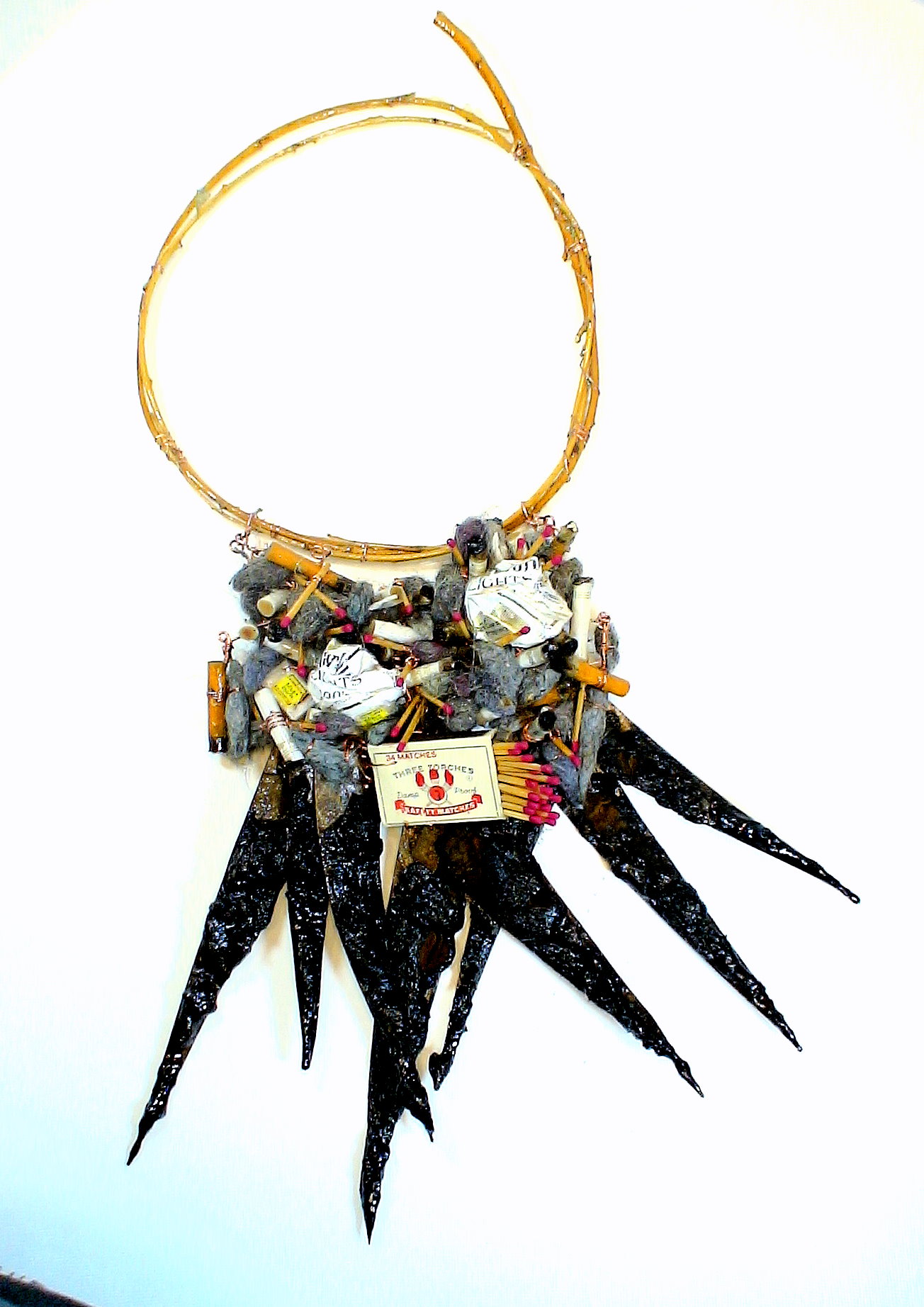
The Runner-Up in The Ugly Necklace Contest — the Jewelry Designer who also displayed obvious design talents by creating the 2nd Ugliest Necklace in America and the rest of the World in the year 2009, and the winner of a $399.07 shopping spree on the Land of Odds web-site (www.landofodds.com) is:


Juli Brown of Wells, Minnesota
“Coffin Nails Necklace”

ugly7brownfullsize

MORE DETAILS, Images and her Poem:
www.landofodds.com/store/ugly7brown.htm

—– 

These beadwork and jewelry artists have demonstrated their commendable design skills. They have been judged, from among  entrants from across America, Great Britain, and Canada by a distinguished panel of four judges from The Center for Beadwork & Jewelry Arts in Nashville, Tennessee, and voted on by visitors to the Land of Odds web-site.


To view additional images of the necklaces submitted by the winner, runner up and the other semi-finalists of the 7th Annual 2009 The Ugly Necklace Contest, please visit us at www.landofodds.com/store/ugly7contest.htm on-line.


The Ugly Necklace review criteria are discussed on this web-page:
www.landofodds.com/store/ugliestcriteria.htm


Entries for the  Eighth Annual 2010 The Ugly Necklace Contest will be accepted between September 1st, 2009 and March 15th, 2010.   For official rules, and 2010 special requirements, please visit our web-site at www.landofodds.com/store/uglynecklace.htm .


And if you are in the Nashville area, please stop by Be Dazzled Beads, where the 6 selected Ugly Necklaces are on display through September 15th.


The Ugly Necklace Contest is one of the programs of The Center for Beadwork & Jewelry Arts in Nashville, Tennessee, to encourage beadwork and jewelry makers to test their design skills, push the envelope, and learn some fundamentals about jewelry design in the process.   

LIST OF 2009 7th Annual SEMI-FINALISTS:
1.         Lynn Margaret Davy, Wimborne, Dorset, United Kingdom

2.         Juli Brown, Wells, Minnesota

3.         Sarah Allison, Gresham, Oregon
4.         Jolynn Casto, Logan, Ohio
5.         Deborah Eve Rubin, Rockville, Maryland
6.         Lori-Ann Scott, Spokane, Washington


Posted in Contests, jewelry design | Tagged: , , , , , , | 1 Comment »

Proving “Beads” Can Be Made Of Anything

Posted by learntobead on June 26, 2009

Jennifer Maestre Sculpture
www.jennifermaestre.com

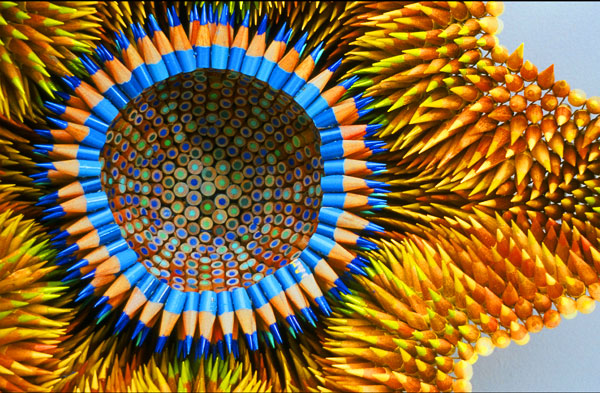
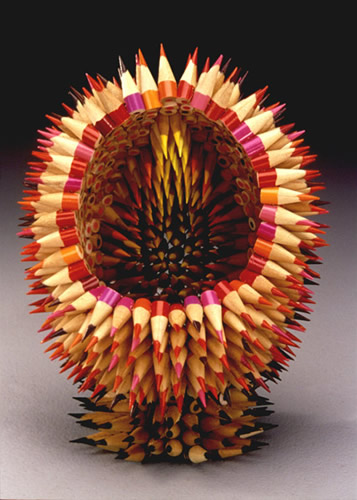
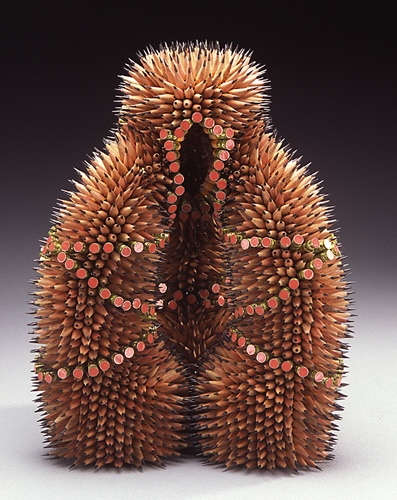
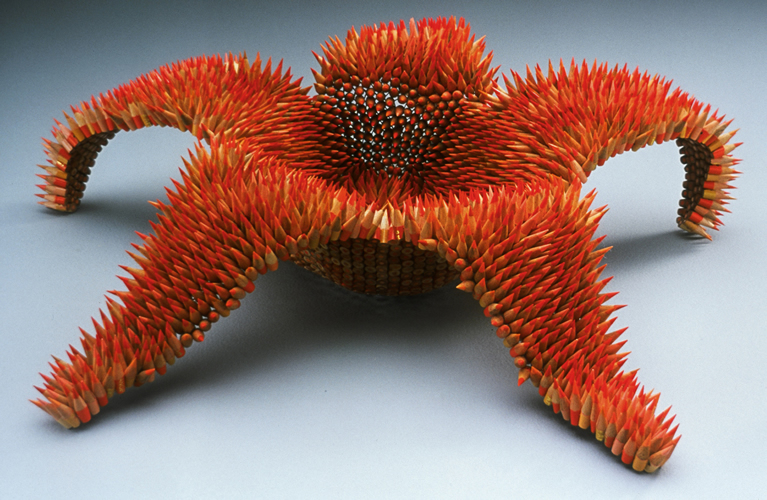
This bead artist cuts off the tips of colored pencils, top drills a hole through them, and bead-weaves them together in these awesome sculptures.

maestre1

From the Artist’s statement:

My sculptures were originally inspired by the form and function of the sea urchin. The spines of the urchin, so dangerous yet beautiful, serve as an explicit warning against contact. The alluring texture of the spines draws the touch in spite of the possible consequences. The tension unveiled, we feel push and pull, desire and repulsion.

The sections of pencils present aspects of sharp and smooth for two very different textural and aesthetic experiences. Paradox and surprise are integral in my choice of materials. Quantities of industrially manufactured objects are used to create flexible forms reminiscent of the organic shapes of animals and nature. Pencils are common objects, here, these anonymous objects become the structure.

maestre2 

There is true a fragility to the sometimes brutal aspect of the sculptures, vulnerability that is belied by the fearsome texture.

To make the pencil sculptures, I take hundreds of pencils, cut them into 1-inch sections, drill a hole in each section (to turn them into beads), sharpen them all and sew them together. The beading technique I rely on most is peyote stitch.

maestre3

I’m inspired by animals, plants, other art, Ernst Haeckel, Odilon Redon, mythology. In fact, it isn’t easy to specify particular sources of inspiration. Sometimes one sculpture will inspire the next, or maybe I’ll make a mistake, and that will send me off in a new direction.

I started off in the direction of prickly things when I was in my last year at Mass College of Art. It all comes from one idea I had for a box with a secret compartment that would contain a pearl. The box would be shaped like a sea urchin, made of silver. In order to open the box and reveal the secret compartment, you’d have to pull on one of the urchin’s spines. The idea was of something beautiful, sculptural, but that you wouldn’t necessarily want to touch, and that also held a secret treasure. I never developed the small-metals skills to ever make the box, but it got me thinking about that kind of form. I started experimenting with different materials to make urchin forms. I found that nails, pushed through window screen, worked well, and I could use many different types and textures and colors of nails.

maestre4

After graduation, I didn’t have the facilities to do glass, so I kept playing with the nails and screen (very low tech), and gradually started working larger, adding zippers and other elements. Continuing with the container theme, I started making the tack-coated eggs to place inside the nail baskets.

The eggs were so beautiful on their own, as well, that I decided to open some of them up, putting little windows in, for example.

While I was doing that work, I was also dabbling in bead work. I taught myself several beading techniques, especially peyote stitch, which is great for creating sculptural work.

I was constrained a bit with the nails, because I couldn’t get all the turns and twists I wanted. I loved the textures and the contrast between the industrial qualities of the nails and the organic forms of the sculptures, but I wanted more complex forms. I was also thinking about how bad the liquid rubber probably was for my health.

So, I experimented with other pointy things and techniques, and finally hit on turning pencils into beads and sewing them together. Using this combination of technique and materials allows me to retain all the qualities that I want in my work, with the potential for more variety of form.

Posted in beadwork | Tagged: , , , , | Leave a Comment »

An unexpected source of gemstone jewelry…

Posted by learntobead on June 21, 2009

Wildscape Caddisfly Jewelry
www.wildscape.com

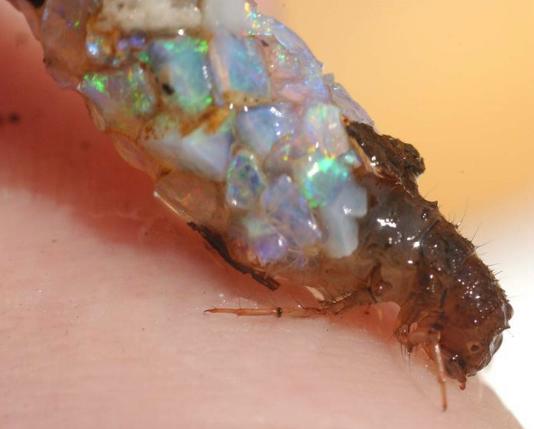
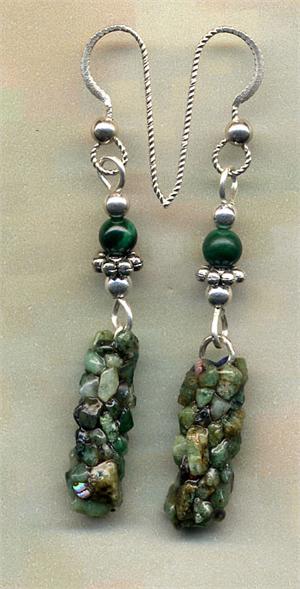
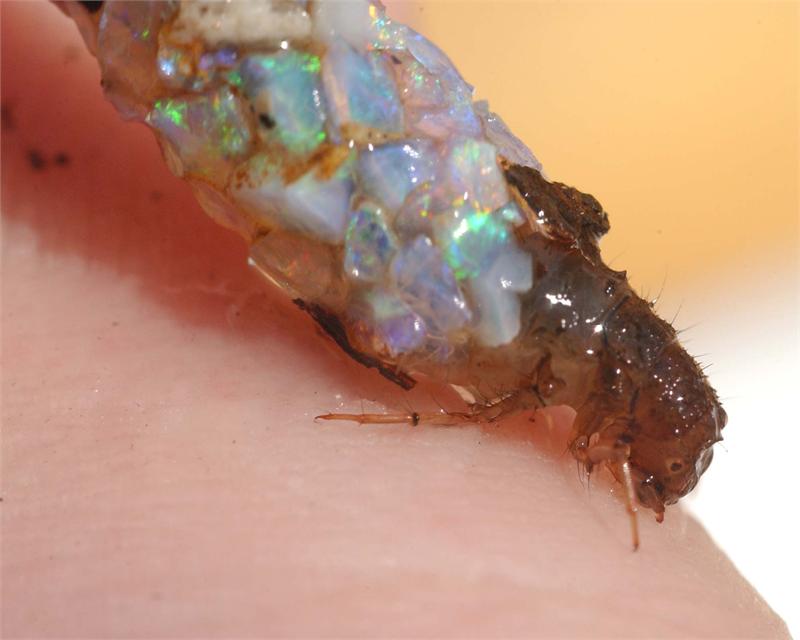
Here’s a jewelry component you don’t see very often, if ever.    Caddisfly larva created casings.
Kathy Stout and along with her Mom Marilyn Kyle and many good friends and jewelry designers, created Wildscape.  Their Jewelry is One Of A Kind!
The caddisfly larva is an aquatic insect that creates a beautiful case out of stones. They use this case to create unique jewelry. The twist!! They raise the caddisfly Larva in a simulated stream and give them Gem Stones to build their cases with. Ben Stout, a biologist at Wheeling Jesuit University, designed the simulated steam that is used to raise the caddisfly larva. It took 3 years to perfect the steam, but when it was completed they had an opportunity to give the caddisfly larva a unique predator free environment to live in.
wildscape1
And in return, they received a beautiful gemstone case after the adult emerged from its case. Wow, who would have thought that an aquatic insect would be such an amazing artist!! That was her thought when she saw these incredible insects at work.
wildscape2
So now 14 years later, they are still at it! Each year new gem stones are given to the caddisfly larva and then they sit back and watch them create their works of art.

Posted in jewelry design | Tagged: , , , , , , , | 2 Comments »

The Donut Dilemma

Posted by learntobead on June 17, 2009

The Donut Dilemma

By Kathleen Lynam


Perhaps you can help our bead study group solve our donut dilemma.

Here’s what happened—our bead study group is currently exploring bead woven shapes and dimensionality. How did we decide on this particular segment of bead weaving? Well, we were inspired by Diane Fitzgerald’s new book, Shaped Beadwork. This book has become a springboard for our discussions—both technically and aesthetically. As we work on the shapes in the book, the group talks about the degree of difficulty, clarity of directions, etc.
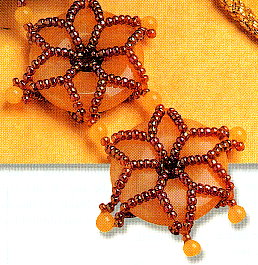
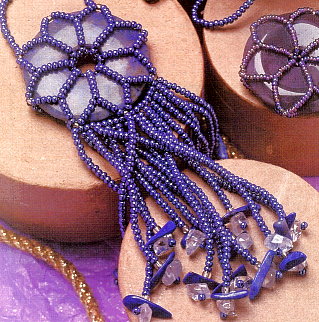
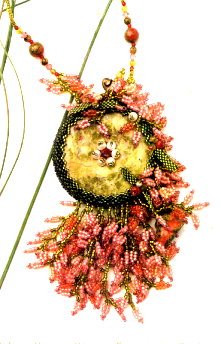
 donut1

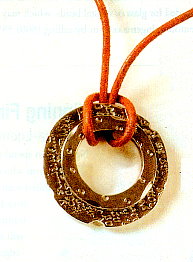
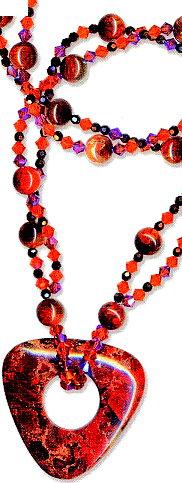
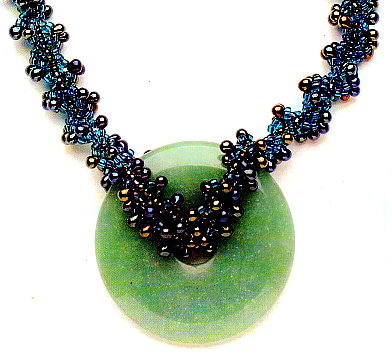
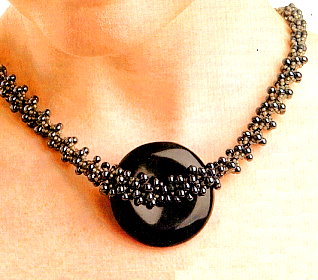
Last week, “donuts” were brought up in our conversation. No, not the delicious confections filled with jelly or covered with sprinkles. The “donuts” I’m referring to are usually made out of gemstones, have a small hole in the center and are rather flattish.

donut2

They fit into our discussion because they are a shape and have dimension. I immediately tensed. Then I shouted out, “I hate donuts!” Why should a particular shape — donuts —  spark such strong feelings? 

donut3

Then I looked around the table and other heads were shaking in agreement. Other than one dissenting opinion, it seemed we all had a dislike for this shape.   But why, what is it about the donut that leaves us wanting and dissatisfied?

donut4

We talked about the usual way they are worn—knotted with a cord strung through it, maybe embellished with some seed beads or fringe. We were stymied to think of an example that showed creativity and yet still kept the integrity of the donut.

donut5

I decided to look through old magazines to see what I could find. I found quite a few examples for it seems donuts are very popular.

 donut6

As a bead weaver, I love to bezel cabochons, I’ve used gemstone chips in crocheted ropes, but I’m still looking for a creative way to use a “donut”.

donut7

Maybe you have the answer.

donut8


donut9

Posted in beads, jewelry design | Tagged: , , , , , , , , , , | 3 Comments »

“Escape” Jewelry

Posted by learntobead on June 5, 2009

JEWELRY Is Partly About Emotions

Jewelry is partly about emotions and feelings.   For some reason, at the moment, I was thinking about “escapes.”   My vacation is coming up and I’m going to Maui.   Maybe that got me thinking in this direction.

Escape.   So what happens when you put the phrase “escape jewelry” into a google search?     How has the designer defined “escape” as a concept, and how is this definition reflected in her pieces?     Has this definition been successfully reflected in the pieces?

Here’s what we get:

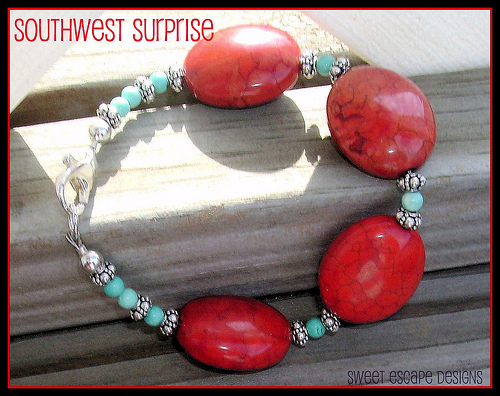
Sweet Escape Boutique by Kerri Hall
www.sweetescapejewelry.com

Definition of Escape:
We create unique pieces that you will not find in department stores.  You will not see any of your friends wearing the same piece, or saying, “I have that same piece at home.”

escape1

escape2

iDazz Jewelry
www.idazz.com
Their ESCAPE COLLECTION of Jewelry

Escape Definition:  We have one purpose: to open your world to a new set of fun, high quality, affordable handmade jewelry… and to make the shopping experience personal, simple and convenient.

escape3

La Ti Da Boutique
www.latidaboutique.net

Escape definition:  Styles offered at the boutique are trendy, contemporary, and appeal to a woman with a certain attitude, not an age group.

From their Escape From Paris collection

From their Escape From Paris collection

Creative Dexterity
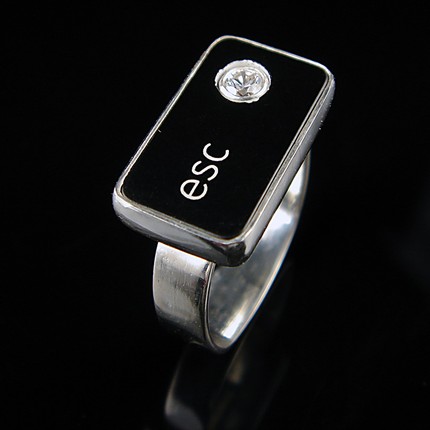
www.creativedexterity.com

Escape definition:  The escape key on your keyboard

escape5

Escape
A jewelry store in Georgetown, TX
www.shoptheescape.com

Escape definition:  We strive for the finest quality products, at fair prices, with uncompromised service.

Alchemy Bracelet by Holly Yashi

Alchemy Bracelet by Holly Yashi

Cross by John Cross

Cross by John Cross

Burglars smash into jewelry store, escape in Porsche

3 masked men seen running from back of jewelry store and into gray SUV early this morning.

By SALVADOR HERNANDEZ
The Orange County Register
Comments 9| Recommend 4

MISSION VIEJO – Burglars smashed into jewelry store at The Shops at Mission Viejo early this morning, making off with an unknown amount of loot before the mall opened, authorities said.

http://www.ocregister.com/articles/mall-unknown-viejo-2344189-amormino-shops

Escape definition:  bank robbery and fleeing the scene

escape8

escape9

The Art Escape Plan
www.theartescapeplan.com

A blog about Life through the eyes of a jeweler.

Escape definition:   living jewelry through reading about it through 30 pounds of reading material.

escape10

—–

Not much more when you continue to search on Escape Jewelry.   Jewelry might be the perfect escape vehicle, but not necessarily as a theme from marketing or design perspectives.

But now, when you plug in the phrase “Escape Jewelry” into Google, you’ll find this page, which, in its own pleasurable, wry and weird way, has become a sort of jewelry escape.

Posted in jewelry design | Tagged: , , , | Leave a Comment »