Warren Feld Jewelry

Taking Jewelry Making Beyond Craft

Archive for the ‘jewelry design’ Category

The DESIGNERS GAZETTE, Spring, 2011

Posted by learntobead on May 12, 2011

The DESIGNERS GAZETTE
Spring, 2011
Now Posted Online
Click Here 


Poetry In Motion, Spring, Rejuvenation. 
The contrast of Spring green against winter brown. 
The unfolding of a bud, the gradual opening of a flower, 
the capturing of sunlight and moisture and nourishment. 
Securing the essense in quartz and crystal and glass. 
Creating pathways and fences and sign-posts with wire and metal and clay. 
Nothing beats Spring for inspiration and jewelry.

Articles, Events, Classes, Ideas…..

Posted in jewelry design | Tagged: , , , | Leave a Comment »

Spring Has Sprung

Posted by learntobead on April 13, 2011

Spring Has Sprung
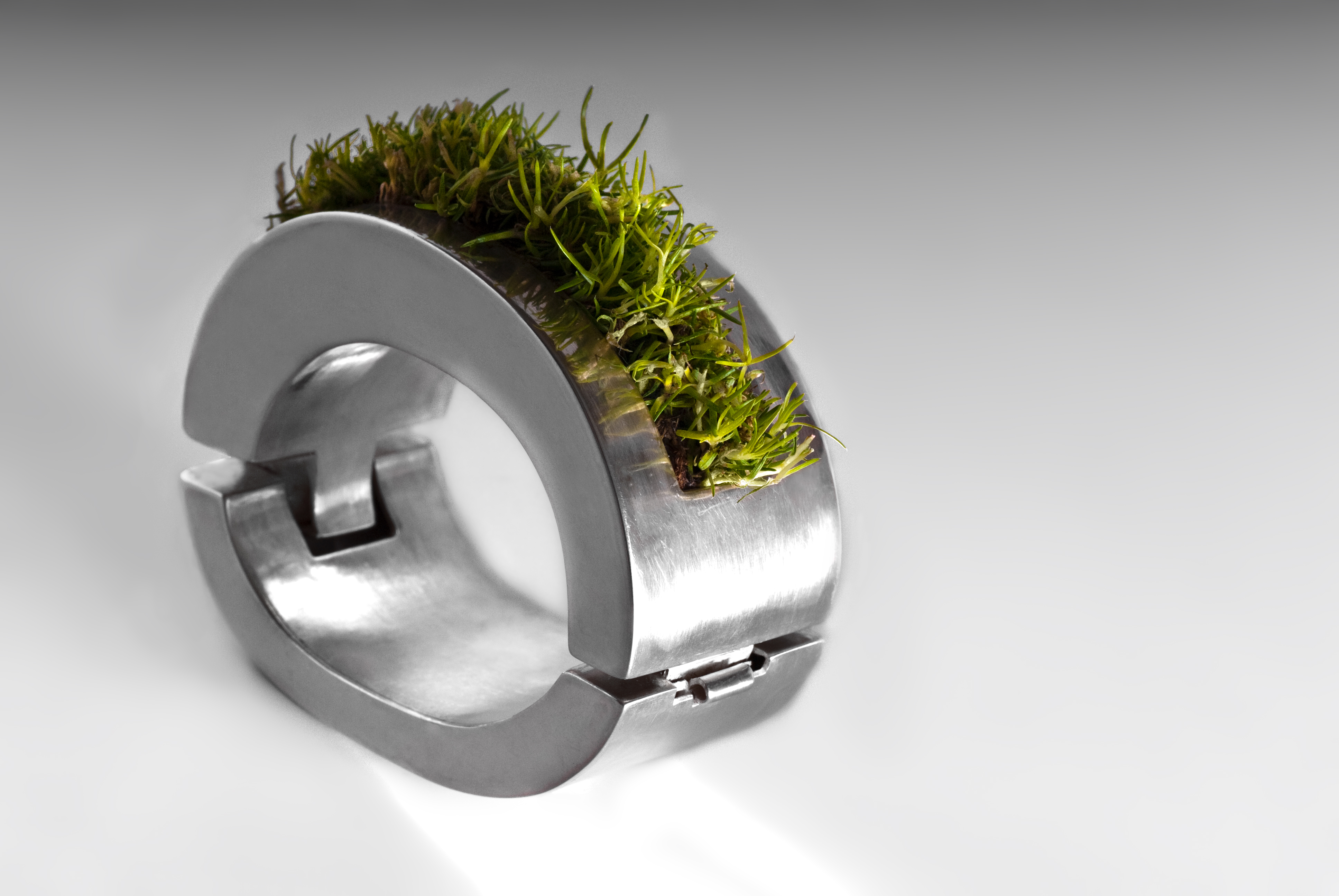
The Perfect Spring Ring By Janel Laza

Made from sterling silver and moss.

To see more of her work, visit her photo page
http://www.flickr.com/photos/janellaza/page3/

Posted in jewelry design | Tagged: , , | Leave a Comment »

Three Artists at SOFA NY April 2011

Posted by learntobead on April 13, 2011

Ornamentum
Three Jewelry Artists at SOFA NY
http://www.ornamentumgallery.com/gallery/index.php
http://www.sofaexpo.com/

SOFA stands for Sculpture Objects and Functional Art.     Their exhibits at various locales in the US and throughout the year, showcase outstanding contemporary “sculptural” objects, including jewelry.     I always like to check in on the artists they elect to showcase.   There is so much you can learn from each artist’s ideas and approaches.

Their current NY exhibition runs through 5/1/2011.

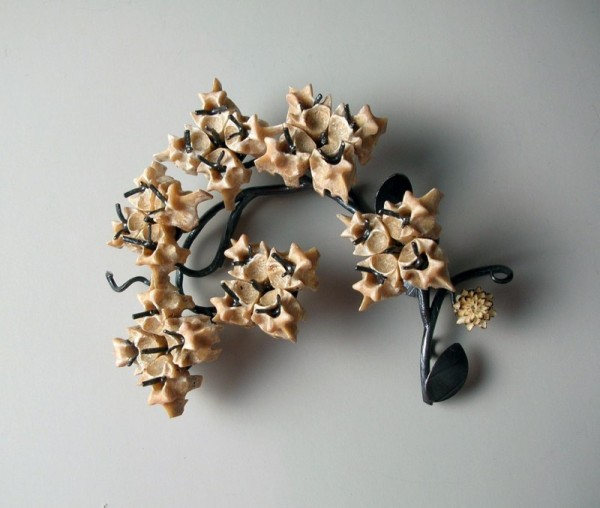
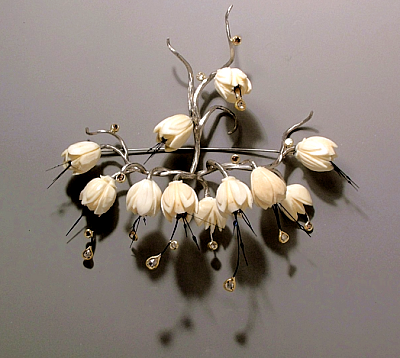
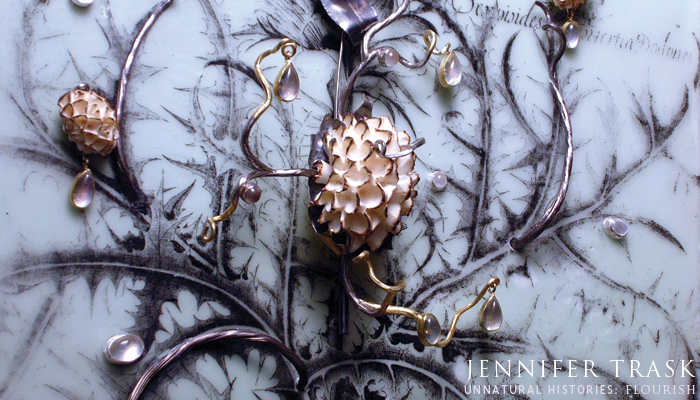
Jennifer Trask
http://www.jennifertrask.com/Site/Home.html

From her artist statement:

What do we carry with us in our bones? Literally, and metaphorically?

Used to express definitive physical sensation and emotional sentiment (e.g. ‘bone weary’), bone is considered the absolute reductive essence of our physical selves.  Bones linger,  incorporating evidence of what we ate, how we worked, injuries, illnesses, and environmental conditions during a given lifetime.  Lead, copper and iron, among other metals, bind to our bones as obscure mementos of our experiences.


What if those amalgams were to flourish and grow?

What would we see if we could view concepts and ideals, not just the verifiable physicality?


My process is a strange dance between the factual, or scientifically based research and the associative, or intuitive and non-verbal.  As I move between the two places, factual and intuitive, internal and external, the results are cross-species hybrids that embody a peculiar romanticized vision of the natural world that betray a very human concept of separateness, of dominion over nature.


Looking deeper still, we see a measure of the unanticipated, in traces of internalized abstract experiences and ideals.

Implicit and explicit.
Internal and external.


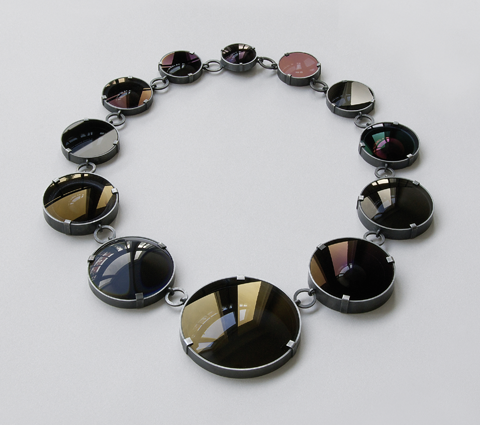
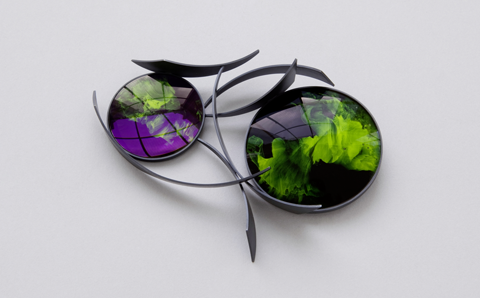
Jiro Kamata
http://www.artaurea.com/jewelries/101-jiro-kamata

Jiro Kamata’s enthusiasm for the lenses of old reflex cameras developed into a long-lasting design concept.  Kamata believes that the lenses capture and keep special moments like secrets and thinks that this could spark the jewelry wearers’ imagination.


Sergey Jivetin
http://crafthaus.ning.com/profile/SergeyJivetin

Jiventin takes an engineering eye, an intuitive understanding of mechanical physics, and the properties of unusual materials, like watch hands, human hair, fishing hooks, eggs, porcelain handles and syringe needles, to create very alive pieces of jewelry.

He sees his jewelry as helping the wearer make the connection between a person’s sense of self and humanity, and that person’s relationship to the work or industrial setting around her.


Posted in jewelry design | Tagged: , , , , , | 1 Comment »

Australian Jewelry Topos

Posted by learntobead on April 3, 2011

Australian Jewelry Topos
http://www.92y.org/shop/event_detail.asp?productid=T-AA5JW01

http://www.galleryloupe.com/exhibitions.php?sn=0&exhibit=35&p=5

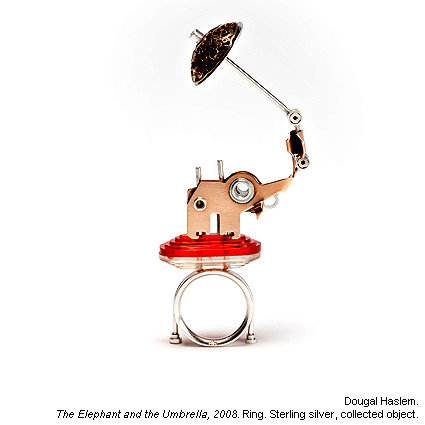
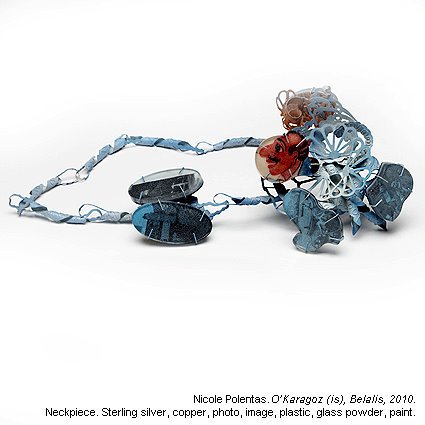
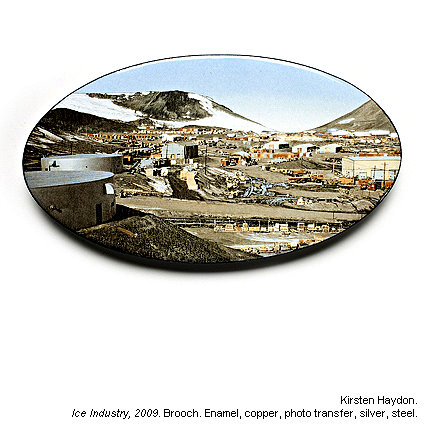
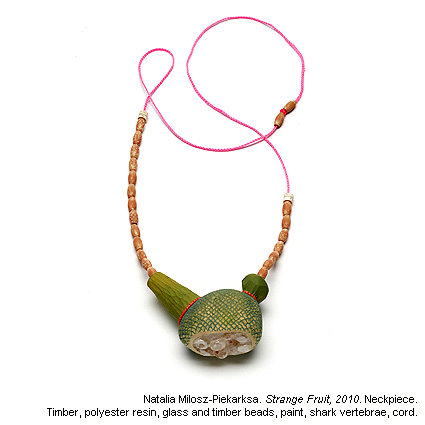
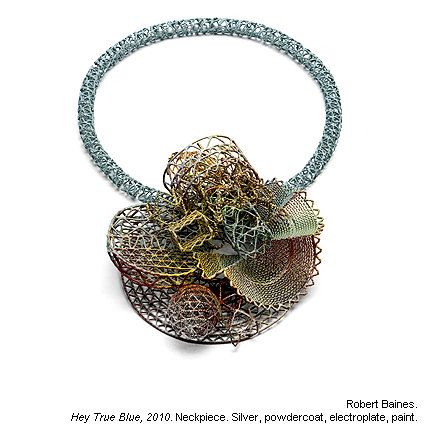
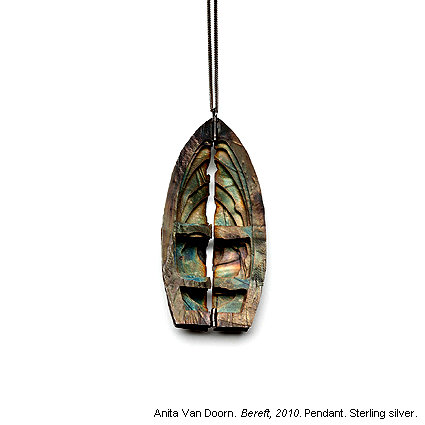
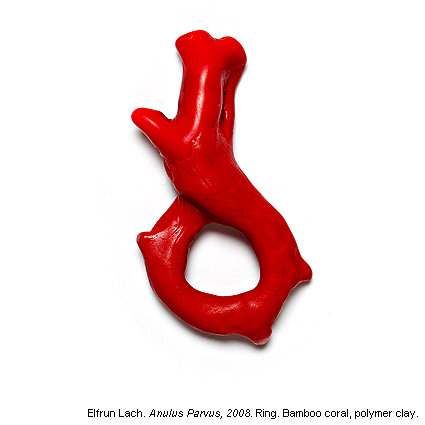
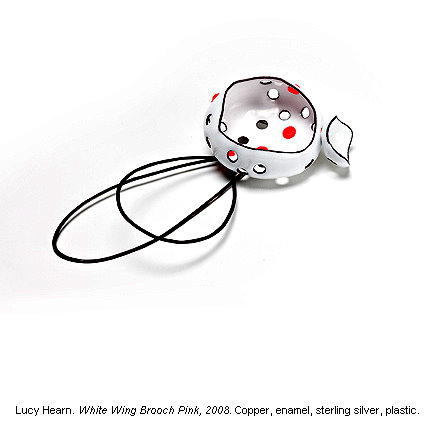
A recent lecture and discussion by Robert Baines on  the relationship of jewelry to place in Australia.

“This exciting exhibition brings together eighteen young Australian artists, all graduates of the Gold and Silvermithing Department at RMIT University, Melbourne, Australia. The theme of topos, place, is explored through a diverse and fascinating group of jewelry objects. Place includes locations in the physical world, such as homes and public squares, crowded cities and untouched forests. Place can also refer to states of mind, webs of memory and association, and other metaphorical spaces. Drawing on traditional and non-traditional materials and techniques, the artists featured in this exhibition challenge viewers to deepen their understanding of places we inhabit.

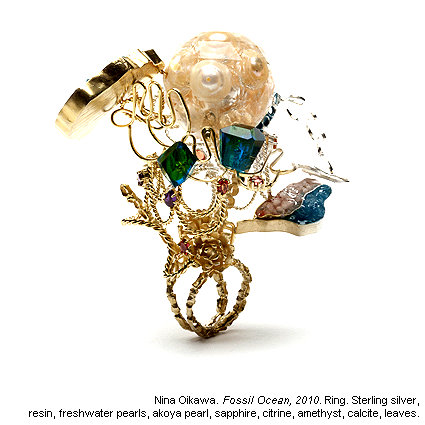
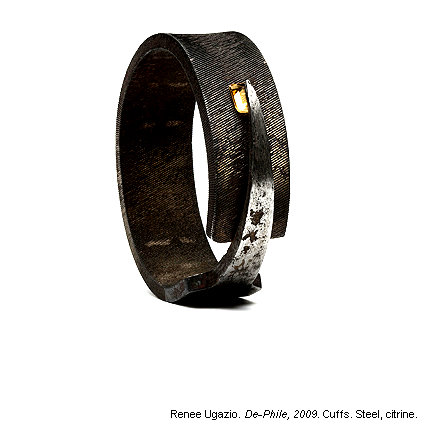
Participating artists are Katherine Brunacci, Robert Baines, Elfrun Lach, Anita Van Doorn, Dougal Haslem, Julie Mitchell, Karla Way, Dr. Kirsten Haydon, Lucy Hearn, Mel Miller, Natalia Milosz-Piekarska, Nicholas Bastin, Nina Oikawa, Penelope Pollard, Renee Ugazio, Linda Hughes, Christopher Earl Milbourne and Nicole Polentas.”


““Jewelry is a bearer of cultural and historical meaning and memory. In particular it is concerned with the relations of those meanings with the personal and urban settings, acting as a way of defining and interpreting ‘topos’ (meaning ‘of place’, Greek). The concern of this jewelry research is to recognise and explore the ways the jewelry artefact opens our engagement with, and understanding of, the personal and external places we inhabit. Jewelry conveys settings of human identity and presence as well as external settings such as urban spaces and ‘topos’ takes on a broader significance as place itself becomes an expanded notion. Jewelry Topos explores the ways jewelry engages with our understanding of the physical and metaphorical places we inhabit.”                                            Professor Robert Baines


The design question here is to what extent is an artist able to create a piece of wearable, fashionable jewelry that also conveys the artist’s personal relationship and understanding of a place?     Can the artist accomplish this without, either bursting way outside the boundaries of something “wearable”, or reducing the “meanings” to such a symbolic level that they no longer convey what was on the artist’s mind?


How familiar does the viewer (or wearer) have to be of the Australian place references for the artist and his or her jewelry to be judged successful?   Or does it not matter?

Looking at these pieces, what do you think?      How successful or satisfying are these pieces?     I think all of these have artistic merit, but not necessarily “artistic jewelry” merit.     Jewelry as art is only art as it is worn.

How has the artist manipulate the aesthetic to achieve a sense of place?

How has the artist manipulated materials to achieve a sense of place?

How has the artist manipulate techniques to achieve a sense of place?


Posted in jewelry design | Tagged: , , , , , , , , , , , , , , , , , , , , , | 1 Comment »

On the more avant garde side with CoutureLab

Posted by learntobead on March 1, 2011

On the more avant garde side with
CoutureLab
www.couturelab.com


“Avant-garde” means at the leading edge or vanguard.   It is a label associated with jewelry that is more experimental, more innovative, cutting edge, resonant.    There is something witty or unusual.    There is something that gets people talking about the pieces.

CoutureLab represents an ever-evolving stable of avant-garde jewelry artists.    These are artists that other jewelry artists and galleries talk about.     They sell to upper end clients who want to associate with the hip and new and artsy.

While you may not personally want to be “avant-garde”, an exploration of these artists’ works is a great learning experience.    You learn about color combinations, balances and proportions.   You learn about new jewelry profiles — that is, how to shape jewelry relative to a person’s body.   You learn new techniques of construction, new materials, and combinations of these things.     Viewing the works of these kinds of jewelry artists is a great way to stimulate new ideas within your own work.

It is also useful to explore some more of the “details.”   Visit the CoutureLab website, and look at the prices for the artists’ works.    In your mind, determine how the price might relate to the amount of work and the cost of materials.   How much of the price might relate to the artists’ reputation?   In some cases, there seems to be a good match between price and object.   In other cases, some prices are rather low, and you wonder how the artist can make a living selling jewelry.    In the CoutureLab website, very few pieces, to me, seem over-priced.

Another good research -exploration is to examine the jewelry artist’s website.  How is it organized?   Is there an excessive use of black backgrounds and flash-utilities (allows movement, almost like watching a slide show or movie)?   A black background makes the text hard to read.   Flash looks fantastic, but the average customer’s computer often locks up, because of flash utilities.   Is the information organized well?   How about the navigation within the site?    Do the images sufficiently convey the details about the pieces?    How distinctive and memorable is the website?

Also do a Google search on the artists name.    Ideally, you would want the artist’s website to be at the top of the search list.    When it doesn’t appear at or very near the top, you need to wonder about the artist and their long term survival.

Here are some of my favorite artists currently represented by CoutureLab.


Alexis Mabille
www.alexismabille.com

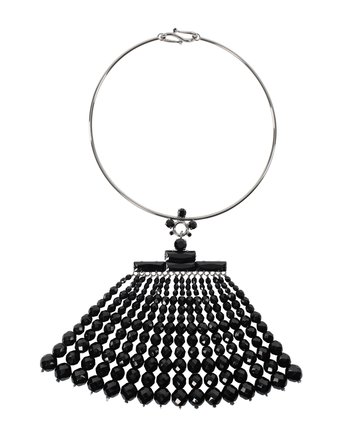
COUTURELAB: “A graduate from the houses of Ungaro, Ricci and Dior, the couturier fuses his playful imagination and technical affinity to create a joyful and dynamic universe.  … What adventures will you attract in Alexis’s “Black Mischief” art-deco style necklace? Faceted black crystals – precisely graded in size – hang in delicate suspension, catching the light with your every move. Emerald and round-cut crystals, claw-set in lustrous white metal, form the complementing cluster at the top of the pendant; a silvery hoop with ornate hook clasp secures the piece around your neck.
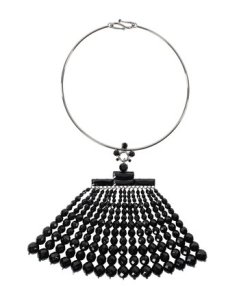
Black Mischief Necklace by Alexis Mabille


Ann Demeulemeester
http://www.anndemeulemeester.be/

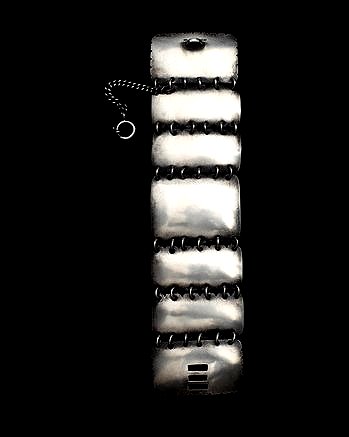
COUTURELAB: “As part of the Antwerp Six Anne Demeulemeester was responsible for creating a radical new vision for fashion in the 1980’s. The strong sense of innovation and creativity inherent in her work means her designs still look fresh and has a strong sense of appeal in current times.  …With this silver plates bracelet, Demeulemeester has taken simple polished silver rectangles and worked them in to a stunning piece which fuses armour and accessories, the silver plates have a brushed surface which has a subtly shiny finish. Each plate has a fluted edge linked by small polished silver circles and the bracelet fastens with an innovative clasp where one plate slots through another and is secured with an oversize clasp.”

Silver Plates Bracelet by Ann Demeulemeester

Bea Valdes
http://www.beavaldes.com/

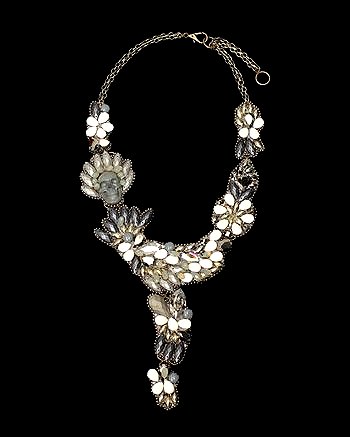
COUTURELAB: “For Bea Valdes, each piece is an exploration and the material her muse – the sway of glass drops, the sheen and shine of metals, ribbon’s sensual embrace. Hand-made in the designer’s native Philippines, these painstakingly conceived and executed compositions stand testament to her philosophy of ‘Just one bead at a time’.   …A beautiful combination of grey, green and beige beads and crystals, Bea’s “Hannibal” Necklace adds luxurious glamor to your outfit. Beige enamel drops and a beautifully carved olive-green skull lie between the dazzling oval and pear-shaped crystals in shades of green and grey. The necklace is edged with tiny beads to ensure a dynamic display against your skin or outfit. A chain of brass-effect links closes the circle. Use the extender section to adjust the necklace’s length, then secure with the lobster-claw clasp. For a comfortable fit, the whole main assembly is backed with fabric-covered padding; flexible construction contours the design closely to your body. ”
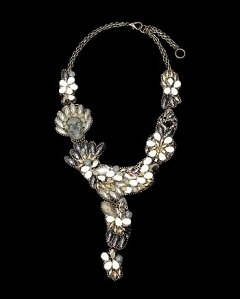
Hannibal Necklace by Bea Valdes

COUTURELAB: “Select Bea’s asymmetrical Green “Sprawl” Necklace for its avant-garde charisma. Dazzling beads and crystals in shades of green and gold – round-cut, pear-shaped and tubular – group to form clusters connected through metal chains in brass-effect. Pear-shaped crystals hang suspended from the cluster. A chain of metal links closes the circle. Use the extender section to adjust the necklace’s length, then secure with the lobster-claw clasp. For a comfortable fit, the whole main assembly is backed with fabric-covered padding; flexible construction contours the design closely to your body.”
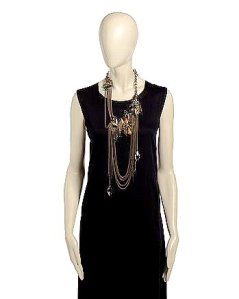
Green Sprawl Necklace by Bea Valdes


Christian Lacroix
http://www.christian-lacroix.fr/


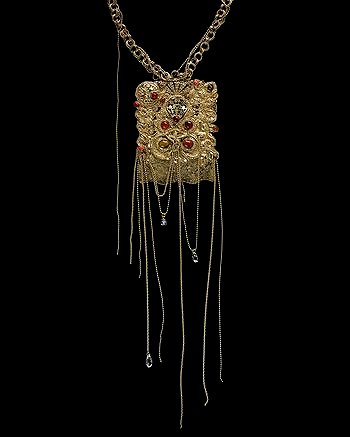
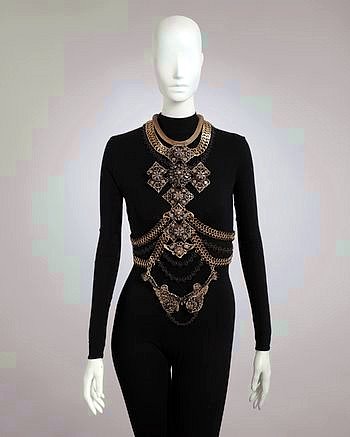
COUTURELAB: “A beautiful display of subtle jewels and antique golds, this piece is mesmerizing. Featuring a rustic, sculpted finish, the gilded chain pendant is encrusted with amber-colored gems. Christian Lacroix gives equal value to his accessories and jewelry line: “I give a lot of care and attention to shoes, bags and jewelry because they define a posture, an overall look – they are as important to me as clothes”. It is this attention to detail that makes each one of his pieces, whether large or small, a handcrafted work of art.”
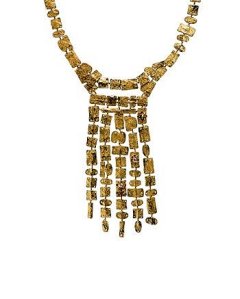
Antique Golden Necklace by Christian Lacroix

COUTURELAB: “Truly unique, this golden bejeweled piece is mesmerizing. Sculpted to a rustic finish with a chunky chain necklace, the gilded keepsake pendant is encrusted with amber-colored gems and stones and adorned with draping delicate chains.”
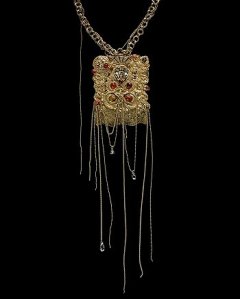
Keepsake Necklace by Christian Lacroix

Delfina Delettrez
http://delfinadelettrez.com/

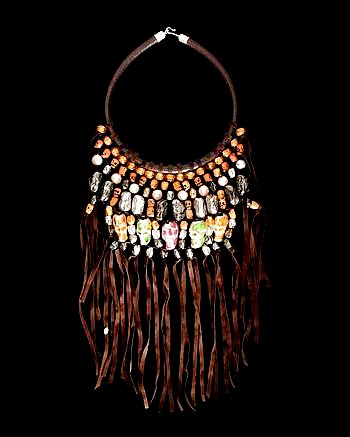
COUTURELAB: “Italian designer Delfina Delettrez is renowned for her skill in melding unusual and exotic materials, to create character pieces full of charm. Infused with romance and the macabre, these pieces reflect your strength of personality and stylish wit.  Delfina’s Brown Wudu Necklace has a raw tribal quality to its design. Set on a rich black leather necklace is a woven bib section containing rows of grinning skulls carved from sumptuous silver and glossy bone with fringed soft suede tassels. The unique materials complement each other and create this edgy statement piece which will add a strong accent to the simplest of outfits.”
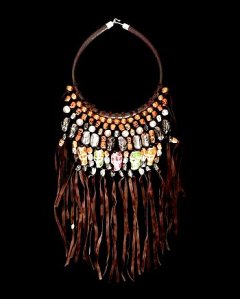
Brown Wudu Necklace by Delfina Delettrez


COUTURELAB:   “With these Orgy earrings she has created a range of sensual statement pieces guaranteed to be a talking point. Wear Delfina Delettrez’s Orgy Earrings for their bold statement. Each piece is carved from exquisite silver, featuring the couple in a different position. Combined with the risqué motifs, these stunning earrings create a heady mix of Kama Sutra and couture, making them extremely covetable.”
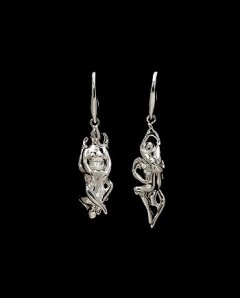
Orgy Earrings by Delfina Delettrez


Eileen Coyne
http://eileencoyne.com/

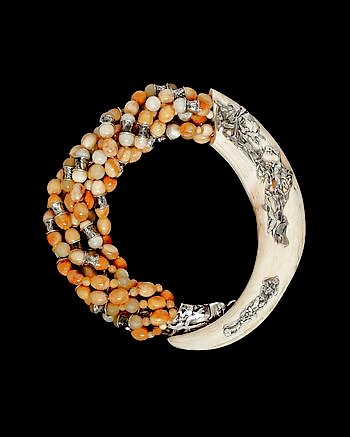
COUTURELAB: “Mesmerizing reflections and refractions, colorways and constructions, surfaces and textures – these are the raw materials for Eileen Coyne’s alchemy. From her London atelier, the designer creates jewelry, kaftans and precious-skin belts inspired by the aesthetics of ethnic peoples around the world. Make the primal charisma of Eileen’s agate and boar’s tusk necklace your own. Spherical and egg-shaped agate beads array with carved and contoured pillars of blackened silver to form seven interwoven ropes. At one end, these are fixed to an arc of boar’s tusk, its exquisitely grained surface festooned with textured silver. At the other end, the ropes attach to a rough-hewn silver ingot which hooks onto the tusk to close the circle around your neck.”
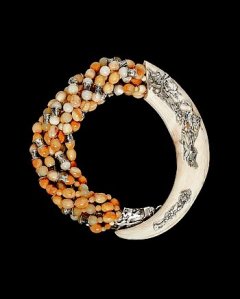
Agate & Boars Tusk Necklace by Eileen Coyne

Erickson Beamon
http://www.ericksonbeamon.com/

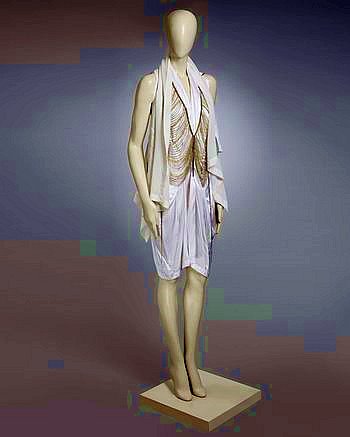
COUTURELAB: “Erickson Beamon’s eclectic take on costume jewelry makes their pieces a must have for the fashion cognoscenti. They effortlessly mix materials to create stunning statement pieces which enhance any outfit. Their designs reference everything from current style to Bedouin souks ensuring each has a rich individual charm.  Choose Erickson Beamon’s eye-catching Gold Body Harness for its striking allure. The chain of plated base metal links is beautifully crafted to wrap delicately around your body, adding instant charisma to your look. The antique gold effect adds a luxurious shine and makes this an extremely covetable piece.”

Gold Body Harness by Erickson Beamon

Fernando Jorge
http://fernandojorge.co.uk

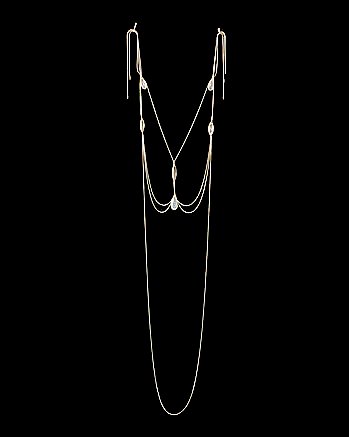
COUTURELAB: “Taking inspiration from the rich and varied concepts of body, gender and sexuality found in the culture of his home country, Brazilian-born Fernando Jorge exploits the blurry crossover between stereotypes and identity. His designs focus on Brazil’s association with sensuality, perpetuated through ‘the foreign eye’, the one that registers only what is different. The results are his elegant and ambiguously provocative pieces, translating the latent sensuality associated with his vibrant country.  Add sensuality and luster to your look with Fernando Jorge’s Fluid Neckpiece. The fluid 18 carat yellow gold chains delicately drape around six bespoke milky quartz in stunning asymmetry. This neckpiece beautifully sprawls over your body with its exquisite long gold chains.”
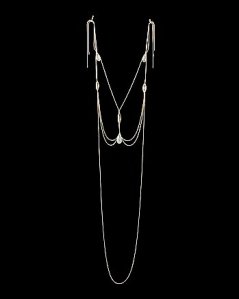
Fluid Necklace by Fernando Jorge


Lotus Arts De Vivre
http://www.lotusartsdevivre.com


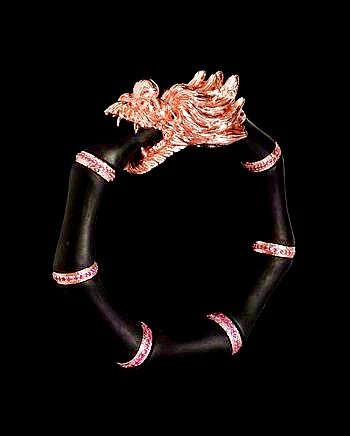
COUTURELAB: “Into your life, Lotus Arts de Vivre brings objects of outlandish beauty inspired by the flora, fauna and legends of south-east Asia. Rather than mass produced to meet a pre-prepared design, each piece is hand-crafted in Thailand to observe and enhance the unique forms and traits of the natural materials that comprise it. Fabulous sea shells and coral, rare animal skins, hulks of ancient wood, jungle seed pods, precious and semi-precious gems – no two examples exactly alike – are honed and combined to make jewelry, accessories and home-wares beyond compare. Machine working is minimal. Instead, teams of artisans deploy traditional decorative skills – all but extinct beyond the region – to invest each creation with timeless fascination and eternal value.   Wrap your wrist in the electrifying embrace of Lotus Arts de Vivre’s dragon bracelet. Sections of precious ebony wood, and silver rings plated with radiant 9K rose gold and encrusted with rubies, interface to form this spectacular circuit; silver is hand carved and coated with gold to form the fantastical creature’s head. Elastic wire, invisibly threaded through the centre of the piece, allows it to flex for an exact and comfortable fit.”
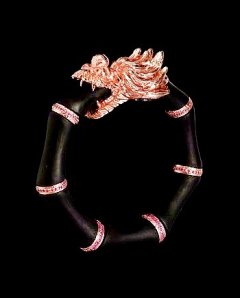
Dragon Bracelet by Lotus Arts De Vivre


Vicente Gracia
http://vicentegraciajoyas.com/

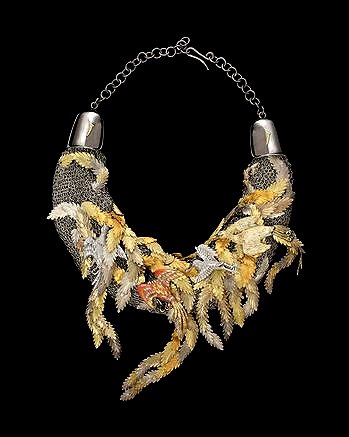
COUTURELAB: “Own for yourself the transcendent charisma of jewels by Spain’s Vicente Gracia. Through his work, this multi-award winning designer seeks to re-engender the original symbolic meanings of gemstones as a bridge to the divine. Vicente’s native city, Valencia – its ancient traditions, myths and environs – and metaphysical sources, including sacred literature and symbolic art, are his inspirations. Ranked by Vogue as one of the world’s 20 most prestigious jewellers, Vicente conjures investment pieces that radiate an exquisite joy. Each of his creations for CoutureLab is a unique one-off.   Vicente’s “Ascenso Celestial” (“Heavenly Ascent”) necklace is set to guild you with a unique charisma. Coursing your collar is a dense and flexing mesh of fine silver links gathered at each end into shimmering cups. Across this lattice, four fantastical birds are exquisitely carved from sterling silver, embellished with rose, black and white enamel, and pave-set with sparkling diamond accents. Scattered across and trailing beneath are ribbons of feathers carved from 24K, 18K and 9K gold and silver, each textured section fluidly linked to the next to conjure a multi-toned play of light. A blackened silver chain with simple hook clasp completes the sublime effect. ”
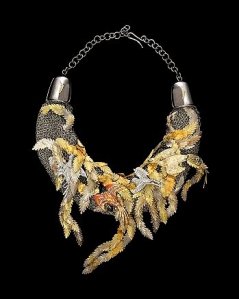
Ascenso Celestial Necklace by Vicente Gracia


Walid
http://www.walid-atallah.com/

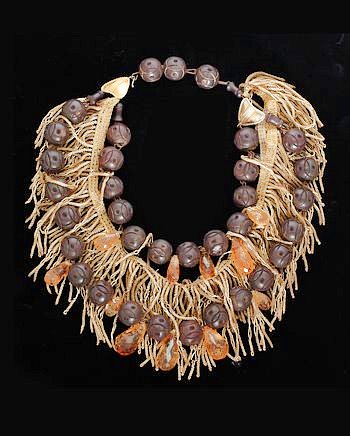
COUTURELAB: “Walid’s accessories combine his extensive fashion knowledge and love of history with the best in vintage and unusual materials. This wonderful statement necklace combines antique gold fringing, with dark wooden beads and sparkling citrine teardrops. The result is a heady mix of rich gold colours and textures which will inject some statement style into any outfit. the ingenious combination of vintage materials and modern design give this piece a timeless quality and make it one to treasure.”
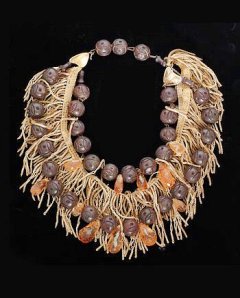
Chunky Citrine Necklace by Walid


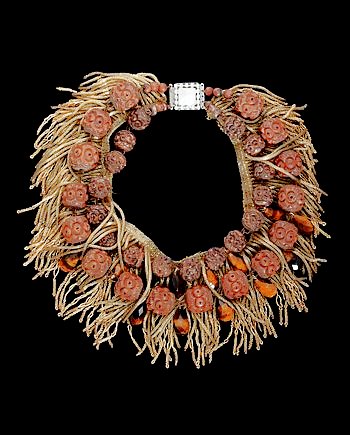
COUTURELAB: “A fabulous arrangement of antique gold passementerie, antique carved wooden beads and faceted tiger’s eye teardrops make this necklace a truly unique piece. Hand finished it fastens with a mother of pearl and Swarovski encrusted box clasp.”
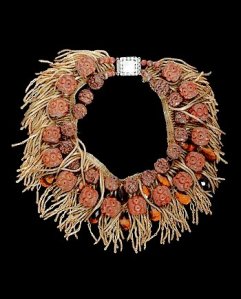
Chunky Tiger's Eye Necklace by Walid


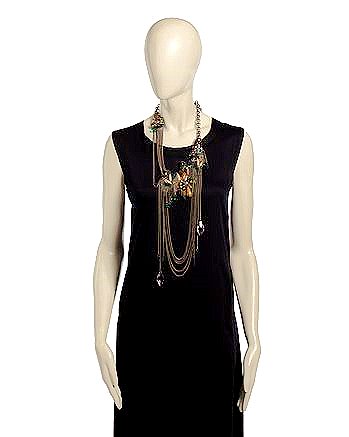
COUTURELAB: ” Inspired by antique garments, interiors and art, the designer produces one-off pieces that evoke the past while electrifying the present. Let Walid’s Silver and Gold Lattice necklace swathe you in its scintillating embrace. White-metal curb chains, backed with fabric for a comfortable fit, form the vertical supports for strings of faceted and globular beads and rope-style links. Coursing your body in a series of scintillating silvery and golden crescents, these converge above your navel to sculptural effect. To put the piece on, simply slip your arms into the armholes and tie the waist chain behind your back.”
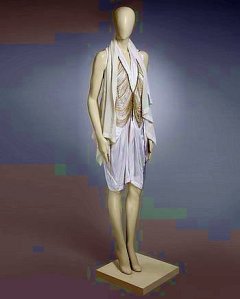
Silver & Gold Lattice Necklace by Walid


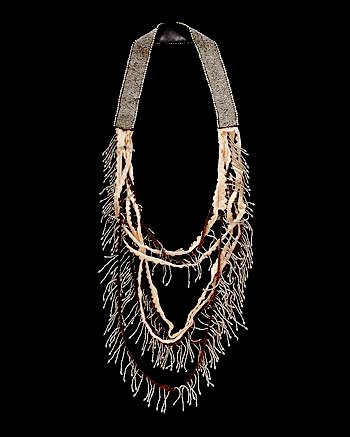
COUTURELAB: “Project beauty and mystery in Walid’s “Sanctum” necklace. A broad satin band encrusted with 19th-century gunmetal beads wraps comfortably around your neck. Joining the ends are fascinating perforated crochet ribbons, from which chains of smoky metallic beads cascade low over your body, catching the light with your every movement.   Formed only from vintage materials, this piece may contain signs of age or wear. These are to be seen as unique memorials rather than flaws.”
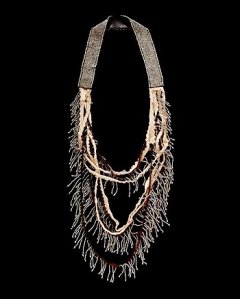
SANCTUM NECKLACE by WALID

Posted in jewelry design | Tagged: , , , , , , , , , , , , , , , | Leave a Comment »

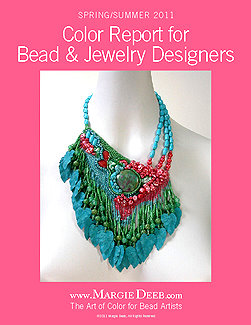
Margie Deeb’s New Color Report

Posted by learntobead on February 27, 2011

Margie Deeb’s
Color Report for Bead & Jewelry Designers
Spring/Summer 2011
www.margiedeeb.com

Margie Deeb is a very prolific color artist and jewelry designer.    She has written many books, and puts out many articles, including her Color Reports.     These are for sale on her website.

In her periodic Color Reports, she discusses the current fashion colors, how to combine and match them in jewelry designs.

I was particularly struck by the piece on her cover.     This piece was done by Jamie Cloud Eakin called “Garden Party.”   I think it’s a brilliant example of contemporary jewelry art.

The color choices — a green turquoise, a blue turquiose, and a antique rose work well together.

Her placement of each color, and the proportions of each color are spot on.

The style of the piece — what is called a “jewelry profile” — is very contemporary.     We basically have an oversized pendant hung close to the neck like a choker.     You see this style widely in New York and California, and on the soap operas and news casters on TV.      It’s been an evolving style for about 5 years now, but has not really caught on in the rest of the country.

In our bead studies classes, we refer to the general style as wearing a sign around your neck.    And I think that’s one reason the style hasn’t spread widely.     Often, the pendant’s relationship to the strap is poorly designed, and so the piece looks like someone is wearing a sign around their neck.

But Jamie’s piece solves this problem wonderfully.    I think many factors are operating here:   The incline along the top, making the one side of the strap hang higher than the other.   Her incorporation of the antique rose color in the one side of the strap at the bottom.    The strap on one side is single, and on the other side, it is 3-stranded.

The piece is somewhat asymmetrical, yet very balanced.       Jamie has clearly made something noteworthy out of the ordinary.

The piece has movement, and it has dimensionality.      These are very important components of contemporary jewelry design.

Last, with turquoise or turquoise and red, you often end up with something very strongly associated with the Southwest US.     If you don’t want the viewer to interpret your piece that way, it’s difficult with these colors.     I think Jamie has succeeded here, as well.

This is a superbly designed piece.    I suggest that everyone study its details closely.

Posted in jewelry design | Leave a Comment »

The Designers Gazette, Winter 2011

Posted by learntobead on February 9, 2011

Winter, 2011, Designers Gazette

READ THE FULL ISSUE ONLINE

CLICK HERE http://www.warrenfeldjewelry.com/pdf/wg021511/winter2011pdf.pdf


Ice, Snow, Pause. A yearning for regeneration. A time to reflect the sun’s rays back upon the elemental components, the icicly-dangling drops, the whites and grays and blacks, the gaps of color, texture and pattern between each bead and within each negative-space. The cold touch of gemstone, glass and crystal. A time to jump cliffs and rebound with newfound energy. Feel your jewelry as it comes alive. And let yourself transform these winter days into creative splendor.


– On the blog

– Huib Petersen Workshops

– Sherry Serafini Workshops

– First Dibs Sale at Land of Odds

– Beaders’ Circle

– Bead Study Notes

– Downloadable project: Square Stitch Garden Walk Bracelet


Posted in jewelry design | Tagged: , , , | Leave a Comment »

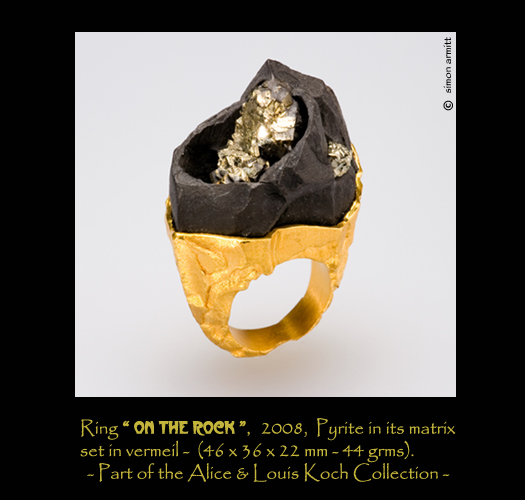
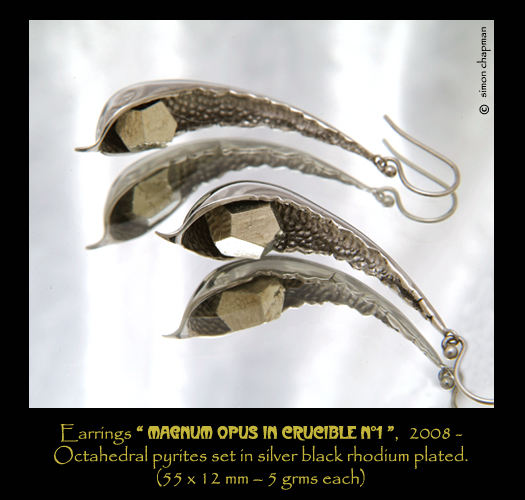
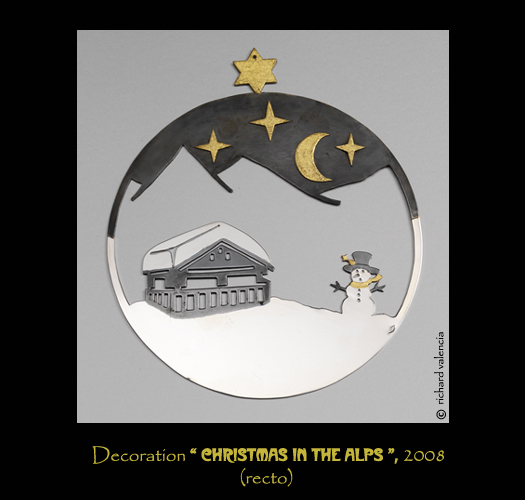
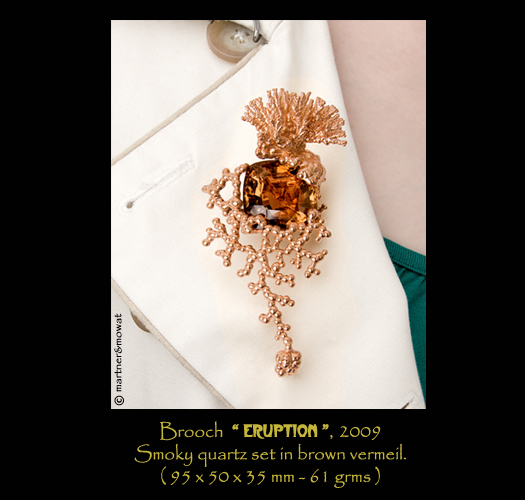
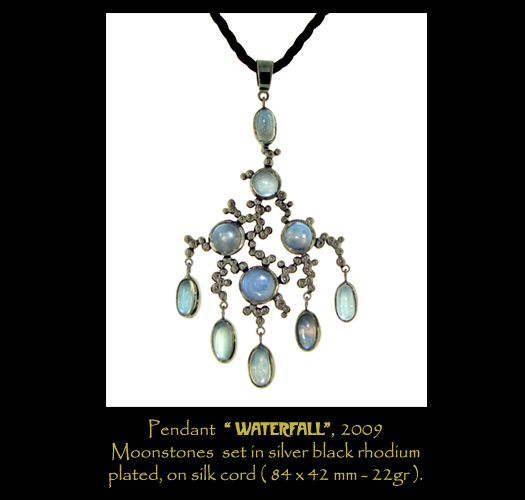
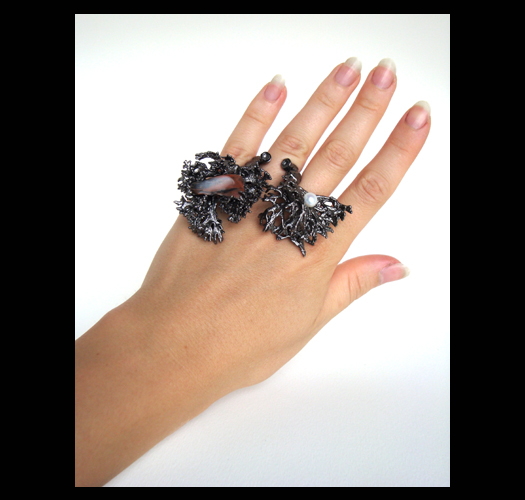
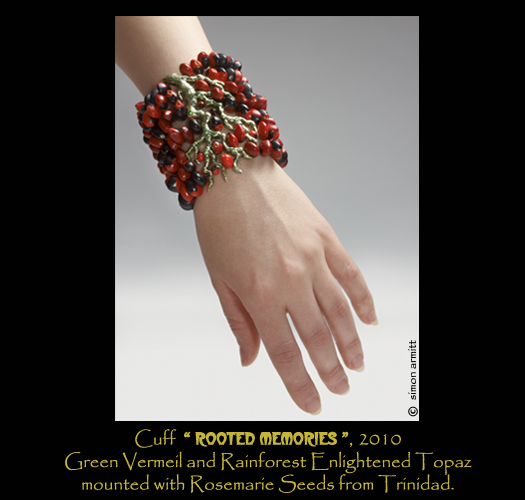
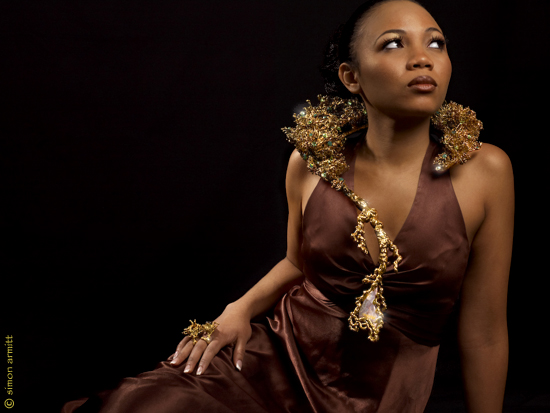
Ornella Ianuzzi

Posted by learntobead on January 27, 2011

Ornella Ianuzzi

http://www.ornella-iannuzzi.com/

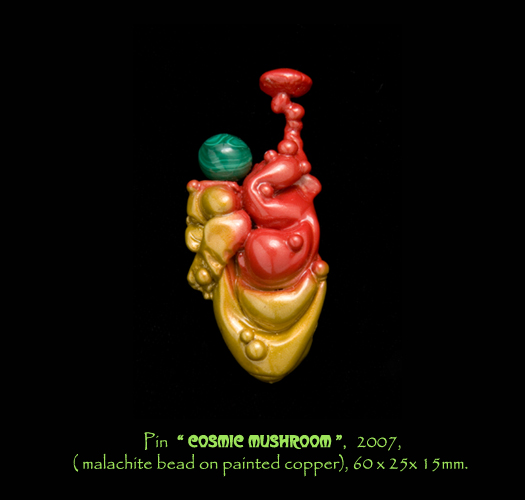
Cosmic Mushroom Brooch

Ianuzzi is a french jewelry artist inspired by nature, fascinated with art nouveau, intrigued by the growth patterns of natural minerals.

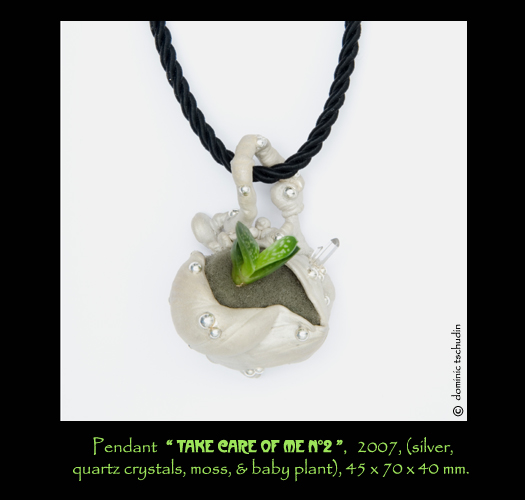
Take Care of Me Pendant

She likes to experiment with electrolysis process which allows metals to grow into various organic shapes and textures.

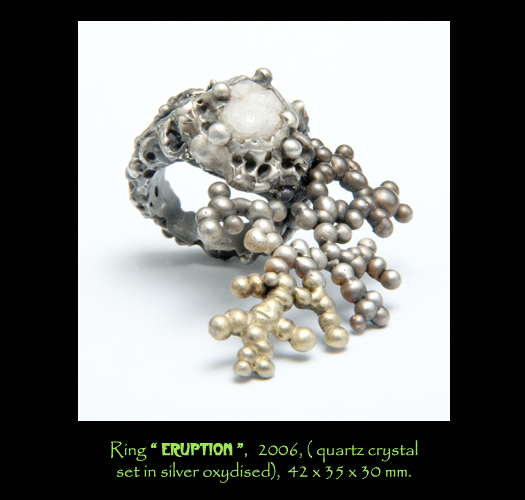
Eruption Ring

She combines minerals, which are compounds found in living things, with vegetal elements, to create wonderfully organic shapes and forms.

On The Rock Ring

Each of her pieces are hand carved.

Magnum Opus In Crucible Earrings

Christmas in the Alps

Eruption Brooch

Waterfall

rings

Rooted Memories Cuff

Necklace

Posted in jewelry design | Tagged: , , | Leave a Comment »

Legacy of Atelier Janiye

Posted by learntobead on January 27, 2011

Fuller Craft Museum Presents The Legacy of Atelier Janiye and the Legacy of Master Jeweler Miye Matsukata

The Fuller Craft Museum in Boston presents The Legacy of Atelier Janiye and the Legacy of Master Jeweler Miyé Matsukata celebrating the work and legacy of Boston-based jewelry artist Miyé Matsukata (1922–1981).

This exhibition open January 22, 2011 – July 24, 2011, presents together for the first time a retrospective selection of Matsukata’s work, alongside the work of her colleagues Nancy Wills Michel, Alexandra Solowij Watkins, and Yoshiko Yamamoto.

Atelier Janiye is a jewelry design house, representing goldsmiths who excel in manipulating the metal into very naturalistic and organic forms.     Their pieces are associated with fine craftsmanship.    Each artist has a very strong sense of style.

Miye Matukata (1922-1991)

Born in Japan, lived in Boston.   In 1968, Miyé Matsukata said, “I would like to maintain a spirit of design that is quiet and free. I feel metal can have a life if it has motion and less rigid confines.” With the layering of fluid shapes, this bracelet assumes the lightness she hoped to achieve.

Nancy Willis Michel

Alexander Solowij Watkins

Yoshiko Yamamoto

Posted in jewelry design | Tagged: , , , , , , , , | Leave a Comment »

VOTE FOR ME

Posted by learntobead on January 20, 2011

VOTE FOR ME

I entered my jewelry work in a contest called ARTISTS WANTED: A YEAR IN REVIEW. There are many judging levels to the contest. One of them is a public review. The public is asked to judge and rate the collection online. If you have the opportunity, I would appreciate if you would visit the website. At the top right corner, are a five star rating system, with 5 as the highest score. Voting ends around February 8th.

Go to:
http://www.artistswanted.org/oddsshop

Thanks — Warren

Posted in Contests, jewelry design | Tagged: , , , | Leave a Comment »

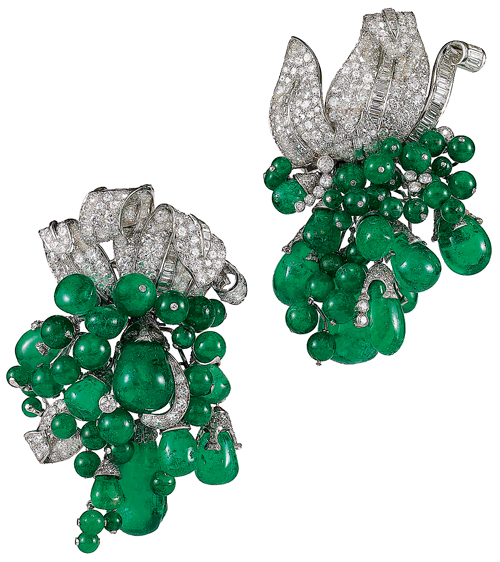
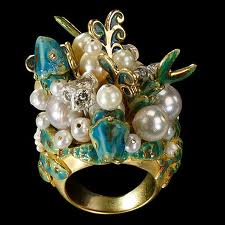
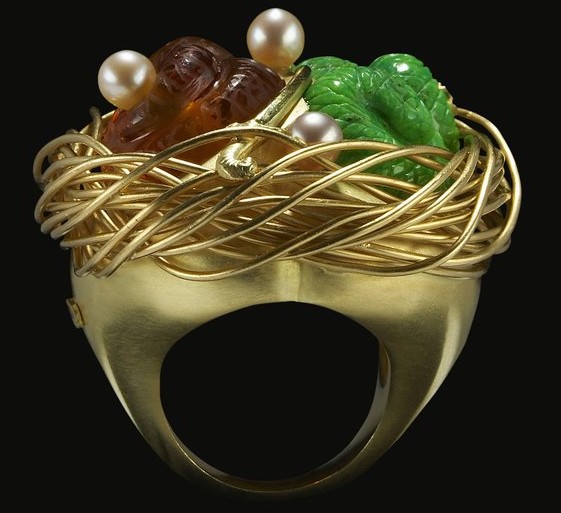
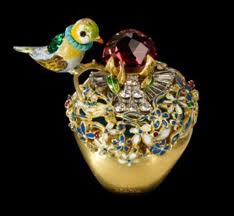
Paul Flato Hollywood Whimsical Jewelry

Posted by learntobead on December 19, 2010

Paul Flato – Hollywood Whimsical Jewelry

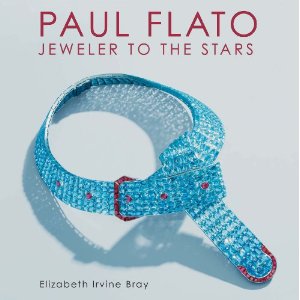
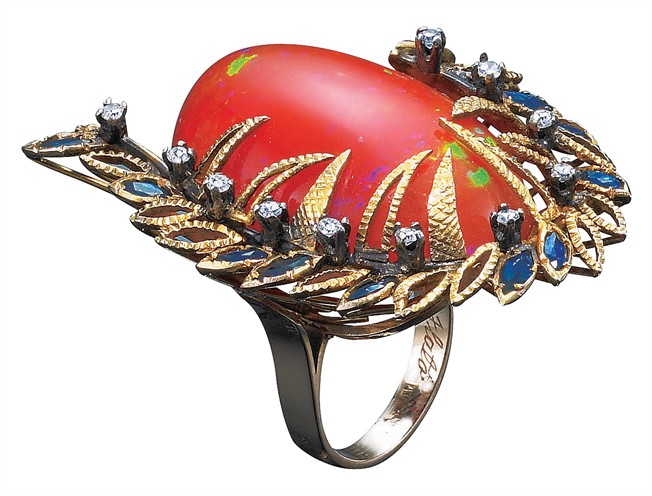
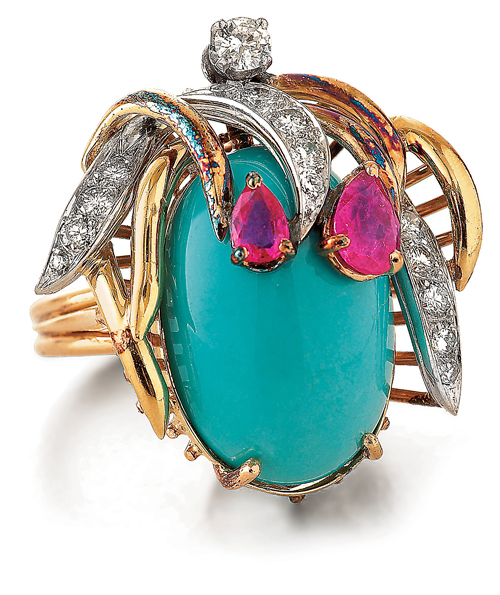
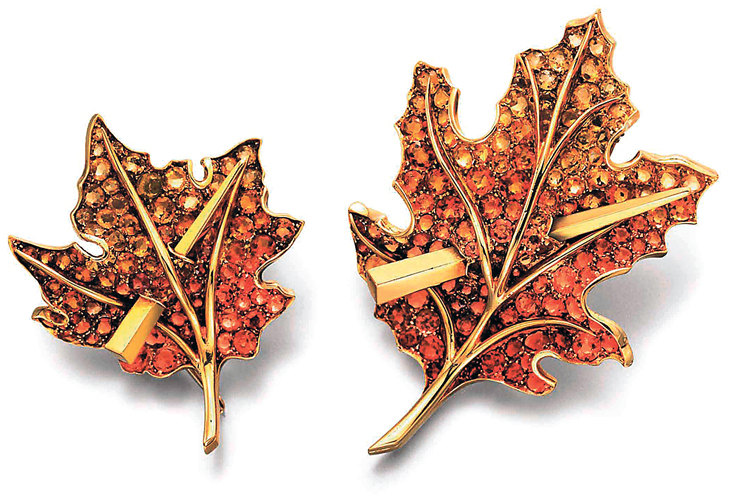
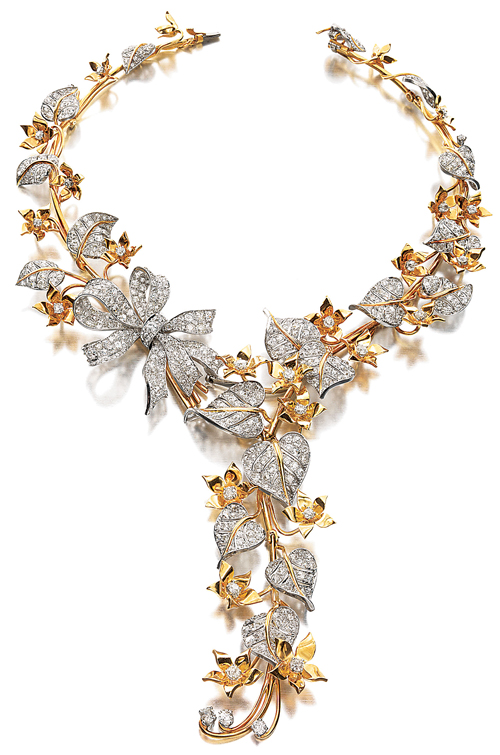
Paul Flato, who died at 98 in 1999, was known as the Jeweler To The Stars.    In the 1930’s and 1940’s, he brought European styling to costume and fine jewelry, and added some Hollywood whimsical touches.

He grew up in Texas near the King Ranch, in a well-to-do family.   He began making jewelry and bejeweled saddles there.

After a stint at The University of Texas at Austin, Flato moved to Manhattan and attended Columbia University, then spent several years working for jewelers before he went into business for himself, opening a boutique on 57th Street.

He advertised in VogueHarper’s Bazaar and Vanity Fair; hosted lavish jewelry fashion shows; had a booth at the 1939 World’s Fair; and soon sold his extravagant jewels to Brenda Frazier, Doris Duke, Norma Shearer, Katharine Hepburn, Marlene Dietrich, Millicent Rogers, Linda and Cole Porter, and dukes and duchesses.

His genius lay in eccentric assemblages and unlikely color combinations of stones that were theatrical and conceptual.

n 1938, Flato opened a store on Sunset Boulevard in Hollywood at the urging of George Cukor and designed jewels for the movie Holiday with Katharine Hepburn and Cary Grant. Then came five more motion pictures: Hired WifeThat Uncertain FeelingBlood and SandTwo-Faced Woman and The Lady is Willing.

Perhaps you’ve seen some of these pieces of jewelry from old movies and fashion magazines.

Posted in jewelry design | Tagged: , , , , | Leave a Comment »

Vicente Gracia

Posted by learntobead on December 4, 2010

Vicente Gracia
http://vicentegraciajoyas.com/


One of Spains leading contemporary jewelers.

See a videos of his studio and jewelry on his website above.   Click on the link for ART, and wait a few seconds for a slideshow.   Click on the link for SHOWROOM and play the video.


Posted in jewelry design | Tagged: , | Leave a Comment »

Natural Combinations of Amber and Jet

Posted by learntobead on December 2, 2010

Natural Combinations of Amber and Jet

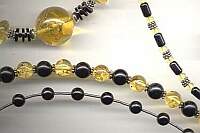
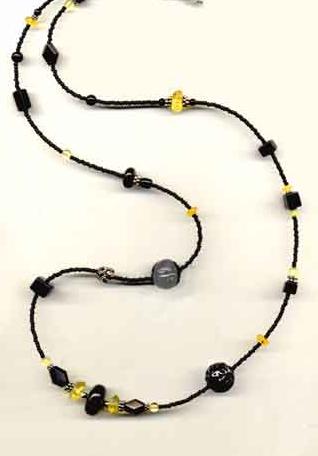
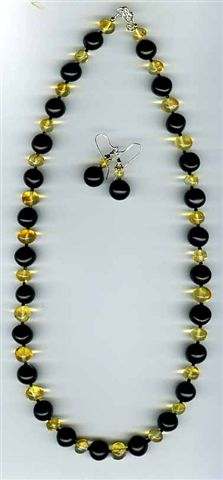
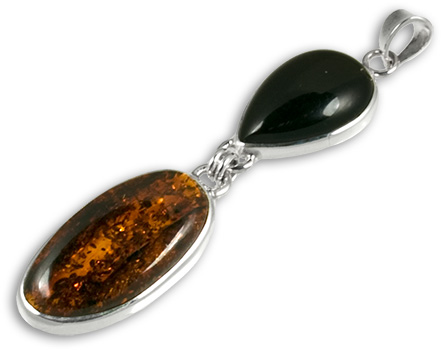
In many traditional cultures, the religious, the mystical, the magical, the royalty wore jewelry that consisted of combinations of amber and jet.     These natural fossils were believed have special qualities and powers, and when used together, even moreso.

Amber is fossilized tree sap.   Amber flowed from pine trees that flourished 50 to 60 million years ago.    Most amber comes from either the Dominican Republic, the Baltic area of Poland and Russia, and China.

Amber is one of the oldest substances used for jewelry.    In ancient times, it was prized as “solid sunlight”, and believed to have many of the sun’s properties.
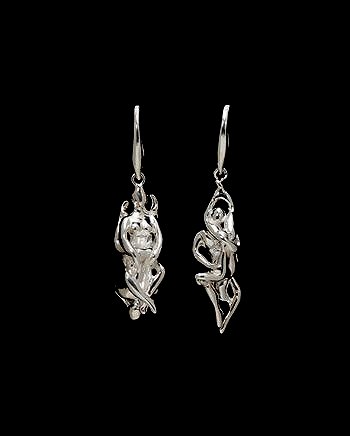
Image above from Thyme2dreamwww.thyme2dream.com ),  blog: www.thyme2dream.blogspot.com from her Mabon Collection (http://www.artfire.com/modules.php?sterm=mabon&sub1=SEARCH&name=Shop&op=new&seller_id=10747&sort_cats=0&sc_id=0)
Amber comes in a wide range of colors.    The colors often are called food names.   We have cherry amber, custard, butterscotch, butter, caramel, egg-yolk, tomato, honey, cognac, orange, fatty, and cream.   There is also green amber and blue amber, tiger amber, black-and-white amber, blonde and white.

There are some simple tests to determine if your amber is genuine.   One is that you take a hot needle and touch it to the maber.    There should be a faint piney smell.   Another, rubbing amber with a soft cloth will often cause it to give off an electrical spark, and attract a very light object like a feather.   Yet another is a salt flotation test.  Place several tablespoons of salt in a glass of water, and float a piece of amber in it.   Amber floats; glass and plastic sinks.

Jet is the fossilized remains of trees.    It was often called “black amber”.    Jet comes in different softnesses, so some is less durable than others.   Jet from lignite coal is the softest, while that from anthracite coal is the hardest.   Jet became very popular during Victorian times in England for use in mourning jewelry.
Jet is easily confused with glass.  There is only one test.  First,wear safety goggles.    Take a single jet bead and suspend it from a wire, and hold it over a flame with a a pair of pliers.     Genuine jet will smoke and often turn white at the edges, while plastic will melt and glass will simply explode.

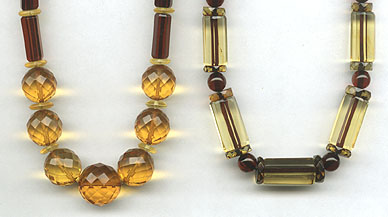
Image above from Thyme2dream ( www.thyme2dream.com ),  blog:www.thyme2dream.blogspot.com from her Mabon Collection(http://www.artfire.com/modules.php?sterm=mabon&sub1=SEARCH&name=Shop&op=new&seller_id=10747&sort_cats=0&sc_id=0)

Jet is more likely than glass to display tiny cracks and scratches, or to be irregularly faceted, and to feel lighter and warmer to the touch.    Jet is a generic term in jewelry, so buying “jet” is always something of a risk.   French Jet is glass.  Austrian jet is glass crystal.   Bakelite jet is a plastic.

The “magical union” between amber and jet dates from ancient times.   It probably represented the union between light and dark, yin and yang, female and male — dualities.

The combination of amber and jet is believed, by many magicians and witches, to be the only combination of stones that gives a full spectrum of electrical energies, from positive to negative.

Posted in jewelry collecting, jewelry design | Tagged: , , , , , , | Leave a Comment »

The Silver Jewelry of Oman

Posted by learntobead on December 2, 2010

The Silver Jewelry of Oman


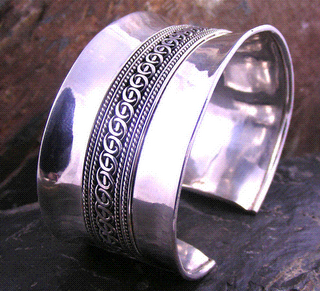
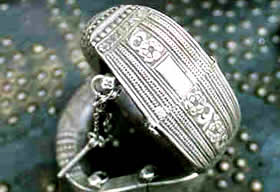
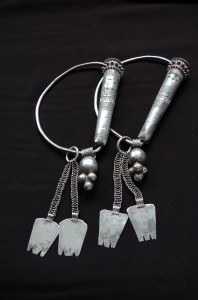
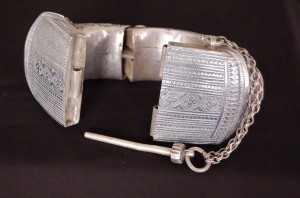
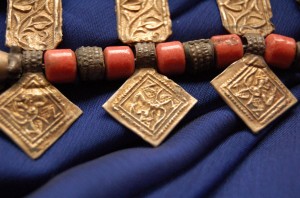
Oman has a very rich and distinctive jewelry tradition. Due to the nation’s long history of seafaring and trade, many influences of other cultures can be seen in Omani jewelry. Oman in particular traded with India and the Golden Triangle: trading partners whose influence is still visible in Omani jewelry today. Many Omani anklets and bracelets are reminiscent of Indian jewelry. A specific type of Omani necklace clearly derives from the jewelry of the Hmong tribes in the Golden Triangle.
 

The jewelry is characteristic of traditional, nomadic societies, but with special touches, techniques and motifs, with all the influences from the outside world.

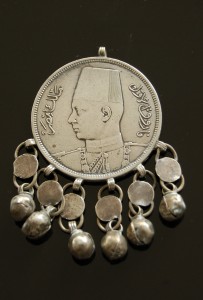
The use of coins or ‘umla’ is widespread throughout the Middle East, North Africa and beyond. Issued by an official mint long before the introduction of silver hallmarks, coins were an indication of an established and guaranteed silver content.   Two coins that both possess a high silver content and are of consistently good quality, proved to be of major importance in the nomadic societies of the Middle East, and indeed in the economical landscape of the entire world. They are the Spanish columnario or pillar dollar, and the Austrian Maria Theresia Thaler.

Originally, Bedouin and traditional jewelry did not carry hallmarks; the region’s jewelry tradition predates their use, as well as modern state boundaries. As each piece of jewelry was individually ordered from a silversmith, the amount of silver to be used was carefully discussed, weighed and paid for. To establish the correct amount of silver, the material was balanced against a known amount of silver, for example a set of coins such as the Maria Theresia Thaler.

At around the beginning of the twentieth century, most countries adopted an official hallmarking system. For a very long time, existing pieces of jewelry were marked only when they were sold; their exact value only needed to be established at the moment of sale. To illustrate its value, an item of jewelry usually displayed its silver stamp on the outside, where it would be most visible.

One of jewelry’s most important functions is to reveal the status of the wearer. If a husband gives jewelry to his wife it shows respect. Jewelry can also indicate social status, or the religious group to which the wearer belongs.


Posted in jewelry collecting, jewelry design | Tagged: , , , | 7 Comments »

nOir Jewelry – Capturing a Fantastic Style

Posted by learntobead on December 2, 2010

nOir Jewelry – Capturing a Fantastic Style
www.noirjewelry.com
blog.noirjewelry.com

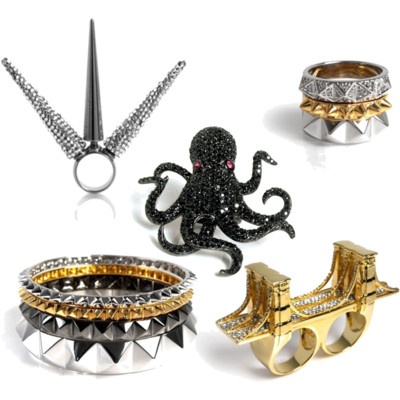
nOir Jewelry is a phenomenal hit among the celebrity set, and a visit to their website shows you why.     Fantastic, imaginary pieces.

Leeora Catalan is the owner and designer of this 14 year old company.    She produces jewelry that is glamourous, fun and edgy at the same time.    She has produced special pieces for various clothing designers, musicians and actors.

From a marketing standpoint, how do you capture the excitement and thrill her pieces generate?

Let’s look at some of her pieces, and then look at one of her marketing ads, and compare.


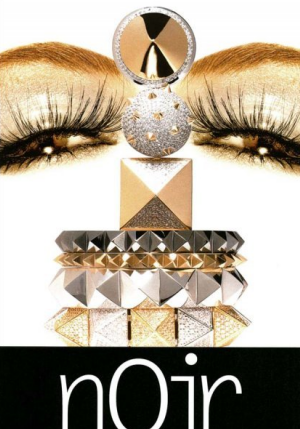
And now the promotional ad:


Now, I’ve only presented a sample of her pieces, so it may not be fair to compare what I’ve shown to the ad-copy.     However, to me, the ad seems to showcase nOir as art deco jewelry.    But it seems to be so much more than that.    Her jewelry has power and artistry beyond deco.
What do you think?   How would you begin to get ahold of noir jewelry, from a marketing and ad-copy perspective?

With or without the marketing, it’s clear that Talent has found Talent.


Posted in business of craft, jewelry design | Tagged: , , , , , | Leave a Comment »